In short
Leaders Worth Knowing Podcast - Episode Summary
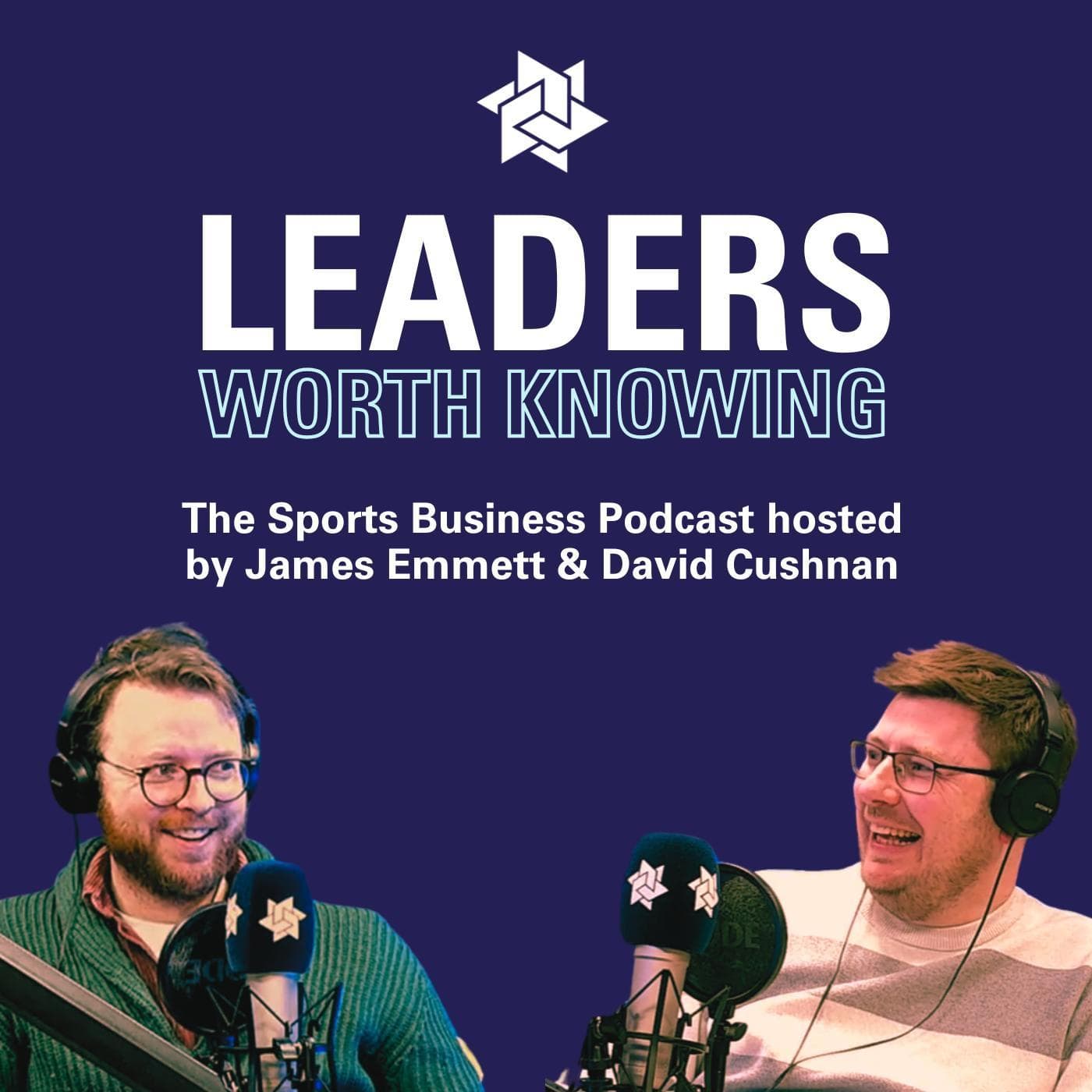
Podcast Title: Leaders Worth Knowing Podcast Episode Title: Meta's Former Sports Leader Dan Reed on Three Eras of Achievement and Change Inside the Tech Giant Hosts: James Emmett and David Cushnan Guest: Dan Reed, former COO of Reality Labs at Meta
Episode Overview In this episode, Dan Reed, who recently departed Meta after a transformative 11-year tenure, discusses his journey through three significant eras within the company. He reflects on building Meta's sports business, expanding into entertainment and product development, and finally leading the wearables division.
Key Topics Discussed
- Introduction to Dan Reed
- Background: Former President of the NBA's G League, joined Facebook in 2014.
- Roles at Meta: Director of Global Sports Partnerships, VP of Global Sports and Media Partnerships, and COO of Reality Labs.
- Era One: Building the Sports Business (2014-2018)
- Initial Challenges:
- No clear brief when Reed joined.
- Goal: To define Meta's role in sports and establish partnerships.
- Achievements:
- Pioneered athlete engagement on social media, transforming the way athletes interact with fans.
- Developed Facebook Live as a sports streaming platform.
- Oversaw the acquisition of sports media rights, including UEFA Champions League in Latin America.
- Built a strong team that drove innovative sports-related initiatives.
- Reflections:
- Reed expressed pride in redefining sports content production and distribution.
- Era Two: Expanding into Entertainment and Product (2018-2021)
- Strategic Shifts:
- Transitioned focus towards creating engaging sports content using new products like Stories and Reels.
- Developed monetization models tailored for sports entities.
- Internal Challenges:
- Hotly debated whether Meta should enter the costly media rights market.
- Ultimately, the decision was made to retreat from extensive media rights acquisitions due to the high costs involved.
- Era Three: Reality Labs and Wearables (2021-2023)
- Role and Achievements:
- Focused on AI, AR, VR, and Mixed Reality products.
- Launched successful products, such as Ray-Ban Stories, and achieved the first billion-dollar revenue quarter for Reality Labs.
- Vision for Future Products:
- Discussed the potential for Ray-Ban Stories to enhance athlete performance and fan engagement at sporting events.
- Emphasized the importance of transitioning towards immersive technologies and their integration into everyday life.
- Leadership and Management Style
- Building a Strong Team: Assembled a talented and diverse group within Meta.
- Navigating Company Culture: Successfully communicated the importance of sports within Meta's broader strategic goals.
- Relationships: Developed strong cross-functional relationships to advocate for sports initiatives.
- Future of Sports and Technology
- Potential Opportunities:
- Explored future trends in sports technology and investment opportunities.
- Emphasized the importance of the creator economy and new revenue models in sports.
- Final Thoughts
- What’s Next for Dan Reed:
- Plans to take time off to recharge before returning to the sports and entertainment industry.
- Expressed excitement about the evolving landscape of sports and technology.
Key Takeaways
- Dan Reed's tenure at Meta exemplifies the merging of technology and sports, illustrating the profound impact of social media on athlete-fan relationships.
- The evolution of Meta's approach to sports content has set a foundation for future explorations in digital media and immersive experiences.
- Reed’s leadership philosophy emphasizes the importance of building strong relationships and fostering a collaborative culture within teams.
Conclusion Dan Reed's insights provide a comprehensive look at the intersection of sports and technology and the transformative changes he's witnessed at Meta. His reflections on leadership and innovation underscore the potential for future growth in the sports industry as technology continues to evolve.
Written by AI. May contain mistakes. Listen to the episode to check what was said.
Transcript
Automatic transcript. May contain errors.0:03Hello and welcome to another episode of the Leaders Sport Business Podcast.
0:30You used different conjunctions in the leaders in sport, leaders in sport bit. I thought I might have. I don't know you buggered it up. But I decided not to record a second version because it was going so well. It was very good. It was very natural. There was a lot going on. There was a lot going on on location last week in New York. How was your big trip? Really, really good, actually. Nice to see New York. And a really fascinating couple of days at our force conference. accounts topped and tailed by another round of attention seekers, our private workshop. And then, wow, a big night, long night at the Sport Business Awards, where the great and the good were all in one place, in one room to celebrate winners, losers, but great work throughout the year.
1:19And you had fun, did you? I had a bit of fun along the way as well. A bit of fun. I didn't see you though. I didn't make it in the end. No. Oh dear. That's a shame. That's a shame. It was a shame i was looking forward to it but i couldn't go in the end yeah it was um it was a good couple of days at force would you like a couple of additional reflections on force do you with a little bit of distance with some distance you've had some some things have occurred to you i think well i've had a you know six hour flight back to uh really think about what to stew yeah to certainly not sleep yeah um and uh we talk a lot about point one we talk a lot about the relationship between sports and entertainment and how that is becoming closer and merging and overlapping and sport crashing into all these different verticals.
2:05I think this year compared, if you compare it to the first year we did Force, which was I think four years ago now, the conversation has pretty much become a mainstream one, at least in sports industry terms. And not only is everybody talking about it, everybody's doing it to a greater or lesser extent and developing more sophisticated strategies. There's genuine ROI that is being crafted and then applied to many of these kind of cross-industry collaborations or initiatives. So we talked a bit on the podcast last week about the NFL and what they're doing in the fashion space, but also NASCAR and what it's doing in the gaming space, but in particular, the sort of Roblox Fortnite space as well.
2:49There's genuine returns being seen here. We're starting to see the end-to-end case studies emerge. And I think that's a significant moment. And I think point two, something that was discussed a little bit on stage, quite a lot off stage in lots of conversations is now, particularly with teams and leagues, they are having real conversations about who owns these kinds of relationships internally, because they are not necessarily always directly commercial partnerships. So more than any other type of partnership, they do sometimes straddle content and digital and marketing and fan experience and in-venue operations almost.
3:33So actually thinking about the ways in which organizations might have to reshape themselves as these partnerships become more and more prevalent, I think is going to be an interesting one to keep an eye on. I did venture on one of the panel sessions last week, whether we were about to enter the era of the chief music officer being hired by teams and leagues. That was, I'm going to say, gently poo-pooed by those on stage who included executives from Paris Saint Germain and the Brooklyn Nets and Major League Baseball. But they'd feel that that would fall squarely in marketing, right? But there is a sense that there is going to have to be some rejigging of how org charts look and work as verticals like music and like fashion become more and more prominent.
4:22Because all of this sort of sports entities venturing into activity in the cultural entertainment lifestyle space, if it's not directly revenue generating, and if it is directly revenue generating obviously there is an obvious owner for that all chart wise if it's not directly revenue generating like all these things right it just becomes if in doubt it's the responsibility of the marketing team yes yeah and there's a sort of catch-all nature to that but there is you know some of these things as you know particularly certain verticals i think are going to become more and more important to the sports industry And it might not necessarily be music, which is the one that everybody talks about most.
5:07It could well be fashion, both from a sort of marketing point of view, but also from a merchandise and a retail point of view. But it could also be, and it was something that Osmar Rondala talked about briefly when we talked to her last week, it could be something like art and the creative space there, which is something that we didn't necessarily have on the program last week. but could be an interesting area to explore in in the future really enjoyed when you completely stumped as maroon d 'allah uh with your question which is your favorite vertical yeah we were we were and she was floundering we were being we were being beckoned towards the exit because she did have to make a hasty uh you know hasty retreat into the and she's got some english perspective verticals nerd yeah asking her which of the favorite vertical yeah but she came up with a good answer turns out fashion fashion yeah yeah i tried my best yeah yeah any other reflections or is that the size of it i think that's the size of it um did you go to i know you went to the museum of modern art in your downtime yes did you go to the the shop in the museum of modern art yes well briefly so i think the museum of modern art has got one of the best licensing brand licensing divisions in the big art world.
6:28They do. And actually, at force. There's a lot of merch. There's a lot of merch. There's a lot of branded merch. And actually, they're playing in the same sort of cultural impact space as a lot of the sports organizations are. Because I noted the last time that I was at the Museum of Modern Art that they have a licensing deal either with the Yankees or with New Era. Is that right? Yeah. Which makes total sense when you think about it. In the shop, they're probably still there. In the shop, they sell Yankees caps, but with a MoMA Museum of Modern Art branding on the side, just subtle on the side.
7:02So you can get a MOMA branded New York Yankees cap. Love to know what the sort of, would it be a Venn diagram? Who's doing a deal with who? Well, no, no, but Yankees fans and modern art fans. What are you looking at? You're looking at one right now. Yeah, yeah. One other very tiny thing that I wrote in my notebook that won't make it, sadly, into the newsletter this week because it's not that interesting. Right. Oh, great for the podcast then. Totally. Bank of America are going massive on football, on soccer, in terms of their in-store retail displays. So it's all about the World Cup. They're really, really pushing that.
7:44You couldn't move past a Bank of America store without seeing very, very heavy football branding, which I thought was interesting given now our Bank of America are a club World Cup partner as well. They're definitely a FIFA World Cup partner. Yeah, they're certainly a FIFA World Cup partner. So well over a year out from the big one, they are going big already, which probably bodes well if you're FIFA. Yeah. Now, David, I think it's probably time to introduce our guest for the episode today. Yes. Who have we got? Well, it's worth saying, actually, that you won't be able to do this particular interview.
8:22No, I'm going to leave you to it. I'm going to give you a chance to say whether you think there's anything worth knowing this week after I have introduced our guest for today. We're very lucky to have on the show this week Dan Reid, who is one of Global Technology's leading operators, I would say. He's just come out of just over a decade at Meta erstwhile Facebook. He was the man who essentially ran sport for Facebook in its early days. He was the director of Global Sports Partnerships when he joined in 2014. A big coup for Facebook then because he was very high up at the NBA. He was the president of the NBA G League when he joined Facebook.
9:09And in his early days, there was all of that flirtation with live rights headed up by Dan and the team that he built around him, built a really strong team around him. He was promoted to the role of VP of Global Sports and Media Partnerships. in 2018. And then most latterly, he's been working in the Meta AR, VR, MR division as COO of Reality Labs. So a real tech powerhouse, delighted to bring him onto the show shortly to talk about the journey that he's been on, the journey that Meta has been on, the journey that all of these big tech companies really have been on in their relationship with sport and our sports consumers relationship with sport through them.
10:03So Dave, I've given you some time now to think about whether you think there's anything worth knowing before we get Dan Reid on. Yes, I think what's worth knowing and certainly what's worth keeping an eye on at the moment in the sports industry is Italy. Okay, what's worth knowing Italy? Well, some big things are happening in Italy. They've obviously got the Winter Olympics coming up. They've had this fantastic finish last weekend to the Serie A season with Napoli claiming the championship and all those now somewhat stereotypical scenes of every firework in the world being set off across Naples.
10:36They are absolutely dominating both from a playing and executive level. The world of tennis at the moment and the French Open has just started with Yannick Sinner back from his drug span as world number one and probably amongst the favourites to win that tournament. But they are also making waves, pun intended, in sailing. And a couple of interesting threads to pull together here. We have Anne Hathaway buying into, well, part of a consortium that is buying into SailGP and acquiring the Red Bull Italy SailGP team. By the way, just to insert here, have you seen Anne Hathaway's sort of growing fandom of both Arsenal and the New York Knicks, it seems?
11:26I haven't seen the Knicks, but I've seen the performance she gave of North London Forever. Performance being the operative word. Very sombre. Yes. Yes. I think she's sort of a Marmite character when it comes to people. I think so. We'd love to have you on, though. No, great. I love her. Yeah. but her sort of out and proud sports fandom is attracting as many detractors as it is fans i would say well standby sailing fans because she just bought a sail gp team and the italian one at that uh italy will also host the next edition of the america's cup that was announced last week so naples the aforementioned naples will be the host uh that's a deal done between team new zealand the holders of the America's Cup and organisers of the next one, and the Italian government.
12:14And we shouldn't forget from a sailing point of view that Ferrari are also quietly building away a sailing programme for, I think, offshore races, possibly sort of round-the-world affairs. That was an initiative launched at the start of last year, and I would expect to see some results of that reasonably soon. So Ferrari are coming, Italy are coming, Anne Hathaway is coming to the sailing world. But yeah, I think Italy might be the sports nation to watch at the moment. Forza. Forza Italia. Very good. Very good. Anything from your side? Well, I had thought that maybe I would talk to Dan about that, but I'll give you a little sneak preview.
12:58And that is... Well, you don't need to. You don't need to. Why don't? Why don't? I leave you to it and you speak to Dan Reid. Okay, now delighted to be joined here by, until very, very recently, a senior leader at Meta. It's Mr. Dan Reid. Dan, how are you doing? I'm doing great, James. How are you? Really good, thank you. Really good. Dan, when was your last day at Meta? About a week ago. Okay. And what was the process like? You know, you've been there for 11 years. um you you wrote your obligatory uh linkedin post uh declaring an end to your also on facebook and instagram james come on man obviously it was one of the one of those platforms first just sort of pasted across um yeah what's the process like of leaving a kind of giant like meta you know i never thought i'd be at meta longer than i was at the nba uh 11 years almost 11 years uh at meta versus almost 10 years at the NBA.
14:04And, and, uh, I think that the, it wasn't so much, there wasn't so much, um, a bunch of unique things about meta per se as a company, I suspect, you know, you clean out your desk and you transfer your files and you do all those things. I think it's just like 11 years of relationships that you build up and memories that you have and gratitude you have for the experiences there. So I really spent a lot of time, uh, just meeting with people to say thank you and how much I enjoyed working with them. The people at Meta are truly amazing. It's one of the most amazing collection of people I've ever worked with.
14:36And so that's really how I spent the bulk of my time. I will say maybe the unique thing about me at Meta was I had a lot of devices. I had a lot of proprietary. I worked in reality labs where we you know we we make vr and ar and ai wearables and these sorts of things and um i had a lot of prototypes kicking around the house so uh and my in my desk so i'm still rummaging through making sure i return them all that might be the most unique thing about leaving a place like meta for the job that i have yeah do they do it do they do an exit interview is that something they do um i didn't do a formal exit interview uh but i you know i certainly chatted with a lot of people as I went out and we talked about exit interview things at times.
15:24But no, not a formal exit interview. Not for me anyway. And now, of course, you're banned from the building. You can never set foot back inside and all of that sort of stuff. I'm going back. I'm going back for the food, to be clear. That was part of my exit process was, you know, Metta famously is known for having abundant free food. And I hit all my favorite spots. I had multiple servings. I probably gained five pounds in my last week. So I do intend to go back and partake some more. I still have plenty of great relationships there. Yeah, very good. Yeah, keep the canteen on side. Very good. Dan, when we were going back and forth ahead of this interview, I asked you whether it would be a good idea or how to frame basically talking about 11 years at Meta in different positions.
16:12And I asked, you know, whether a good question would be, for me to prompt you to reflect on the good, the bad, the ugly, the challenges, the achievements, etc. And you came back saying, my goodness, that's a lot to cover. Maybe we can take it kind of era by era. And you basically explained to me that you see your time at Meta in three distinct eras. So first of all, building the sports business, the opening few years of your time at Meta, then expanding into entertainment and product, and then more laterally as COO of Reality Labs and in the kind of wearable pioneering space that is wearable. So I wonder whether that's the way that we should tackle it then.
17:01Let's just go era by era and ask you for some reflections like that. So era number one, the opening years, building the sports business. What was the brief when you went into Facebook as it was there? And how do you look back on that era now? You know, it's a great question because there wasn't a clear brief when I joined. You know, you have to remember this was 2014. Facebook had just bought Instagram and Oculus. Facebook had just launched video. That was the summer of the Ice Bucket Challenge, if you remember that. That felt like a very novel thing, right? Like, oh, video on social network on your phone.
17:42Wow, that's really crazy. And I think that Facebook was starting to get into relationships, working relationships. Really, the relationship was just, hey, athlete, will you post on Facebook? Will you post a photo? Remember my first week, Tom Brady posted a photo of his resume on Facebook, and that was a big deal. uh and um and so the brief was really can you help us figure out what we should be in the sports space you know that was really it was that broad um it was clear we needed to manage these relationships and develop partnerships it was clear we needed to build products that fit for the sports industry that also made sense to support facebook business um and there was really no one in the building who had that expertise at the level of seniority with the level of relationships and knowledge that, uh, that they felt that I had coming in.
18:42So, uh, that was a bit of the brief, I suppose it was a bit of a blank canvas on a platform of a billion and a half people at the time, uh, which was super exciting. And, and so as I think back about those few years building that business, uh, I'm really incredibly proud of what we built, you know, a lot of the foundations of how the sports entertainment industry work today, we helped pioneer, um, you know, the notion of athletes engaging directly with their fans and building a business of building their own businesses, largely based on their social media accounts. That was not a thing when I joined in 2014.
19:19That was part of our vision though. We, we, we viewed, there was a major opportunity with Facebook being a people platform and Instagram being a place for, for creators to build even in the earlier days. And so we really worked hard at making that a reality. And that seems like it's been reasonably successful as it's really changed the nature of athletes' relationship with their fans, athletes' relationships with the media, and so on and so forth. The notion of streaming premium live sports events and premium content on digital platforms. We were one of the first there as well, where, and we can talk more about that.
20:01I'm sure you have lots of questions about our forays in that space. But that was also a very, it was unclear whether or not a company like any of these companies were going to enter that space. And we were one of the first and we solved a bunch of problems. We figured out, okay, well, how do you get the rights? And how do you reimagine how to produce these games in a way that feels native to our platforms. How do you figure out the monetization? How do you figure out the technical challenges of streaming on that type of scale? We were one of the first to do it. Super proud of that. The creator economy and the importance of creators to distribute content and as an alternative, both distribution and monetization vehicle for the industry, we helped bring that along.
20:49So, I mean, I think when I think back in that period, In many ways, we helped redefine how sports content is produced, monetized, distributed, consumed across the board in a really fundamental way. And, you know, when I joined Facebook, I thought maybe there was a good 5 % chance that we could do, you know, stuff like that. And I was really, really pleased and proud of what we accomplished in that run. I would say the other thing I'm really proud of is the team that we assembled during that time. And we put together what I still believe is the best team ever assembled at the intersection of sports and tech.
21:26And if you see what people are off doing now and how their careers are growing across the industry, it's really, really cool to see. and we had a powerhouse team at the time there which allowed us to to get a lot of those things done and you know our fingerprints are over a lot of the products that meta ended up launching during that period whether it's live stories reels branded content all the monetization tools you know we were in the foxhole with the product teams making sure that those those products were not only successful with consumers but successful for the sports world and for the industry and for the fans we'll move on to uh to the sort of the later eras um but i did want to go into sort of double click on if i can use that awful expression um in that that first period i remember there was so much excitement across the sports industry when it was clear that facebook were taking a strategic move into sports when they hired you right and you started building out a team even if it wasn't exactly clear on you know what that looked like you know you were there to work it out.
22:37But clearly, most of the excitement was directed at the possibility of Facebook being an active and powerful player in a media rights buying market. You know, new blood, new money into this ecosystem. It pushes up other entities' bids. And I guess, and you brought in Peter Hutton, for example, who's very seasoned and storied in that kind of world. And you did dabble a little bit in the rights game. You know, you talked about going into streaming. It wasn't necessarily always attached to big rights fees underneath that. But tell me about the strategic journey that you went on when it came to building out a business model with sports media rights attached.
23:26I remember exactly what year this was, but it was around the time we had launched Facebook Live. And as a company, we're really looking to grow in video. You know, YouTube still is by far the largest video platform in the world. But at the time we were maybe second or third. And we were looking, you know, to sort of get closer to YouTube. And it was clear to Mark and the company that even though the sort of news feed and the news feed and sort of the Instagram feed were full of photos and text at the time, that video was going to eat that space. That was very clear. And so we were really looking to see how can we grow in video.
24:08And we were doing all the, you know, all the, the, the smart things, thinking about how we partner with creators at scale. Um, we were getting into original content. Um, you know, we were doing a lot of product work to improve distribution, improve discovery, all of these things. Uh, we need to build monetization tools to incent content creators to produce content. Um, and as the sports guy there, uh, it was pretty obvious to me that there was a huge opportunity in live sports and premium sports content. Uh, you know, one of the first insights I had joining this company, uh, was that, you know, you know, this isn't an insight to people in the industry, sports are fundamentally social, right?
24:52The experience of watching us of live match or consuming sports is just better with other people, whether that's talk radio or actually, you know, visit, you know, being in person, uh, in a stadium. And, uh, and also we were the leader in digital live video. And so it was like, well, this sort of makes sense, guys. We have, we're the leader in life. We want to, we want to differentiate ourself in life. We want content that is social that plays to our strengths and we want to win in video. And every year, you know, the top 100 TV shows in the United States, 97 of them are live sports events or something.
25:26So it was like, you know, Hey, this is, this is, this feels like a really good opportunity for us, uniquely for us. And I know other players hadn't gone into it, but it felt like an opportunity for us and um and so we we it was a it was a pretty hotly debated internally uh because of course it's also very expensive and um and it's very it was a big departure from the historical business model that the company had which is we could content for free uh and you monetize it extremely well across a broad range so there was a lot of skepticism about why would we pay billions of dollars for content that we don't own rights to in perpetuity.
26:10And so there was a hot debate. It went all the way to the board, actually, where eventually I was able to make the case to the board. And we did get a sign off to do some experimentation, which involved, of course, hundreds of millions of dollars to buy. And we bought rights to UEFA Champions League in Latin America. And we worked with MLB to get a game of the week during the day in the United States. And we did it not just at the premium level, but part of our thesis was there's a huge opportunity in the sort of medium and long tail of rights where properties were losing their distribution on traditional broadcasting platforms.
26:51And so we probably had 20 partnerships that we were streaming various things. We were also producing original content like Tom vs. Time and Ball and the Family and things like that. and you know and it was you know ultimately it played out the way that i thought it could we were growing in our watch time we were even though we didn't have all the product tools we needed from monetization standpoint the math clearly could have penciled had we continued to go um you know ultimately at the end of the day it was just too much of a departure from what is one of the greatest business models in human history which is what Meta has had which is that this free content that perpetually self-generates on a massive platform and paired with highly efficient ad products that capitalize on that cost advantage by bringing ever more efficient ad solutions to businesses who haven't traditionally had the tools to advertise small businesses I mean that's the secret of Meta success and while this made a lot of sense for us at the time the bar to make the investments we needed to make it successful was just too high when you're competing with the greatest business model of all time one of the greatest business models and and so you know ultimately that's that's why we ended up retreating um is the the product teams in particular across consumer and monetization were just looking at the stack breaking of opportunities and working with me and And I can't say that they were wrong.
28:25I'm really proud of the swing that we took and everything we did. And again, a lot of the things that we pioneered, like I talked about before. But I certainly think from a company perspective, as a shareholder perspective, the company's done pretty well since then with that business model. And I can't fault it. But it was a really fun time and a fun run. And I learned a ton. I love that an experiment, a test and learn process can still be worth hundreds of millions of dollars at an organization like Facebook. It's amazing. Do you see maybe that hot debate being had again at some point at Facebook?
29:02Obviously, as different kind of mass amalgamators of communities, right, which is what Facebook really is. There are now serious competitors. and all of them are looking at sports rights in some way, shape or form. Do you see that debate being had again in a slightly different era? I think it's possible. One of the best things about a company like Meta is things change quickly. It's amazing that a company of that size can pivot on a dime, whether it's for what we've done with Reality Labs or what's happening with AI right now. There's so many past instances of this, So I wouldn't put it past the company to sort of re-examine that space.
29:45What I'll say is the thesis behind it, which I still think is an opportunity, is someone can come in and play in this digital free-to-air space. All the activity happening with digital platforms are largely behind paywalls. And I'm not sure that that's ultimately great for fans in the long term. And in the history of sports rights, you've always paired that with a free-to-air model that really grows the audience for properties and clubs and then brings them down the funnel where you can sort of monetize them more heavily down the road. And you could argue that actually Instagram, Facebook, TikTok are those platforms today, right?
30:27It's short-form highlights and it's creators and it's video games. These things are now sort of the top of the funnel, if you will. for sports, but I still think there's an opportunity for the actual matches, the actual premium content to be at that top of the funnel free and widely available. And so I still think that Meta could play that role. YouTube could play that role. And, and, you know, that's almost about it, at least in terms of the broadest scale you have in a purely digital space. So, you know, I still think the challenges exist, that it's hard to be convinced to make that level of investment with the business model being what it is.
Read the full transcript
31:11And Meta as a company is obviously making huge investments in AI and other things that are a higher priority. But you never know. You mentioned having this debate at board level. And I think particularly towards the latter end of your time at Meta, I think I'm right in saying that you had good sort of day-to-day contact almost with sort of leadership, Zuck, etc. And you mentioned earlier being one of the things that you're really proud of is having built, assembled this sort of crack team of sports tech folk globally, really. And just to, we mentioned Peter Hutton, but just to reel off a few others, it honestly is a really glittering cast of characters.
31:54We've got Gerry Newman is now at Paris Saint-Germain, Joy Biswas at FIFA, Jordan Gruber at Fanatics, Josh Semlis and Nick Shaw, both at Greenfly. Ronan Joyce at Manchester United, Anna Chanduvi over here at the Jockey Club as well. Super, super talented people whose careers are just sort of shooting at the moment. And I wonder what you can say about your sort of management and leadership style and how that evolved over the time that you were at Meta, particularly when it comes to sort of having to deal with a very particular type of leadership at an organization like Meta. So managing and leading upwards as well as downwards, because I think something that sports folk at these massive tech organisations often have a challenge with is how engaged or not super senior leadership are with sport and with what they're doing.
32:51and impetus can just die just like that. And I wonder how you navigated that particular challenge in your seat and how you filtered sort of positivity and growth downwards as well. Yeah, well, thanks, first of all, for rattling off that list of names. I agree. Again, I'm super proud of that group. There's about 15 or 20 other names I could add to that list of people that are going off and doing amazing things. And I would just say when you talk about leadership style, that is number one, which is you have to bring on and retain the absolute best people in the world, including and especially people that are better than me, that have skill sets that I don't have.
33:33You know, when I hired Peter, I never thought I'd be able to hire someone like Peter, that someone like Peter would want to work for me because I was so in awe of what he'd done all over the world. And he had skillsets that I just didn't have. He knew he had relationships and knowledge of really the rest of the world outside of the United States, uh, uniquely in the world. Um, and, uh, and so I always tried to bring in folks like that that just made my job easier on a day-to-day level because they were so high powered and they're so capable, uh, to just to run at things. And, and in many ways that freed me up to do what you're talking about, which is how do I help drive the strategy?
34:17How do I help drive the alignment at the senior level at the company? Um, how do I get cross-functional buy-in for the things that we're doing on a topic in an industry that frankly is foreign to a big tech company? Um, you know, one of the, one of the insights, it was, it was Rob Shaw, another, another person on your list, um, who just left chicago sports network and i'm sure we'll go off and do something really cool next um you know he he we were in a one-on-one one day and he said you know what real you know what hit me the other day as much as we passionately care about sports in this world facebook is not a sports company it's like yeah like so like we're actually understanding if you're in a big if you're in a big tech company or a big or this is probably true for a big brand um you know if you're on the sponsorship side or whatever it is, you sort of have to understand the company that you're working for and what their top priorities are.
35:12And as much as I lived and died with sports and that's my job, for me to be effective at my job, I need to understand the priorities of the overall company, the priorities that Mark has, the priorities that Sheryl Sandberg has, priorities that other product leaders have. And then it's about how sport can fit into that, how sport can help drive that objective was really the approach. So again, Facebook Live, you know, got really, really early signals that, you know, live was going to be a priority. And like, great, you sort of jump in, and you engage with with product leadership, you educate, you inform, you bring in partners, who you're in, you know, ongoing conversations with who are excited to take advantage of these formats and, you know, sort of build the case on those terms.
36:04You know, if you're launching live or you're launching stories, you're launching reels or you're launching branded content, how does sports content, sports partners, you know, athletes, clubs, leagues, federations, you name it, how do they help support the agenda of those products? And so that's sort of one angle is spending a lot. I spent actually more time than you would think internally, hand in hand with product leaders, building products, looking at the data, helping make the right strategic decisions so that we could grow in the way we wanted to, both within the company, but with our partners and really being the advocate for our partners internally.
36:49um so i i really do think that that's understanding what the priority are priorities are and using data using examples creating case studies in the world that that back those up were really critical to driving that buy-in i would say the other key element is just relationships it's just building up those relationships uh putting wins on the board where you can successfully support people um understanding the nature of what people's jobs are and how you can help them um and really making sure that you they know that you care about them as people and colleagues uh you know that there's this well-known phrase nobody cares what you know until they know what you care sorry i'm getting a phone call that's okay it's very early for a phone call well it's like 10 0 8 man all right what time you start your day uh just 11 i guess it's like a block there so Nobody cares what you know until they know that you care.
37:47And, you know, a lot of times these conversations were challenging. There were real areas of disagreement, real areas of misalignment. And, you know, this live sports conversation, there were a bunch of really challenging conversations that I and my team had with product leaders across the board where we just didn't agree. And we just sort of agreed to disagree and escalate it. That's why it went all the way to the board. um and but those relationships are great i still have great relationships with uh you know the whole cross-functional team throughout that process and by building that environment of safety that environment of trust that environment if i care about you and you care about me well now we can say whatever we need to say to each other to put the best ideas on the table to consider every issue um so we can make the best decision uh and and that's that's one of the things I I've tried to do and uh and I think that was key to getting the cross-functional alignment we had at the company to be able to do all the things that we did yeah for what it's worth in in putting these questions together for this conversation I was in touch with Peter and he has given me permission to say um that he considers you to be the best man manager that he's ever had across his career um so and he's worked he's worked at a lot of places a lot of places that's that's that's amazing um i i i'm i'm touched i i didn't know that well man man manager yeah man manager okay gender no no i don't think it's a gender thing but you know he didn't he didn't call you you know total manager just in terms of that sort of one-on-one human human relationship direct manager yes yeah okay yeah yeah no it was it was it was it was a it was a lovely compliment um sticking with mark zuckerberg and leadership in general mark himself obviously gets a mixed press um not that he would care i'm sure but give us an insight into the real zuck as you know him tell us something we wouldn't know about him and honestly is he really is he really that into the ufc oh well maybe i'll take that one first yes he is he absolutely is he's deep in the sport.
40:00He, he trains, he spars, he fights. Um, he has relationships with a lot of the top athletes, uh, obviously invited Dana White to the board of meta. Um, so he's deep into it. I, um, I, I, you know, I've talked to him on a couple of different occasions where he's gone really deep in his knowledge. I pride myself for being a pretty knowledgeable person in a bunch of different sports and he's much deeper in the UFC and MMA than I am. Uh, and so that's, that's very genuine and, um, and very real for him. Um, and I think it's super cool to see actually, uh, you know, I, I don't know how much of a surprise it would be considering his success, but I, the, the other thing that really strikes me as I, as I had a chance to work with him, uh, pretty closely, I led our company's developer conference connect for the last couple of years.
40:50And so obviously, you know, worked really close with him on that. He was very deep in the reality labs business. Um, and we intersected for a bit on sports. So those are the sort of three major areas. And throughout he's, he shows this really remarkable ability to both be very visionary and futuristic in his mindset. You know, what I met as, um, values is live in the future, which I think is a great phrase. Uh, but he really embodies that. So he is always thinking multiple steps ahead about where trends are going and he's really willing to make a bet he has real conviction on one way or the other often and he's very very focused on regardless of what the present is let's make sure that we're skating to where the puck is going um and it's it's really it's really remarkable um how consistently he does that across a number of different things you mentioned the meta ray bands there and um and reality labs this is your sort of final era um at meta essentially running the wearables division um at meta what would you what would you say how would you characterize that that era of your time there what are the achievements there and and can you see the meta ray bands sort of moving into the sports space in a in a really tangible way yeah you know I'm really proud of that sort of last era in Reality Labs.
42:16It was a big step-up opportunity for me internally where this is the COO role of the division that we renamed the company for. And it was a huge top company priority. And to have the opportunity to work across 10 different functions raising from leading go-to-market and really being responsible for the top-line business results, shaping the product roadmap over the next few years. I led the analytics team and the user research team, the product marketing teams that partner really closely with product teams to build the actual products and anchor that in customer and market and data, and then run a lot of the horizontal functions like running our developer conference and these sorts of things.
43:02It was a really great stretch opportunity for me, but not unlike my role as president of the G League, where I was very much a general manager across a bunch of different functions. That's actually probably why I got the job, is my experience, when I describe what I did in the G League, they recognized the patterns of what they were looking for this person to do. And obviously, I'd been at Meta for a long time. So even though I was sort of the sports guy, the media guy, wasn't a consumer tech person, And functionally, it was a great fit and that it ended up working out and it turned out to be true.
43:37And I'm really proud that fundamentally during that period, we transformed Reality Lab from being what was largely an R &D department, building, you know, inventing these new technologies into a sophisticated business operation that was building products aimed at specific customers, you know, with a strong go-to-market that are, you know, launching successful products that are highly retentive. Um, that's a pretty big shift to make when you're in complete white space. You know, these products have never existed before. Um, the components that are in the products didn't exist two or three years ago.
44:15If they did, they were prohibitively expensive. No one would buy them. And then being able to, you know, transform the process and the operating model and the strategy to have a successful product like ray-ban metas pop out of that is is very you know high degree of difficulty yeah um and i'm super proud that we were able to do that and you know we we we um you know we landed our first billion dollar revenue quarter uh while i was there which i thought was just a um i just felt really proud of as a sort of a great data point to all these things working really well in concert together um you know the product the go-to-market the uh customer retention the marketing all of it um and i think that you know certainly the the products that meta has launched and will launch in this space i think are extremely high potential uh reality labs the basis for reality labs is we think that these are the next computing platforms that we're going to evolve from living our entire digital world through kind of a two-inch screen to having a much more natural, immersive experience with technology where we can seamlessly interact with each other digitally, again, not through this sort of clunky interface, through glasses and headsets.
45:45And I think that these products really do have great promise. to do that. Uh, so I think the roadmap is super exciting and, um, and I think there's great problems to do that. Oh, you asked about sports, um, and whether Ray-Ban Meadows can be a player in sports or, or will they be relevant sports? They already are today in many ways, I think both on the fan side and on the athlete side. Um, you, you know, we're seeing, we're seeing like cyclists, for example, uh, they're wearing Ray-Ban metas and capturing, capturing live video, using the live AI feature to understand what's happening around you.
46:22Um, you know, listening to whatever they're listening to a podcast, maybe this podcast or music or what it might be, um, you know, without, without having earbuds so that they can still have ambient noise. Um, So I think whether it's cycling or golf or running, there is real potential for these products to be an endemic part of the sport. Where, you know, the Ray-Van Mendes today are, you know, they're not quite waterproof enough or the sound isn't quite as good. But you can imagine in future versions, those things will be worked out. And I think it will become a really important tool for athletes in certain sports.
47:06to capture content, analyze what's happening around you, talk directly in your ear. Um, eventually screens will come into play and, and you can have a lot of information right at your fingertips. Um, so I think that can be really powerful. Will that translate to sort of stick and ball sports or whatever? You know, I think any, any sport where one can wear glasses, um, in the sport. And, uh, I think that it, it can be, they can provide, um, real value, uh, to an athlete and their performance in the field of play. On the fan side, you know, I wore Ray-Ban Meadows to an F1 race, the Miami Grand Prix.
47:44And it was awesome, you know, where there's so much happening around you and the ability just to easily capture content anywhere you go. You know, something's happened, a bunch of cars fly by, you can just, you know, sort of make sure you're capturing the photos or turning on the video. Um, you can get real time race information again through, through your glasses. It's kind of loud. So you need to go in a quiet place, but, uh, that's really valuable. And so I think for fans, you know, as you're attending sporting events or, you know, even in youth sports, I, I record my kids, uh, literally games, um, you know, where you don't have to trade off between capturing the moment and experiencing the moment, right?
48:32You do it one and the same. And again, if these glasses fulfill the promise that Meta has for them, which is they're the next computing platform, they're effectively doing the job that mobile phones are doing today, then yes, it will be a very profound impact in the world of sports on the fan side for sure will become the primary device in which fans are consuming content and connecting with one another. and I think it'll be in ways that are not obvious today. It wasn't obvious in 1999 when we all had flip phones that you would call an Uber through your phone. That wasn't an obvious use case for a cell phone.
49:11There will be similar types of use cases when you have glasses with AI and screens that allow you to superimpose a digital world on your physical world. uh i think there will be very very profound and interesting consumer applications for that that i'm sure will affect the sports world and i guess the race is on now with the johnny ive google news uh to find the the latest or the next sort of generation defining piece of um internet hardware basically right yeah yeah that was i i was really struck by the news last week where uh not only did OpenAI acquire Johnny Ives' company with the intention of building AI wearables along the lines of what I described.
49:56But Google announced a partnership with Warby Parker, similar to Meta's partnership with Esseloer Luxottica and Samsung, to also enter this space with real forks. So I know at Meta, Meta's the market leader in this space, pioneered this space really. But we always felt that competition was coming because we saw such a huge market opportunity and this past week was a real validation of that so and i think is a real validation to the promise of this technology the importance of this technology uh in all aspects of life which i think will impact the sports world as well dan i don't want to um we're already over time and i don't want to keep you for too much longer but i just want two more short sharp questions if that's okay or at least they can be short sharp answers.
50:44Obviously having been at the NBA for so many years before you joined Facebook, NBA are making big noises, sort of commitments without being specific about a league in Europe. What are your sort of top line views on that? I'm excited about it. I think it's a great opportunity. I think it's a great opportunity for the clubs and the fans in Europe. yeah you've said you've said you can take that call haven't you and now i'm keeping yeah no sorry sorry uh this is much more important yeah uh i think it's i think that um the clubs and fans in europe can really benefit from the nba brand the nba expertise it's no knock on the euro league and the clubs there it's just that the nba has been doing this for a long time um and it is the best basketball league in the world and there's just a lot of benefits that can come from a partnership there with such a huge market across Europe, iconic brands, and a real huge fan base that only continues to grow.
51:48So I think it's a great opportunity for the fans in Europe and the clubs. I also think it's a great opportunity for the NBA to grow. You know, when you're a big sports league like that, there's only so many dimensions upon which you can grow. You're sort of landlocked into a 30-team model and there's restrictions on travel and these things. So I think this is really smart across the board. My word of caution from my time at the NBA and my time running the G League is it can't just be a copy and paste of the NBA model. You have to respect that there's real, and I'm sure the NBA knows this because they've done this before.
52:21In fact, we learned this the hard way in the G League where the notion was you can copy and paste a lot of things that worked for the NBA in a minor league setting. and the reality is there were many things that we had to completely invert thinking in terms of how an NBA club worked or how the NBA league office worked to make sure that it fit for a G League type of model. That was one of the most profound learnings of my time there was being flexible about how you do things. And so I think that the same opportunity and the same challenges will exist in Europe. There were some things that will translate relatively easily and will drive a lot of growth.
52:58But there's some things where it is the way that it is in these markets for a reason. And, you know, you need to respect that and figure out how you do that better along those lines and create some new best practices or bring in ideas from other places. You know, when I was at the G League, I studied minor league baseball really closely, which is operated very differently than the NBA. But we brought a lot of principals over there and married them with the NBA way. And I imagine there will be similar sorts of opportunities with the NBA's work in Europe. But I think it's super exciting. I think it's super cool.
53:31Yeah. And finally, and I don't mean for this question to segue immediately from what you've just said about the NBA, but what's next for you, Dan? You know, first, my plan is just to take an extended break. You know, I've been grinding for 21 years straight. My boys are 11 and nine years old. It's about to be summer vacation here. and so I'm super excited just to spend time with my boys, with my wife and recharge the batteries, take some time off, get some distance from all of this. That said, the distance I've had thus far over the last couple months really confirmed what I've been feeling for the last year or so as I've been working in this reality lab group business, which is I really miss working in the sports and entertainment world.
54:17I still have a ton of passion for it, not just the topic. I've just believed profoundly in the power of sports to change the world and bring people together. And, and I think there's so much interesting, there's so many interesting things happening in sports right now. I think that the, the sort of tech digital disruption is not over by any stretch of the imagination. A lot of the innovations that companies like Meta and the work that we did have brought to the industry are still unfolding. A lot of the best practices that I see that we've seen are not yet widely executed across the industry. So I think that there's a lot of growth and evolution still to happen there.
54:58And then the influx of new forms of capital, I think, is just fascinating and I think will help unearth lots of other interesting opportunities. And you're already seeing this with whether it's the growth of women's sports or the investment happening in youth sports or, um, you know, really the combination of these two in the college, in the U S college space. Um, I think that that means there's a lot more upside for top tier IP in the sports world, um, with more and more investment and, you know, capitalizing on that opportunity. So I just think that there's just huge opportunities there. So, um, eventually after I, after I take this break, um, I plan to get back into that sports entertainment world and, and lead and grow something cool and exciting in this space where I can apply everything I've learned across the past 20 years across sports tech, general management and growth.
55:46Um, what that is, I'm not exactly sure. I'm fortunate. I'm pretty versatile having been a league commissioner and run a big, you know, tech platform. And I know the team business really well. Um, and so it, it could be any one of those areas. It could be some PE-backed opportunity, looking for a leader, something with good bones, but a lot of growth potential. So I'm not quite sure yet, but I'm not pressed about it. I'm most excited now to get some downtime and relax and recharge. And when the right opportunity presents itself, I will certainly get back in the game. Well, there you go, recruitment firms.
56:28You have heard the pitch from Dan Reed there. Dan thank you so much for taking the time to talk to us for reflecting on your time at Meta Dan Reid thank you very much indeed Thank you James appreciate you man
From the publisher
Outgoing Meta wearables chief Dan Reed joins the Leaders Sport Business podcast this week.
Having announced his departure from the technology giant earlier this month, Reed reflects on 11 years at the helm of various departments at Facebook and then Meta.
Hired out of his role as President of the NBA's G League, Reed initially joined Facebook to head up its nascent sports activity as Director of Global Sports Partnerships in 2014.
Building out a crack team - which included the likes of Peter Hutton, Joyee Biswas, Ronan Joyce, Jordan Gruber, and Nick Shaw among many others - Reed oversaw the development of Facebook Live as a viable sports streaming platform, 'experimenting' with hundreds of millions of dollars of rights as the company tested different strategic directions in sport.
As VP of Global Sports and Media Partnerships, Reed developed the growing content creator ecosystem inside Facebook's portfolio of apps, and tailored new monetization models for all manner of sports-focused entities and individuals.
And as COO of Reality Labs, essentially Meta's wearables division, Reed drove a multi-billion dollar business in AI, AR, VR and Mixed Reality products, pioneering what many believe will be the next iteration of mass-adopted connected devices through the Meta Rayban partnership.