Ask ChatGPT
 Legally Speaking Podcast
30 Jun 2025 · 42m · 16 chapters
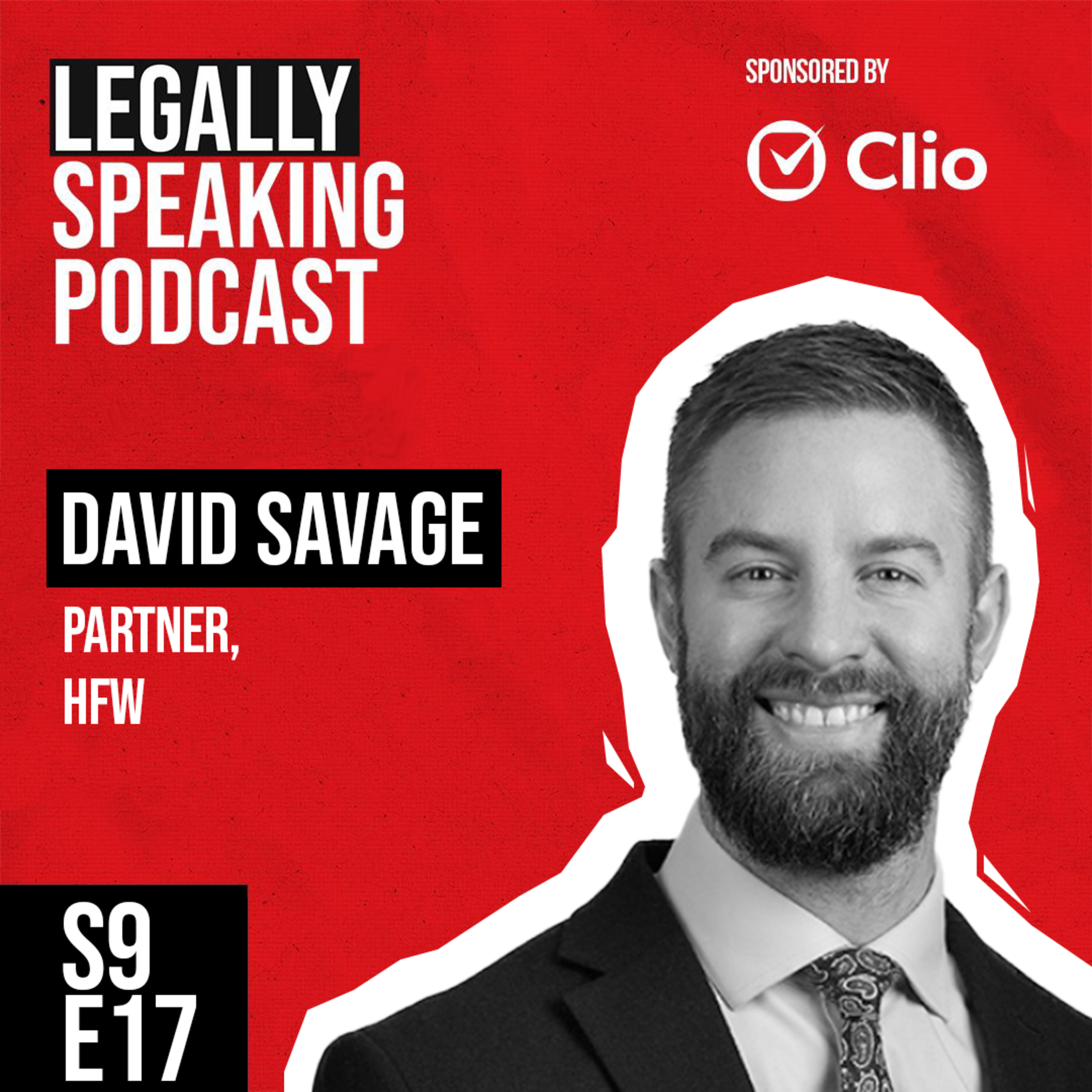
David Savage (HFW London) discusses international sanctions and export controls, how sanctions matters arise and are handled (risk identification, transaction advice, investigations, and potential self-reporting), plus broader themes in financial crime, cross-border investigations, common compliance mistakes, and how AI/tech is changing compliance and investigations.
David Savage, partner at HFW in London; recognized by Legal 500 and Chambers as a next-generation partner. Background includes regulatory and white-collar crime work: advises on sanctions, fraud, corruption, money laundering, market manipulation/abuse, and insider trading. Career path includes commodities law at Eversheds, head of sanctions at a private bank, then partner roles in financial crime/sanctions; joined HFW about a year prior. Also leads HFW’s LGBTQ network and is DEI partner for shipping globally; anti-bribery/corruption officer.
sanctions are complex and opaque, driving overcompliance and ongoing confusion even after years; investigations require proper scope, document preservation, regulator-aware strategy, and early lawyer involvement; human behavior (e.g., bribery, tampering with SWIFT messages) defeats “systems-only” thinking; AI helps sift transactions/documents but must be human-checked.
Russia sanctions after Ukraine; Iran sanctions (EU/US convergence); a vessel taking on cargo linked to sanctioned entities; self-reporting to UK regulators (OFSI/OTSI, HMRC) and US DOJ/FBI; SWIFT message stripping to remove Iran references.
Written by AI. May contain mistakes.
Learn about David's unexpected path to becoming a sanctions lawyer.
“So I basically started teaching myself about sanctions, reading EU regulations, which are incredibly challenging to get your head around.”
Explore David's upbringing and the influence of his family on his career.
“I have never seen Suits and I purposely try not to watch any legal shows because I always get very frustrated when I think that they're actually completely not linked to what the reality of a law firm is.”
Follow David's journey from his education to his early career in law.
“She did a law degree when I was about 10 years old, which probably had some impact on my career decisions down the line, which I think we'll maybe talk about later on.”
Discover how David transitioned into the specialized field of sanctions law.
“and kind of really got into the, I guess, the depths of being a proper lawyer.”
Learn about the specifics of David's work in sanctions and export controls.
“And thank you for being very open with that.”
Get insight into David's typical day and the variety of his responsibilities.
“against Russia, ultimately designed to restrict flows of funds into Russia and to restrict Russia's ability to continue its war efforts.”
Understand David's commitment to LGBTQ+ and DEI initiatives within his firm.
“you know, for me, I kind of thrive in that.”
Learn what inspired David to specialize in sanctions and financial crime.
“fortunately I've got a really good team around me to help me get things on get things kind of going on but it's again busy days but it keeps me out of trouble.”
Learn about David's unexpected path into sanctions law and the factors that influenced his career choices.
“I was out with a client when I was at Eversheds.”
Understand the complexities of cross-border compliance and the key considerations for multinational clients.
“Set at Ribby Hall Village in Lancashire, over 200 SME law firm leaders will come together for a full day experience designed to challenge, connect and inspire.”
David discusses prevalent mistakes companies make regarding sanctions and compliance, emphasizing human factors.
“he said, there's never a mistake, there's just something missing.”
Explore the cautious yet optimistic approach to using AI in the legal field.
“So the more help I can get with making it a little bit more streamlined, the better.”
Learn about the surprising resurgence of sanctions and their complexities.
“So we're not quite there yet, but he predicts in the next few years we're getting there.”
Discover the complexities of sanctions and how they relate to international trade.
“And I think the other thing is following the invasion of Ukraine, we've now had three years of sanctions against Russia.”
Hear about the importance of authenticity and personal experiences in law.
“Yeah and I love how you have a real passion for the work that you do as well.”
Get valuable insights on building a successful legal career and embracing change.
“And indeed, in December, I actually brought the little one to work for me.”

Get the gist, explore an idea or ask about something said.
 Claude
On Legally Speaking Podcast, what are the key points of this episode?
Searching your listeningAutomatic transcript. May contain errors.
0:00So I basically started teaching myself about sanctions, reading EU regulations, which are incredibly challenging to get your head around. So I never thought I'd end up doing, but I managed it and then started advising our commodities clients. And it quickly turned into a small micro business. It was a bit of a weird journey. I didn't intend to be a sanctions lawyer, but I have absolutely no regrets about being one. Generally speaking, I've had broadly positive experiences of being out. And as one gets more senior in one's career, I think there's almost a social contract that one has to agree to when one has had a very positive experience, which is to try and create those positive experiences for those around us.
0:37I know that a lot of junior lawyers are looking for role models, are looking for mentors, are looking for people who are authentic. And that's why I am the way I am.
0:45David Savage: On today's Legally Speaking podcast, I'm delighted to be joined by David Savage. David is a partner at HFW in London. With a wealth of experience in regulatory and white-collar crime matters, David advises on sanctions, fraud, corruption, money laundering, market manipulation, market abuse, and insider trading. David is a recognized leader in his field by Legal 500 and Chambers as a next-generation partner. So a very big warm welcome to the show, David. Rob, it is lovely to be here. Thanks for having me. How are you doing? I'm doing very well and the pleasure is all ours to host you on the Legally Speaking Podcast today.
1:20David Savage: And before we get into what will be undoubtedly a fantastic show, we do have a customary question here on the Legally Speaking Podcast, which is, on a scale of 1 to 10, 10 being very real, what would you rate the hit TV series Suits in terms of its reality of the law if you've seen it? I have never seen Suits and I purposely try not to watch any legal shows because I always get very frustrated when I think that they're actually completely not linked to what the reality of a law firm is. So I'm going to give it a hot five. I'm going to give it a five out of ten. There we go. Diplomatic five. And with that, we'll move swiftly on to talk all about you.
1:57David Savage: So to begin with, David, do you mind telling our listeners a bit about your background and career journey? Absolutely. So I'm David. I was born in the 1980s to two parents in the Royal Air Force and then spent quite a bit of time in my kind of youth moving around East Anglia with my mum. She did a law degree when I was about 10 years old, which probably had some impact on my career decisions down the line, which I think we'll maybe talk about later on. She met my dad when I was 10. They got married and my dad adopted me when I was 11 years old, which was pretty cool. And then they had another couple of kids, my brother and sister, who I'm incredibly close to.
2:37We moved to Scotland when I was 12 and I was this little camp boy in a Scottish school which had its own challenges. But I managed to soldier on, joined the Air Cadets for a number of years, which was fantastic. Got to the rank of sergeant. Sergeant Savage was my name, which I thought was perfect. And then when it came to figuring out what I wanted to do, I originally wanted to be a commercial airline pilot. and just as I was figuring out whether I wanted to go to university or to commercial pilot school 9-11 happened and I realized that I wouldn't be able to afford to put myself through commercial pilot training so second choice law and I applied to a number of law degrees universities and Newcastle gave me an unconditional offer which to my mind made my final year of high school much easier.
3:27So I took that one and had an absolutely stellar time at Newcastle reading law, a really fantastic city, both to figure out a bit more about who I was and becoming more of an independent person and exploring my sexuality a bit more, but also just a really good law school too. And it was there that I kind of started thinking more seriously about a career in law. And in my second year, much like many students do, I applied for some vacation schemes. It was incredibly scattergun the approach but I was fortunate to get vacation schemes in London with Richard Butler, in Leeds with Walker Morris and in Bristol with Burgess Salmon because I wanted to see what kind of city I wanted to live in having never lived in London itself and I came down to London on the train to my first vacation scheme and I was still 19 years old at the time and I was just blown away with being in the city.
4:23It just felt so freeing. It felt so professional. And I did my two weeks at Rich's Butler and absolutely loved it. And then got my offer of a training contract just before my 20th birthday. So I was pretty young to get that kind of in the bag. I did the other vacation schemes, but they didn't quite live up to the heady heights of a London lawyer's life. So I accepted that. Went to York for my college of law. again a really fun year traveled for six months after that so did a bit of asia uh did a bit of australia and new zealand and really enjoyed that and found a lot more of my independent self there and then started my training contract had a really good time did four seats all of them bar one were contentious i went on secondment to mtv because i thought i wanted to be a media lawyer and promptly discovered that drafting contracts really wasn't my cup of tea but got to spend a lot of time with Alpha Beat and the Ting Tings and a little bit of Girls Aloud as well.
5:20So that was my small claim to fame. They obviously don't remember me, which is a shame because I could have got free tickets so I was allowed last year. And then I qualified just as the financial crisis happened, which was stressful, and I qualified into the commodities team and kind of really got into the, I guess, the depths of being a proper lawyer. Much like many lawyers, after a couple of years, I wanted to see what else was out there. So I moved to Eversheds again in the commodities team there. And that's where I found my kind of real passion in law, which was sanctions and financial crime and enjoyed six or so years there before deciding to move in-house for a couple of years as head of sanctions for a bank, which was really, really fascinating just to see the operational challenges that comes with fighting the good fight.
6:09but I then kind of got the call back to back to private practice that the lure kind of I couldn't resist it and I joined Stuart's as a partner in the financial crime team there and then very recently about a year ago HFW reached out they were looking for another sanctions partner HFW as you as you may know is a firm with a sectoral focus so shipping commodities aerospace insurance and reinsurance, construction and company and commercial. And I just felt it married up my kind of passion for sanctions and financial crime with my legacy experience of being a commodities lawyer. And so I happily joined the firm and it's been a stellar year or so.
6:49So that's a very brief overview of who I am and where I've come from.
6:53David Savage: I think you did that fantastically well. And what a great journey. And thank you for being very open with that. It's always super helpful to understand how people get to these amazing positions that you're in today and where you started. So let's focus on the now then. HFW, partner in the London office. Tell us more about the area of law you specialise in for those who might be less familiar and maybe just some simple examples of what things might look like for you. Happy to do so. So I focus mainly on international sanctions and export controls. And put simply, these are the various restrictions that the EU, the UK and the USA, as well as other governments, put in place to restrict certain trade and financial activity with regimes which they consider are engaging in activity which may be problematic.
7:39So a very good example, very topical at the moment is Russia. You'll be aware that over the last three years following the invasion of Ukraine, there has been a rapid increase in the kind of the level scope and nature of sanctions against Russia, ultimately designed to restrict flows of funds into Russia and to restrict Russia's ability to continue its war efforts. And what we do is we advise clients on how to comply with sanctions. We advise clients on when there may be a problem in terms of their compliance. They may have in fact breached sanctions. And we basically try and help them through that process.
8:16So looking at the kind of life cycle of a sanctions matter, we kind of help with identifying risks at the very beginning. So how do you prevent these problems from happening? And how do you mitigate those kind of exposures. Kind of go on to advice in relation to real life transactions as they're happening. So a vessel is about to take on a cargo. That cargo may have a link to a sanctioned country or a sanctioned company. And we basically analyze whether there is a problem or not on what the client can or can't do. When things go wrong, we investigate what's happened, how it happened. Is it one individual or is it a systemic problem with the company?
8:56And we try and help them figure out why it happened and how to resolve it. And if there are major problems, we help them to self-report to regulators around the world. So in the UK, the Office of Financial Sanctions Implementation or the Office of Trade Sanctions Implementation, as well as other regulators, including HMRC and US regulators as well. So the DOJ, the FBI, I've worked with in the past, et cetera. And we also help in those investigations, just trying to make sure our clients, if they have made a mistake and if they have reported or are being investigated by those regulators have as positive an outcome as possible because the fines if you do get it wrong can be in the magnitude of multiples of millions there's also potential for criminal prosecution as well so trying to manage that that kind of dynamic so it's a broad church of work and we work for clients across every sector so you know the traditional hfw ones shipping commodities all the way through to professional services i've got some ai clients that i'm working with so it's really fascinating because you're kind of advising on an area of law which is quite novel in and of itself.
9:57But then you're getting to approach all these different clients and getting to learn about their businesses, which I actually really, really love. So it's a really fun job. It's quite, quite heated at the times, there's a lot of stress that's involved with it. But I think, you know, for me, I kind of thrive in that. And it's very geopolitical, and I'm quite politically minded. So it's kind of just a joy to kind of help clients navigate these various international challenges.
10:20David Savage: Yeah, and look, it probably leads to my next question quite nicely there, because it It sounds varied. So a typical day, I appreciate probably no two days the same. But for you, again, operating as a partner, what are some of the things you get involved in? Talk us through a typical day in the life. Well, you've hit the nail on the head. There is no typical day. The most regular part of the day is my morning. I get woken up by a two-year-old at some point between 4.30 and 6 a.m. I try not to look at my phone for the first half an hour of the day. I'd like to kind of be kind of quite proactive in that period and just focus on my family, have a coffee.
10:55And then if I can, I'll go for a cycle or go to the gym. I think it's really good for my physical health and my mental health just to get out and do something that kind of is a little bit more active. And then the day begins and the day normally begins about 830. And I'll read all the emails that have come in overnight. As I said, my practice is broad. It's pretty much entirely international. And so there'll be people messaging from Singapore or Hong Kong or America, and they'll be wanting advice that day. And then you can respond to those and then you get on with what your day actually looks like.
11:28So as I said earlier on, I might be doing a voluntary self declaration to HMRC. So drafting that declaration, making sure that it puts the client in the best light, that we've explained everything, that we're full and frank in our disclosure. I might then have to deal with a client who has got a sticky issue in relation to the processing of funds which are linked to Iran. So thinking about what they can and can't do, the denomination of the currency, where the funds are going to, where they're coming from, looking at swift messages, working with accountants, trying to understand all the financial dynamics.
12:03Because as a typical lawyer, I do not understand finances at all. So I always need to get an accountant involved if there's something like that that's required. And then there'll be things like drafting compliance policies, doing training, you name it. It's a very broad church of work, which, as I said earlier, keeps me excited. But on top of the day job, I've also got my gay job. And that's basically I'm the head of the LGBTQ network at HFW, something I took on quite recently. And that's been a really real kind of big joy for me just to take that network further forward. We've got a lot of work to do as a firm.
12:40I think most firms do. But spearheading that and taking it into a more positive journey, I think is quite exciting. And I'm also the DEI partner that stands for diversity, equity and inclusion partner for the shipping team globally. So that's not just looking at LGBTQ plus issues. It's looking at social mobility, women's issues, religion in the workplace, mental health and physical health in the workplace, etc. etc so looking at all those strands and making sure we're as representative of society as we can be and I'm also the anti-bribery and corruption officer at work as well so dealing with any kind of potential issues regarding gifts and hospitality so lots of meetings lots of relying on my team fortunately I've got a really good team around me to help me get things on get things kind of going on but it's again busy days but it keeps me out of trouble.
13:35David Savage: Yeah I was gonna say busy is probably underestimating you know what yeah what what you're doing you know I thought I was busy but just hearing all of that um you know kudos to you and it's all great meaningful work and impactful work and I know you get a lot of fulfillment through what you do in terms of servicing clients but also the wider roles that are equally as important there and I want to just rewind because you've touched on it briefly back to before joining HFW you were a group um senior sanctions officer at a private bank what initially sparked that interest in sanctions and financial crime you?
14:06I was out with a client when I was at Eversheds. I must have been about three years qualified. And I was doing commodities work, but it wasn't sparking as much joy as I would have liked to use the Marie Kondo terminology. I asked the client, I said, what is coming across your desk at the moment? And she worked in a kind of trading house. And she said, David, sanctions are going to be the next big thing. And this was just as Iran was kind of on the table in the EU and the US were converging in terms of their sanctions framework to put maximum pressure on Iran. And so I thought, well, let's give it a shot.
14:42And there wasn't really anyone at Evershed who was doing that type of work. So I basically started teaching myself about sanctions, reading EU regulations, which are incredibly challenging to kind of get your head around. And so I never thought I'd end up doing, but I'd managed it and then started advising our commodities clients. And it quickly turned into a small micro business. And as I mentioned earlier on, that kind of geopolitical nature of it, it's really, really made me kind of interested in the area as a whole. And so I was doing this work and obviously I came to the attention of the financial crime team at Eversheds.
15:17And they said, well, David, we're bringing in a sanctions partner. Would you like to come and be the senior associate for him in his practice? And I jumped at the chance because it, from my perspective, aligned much more kind of closely with what I wanted to do. And once I started kind of getting involved in the large regulatory investigations in relation to foreign exchange manipulation, LIBOR manipulation, financial misstatements, etc. I just realised this is the area for me. And, you know, there's so many interesting elements. It's not just the law. It's not just the politics, but it's also the people elements.
15:50It's getting under the skin of, you know, why did you do this? what was the kind of the purpose behind doing this particular transaction or agreeing with this group of people to move rates or whatever and so that's how I kind of got into it it was a bit of a mistake but once I was there I was like this is the area for me and over my kind of the last 10 or 12 years I flexed a little bit in terms of what I focused on so sometimes it's been sanctions sometimes it's been more general financial crime issues and I think I've kind of quite nicely settled now at HFW with kind of sanctions I guess being my my major and then other financial crime kind of issues being my minor and I work quite a lot with the financial crime team in HFW on various matters so there's a nice amount of crossover between us but for me it's just that again that geopolitical element of sanctions and the fact that they change so rapidly that always kind of has me hooked so yeah it's a bit of a weird journey I didn't intend to be a sanctions lawyer but I have absolutely no regrets about being one.
16:49David Savage: No and it's a super fascinating area I have to say I'm just you know becoming more and more curious and interested learning more about your journey and obviously you've worked on a whole host of different complex cases. I want to talk about cross-border compliance and investigations to go a bit deeper because given you know HSW's global presence you know how do you go about approaching that sort of cross-border compliance and investigations part you know what are some of the key considerations when you're advising these multinational clients that you know someone operating at your level just absolutely needs to be aware of?
17:17I mean I think that the first thing to understand is what's the scope of the investigation? What are you being instructed to look into? Because one of the biggest risks when you're investigating is having scope creep where you start off looking at one thing and then suddenly it just becomes this behemoth of an investigation and sometimes doesn't actually reach a conclusion. So you've got to properly scope it with the client make sure that they understand what they want you to do. Obviously check and challenge it, be robust with them. Once you've kind of got that and you understand what you're investigating, the next thing is to basically think about what your regulatory exposure is.
17:52You mentioned international kind of clients. These clients may have exposure to regulators in their jurisdiction. They could also be exposed to regulators in foreign jurisdictions without really knowing it. And here I'm thinking mainly of kind of the UK and the USA and the EU. So ways in which you might be inadvertently exposed is by using US dollars that automatically can make a transaction. The client or the customer exposed to US sanctions. If you have a subsidiary in the UK, that may make you exposed to UK sanctions or UK restrictions in relation to fraud or whatever. So looking at the regulatory exposure, then you think about what the penalties are, what's the problem, what's the potential outcome that then has an impact on where you're going to go and how you go about doing it.
18:42One of the things I always think is quite important that some people forget is making sure you've got document preservation. So everything is kind of retained. You get rid of document retention, kind of restrictions, etc. so everything doesn't get deleted automatically because that can create a massive problem for clients if they find oh actually documents more than five years old have suddenly disappeared that can be that can be a problem uh and then thinking about you know what is what is it from an employee perspective that we need to think about here because obviously the investigation into the misconduct is one thing but then the the employee issue you want to make sure that you can represent employees and that they've got right the right representation is another thing so making sure those two things are balanced out.
19:22And then doing the investigation, doing it in compliance with what the various regulations require, what the law says on data protection, etc. Getting a report drafted, and then thinking about what do we do with it. And that involves looking at stakeholders throughout the client, making sure they're all involved in it. And it's a real task to get everyone swimming in the same direction. And I've often found that it requires quite a lot of personal engagement with various different stakeholders just to get them to understand precisely what it is you're looking to achieve and you know you don't always get the right kind of the the optimum outcome for a client you know that's that we always aim for it but sometimes you know a regulator has a different interpretation to what we have and so you know there might be a more negative outcome than what we had anticipated and then you you work with a client on that and explain this is this is why we've gone down this path and we've done everything we can to mitigate but this is where we are and then you help the client learn from their mistakes and that's the key thing at the end of it is the way this has happened it's been an unpleasant experience let's not do it again and it's funny whenever I see clients um and I'm I think I'm relatively personable they're like they say to me you're one of the last lawyers that we actually want to see when it comes to financial crime or sanctions because we know something's gone wrong which I take as a slight as a compliment I try not to take it too personally so a whole raft of
20:39David Savage: things to think about when you're investigating today's episode is brought to you by Clio champions of innovation and legal tech and proud sponsors of some of the most exciting events in the legal calendar. And looking ahead to July the 3rd, Clio is proud once again to be involved in the great big legal offsite, GBLO 2025. This one-of-a-kind gathering blends learning, innovation, wellness, and community in a refreshingly different format. Powered by us, the Legally Speaking podcast and high-risk, GBLO is the UK's ultimate legal leadership getaway. Set at Ribby Hall Village in Lancashire, over 200 SME law firm leaders will come together for a full day experience designed to challenge, connect and inspire.
21:22David Savage: Expect incredible talent, diverse legal voices and thought leaders taking the stage. Plus a VIP dinner, live music, golf, spa access, monster truck, cheerleaders, Titan, the eight foot AI powered robot and hosting it all, the legendary voice of the X Factor and Britain's Got Talent, Peter Dixon. This isn't just another legal conference, it's a movement. And your future firm, it starts off-site. Clio will be there, and we'd love to see you there too. Now back to the show. I learned recently, someone said to me, which is quite an interesting way of looking at it, he said, there's never a mistake, there's just something missing.
21:55David Savage: That's quite a good way of looking at it. I'm going to steal that, thank you. Yeah, no worries. You've touched on a few common mistakes. I'd love to know, across sanctions, bribery, corruption, money laundering, because you've done some incredible work. you know what are some of the most common mistakes companies make when dealing with these risks i know you talked about documentation but yeah just any other common things potentially people listening in that are like okay this is really hitting home now i need to start thinking about this to avoid this happening i mean i think the first mistake is letting the mistake happen in the first instance uh and i say mistake sometimes it's not a mistake sometimes there's obviously conduct which is nefarious that has caused the problem which is which is now kind they're being investigated.
22:35So many companies think because they've got their systems and controls, they've got their policies, they've got their top level commitment, they've got their training, which they do online, they've got, you know, audits coming, you know, auditors coming in doing their internal audits, etc, that they're fine, and that they don't have a problem. And it creates a certain amount of overconfidence in relation to your environment. And what you have to remember with most of these issues is that they're human issues. When someone is accepting or giving a bribe, when someone is stripping information out of a swift message to remove any kind of reference to Iran, that's a human factor that you really can't cater for.
23:17You can't litigate or mitigate that particular risk. So you just have to accept the fact that sometimes, even with the best system in the world, there are going to be people who are trying to take advantage of it so I think knowing that you've kind of got this human factor is really important for clients to remember and then I think the second mistake is not instructing council as soon as they realize something has happened because I've had so many times when you have investigations and there's been an internal investigation and you're like why didn't you get us involved earlier because then half the stuff which we're now having to deal with which is costing you money we wouldn't have had to deal with it if we've been involved from the word go So that's not a sell, by the way.
23:59It's just a point that I've identified over time is that you could be a lot easier. You could be in a better position if you had instructed lawyers a little bit earlier.
24:10David Savage: Yeah, and look, I'm verbose about my day job on the legal recruiting. I think having that relationship is the best one that can help your overall life. You know, being in a job you love is important. So no, absolutely instructing counsel that can help you, that can help you sleep at night, which again, lots of partners have come on the show is so important. But I mean, it's serious stuff that you're doing. So, you know, in terms of the agencies, how do you approach defending clients in these super high stakes investigations? You know, the FCA, SFO, Serious Fraud Office, U.S. Department of Justice, you know, office financial sanctions implementation.
24:41David Savage: This is serious stuff. So, you know, any sort of tips in terms of your approach? I mean, I always try and find out what the agency is looking to achieve in the first instance. And that involves having that open and honest dialogue with them. Once you know whether your client is a suspect or a witness or is someone who maybe they're looking to flip, then you can figure out what it is that you're wanting to do and how you're going to engage and how robustly you're going to defend your client's position. if it's a corporate you'll be looking you know whether the regulator is really keen to make an example of the client or if they're looking to maybe kind of extract a significant fine and then have that as a something that they can kind of wave in in the areas of success so I think understanding as best you can what the regulator is looking for is absolutely key and then you can finesse your approach to make it kind of work with what the what the regulator is looking for that that is for me is the key sometimes you can go in there guns blazing and you're like oh actually that isn't quite what we should have done this isn't really where the regulator is going with this so understanding it asking questions I always ask lots of very silly questions because at the end of the day the more information I have the better I can represent my clients so I always ask far more questions than I probably should do.
26:01David Savage: I think that's great isn't it being curious you know never assuming we know what that means if you assume in terms of where that leads and i always say specific is terrific so when you can actually you know understand what it is that they're really trying to achieve in terms of their goal you can be a lot more um helpful in your counsel and you know it's more a win-win all round and less time wasted less money spent etc etc so no really like that approach okay you touched on it again earlier but you know we can't not have an episode these days where we talk about tech and ai you know it is very much here and even at the day of this recording whenever it's released even on the same morning it'll probably be out of date given the exponential change that's happening but in your view how is technology like AI and automation shaping the future of regulation compliance and legal investigations and what are some of the risks and indeed benefits because we always like to talk about tech for good of integrating AI into compliance yeah I think that's a really good question and obviously lawyers are now all jumping on to AI.
26:58We're all using Copilot and ChatGPT, probably not to the fullest extent possible, but we're trying to get our heads around it. I think from a compliance perspective, tech really, AI and tech is really a game changer. I mean, you can use AI to analyse millions of transactions to see where there might be erroneous data or erroneous kind of flows of funds. You can use it to sift through thousands and thousands of documents without having to use huge amounts of human capital, which obviously involves a huge amount of expense as well. And there are loads of ways in which AI and tech is going to be used, which we can't even get our heads around yet.
27:36And we're still very much at the beginning of the journey. What I do think for lawyers is if you're not engaging with AI and tech now, you're going to be behind the curve. So I recently signed up for one of these Coursive courses, which is all about AI and how to use it and the various different functionalities. And that's already kind of beginning to pay dividends just in terms of getting my day job a little bit more organized. As we've talked about, it's quite frenetic. So the more help I can get with making it a little bit more streamlined, the better. I think there is one word of caution with AI in tech and that's the over-reliance on it.
28:12At the end of the day and for the time being until we get to an AI kind of super being which takes over the world, AI is necessarily requires human input it requires learning it requires us to check and challenge what it is that it's producing for us and so I think there has to be a kind of a word of caution in our approach that we can't just rely on it and the way I where I tend to look at AI for example is you know you treat it like a very very junior lawyer and you basically give it as much information as you can, setting it out in very clear terms. And then you should be able to get something back that you can potentially use.
28:52And that's not disparaging younger lawyers at all. It's just about, we all have to learn and we learn through being taught by people who are more senior. And I think that that's how we learn. That's how we teach the AI tech to kind of be as useful as possible for us. So a great concept, a great piece of technology, but maybe not the panacea that everyone seems to think. And I also, from a tech perspective, I always think about what is the opposite of compliance? What are criminals using? With opportunity comes abilities to take advantage of it. And so I'm interested in how tech can be used in ways which are more nefarious and figuring out how can I help clients avoid falling to pitfalls, which exposes them to that kind of nefarious activity as well.
29:39David Savage: Yeah, and I just love that. And I love that you invest in yourself as well, because some of these skills, we're all going to have to learn in the new world of work and future of work that we have. If it's meant to be, it's up to me. And you're taking that time to go out there, re-skill, re-tool, understand how to use these new tools to benefit your practice, aid your clients further. Love it. And yeah, we're not quite, I read recently that the CEO of SoftBank was saying, obviously we've got AGI, Artificial General Intelligence, but ASI, Artificial Super Intelligence, that they reckon potentially 10 ,000 times smarter than any human on the planet.
30:12David Savage: So we're not quite there yet, but he predicts in the next few years we're getting there. So I think we all need to be thinking about this, staying curious, being open to learning and love your overall approach. OK, let's talk about some trends within sort of your space. What are some of the things that have most surprised you in terms of sanctions trends in recent years? Well, I mean, when I got into sanctions, it was mainly Iran. And as soon as the joint comprehensive plan of action was agreed between Iran and the US and the EU, which was essentially an agreement that Iran would stop enriching its water and engaging in nuclear proliferation in return for the relaxation of sanctions against it, I just thought sanctions would disappear as a concept, which is why I was glad to kind of focus on other aspects of financial crime and upskill there.
30:58And then obviously Russia invaded Ukraine and that was following the illegal annexation of Crimea and sanctions have just exploded again. And I was I was quite surprised at the beginning of the vigour with which those sanctions were pursued by the EU, the UK and the USA. So what I thought was a dying potential area is now just a blossoming huge area with loads of work, maybe too much work for the amount of lawyers who actually do sanctions work. So that was one surprise. And I think the other thing is following the invasion of Ukraine, we've now had three years of sanctions against Russia. And I'm still surprised at how little people know about sanctions and how they actually work.
31:39And I think part of that is because they're designed to be complex. They're designed to be opaque. And that encourages overcompliance. But what it also means is that we're continuing to get loads and loads of questions, loads and loads of investigations and requests for advice from clients. And, you know, you think after three years, there would be maybe more of a kind of a general knowledge base. And I think there is. But I just think it is such a confusing area that the instructions just keep coming through. And that's been an incredibly pleasant surprise. So those are the two kind of major kind of pieces of observation I have.
32:12The other one is now obviously with the implementation of tariffs, how that is going to impact on on international trade and business as well. because I was reading only a few days ago about the possibility of Trump responding to our VAT with his own tariffs. Now, tariffs aren't sanctions, but they're sanctions related. And so what can we do as sanctions and export control lawyers to help our clients on the tariff side or two? And that's certainly something that we are now exploring with clients. So there's always new learning to be undertaken when it comes to sanctions. And again, that's quite a pleasant surprise for me because I'm quite a curious cat and that kind of ability to keep on investing in myself with these new kind of areas of practice is again quite a pleasant surprise.
32:57David Savage: Yeah and I love how you have a real passion for the work that you do as well. You tell. Yeah and I think that's why we want those voices on the show you know our tagline is inspiring legal minds transforming legal futures and we need these people that are you know really invested in trying to do their absolute best for their clients the profession and I'm always curious as well and always learning and i think that's what's gleamed you know throughout this conversation anyone who says they're an expert in anything you know yes you can have a high level of skill and certainly know your know your stuff but we all need to be continuously earning and that's why we're really keen to to get someone who's very well known within the sanction space particularly onto the show to educate our listeners as well because like you say i think there isn't um quite the um the level of kind of understanding that is needed okay let's go back to last year yes um and let's talk about LinkedIn because it's a platform that I'm hugely grateful for I owe a lot to LinkedIn it's given me so many opportunities beyond belief and I'm a huge advocate for it but obviously last year you shared on LinkedIn about taking your little one to the HFW family Christmas party you're open about being LGBTQ plus a parent how important is it for you to show your personal side of life as a lawyer and how do you balance being a law firm partner with being a parent well I mean I've always approached my career and who I am as being essentially linked.
34:12So I've never had a personal David and a professional David. I've always tried to bring my full self to work. And I guess I was very lucky when I did my vacation scheme at Richard's Butler, I was partnered up with an out gay partner there. And he has become a lifelong mentor and friend. And I'm sure HR did on purpose and it gave me that confidence from a very early stage in my career just to be myself and to be very happily gay I can I'm a gay man very openly gay and to do it in a way that felt authentic to me and I don't think in the intervening one or two maybe 17 years that there has been a moment when I have felt luckily victimized or prejudiced as a result of my of my sexuality and I'm not sure every lawyer or every person can say that.
35:04And I could be wrong. But generally speaking, I've had broadly positive experiences of being out. And as one gets more senior in one's career, I think there's almost a social contract that one has to agree to when one has had a very positive experience, which is to try and create those positive experiences for those around us. And I know that a lot of junior lawyers are looking for role models, are looking for mentors, are looking for people who are authentic. and that's why I am the way I am that's why I talk openly about being gay I talk openly about my husband and very happily in the last few years I've talked about my surrogacy journey my sister was our surrogate which was just a phenomenal experience and something I never thought would have happened in a million months of Sundays and I've talked about that and then I've obviously talked about my son our son and how proud I am and I am genuinely proud I love being a dad and And all of my friends who are straight, when I was telling them about this kind of project to have a child, they were like, well, if we're going to be getting woken up at 6am, we don't see why you can't be getting woken up as well.
36:04So they were very supportive from that perspective. I see what they mean now. And I just talk about it like that because I want other people to, both straight and LGBTQ +, to kind of A, have that kind of situation normalised. We're only a small percentage of the UK that are LGBTQ +, an even smaller percentage that have kids. So I want that to be normalized. And I want the queer community to realize that they can do these things, too. Being LGBTQ plus is not a bar to living whatever life you want to live. And so that's why I talk about it. And just generally speaking, I do. I love being a dad and it's hard for me to leave that part at home.
36:43So I kind of bring it to work with me. And indeed, in December, I actually brought the little one to work for me. And it was it was a lot of fun. And I felt very privileged to be in an organisation where they focused on families like that and be where I could come into work with my son as an as an openly gay man and know that there were going to be no issues, no negative comments. It was all going to be very supportive. So, yeah, that's that's why I do it. It's it's my it's my my joy to be able to be as as open as I am.
37:11David Savage: yeah and it's your life i know people talk about work life balance it's just life you know and being a parent being a dad is part of your life and it's you know it's it's it's important and i love that you're so open and honest about your journey and and and what you you have achieved and how you're balancing things and in a very authentic um human way which i think we're all craving that human connection um particularly from people that you know are doing great things like yourself in your your areas of law so i guess before we we wrap up then what what advice would you give to those maybe aspiring lawyers or lawyers that have probably thought about maybe switching lanes who might be interested in a career in regulation, sanctions, compliance, or white collar crime?
37:47David Savage: Anything you would say to that? Yeah, I guess I've got kind of three pieces of advice. Number one is for those who aren't already in the profession, so more junior in their careers, get as much work experience as you can. And that work experience doesn't have to be what I did, which was the vacation schemes. It can be working in a high street law firm. It can be going and shadowing a judge it can be working in a compliance team in a bank or a corporate or working or going to jail and doing some you know some shadowing work in jail as long as there is a kind of an element of you know compliance or financial crime or sanctions in it I think that's going to stand you in really good stead but also just getting out and getting work during work being a normal person and just having a job I think that kind of skill set is also really valuable I learned a lot through being a waiter about how to work with people and how to charm people and things like that which I maybe wouldn't have been able to do if I hadn't had that kind of skill set as part of that working practice.
38:43Secondly I think you know keep reading the news. I read the news all the time as I mentioned earlier my job is very geopolitically biased and you have to be aware of what's going on in the world and it's very clear when we have people who apply to join HFW as a trainee or a vacation schemer that they if they if they've done their prep and they've read the news because they can talk with knowledge about what's going on in the world and how that impacts us as a business and thirdly and this applies to I guess everyone is to look at your career holistically and not to not be afraid to take chances my career whilst it might look quite linear has actually been a little bit more sinusoidal and I've always approached new opportunities with that kind of curious nature that we've talked about during this this kind of half hour and I thought well what's what am I going to lose here and there's a there's a phrase which is like what if I fall and then you go but what if what if I fly and and that's how I always try and approach these things you know go and go and explore these new areas go into financial crime go into a bank you'd be in the financial crime team there oh go and be a partner join this new firm and I've always approached it with that kind of gusto and curiosity and I think if one looks at one's career holistically at the end of one's life most are not that linear anyway so don't be afraid to have those kind of career changes those step changes those kind of pivoting of you know where you're focused as well I think that is what what we as lawyers kind of have to do for our clients so we should also apply it to ourselves and our careers yeah I love that you
40:16David Savage: know what if you fly and it's so true isn't it's mindset I remember Jack Newton CEO of Cleo said you know you know always thinking about what if it goes wrong well what about what is you know what is the opportunity ahead of us if we look at that. So I absolutely love that. And it's been a brilliant conversation as I knew it was going to be super excited to make it happen today. So if our listeners, David, want to follow you or learn more about your career or indeed HFW, where can they go to find out more? Feel free to share any websites, any social media handles. We'll also include them in this episode for you too.
40:44Thank you very much. I'm on LinkedIn and my LinkedIn name is David John Savage. So feel free to add me. And we've also got the HFW website, which is hfw.com and you can search for David Savage or Sanctions on there. Unfortunately, I don't have any of the more fun professional social media accounts. So it's just my LinkedIn and my work one.
41:05David Savage: Absolutely. Well, the largest professional networking site in the world will do for our listeners. That's my favourite. So thanks so much once again, David. It's been an absolute pleasure having you on the show. From all of us on the Lead and Speaking podcast sponsored by Clio, wishing you lots of continued success with your career and indeed your life as a parent. But for and out, over and out. Thank you for listening to this week's episode. If you like the content here, why not check out our world leading content and collaboration hub, The Legally Speaking Club, over on Discord. Go to our website, www.legallyspeakingpodcast.com for the link to join our community there.
41:43David Savage: Over and out.
Fraud, corruption, money laundering, how do the world’s top lawyers tackle financial crime at the highest level?
This week, I’m joined by David Savage, Partner at HFW and a leading expert in white collar crime and sanctions. David reveals what really happens in high-stakes investigations, the red flags companies ignore and how AI is reshaping compliance and regulation. Plus he shares his journey balancing life as a law firm partner and an LGBTQ+ parent.
If you want insider information on financial crime, compliance and the future of regulation, this episode is unmissable. Go give it a listen now!
So why should you be listening in?
You can hear Rob and David discussing:
- David’s Journey and How a Lot of it Was Self-Taught
- The Complexity of Sanctions
- Why We Need Technology and Compliance
- Maintaining Authenticity in Your Professional Life
- Diverse Work Experience and Career Advice
Connect with David here - https://uk.linkedin.com/in/davidjohnsavage