

 Ask ChatGPT

- Podcasts
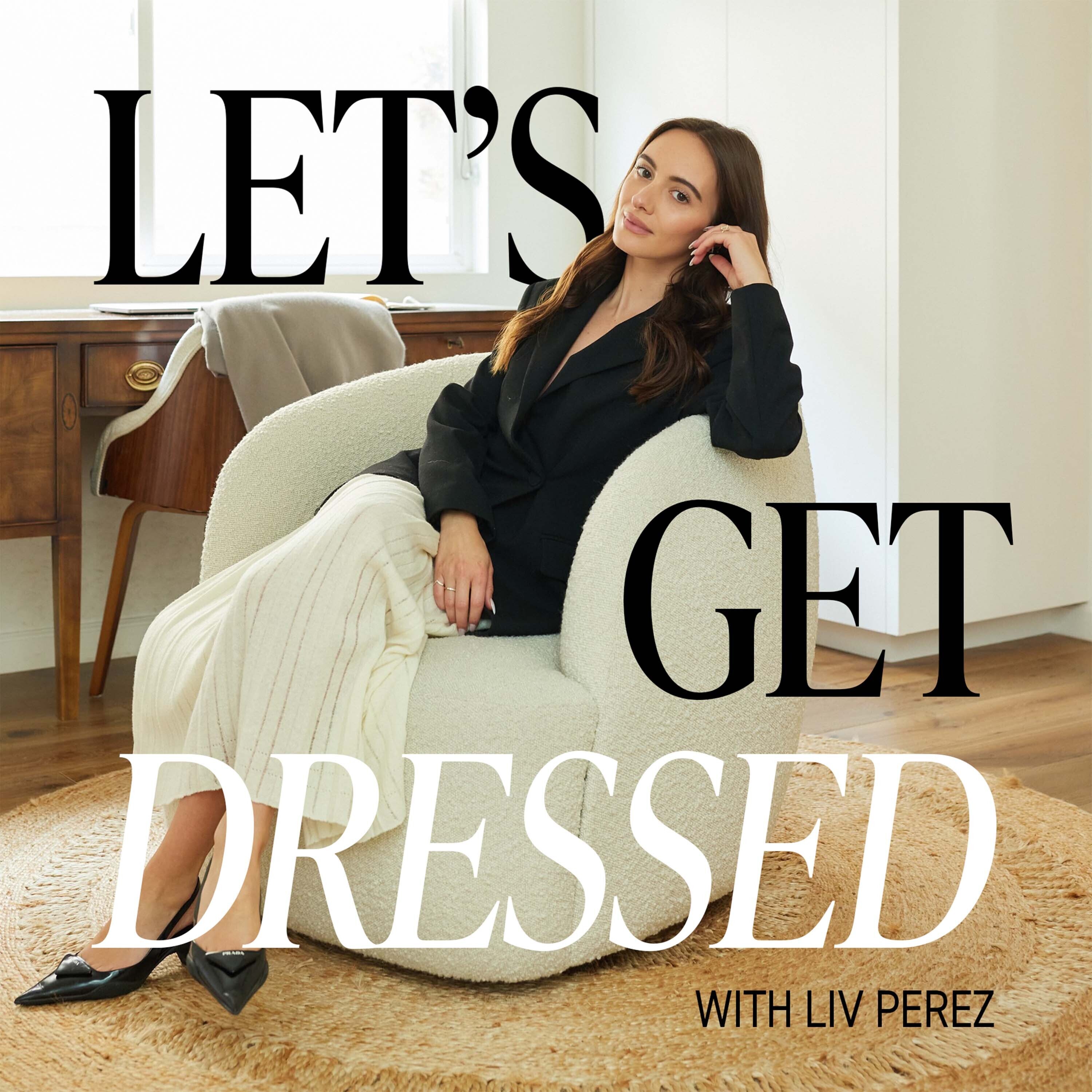
- Let's Get Dressed
- How Ralph Lauren Shaped American Style
In short
Liv Griz and Ralph Lauren expert Bridget Foley discuss how Ralph Lauren shaped American style for 60 years—through authenticity, “living well,” and designing for real life rather than short-lived fashion trends.
Guest backgrounds
Bridget Foley is a former editor at Women’s Wear Daily (WWD) for over a decade, interviewed Ralph Lauren multiple times, and wrote the texts for Ralph Lauren’s new coffee-table book Catwalk. She has covered runway shows since 1972.
Key claims
Ralph’s longevity comes from a clear founding vision that resonates, staying true to the aesthetic while updating with culture. His “storyteller” approach and belief in optimism (“living well from the inside out”) drive the brand. The brand’s high/low contradictions (rugged/refined, masculine/feminine) and functional luxury (utility on the runway) keep it relevant, including for Gen Z.
Notable examples
polo shirt as the “magic” everyday staple; fall 1981 active/hiking-fishing runway foreshadowing Polo Sport; tuxedo jacket over jeans; Ralph’s hand-me-down/vintage and military/uniform inspirations; Bridgehampton Spring 2025 sunset show; Fall 2025 intimate downtown craft-focused show; Ralph’s tie origin story with Bloomingdale’s.
Written by AI. May contain mistakes.
Chapters
0:45
Exploring Ralph Lauren's Impact
Discussion on how Ralph Lauren has maintained relevancy and popularity over 60 years.
“It's also one of the only fashion brands that still has its main designer at the helm and continues to not only attract its core audience, but is also doing such an incredible job of appealing towards Gen Z.”
2:15
Meet Bridget Foley
Introduction of expert Bridget Foley, her background, and her insights on Ralph Lauren.
“You're an icon in this industry, and we're just so thrilled to be able to hear from you.”
3:50
Bridget's First Encounter with Ralph Lauren
Bridget shares her first experiences and insights from interviewing Ralph Lauren.
“of having written for so long and having a front row seat, not just to this brand, but to so many.”
6:00
Ralph Lauren's Design Ethos
Discussion on the core principles that define Ralph Lauren's design approach.
“down in an interview with him and I thought, this man is who and what he projects to be.”
10:30
Ralph Lauren: A Lifestyle Brand
Exploring how Ralph Lauren transcended fashion to become a lifestyle brand.
“There are so many different pillars that make this world work, right?”
13:00
Ralph Lauren's Unique Design Journey
Discussion on Ralph Lauren's journey and his unique approach to design and inspiration.
“I mean, one of my favorite interviews that he's done that I think of is, I forget who he was sitting with, but they had asked what he was wearing and he was like, I think this is from Kmart.”
14:02
Ralph Lauren's Early Influences
Explore Ralph Lauren's childhood experiences and early fashion influences.
“he became obsessed with, you know, with sort of the elegance of Fred Astaire, Cary Grant.”
14:59
The Aesthetic of Ralph Lauren
Discuss the unique aesthetic of Ralph Lauren that blends high and low fashion.
“Their function, they are clothes built and made, designed and constructed for utility.”
16:04
Lifestyle Elements in Ralph Lauren's Brand
Analyze how lifestyle elements contribute to the growth of Ralph Lauren's brand.
“Well, clearly the contradiction, the high and the low, but also just the, you know, rugged, refined, often in concert.”
18:35
The Optimism of Ralph Lauren
Delve into the optimism reflected in Ralph Lauren's designs and lifestyle.
“The next one, a Ralph Lauren inspired nursery for my new son.”
Show all 19 chapters
21:06
Exploring the Ralph Lauren Archives
Experience a deep dive into the Ralph Lauren archives and their significance.
“So you have had such an unbelievable experience, obviously having worked so closely to the brand, but also working on this book.”
22:43
Preservation and Longevity in Fashion
Learn about Ralph Lauren's commitment to sustainability and longevity in fashion.
“He said from day one, again, when he was a very young designer, I want my clothes to look better next year than they do this year.”
24:41
Memorable Moments in Ralph Lauren History
Reflect on key moments in Ralph Lauren's history and their impact.
“What was the most surprising thing in there?”
27:35
The Emotional Impact of Ralph Lauren Shows
Consider the emotional narratives presented in Ralph Lauren's fashion shows.
“That had been all about the big picture and the world of.”
28:00
The Power of Fashion Shows
Explore the emotional impact of Ralph Lauren's fashion shows and their significance.
“I felt the same way with the 50th anniversary show.”
29:24
Ralph Lauren's Connection to Gen Z
Discuss how Ralph Lauren has successfully attracted Gen Z while maintaining brand legacy.
“So my first Ralph show that I got to attend IRL was earlier this year in February.”
31:02
The Origins of Ralph Lauren
Learn about Ralph Lauren's beginnings and the revolutionary impact of his designs.
“seamlessly not let go of its core consumer, but really attracted Gen Z.”
33:30
Product Quality and Brand Identity
Understand the importance of product quality in sustaining Ralph Lauren's brand identity.
“young designer concerned with and focused on a future for his company and building his company.”
34:57
Future Directions of Ralph Lauren
Speculate on the future of Ralph Lauren and his influence on fashion trends.
“that it is not, you know, he, it really is an inclusive world.”

Ask about this episode
Get the gist, explore an idea or ask about something said.
 Claude
On Let's Get Dressed, what are the key points of this episode?
Searching your listeningTranscript
Automatic transcript. May contain errors.
0:01Bridget Foley: Hi, everyone. Welcome back to another episode of Let's Get Dressed. It's your host, Liv Griz. Today's episode, we are doing things a little bit differently because I have been wanting to do an episode series for a while now where we pick one brand and deep dive into it. And I thought that there was no better brand to pick this series off with than Ralph Lauren. Ralph Lauren is one of those rare brands that has not just set fashion trends for over 60 years. It has permeated culture across the board. Think about it. We've seen Ralph Lauren on Friends. We've seen Ralph Lauren at Wimbledon. Ralph Lauren is basically everywhere.
0:35Bridget Foley: So I wanted to bring on an expert today to talk about how and why that's happened, how this brand has maintained its relevancy and not just relevancy, extreme popularity over 60 years and become one of the biggest fashion houses in the world. It's also one of the only fashion brands that still has its main designer at the helm and continues to not only attract its core audience, but is also doing such an incredible job of appealing towards Gen Z. And there's no better expert than the one and only Bridget Foley, so I'm so excited to have her on today. She was an editor at WWD for over a decade, where she had a front row seat to all things Ralph Lauren and even got to interview him herself.
1:12Bridget Foley: She also just wrote all of the texts for Ralph Lauren's new copy table book, Catwalk, and has such extensive knowledge of every runway show that has happened since 1972. too. It was such an honor to talk to her. Honestly, she had so many stories and such extensive knowledge. I loved getting to learn from her and I know you guys are going to as well. I'm thinking of making this a series. I would love to know if you guys love this episode or not. And if there are other brands you want me to cover, I feel like it could be a fun way to get to know about the history and context of some of our favorite brands.
1:44Bridget Foley: And a little surprise for you guys, we're going to be doing a giveaway of the new Ralph Lauren catwalk book. It is again, so beautiful. the ultimate gift. I love it so much and have loved having it in my home. So if you want to enter to win, make sure you head to my Instagram today. It's Liv Perez with two Vs. Make sure you're following me there and make sure you're following Let's Get Dressed pod on Instagram as well. All the details to enter to win will be live on that page today. As always, if you loved today's episode, make sure you leave us a review on Apple Podcasts and Spotify. Let's go get dressed with Bridget Foley.
2:16Bridget Foley: Welcome to the podcast, Bridget. Thank you so much, Liv. I am so happy to be here. Thank you for having me. I'm thrilled to have you. You're an icon in this industry, and we're just so thrilled to be able to hear from you. That's very sweet. Thank you. How's your day going? My day is going beautifully. It's beautiful out there. Nice, crisp air. Love it. The LA girl in me was a little cold this morning. The New York girl in me was a little cold this morning, but I like that. It seems like everybody is thrilled, though, because I know it's been very cold. So I'm happy that you guys are getting a little bit of warmer weather.
2:43We're looking forward to spring. I know. Real spring.
2:45Bridget Foley: Real spring. It'll be here soon. I love coming to New York in spring because you walk through the streets and you have those tiny little planters at the bottom of trees where the tulips are growing in. And it's like that one spark of joy that spring is coming. It's the one spark of joy. But you also see if you hit the trees, the flowering trees at the right moment, they're gorgeous. But it's also funny when spring is coming to New York because there'll be certain days when you go out and there will be people in parkas and people in tank tops. Yes. You know, and it's, and you can never tell. No one looks wrong and no one looks hot or cold.
3:19It's very interesting. The fashion scene at that moment is very interesting.
3:22Bridget Foley: It's incredible. So today we are talking about one of my favorite brands in the world and a brand that you have had a very front row seat to see evolve over the last few decades. You were an editor at WWD for over a decade. You are very kind to put it that way over a decade. Yes. And you have a personal relationship with Ralph himself. You know, you see brands that influence culture, right? But it's rare to find a brand that actually completely defines culture and the way that people engage with it. And so I'd love to hear from you from your perspective of having written for so long and having a front row seat, not just to this brand, but to so many.
3:55Bridget Foley: What to you really defines a brand that you can tell is going to have immense longevity and one that isn't? First and foremost, the founding designer has to have a very, very clear vision. a strong message and has to realize that message, number one. And that message has to resonate because you can have what you think is a great idea and it can be very, very clear and very distinctive. And if it doesn't resonate with the people you're trying to reach, then that's not going to work. The most important thing after that and the most difficult thing for a designer, I think, is to stay true to the self, to live the vision and the aesthetic while staying current with the culture.
4:35That is a very, very difficult thing to do, even over the short term, let alone over decades. And that's what Ralph Lauren has done so, so brilliantly.
4:44Bridget Foley: You obviously have a relationship with Ralph, but you've been covering the brand for so many years. You've written all the texts for this incredible new book, which I've had a chance to look through and is so beautiful. Thank you. This is one of those books that I can't wait to have on my coffee table forever and just look through. I think it's going to be one of those books that I like have open and sometimes I'll decide what show, what show, what house guests get to see on any given day. But I would love to hear from you. I feel like I have very visceral memories of kind of my early days falling in love with Ralph and, you know, moments of pop culture where it kind of seeped into my consciousness.
5:17Bridget Foley: What was your kind of first meet cute with Ralph Lauren as a brand? As a brand, my first meet cute was early on. I mean, it's kind of like, you know, when did I learn that Santa brings presents? Ralph Lauren became incredible, very famous, very early. So by the time I got to fashion, he was already he was still young, but he was already very famous and even approaching legendary status for the way he had achieved that fame and the way he had expanded the company. And so I, you know, I came to fashion knowing about him in that sense. when I started covering the major shows for Women's War Daily, that opened up a whole new aspect for it.
5:57For me personally, my personal resonance came, I think, the first time I sat down in an interview with him and I thought, this man is who and what he projects to be.
6:11Bridget Foley: Authentic. It's authentic. It's not a shtick. It's real. It's genuine. It's deep. And I really, really respected that so much from the beginning. And it's also, he's authentic as a creator. And as he calls himself a storyteller, he doesn't like the word designer. He calls himself a storyteller and he's a genuine and brilliant storyteller in the narrative arcs he constructs and brings to us. But he's also, when you are sitting to him and talking to him, you get the sense that this is a genuinely good guy and a guy who believes in the life presented in his the beautiful imagery he believes that we can live by our better angels and you really get that sense i know it sounds so schmaltzy but it is absolutely true and that's i think one of the things that resonates so powerfully with ralph across generations that authenticity and it's an authenticity baseline about a belief that we can live well and respectfully and as a community Ralph Lauren, I feel like, does not sit down for interviews a lot.
7:12Bridget Foley: What was that like? So special. Right. So special. When you're sitting with Ralph, you are the only person in his world. He's not doing this. He's not, you know, looking to get out. And that was when I was very young, the first time early on in my interview relationship. I've had the honor to interview him many, many times. But I remember that first time it was so, you know, so impressive because not everyone treats a journalist they don't know in that way. And it was quite impressive. And it's also quite impressive because he really doesn't like talking about himself. It's funny to say for someone who has reached his level of fame and his level of fame beyond fashion, but I really think he doesn't love talking about himself.
8:02Bridget Foley: What do you think that does to a designer? And I know he doesn't even like to call himself that, but I wonder what you think, how that impacts the brand itself and the success of it. I think that at the same time, his life is so central to the brand. From day one, there's this very interesting dichotomy. One of the tenants of Ralph Lauren's design ethos is contradiction, masculine, feminine, rugged, refined, such and such. But if you look at his pool of inspiration, it's bifurcated. As a kid, he became obsessed with the movies. He was obsessed with sports and obsessed with the movies. And he started to imagine himself as the characters he saw in the movies at the, I love the name of his local theater, the Tuxedo Theater.
8:47Bridget Foley: Oh, how fitting. Isn't that so fitting? So there were all of these sort of these inspirational characters that he was moved by And that resonated with him at the same time when he started his company. So really, Ralph is, in a very real sense, his own customer. He's his first customer. And so that's, you know, whether he talks about himself or doesn't talk about himself, that is a very real aspect of the world and the business and the empire he has built. He has built it because he has felt the need for A, B, C, D, and E. And then he's created that. Today's episode is presented by Depop. If you know me, you know I am big on a closet reset.
9:31Bridget Foley: I genuinely think that when your closet feels organized, your brain and life does too. So how many things are in your closet right now that you have loved when you bought them? Maybe you wore them once or twice, but now they are just sitting there. Here's something that I have realized. That random vintage blazer or dress that you bought for that birthday or dinner, someone is searching for that exact vibe right now. And that's why I love Depop. It's a resale app where you can buy and sell fashion, but what makes it feel different is how easy it is to actually list something. You literally snap a photo, and their AI-powered listing fills in the details.
10:05Bridget Foley: It gives you smart pricing suggestions, you can accept offers, boost listings, and it takes what feels overwhelming and makes it feel like a very low lift. Also, no seller fees. So if you're clearing out one bag, five pairs of jeans, or doing a full closet edit, what you earn is actually yours. So download the Depop app and list one thing that you're not wearing today. You might be surprised at how fast it finds a new home. I appreciate the distinction between designer and storyteller because I think for his world specifically, that is incredibly apt. There are so many different pillars that make this world work, right?
10:43Bridget Foley: I think the fact that it's permeated so many different parts of culture, you hear it in music, you hear it and you see it in sports. It's so many different areas. to you, what do you think are the moments that feel the most successful in the world of Ralph? Like, what are the moments that have allowed this brand to supersede the fashion industry? Well, I think from day one, he did not see himself as a quote unquote fashion designer. It's not that, oh, I want to make, you know, pretty dresses or I want to make smart suits. I want to make what is necessary for people's lives. And this so sets him apart from the luxury world, I think.
11:17And I think it's an area where he doesn't really get credit because from day one, Ralph Lauren, he didn't call himself a lifestyle brand from day one. He just, that term was not in use in 1967 when he launched the company. But that's what he was doing from the beginning. Ralph Lauren always saw a legitimacy and a value in clothes for our entire lives. So from the very, very beginning, he put casual clothes on the runway. He put sport on the runway. Back then, shows did not tend to be the one note or the one message concept that we have today. I think it's fall 1981. He did this huge section with clothes for active, for sport on the runway.
12:02He had introduced sport earlier, but it had been of the patrician sort, the inspired by, you know, British riding, the equestrian look. This time it was hiking and, you know, hiking and fishing and all of these clothes inspired by real activity. And so there was that concept of not only creating those clothes, but honoring those clothes with a runway treatment that nobody else did for years. that show foretold his launch of polo sport which he also put on the runway a couple of times including one where Bridget Moynihan opened the show by rollerblading down the runway fun isn't that fun and so and they were and these it was not like a separate polo sport show Ralph showed polo sport and then the collection but the idea that clothes for function clothes for utility are on the same par with clothes for dressing up is a very Ralph Lauren idea.
13:02Bridget Foley: I mean, one of my favorite interviews that he's done that I think of is, I forget who he was sitting with, but they had asked what he was wearing and he was like, I think this is from Kmart. Oh, isn't that great? Yeah, that's a great. He's done such an incredible job of making the everyday feel aspirational, but not out of touch. Well, that's the magic. It's this item called the polo shirt. Who doesn't love it? It's attractive, but it's smart. It's utilitarian. And what's great about it, I can make it me and you can make it you. We can all wear it and use it and make it our own. And it lasts and it functions.
13:38And one of the early, early discoveries of Ralph, again, going back to the Zimbashulu Parkway days, he had an interesting arrival to his fashion awareness. Because, you know, as a kid growing up, he didn't really know that fashion, what the fashion designers existed. He didn't aspire to be a fashion designer at that point. But through his life, he came to, you know, to realize that he has something to say about style. From the movies, he became obsessed with, you know, with sort of the elegance of Fred Astaire, Cary Grant. So all of those things kind of coalesced. But also he was a hand-me-down kid.
14:12He was the youngest of four and with two older brothers. So he had got a lot of hand-me-downs and a lot of kids might be, oh, he liked it. He wound up developing an affinity for the used, the worn, the much loved. And again, that's something that was very, very early in terms of, he brought that to the runway early in terms of fashion presence. You know, other people were not doing that. He tells a story of his mother telling him to, you know, not put on his brother's ripped jeans. And he thought they were cool. He also developed in that time his sort of interest in vintage and his interest in things that, you know, not only that look old, but that are old.
14:54I think he started going to a vintage store with his brother, Jerry. And that's where he discovered uniforms, Army Navy. He loved them for two reasons. Their function, they are clothes built and made, designed and constructed for utility. And he also loved what they represented. In military, it was when they represented valor. In sports, they represented the work ethic. And he's thinking of in sports, in his reality, that primary association was the Yankees. So they represented winning. That's why I think in a very real sense, I think that Ralph Lauren and or Ralph Lauren's aesthetic is probably the most well-known designer aesthetic in the world because it's not just about a high-end look it's about a whole world it literally is about a world and that world goes from the black tie events from the tuxedo and gown events to the ripped jeans and to you know the military jackets and to a leather jacket thrown over a pair of jeans to all walks of life but they're all instantly Ralph Lauren and instantly recognizable as Ralph Lauren.
16:03Bridget Foley: What are some codes to you that you feel have like permeated time and just been so kind of true to Ralph? Well, clearly the contradiction, the high and the low, but also just the, you know, rugged, refined, often in concert. He tells a story that he didn't love going to black. He's never been very social. He's always been been more of a homebody than going out every night of the week, Even when Studio 54 was, he was young and Studio 54 was all the rage and designers were going all the time. That wasn't Ralph's thing. Nevertheless, he's, you know, he goes out. And when he would go to the requisite black tie things, he didn't love tuxedos, the full look for himself initially.
16:41And then once he went out with a tuxedo jacket over jeans and he loved it, he felt great. It became iconic. It became iconic. It became iconic. And it's a look we see now on the red carpet. And I don't know that when, you know, if Timothy Chalamet, for example, dresses that way, I don't know if he's thinking of this is, you know, Ralph Lauren did this years ago. There are looks that are so ingrained in the culture that we don't know necessarily where they came from.
17:03Bridget Foley: How much do you think the lifestyle elements of it have really played a role in the growth of the brand? I remember when one of my favorite documentaries, one of my comfort watches, is very Ralph. It is something I turn on when I just want to go to another world and preferably Ralph's world. Absolutely plays a role because again, it's Ralph designing for the lifestyle. And he has said over and over, I mean, he is very lucky. He has multiple homes and each home is decorated differently. They are in different locations and there's a different vibe to them. He goes to each for different reasons. He said something along the lines of, I love the ranch so much.
17:45I think sometimes I could live here, but that if I lived here, I wouldn't have the unwind, the unwind factor that I have here. Paraphrasing, but that's the gist. Ralph has also always said that he likes the concept of dressing to characters. Another sort of one of the contradictions is the concept of authenticity and yet dressing to be a role or dressing for a role. But we all do that. We don't wake up every day and feel the same way. And we don't, every time we leave the house, it's not to go to a like situation. So we are sort of playing different, our own different characters or dressing for our own different roles.
18:21That's where the lifestyle element came from. You know, I feel this way today and I feel I may feel that tomorrow, but also I am, I have different activities and I have different reasons to dress differently.
18:34Bridget Foley: I mean, if I think of a scroll of my TikTok in one day, it's finally got a reservation at the polo bar. Not easy. Not easy. Congratulations. Congrats. Huge congrats. The next one, a Ralph Lauren inspired nursery for my new son. I see like the Ralph Lauren home. Like I see all of those things on my feed nonstop. And it's interesting just to see how it's and then you'll see like, you know, dressing up to feel very Ralph Lauren today. It's just like a different thing every single time of different points of culture that I think are so crucial to the way that we perceive and interact with the brand every day.
19:12But what's the constant? The constant is that there's an inherent grace and optimism. Yes. That I think we all respond to and aspire to and certainly in the caustic world we live in want more of.
19:29Bridget Foley: Right. But what I'm curious that optimism towards what? We all have optimism towards something. What do you think the Ralph Lauren optimism is towards? Is it the American dream? What does it feel like for you? I think the Ralph Lauren optimism is deeply rooted in a genuine sense that at heart people we are better than we are not that we are that we want to live well and do well I sort of call it Ralph's belief in living well from the inside out I think he genuinely believes that that is what most of us want. And that is what most of us have the capacity for. But another thing I don't want to sort of overlook in the appeal of the world is that it is also dynamic and exciting and glamorous.
20:23It's not just about, you know, sitting around and being elegant. It's about, you know, sports and it's about activity and it's about having fun. And those two things together form this wonderful, they coalesce into this wonderful reality.
20:38Bridget Foley: I love that. It's such a wonderful way to frame optimism. What it comes from, again, is the authenticity. This is his belief system. It is not his professional belief system for pushing his brand. It is his belief system, the one that he lives by, the one that he lives by in his personal life. And that has crossed over into his professional life because that's the only belief system he knows. It's the aspiration of a life well lived. That's exactly what it is. So you have had such an unbelievable experience, obviously having worked so closely to the brand, but also working on this book. I would love to know what was it like going through the Ralph Lauren archives?
21:17It's a fashion lover's wonderland. You cannot imagine it. It is so incredible. But to say I've gone through the Ralph Lauren archives is inaccurate because there's so much there you could spend a lifetime going to the Ralph Lauren archives. I mean, it is absolutely incredible. It's, you know, there are two elements. There's the Ralph Lauren section, the Ralph Lauren clothes. And then there are all these historical clothes from all different decades, all different eras. And it is just incredible. You go in and you can just lose yourself. You can just, and it's so impeccably organized. It is this gorgeous, again, it's a dreamland.
21:58It's a dreamland.
21:58Bridget Foley: Organized by color, collection. Take us there. It's organized by theme and then within the theme, sometimes by items, sometimes by color. So everything is just very... When I was doing some work there, I was going... I have no sense of direction. It's a huge space. I had to use the restaurant when I came back. And I literally... I'd be like Hansel and Gretel. Okay, I turn... Following the breadcrumbs. I turn at the red flannel shirts. I mean, seriously. And it's just impeccably organized. But then there's this tremendous... I mean, it's this huge resource, a huge resource. but there's also very much of a preservation mode going on.
22:34Right. Another aspect of Ralph Lauren that is very different, and I think that he does not get sufficient credit for, is his belief in longevity. He said from day one, again, when he was a very young designer, I want my clothes to look better next year than they do this year. But beyond that, he wasn't only talking about clothes lasting from season to season or year to year, but from generation to generation. He talked about wanting his clothes to be passed out. So there was this concept of sustainability before sustainability was coined into the fashion vernacular. And it's something that he has always lived by.
23:12And he's believed in preservation and repurposing. In a collection, again, many, many years ago, and I don't have the date, he did, it was an Americana collection, and he did some work with cutter quilts. Cutter quilts are quilts that are no longer useful for household purposes. They've got, they're damaged, whatever. And so he made skirts and jackets and vests out of them. It's interesting to think of that tie in with being the third child and getting the
23:39Bridget Foley: pass down from his older brothers. You know, that's where it all started. Right. That's where it all started. And it's so prevalent today. I mean, I think about the conversations we've had on the podcast in the last year with a lot of brands. We actually had a fashion conservationist on the podcast last year, and we spoke about how a lot of brands are really far behind on the way that they preserve their collections. and Ralph is probably leading the charge on the opposite of that. I'm sure the archive is unbelievable, but it's interesting that I think now more than ever, brands are really interested in buying back their archive and preserving it almost like a museum.
24:10Well, a long, long time, brands didn't do that. Right. And now so many of them are going back and sourcing things and doing, you know, doing internet searches. And now, of course, it's a major priority, but it wasn't for a very long time. Luxury came to the whole resale element kind of late. I think you're right. It came from his childhood. It came from the concept of the hand-me-downs. It's such an interesting mindset that this kid in the Bronx worked that to his advantage, which sounds clinical, but he saw the value and the beauty in it and the appeal. It's a very interesting mindset.
24:48Bridget Foley: What was the most surprising thing in there? Oh, my gosh. You know, there are so that's really hard to say because there are so many you go here. I mean, I love coats. So I see these Ralph's own patchwork coats. I just love so much. So that's what's really one of my favorite aspects of the archive is going in and seeing the pieces that are, say, embroidered or fringed or beaded. And to see the way the work is done is extraordinary. I'm curious for people listening right now who are maybe new to diving into the Ralph world. you've spent so much time working on this book where you've been able to analyze and really think deeply and up close about every runway show and these big moments.
25:28Bridget Foley: What moment would you call back to and say, go look at this show or go look at this moment in Ralph Lauren history. It's going to tell you a lot about this person and this brand. Perhaps counterintuitively, I might start with the last two collections in the book. I love that. Spring and fall 2025, which closed the, which just serendipitously, that's how the timing worked. But I think they're a brilliant one-two combination because spring 2025 was this extravaganza of joy and celebration out in Bridgehampton. he said it to be shown at sunset and with a riding ring in the background and there were people using the riding ring and much of the show there was there was a polar sport element that was all feisty and fun and bright and colorful then there was more languid part that was that was soft a lot of blues that that sort of worked in with with the sunset it was so breathtakingly beautiful it was a very joyful show I found it personally very emotional maybe because it said so much about where Ralph is, where he's been and where he's going and the belief system, because it was about family and community and togetherness and enjoying each other, multi-generations, little kids to sort of grandparents age and people just really big smiles and people enjoying themselves and having fun.
26:56It was extraordinary. And so you could miss some of the beauty of the clothes. I mean, the clothes were great, but you didn't really necessarily take in this gorgeous ombre blue sequined gown that went from palest blue to sort of midnight. It was just extraordinary. But it was more about the mood and the joy. And there were, I think, a hundred looks. It was a very, very big show. And it did not feel, because usually today a hundred looks, you're like, oh God, no, this was feisty and quick. And it was wonderful.
27:26Bridget Foley: I love that you're using the word feisty. It was. There was a feistiness to it. And at the same time, it was emotional. The next season he decided to do, in terms of presentation, 180 degrees. That had been all about the big picture and the world of. So for fall, he pulled back on the extravagance of presentation and went for a really intimate show in a gallery downtown in Manhattan. And it was all about the clothes and the craft. So I love that juxtaposition of the world and then focusing in on the clothes and the craft. It was a beautiful show. I felt the same way with the 50th anniversary show.
28:06Bridget Foley: I remember seeing that and I was very young, just had started working in fashion and was like, take me there. I want to be there. But, you know, between the kids and the incorporation of every element of the brand right in Central Park, like it felt that show moved me from a very young age and really instilled a lot in me about what fashion is really about. And I love that you kind of tied that back to the Bridge Hampton show, which is a lot of the times it's 10 % about the clothes and the rest about what the world is. I was not very young at that 50th anniversary show and I was mesmerized and moved and transported.
28:44It was so beautiful. It was incredible. See, at the end, see everyone coming down the stairs at Bethesda Fountain.
28:52Bridget Foley: Those images are right there, seared in my brain forever. And also, though, if you look at the clothes themselves, again, going back to the patchwork, intricately. In this case, Ralph didn't do denim, you know, denim or, you know, chambray and sort of utilitarian fabrics. They looked like they were Renaissance fabrics. And he made them look so casual in an evening gown that wound up looking casual. But it was a grand gown. It was so extraordinary, both the mood, the whole atmosphere, but the clothes themselves. That was an extraordinary show. Extraordinary. So my first Ralph show that I got to attend IRL was earlier this year in February.
29:29Bridget Foley: And of course, I get I've talked about this on the show numerous times. I get so emotional at fashion shows. There's something about it. Maybe it's just I don't know what it is. I actually looked it up once. It's called collective effervescence and people experience heightened emotions at concerts, shows, moments where people you feel really part of community and you're all experiencing something really beautiful. So maybe that's why I get kind of weepy at fashion shows. But I, of course, was very moved to be in the space. It was stunning. The collection was beautiful. But when Ralph came out at the end, I think that was people were so moved.
30:05Bridget Foley: And that was all people could talk about for hours afterwards. Just their energy, the way they are and the energy they bring to a space. And Ralph is one of the only, truly one of the only designers still designing for his own label. And I wonder what you think that consistency and connection to the person really does for a brand. Well, that heightens the emotion. It continues and deepens the vision and the founding premise and the fact that Ralph has been able to, over all of these years, almost 60 years, continue to advance it and keep up with the culture. that's that's the amazing thing that Ralph has done this while staying fresh and and a part of you know and a part of the world as it changes which is why I think it's resonating so powerfully with Gen Z's let's get into the Gen Z part of it because that is incredibly hard to do to have a brand with such a strong legacy that has lasted for decades not only lasted thrived but has very seamlessly not let go of its core consumer, but really attracted Gen Z.
31:14Bridget Foley: The Gen Z's love Ralph Lauren. So what is it? What do you think has really been that key success to bringing them in? I think it comes back to authenticity, but it's not only authenticity. Part of it is that Ralph Lauren has always said, I never really want to be in fashion because if you're in fashion, you're going to be out of fashion. Ralph designs to a philosophy and to a lifestyle and to needs. I mean, the human condition is the human condition. Obviously, things change and our demands change, our requirements change, but there are things that remain constant. So he speaks to those things that remain constant and yet he updates them and freshens them.
31:53And he's done this so brilliantly. And Gen Zs and millennials and, you know, have you pilfered something from your mother's closet? Have you pilfered? You know, exactly. And the parental generations of Gen Z's and millennials have polo shirts and they have all this Ralph Lauren, you know, these Ralph Lauren items that their parents loved. And but yet you see it and it looks so fresh and new and inviting. And part of it is, again, that that Ralph had the vision Ralph had at the beginning was for real life. And that's carried through. And he's made it. I think a big part of it is his early acknowledgement of the casual aspects of life.
32:31Bridget Foley: If you put a bunch of runway photos together, you can sure identify certain moments from certain years, but he's never been someone who follows the trends. No. It's always been a classic look. It's not something where you can easily identify that that's from that one era. And I think that that is, in my mind, brilliant. Sometimes he has been in sync with the trends, but that's been more of a happenstance, a kismet kind of a thing. and more often than not, he's gone his own way. And I think that that's really what that sets him apart. It intrigues people. Ralph's origin story is probably the most famous origin story, definitely in American fashion, possibly in all fashion.
33:12This young man started with ties. He had this idea for ties and American menswear had been stayed for a very long time. This really, this was revolutionary. He made the ties wider and he made all kinds of different fabrics. the stores love them, save one, Bloomingdale's. And this was a defining moment for Ralph Lauren, young designer concerned with and focused on a future for his company and building his company. But also he had to have been concerned about keeping a roof over his head. He showed the line to Bloomingdale's and Bloomingdale's said, we love it, Ralph, but we want to make the ties a little narrower and we want to put Bloomingdale's label on them, Bloomingdale's private label on And he said, no, it is hard to explain how powerful, how much confidence and how much professional bravery that took.
34:03It's feisty. It is. You're right. It is feisty. Good word.
34:08Bridget Foley: I think that story is probably very powerful for Gen Z. But I also think really good product is equally as powerful. I don't know a single Gen Z who either doesn't have or lusts after a Polo ID bag. That bag is on every young person's wish list. I see it on my feed all the time. Do you know, the greatest ideas in the world, the most heartfelt ideas and that coming from the strongest belief system do not matter if the product isn't there. Product is absolutely the, the, the most important thing. And I love that Ralph has always said, I'm not a designer, I create worlds. But part of that world, an essential part of the world he creates is beautiful product that works for, you know, for women, for men, for children, for the home.
34:57It's beautiful. It resonates visually and it lasts. It functions. It has to appeal and it has to work. His clothes do both. That is the essence of everything.
35:08Bridget Foley: I think that's the legacy. I agree. That is the legacy. that it is not, you know, he, it really is an inclusive world. One thing that you and I have talked about a lot when it comes to the Ralph world is that he's always done an amazing job at pointing us in the right direction. Doesn't follow trends, but it's almost has like a sixth sense in a way. Absolutely. Definitely. Where do you think he's pointing us next? If I knew that someone would be writing a catwalk book about me. So I don't know, but I know it will be somewhere compelling. And a place that, and a world that we all want to live in.
35:45Bridget Foley: A world that we all want to live in. Definitely. This was truly so fascinating. It is rare that you get to hear from someone who has such an intimate and proximate relationship to a giant like Ralph Lauren. So thank you so much for taking the time and sharing so much of this with us today. It was really so fascinating. Thank you. I've had such a good time. I'm honored to be able to talk about Ralph, and I'm delighted to be here with you. Thank you so much. Of course. Thank you.
From the publisher
Ralph Lauren isn't just a brand — it's one of the only American fashion houses that has shaped culture for nearly 60 years. And right now, it's having one of its biggest cultural moments yet, resonating across every generation.
Today we’re joined by longtime WWD fashion editor and friend of the house, Bridget Foley, who’s had a front row seat to the brand’s evolution. She’s also the author of Lauren’s latest book, Ralph Lauren Catwalk, which covers over 100 runway shows and the brand’s most iconic moments.
In this episode, we get into:
- What actually defines a brand with longevity (and why so few designers achieve it)
- Ralph's "meet cute" moment with fashion and why he calls himself a storyteller, not a designer
- The authenticity that makes Ralph different from every other luxury house
- Why Ralph was doing "lifestyle" decades before the term existed
- The hand-me-downs, vintage uniforms, and Bronx childhood that shaped his entire aesthetic
- Ralph's belief in longevity and preservation, sustainability before it had a name
- Inside the Ralph Lauren archive (and why Bridget calls it a "fashion lover's wonderland")
- Why Gen Z fell in love with Ralph Lauren and what their parents' closets have to do with it
- The codes that have permeated time: the tuxedo jacket over jeans, the polo shirt, the patchwork
- Ralph Lauren's optimism and what it's actually rooted in
- What Ralph has done to stay relevant with the next generation
Shop the new book, Ralph Lauren Catwalk, here: https://go.shopmy.us/p-56009344
Let’s Get Dressed
YouTube: https://www.youtube.com/@livvperez
Instagram: https://www.instagram.com/letsgetdressedpod/
Newsletter: https://substack.com/@livvperez
Liv Perez
Instagram: www.instagram.com/livvperez
TikTok: www.tiktok.com/livv.perez
ShopMy: https://shopmy.us/livvperez
Hosted on Acast. See acast.com/privacy for more information.
More from Let's Get Dressed
All episodes
We use cookies.They keep VO running smoothly and help us improve it. Privacy policy