In short
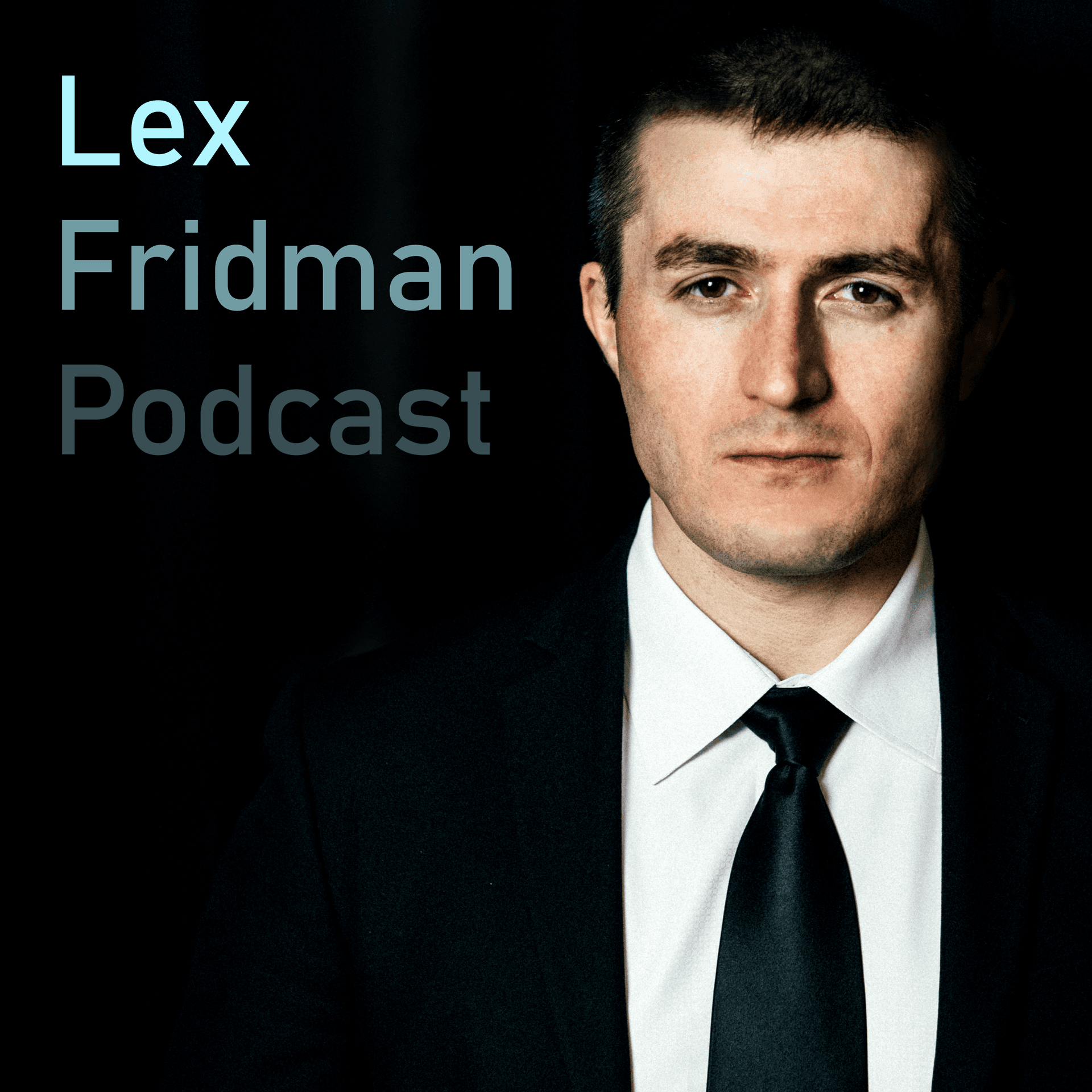
Lex Fridman Podcast Episode #388: Robert F. Kennedy Jr.
Episode Overview In this episode, Lex Fridman engages with Robert F. Kennedy Jr., an activist, lawyer, and presidential candidate. Their conversation traverses various topics including U.S. history, freedom, war, medical ethics, and the influence of the CIA.
Key Themes and Discussions
- U.S. History and Democracy
- Foundational Pride: Kennedy expresses pride in the United States as a pioneering democracy, reflecting on the evolution of democratic ideals from the founding era to modern times.
- Historical Context: The discussion touches on the role of American democracy as a template for other nations, underscoring the significance of maintaining democratic integrity.
- Concept of Freedom
- Freedom Defined: Kennedy articulates that freedom does not equate to chaos or anarchy; rather, it requires self-restraint and the ability to explore human creativity without undue government interference.
- Philosophical References: The conversation references thinkers like Albert Camus, emphasizing the necessity of finding meaning in a seemingly absurd world.
- War and Peace
- Cuban Missile Crisis: Kennedy shares insights regarding the policies and decisions made by his family during this tense period, emphasizing the need for empathy in understanding geopolitical conflicts.
- War in Ukraine: Kennedy critiques the U.S. response to the Ukraine conflict, arguing that the U.S. has provoked tensions with Russia and calls for diplomacy over military engagement.
- Critique of the CIA and Government Agencies
- CIA's Role: Kennedy discusses the CIA's influence in American politics, raising concerns about transparency and accountability within intelligence operations.
- Assassination of JFK: The episode delves into conspiracy theories surrounding the assassination of his uncle, asserting the CIA’s potential involvement and the subsequent cover-up.
- Public Health and Pharmaceuticals
- COVID-19 and Fauci: Kennedy critiques Dr. Anthony Fauci and the pharmaceutical industry, arguing for the need for transparency and accountability in public health.
- Vaccine Safety: He expresses skepticism regarding vaccine safety protocols, advocating for rigorous studies and informed consent, while distinguishing his stance from being anti-vaccine.
- Philosophy of God and Personal Beliefs
- Spiritual Journey: Kennedy recounts his personal journey and transformation from addiction to spirituality, inspired by thinkers like Carl Jung and the idea of synchronicity.
- Moral Dimension: He emphasizes the importance of integrating moral considerations into daily actions, which he believes leads to a fulfilling and meaningful life.
- Health and Lifestyle
- Intermittent Fasting and Exercise: Kennedy discusses his health regimen, which includes intermittent fasting and regular exercise, emphasizing the importance of physical and mental well-being.
Key Takeaways
- Institutional Integrity: The conversation highlights the fragility of democratic institutions and the necessity for active safeguarding of freedoms.
- Empathy in Politics: Kennedy advocates for a political landscape where empathy and understanding guide diplomatic relations, rather than aggression.
- The Role of Science and Ethics in Health: A critical examination of public health policies and the pharmaceutical industry is presented, advocating for patient rights and informed decision-making.
- Personal Responsibility: The episode emphasizes the significance of personal choices and moral responsibility in shaping one’s identity and impact on society.
Conclusion Lex Fridman and Robert F. Kennedy Jr. engage in a thought-provoking discussion that weaves together history, philosophy, politics, and personal growth. The dialogue encourages listeners to think critically about current events and the underlying ethical considerations that shape our world.
For more information and to listen to the full episode, visit the [Lex Fridman Podcast site](https://lexfridman.com/podcast).
Written by AI. May contain mistakes. Listen to the episode to check what was said.
Transcript
Automatic transcript. May contain errors.0:00The following is a conversation with Robert F. Kennedy Jr., candidate for the president of the United States, running as a Democrat. Robert is an activist, lawyer and author who has challenged some of the world's most powerful corporations seeking to hold them accountable for the harm they may cause. I love science and engineering. These two pursuits are, to me, the most beautiful and powerful in the history of human civilization. Science is our journey, our fight for uncovering the laws of nature and leveraging them to understand the universe and to lessen the amount of suffering in the world.
0:36Some of the greatest human beings have ever met, including most of my good friends, are scientists and engineers. Again, I love science. But science cannot flourish without epistemic humility, without debate, both in the pages of academic journals and in the public square, in good faith, long -form conversations. Agree or disagree, I believe Robert's voice should be part of the debate, to call him a conspiracy theorist and arrogantly dismiss everything he says without addressing it diminishes the public's trust in the scientific process. At the same time, dogmatic skepticism of all scientific output on controversial topics like the pandemic is equally, if not more, dishonest and destructive.
1:25I recommend that people read and listen to Robert F. Kennedy Jr., his arguments and his ideas. But I also recommend, as I say in this conversation, that people read and listen to Vincent Rakenielo from this week in viralogy, Dan Wilson from Debunk the Funk, and the Twitter and books of Paul Offit, Eric Topel, and others who are outspoken in their disagreement with Robert. It is this agreement, not conformity, that bends the long arc of humanity to a truth and wisdom. In this process of disagreement, everybody has a lesson to teach you, but we must have the humility to hear it and to learn from it.
2:12And now, a quick few second mention of each sponsor. Check them out in the description. It's the best way to support this podcast. We got House of McAdamias for snacks, a sleep for naps, inside tracker for biological data and AG1 for my go to daily multi -vitamin. She's wisely, my friends. Also, if you want to work with our amazing team, we're always hiring at alexfreedman .com slash hiring. And now, onto the full ad reads, as always, no ads in the middle. I try to make these interesting, but if you must skip them, please still check out our sponsors. I enjoy their stuff. Maybe you will too. This show is brought to you by House of McAdamias, a company that makes delicious, high quality, healthy, and McAdami and not -based snacks.
2:57Every single person I have shared the snack with have deeply enjoyed it. And it's been quite a few people, including guests. And they love it. And they love the variety and each individual snack. I don't think there's been a negative response to any of the snacks because it's whole nuts with all kinds of additions to them bars, all kinds of additions to them, all kinds of flavors, all of it healthy, all of it is perfectly portioned. It's just a perfect snack. Low in carbs, high in omega -7 fats, there's all kinds of super healthy aspects to this stuff, but I just enjoy it because it's an escape from the mundane.
3:40Actually, the word mundane makes it seem like it's not deeply fulfilling, but most of my diet is mundane. Most of my diet is in this place of simplicity where I enjoy the minimalism of it, but sometimes a little detour. In a small rural town somewhere on a long road trip from New York to San Francisco, just take a little detour and you're going to find a gas station with a weird guy who has one hell of an amazing story to tell you. That guy is a mechadami and nut snack. And you can meet that guy just like as I do by going to hospitalmechadamias .com slash flex to get a free box of their best seller Namibian sea salted mechadami and nuts plus 20 % of your entire order.
4:33That's housemechadamias .com slash lex. This episode is also brought to you by 8th sleep and it's new pod 3 mattress. It is a source of happiness for me. Naps are a source of happiness for me. You know, I'm kind of torn on this, but I think I might be even a bigger fan of naps than a full night sleep. Full night sleep is like an essential foundation to life, but naps for me. Again, speaking of detours and then we're going to nowhere. It's sometimes a stressful day feels like a high water hell. It's a little reference to ACDC and one of the most badass songs ever written. But anyway, life sometimes feels like a high water hell and this is a little detour.
5:19Again, to that gas station, we meet a person that helps you escape from all the madness of this world and realize how beautiful human beings are. That's what a nap is. It's a reminder how beautiful life is. How insatiably delicious every single moment is. How full of vigor and sensory extravagance every single moment is. Anyway, for me, the naps do that. I'm sure there's drugs for this too, but to me the healthiest drug is a good nap. An 8 -Sleep makes that nap extra special. Check it out and get special savings when you go to 8sleep .com slash Lex. This shows also brought to you by Inside Tracker, a service I used to track biological data.
6:13Obviously, this episode is very much about your health. There's a lot of controversial aspects to this episode, but I think what's not discussed in this episode, and what I think is true about the future of medicine, about the future of health and diet and so on, that the decisions you make about your body should be driven by the data that comes from your body. As much raw signal as possible, and that's what Inside Tracker is paving the way on, is getting as much biological data from you as possible to help you make decisions, as blood data, DNA data, fitness tracker data, all of that shove that into machine learning algorithms to give you recommendations.
6:57Get special savings for a limited time when you go to Inside Tracker .com slash Lex. Get special savings for a limited time when you go to Inside Tracker .com slash Lex. This show is brought to you by the thing I just drank. I thought it greens, or what it's now called, AG1. The name of the drink, the name of the company, AG1. It's an all -in -one daily drink to support better health and peak performance. I drink it twice a day, traveling, and they've travel packs. They make me feel like I'm at home for a brief moment. I make myself another thing that greens, I put it in the fridge, I let it cool for a while, and then I open it up, I drink it, and not only do I feel healthier, not only do I feel like I have my life together, even when on the surface it seems like it's falling apart physically and emotionally.
7:51I know at least I got my nutritional basis covered. I think it's really important when you travel, or at least when I travel, to have little reminders. Maybe almost subconscious reminders, they make you feel like this hotel, or this shady place you find yourself in somewhere in the world, has a piece of home in it. It makes you feel like you are at home until you realize you're not, but that little break is wonderful. For me, AG1 is very much that, because AG1 makes me think like I'm at home and I have my life together. And so when I travel, it's really nice to have it as well. They'll give you a one month supply of fish oil when you sign up at drinkag1 .com slash Lex.
8:40This is the Lex Freeman Podcast. To support it, please check out our sponsors in the description. And now dear friends, here's Robert F. Kennedy Jr.
9:05It's the 4th of July Independence Day, so simple question, simple big question. What do you love about this country, the United States of America? I would say there are so many things that I love about the country on the landscapes and the waterways and the people etc. But on the higher level, people argue about whether we're an exemplary nation. And that term has been given a bad name, particularly by the neocons, the actions, the neocons in recent decades, who have turned that phrase into kind of a justification, forcing people to adopt American systems or values at the barrel of a gun. But my father and uncle used it in a very different way and they were very proud of it.
9:59I grew up very proud of this country because we were the exemplary nation in the sense that we were an example of democracy all over the world. When we first launched our democracy in 1780, we were the only democracy on earth. And by the Civil War, by 1865, there were six democracies that there's probably 190. And all of them in one way or another are modeled on the American experience. And it's kind of extraordinary because our first contact with our first serious and contact with the European culture and continent was in 1608. One John Winthrop came over with his Puritans in the Sluper Belmont and Winthrop gave this famous speech where he said this is going to be a city on a hill.
10:57This is going to be an example for all the other nations in the world. And he warned his fellow Puritans. They were sitting at this great expanse of land. And he said, we can't be seduced by the law of real estate or by the carnal opportunities of this land. And we have to take this country as a gift from God and then turn it into an example with the rest of the world of God's love of God's will and wisdom. And then to 200 years later, 250 years later, they had a different generation. They're mainly deists or people who had a belief in God but not so much a love of particularly religious cosmologies.
12:00The framers, the Constitution believed that we were creating something that would be replicated around the world. And that it was an example. In democracy, there would be this kind of wisdom from the collective. And the word wisdom means a knowledge of God's will. And that somehow God would speak through the collective in a way that he or she could not speak through totalitarian regimes. And I think that that's something that even though Winthrop was a white man and a Protestant that every immigrant group who came after them, a kind of adoptive that belief. And I know my family when you know art from my family came up where all my grandparents came over in 1848 during the potato famine.
12:56And they saw this country as unique in history as something that you know that was that was part of kind of a broader spiritual mission. And so I'd say that from a 30 ,000 foot level that you know that I grew up so proud of this country and believing that it was the greatest country in the world and for those reasons. Well, I immigrated to this country and one of the things that really embodies America to me is the ideal of freedom. Hunter Thompson said freedom is something that dies unless it's used. What does freedom mean to you? To me freedom does not mean you know chaos. And it does not mean anarchy.
13:40It means that it has to be accompanied by restraint if it's going to live up to its promise in self restraint. What it means is the capacity for human beings to exercise and to fulfill their creative energies unrestrained as much as possible by government. So this point the Hunter Thompson made is dies unless it's used. Yeah, agree with that. Yeah, I do agree with that. And I think you know that he was not unique in saying that you know Thomas Jefferson said that the tree of liberty has to be had be watered with the blood of each generation. And what he meant by that is that it's you can't live off we can't live off the laurels of the American revolution.
14:34And that you know we had a group we had a generation where between 25 ,000 and 70 ,000 Americans died. They gave their lives they gave their livelihoods they gave their status they gave their property they put it all on the line to give us our bill of rights. And that but those bill rights the moment that we signed them there were forces within our society. I'm that began trying to chip away at them and that you know happens in every generation and it is the obligation of every generation to safeguard and protect those freedoms. The blood of each generation you mentioned your interest your admiration of Albert Camus of stoicism perhaps your interest in existentialism.
15:23Camus said I believe in myth of Sisyphus the only way to deal with an unfree world is to become so absolutely free that your very existence is an act of rebellion. What do you think he means by that? I suppose the way that Camus viewed the world and the way that the stoics did and a lot of the existentialists was that it was that it was so absurd and that the problems in the past that were given just to live a life are so insurmountable. That the only way that we can kind of get back to the gods for giving us this you know this impossible task of living life was to embrace it and to enjoy it and to do our best at it.
16:14I mean to me I you know I read Camus and particularly in the myth of Sisyphus as a as kind of as a parable that and it's the same less than that I think he writes about in the plague where we're all given these insurmountable tasks in our lives but that by doing our duty by being of service others. We can bring meaning to a meaningless chaos and we can bring order to the universe and you know Sisyphus was a was kind of the iconic hero of the stoics and he was a man because he did because he did something good he delivered a gift to humanity. He angered the gods and they condemned him to push a rock up the hill every day and then I would roll down you know he got to the top it would roll down and he'd spend the night going back down the hill to collect it and then rolling it back up the hill again.
17:17And the task was observed it was insurmountable he can never win but the last line of that book is one of the great lines which is which is something to the extent that you know I can picture Sisyphus smiling because Camus belief was that even though he his task was insurmountable that he was a happy man and he was a happy man because he put his shoulder to the stone. He took his duty he embraced the task and the you know the absurdity of life and he pushed the stone up the hill and that if we do that and if you know we find ways of being of service others that is you know the ultimate that's the key to the lock that's the solution to the puzzle.
18:08Each individual person in that way can rebel against absurdity by discovering meaning to this whole messy thing and we can bring meaning not only to our own lives but we can bring meaning to the universe as well we can bring some kind of order to life. And you know that those the embrace of those tasks and the commitment to service resonates out from us to the rest of humanity in some in some way. So you mentioned the plague by Camus there's a lot of different ways to read that book but one of them especially given how it was written is that the plague symbolizes Nazi Germany and the Hitler regime.
18:54What do you learn about human nature from a figure like at off Hitler that he's able to captivate the minds of millions rise the power and take on pulling the whole world into a global war. I was born nine years after the end of World War Two and I grew up in a generation that was big you know with my parents who were fixated on that and you know what happened at my father. And at that time the you know the kind of the resolution in the minds of most Americans and I think people around the world is that there was there had been something wrong with the German people that you know the Germans had been particularly susceptible to this kind of a demococry and following a powerful leader and and just industrializing cruelty and and and and murder.
19:56And my father always different with that my father said this is not a German problem this can happen to all of us were all just the inches away from barbarity and the thing that keeps us safe in this country or the institutions of our democracy or a constitution. It's not our nature or nature has to has to be restrained and and that comes to us out for strength but it also you know the beauty of our country is that we develop we devise these institutions that are designed to allow us to flourish. But at the same time not to give us enough freedom to flourish but also create enough order to keep us from collapsing into barbarity so you know one of the other things in my father talked about from when I was little you know he would ask us this question if you if you were the family and Frank came to your door and asked you to hide or would you be one of the people who were in the house.
21:05And the people who hit her a grisky or on life or would you be one of the people who turned her in. And of course we would all say of course we would hide and Frank and take the risk. But you know that's been something kind of a lesson a challenge that has been that has always been near the forefront of my mind that if a totalitarian system ever occurs in the United States which my father thought was quite possible. He was conscious about how fragile democracy actually is that would I be one of the ones who would resist the totalitarianism or would I be one of the people who went along with it would I be one of the people who was at the train station and you know crack our or you know even Berlin and saw people being shipped off to camp.
22:05And just put my head down and pretend I didn't say it because talking about it would be destructive to my career maybe my freedom and even my life. So you know that has been a challenge that my father gave to me and all of my brothers and sisters and it's something that I've never forgotten. A lot of us would like to believe we would resist in that situation but the reality is most of us wouldn't and that's a good thing to think about that human nature is such that we're selfish even when there's an atrocity going on all around us. And we also you know we have the capacity to see for ourselves and all of us tend to kind of judge ourselves by our intentions and our actions.
22:55What have you learned about life from your father Robert F. Kennedy. First of all I'll say this about my uncle because you know I'm going to apply that question my uncle and my father my uncle was asked when he first met Jackie Boothea who later became Jackie Kennedy. She was a reporter for a newspaper and she was doing she had a kind of column where she do these these kind of. Pithy interviews with with both famous people and kind of man in the street interviews. And she was interviewing him and she asked him what he thought what he believed as best quality was his strongest virtue and she thought that he would say courage because he had been a warrior.
23:43He was the only president who this one was senator by the way who received the purple heart and you know he had a very kind of famous story of him is here on what to and then he had come home and he written a book on car on moral courage among American politicians and one bullet surprise that book profiles and courage and which was a series of incidents where American political leaders made decisions to to embrace principle even though their careers were at stake and in most cases were destroyed by their choice. She thought he was going to say courage but he didn't he said curiosity and I think you know looking back at his life that the best that that it was true and that was the quality that allowed him to put himself in the shoes of his attitude.
24:43And he always said that if you if the only way that we're going to have peace is if we're able to put ourselves in the shoes of our adversaries understand their behavior and their contact that contacts. And that's why he was able to you know during the he was able to resist the intelligence apparatus and the military during the Bay of pigs when they said he got it sent in the s six year craft carrier and he said no even though he'd only been in one two months in office he was able to stand up to them because of because he was able to put himself in the shoes of both Castro and Khrushchev and the and understand there's got to be another solution this and then during the Cuban Missile Crisis.
25:31He was able to do one the narrative was okay Khrushchev acted in a way as an aggressor to put missiles in our hemisphere how dare he do that. And Jack and my father were able to say well wait a minute he's doing that because we put missiles in Turkey and Italy that were right on you know the Turkish ones right on the Russian border and they then made a secret deal with Dobran and with the ambassador to Brennan and you know with Khrushchev to remove the missiles in Turkey if he moved the Jupiter missiles from Turkey if if I don't know. I so long as Khrushchev removed them from Cuba every there were 13 men on the exactly on the end what they call the Angkor Committee which was the group of people deciding you know what the action was what they were going to do to end the Cuban Missile Crisis and virtually I and of those men 11 of them wanted to invade and wanted to bomb and invade.
26:40And it was Jack and then later on my father and then Bob McNamara who the only people were with him because he was able to see the world from Khrushchev's point of view he believed that there was another solution and then he also had the moral courage so my father you know to get back to your question famously said that moral courage is the most important quality in it. It's more it's more rare and courage on the football field or courage and battle than physical courage it's much more difficult to come by but it's the most important quality in a human being. And you think that kind of empathy that you refer to that requires moral courage.
27:25It's certainly requires moral courage to act on it you know in particularly you know in you know anytime that a nation is a war there's kind of a momentum or inertia that says okay let's not look at this from the other person's point of view and that's the time we really need to do that. Well if you're going to apply that style of empathy style of curiosity to the current war in Ukraine what is your understanding of why Russia invaded Ukraine in February 2022. Vladimir Putin could have avoided the war in Ukraine his invasion was illegal it was unnecessary and it was brutal. But I think it's important for us to move beyond these kind of comic book depictions of a you know of this insane average is Russian leader who wants to you know restore the so.
28:34And that's why and it was I and it was made an unfocused unprovoked on invasion of the Ukraine he was provoked and we were provoking him and we were provoking him for for since 1997. And it's not just me that saying that I mean when when and I am before right before Putin ever came in we were provoking Russia the Russians in this way unnecessarily. And to go back that time in 1992 when the Russians moved out of when the Soviet Union was collapsing the Russians moved out of East Germany and they did that which was a huge concession and they had 400 ,000 troops in East Germany at that time and they were facing.
29:18And they were facing NATO troops on the other side of the wall. Oh Gorbachev made this huge concession where he said to George Bush I'm going to move all of our troops out and you can then reunify Germany under NATO which was hostile army to the to the Soviet it was created to you know with hostile intent to where the Soviet Union. And he said you can take Germany but I want your promise that you will not move NATO to the East and James Baker who was a secretary of state famously said I will not move NATO we will not move NATO one inch to the East so then five years later in 1997. So big new Brzezinski who is kind of the father of the Neocons who was a Democrat at that time served in the Carter administration.
30:08He said he published a paper a blueprint for moving NATO right up to the Russian border a thousand miles to the East and taking over 14 nations. And at that time George Kennan who was the kind of the deity of American diplomats he was probably arguably the most important diplomat in American history. He was the architect of the containment policy during World War II and he said this is insane and it's unnecessary and if you do this it's going to provoke the Soviet I mean the Russians no violent response. And we should be making friends with the Russians they lost the Cold War. We should be treating them the way that we treated the our adversaries after World War II like with a martial plan to try to help them incorporate into Europe and to be part of the the brotherhood of you know of man and Western nations.
31:08We shouldn't continue to be treating them as enemy and particularly surrounding them at their borders William Perry who was then the secretary of defense under Bill Clinton threatened to resign he was so upset by this plan to move NATO to the East. And William Burns who was then the US ambassador of the Soviet Union who is now at this moment the head of the CIA said at that time the same thing. If you do this it is going to provoke the Russians toward a military response. And we moved it we moved all around Russia we moved to 14 nations a thousand miles to East and we put Aegis missile systems in two nations and Romanian Poland so we did what you know with the Russians had done to us in 1962 that have provoked would have provoked the invasion of Cuba.
32:01We put those missile systems back there and then we walk away unilaterally walk away from the two nuclear missile treaties the intermediate nuclear missile treaties that we had with this over with Russia. And we neither of us would put those missiles systems on the borders. We walk away from that and we put Aegis missile systems which are nuclear capable they can carry the Tomahawk missiles which have nuclear warheads. So the last country that they didn't take was the Ukraine and the Russians said and in fact Bill Perry said this or William Burns said it so now they had a CIA. It is a red line if we go into if we bring NATO and Ukraine that is a red line for the Russians they cannot live with it they cannot live with it.
32:47The Russian has been invaded three times through the Ukraine. The last time it was invaded we killed one of the Germans killed one out of every seven Russians. They destroyed my uncle described what happened to Russia in his famous American University speech and in 1963. 60 years ago this month or he's in our last month 60 years ago in June 10th 1963. He told that speech was telling American people put yourself in the shoes of the Russians. We need to do that if we're going to if we're going to make peace. And he said all of us have been taught you know that we won the war but we didn't win the war the Russians if anybody won the war against Hitler was the Russians their country was destroyed.
33:37They all of their city and he said imagine if all of the cities on the east coast of Chicago were reduced to rubble and all of the fields burns all the force burns that's what happened to Russia that's what they gave so that we could get rid of Hitler. And he had them put themselves in their position and you know today there's none of that happening we have refused repeatedly to talk to the Russians. We've broken up there's two treaties the Minsk agreements which the Russians were willing to sign and they said we will stay out the Russians didn't want the Ukraine they showed that when they when the Dombass region voted 90 to 10 to leave and go to Russia.
Read the full transcript
34:22But you know we want Ukraine to stay intact but we want you to sign a Minsk Accords to you know they the Russians were were very worried because of the US involvement in the coup in Ukraine in 2014. And then the oppression and the you know in the killing of 14 ,000 ethnic Russians and Russia hasn't had the same read the same way that if Mexico would ages missile systems from China or Russia on our border and then killed 14 ,000 expats American we would go in there. Oh he does have a national security interests in the Ukraine he has an interest in protecting the Russian speaking people of the Ukraine.
35:11Yeah I think Russians and the Minsk Accords did that it left Ukraine as part of Russia it left them as a semi autonomous region that could continue to use their own language which is essentially banned by the coup by the government we put in in 2014. And we wouldn't we sabotaged that agreement and then we now know in April of 2022. So Leski and Putin had inked deal already to another peace agreement and that the United States and Boris Johnson the Neacons and the White House and Boris Johnson over to the Ukraine to sabotage that agreement. So what do I think I think this is a proxy war I think this they you know this they were that the Neacons in the White House wanted they've said for two decades they wanted this war.
36:03And that they wanted to use Ukraine as a pawn in a proxy war between United States and Russia the same as we used Afghanistan. And they in fact they say it this is the model let's use the Afghanistan model that was said again and again and to get the Russians to over extend their troops and then fight them using local fighters and US weapons. And when President Biden was asked why are we in the Ukraine he was honest he says to depose Vladimir Putin regime change for Vladimir Putin and when his defense secretary Lloyd Austin in April 2022 was asked you know why are we there he said to degrade the Russians capacity to fight anywhere to exhaust the Russian army and degrade its capacity to fight elsewhere in the world.
36:52So that's not a humanitarian mission that's not what we were told we were we were told this was not unprovoked invasion. But and that we're there to bring a humanitarian relief to the Ukrainians but that is the opposite that is war of attrition that is designed to chew up. But turn this little nation into an abattoir death for the flower of Ukrainian youth in order to advance a geopolitical ambition of certain people within the White House and you know I think that's wrong. We should be talking to the Russians the way that you know Nixon talked to Braschenov the way that Bush talked to Gorbachev the way them my uncle talked to Khrushchev we need to be talking with the Russians we should and and negotiating and we need to be looking about how do we end this and preserve peace in Europe.
37:45Would you as president said down and have a conversation with Vladimir Putin and Vladimir Zelensky separately and together to go to peace absolutely. What about Vladimir Putin he's been in power since 2000 so as the old adage goes power corrupts and absolute power corrupts absolutely do you think he has been corrupted by being in power for so long. If you think of the man if you look at his mind listen I don't know exactly I can't say because I just I don't know enough about him or about you know I might the evidence that I've seen is that he is homicidal he kills his enemies or boisons them and you know the reaction I've seen to that to hit those accusations from him.
38:41They have not been to deny that but to kind of laugh it off I think he's a dangerous man and that of course you know there's probably corruption in his regime but having said that it's not our business to change the Russian government and anybody who thinks the good idea to do regime change in Russia which has more nuclear weapons than we do is I think you responsible and you know Vladimir Putin. He said we will not live in a world without Russia and it was clear when he said that he was talking about himself and he has his hand on a button that could bring you know Armageddon to the entire planet so why are we messing with this it's not our job to change that regime and we should be making friends with the Russians we shouldn't be treating him as an enemy now we've pushed him into the camp with China.
39:40That's not a good thing for our country and by the way you know what we're doing now does not appear to be weakening Putin at all. Putin now you know if you believe that the polls that are coming out of Russia they show him you know the most recent polls that I've seen show him with that 89 % popularity that people in Russia support the war in Ukraine and that and they support him in Russia. As an individual so and I understand there's problems with polling and you know you don't know what to believe but the polls consistently show that and and I you know it's not America's business to be the policeman of the world and to be changing regimes in the world that's illegal or not we shouldn't be breaking international laws.
40:31You know we should actually be looking for ways to improve relationships with Russia not to you know not to destroy Russia not to destroy and not to choose its leadership for them that's up to the Russian people not us. So step one is to sit down and empathize with the leaders of both nations to understand their history the concerns their hopes. Just to open the door for conversation so they're not back to the corner and I think the US can play. Are really important role and a US president can play a really important role by rubbery assuring the Russians that we're not going to consider them an enemy anymore that we want to be friends.
41:14And it doesn't mean that you have to let down your guard completely the way that you do it which was the way President Kennedy did it is you do it one step at a time you take baby steps we do a unilateral move. Reduce our you know our our our hostility and aggression and see if the Russians reciprocate and and that's the way that we should be doing it and you know we should be easing our way.
41:43We have a lot in common with Russia and we should be friends with Russia and with the Russian people. And you know apparently there's been 350 ,000 new grainians who have died at least in this war and and there's probably been 60 or 80 ,000 Russians and that should not give us any joy. It should not give us any you know I saw Lindsey Graham on TV saying you know anything we can something to the extent that anything we can do to kill Russians is a good use of our money that it is not you know those are those are somebody's children there you know we should have compassion for them on this war is unnecessary war we should settle it through negotiation through diplomacy through state graph.
42:35And not through weapons do you think this work in come to an end purely through military operations. No I mean I don't think there's any way in the world that the Ukrainians can be the Russians I don't think there's any appetite in Europe I think Europe is now you know in having severe problems in Germany Italy France you're seeing these riots there's internal problems in those countries. There is no appetite in in Europe for sending men to die in Ukraine and the Ukrainians do not have anybody left the Ukrainians are using press gangs to you know to fill the ranks there are these men military men age men are trying as hard as they can to get out of the Ukraine right now to avoid going to the front the front you know if the Russians apparently have been killing Ukrainians that has seven to one ratio.
43:28So my son fought over there and he told me it's not you know until he had he had fire fights with the Russians mainly at night but he said most of the battles were artillery wars during the day and the Russians now out out gun the NATO forces 10 to one in artillery. Oh they're killing at horrendous rate now you know my interpretation of what's happened so far is that the Putin actually went in early on with a small force because he expected to meet somebody on the other end of a negotiating table that once he went in and and that when that didn't happen they did not have a large enough force to be able to mount an offensive and so I think that's the reason why he's not going to be able to do that.
44:20So they've been building up that force up to now and they now have that force and even against this small original force the Ukrainians have been helpless all of their offenses have died they've now killed you know the head of the Ukrainian special forces which was the probably arguably by many accounts the best at the military unit in all of Europe. The command the commandant the commander of the that special forces group gave a speech about four months ago saying that 86 % of his men are dead or wounded and will cannot return to the front he cannot rebuild that force. The you know the the troops that are now headed that are now filling the gaps of all those 350 ,000 men who have been lost are are scanly trained and they're arriving green at the front any of them do not want to be there many of them are giving up and going over the Russian side we've seen this again and again again including platoon size groups that are defecting to the Russians.
45:36And I don't think it's possible when anybody you know I saw I of course I've studied World War II history exhaustively but I saw a there's a new I think it's a Netflix series of documentaries that I highly recommend to people there it's their colorized versions of the black and white films from the battles of World War II but it's all the battles of World War II. And I think it's a great honor to have the other night and you know the the willingness of the Russians to fight on against any kind of ads and to make huge sacrifices of Russians the Russians themselves who are making the sacrifice with their lives the willingness of them to do that for their motherland is almost inexhaustible it is incomprehensible to think that the Ukraine can can beat.
46:34And a war it would be like Mexico beating the United States it's just it's impossible to think that it can happen and you know Russia has deployed a tiny tiny fraction of its military so far and you know now it has China with its mass production capacity supporting its war effort it's just it's a it's a hopeless situation and we've been lied to you know we're the the press in our country and our government are just. You know promoting this lie that the Ukrainians are about to win and everything's going great and that. Buttons on the run and there's all this wishful thinking because of the Wagner group you know the the.
47:19The Gossian in the Wagner group that this was an internal coup and it showed dissent and weakness of Putin and none of that is true I was a that that insurgency which wasn't even an insurgency only got 4 ,000 of his men to follow amount of 20 ,000. They were quickly stopped in nobody in the Russian military the oligarchy the political system nobody supported it you know and by we're being told oh yeah it's the beginning of the end for blue Putin. These weekend he's wounded he's on his way out and all of these things are just lies that we are being fed and push back on a small aspect of this you kind of implied so I've traveled to Ukraine and one thing that I should say similar to the battle of Stalingrad.
48:05It is just not is not only the Russians that fight to the end I think you Ukrainian is a very to fight to the end the morale there is quite high I've talked to nobody as was a year ago in August with her son everybody was proud to fight and die for their country and there's some aspect where this war unified the people to get gave them a reason and understanding that this is what it means to be Ukrainian and I will fight to the death. I would agree with that and I should have said that myself at the beginning that's one of the reason my son went over there to fight because he was inspired by the valor of the Ukrainian people and the extraordinary willingness of them and I think Putin thought it would be much easier to sweep into Ukraine and he found a stone wall of Ukrainians whether ready but their lives in their bodies and the line but that to me makes the whole episode of the war.
49:03But even more tragic is that you know I don't believe I know I I think that the US role in this has been has you know that there were there were many opportunities the saddle this war and the Ukrainians wanted to settle it. The Latin America is a landscape when he ran in 2019 here's a guy who's a comedian he's a he's an actor he had no political experience and yet he won this election was 70 % of the vote why he won on a peace platform anyone promising to sign the Minsk Accords and yet something happened when he got in there that made him suddenly pivot and you know I think it's a good guess what happened I think he was you know he came up with the idea of the war and the war and the war and the war and the war and the war and the war and the war and the war and the war and the war and the war and the war and the war and the war and the war and the war and the war and the war and the war and the war and the war and the war and the war and the war and the war and the war and the war and the war and the war and the war and the war and the war and the war and the war and the war and the war and the war and the war and the war and the war and the war and vision and the war and the games under threat by ultranachial and natural 살�as within his own administration.
49:57and the insistence of neocons like Victoria Nuin in the white House sad you know we don't want peace with bophetтеi and we wanna war. do you worry about nuclear war Yeah I worry about it it seems like a silly question but it's not as serious question the reason it's not друзья is not the reason it's not my It's not. It's just because people seem to be in this kind of dream state about that it'll never happen. And yet, you know, it can happen very easily and it can happen at any time. And, you know, if we push the Russians too far, you know, I don't doubt that Putin, if he felt like his regime was in, you know, or his nation, and was in danger that the United States was going to be able to place, you know, a quizzling on, you know, into the Kremlin, that he would use nuclear torpedoes.
51:03And, you know, these strategic weapons that they have and that could be the being, once you do that, nobody controls the trajectory. By the way, you know, I have very strong memories of the Cuban missile crisis. And those 13 days when we came closer to nuclear war, you know, and particularly I think it was when the YouTube got shut down over Cuba. But, you know, and nobody in this kind, there's a lot of people in Washington DC who at that point thought that they very well may wake up dead. That the world may end at night, 30 million Americans killed 130 million Russians. This is what our military brass wanted.
51:49They saw a war with Russia and nuclear exchange with Russia is not only inevitable but also desirable because they wanted to do it now. We still had a superior already. Can you actually go through the feelings you've had about the Cuban missile crisis like what? What are your memories of it? What are some interests? I was going to school in Washington DC to sit well for our two. Our lady of victory, which is in Washington DC. So we were, I lived in Virginia across the stomach and we would cross the bridge every day into DC. And during the crisis, US marshals came to my house to take us, I think around day eight.
52:33My father was spending the night at the White House. He wasn't coming home. He was staying with the XCOM committee and sleeping there and they were up, you know, 24 hours a day. They were debating and trying to figure out what's happening. But we had US marshals come to our house to take us down. They were going to take us down to White's Hulfer Springs in Southern Virginia in the Blue Ridge Mountains where there was an underground city essentially a bunker that was like a city. And apparently it had McDonald's in it and a lot of other, you know, it was a full city for the US government and their families.
53:17US marshals came to our house to take us down there and I was very excited about doing that. And this was at a time, you know, when we were doing the drills, we were doing the duck and cover drills once a week at our school where they would tell you if they, you know, when the alarms go off, then you, you put your head onto the table. You take the show, remove the sharps from your desk with them inside your desk. You put your head under the table and you wait and the initial blast will take the windows out of the school. And then we all stand up and and file in an orderly fashion into the basement where we're going to be for the next six or eight months or whatever.
53:55But in the basement where, you know, we, we went occasionally in those quarters, we're lined with free -shried food canisters up to this, you know, from Florida's hailing. So people were, you know, we were all preparing for this and it was, you know, Bob McNamara, who is my, who is a friend of mine and, you know, is my father, one of my father's close friend is secretary of defense. He later called mass psychosis and my father deeply regretted participating in the bomb shelter program because he said it was part of a, you know, a psychological, siop trick to treat him to teach Americans that nuclear war was acceptable.
54:36And it was survivable. My father, anyway, when the, when the Marshal's came to our house, take me in my brother, Joe, away. And with, we were the ones who are home at that time. My father called and he talked to us on the phone and he said, I don't want you going down there because he, because if you disappear from school, people are going to panic. And I need you to be a good soldier and go to school and that one. And he said something to me during that period, which was that if the nuclear war happened, it would be better to be among the dead and the living, which I did not believe. Okay, I mean, I, I had already prepared myself for the, you know, for the, for the dystopian future.
55:23And I knew I could, I spent every day in the woods. I knew that I could survive by catching growfish and, you know, cooking mud puppies and whatever I had to do. But I felt like, okay, I can, I can handle this. And I really wanted to see this add up down and, you know, this underground city. But anyway, that was, you know, part of it for me. My father was away in the last days of it. And my father got this idea because crew chef had sent two letters. He sent one letter that was conciliatory. And then he sent a letter that after his joint chiefs handed the warmongers around him to solve that letter and they disapproved of it.
56:09They sent another letter that was extremely proliferate. And my father had the idea, let's just pretend we didn't get the second letter and reply to the first one. And then he went down to Dobrennan. And who was, he met Dobrennan in the Justice Department. And Dobrennan was the Soviet ambassador and they, you know, they proposed this settlement, which was a secret settlement. And Eric Crewschef would withdraw the missiles from Cuba. Crewschef had put the missiles in Cuba because we had put missiles, you know, New Cubans, and Turkey and Italy. And my uncle's secret deal was that if he, if Crewschef removed the missiles from Cuba within six months, he would get rid of the Jupiter missiles in Turkey.
56:57But if Crewschef told anybody about the deal, it was off. So if, if news got out about that secret deal, it was off. That was the actual deal. And Crewschef complied with it. And then my uncle complied with it. How much of that part of human history turned on the decisions of one person? I think that's one of the, you know, because that, of course, the perennial question, right? But it is history kind of on an automatic pilot and, you know, human decisions, the decisions of leaders really only have, you know, a marginal or incremental bearing on what is going to happen anyway. But I think that is the, and historians argue about that all the time.
57:44I think that that is a really good example of a place in human history that literally the world could have ended if we had a different leader in the White House. And the reason for that is that there were as I recall 64 gun emplacements, you know, missile, missile emplacements. Each one of those missile emplacements had a crew of about 100 men. And they were Soviets. So they were, and they, we didn't know whether we had a couple of questions that my uncle asked Alan or asked the CIA. And he asked, a dollar was really gone. But he asked the CIA and he asked his military brass. Because they all wanted to go in.
58:34Everybody wanted to go in. And my uncle said, my uncle asked to see the aerial photos. And he examined those personally. And this is why it's important to have a leader in the White House who can push back on on their bureaucracies. And then he asked them, you know, are those who's manning those missile sites? And are they Russians? And if they're Russians and we bomb them, are they isn't going to force crew chef to then go into Berlin? And that would be the beginning of a cascade of fact that would, you know, highly likely end a nuclear confrontation. And the military brass said to my uncle, we don't think you'll have the, you know, we don't think you'll have the guts to do that.
59:25So he was my uncle was like, that's where you're betting on. And you know, they all wanted him to go in. They wanted him to bomb the sites and then invade Cuba. And he said, if we bomb those sites, we're going to be killing Russians. And it's going to force, it's going to provoke Russia into some regions. And the obvious response is for them to go into Berlin. But the thing that we didn't know then, we didn't find out until I think, you know, there was a, there was like a 30 year anniversary of the Cuban Missile Crisis in a van. And what we learned then was that from the Russians who came to that event, it was like a symposium where everybody on both sides talked about it.
1:00:13And we learned a lot of stuff and never nobody knew before. One of the insane things, the most insane thing that we learned was that the weapons were already the nuclear warheads were already in place. They were ready to fire. And that the authorization to fire was made was delegated to each of the gun, gun crew commanders. So there were 60 people who had all had authorization to fire if they felt themselves under attack. So you have to believe that at least one of them would have launched. And that would have been the beginning of the end. And you know, if anybody had launched, you know, we knew what would happen.
1:00:57My uncle knew what would happen. Because he asked again and again, what's going to happen? And they said 30 million Americans will be killed. But we will kill 130 million Russians. So we will win. And that was a victory for them. And my uncle said later, he said, he told Arthur, and Kenny O'Donnell, he said, those guys, he called them the salad brass, the guys with all of this stuff on their chest. And he said, he said those guys, they don't care. Because they know that if it happens, that they're going to be in the charge of everything. They're the ones who are going to be running the world after that.
1:01:38So for them, you know, it was there was an incentive to kill 130 million Russians and 30 million Americans by my uncle. He had this correspondence with the crew chef. They were secretly corresponding with each other. And that is what saved the world is that they had that both of them had been men of war. You know, I said, our famously said it will not be a man of war. It will not be a soldier who starts World War III. Because the guy who's actually seen it knows how bad it is. And my uncle, you know, had been in the heat of the South Pacific. His boat had been cut into by Japanese destroyer. His, and even three of his crewmen have been killed.
1:02:19One of them badly burned. He pulled that guy with a lanyard in his teeth. Six miles to Ireland in the middle of the night. And then they hit out there for 10 days, you know, and, and, you know, he came back like I said, he was the only president of the United States that are in the purple heart. Meanwhile, crew chef had been at Stalingrad, which was the worst place to be on the planet, you know, probably in the 20th century. Other than, you know, and Auschwitz or one of the death camps. It was, you know, it was, it was the most ferocious, horrific war with people starving, people, you know, committed cannibalism, you know, eating the dogs, the cats, eating their shoe leather, freezing to death by the thousands, et cetera.
1:03:06A crew chef did not want the last thing he wanted was a war. And the last thing my uncle wanted was a war. And they, but the CIA did not know anything about crew chef. And the reason for that is the city, there was a mole and Langley. So that every time the CIA got a spy in the Kremlin, he would immediately be killed. So if they had no eyes in the Kremlin, you know, there were literally hundreds of Russia of Russian spies who were who had defected the United States and were in the Kremlin who were killed during that period. They had no idea anything about crew chef about how he saw the world and they saw the Kremlin itself as a monolith, you know, that this is kind of, you know, the same way that we look at Putin today, that, you know, it's all they have this ambition of world conquest.
1:03:59And that's it's driving them and there's nothing else they think about. They're absolutely single minded about it. But actually there was a big division between crew chef and, and his joint chiefs and his intelligence apparatus and they both have one point discovered they were both in the same situation. They were surrounded by spies and military personnel who were intent on going to war and they were the two guys resisting it. So when my uncle, my uncle had this idea of, you know, being the peace president from the beginning, he told Ben Bradley, his one of his best friends who, you know, was running the publisher, the Washington Post for the editor in chief at that time.
1:04:41He said, Ben Bradley asked him, what is, what do you want in your grape zone? And my uncle said, he kept the peace. He said, the principal job of the president of the United States is to keep the country out of war. And, and so when he first became president, he, he actually agreed to meet crew chef in Geneva to do his summit. And by the way, Eisenhower had wanted to do the same thing. Eisenhower wanted peace. But his, and he was going to meet in Vienna. But that peace summit was blown up. He was going to try to do, you know, he was going to try to end the Cold War. Eisenhower was the last year of his, of his in May of 1960.
1:05:29But that was torpedoed by the CIA during the U2 crash. You know, they sent a U2 over the, over the Soviet Union, he had got shot down and then they told, and then Alan Dallas, to hold Eisenhower to deny that we had a program. They didn't know that the Russians had captured Gary Francis powers. And so, one, and, and that blew up the peace talks between Eisenhower and crew chef. And so, you know, the, the, the, there was a lot of tension. And I don't go on to break that tension. He agreed to meet with, with crew chef in Vienna early on in his term. He went over there and crew chef snubbed him. Crew chef lectured him empiriously about the, you know, the, the terror of American imperialism and, and rebuffed any, you know, they did agree not to go into the house.
1:06:26They made an agreement that kept the United States, became my uncle from sending troops to Laos. But, um, they, it had been a disaster of Vienna. So then, we had a spy that used to come to our house all the time. I cut Georgie Bolshek away. He was this Russian spy. My, my parents had met at the embassy. They had gone to a party or a reception that Russian embassy and he had approached them. And they knew he was, he was a GRU agent and KGB. He was both. Oh, he used to come to our house. They really liked him. He was very attractive. He was always laughing and joking. He would do rope climbing contest with my father.
1:07:10He was, he could do the Russian dancing, the cosac dancing. And he would do that for us and teach us that. And he was, and we knew he was a spy too. And this was at the time of, you know, the James Bond films were first coming out. So it was really exciting for us to have a actual Russian spy in our house. The State Department was horrified by it. But, um, but anyway, when Khrushchev after Vienna and after, um, you know, the Bay of Pigs on Khrushchev had second thoughts. And he sent this long letter to my uncle. And he didn't want to go through his, his State Department or his embassy. He wanted to end run them, but he was friends with Bolshevik.
1:07:57So he gave Georgie the letter. And Georgie brought it and handed it to Pierre Salinger, folded it in New York Times. And he gave it to my uncle. And it was this beautiful letter, which he said, you know, um, my uncle had talked to him about the children who were played, you know, we played 29 grandchildren who were playing in his yard. And he's saying, what is our moral basis for making this letter? The decision to kill these children. So they'll never write a poem. They'll never participate in election. They'll never run for office. How can we make a, how can we, can we morally make a decision that is going to eliminate life for these beautiful kids?
1:08:40And he has said that to Khrushchev and Khrushchev wrote in this letter back saying that he was now sitting as this dacha on the black sea. And that he was thinking about what my uncle jacket said to him at the end. And he regretted very deeply not having taken the olive leaf that jacket off for him. And then he said, you know, it occurs to me now that we're all on an arc. And that there is not another one. And that the entire fate of the planet and all of its creatures and all of the children are dependent on the decisions we make. And you and I have a moral obligation to go forward with each other's friends.
1:09:21And immediately after that, this was, you know, he sent that right after the Berlin crisis in 1962, General Curtis, LaMée, tried to, had tried to provoke a war with an incident at Czechpoich, Charlie, which was the, the, the entrance, the entrance and exit through the Berlin wall in Berlin. And the Russian tanks has come to the wall, the US tanks have come to the wall and there was a standoff. And my uncle had had sent a message to Khrushchev then through Dobran and saying, my back is at the wall, I cannot have no place to back to please back off. And then we will back off. And Khrushchev took his word, act his tanks off first and then my uncle ordered to make it back.
1:10:15But he and what may had mounted bulldozer plows on the, on the front of the tanks to plow down the Berlin wall. And that and the Russians had come. So it was just, you know, it was the right. It was the, his generals trying to provoke war. And, but they started talking to each other. And then when you after he wrote that letter, they agreed that they would install hotline. So they could talk to each other and they wouldn't have to go through intermediaries. And so, at Jack's house on the Cape, there was a red phone that we knew if we picked it up, Khrushchev would answer. And there was another one in the White House.
1:10:55And that, but they knew it was important to talk to each other. You know, and you just wish that we had that kind of leadership today. And can I, you know, they just understand our job. Look, I know you know what about AI, right? And you know how dangerous it is potentially to humanity. And what opportunities it also, you know, offers. But it could kill us all. I mean, Elon said first is going to steal our job. And it's going to kill us. Right. Yeah. And it's probably not hyperbole. It actually, you know, if it follows the laws of biological evolution, which are just the laws of mathematics, that's probably a good endpoint for a, you know, a potential endpoint.
1:11:39So, we need, it's going to happen. But we need to make sure it's regulated and it's regulated properly for safety in every country. And that includes Russia and China and Iran. And right now we, we should be putting all the weapons for a side and sitting down with us guys and say, how are we doing? How are we going to do this? There's much more important things to do. We're going to, this stuff is going to kill us. We don't figure out how to regulate it. And, and leadership needs to look down the road at what, what is the real risk here? And the real risk is that, you know, AI will, you know, we enslave us for one thing.
1:12:24And, you know, and, and then destroy us and do all this other stuff and have a biological weapons. We're now all working on these biological weapons and we're doing biological weapons from. Right, Ebola and, and, you know, Dengue fever and, you know, all of these other bad things and we're making ethnic bio weapons, bio weapons that can only kill Russians. I weapons that the Chinese are making that, you know, are can kill people who don't, who don't have Chinese genes. So all of this is now within reach. We're actively doing it. And we need to stop it and we can easily, a biological weapons treaty is the easiest thing in the world to do.
1:13:09We can verify it, we can enforce it and everybody wants to agree to it. It's only insane people do not want to want to continue this kind of research. There's no reason to do it. So there are these existential threats to all of humanity now out there like AI and biological weapons. We need to start stop fighting each other, start competing on economic game fields, playing fields instead of military playing fields, which will be good for all of humanity and that we need to sit down with each other and negotiate reasonable treaties on how we regulate AI and biological weapons and nobody's talking about this in this political race right now.
1:13:52Nobody's talking about it in a government. They get fixated on these little wars and you know, and these comic book depictions of good versus evil and, you know, and we all go, you know, who are and go off to and give them the weapons and enrich, you know, the military and gun, I should have complex but we're we're on the road to partition if we don't end this. And some of this requires that of this kind of phone that connects Ruchov and John F. Kennedy that cuts through all the bureaucracy to have this communication between heads of state and in the case of AI perhaps heads of tech companies, we can just pick up the phone and have a conversation because a lot of it, a lot of the existential threats of artificial intelligence perhaps even bio weapons is unintentional.
1:14:41It's not even strategic and sexual effects so you have to be transparent and honest about especially with AI that people might not know what's the worst that's going to happen once you release it out into the wild and you have to have an honest kind of communication about how to do it so that companies are not terrified of regulation over reach regulation and then government is not terrified of tech companies of manipulating them in some director and direct ways. So like there's a trust that builds versus a distrust that that seems to so basically that old phone or Kushchev can call John F. Kennedy is needed.
1:15:22Yeah, and you know, I don't think there's a listen, I don't understand AI. Okay, I do know I I can see from all this technology how it's this kind of turn keto -dialitarianism that once you put these systems in place, you know, they can be misused. They can be misused and used to enslave people and they can be misused and in wars and you know to subjugate to kill to do all of these bad things. And I don't think there's anybody on Capitol Hill who understands this. You know, we need to bring in the tech community and say tell us what these regulations need to look like, you know, so that there can be freedom to innovate so that we can milk AI for all of the good things but not, you know, fall into the world.
1:16:10And these traps that are going to, you know, that are these existential threats to that pose existential threats to humanity. It seems like John F. Kennedy is a singular figure in that he was able to have the humility to reach out to Kushchev and also the strength and integrity to resist the what did you call this the solid solid brass and institutions like the CIA. So that makes it particularly tragic that he was killed to what degree was CIA involved or the various bureaucracy involved in his death. The evidence that the CIA was involved in my uncle's murder and that they can that they were subsequently involved in the cover up and and continue to be involved in the cover up.
1:17:01I mean, there's still 5 ,000 documents that they won't release 60 years later. Is I think so insurmountable and so, you know, a mountainous and overwhelming that it's beyond any reasonable doubt, including, you know, dozens of confessions that people who were involved in the in the assassination, but, you know, all of every kind of document and you know, I mean, it came as a surprise recently to most Americans. I think the release of these documents in which the press the American media finally acknowledged that yeah, Lee Harvey Oswald was a CIA asset that he was recruited, you know, in 1957. He was a marine working at the attitude of the Air Force base in which was the CIA Air Force base in, you know, with the U2 flights, which was a CIA program and that he was recruited by James Jesus Angleton, who is the director of counterintelligence.
1:18:13And then sent on a fake defection to Russia and then brought back, you know, to Dallas and people didn't know that. Even though it's been known for decades, the it never percolated into the mainstream media because they have such a you know, they have such an allergy to anything that that challenges the Warren report. And when Congress investigating my uncle's murder in the in the in the 1970s, the church committee did and they did, you know, two and a half year investigation and they had many, many more documents and much more testimony available to them than the Warren commission had and this was, this was a decade after the Warren commission, they came to the conclusion that my uncle was killed by a conspiracy.
1:19:08And there was a division where essentially one guy on that committee believed it was primarily the mafia, but Richard Schweitzer, the senator who had the committee, said, you know, straight out the CIA was involved in the murder of the president of the United States. Oh, and the if I've talked to most of the staff on that committee and they said, yeah, I'm in the CIA was stolen, all in a small way through. And the actual people that the CIA appointed George Johanides, who would, who the CIA appointed as liaison to the committee, they brought him out of retirement, he had been one of the masterminds of the assassination.
1:19:51Oh, there's no, I mean, it's impossible to even talk about a tiny, the fraction of the evidence here, what I suggest to people, there are hundreds of books written about this that, you know, assemble this evidence and mobilize the evidence, the best book to me for people to read is James Douglas's book, which is called the unspeakable. And he Douglas does this extraordinary, extraordinary scholar and he does this, this amazing job of digesting and summarizing and mobilizing all of them, you know, the probably a million documents and, you know, the evidence from all these confessions that have come out into a coherent story.
1:20:36And it's riveting to read and, you know, I recommend people who do not take my word for it, you know, and don't take, don't take anybody else's word for go ahead and do the research yourself in one way to do that is probably the most efficient way to read Douglas's book, because he has all the references there. So if it's true that CIA had a hand in the assassination, how is it possible for them to amass so much power, how is it possible for them to become corrupt and is it individuals or is it the entire institution? No, it's not the entire institution, my daughter -in -law, helping to run my campaign was a CIA, you know, in the clandestine services for all their careers, she was a spy.
1:21:24And the weapons of mass destruction program in the Middle East and in China. And there's 22 ,000 people who work for the CIA, probably 20 ,000 of those are, you know, are patriotic Americans and really good public servants and they're doing important work for our country. But the institution is corrupt and because the high ranks the institution, in fact Mike Pompeo said something like this to me the other day was the director of the CIA said when I was there I did not do a good job of cleaning up that agency and he said the entire upper bureaucracy of that agency are people who do not believe in the institutions of democracy.
1:22:07This is what he sent to me. I don't know if that is true but I know that, you know, that's a significant, he's a smart person and he ran the agency and he was the secretary of state. But it's no mystery how that happened. We know the history, the CIA was originally, first of all, there was great reluctance in 1947 that we had, for the first time we had a secret spy agency in this country to run a World War II called the OSS. That was disbanded after the war because Congress said having a secret spy agency is incompatible with a democracy. Secrets by agencies are things that like the KGB, the Stosse and Eastern, the Japanese, the Valken, Iran and people and Chile whatever, you know, all over the world.
1:22:58They're all have to do with totalitarian governments. They're not something that you can have that it's anithetical to democracy to have that. But in 1947 we created Truman signed it in but it was initially an as being an agency which means information gathering which is important. And it's to get to gather and consolidate information. Many, many different sources from all over the world and then put those reports of the White House, the president can make good decisions based upon valid information, evidence based, you know, decision making. But Alan Dulles who was the essentially the first head of the agency made a series of legislative machinations and political machinations that gave additional powers to the agency and opened up the what they called and the plan's division which is the plan's division is the dirty tricks.
1:24:05It's the black ops fixing elections. It's murdering what they call executive action which means killing foreign leaders and you know making small wars and and and bribing and blackmailing people stealing elections and that kind of thing. And the reason at that time you know we were in the middle of the Cold War and Truman and then Eisenhower did not want to go to war they didn't want to commit troops. And it seemed to them that you know this was a way of kind of fighting the Cold War secretly without and doing it at a minimal cost by changing events sort of invisibly. And so it was seductive to them but everybody you know Congress when they first voted in place Congress both political parties said if we create this thing it could turn into a monster and it could undermine our you know our values and today they it's so it's so powerful and the nobody knows what it's budget is.
1:25:12Plus it has its own investment fund. Incustal which is invested you know made I think 2000 investments in Silicon Valley. Oh it has ownership of a lot of these tech companies that you know and the a lot of the CEOs those tech companies. F saw in state secrecy agreements with the CIA which if they even reveal that they have signed that they can go to jail for 20 years now their assets removed etc. The influence that the agency has the capacity influence events at every level in our country. Our is really frightening and then for most of its. For most of its life the CIA was banned from propagandaizing Americans.
1:25:59But we learned that they were doing it anyway so in 1973 during the church committee hearings we learned that the CIA had a program called Operation March. We had a stocking bird where they had at least 400 members leading members of the United States press corps. And the New York Times the Washington Post ABC CBS NBC etc. Who were secretly working for the agency and and steering news coverage. To support CIA priorities and they agreed at that time to expand Operation Mockingbird in 73. But there's indications they didn't do that. And they still, the CIA today is the biggest funder of journalism around the world.
1:26:49The biggest funder is through USAID. The United States funds journalism in almost every country in the world. You know, it owns newspapers and has journalists on thousands and thousands of journalists on its payroll. They're not supposed to be doing that in the United States. But, you know, in 2016, President Obama changed the law to make it legal now for the CIA to propaganda as Americans. And I think, you know, we can't look at the Ukraine war and how that was, you know, has been, how the narrative has been formed in the minds of Americans and say that the CIA has nothing to do with that. What is the mechanism by which to say influences the narrative?
1:27:37Do you think it's indirectly? Through the press. And directly through the press or directly by funding the press. Directly through, I mean, there's certain press organs that have been linked, you know, to the agency that the people who run those organs, things like the Daily Beast, now rolling a, you know, editor of the Rolling Stone, no Ash Blackman, has deep relationships with the intelligence community, Selon, Daily Coast. But I wonder why they would do it. So from my perspective, it just seems like the job of a journalist is to have an integrity where your opinion cannot be influenced or bought.
1:28:17I agree with you, but I actually think that the entire field of journalism has, has, you know, really ashamed itself in recent years because it's become, you know, the principal newspapers in this country and the television station, the legacy media have abandoned their traditional, their tradition of, you know, which was when I was a kid, my house was filled with the greatest journalists alive at that time. People like Ben Bradley, like Anthony Lewis, Mary McGrory, Pete Hamil, Jerry Jack Newfield, Jimmy Brezzlin, and many, many others. And after my father, after my father died, they started the RFK journalism awards to recognize integrity and courage, you know, journalists to continue and college, and for that generation of journalism, they, they thought they believed that the, that the function of journalists was to maintain this posture of fear skepticism toward any aggregation of power, including government authority.
1:29:30You always, that people in authority lie and they always have to be questioned and, and that their job was to speak truth to power and to be guardians of the First Amendment right to, to free expression. But if you look what happened during the pandemic, was the inverse of that kind of journalism where the, the major press organs in this country were instead of speaking truth to power, they were doing the opposite. They were broadcasting propaganda, propaganda organs for the government agencies. They were actually censoring the speech of a dissent, anybody who dissent of the powerless. Oh, and in fact, it was, it was an organized conspiracy, you know, and it was the name of, it was the trusted news initiative and, you know, some of the major press organs in our country signed onto it and they agreed not to print stories or facts that, that departed from government orthodoxies.
1:30:31So the Washington Post was the signature of the UPI, the AP and then the, the four media, four social media groups, Microsoft, Twitter, Facebook and Google all signed on to the trusted news initiative. It was started by the BBC organized by them and the purpose of it was to make sure nobody could print anything about government that departed from government orthodoxies as a way it worked is the, the UPI, the, the AP and the, which are the news services that provide most of the news, you know, news around the country and the Washington Post would decide what news was permissible to print. And a lot of it was about COVID but also on our, on fine slap tops where you, it was impermissible to suggest that those were real or that, you know, they had stuff on there that was compromising.
1:31:26And, and we, you know, and by the way, I, this, what I'm telling you know, it's all well documented and I'm litigating on it right now. So I'm part of a law so it against the DNI. And so I know a lot about what happened and I have all this documented and people can go to our website. There's a letter on my substagn out to, um, to Michael share of the Washington Post that outlines all this and gives all my sources. Um, because Michael share accused me of being a conspiracy theorist when he was actually part of a conspiracy, a true conspiracy to suppress anybody who is departing from government orthodoxies by either censoring them completely or labeling them conspiracy theorists.
1:32:13I, I mean, you can understand the intention and the action, the difference between this we talked about, you can understand the intention of such a thing being good in a time of, a, a catastrophe in a time of a pandemic. Uh, there's a lot of risk to saying untrue things, but that's a slippery slope that leads into a place where the journalistic integrity that we talked about is completely sacrificed. And then you can deviate from truth. If you read their internal memorandum, including the statements of the, the, the leader of the treasonous initiative, I think her name Jessica Jennifer DeCisal.
1:32:53Um, and I, you know, you can go on our website and see her statement and she says, she says, the purpose of this is that we're now, I say, she says when people look at us, they think we're competitors, but we're not. The real competitors are coming from all these alternative news sources now all over the network. Uh, and they're hurting public trust in us and they're hurting our economic model. And we have to, they have to be choked off and crushed. And, uh, and the way that we're going to do that is to make an agreement with the social media sites that if we say if we label their information misinformation, the social media sites will, um, will deplatform it or they will throttle it or they will, uh, shadow bandit, which destroys the economic model of those alternative competitive sources of information.
1:33:44So that, that's true. But, and by the point you make is an important point, um, that the journalists themselves who probably didn't know about the TNI agreement, certainly I'm sure they didn't, um, they believe that they're doing the right thing by suppressing information that may challenge, you know, government proclamations on COVID. But, I mean, there's a, a danger to that and the danger is that, you know, once you appoint yourself an arbiter of what's true and what's not true, uh, then there's really no end to the power that you have now assumed for yourself because, uh, now your, your job is no longer to inform the public.
1:34:29Your job now is to manipulate the public. And if you end up manipulating the public, uh, in collusion with powerful entities, then you become the instrument of authoritarian rule on the road than the, you know, the, the opponent of it and it becomes the inverse of journalism and a democracy. You're running for president as a Democrat. What do you are the strongest values that represent the left wing politics, uh, of this country? I would say protection of the environment and the, the commons, you know, the air, the water wildlife fisheries, public lands, uh, you know, those assets that cannot be reduced to private property ownership, you know, the, you know, the landscapes are purple mountain majesty.
1:35:22Uh, the protection of the most vulnerable people in our society, people, um, who, um, which would include children and minorities, uh, the, the restoration of the middle class, you know, and, uh, and, uh, protection of labor, dignity, uh, and, you know, decent pay for labor, um, uh, bodily autonomy. Uh, what, what women's right to choose or an individual's right to endure unwanted medical procedures, um, peace, you know, the Democrats have always been anywhere that refusal to use fear as a governing tool. You know, uh, FDR said that the only thing we have to fear is fear itself because he recognized that, uh, tire and stictators can use fear to disable critical thinking and, uh, and, uh, and, uh, and overwhelm the, the desire for personal liberty, um, the, uh, the, the, the freedom of government from onto Indian flowing spy corrupt corporate power.
1:36:37That's the end of this corrupt merger of the state and corporate power that is now, I think dominating our democracy would eyes and hour warned about when you wanted against the emergence of the military industrial complex. And then I prefer to talk about the kind of the positive for a vision of what we should be doing in our country and globally, which is, you know, I, I see that the corporations are commoditizing us, are poisoning our children, are, um, strip mining the wealth from our middle class and, um, and treating America as if we're a business and liquidation, converting assets to cash as quickly as possible and, you know, and, and creating or exacerbating this, uh, this huge disparity in wealth in our country, which is eliminating the middle class and creating, you know, kind of a Latin American style feudal model.
1:37:40There's a, these huge aggregations of wealth above and widespread spread poverty below. And that's a configuration that is too unstable to support democracy sustainably, you know, and we're supposed to be modeling democracy, but we're losing it. Um, and I, you know, I think we ought to have a foreign policy that restores our moral authority around the world, a store, a store is America as the embodiment of moral authority in which it was when my uncle is president, and as a purveyor of peace rather than, you know, a war like nation, my uncle said he didn't want people in Africa and Latin American Asia to think of, when they think of America to picture a man with a gun and a bandit, he wanted them to think of a peace corps volunteer.
1:38:35And he refused to send combat veterans to provide, combat soldiers brought, he never heard a single soldier to his death abroad. And in, you know, into combat, he sent 16 ,000, he resisted in Berlin and 62, he resisted in Laos and 61, he resisted in Vietnam, you know, Vietnam, they wanted him to put 250 ,000 troops, he only put 16 ,000 advisors, which was fewer, fewer troops. And he sent to get James Meredith into the, into the universe to Ole Miss in Oxford, Mississippi, one black man, he sent 16 ,000 and a month before he died, he ordered them all, he actually, I think it was October 2, 1963, he heard that a Green Beret had died and he asked his aid for a combat, for a list of combat fatalities and the aid came back and there were 75 men had died in Vietnam at that point.
1:39:42And he said, that's too many, we're going to have no more in the order, he signed a national security order, 263, and ordered all of those men, all Americans home from Vietnam by, on 1965, with the first thousand coming on by December 63. And then in November, he of course just before that evacuation began, he was killed. And a week later, President Johnson remanded that order and then a year after that, the Tonkin Gulf Resolution, we sent 250 ,000, which is what they wanted my uncle to do, which he refused. And then, and it became an American war and then Nixon, you know, topped it off at 560 ,000, 56 ,000 Americans never came home, including my cousin George Skaigel, who died at the Tate of Fans of, and we killed a million Vietnamese and we got nothing for it.
1:40:39So America should be the symbol of peace. And you know, today my uncle, you know, really focused on putting America on the side of the poor, instead of our tradition of, you know, of, of, of, of fortifying all the car keys that were anti -communism. That was our, you know, our major criteria. If you said you were against communist, and of course the people were with the rich people, or aid was going to the rich people in those countries and they were going to the military on us, our weapons were going to the on us to fight against the poor. And my uncle said, no, you know, America should be on the side of the poor.
1:41:17And so he launched the Alliance for Progress and USAID, which were intended to bring aid to the poorest people in those and build middle classes and take ourselves away. In fact, his most, his favorite trip, his two favorite trips while he was present, his most favorite trip was to Ireland. This is incredible. Emotional homecoming for all of the people of Ireland. And his second favorite trip was when he went to Columbia, he went to Latin America, but Columbia was his favorite country. And there were, I think there were two million people came into Bogota to see him, this vast crowd and they were just delirious cheering for him.
1:42:04And the President of Columbia, Yadda Scott Margot, I'm said to him, do you know why they love you? And my uncle said, why? And he said, because they think you've put America on the side of the poor against the olikarks. And you know, when my uncle after he died, today there are more avenues in boulevard and hospitals and schools named and statues, named after commemorating and parks, commemorating John Kennedy in Africa and Latin America than any other president in the United States. And probably more than all the other presidents come by. And it's because, you know, he put America on the side of the poor and that's what we ought to be doing.
1:42:49We ought to be projecting economic power abroad. The Chinese have essentially stolen his playbook. And you know, we've spent eight trillion dollars on the Iraq war and its aftermath, the wars in Syria, Yemen, Libya, you know, Afghanistan, Pakistan. And what do we get for that? We had nothing for that money, eight trillion dollars. We got, we killed more rackeys than Saddam Hussein, Iraq today is a, is a, is a matter worse, much worse off than it was when Saddam was there and say, it's an incoherent violent war between Shia and Sunni desquads. We pushed Iraq into the embrace of Iran, which now become essentially a proxy for Iran, which is exactly the outcome that we were trying to prevent for the past, you know, 20 or 30 years.
1:43:40We created ISIS. We sent two million refugees into Europe destabilizing all of the nations in Europe for generations. We're now seeing these riots in France and that's a direct result from the Syrian war that we created and the our creation of ISIS. Brexit is another, you know, result of that. So we, for eight trillion dollars, we wreck the world. And during that same period that we spent eight point one trillion dollars bombing bridges, ports, schools, hospitals, the Chinese spent eight point one trillion dollars building schools, ports, hospitals, bridges and universities. And now, you know, the Chinese are out competing us everywhere in the world.
1:44:34Everybody wants to deal with the Chinese because they, you know, they come in, they build nice things for you and they, and there's no strengths attached and they're pleasant to deal with. And, and, you know, as a result of that, Brazil is switching the Chinese currency. Argentina is switching Saudi Arabia, our greatest partner that, you know, we put trillions of dollars into protecting our oil pipelines there. And now they are saying, you know, we don't, we don't care what the United States think. That's what my mom and bin Salam said. He said, we don't, he, you know, they, he dropped oil production in Saudi Arabia in the middle of the US inflation spiral.
1:45:22They've never done that to us before. Agrivate the inflation spiral. And two weeks later, and then they signed a deal, a unilateral peace deal with Iran, which has been the enemy that we've been telling them to, you know, be a bulwark against for 20 years. And two weeks after that, he said, we don't care what the United States thinks anymore. So that's what we got for spending all those trillions of dollars there. We got short term friends. And the United States, you know, policy abroad and we have not made ourselves safer. We've made Americans, we've put Americans in more jeopardy all over the world.
1:45:59You know, you have to wait in line to get through the airport. You have to, you know, the security state is now causing us 1 .3 trillion dollars. And America is unsafe and poor than it's ever been. So, you know, we're not getting, we should be doing what President Kennedy said we ought to do and what China, the policy that China has now adopted. So that's really eloquent and clear and powerful description of the way you see US should be doing geopolitics and the way you see US should be taking care of the poor in this country. Let me ask you a question from Jordan Peterson that he asked when I told him that I'm speaking with you.
1:46:45Given everything you've said, when does the left go too far? I suppose he's referring to cultural issues, identity politics. Well, you know, Jordan trying to get me to bad mouth the left all the time I was in. I really enjoyed my, my, my talk with him. Yeah. But he seemed to have that agenda where he wanted me to, you know, say bad things about the left. And I just don't, you know, that's not what my campaign is about. I want to do the opposite. Well, I'm not going to bad mouth the left. They try, you know, I was on the shows this week with David Remnik from the New Yorker and he tried to get me to bad mouth Donald Trump and, you know, and Alex Jones and a lot of other people just and, and baiting me to do it.
1:47:36And of course, there's a lot of bad things I can say about all those people, but it doesn't, you know, I'm trying to find, I'm trying to find values that hold us together and we can share in common rather than to focus constantly on these disputes and these issues than drive us apart. So me sitting here bad mouthing the left or bad mouthing the right is not going to advance the ball. I really want to figure out ways that, you know, what do these groups hold in common that we can all, you know, have a shared vision of what we want this country to look like. Well, that's music to my ears, but in that spare, let me ask you a difficult question then.
1:48:18You wrote a book harshly criticizing Anthony Fauci. Let me ask you to steal man the case for the people who support him. What is the biggest positive thing you think Anthony Fauci did for the world? What is good that he has done for the world, especially during this pandemic? You know, I don't want to sit here and speak uncharacterly by saying the guy didn't do anything, but I don't, I can't think of anything. I mean, if you, if you tell me something that you think he did, you know, maybe there was a drug that got licensed, while he was in NIH that, you know, benefit people bad, certainly possible.
1:49:00He was there for 50 years. And I, in terms of his, of his principal programs of the AIDS programs and his COVID programs, and I think that's the harm that he did vastly outweigh, you know, the benefits. Do you think he believes he's doing good for the world? I don't know what he believes. In fact, in that book, which is, I think, 250 ,000 words, I never tried to look inside of his head. I did, I deal with facts, I do with science. And every, every factual assertion in that book is cited in stores to government databases or peer -reviewed publications. And I don't, I try not to speculate about things that I don't know about or I can't prove.
1:49:45And I do, I cannot tell you what his motivations were. I mean, all of us, he's done a thing, a lot of things that I think aren't really very, very bad things, very humanity, very deceptive. We all have this capacity for self -deception, as I said at the beginning of this podcast, we judge ourselves on our intentions rather than our actions, and we all have an almost infinite capacity to convince ourselves that what we're doing is right. And, you know, not everybody kind of lives an examined life and examining their motivations in the way that the world might experience their professions of goodness.
1:50:32Let me ask about the difficulty of the job he had. Do you think it's possible to do that kind of job well? Or is it also a fundamental flaw of the job of being the centralized figure that's supposed to be scientific policy? No, I think he was a genuinely bad human being, and that there were many, many good people in that department over the years. Bernie Setti is a really good example. John Anthony Morris, many people whose careers he destroyed because they were trying to tell the truth. One after the other, the greatest scientists in the history of NIH were run out of that organization, out of that agency, but, you know, people listening to this, probably, you know, hearing me say that will think that I'm bitter or that I'm doctrinar about him, but, you know, you should really go and read my book, and it's hard to summarize a, you know, I tried to be really methodical, not call names, to just say what happened.
1:51:42You are the bigger picture of this, is you're an auspoken critic of pharmaceutical companies, big farmer. What is the biggest problem with big farmer, and how can it be fixed? Well, the problem could be fixed with regulation, you know, on the problems, but the pharmaceutical industry is, I mean, I don't want to say because this is going to seem extreme, that a criminal enterprise, but if you look at the history, that is an applicable discrepacitization. For example, the four biggest vaccine makers, Sinoffy, Merck, Pfizer, and Blackstone, four companies that make all of the 72 vaccines that are now mandated for American, effectively mandated for American children.
1:52:38Collectively, those companies have paid $35 billion in criminal penalties and damages in the last decade, and I think since 2000 about 79 billion. So these are the most corrupt companies in the world, and the problem is that they're serial felons. They do this again and again and again, so they did vioc, you know, Merck did viocs, which viocs, they killed people by falsifying science, and they did it, they lied to the public. They said this is a heading medicine, and Arthur Eiters, painkiller, but they didn't tell people that it also gave you heart attacks, and they knew, you know, we've found when we sued them, the memos from their bean counters saying we're going to kill this many people, but we're still going to make money.
1:53:36So they make those calculations, and those calculations are made very, very regularly. And then, you know, when they, when they get caught, they pay a penalty, and I think they paid about seven billion dollars for viocs, but then they went right back that same year that they paid that penalty. They went back into the same thing again with Gartisill and with a whole lot of other drugs. So the way that the system is set up, the way that it's sold to doctors, the way that nobody ever goes to jail. So there's really no penalty that it all becomes part of the cost of doing business. And you know, you can see other businesses that if they're not, if they don't, if there's no penalty, if there's no real, but I mean, these look, these are the companies that gave us the opioid epidemic, right?
1:54:30So they knew what was going to happen, and we, you know, you go and see there's a documentary, I forget what the name of it is, but it shows exactly what happened. And you know, they corrupted FDA. They knew that this, that oxycodone was addictive. They got FDA to tell doctors that it wasn't addictive. They pressured FDA to lie, and they got their way, and they've so far they live this year, you know, those, they got a whole generation of addicted to oxycodone. And now, you know, when they got caught and they made it, we made it harder to get oxycodone. And now all those addicted kids are going to fentanyl and dying.
1:55:11And this year it killed 106, 106 ,000. That's twice as many people who were killed during the, during the 20 year, being no more, but in one year, twice many American kids. And they knew it was going to happen. And they did it to make money. So I don't know what you call that other than saying that's, you know, a criminal enterprise. Who is it possible to have within a capitalist system to produce medication, to produce drugs at scale in a way that is not corrupt? Of course it is. How? We would, you know, do a solid regulatory regimen, you know, where drugs are actually tested. Well, you know, I mean, the problem is not the capitalist system, the capitalist system, I, you know, I have great admiration for the love of the capitalist system as the greatest economic engine ever devised.
1:56:06But it has to be harness to a social purpose. Otherwise, it's going to, it leads us, you know, down the trail of oligarchy and environmental destruction and, you know, and commoditizing poisoning and killing human beings. That's what it will do in the end. You need a regulatory structure that is, that is not corrupted by entanglement, financial entanglement with the industry. And we've set this up the way that the system has adopted a, has created this system of regulatory capture on steroids. So almost 50 % of FDA's budget comes from pharmaceutical companies. The people who work at FDA are, you know, their money is coming, their salaries are coming from farma, half their salaries.
1:57:07So they're, you know, they know who their bosses are and that means getting those drugs done, getting them out, the door and approved just quickly is possible. It's called fast track approval and they pay 50, 50 % of FDA's budget goes about 45 % actually goes to fast track approval. Do you think money can buy integrity? Oh, yeah, of course it can in the right, right? Yeah, I mean, there's, that's not something that is, that is controversial. Of course, it will. So, and then, and controversial to me, I would like to think that science that will give it up, you're not talking about population wide.
1:57:44I'm not talking about individual, but I'd like to believe that scientists, I mean, in general, career of a scientist is not a very high paying job. I'd like to believe that people that go into science that work at FDA, they work at NIH are doing it for a reason that's not even correlated with money really. Yeah. And I think probably that's why they go in there, but scientists are corruptible. And, you know, I, the way, the way that I can tell you that is that I've brought over 500 losses and almost all of them involved scientific controversies and there are scientists on both sides in everyone.
1:58:24And when I said, when we sued Monsanto, there was on the Monsanto side, there was a Yale scientist, a Stanford scientist, and Harvard scientist, and on RSI, there was a Yale Stanford Harvard scientist, and they were telling exactly the opposite things. In fact, there's a word for those kind of scientists who take money for their opinion, and the word is by institutes. And they are very, very common. And, you know, and I've been dealing with them my whole career. You know, I think it's up to St. Clairis that it's very difficult to persuade them and of a fact, if the existence of that fact will diminish his salary.
1:59:04And I think that's true for all of us, if they, you know, we find a way of reconciling ourselves the things that are, the truths that actually end worldviews, that actually benefit our salaries. Now, NIH, NIH has probably the worst system, which is that scientists who work for NIH, NIH itself, which used to be the premier Gold Standard scientific agency in the world. Everybody looked at NIH said, today it's just an incubator for pharmaceutical drugs. And, you know, that is that gravity of economic self -interest, because if you're, NIH itself collects royalties, they have margin rights for the patents on all the drugs that they work on.
1:59:55So, with the Moderna vaccine, which they promoted incessantly and aggressively, NIH on 50 % of that vaccine is making billions and billions of dollars on it. And there are four, at least four scientists that we know of, and probably at least six, at NIH, who themselves have margin rights for those patents. So, if you are a scientist who work at NIH, you work on a new drug, you then get margin rights in your entitled to royalties of $150 ,000 a year forever, from that forever. Your children, your children, children, as long as that products on the market, you can collect royalties. So, you have, you know, the Moderna vaccine is paying for the top people at NIH, you know, some of the top regulators is paying for their boats, it's paying for their mortgages, it's paying for their children's education.
2:00:47And, you know, you have to expect that the, that in those kind of situations, the regulatory function would be the subsumed beneath the mercantile ambitions of the agency itself and the individuals who stand to profit enormously from getting a drug to market. Those guys are paid by us at taxpayer to find problems with those drugs before they get to market. But if you know that drug is going to pay for your mortgage, you may overlook a little problem. And we're even a very big one. And that's the problem. You've talked about that the media slanders you by calling you an anti -vaxer. And you've said that you're not anti -vaccine, you're pro -safe vaccine.
2:01:37Difficult question. Can you name any vaccines that you think are good? I think some of the live virus vaccines are probably so averting more problems than they're causing. There's no vaccine that is, you know, safe and effective. The big words. What about the poll? The big words. Can we talk about the poll? Well, here's the problem. Yeah, here's the problem. The poll you have vaccine contained a virus called Simeon virus 40, SV 40. It's one of the most carcinogenic materials that is not to man. In fact, it's used now by scientists around the world to induce tumors and rats and guinea pigs and labs.
2:02:24But it was in that vaccine, 98 million people who got that vaccine and my generation got it. And now you've had this explosion of soft tissue cancer. It's in our generation that killed many, many, many, many, many more people than polio ever did. So if you say to me, did the, you know, the polio vaccine was effective against polio, I'm going to say yes. If I say, if you say to me, did it kill more people that it did it, avert cause more deaths than I've heard, I would say I don't know because we don't have the data on that. So, but let's talk. Well, you know, so I have to narrow in on. Is it effective against the thing that's supposed to fight?
2:02:59Well, a lot of them are, let me give you an example. The most popular vaccine in the world is the DTP vaccine to their attentiveness and pertusses. It was used in this kind of introduced in this country around 1980. That vaccine caused so many entries that were IAS, which was the manufacturer, was said to the Reagan administration, we are now paying $20 in downstream liabilities for every dollar that we're making in profits and we are getting out of the business unless you give us permanent immunity from liability. So the vaccine companies then were given and by the way, Reagan said at that time, why don't you just make the vaccine safe?
2:03:41And why is that because vaccines are inherently unsafe? They said unavoidably unsafe, you cannot make them safe. And so when Reagan wrote the bill and passed it, the bill says it's preamble because vaccines are unavoidably unsafe. And the Bruce Woods case, which was a Supreme Court case that uphold up out that bill, used that same language vaccines cannot be made safe. They're unavoidably unsafe. So this is what the law says. Now, I just want to finish this story because this illustrates very well your your question. The DTP vaccine was discontinued in this country and it was discontinued in Europe because that so many kids were being injured.
2:04:24But however, the WHO and Bill Gates gives it to 161 million African children every year. And Bill Gates went to the Danish government and asked them to support this program saying we've saved 30 million kids from dying from theory of tennis and tennis. The Danish government said, can you show us the data? And he couldn't. So the Danish government paid for a big study with Novo Nordisk, which is a Scandinavian vaccine company in West Africa. And they went to West Africa and they looked at the DTP vaccine for 30 years of data. And they they hire, they retain the best vaccine scientist in the world.
2:05:10These kind of deities of African vaccine program, Peter A .B. Sigrid Morgan sent in a bunch of others. And they looked at 30 years of data for the DTP vaccine and they came back and they were shocked by what they found. They found that the vaccine was preventing kids from getting the up theory of tennis and tennis. But the girls who got that vaccine were 10 times more likely to die over the next six months than then children who didn't. Why is that? And they weren't dying from anything that anybody ever associated with a vaccine. They were dying of anemia, heart, sea, malaria, sepsis, and mainly pulmonary and respiratory disease pneumonia.
2:05:51And it turns out this is what the research has found. Who are all pro vaccine, by the way. He said that this vaccine is killing more children than if their attentions were tested prior to the introduction of the vaccine. And for 30 years, nobody ever noticed it. The vaccine was providing protection against those target illnesses. But it had ruined the children's immune systems and they could not defend themselves against random infections that were harmless to most children. But isn't that nearly impossible to prove that link? You can't prove the link. You say all you can do is for any particular interest, you can't even ask or to ask you can't prove the link.
2:06:35But you can show statistically that there is that if you get that vaccine, you're more likely to die over the next six months than if you don't. And those studies, unfortunately, are not done for any other vaccines. So for every other medicine, in order to get approval from the FDA, you have to do a placebo controlled trial prior to the license or where you look at health outcomes among a vag, an exposed group, a group that gets it and compare those to a similarly situated group that gets it placebo. The only medical intervention that does not receive, that does not undergo placebo controlled trials prior to the license or vaccines.
2:07:17Out one of the 72 vaccines that are now mandated for our children have ever gone, undergone a placebo controlled trial prior to the license. So I should say that there is a bunch on that point. I've heard from a bunch of folks that disagree with you, including polio. I mean, in the testing, testing is a really important point. Before a licensure, placebo controlled, randomized trials, polio received just that against the saline placebo control. So it seems unclear to me. I'm confused why you say that they don't go through that process. It seems like a lot of them do. Here's the thing. Is that I was saying that for many years, because we couldn't find any.
2:08:05And then in 2016 in March, I met President Trump, ordered Dr. Fauci to meet with me and Dr. Fauci and Francis Collins. And I said to them during that meeting, you have been saying that I'm not telling the truth when I said not one of these has undergone a prior pre -licensure, let's see the control. And the polio may have had one post license, like most of them haven't. The polio may have, I don't know, but I said the arch -wish noise prior to license or de -evertest these and for safety. And by the way, I think the polio vaccine did undergo a saline placebo trial prior to license or but not for safety, only for efficacy.
2:08:59So I'm talking about safety trials now. Fauci told me that he would, he said, I can't find one now. He had a whole tray of files there. He said, I can't find one now, but I'll send you one. I said, just for any vaccines, and we want any of the 72 vaccines, he never did. So we sued the HHS. And after a year of stonewalling us, HHS came back and they gave us a letter saying we have no pre -licensing safe drop for any of the 72 vaccines. And that the letter from HHS, which settled our lawsuit against them because we had a FOIA lawsuit against them, is posted on CHD's website. So anybody can go look at it.
2:09:46So if CHD, if HHS had any study, I assume they would have given it to us and they they can't find one. Well, let me zoom out because a lot of the details matter here, pre -licensure, what does placebo control mean? So this is, this probably requires a rigorous analysis. At this point, it would be nice for me just to give this shout out to other people, which is part of the me, that people should follow along with Robert F. Kennedy Jr. Use their mind, learn and think. So one really awesome creator, I really recommend him is Dr. Dan Wilson. He hosted the debunk the funk podcast, Vince the Reckan yellow who hosted this week in virology, brilliant guy, I've had him on the podcast.
2:10:35Somebody you've been battling with is Paul Offit. Interesting Twitter, interesting books, people should read, understand and read your books as well. And Eric Topel has a good Twitter and good books. And even Peter Holt has, I'll ask you about him. And people should, because Paul Offit published a, no, a sub stack recently debunking, I think my, my discussion with, with Joe Rogan. And we have published a debunk of his debunking. You know, so you read his stuff, you should read both. Yes. You should read. And I would love to debate any of these guys. So Joe Rogan proposed just such a debate, which is quite fascinating to see how much attention and how much funding it garnered.
2:11:33The debate between you and Peter Holt has, what do you think Peter rejected the offer? I think it's, I say, you know, again, I'm not going to look into his head. But what I will say is if you're a scientist and you're making public recommendations based upon what you say is evidence based science, you ought to be able to defend that. You ought to be able to defend it in a public forum and you ought to be able to defend it against all, you know, all commerce. And, you know, so I, you know, if your scientist science is based on is rooted in logic and reason, and if you can't use logic and reason to defend your position.
2:12:16And by the way, I know almost all the studies, you know, I've written books on them and we've made a big effort to assemble all the studies on both sides. And so I'm prepared to talk about those studies and I'm prepared to submit them in advance, you know, and for each of the points. And by the way, I've done that with Peter Holt has, you know, I've I've actually, because I had this, this kind of informal debate with them several years ago with a referee at that time and we were debating not only by phone but by email and on those emails every point that he would make, I would cite science and he could never come back with science.
2:13:01He could never come back with publications. He would give publications that we had nothing to do with, for example, if I'm aerosol in vaccines, mercury based vaccines, he sent me one time, 16 studies to to to rebut something I'd said about the aerosol and not one of those studies, they were all about the MMR vaccine, which doesn't contain the aerosol. So it wasn't like a real debate where you're, you know, you're you're using reason and isolating points and having a, you know, rational discourse. I don't think that he, I don't blame him for not debating me because I don't think he has the science.
2:13:41Are there aspects of all the work you've done of vaccines, all the advocates you've done that you found out that you were not correct on that you were wrong on it, that you've changed your mind on? Yeah, there are many times over time that I, you know, I found that I've made mistakes and we correct those mistakes, you know, I run a big out organization and I do a lot of tweets, you know, I'm very careful, for example, my Instagram, I was taken down from it from misinformation, but there was no misinformation on my Instagram, everything that I cited on Instagram was cited or source to a government database or to peer -reviewed science.
2:14:23But for example, the defender, which was our, our organizations, news letter, we summarize scientific reports all the time. That's one of the things the services that we provide. We watch the, you know, PubMed and we watch the peer -reviewed publications and we summarize them when they come out. We have made mistakes. When we make mistake, we are rigorous about acknowledging it, apologizing for it and changing it. That's what we do. I think we have one of the most robust fact checking operations anywhere in journalism today. We actually do real science and, you know, listen, I've put up on my Twitter account and there's numerous times that I've made mistakes on Twitter and I apologize for it and people say to me, you know, oh, that's weird, I've never seen anybody apologize on Twitter and I think it's really important that the only, of course, human beings make mistakes.
2:15:20My book is, you know, 230, 40, 50 ,000 words, there's going to be a mistake in there. But, you know, what I say at the beginning of the book, if you see a mistake in here, please notify me. I give a way that people can notify me. And if somebody points out a mistake, I'm going to change it. I'm not going to dig my feet in and say, you know, I'm not going to acknowledge this. So some of the things we've been talking about, you've been an outspoken contrarian and some very controversial topics. This has garnered some fame and recognition, in part for being attacked and standing strong against those attacks.
2:16:02If I may say, for being a martyr, do you worry about the, this drug of martyrdom that might cloud your judgment? First of all, yeah, I don't consider myself a martyr and I've never considered myself a victim. I make choices about my life and I, you know, and I'm content with those choices and peaceful with them. I'm not trying to be a martyr or a hero or anything else. I'm doing what I think is right because I want to be peaceful inside of myself. But the only guard I have is just, you know, fact -based reality. If you show me a scientific study that shows that I'm wrong, for example, if you come back and say, look, Bobby, here's a polio.
2:16:50Here's a safety study on polio that was done pre -licens, and used a real saline solution. I'm going to put that on my Twitter and I'm going to say I was wrong. Here is one out there. So, you know, but that's all I can do. All right, I have to ask, you are in great shape. Can you go through your diet and exercise routine?
2:17:14My, I do intermittent fasting. I eat between, I start at my first meal at round noon, and then I try to stop eating at six or seven. And then I hike every day. Morning, evening. And the morning. I go to a meeting first thing in the morning, 12 a meeting, and then I go hike, and I hike uphill, a mile and a half up, and a mile down with my dogs, and I do my meditations. And then I go to the gym, and I go to the gym for 35 minutes. I don't, I do it short time. I've been exercising for 50 years. And what I found is it's sustainable if you know, if I do just a short periods. And I do four different routines at the gym.
2:18:07And I never were relaxed at the gym. I go in there and I have a very intense exercise. So, and I lived, you know, I mean, I could tell you what my routine is, but I do, I do backs one day, back, just one day, legs and then a miscellaneous. And I do 12. My first set of everything is, is I try to, I try to reach failure at 12 reps. And then my fourth set of everything is a strip set. I do, I take a lot of vitamins. I can't even listen to you here because I, you know, I couldn't even remember them all, but I take a ton of vitamins and nutrients. I take, I'm on an anti -aging protocol from my doctor and includes testosterone replacement.
2:19:00And, but I don't take any steroids. I don't take any antibiotic steroids or anything like that. And the DRT I use is bioidentical to what my body produced. What are your thoughts on hormone therapy in general? I talked with a lot of doctors about that stuff, you know, because I'm interested in health. And, you know, I've heard really good things about it, but I don't know. I'm definitely not an expert on it. About God, you wrote, God talks to human beings through many vectors, wise people, organized religion, the great books of religions, through art, music, and poetry. But nowhere with such detailing grace and joy as through creation, when we destroy nature, we diminish our capacity to sense the divine.
2:19:48What is your relationship and what is your understanding of God? Who is God? Well, I mean, God is incomprehensible. You know, I mean, I guess the most philosophers would say we're inside the mind of God. And so it would be impossible for us to understand what God's form is. But I mean, for me, I have a, let's say this, I had when I was raised in a very, very deeply religious setting. So we went to church in the summer, often times twice a day, morning mass, and we went to, we definitely went every Sunday. And I went, we prayed in the morning, we prayed before and after every meal, we prayed at night, we said, Rosary, sometimes three Rosaries a night, and my father read us the Bible, whenever he was home, he would read us, you know, we'd all get in the bed and he'd read us the Bible stories.
2:21:02I went to Catholic schools, I went to Jesuit schools, I went to the nuns, and I went to a Quaker school one point. When I, I became a drug addict when I was about 15 years old about a year after my dad died, and I was addicted drugs for 14 years. During that time, when you're an addict, you're living against conscience. And when you're living, and I never, you know, I was always trying to get off of drugs, never able to, when I never felt good about what I was doing. And when you're living against conscience, you kind of push God to the peripheries of your life. Oh, I'll call me, he receives and gets smaller.
2:21:48And then when I, when I got sober, I knew that I had a couple of experiences. One is that I had a friend of my brothers, one of my brothers who died of this disease of addiction. I had a good friend who had used to take drugs with us. And he became a mooney. So he became a follower of Reverend South, his done young mooney. And he's, at that point, his compulsion, he had the same kind of compulsion that I had. And yet it was completely removed from him. And so, and he used to come and hang out with us, but he would not want to take drugs, even if I was taken right in front of him. He was, he was immune to it.
2:22:38He'd become impervious to that impulse. And I, when I was in the, when I first got sober, I was, I knew that I did not want to be the kind of person who was, you know, waking up every day and white, not going sobriety and just, you know, trying to resist, resist through willpower. And by the way, I had, I had iron willpower as a kid. I gave up candy for land when I was 12. And I didn't need it again until I was in college. I gave up, I gave up desserts the next year for Lent. And I didn't ever aid another dessert till I was in college. And I was trying to bulk up for rugby and for sports. So I felt like I could do anything with my willpower, but somehow this particular thing, you know, the addiction was completely impervious to it.
2:23:32And I, it was cunning, baffling, baffling, incomprehensible. I could not understand why I couldn't just say no and then never do it again, like I did with everything else. And so I was living against conscience. And I, and I thought about this guy. And I, you know, reflecting my own prejudices at that time in my life, I was, I said to myself, I didn't want to be, I didn't want to be like a drug addict who was wanting a drug all the time and just not being able to do it. I wanted to completely realign my, my, my myself so that I was somebody who got up every day and just didn't want to take drugs, never thought of them, you know, kiss the wife and children and went to work and was never thought about drugs the whole day.
2:24:24And I knew that people throughout history had done that, you know, I read the lives of the Sains. I knew St. Augustine had that very, very disillute youth. And then, you know, I had this spiritual realignment transformation. I knew the same thing had happened to St Paul, you know, Damascus, the same thing had happened to St. Francis, the same Francis also had a, had a disillute and fun loving youth and had, you know, had this deep spiritual realignment. And I knew that that happened to people throughout history. And I thought that's what I needed, you know, something like that. I had the example of this random mind and I used to think about him and I would think this, again, reflects the bias and you know, probably the meanness of myself at that time, but I said, I'd rather be dead than be a mooney.
2:25:14But I wish I somehow could distill that power that he got without becoming a religious nuisance. And at that time, I picked up a book by Carl Young called Synchronicity. And young, he was a psychiatrist, he was contemporary of Freud, he was a, Freud was his mentor and Freud wanted him to be his replacement, but Freud was about atheists. And young was a deeply spiritual man. He had these very intense and genuine spiritual experiences when he was a little boy from the last three years, all that he remembers is biography is fascinating about him because he remembers him with such an detail. And he, he was, he had written, he was always, he was interesting to me because he was very faithful scientist and I consider myself a science -based person from when I was little.
2:26:10And yet he had this spiritual dimension to him, which infuse all of his thinking and really I think made him, you know, is the, branded his, his form of recovery or of treatment. And he thought that he had this experiment, experience that he describes in his book where he's sitting up on the third, and one of the biggest sanitariums in Europe in Zurich. And he was sitting up on the third floor of this building. And he's talking to a patient who had, who was talking, describing her dream to him. And the full room of that dream was a scarab beetle, which was an insect that is not, is very, very uncommon if at all in northern Europe.
2:26:59But it's a almond figure and the iconography of Egypt and the hieroglyphics on the, on the walls of the pyramids, et cetera. And he, and while he was talking to her, he heard this being, being, being on the wind up behind him. And he didn't want to turn around to take his attention off her. But finally he does it. He's, in his aspiration, he turns around, he throws up the window and his scarab beetle flies it and lands in his hand. And he shows it to the woman and he says, this is what he was thinking of, this is what you were dreaming about. And he, he was struck by that experience, which was similar to other experiences, he had like that.
2:27:37And that's what synchronicity means to say, it's an incident of coincidence. And like if, so if you're, if you're talking with somebody about somebody that you haven't thought about in 20 years, and that person calls on the phone, that's synchronicity. And he believed it was a way that God intervened in our lives that broke all the, all the rules of nature that he had set up, the rules of physics, the rules of mathematics, or you know, to reach in and sort of tap us on their shoulder and say, I'm here. And, and so he tried to reproduce that in a clinical setting. And he would put one guy in one room and another guy in another room in an atom flip guards and then guess what the other guy had flipped.
2:28:23And he believed that if he could beat the laws of chance, laws of mathematics, then he would approve the existence of a, of an, a natural law, a supernatural law. And that was the first step to proving the existence of a God. He never succeeds in doing it. But he says in the book, even though I can't prove using empirical and scientific tools, the existence of a God, I can show through anecdotal evidence and having seen thousands of patients come through this institution that people who believe in God get better faster and that the recovery is more enduring than people who don't. And for me, hearing that was more impactful than if he had claimed that he had proved the existence of a God because I would not believe that.
2:29:07But I, I was already at a mindset where I would have done anything I could to improve my chances of never having to take drugs again by even 1 % and if believing in God was going to help me, whether there's a God up there or not, believing in one itself at the power to help me, I was going to do that. And then the question is, how do you start believing in something that you can't see or smell or hear or touch your taste or acquire with your senses? And young provides the formula for that. And he says, he says act as if he fake it to you make it. And so that's, you know, what I started doing, I just started pretending there was a God watching me all the time and kind of life was a series of tests.
2:29:52And there was a bunch of moral decisions that I had to make every day. And each one, you know, these were all just little things that I did. But each one now for me had a moral dimension like when I, you know, when the alarm goes off, do I lay in bed for an extra 10 minutes with my indolent thoughts or do I jump right out of bed? Do I have, do I make my bed most important decision of the day? Do I hang up the towels? You know, do I, do I, when I go into the closet and pull out my blue jeans and a bunch of those wire hangers fall on the ground? Do I shut the door and say, I'm too much, I'm too important to do that that somebody else's job or not?
2:30:33And so I put the water in the ice tray before I put in the freezer, like with your shopping cart back in the, you know, place that it's supposed to go in the parking lot of the safe way. And if I make a whole bunch of those choices right, that I maintain myself in a posture of surrender, which keeps me open to the power of, to my higher power, to my God. And when I do those things right, when I, you know, so much about addiction is about abuse of power, abuse of all of us have some power, whether it's, you know, good looks or whether it's, you know, connections, education or family or whatever.
2:31:20And there's always a temptation to use those to fill, to fill self will. And the challenge is how do you use those always to serve instead God's will and, you know, the good of our community. And that, to me, it's kind of the struggle. And when I do that, I feel, I feel God's power coming through me. And that I can do things I'm much more effective as the human being. At that knowing, you know, anxiety that I lived with for so many years. And my God, that I, it's gone. And that I can kind of like put down the ores and hoist the sale and, you know, and the wind takes me. And I can, I can see the evidence of it in my life.
2:32:12And, you know, the big thing for, you know, the temptation for me is that, when all these good things start happening in my life and the cash and prizes start flowing in, and, you know, how do I maintain that posture of surrender? How do I stay surrender? Then when I'm my inclination is to say to God, thank God, I got it from here. Yeah. And drive the car off the cliff again. And, uh, so, you know, I had a spiritual awakening and my desire for drugs and I was lifted miraculously. Uh, and it, to me, it was as much a miracle as if I had, if I'd been able to walk on water, because I had tried everything earnestly, sincerely, you know, honestly, for a decade to try to stop.
2:32:58And I could not do it under my own power. And then all of a sudden, I was lifted effortlessly. And, um, you know, so I saw that evidence, uh, early evidence of God in my life, and, um, of the power. And, um, and I see it now, you know, every day of my life. So, adding that moral dimension to all of your actions is how you're able to win that, uh, come move battle against the absurd. Uh, six, six of us with the boldest, all the same thing. It's the battle to just, to do the right thing. And now, specific, this was able to find somehow happiness. Yeah. Uh, well, Bobby, thank you for the stroll through some of the most important moments in, in recent human history and for running for president.
2:33:43And, um, thank you for talking today. Thank you, Lex. Thanks for listening to this conversation with Robert F Kennedy, Jr. To support this podcast, please check out our sponsors in the description. And now, let me leave you with some words from John F Kennedy. Let us not seek the Republican answer or the Democratic answer, but the right answer. Let us not seek to fix the blame for the past. Instead, let us accept our own responsibility for the future. Thank you for listening. And hope to see you next time.
From the publisher
Robert F. Kennedy Jr. is an activist, lawyer, author, and candidate for the President of the Unites States. Please support this podcast by checking out our sponsors:
- House of Macadamias: https://houseofmacadamias.com/lex and use code LEX to get 20% off your first order
- Eight Sleep: https://www.eightsleep.com/lex to get special savings
- InsideTracker: https://insidetracker.com/lex to get 20% off
- AG1: https://drinkag1.com/lex to get 1 month supply of fish oil
TRANSCRIPT:
https://lexfridman.com/robert-f-kennedy-jr-transcript/
EPISODE LINKS:
Robert's Twitter: https://twitter.com/RobertKennedyJr
Robert's Instagram: https://www.instagram.com/robertfkennedyjr
Robert's Facebook: https://www.facebook.com/rfkjr
Robert's Campaign Website: https://www.kennedy24.com
PODCAST INFO:
Podcast website: https://lexfridman.com/podcast
Apple Podcasts: https://apple.co/2lwqZIr
Spotify: https://spoti.fi/2nEwCF8
RSS: https://lexfridman.com/feed/podcast/
YouTube Full Episodes: https://youtube.com/lexfridman
YouTube Clips: https://youtube.com/lexclips
SUPPORT & CONNECT:
- Check out the sponsors above, it's the best way to support this podcast
- Support on Patreon: https://www.patreon.com/lexfridman
- Twitter: https://twitter.com/lexfridman
- Instagram: https://www.instagram.com/lexfridman
- LinkedIn: https://www.linkedin.com/in/lexfridman
- Facebook: https://www.facebook.com/lexfridman
- Medium: https://medium.com/@lexfridman
OUTLINE:
Here's the timestamps for the episode. On some podcast players you should be able to click the timestamp to jump to that time.
(00:00) - Introduction
(09:05) - US history
(13:21) - Freedom
(15:16) - Camus
(18:38) - Hitler and WW2
(27:50) - War in Ukraine
(51:11) - JFK and the Cuban Missile Crisis
(1:16:19) - JFK assassination conspiracy
(1:25:53) - CIA influence
(1:34:52) - 2024 elections
(1:46:36) - Jordan Peterson
(1:48:18) - Anthony Fauci
(1:51:44) - Big Pharma
(2:11:24) - Peter Hotez
(2:17:05) - Exercise and diet
(2:19:30) - God