In short
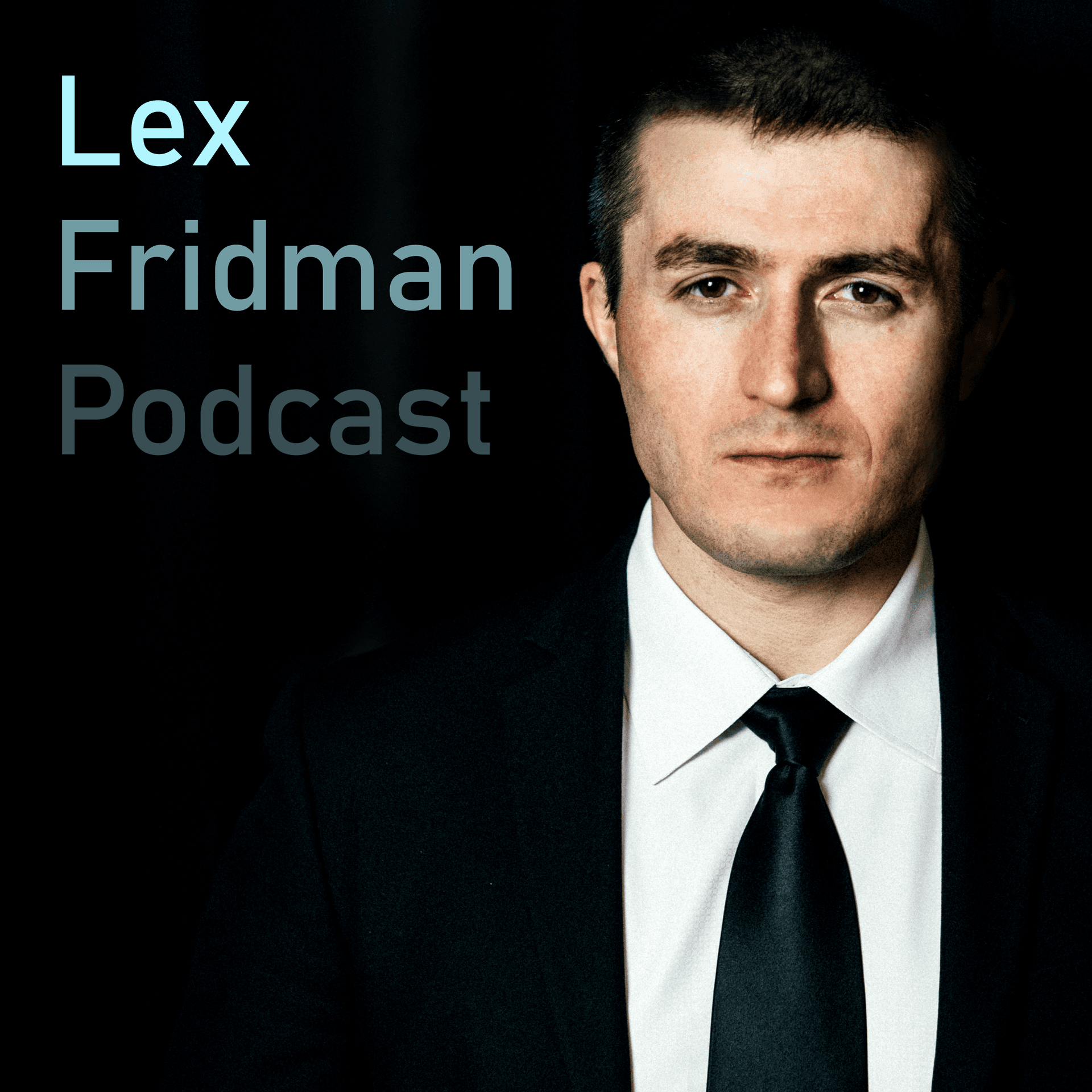
Lex Fridman Podcast Episode #454 – Saagar Enjeti
Summary
In this episode, Lex Fridman hosts political journalist Saagar Enjeti to discuss a wide range of topics including Trump, MAGA, history, politics, and the future of the Republican and Democratic parties. The conversation dives deep into the cultural and political shifts within the United States, examining historical precedents, ideologies, and the roles of various influential figures.
---
Key Themes
- Political Landscape and Trump's Victory
- Reasons for Trump's Success:
- The rise of anti-incumbent sentiment globally.
- Voter dissatisfaction with the Democratic candidate, Joe Biden, characterized by his age and unpopularity.
- Economic factors such as inflation influencing voter decisions.
- Cultural Realignment: Discussion on how Trump's presidency represents a significant shift in American politics, particularly among the working class and minority communities.
- The Influence of Elitism and Wokeism
- Cultural Elitism: The idea that a segment of American society feels disconnected from the traditional working class, leading to political backlash.
- Wokeism: The historical origins and the impact of progressive social ideologies on political dynamics.
- Affirmative Action: Discussion on how policies have affected perceptions of fairness and equity in society.
- Historical Parallels
- Historical Figures: Comparisons made between current political figures and historical leaders like FDR, JFK, and LBJ.
- Lessons from History: How understanding past electoral strategies and cultural movements can illuminate current political challenges.
- Future of Political Parties
- Republican Party: Speculations on the future leadership post-Trump, with potential figures like JD Vance potentially emerging as successors.
- Democratic Party: The necessity for a new leader to rise from the grassroots, possibly reflecting a shift toward more populist policies.
- American Identity and Optimism
- Resilience of American Democracy: Acknowledgment of the dynamic nature of American politics and society, emphasizing the potential for change and adaptation.
- Cultural Contributions: Recognition of how diverse cultural backgrounds enrich American identity and drive innovation.
---
Important Quotes
- “Trump's victory makes him the most important and transformative figure in American politics since FDR.”
- “People want to feel informed rather than actually being informed.”
- “The idea that they are godlike creatures with extraordinary judgment... no, they are just people.”
---
Book Recommendations
- "Coming Apart" by Charles Murray: Examines the cultural divide in America.
- "The Age of Entitlement" by Christopher Caldwell: Discusses the political and social changes resulting from the Civil Rights movement.
- "Born Fighting" by Jim Webb: Explores the history of the Scots-Irish and their impact on American identity.
---
Conclusion This episode of the Lex Fridman Podcast presents an in-depth analysis of the current political climate through the lens of history, culture, and the personal narratives of influential politicians. Saagar Enjeti's insights into the evolution of political ideologies provide a compelling framework for understanding contemporary issues facing the United States. Emphasis on the importance of critical thinking, historical awareness, and the need for genuine dialogue in politics serves as a call to action for listeners interested in engaging with the complex landscape of American democracy.
---
For a deeper exploration of these topics, you can listen to the full episode [here](https://lexfridman.com/saagar-enjeti-2-transcript) or view the transcript for detailed discussions and references.
Written by AI. May contain mistakes. Listen to the episode to check what was said.
Transcript
Automatic transcript. May contain errors.0:00The following is a conversation with Sagar and Jedi, his second time in the podcast. Sagar is a political commentator, journalist, co -host of Breaking Points with Crystal Ball and of the realignment podcast with Marshall Kuslov. Sagar is one of the most well -read people I've ever met. His love of history and the wisdom gained from reading thousands of history books radiates through every analysis he makes of the world. In this podcast, we trace out the history of the various ideological movements that led up to the current political moment. In doing so, we mention a large number of amazing books.
0:41We'll put a link to them in the description for those interested to learn more about each topic. And now, a quick few second mention of each sponsor. Check them out in the description. It's the best way to support this podcast. We got 8 sleep, for naps, 8G1, for health, for health, for hydration, better help, for the mind, Shopify, for the wallet, and net suite for your business. Choose wise, my friends, also if you want to get in touch with me. For a multitude of reasons, go to lexfreement .com slash contact. And now onto the full ladder reads, I try to make them interesting, but if you skip them, please still check out our sponsors.
1:17I enjoy their stuff, maybe you will too. this episode is brought to you by Aitsleep and it's pod 4 Ultra. I'm gonna try a new thing where I hold on to a theme as I talk about these ads I use Aitsleep and the pod 4 Ultra to cool the bed and since Saga knows pretty much more than anybody ever met about the various US presidents and presidential politics and the history of politics in US, let me mention a little factoid. Did you know that the White House didn't get air conditioning until 1933, under Hoover, who funded it just before leaving office for FDR? So all that praise that Sagar gives the FDR just remember, maybe wouldn't be possible without the cool, fresh air that Hoover gave to the great FDR.
2:14And And that in fact, and I'm not sure why I'm using this voice in talking, but that in fact is essential for sleep controlling the temperature of the bed, controlling the temperature of the sleeping environment. There you go. And more you know, create sleep .com slash Lex and use code Lex to get up to $600 off your pot for ultra purchase when bundled at say sleep .com slash Lex. This episode is brought to you by AG one. Basically, a nice multivitamin that's also delicious, that drink every day, that makes me feel like I have my life together, which I barely do. Now, speaking of drinks that you believe make you feel better, you know, placebo fact, that kind of thing, here's a little presidential themed factoid, John Adams drank hard cider every morning, believing it promoted good health.
3:10I would love to get like a health advice podcast with Winston Churchill.
3:19Another president, William Howard Taft, had the White House kitchen prepare special protein shakes made from eggs, milk and beef extract. I would love the dietary details of some of the presidents. I'm sure a bunch of them just smoked and drank and you know had their own like little habits that serve as a kind of escape from the madness of the world. Anyway, get AG1 and it'll give you one month supply of fish oil when you sign up at drinkag1 .com slash Lex. This episode is also brought to you by Element, my daily zero sugar and delicious electrolyte mix. And here, I have to return again to the presidents who consumed various kinds of Did you know that Tom's Jefferson spent $11 ,000 on wine during his presidency?
4:14And we're not talking about quality here. We are, in fact, talking about quantity. That's equivalent to about $300 ,000 in today's money. Whatever works, it's like that meme that there's a perfect optimal amount of alcohol that makes you productive in programming. I have never found that optimal. Actually, if I have a drink, my productivity and my clarity of thinking and my creativity all go down. Now, I start enjoying the social interactions more and more because I am fundamentally an introvert that have anxiety about social interaction. So that helps. But in terms of productivity or creative juices or whatever, nope.
4:57Anyway, you can get a sample pack for free with any purchase. Try it to drinkelement .com slash Lex. This episode is also brought to you by BetterHelp. spelled H -E -L -P -H -H -L -P. They figure out what you need and match it with a licensed therapist in under 48 hours. And there's actually quite a lot of presidents that really struggled with anxiety, with depression, with all kinds of complicated mental states. Coolidge, for example, fell into a deep depression after his son died from blood poisoning and that changed him forever actually. It's difficult to come back from that. John Quincy Adams, somewhat famously, kept extremely detailed diary for 68 years, often writing sort of a detailed analysis in almost like log of his mental states.
5:53That's an interesting thing to do actually. I don't do that enough. I speak it, I don't write it down, perhaps there's some magic in writing it down. But there is, with BetterHelp also magic in speaking it with a professional. Check them out at BetterHelp .com slash Lex and save on your first month. That's BetterHelp .com slash Lex. This episode is also brought to you by Shopify, a platform designed for anyone to sell anywhere with a great looking online store. So Abraham Lincoln actually owned a general store. And he has famously written that he wished he had Shopify. He would be much more convenient.
6:33Anyway, he had a general store that failed. So, you know, sometimes you need the right job for the right man, that match to be made and everything else is not going to work out. I sold shoes, women's shoes, at Sears, kind of like Al Bundy for married with children, if you know the show. And you know I did okay, but I think it wasn't quite the right fit for me. You know, I was quite technically savvy in your blog computers and I said I should probably be selling electronics and computers and they said yes yes yes one day you will but now we need help and shoes. So let's start you there. And if I stayed there for many more years perhaps I would of upgraded to electronics.
7:26But then I also saw the beauty in selling women's shoes. There was a real joy in finding the right match for the right person. And that joy can be scaled significantly with Shopify. Sign up for a $1 per month trial period at Shopify .com slash Lex. That's all lowercase. Go to Shopify .com slash Lex to take your business to the next level today. This episode is brought to you by Netsuite, an all -in -one cloud business management system. Ulysses as scrammed, the famed general, kept extremely detailed expense accounts, recording every single penny he spent. Now, rigor, attention to detail, obsession with detail, financial detail is important.
8:11But if you have the right tool for the job, that's made it easier. I would love to kind of throw some of these people, some of these leaders, some of these brilliant minds from history into the modern world that is digitized. I think a lot of them would actually be destroyed by it because the machine of distraction will pull them away from the focus you can more easily attain in a non -technological world. And some of them I think would become even more super productive so it'll be really interesting. And there's been a lot of of presidents that kind of pushed the White House and government in general into the direction of great record keeping from George Washington to Carter to FDR as a Saga talks a lot about.
9:00Anyway, all that is in the realm of politics, but the realm of business in many ways is the same, especially when the government is working well. So NetSuite is for business, in fact, over 37 ,000 companies have upgraded to NetSuite, to get a benefit of their flexible financing plan at NetSuite .com slash Lex.
9:21This is a Lex Friedman podcast. To support it, please check out our sponsors in the description. And now, dear friends, here's Saga and Jettie.
9:47So let's start with the obvious big question. What do you think Trump won? Let's break it down. Before the election, you said that if Trump wins, it's going to be because of immigration. So aside from immigration, what are the maybe less than obvious reasons that Trump won? Yes, we absolutely need to return to immigration, but without that, multifaceted explanation will start with the easiest one. There has been a wave of anti -income bid energy around the world. Financial Times chart recently went viral showing so the first time I think since World War 2, possibly since 1905, I need to look at the data set that all anti -income bid parties all across the world suffered major defeats.
10:27So that's a very, very high level analysis. And we can return to that if we talk about Donald Trump's victory in 2016 because there were similar like global precursors. That individual level in the United States, there's a very simple explanation as well, which is that Joe Biden was very old. He was very unpopular. Inflation was high. Inflation is one of the highest determiners of people switching their votes and putting their primacy on that ahead of any other issue at the ballot box. So that's that. But I think it's actually much deeper at a psychological level for who America is and what it is.
10:59And fundamentally, I think what we're going to spend a lot of time talking about today is the evolution of the modern left and its collapse in the Kamala Harris candidacy and eventually the loss to Donald Trump in the popular vote, where really is like an apotheosis of several social forces. So we're going to talk about the great awakening, so -called awokening, which is very important to understanding all of this. There's also really Donald Trump himself, who is really one of the most unique individual American politicians that we've seen in decades. At this point, Donald Trump's victory makes him the most important and transformative to figure in American politics since FDR.
11:38And thought process for the audience is in 2028, there will be an 18 year old who's eligible to vote, who cannot remember a time when Donald J. Trump was not the central American figure. And there's stories in World War II where troops were on the front line, some of their 18, 19 years old, FDR died and they literally said, well, who's the president? And they said, Harry Truman, you dumbass. And they go, who? who they couldn't conceive of a universe where FDR was not the president of the United States. And you know, Donald Trump, even during the Biden administration, he was the figure. Joe Biden defined his entire candidacy and his legacy around defeating this man.
12:14Obviously, he's failed. We should talk a lot about Joe Biden as well for his own failed theories of the presidency. So I think at macro level, it's easy to understand at a basic level, inflation is easy to understand. But what I really hope that a lot of people can take away is how fundamentally unique Donald Trump is as a political figure And what he was able to do to realign American politics really forever I mean in the white working class realignment originally of 2016 the activation really of a multi -racial kind of working class coalition And if really splitting American lines along a single individual question of did you attend a four -year college degree institution or not and And this is a crazy thing to say.
12:56Donald Trump is one of the most racially depolarizing electoral figures in American history. We lived in 2016 at a time when racial groups really voted in blocs, Latinos, blacks, whites. There was some, of course, division between the white working class and the white college educated, white collar workers. But by and large, you could pretty fairly say that Asians were Indians. Everyone, 80, 90 percent were going to vote for the Democratic Party, Latinos as well. I'm born here in Texas and state of Texas. Georgia will be both shocked people when he won some 40 percent of the Latino vote. Donald Trump just beat Kamala Harris with Latino men and he ran up the table for young men.
13:39So really fundamentally, we have witnessed a full realignment in American politics. And that's a really fundamental problem for the modern left. Is it erased a lot of the conversation around gerrymandering, around the electoral college, the so -called electoral college bias towards Republicans, really being able to win the popular vote for the first time since 2004 is shocking and landmark achievement by a Republican. In 2008, I have a book on my shelf and I always look at it to remind myself of how much things can change. James Carvell and it says 40 more years how Democrats will never lose an election again 2008 they wrote that book after the Obama coalition and the landslide and Something I love so much about this country people change their minds all the time.
14:27I was born in 1992 I watched red states go blue. I've seen blue states go red. I've seen swing states go red or blue I've seen millions of people pick up and move the greatest internal migration in the United States since World War two and And it's really inspiring because it's a really dynamic, interesting place. And I love covering and I love thinking about it, talking about it, talking to people. It's awesome. One of the reasons I'm a big fan of yours is your student of history. And so you've recommended a bunch of books to me. And they and others thread the different movements throughout American history.
14:59Some movements take off and do hold power for a long time. Some don't. And some are started by a small number of people and are controlled by a small number of people, some are mass movements, and it's just fascinating to watch how those movements evolve and then fit themselves maybe into the constraints of a two -party system. And I'd love to sort of talk about the various perspectives of that. So would it be fair to say that this election was turned into a kind of class struggle? Well, I won't go that far because to say it's a class struggle really implies that things is fundamentally a line on economic lines.
15:39And I don't think that's necessarily accurate. Although if that's your lane, lens, you could get there. So there's a very big statistic going around right now where Kamala Harris increased her vote share and one households over $100 ,000 or more. And Donald Trump won households under 100 ,000. So you could do that in an economic lens. The problem again that I have is that that is much more a proxy for four -year college degree and for education. And so one of my favorite books is called coming apart by Charles Murray. And that book really, really underscores how the cultural milieu that people swim in when they attend a four -year college degree in the trajectory of their life, not only on where they move to, who they marry, what type of grocery store they go to, their cultural, what television shows that they watch.
16:28One of my favorite questions from Charles Murray is called a bubble quiz. I encourage people to go take it by the way, which asks you a question. It's like, what does the word Branson mean to you? And it has a couple of answers. One of them is Branson is Richard Branson. Sir Richard Branson. Number two is Branson Missouri, which is like a country music tourist style destination. Three is, it means nothing. So you are less in a bubble if you say country music, and you're very much in the bubble if you say Richard Branson. And I remember taking that test for the first time I go, obviously, Sir Richard Branson, Virgin Atlantic.
16:58Like what? And then I was like, wait, I'm in the bubble. And there are other things in there like can you name various different military ranks? I can because I'm a history nerd, but the vast majority of college educated people don't know anybody served in the United States military They don't have family members who do the most popular shows in America are like the Big Bang Theory and NCIS Whereas people in an hour probably cultural milieu our favorite shows are white Lotus the last of us This is prestige television right with a very small audience, but high -income high education So the point is, is that culture really defines who we are as Americans where we live.
17:33And rural urban is one way to describe it. But honestly, with the work from home revolution and more rich people and highly educated people moving to more rural suburban or areas that traditionally weren't able to commute in, that's changing. And so really, if the internet is everything, the stuff that you consume on the internet, the stuff that you spend your time doing, type of books you read, whether you read a book at all, frankly, whether you travel to Europe, whether you have a passport, or you have you know, all the things that you value in your life, that is the real cultural divide in America.
18:02And I actually think that's what this revolution of Donald Trump was activating and bringing people to the polls, bringing a lot of those traditional working class voters of all races away from the Democratic Party along the lines of elitism, of sneering, and of a general cultural feeling that these people don't understand me and my struggles in this life. And so the trivial formulation is that is the the wokeism the anti wokeism movement. Yeah, so it's not necessarily that Trump winning was a statement against wokeism. It was the broader anti -elidism. It's difficult to say because I wouldn't dismiss anti -wokers or wokeism as an explanation But we need to understand like the electoral impacts of woke So there's varying degrees of like how you're going to encounter quote unquote, wochism, and this is a very difficult thing to define.
18:55So let me just try and break it down, which is there are the types of things that you're going to interact with on a cultural basis. And what I mean by that is going to watch a TV show and just for some reason, there's like two trans characters. And it's never like particularly explained why they just are there or watching a commercial and it's the same thing. Watching, I don't know, I remember was watching, I think it was Dr. Strange in the Multiverse of Madness. and the main, it was a terrible movie, by the way, don't recommend it. But one of the characters, I think it's, her name was like America and she wore a gay pride flag.
19:26Right, look, many left -wingers would make fun of me for saying these things, but that is obviously a social agenda to the point as in, they believe it is like deeply acceptable, that is used by Hollywood and cultural elites who really value those progress in sexual orientation and others, it really believe it's important to quote, unquote, showcase it for representation. So that's like one way that we may encounter, quote unquote, wokeism. But the more important ways, frankly, are the ways that affirmative action, which really has its roots in, you know, American society all the way going back to the 1960s and how those have manifested in our economy and in our understanding of quote unquote discrimination.
20:04So two books I can recommend. One is called The Origins of Woke. That's by Richard Hainania. There's another one by the Age of Entitlement by Christopher Caldwell. And they make a very strong case that Caldwell in particular, that he calls it like a new founding of America was the passage of the Civil Rights Act of 1964 because it created an entire new legal regime and understanding of race in the American character and how the government was going to enforce that. And that really ties in with another one of the books that I recommended to you about the origins of Trump by Jim Webb and Senator Jim Webb, incredible, incredible man.
20:40He's so underappreciated. intellectual, he was anti -war and he was, people may remember him from the 2016 primary and they asked him a question, I don't exactly remember about one of his enemies and he's like, well, one of them was a guy shot in Vietnam and he was running against Hillary. And that guy, he wrote the book, Born Fighting. I think it's history of the Scott's Irish people, something like that. And that book really opened my eyes to the way that affirmative action and racial preferences that were playing out, you know, through the HR managerial elite really turned a lot of people within the white working class away from the Democratic Party and felt fundamentally discriminated against by the professional managerial class.
21:27And so there's a lot of roots of this, the managerial revolution by James Burnham and in terms of the origin of kind of how we got here, but the crystallization of, like DEI and or affirmative action. I prefer to use the term affirmative action in the higher -est, higher -session lots of business and there became this idea that representation itself was the only thing that mattered. And I think that right around 2014 that really went on steroids and that's why it's not an accident that Donald J. Trump elected in 2016. At this point, do you think this election is the kind of statement that wokeism is a movement is dead?
22:00I don't know. I mean, it's very difficult to say because wokeism itself is not a movement with a party leader. It's a Morpheus belief that has worked its way through institutions now for almost 40 or 50 years. I mean, it's effectively a religion. And part of the reason why it's difficult to find is it means doing different things to different people. So, for example, they're varying degrees of how we would define, quote -unquote, woke, do I think that the Democrats will be speaking in so -called academic language? Yes, I do think they will. I think that the next Democratic nominee will not do that.
22:34However, or Kamala Harris actually did move as much as she could away from quote unquote woke, but she basically was punished for a lot of the sins of both herself from 2019, but a general cultural feeling that her and the people around her do not understand me and not only do not understand me, but have racial preferences or a regime or an understanding that would lead to a quote unquote equity mindset, you know, equal outcomes for everybody as opposed to equality of opportunity, which is more of a colorblind philosophy. So I can't say, I think it's way too early. And again, you can not use the word Latinx.
23:11But do you still believe in an effective affirmative action regime? In terms of how you would run your Department of Justice, in terms of how you view the world, in terms of what you think the real dividing lines in America are. Because I would say that's still actually kind of a woke mindset. And that's part of the reason why the term itself doesn't really mean a whole lot. and we have to get actually really specific about what it looks like in operations. In operation, it means affirmative action. It means the NASDAQ passing some law that if you want to go public or something that you have to have a woman in a person of color on your board, like this is a blatant and extraordinary look racialism that they've enshrined in their bylaws.
23:52So you can get rid of ESG, that's great, but you can get rid of DEI, I think that's great, but it's really about a mindset and a view of the world, and I don't think that's going anywhere. And you think the reason it doesn't work well in practice is because there's a big degree to which it's anti -maritalcy It's anti -American really. I mean, you know, DEI and woke and affirmative action make perfect sense in a lot of different countries Okay, and there are a lot of countries out there that are Multiethnic and their heterogeneous and they were run by basically quasi -dictators and the way it works is that you pay off the Christians and They pay off the Muslims and they get this guy and they get that guy and everybody kind of shakes it It's very explicit.
24:33They're like we have 10 spots and they go to the Christians we have 10 spots and they go to the Hindus You know talking India is a country that I know pretty well and this does kind of work like that on state politics level in some respect But in America, you know fundamentally we really believe that no matter where you are from that you come here and basically within a generation Especially if you migrate here legally and you integrate that you leave a lot of that stuff behind and And the story, the American dream that is ingrained in so many of us is one that really does not mesh well with any sort of racial preference regime or anything that's not meritocratic.
25:10And I mean, I will give the left wing or some, you know, credit in the idea that meritocracy itself, you know, could have preference for people who have privileged backgrounds. I think that's true. And so, you know, the way I would like to see it is to increase everybody's equality of opportunity to make sure that they all have a chance at quote -unquote willing out the American dream, but that doesn't erase meritocracy, hard work, and many of the other things that we associate with the American character, with the American frontier. So these are two ideologies which are really at odds. Like in a lot of ways like, wokeism, racialism and all this is a third world ideology.
25:46It's one that's very prevalent in Europe and all across Asia, but it doesn't mix well here and it shouldn't. And I'm really glad that the America feels the same way? Yeah, I got to go back to Jim Webb in that book. What a badass fascinating book. Oh my God. It's a worn fighting. Amazing. How the Scott's Irish shaped America. So I did not realize to the degree, first of all, how bad has the Scott's had for sure? And the degree, many of the things that kind of identifies America and in part of the American spirit were defined by this relatively small group of people. Yes. As he describes, the model could be summarized as fight, sing, drink, and So there's the principles of fierce individualism, the principles of a deep distrust of government, the elites, the authorities, bottom -up governance over 2000 years of a military tradition.
Read the full transcript
26:35They made up 40 % of the revolutionary war army and produced numerous military leaders including Stonewall Jackson, Elyseus Grant, George S. Patton, and a bunch of presidents. Yeah, some of the more gangster presidents Andrew Jackson Teddy Roosevelt would your Wilson Ronald Reagan and Bill Clinton Mm -hmm. Just the the whole cultural legacy of country music We owe them so much and they really don't get there do unfortunately a lot of for the reasons that I just described around racialism is because Post, you know mass immigration from Europe the term white kind of became blanket applied to new Irish to Italians to Slovenians and And you know, as you and I both know, if you travel those countries, people are pretty different.
27:20And it's not the different here in the United States. Scott Sires for some of the original settlers here in America and particularly in Appalachia and their contribution to the fighting spirit in their own culture and like who we are as individualists and some of the first people to ever settle the frontier and that frontier mindset really does come from them. We owe them just as much we do the Puritans, but they don't ever really get there do. And the reason I recommend that book is if you read that book and you understand then, you know, how exactly could this group of white working class voters for go from 2012 voting for a man named Barack Hussein Obama to Donald J.
27:54Trump? You really seem to, it makes perfect sense if you combine it with a lot of the stuff I'm talking about here about affirmative action and about distrust of the elites, about feeling as if institutions are not seeing through to you and specifically also not valuing your contribution to American history and in some cases actively looking down. I'm glad you pointed out not only their role in the Revolutionary War but in the Civil War as well and just how much of a contribution culturally really that we owe them for setting the groundwork that so many of us who came later could build upon and adopt some of their own ideas and their culture as our own.
28:32It's one of the things that makes America great. Mark Twain. Yeah. I mean, so much of the culture, so much of the, yeah, the American spirit, the whole idea, the whole shape and form and type of populism that represents our democracy. So would you trace that fierce individualism that we think of back to them? Definitely. It's a huge part of them about who they were, about the screw you attitude. I mean, that book actually kind of had a renaissance back in 2016 when Hilbali -Elegie came out. I'm sure you remember this, which it's kind of weird to think that it's now this vice president elected the United States kind of wild honestly to think about But JD Vance's book Hillbilly Elegy I think was really important for a lot of American elites who were like how do these people support Trump?
29:19Where does this shit come from that they're really I mean that if you really think back to that time It was shocking to the elite character that any person in the world could ever vote for Donald Trump and not just vote He won the election. How does that happen? And that's Hillbilly -Elogy guided people in an understanding of what that's like on a lived day to day basis. And JD, who his credit talks about the Scott's Irish heritage about Appalachia and the legacy of what that culture looks like today, and how a lot of these people voted for Donald Trump. But we got to give credit to Jim Webb, who wrote the history of these people and taught me and you about their original fight against the oppressors in Scotland and Ireland and their militant spirit and how they were able to bring that over here.
30:00And, you know, they got their due in Andrew Jackson and some of our other populist presidents who set us up on the road to Donald Trump to where we are today. Dude, it got me pumped, excited to be an American. Me too. I love that, but. It's crazy that JD, the same guy, because that's, he'll build the energies what I kind of thought of him as. Yeah, I mean, I'll tell you for me, it's actually pretty surreal. I met JD Vance in like 2017. I didn't know, in like a bar. I never think he would be the vice president elect of the United States. I mean, just kind of wild. One of my friends went back and dug up the email that we originally sent him.
30:34Just like, hey, do you want to meet up? Or he's like, sure, you know? Yeah, yeah, I was watching on television. I mean, the first time that it really hit me, I was like, whoa, there's like name in a history book. Because whenever he became the vice presidential nominee, I was watching on TV and the confetti was falling and it was waving with his wife. And I was like, wow, like, that's it. You're in the history books now forever, especially now. so as the literal vice president -elect of the US. But his own evolution is actually a fascinating story for us too because I think a lot of the time I've spent right now is kind of, a lot of what I'm giving right now are like 2016 kind of takes about like why Trump won that time.
31:12But we just spent a lot of time on how Donald Trump won this election and like how what happened, some of the failures of the Biden administration, some of the payback for the great awakening. but also if you look at the evolution of JD Vance, this is a person who wrote Hillbilly Elegy, and not a lot of people pay attention to this, but if you read Hillbilly Elegy, JD was much more of a traditional conservative at that time. He was citing, you know, report, I think the famous passage is about like, payday loans and why they're good or something like that. I don't know his position today, but I would assume that he's probably changed.
31:44That, but the point is is that his ideological evolution from watching somebody who really was more of a traditional Republican with a deep empathy for the white working class, then eventually become a champion and a disciple of Donald Trump and to believe that he himself was the vehicle for accomplishing and bettering the United States specifically for working class Americans really of all stripes. And that story is really one of the rise of the modern left as it exists as a political project as an ideology, it's also one of the Republican party, which coalesced now with Donald Trump as a legitimate figure and as the single bullwark against cultural leftism and elitism that eventually was normalized to the point that majority of Americans decided to vote for him in 2024.
32:32So let's talk about 2024. What happened with the left? What happened with Biden? What's your take on Biden? Biden is... I try to remove myself from it and I try not to give like hit big history takes while you're in the moment, but it's really hard not to say that he's one of the worst presidents in modern history. And I think the reason why I'm going to go with it is because I want to judge him by the things that he set out to do. So Joe Biden has been the same person for his entire political career. He is a basically C student who thinks he's an A student. The chip on his shoulder against the elites has played to his benefit in his original election to the United States Senate Through his entire career as the United States senator where he always wanted to be the star in the center of attention and to his 1988 presidential campaign and one of the most fascinating things about Biden and watching him age is watching him become even more of what he already was and so book recommendation It's called what it takes and it was written in 1988 and there's actually a long chapter on Joe Biden and about the plagiarism scandal and one of the things that comes across is his sheer arrogance and belief in himself as so why he should be the center of attention.
33:45Now the reason I'm laying all this out is the arrogance of Joe Biden, the individual and his character is fundamentally the reason that his presidency went awry. This is a person who was elected in 2020 really because of a feeling of chaos, of Donald Trump, of, we need normalcy, decides to come into the office, portrays himself as a quote unquote transitional president, slowly, you know, begins to lose a lot of his faculties, and then surrounds himself with sick offense, the same ones who have been around him for so long, that he had no single input into his life to tell him that he needed to stop and need to drop out of the race until it became truly undeniable to the vast majority of the American people.
34:26And that's why I'm trying to keep it as like him as an individual as a president because we can separate him from some of his accomplishments and the things that happen some of my supports some I don't But generally a lot of people are not gonna look back and think about Joe Biden and the chips act a lot of people are not gonna look back and think about Joe Biden and the bill back better bill or whatever his Lena con nanti -trust policy They're going to look back on him and they're going to remember high inflation They're going to remember somebody who fundamentally never was up to the job in the sense that I want to again book recommendation Freedom from Fear by David Kennedy is about the Roosevelt years.
35:01And one of the most important things people don't understand is the new deal didn't really work in the way that a lot of people wanted it to, right? Like there was still high unemployment, there was still a lot of suffering. But you know what changed? They felt that they had a vigorous commander in chief who is doing everything in his power to attack the problems of the everyday American. So even though things didn't even materially change, the vigor, that's a term that was often associated with John F. Kennedy at Viga, you know, in the Massachusetts accent. We had this young, vibrant president in 1960, he was running around and he wanted to convince us that he was working every single day tirelessly.
35:36And we have an 80 year old man who is simply just eating ice cream and going to the beach while people's grocery prices and all this thing go up by 25%. and we don't see the same vigor. We don't see the same action, the biased action, which is so important in the modern presidency. That is fundamentally why I think the Democrats, part of the reason why the Democrats lost the election. And also why I think that he missed his moment in such a dramatic way. And he had the opportunity, he could have done it, you know, if he wanted to, but maybe 20 years ago, but the truth is that his own narcissism, his own misplaced belief in himself and his own accidental rise to the presidency and it ended up in his downfall.
36:17And it's kind of amazing because again, if we look back to his original campaign speech, 2019, why I'm running for president, it was Charlottesville and he said I want to defeat Donald Trump forever and I wanna make sure that he never gets back in the White House again. So by his own metric, he did fail. That was his, it was the only thing he wanted to do and he failed, failed run. You said a lot of interesting stuff. So one FDR, that's really interesting. It's not about the specific policies, It's about like fighting for the people and doing that with charisma and just uniting the entire country for a particular, is this the same with Bernie?
36:52Like maybe there's a lot of people that disagree with Bernie that still support him because we just want to start... Yeah, that's it. We just want somebody to fight authentically for us. Yes, FDR, people really need, FDR was like a king. He was like Jesus Christ, okay, in the US. And some of it was because of what he did, but it was just the fight. So people need to go back and read the history of the first hundred days under FDR. The sheer amount of legislation they went through, his ability to bring Congress to heel and the Senate. He gets all this stuff through. But as you and I know, legislation takes a long time to put into place, right?
37:22We've had people starving on the streets all throughout 1933 under Hoover. The difference was Hoover was seen as this do -nothing joke who would dine nine course meals in a white house and use a filthy rich banker. FDR comes in there and every single day has a fireside chassis passing legislation, but more importantly, so he tries various different programs. Then they get ruled on constitutional. He tries even more. So what does America take away from that? Every single time. If he gets knocked down, he comes back fighting. And that was a really part of his character that he developed after he got polio and it was, it gave him the strength to persevere through personally what he could transfer in his calm demeanor and his feeling of fight that America really got that spirit from him and was able to climb itself out of the Great Depression.
38:14He's such an inspirational figure. He really is. And I people think of him for World War II, of course, you know, we can spend forever on that. But in my opinion, the early years are not studied enough. 33 to 37 is one of the most remarkable periods in American history. We were not ruled by a president. We were ruled by a king by a monarch and people I liked it. He was a dictator and he was a good one. Yeah. So to sort of push back against the implied thing that you said. So when saying Biden is the worst president, no second worst in modern history. That's what I said. Second, modern, who's the worst W?
38:49No question. I see because of the horrible wars. Probably. I mean, Iraq is just so bad. He's just like us. Yeah. One of my favorite authors is a guy, Jean Edward Smith. He's run a bunch of presidential biographies. And in the opening of his book W biography. He's like, there's just no question. There's a single worst -born policy mistake in all of American history. And W is one of our worst presidents ever. He had terrible judgment and got us into a war of his own choosing. It was a disaster and it set us up for failure. By the way, we talked a lot about Donald Trump. Nobody is more responsible for the rise of Donald Trump than George W.
39:21Bush, but I could go off on Bush for a long time. Oh, we will return there. So as part of the pushback, I'd like to say because I agree with your criticism of arrogance and narcissism against Joe Biden. The same could be said about Donald Trump. You're absolutely. Of arrogance. So and I think you've also articulated that a lot of presidents throughout American history have suffered from a bad case of arrogance and narcissism. Absolutely. But sometimes for a benefit, you know, you have to be a pretty crazy person to be, to want to be president. I put out a tweet that got some controversy and I think it was Joe Rogan.
39:57who I love, but he was like, I wanna find out who Kamala Harris is as a human being. And I was like, I'm actually not interested in who politicians are as human beings at all. I was like, I've read too much about them to know. I know who you are. If you spend your life, and because I live in Washington, and I spend a lot of time around, would be politicians, I know what it takes to actually become the president. It's crazy. You have to give up everything, everything. Every night, you're not spending it with your wife, you're spending it at dinner, with potential donors, with friends, with people who can connect to.
40:26even after you get elected, that's even more so. Now you gotta raise money, and now you're onto the next thing. Now you wanna get your political thing through. You're gonna spend all your time on your phone, you and your staff are gonna be more like this. And your entire life revolves around your career. It's honestly, you need an insane level of narcissism to do it. Because you have to believe that you are better than everybody else, which is already pretty crazy. And not only that, your own personal characteristics and foibles lead you to the pursuit of this office and to the pursuit of the idolatry of the self and everything around you.
41:00There's a famous story of Lady Bird Johnson after Johnson becomes a president. He's talking to a White House butler. And she was like, everything in his house revolves around my husband. Whatever's left goes to the girls, her two children. And I'll take the scraps. So everything revolved around Johnson's political career and his daughters, when they're honest, because they like to paper over some of the things that happened under him. but they didn't spend any time with them. Saturday, Saturday morning was for breakfast with Richard Russell I forget. These are all in the Robert A. Carroll books.
41:30Sunday was for Rayburn. There was no time for his kids. That's what it was. And by the way, he's one of the greatest politicians to ever live. But he also died from a massive heart attack and he was a deeply sad and depressed individual. Yeah, I saw that tweet to go back to that. Yeah. And also I listened to your incredible debate about it with Marshall on the Realignment podcast. and I have to side with Marshall. I think you're just wrong on this. All right. Because I think revealing the character of a person is really important to understand how they will act in a room full of generals and full of...
42:04Yeah, this gets to the judgment question. The judgment. And that's, I think of Johnson and of Nixon, of Teddy Roosevelt, even of FDR. I can give you a laundry list of personal problems that all those people had. I think they had a really, really good judgment. And I'm not sure how intrinsic their own personal character was to their exploration and thinking about the world. So JFK is actually JFK might be our best example because he had the best judgment out of anybody in the room as a brand new president in the Cuban Missile Crisis and he got us out and avoided nuclear war, which he deserves eternal credit for that.
42:40But how did he arrive to good judgment? Some of it certainly was his character and we can go again though into his laundry list of that, But most of it was around being with his father, seeing some of the mistakes that he would make. And he was also had a deeply inquisitive mind and he experienced World War II at the personal level after PT109. So it is, look, I get it. I actually could steal manate. I could, the response to what I'm saying is judgment is not divisible from personal character. But just because I know a lot of politicians and I've read enough with the really great ones, the people who I, I, revere the most, There's really bad persons, basically, every single time.
43:21But you're saying the judgment was good. Yeah, his judgment was great. It was a missile crisis. Yes. Some of the best judgment and decision making in the history of America. Yes, and we should study a lot of it. And I encourage people out there. This is a brutal text. We were forced to read in graduate school. The essence of decision by Graham Allison. I'm so thankful we did. It's one of the foundations of political science because it lays out theories of how government works. This is also a useful transition, by the way, if we want to talk about Trump and some of his cabinet and how that is shaping up, because people really need to understand Washington.
43:58Washington is a creature with traditions, with institutions that don't care about you. They don't even really care about the president. They have self -perpetuating mechanisms, which have been done a certain way, and it usually takes a great shocking event like World War II to change really anything beyond the marginal. Everyone's in a while, you have a figure like Teddy Roosevelt who's actually able to take peacetime presidency and transform the country, but it needs an extraordinary individual to get something like that done. So the question around the essence of decision was the theory behind the Cuban Missile Crisis of how Kennedy arrived at his decision.
44:33And there are various different schools of thought, but one of the things I love about the book is it presents the case for all three, the organizational theory, the bureaucratic politics theory, and then kind of the great man theory as well. So there's a you know you and I could sit here and I could tell you a case about PT 109 and about how John F. Kennedy Experience World War 2 as this I think it was like a first lieutenant or something like that And how he literally swam miles with a wounded man's life jacket strap in his teeth with a broken back And he saved him and he ended up on the cover of Life magazine and he was a war hero And he was a deeply smart individual who wrote a book in 1939 called Why England Slept which to this day is considered A text which at the moment was able to describe in detail why Neville, Neville Chamberlain in the British political system arrived at the policy of appeasement I actually have a original copy is one of my most prized possessions because and from 1939 because this is a 23 year old kid Who the fuck are you John F.
45:32Kennedy? Turns out it's brilliant man and Another just favor to side is that at the Potsdam conference, you know, where Harry Truman is there was Stalin and everybody money. So in the room at the same time, Harry S. Truman, president of the United States, Dwight D. Eisenhower, the general, right, who will succeed him, 26 year old John F. Kennedy as a journalist. Some shit had journalists on the side. And all three of those presidents were in the same room with Joseph Stalin and others. And that's the story of America right there. It's kind of amazing. I love people to say that because you never know about who will end up rising to power.
46:06But are you announcing that you're No, I don't have what it takes. I don't think so. I'm self -aware. Well, maybe humility is necessary for greatness. So, actually, can we just linger on that book? Yeah. So, the book Essence of Decision, Explaining the Cuban Missile Crisis by Graham Allison, it presents three different models of how government works, the rational act of model, so seeing government as one entity, trying to maximize the national interest, also seeing government is through the lens of the momentum of standard operating procedures, sort of this giant organization that's just doing things how it's always been done.
46:48And the government politics model of there's just these individual internal power struggles within government. And all of that is like a different way to view and they're probably all true to a degree of how decisions are made within this giant machinery of government. That's why it's so important is because you cannot read that book and say one is true and one is not. You can say one is more true than the other, but all of them are deeply true. This is probably a good transition to Donald Trump because, I guess, for the people out there, I don't think I've been up too obsequious. He'll be my criticism.
47:23Trump says something very fundamental and interesting on the Joe Rogan podcast, probably the most important thing that he ever said, which is he said, I like to have people like John Bolton in my administration, will because they scare people, and it makes me seem like the most rational individual in the room. So at a very intuitive level, a lot of people can understand that, and then they can rationalize while there are picks that Donald Trump has brought into his White House, people like Mike Walts and others that have espoused views that are directly at odds with a quote unquote anti -neocon, anti -liz -chainy agenda.
47:55Now, Trump's theory of this is that he likes to have quote unquote, like psychopaths, like John Bolton, in the room with him while he's sitting across from Kim Jong -un because it gets scared. What I think Trump never understood when he was president, and I honestly question if he still does now, is those two theories that you laid out, which are not about the rational interest as the government is one model, but the bureaucratic theory and the organizational theory of politics. Because what Trump, I don't think, quite gets, is that there are 99 % of the decisions they get made in government never reach the president's desk.
48:27One of the most important Obama quotes ever is by the time I get to my desk, nobody else can solve it. All the problems here are hard. All the problems here don't have an answer. That's what I have to make the call. So the theory that Trump has that you can have people in there who are let's say warmongers, neocons or whatever who don't necessarily agree with you is that when push comes to shove at the most important decisions, that I'll still be able to reign those people in as an influence. Here's the issue. Let's say for Mike Waltz who's going to be the National Security Advisor, a lot of people don't really understand You know, there's this theory of national security advisor where you call me into your office and you're the president You're like, hey, what do we think about Iran?
49:04I'm like, I think you should do X, Y, Z. No, that's not how it works The National Security Advisor's job is to coordinate the interagency process So his job is to actually convene meetings him and his staff where in the situation room CIA State Department and sec deaf others. Before the pote is even walks in, we have options. So we're like, hey, Russia's invaded Ukraine. Weed, a package of options. Those packages options are conceived of three things. We're gonna have one group. We're gonna call it the double option. Two, we're gonna call it the middle ground. Three, the hardcore package. Trump walks in.
49:34This is how it's supposed to work. Trump walks in and he goes, okay, Russia invaded Ukraine. What do we do? Mr. President, we've prepared three options for you. We've got one, two, and three. Now, who has a power? Is it Trump when he picks one, two, or three? or as the man who decides was even in option one, two, and three. That is the part where Trump needs to really understand how these things happen. And I watched this happen to him in his first administration. He hired a guy, Mike Flynn, who was his national security advisor. You could say a lot about Flynn, but him and Trump were at least like this on form policy.
50:03Flynn gets outed because what I would call an FBI coup, whatever. 33 days is out as a national security advisor. or HR master, it's got a nice, nice, shiny uniform, four star, all of this. Master doesn't agree with Donald Trump at all. And so Trump says, I ran on pulling out of Afghanistan. I want to get out of Afghanistan. I'm like, yeah, we'll get out of Afghanistan. But before we get out, we got to go back in. As we need more troops in there. And he's like, oh, okay. You know, it's like all this and it proves a plan and effectively gives a speech in 2017 where he ends up escalating and increasing the number of troops in Afghanistan.
50:39And it's only until February 2020 that he gets to sign a deal, the Taliban peace deal, which in my opinion, should have done in 2017. But the reason why that happened was because of that organizational theory, of that bureaucratic politics theory, where atomic master is able to guide the interagency process, bring the uniform recommendations of the joint chiefs of staff and others to give Donald Trump no option but to say we must put troops. Another example of this is a book called Obama's War by Bob Woodward. I highly encourage people to read this book because this book talks about how Obama comes into the White House in 2009 and he says, I want to get out of Iraq and I don't want to increase, I want to fight the good war in Afghanistan, right?
51:17And he's doing Obama's a thoughtful guy, too thoughtful actually. And so he sits there and he's working out his opinions. And what he starts to watch is that very slowly his narrow, his options began to narrow because strategic leaks weeks start to come out from the White House situation room about what we should do in Afghanistan. And pretty soon, David Patreus and Stan McChrystal and the entire national security apparatus has Obama pegged where he basically politically at the time decides to take the advantage position of increasing troops in Afghanistan, but then tries to have it both ways by saying, but in two years we're going to withdraw.
51:56That book really demonstrates how the deep state can completely remove any of the of your options to be able to move by presenting you with ones which you don't even want and then making it politically completely infeasible to travel down the extreme directions. That's why when Trump says things like, I wanna get out of Syria, that doesn't compute up here for the Pentagon. Because first of all, if I even asked you how many troops we have in Syria and you go on the DOD website, it'll tell you a number. The numbers bullshit because the way that they do it is if you're only there for 179 days, you don't count as active, military contracts, the real numbers, let's say five times.
52:32And so Trump would be like, hey, I want to get out of Syria. Yeah, it will do it six months, right? We need six months. And after six months ago, so are we out of Syria yet? And they're like, no, well, we gotta wrap this up. We got this base, we got that. And we have this important mission. And next thing you know, you're out of office. And it's over. So there's all these things which I don't think he quite understands. I know that some of the people around him who disagree with these picks do is the reason why these picks really matter is not only the voices in the situation room for the really, really high profile stuff.
52:59It's for all the little things and never get to that president's desk of which can shape extraordinary policy. I'll give you the best example. There was never a decision by FDR as president of the United States to oil embargo, Japan. One which he thought about as deeply as you and I would want. It was a decision kind of made within the State Department. It was a decision that was made by some of his advisors. I think he eventually signed off on it. It was a conscious choice, but it was not one which ever was understood, the implications that by doing that. We invite a potential response like Pearl Harbor.
53:31So think about you know what the organizational bureaucratic model can tell us about the extraordinary blowback that we can get and why we want people with great judgment all the way up and down the entire national security chain in the White House. Also, I just realized I did not talk about immigration, which is so insane. One of the reasons Donald Trump won in 2024, of course, was because of the massive change to the immigration status quo. The truth is, is that it may actually be second to inflation in terms of the reason that Trump did win. The presidency was because Joe Biden fundamentally changed the immigration status quo in this country.
54:04That was another thing about the Scott's Irish people and others that we need to understand is that when government machinery and elitism and liberalism appears to be more concerned about people who are coming here in a disorderly and illegal process and about their rights and their ability to quote unquote pursue the American dream while the American dream is dying for the native born population. that is a huge reason why people are turning against mass immigration. Historically as well, my friend, Reihwan Salam wrote a book called Melting Pot or Civil War, and one of the most important parts about that book is the history of mass migration to the United States.
54:42So if we think about the transition from Scotts, Irish America to the opening of America to the Irish and to mass European immigration, we, a lot of people don't realize, is it caused a ton of problems. There were mass movements at that time, and no nothings in others in the 1860s, who rose up against mass European migration. They were particularly concerned about Catholicism by, as the religion of a lot of the new immigrants. But really what it was is about the changing of the American character by people who are not have the same traditions, values, and skills as the native born population. And their understanding of what they're owed and their role in American society is very different from the way that people previously had.
55:25One of the most tumultuous periods of US politics was actually during the resolution of the immigration question where we had massive waves of foreign -born population come to the United States. We had them integrated, luckily, actually at the time, with the industrial revolution. So we actually did have jobs for them. One of the problems is that today in the United States, we have one of the highest levels of foreign -born population than ever before, actually since that time in the early 1900s, but we have all of the same attendant problems. But even worse is we don't live in an industrial economy anymore.
56:02We live in a predominantly service -based economy that has long, you know, moved past manufacturing. Now, I'm not saying we shouldn't bring some of that back, but the truth is that manufacturing today is not what it was to work in a steel mill in 1875. I think we can all be reasonable and we can agree on that. and part of the problems with extremely high levels of foreign -born population, particularly unskilled. And the vast majority of the people who are coming here and who are claiming asylum are doing so under fraudulent purposes, they're doing so because they are economic migrants and they're abusing asylum law to basically gain entrance to the United States without going through a process of application or of merit.
56:40And this has, it's all of its traces back to 1965 where the Immigration Naturalization act of 1965 really reversed and changed the status quo of immigration from the 1920s to 1960, which really shut down levels of immigration in the United States. In my opinion, it was one of the most important things that ever happened. And one of the reasons why is it forced and caused integration. It also forced by slowing down the increase in the number of foreign -born population. It redeveloped an American character and an understanding that was more homogenous and was the the ability for you and me to understand despite the difference in our background.
57:19If you accelerate and you continue this trend of the very high foreign -born unskilled population, you unfortunately are basically creating a mass, you know, it's basically a non -citizen population of illegal immigrants, people who are not a skilled, you know, I think it was, I read 27 % of the people who've come under Joe Biden illegally, don't even have a college degree. That means that we're lucky if they're even literate in Spanish, let alone English. So there are major problems about integrating that type of person, you know, even in the past, whenever we had a mass industrial economy, now imagine today, the amount of strain that would put on social services if mass citizenship happened, you know, to that population would be extraordinary.
58:03And even if we were to do so, we would still need to pair it with a dramatic change. And part of the problem right now is I don't think a lot of people understand the immigration system. The immigration system in the United States effectively, they call it family -based migration. I call it chain migration. Chain migration is the term which implies that let's say you come over here and you get your green card. You can use sponsorship in others by gaming the quota system to get your cousin or whatever to be able to come. The problem with that is who is your cousin like is he a plumber is he you know does he have is he a coder You know that doesn't actually matter because he's your cousin so actually his preference The way that it should work is it should be nobody cares if he's your cousin.
58:47What's what does he do? You know what does she do? What is she gonna bring to this country all immigration in the United States in my opinion should be not Passive without doing fake statistics about oh they actually increased the GDP or whatever It's like we need a merit -based immigration system We are the largest country in the world. And one of the only non -Western, or one of the only Western countries in the world that does not have a merit -based points -based immigration system, like Australia and or Canada. And I mean, I get it because a lot of people did come to this country under non -maribased purposes, so they're really reluctant to let that go.
59:20But I do think that Biden, by changing the immigration status quo and by basically just allowing tens of millions, potentially tens of millions, at the very least 12 million, new entrance to come to the US under these pre -tenses of complete disorder and of no conduct really broke a lot of people's understanding and even like mercy in that regard. And so that was obviously a massive part of Trump's factory. Speaking of illegal immigration, what do you think about the borders are? Tom Homan. Tom Homan is very legit, dude. got to know him a little bit and Trump 1 .0. He is an original like true believer on enforcing immigration law as it is.
1:00:05Now notice how I just said it that. That's a politically correct way of saying mass deportation. And I will point out for my left wing critics in that, yeah, he really believes in the ability and the ability in the necessity of mass deportation. and he has the background to be able to carry that out. I will give some warnings, and this will apply to Doge too. Zarr has no statutory or constitutional authority. Zarr has as much authority as the president of the United States gives him. Donald Trump, I think it's fair to say, even if critics or even the people who love him could say he can be capricious at times.
1:00:43And he can strip you or not strip you or give you the ability to compel. So Zarr in and of itself is frankly a very flawed position in the White House and it's one that I really wish we would move away from. I understand why we do it. It's basically to do a national security advisor interagency convener to accomplish certain goals. That said, there is a person Steven Miller who will be in the White House, the deputy White House chief of staff, who has well -founded beliefs, experience and government and a rock solid ideology on this, but I think would also give him the ability to work with home and to pull that off.
1:01:18That said, the corollary to this, and frankly, this is the one I am the most mystified yet, is Kirstie Nome as the Department of Homeland Security Secretary. So, let me just lay this out for people, because people don't know what this is. Department of Homeland Security, 90 % of the time the way you're in interact with them is TSA. You don't think about it. But people don't know. The Department of Homeland Security is one of the largest law enforcement, if maybe the law or just law enforcement agency in the world. It's gigantic. You have extraordinary statutory power to be able to prove investigations.
1:01:52You have Border Patrol, ICE, TSA, CBP, all these other agencies that report up to you. But most importantly for this, you will be the public face of mass deportation. So I was there in the White House briefing room last time around when Kirsten Nielsen, who was the DHS secretary under Donald Trump and specifically the one who enforced child separation for a limited period of time. She was a smart woman. She has long experience in government and honestly she melted under the criticism. Here's you know, is the governor of South Dakota? I mean, that's great. You have a little bit of executive experience, but to be honest, I mean, you have no law enforcement background.
1:02:30You have no ability to let you have no frankly with understanding of what it is going to be like to be the secretary of one of the most controversial programs in modern American history, you have to go on television and defend that every single day, a literal job requirement under Donald Trump. And you will have to have extraordinary command of the facts. You have to have a very high intellect. You have to have the ability to really break through. And I mean, we all watch how she handled that situation with her dog and her interviews. And that does not give me confidence that she will be able to do all that well in the position.
1:03:04So what do you think is behind that? So Crystal Falls. No idea. breaking point is that there are some kind of interpersonal like I didn't know I I should know this but I didn't know any of the There were some cheating or is what I was a rumor nobody knows if it's true that Cori Lewandowski and Kierstein know about a previous relationship and ongoing Cori Lewandowski is a Trump official and he may be put her in front I don't know It's like the real housewives of DC. Yeah kind of although I mean it was the most open secret in the world allegedly I don't know if it's true. Okay, all right. I don't like the traffic too much in personal theories, but I mean, in this respect, it might actually be correct in terms of how it all came down.
1:03:46I have no idea what he's thinking to be, I truly don't. I mean, maybe it's like he was last time. He said I want a woman who's like softer and like emotionally and the ability to be the face of my immigration program. I mean, again, like I said, I don't see it in terms of her experience and her media. It's frankly like not very good. So you think she needs to be able to articulate, not just be like the softer face of this radical policy, but also be able to articulate the what's happening with the reasoning behind all of this. Yes, you need to give justification for everything. Here's the thing, under mass deportation, the media will drag up every sob story known to planet Earth about this person and that person who came here illegally and why they deserve to stay.
1:04:31And really what the quasi thing is, that's why the program itself is bad. and we should legalize everybody who's here legally. Okay, so the thing is, is that you need to be able to have extraordinary oversight. You need a great team with you. You need to make sure that everything is being done by the book, the way that the media is being handled is that you throw every question back in their face and you say, well, you either talk about crime or you talk about the enforceability of the law, the necessity, I mean, I just, I think articulated a very coherent case for why we need much less high levels of immigration to the United States.
1:05:03And I am the son of people who immigrated to this country. But one of the favorite phrases I heard from this from a guy named Mark Corian, who's the Center for Immigration Studies, is we don't make immigration policy for the benefit of our grand parents. We make immigration policy for the benefit of our grandchildren. And that is an extraordinary and good way to put it. And in fact, I would say it's a triumph of the American system that somebody whose parent family benefited from the immigration regime and was able to come here. My parents had PhDs, came here legally, applied, spent thousands of dollars through the process, can arrive at the conclusion that actually we need to care about all of our fellow American citizens.
1:05:43I'm not talking about other Indians or, you know, whatever. I'm talking about all of it. I care about everybody who is here in this country. But fundamentally, that will mean that we are going to have to exclude some people from the US. And I mean, another thing that the open and borders people don't ever really grapple with is that even within their own framework, it makes no sense. So for example, a common left wing talking point is that it's America's fault, that El Salvador and Honduras and Central America is fucked up. And so because of that, we have a responsibility to take all those people in because it's our fault or Haiti, right?
1:06:18But you know, if you think about it, America is responsible, and I'm just being honest, for destroying and ruining a lot of countries. Do they just don't benefit from the geographic like ability to walk to the United States? So I mean, if we're doing grievance politics, Iraqis have way more of a claim to be able to come here than anybody from El Salvador who's talking about something that happened in 1982. So within its own logic, it doesn't make any sense. Even under the asylum process, you know, people, I mean, people don't even know this. You're literally able to claim asylum from domestic violence, okay?
1:06:51Okay, I mean, imagine that. Like that's frankly, that is a local law enforcement and problem of people who are experiencing that in their home country. I know how cold hearted this sounds, but maybe honestly, it could be because I'm Indian. One of the things that whenever you visit India, and you see a country with over a billion people, you're like, holy shit, you know, this, this is crazy. And you understand both the sheer numbers of the amount of people involved. And also, there is nothing in the world you could ever do to solve all problems for everybody. It's a very complex and dynamic problem.
1:07:25And it's really nice to be bleeding hard and to say, oh, well, we have a responsibility to this and to all mankind and all that, but it doesn't work. It doesn't work in the nation state. It doesn't work with the sovereign nation. We're the luckiest people in the history of the world to live here in this country. And you need to protect it. And protecting it requires really thinking about the fundamentals of immigration itself and not telling us stories. Like, what, there's a famous moment in the Trump White House where Jim Acosta, CNN and White House correspondent got into it with Stephen Miller, the current, you know, movie, the current deputy chief.
1:07:58And he was like, what do you say, something along the lines to people who say you're violating, you know, that quote on the statue of liberty, like, give me your tired, your poor, your hungry, all of that, the emilizer is quote. And Stephen very logically was like, what level of immigration comports with the emilizer is 200 ,000 people a year? Is it 300? Is it 1 million? Is it 1 .5 million? And that's such a great way of putting it because there is no limiting principle on MLAZOR's quote. There is, when you start talking, honestly, you're like, okay, we live in X, Y, and Z, society, with X, Y, and Z GDP.
1:08:33People who are coming here should be able to benefit for themselves and us, not rely on welfare, not be people who we have to take care of after because we have our own problems here right now. and who are the population, the types of people that we can study and look at, who will be able to benefit. And based on that, yeah, immigration is great. But there are a lot of economic, legal, and societal reasons for why you definitely don't want the current level. But another thing is, even if we turn the switch, and we still let in a million five people a year under the chain family -based migration, I think it would be a colossal mistake.
1:09:12because it's not rooted in the idea that people who are coming to America are explicitly doing so at the benefit of America. It's doing so based on the familial connections of people who already gained the immigration system to be able to come here. I have a lot of family in India and I love them, but some of America's are very talented and qualified. If they want to come here, I think they should be able to apply on their own merit, and that's yet nothing to do with their familial status of the fact that I'm a US citizen. Like you mentioned the book Melting Potter Civil War by Ray Hanselam. He makes an argument against the open borders.
1:09:46The thesis there is a simulation should be a big part. I guess there's some kind of optimal rate of immigration which allows for a simulation. Yeah. And there are ebbs and flows. That's kind of when I was talking about historically where, you know, I mean the truth is, you could walk the streets of New York City in the early 1900s and late 1890s and you're not going to hear any English. And I think that's bad. I mean, really what you had was ethnic enclaves of people who were basically practicing their way of life just like they did previously, bringing over a lot of their ethnic problems that they had and even some of their cultural like unique capabilities or whatever, bringing it to America and then New York City police and others are figuring out like, what the hell do we do with all this?
1:10:26And it literally took shutting down immigration for an entire generation to do away with that. And there's actually still some. The point about assimilation is twofold. One is that you should have the capacity to inherit the understanding of the American character that has nothing to do with race. And that's so unique that I can sit here as a child of people from India and have such a deep appreciation for the Scotts Irish. I consider myself American first. And one of the things that I really love about that is that I have no historical relationship to anybody who fought in the Civil War. But I feel such kinship with a lot of the people who did and reading the memoirs and the ideas of those that did because that same mindset of the victors and the values that they were able to instill in the country for 150 years later gives me the ability to connect to them and that's such an incredible victory on their part and that's a unique thing In almost every other country in the world in China and India or wherever you kind of like what you are, your Hindu, your Jew, your, you know, your Han Chinese, your Uighur, or your Tibetan.
1:11:38So I'm like, that you're born into it. But really here, one of the only places in the world where you can really connect to that story and that spirit and the compounding effect of all of these different people who come to America. And that is a celebration of immigration as an idea. But immigration is also a discrete policy. And that policy was really screwed up by the Biden administration. And so we can celebrate the idea and also pursue a policy for all of the people in the US, our citizens to actually be able to benefit. And look, it's going to be messy. And honestly, I still don't know yet if Trump will be able to pursue actual mass deportation just because I think that I'm not sure the public is ready for it.
1:12:19I do support mass deportation. I don't know if the public is ready for it. I think, I don't know. I'll have to see because there's a lot of different ways that you can do it. There's mandatory you verify, which requires businesses to basically verify your US citizen or you hear legally whenever they employ you, which is not the law of the land currently, which is crazy, by the way. There's, you know, you can cut off or tax remittance payments, which are payments that are sent back to other countries like Mexico, Honduras, and Guatemala, again, illustrating my economic migrant point. There are a lot of various different ways we can just make it more difficult to be illegally here in the US so people will self -deport.
1:12:53but if he does pursue real, nasty, portation, that will be a flashpoint in America. Aren't you talking about things like what Tom Homan said that works at raids, sort of increasing the rate of that? Yeah, we used to do that. But there's a rate at which you can do that, where it would lead to radical social upheaval. Yeah, it will. And I think some people need to be honest here. and this actually flies in the face of, I mean, one of the most common liberal critiques is this is gonna raise prices. And yeah, I think it's true. I think it's worth it. But that's easy for me to say, I'm making a good living.
1:13:35If you care about inflation, you vote for Donald Trump and your price of groceries or whatever goes up because of this immigration policy, I think that needs to be extremely well articulated by the president and of course he needs to think about it. The truth is, is America right now is built on cheap labor. It's not fair to the consumer, it's not fair to the immigrants, the illegal immigrants themselves, and it's not fair to the natural born citizen. The natural born citizen has his wages suppressed for competition by tens of millions of people who are willing to work at lower wages, that compete for housing, for social services.
1:14:08I mean, just even, you know, like basic stuff at a societal level, it's not fair to them. It's definitely not fair to the other person because I mean, whenever people say like, who's going to build your houses or whatever. You're endorsing this quasi legal system where uninsured laborers from Mexico, they have no guarantee of wages or getting paid cash under the table. They are living, tend to a room. They're sending Mexican remittance payments back just so that their children can eat. I mean, that's not really fair to that person either. So that's the point. The point is that it will lead to a lot of social upheaval.
1:14:47but this gets to my Kirstie Nome point as well, is you need to be able to articulate a lot of what I just said here, because if you don't, it's gonna go south real quick. The way Vivek articulates this is that our immigration system is deeply dishonest. Like we don't acknowledge some of the things he just said. Yeah, exactly. And he wants to make it honest. So if we don't do mass deportation, at least you have to be really honest about the living conditions about illegal immigrants, about basically mistreatment of them. Yes, it's true. I mean, you know, if you support mass illegal migration, you're basically supporting tens of millions who are living lives as second -class citizens.
1:15:28That's not fair to them. I also think it's deeply paternalistic. So there's this idea that America has so ruined these central American countries that they have no agency whatsoever, and they can never turn things around. What does that say about our confidence in them? You know, one of the things they always say, they're, oh, they're law -biting, they're great people and all that, I agree, okay? By and large, I'm not saying these are bad people, but I am saying like, if they're not bad and they're law -biting and they're citizens and thoughtful and all that, they can fix their own countries. And they did in El Salvador, that's the perfect example.
1:16:02Look at the dramatic drop in their crime rate. Bukhela is one of the most popular leaders in all of South America. That he is proof positive that you can change things around despite perhaps a legacy of US intervention. So, to just say this idea that because it's America's fault that they're screwed up, it takes agency away from them. Another really key part of this dishonesty, this really gets to Springfield and the whole Haitian thing because everybody, beyond the eating cats and dogs, everybody does not even acknowledge because when they're like the Haitians are here legally, they need to actually think about the program.
1:16:36The program is called TPS. So let me explain that. TPS is called temporary protected status. Note what's the first word on that? Temporary. What does that mean? TPS was developed under a regime in which let's say that there was a catastrophic, I think this is a real example. I think there was like a volcano or an earthquake or something where people were granted TPS to come to the United States. And the idea was they were going to go back after it was safe. They just never went back. There are children born in the United States today who are literally the descent, who are adults, who are the descendants of people who are still living in the US under TPS.
1:17:13That's a perfect example of what Vivek says is dishonest. You know, you can't mass de facto legalize people by saying that they're here temporarily because of a program or because of something that happened in their home country. When the reality is that for all intents and purposes, we are acknowledging them as full legal migrants. So, you know, even the term migrant to these Haitians in Springfield makes no sense because they're supposed to be here under TPS. That's not migrant implies permanency. So the language is all dishonest and people don't want to tell you about the things I just said about chain migration.
1:17:48You know, the vast majority of Americans don't even know the immigration system works. They don't understand what I just said about TPS. They don't really understand the insanity of asylum law where you can just literally throw up your hands and say, I fear for my life and you get to live here for four or five years before your court date even happens. And by that time, get a work permit or whatever, you can get housing, like you just said, in substandard conditions. And you can kind of just play the game and wait before a deportation order comes. And even if it does, you never have to leave because there's no ICE agent or whatever who's going to enforce it.
1:18:19So the whole system is nuts right now. We need complete systematic reform that burns it all to the ground. That said, the image and the reality of a child being separated from their parents seems deeply un -American, right? Well, I mean, look, it gets tough. Okay, so, you know, I'm not going to defend it, but I'll just put it this way. Nobody. Yeah, see? This is what I mean. Do you think twice, whenever you see a drug addict who's put in prison and their child is put in productive services? Nobody in America thinks twice about that, right? Right? So, I mean, well, that's kind of screwed up. Well, we should think about.
1:18:58Why did we come to that conclusion? The conclusion was that these adults willingly broke the law and pursued a path of life, which put them on a trajectory where the state had to come in and determine that you are not allowed to be a parent basically to this child while you serve your debt to society. Now, child separation was very different. Child separation was also a product of extremely strange circumstances in US immigration law where basically at the time, The reason why it was happening was because there was no way to prosecute people for illegal entry without child separation. Because previous doctrine, I believe it's called the Flores doctrine, under some asylum law, people have to go check my work on this.
1:19:42But basically the whole reason this evolved as a legal regime was because people figured out that if you bring a kid with you, because of the so -called Flores doctrine or whatever, that you couldn't be prosecuted for illegal entry. So it was a de facto way of breaking the law. And in fact, a lot of people were bringing children here who weren't even theirs, who weren't they weren't even related to or couldn't even, you know, prove it, were bringing them to get around the prosecution for illegal entry. So I'm not defending child separation. I think it was horrible or whatever. But, you know, if I give you the context, it does seem like a very tricky problem in terms of do we enforce the law or not?
1:20:20How are we able to do that? And the solution, honestly, is what Donald Trump did was remain in Mexico and then pursue a complete rewrite of the way that we have US asylum law applied and of asylum adjudication and really just about enforcing our actual laws. So when I try to explain to people is the immigration system right now is a patchwork of this deeply dishonest, such a great word, a deeply dishonest system in which you use the system and set it up in such ways that illegal immigration is actually one of the easiest things to do to accomplish immigration to the United States. That is wrong.
1:21:02My parents had to apply. It wasn't easy. Do you know in India, there's a temple called the Visa Temple where you walk 108 times around it, which is like a lucky number. And if you do it when you're applying for a visa to the United States, all right? It costs a lot of money and it's hard. People get rejected all the time. There's billions of people across the world who would love to be able to come here. And many of them want to do so legally and they should have to go through a process. The current way it works is it's easier to get here illegally than it is legally. I think that's fundamentally, I also unfair to people like us whose parents did come here legally.
1:21:33Can you steal me on the case against mass deportation? What are the strongest arguments? The strongest argument would be that these people contribute to society, that these people, many of whom millions of here have been here for many years who have children, natural born citizens, because of birthright citizenship, it would require something that's fundamentally inhumane and un -American, as you said, the idea of separating families across different borders simply because of what is, quote -unquote, like, small decision of coming here illegally. And the best case beyond any of this moral stuff for no mass deportation is it's good for business.
1:22:11Illegal immigration is great for big business. It is great for big agriculture. So if you want the lowest prices of all time, then yeah, mass deportation is a terrible idea. But first of all, very convincing. It's a second of all. And you can't just do mass deportation without also fixing the immigration system. Yes, exactly. And I mean, there are several pieces of legislation, HR2, that's something that the Republicans have really coalesced around. It's a border bill and cursed people to go read it and see some of the different fixes to the US immigration system. I'm curious whether it'll actually pass or not.
1:22:46Remember, there's a very slim majority of the House of Representatives for Republicans. This time around and people vote for a lot of things when they're not in power, but when it's actually about to become the law, we'll see. There's a lot of swing state people out there who may think twice before casting that vote. So I'm definitely curious to see how that one plays out. The other thing is is that like I just said, the biggest beneficiary of illegal immigration is big business. So if you think they're gonna take this one, lying down, absolutely not. They will fight for everything that they have to keep their pool of cheap labor, because it's great for them.
1:23:20I think JD said a story, I think he was on Rogan about how he talked to a hotelier, chain guy, and he was just, he was like, yeah, it's just terrible. They would take away our whole workforce. And he was like, do you hear yourself? In terms of what you're talking, you're bragging him out, but that's real. That's a real thing. And that, Tyson's foods and all these other people, like, you know, that's another really sad part is what I mean by second -class citizenship is this presumption. First of all, Americans think it's too disgusting to process meat or to work in a field. I think anybody will do anything for the right wage, first of all.
1:23:56But second is, you know, the conditions in a lot of those facilities are horrible and they're covered up for a reason, not only in terms of the way that businesses, they actually conduct themselves, but also to cover up their illegal immigrant workforce. So honestly, I think it could make things better for everything. You have studied how government works. What does the chance of mass deportation happen? Well, it depends on how you define it. So, I mean, mass deportation can bring in one million. I mean, nobody even knows how many people are here illegally. It could be 20 million. It could be 30 million.
1:24:22I've seen estimates of up to 30 million, which is crazy. That's almost 111 % of the entire US population. What number do you think will feel like mass deportation? One million people? A million people is a lot. That's a lot of people. I think that's a lot. I mean, but the crazy part is that's only 112th 12th of what Joe Biden led in the country. So that's one of those, that just to give people the scale of what it will all look like. Do I think mass deportation will happen? It depends on the definition. Will one million over four years, yeah, I feel relatively confident in that. Anything over that, it's gonna be tough to say.
1:24:58Like I said, probably the most efficient way to do it is to have mandatory verify and to have processes in place where it becomes very difficult to live in the United States illegally, and then you will have mass self deportation, and they will take the victory lap on that. But actual, like rounding millions of people up, and putting them in deportation facilities, and then arranging flights to God knows all across the globe, that's a logistical nightmare. It also costs a lot of money, and don't forget, Congress has to pay for all of this. So, you know, we can have Doge or we can have, you know, Masty Portation.
1:25:38So those two things are kind of irreconcilable, actually. There's a lot of competing influences at play that people are not being real about at all. Yeah, that was one of the tensions I had talking to Vivek is he's big on Masty Portation and big on making government more efficient. And it really feels like there's a tension between those two in the short term. Well, yes, absolutely. Also, I mean, this is a good segue. I've been wanting to talk about this. I am sympathetic to Doge to the whole Department of Government efficiency. How unreal is it that it's called Doge? Actually, with Elon, it's quite real.
1:26:11I guess I've just, you know, I've accepted Elon as a major political figure in the US. But the Doge committee, the Department of Government Efficiency, is a non -stattutory agency that has zero funding that Donald Trump says will advise OMB, the Office of Management and Budget. it. Now, two things. Number one is, as I predicted, doge would become a quote unquote blue ribbon commission. So this is a non -stantiatory blue ribbon commission that has been given authority to Vivek Ramaswami and to Elon Musk. Secondary, their recommendations to government should be complete by July of 2026, according to the press release, released by Trump.
1:26:51First of all, what that will mean is they're probably going to need private funding to even set all this up. That's great. Not a problem for Elon. But you're basically going to be able to have to commission GAO reports, government accountability office and other reports and fact finding missions across the government, which, which is fantastic. Trump can even empower you to go through it every agency and to collect figures. None of it matters. One Iota, if Republican appropriators in the House of Representatives care what you have to say. Historically, they don't give a shit what the executive office has to say.
1:27:23So every year, the president releases his own budget. It used to mean something, but in the last decade or so, it's become completely meaningless. The House Ways and Means Committee and the People's House are the ones who originate all appropriations and set up spending. So that's one. Is that Doge in and of itself has no power. It has no ability to compel or force people to do anything. It's entire case for being, really, if you think about it mechanically, it's to try and convince and provide a report to Republican legislators to be able to cut spending. So that's that. Now, we all know how Congress takes to government reports and whether they get acted on or not.
1:28:03So that's number one. Number two is the figures that Elon is throwing out there. Again, I want to give them some advice because people do not understand federal government spending. The absolute vast majority of government spending is entitlement programs like Social Security and Medicare, which are untouchable under Donald Trump and their most politically popular programs in the world and military spending, discretionary non -military spending. I don't have the exact figure in front of me is a very, very small part of the federal budget. Now within that small slice, about 90 % of that eight is bipartisan and is supported by like everybody.
1:28:42Noah, you know the hurricane guys, like people like that. You know people who are flying into the eye of the hurricane, people who are government inspectors of X, Y, and Z. The parts that are controversial, that you're actually able to touch, things like welfare programs, like food stamps, is an extraordinary small slice. So there, what's the number you put out there? Five trillion, something like that? There is only one way to do that. And realistically, under the current thing, you have to radically change the entire way that the Pentagon buys everything. And I support that, but I just want to be very, very clear.
1:29:15But I haven't seen enough energy around that. There's this real belief in the US that we spend billions on all of these programs that are doing complete bullshit. But like the truth, the absolute vast majority of it is military spending and entitlements. Trump has made clear entitlements rough the table. It's not going to happen. So the way that you're going to be able to cut realistically military spending over a decade -long period is to really change the way that the United States perures. You know, procure's military equipment, hands out government contracts. Elon actually does have the background to be able to accomplish this because he has had to wrangle with SpaceX and the bullshit that Boeing has been pulling for over a decade.
1:29:57But I really want everybody's expectations to be very set around this. Just remember, non -satutory, blue ribbon. So if he's serious about it, I just laid out all of these hurdles that he's going to have to overcome. And I'm not saying him and Vivek aren't serious dudes, but you got to really know the system to be able to accomplish this So you just laid out the reality of how Washington works to Give the counterpoint that I think you're probably also rooting for Is that one as a statement like Peter Teal said don't bet against Elon sure One of the things that you don't usually have with blue ribbon is the kind of megaphone that Elon has true and And I would even set the financial aspects aside, just the influence he has with the megaphone, but also just with other people who are also really influential.
1:30:51I think that can have real power when backed by a sort of a populist movement. I don't disagree with you, but let me give you a case where this just failed. So Elon endorsed who for Senate Majority Leader, Rick Scott, right? Who got the least amount of votes in the US Senate for GOP leader, Rick Scott. John Thune is the person who got it. Now, the reason I'm bringing that up, one of my favorite books, Master of the Senate, by Robert Carro, part of the LBJ series, the Senate has an institution. It reveres independence. It reveres, I mean, the entire theory of the Senate is to cool down the mob that is in the House of Representatives and to deliberate.
1:31:30That's its entire body. They are set up to be immune from public pressure. Now, I'm not saying they can't be pressured, but that example I just gave on Rick Scott is a very important one of you He literally endorsed somebody for leader so to Tucker Carlson so did a lot of people online And only 13 senators voted for rick Scott the truth is is that they don't care like they're set up where they're Marginally popular in their own home states They'll be able to win their primaries and that's all I really need to do to get elected and they have six year terms I'm even up for four years So will Elon still be interested in politics six years from now?
1:32:03That's a legitimate question for a Republican senator. So maybe he could get the House of Representatives to sign off maybe on some of his things, but there's no guarantee that the Senate is going to agree with any of that. There's a story that Karros tells in the Master of the Senate book, which I love, where Thomas Jefferson was in Paris during the writing of the Constitution. And he asked Washington, he said, why did you put in a Senate by camera legislature? And Washington said, why did you pour your tea into a saucer? And Jefferson goes to cool it. And Washington says, just so. That's right, I did explain it.
1:32:40It was a man of very few words. He was a brilliant man. Okay, so you actually outlined the most likely thing that's going to happen with Doja as it hits the wall of Washington. What is the most successful thing that can be pulled off? The most successful thing they could do is right now, I think they're really obsessed with designing cuts, right? And identifying cuts, I would redesign systems, systems of procurement. I would redesign the way that we have processes in place to dispense taxpayer dollars because the truth is is that appropriations itself again are set by the United States Congress.
1:33:21But the way that those Those appropriations are spent by the government. The executive has some discretionary authority. So your ability as the executive to be a good steward of the taxpayer money and to redesign a system, which actually you on could be good at this and Vivek too in terms of their entrepreneurial spirit is the entire Pentagon procurement thing needs to be burned to the ground. Number one, it's bad for the Pentagon. It does it gives them substandard equipment. It rewards very old weapon systems and programs and thinking that can be easily defeated by people who are studying that for vulnerabilities.
1:33:56The perfect example is all of this drone warfare in Ukraine and in Russia. I mean drone warfare costs almost nothing. And yet drone swarms and hypersonic missiles pose huge dangers to US systems which cost more than hundreds of billions of dollars. So my point is that giving nimble procurement and systemic change in the way that we think about executing the mission that Congress does give you Actually could save the most amount of money in the long run. That's where I would really focus in on The other one is you know counter to everything I just said Is maybe they were listening maybe the Republicans are like yeah, okay, let's do it The problem again though is It's swing state people who need to get reelected.
1:34:42They need to do one thing. They need to deliver for their district. They need to run on stuff and nobody has ever run on cutting money for your state. They have run on bringing money to your state. And that's why earmarks and a lot of these other things are extraordinary popular in Congress is because it's such an easy way to show constituents how you're working for them whenever it does come re -election time. So it's a very difficult system. And I also want to tell people who are frustrated by this, I share your frustration, but the system is designed to work this way. And for two centuries, the Senate has stood as a bulwark against literally every popular change.
1:35:21And because of that, it's designed to make sure that it's so popular for long enough that it has to become inevitable before the status quo can change. That's really, really frustrating, but you should take comfort in that it's always been that way. So it's been okay. Well, as I've learned from one of the recommendations of the Age of Acrimony, as I feel embarrassed that I didn't know that senators used to not be elected. What a crazy system, huh? Yeah. I mean, many of the things we take for granted now as defining our democracy was kind of invented, developed after the Civil War in the sort of 50 years after the Civil War.
1:36:00Absolutely correct. Age of Acrimony, oh my god. I love that book. I cannot recommend it enough. It is so important. And one of the biggest mistakes that Americans make is that we study periods where greatness happened, but we don't often study periods where nothing happened or where really bad shit happened. You know, we don't spend nearly enough, Americans know about FDR. They don't really know anything about the depression or how we got there. How, what was it like to be alive in the United States in 1840, right? Nobody thinks about that, really, because it's kind of an in between time and history.
1:36:32There are people who live their entire lives who were born, who had to live through those times who were just as conscientious and intelligent as you and I are and were just trying to figure shit out. And things felt really big. So the age of acrimony is a time where it's almost completely ignored outside of the Guilrd Age aspect. But like you just said, it was a time where progressive reform of government and of the tension between civil rights, extraordinary wealth and democracy and really the reigning in of big business So many of our foundations happened exactly in that time. And I take a lot of comfort from that book because one of the things I learned from the book is that voter participation is highest when people are pissed off, not being happy.
1:37:13And that's such a counterintuitive thing. But voter participation goes down when the system is working. So 2020, right? I think we can all agree it was a very tense election. That's also why at the highest voter participation, ever, 2024, very high rates of participation. Same thing, people are pissed off, and that's actually what drives them to the vote. But something that I take comfort in that is that people being pissed off and people going out to vote, it actually does have major impact on the system because otherwise the status quo is basically allowed to continue. And so yeah, like you just said, I mean direct election of senators was, I mean, there are probably people alive today who are like, who could, who were born when there was no direct election of senators, which is an insane thing to think about.
1:37:55I mean, it would be almost a hundred or so. But the point is that at that time, it was so deeply corrupt, and it was one where the quasi -Arystocracy from the early days leading into the Guilded Age were able to enforce their will upon the people. But you can take comfort in that that was one of those areas where Americans were so fed up with it, they changed the constitution and actually forced the aristocrats in power to give their own power. It's like our version of when they flipped power and took away the legislative power of the House of Lords in the UK. I just think that's amazing and such a cool thing about our country in the UK too.
1:38:31It's the continued battle between the people and the elite. Right. And we should mention not just the direct election of senators, but the election of candidates for party. Yes. That was also invented. It used to be that the quote unquote party bosses, I say that with the half a chuckle chose the candidate. Yeah, the whole system is nuts. The way that we currently experience politics is such a modern invention. With a little asterisk with Kamala Harris, but, you know. Yeah, good point. But that was actually more of a mean reversion, right? We're living in an extraordinarily new era where we actually have more input than ever on who our candidates are.
1:39:13It used to be, this is crazy. So the conventions have always took in place two months before, right? Imagine a world where you did not know who the pro nominee was going to be before that convention. And the nominee literally was decided at that convention by those party bosses. Even crazier, there used to be a standard in American politics where presidents did not directly campaign. They in fact did not even comment about the news or mention their opponent's names. They were, they give speeches from their doorstep, but they, it was unseemly for them to engage in direct politics. You would not get a Bernie Sanders.
1:39:47No, no. You would not get a Donald Trump. Obama, Bill Clinton, I mean, basically every president from John F. Kennedy onwards has been a product of the new system. Every president prior to that has been much more of the older system. There was a, in between period post FDR where things were really changing, but the primary system itself had its first true big win under John F. Kennedy. I think the lesson from that is there's a collective wisdom to the people, right? I think so. I think it works. Yeah, I mean, well, okay, I'll steal man it. We had some great presidents in the party of Osirah. FDR was a great president.
1:40:22FDR was the master of coalitional politics, of his ability, in fact, what really made him a genius was his ability to get this overthrow the support of a lot of the corruption and the elite Democrats to take control in there at the convention and then combine his personal popularity to fuse all systems of power where he had the he had the elites basically under his boot because he was the king and he used his popular power and his support from the people to be able to enforce things up and down. I mean, you know, even in the party boss era, we would have no, a lot of the, a lot of the people we were revered were like, came out of that people like Abraham Lincoln.
1:41:02I mean, I don't think Abraham Lincoln would have won a party primary in 1860. There's no chance. He won. He won. Look, thank God from an insane process in the 1860 Republican convention. People should go read about that because that was wild. I think we were this close to not having Lincoln as president. And yeah, I mean, they're Teddy Roosevelt. There's so many that I could point to who made great impacts on history. So the system does find a way to still produce good stuff. That was a kind of beautiful diversion from the Doge discussion if it can return briefly to Doge. Sure. So you kind of talked about cost cutting, but there's also increasing the efficiency of government, which you also kind of talked about procurement.
1:41:44So maybe we can throw into the pile, the 400 plus federal agencies. So let's take another perspective on what success might look like. So like radically successful doge, would it basically cut a lot of federal agencies? Probably combined. Combined. Okay, so I can give great examples of this because I have a great insight. Like for each agency will often use different like payroll systems. They'll have different internal processes, right? That makes no sense. And it's all because it's antiquated. Now everybody always talks about changing it, but there are a lot of like party interests about why certain people get certain things.
1:42:28The real problem with government, the people like us who are private, and like for example, when you wanna do something, you can just do it. So I was listening to a really interesting analysis about law enforcement and the military. So I think the story was that the military was a son, national guard guys were assigned to like help with the border and they were trying to provide, I think it was translation services to people at border patrol, but somebody had to come down and be like, hey, this has got to stop. According to US code X, Y and Z, the United States military cannot help with law enforcement, you know, abilities here.
1:43:04And so even though that makes absolutely no sense because they're all work, There are literal legal statutes in place that prevent you from doing the most efficient thing possible. So for some reason we have to have a ton of Spanish speakers in Southcom, you know, in the, the US command that is responsible for South America who literally cannot help with a crisis at the border. Now maybe you can find some legal chicaneery to make that work, but man, you gotta have an attorney general who knows what he's doing. You need a White House counsel. You need to make sure that shit stands up in a court of law.
1:43:36I mean, it's not so simple. Whereas, let's say, you know, you have a software right here and you want to get a new software, you can just do it. You can hire whoever you want. When you're the government, there's a whole process you gotta go through about bidding and it just takes forever and it is so inefficient. But unfortunately, the inefficiency is really derivative of a lot of legal statues. And that is something that, yeah, again, actually, you know, radically successful doge, quote unquote, would be study the law and then change it. I'm like, figure instead of cost cutting, like cut this program or whatever, like I just said about why do different systems use payroll, just say that you can change the statute under which new software can be updated, let's say after 90 days.
1:44:24I've heard stories of people who work for the government who still have like IBM mainframe that they're still in 2024 that they're still working because those systems have never been updated. There's also a big problem with a lot of this clearance stuff. That's where a lot of inefficiency happens because a lot of contractors can only work based upon previous clearance that they already got. Achieving a clearance is very expensive. It's very lengthy process. I'm not saying it shouldn't be. Talk about security clearance, but it does naturally create a very small pool that you can draw some contracts fund.
1:44:55I even mean stuff like the janitor, the Pentagon needs a security service, right? So clearance. So there's only like five people who can even apply for that contract. Well, naturally in an internal monopoly like that, he's gonna jack his price up because he literally has a moat around his product. Whereas if you were hiring a jam, whatever, anybody for anything, that type of credentialism in legal regime, it doesn't matter at all. So there are a million problems like this that people in government run into and that is what I would see is the most successful. You know, paperwork slows everything down and it feels impossible to break through that in a sort of incremental way.
1:45:36It's so hard. It feels like the only way to do it is literally shut down agencies in some kind of radical way and then build up from scratch. Of course, as you highlight, that's going to be opposed by a lot of people within government. Yeah. Well, historically, there's only one way to do it, and it's a really bad answer. War. Yeah, so I was gonna say, basically, you have the kind of consensus where, okay, all the stupid bureaucratic bullshit we've been doing, we need to, like, put that shit aside, get the fuck outta here, we need to win a war. So, like, all the paperwork, all the lawyers go leave with.
1:46:17Yeah, yeah, exactly. No, but I want people to really understand that. you know, up until 1865 or 1860, I forget these act here. We didn't even have national currency. And then we were like, well, we need a greenback. And prior to that, people would freak out if we were talking about having national currency, greenback, backed by the, you know, the US government and all that. Not even a question, passing like two weeks in the US Congress. An income tax eventually went away, but not even in the realm of possibility and they decided to pass it. Same thing after World War One. And you think about how World War II, I mean World War II, just fundamentally changed the entire way the United States government works.
1:46:56Even the DHS, which I mentioned earlier, the Department of Homeland Security, it didn't even exist prior to 9 -11. It was done as response to 9 -11 to coalesce all of those agencies under one branch to make sure that nothing like that could ever happen again. And so historically, unfortunately, absolute shit show disaster war is the only thing that that moves the throws the paperwork off the table. And I wish I wasn't such a downer, but I've just, I've both, I've read too much and I've had enough experience now in Washington to just see how these dreams get crushed instantly. And I wish it wasn't that way.
1:47:35I mean, it's a cool idea and I want people who are inspired who are getting into politics to think that they can do something, but I want them to be realistic too. And I want them to know what they're signing up for whenever they do something like that. and the titanic amount of work it is going to take for you to be able to accomplish something. Yeah, but I've also heard a lot of people still come out of the laughing when Elon rolled in and fired 90 % of Twitter. Here's this guy, Elon Musk. You were absolutely correct. There was nothing about running a social media company. Of course, you need all these servers.
1:48:03Of course, you need all these employees. And nevertheless, the service keeps running. He figured it out and you have to give him an eternal credit for that. I guess the difference is, there was no law that he could fire him. You know, there was no, there was no, like at the end of the day, he owned the company. You know, he had total discretion of his ability to move. So I'm not even saying his ideas are bad. I'm saying that the ability that's what makes him such an incredible visionary entrepreneur. It's movement, it's deference at times to the right people, but also the knowledge of every individual piece of the machine and his ability to come in and to execute his full vision at any time and override any of the managers.
1:48:44So I talked previously about the professional managerial class and the managerial revolution. Elon is one of the few people who's ever built a multi -billion dollar company who has not actually fallen victim to the managerial revolution and against entrepreneurship and innovation that happens there. There are very few people who can do it. Elon, Steve Jobs, but what do we learn? Is that unfortunately after Steve died, Apple basically did succumb to the managerial revolution and has become like the product, they make all their money by printing services and making it impossible to leave this ecosystem as opposed to building the most cool product ever as much as I love my vision pro, don't get me wrong.
1:49:22I think you just admitted the part of a cult. I know, I literally am. I am. I'm fully admitted. Yeah, I miss Steve. Grass is green on the other side, come join us. Okay, whether it's Elon or somebody else, what gives you hope about something like a radical transformation of government towards efficiency, towards being more slim. What gives you hope that that will be possible? Well, I wouldn't put it that way. I don't think slimness in and of itself is a good thing. What I care about is the relationship to people in its government. So the biggest problem that we have is that we have a complete loss of faith in all of our institutions.
1:50:02And I've really encouraged people, I don't think people can quite understand what the relationship between America and its government was like after World War II and after FDR. Like 90 % of the people trusted the government. That's crazy. Like when the president said something, they were like, okay, he's not lying. Think about our cynical attitude towards politicians today. That is largely the fault of Lyndon Johnson and of Richard Nixon. And that entire fallout period of Vietnam. Vietnam in particular really broke the American character and its ability and its relationship with government. And we've never recovered faith in institutions ever since that.
1:50:39And it's really unfortunate. So what makes me hopeful at least this time is anytime a president wins a popular vote and an election is they have the ability to reset and to actually try and build something that is new. And so what I would hope is that this is different from the first Trump administration in which the mandate for Donald Trump is actually carried out. But competently, yes, he can do his antics, which got him elected. You know, at this point, we can't deny it. McDonald's thing is hilarious. It's funny. It is. People love it. People like the podcasting. People like the garbage truck.
1:51:16The garbage truck. Yeah, exactly. They like the stunts and he will always excel and he will continue to do that. There are policy and other things that he can and should do like the pursuit of no war, like solving the immigration question and also really figuring out our economy, the the way that it currently runs and changing it so that the actual American dream is more achievable. And housing is one of the chief problems that we have right now. The real thing is Donald Trump was elected on the backs of the working man. I mean, it's just true. House holds under $100 ,000 voted for Donald Trump.
1:51:51Maybe they didn't do so for economic reasons. I think a lot of them did for economic, a lot of them did for immigration for cultural, but you still owe them something. And there is, I would hope that they could carry something out in that respect that is not a similar continuation and chaotic vibe of the first time, where everything felt like it exploded anytime, with staffing, with even his policy or what he cared about or his ability to pursue. And a lot of that does come back to personnel. So I'm concerned in some respects. I'm like, not thrilled in some respects. I'm happy in some respects, but it remains to be seen.
1:52:26How he's gonna do it. To the degree it's possible to see Trumpism And Maga is a coherent ideology. What do you think are the central pillars of it? Maga is a rejection of cultural elitism. That's what I would say. Cultural elitism, though, has many different categories. Immigration is one, right? Is that cultural elitism and cultural liberalism has a fundamental belief that immigration in and of itself is a natural good at any and all levels, that all immigrants are like replacement level, that there is no difference between them. Cultural elitism in a foreign policy context comes back to a lot of that human rights, democracy stuff that I was talking about earlier, which divorces American values from American interests and says that actually American values are American interests.
1:53:14Cultural elitism and liberalism leads to the worship of the post -Solar Rights era of bureaucracy that I talked about from those two books of DEI, quote unquote, woke, and of progressive social ideology. So it would put all those together as ultimately what Maga is. It is a screw you. I once drove past, it was in rural Nevada and I was driving and I drove past the biggest sign I've ever seen, political sign to this day. And it's just, it was in 2020 and just said, Trump fuck your feelings. And I still believe it is the most coherent, Maga thing I've ever seen because everyone's always like, how can a Neocon and Tulsi Gabbard and RFK and all these other people, how can they all exist under the same umbrella?
1:54:02And I'm like, it's very simple. All of them have rejected the cultural elite in their own way. Certainly, but they've arrived at the same place. It's an umbrella and it's an umbrella fundamentally, which has nothing to do with the status quo and with the, you know, currently established cultural elite. That doesn't mean they're not elite and they're not rich in their own regards. that doesn't mean they don't disagree, but that's the one thing that unites the entire party. And so that's the way I would put it. Anti -cultural elite. Is that synonymous with anti -establishment, so basic distrust of all institutions?
1:54:35Is elitism connected to institutions? Yes, absolutely, because elitism wants to run our institutions. That said, anti -establishment is really not the right word, because there are a lot of left -wingers who are anti -establishment, right? They are against that, but they're not anti -cultural leftism, And that's the key distinction between MAGA and left populism. Left populism basically does agree. They agree with basic conceits. Like racism is one of the biggest problem facing America. They're like one of the ways that we would fix that is through class -oriented economic programs in order to address that.
1:55:10But we believe in, I don't know, like reparations as a concept. It's just more about how we arrive there. Whereas in MAGA, we would say no, we actually don't think that at all. we think we've evolved past that, and we think that the best way to fix it is actually similar policy prescription, but the mindset matters a lot. So the real distinction between MAGA and like left populism really is on culture. Trans, in particular, orientation about, actually immigration may be the biggest one. Because if you look at the history of Bernie Sanders, you know, Bernie Sanders was a person who railed against open borders and against my migration for years.
1:55:47There are famous interviews of him on YouTube with Lou Dobs, who is one of the hardcore immigration guys, and they agree with each other and Lou is like, Bernie's one of the only guys out there. Bernie, at the end of the day, he had to succumb to the cultural left and its changing attitudes on mass immigration. There are some famous clips from 2015 in a Fox interview that he gave where he started, I think he started talking about how open borders is a Coke brother's libertarian concept, right? Because Bernie is a basically of a European welfare state tradition. European welfare states are very simply understood.
1:56:22We have high taxes, high services, low rates of immigration because we have high taxes and high services. We have a limited pool of people who can experience and take those services. He used to understand that. He changed a lot of his attitude. Bernie also, I will say, look, he's a courageous man and a courageous politician. You know, as late as 2017, he actually endorsed a pro -life candidate because he said that that pro -life candidate was, you know, pro -worker. And he's like, at the end of the day, I care about pro -worker policy. He took a ton of shit for it. I don't think he's done it since.
1:56:52So the sad part that's really happened is that a lot of left -populous, you know, agenda and other has become subsumed, you know, in the hysteria around cultural leftism, some wokas and whatever the hell you want to call it. And that ultimately that cultural leftism was the thing that really united, you know, the two wings of that party. And that's really why MAGA is very opposed to that. They're really not the same. But the left populist can still be anti -establishment. That's the key. It's interesting to think of the left cultural elite subsuming, consuming Bernie Sanders, the left populist.
1:57:29So you think that's what happened? That's what I would say. What do you think happened in 2016 with Bernie? Is there a possible future where he would have won you? And Chris the road to book on populism 2020 so from that perspective just looking at 2016 if he rejected welchism at that time, by the way, that would be pretty gangster during 2016. Would he have because I think Hillary went towards the left more, right? Am I right? It was a very weird time. So yes and no, it wasn't full on BLM, Mania, like it was in 2020, but the signs were all there. So the great awokeening was in 2014. I know it's a ridiculous term.
1:58:13I'm so pleased to keep saying. It's all good. It's just to give the origin, the great awakening is about the great religious revival in the United States. So people had, you know, because wokeism is a religion, you know, that's a common refrain. They're like the great awokeening is a really good term. So thank you for explaining the joke yet. Yeah, so the great awokening is basically when racial attitudes amongst college educated whites basically flipped on its head. There are a variety of reasons why this happened. I really believe that Tani Hisi Coats' case for reparations in the Atlantic is one of those.
1:58:43It radicalized an entire generation of basically like white college educated women to think completely differently on race. It was during Ferguson and then also happened immediately after the Trayvon Martin case. Those two things really set the stage for the eventual BLM takeover of 2020, but fundamentally what they did is they changed racial attitudes amongst college educated elites to really think in a race first construct. And worse is that they were rejected in 2016 at the ballot box by the election of Donald Trump. And in response, they ramped it up because they believed that that was the framework to view the world that people voted for Trump because he was racist and not for a variety of other reasons that they eventually did.
1:59:26And so the point around this on question of whether Bernie could have won in 2016, I don't know. Crystal seems to think so. I'm skeptical. I'm skeptical for a variety of reasons. I think the culture is honestly one of them. One of Trump's core issues in 2016 was immigration. And Bernie and him did not agree on immigration. And if immigration, you know, even if people did, you know, support Bernie Sanders and his vision for working class people like the debates in the understanding about what it would look like, like a healthcare system, which literally would pay for illegal immigrants. I think he would have gotten killed on that.
2:00:02But I could be wrong. I honestly, I will never know, you know what that looked like. Let me reference you from earlier in the conversation with FDR. It's not the policy. I think if he went more anti establishment and more populist as opposed to trying to court trying to be friendly with the DNC. Yeah, I mean, that's a great counterfactual. Nobody will really know. Look, I, I have a lot of love for the Bernie 2016 campaign. He has a great ad from 2016 called America. You should watch it. It's great ad. It's, that's another very interesting thing. It's unapologetically patriotic. And that is not something that you see in a lot of left -wing circles these days.
2:00:43So he understood politics at a base level that a lot of people did not. But, you know, Bernie himself, and then a lot of the Bernie movement was basically crushed by the elite Democratic Party for a variety of reasons. They hated them. You know, they basically, they attacked Joe Rogan for even having him on and for giving him a platform that was ridiculous, obviously backfire to their face, which is really funny. There is, but there were a lot of million examples like that, you know, when they attacked Bernie for endorsing a pro -life politician and he never did it again, they attacked Bernie for running, for having Bernie Bros.
2:01:18You know, people online are the bros who were super bro Bernie, and it was his fault, his supporters would say nasty things about it, Liz with Warren, and he would like, defend straight himself and be like, yes, it's I'm sorry, you know, please, my bro is like, stop that. I think the his biggest problem is he never went full Trump. Like he didn't go, like he kept saying sorry. Yeah, I agree. I totally agree. It actually in 2020, I did a ton of analysis on this at the time. He would always do stuff like Joe Biden, in my friend. And it's like, no, he's not your friend. He stands for everything that you disagree with, everything.
2:01:52He'd be like, yeah, he's a nice guy, but he's not my friend. But he would always be like, Joe and I are great friends, but, you know, we have a small disagreement on this. But, you know, like you just said in terms of going full Trump, they wanted to see Trump up there humiliating all of the GOP politicians if they didn't trust anymore. That's what people really wanted. But the other side of this is that the Democratic base in 2020 was very different than 2016 because by 2020 they full on had TDS and they were basically like, we need to defeat Trump at all costs. We don't give a shit what your name is.
2:02:26Bernie Biden, whatever, whichever of you is going to be best defeat Trump, you get the nom. 2016 is different because they didn't full on have that like love and necessity of winning. By the way, this is a strategic advantage that the Democrats have. Democrats just care about winning the current base of the party. All they want to do is win Republican base. They don't even shit about winning. They just love Trump. So it's nice to win. But one of those where they will express their id for what they really want. Now it's worked out for them because it turns out that's a very palpable political force.
2:03:01But one of the reasons why you know, you won't see me up here doing James Carville 40 more years is there is a law of something called thermostatic public opinion where, you know, the thermostat, it changes a lot whenever you actually, so when you have a left -wing president power, the country goes right. When you have a right -wing president power, the country goes left. Amazing, right? You can actually look at a graph of economic attitudes from the two months where Joe Biden became president after Donald Trump. So Republicans, Trump was president of the last year in office. Economy is great.
2:03:34Two months later, the economy is horrible. That is a perfect example of thermostatic opinion and I'm not counting these Democrats out. 2004, George W. Bush wins the popular vote. He has a historic mandate to continue in Iraq by 06. He's toasted. We have a massive midterm election and by 08 we're writing books about 40 more years and how there's never going to be a Republican in the office ever again. So things can change a lot in a very short period of time. I think also for me personally maybe I'm deluded sort of the great man view of history. I think some of it is in the programming circles, the term skills issue.
2:04:09I think some of it just has to do how good you are, how charismatic you are, how good you are as a politician. I maybe disagree with this. I'd love to see what you think. I think if Obama, if you were a lot to run for many terms, I think Obama would just keep winning. He would win 2016. He would win 2020. He would win this year 2024. It's possible, but I would flip it on you and I would say Obama would never be elected if there were no term limits, because Bill Clinton would have still been president. Yeah, so with those two, right? That's two examples of exactly. They extremely skilled politicians and somehow can appear like populists.
2:04:48Man, Bill Clinton was a force in his time. And it's honestly sad what's happened to him. I was actually just talking with a friend the other day. I'm like, I kind of don't think that president should become president when they're young because they live to see themselves to also become irrelevant. And that must be really painful because I know what it takes to get there. Imagine being Clinton. I mean, your entire legacy was destroyed with Hillary Clinton in 2016. And then imagine being Obama who, in 2016, you could argue it's a one off and say that Trump is just, oh, Hillary was a bad candidate.
2:05:21But Michelle and Barack Obama went so hard for Kamala Harris and they just got blown out in the popular vote. I mean, the Obama era officially ended with Donald Trump's reelection to the presidency in 2024. And that was a 20 year period, where Obama was one of the most popular central figures in American politics. But I wanna return to what you're saying, because it is important. And by the way, I do not support term limits on American presidents. Are you a fascist? Well, that would imply that I don't believe in democracy. I actually do believe in democracy, because I think the people, if they love their president, should be able to re -elect him.
2:05:55I think FDR was amazing. I think that the term limit change was a basically what happened is is that Republicans and a lot of elite Democrats Always wanted to speak against FDR, but he was a god, so they couldn't so they waited until he died and then after he died They were like, yeah, this whole third fourth term that can never happen again and America didn't really think that hard about it They were like, yeah, okay, whatever, but I mean it had immense consequences for American history Clinton is the perfect example I mean, just to make Bill Clinton left office, even despite the Lewinsky bullshit, hit a 60 % approval rating.
2:06:33Okay, no way George W. Bush gets elected. Impossible. Clinton would have blown his ass out. And imagine the consequences of that. We would have no Iraq. I mean, I'm not saying he was a great man. Like, we probably still would have the financial crisis and there's still a lot of bad stuff that would have happened, but he was a popular dude. And, you know, I wouldn't say had the best judgment at times, presently, not personally, definitely not personally. But, you know, at presently, but I'm pretty confident we would have not gone into the Iraq war. And so that's where it really cost us. If you're left wing and you're talking about Obama, yeah, I think Obama probably would have won in 2016.
2:07:08Although it's account of factual because Obama was never challenged in the same way that MAGA was able to, to the liberal consensus. Like Romney really ran this like awful campaign, honestly, about cutting spending. It was a very traditional, Republican was deeply unpopular. The autopsy of that election was, we actually need to be more pro -immigration. That literally was the autopsy. But Trump understood the assignment. There are two people who I so deeply respect for their political bets, Peter Teal and Donald Trump. So one of the books that I recommended called The Unwinding by George Packer, he actually talks about Peter Teal there.
2:07:49This is in 2013. And Teal talks about, he was like, Like, you know, whoever runs for office next, they don't need to run on an optimistic message. They need to run on a message that everything is fucked up and that we need to fix. And if you think about, that's why Teel's endorsement of Trump with the American Carnage message is, I mean, it took, it was shocking, right, at the time. But he had that fundamental insight that that's what the American people wanted. Trump too comes out of an election in 2012 where the literal GOP autopsy, the report produced by the party says we need to be pro mass immigration.
2:08:26What happens immediately after 2012, they start to go for mass immigrant. Basically, they go for like these amnesty plans. They have so -called gang of eight plan Marco Rubio and all of this in 2013. It falls apart. But Republicans get punished by their base in 2014. So, Eric Cantor, who was the house majority leader, the number two Republican and spent more on stake in his campaign than his primary opponent who successfully defeated him. The guy named Dave Brad. Dave Brad kicked his ass on the issue of immigration and said that Eric Cantor is pro -amnesty. All of the forces were there. And then in 2015, Trump comes down the escalator and he gives the message on immigration that the GOP base has been roaring and wanting to hear now but that nobody wanted to listen to them.
2:09:11And that was his fundamental insight. That bet was a colossal and a Titanic political bet. at a time when all political ideology and thought process would have said that you should come out on the other side, which is where a Marco Rubio and Ted Cruz and all these other guys were effectively there. In varying different ways, like they were hawkish or whatever, but Trump was just so, had such a monopoly on that as an idea. That's why he wins the 2016 primary and then paired with immigration, a hard line position on immigration. Is this American carnage idea that actually everything is wrong? The American dream is gone.
2:09:49You know, we will stop this American carnage. And I think American carnage is one of the most important inaugural speeches ever given in American history. It's put it up against every single other speech. There's nothing else like it, but that was what the country wanted at the time. And that's what great politicians are able to do. Is they're able to suss something out? That's also why Peter Tills, who he is, because he saw that in 2000, imagine, you know, what it takes to come out of the 2012 election to be, and to be honestly totally contrarian to the entire national mood and this entire theory of Obama -esque star politics and say, no, you need somebody who runs on the opposite of that to win.
2:10:29Well, we'll never know. And I love this kind of Mike Tyson versus Muhammad Ali. I still think I would have loved to see Obama versus Trump. Me too. I agree. And first of all, Obama versus Trump in 2008, Obama wins hands down. Well, yes, definitely. So I love how this is a boxing talk. Yeah. Now, when 2016, Obama has a bunch of, you know, he'd rock in Afghanistan. He's vulnerable though. I'll tell you why. Daca. That's what nobody ever talks about in the Obama Trump thing. Don't forget Obama takes his 2012 victory. Basically says, oh, the GOP even now agrees with me on immigration. And then he does DACA, I mean, legalizes, you know, X million in a number of illegal immigrants who are here who are brought here as children.
2:11:14That also fundamentally changed the immigration consensus on the Republican side because they're like, wait, holy shit, you can just do that because we don't agree with that at all. And that really ignited the base as well. So I'm not sure. I mean, a moment I think about a lot with Trump and just like being able to unleash the rage of the Republican bases. in the 2012 debate, Candy Crowley was the moderator with Mitt Romney and she fact -checked him famously. This was when fact -checking was shocking in a press conference. And she said something about Bengt Cossy and she was like, no, he did say that.
2:11:47She like corrected Romney on behalf of Obama to this day. It's questionable whether she was even right. But, and Romney was just like, oh, he did. Okay. Trump would have been like, excuse me. Excuse me. Be like, look at this woman. and he would have gone aw, and I was like, and I think about that moment because that's what the Republican base wanted to hear. But also it turns out America had a lot of festering feelings about the mainstream media that it needed unleashed and Trump was just this incredible vector to just blow up this system. Which I mean, if you're asking me about optimism, that's the thing I would most ask.
2:12:22Yeah, but does your thing Obama had a good sense in how to turn it on, how to be anti -establishment correctly? I will not deny that he's one of the most talented politicians literally to ever play the game. Um, and he is, I mean, just unbelievable rhetorical talent. It, it, look, as a counterfactual, it would be in more talent or than Hillary. Yeah. Okay. No question. In terms of, uh, in terms of anybody would have been, uh, for that one. But at the same time, all the signs were there. All the signs for the Trump victory and for the backlash against Obamaism, kind of as a political project. It all existed.
2:12:54You know, the, the tea, if you, Like I just laid the tea leaves out there. From 2012 to 2015, in retrospect, it's the most predictable thing in the world that Donald Trump will get elected. But it was crazy in the moment. I got to live through that, which was really fun. Like professionally. I think it's unfortunate that he kind of led Kamala Harris Barrow his reputation. Oh, it's, I mean, it's like you know better, dude. You know, you defeated these people. This is the Clinton machine. You destroyed them. And it was awesome in O8. What is that? Why do you, why did he, like he's so much bigger and better than the machine?
2:13:31I don't get it. It's interesting, right? It's so weird, though. I just think... I think this was a wake up call. 2024 was a wake up call. The DNC machine doesn't work. Absolutely. I mean, there needs to be new blood, new, new, new, new, new Obama like candidates. Well, I'm glad you brought that up because that's important too in terms of the process and the way that things currently stand. The DNC actually rigged its entire primary system under Biden way to the, not to the benefit of Obama. So for example, you know how they moved away from the Iowa caucuses and they actually moved some other primaries and moved the calendar to reward traditional states that vote much more in line with the democratic establishment.
2:14:09So the story of Barack Obama is one that not many, actually probably a lot of young people today don't even remember how it happened. In 2008, Obama was the underdog, right? And actually, here's the critical thing. Obama was losing with black people. Why? Why? Black Democrats simply did not believe that white people would vote for a black guy. So Barack Obama goes to with his white state Iowa all in on the Iowa caucuses and shocks the world by winning the Iowa caucuses. Overnight, there's a shift in public opinion amongst the black population in South Carolina that says, Oh, shit, he actually could win.
2:14:41And it comes out in the wind South Carolina. And that's basically was near the death now for the Hillary Clinton campaign. The problem is by moving South Carolina up and by making it first, along with other more pro -establishment friendly places. What do we do? We make it so the Barack Obama could never happen again. We make it so that an older, you know, base of Democratic party voters who listens to the elites can never have their assumptions challenged. And that's one of the worst things Joe Biden did, you know, I talked about his arrogance. He was so arrogant. He changed the freaking primary system.
2:15:15He was so arrogant. He refused to do a debate. I mean, imagine history. How luckier we honestly that Joe Biden agreed to do that debate with Donald Trump early. And again, that was his arrogance. I think we're so lucky for it because if we hadn't gotten, we got to understand as a country how Cook T was and how fake everything was behind the scenes in front of all of our eyes. And they tried for three straight years to make sure that that would never happen. So I mean, it's still such a crime, honestly, against the American people. I've been thinking about who I want to talk to for three hours.
2:15:52That's why I bring up Obama because he's probably the number one person on the left. I would like to hear analyze what happened in this election and what happened to the United States of America over the past 20 plus years. I can't imagine anybody else. Look, if anybody could do it to be you, but there are layers, put on layers with that man. I would love to talk to actually sit with a talk with him for real. I think it's fair to say that we talked about the great man View of history. I think you have a psychopath view of history Where all great leaders are for sure psychopath not for sure. There are many who are good people Harry True you're like someone with us.
2:16:34Yeah, some Harry true. Some I assume are good people To be fair though Most of the good ones are accidents like Harry Truman. He never really got himself elected. He was a great dude How do you know he's a great dude? David McCullough book, highly recommended, everybody should read it. Truman loved his wife. I think that's really awesome. I love when politicians love their wife, it's so rare. He adored his wife. He adored his daughter, spent time with them. He made family life a priority. He had really good small town judgment that he would apply to foreign affairs. He was just a very well considered, very stand up man.
2:17:12And I so appreciate that about him. Another one is John Adams. I love and revere John Adams. He's my favorite founding father. Him and John Quincy, they don't get nearly enough of their due. They were some of the most intelligent, well considered. They were family men. The love, the love, the relationship between John and Abigail Adams is literally legendary. And I think it's amazing, especially in the context of the 1700s, the way that he would take her counsel and into conversations and her own ability. and she would sit there and go toe to toe as much with Thomas Jefferson. There are some who are great, who are really, really good presidents, who have good judgment and who are really good people and really think deeply about the world and have really cool personal lives.
2:17:57But there's also the vast majority of them, especially in the, I would say especially in the modern era and where the price of the presidency extracts everything that you have. You have to be able to, you have to be willing to give everything. And it's just that's not a price that most people want to pay. Is it possible that some of the people who you think are sociopaths and politics are in fact really good people and some of the people you think are good neck, true man. Yeah. And atoms are actually sociopaths. Definitely. I mean, I could just be reading the wrong books, right? Yeah, that's right.
2:18:31Yeah, it sounds like you're, you just read some really compelling biocurus. Well, I, okay, to be fair, I don't base this on one book. I read a lot of them and I'll get like a for example, I've read books about LBJ You wouldn't know any of his foibles But then you find out that they're written by his friend or you know, it's written by I really I really worry about this kind of general especially now them the sense of the The anti -establishment sense that every politician must be associated path now while The reason I worry about that is it feels true Yeah, so it's You can fall into this bubble of beliefs where every politician is a sociopath and because of that...
2:19:17It can be a self -reinforced, self -reinforced, I understand what you're saying. I agree, by the way, we do need to dramatically change it, but the problem is is that people vote with their eyeballs and with their interests and people love to dissect people's personal lives. And one of the reasons why you were probably more likely in the pre -modern era to get a quote unquote, quote, good people is they were not subject to the level of scrutiny and to the insanity of the process that you are currently. Like I just said about you, I mean, theoretically, you could have run for president and you would just get your nomination at the convention.
2:19:48It's only two months to election day. That's not so bad. But you know, you run for president today. You got your ass on the road for two years and then two years before that. And then you have to run the damn government. So the price is so extraordinarily high. I also think that, oh God, and just Washington is a system. It will burn you. It will just, it will extract absolutely everything that you can give it. And at the end of the day, you know, I mean, everyone always talks about this. It's hilarious. How Trump is the only president not to age in office. I think I actually think it's crazy. Like when you look at the photos of how he actually looks better today than he did whenever he went into the office, that's amazing.
2:20:29And it actually says a lot about how his mind works. I think Trump is pure ed. Like I think he's having observed him a little bit and both at the White House and having interviewed him, it's pure, just like it's calculating, but it's also pure ed, which is very interesting. The ones who are the thinkers, guys like Obama and others who are really in their heads, it's a nightmare. It's a nightmare. They will, I mean, apparently Obama would only sleep four hours a night, you know? Yeah, I add some empathy on top of that. It's just gonna destroy you. They will kill you, man. All right, speaking about the dirty game of politics, several people, different people told me that everyone they have ever met in politics, Nancy Pelosi is the best at attaining a wielding political power.
2:21:13Is there any truth to that? In the modern era, yeah, I think that's fair in the last 25 years. Definitely. Let's think about it. Number one is longevity. So she's had the ability to control the caucus for a long period of time. So that's impressive because as I just laid out with Clinton, Obama, these figures come and they go, but over 25 almost year period, you've been at the very top in the center of American politics. The other case I would be is that in this modern era has been defined by access to money. She's one of the greatest fundraisers in Democratic Party history, and again, consistently Obama, Kamala, all those people come and go, but she's always had a very central understanding of the ability to fund rays, to cultivate good relationships with Democratic Party elites all across the country.
2:21:57use that money and dole it out to her caucus. She's also was really good at making sure that legislation that came to the floor actually had the votes to do so. She ran an extremely well -ordered process in the House of Representatives, one in which you were able to reconcile like problems within her office. It didn't usually go public, and then it would make it to the floor and it would pass so that there would be no general like media frenzy and you know, Democrats in disarray or any of that. put that on display with the Republicans and we've had multiple speakers all resign or get fired in a 16 year period.
2:22:31That's pretty remarkable. Basically ever since John Bainer decided to leave in what was it? 2012. I forget the exact year. My point is that if you compare her record to the longevity of the Republican side, it is astounding. The other interesting thing is that she also has pulled off one of the real tests of political power is can you rule even when you don't have the title anymore. So she gave up the leader position to Hawkeamed Jeffries, but everybody knows she pulled Joe Biden out of the race. That's pretty interesting, right? So she's technically just a backbencher, nobody, member of Congress, but we all know that's bullshit.
2:23:05So that's actually a very important case of political power is can you rule without the title? And if you can, then you truly are powerful. So I would make a good case for her. Yeah, she's, she's done a lot of remarkable stuff for her party. I will say, they played Trump like a fiddle man last time around. they were able to, I mean, they really got him. One of the craziest elements that I covered was during the Trump basically threatened to shut down the government and actually did shut down the government for a period of time over dispute over border wall funding and Pelosi and Schumer, despite like genuine mass hysteria in the Democratic party with even some people who were willing to try and to strike a deal never wavered and actually basically won and forced Trump to back down.
2:23:53Not a lot of mega people want to admit it, but that was honestly really embarrassing for the Trump administration at the time. And yeah, I mean, the amount of discipline that it took for her and Chuck to a lesser extent, but for the two of them to pull that off, it was honestly impressive that they were able to do that. Even when the president has so much political power and it literally shut down the government over it. Speaking of fundraising, Kamala raised $1 billion in saying, but I guess the conclusion is she's spent it poorly. How would you spend it? I don't think money matters that much.
2:24:29I think Donald Trump has proven to us twice that you can win an underdog campaign through earned media and I don't think that paid advertisement moves the needle that much. And now, don't notice, I didn't say it doesn't matter. But am I buying $425 ,000 a day spots on the Vegas sphere? No, we're not doing that. Are we building, okay, as people who do this for living, how do you even spend $100 ,000 to build a set for one interview? This is the color of the daily thing. How is that possible? So think about the dollar per hour cost. That's like running a jet airplane in terms of what they did. You know what I want to know behind the scenes?
2:25:06Yeah, having gotten and I'm not good with this I get really frustrated and I shouldn't but dealing with PR and comms people Can sometimes break my soul. It's maddening. Can we not talk about this? And we need to pull them at two PM and you're like what that's only 30 minutes You know, I was like yeah that but there's stuff like Like where to put the camera. It's not that I don't it's not actually hypothetically I don't even disagree with any of the suggestions or this but it's like the micro management just the micro management and your and the politeness, but the fake politeness and it just makes me feel like, I think like what would Kubrick do?
2:25:46Well, he murdered all of them right now. He would just ban them after he became a Stanley Pugrick, but he dealt with it for a while. By the way, I just went on a Kubrick, binge man, he was awesome. I watched that World War One movie of his, the one from the 50s, that is such an underrated film. I feel like people don't, whatever, we'll get past. Yeah, yeah, yeah. But she, yeah, I guess you paid for 100 grand, bro. 100 and the Oprah thing. I'm just, you paid for the interviews. So, you know, that's another one. I do this for a living, and as you can tell, I'm a very cynical person. I did not even know this celebrity's got paid for their endorsements.
2:26:24I could never have imagined a universe where Oprah Winfrey has paid $1 million to him endorse Kamala Harris. I'm like, first of all, you're a billionaire. Second, I thought you'd do this because you believe. No, I think to be fair, I think the million just helps do the thing you would like to do. It's like a, it's a nudge because I don't think any celebrity would endorse. Yeah, they're not doing it because of the money, but you should just do it for free. I can't even believe that you're doing this for money. I mean, and the fact what was it, Alonist Morissette, you know how they were able, they had to cut her because they didn't have the funds to pay her.
2:27:00I'm like, first of all, if you believe you should just play for free. But second, again, as a person who is deeply cynical, eyes still am genuinely shook. They we are paying celebrities for their endorsement. Yes, really fucked up. That's insane. What do you think people on the left who are actually in the political arena are afraid of doing anything longer than an hour? That's a great question. So let me just say probably most of the people I've talked to on this podcasts are left wing or happen for a long time. They just don't sort of out and say it. Like most scientists are left wing most sort of vaguely political people are left wing that I've talked to.
2:27:42But the closer you get to the actual political arena and I've tried really hard. I had a bunch of people with the highest profile people say 15 minutes, 20 minutes. Yeah. No, I'm used to that. So welcome. Yeah. I just can't, you know, like, I can't imagine a conversation with Kamala or with Joe Biden or AOC or Obama or Obama that's of any quality at all of any shows any kind of humanity of the person, the genius of the person, the the interesting nuance of the person in like 30 minutes. Like I just can't, I can't, like I don't know, maybe there's people that are extremely skilled that can do that, you just can't.
2:28:33You should be optimistic because a huge narrative out of this election is that the Democrats massively fucked up by not coming on this show or on a good show. So I actually fundamentally, number one, that's gonna change dramatically. So be optimistic and keep pushing. But two, is this a good segue actually, is I've been thinking a lot about, I know a lot of people who listen to the show who are in tech and may have some influence on the ad men So this is kind of something. I want people to take really seriously is I was a White House correspondent for the daily Collar it's a conservative outlet in Washington during the Trump years and the most important thing I learned from that was That under the White House Correspondence Association the way that the media cartel has everything set up for access for press to the president is fundamentally broken anti -American and bad for actual democracy.
2:29:25So let me lay this out at a very mechanical level because nobody knows this. And I was a former White House Correspondence Association member. So anybody who says I'm full of shit, I was there. For example, number one, all the seats in the briefing room, those seats are assigned by the White House Correspondence Association, not by the White House itself. The White House Correspondence Association requires you to apply for a seat, right? That adjudication process can take literally years for bylaws, elections, and all these things to do. This means that they can slow roll the entrance of new media, online outlets, who are allowed into the room.
2:29:58The reason it really matters not having a seat is if you don't have a seat, you have to get there early and stand in the wings, like I used to, and raise your hand like this, and just hope and pray that the press secretary can see it's extremely inconvenient. I'm talking, I have to get there hours early at a chance during a 15 -minute briefing. So one of the things is that Trump has is he owes a huge part of his election to coming on podcasts and to new media. Now because of that, it's really important that the White House Correspondence Association, which is a literal, guild cartel that keeps people out of the White House and credentials itself and creates this opaque mechanism through which they control access to asking the press secretary questions is destroyed.
2:30:40And there are a lot of different ways you can do this because what nobody gets to is that all of these rules are unofficial So for example, they're just traditions the White House is like yeah, it's our building, but you guys figure it out right because that's a longstanding tradition Let me give you another insane tradition that currently exists in the White House the associated press the White Press Secretary or the Associated Press correspondent and gets to start the briefing traditionally. They get the first question. They also get to end the briefing when they think it's been enough time.
2:31:10They're like, okay, a cringe -on here. Thank you, right? And that calls the briefing over. What? Who, you're not even the White House Corp. Association. You literally just happen to work for the associate press. Why? Like, why do we allow that to happen? So number one, stop doing that. To their credit, the Trump people didn't really do that, but it's a long -standing tradition. The other thing is that what nobody gets either is that the first row is all television networks for logistical reasons so that they can do their little stand -ups with their mic and say, you know, I'm reporting long for the ones.
2:31:40Well, what people don't seem to know is that all the television networks are basically going to ask some version of the same question. The reason they do that is because they need a clip of their correspondent going after the White House press secretary all out Robert Mueller, like whenever I I was there. So you get the same goddamn version of the stupid political questions over and over again. The briefing room is designed for traditional media and they have all the access in the world. So in an election where you owe your victory to at least in part to new media and recognizing the changing landscape, you need to change the conduit of information to the American people.
2:32:21And in an election, I don't know if you saw this, but election night coverage on cable news was down 25%. Just in four years, 25%. That's astounding. That's cable news had a monopoly on election night for my entire lifetime. And yet my show had record ratings that night. And I look, I'm small slice of the puzzle here. We've got Candice Owens, Patrick Bat David, Tim Poole, David Pacman, TYT, all these other people. Ever from what I understand, all of us blew it out that night because millions of Americans watching on YouTube, we even partnered with some decision desk HQ. So we had live data. We could make state calls and we're just a silly little YouTube show.
2:33:00My point though is that in an election where the vast majority of Americans under the age of 55 are listening to podcasts, consuming new media and are not watching cable news, where the median age of CNN, which is the youngest viewership, is 68. 68 is the median. So statistically, what does that tell us? There's a decent number of people who are watching CNN who are in their 80s and in their 90s. I'm glad you brought up Alex because he deserves a tremendous shout out. Alex Bruceowitz, he was the pioneer of the podcast strategy for the Donald J. Trump campaign. He got on your show. He was able to get on Andrew Schultz's show, Rogan.
2:33:41He was the internal force that pushed a lot of this. My personal hope is that somebody like Alex is elevated in the traditional White House bureaucracy that the number of credentials that are issued to these mainstream media outlets is cut and there is a new lottery process put in place where people with large audiences are invited. And I also wanna make a case here for why I think it's really important for people like you and others who don't have as much traditional media experience to comment and practice some capital J journalism. Because it was sharp in you too, giving you access in that pressure cooker environment and having to really like sit there and spar a little bit with a public official and not have as long necessarily as you're used to.
2:34:23It really hones your news media skills, your news gathering skills, and it will make you a better interviewer in the long run. Because a lot of the things that I have learned have just been through osmosis. I've just lived in DC. I've been so lucky I've had a lot of cool jobs and I've just been able to experience a lot out of this stuff. So I'm really hoping that people who are listening to this who may have some influence or even the viewership, if you want to reach out to them and all of them, this is a very easily changeable problem. It's a cartel which has no official power. It's all powered by tradition and it needs to be blown up.
2:34:58It has, it does not serve America's interests to have 50, 48 seats, I think in the White House press briefing room to people who have audiences of like five. It's just makes absolutely zero. Workspace, seats, access credentials, and also credentials that are issued to press and to other like new media journalists at major events should take precedence. Because it's not even about rewarding the creator. The American people are here. You need to meet them. That's your job. And I'll just end with a historical thing. Barack Obama shocked the White House press corps in 2009, because he took a question from the Huffington Post.
2:35:37A brand new blog, but they were stunned. Because he knew he said these blog people, they went all in for me, and I got to reward them. So there's long standing precedents of this, they'll bitch in the moon, they'll be upset, but it's their fault that they don't have as much credibility, and it's incumbent on Palm, the White House, which serves the public to actually meet them where they are. So I really hope that at least some of this is implemented inside of it. Yeah, if you break apart the cartel, I think you can actually enable greater journalism, frankly, with the capital of Jay. Of course.
2:36:11Because actually in a long form is when you can do better journalism of, from even just the politician perspective, you can disagree, you can get criticized, because you can defend yourself. I had an idea, actually, tell me what you think. I think a really cool format would be there's a room right near the press briefing room, called the Roosevelt Room. Beautiful room, by the way, it's awesome. It has the Medal of Honor for Teddy Roosevelt, and it has a portrait of him and a portrait of FDR. It's one of my favorite rooms in the White House. It's so cool. And so my idea would be in the Roosevelt Room, which traditionally used for press briefings and stuff, is like you, as the press secretary, sit there, I think there's like 12 seats, something like that.
2:36:51And you set it all up and you have, let's say, sure microphones like this. And that person that secretary is going to commit to being there for like two hours. And new media people like can sit around the room, all of this being stream live by the way, just like the White House Press briefing room. But the expectation is that the type of questions have to be substantive. Obviously nothing is off limits. You should never, ever accept, I'm not gonna ask about this, especially as a journalist you can't do that. Every time they're like, hey, please don't ask about this. It's like, actually, that's probably the one thing you should ask about.
2:37:20But my point being that the expectation is is that there's no interference on the White House side. but that the format itself will lend exactly to what you're saying to allow people to explain. And again, in a media era where we need to trust the consumer, like my show is routinely over two hours long. On cable television, on cable television, you know, the Tucker Carlson program, whenever it was on Fox News, without commercial breaks was about 42, 43 minutes, something like that of runtime. So I'm speaking for almost triple what that is on a regular basis. The point is, is that millions are willing to sit and to listen, but you just have to meet them where they are.
2:38:01So I really hope that a format like that, like a streamer briefing or something like that, I think it's, look, I know they would dunk on it endlessly, but I think it could work. Yeah, I think there's a different, I think it works because you don't have to, like you saw good, don't have to signal to the other journalists that you're part of the clip. Oh, I'm so glad you brought that up because that was another lesson I learned. I go, oh, none of you were asking important questions for the people. You're asking questions because you all hang out with each other and you're like, oh, wait. So this entire thing is a self -reinforcing guild to impress each other at cocktail parties and not to actually ask anything interesting.
2:38:41I remember people were so mad at me because this was 2018 or maybe 2017 and I said, do Do you think that Kim Jong -un is sincere in his willingness to meet with you? Something like that to that effect. They were furious because I didn't ask about some bullshit political controversy that was happening at the time. So in the historical legacy, what was more important? The Mueller question or Donald Trump breaking 50 years or whatever of tradition with America's relationship with North Korea and meeting him in Singapore and basically resetting that relationship for all time. As you can tell, I read a lot of book.
2:39:18I like to take the long view. Every time I would ask a question, I go, okay, when the future Robert Carrot is writing books and he sees, he's reading the transcript of the White House press briefing. You don't even know who this kid is. He goes, that was a pretty good question right there. That's pretty relevant. You gotta think about all the bullshit that gets left on the cutting room floor. I love that view of journalism actually. The goal is to end up as one line in a history book. I just want a quote of what the president said to something at high -ass. I would be happy with that. If you told me that when I'm like a 90 -year -old man, I'm like, man, that means I succeeded.
2:39:55When the AI is right, the history is human civilization. One of the things I continuously learn from you when looking back to history is how crazy American politics has been throughout history. It makes me feel a lot better about the current day. It should. Corruption. Yes. Just the divisiveness also. Just the instead of stealing elections at all levels of government and direct stealing and indirect stealing all kinds of stuff. Is there stuff that jumps out to mind throughout history that's just like the craziest corruptions or stealing of elections that come to mind? I'll give them micro and macro.
2:40:41So my favorite example is Robert Carrow, who I've probably talked about him a lot. God bless you, Robert. I hope you live to write your last book because we really need that from you. But Robert came to Texas. He only intended on writing three books about Lyndon Johnson. He's currently completed four and he's on his fifth and it's taken over 40 years to write those. And one of the reasons is he just kept uncovering so much stuff and one of them is book two means of ascend. He never intended to write it, but as he began to investigate Lyndon Johnson's 1948 Senate election, he realizes in real time How rigged and stolen it was and so I often tell people What if I told you that we lived in the most secure Period in modern history they wouldn't believe it But if you read through that shit, I'm talking about bags of cash millions of dollars, literal stuffed ballot boxes.
2:41:38It's great to be back here in Texas because I always think about that place like down in Zapata and Star County. I'm talking like basically Mexico where these dons were in power in the 1940s and they would literally stuff the ballot boxes with the rolls and they wouldn't even allow people to come and vote. They just checkmarked it all for you based upon the amount that he paid. means of a cent is the painstaking detail of exactly how Lyndon Johnson stole the 1948 Senate election. And so nothing like that as far as I know is still happening. Macro, we can talk about the 1876 election, Rutherford B.
2:42:16Hayes, one of the closest elections in modern history. It was one of those that got kicked with House of Representatives. That was insane. In same time, the corrupt bargain that was struck to basically end reconstruction and federal occupation of the South and of course the amount of wheeling and dealing that happened inside of that was absolutely bonkers and nuts. That was what an actual stolen election looks like, just so people know. So on a micro and a macro, yeah, that's what it really looks like. And so look, I understand where people are coming from. Also, let's do what? 1960, that was pretty wild.
2:42:49I mean, in 1960, there was all those allegations about Illinois going for Kennedy. If you look at the actual photos of Kennedy Nixon, wow, I mean, it's such an insanely close presidential election. And even though the electoral college victory looks a little bit differently, Nixon would openly talk about, he's like, oh, Joe Kennedy, Rigdale, a noise for his boy. And he began, we didn't even have a chance in Texas with Lyndon pulling, you know, like Lyndon or Lyndon stuff in the ballot boxes down there. So, and this is open on the, like, they openly admit this They talk about it. So actually, there's a funny story.
2:43:28LBJ lost is, I think it's 1941 Senate primary. And it's because his opponent, Papi O'Daniel, actually outstole Lyndon. So they're both corrupt. But Papi O'Daniel stuff the ballot box in like the fifth day of the seventh day is to count the votes. And FDR loved LBJ and is interesting, right? The FDR recognized Johnson's, his talent and he goes, Lyndon, you, you know, in New York, we sit on the ballot boxes till we count them. You know, because he's admitting that he, you know, you know, participated in a lot of this stuff. So this high level shicanery of stolen elections is actually an American pastime that we luckily have moved on from.
2:44:14And quite a lot of people do not know the exact intricate details of how wild it was back in the day. Yeah, it's actually one of the things. It's harder to pull off a bunch of bullshit with all these cameras everywhere. Transparency to lack of cash, banking, regulations, a variety of reasons we have. So that said, let's talk about the 2020 election. It seems like forever ago. Do you think it was rigged the way that Trump claimed? No. And was it rigged in other ways? is, look, this is the problem with language like rigged. And by the way, when I interviewed Vivek Kromaswamy, he said these exact same things.
2:44:49So for all the mega people who are gonna get mad at me, Vivek agrees, all right? And if, okay, I have observed, and I'm gonna put my analyst hat on, there are two theories of stop the steal. One I call low IQ stop the steal, and one I call high IQ stop the steal. Low IQ stop the steal is basically what Donald Trump as advocated, where dominion voting machines and bamboo ballots and Venezuela and Sydney Powell and all the people involved basically got indicted by the state of Georgia. I'm not saying that that was correct. I'm just like, that's what that actually looked like. Rudy Giuliani, etc.
2:45:26High IQ stopped the steel is basically, actually, these are not illegitimate arguments. The school of thought is it was illegitimate for the state of Pennsylvania and other swing states to change mail -in balloting laws as a response to COVID, which enabled millions of people more to vote that wouldn't have and that those change in regulations became enough to swing the election. I actually think that that is true. Now would you say that that's rigged? That's a very important question because we're talking about a Republican state legislature and Republican state Supreme Court, right? The two that actually ruled on this question.
2:46:03So could you say that it was rigged by the Democrats to do that? But another problem with that theory is that while you can say that that's unfair to change the rules last time around, you can also understand it to a certain extent. And I'm not justifying it. I'm just giving you an example. So for example, after the hurricane hit North Carolina, Republican officials were like, hey, we need to make sure that these people who had Western North Carolina who were affected by the hurricane could still be able to have access to the ballot box. And people were like, oh, so you're saying in an extraordinary circumstance that you should change voting, you know, access and regularity to make sure that people have access.
2:46:39So my point is you can see the logic through which this happened. And the high IQ version is basically the one that was adopted by Josh Holley whenever he voted against certification. He said that the state Pennsylvania, particularly election law, and that those changes were unfair and led to the quote unquote rigging of the election against Donald Trump. Now there's an even higher IQ galaxy brain stop the steal. Galaxy brain stopped the steal is one that you saw with great love and respect my friend JD Vance at his debate with Tim Walsh when Tim Walsh asked him what did he say he said he said did Donald Trump win the 2020 election he's like Tim focused on the future and then he started talking about censorship the Hunter Biden laptop story if you take a look at the Joe Rogan interview Rogan actually asked JD this he's like what do you mean you in the election with some version of that and JD was like like, well, what I get really frustrated by is people will bring up all these insane conspiracy theories, but they ignore that the media censored the Hunter Biden laptop story and that big tech had its finger on the thumb for the Democrats.
2:47:48Now, that is empirically true. Okay. That is true. Right. Now, would you say that that's rigged? I'm not going to use that word because that's a very different word. Now, would you say that it's unfair? Yeah. I think it's unfair. So there's another, there's a lot of mega folks. Picked up on this one, there was a time magazine article in 2020, that's very famous in their crowd called, you know, it was like the fight to fortify the election. And it was about all of these institutions that put their fingers on the scale for Joe Biden against Donald Trump. So I will put it this way. Was Donald Trump up against the Titanic forces of billionaires, billionaires, tech censorship, and elite institutions who all did absolute damnedest to defeat him in 2020.
2:48:33Yes, that is true. And in a sense, the galaxy brain case is the only one of those, which I think is truly legitimate. And I'm not going to put it off the table, but this is the problem. That's not what Trump means. Trump, by the way, we'll never tell you what I just told you, right? right? JD will. If you go when you ask any of these Republican politicians, when they're challenged on it, and they don't want to say the Trump elocid 2020 election, they'll give the galaxy brand case that I just gave. And again, I don't think it's wrong. But it's like, guys, that's not what he means when he says it.
2:49:11And that's the important parsing of the case, right? So first, at a high level, Trump will otherwise, I don't like anyone who winds when they lose period. Yeah. Although he did tell you he lost. You noticed that? That's the only time he's ever said it. Ever. You're famous, you're in history for that one. Lost by the whisker. Yeah, lost by a whisker. I mean, there is a case to be made that he was joking. I don't know. But there is a kind of weaving that he does with a humor where sometimes the sarcasm sometimes not. Much easier to showcase in a three hour interview. I'll say. Good call. Go ahead.
2:49:45I couldn't even like play with that when you have 40 minutes. I know, bro. You're like, I could do just 40 minutes on weaving alone. For your style, it doesn't work. And I can tell you how the way I interview politicians is I just do pure policy. So when I, the first time I interviewed Trump, I compiled a list of 15 subjects, me and my editor of Vince Colony, a shout out to Vince, and the two of us sat in an office. And then we had questions by priority in each category. And if we felt like we were running short on time, we would move around those different ones. But that was purely he's the president we're asking for as opinions on an immigration bill or whatever for what you do It's impossible to do for yeah, I just want to say That Thank you for everybody involved for making my conversation with Donald Trump possible But I've learned a lot from that that I just if if I'm told that all I have is 40 minutes I'm very politely Sparing in that case Donald Trump the 40 minutes and just walking away because I don't think I could do a good job I think that is the correct decision on your part.
2:50:48And I also would encourage you to have the confidence at this point that you are in a position of something that we call in the business the ability to compel the interview. And to compel means to be able to bring somebody else to you and not the other way around. And I think that you and Rogan and a few others are in that very unique position and I would really encourage you guys to stick to your guns on things that make you feel comfortable because, you know, those of us in news, we will always negotiate. We're willing to do short form because we're asking about policy. But for the style that you help popularize, and I think that you're uniquely talented and good at, that's very important not to compromise on.
2:51:28So, thank you for saying those words. And that's not just in the interest of journalism and the interest of conversation, it's the interest of the guests as well. Yeah, absolutely. To bring out the best of them. Yeah, I mean, I would feel really added to service. And I would feel like people would not get a unique understanding of my own thought process and my backstory, if I was not able to sit here for literally hours and to explain in deep detail like how I think about the world, not that anyone cares that much, but you know, it's just like, I hope all I can do is I hope it's helpful. I want to help people think because when I was growing, I was growing not far from here, 90 minutes from here, and college station, I felt very uniquely closed off from the world and I found the world through books and books save my life.
2:52:11They've many so many different times. And I hope to encourage that in other people. Now, I really, no matter where you are, no matter who you are, no matter how busy you are, you have some time to either sit down with a book or put on an audio book, and you can transport yourself into a different world. It's so important. And that's something that your show really helps me with too. I love listening to your show whenever, sometimes when I'm too into politics and I need to listen to something, I'll listen to that Mayan historian guy. I love stuff like that. I've been a deep dive on Jenkins con reading Jenkins con and then making them the modern world.
2:52:45Yeah Jack weatherford Yeah, he's coming on is he? Amazing and again shut out to Dan Crawlin the goat the OG Dan I've never met you before I would love to of course mine at some point. I love you so much you changed my life man I met her once before and it felt I was start struck very very start struck and And his, it means there's so much painful payment that listens to that many times. I think it's best series, one of his best series, it gets no credit for it, Ghost of the Osferun. Nobody gives him credit for that one. That's OG. This is 2011 series. But his, his Ghost of the Osferun on the Eastern Front of the Nazi war against Russia fundamentally changed my view of warfare forever.
2:53:27And also, at that time, I was very young. And to me World War II was saving Private Ryan. I wasn't as well -read as I am now. And I was like, oh shit, this entire thing happened, which actually decided the Second World War. And I don't know anything about this. So shout out to Dan, God bless you, man. And his quote unquote, short episodes, I think on slavery in general, throughout human history. That was an awesome episode. I actually bought a bunch of Hugh Thomas books because of that episode. I'd never really read about African slavery or the slave trade outside of the civil war context. So again, shout out to him for that one.
2:54:02That was an amazing episode. But this Japan series too, I'm going to Japan in a few days and I keep thinking of what he always talked about in his supernova in the east. The Japanese are like everyone else, but only more so. And God, I love that quote. Okay, he's great. And we ironically arrived at this tangent while talking about the 2020 online. Yeah. That's what podcasting is fun. because he said lost by a whisker and now we're dragging us screaming back to the topic. One of the things I was bothered by is Trump claiming that there's widespread, as you're saying, low IQ theory, the widespread voter fraud.
2:54:47And I saw no evidence of that that he provided. And all right, well, that's let's put that on the table. And then the other thing I was troubled by that maybe you can comfort me in the context of history, how easily the base ate that up, that they were able to believe the election was truly rigged based on no clear evidence that I saw. And they just love the story. And there is something compelling to the story that, you know, like this DNC type, like with Bernie, the establishment just they corrupt and they steal the will of the people. And like the lack of a desire from the base or from people to see any evidence of that was really troubled me.
2:55:38Yeah. I'm going to give you one of the most depressing quotes, which is deeply true.
2:55:45Roger the artist voice in the room by Gabriel Sherman, that book changed my life too. Because it really made me understand the media, people don't want to be informed, they want to feel informed. That is one of the most fundamental media insights of all time. What a line. Roger Ailes, a genius, a genius in his own right who, you know, he changed the world, he certainly did. He, you know, he's the one who kind of gets credit for one of the greatest debate lines of all time because he was an advisor to President Reagan. whenever he broke in and he was like Mr. President, people wanna know if you're too damn old for this job or not.
2:56:19And he inspired that joke, that Reagan made, where he was like, I will not use age in this campaign. I will not hold my opponent's youth and inexperience against him. That was Ails, man. You got it. He did the Nixon town halls. He did it all. He's a fucking genius. And I'm not advocating necessarily for the world he created for us, but he did it. And people should study him more. If you're interested in media in particular, that book is one of the most important books you'll ever read. Yeah, you know what, that quote just really connected with me because, you know, there's all this talk about truth.
2:56:54And I think what people want to, they want to feel like they're in possession of the truth. Correct. Not actually being the possession of the truth. Yeah, I know. It's one of them hit me too. Actually Russell Crowe does an amazing job of delivering that line in the Showtime many series. So if you have the chance, you should watch it. And look, this is the problem. Liberals will be like, yeah, see these 88 Republicans. I'm like, yeah, you guys have bought a lot of crazy stupid shit too. Okay. And if actually I would say liberal misinformation, quote unquote, is worse than Republican disinformation because it pervades the entire elite media like rush a gate or Cambridge Analytica or any of these other hoaxes that have been foisted on the American people.
2:57:35the people who listen to the daily and from the New York times are just as brainwashed, lack of informed, want to feel informed as people who watch Fox News. So let me just say that out there. It's an equal opportunity cancer in the American. Actually, we started early on in the conversation talking about bubbles. What's your advice about how to figure out if you're in a bubble and how to get out of it? That's such a fantastic question. Unfortunately, I think it comes really naturally to someone like me because I'm the child of immigrants and I was raised in callostation, Texas. So I was always on the outside.
2:58:14And when you're on the outside, this isn't a sob story. It's a deeply useful skill because when you're on the outside, you're forced to kind of observe. And you're like, oh, so like when I was raised was the Bible belt and people really, people were hardcore evangelical Christians. And I could tell them, they really believed this stuff and they were always trying to proselytize and all of that. And then the other gift that my parents gave me is I got to travel the entire world. I probably visited 25, 30 countries by the time I was 18. And one of the things that that gave me was the ability to just put yourself in the brain of another person.
2:58:51So one of the reasons I'm really excited to go to Japan and I picked it as a spot for my honeymoon was because Japan is a first world developed country where the vast majority of them don't speak English. It's distinguishing, distinguishing non -Western and they just do shit their own way. So they have a subway, but it's not the same as ours. They have restaurants. Things don't work the same way. They have, you know, I could go a laundry list. Their entire philosophy of life of the daily rhythm, even though it merges with service -based managerial capitalism and they're fucking good at it too, they do it their own way.
2:59:28So exposure to other countries in the world gave me and also just being an outsider myself gave me a more detached view of the world So if you don't have that what I would encourage you is to flex that muscle so Go somewhere that makes you uncomfortable. This will be a very boomer take But I hate the fact that you have 5G everywhere you go in the world because some of the best experiences that I've ever had in my life is is walking around Warsaw, Poland, trying to find a bus station to get my ass to Lithuania with the printed out bus ticket. I have no idea where the street is. I'm in a country where not that many people speak English, we're pointing and gesturing, right?
3:00:06And I figured it out. And it was really used. I got to meet a lot of cool Polish people. Same in Thailand. I've been in a rural like bum book, Thailand, Colombia, places where people speak zero English. And your ability to gesture and use pigeon really connects you and gives you the ability to get an exposure to others. And so I know this is a very like wonder -lust travel thing, but unironically, if you're raised in a bubble, pierce it. Like that's the answer. Is seek something out that makes you uncomfortable? So if you're a raised rich, you need to go spend some time with poor people. And consider that they might actually understand the world better than you.
3:00:44Well, in some respects, so I think a lot of rich people have really screwed up personal lives. So if you're poor and you really value family, you say, oh, that's interesting. There seems to be a fundamental tradeoff between extraordinary wealth and something that I value. But what can I take away from that person? Oh, put my money in index funds. Make sure that I am conscientious about my budgeting and some common sense shit, right? And vice versa, people who are very wealthy get so caught up in the rat race about their kids going to private school and all of this and then you know they very rarely engage with there's that famous study where they ask people on their deathbed like what they valued in life and every single one of them is like I wish I'd spend more time with my children.
3:01:26I think about that every time that I am thinking about pursuing a new work endeavor or something that's going to have me spend significant time away from my wife and I'm almost always these days now that I've achieved a certain level success. the answer is I'm not doing it unless you can come with me. One of the bubbles I'm really concerned about is San Francisco bubble. I visit there recently because there's so many friends there that I respect deeply. There's so many brilliant people in San Francisco. Absolutely. The Silicon Valley. But there's just this. I don't even want to criticize it, but there's definitely a bubble.
3:02:05Yeah, that's thought. I'm with you. I'm friends with some SP Silicon Valley people as well. I'm similarly struck by that every time I go and Honestly, I do admire them because They what I respect the most amongst entrepreneurs business and political thinkers is systems thinking nobody thinks systems better than people who are in attack because they deal with global shit Right not even just America. They have to think about the whole world about the human being and his relationship of technology and And coding in some ways is an expression of the human mind and about how that person wants to achieve this thing.
3:02:40And hey, you mechanically can type that into a keyboard or even code something to code for you to be able to achieve that. That's a remarkable accomplishment. I do think those people and people like that too who think very linearly through math and their geniuses are the ones who can take their creativity and merge it with linear thinking. but I do think that that actually, those are the people who probably most need to get out of the bubble, check themselves a little bit. And look, it's really hard. You know, once you achieve a certain level of economic success and others, like what do most rich people do?
3:03:16They close themselves off from the world, right? That's the vast majority of the time. What do you do? Economy is annoying, flying. They fly a first class. Living in a small house is annoying. They buy a bigger house. dealing with a lot of these inconveniences of life is annoying. You pay a little bit more to make sure you don't have to do that. There's a deep and cityist thing within that, each one of those individual choices, where the more and more removed that you get from that, the more in the bubble that you are. So you should actually seek out those experiences, or create them in a concerted way.
3:03:47Speaking of bubbles, Sam Harris, he has continued to criticize me directly and indirectly, I think unfairly, but I love Sam. I deeply respect him. Everybody should listen to the Making Sense podcast. It always makes me think. It's definitely in the rotation for me. That's very admirable of you. I mean, he's, I think, one of the sharpest minds of our generation. And for a long time, I looked up to him as one of the weird moments for me to meet him because you listened to somebody for such a long time. I feel that with you. I'm serious. Yeah, it was, it's a beautiful moment. I mean, same with Joe and so forth.
3:04:31It's, it's, it's, it is one of the most surreal moments of your life. Uh, to be able to meet somebody who you spend like hours listening to. I actually think about that when people come up to me, because they're like, oh, they're feeling what I felt whenever I, yeah, yeah, yeah. And you have to like, you see it, you feel it, and you have to celebrate that, because there's an intimacy to it. I think it's real that people really do form a real connection, a real friendship. It happens to be one way, but they can actually upgrade to a two way pretty easily. It happens in a matter of like five minutes when I meet somebody at a report or something like that.
3:05:07Anyway, Sam took a pretty strong position on Trump. It has for a long time. Yeah. He has been consistent and unwavering. So he thinks that Trump is a truly dangerous person. For a democracy, for maybe for the world, can you steal man in his position? Well, see, I think a lot of this podcast has been stealing manning it because Sam is a big character matters guy. Like he focuses a lot on Trump's personality. By the way, I'm like you, I've listened to Sam Ers for years, I bought his meditation app. So nobody's gonna accuse me of being some Sam Ersader. I listened to him for way before long before even Donald Trump was elected.
3:05:51That's how far back I go with the Sam Harris podcast. I have a lot of respect for the dude. I enjoy a lot of his older interviews. I do think after Trump, he did succumb a little bit, in my opinion, to the elite liberalism view both of the impetus behind Donald Trump and why he was able to be successful. So in some ways, very denigrating to the Trump voter, but also a fundamental misunderstanding of the American presidency. Because like I said, he really is the one who believes that that narcissism, that character, and all of that, that makes Trump tick itself will eventually override any potential benefit that he could have in office.
3:06:27And I just think that's a really wrong way of looking at it. And I mean, for example, I had this debate with Crystal and this gets to the whole Trump, you know, talking about the enemy from within. And she was like, he wants to prosecute his political opponents. Do you disagree with that? And I was like, no, I don't. And she was like, so you're not worried about it. And I go, no, I'm not. And she's like, well, how do you square that? And I was like, well, I actually, unironically believe in the American system of institutional checks and balances, which kept him quote unquote in check last time around.
3:07:00I also believe in democracy, where, you know, this is really interesting, but, you know, in 2022, a lot of the Republicans who were the most vociferous about stop the steel, they got their asses kicked at the ballot box. You know, Americans also then in 2024 decided to forgive some of that from Donald Trump. It's definitely didn't help, right? But they were able to oversee that for their own interests. As in, democratically, people are able to weigh in terms of checks and balances, what they should and should not challenge a politician by. But also, we have the American legal system. And I also know the way that the institutions in Washington themselves work, that, you know, fundamentally the way that certain processes and all the things could play out will not play out to some hitlarian fantasy and This gets to the whole like Kamala and them calling him a fascist and Hitler, you know you and I Probably spent hours of our life maybe more thinking and reading about it all Hitler or Y.
3:07:59Marge Germany And I just find it so insulting you know because it becomes this moniker of like like, fashion, I was like, these terms have meaning beyond just the dictionary definition, the circumstances through which Hitler is able to rise to power are not the same as today. It's like stop denigrating America to the point where you think like really should flip it around. Why do you think America's why I'm aren't Germany? That's a ridiculous thing to say. Do you unironically believe that? No, you don't believe that. So that is personally what drives me a little bit crazy. And I think that Sam has found himself in a mental framework where he is not willing, he is not able to look past the man and his quote unquote danger.
3:08:45And at the end of the day, his worldview was rejected wholly by the American people. And that, because the character argument, the fascist argument, the Hitler argument, the he is uniquely bad argument has been run twice before 2016 and actually all three times, I guess it won in 2020, but two out of the three times Donald Trump is one of the presidency and his latest one where that argument has never been made before for a longer period of time and more in strength by a political candidate was rejected completely. And I would ask him to reconcile himself to the America that he lives in. I think one thing maybe to partially steal man in his case, but also just the steal man and the way the world works, is that there is some probability that Kamala Harris will institute a communist state.
3:09:36And there is some probability that Donald Trump will indeed, like, will fly a swastika with and deport, I don't know, everybody who's not Scott Irish. Like, I don't know. You and I are screwed then. Maybe is there a spirit test? Okay. But that probability is small. And you have to, if you allow yourself to focus on a particular trajectory with a small probability, it can become all -encompassing. Because you could see it. You could see it, Pat. There are certain character qualities to Trump, where he wants to hold on to power. First of all, every politician wants to hold on to power. Joe Biden, maybe because he's part of the machine, can't even conceive of the notion of a third term.
3:10:23But he has the arrogance to want to hold on to power, do everything he can. Absolutely. And I could Trump. I could see that if it was very popular for him to have a third term, I think he would not be the kind of person who doesn't advocate for a third term. So what? That would require the Senate and the House or 70, what is it? 75 % of the states to pass and change the Constitution. Do you think that's going to happen? No, I don't think it's going to happen. So I'm not that worried about it. Now, you can make a norms argument. I actually think that's kind of fair. Is that he's the norms buster.
3:10:57But, you know, with extraordinary candidates and people like Trump, you get the good and the bad. There is the true duality. Like the norms he busts around foreign policy, I love. The norms he busts around the economy, I love. The norms he busts around just so much of the American political system, saying it how it is, et cetera. I love that. You know what I hate? This 2020 election bullshit. You know what else I hate? You know, this, I don't know, just the lack of discipline that I would want to think that a great leader could have. Like when he was president and tweeting about mecha -presidential space lift, that was objectively ridiculous.
3:11:32Like it was crazy, okay? Was it funny? Yeah, but it was crazy. Like and it's not how I would conceive and have conceived of some of my favorite presidents. I wouldn't think that they would do that. But that's what you get. You know, everyone should be clear -eyed about who this man is. And that's another problem. and the dayification of politicians is sick, and it's sickening, like about Trump around Obama or like these people are just people. Like the idea that they are godlike creatures with extraordinary judgment, you know, one of the really cool things about your and I's job is we actually get to meet very important people.
3:12:07After you meet a few billionaires, you're like, yeah, there's definitely something there, but you know, some of them get lucky. And like after you meet a few politicians, you're like, oh, they're not that smart. That was a rude awakening for me, by the way, being here in Texas reading about these people. And pretty soon, I was on Capitol Hill, I was like 19 years old. I was an intern. I'm actually interacting. And I see them behave in ridiculous manners and, you know, whatever. Treat people badly or say something stupid. And I was like, oh, this is not the West Wing. I'm like, this is not like a book.
3:12:36These people are just, this is reality. And the weirdest part of my life is I've now been in Washington long enough. I know some of the people, personally, the vice president of the United States, Literally the vice president elect, future cabinet secretaries, future, you know, these people, I literally have met at dinner with, at a drink with whatever. That's a wild thing. And that's even more bringing you down to earth where you're like, oh shit, you're actually not a lot of power. That's kind of scary. But you're just a person. And so even though you don't have to say I have my same life experience, take it from me or anybody else who's ever met really famous people, rich successful powerful people, they're just people, there's nothing that.
3:13:15There's some things that are unique about them, but they have just as many human qualities as you or anybody else who's listening to this right now. Yeah, for each candidate, Trump is probably the extreme version of that. There's a distribution of the possible trajectories their administration might result in. Yes. And the range of possible trajectories is just much wider with Trump. Yeah, you're describing a Bayesian theory, right? I think that's actually a really useful framework for the world. is that people are really too binary. So like you said, there's a theoretical possibility, I guess, of a communist takeover of government and of fascists takeover of government under Kamala Harris or Donald Trump.
3:13:57The realistic probability, I would give it 0 .05 % probably in both directions. But there are a lot of things that can happen that are bad that are not hit Larry in our fascists. There are a lot of things that happen that are really good that are not FDR new deal style. Well, one of the worst things politicians do is they describe themselves in false historical ways. So, in Washington, one of the most overused phrases is made history. And I'm like, you know, if you actually read history, most of these things are just, they're not even footnotes. They're the stuff that the historians flip past and they're like, what a stupid, bucking thing.
3:14:35And I'm talking about things that will, that ruled American politics. Like, what if I told you that the Panama Canal Treaty was one of the most important fights in modern American politics? Nobody thinks about that today. It ruled American politics at that time, you know? It genuinely is a footnote, but that's not how it felt at the time. So that's another thing I want people to take away. You uh, tragically missed the UFO hearings. Oh man, my brothers. I'm really sad. I brought that up. Let me tell you, I love them so much. The UFO community are some of the best people I've ever met in my life.
3:15:12Shout out to my brother Jeremy Corbell, to George Napp, the OG, to all of the people who fly from all around the world to come to these hearings. It was so fun. I got to meet so many of them last time. Just walk the rope line like this people were coming in the excitement. I truly love the UFO community. Shout out to all of us. This is the second one, I guess. This is the second one. Do you hope they continue happening? It's going to be a slow burn. So one of the things I always tell the guys and everybody is consider how long it took to understand the sheer insanity of the CIA in the 1950s and 60s.
3:15:49So if we think back to the church committee, I don't I forget the exact year of the church committee. I think it was in the 70s. The entire church committee and knowledge of why this of how the CIA and the FBI were up to all of this insane shit throughout the 50s and 60s is because some people broke into a warehouse, discovered some documents, got the names of programs which were able to be foiled and we were able to break open that case. It would never have happened with real transparency like in the official process. So we owe those people a great debt, I guess I could say. Now the statute of limitations has passed.
3:16:24My point about the UFOs is I don't know what is real or not. I have absolute confidence and absolute ton is being hid from the American people and that all of the official Explanations are bullshit. I have had the opportunity to interface with some of the whistleblowers and other the activists and the community People who I trust people who have great credentials who have no reason to lie who have assured us that there is a lot going on Behind the scenes there has been too much Misinformation and effort by the deep state to cover up this topic So I would ask people to keep the faith. It's 2024 and we still don't have all the JFK files.
3:17:01Okay, everyone involved his debt. There's no reason to let it go. And even though we basically know what happened, we don't know if you read that fantastic book, the Tom O 'Neill book about the Manson murders, I mean, again, it took him 20 years to write that book and he still didn't get the full story. So sometimes it takes an extraordinarily long agonizing period of time and I know how deeply frustrating that is. but when you think about a secret, a program, and knowledge of this magnitude, it would only make sense that it would require a Titanic effort to reveal a Titanic secret. You think Trump might be able to push for like, aggressively break through the secrecy.
3:17:41Let's say even on the JFK files. I hope so. I have moderate confidence. You know, RFK Jr. has pushed him to do so. I would like to think so. At the same time, his song got rolled last time, so I'll hold my breath. What do you think that happens? What do you think gets remember that whole interagency thing I told you about? That's how it happens. That's another thing You're presuming that the president has the power to declassify this stuff I'm I'm saying that I'm not even sure we're there like in terms of so it's basically like stability He basically says like I would like to declassify JFK files and they say yes, sir We'll get that to you in three months and three months comes by and then they're like well There's these hurdles well the way you get around it is go So let's release some, but these in particular, there's national security secrets, there's a good case for not releasing them.
3:18:25X, Y and Z. You know, it's like, you get around that. Oh, okay. You know, that makes sense. And again, he's a busy guy. He's the president. He got way better. Shouldn't worry about it. So this is the, that's the problem is that unless you have that true urgency, I mean, look, people of immense power have tried. Everyone forgets this. John Podesta was the White House Chief of Staff. He is a UFO true believer in his heart. He tried. He's talked about it. He tried at the top level, the number two to the White House to get the Pentagon and others to tell him what was going on And they stonewalled him.
3:18:54So people need to understand what you're up against and you know I would and people are like how is that even possible? It's like well go read about the terror that LBJ and the Kennedys and others had in confronting J Edgar Hoover go and read how terrified, you know, Eisenhower and some of them were, were of the dollars brothers. They were scared. Like they, they knew where the power lies. So, you know, the presidency, um, like government, deep state, et cetera, they've been there a long time and they know what's happening and presidents come and go, but they stay forever. And so, uh, that's, that's the paradigm that you're going to fight against.
3:19:34Yeah. I mean, it's, it's a, it's a bit of a meme, but I wonder how deep the deep state It is much deeper than anyone can even imagine. And the worst part is, but the deep state is, it's not even individuals, it's actually an ideology. And ideology is the most, you know, people often think that if we took money out of politics, that it would change everything, I'm not saying it wouldn't change everything, but it wouldn't change a lot. But people are like, oh, so and so, it's only against universal healthcare because they're gonna pay it. I'm like, no, no, that's not why. They actually believe it.
3:20:04It's like, oh, so and so, it's only, oh, wants to advocate for war with Iran because they're on the payroll of APAC. And it's like, well, yeah, the APAC trips and the money helps, but they think that. Actually, the system itself, this is a very chomsky ass systemic critique, is that any journalist worth their salt would never have the ability to get hired in a mainstream. So he's like, it's not that you're bad in a mainstream media. It's that anyone good is not allowed to be elevated to your position because they have an ideology. And so, you know, that is the most self -reinforcing pernicious mechanism of them all.
3:20:39And that's really Washington and it does not show. It's, again, a bubble, but a bubble that has a lot of power. Yes. Who do you think is the future of the Republican Party after Trump? What happens to Trump as an after Trump? Like you just said, Bayesian must take various theories, right? So let's say it's 04. It's Bush Cheney In 2004 the day after the election I would have told you this we live in a Bible belt Jesus land America This America wants to protect America a war on terror against Iraq and The axis of evil and American people just voted for Georgia. We bush and so I would have predicted that it would have been somebody In that vein and they tried that his name was John McCann you got blown the fuck out by Barack Obama So I cannot sit here and confidently say what year would you be able to predict Obama's just his first time?
3:21:30He gave the speech the 2004 speech at the DNC that was his we don't live in black America white America the John Kerry DNC speech you Honestly could not have predicted it until oh seven whenever he actually announces campaign and and Activated a lot of anti -war energy. I mean maybe oh six actually I could have said in oh six if I was you know kind of the contrarium and now I'm like, yeah, there's a lot of anti -war energy. I think the next president will be somebody who's able to go, you know, the explosion of Keith Oberman and MSNBC. That it makes logical sense in hindsight. But, you know, at the same time, you're going up against the Clinton machine who's never lost an election.
3:22:06So I would have been afraid. I cannot confidently say. So I will say if things go in different directions. If Trump is a net positive president, then I think it will be JD Vance, his vice president, who believes in the, a lot of the things that I've talked about here today about foreign policy restraint, about the working class, about changing Republican attitudes to the economy. And he would be able to build upon that legacy in the way that George W. H. W. Bush was able to get elected off the back of Reagan. But H. W. Bush was fundamentally his own man. He's a very misunderstood figure, very different than Ronald Reagan didn't end up working out for him, but, you know, he did get himself elected once.
3:22:45So that's one path. That's if you have a net positive Trump presidency. The other path is the O4 path that I just laid out. If George W Bush, if Trump does what Bush does, misinterpret his mandate, screws things up, creates chaos, and it makes it just generally annoying to live in American society, then you will see somebody in the Republican Party. I mean, still it could even be JD Vance, because he could say JD is my natural and my chosen successor, but then he would lose an election and then he would no longer be the so -called leader of the Republican Party. So I could see it swing in the other direction.
3:23:22I could see Republicans or others, let's say if it's a total disaster and we'd get down to like 20 % approval ratings and the economy is bad and stuff like that. Glenn Youngget or somebody like that who's very diametrically opposed to Donald Trump or at least aesthetically, it's somebody like that who could rise from the ashes. And I'm just saying in terms of his aesthetic, not him per se. So there's a variety of different directions. It's a big question about the Republican base. I mean, a shift ton of people voted Republican now for the first time ever. So are they gonna vote in party primaries?
3:23:57I don't know. The traditional party primary voter is like a white boomer. It's like 58, 59. Is the Latino guy in California who turned out to vote for Trump with a mega hat and rolling around suburban Los Angeles, with that is he gonna vote in the Republican Party? That could change. So their type of candidate themselves could come. So it's just way too early to say. We have so many variety of paths that we go down. Yeah, I think Trump is a singular figure in terms of, like if you support Trump, there's a vibe. I know Kama has a vibe, but there's definitely a vibe to Trump and Maga. And I just, I think even with JD, that's no longer going to be there.
3:24:45So if JD runs and wins, that would be on principles. And it's a very different human being. He is so different than Trump, right? You can see his empathy, right? Remember in the VP debate when he was like, Christ have mercy when Tim Wallace was talking about his son? I mean, that's not something Donald Trump would say. Okay, it's not like a in terms of I mean, you know, and this by the way, this is my own bubble test. I have no idea how somebody listens to Trump and JD Vance is like Trump as the guy who should be the president over. I honestly, I don't get it. That's my own cards on table. I am in too much of a bubble where I'm my bias is to, you know, being well spoken, being empathetic or at least being able to play empathetic and being extremely well read about the world and thoughtful and somebody somebody who's, you know, somebody like Ham who's engaged in the political process, but also has been able to retain his values and be extremely well articulate his worldview, that's my bias, that's who I would want to be the president.
3:25:41But, you know, that's a big country. People think differently. By the way, I share your bias. Yeah. And I sometimes try to take myself out of that bubble. Like, maybe it's not important to have read a book or multiples of books on history. I'm not saying everybody should be like me, but that's my, I'm checking myself by being like, because of who I am, that's how I see the world. And that's how I would choose a leader. But that is not how people vote, period. And nothing has taught me that more than this election. I wish they did. I mean, I don't know if that's the lesson to take away. Yeah, but who are we to say?
3:26:14People are allowed to do what they want. I'm not going to tell somebody how to vote. No, what I'm saying is you take everything from... Everything that Trump is doing, everything, the whole dance, all of it. and add occasional saga like references to history books. I think that's just a better candidate. I agree with you. I mean, listen, you know, it's my bias. Yeah, I don't know. I don't think that's bias. I think that's not a bubble thinking. I think it's amazing to me, right? Like listen to the JD interview with Rogan. I mean JD, I mean, he'll drop obscure references to studies, to like papers that have come out essays, books like this is a very well read high IQ well thought out individual who also you know has given his life to the political process and decided to like deal with all the bullshit that this entire system is gonna throw at you whenever you start to engage that's who I would want to be president but you know I'm biased so what can I say I like how you keep saying your bias yeah as if there's some percent of population doesn't like people to read at all okay What about the future?
3:27:25You kind of hinted at it, the future of the Democratic Party. Yeah. You see any talent out there that's promising? Is it going to be a bomb like figure that just rolls out on nowhere? Clinton is the better example, because the Democratic Party was destroyed for 12 years. From 1980, the 1980 election to 1992. They're 12 years out of power. In periods of that long of an era, it takes somebody literally brand new who is not tainted by the previous to convince the the base that you can want and convince the country that you're going in any direction. So I would not put my money on anybody tainted by the great awakening, by TDS, by the insanity of the Trump era that has to be somebody post that and or somebody who is able to reform themselves.
3:28:09It will, it will, in my opinion, it will likely not be any establishment politician of today who will emerge for the future. Like I said, my dark horse is Dean. I think that the Democratic base is going to give Dean a shit ton of credit and they should for him being out. Just look, let's be honest, he's a no name congressman from Minnesota. Nobody cared if Dean Phillips was. But just like Obama, he had courage and he came out and spoke early when it mattered. And by doing that, he showed good judgment and he showed that he's willing to take risks. So I would hope in America's political system that we award something like that and I do think the Democrats will reward him.
3:28:46but I'm not saying it will be him per se, but it will be a figure like that, who is not nationally known, who has read the tea leaves correctly, who took guesses and did things differently than everybody else. And most of all, I'm hoping that heterodox attitudes, ideas, behaviors, by definition, after a blowout, those will likely be the ones that are rewarded. So I cannot give a name, but I can just describe the circumstances for what it will look like. Can you imagine an amorphous figure that's a progressive populist. It would be very difficult at this point, just because a huge portion of the multiracial working class has shifted to the right.
3:29:24But I could see it. I mean, look, people change their minds all the time. Like there are people out there who voted for Barack Obama, who've now voted for Donald Trump three times. So, you know, a lot can change in this country. If you make a credible case, you've got a track record, speak authentically, and you You can try to divide the country along class lines and be authentic and real about it. Maybe I think it was shot. I still think you're probably going to get dinged on culture just because I think this election has really showed us how important immigration and culture is. But you know, actually what the left populist should pray for and they won't admit this is that Trump actually solves immigration, like in terms of changing the status quo.
3:30:05You know how in the way that the Supreme Court just ended the conversation around gay marriage? So Republicans were like, yeah, whatever, we support gay marriage because they're like, that's the law of the land. It is what it is They should just hope that their unpopular issue is resolved by the president and thus they just don't have to talk about it anymore And now the battleground is actually favorable for them. They get to talk about the economy and abortion So they're most their least popular issue gets solved by the president by consensus from his mandate And then they can run on a brand new platform for the new issues that are facing America All right, let's put our historian head back on.
3:30:40Okay. Well, the American Empire collapsed one day, and if it does, one it does. Well, it will be the reason. Statistically, likely. The, yeah. Statistically, yes. You know, it's the famous fight club quote, it's like on a long enough timeline, the survival rate for everything drops is zero. And, you know, I like for all the books you've quoted, you went to fight club. I guess the movie, right? The book is good though, people should read that too. In terms of why, again, statistically, the answer's quite simple. It usually comes back to a series of unpopular wars which are pursued because of the elites interests.
3:31:23Then it usually leads to a miscalculation and not a catastrophic defeat normally. It comes gradually. And most of the times when these things end, the crazy part is most people who are living through end of empire have no idea that they're living through the end of the empire. And I actually think about that a lot from, you know, to climbing to fall of the Roman empire by Edward Gibbon. Actually, your episode on Rome was fantastic. People should go listen to that. So there you go. Another really good one, I like to think a lot about the British Empire. And if what eventually led to that collapse.
3:31:57and nobody in 1919 said the British Empire is just collapsed. Basically nobody thought that. They were like, yeah, the First World War is horrible, but actually we came out of this, okay, we still have India, you know, we still have all these African colonies on it, but you know, long periods of servitude, of debt to the United States, of degradation, of social upheaval, of Bolshevism, of American industrial might, and next thing you know, you find yourself at Potstam, and Churchill's like, holy shit, I have barely any power in this room. Right? So, it, revolutions happen slowly and then all at once.
3:32:34And so, could you really put a, you know, a real like pain in the end of the British Empire? It took almost 40 years for, for it to end. So, America's empire will eventually end either from rising geopolitical competition. Likely China could be India, nobody knows. It will likely be because of being overstretched of an elite capture is usually the reason why and a misreading of what made your original society work, you know, in the first place. And that is one where, honestly, like all three of those things will happen all at once and it will happen over extremely long period of time. And it's very difficult to predict.
3:33:16I would not bet against America right now.
3:33:20I It really is fucking crazy. Every time I travel the world, as much as I love all these different places, I go, man, I love the United States so much. You will love it more when you leave. I really believe that. It's nice to remember how quickly the public opinion shifts, like we're very dynamic and adaptable, which, and the noise, man, I understand that's part of the political discourse, saying like if Trump wins, it's the end of America, if Kamala wins, it's the end of America. So stupid. Yeah. But I understand that the radical nature that discourse is necessary to like we mentioned. Yeah, to drive out votes.
3:33:56To drive out votes. I like to think about Americans in 1866. I cannot imagine going through a war where some x percent, I think it was like two or three percent or whatever the entire population was just killed. Our president who was this visionary genius who were blessed to have is assassinated at Fort's Theater immediately after the surrender of Lee Andrew Johnson who's bumbling like fuck TARD is the one who is in charge. And you know, we're having all these insane crises over like internal management while we're also trying to decide like this new order in the south and whether to bring these people, how to bring these people back into the union.
3:34:32I mean, I would have despair. I'm like, yeah, I was like, it's over. This is it. You know, the war, I'd be like, was it worth anything? You know, if Andrew Johnson is going to be doing this or even in the south, I mean, I can't even imagine for what they were going through too. You know, they have to go home and their entire cities are burned to the ground and they're trying to readjust and their entire economy and way of life is overthrown in five years. I mean, that's an insane time to be alive. And what do we know? They worked out, you know, by 1890s or so. There were people shaking hands, you know, union.
3:35:06There's a cool video on YouTube actually of FDR who is addressing some of the last Getty'sburg veterans, I think it was like the 75th anniversary or whatever. And you can literally see these old men or shaking hands across the stone wall. It gives me hope. Let's linger on that hope. What is the source of optimism you have for the 21st century, for the century beyond that, for human civilization in general? It's easy to learn cynical lessons from history, right? The shit eventually goes wrong, but sometimes it doesn't. So what gives you hope? I think that the fundamentals of what makes humanity great and has for a long time are best expressed in the American character and that despite all of our problems, that as a country with our ethos, a lot of stuff we talked about today, individualism, the frontier mindset, the blessings of geography, the blessings of our economy, of the way that we're able to just incorporate different cultures and the best of each and put them all together, give us the best opportunity to succeed and to accomplish awesome things.
3:36:21We're the country that put a man on the moon, which is the epitome of the human spirit. I hope to see more of that. And I think last time I was here, I shouted out and I love Antarctic exploration. I've read basically every book that there is on the exploration of Antarctica. And one of the reasons I love to do so is because there is no reason to care about Antarctica. None, there's nothing down there. Zero, going to the South Pole is a truly useless exercise. And yet we went, we went twice. Actually, two people went there with a span of five weeks and they competed to do so. And the spirit that propelled Amincent and Scott's expedition and people like Shackleton, who was like, if you were to ask me, my hero of all heroes, it's Ernest Shackleton, is because his spirit, I think, lives on in the United States.
3:37:10It unfortunately died in Great Britain. And interestingly enough, the Brits even understand that they're like, it's very interesting how popular Shackleton is in America. And even though he was Irish and he was a British subject, to me, he's a spiritual American. And I think that his spirit lives on within us. And as always been here to a certain extent. And everywhere else, I think it's dying. But here, I love it here. There's so many cool things about America. People move around all the time. They buy new houses, they start families. There's no other place you can just reset your whole life.
3:37:43In the same country, it's wild. You can reinvent yourself, you can go broke, you can get rich, you can go back and forth multiple times. And there's nowhere else where you have enough freedom and opportunity to pursue that. And I definitely have a lot of problems, but I've traveled enough of the world now to know that it's a special place and that gives me a lot of hope. I wish I could do a Bostonian accent of we do these things because they're easy because they're hard. Because they are hard. Thank you. That's so true. Let's got Irish guys. Well, listen, I'm a huge fan of yours, Saga. I hope to see you in the White House interviewing the president.
3:38:24There you go. That's the only situation you're going to see me in the White House. Yeah. Front row and just talking free. I would just love to live in a country and in a world where it's you who gets the talk to the press secretary to the president, because I think you're a real, you're one of the good ones. As far as journalists go, as far as you were being. So I hope to see you in there. And I hope you get to ask a question that. It ends up in a book. It ends up in a good history book. Absolutely. Well, likewise, I'm a huge fan of yours. For anybody out there who's interested, I compiled a list and I will go and retroactively edit it.
3:39:06Just go to saga and jettie .io. I created a newsletter with a website that has all the links to all the books I'm going to talk about here. Beautiful. The hundreds of books that were mentioned here. All right, brother. Thank you so much for talking to me. Thank you. Thanks for listening to this conversation with saga and jettie. To support this podcast, please check out our sponsors in the description. And now, let me leave you with some words from Voltaire. History is the study of all the world's crime. Thank you for listening, and hope to see you next time.
From the publisher
Saagar Enjeti is a political journalist & commentator, co-host of Breaking Points with Krystal and Saagar and The Realignment Podcast. He is exceptionally well-read, and the books he recommends are always fascinating and eye-opening. You can check out all the books he mentions in this episode here: https://lexfridman.com/saagar-books
Thank you for listening ❤ Check out our sponsors: https://lexfridman.com/sponsors/ep454-sc
See below for timestamps, transcript, and to give feedback, submit questions, contact Lex, etc.
Transcript:
https://lexfridman.com/saagar-enjeti-2-transcript
CONTACT LEX:
Feedback - give feedback to Lex: https://lexfridman.com/survey
AMA - submit questions, videos or call-in: https://lexfridman.com/ama
Hiring - join our team: https://lexfridman.com/hiring
Other - other ways to get in touch: https://lexfridman.com/contact
EPISODE LINKS:
Saagar's Book Recommendations: https://lexfridman.com/saagar-books
Saagar's Substack (where he recommends more books): https://saagarenjeti.substack.com/
Saagar's X: https://x.com/esaagar
Saagar's Instagram: https://instagram.com/esaagar
Breaking Points: https://youtube.com/@breakingpoints
The Realignment Podcast: https://www.youtube.com/@therealignment
Saagar's Linktree: https://linktr.ee/esaagar
SPONSORS:
To support this podcast, check out our sponsors & get discounts:
Eight Sleep: Temp-controlled smart mattress cover.
Go to https://eightsleep.com/lex
AG1: All-in-one daily nutrition drinks.
Go to https://drinkag1.com/lex
LMNT: Zero-sugar electrolyte drink mix.
Go to https://drinkLMNT.com/lex
BetterHelp: Online therapy and counseling.
Go to https://betterhelp.com/lex
Shopify: Sell stuff online.
Go to https://shopify.com/lex
NetSuite: Business management software.
Go to http://netsuite.com/lex
OUTLINE:
(00:00) - Introduction
(09:47) - Why Trump won
(14:48) - Book recommendations
(18:24) - History of wokeism
(25:54) - History of Scots-Irish
(32:32) - Biden
(36:34) - FDR
(38:36) - George W Bush
(40:59) - LBJ
(46:15) - Cuban Missile Crisis
(53:48) - Immigration
(1:25:46) - DOGE
(1:52:27) - MAGA ideology
(1:55:39) - Bernie Sanders
(2:04:00) - Obama vs Trump
(2:21:00) - Nancy Pelosi
(2:24:14) - Kamala Harris
(2:40:00) - 2020 Election
(3:03:49) - Sam Harris
(3:14:55) - UFOs
(3:20:47) - Future of the Republican Party
(3:27:24) - Future of the Democratic Party
(3:35:21) - Hope