In short
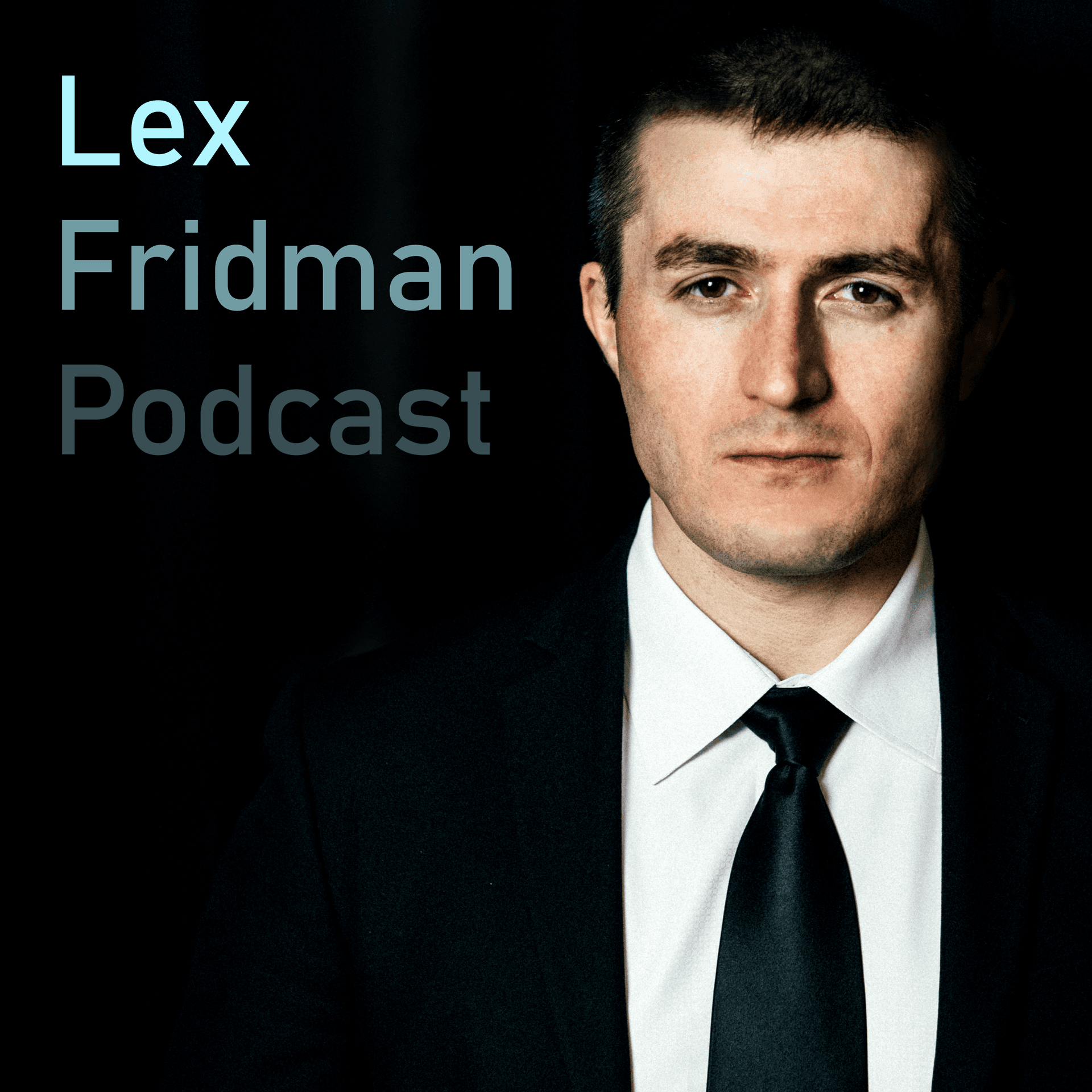
Lex Fridman Podcast Episode #463 – Douglas Murray: Putin, Zelenskyy, Trump, Israel, Netanyahu, Hamas & Gaza
Episode Overview In this episode of the Lex Fridman Podcast, host Lex Fridman engages in a deep conversation with Douglas Murray, a renowned author and commentator on geopolitical issues. The discussion covers a range of complex topics including the war in Ukraine, the Israel-Palestine conflict, and the political dynamics involving Putin, Zelenskyy, and Trump. Murray shares his insights on current events, historical contexts, and the nature of conflict, providing a thought-provoking analysis of modern geopolitics.
Key Topics Discussed
Introduction (00:00)
- Overview of Douglas Murray's credentials and works.
- Setting the stage for a discussion on global conflicts.
War in Ukraine (09:31)
- Morale and Experience: Murray shares firsthand observations from his visits to Ukraine, emphasizing the resilience and dedication of Ukrainian soldiers.
- Changing Perspectives: Reflects on the shift in morale among soldiers from early optimism to a weariness after prolonged conflict.
Trump and Zelenskyy (13:17)
- Discussion of the political dynamics between these two leaders, particularly in the context of the ongoing war.
- Examines the implications of public statements made by both leaders.
Putin's Role (27:47)
- Analysis of Vladimir Putin's motivations for his actions in Ukraine.
- Murray argues that Putin’s ambitions extend beyond Ukraine, drawing parallels with historical imperialism.
Peace Prospects (48:40)
- Murray expresses skepticism about the potential for peace in Ukraine, highlighting the complexity of negotiations and the roles of external powers.
Gaza and Israel-Palestine Conflict (1:13:11)
- October 7 Attacks: Detailed account of the Hamas attack on Israel, highlighting the scale of violence and the intelligence failures leading up to it.
- Hamas as a Death Cult: Murray discusses the ideological underpinnings of Hamas, framing them as a group driven by a radical ideology rather than purely political motivations.
Netanyahu and Leadership (2:02:18)
- Examination of Benjamin Netanyahu's leadership during the crisis, discussing criticisms and the political landscape in Israel.
- Murray argues that while Netanyahu faces scrutiny, any Israeli leader would likely respond similarly to the crisis.
Context of Hate (2:19:29)
- Murray reflects on the historical antisemitism and its manifestations in contemporary political discourse.
- He emphasizes the complexity of viewpoint on both sides of the Israel-Palestine conflict.
Corruption and Governance (2:38:30)
- Discussion of Hamas's governance in Gaza, including corruption and mismanagement of resources meant for the Palestinian people.
- Murray highlights the consequences of Hamas's actions for ordinary Gazans.
Humanitarian Crisis in Gaza (2:41:40)
- Murray discusses the humanitarian implications of the ongoing conflict, recognizing the suffering of civilians in Gaza while holding Hamas accountable for the conflict.
Iran's Influence (2:43:59)
- Analysis of Iran's role in supporting Hamas and other militant groups, as well as its implications for regional stability.
Closing Thoughts and Interview Reflections (2:54:48)
- Murray shares his thoughts on the nature of interviews with world leaders, discussing the challenges and responsibilities involved in such conversations.
- Emphasizes the importance of understanding different perspectives in order to facilitate compassion and dialogue.
Key Takeaways
- Complexity of Conflict: The discussions highlight that modern geopolitical conflicts are multifaceted, involving historical grievances, ideological fervor, and the complexities of international relations.
- The Role of Ideology: Murray argues that understanding the ideological motivations of groups like Hamas is crucial for analyzing the Israel-Palestine conflict.
- Human Empathy: Despite the often grim realities of war, there is a call for understanding the human side of conflicts, emphasizing the need for compassion and dialogue.
- Introspection on Hate: The episode urges listeners to reflect on the nature and roots of hatred, particularly antisemitism, and the dangerous narratives that can arise from ignorance and projection.
Conclusion This episode of the Lex Fridman Podcast provides a thought-provoking exploration of pressing geopolitical issues through the lens of Douglas Murray's insights. His perspectives challenge listeners to confront complex realities and engage with the nuances of modern conflict, encouraging a more empathetic understanding of those affected by war.
Written by AI. May contain mistakes. Listen to the episode to check what was said.
Transcript
Automatic transcript. May contain errors.0:00The following is a conversation with Douglas Murray, author of The War in the West, the Manus of Krauz, and his new book on democracies and death cults. We talk about Russia and Ukraine and about Israel and Gaza. Douglas has very strong views on these topics and he defends them brilliantly and furilously. As I always try to do for all topics, I will also talk to people who have different views from Douglas, including the next episode of this podcast. We live in an era of online discourse where grifters, drama farmers, liars, bots, sick of fans, and sociopaths roam the vast beautiful darkland of the internet.
0:44It's hard to know who to trust. I believe no one is in possession of the entire truth. But some are more correct than others. Some are insightful, and some are delusional. The problem is it's hard to tell which is which, unless you use your mind with intellectual humility and with rigor. I recommend you listen to many sources who disagree with each other and try to pick up wisdom from each. Also, I recommend you visit the places in question as Douglas has, as I have, or at least talk face to face with people who have spent most of their lives living there, whether it's Israel, Palestine, Ukraine or Russia.
1:32Let's try together to not be cogs in the machine of outrage and instead to reach towards reason and compassion. There is no Hitler, Stalin, or Mao on the world stage today. Plus, there are thousands of nuclear weapons ready to fire. Human civilization hangs in the balance. The 21st century is a new geopolitical puzzle all of us are tasked with solving. Let's not mess it up. And now, ladies and gentlemen, a quick few second mention of the sponsor, check them out in the description is the best way to support this podcast. We got Call of Duty for video game fun, Oracle for cloud computing, element for electrolytes and AG1 for multi -binauralism.
2:24Deliciousness. Choose wise of my friends. Also, if you happen to be watching or listening to this unspotted, I decided to start putting the same ad reads from me at the beginning as I do on Apple podcast and the RSS feed. Since a lot of folks in the survey, let's read them in the cons of the survey, said they actually like the random non -secret things I talk about, to my great surprise. And they've also said that they're happy to just skip when they felt like it. Some folks are some timers, meaning they listen to these ads sometimes.
3:06Some interesting and personal, often related to stuff I'm reading or thinking about, but if you skip them, and I do make it easy to skip by providing the timestamps on the screen and in the description. So if you skip them, please still check out the sponsors. Sign up and get their stuff. I enjoy it. Maybe you will too. Also, if you want to get in touch with me for whatever reason, go to lexframed .com slash contact. And now onto the full ad reads. Let's go. This episode is brought to you by Call of Duty Warzone and the return of the iconic Verdun's map. I have a long history with Call of Duty, I've been a fan for a long time, I've been a fan of video games for a long, long time and I'm actually looking forward to doing many, many podcasts with video game designers, with engineers.
3:56It just brings me so much joy and there's technical philosophical things to explore with video games. How do you create immersive worlds that can be ultra realistic or ultra non -realistic and super fun or super dark or terrifying or exciting or hopeful or dreamlike All of those worlds the geniuses behind those worlds inspire me. I Admire I respect a big fan of the worlds that call a duty franchise as created and the Verdun's map looks incredible You can download Call of Duty, Warzone for free, and drop into the Verdonsk map on April 3rd rated M for mature. This episode is also bought to you by Oracle, a company providing a fully integrated stack of cloud applications and cloud platform services.
4:49I think Compute is going to be one of the resources that are most prized in the 21st century. whatever physical form, whatever cyber software form that compute takes, we do not know yet. Of course there's folks like Oracle that are pioneering that, but it's very possible in a century and two centuries. We're going to be surrounded by some orb where the computation is done, maybe in deep space that's orbiting Earth, something like this. Maybe because of the heat and the energy requirements, it's going to be impossible to host it on Earth without destroying Earth. Of course, Earth is such a priceless planet for us humans, but I actually believe maybe not in our galaxy, but certainly in our vicinity.
5:42It's going to be very, very difficult to colonize other planets. Of course, humans are incredible at doing the difficult thing, but we should protect this Earth. Anyway, props to Oracle for constantly innovating and building in this space. Cut your cloud bill in half when you switch to OCI. Offer is for new US customers with a minimum financial commitment. See if you qualify at oracle .com slashlex. That's oracle .com slashlex. This episode is brought to you by Element. My daily zero sugar and delicious electrolyte mix that I'm drinking now because after I say the words I'm saying to you right now I'm going for a long long run along the river.
6:21And I'm listening to an audiobook by James Holland. It's volume one of his trilogy called The War in the West. I believe it's focusing on 1939 to 1941. It's just an extremely well written perspective on those years. So it's the western front. I think those years are really important to understand. the years leading up to 1939 and 39 40 41 themselves because there's a lot of Let's say geopolitical negotiations meetings Carrots and sticks that could have been done a lot of insights a lot of mistakes avoided It's such an important moment to understand probably the most destructive the most terrifying the most earth shattering during war this world has ever seen.
7:11With the bigger than life, personalities of Hitler, Stalin, Churchill, FDR, I think James Holland calls it the most dramatic set of events in human history. And anyway, element before element after it brings me joy, watermelon salt is still and forever. The flavor of choice for me. Get a sample pack for free with any purchase, try it at drinkelement .com slashlex. This episode is brought to you by AG1 and all in one daily drink to support better health and peak performance, my daily companion. Again, after the run, I'm going to make an AG1 put in the freezer and I'll go take a quick shower, come back, drink the AG1, it's going to be chill, refreshing, I'm going to reflect on the things I've read, let my thoughts go to wherever they may go and then get my lazy ass back to work, deeply focused.
8:09A productive life is built on a foundation of rituals, habits. It's kind of incredible how fleeting life is, you know, the days go by, the month go by, the years go by. But when you look at the individual day, there's just a lot of time. And if you have the patience to believe in the long -term effects of daily rituals and daily habits, You'd be surprised, I am constantly surprised if I do a thing every day and I wake up two three months after and just see how good I got at that thing. It's kind of incredible and then you of course have to protect that habit. It gets harder and harder every year with all the fascinating stuff going on online.
8:50You just have to shut it all off and do the thing, do the habit every day. Anyway, they'll give you one month's supply of fish oil when you sign up a drink, AG1 .com slash Lex. This is a Lex treatment podcast to support it. Please check out our sponsors in the description. And now, dear friends, here's Douglas Murray.
9:31What have you understood about the war in Ukraine for a mile your visits there? Just looking at the big picture of your understanding of the invasion of February 24, 2022 in the war in the three years since. Well I mean several things, there's political angles which are forever changing but on the human level as you know if you visit troops, frontline troops, you have that admiration for people defending their country, defending their homes, defending their families, struck by the way in which that is, at a remove from the sort of political noise and the media noise and much more. It's very easy to get caught up in the twos and froes of today's news, but But that to my mind is that's the single thing that struck me most.
10:25My visit's there. It's just the people I've met who are fighting for a cause which at that level is unavoidable, undeniable. So the thing that struck you is different from the media turmoil is just the reality of war. Yeah, of course. I mean, you know, people who have either lived under Russian occupation from invading armies and then come back out into the world, having been liberated as in late 2022, all the people now, organized most recently there in recent weeks, who were just getting on with their job as soldiers, whilst the world was talking about them. When were you there in early on in this escalated war of 22?
11:18Yes, first time was in the Ukrainian armed forces when they retook Kurson. And I was back in recent weeks and was there when the Trump -Solensky blowup happened. In fact, I was with the Ukrainian dugout at the front lines when I was watching it. How's the morale, how's the way the content of the conversations you've heard different from the two visits separated by, I guess, two years? At one level, I mean, nothing has changed much. You know, it's not a total standoff because intermittently each side gains territory from others, but it's not, I mean, there've been no very significant military gains by either side in the interim period.
12:11I think my experience of the soldiers, the people of Ukraine early on in the war, there's a intense optimism about the outcomes of the war. There's a sense that they're going to win. and the definition of what wind means was like, all the territory is going to be one back. Yeah, I certainly, on the front lines facing Crimea was quite familiar with people who thought that the Ukrainians in late 2022 would even be able to get Crimea back. And that struck me even at the time. And I said, I thought that that was an overreach. And now I think the people, the soldiers, at least in my experience, when I visited second time are more exhausted.
13:03The morale, the dreams, the certainty of victory has maybe faded from the forefront of their minds. Well, three years of war will tire out anyone. What did you think of the blow up between Zalansky and Trump as you're sitting there in the dugout? Well, it was a very disturbing place to watch it from, perhaps anywhere would have been.
13:34And obviously it was a meeting that shouldn't have happened. It was far too early. What do you think, sir? There's not enough actual pathways to peace on the table. Well, I think the mineral deal, I mean, I love the fact that everyone's now an expert in Eastern Ukrainian mineral deposits, but I think as I've learned and we'll talk about Israel and Palestine, I'm learning that everybody's an expert on geopolitics and the real war on the internet. And now a mineral deposit, it's obviously. Yes. I'm really speaking of the edge of my mineral deposit knowledge here. No, I mean, what I can see the deal that the American administration was trying to get the Ukrainian government signed with sort of too early to forced the Ukrainians were ready to sign a deal but were obviously under intense pressure and I think certainly Zelensky wasn't expecting to actually wasn't expecting to go until pretty much the day before was obviously visibly tired and exhausted again as you are after that amount of pressure for that long time and no I mean the thing that struck me and I said this in my column that you're post from there that the thing struck me was I said to some of the soldiers I was with, you know, what do you make of this?
14:57And you know one of them just said to me, well you know we're advised not to get far too close to Libyans in our, so the politics of this you know and but of course everyone has Instagram or scrolls and among dog pictures and you know, the hot women or whatever is, you know, what happened in the oval. And, but what struck me was the same guy and saying, I've got a job to do. Right. And there's a clarity and a wisdom to that. But your job is bigger than that, right? It's to understand the politics as well. What do you because that was a real opportunity to come together and make progress on peace, right?
15:47And it, by all accounts, was not a successful step forward. I don't think by any account, it was a successful step forward. And unless, to some extent, it was a play, but from DC to say to Putin, look, we've duffed off to the Lensky and now give us something. I see only a remedial idea I have about what might have been behind it, but I think it was just one of those extremely, let me just awful political moments. Zelensky was obviously deeply irritated by the interpretation of the war that he was from Washington. It was only a week after the Trump comments about Zelensky being a dictator. And people in the administration implying that Ukraine has started the war.
16:48And I think that must be for Zelensky a pretty Alice in Wonderland situation to be in. And I had significant sympathy for him and finding it bewildering because it would be bewildering. I think the sad thing to me also on the mundane details of that meeting and just the unfortunate way that meetings happen, I think it's true that he was also exhausted. Yes. There was a dickhead of a reporter that was asked the question about outfit in a way that Listen, Zalazki, everybody has their strengths and weaknesses. He's an emotional being for better for worse and there's a dumb dig head of a reporter My title greens boyfriend What does he hear?
17:39Yeah, the things you know see you're a real journalist No, he's he's from one of the new I'm all for opening up the White House press pool and all that sort of thing But it means that you get some people in who are sort of Yeah, from a blog land, there's nothing wrong with that, but it means that you get somebody who will do something like that. The problem with that interaction, as I saw it, was that guy asked that, well, disrespectful question. And I think it was disrespectful. I'll very quickly say why? I mean, I think that when a man comes from the realm of war into the realm of peace, the The people in the realm of peace should have some respect, or at least concession, that the other man has come from the realm of war.
18:26And that if you're sitting in a political environment where you talk about people being destroyed and decimated and defanestrated and much more to a man who's for whom none of that is metaphorical. I think that's extremely hard to accept. And I think that probably also at that moment there was a sort of sense of, you know, the ensues being disrespected by being asked about what he's wearing. when, as everyone knows, church or during World War II used to wear his fatigues on foreign visitors, so just that. It's to remind people that you're coming from the realm of war. And I think that probably in that moment, on the things that would have been going through, it would be, but I mean, if this was Putin sitting here being assaulted by a journalist, you'd hope your hosts stepped in and defended you.
19:31I mean, if, let me try this one out, I mean, if a journalist in the Oval Office, if Putin was sitting there, or a putative journalist said to Putin, you know, everyone knows you've had a lot of facial work done. And word is, you've used the same guy that Burlesconi used to use. Can you comment on that? You'd say, well, that's a kind of disrespect for question for journalists to ask and just a little bit off off what needs to be gone over. And it is the same thing with Zelensky with the outfit. I think it was just petty and and and three things off in a bad way. Yeah, I know it was probably research because I think Zelensky was explaining this like three years ago the beginning of the war why he wears, where he wears and he's been consistent wearing the same.
20:23It's also by the way it's an example of the fervility of a lot of the attempts to understand what's going on. I mean, my view is that since actually most people, in fact, everybody cannot be an expert on everything, one of the things that we always do is to seize on minor and really quite unimportant things. I mean, every site does it. Look at the way in which the American right for years talked about the Churchill bus leaving the White House over office in the Obama years. I didn't want to hear another darn thing about the Churchill bus after eight years because it was in lieu of trying to understand and actually critique Obama's foreign policy.
21:08It was just an easy shorthand. I think it's the same. We're always tempted to that. But the thing is I think you mentioned and Putin would have been able to respond himself to that journalist effectively and he would have done it in Russian. Oh yeah, the language thing. Yeah, so I wanted to sort of lay out several just unfortunate things that happened in these situations. I think it happens in all piece negotiations and it's funny how history can turn in moments like this. I do think there's a dickhead reporter combined with the fact that, you know, we'll all do respect but Zalensky's English sometimes is not very good.
21:49Yes, so Leva, if he had agreed to not do it in English, he would have bought himself the extra seconds in some of his replies that he needed. Yeah, and have the wit, the guy is funny, witty, intelligent. You know, he could do that in the native language of whether it's Ukrainian or Russian, to be able to respond and get the interpreter. So all of that is really unfortunate because I think on those little moments, it's a dance. And there's an opportunity there. You know, the Republicans, the right wing in the United States have a general kind of skepticism of Zelensky and, but that doesn't mean it has to be that way.
22:28It can turn, it can change, it can evolve. It's very interesting why it has happened. Why do you think it's happened? The politics in the United States is so dumb that at the very beginning, it could just be reduced to, well, the left went Putin bad, Zelensky good, ra ra, Ukrainian flags. Therefore, the right must go the opposite. It's sometimes as literally as dumb as that. Let's each pick aside and call the other dumb. I had a line I used recently with the necessity of people who lived too long online to try to wait their way out of the memes. It is so light, isn't it? Because yes, I mean, I understand the people who find it very irritating that so many people who would put BLM flags or pride flags or, you know, trans flags in their bio then put Ukrainian flags in their bio despite almost suddenly not knowing where Ukraine was.
23:23And if that happens in inevitable instinct of a lot of people who aren't really thinking is to say that's really annoying. These people are really annoying. I'll sock it to them. But that's where you've got to try to rise above that and say actually funny enough the fate of a country doesn't depend on my tolerance for memes online today. Yeah, so I think the memes can be broken through in meetings like the one that happened between Salon's control. There can't been real camaraderie. I've seen the skill of that just recently having researched deeply and interacted with Narendra Modi. Here's somebody who has the skill of, you know, for his country, for his situation, being able to somehow be friends with Putin and friends with Zelensky and friends with Trump and friends with Biden and friends with Obama.
24:18It was very skillful. That while still being strong for his country and from like fundamental, a nationalist figure who's like, you know, very not globalist, not anything, but pro -India, India first, nation first. In fact, nation first with a very specific idea what that nation represents. And that, you know, Zalansky could do all of those things, but have the skill of navigating the Trump room, because every single leader has their own peculiar quirks that need to be navigated. Yes, the obvious one, I mean, I don't want to make it sound like it was all Sydensky's fault, but I mean the obvious one was at the beginning of the meeting to say yet again, as he has done for three years, thank you to America and American people and American politicians and across the aisle for your support from my country and its hour of need.
25:14We're deeply grateful. And because he, for once, forgot to say that. I think it's not that simple. I think there's a - It's not that simple, it's one reason. I think saying thank you, he didn't need to say thank you. That was why Vance, that was what Vance left in. He's just picking a thing to leap on. There's a whole energy. You have to acknowledge in your way of being that you have been very Biden, buddy, buddy, with the left for the last four years. There's ways to fix that. Listen, these people are complicated narcissists, all of them, Biden, Trump. You have to navigate the complexity of that.
25:54And you basically have to say a kind word to Trump, which is like showing there's many ways of doing that. But one of them is saying, feeding the ego by acknowledging that he is one of the world's greatest negotiators. I'm glad we're able to come to the table and negotiate together because I believe you are the great negotiator, mediator that can actually bring a successful resolution to the end. As opposed to have an energy of like, it should be obvious to everybody that you creating are the good guys and Russia is the bad guys. There's this whole energy of entitlement that he brought. He forgot that there's a new guy.
26:36You got to like convince the new guy that this global mission that this nation is on, this war that is in many ways the West versus the East, that there's ideals, there's whole histories here that this is a war worth winning. You have to convince them, right? Yeah, I'm sure. And the obviously failed on education. But as I say, it must be bewildering to have landed in a place where people were seriously talking about Ukraine starting the war and Zelensky not put him being the dictator. I did the front page of the New Orposed Day after the President's Congress on that saying that the big picture of Putin just saying, right, this is a dictator.
27:28And I think that people can be live enough to be able to recognize that you can make criticisms of Zelensky or the Ukrainians, but it doesn't mean you have to fall full butin and again unfortunately a lot of people in our time don't have that capability. Can we go right into it? What is your strongest criticism of Putin? He's a dictator who's very bloody, as repressive as you can be of political opposition, internal opposition. He's kleptomaniac, his country's resources, has enriched himself as much as he could, as he has with the cronies around him, he's not just acted to destroy internal opposition in Russia, but has gone to other countries, including my own country of birth, and killed people on their hour's soil, using, as it happens, weapons of mass destruction, the use of polonium in the center of London, not good, the use of incredibly dangerous nerve agents that could kill tens of thousands of people in a charming cathedral city like Salisbury, not good.
28:46If the sort of apologists, the beauty and say, well, he's just a tough man, he's looking after his house business. Well, I don't think even if you think he has the right to do that, he should be doing it in third countries, deliberately using weapons that are meant to show that you could take out tens of thousands of British citizens. Yeah, I mean, that's just for starters. What do you make for, do you think he's actually popularly elected? No. Do you think the results of the elections are fraudulent? Yes. I mean. You think it's possible that it's just that the opposition has been eliminated and he's legitimately popularly elected?
29:31It definitely helps a chap if he's killed all of his opponents. Something about using the term chap in that context is just marvelous. But you know, I mean, about a very seriously, you, if people are worried about, this is another sort of sightly Alice in Wonderland things recently about Zelenski as people are saying why he's a dictator because he hasn't held elections during a total war of self -defense. And it's like, well, if you're really, really passionate about free and fair elections in that neck of the woods, you'd at least notice that Russian elections are not free and fair in any meaningful sense.
30:12But this doesn't mean that you have to say that, therefore, they should have Western style elections and and and freedom that Russia is is ready to go and become a Western liberal democracy. It doesn't mean any of that at all. It's just at least note that this is what Putin is. What do you think is the motivation for his invasion of Ukraine in 22? It's what he said for years, which is the basic, the real constitution of the Soviet Union. Do you If there is empire -building components to that motivation? I would trust most of my friends in Eastern Central Europe who certainly do think that. There's a reason why the Baltic countries are the countries that are spending highest and percentage of GDP on defense, and it's because they're very worried.
31:03I don't think they're faking it. I don't think they're faking it for me or for anyone else. I think the Lithuanians, Latvians, the Estonians and others are genuinely worried for the first time in some decades. Do you think there's a possibility that the war continues indefinitely, even if there's a ceasefire in the peace reached, the war will resume, and he will seek expansion even beyond Ukraine? Yes. Yes. And the most obvious thing is that if Trump manages to negotiate a ceasefire, it will be a temporary pause. And whoever comes in as president after Trump, Putin will use the opportunity to advance again.
31:48Yes. Again, one of the things I have heard from parts of the American right now, there's is that all he wants is Ukraine. That's all he wants. and that he has no history or of rhetoric or actions that suggest anything else. And again, it's one of the reasons why it's useful traveling to places and seeing things we've run eyes, because I very much remember being in the country of Georgia after Putin tried to invade in 2008. So, I just, again, people don't have to be the greatest supporters of the Ukrainian course just to recognize that, that it doesn't seem to be the case, that Ukraine is the only thing in Putin's vision.
32:34Do you see value and maybe depth and power to the realist perspective of all this? You know, somebody like John Mirschheimer's formulation of all this, that in these invasions of Georgia, of Ukraine. It's using military power to expand the sphere of influence in the region, in a cold calculation of geopolitics. It's interesting. One of the fascinating things about the last few years is there's been an act of sort of necromancy of certain figures were totally, totally debunked in the area of Ukraine, Meshima and the case of Israel people like Finkelstein. It's been interesting because these are people that one hadn't heard of for some years because they were not listened to, usually for good reason.
Read the full transcript
33:27But by the way, first of all, I'm very skeptical of the term realist in foreign policy because most people, to some extent, will say that they are a realist in foreign policy. Very few people are surrealists in foreign policy. Very few people are unrealists. I would like to meet them. A surrealist foreign policy analyst. We did mention else in one or another. Yeah, I mean, maybe we should introduce the time. But I mean, if you wanna say, if you wanna gimli out, hide out across the world, you're a realist. I think the steel man of their argument would be Russia has or believes it has a sphere of influence and is regrettable, but there's very little we can do about that.
34:18That would be about the best version of that argument that you can make. Well, to expand on that steel man isn't this how superpowers operate in the dark realist slash surrealist way, meaning the United States uses military power to have a sphere influence over the whole globe really. China appears to be willing to use military power to expand its sphere of influence. And so, political power, yeah, more importantly in the case of China. political power. Non -kinetic warfare to take over areas Hong Kong being the obvious one. Behind that isn't there always a kinetic threat? Oh yeah of course yeah I mean you disappear some booksellers and students are protesting of course.
35:10But to go about this yeah of course okay countries believe they have or would like to have spheres of influence. I do think at some point that the so -called realists on that have to try to decide how much leeway that allows you to give to a fairly repatious regime. And it's not the easiest calculation always to make. You have to work out whether or not, for instance, it is true that if Russia had put in had managed to go all the way to Kiev in the first weeks of the war in 22. He would have gone straight on to other places. And maybe he would have done, maybe he would have taken his time, maybe he wouldn't have done.
35:56And this is a very fine calculation that changes every week and alone every year. My friends in Georgia, I thought, were wildly off the mark when they were believing that after 2008 they could get, for instance, either NATO membership or EU membership. And I thought that was completely unlikely. And I still think it's unlikely and I'll miss any undesirable for Europe and for NATO, because you've got to be very careful. And obviously this is one of the issues with Ukraine and has been since the 90s is, you know, you're going to set up a trip wire to start world or three. And that's not a small thing to consider.
36:37So, what do you think the peace deal might look like? And what does the path the peace look like in Ukraine in the coming weeks and months? I just thought it would be regrettably the Ukrainian seedings of territory in the east And then making sure they rearm during whatever piece period comes afterwards. And probably all four territories of the Danyasal Khan's separation first time. You couldn't lay any of that out because it has to be negotiated on. But I think that, and I think the ease with which non -Ukranians are currently speaking about the Ukrainian -sealing territory is concerning because these territories include hundreds of thousands of Ukrainian citizens who do not want to live under Putin's rule, and people who have families in the rest of Ukraine and much more.
37:42And I've recently interviewed children who had managed to get out of the Russian occupied areas. And it's brutal for a Ukrainian to be growing up in that territory. So when people say, well obviously, you know, don't ask us to be given to Putin, I think that that is not as easy a thing if you're in Ukraine as it is if you're sitting in New York say. And by the way, I think that on the issue of there is a school of thought that is that obviously President Trump, to some extent, was was floating in recent weeks, which is that if if a deal is done, a business deal, relation to minerals or anything else, you get this great, you get a kind of buffer zone of American businesses and investment and therefore American business people in the region, which would effectively warn Putin not to invade.
38:48I don't follow that idea because not least there were Americans in the regions that were invaded in 22 and they left fast. And we know from Hong Kong and other places just because there are international financial interests in the region does not mean that a dictatorship will not either militarily or covertly take over. I don't see American miners as being an effective buffer zone against Putin. By the way, what did you learn from talking to the children, Ukrainian children from those regions? Well, I mean, it's heartbreaking because the only schooling is Russian schooling. Obviously teaching a Russian language, Putin's view of history, and effectively indoctrination.
39:41And people can quibble with that term, but it's Putin -esque indoctrination schools. And any children or families that do not want that, effectively have to hide and not go out. And there were, I spoke to children and parents who had had school friends, for instance, the Russians set up in 22 and 23 summer camps for the children of some of the areas that have been occupied and the children went off to the camps and then they didn't come back. But they were just stolen. I mean, it's thought that around 20 ,000 Ukrainian children have been stolen in this fashion. That's not a small thing. It's not got very much attention, but, yes, I mean, children who had hide whenever the Russian troops came to the door, one teenage boy who described to me how, when his mother was out, a woman came around to the house knocked on the door and gave him his papers and said that he had to attend the next week to sign up for the Russian army.
40:52This is not good. And that's obviously what life is like for thousands of people behind the Russian lines in Ukraine. I just have it in mind when people say things like, well, obviously these regions have to be handed over. It's very, very hard if you're Ukrainian to concede to that. Yeah, and even if they are as part of the negotiation, the handover, I think it'll probably be generations or never that that could be accepted by Ukrainian people. Absolutely, then I would have thought never. What do we know about this kidnapping of children, the stories of the thousands of children that the Russian forces kidnapped?
41:36Some of them were in orphanages in Eastern Ukraine, not all by any means, but somewhere. And it's a very complicated story actually because many children were taken from their families. Many the Russians said, well look at these Ukrainians, they don't even look after their children, therefore we will look after them. And I was recently, when I was there looking into this story, because it's a very interesting question as to why it hasn't had more attention. You know, one thinks of, for instance, the abduction of the Chibok schoolgirls some 12 years ago now in Northern Nigeria and a polling abduction of 300 girls by Boko Haram completely gained the world's attention and I was very interested in why the Ukrainian children who had been taken by the Russians have not gained similar attention.
42:26There's a slight similarity with the war in Israel, I'm sure we'll come on to, but I do think that one reason is that they were effectively hostages and the Ukrainians knew, this is my estimation of the terrain, is that the Ukrainians knew that if they made a great deal about this, or was it more than they did, that the children would effectively to really be the most effective bargaining chip. And I do think there's considerable truth in that, because if you look at, for instance, the way in which pressure has been put on the Israeli government by the Israeli population about the kidnapped Israelis, you'll see that it's a pretty effective tactic for any to tower, to have in regime or terrorist group to operate in a way that means that the population of the country or attacking pressure their government to do something in terms of concession.
43:29It's a very effective tool. And I think that story was partly played down, not just outside of Ukraine, but also within Ukraine, partly for that reason. As a truth seeker as a journalist, how do you operate in that world where at least to me it's obvious that there's just a flood of propaganda on both sides? Now of course when you go there and directly experience it and talk to people, but those people are still also swimming in the propaganda. So unless you witness stuff directly sometimes it's hard to know. Like I speak to people on the Russian side and they're clearly... first of all, hilariously enough, they almost always say that there's no propaganda in Russia.
44:13Cool. Which makes me realize, I mean, you can be completely lied to. Maybe I am in the United States as well and just be unaware. Maybe Earth is run by aliens. Maybe the Earth is flat, so I don't know. Maybe you've taken mushrooms. I have before this. And I finally see the truth. And it's you that are diluted, Douglas. Okay, but back to our rounder discussion, rounder, the shields that we are. How do you know what is true? You can tell it when the bare facts become not true. Like you can tell it when somebody is willing to claim that everything caused the invasion of 2022 to accept for Vladimir Putin invading Ukraine.
45:08Yeah, there's a hilarious thing that happens. And I think you've actually speak about this that people are generally just much more willing to criticize the democratically elected leader. Always. So the interesting thing that happens is these wise sages that do the narratives of like NATO started the war, right? which there is some interesting geopolitical depth. Sure, I'm sure it's true to that, like that NATO expansion created a complicated geopolitical concept, whatever. But they forget to say, like, other parts of that story. Well, yes, of course. I mean, and I mean, of course, to some extent, it's rather, you know, there's a very, the most irritating type of question asked or at any event is the person who says, I was disappointed that in your 30 -minute talk, you didn't address X.
45:57And I tend to say, well, looking forward to coming to your next talk, where in 30 minutes you'll cover everything that could possibly be covered. There's always stuff that's going to be left on the sides. There's always going to be stuff that's left unaddressed, there's always going to be other angles, there's always going to be somebody else who has this interesting perspective and you can't cover it. Nevertheless, if you cover everything other than the central things, then it's suspicious. years. Many years ago, as a debate in London, there was a debate about the origins of World War II and Pat Buchanan, talking of Necromancy, was one of the speakers.
46:39Andrew Roberts, the historian, was one of the people on the other side. At one point, they got so completely stuck into issues of iron or mining in Poland, in something like this. And the moderator, I remember, it was just a melee. And the moderator turns to Andrew Roberts and says, Andrew Roberts, why did World War II begin? And he says, World War II began because Hitler invaded Poland. And it was a magnificent moment because everything had been a marsh. They were just so lost in all the intricate and clever and interesting things that you can talk about about the origins of a war, that you forget to mention the thing that's most important.
47:27And studying my experience as a journalist and writer is that one of the reasons why you need to go and see things with your own eyes is because people are certain to tell you that what you've seen with your own eyes didn't happen or hasn't happened. And it helps to steal you for that moment. It's a gradual thing that happens where the obvious thing starts being taken for granted and people stop saying it because it's like the boring thing to say at a party. And then all of a sudden, over time, you just almost start questioning whether, whether, you know, like the obvious thing is even true. I don't know what that, how that happens.
48:11I think it does. I think it does. I've observed in a lot of different places, which is the important thing is the only thing you do forget. Everything else is what you remember. And some of us are, for some reason, wired in a way where we don't, we try not to forget the important thing. Remember the obvious thing, yeah. Yes. And as you say, no, I'm not wanting to be the boring guy at the party who reiterates what is true. Because what a douchebag you'd be if you were that guy. Nobody likes Captain Obvious at a party. Okay, is it possible that Donald Trump is a mediator, a successful negotiator that brings a stable piece to Ukraine?
48:51It is possible. We'll have to see. I think it's just too early and complicated to tell. That he wants to bring a piece, seems to me to be obvious. He stated it a lot of times. whether he can, we're just going to have to see. It's extremely hard to see some of the parameters of the piece still. And I would suggest that the most, one not the most difficult, but one of the most difficult is that there is no piece guarantee on paper that the Ukrainians can possibly believe. I just, it doesn't matter because we're in the West, we some of the countries in the West have said it before that we'd secure their peace.
49:38And we haven't. And so what other than NATO membership, which is not possible, in my view, what other than NATO membership would reassure the Ukrainians that they are going to have their borders secured and the peace of Ukraine secured? I can't see. I think there's not going to be ever a guarantee that you can trust. I think the way you have a guarantee, implicit guarantees by having military and economic partnerships with as many partners as possible. So you have partnerships with the Middle East, you have partnerships with India, perhaps even with China, with the United States, with many nations in Europe.
50:20all of which still suggests that if there's enough financial interests in Ukraine, they would prevent another Russian invasion. There would be financial pressure. Yeah, there would be, you know, Russia needs to be friends with somebody, either China or the West. I think a world that's flourishing would have Russia trading and being friends with the West and the East. Talked to the idea. Who'd be ideal if they were the regime and Moscow wanted it, but that's that. I mean, do they again, you get into the thing of people accused of Russia, Fobia, but I do believe that after the fall of the wall, Russia was ill -treated by the West, not treated with some of the courtesy that it required.
51:21I do think that. And at the same time, that doesn't justify the actions of Russia in the last 20 years. Right. But let's descend from the surrealists to the realists. It's very possible for Russia to be on the verge of military invasion of these nations, and that being wrong, while also not doing it because they're afraid to hurt the partnerships with the West and with China. It's possible, but the alliance they formed with this sort of rogue alliance with China to a considerable extent, North Korea, not useful, and Iran is something they seem to find bearable. It's not a very good alliance in most people's analysis, but it's not alliance.
52:16It's bearable, but I don't think maybe disagree with this. I don't think the Russian people or even Putin wants to be isolated from the West. I think it wants to be friends with the West and with the East and with everybody. He just also wants Ukraine. Right? And there's, well, how does the Rolling Stones song go? Which one? Not the satisfaction one. Simply with a devil. That's the one. You got me on that one. No, like there there's interests, whether it's expanding the sphere and influence, that's one thing on the table. But that can be put aside if you want to maintain the partnerships with these nations.
53:02And if Ukraine has strong economic partnerships with those nations, then that prevents Russia from invading. I think the premise is one that I've seen before. There was a famous, what was his name? Norman Angle. He wrote this book, which is a fantastic bestseller in his day, where he believed that Europe would be in a period of endless canty and peace, because the prospect of European power is going to war was so economically unviable. The book was reissued after World War I, and I never got the second edition, but I assume it was significantly rewritten. That's a very kind of cynical take, just because the book is wrong.
53:49I'm not saying it's the book, so I'm saying that the idea that cooperation on an economic can other levels is any significant preventative device to madness breaking out is not something I see could deter some people. It could deter some very, very rational economically driven actors, but it fails to take into account all of the other things that motivate people to go to war and to invade and to go mad. Okay, well I would argue that in the 21st century one of the reasons we have much fewer wars is Because of the much more well, so there's a few tools here on the geopolitical stage One of them is that you were just much more interconnected economically globally interconnected and that that is always a present pressure on the world to keep peace There's a lot of money to be made from peace There's also a lot of money to be made for more.
54:53There's just a lot of interest to tension And I'm just presenting one of the tools that a leader should be using the alternative is what? military force That is an interesting one sometimes a useful one, but unfortunately it has its downsides also and after three years of war and the hundreds of thousands dead You have to start wondering what are the options on the table? I agree. I'm obviously for economic cooperation, but my only caveat is not to think that is something which is of ultimate interest or even at the top of the list of interests of death spots, tyrants, extremists who want something else.
55:48Yeah, but can you read the mind of Vladimir Putin? No. A lot of the ideas I hear about peace is Putin bad. Victory must be achieved. NATO membership required. There's this kind of like, but what's the, what's the, you have to come to the table to end the killing is one and to have different ideas of how to have a non -zero chance of peace. So that, you know, the options are, it seems to me the only option, not the only option, but the luckiest option is a lot of strong economic partnerships. There's of course other radical options. There's Russia joining NATO or something like this. Or there's a flirting with World War III essentially giving nukes to Ukraine or something like this.
56:51There's like crazy stuff or a totally new military alliance with France and Britain and Germany and European nations and Ukraine or some weird network of military power that threatens Russia in some way or maybe some big breakthrough partnership between India, China and Ukraine, something like this, some really out there ideas and I think that's how the world that's how the world finds its balance and realigns itself in interesting ways. No, it could be. I hope your idea is right. I think it's about the what's set in the most peaceful way for this to be resolved. My only caveat, as I say, is and also never forget to factor in that people want different things in this world.
57:51And some people don't dream that you dream. I think we'll talk about that when you new book Death Cults. That one is an easier one for me to understand to the story that you're describing. I am more hesitant to assign psychopathy to leaders of major nations. Sure. Yeah, yeah. I'm not by any means urging you to regard Vladimir Putin as a villainarian madman who cannot be in any way understood. I think he could be negotiated and reasoned with. From your lips to gazes ears. Can you still be on the case for and then against Salonsky as the right leader for Ukraine at this moment? Is he the right person to take it to the the point of peace?
58:41We'll see. If he can, then of course he is. You know, he deserves enormous respect for galvanizing his people, for being elected in the first place, for galvanizing his nation at a time of incredible peril, for playing the international game of getting support for his country well. And sometimes the person who does that, not there are many people like that, can be the person who also brings about a peace deal and sometimes not. I think there's a degree to which he may have seen too much suffering of the people of the land He loves to be able to sit down at a table with a world leader who Did the destruction and to be able to that is very hard compromise on anything That's That's possible again.
59:37It puts the owners on him though It's sort of slightly presupposes that Putin doesn't have the same human instinct on that. It is extremely hard. I've noticed this in a lot of conflicts. It's extremely hard the way in which outsiders come in and others who haven't seen what you've seen or gone through what you've gone through and say, you know, it's time to get around and go shading table and just, you know, you think you didn't see what I saw You didn't go through what I went through who you to tell me Goes back to that thing with the the visitor from the land of war and the visitor from the land of peace The visitor from the land of peace Can easily talk about getting around negotiating tables but the visitor from the land of war has seen other things and It's very hard for somebody who hasn't seen it should tell the person who has that they should act differently.
1:00:38And the sad thing about humanity is both the person from the land of peace and the person from the land of war are right. Yes, that's a struggle. That's definitely a struggle. It's like asking somebody to forgive. I've seen that a lot of ends of conflicts. people say, and the important thing is that we forgive and move on. And then the other person says, you know, your child didn't die of shrapnel wounds. Yeah, this is, you know, I got a lot of heat for an interview at Dewa Zelansky. By the way, people privately, the people that message me is all love and support. And the people that disagree in Ukraine, soldiers, people online are ruthless.
1:01:25They're misrepresenting me, they're lying. People online are ruthless. I'm just representing a lying. Yeah. Good God, Lex. You discovered a new phenomenon. I'm a real radical intellectual. Nothing misses your eye. I see the truth and I'm unafraid to point it out. Uh, no, there's a degree. This idea that you need to compromise with the person, with the leader of a nation you're at war with and in so doing, to some degree are forgiving their actions. Because the actual feeling you have is you want it to be fair and the definition of when you've seen that much suffering is for him and everybody around him and maybe even all of the people on the other side to just die because you've seen towards suffering but the other side of that is yes there's children that have died but you go coming to the negotiate table the children from dying yes of course and so like there is just you had this kind of way of speaking about it, embodying that perspective, that it's naive to say to come to the negotiation table.
1:02:44And it is for a person from the land of war, but the very smart, intelligent, and not naive person from the land of peace that is often right in some deep sense about the long arc of history. For them, it is the right thing to come to the negotiation table to end the more killing. The one thing I would add to that though is, you know, don't forget that it also depends on whether or not there's a clear shot of winning. Sure. If there's a clear shot of winning, and that's of the most important, the most important thing in wars is not final negotiations or anything else. It's simply winning and losing.
1:03:25And if you have a clear shot of winning and you can take it and you're near it, Then having somebody else come in and saying why not stop just before victory is very hard. That's one of the complexities of the conflict we're talking about. You know what's the other big complexity of that? Because the clear shot of winning is like a man walking through the desert, seeing water. It could be during war, it really is an illusion. So here's what happens. The really complicated aspect of negotiation is in order to negotiate peace from a place of strength You have to have victory in sight. Yes. And so the temptation from that position is to not negotiate is to keep pushing forward to and G victory.
1:04:19And this, I would say, hindsight is 2020, but this is the failure in 22 and two occasions to achieve, to negotiate, a ceasefire and peace. One in the spring, because there was a Ukraine was in a real big, I would say, position of strength, having fended off the Russian forces around Kiev. That's one. And then as you mentioned in the fall of 22 with her son and a hard give had a lot of military success. They were in a place of strength. And from that place, they've decided to keep going because victory wasn't sight. But that was also an opportunity to make peace. Perfectly possible. Yes. That's the hard thing.
1:05:08It's very hard. It's all hard, but again, victory can be won in wars and is often won in wars. And you're right. They can also grind on because nobody has a capability to make a breakthrough. It's a case, I mean, the wisdom about civil wars tends to be that they sort of burn out after about 10 years or so for similar reasons. When you're in the war, can you actually know that a victory can be won? It's a very good question. You mean troops on the battlefield or military leaders or political leaders? Military and political leaders. It just feels like I said, man on the desert, seeing water. I think there's a sense that victory is so close.
1:06:00There are times in a war when you feel like victory is close. No, you're right. And then it slips away. Yes, it's an interesting insight. It's like the way in which there's a there's a force in nature which is that if you're a mass and army you amassing it will Pull you in to using it. Yeah, extremely hard to a mass and army somewhere and then say let's go back Yes, you're right. No, it's one of many, many interesting aspects to warfare. I think the sad thing about successful wars, at least in the modern day, is it takes a great military leader, which I would argue that Zelensky really unifies Ukraine in this fight in the beginning of the war.
1:06:53You have to be that and like you said after you the UMass the army had military success to be able to step back and make peace. Those two just don't often go hand in hand because again as a wartime leader, especially one who's seen the suffering first hand, walking away is tough. especially also combined with that, just the realities of war where there is probably corruption, that there is things, you know, once the war ends there has to be investigations. Because the war wasn't won, you might not turn out to be when the history looks at it, the good guy. And a leader doesn't want to, a leader always wants to be the good guy.
1:07:42So there's just all psychological complexities that are and you look at this whole picture in the basic sense if you want you crane to flourish if you want humanity to flourish you just ask the question okay so what is the thing I would like to see? So there's so many historical analogy you can give but just surely not rewarding Putin's actions in any way would be a good way to deter him and other dictators from trying to grab land in the future. So yeah, and for this, it's nuanced because like you, it's very probably good to be the boring person at the party that says dictatorships are bad. Democracy is good.
1:08:40Many of the ideals of the West democracy is a better better. Yes. That sounds like animal farm, but yes, two legs better. But yes, democracy is better. And in making countries is bad. But World War Three is bad too. So after you say something is bad, what's the next step? Because military intervention in a lot of these conflicts. It will be about deterrence. Yeah, but what's effective deterrence? That we're going to have to keep going over for a long time to come. My question is how can we achieve peace in April? In May, right? Not like the adults at the table all seem to tell me, well, it's a process, it's complicated.
1:09:32You know, it just feels like this is a thing that might go into the next winter. And there's still maybe initial ceasefire and the ceasefire is broken. And there's more people dying. And it's that mess. It seems like civility and politeness ignores the fact that people are dying every single day. I mean, of course, like we were all, almost everybody, not everybody, but almost everyone would like to stop immediately. Of course. No, like I think that is the boring thing at the party. Yes, but they don't say it often enough. Not off. There has to be a frustration. There has to be a frustration. I don't understand why Putin, Zelensky and Trump can't just meet in the room together without signing anything.
1:10:17Leaders meeting and discussing and like the human connection. There's so many layers of diplomats. It's the problem I have with a managerial class. I don't they schedule meetings really well. They don't get shit done. And I would love it if people got shit done. So the soldiers get shit done. They have, they're fighting the reality of the war. And then the leaders have the capacity to get shit done on the scale of nations and geopolitics. But like, this is diplomatic meetings and - No, I share your frustration about it at the same time. I think - I share your frustration because I've seen it all, a lot of it, you know, my eyes.
1:10:59I mean, there was a - Tannenaz with the other week and they were hit just after I left their base and you wouldn't believe what a thermobaric bomb can do to the human body.
1:11:14And I share your frustration with that at the same time, one of the things that happens if you are rushing is that you do, and I've seen this elsewhere, you will put pressure on the people you can pressurize and you will not put enough pressure on the people you can't pressurize. That is one of the worrying things that could happen with this. Simply, America can put extraordinary diplomatic, financial, intelligence, military pressure on Ukraine. And it can put significant pressure on Putin, but it's much easier it to pressure Zelensky. And that's one of the many things that makes it harder, is that the temptation to rush for peace, accepting that peace is the most desirable thing, accepting the horrors of war, which, you know, we can linger on, but you, you, accepting all that.
1:12:19If somebody says we've got to get peace today, and the three of them around a table, the most likely thing is that it'll be, that it will be the person who you can pressure most easily, who will be the person that you pressure, and as a result, have an outcome, which yes, might stop the killing as soon as possible, but might also set up a situation which rewards the aggressor and effectively punishes the victim. And that's an extremely ugly and common thing to have him. Yeah, and that's the other boring thing to say. the boy in truth that the easy shortcut here is the Punishy Queen. And you just have to not do it.
1:13:03Let's keep being the born people of the party. Yeah, well nobody's going to invite us. All right, let's go from one complicated conflict to perhaps an even more complicated one. Israel and Palestine.
1:13:28Can you take me through what happened on October 7th as you understand it and as you outline at the beginning of the book? Well the book on democracies and death cults is a mixture of first hand reporting and observation, interviews and a wider reflection, not just on the war that's been going on since the 7th October, but the war's been going on a lot longer. And also I suppose for me it's one of the overwhelming questions which I'm sure we'll get to, which is the reaction in the rest of the world. Obviously on the 7th itself it was a brigade sides attack on Israel from Gaza, Hamaz broke through the security fence and attacked all the softest targets they could.
1:14:21They swiftly overwhelmed things like the observation base in Nahalaz. They ran through the communities in the south, very peaceful, peacenick effect free communities of the Kibbutz Simmer's, they're called the communities, and murdered and raped and burned and kidnapped and of course they from their point of view had the great good fortune of also coming across hundreds of young people dancing in the early hours of the morning at a dance party and rampaced through that with RPGs and Clashnikovs and grenades and hammers and more and got within, well, 20 kilometers into Israel, on places like Offa Kim and Starrart, important towns and carried out their massacres there as well.
1:15:18We now know that the plan was that Hezbollah did the same thing from the north. Hezbollah joined in the war within 24 hours by starting firing rockets again in very large numbers into northern Israel from southern Lebanon, but the plan was that they would do the same thing from the north and Kairat, similar masque of there, and effectively be able to meet in the middle and Gharat Israel from the center. The interesting reason why I think it will be found out in the future of why they didn't coordinate better was Hamaz didn't trust any line of communication to Hezbollah to let them know exactly when they were going to do it that wouldn't be intercepted.
1:15:59The Iranian Revolutionary Government in Tehran, which obviously funds Hamaz and Tessbalan, trains and arms, knew of the plan. It was a very successful attempt to annihilate the state, but they didn't get close to that, but they got warringly closer than people might have thought they were capable of. I think from the Israeli side, it was obviously one of the most, if not the most catastrophic, the demographic intelligence and military failure since the foundation of the state. And I think there are several reasons why one is a perception problem. What a lot of military demands and others describe to me as the conception, the conception that had prevailed in Israel for some years and security and military establishment was that Hermaz were content with being corrupt and governing Gaza and, you know, lining their pockets and living in Qatar and becoming billionaires, but that like many other terrorist groups and, you know, cults that they would end up becoming just corrupt and not losing their ideology, but the ideology become secondary.
1:17:19That's the first thing was there was just a massive error of the conception in Israel. Then there were the multiple manifold security and military failures of the day and leading up to the day. And there will be, there already have been quite a lot of people held to account for that and their doubtless will be in the future as well. The single thing I heard, which I heard most, and which was most distressing in a way, was the number of people who described to me, who survived the massacres in the south, who said that they'd said to their children, don't worry, the army will be here in minutes, and they weren't.
1:18:08You know, in many places it was many hours until the Army got there. And there are reasons for that. There are some reasons that will be military failings, leadership failings. Other things were very, I discovered were very human failings. I don't over stress the failure of the Army because actually certain units and things got down very fast. There was a unit of Devane who got down to the junction, you know, by within about an hour, 90 minutes of the massacres starting and joined in the fight. And then there were self -starters who I write about in the book, extraordinary people who just, like, broke orders and just realized the magnitude of what was happening and said, we're needed in the south, go and fought very hard for hours, days, in some cases.
1:19:03But the complexities on the ground were unbelievable. I mean, as usually happens in warfare, but what they call the fog of war is a very real thing. You know what it's, you can see it in hindsight, but you can't see when you're in it. And one of the things that made it very complicated was, for instance, Hamas coming in taking uniforms off dead Israelis, wearing them, coming in with Israeli style apparatus on them. There's a Muslim doctor I quote in the book I interviewed who describes how he was going to his, he was in his Rayleigh Muslim Arab and he was going to, he's a doctor, he was going to his shift at the hospital at 6 .30 in the morning.
1:19:55The rockets start coming in because the rocket started first and then the full invasion. And he described to me how, you know, he's one of the members of this group, how the United Hadsela, which is a first responders group, and they sort of, you know, they get an alert and it tells them that, you know, a car has crashed in your buy and they put on their first aid kit and so on and go. And he got one of those alerts, one of the junctions and realized there was a car that something had happened and there were some dead bodies and he stops and he sees these men dressed as soldiers and he's wearing his hats a large ear and they start firing at him and he just thinks what the hell, what the hell is going on?
1:20:41and they turned out to be Hamaz dressed as his reddish soldiers. They used him as a human shield to try to protect from any air assault. In the end, they shot him and left him and he survived. He was a very, very brave man. So there was a lot of confusion like that. There was a girl whose father I interviewed she was at the Nova Party and I met him at one of the reunions of the party and the weeks after and the reunions of the survivors and the family and so on. He described how in the last moment of his daughter's life she phoned him on her phone like a lot of people and he reassured to the harm you get there and so on.
1:21:28and her boyfriend was shot in the head and was lying on her lap and she was obviously panicked and they'd managed to get into a car and escape the party but they went to a community where they thought they'd be safe in the south of Israel and they were told to stay where they were by somebody who she said was a policeman and he wasn't a policeman, he was her mother's dressed as a police and she died as she was shot and killed as well and so there was a lot of confusion like that. It's hopefully, you know, the world will find out exactly what went wrong, Israel will find out exactly what went wrong that led to this catastrophe.
1:22:12But I mean, it was a complete catastrophe. Do you have a sense of how such intelligence failure could have happened? So there's a bit of a temptation going to conspiracy land because it's such a giant intelligence failure, it seems that there is some manipulation on the inside. For political reasons or for... You don't need to go into conspiracy land. I think there are people who say that there were parts of the intelligence network and so on that were trying to, that were withholding the information. I don't know. Again, people will find out there's an awful lot of politics inside Israel and it's hard to know that at this stage.
1:22:57I think most people are still Israeli and not Israeli, including people of anti -Israel, who just believe that Israeli military and particularly intelligence dominance is so strong that there must have been some kind of conspiracy. Otherwise, how could this have happened? I don't think you need to go into that. I mean, for instance, some of the young women at the observation base have run the record. They've said, I spoke to myself and they who said that they had been warning in the weeks running up to the seventh, that they were seeing maneuvers and training by the border, which suggested that Hamaz was going to do something like this.
1:23:42And they say that they were ignored. You speak to some of the more senior commanders about that, and they say the thing is that this stuff was happening all the time. So it's very hard to know at the moment. Can you talk through your understanding of who and what Hamas is? It's history and the governing ideology of this group. Well Hamas in a way quite easy to understand because they they say what their ambitions are, they say what their beliefs are. They say it for the government in charter onwards. And you also have the advantage with Hamaz that they, as it were, and trying to understand them, is that they tend to do what they say and act on what they believe.
1:24:31The primary aim of Hamaz is to destroy the state of Israel and then see. They're not an unusual group, sadly. The bit of it that is hard for some people to understand, I think, is that they really do mean what they say and that they really do mean what they say they want to do. And I give a number of examples in the book of this. But I mean the most obvious is the case of Yashya Sinwa, the hamas leader who is generally regarded as having orchestrated and arranged the 7th October. We know a fair amount about him because he was in prison in Israel in the 2000s for murdering Palestinians in Gaza.
1:25:23He was released in the prison of Swap for the more than 1 ,000 Palestinians prisoners inside Israel who was released in a swap for Gillad Shalit, the abducted his early soldier. And Yaya Sinwa in prison in Israel talked to among others a dentist who ended up saving his life because Yaya Sinwa had a brain tumour and this dentist identified this and actually sent him to the hospital in the Israeli's famously removed the tumour and saved Sinwa's life, but this dentist you speak to him in prison, not very regularly, and has related not least to the New York Times his conversations with Sinwa. And Sinwa said in one of those conversations, he said, you know, he said, at the moment you, Israel are strong, but one day you'll be weak and then I'll come.
1:26:29And that's what he did. Is it a hatred of Israel or is it hatred of Jews? Is it on the level of nations or the level of religion? Both. It's both. I mean, it originates from a religious mindset, but it's of course political as well. I mean, the Hamas Charter, of course, some people sort of think the Hamas Charter is of no significance in that I often notice this side of hand that people do. Again, it goes back to what we were saying earlier. Forget everything other than the most important basic things. But the Hamas Charter, among other things, quotes the Hadith that, you know, the end times will not come until all of the rocks and the trees shout out, oh, Muslim, there's a Jew behind me, come and kill him.
1:27:22And that is... So Hamaz is both obviously anti -Israeli obviously and anti -Jewish obviously. It's, it's, uh, and by the way, I mean, um, one of the many painful stories I tell in the book, but is of the fact that so many of the people in the communities that they attacked is not as if there'd be a right community attraction or wrong community to attack, but the many of the communities their tact were communities which deeply, deeply dreamed of the idea of living in peace with their Palestinian neighbors. There's a woman whose name has become relatively famous since, certainly, it's famous inside Israel, we've been silver, who is a peace activist, who spent every weekend driving gars and children from the border to, if they had very rare medical needs that could not be seen tension to within side Gaza would drive them to Israeli hospitals and she spent every weekend doing that.
1:28:26Worked for all of the sort of left -wing peace -knit organizations in Israel and for a while after the seventh her neighbors and others thought that she had been taken captive into Gaza and actually there was a hostage post to for her and there were appeals by the various peace -knit organizations for Hamas to hand over, but it turned out she'd been burned alive in her home and this wasn't discovered for quite a long time because there was so little DNA left of her that it was very hard to identify the remains as being hers. So there were a lot of just a lot of people in the Gaza envelope as it's called in Israel.
1:29:08In the area around Gaza who would have been the people who wanted to live peacefully with the gars in some day. And there's a certain among many, it's not an irony, but it's just among the sort of pains of the days that is so overwhelmingly these are the people that Hamas brought hell to. The response, Dr. Obricevant, by Israel, can you steal me on the case that Israel went too far? Well, the case that started from very early on that critics of Israel had was the claim that, I think I first heard it on about the 8th of October before Israel had done anything in response, was the claim that Israel must act proportionately in response.
1:30:01And I have a critique of this that I've often expressed, which is that there is such a thing as proportionality in warfare. And at the same time, Israel is always accused of acting disproportionately. And the proportionality, the rest of the rest of the world seems to think Israel should express in warfare is to have an equal level of suffering or killing on both sides. I don't think there's any law of war that says that if you kill 1200 people and you kidnap another 250, is it where the other sides are allowed to do the same back? But that's what a lot of people think. And then when they see the death toll escalating on the garrison side, they say Israel has acted disproportionately and has overreacted.
1:30:58And that one is tricky because it's my belief that I mean, again, this is a basic thing, but it has to be stated that 9 million citizens of Israel, if you extrapolate that out to what the 7th of October would have meant in American terms, you'd be talking about a day on which, if the attack had happened in America, where 44 ,000 Americans were killed in one day and 10 ,000 American citizens taken hostage. Nobody can tell me that if such an atrocity occurred that America would not do whatever it needed to destroy the groups that had done that and to retrieve the hostages who'd been taken. So just on that point, I agree with you 100 % America would do would hit hard back.
1:31:52I think a lot of Americans would feel justified in that. But it's also possible that the military industrial complex and the politicians would do something like the Warner rock in Afghanistan, which means extend far beyond hitting back and actually do a thing that's destructive to everybody including America financially and the flourishing of America and the flourishing of humanity broadly and the region and the stability and the war on terrorism. If that's a real thing, the war in Iraq and Afghanistan did not maybe succeed in defeating terrorism or even making progress. It probably made more terrorists than not.
1:32:37So there's a justified feeling of hitting back and going after somebody like been law in the case of 9 -11 and there's just the actual implementation. It seems like the implementation can sometimes unintended or unintended have consequences that are bordering on war crimes if not downright war crimes. Now this is a general statement and now we'll look at Israel where things are small, land. Everything is very compact. There's a lot of complexities that are well studied that we've talked about extensively. Well the two stated aims of the Israelis after the seventh were to get the hostages back and to destroy Hamas.
1:33:27Many people said that you could do one but not both. And I actually think they've gone a long way to doing both. I know means everything, there are still hostages as we're speaking, held in Gaza, including the young American, and the Hamas is not completely destroyed. It's very, very significantly degraded, but it's not completely destroyed. But those are the two aims. I believe that I've seen as much of the war as any outside observer. I don't know, there might be some exceptions maybe, but, and so I think I can say with considerable certainty what the Israelis haven't done. The operative, there were various operations at the beginning, various plans, which didn't happen, like storming straight in and getting, for instance, as many hostages as possible out of the sheifer complex, which is called a hospital, but also at the very least the Hamas Command headquarters.
1:34:38And there was a plan to maybe go and do that fast, but it was avoided because of the number of deaths on all sides, it would be likely to happen. The Israelis did actually hold back at the Gaza, they didn't do so in any way blind. The Gaza is a very built up area and population wise is densely populated. Something by the way which the people who claim, provolously, that has been creating genocide never take account of, which is the fact that the Gaza population has boomed since the Israeli withdrawal in 2005 is almost doubled. But yes, it's densely populated area and it's an incredibly difficult place for the train of war because of one thing in particular which is that Hamaz goes back a bit to our conversation.
1:35:38Early, this is a much more extreme example. I mean, Hamaz really don't play by the rules. In fact, they use the rules of war, the laws of war completely to their own advantage. You know, it has to be reiterated. You are not meant to disguise your army as civilians. You're not meant to use places of care like hospitals as bases for your military operations. You're not meant to use schools and places of worship as operating centers of war. And Hamas does all of these things and has always done so. And it does so with the very obvious reason that for them the whole thing is a two for one offer. You get to operate everywhere.
1:36:34And if the Israelis operate anywhere, you claim that this is a war crime because how could they attack this group of civilians? these people who are dressed as civilians, these people merely fighting from a mosque and so on. And that's why everybody who's been to Gaza who's seen the fighting knows the same thing, which is this is just incredibly difficult, difficult warfare of a kind that that American troops have seen in the last 20 years in Fluja and elsewhere, Kurdish militia, the Peshmerga saw when they were fighting as our frontline troops in the war against ISIS, similar house to house, but by no means with the same entrenched bases.
1:37:29Again, it can't be stressed enough that Hamaz has used the years since he is ready with draw from 2005 to build this vast underground tunnel network. And again, it's obvious, but it has to be remembered. When is and I quote one of the Hamas leaders in the book saying this interview, when they build their tunnels, they do so in order that their tunnels are used by them, Hamas, to store their weaponry, to secure their fighters and to hold hostages. They do not build their underground tunnel networks for the safety of Guards and civilians avoiding aerial bombardment. And you know, every difference in the world seems to me to exist between a country which does build bomb shelters for citizens and a government which builds bomb shelters for its bombs.
1:38:31Can you discuss the flow of money here? So how does Hamas, how does Hamas, the leadership use the money? So you started to talk about the tunnels, but how much corruption is there? Can you just lay it all out? Because I think that's an important part of the picture here. It's certainly corrupt. every Hamas leader who's now dead died a billionaire. Will the B be? To say that they used Gaza's resources or the resources that came into Gaza for their own ends is to just vastly understate matters. houses. Hamas used everything that came in to build the infrastructure of terror that allowed them to do the seventh and everything since.
1:39:31They militarized the whole of the Gaza. They, by the estimations of troops, I've been with there, every second to third had weaponry stashed their bombs, RPGs, crash -n -ac000, rockets, tunnel entrances, the network that they just embedded all these years was total. They, one of the many, many tragedies of this is that whatever you're reading of the rights and wrongs of the Israeli withdrawal in 2005, it was an opportunity for the Gaza to become something else. It could have become a thriving statelet. It could have been a thriving Palestinian state. It's just that Hamaz, like the PLO before them, decided that they wanted to destroy Israel more than they wanted to create a Palestinian state.
1:40:37And that is to the great, great detriment of the Palestinians of Gaza to put it at its mildest. So just through outline here, leadership of Hamas are stealing the money that gets sent by Qatar by everybody. So they're putting in their pocket and then by the American taxpayer by the European taxpayers while, yeah. Well, yeah, but I mean, it's not just about the stealing the money. It's about using the money and the infrastructure to annihilate your neighbor. I mean, those two things, but the corruption is a signal from an economic perspective, but it's also a signal of deep moral corruption because they're screwing over the Palestinian people.
1:41:20Yes, the cynicism, certainly. Okay. And then the money they do spend on the Palestinian cause, they're not doing that to build up Gaza, they're doing it to strengthen the militaristic capabilities of the terrorist organization of Hamas. You have, maybe you can correct me on this, have said that the people of Gaza have some significant responsibility for the actions of Hamas, because they've elected them. They're elected them. the what ifs are endless but very unwise of the joys of the Bush administration to push for elections in Gaza after 05 but Hamas were elected and they Then 2007 killed the other Palestinian Faction that was their main challenger Fata Killed them through the Moffru tops dragged their bodies behind motorbikes through the Gaza and from that point, the head total control.
1:42:30And, you know, this is difficult because you can get into the realm of being accused of advocating or in any way just for a collective punishment. If you talk about this, but it should be born in mind that, you know, Hamas had effectively the 18 years to run the Gaza. And that's the time that it takes from the birth of a child to the end of their formal education. And in 18 years, they could have presided over and produced a generation of young garsans who were productive, productive for their people, for their society, for their neighbours, for the rest of the world, and they didn't. They spent 18 years indoctrinating the children of Gaza into a death cult, into a genocidal hatred, which obviously was most dangerous to the Israelis.
1:43:41days, but it was obviously disastrous for the people of Gaza. And you know, there is, there's just, if you speak to soldiers who were there in 2014 when Hamas started a war again, one of a set of rounds of war since 2005, if you speak to the soldiers who were there in 2014 going house to house and who were also involved in 2003, they all say the same thing, which is the marked radicalization of the Guards and Population. The marked increase in just I mean the most I mean it's so banal in a way to even cite the numbers of copies of Mein Kampf in Arabic in an average Guards and Household, the protocols of the Learned Elders of Zion.
1:44:34There are so many what -ifs and other parts that Hermannes could have taken, but that was the one they took. They decided to take the path of using their time and power to build up their infrastructure, radicalize the population, and encourage them to believe that they could destroy the state of Israel. And then on October 7th, they gave it their best shot. And by the way, there is no organized collective punishment of the citizens of Gaza, collective punishment, which has been dropping bombs with no purpose across civilian areas, carpet bombing, this sort of thing. This is simply not what the IAF and the IDF have done since the 7th.
1:45:19They have been fighting a house -to -house war against this terrorist group. They do do aerial strikes. Gaza is very, very badly beaten up as the buildings, I mean, the infrastructure that existed, there are many building standing. But this is not the result of just wild and imprecise bombing by the Israelis. It's been extremely concerted. It's extremely difficult. But when people say, well, this must be collective punishment. I think that the people who say that simultaneously that's not true. And also, you know, there is not a hostage who's come out who Donald Trump made his present Trump made his point recently.
1:46:19There is not a hostage who's come out who I've spoken with who found any garrison, Palestinian who expressed even the slightest human kindness to them. If you look at the footage from the seventh, the Hamas recorded themselves, of them taking young Jewish women into Gaza and so on, you will notice that the trucks and the motorbikes and so on are not stopped by horrified garsons of it in saying, why you got this, this Israeli girl who's tendons you've cut and why you bringing her here. It's all celebration. It's all celebration. And it's the same with those couple of cases of hostages who managed to escape from the civilian houses that were being held in, who were immediately returned by the citizens they met.
1:47:19Yeah, the celebration, I do wonder what percent of the population they represent, but there's something really dark. There's several ways to explain the celebration. It could be that there's a deep indoctrination where you do legitimately hate Jews. And there also could be a place of just deep desperation. and it's a kind of relief that you have to convince yourself that you're on the side of fighting for freedom.
1:47:53In order to justify it to yourself that this is the right way to fight out of desperation, are of extremely harsh conditions. Because the way we're kind of speaking about this with a celebration, it's very easy to project a kind of evil on the populace that I just am very hesitant to project, especially on the general populace. You don't have to project it onto them. You can just listen to their own words. I'm sure you've heard the one of many audio recordings here from the morning, but I'm sure you've heard the audio recording of the young man who ends up in one of the communities in the south of Israel and calls back home.
1:48:37Have you heard that? Yes, I've heard it. I quoted it in the first chapter of the book. He calls back home and he says to his father who picks up, it's on what's... I think he's on the phone. He's saying, turn on to WhatsApp because I can show you. He says, I've killed ten Jews with my own hands. A father, your son has killed ten Jews. And his father is saying, where are you? Where are you going? I want to show you, Dad. I want to show you. I've killed Jews in my own hands your son Put mother on the phone mother comes on the phone the brother comes on the phone Um This is um One of many many Stories from the day That suggests I would say is not just indoctrination, but yes, evil.
1:49:32First of all, those phone calls are somehow uniquely horrific, but I've also heard recordings of phone calls made by Ukrainian soldiers to their parents and Russian soldiers to their parents. And they have not as intense and not as horrific, but they have a similar nature to them, which there's an aspect of war where you dehumanize the other side, right, in order to fight that war. So we have to remember that that element is going to be there in a time of war and a time of desperation. It would be a strange type of simple sort of, I don't know, pride in war, to go into an eight -year -old woman's house and kill her on her floor and then film her dead body and her body in its final moments and send it round to all of that woman's friends on her phone, on her Instagram account.
1:50:47It's, it's, it's, you may have heard different things from me, but I mean, I would be surprised if there were even the most vociferous of Russian soldiers phoning back home to Moscow and saying, Mum, you won't believe my luck. I managed to rape and kill this 80 year old woman. It's, that's, that's quite unusual, even in warfare.
1:51:14And that's one of the things about Hamaz and what I describe as the death cult types, which makes them different from other people. But that's the channeling of evil and hatred and anger in the human spirit, but that doesn't make that person evil. No, I disagree. You commit that once. I think there is such a forces evil in the world and I think it can descend and it can be used. It's very hard to find a non -theological way to talk about this, but everything I've seen, there are actions that people like Hamaz committed on the 7th that cannot be described as anything other than evil. The things that happened at the Nova Party were especially appalling.
1:52:07I mean, it was all appalling, but it was especially appalling because, first of all, it's a sort of party which people like you and I, at least you and I, were younger might have been at. And so everyone knows, you know, the world of a dance party all night, you know, raven the desert to commune with nature and the universe and to take some psychedelics and to, you know, expand your consciousness and your love and all of that sort of thing. The fact that people doing that at 6 .30 in the morning then encountered people coming in to the party on trucks and military vehicles and just massacring them and raping them.
1:52:55And I mean, I give examples of the first hand accounts of people who survived, but I mean it's beyond belief of almost anything else I've covered in war. And it's because it seems so I mean an army facing another army is one thing. A terrorist group in civilian clothing facing an army is another thing. A terrorist group facing a group of young people at a dance, unarmed, and doing what they did is pretty hard to comprehend unless you use the lexicon of evil somewhere.
1:53:48So that stated, can you empathize with the suffering of palestines and Gaza with the destruction that resulted as a response? Yes. What has happened in response is terrible, terrible for the citizens of Gaza. I was there in on the first time a couple of days early and into the ground invasion, when the citizens of Gaza were coming south, those in the middle of the strip and the humanitarian corridor would be set up to try to stop the hostages being taken south, deeper into Gaza, and to try to stop them as leadership from making it south. It actually didn't really work because they already got a lot of the hostages south.
1:54:40It was an attempt to keep Hamas there and fight them in the north, so it was not to be dragged all the way in, in the end, the dragged all the way in anyway. But yes, and I mean watching the citizens of Gaza moving through the humanitarian corridor and they were being checked for bombs, suicide vests, checked for, you know, particularly young men of military age.
1:55:07And, you know, I mean, you look at this tied a human misery and you just think this is terrible, but this is a terrible thing that had been brought upon them by the people that had been mis -governing the place that they lived in. And of course, on a human level, you feel terrible that these people are going through this at the same time. Human empathy for them can coexist beside an unspeakable anger that they had come to this point because of the fact that they elected a terror group to run their territory. And one of the things obviously is that a lot of people like to say, and it's true, of course, that this didn't all start on October the 7th.
1:55:59Absolutely true. This particular round, this particularly intense round of war started on October the 7th without doubt. And as did not have to attack on October 7th. It wasn't like they were forced to liberate themselves or something, as some of the defenders of Hamas claim. But the conflict, of course, goes back a lot earlier, but you will have to always keep on contending with this fact that there is one central issue to the paradigm of that conflict. What used to be called the Arab Israeli conflict and now has become interestingly rebranded the Israeli Palestinian conflict. But there is one absolutely essential issue to this, which cannot be forgotten, which is, do the Palestinians, want a state or do they want to destroy the Jewish state?
1:57:01And if they want to destroy the Jewish state as they've tried many times, it's a disaster for them. It's a total disaster for them. If they want to create their own state, they've already had several very good shots at it, one of which is Gaza post -2005, but they've never shown in their leadership the desire to live with a Jewish state. And that's a catastrophe for the Palestinians. Can you still mount the case of the lived experience of Palestinians and propel Palestinian voices that describe the Gaza situation as a occupation? the West Bank too, and in the case of Gaza, open air prison. To take them in order, there's nothing about Gaza that was an open air prison.
1:57:56They had ability to trade, they had the ability to move in and out, and increasing numbers. Egypt wasn't so keen on allowing Palestinians from Gaza into Egypt, still isn't. But at the time of the 7th, there was actually an interesting one of the things the international community was pushing for was for more Palestinians to be coming into Israel every day through the airs crossing and others to work in Israel because they can make a better living in Israel than they can in Gaza. And this, the, as it were, normalization route was slowly being attempted, as being pushed done Israel by the International Women's Day a little bit too fast for Israel's comfort, but it happened.
1:58:40That completely came to an end, and that dream has done, gone since the 7th October. Can you clarify the dream, the normalization or the normalization dreams? The normalization dreams. The dream, Gaza and Israel. Gone. There will be really? Yeah, no normalization, no, not after that. And one of the reasons is the number of people, I've spoken with who employed Palestinians, worked with Palestinians, worked alongside Palestinians, encouraged more Palestinians to be coming from Gaza in order to work in Israel, and these were their brothers and sisters and so on and so forth. One of the reasons why the massacres of the 7th were so successful in the Kibbutz Sim, the communities in the South, was because of the number of the terrorists who came in with detailed house to house maps of those communities.
1:59:30I spoke with one man who, his community, they had a security officer, chief, and Hamas came in, they knew to go and kill him and his family first, and then which families. I've seen the maps myself. They came in with incredibly accurate information about these communities. How did they have them? Because it was given to them by the brothers, by the workers, by the people of Gaza who were coming in and out. So there was nobody that will trust that ever again. There's a lot of Palestinians that have lived in Flourish inside Israel.
2:00:13What are they saying? What are they feeling? And what are they Israeli feeling about them? Is there still camaraderie to some degree or is it completely destroyed? My observation at the beginning was that everyone was extremely wary. I mean, you know, if you've worked besides some and then found out they sold out your family, you will never trust again. And that, in particular, is a small country like Israel. The word of that happening goes out very fast. The very beginning there was intense, intense fear about that, including of the 20 % or so of the population who are Arab Israelis. I actually think one of the few positive news stories of the period is that that population within Israel has by and large held.
2:01:11There There hasn't been an interfered, one of the reasons why there hasn't been more activity, for terrorist activity in the West Bank and Gideon and Samaria is because his various have been very careful along with the Palestinian Authority to some extent cooperating to keep that down. But there wasn't a full war on three fronts, for instance, which was a risk of happening. So I think that the sort of coexistence within Israel has pretty much held. There are some terrible examples, far too regular, but not as regular as it could happen of mostly Maribis Radies, Kaying Out Acts of Terror in this, as it were sympathy with Hamas, I was in the middle of one such attack myself late last year and in a town called Hedera.
2:02:10And those things have happened, but it's not that particular catastrophe is not occurred. Can we talk about Benjamin Nandiyahu for a lot of people who spoke of evil, they referred to him as evil, on the spectrum between good and evil as a leader. Where does Nenya hold for? Well, he's certainly not evil. Interesting if people looking at his conflict were to be reluctant to use the word evil of Hamas and eager to use it of the Israeli Prime Minister would be sort of telling, I would say. Can we just actually linger on that point? There's a point you've made multiple times, which is we're more eager to criticize and maybe even over exaggerate the criticism of democratically elected leaders.
2:03:02It's a dark, weird other quality of discourse at parties, at former parties. Isn't it also, I mean, not to be flippant from a moment, it's a little bit like, who do you show your worst sides to the people you love. My intense irritability is something that tends to be felt most by people who are closest to me because if I express it to absolutely everybody I met at the party or a social setting it would be hard. I mean, there's a tendency see to lean heavily on the people who are closest to you, the people who will put up with it. And something similar happens in international politics, you pressure the people who will listen.
2:03:59I mean, it's one of the, I mean, one of the things you hear a lot in the last years, you know, people sort of ignoramuses and the governments in places like Britain, you know, we'll say we need to put more pressure on the Israeli's to do X. Well, you know, in part that's because they will listen. If you go, we need to put more pressure on the Ayatollahs in Iran to persuade them that Hamaz are really bad and they shouldn't be doing this. Right, what the hell do you think they're going to do? They're going to listen to you thinking you're going to be down. You're talking totally different worlds.
2:04:37Not just a different language is a different world. And by the way that happens in Israel, I mentioned it earlier, but happens in Israel, when the hostage families forum came about, it's had a lot of time there, a lot they've got to know a lot of the families and the remarkable. But one of the things you did notice from them as well was that a lot of them, they protest outside Netanyahu's house, they clacks and homes and make sure he doesn't can never sleep, they will put up greatly postures by his house of him with bloodied hands and and so on. And I have, you know, I think as much as you can for these families, the plight of knowing that your child is sitting in a tunnel in Gaza for a year, a day, an hour is intolerable.
2:05:30But there's a reason why the families protested in that in Yahoo and that's because Sinwa didn't care. That wouldn't work. If you said, you know, understand my plight, I'm a Jewish mother and my daughter is think, you think Sinwa, the head of Hamas, care. You think the leaders in Qatar who host them care? The The Cotariomir's mother when Sinwara was killed, praised Sinwara. You couldn't talk that language to these people, but you can talk that language to the elected Prime Minister of Israel because that, first of all, he's somebody who might listen to your pressure, could be pressured. And secondly, it's simply the only person you can pressure.
2:06:24There's no one else. Hamas doesn't care. Hezbollah doesn't care. The Iranian Revolutionary Government doesn't care. Yeah, we should just say once again the obvious thing that while it is possible to discuss Hamas soldiers as freedom fighters, I'm not one of the folks that can take that perspective. It's a tough one to take. I don't see how you can call them freedom fighters. So this goes to the man from the land of peace and the man from the land of war. There is a lived experience of what it means to grow up in Gaza. And if you fully load that into your brain in a real way, not using the words of good and evil, but in a very deep human sense, from that place, from that place of desperation, from your home and your family's destroyed, doesn't matter why, doesn't matter if there's evil all around you that caused it, It doesn't matter, the fact or the facts.
2:07:24And from that place, somebody who's fighting for you can feel like a freedom fighter. I think it should be called out that yes, it can feel that way from the lived experience, but Hamas is very clearly, since we're talking about Nanyahu, Hamas is evil. Okay, now you can still in that context discuss the degree to which Netanyahu is the right leader for this moment and whether he goes too far, whether he's too politically selfish and the decision he makes, whether he's too much a warmonger, whether he's utilizing the war for his own political gains and is not caring about the death of civilians in Gaza, for example, but more caring about his own political maintaining power.
2:08:25That's a perspective that I could steal, man. That's a perspective worth discussing, and that's a perspective of many in Israel hold when they criticize Netanyahu. He's increasingly less and less popular. other. Not strong. Ponyn Poles last month was in Washington and showed him an all time high. You know, but you were saying I make my own poll and according to my poll, I'm the greatest. I'm the nicest and the coolest person in the world. 100 % of people agree. So I didn't mean to laugh that much. Yeah. You laughed a little too much too long. It's more than the joke. Yeah. But you were saying, I mean, yeah, okay, let's steal man the criticism of NetNial.
2:09:03Can you and then steal man the case for him that he's the right leader actually the most devastating thing that anyone can have against that in Yahoo is is that the seventh happened on his watch. After the young poor war in 1973, Golda Mayor who was very distinguished by minister of Israel and remarkable woman, but she effectively took the political hit for the Yom Kippur invasion by Israel's Arab neighbors happening on her watch. And I've thought that most critics, fair -minded critics of Netanyahu, inside Israel and without would always hold that against him.
2:09:53I suppose that one of the Christians you hear a lot as well Is this thing of Israel being divided in the year before the 7th because of the judicial reforms? I think as a strong case with judicial reforms in Israel, but it's a sort of niche Israeli governance issue, which we don't have to get into. The point is that Netanyahu and his government were pushing these reforms through judicial reforms. And it was very divisive and on the streets of Tel Aviv and other cities every weekend, there were protests, And the police were tired because they'd spent week after week on overtime policing these protests, which often turned raucous, not to say violent, or sometimes violent.
2:10:43And you could say, well, if you see that something is dividing your country this much, it might not you stop. There is a claim by some people that one of the things that prompted the seventh was that Hamaz and his backers in Qatar and Iran saw the division in Israeli society, saw the Israeli population in a significant chunk of it every week on the streets, shutting down highways, shutting down services and so on, and thought good now is the time. In other words, what I quoted Sinwara as saying earlier when he was in prison in Israel So this thing one day will be weak and then I'll strike. Maybe that is one of the things that Sinois thought.
2:11:28Israel was very weak. It had been divided and therefore the time strike. There's an argument against that which is that the seventh was in preparation and being planned before the judicial reform process in Israel began. So you can look at it several ways. But you could use that. You could say, look, your nation was divided, don't push through any more on that. There's lots of things like that. You could say that Netanyahu was one of the people responsible for the conception. There were critics of his, including critics who were in the war cabinet who thought that he was too focused on Hamaz and not focused enough one has Bala, other people think he was too focused on has Bala and not enough on his mass.
2:12:16So there's them and many other criticisms that people make of him. I would say I've interviewed I think every particular leader in Israel from right to left pretty much. And I have to say I don't think there's any of them that wouldn't have responded similarly to the 7th of October, to the way he has. Okay, so that's inside Israel, outside of Israel. You know, this is what he said. He is one of the most hated people in the world, just the rock quantity. And that relative, he's a lot by a lot of people, but there's a lot of people that, you know, there's a lot of psychological effects that might explain that.
2:12:57I mean, it's sort of strange to, if there is a widespread global low thing of the prime minister of the country of page 9 million people. Yeah, am I mean something more than hatred of the military actions in the policies of the one person? I mean, there's an awful lot of people to hate in the world. There's a lot of wars in the world. It's always of interest to me. And obviously it's one of the things I go into on democracies and death cults. is this question of why is this so galvanizing for so many people? And I think that is a very, very interesting question. Why? By the way, let me do a quick pedendum to that.
2:13:41You can notice something else at that when people talk about the Republican failures in foreign policy in the last 30 years or so. It's very interesting. There's a certain type of person who will immediately the mentioned Paul Wolfworth. Yeah. And they also were, you know, Wolfworth. I think you mean, deputy undersecretary of defense under George W. Bush. He guided everything. Why would that be? Other than the fact that his name, as Mark Steinwan said, starts with an the last the animal ends Jewish.
2:14:26I mean, so I do. And I do. So I do think that the, there are very deep things that play. It's a good line. You know, the, the, the, there are very deep things that play Netanyahu irrespective of anything he does. For a lot of people is a kind of devil. And you have to say, well, why is that? Now, of course, some people will say, well, that's because he is terrible hawkishness and his actions and so on and so forth. The case of Netanyahu is that he sees it as his historic purpose to defend the only homeland of the Jewish people, and that's his life submission. And on that basis, I think he's been by any measure, historically, there.
2:15:18He has warned the world about the threat from the Mullahs in Tehran. He warned about Iranian revolutionary expansionism across the region, across Iraq, Lebanon, Syria, Yemen. and after the seventh he has held together a very very difficult set of challenges to keep international pressure at a tolerable level to do all sorts of things but most importantly to oversee the two war aims that he set out at the beginning. I thought, let me just express this I thought like a lot of people when I heard about the hostages, my immediate instinct was they're all dead, they're all going to be dead, we'll never see them again.
2:16:15And that was the attitude of a lot of Israelis, but although there are still hostages being held, and as I've always said, the war could end tomorrow if they were handed back, or at least the beginning of the end of the war could begin tomorrow if they were handed back. Nevertheless, because of the actions of not just Netanyahu but the Israeli government,
2:16:44most of the hostages who have been returned did not expect this to happen. And Hamaz has not been completely destroyed but it has been very, very significantly degraded and he went up in the definition of what a total destruction of him as would look like. But they are not anywhere near the capability they were in November of 2023. Their leadership has almost all been killed. The second tier of leadership, almost all gone. And this is a just response to what Hamas did. The moment, Ness and Yahweh's reputation in Israel was a little love early on because of what had happened. But there's no doubt, and as I say in the final chapter of the book, I mean, there's general slim had this phrase, from defeat into victory.
2:17:51Israel isn't a victory yet in this conflict, but when in September last year there was a set of operational successes so extraordinary that I mean it was just like every day's news was there was one day I remember when after the after the sad regime file when the Israeli Air Force took out the entirety of the Syrian Air Force in a day, because they didn't want it falling into the hands of the new G had a administration in Syria. It was story number four on the BBC News website. The leadership of Hasbullah, Ghan, Ghan, the second and third tiers of Hasbullah, gone or wounded Iran's role's voice destroyed.
2:18:47These are very, very significant military achievements and are in my mind a just response to the attempts by Hasbullah Hamaz and other Iranian proxies to destroy the Jewish state. Would another Israeli leader have been able to hold firm as Netanyahu has? I don't know, but I do know that any of them would have done something similar or would have tried to do something similar, because there's no country on earth, no democracy on earth, which could possibly not respond to such an atrocity. to the point, the underlying point you made of why do so many people want to call him evil? And so the implication is it's not just a hatred of Israel.
2:19:45There's an ocean of hatred for the Jews. Yes. Why? Is there so much hatred for Jews in the world? I would say there's one reason in particular. It's a stupid and gullible person's easy answer.
2:20:01Why is... Why do certain things happen in the world? What is... what is our explanation of chance? Or unfairness? Or... Any number of things? Easiest, easiest, stupidest person's explanation is there's a small group of people doing it. Let's not say stupid is because there's something in the human mind that craves a nice clean theory of everything right that explains all the It's not just stupid. Let me rewrite lowest grade right cuz I have that I have that desire to just simplify everything like be a bit anti -Semitic what? We've all We've all been invented in systematic here and there and just get a few vodka isn't me no to find, I mean, maybe it's the mathematician, to find a simple explanation for everything.
2:20:56Right. Actually, that's nice for everything. Yeah, you know, historians do this. Absolutely. Like, why do you... Analyzing why the Roman Empire collapsed? It's so nice to have one, especially if it's a counterintuitive explanation. It's one of the favorite go -tos, right? It's an explanation for all the problems in the world. It's the lowest resolution analysis imaginable. Why is there a traffic? Why did my wife leave me? Why did my wife cheating on me? Why did I lose my job? Why did I not get the job because so even on the personal level? Oh, especially on the personal level Why did I know get everything?
2:21:31Somebody must have held me back Yeah, and it's just that hatred of Jews has been such a popular go -to throughout history You just always return back to the hits I guess and I what is it special about the Jews as a group that people love to hate? Is it just because it's small number of people? I think it's everything. Successful. One is small and without by any means saying this is a general rule, but disproportionately highly accomplished in certain fields at certain times. Prominent is what I would use. Prominent slightly beyond their numbers in certain places. It's not a full explanation. I mean, you know, also the historical reasons why Jews were involved in banking.
2:22:21But then there were also historic reasons why the Scottish people, my own, were involved in banking. And to this day, you don't find many people who play more international finance problems on the Scots. So there were just like easy grooves for people to fall into. It seems to me. But you should also mention, you know, banking for some reason. Money is a thing that people go to. but Jews have been disproportionate success on the sciences and engineering mathematics in the arts and so on. A sensible person would try to work out why that is and see what is replicable.
2:23:00I don't want to use the word stupid again now. A different type of person. I'm triggered already. A different type of person would look at that and say that must mean they took something for me. and that's the most zeroesome game there is. It's an endlessly fascinating subject because it seems to me that antisemitism is almost certainly a sort of ineradicable temptation of the human spirit at its ugliest and cheapest.
2:23:35But because it's back in our day, it bears some analysis again. I would say two things about it. One is, as I and others have said many times in the past, one of the fascinating things about antisemitism is that it can cover everything at once. So the Jews get hated for being rich and for being poor. both for being the Rothschilds and for being Eastern European Jews escaping the pogroms. They can be hated for being religious and for being anti -religious and producing Marxism, for instance, hated for religiousity and secularism. they can be hated for most recently, not having a state and therefore being ruthless Colton of Politons and also hated for having a state.
2:24:38And that makes it something very unusual actually in the history of human bigotry and you know bias and ugliness. But the real thing is, One of my great heroes, Vastley Grossman, says at the center of life and faith, almost everything that is worth saying about antisemitism and his Grossman's genius that he could say in three to four pages what most people couldn't say in an entire life Even after a life of study But there's this passage in the in life and faith that I quote in my book which is I just bold me over when I read it some years ago. When he says, you know, the interesting thing about an inseminism, he says, you can meet it everywhere in the academy of sciences and in the games that children play in the yard.
2:25:32But Grossman's great insight is he says, everywhere it tells you not about the Jews, but about the person making the claim. And the most important gift he gives in his analysis is when he says, describes it as a mirror to the person who is making the claims, culminating in this phrase, I've been trying to make popular, which is he says, tell me what you accuse the Jews of, I'll tell you what you're guilty of. It's a searingly brilliant insight. The the Iranian Revolutionary Government accuses Israel of being a colonial power.
2:26:17The Iranian Revolutionary Government has been colonizing the Middle East throughout our lifetimes. The Turkish government accuses the Jewish state of being guilty of occupation. Do you know northern Cyprus? Turks have been occupying. Half of Cyprus, since the 1970s, Cyprus is an EU member state and Turkey is in NATO. So you can do this on and on. The people who accuse the Jewish state, like the people who accused Jews of something, almost without fail is the thing they're guilty of. Look at the supporters of Hamaz and Hamaz. One of the things they say is that Israel is guilty of indiscriminate killing.
2:27:18Hamaz? Hello? What were you doing on the You see, there are these crazy guys online who repeatedly claim that for some reason, Israeli soldiers will rape Palestinians when they meet them, whether in a prison or on the battlefield or in a hospital. It just erupts occasionally. These people go around and say, oh my God, the IDF, a rapist. excuse me.
2:27:51You're the ones who spent the years after 2016 saying believe all women. Then from the 7th of October said, believe all women except for Jewish women who say they've been raped or seen their friends raped. And then you say, aha, the Jews are rapists. You've been carrying water for rapists and then go and accuse the Jews of rape. I mean, it just works every way you do it, it works. I do think the thing of psychological projection in the case of Israel is is wild. I mean it is wild. By the way there's an interesting thing on this that I try to get into in the book which is this thing of why did so much of the world respond the way it did.
2:28:37I mean we're sitting in New York. There was not one protest against Hamas in New York after the 7th October. The Believer women crowd didn't come out against them as its rapes. The Black Lives Matter movement did not turn their attention to the killing of Israeli children or anything. Nobody did it. Nobody did it. The one thing that did happen very prominently was that people came out to attack, that people had been attacked. And as I say in the opening of the book, I saw that myself down the road from here, a time square on October 8th, October the frigging 8th, the protests are in Times Square against Israel justifying the attacks that were still going on.
2:29:24And this is something that deserves deep self -examination on behalf of people in the West who have seen this movement overwhelm parts of our society, I mean degraded parts, but parts, bits of the universities, so on. And I think there's an explanation for it, by the way, which again goes back to that issue of projection. When you and I last talked on camera, we were talking about my last book, The War on the West. And I remember saying to you there that one of the things I was talking about in that book was the deeply, deeply wildly biased, unfair and inaccurate estimation of the West and past.
2:30:05where by, you know, America's original sin had to be identified. The original sin is slavery. So America has an original sin. Does Ghana have an original sin? No one knows. No one really would think it polite to point one out. And you know, you go on and on with these things that I identified in the war in the West, these, these, these sins of the West. And they have in recent years been reduced to the claim that countries like the one we're sitting in are guilty of what? Colonialism, settler colonialism, white supremacy, slavery, genocide, and a couple of others you can throw in, probably. One of the things I remember saying to you when we spoke about that was that one of the deep problems of setting up that system of thought, pseudo thought, non -thought would be thought, is there's nothing you can do about it, even if it was true, there's nothing you can do about it.
2:31:15If it turned out the Uranicist is in the 18th century, one is only to slave, what are you going to do? There's no mechanism to forgive or be forgiven because you didn't do it and there's no one in life who could accept the apology. And I'm ever setting it up there in the war on the West. I set up this very, very
2:31:39risky, dangerous, unforgivable, unforgiving thing that had been set up about our societies. But I would say that since October the 7th, there has been an answer for a certain type of person, which is. I am from a society where I have been told I am guilty of settler colonialism, white supremacy, genocide, ethnic cleansing and more. I've been told all of these things. I have been put in an ungettable of situation of moral burden that can never be relieved because I ask anyone's forgiveness and nobody can forgive me. But ah, here's a country which I can accuse of all of these things in the here and now.
2:32:39Load my energies, my guilt, my burdens, onto, and what's more I might be able to end it and by doing so would relieve myself. And in other words, to slight just to quote, I tweak Grossman with the people in America and elsewhere who have fallen into this trap, I tweak him by saying, on this occasion, tell me what you accuse the Jews of and I'll tell you what you've been told you're guilty of. Yeah, it's an interesting kind of projection. Just to observe some of the sociological phenomena here on top of all this, it does seem that hatred of Jews gets a lot of engagement online.
2:33:39Is this... Is this dangerous to you or is it just a bunch of trolls and grifters? You know, let's say cost playing as Nazis. It's just could be both fun to trigger the lips. It could be all of those things I think it is and a lot more. I mean, taboos, taboos can be fun to break, I suppose, and I suppose there are some people online who have grown up knowing that, you know, since the Holocaust anti -Semitism was taboo, and they've run out of, because we were saying earlier, a bit, you know, they sort of run out of, they've got bored of that, you know. Holocaust, Schmoller, of course, they'd say, you know, I've heard enough about that.
2:34:32And maybe those people have gone off in a funny direction as a result, but I don't think that's the main, I think that's like a detail compared to the real thing. The real thing is that anti -Semitism is back and there is a certain kind of person who's loving it. Is it really back? So I watch a lot. Well, it never goes away. It's just that it's since the 7th, I think, that it's had a great researches. And this isn't to say, I'm just assuming that. Does it mean that any criticism of Israel is anti -Semitic? No, it doesn't. But as I have often said, if you don't ever express any interest in the murder of Muslims in Syria, not any interest in genocide in Sudan, killing of hundreds of thousands of people in Yemen, but on the 8th of October you're on the street with a placard attacking you as well.
2:35:26I'm sorry, you're an anti -Semite, for sure. You may not know you are, but that's what's motivating you. It gets a lot of engagement. It does. It does. I watch it. It's one of several things you can always see get huge engagement. If you say that there's a massive pedophile ring run by prominent politicians, it might be a total horse shed. It likely will be a total horse shed, but it will also get a hell of a lot of engagement. But that's still the sort of pedophile ring like Epstein Island, that kind of stuff. Of course. Which is very interesting. Yeah, and it's like, great. All right, cool. Let's get behind that conspiracy.
2:36:08But the Jews thing, the hatred of Jews is still, that's the greatest hits still. It is. And I mean, you see it with, I mean, some of the people who've made minus celebrities of themselves with a sort of made up version of history with a smattering of this and a little bit of that and then the just asking questions and you know I'm not saying but and all there's certain you know rhetorical sites of hand that have have helped this along but as I said earlier it's just the the lowest grade explanation of a certain type of mind looking for a pattern and looking for meaning and I mean I can give you just one quick example of why that in the case of Israel is so extraordinary.
2:36:56Is the number of otherwise semi -intelligent people who will tell you that the problem is simply that the Israelis need to give the Palestinians and other state. And that if they do, it will solve the problems of the region and the wider world. And irrespective of the fact that the Palestinian is agreeing to give to several states, the explain that the claim that this particular land dispute would unlock every other injustice in the world should be seen on its face to be preposterous.
2:37:48There either in Gaza or in parts of your adherence to Mary of the West Bank. There is no reason why we should expect the economy of Yemen to boom. It would not inevitably lead to the Mueller's in Tehran giving equal rights to women or anything else. It would solve the most likely thing is you simply have another failed Arab state run by a sort of proxy of Tehran. That's the best case scenario. And by the way, even lifelong defenders of the Palestinian quarters of exile, Manrushdi, he said recently, he said, I've always been a supporter of the Palestinian people in their course, but it is an unavoidable fact that if another state was given to the Palestinians, it would simply be at best another front for the Iranian regime in Iran.
2:38:42But best. So why the passion about, why the unbelievable wild passion about this, why the, and I say some of it can be, should be argued out and so on. Some of it can be explained, but but there's definitely a realm of it, a layer of it, which is simply at that level of this excite something within me. This excite something within me. Yeah, there's something there's something compelling to people about hating Jews. Look at the look at the prominence of, or you know, semi -prominent people who are willing to play around with the idea that 9 or 11 was an inside job and somehow it's done by the Israelis.
2:39:24I mean, all the Jews. I mean, look at the, like, this shit is going around. I have to admit, you know, I'm, I there's a part of my brain that's pull towards conspiracies. There's something compelling and fun about a simple explanation for things, what's really going on behind the scenes. Because the real world, when you don't look at it at the conspiracies, first of all, it's complicated. Second of all, it's kind of boring. It's a bunch of incompetent people. Usually opening up Pandora's Boxes, they don't understand. Yeah, it's pushing up a foons. And I've been, I've walked around and hung around a lot of powerful and rich people.
2:40:05And like, the thing I learned is they're just human beings. There's not, I've, me yet to be in a room were exceptionally brilliant psychopaths are plotting. You never got that invite? No. It's back like a lot of people in the positions of power, they're just not good. I mean, I'm just continuously disappointed that they're not ultra, I love competence. The places where I've seen competence in clings of it is in low level like soldiers, like low level, what do you call that? People that do stuff with their hands. So builders of different kinds like engineering, like craftsmen. Like I've seen it because you've got because you've got a very specific task that could be highly complicated.
2:40:51Yes. But you get to apply yourself to end to solve. Yeah. Over a years you've mastered it, it's passed across generations and so on. But like states, craft and like that kind of stuff. Well, it's because there's so many variables. I mean, this is one of the reasons when you were trying to lure me onto the prognostications on Ukraine earlier. I was saying, I just, I've seen enough to know that I just don't know because I know of the amount of things that can change all the time. I was some years ago, I was talking to a former public servant in the UK when Boris Johnson was prime minister to and Covid started.
2:41:29I mentioned to this friend, I said, well, you know, it's pretty bad luck for Boris that you know, he came in to do one thing which was Brexit and then there's a global pandemic from Wuhan, you know, and he's got to like mug up on that and then get it really wrong, but anyway. And I was really struck by the fact that this man, a man of great insight, who happened to disagree politically, but said to me, but Douglas is always like this. And he said, you know, look at Tony Blair, came into power in 1997, wanting to reform education in the UK ends up trying to remake the Middle East. And I do, I mean, as I say, one of the reasons why I am scornful of conspiracy theorists and most conspiracy theories, not to say that there aren't some that do actually turn out to be, you know, to have something in them.
2:42:26And that had happened. So a lot of things are called conspiracy theories that turn out to be true, lab leak. But in general, the suspicion and the scorn I have for people who fall into this is, as I say, it's a very low grade, low resolution. Look at the world. People who clearly have never seen
2:42:50the wildness of actions in the world and the way that they reverberate. And the number of events, I mean, I want to spoke some years ago to a politician who literally said to me, I want to name the country, but it said to me, can you help us out with just how to cope on that, about with the day to understand the day to day struggle we're having with the cycle? And I said, well, what are you talking about? And they said, our experience in government is that every day something comes up which we have to firefight. And that's what we do that day. And then the next day something else comes up, which we have to fire for, and we were not getting our policies done.
2:43:40And I just thought, for me, that rings an awful lot truer than that that country gets your phone call from a member of a Jewish wish, family, telling them, I just, you know, it's like, come on. So, you know, that's, I do before I forget when I ask about Iran. What role do they play in this conflict?
2:44:07It's fascinating how it seems like Iran is finger prints are everywhere in the Middle East. And it's also fascinating that I have a lot of friends, my best friends are all you know. It's fascinating that the Islamic Revolution in Iran took the country from the leadership perspective backwards in such a drastic way and that they're still in power. That confuses me because I know, no, it's possible I don't know the people over on site to make the obvious statement, but I just have a lot of friends in around and a lot of them, everybody I know there opposes the regime and they're brilliant, educated, thoughtful, worldly people.
2:44:57And it confuses me that there's this, this is one of the, I would say one of the greatest nations on earth. It doesn't even have the great cultures of it. Cultures, like the peoples of Iran. Yeah. And you look at that and you look at the leadership, when they're behind most of the terror groups in the region. So yeah. Can you just speak to that and how's it still the same regime? It's 1979. I know. As you know, I start on the Marxist death cults with the flight taking the Ayatollah Khameini Homeini from Paris to Tehran. The flight that you say you wish never happened. I think it's one of the two worst journeys of the 20th century.
2:45:42What's the other one? Was Lenin's train getting to Petrograd? Well, it was about the transportation. Yes, I know, I'm really a transport guy. Wait till my book of ten best journeys. Yes, across the world. No, just as the train to the Finland station brought the basilis of Bolshevism into Russia, so the flight coming from Paris bringing the Ayatoll Khomeini to Tehran brought the basilis of Khomeiniism, the most radical form of shia Islam to Tehran and to Iran. And it's one of the great tragedies of the modern era, what happened there. Like you actually, I have a lot of Persian friends and I had the great good fortune early in my life to have a very close late friend who had grown up in pre -revolutionary Iran.
2:46:43It was very fond of the Shah and so on. Her father had been an Ayatollah before the overthrow of the Shah. But, and you know, everyone had criticisms of him, but when you saw what came after him, it just, it was among other things, what I learned from her and other friends from that region was that, I suppose two things. One is of course, is that it's a sort of central conservative insight, you know, things can always be worse. They can always be worse. Never say this is rock bottom because, yeah, you know, like, you might have a char with hundreds or even thousands of political prisoners in cells, but you could always have Iatolachimani butchering them all.
2:47:34And including the people who helped him get power, like the communists and the trade unionists who simply were fighting against the char and then were very useful for the Iatol until he didn't need them anymore. But the other thing I learned from that particular friend and others was that was this thing that, and again, it's very hard for the Western mindset, very hard for American mindset in particular, that there is such a thing as fanaticism, real fanaticism and real ideological and real religious fanaticism and the thing that I described leads to the death cult mindset. That fanaticism is something which is very easy for the West to forget because we haven't seen it in a while.
2:48:17You know, we get very distant echoes of it in our own societies really, and we're highly attuned to hear them, which is good in some ways. But, homanias, not only vastly set back the Persian people, the Iranian nation, but as many as to keep it in subjugation since 1979. And your question of why gets to one of the really biggest questions really that that has to be understood, which is, it's also a genit sin says at one point in Goulac Archipelago, and that passage where he describes, when we heard the footsteps on the staircase case and the knock was on our neighbor's door and when you are neighbor was being taken away, why did we not stop them?
2:49:21And in the case of the revolutionary government in Iran, you know, it's the same answer as, well, it's Hamaz governing Gaza with the people, whoever the people in Gaza who would have liked to have seen them overthrow in my face. People don't realize that despite the rhetoric and everything else, everything changes if the other guy might kill you. When the Green Revolution in 2009 started in Iran, why was it put down. Why didn't it work? Why, like you, the sort of Iranians who I really hope one day get their country back? Why did all these smart young students and others? Why after they came out?
2:50:18Why was it put down? It was put down because the Basis militia will shoot you in the head and they'll take you to a prison as they did with the Iranian students and they'll rape you with bottles and kill you. And even a little bit of that goes an awfully long way to tell the rest of society not to do it again. You know, we know it happens like that from films, but too few people understand that regimes like that in Tehran operate like that on a grand scale on the biggest of scales and with the ultimate of brutality and that's how they say empower. And one other thing on that by the way, which is I was reminded of this the other day, but you know, thinking about this sort of, you know, what I've just described as a sort of a problem in democracies is that we just, you know, we like to think everyone thinks like us and, you know, we'd like everyone to sort of be like us.
2:51:20And we believe fictions that were taught in films like, you know, everyone basically wants the same things as us and you go, you haven't stepped outside the walls of the city if you think that. But the second thing is this thing of the death cults of why we sort of singly failed to understand that this is possible. And, and, Hermaniism is both very specific and also very strongly linked to to Tarotarian and Radical and Extremeist death cult movements that are not that far in our past. I mean, you know, there's a moment in, when Orianna Falacci interviewed Diadolokhamania in 1979, one of the very few Western journalists to do so.
2:52:14She says to him, these people in the street, this movement, this revolution you've begun, it's guided by hate. It's hate. It's all hate. And Hameini says, no, no, it's love. It's love. And it's actually a scene that that appears in the Satanic verses of Rushdie, where that exact same thing happens. But I was thinking about this recently because I was thinking, but how can you explain to a Western mindset that that's, that's something that's going on, that there are people directed by this hate that calls itself laugh, this, this. And I was reminded of a book, I haven't read since I was probably a teenager or something, made a great impression on me then.
2:53:03Did you ever read the tragic sense of life, Miguel de Unimuno, a great Spanish existentialist philosopher who died in the 30s? Unimuno had an encounter with students at the university in the 30s when he realized, I mean, this is the early period of the Francoists, De Rivera and all those people. Unimuno is at this meeting and the chant goes up from the eager students who have fallen into this sort of philangist, Francoist ideology already. They end up chanting in front of us, he's trying to defend the principles by which he has lived his life. They end up chanting in front of him, Viva la moeta, Long live death, Long live death.
2:53:55And he tries to explain to And this is, this is an necrophilic term. Yeah. But those young men in Free France, Spain, shouting, long live death, they have their counterparts today. They are the people who taunt Americans, Westerners, Israelis and others with lines like we love death more than you love life. Yeah, that's the line you return to. That's a really difficult line to load in. Because if you base your whole existence on that notion, then while you're a danger to the world, that's a good foundation for committing evil. I have to ask because you mentioned that interview, you had a good interview with Benjamin Nethaniah who after October 7th.
2:54:58And I've been very fortunate to get the opportunity to interview a few world leaders. It looks like I'll interview Vladimir Putin and others want to have a general question about how do you interview people like this? Maybe to put your historian head on of like how do you approach the interview of world leaders such that you can gain a deep understanding in the hope that that adds to the compassion in the world. So I have a deep sense that understanding people you might hate helps in the long arc a history ad compassion to the world. But even just to add understanding is difficult in those kinds of contexts.
2:55:46And, you know, maybe it's more useful to think about from a historian perspective of how you need to interview somebody like Hitler or Stalin or Churchill, FDR during World War II. It's not, you know, I think about this a lot, especially if it's, you know, two, three, four, five hour conversation. Well, there's a lot of weight on you when you do those conversations. It's not from where. So like, where? Who's watching? Is it historians 20 years from then? Who knows? I mean, the whole data might be wiped. I suspect there's a weight on you because every major world leader you interview and you've done some amazing ones but I mean you presumably you have a set of people saying you've got to ask him about this.
2:56:44You can't not address this and that's a very challenging one because because, of course, although in an interview with the politician, it should not be supine, nor can it be endlessly interrogative because you're not the prosecutor and they don't have to be the guilty party answering to you. And I've noticed the number of people who interview people, world leaders and others, who go in with a set of sort of those things. And at some point, the other party can just just, I don't need this. And people criticizing you, we don't realize that. You just can't do that. Yeah. I suppose what journalists behave the way they do, although I have increasingly less and less respect for the journalists, the average journalists have more and more respect for the great journalists as my respect for the average journalist decreases.
2:57:44Because because a lot of the journalists seem to be signaling to their own in group. But there is a lot of pressure on people in that situation to ask what I would say is the dumb question. Why is it the dumb question? The adversarial question that the world leader, the person is ready for, they've answered that question and what you're trying to do as I guess one to signal the vast the question to push them. Yes. Two you're trying to like just create drama because really what people that ask you to ask that question they want you to embarrass that person. They hate them and they want you to like make them piss their pants or something or just start crying and running.
2:58:37Yeah. Walk out in a way that It's embarrassing for them. They could be like look at that pathetic person and that reveals to me nothing except maybe the weakness of the Interview we that they can't stand up to a tough question. Yes But mostly like I'm sorry. I have to do a lot of thinking because you get attacked a lot if you ask questions from a place of curiosity that actually have a chance to reveal who the person is. There's a very interesting line that Robin Day, who was quite a distinguished interviewer back, who was very distinguished interviewer back in the day, said about Jeremy Paxman, who was a very interrogative interviewer in the UK.
2:59:21Robin Day, who was quite good at being rude to politicians, but carefully, said the problem with the new approach, as he saw it from the 90s of political interviewing was, he said, But if you think the person you're speaking to as a liar, you should get them to reveal that they're a liar. Don't just call them a liar. And I think that is, again, it's something that a lot of people sitting on the other side of the screen don't realize is that it may satisfy them that you call a person a liar to their face. But it doesn't do anything. And it actually reveals nothing. If somebody is a liar and they reveal themselves to be a liar, then that's something else.
3:00:04But yes, I mean, I hear you. You're obviously you have a lot of different voices telling you what to do. It's also difficult because one of the things that I don't think anyone really understands is that in the end it's just you. Yeah. I'm sure that you have this about Putin. I feel like I know exactly how you can, you know, they could give endless advice. The end is you sitting down talking to him. It's like everybody knows how to behave on the presidential debate stage, but only a few people have done it. In person, it's actually pretty difficult, I mean, it's very difficult because you've got all this weird behind -the -scenes stuff as well.
3:00:47You've got all of the games that people play. I mean, yeah, with, you know, I interviewed Zelensky, you know, I'm pretty fearless in general and he was a very human and, you know, fascinating human. But there are soldiers with guns standing all around. You don't have anyone? You know, no one was packing on your side. I had one friend security person who was off stage crazy. You never know. You could turn a... You've been infiltrated. Yeah, exactly. No, I mean that doesn't have any effect. And by the way, I should mention that because it's hilarious to me, but process wise, no, with Narendra Modi and with anyone, they don't, they said it was scripted and all this kind of stuff.
3:01:32I would never do anything scripted. They don't get to have a say in anything I ask, I have complete freedom. Sometimes you'll have people on the team very politely nudge like, hey, can you? And I'll very politely say thank you, you know, like smile, but that doesn't mean I have to fucking do it. I could do whatever the hell I want. The com, the section by the way, with world leaders, it doesn't happen. It happens more with CEOs because they have like usually PR and comms people. They'll just be like very politely. Hey, you know the thing. Yes, yes, yes, about you know when they that sexual assault harassment charges They're just there's no reason to really linger on that It didn't have to do that yeah one of my favorite things anyone has ever said you know better I It is only a happening I know a couple of cases of this happening private some friend Some A friend of mine once years ago was debating against the this is before the war the civil war in Syria was debating something to do with the Middle East, and one of the people on the other side was the then Syrian ambassador in London.
3:02:41The then Syrian ambassador in London says something about the Israeli treatment of the Palestinians. And my friend stands, I'm gonna start talking about Assad's senior massacre of the Palestinians in Hamar, where they killed like 10 ,000 Palestinians in a day. And my friend starts talking about the Hamar massacre by Assad's senior. and the big fat Syrian ambassador like stands up to his bond and he says that is that is none of your business and my friend was like oh I thought we were going to get it in a Nile. Let me just ask you one more thing about Nedgy Nahu because I also have the opportunity to do a three hour interview with him at this stage and I've been if I'm just being honest very hesitant to do it.
3:03:31And I just don't know how a conversation there could help add compassion to the world. And that particular topic, no matter how well you do it, you do take on a very large number of people that will just make it their daily activity to hate you and to write about it and to post the and to accuse your things. In some sense, I don't wanna lose the part of me that's vulnerable to the world. People have very little understanding of things if they're willing to say that because you're sitting down and talking with somebody, you are, ergo, platforming them, advancing their cause, being used, being a show or whatever like that.
3:04:21You might be actually just finding some things out, which I think something you do expertly. And another thing that your critics wouldn't realize is that life is long and hopefully God willing, both around for a long time, and therefore you don't blow everything up at the request of some twat online. But I do think that a superpower of a kind is to identify the people who's opinion you care for and worry about their opinion and no one else is really. And you just keep your unguiding light. That's what's always done for me is that I've always said I don't really, I wouldn't care if I was the only person with my opinion and billions of people disagreed.
3:05:05I mean, I might be curious if the whole planet disagreed with me, but it doesn't fundamentally. That's not right. I'll send you Churchill's great speech on the death of Chamberlain. I mean it. He says the bet he says one of the most wise and brilliant things. I was thinking about it slightly earlier on your tour about Zalensky, but because because one of church's greatnesses was his magnanimity. And when his great political opponent, Chamberlain died in 1940 and church were just taken over as prime minister, he could have used the opportunity. and we might even say that some politicians in our day wouldn't be able to resist the opportunity.
3:05:53He could have used the opportunity to say, you see, I was right. And Chamberlain didn't know what the hell he was doing and he'd let us into this mess. And you should have all listened to me. Because that would have been a good time. Yeah, it would have been a good time to say that. That would have been one for the win, as they say. But Churchill doesn't do that in his great euridgy for Chamberlain. He talks about how hard it is for mankind to operate in the world and how you can do it successfully. He very movingly says, he doesn't even mention the name of Hitler. He says what were the level of time in his flaws.
3:06:28He says, desiring a human peace to be seeking peace. And he says, and he is the curse that he had, he was led astray by a very wicked man. And then he has this great passage where he, Churchill says, beautiful, resonant passage about how he says, not given to men happily for them, for otherwise life would prove intolerable to foresee or to predict to any great extent the unfolding course of events. And he says, in for one phase, men seem to have been right and another, they've proved wrong. and then there's a different scale of values emerges. And he says, what is the worth of all this? He says, the only guide to a man is his conscience.
3:07:15The only shield to his memory is the rectitude and the sincerity of his actions. And in fact, he says, it doesn't matter what happens. If you have this, it finishes, however the fates may play, that if you have this shield to guard you, he says, you march always in the ranks of honor. All that can guide a man is that. If you lose sight of it, and some people do, and maybe everyone does at some point, then it's a challenge. and then you get buffeted by the twos and throws of the waves of popular opinion. But, and that's dangerous. But if you keep sight and hold on to what you believe, a million, a million foes don't matter.
3:08:11Yeah, there is the path. We were talking offline about a great biography of Churchill. Church of myself made mistakes that have made it to mistakes and it was my out who can even say it was proud of the mistakes. I mean, learn from them, learn from them. That's all the best you could do. The worst you could probably do is being afraid of making mistakes. That's what TR, if I'm saying about them, and the man in the arena speech. TR. Yeah. Now the old TR. Those two have made quite a few mistakes. weeks, but in the end, some of the greatest humans ever created, no McDonald church off. And did we do?
3:08:56No. I think we did before coming on. Oh, before coming on area. Well, he's always and everywhere in the air around us. One of the great comedians. All right. Well, it gives you hope about this whole thing we have gone on human civilization. You've been covering some of the darker aspects, the madness of crowds, the madness of geopolitics, the madness of wars. Sometimes when the sun shines through the clouds and there's a smile and Douglas Murray's face, what's the source of the smile, the warmth? Endless numbers of things. Endless numbers of things. I get enormous encouragement from smart young people actually, that's one of the best thing ever.
3:09:53I was in key of the other week and I was asked to speak to students at the university and irrespective of the rather tricky situation that they are in, it's just great to, as you know, to speak to a room full of students about things and then hang around after us and just answer all the questions you can and hear from them about their lives and what they want to do and remembering what you were like at their age and how goofy you were and how much you were going to get wrong and how much you had to learn and how much you were going to enjoy it and seeing the opportunities they have in front of them if things go right and just smart young people giving you enormous encouragement all the time.
3:10:46So that's the best thing. I mean, it's just... Yeah, you can see endless possibility in their eyes. And they're not like burdened by the cynicism that builds up. Even the cynicism though, you can resist that. I mean, I go quite a deep well spring of it. But I mean, you can't only fall into that because there's so much else it doesn't cover. It would be like spending your life being ironic, you know.
3:11:22So that said you have seen a lot of war, especially recently and directly. The Ukraine, Israel, has that changed you? Has that dimmed some of that warmth and light? That's a very difficult question to answer. I don't know. Difficult day to day. So sometimes there's a heaviness there because of the scene? Yeah, at times. At times. You regret some going as much as you have to the front lines? No. No. One reason why war is for writer kind of the ultimate subject is because you see life weirdly at its ultimate. Very very strange, strange thing, but you know it is just a truth, death when it's in view is something which gives a terrible clarity to everything.
3:12:42And you see how people will love and even sometimes laugh more. How they'll... There's an essay that's always on my mind why we weep and laugh at the same time.
3:13:05Everything's just more and and people the real thing is the people you see the the very very best of people I'm the very worst and beside each other. There's some so I've gotten the bunch of chance to interact with soldiers in the front line in Ukraine and there is some level of like all the bullshit nice cities or whatever it is of civilian life is all stripped away. Yes, it seems more honest somehow. Yes, absolutely. I've absolutely well, I mean like Couldn't agree more and then there's the wild clarity about things not because of enemies or anything like that because of the I Joked I think I mentioned but I joked about this to some Ukrainian soldiers in 22 because They want to cigarette and we step outside, I company them outside because they weren't allowed to smoke indoors in this hotel, which there were rockets for me.
3:14:11Yeah, yeah, and I said to him, I didn't strange that fear of secondhand smacking. So, as superseded this, but I don't know. It's seeing the humor in that. When you're on the front line, when you're fighting in a war, the humor of that is somehow just perfectly delicious. So you could just laugh all day about that. And the absurdity of life is just right there. And it's so honest and so beautiful. And that's why a lot of soldiers are traumatized, they're destroyed by war, but they also miss it. That's right. That's right. Absolutely. Oh my god. Yes, yes, yes, yes. There's an intimacy of the whole thing.
3:14:54Absolutely. Well, that's right. I mean, the event says you never felt more alive. Yeah, and I wouldn't do anything different. Well, I hope just like Churchill, he keeps fighting the good fight and not listening to anybody and I'll try to learn to do the same. Douglas, I'm a huge fan. Thank you for doing this. Been a great pleasure. Right back at you. Thank you. Thanks for listening to this conversation with Douglas Murray to support this podcast. Please check out our sponsors in the description. And now, let me leave you with some words from Bertrand Russell. The problem with the world is that fools and fanatics are always so certain of themselves.
3:15:41And why is there people so full of doubts? Thank you for listening and hope to see you next time.
From the publisher
Douglas Murray is the author of On Democracies and Death Cults, The War on The West, and The Madness of Crowds.
Thank you for listening ❤ Check out our sponsors: https://lexfridman.com/sponsors/ep463-sc
See below for timestamps, transcript, and to give feedback, submit questions, contact Lex, etc.
Transcript:
https://lexfridman.com/douglas-murray-2-transcript
CONTACT LEX:
Feedback - give feedback to Lex: https://lexfridman.com/survey
AMA - submit questions, videos or call-in: https://lexfridman.com/ama
Hiring - join our team: https://lexfridman.com/hiring
Other - other ways to get in touch: https://lexfridman.com/contact
EPISODE LINKS:
Douglas's X: https://x.com/DouglasKMurray
Douglas's YouTube: https://www.youtube.com/@douglasmurray
Douglas's Instagram: https://instagram.com/douglaskmurray
Douglas's Website: https://douglasmurray.net
On Democracies and Death Cults (book): https://amzn.to/4jahsxL
The War on the West (book): https://amzn.to/38L7B36
SPONSORS:
To support this podcast, check out our sponsors & get discounts:
Call of Duty: First-person shooter video game.
Go to https://callofduty.com/warzone
Oracle: Cloud infrastructure.
Go to https://oracle.com/lex
LMNT: Zero-sugar electrolyte drink mix.
Go to https://drinkLMNT.com/lex
AG1: All-in-one daily nutrition drink.
Go to https://drinkag1.com/lex
OUTLINE:
(00:00) - Introduction
(02:04) - Sponsors, Comments, and Reflections
(09:31) - War in Ukraine
(13:17) - Trump and Zelenskyy
(27:47) - Putin
(48:40) - Peace
(58:31) - Zelenskyy
(1:13:11) - Israel-Palestine
(1:23:57) - Hamas
(1:38:30) - Corruption
(1:41:40) - Gaza
(2:02:18) - Benjamin Netanyahu
(2:19:29) - Hate
(2:43:59) - Iran
(2:54:48) - Interview advice
(3:09:12) - War
PODCAST LINKS:
- Podcast Website: https://lexfridman.com/podcast
- Apple Podcasts: https://apple.co/2lwqZIr
- Spotify: https://spoti.fi/2nEwCF8
- RSS: https://lexfridman.com/feed/podcast/
- Podcast Playlist: https://www.youtube.com/playlist?list=PLrAXtmErZgOdP_8GztsuKi9nrraNbKKp4
- Clips Channel: https://www.youtube.com/lexclips
SOCIAL LINKS:
- X: https://x.com/lexfridman
- Instagram: https://instagram.com/lexfridman
- TikTok: https://tiktok.com/@lexfridman
- LinkedIn: https://linkedin.com/in/lexfridman
- Facebook: https://facebook.com/lexfridman
- Patreon: https://patreon.com/lexfridman
- Telegram: https://t.me/lexfridman
- Reddit: https://reddit.com/r/lexfridman