In short
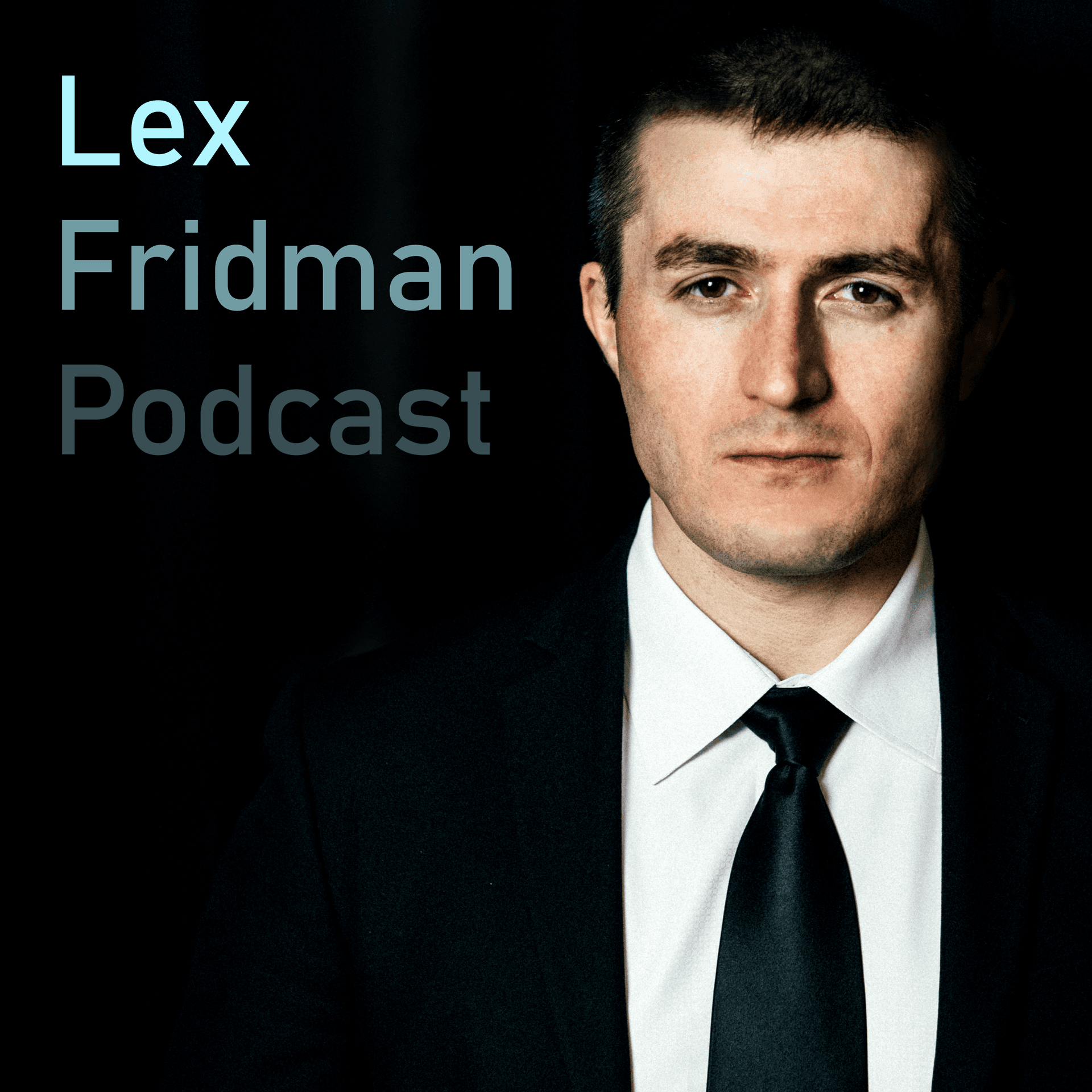
Lex Fridman Podcast Episode #466 Notes
Episode Summary In this episode, Lex Fridman interviews Jeffrey Wasserstrom, a historian of modern China. The conversation delves into various topics surrounding contemporary China, including the leadership of Xi Jinping, historical context from Mao Zedong to the trade war with the United States, issues in Taiwan and Hong Kong, and the cultural underpinnings of Chinese society.
Key Themes and Discussions
- Xi Jinping vs. Mao Zedong
- Commonalities:
- Both leaders have been subjects of personality cults.
- Both aimed to consolidate power under the Communist Party.
- Differences:
- Mao reveled in chaos and disorder; Xi prioritizes stability and order.
- Mao was opposed to Confucianism, while Xi draws on Confucian ideals to solidify his rule.
- Confucianism's Influence
- Confucius emphasized hierarchical relationships and morality, which affect current leadership ideologies.
- Modern China under Xi Jinping adopts Confucianism selectively, promoting stability through traditional values while navigating Marxism.
- Historical Context of China
- Mao’s leadership saw failed policies like the Great Leap Forward, resulting in massive famine and loss of life.
- Historical narratives around Mao's rule and the subsequent economic reforms under Deng Xiaoping shape current Chinese identity and governance.
- The Tiananmen Square Protests
- Discussion on the significance of the 1989 protests, the role of youth, and the ongoing impacts on Chinese society regarding censorship and collective memory.
- The image of "Tank Man" symbolizes the struggle against authoritarianism.
- The Future of Taiwan and Hong Kong
- Taiwan's identity and resistance to integration with mainland China are strengthened by the erosion of freedoms in Hong Kong.
- The historical perspective of the 1997 handover and how it informs current sentiments in Taiwan regarding possible unification with China.
- Trade War Dynamics
- Examination of the U.S.-China trade war and its implications on global supply chains and international relations.
- Xi Jinping's positioning as a defender of China's sovereignty and his push for self-reliance.
- Protest Movements and Youth Activism
- The dynamic nature of protests in Hong Kong as a reflection of generational frustrations and aspirations.
- The role of social movements in shaping the political landscape in both Hong Kong and Taiwan.
- Censorship and Information Control
- The mechanisms of censorship in China: fear, friction, and flooding.
- The importance of historical narratives and how they are controlled within China.
Key Quotes
- “When anger rises, think of the consequences.” - Confucius
- “The Communist Party needs to tell a story about why they deserve to rule.” - Jeffrey Wasserstrom
- "There is no straight road in history; the seemingly impossible can happen." - Jeffrey Wasserstrom
Conclusion The episode provides a comprehensive look at the complexities of modern Chinese history and politics, emphasizing the interplay between leadership, historical narratives, and the aspirations of the youth in shaping future movements. It also gestures towards the potential for hope and transformation in the context of a rapidly changing geopolitical landscape.
Relevant Links
- [Jeffrey Wasserstrom's Books](https://amzn.to/3GnayXT)
- [Lex Fridman Podcast](https://lexfridman.com/podcast)
- [Apple Podcasts](https://apple.co/2lwqZIr)
- [Spotify](https://spoti.fi/2nEwCF8)
---
This structured note format captures the essence and discussions of the episode, providing an accessible overview for those interested in the key themes surrounding modern China.
Written by AI. May contain mistakes. Listen to the episode to check what was said.
Transcript
Automatic transcript. May contain errors.0:00The following is a conversation with Jeffrey Wassertrom, a historian of modern China. And now a quick few second mentionary sponsor. Check them out in the description. It's the best way to support this podcast. We got Oracle for cloud computing, tax network USA for taxes, Shopify for selling stuff online, element for electrolytes in AG1 for a daily multivitamin. Choose wisely my friends. Let me make the public service announcement that I've done a few times about these ad reads. I do them on RSS, I do an Apple Podcast on Spotify based on the feedback I've gotten in the survey, LexFreedman .com slash survey.
0:45Many enjoy it, a quick random non -sec order insights into whatever is going on in this particular mind. I don't do the ad reason in a normal way. Half the time I don't really even talk about the sponsor. I'm just talking about stuff that I'm thinking about, except maybe for a bit of a shout out to the sponsor for being awesome. And a quick description of what they do. Sometimes the sponsor itself, the topic inspires me to think about certain kinds of topics. Anyway, that's the point to continuously be innovating how to do this podcast thing. What is this? Who am I? And who are you? And why is it the connection between the two of us is so real?
1:34Me as a podcast fan, listen to a lot of podcasts, and I legitimately feel like I am friends with a person I'm listening to. I think there's a real way in which that is fundamentally true. I think people mock that. I think people say that that's not a real connection. I think it's a real connection. I don't know. My life is fundamentally better for these friendships. Real or not real? Who's to say I can't have some great imaginary friends? Anyway, hopefully these addres are interesting. If you skip them, please still check out the sponsor. sign up, get whatever they're selling, I enjoy their stuff, maybe you will too.
2:19Also, if you want to get in touch with me for whatever reason, go to LexFreement .com such contact. And now onto the full ad reads. Let's go. This episode is brought to you by Oracle, a company providing a fully integrated stack of cloud applications and cloud platform services. These guys do infrastructure well. Single platform for the infrastructure for the database, the application development, and obviously injecting AI into everything including the pitches. These guys do compute infrastructure well and have been doing it for many many years. Obviously this episode about China, Taiwan, Han, Hong Kong, trade is very relevant to this topic.
3:07Boy, I sit back and think about the future of compute, and how it is inextricably connected to the geopolitics, to the bullshit, to the madness of the online world with their talking shit to each other, the individual humans of the individual nations, and the leaders of those humans and the leaders of those nations. Anyway, cut your bill in half when you switch to OCI Oracle Cloud Infrastructure. Offer is for new US customers with a minimum financial commitment to see if you qualify at oracle .com slash Lex. That's Oracle .com slash Lex. This episode is also brought to you by Tax Network USA, a full service tax firm focused on solving tax problems for individuals and small businesses.
4:01Whenever I see those three letters, USA, my heart fills with pride. I don't know. I see stuff online where people are talking shit about this country, where there's experts and historians and scholars and trolls talking about the collapsing empire that is the United States. There may be elements that signal that. There There may be reasons for concern, but let us not forget how incredibly brilliant the humans that make up this country are, how resourceful they are, how vibrant their creativity. There really is a consequence to the freedoms, the individual freedoms we experience as humans here.
4:48But anyway, USA, I love this country. And yeah, a lot of it does run on taxes. The reality is the tax law is complicated. And so you have to figure out this mess and tax network, you'll say helps you with a mess. If you missed the April 15th deadline, yes, I'm talking to you. I see you. Worn this together, my friend. I'm not very good with deadlines. Perhaps you're not very good at deadlines. I'm giving you a virtual hug. Let's get our shit together. and claw our way out of the whatever bullshit we've got ourselves into. Talk with one of their strategists for free today. Call 1 -800 -958 -1000 or go to tnusa .com -lux.
5:35This episode is also brought to you by Shopify. A platform designed for anyone to sell anywhere with a great looking online store. I don't know why I said the beginning of that sentence fast. sometimes I speak quickly, sometimes slowly. My mind is just not made for speaking. I think very fast and speak very slowly and it creates for some really interesting non -linear dynamics of interacting between a brain that's way ahead of the mouth and the mouth struggles. goals. The struggle creates a third person kind of anxiety that the brain has to also deal with while it's thinking about the next thing also coming up with different trajectories of thought.
6:23And so I'm generating a mess, but I'm in doing it. I think I'm supposed to talk about Shopify. I'm not doing so well at that right now. It's a website, a platform or you can sell stuff. By the way, a lot of really fascinating discussions about the way China thinks about its economy, about its politics, about the interplay between the government and the entrepreneur. I'll probably do a lot more episodes on that topic. Shopify is a really interesting case study. China isn't really interesting case study. So sign up for a $1 per month trial period at Shopify .com slash Lux. That's all lower case.
7:07Could have shopify .com slash Lux to take your business to the next level today. This episode is brought to you by element, my daily zero sugar and delicious electrolyte mix. I often think about the biochemistry of thirst. And no, not the urban dictionary definition of thirst, although I think about that as well. But in this particular topic, I'm thinking about the biochemistry of your body. communicating with you, the neurobiology of awareness of the malnourishment of the rest of the body and how all of that evolved. Started as a bacteria, fish, mammal, now we'll get thirsty. Need the salt, need the electrolyte, need the water.
7:57I'm getting that in the brain. Sometimes the brain doesn't tell you that directly. sometimes it tells you that through a headache and you feel like shit and you wonder what's going on. Well a lot of that a lot of life's problems could be solved with a nap with a shower and with a drink of water with magnesium potassium and sodium. It's fucking ridiculous really. We are just meat vehicles that need to chill out. Anyway I am doing a bunch of interesting conversations about Darwinian evolution, Darwin fascinating guy evolution fascinating topic I can't wait get a sample pack for free with any purchase try to drink element to calm slash Lex this episode is also brought to you by a g1 and all in one daily drink to support better health and peak performance I recently got a chance to hang out with my family and they're all fans of a g1 And we talked about it and it's great.
9:01It's great how we're talking to each of them. There's just a different approach to health, but they're all fighting the battle of being healthy and winning, honestly. I do see health as the kind of individual end of one puzzle that we all saw. We gather a lot of information as best we can. We understand the latest state of the art science, but really at the end of the day, it's personal puzzle that has to be solved. How does a healthy lifestyle fit into all the rest of the anxieties, the psychology, the crazy schedule, the motivations, the ambitions, the insecurities, all of that? How do you figure out that puzzle and do that in a way where it's stable across weeks and months and becomes a ritual?
9:48And then of course the psychology, ritual comes into play. All that is really fascinating. Alright, agey one will give you one month's supply of fish oil when you sign up at drinkag1 .com slash Lex. This is Alex Friedman podcast to support it please check out our sponsors in the description and now dear friends there's Jeffrey Wasserstrom.
10:28You've compared Xi Jinping and Mao Zedong in the past. What are the parallels between the two leaders and where do they differ? Xi Jinping, of course, is the current leader of China for the past 12 years. Mao Zedong was the Communist leader of China from 1949 to 1976. So what are the commonalities? What are the differences? So the biggest commonality of them is that they are both the subject of personality cults, and that Mao was the center of a very intensely felt one from 1949 to 1976, and when he died, you know, tremendous outpouring of grief, even among people who had objectively suffered enormously because of his policies.
11:12Xi Jinping is the first leader in China since him, who has had a sustained personality cult of the kind where if you walk into a bookstore in China, the first thing you see are books by him collections of speeches. And when Mao is alive, you might have thought that's sort of what happened with Communist Party leaders in China. But after Mao's death, there was such an effort to not have that kind of personality cult that there was a tendency to not publish the speeches of a leader until they were done being in power. I was first in China in 1986 and you could go for days without being intensely aware of who was in charge of the party.
11:53You would know, but his face wasn't everywhere. The newspaper wasn't dominated with stories about him and quotations from his words and things like that. So it was Xi Jinping. You've had a throwback to that period and Communist Party rule, which seemed as though it might be a part of the past. So that's a key commonality. And a key difference is that Mao really reveled in chaos in turning things upside down in a sense that, you know, he talked about class struggle, which came out of Marxism, but he also really his favorite work of Chinese popular fiction was the Monkey King about this legendary figure who, this monkey king who could turn the heavens upside down.
12:40So he reveled in disorder and thought disorder was a way to improve things. Xi Jinping is very orderly, is very concerned with kind of stability and predictability. So you can see them as very, very different that way. And Mao also likes to stir things up, like that people on the streets clamoring. So Xi Jinping, even though he has a personality cult, it's not manifesting itself. He doesn't like the idea of people on the streets in anything that can't be controlled. So you can, you know, there are a lot of ways that they're similar, a lot of ways they're different. They're also different in this fits with this orderliness that Xi Jinping talks positively about Confucius and Confucian traditions in China.
13:25And Confucian traditions are based on kind of stable hierarchies for the most part and sort of clear categories of superior and inferior, whereas Mao like things to be turned upside down, he thought of Confucianism as a futile way of thought that it held China back. So you can come up with things that they're similar and you can come up with things where they're really opposites, but they both clearly did want to see China under rule by the Communist Party, and that's been a continuity and that connects them to the leaders in between them too as well. So there's some degree, as you said, that Xi Jinping espouses the ideas of communism and the ideas of Confucianism.
14:06So let's go all the way back. You wrote that in order to understand the China of Today, we have to study its past. So the China of Today celebrates ideas of Confucius, a Chinese philosopher who lived 25, 100 years ago. Can you tell me about the ideas of Confucius? First of all, we don't know that much about the historic Confucius. He's around the same time as figures like Socrates, and like with Socrates, we get a lot of what we know about him or think we know about him from what his followers said and things that were attributed to him and dialogues that were written afterwards. So you can have a lot of fun with these sort of axial age thinkers and what they had and common.
14:51Another thing that connects these Axial Age thinkers is they were trying to kind of make a case for why they should be able to educate the next generation of the elite and sort of had a way of promising that they had philosophical ideas that helped keep decide how you should run a polity. Confucius lived in a time when there were these warring kingdoms in a territory that later became China. But what he said was that there had been this period of great order in the past, that the lines between inferior and superior were clear, and there was a kind of synergy between superior and inferior that kept everything ticking along really nicely.
15:34He thought that hierarchical relationships were a good thing, and that the trick was that both sides in a hierarchical relationship owed something to the other. So the father and son relationship was a key one. The father deserved respect from the son, but owed the son care and benevolence. And things would be fine as long as both sides and a relationship held up their end. And he had a whole series of these relationships. The husband to the wife was again, an unequal one of the husband being superior to the wife, but him owing the wife care and her owing him deference. And he had the same notion that then the emperor to the ministers were, these were all parallels.
16:22And there were no egalitarian relationships in Confucianism. Even something that in the West, we often think of as a kind of quintessential, quintessentially egalitarian relationship between brothers. In the Chinese tradition of Confucianism, There was only older brother and younger brother. There was no brotherhood was not an egalitarian relationship. It was one where the older brother took care of the younger brother and the younger brother should respect for the older brother. So, stable hierarchy was that the core of everything in society it permeated everything including politics. Yeah, and there was even a sense that it connected the natural world to the supernatural world.
17:04So the emperor was to heaven, this kind of non -personified deity like the emperor was to the minister. So all of this had these relationships. So the emperor was the son of heaven. And you know, for Confucius, he said, so we should study the text. We should study how the sages of old behaved that society was becoming corrupted and was going away from that sort of purity of the sages when the relationships were all in order. So Confucianism was a kind of conservative or even backward looking. It wasn't arguing for progress, it was arguing for reclaiming a pure golden age in the past. So it was also a kind of conservative.
17:54So in all kinds of ways, you know, it's irreconcilable to many things about Marxism and Communism, which is all about struggle and all about actually a progressive view of history moving from one stage to the next. So that's the interesting thing about Xi Jinping and China today is there is that tension of Confucianism and Communism where Communism Marxism is supposed to, you know, let go of history and Confucianism, there's a real veneration of history that's happening in China of today. So they're able to wear both hats and balance it. Yeah. You could say that in many points in the 20th century, there was a kind of struggle between different competing political groups over which part of the Chinese past to connect with.
18:43was it to the Confucian tradition or to the kind of rebellious monkey king tradition, which was what Mao connected to. Xi Jinping, and before him, to some extent, Hu Jintao, we saw this a little bit, the Olympics, there was more of this kind of mix it all together of you. Anything that suggested greatness in the past could be something that could be fused together. So Xi Jinping says that, Mao is one of his heroes or one of the people he looks to as a model, but so is Confucius. And there's really, they had so little in common, but they both in his mind and the mind of some others suggest a kind of power and greatness of the Chinese past.
19:27Yes, so this platonic notion of greatness, and that you could say connects, that's a thread that connects Puchijing, paying the great history, multi -thousand year history of China. Yeah, and it involves moving out all kinds of internal contradictions. You had the first emperor of China jumping forward a bit in 21 BC. He is anti -scholars. He burns books and he doesn't venerate these kind of rituals and things. So he was very much against the things that Confucius stood for. But, and Mao, in a sense of having to choose between Confucius on the first emperor, he said, well, maybe the first emperor had the right idea.
20:15Scholars can be a pain. So he'd said, like, if you have to choose between Confucianism and that. But Xi Jinping, I think, continually is kind of not choosing. And if he wants to say, well, look at the Great Wall, look at this wonderful, In fact, that was a symbol of kind of strength and domination related to the First Emperor, who, by the way, didn't build anything like the Great Wall you see today. He built walls, and they were fine. They were good. But the Great Wall itself didn't come into being until many centuries later. But still this idea of anything that suggests a kind of greatness is something that, in many ways, a nationalist above all else, Xi Jinping, is a supporter of the party.
20:59and single -party rule, that's something he clearly believes in. And he's a nationalist. He wants to see China be great, and acknowledge this great on the world stage. Boy, so many contradictions always. With Stalin, he was a communist, but also a nationalist, right? That contradiction is also permeated through Mao and all the way to Xi Jinping. But if you can linger on Confucius for a little bit, you write that one of the most famous statements of Confucianism is the belief that, quote, people are pretty much alike at birth, but become differentiated via learning. So this sets the tradition that China places a high value on education and on meritocracy.
21:44Can you speak to this Confucius' idea of education? and how much does it permeate to the China of today? Sure. So there's an optimism to this. There's an optimism in the sense of a ability that people can be good. And when exposed to exemplary figures from the past, they'll want to be like those exemplary figures. So it's a form of education through kind of emulation of models and study of past figures and past texts that were exemplary. And it was, it did have this idea, relatively positive view of human nature and the sort of changeability of humans through education. And I think that that shows through and all kinds of things, even the fact that while there were lots of killings by the Chinese Communist Party and other groups, there was often an idea that people could be, could be remolded potentially.
22:50And China was one of the few places where they didn't kill the last emperor. The last emperor, the idea was that he could become, anybody could be kind of turned into a citizen of this or a subject of this, a good member of this polity through the kind of education. And often it was a very kind of forceful form of education. But I think that's a carryover from the Confucian times. And over time, this Confucian idea led to the creation of one of the early great civil service exams and idea that bureaucracy should be run not by people who were born into the right families, but ones who had shown their ability to master these really intensive kind of exams.
23:43And the exams were things that could make or break your career a bit like at some points in the American past passing a bar exam, a really intensive thing could set you on the road to a good career in China. You had the Civil Service Exam tradition. So I think this kind of emphasis on education and on valuing of scholarly pursuits, but then Chinese leaders throughout history, including up to Mao and Xi Jinping, have also found scholars to be tremendously difficult to control. So there's now been a little bit of a contradiction addiction again there. But to which degree this idea of meritocracy that's inherent to the notion that we all start at the same line, there's a meritocratic view of human nature there, or if you work hard and you learn things, you will succeed.
24:43So the reverse, if you haven't succeeded, that means you didn't work hard enough or do not deserve the spoils of the success. Does that carry over to the China today? There's such a challenge in all these forms of meritocracy because you had the civil survey exams, but the question was, if you had a really good tutor, if you could afford a really good tutor, you had a better chance of passing the exams. One thing that happened there was families would pull together resources to try to help the brightest in their group to be able to become part of the officialdom. And this kind of pooling together resources to help as a family was an important part of that structure, but there also was a kind of, there was always a tension of that.
25:35So what if you don't succeed? Some of the leaders of rebellions against against emperors were failed examination candidates. And you had this issue. And then it became something, well, the system was out of whack, and it needed a new leader. And also there was something built in that was not so much Confucius himself, but one of his main interpreters, early interpreters, menchis, had this idea which can be seen as a crude justification for rebellion or for a kind of democracy to say that even though the emperor rules at the will of heaven, if he doesn't act like a true emperor, if he's not morally upstanding, then heaven will remove his, heaven will remove its mandate to him.
26:32And then there's no obligation to show deference for a ruler who's not behaving like a true ruler. And there it sort of justifies rebellion. And the idea is that if it's if the rebellion isn't justified, then heaven will stop the ruler from being killed. But if heaven has removed his support, then the rebellion will succeed. And then a new a new ruler will be justified in taking power. So it's an interesting sense that the universe in this confusion view has a kind of moral dimension to it, but it also, it's when things actually happen that you see where the side of morality is. Okay, so it's meritocracy with an asterisk.
27:18It does seem to be the case, maybe you can speak to that, that in the Chinese education system there seems to be a high value for excellence. Hopefully, I'm not generalizing too much, but from the things I've seen, there are certain cultures, certain peoples that, you know, it's just part of the value system of the culture that you need to be a really good student. Is that the case with the China of today? There's been a lot of emphasis on education and sort of working really hard and excelling at some subjects and having, you know, there isn't the civil service exam, but there is the Gaokal one exam that really can determine where you get what kind of institution you get into.
28:05And I think, you know, getting back to this idea of meritocracy, which is strong in a lot of tradition. It also, what it opens you up to is when there is a sense of unfairness in who's getting ahead and how the spoils are being divided, this leads to a kind of outrage. And some of the biggest protests in China have been about this sense of nepotism, which really seems to subvert this whole idea of kind of meritocracy. And the 1989 protest of Tiananmen, even though kind of in the Western press, particularly was discussed as a movement for democracy. But a lot of the first posters that went up that got students really angry were criticisms of corruption within the Communist Party and nepotism in this sense that people despite all the talk, I mean, despite the fact that most people seem to be having to study really hard to pass these exams to get good positions in universities that some of them were being handed out via the kind of back door and that led to a kind of outrage not, I mean, that's true in in in many places, but I think he gives a special, a special anger against nepotism because of that, the way in which so much emphasis is put on kind of the standard exam way of getting ahead.
29:33I hope it's okay if we jump around through history a bit and find the threads that connect everything. Since you mentioned Tiananmen Square, you have studied a lot of student protests throughout Chinese history, throughout history in general. What happened in Tiananmen Square? So in 1909, this massive movement took place. The story of it's largely suppressed within China and largely misunderstood in other places, in part because it happened around the same time that communism was unraveling and ending in the former Soviet bloc. So I think it's often conflated with what was going on there. And so I think one of the key things to know about the protests in 1909 was They were an effort to get the Communist Party in China to do a better job of living up to its own stated ideals and to try to support the trend within the party toward a kind of liberalizing and opening up form that had taken shape after Mao's death and in a sense, the student generation of 89, and I was there in 86 when there were some sort of warm -up protests.
30:51There was a kind of frustration with what they felt was a half -assed version of what they were talking about. The government was saying, the party was saying, we believe in reforming and opening up, we need to liberalize, we need to give people more control of their fate. And the students felt that this was being done more effectively in the economic realm than in the political realm. And that there were a lot of sort of partial gestures that suggested the party needed to be pressed to really, really move in that direction. And it's, it'll seem like a very trivial thing. But I found it fascinating and 86 when I was there in Shanghai in late 86.
31:38and students protested. And this was the first time that students had been really on the streets in significant numbers since the culture revolution, or at least since 76. And the students were inspired by calls for democracy and discussions of democracy by this physicist, Fongli Jir, who was a kind of often thought, a Chinese saccharoth. He was a liberalizing intellectual. But one of the things that students in Shanghai, which were some of the most intense protests of that year took place, were frustrated about was a rock concert of all things that Jan and Dean, the American Surf Rock Band, which was kind of like the Beach Boys only not as big.
32:22And they were touring China. It was the first time in Shanghai that there had been a rock concert and the students were really excited about this because this fit in with what they thought the Communist party was moving toward was letting them be more part of the world. And for them that meant being more in step with pop culture around the world. And at the concert some students got up to dance because that's what they knew you were supposed to do at a rock concert. And the security guards made them sit down. And for the students in Shanghai, this was symbolized what was, you know, a faint toward openness that really didn't have follow through.
Read the full transcript
32:58We're going to give you rock concerts but not let you dance. And so the protests went on for a little while in 86 and posters went up the officials at at university said now this is out of hand. We had chaos on the streets during the culture revolution. We can't go back to that and nobody wanted to go back to that. So there were posters I saw I said this is new red guardism and the students didn't want to be associate with that. So it wound down pretty quickly. And they thought, you know, we're not like the red guards. We don't want to make chaos. We also are not fervent loyalists of anybody in power.
33:37The red guards had been, you know, passionate about now. The analogy partly sort of scare them. And also it meant that the government was really serious about dealing with them. So then in 1989, this protest, the protests restart. And there are a variety of reasons why they can restart. They, the space for them, students are thinking about doing something in 1989. It's a very resonant year, 200th anniversary of the French Revolution. People are thinking about that. But more importantly, it's the 70th anniversary of the biggest student movement in Chinese history, the May 4th movement of 1919. And the May 4th movement had helped lay the groundwork for the Chinese Communist Party.
34:20some member leading founders of it had been student activists then. It was an anti -imperialist movement but it was also a movement against bad government. And so the students saw it, you know, the anniversary of that movement was always marked, commemorated in China and people took the seriously. People reminded of what students did in the past and so there were sort of, there were a lot of reasons why people were itching to do something. And then a leader, Puyao Bang, who was associated with the more kind of reformist, more liberalizing group within the Chinese Communist Party, he had been stripped of a very high office, demoted after taking, partly taking a fairly light stance toward the 86, 87 protests.
35:14And so he was still a member the government, but he was not as high up in power. He had been very high up. He had been sort of done show pings, potential successor. And he dies unexpectedly. And there has to be a funeral forum because he dies still as an official. And the students take advantage of the opening of their having to be, having to be commemorations of his death. And they put up posters that basically say the wrong people are dying who, yeah, Bung was younger than some of the more conservative of members they said, so some people are dying too young, some people are, don't seem like they're ever going to die.
35:52And they, so they begin these sorts of protests. This is an April of 89. And the government tries to sort of get the protest to stop quickly and they use the sort of same technique of the issue and editorial in people's daily that says, this is creating chaos, which is a code term for taking us back to the culture revolution. And this time the students say, no, you know, we're just trying to show our patriotism. We believe that there's too much corruption and nepotism. There's not enough support for the more liberalizing wing within the party. And so they keep up the protests. And there's a lot of frustration at this point.
36:32They're also economic frustrations at this point. The economy is improving because of the reforms, but it seems that people with good government connections or getting rich too easily. And so there's sort of a sense of unfairness. The students are also really frustrated by the kind of macro managing of their private lives on campuses. So the protests at Tiananmen Square and in plazas all around the country and other cities as well, become this mix of things. It's an anti -corruption movement. It's a call for more democracy movement. It's a call for more freedom of speech movement. But it's also a kind of, has some counterculture elements that are like their rock concerts on the square, the most popular rock musician, Swagianne, comes to the square and is celebrated when he's there.
37:24There's a sense of kind of a variety of things rolled into one. And I brought up how it sort of gets conflated with the movements to overthrow communism and the Eastern block. It was actually in many ways, I think, more like something that happened in Eastern Block 20 years earlier. It was more like Prague Spring and other 1968 protests in the Communist Block, which was about moving toward socialism with a human face, more like trying to get the parties to empower to reform rather than necessarily doing away with them. So there was a kind of disjuncture. happened at the same time as moves to end communism.
38:04But of course, I've said there was a possibility when all the protesters were on the square. It seemed that for a time that this might be seen as an acceptable kind of movement to just have a kind of course correction. But then there's also an internal struggle within the Communist Party leadership. And clearly the people who are more political conservatives, even if they believe in economic reform are clearly getting the upper hand and this is not going to be tolerated. And the students stay on the square when signals are given to try to get them out, students around the country are pouring into Beijing to join this movement.
38:46They don't want to end the movement when they've just arrived. So it's actually one thing that keeps it going is new new participants are coming from the provinces, and even if some moderates wanna leave the square, people wanna stay, and then workers start joining in the movement as well, and more independent labor union. And that really, the Chinese Communist Party, to a certain extent they might put up with student protesters, but they know from past experience that sometimes student protests lead to members of other social classes, joining them because they look up to students as sort of potential intellectual leaders of the country and admiration for scholars is part of this that people turn out when students protest, something very different from the American case where there's a kind of often suspicious of a mayor of student activists being necessarily on the same side as everybody anybody else, but in China, there had been from the history of the 20th century a sense of students as potentially a vanguard.
39:52So once there are labor activists joining the movement then troops are called in and there's a massacre near Tiananmen Square on the middle of the night of June 3rd and early on June 4th and the army just moves in and begins behaving very much like an army of occupation, which is something the people's liberation of armies is supposed to be the one that saves China from foreign aggression and they're acting like an invading force. So this is where famously the tanks roll in. The tanks roll in and I think also you have that famous image of the man standing in front of the tank that's a band image within China and I really think the reason why it's so considered so toxic by the regime is because it just shows the people's liberation army looking like an invading force, not like a stabilizing force.
40:48Can we talk about the, who's not called the tank man, the man that stood in front of the row of tanks? This was on June 5th in Tiananmen Square. What do we know about him? What do you think about him? The symbolism. It's an amazing symbol. He's on this boulevard near the square with this long line of tanks, and it's unquestionably this act of incredible bravery. And there's some interesting things about it, some that are forgotten. One is that in the end, he climbs up on the tank. The tanks' swerves, you know, it doesn't run him over. And the Chinese Communist Party initially showed video of this and said, look, the Western press is talking about how vicious we were, but look at the restraint.
41:33Look at this. He wasn't mowed down and they tried this whole story with Yanaman initially of saying look the students were out of control This everybody should remember what happened during the culture revolution and the army showed restraint and there were a Small number of soldiers who were actually burned alive in their in their tanks during once the massacre began People got outraged and they attacked the soldiers but by selective use of of footage, the Communist Party could say, look, actually look at this. The heroes, the martyrs were these soldiers. And they try for the first months after it to try to get this narrative to stick.
42:16They talk about tantrum and a lot. They talk about these things. They show images to the tank man. The problem with it is that lots and lots of people around Beijing had seen what happened and knew that in fact they'd first been the firing on unarmed civilians with automatic weapons and then and there have been many, many people, some students but a lot of ordinary Beijing, Beijing residents and workers who were just mowing down. So lots of people knew somebody who had been killed. So that story just didn't work. And then I think the claim had to be made to try to suppress discussion of the event and particularly to just to repress that visual imagery that was that image of the man in front of a line of tanks, whatever the tanks did do it or not, the main takeaway from it would be this idea that there were lines of tanks in a city that was, that the image was of the government as having lost the mandate to rule and they really didn't want to have that image out there in the world.
43:26Yeah, we're watching the video now. He's got what like grocery bags in his hands. It's such a symbolic, I've had enough. Like that kind of statement. Yeah, and it's probably not a student. You know, it's often described as a student, but he probably was a worker. And it is a powerful, powerful image of bravery. And, you know, I brought up the 1968 parallel for Eastern and Central Europe. there was actually a very powerful photograph of a man bearing his chest in front of a tank in Bratislava during what we think of as Prague Spring. That was a famous image of bravery against tanks. And in 1968, in Czechoslovakia, then still Czechoslovakia, the tanks that rolled in were Soviet tanks sent down there.
44:21And so not that people would know, but that was an image, you know, what was so powerful and that was saying we're not going to put up with this invasion. Again, I think you have the people's liberation army, army looking like an invading force. And that's what that's what the Chinese Communist Party in a sense can't, can't deal with now. Even though So sometimes they could tell a story about 1989. And they do tell a version of this and some people believe this, I think, is that in 1989 China went one route of not having the Communist Party dramatically change or relinquish control. And the Soviet Union and the former Soviet States went another.
45:06And you could say, well, look, and after 1989, the Chinese economy boomed, life got better for people in China, life got really terrible for a lot of people in the former Soviet blocks. Maybe we actually, maybe this was the right way to go. And you can make that kind of argument, but if you show the tanks and the man in front of the tanks, you just have a different kind of image of heroism. It's one of my favorite photographs or snapshots ever taken, videos ever taken. So I apologize as if we linger on it. Sometimes you don't understand the symbolic power of an image until afterwards. And perhaps that's what the Chinese government didn't quite understand.
45:49They lost the information more than me more. So I have to ask, what do you think was going through that man's head? Was it a heroic statement? Was it a purely primal guttural like I've had enough? It's so interesting to just spec it. And we just don't know. Because because he was never able to be interviewed after us. But I think, you're ever seen on patriotism is really important because one of the students' main demands was then, I think it might have been the thing that would have gotten them to leave the square would have been to say, we want this to be acknowledged as a patriotic that our goals are patriotic.
46:24We're not here to take China back into the culture revolution. We're here to express our love for the country if it goes in the right way. So will you admit that? And you mentioned about the power of the image. And I do think the Chinese Communist Party learned something has taken to heart the power of the image after that because we saw this in, but when there were protests in Hong Kong, the government on the mainland really wanted to tell a story there of, you know, crowds out of control. And initially there were in 2014. and again, initially in 2019, there were very orderly crowds, and it had trouble with that story.
47:07So they tried very hard to ban images of peaceful protests until there were some incidents, as they're almost always are, of violence by crowds. And then they would show those images over and over again. They also worked very hard when Hong Kong protests began in the 2010s to try very hard to avoid any use of soldiers to repress them. It was all the police. And they tried very hard and managed to success because the Western press was often saying, will this be another Tiananmen? Will there be a massacre? Will there be soldiers on the streets? The movements in Hong Kong were suppressed without the use of shooting to kill on the streets.
47:53They were shooting to wound. There was bean bag shot, there were rubber bullets, there was enormous amounts of tear gas, there was even tear gas left to let fly inside subway stations in 2019. All these things are really brutalizing, but they don't make the kind of images that sear in the mind the way something like the Ten Aman Tank Man image or the image of a Vietnamese woman being burned by napalm, young woman that became another of the iconic images during Vietnam War. Those images really can have an extraordinary power. And I think the Chinese Communist Party is now aware of that. There are no really gripping, there are very few photographs allowed of the Xinjiang extra legal detention camps.
48:45They're very little, very little, there is an awareness of how much power a photograph of a certain type can have. So nobody knows what happened to the tank man. No. What do you think happened to the tank man? I assume he was killed. Killed. I assume he was just disappeared. It's interesting because very often figures are made in example of and one way or another. I mean, Leo Chauboa was imprisoned and not allowed to get enough medical care so you can talk about him having died earlier than he should have. But there's been relatively few of, like for political crimes, recently sentencing to death and things like that.
49:31It's much more, just remove them and prison them. But the Tankman, there was never a trial. There was never even a trial that was one that you knew what the result would be, which there was for the Oshawa and others. Not even a hidden trial, but simply disappeared. And there's been somebody who's like another figure like this, who's disappeared a couple of years ago in Beijing. There was a lone man who put up a banner on a bridge. sitong bridge and Beijing. And it was extraordinary. It had denunciations of the direction Xi Jinping was taking the country. It was denunciation of COVID policies, but also a dictatorial rule.
50:18And the banner somehow he managed to have it up and get it long enough to be filmed, and to draw attention, and the film to circulate, again, another image of the power of images. and he's disappeared and there hasn't been a show trial or even a secret trial. And again, we don't know if he's still alive, but these are cases where I think the Chinese Communist Party really doesn't want a competing story out there. They don't want somebody to be able to answer what he was thinking. How much censorship is there in modern day China by the Chinese government? So there's a lot of censorship. My favorite book about, one of my favorite books about Chinese censorship, Margaret Roberts, where she talks about there are three different ways that the government can control the stories.
51:08And she says there's fear, which is this kind of direct censorship thing, like banning things. But there's also friction, which she says, she has three apps, fear, friction, and flooding. And she says they're all important. And I think this is true, not just of China, but in other settings too. So what friction means is you just make it harder for people to get answers or get information that you don't want them to get. Even though you know that some people will get it, you just make it that the easiest way, the first answer you'll get through a search. So a lot of, you know, tech savvy or globally -minded tapped -in Chinese will use people, will use VPN to jump over the firewall.
51:53But it's work. The internet moves slower. You have to keep updating your VPN. So you just create friction so that, okay, some people will find this out. And then flooding, you just fill the airwaves and the media with versions of the stories that you want the people to believe. So all those kind of exist and in operation. And I think the fear is the easier side to save. What's blocked? So I'm always interested in things that, things that you would expect to be censored, that aren't censored. You can read all sorts of things in China about totalitarian, you can read Hannah or Rents book on totalitarianism, which would be the kind of thing you just, you know, you're not supposed to be able to read that in a somewhat totalitarian state or a dictatorial state of anything.
52:44But it's not specifically about China. And so censorship is most restrictive when it's things that are actually about China. Things about leaders of the Chinese Communist Party, there's intense kind of censorship of that. And certain events in that way. But a sort of like something through allegories, something through imagining a place that looks a lot like a Communist Party ruled state so that people are going to read it. There were things that were banned throughout, up until like the very last period of Gorbachev's rule. Baitthings banned in the Soviet Union that are available in Chinese bookstores.
53:27You can buy 1984 in a Chinese bookstore. You've been able to since 1985. You can buy again, it's not about China. And actually for some people within China in the mid 1980s where they focused on the part of 1984 that's like the two minutes of hate, these rituals of denunciation of people. For some people in China, it seemed like it was about their past, not about their present. And then by the 90s, 1984 is a very bleak culture of scarcity, a place where people just aren't having fun. And people said, like, you could read, some people would read 1984 and say, look, this is the world we're living in.
54:06It's a big brother state. But others said, well, Well, that has some similarities, but he wasn't talking about a country like ours. Look, we've got supermarkets, we've got McDonald's. This is not, we've got fast trains, we've got things that we're living so much better in some ways than our grandparents did. This isn't like that bleak world, he was imaginary. Yeah, you've actually spoken about and described China as more akin to the dystopian world of Brave New World than 1984. for, we just really interesting to think about. I think about that a lot of recently we read, over the past couple of years, we read Great New World a couple of times and also 1984.
54:47It does seem that the 21st century might be more defined to degree, it is dystopian. Any of the nations are by Great New World than by 1984. There are mixed elements. I think there are moments when it can seem more more one than the other and there can be parts of the same country that seem more one than the other. I think and if we just think about control through distraction and playing to your sense of pleasure and one thing that people forget sometimes or don't know is that all the sucks of the erot Brave New World taught Eric Blair who became George Orwell when he was a student at Eden. And they were sort of rivals.
55:34And in fact, in 1949, Orwell sent his former teacher a copy in 1984 and said, you know, look, I've written this. Basically, it's kind of almost a little editable. Like, I've written this book that displaces yours. He didn't say that. He just said, I wanted to have this. But he had criticized Brave New world and reviews as like not having, having imagined a world of capitalism run wild like before realizing the kind of totalitarian threats of the middle of the 20th century. But Huxley wrote Orwell a letter in October of 1949, same month the Communist Party took control in China, not that he mentions China.
56:14And he just said, you know, it's a great book and everything. But I think the dictators of the future will find less arduous ways to keep control over the population, basically saying more like what was in my book than in yours. I have to say I think Huxley might be really onto something there, truly a visionary, although to give points to Orwell, I do think as far as just a philosophical work of fiction, 1984 is a better book because Brave New World does not quite construct the philosophical message thoroughly because 1984 contains many very clearly, very poetically defined elements of a totalitarian regime.
57:01Oh, and the dissection of language is so amazing. No, I think you've got a point there and I went back and reread Brave New World and it's fascinating, but it's very messy. Yeah, I think there's a clarity to Orwell's 1984. There's a clarity to Margaret Atwood's handmaid's tale, similarly, the construction of the elements. And she was a big fan of both 1984 and Brave New World. So there's a way they go forward. But there was a kind of, it's not exactly a sequel, but Orwell Huxley did write something called Brave New World Revisited. Yes, he did in the 50s and he kind of said actually it seems and he mentions China there He says that in Mao's China, they're kind of combining the two things of this and I'm really fascinated by that because they published in China On the Chinese mainland it was published in Taiwan and Hong Kong too.
58:01It's called the dystopian trilogy and it's a box set where you have Zemiatens Wee, who then inspired both Warwell and Huxley to some extent. That's one book, and then there's Animal Farm in 1984. It's a second book. And then the third volume is Huxley's Brave New World and Brave New World Revisited. And it was published in complex characters, you could buy it in Hong Kong, but I compared it to the book you can buy on the mainland, and it's all the same except the parts in Brave New World revisited that refer to China are scalpled out and this I think shows the subtlety of the censorship system.
58:45You can buy these books and you can read about them but the parts that really show you how to connect the dots that's taken out. And I do think that Brave New World side of things, I think with China I was feeling it was It's definitely moving more toward Brave New World except Tibet and Xinjiang being more the crude boot on the face 1984 style of control. But then during the COVID lockdowns when people were being so intensely monitored and controlled, even places like Shanghai that it seemed much more the Brave New World kind of style had their or wellie in moment. So you have it now I think it's you know there are more 1984 more brave new world parts of the country and there are also more brave new world more 1984 moments.
59:35I see why it could give us sense after you've thoroughly internalized the fear that you have complete freedom of speech. Just don't mention the government. So you could talk about the teleterrorism you could talk about the darkest aspects of human nature, just don't. You can even talk about the government in a sort of metaphorical, like poetic way that's not directly linkable, but the moment you mention the government, it's like a dumb keyword search. Yeah, and I think it's like one of these really good examples of how, you know, China's distinctive, but it's not unique. You have other settings where you have these like no -go zones that you learn.
1:00:21One example is in Singapore. There was this... So, National University of Singapore has a world -class history department, but no Singapore historian in it. Nobody who focuses on the history of Singapore. Because it's incredibly wide -ranging what you can do, analyze. But when you're actually talking about the family that's been most powerful in Singapore, then it gets to be touchy in Thailand, which I've been working on recently. You have this ladies majesty laws that make it very, very dangerous to say certain kinds of things about the king. And so in all of these settings, you have to figure out ways to work around it.
1:01:07There's a way in which you can say at the international, the foreign correspondence clubs in different parts of Asia, you can have an event that's about the country one -over That you can say basically anything you want, but if it gets to the things in the place where you are Your your it's touchy. I should give credit for that insight Shabani Matani who's written Kho wrote a very good book on Hong Kong among the braves She was talking about that that in Singapore or at the Foreign Correspondence Club, you could have an event on Hong Kong that could say all kinds of things that you couldn't say at the Hong Kong Foreign Correspondence Club.
1:01:48But at the same time when I saw her in Singapore, she said there was a Singapore refugee, a political refugee in Hong Kong, who was giving a talk at the Hong Kong Foreign Correspondence Club, saying kinds of things that he couldn't say in Singapore. And in Thailand, I gave a talk at the Foreign Correspondence Club, and then I went to hear a talk there because I was just curious about like what the culture in this foreign correspondence club. And there was somebody talking about human rights abuses in different parts of Southeast Asia, saying things very directly and then said, and there are things going on in Thailand that we're not going to talk about.
1:02:26And there was this kind of, yeah, self -censorship can be a very powerful thing. One of the things I learned about all of this, which is interesting, I want to learn more is about the human psychology, the ability of the individual mind to compartmentalize things. It does seem like you could not live in a state of fear as long as you don't mention a particular topic. My intuition would be about the human mind. If there's anything you're afraid of talking about, that fear will permeate through everything else. You would not be able to do great science, great exploration, great tech line. And that that idea I think underpins the whole idea of freedom of speech Why you don't want in the United States?
1:03:10You don't want a sense or any even dangerous speech Because that will permeate everything else you won't be able to have great scientists You won't be able to have great journalists. You won't be able to have I don't know And I'm obviously biased towards America and I think you do need to have that full -on freedom of speech But this is an interesting case study And that's actually something that you speak about that Mao, if he were alive today and visited China, will be quite surprised. You give the Nanjing bookstores an example. Can you just speak to this? If Mao visited China, let's go with that thought experiment.
1:03:46What would he recognize? What would he be surprised by? So I wrote about, I wrote about imagining a brief vilified Mao going to Taiwan during this really cool Nanjing bookstore in the early 2000s and just being amazed at what you could read there and what books were for sale. And I thought about how he'd be like, what's going on? You know, it's a Communist Party not in control. I mean, he talked about how art and politics needed to in some ways go together and you've got all these kind of things. He'd also be, he also would been shocked by all these books about how to start your own cafe and bar and celebrating entrepreneurship, how to get into Harvard.
1:04:31All of these things just wouldn't compute from his time. Although I said it would actually maybe make him nostalgia for the time of his youth in the 1910s. He was a participant in the May 4th movement, which was a time of reading all over the world looking for the best ideas circulating. So he might say, well, the teenage me would have really really loved this. So some of the coolest bookstores that things that I just was amazed could exist in the early 2000s. So you can still read, you can still buy copies in 1984 and you can still get some of these other things. But that was a time when more and more of those things were being translated fresh.
1:05:11I'm not sure you'd get permission to translate some of those things now. There's more of a sense of caution. And when some of those bookstores would also then hold events that would talk about the kinds of ideas that then take them to the next level and talk about the applicability to the situation in China, some of those bookstores have closed or have had to become kind of really shadows of what they were. And one of the best ones, not the one I wrote about in Nanjing, but a similar one of Shanghai one, which was literally an underground bookstore. It was in a metro station. And it had really free -wheeling discussions of liberal ideas in the early 2000s and early 2010s.
1:05:58But then it just got less and less spaced to operate under under Xi Jinping when things started narrowing. And it then had to close and shine high. And it's just been reopened in DC as JF books. And it's become in this really interesting cultural hub. But I'm really delighted. It's where I'm going to hold the launch for my next book when it comes out in June, this book on the Milk to the Alliance, about struggles for change across East and Southeast Asia, including in places that are worried about the kind of rising influence of Beijing. And it seems just perfect to be holding it in the kind of place that can't exist in Shanghai.
1:06:42So places like that, they stop being able to exist on the mainland. Then they could still exist in Hong Kong. But now in Hong Kong, one of the coolest bookstores has had to close up. It just didn't feel like it could continue operating and tightening control there and it's reopened in upstate New York. So you have this phenomenon of bookstores. There's also a few bookstores called the No -Ware bookstores that opened in Chiang Mai and Taipei and the Hague and I heard one is maybe it's going to open in or is open in Japan to my sometimes collaborator Amy Hawkins who covers China for the Guardian wrote a great piece late last year about this overseas bookstore phenomenon, sort of carrying on the conversations that people thought they might be able to have in China and then couldn't and imagine someday being able to hold in China, but maybe can't.
1:07:38So first of all, boy, do I love America. And second of all, it makes me really sad because there's a very large number of incredible people in China, incredible minds, and maybe I'm romantic about this, but books as a catalyst for brilliant minds to flourish. And without that. So I guess maybe this is a good time to mention something that I do think about. And sometimes people will think because of censorship and that, there's an idea of sort of brainwashing within China population control. And I periodically will get students from the mainland. and I have a lot of students from the mainland in my classes, I teach Chinese history, and I feel like, okay, now I'm contradicting the version of the past that's been drumbeat into them.
1:08:29But I'll still get students who are incredible free thinkers who have come through that system, and it just doesn't hold or their limits to it. And this is kind of, I mean, some of them are people who just got curious by something, and it is a poorest system, even, you know, it's more poorest than an Earth Korea, things like that. So there are, even if there's that like fear, friction, and flooding, which, you know, Robert's talks about that ends up keeping lots of people on the same page as the government. There's still people who take the time to go over the firewall or get intrigued, or they see, they see an image sent by a friend of theirs on social media, you know, we'll share them something on, you know, on WeChat that it doesn't get picked up by the sensors, but they look at it carefully and they say, oh, well, wait a minute.
1:09:32That under that contradicts what the government's official line is. So there is, there's still ways in which that creativity and freedom of thinking persists. I mean, that's really beautiful to hear. I mean, fundamentally, the human spirit is curious and wants to understand. And in some, especially the young people, as we mentioned, are suspicions of authority in the best kind of way. And so they're always asking kinds of questions. But we always have the child, the young person inside us always asking like, that maybe I'm being lied to in all these kinds of ways. But still it's sad because there is, if you're not deliberately doing that or if there's not a spark of possibility that comes before you as just the regular citizen of China, you might never really ask maybe a whole, there's a whole different perspective on history, on world history.
1:10:27To be fair, I think United States is often guilty of this very United States centric view of history. I mean, similar with Europe. Europe is a very Europe, sense of history. I often enjoy talking to people from different backgrounds from different parts of the world, talking to them about World War II, because it's like, it's clear that the emphasis you've read certain chapters of the story a lot of times and not the other chapters of the story. The Western Front in Europe and the Eastern Front in Europe and then Japan and China's role in World War II and the history around that before and after World War II of China is not often talked about in the United States.
1:11:12And I'm sure if I could venture I guess that the opposite is true in China. I certainly know the opposite was true in the Soviet Union and even in Europe that directly experienced France, Great Britain, Germany, Italy. They all have very different ways of speaking and thinking and reading about World War II. And the same goes across all of history and all of culture. So yes, it's always good to sort of question the mainstream narrative in your country and looking outside. It's just harder to do in China based on technological, based on all the reasons you mentioned. And if I can, I just want to give a shout out.
1:11:50Thank you, I'll look at her work, Margaret Roberts, the fear, the friction, the flooding, her ideas. I can already tell there's a lot of brilliance here. Fear, this is the most traditional form involving overt threats and punishments for accessing and sharing such excessive information. However, Roberts finds that fear -based censorship is used selectively, mainly targeting high -profile individuals such as journalists or activists. For the average citizen, the risk of punishment is relatively low and fear alone is not the main deterrent. She goes on to describe the friction and the flooding. The friction is a tax on information access.
1:12:32And flooding is less visible in fear of friction, but is a powerful tool for shaping the information environment. Flooding once scares me. More and more. Flooding once is the brave new world. Yeah, it is. And I think it's the whole kind of the world of short attention spans and social media and how this all works and Chinese Communist Party leaders I brought up Singapore and Deng Xiaoping and some of the leaders were like looking at that and they're looking at you know, there are all kinds of things that it both going to Singapore Or can sometimes make you feel like you're in this futuristic setting in terms of a lot of things that eventually came to other parts of the world would be tried out there.
1:13:19And I think the seductiveness is that some of these things are really, they both add to convenience at the same time they strip away. They're collecting information about you, which can be also something that can make your life easier at the same time that's stripping you away of, I mean, we talk about the siling of information and targeting of ads and targeting of news. And so two things come to mind to mention. One is Christina Larson, a very bright journalist, a friend of mine who's now working on other things, but was working on China. She wrote about this in MIT Technology Review. She said, you need to think about China as having the best as well as the worst internet experience in the world.
1:14:08And you think about it with, you think of the worst disease, the great firewall, you try to search for what happened. You search for the tank man, you won't get it. You search for information about Dalai Lama, and you get all these lies about them. Search for things about Shin in Jiang and it makes seem like it's a place where people are happy rather than massive extra legal detention camps and where your life can be ruined by things you have no control for. But she said like on other ways when it comes to like consumer playing to your pleasures and things it was really advanced. A lot of things that then come out of place or tried out there and in massive numbers.
1:14:49And I remember after I around the time that that I had read that, I was in Shanghai and somebody was explaining it to me. They were talking about like going out to eat. Like I said, oh, we've got such and such. And I said, oh, that's like Yelp. I said, well, yeah, but Yelp just tells you the overall rating for a restaurant over time. We've got one that can tell you which part of the restaurant you want to sit in because there's a waiter that's in a really bad mood and people have posted enough information to do this. Or you know, what the best dish there is in the last week. Forget about these sort of slow things.
1:15:24And you had a lot of things, you know, that we're like, okay, you've smart city and control, you can learn things about ease of movement and Singapore had some of these things tested too. You had way before, you go into an underground parking lot now in the US and you find out whether there are any empty spaces on a floor. That was something that was years before in Singapore. And you don't use money less often there because you had a kind of transponder that would automatically pay for your parking and things. And it was something that can be very seductive. So the other line besides Best of Worse Internet I always like is William Gibson who wrote one of the other important dystopian novels of the present Neuromancer.
1:16:14He wrote a rare non -fiction piece about Singapore where he referred to it as Disneyland with the Deathbendle day. And, you know, there are times when... I shouldn't laugh there. But it is. It's a powerful... Yeah. He's not welcomed in Singapore, let's just say. But he talked about how when he wanted to try to... He went to Japan a lot in the 1980s at a time when Japan was a place where you sort of got a sense of what the future might hold. So the the dark side of this the surveillance state at its worst which we're seeing we see in Shinjiang in places and there Again, it may seem like I'm just obsessed with science fiction and there there it really is minority report.
1:16:59It's this kind of like You do certain kinds of behaviors and we're seeing this other places too You know, we're seeing versions of it in the US as well where it's like oh, we can tell from a pattern that you are the kind of person who might do X. And so in Xinjiang, they were, when they were starting to round people up, there's this great book by a Weeger poet. He talks about how people were just starting to disappear off the streets and they were being accused of being radicalized and being potential terrorists. And the cues could be something like somebody giving up smoking or not drinking alcohol because that was seen as something that sometimes went along becoming, would becoming more devoted to Islam and more devoted to something, a particular version of it.
1:17:51So he talked about how a group of the poets, when they would get writers, when they get together, they would, whether or not any of them drank, they would make sure there was a bottle of alcohol on their table because it was simply a way of trying to stay ahead of this system of looking for these kind of clues. So you really have this dark side of Xinjiang is this example and Tibet also with incredible tight control. And there's more of that kind of push on personal life in other parts of China as well. But I think the question of whether we give up too much and who can abuse what we do give up is something that is being asked in the United States now about big tech companies as well as it's asked about governments but it's also asked about big tech and what you have as a trade -off.
1:18:42But I hadn't thought about it till this conversation which I can tell is why people find it stimulating to have these extended conversations because you have sat lines but then you kind of the conversation goes and you think in a different way. So what I used to we say about China after 1989 was the Chinese Communist Party wanted to stay in power and they realized that the Soviet Union, Soviet bloc was falling apart. They knew that one reason why people, and this is like the simple way of one way I think you have to understand why communism fell in Eastern Europe was partly about ideals and there's for freedom of that, but also people knew that people East Germans knew that West Germans were having more fun and having getting better stuff.
1:19:35And when some East Berliners got over the wall, one of the first places they went to was this department store to see if the images of better food and more choices were available there. And it was true. And I think this is a human, as human is the desire for more freedom. So one of the things that the Chinese Communist Party, they never articulated this way, but But how can we try to get to a stage where we don't have things like Tiananmen again? Well, what if we try to make a deal with people? We'll give them more choices in their daily life. We'll give them better stuff. We'll give them more choices at the store.
1:20:10We'll give them more choices about what to read to because we'll give them more choices and consumer goods and intellectuals, consumer goods they want are to watch the movies and read the books that other people like them around the world are reading. So we'll give them more choices. We won't open the floodgates completely, but we'll give them more choices, but not give them more choices at the ballot box or in politics. And this was the new kind of new social compact. Allow us to keep ruling and we'll make sure that you're living better than the last generation in terms of choices and in terms of material goods.
1:20:49Now, one of the things that's happening now is the Chinese Communist Party, the economy, isn't booming the way it was before, the sort of sense of clearly we're living better materially than the generation before. It's not as easy an argument to make when you have slower growth rates and things like that. But the Communist Party makes different kinds of arguments now about the rest of the world is in chaos and we're more stable. But the thing that I hadn't, that I now I'm going to think about differently is the argument was we'll give you more choices and you'll have more sort of more of a private life, more of this.
1:21:29But now, in the period we are globally, now there's a new kind of suspicion about the degree of any kind of private choices. I mean, there was an idea that the post -Tiana men generation was promised to have a little bit more space away from the prying eyes of the state. And now globally, we worry about the prying eyes of whether it's the state or whether it's tech companies. It's a different moment. What does it mean to say you have more choices? It's almost like you have two knobs. One is 19, four is spring in your world. At first they turned up to brave new world more choices and now they're turning up the 1980 keeping the choices But turning up the 1984 with more surveillance so the choices you make have to be more public Do you have a sense that?
1:22:21The thing we've been talking about the increased in censorship Does that predate Xi Jinping? Is Xi Jinping a part of that increase in censorship like what is that dynamic? what role does Xi Jinping play in what China has gone through over the past, let's say, a decade and a half? That's a really great question. I was actually just writing a review of two books, one as called The Xi Jinping Effect, which was just a bunch of scholars and academic volumes, sort of looking at this topic and that topic, how much is Xi Jinping as a person really affected? And they come up with all kinds of answers. But there's a book I really like, Emily Fang of NPR has a new book out called, That Only Red Flowers Bloom.
1:23:11And what she talks about the changes in China as she was covering it from the mid 2010s on, was, and I think this really is Xi Jinping's, one of his impromachers on the country, is there's a narrowing of spaces available for variations of ways of being Chinese within the country. And this goes against the grain of a pattern in the sort of post -Tianan men period of allowing more space for sort of civil society, but also allowing sort of way Muslims felt that they didn't have to choose between being, you know, their Muslim identity and their Chinese identity, but there's more and more of a kind of, we see this in Xi Jinping being becoming impatient with Hong Kong, where there was a way of which, okay, this is a city that's part of the PRC, but it really operates very differently.
1:24:06He seems to be uncomfortable with difference, I guess, and he's not alone in strong men this way, of sort of wanting to impose a kind of singular vision of what Chinese identity means, what loyalty to the status quo means. And so there's been a kind of tightening of controls over all the borders. And even things, one thing she reported on was Mongolia and Mongolia. It has been seen as an unproblematic kind of frontier area and who cares if there was some revival of Mongolia and language, but under she there's been a there's been a less patience with with those kinds of difference. He's been. It's been a there's been more of a resurgence of patriarchy, all kinds of things have happened under him.
1:24:58But how much is it just him or how much is it also a kind of mood or group within the party. Some of these trends, I think, began before he took power in late 2012. I think really my own feeling going to China fairly often from the mid 1990s till about 2018 was that until 2008, the year of the Olympics, each trip it would feel like go, there's just more space. There's more breathing room for, you know, it's not becoming a liberal democracy, but I would notice things that felt like I'm surprised that that that happens, that they're just felt, people felt less worried about what they were saying and what they were doing.
1:25:48That kind of trend line up till about 2008, but from the Olympics and then the financial crisis after that. The Chinese Communist Party felt I think it's more, it's still insecure, but it felt cockier in some ways. And you had like, okay, maybe we can start asserting more control over things. So I think that's been stronger under Xi Jinping's time and power. And he was already the designated successor by 2008. He was in charge of, It was in charge of security for the Olympics, and the Olympics was supposed to be a moment possibly of more opening up because when Seoul hosted the Olympics, South Korea became a less tightly controlled right wing dictatorship and moved toward democracy and some people were hoping the Olympics might move China that way and it went quite the opposite.
1:26:45You mentioned that we don't know the degree to which this change has to do with Xi Jinping or the party apparatus and that question Going back to the Confucius of hierarchy and how does the power within this very strict one -party state work? What can we say? What do we know about the structure of this Communist Party apparatus? us how much internal power struggle is there? How much power does Xi Jinping actually have? Is there any insight we have into the system? So James Palmer, who worked in Beijing as a journalist and now is an editor at foreign policy, wrote an important piece a few years ago about just we should really be straight about what a black box of the Chinese elite politics are and really not try to pretend we know more than we do.
1:27:40We did, used to have more of a sense of these kind of ideological factions, but also partly about different views of how much tinkering there should be with the economy, and things like that. And they were also partly based on personalities and personal ties. But we did have a sense. You could sort of map out these kinds of rival power bases and things. And we just have much less of a sense of that under Xi Jinping. It's very hard to know other than this sort of small group around him how it works. We don't have a major defector who says, yeah, this is how Xi Jinping, we have Xi Jinping's self -presentation.
1:28:22And a lot of things that are then said about him. There were some false expectations about him that some people thought, he's going to be a reformer because his father was a liberalizing figure and you know that doesn't work that way. And he does seem to care about orderliness, he does seem to care about certain things. He wants to present himself as a kind of scholarly figure and touch with China's deep past. We know he's a strong nationalist and a kind of cultural nationalist as well as political nationalists, but beyond that we don't have that much of a sense of what makes him what makes him tick.
1:28:59We get little hints. There was a secret speech where he talked about, that leaked out, that he talked about how the Soviet Union had collapsed because people didn't, the leadership didn't pay enough attention to ideology. He also said that none of them were manly enough to keep control. He, if I imagine, if he and Putin ever have a kind of hard to heart conversation. It's one thing they'd find to agree on as this sort of distaste for Gorbachev. This feeling that Gorbachev was, that was the wrong way to do things. Not manly enough. Yeah, to not strong enough about really keeping control. And for Putin, it would be that it led to the Soviet Union to the loss of an empire.
1:29:44But for Xi Jinping, there is a bit of being haunted by what happened to the Soviet Union. and I'm not going to be the leader who sees the diminishment of this land mass that was in a sense rebuilt over time for Mao and then Denshau Peng. You know, you have the story, a very powerful story about the Chinese past that the Chinese Communist Party makes a lot out of. But the Shanghai Shaq, the nationalist party who was Mao's great rival, also made a lot out of and it has a partial basis in fact was that from the middle of 19th century to the middle of the 20th century China which had been the strong force in the world got bullied and nibbled away at by foreign powers and it's important to realize there are elements of that story that are very true and the answer they had is that under my watch that's not going to happen And the reason why my party deserves to rule is because it can reassert China's place in the world in both the Nationalist Party and the Communist Party predicated themselves on this kind of nationalistic story of being in a position to prevent that from happening again.
1:31:01This is a bit of a tricky question, but is it safe for journalists, for folks who write excellent books about the topic to travel to China. I think there are all kinds of different things about safety or not. I think until recently at least the people who were most vulnerable were people of Chinese descent, people originally from China who had gone abroad and coming back were even people who were Chinese Americans who went there. there was a higher sort of expectation that they should be on board. So you had early cases, my friend Melissa Chan was an early person kicked out when she was working for Al Jazeera and reporting on Xinjiang.
1:31:49So that's one kind of person who was vulnerable because of this expectation that they should be somehow more loyal. Another kind of person who was vulnerable or this case more likely to be So the Cummius Party is particularly concerned about people from outside of China who are amplifying the voices of people within China or exiles from China, who the government would like to silence. So the Dalai Lama, you had scholars who worked on Tibet and had connections that Dalai Lama were early people to have trouble going to the PRC. Then scholars who worked on Xinjiang and were connected to figures. But there also were people who were sort of personally connected to dissidents or exiles who would amplify their voices or translate their work would promote them that then it wasn't about necessarily danger if you got in China, but you were more likely to be denied a visa if you were the kind of person who was doing that.
1:32:55So I wrote critical op -eds about the Chinese Communist Party. I high -profile places. I've written a lot about TNMN, right about human rights issues, all that. And I kept getting visas to go to China. I testified to a Congressional Executive Joint Committee on China about the TNMN protests on the 25th anniversary of it. And some people said, oh, that's the kind of thing that would lead to you not getting a visa. I got a visa right after that. Now I think it might be different. Now some of these expectations have been changed. There have been people who've been very surprisingly gotten in trouble.
1:33:35These two Canadians who were clearly was a kind of tit for tat partly because of tech mavens relative being held in Canada. So it was kind of there. It was also not picking a fight with Americans. But there were certain kinds of things that you could map out what was the riskiest thing to do. And so I went in the 2010s having written, you know, forcefully about 10 a month and I didn't feel Dangerous. I mean I felt there was an awareness in some cases of what if I was giving a public talk There was awareness of what it was there was sometimes You didn't want to get your host Who would brought you to a university in trouble by saying something that would get them in trouble I think it was often that the you were more vulnerable if you were within China or you were connected China different ways.
1:34:25For me, it's been confusing these last few years. I wrote one piece about this, about I'm not going to any part of the PRC for the time being. But I always thought that Hong Kong was a place that I'd be free to go, even if things got difficult. I didn't get a visa for the mainland. You didn't need a visa for Hong Kong. But with Hong Kong, with the mainland, and I had kept a kind of distance from the dissidents that I was writing about. With Hong Kong, I felt that these rules kind of didn't apply and I was more connected to them, more friends with some of them. And then with this crackdown that's come on Hong Kong and there are exiles from Hong Kong who have bounties on their heads.
1:35:10And so now I feel that, you know, it's not necessarily that anything would happen to me if I went to Hong Kong, but I feel I would be very closely watched. And so I wouldn't want to meet with some of my friends there who aren't the side profile. So I don't want to go to a place where I would feel that I was toxic in some way. Right. One, you're walking on the eggshells and two, you can get others in trouble. That kind of dynamic is complicated. So it's fascinating that Hong Kong is now part of that calculus. So I've gotten the chance to speak to much world leaders. Do you think it's possible that I would be able to do an interview with Xi Jinping?
1:35:48If you do, I would be very pleased because I could watch that interview and get some insights about she, which have been very hard to get. I mean, then they're really difficult. There have been very few discussions. He doesn't give press conferences. There's a variety of things. This is different from some of his predecessors. others. Jiangs and men famously was interviewed by Barbara Walters and asked about Tian I'm on and he tried to make out that it wasn't a big deal. You know, there were a variety of things, but he had relatively spontaneous conversations. I was going to say, he's the only Chinese leader I've met, but I met him before he was a major, major leader.
1:36:35He was the party secretary or mayor of Shanghai. It matters because the party secretary is the more important role. But anyway, he just met with a group of foreign scholars who were going over to Shanghai in 88 for a conference on Shanghai history. And just to show you the limits of anybody who thinks they can predict what's going on in Chinese politics, or I mean, predictability is just very hard in general in the world. But I think the consensus among us, and these were some of the most knowledgeable foreign scholars on China was this was somebody who really had probably topped out because he was meeting with us, you know, he must not be heading anywhere up and then after Tiananmeni becomes the top leader in China.
1:37:20But he had a kind of, you could pick things out from being in a really, he liked to kind of show off his kind of cosmopolitanism. Xi Jinping talks, gives these speeches about all the foreign authors he likes and his red, but it's all very kind of scripted, at least in his own head too. It's very carefully done to present a certain image of himself. And we really don't get many senses of what he's like in unguarded moments or has them. And sometimes we get the illusion of them, like there was an image of him and Obama in their shirt sleeves that the sunny land's meeting and the photo would show them walking and talking it but there's no translator in the image and so like how are they talking?
1:38:10What are the what's what language are they using? How is this or is it just a kind of I mean there are of course there are exchanges with top leaders and you know Trump will say their friends or these kinds of things where there's a language of Xi Jinping can talk about somebody or some country being, friend, but we don't have a sense of these kinds of the what makes him tick as a person. So, so maybe you should ask him about Ernest Hemingway and see if he really gets excited about him because in the kind of generic things he talks about all these, you can feel him sort of ticking things off about, oh yeah, some glad to be in England, the country of Shakespeare, and this and he goes off these set things.
1:38:52But Hemingway, there's some sense that, you know, he had some special feeling, which fits in with some of the macho side to that would be. Interestingly, he doesn't mention Orwell as one of his favorite British authors as much. He says he likes Victory Hugo a lot. And that became a little tricky because do you hear the people sing from Lea Miserable became one of the really, one of the protest songs in Hong Kong? And how do you get in this position where you, And actually, Victory Hugo is a rare Western author who's had a pretty steadily positive image in trying to even under periods of criticism of all Western authors problematic.
1:39:40Because Victory Hugo famously wrote a statement announcing the European destruction of the old palace in Beijing in the 1860, the end of the second opium war. He said, how can we claim to be civilized when we've destroyed one of the great creations of civilization? So that kind of made him a kind of long term friend to the Chinese nation. Mark Twain has had a pretty good reputation because he was a critic of American imperialism. But anyway, I think if you do get to talk to Xi Jinping, I think talk to him about Ernest Hemingway and Victor Hugo. And I'll be curious to see if those were the ones who really resonated.
1:40:23One of the things, and it's a strange thing that I've become aware of, having spoken with world leaders, I'm distinctly aware that there's a real possibility that the black box we mentioned, that the Communist Party of China will listen to the words I'm saying now. And so I have to wonder how much that affects my possible tourist -like trip to China. Because there's a difference between sort of an influencer that does fun things, plays video games, and goes over to China. And somebody that actually covers China at some degree, whether critical or supportive or nuanced or any kind of way, in the full spectrum of ideas you can have about China, including Chinese history, whether that's going to be seen carefully analyzed carefully and have repercussions when you travel.
1:41:24And because of the black box nature, and because it's for me personally just a culture that's very different than anything I'm familiar with, it makes me a bit nervous. It's certainly gotten harder for journalists to operate in China. There was a way in which now journalists will look back to the early 2000s, and it was really quite extraordinary what they could do. Well you have a lot of listeners. I mean, I think there isn't that tight -a -watching of what an academic writes about the Chinese coming to party, but there are certain things that clearly are kind of tightly policed. And one is discussions of the private life of Chinese leaders and their families and issues of kind of really following money trails for corruption and things like that.
1:42:22So there was the case of the Hong Kong booksellers who were kidnapped and one of them is still in a Chinese prison. and he would be a good example of this Quamen High, the kind of person who was vulnerable. He was born in China. He was actually a Swedish citizen, and he was spirited out of Thailand into the mainland, and the reason why he was on the radar of the Communist Party was because the publishing house in Hong Kong that he was connected to was publishing works about the top tier of the Chinese Communist Party, and contradicting the kind of vision of them as a certain kind of moral exemplars.
1:43:05And that's different from writing things about China has a bad human rights record or something like that in ways like I did. These were books that were exposés or sort of some of them kind of gossipy and lightly sourced. Some of them much more serious, but they were about something that the Communist Party leadership wants to make a no -go zone. And I've thought sometimes that Xi Jinping seems to have Lai's Majesté envy. I don't think it's kind of general criticisms of the Chinese Communist Party as a authoritarian structure or a place that doesn't deserve to rule in kind of very general terms.
1:43:49I don't think that's something that they then pick you up at the border and say, no, we can't let that person in because people are led in. And it's not rational. It's not a rational process. There are people who've been denied visas. It seems pretty inexplicable. There are things that now I think the rules are changing very quickly all over the world for kinds of what's safe to say and do. Well, either way, I do know that the Communist Party and like these Eugene Peeing himself watched my conversation with Prime Minister Modi, they responded to it, and I do hope, and I will definitely go to China, and I hope to talk to Xi Jinping.
1:44:36It's a fascinating historic ancient culture, and is the major player on the world stage in the 21st century, and it would be fascinating to understand the mind of the leader of that great superpower. Speaking of leaders, what do we understand about the relationship between Xi Jinping and our current president of the United States, Donald Trump? Is there really a human connection, something approximating a friendship as they spoken about, or is it just purely a re -opolitik, maneuvering world leaders playing a game of chess, or is it a bit of both? There's a degree to which I think there's some confusion about a couple things.
1:45:21I mean, one is when there's a sense that Trump is sort of uniquely tough on the Chinese Communist Party, he has periodically said things about praising Xi Jinping as a leader, even sort of having praising Xi Jinping's strength and things. So I think for some ways for the personality cult of Xi Jinping, some of this is kind of useful because the story that the Chinese Communist Party, they need to tell a story about why they deserve to keep ruling. And one of their stories is that because the world is a dangerous place and there's not enough respect for China. So when there's very tough talk about China coming out of the White House, that's useful.
1:46:12And then the other part is about Xi Jinping being just the right person to have it at the helm. And when there are discussions, when there's praise for him and is showing Tophness, that also works well. So I think the argument among at least some China specialists is to say the Chinese Communist Party likes predictability and Xi Jinping seems to like predictability in particular and Donald Trump clearly isn't a predictable figure. So there might be a way in which this is unsettling. But I think the other part of it is the Chinese Communist Party wants under Xi Jinping. Xi Jinping wants to gain more allies around the world to be seen with more respect around the world.
1:47:03And at the moment is in a position where he can say he can present himself as an orderly, thoughtful, gradualist figure. In some ways, I think, as much as there is tension between between the two capitals, there's a way that things are going in a way that that benefits that's Xi Jinping and can see that that doesn't explain what their personal relationship is and how they actually see each other when they're in the room together. And whether that matters or it's a part of the calculus at all, because after all, they are leaders of superpowers. I think for Trump, it matters. Personal relationships matter.
1:47:48But of course, we see a lot. We know a lot about Donald Trump. We know a lot about the White House. And for actually, let me just say as a tangent for whatever you think about this particular White House, one of the things I really like is that every single member of the cabinet is willing to talk for many hours every single week, talk about what they think, how they see the world explained Donald Trump's approach. You know, it doesn't matter if you disagree with what they're saying. Maybe you say they're dishonest. Maybe you're misrepresenting, but there's a lot of information. That's something we don't have with China.
1:48:32It makes as a fan of history for me, and as a fan of sort of deep political analysis of the world, it makes me sad because it's a very asymmetrical amount of information. But anyway, let me, if I can lay out this particular complexity, we're in now this trade war between US and China. Now, you're not an economist. In fact, so you think deeply about the history of peoples and history of China. You think about culture, you think about protests and movements, so on. And there's some degree to which this trade war is less about the economics. Now that that layer is also very important and we could discuss it, but there's also a deeply cultural standoff almost happening here, which would be interesting.
1:49:29So in April, as people know, Trump escalated a trade war with Chinese and tariffs raising them on Chinese imports to 145 % Xi Jinping then responded by raising tariffs on US goods to 125 % and suspending exports on certain rare earth minerals and magnets to the US The Chinese government also indicated it would limit the import of Hollywood films and restricted certain American companies from operating in China Now after that Xi Jinping broke silence on April 11th and again on April 14th and since Basically saying that China is not back and down and Positioned himself in China as the quote responsible superpower That promotes as you were saying The promotion of the reasonable multilateral global trading framework and a stable global supply chain He said quote for over 70 years China's progress has been built on self -reliance and hard work never on handouts from others and it remains unafraid of any unjust oppression.
1:50:38Also, he said there are no winners in a trade war and going against the world will only lead to self -isolation. This was all said as part of a tour of Southeast Asia and he was calling on China and the European Union to defend international rules opposing, quote, unilateral bullying. At the same time, I saw that China is escalating internal propaganda, including interestingly, it would be nice to talk to you about it. The use of the Mao Zedong 1953 speech during the Korean War, where he says, we will never yield. My question is, would this stand off? Who do you think will blink first? Where does this go?
1:51:20So, I think when persistent, there's a lot of time back there for a historian too. I mean, I think that the reference to being bullied by a foreign power is something that comes up periodically and plays to this kind of notion of the 100 years of national humiliation that's been talked about by generations now of Chinese leaders to talk about that period from the 1840s to the 1940s, there were a group of foreign powers who were involved in bullying China in one way or another, and you can selectively pick one or another. So there is a way in which this can be, and if Xi Jinping gives that kind of speech in Southeast Asia, he's speaking to a place where there is knowledge of times of the past when the United States was as a aggressive force there.
1:52:18It's also a part of the world where there have been times when China has been that. So there is a way of positioning vis -a -vis other parts of the world that is crucial part of this. That I think, I guess, I'm circling around it, but there's a tendency in discussions of US -China relations to think about it in terms of a bilateral discussion or dispute. even though time and again we realized that places other than the United States are key variables in these things. So the US and China being at odds under the Mao era, what changed things dramatically for that wasn't so much even a change in, I mean, yes, Nixon was the one who went to China, but what made it possible for Nixon to go to China was that the synosoviet split happened, that actually it was tensions between China and the Soviet Union that altered equations for the United States and China.
1:53:25And another, I happen to be in China in 1999 when NATO bombs hit the Chinese embassy in Belgrade and three Chinese citizens died. And and there was tremendous discontent about that, anger about that within China. And there were some rare protests that the government allowed to happen, but students were worked up about it and there were protests outside the American Embassy and the British Embassy. And that happened and then in 2001, there was a spy plane incident that happened. And so there was a lot of discussion that the next decade was going to see US -China tensions being the major force in the world.
1:54:079 -11 happened. It was a dramatic reset for the trajectory that the US and China were on, which is these are two totally different things, the Sinosovia split, and 9 -11, but in both cases, no matter how careful you were at parsing, what was likely to be the next five years for US -China relations get dramatically changed by something that happened that wasn't the US and China. And during the current situation, the trade war, I know that it will be very important that China can increase, try to increase sales of consumer products to Europe. This is something that Europe's view about the United States is changing right now.
1:54:53These are all kinds of variables that are outside of simply Washington and Beijing as being the two hackers. And sometimes Beijing can't control what's happening outside and sometimes Washington can't. And so I guess this is simply saying that when you're watching and you're trying to keep the eye on the ball, it matters a lot what India's relationship to China and the United States is. So all of these are happening there. So I think that's it. That it's both tremendously important what's going on between China and the United States, but it's important to remember that they're not the only players in this dynamic.
1:55:35Also on top of this, how much cultural will is there to sort of not surrender to bullying? How much of that is there? Like you said, the century of humiliation, both for Xi Jinping being and the Chinese populace, like willingness to go through some short -term pain to not be humiliated. The story that's been intensively told about the past is something that provides the possibility for this, for this to matter a lot, that it's something that's just so, it's so much a part of the legitimating story of the Chinese Communist Party. And then you have to look at are there things that are happening that aid the Chinese Communist Party story?
1:56:27So the rise of what can seem like or is anti -Chinese sentiment within the United States can feed that propaganda story. And so certainly, you know, during COVID, there was a way that if you're, if you're the Chinese Communist Party and you're saying, we get a disproportionate amount of blame for whatever happens in the world, then if there were things you could point to in the foreign media or from foreign governments, then that helps you. So I think, you know, there is a setup here where certainly for Xi Jinping, I think the desire to not be seen weak is crucial. Sometimes I wonder how much of these leaders operate on pure ego because politically and on the human level, they don't want to come off as losers in a standoff versus coming to an economic win -win for both nations.
1:57:38And I worry that there is a real pride here that the center of humiliation has deeply saturated. The populace, the Communist Party, this idea where they're not, they're just not going to back down. And that I think will cause tremendous pain in the short term for United States. I think for China and the world because it completely transforms the supply chain of everything. There is a global nature. There is a multilateral nature of all the economic partnerships that are formed throughout the 21st century. in this kind of protectionist, nationalistic kind of ideology goes in the face of all of that.
1:58:27And it's going to create a huge amount of pain, like for regular Americans, but also I worry that this increase is not decreases the chance of a global war or conflict of different kinds. Do you see a hopeful possibility for resolution, for de -escalation here? It's a hard time to figure out what you can to sort of hopeful, hopeful angles. I mean, I guess what's hard to even balance these things out. So one of the things that I've thought about when you talk about rising chances of war, that often Taiwan comes to mind with China. And one of the things that I've thought of is that for Xi Jinping that military action against Taiwan would be increased by a sense of desperation, a sense of losing popularity or a sense of not having a good story to tell about why he and the party deserves to lead.
1:59:36so then there's a kind of way of playing to the national sentiments of some part of the population. So then in a sense, it's hopeful that I think in some ways right now, Xi Jinping is not looking desperate in the eyes of the world. You know, he can, if he can focus on potentially being seen more positively in other parts of the world by seeming like a kind of force first stability seen as somebody who's Supporting rather than challenging some elements of the global order that might Lesson the chances of a rash action toward Taiwan that would be a kind of desperation move the complicated thing here is That if he gives in He can come off as the responsible person who cares about the world or or he can come off weak.
2:00:37If he doesn't give in and even escalates the terror, I think he said no more escalation on the China front. Then he comes off strong, but also the equally unreasonable person who doesn't care about the world, who only cares about his own ego and maybe some aspect of the Communist Party maintaining power. Because just like with Tiananmen Square and the Tankman, you don't know once you make the decision how the world will read that decision What kind of things will become viral memes about the telling of that story? And of course in part, I think Donald Trump's reach is much wider because he's constantly out there And I think there is a more reserved less messaging out of Beijing.
2:01:29So it's a really chaotic environment in which to make strong decisions. But since you brought it up, we'll talk about Hong Kong, but let's talk about Taiwan, and maybe there's some parallels there. Given Xi Jinping's emphasis on the great rejuvenation of the Chinese nation and the unification with Taiwan being a crucial part of his vision for China, what do you think are the chances and how willing is he to use force to annex to force a big gain control over Taiwan in the coming years? I'll frame it in a way that I think does lead into talking about Hong Kong because I think these are connected issues.
2:02:13In 1984, when the year, not the book this time, that's when a deal was struck basically between London and Beijing over what would happen to Hong Kong. Hong Kong. Hong Kong Island became a British colony at the end of the first opium war, the 1840s, and then Calune Peninsula near there became a British colony in the 1860 after the second opium war. But then there was a large amount of territory of what we now think of as Hong Kong that called the new territories that became under British control in 1898, but was not a colony, it was a 99 -year lease. So 1997 was this kind of expiration date for the lease of this large amount of territory of what we now think of as Hong Kong.
2:03:05It's a large amount of territory that the rest of Hong Kong, the Hong Kong Island and Caldune, depend on for energy, water, and food. So it would have been very hard to just give back, give those parts, transfer those parts to the People's Republic of China. So a deal needed to be struck what would happen in 1997. And the deal was about transferring sovereignty of all of Hong Kong, all these parts to the People's Republic of China. And I carefully say transfer sovereignty, not give it back to the People's Republic of China, because it never belonged to the People's Republic of China. It was part of the Qing Empire, which was a different country, a different state than anyway.
2:03:49But this needed to be transferred. And the deal that was struck was that the London side wanted to do something to protect what was going to happen to the people there. And remember, this is not what usually happens to colonies. colonies usually go from being part of an empire to being some degree of self governed. And because of that, the Chinese representative of the UN insisted that Hong Kong was not a colony and Macau was not a colony because then they would have to be decolonized and go to independent. But so anyway, there was an understanding that something would happen in 1997 and London wanted some protection for the people in Hong Kong, who they knew were living in a very different way than people lived under a Communist Party rule.
2:04:39There was a different kind of rule of law. There wasn't democracy, but there was some degree of input in governance. The colonial authority and the power, the most powerful person in Hong Kong was appointed by London. After 1997, the most powerful person would probably be have to be somebody who could work with Beijing, but in this negotiation something was come up with called one country to systems. And Hong Kong would become part of the people's public of China in diplomatic terms. It wouldn't have its own military, but it would have its own system for 50 years, with the idea from 1997 until 2047.
2:05:21There was a tension from the beginning over what that other system, what was going to be the part that was going to be separate. And clearly everybody agreed with Nidevah, different economic system. It had capitalism. So people agreed on that. But there was tension from the start of what about legal, what about cultural and other things. And things were written into this deal, which would be over time Hong Kong people would govern Hong Kong. But Beijing thought They would govern Hong Kong, but it would be a Hong Kong person who Beijing played a role in choosing. But the reason why Taiwan is relevant to all this is in 1984, as they were discussing this, the Chinese Communist Party said, and will come up with this arrangement, and people in Taiwan should pay attention to it, because it could provide a model for what could happen with them being absorbed into the people's Republic of China.
2:06:18So the idea was Beijing said, hey, people in Taiwan, watch what happens to Hong Kong. After 1997, and think about it as a model for what could happen for you, saying like, watch how smoothly it will go. Over time, people in Hong Kong, people in Hong Kong started saying, well, wait, Beijing keeps sort of nibbling away at chipping away at these things that make a separate. it. And especially after 2008, especially, I mean, there were reasons why Beijing went especially light on Hong Kong early, after 1997, they wanted to join Beijing, wanted to join WTO, they wanted to host the Olympics, a big move against Hong Kong then could have endangered those things.
2:07:04Also, at that point, the PRC was dependent, heavily dependent on and economics in Hong Kong, the Hong Kong economy. Also just something because I'm a university person. In 1997 when Hong Kong became part of the people's public China, then Hong Kong universities were the only universities in the PRC that were considered totally world class. Hong Kong University in Chinese University of Hong Kong were highly rated institutions. At that point, peaking university, Beijing, Baida, and Chianghua were not yet considered world -class institutions because they didn't have the kind of economic freedom and humanities that was at that point needed to be higher ratings.
2:07:46Over time, that difference started to go away because global ratings of universities stopped caring as much about academic freedom and things like that in Beijing, universities, surpassed Hong Kong ones. So by the 2010s, when you started to have these protests in Hong Kong, pushing back against what was called mainlandization and sort of clamping down, Hong Kong protesters in 2014 put up a banner at the time when Beijing was holding the line against Hong Kong people wanted to have real elections to choose the chief executive rather than a kind of one Whether there were elections, but only people who Beijing approved of basically could run.
2:08:31Hong Kong activists put up a banner saying, hey Taiwan, look at Hong Kong. Taiwan beware. Hong Kong's today could be Taiwan's tomorrow. So basically spinning the one country to systems argument and saying, yeah Taiwan, you should watch what happens here. So one way to think of Chinese leaders since Mao is that Mao and those after him wanted to make China bigger territorially than it had been to try to reclaim land. Under Mao, Tibet, which had been not part of China, became part of the People's Republic of China, Mao offered something a little bit like one country to systems to it. Isabel Hilton who writes wonderfully about Tibet has talked about the parallels with the Hong Kong system and some Hong Kong activists saw parallels as well.
2:09:27Tibet was supposed to go its own way as part of the people's Republic of China in the 1950s and then by 1959, the center got restless tried to interfere more local people push back against it and a workable what seemed like it might work out somehow against all odds. explodes. The Dalai Lama goes into exile. The Dalai Lama who before that had thought maybe he and Mao could work together that didn't work. Hong Kong a new version of the experiment happens. It becomes clear in the 2010s that it's not really workable that the center is less patient needs Hong Kong less. The Hong Kong people feel it's more of a sort of now or never period to push back.
2:10:14You could say that Deng Xiaoping oversaw the deal that got Hong Kong and Macau to become part of the People's Republic of China. He could point to that even though he died right before 1990s during 1997. But he had achieved that kind of deal. Xi Jinping could argue, he finished the deal of making Hong Kong fully a part of the People's of China doing away with this degree of difference. And you could say that that is a stepping stone toward Taiwan, or you could say that that in the South China Sea, islands build up might be enough for him to put his stamp on having been the kind of leader who expanded Beijing's reach.
2:11:03He probably wants, but I mean, you know, he probably, to the extent, he would like Taiwan to become part of the people's Republic of China, which has never been. But the hope was it could happen through a kind of more gradual absorption than people in Taiwan being willing to think of that. And yet, in part because of what's happened to places like Hong Kong, there's a fiercer, a stronger sense of Taiwan identity now than there was at an earlier point, and less parties that are more willing to try to negotiate some kind of tighter connection with the PRC are often doing badly in elections there because of this of this mood.
2:11:492047 is 50 years from the 1997 handover that you were talking about with Hong Kong. On top of that, 2049 is 100 years from out taking power. It feels like at that moment China could take Taiwan because it does seem that there's a kind of value for history in China and they take these days very seriously. On the other hand, as you have studied, there is some tensions in this pleasure and protests, some of the biggest and human history in Hong Kong. So like put all that together and so many possible trajectories of human history could happen here. Yeah, I mean, I'm particularly particularly interesting youth movements.
2:12:32And one of the things about, I think, generation is such an important factor. I mean, people know that generation's important, but somehow sometimes people think that, if you divide people up into economic groups, you divide people up into racial or ethnic class, that that group that that somehow is more tangible. But I think with things like the Hong Kong protests, that there was a process of what was seen as main letization of Beijing just moving to make the things that were really distinctive about Hong Kong less distinctive and minimizing the differences. And this process sped up dramatically after the 2019 protests.
2:13:18And there was just partly with the distraction of COVID and the distraction of the world, there was this imposition of this national security law that basically did away with the differences. And you had some people in the city of an older generation saying like, why couldn't they've just been more patient? Why did these protests force the hand of the people in power? And but I think that age has a lot to do with it, that if there was this kind of gradual erosion or there was going to be this process of doing away with the things that made Hong Hong Kong really special and that people loved passionately about it, including this sort of freer, I mean, freer press or just freer, associational life and things like that.
2:14:04If you were 17 in 2019 and people were saying by, by 2047 it will all be gone or maybe it'll even all be gone in 10 years, then you're talking about living most of your life in a Hong Hong Kong that isn't the Hong Kong you really love. Whereas if you were 80, you were like, why can't the be patient? And people in between at all kinds of things. This is one thing that leads to, often kind of logically, there's a rationality toward younger people being more militant about certain kinds of things. I think we see the same thing with climate change, with climate activism. You're talking about whatever projection is of when things are going to get worse further down, the younger you are, the more of your life is going to live in that scenario.
2:14:55There's a logic for more of that kind of impatience. There's also a sense of frustration with an older generation not having done enough to sort of resolve issues. These are things with Hong Kong, with climate change, with Thailand, the place that I've been working on lately. one of the slogans in 2020 when there was a push for democracy was let it end with this generation, which again expressed this kind of sense of gradual solutions are fine, but we're carrying more of a burden of what we're going to lip with that. So with the 2019 also the protests, I mean some of the things that were being chipped away at by Beijing in 2012.
2:15:42There was an effort to impose mainland style patriotic education. It seemed like well who cares how civics is taught. But actually that has a lot to do with the larger kind of political story. And the protesters that year, young people stood up and actually got the government to blink. The local authorities back down on that bringing in mainland its tile education. 2014, the protest was to try to get full voting rights for the chief executive. The government didn't point on that. That was something where they held the line. It was a big colorful, exciting protest, but in the end, it hit a dead end.
2:16:212019, there are even bigger protests, and at first, it seems like surprising what the issue was. The issue was an extradition law that would have people potentially who committed crimes in Hong Kong being tried for them if the mainland wanted them on the mainland. Now the difference, they're really different court systems. Hong Kong never had democracy under the British, but it did have a stronger rule of law and more independent courts. Courts that sometimes decided things that went the other way than what the government wanted. and the mainland doesn't have that kind of court system, 98, 99 % conviction rate.
2:17:05In Hong Kong, if you're put on, if you're arrested even for it before 2020, if you were arrested even under a kind of politically related charge, you were out on bail and giving interviews with the press on the mainland that didn't happen. So, I think in 2019, having even lost the battle over voting, this idea that, okay, we've really got to take a last stand to defend the rule of law and a kind of degree of separation of powers. That doesn't sound like a clearly obvious thing for slogans, but it is something that I think we've realized in this country and in other countries as well is something that can really be definitive about where things are going politically.
2:17:49Well, I should also say, I mean, it's more dramatic than it sounds with extradition because it gives power to mainland China to imprison sort of political activists and then try them in a very different way. So it's not just even the different system. It gives another lever and a powerful one to punish people that speak against China. And, you know, I mentioned the Hong Kong booksellers who were spirited over the border and one of them was still in prison for having published things in Hong Kong. But it was supposed to be okay to publish in Hong Kong, but not on the mainland and yet they ended up being charged.
2:18:30So yeah, there was a clear sense that if they didn't protest, then would they be able to protest later? So this was one of maybe the biggest protests in history? Percentage -wise, you know? Because the ways I've kind of made that claim, because there were a million to two million people in the biggest protests. And this is a 7 .5 million people. So if you think about what that means, it's just enormous. I mean, yeah, there were some very daring protests around that period, the Hong Kong ones, and the year after that, there were protests in other play, but protests in Bellow Rousse were again, there was a very, you know, taking big risks and people, but if people have a feeling that it's a kind of last moment.
2:19:19So yeah, these were, these were giant, and the protests kept growing. And I think they kept growing in part, and this happens, why protests grow? It's always hard to figure out, but in the case of Tiananmen and the case of Hong Kong 2019. If people feel that the sort of protesters have the moral high ground in one way or another and what tipped it that way in Hong Kong, I think, was really that the police were using really strong armed methods and the government was never apologizing or never saying we need to investigate that. And I think what really kept the protest going was they became a referendum on the right to protest itself.
2:20:05And what I think the government hoped, and what Beijing certainly hoped, was that some of the protesters would start doing militant actions, violent actions that would alienate the populace from the protests. And the protesters did do some of those things, but they tended to attack, that violence was often against property. And when there were occasionally violence against people, people within the movement would apologize or try to distance themselves from that. Meanwhile, the government was never apologizing or distancing itself from the police. And that created an dynamic where you had these enormous numbers of people who were previously on the fence about things, turning up for these protests and leading to them being giant.
2:20:51Even people, and this was a city that sometimes had the reputation misunderstood reputation as being one that where people didn't care that much about politics. They just focused on living a good life, but there was a sense that they wouldn't have that possibility if you had a police. And the police used to be really highly respected in Hong Kong, but it lost that. Maybe you can speak to some of the dynamics of this. First of all, you were there in the early days. As I understand, how does the protest of this scale explode as it did? It starts with small groups of students of the youth. Maybe you can speak to in general from all the studying of youth protests.
2:21:36How does maybe anger, maybe...
2:21:45Ideological optimism, maybe the desire for revolution or for better times amongst the small group of students, how does that become a movement and how does that become a gigantic protest? So, protests were one of the things that some of the most impressive books I've been reading about other places have been emphasizing is that protests are often preceded by other protests that may seem like dead ends but actually provide people with the kind of skills and scripts and repertoires to then carry out things on a larger scale after that. So you often get we get captivated by a moment that seems to come out of nowhere but it often doesn't.
2:22:34The ground has been laid by an earlier generation that passes on the stories about it, or it can be just a few years before. Sometimes a new generation will say, look at what they did. That was exciting, but we want to put our mark on things by its generation. In these 1986 protests that sort of fizzled out that helped lay the ground mark for the 1989 ones. in Hong Kong, there were the 2012 and 2014 ones that later groundwork for 2019. Some of the times it was the same activists out on the streets again, but sometimes it was a younger generation that said, yeah, okay, but that failed. So what can we do differently?
2:23:17And we see this in cases in the US and we see it around the world of this kind of the the percolating of things that happen, sometimes in conversations that continue that happen. And sometimes, you know, failures can seem like dead ends, but over a long period of time, we see them as succeeding. And you can seem irrational to try to do something after the last three times people have tried to do it have failed. But then occasionally history shows that the third time or the fifth time or the 20th time actually does succeed. There's enough counter -availing, you know. In Eastern Europe you would say like in 1956 there was a rising, it was crushed and 1968 there were rising and it was crushed.
2:24:11Poland 1981, Marshall Law imposed. In 1989 what were East German protesters thinking when they happened, and then, but this time it wasn't. So I think there's a way in which social movements are fundamentally unpredictable. And there are just times when against all seeming odds, something that seemed like it would be there forever, just no longer is. And that's the case you make for when the odds seem impossible. It's still worthwhile. You know, it doesn't mean that it will work. It doesn't mean that it will work, but I think history has enough examples of things that you thought. I mean, this is, you know, and it explains why certain figures are so inspirational for generations of activists that, you know, people read, there's a reason why people talk about of Foklava Huffle, whereas if Foklava Huffle had died in 1988, people would have said, oh, maybe he was, maybe he was a great writer, but his political project, he didn't live to see come, but then he lives to 89 and becomes, you know, against all expectations.
2:25:32So Rebecca Solnitz, he's got a new book, No Straight Road Takes You There, essays for uneven terrain. And she's talking about taking a longer view of some struggles that seem that achieve things after the point when people might have imagined that they had run into dead ends. And she's talking about keeping your eye on the gains that happen even incrementally. and the ways in which the need to take a longer term perspective on some of these things. And I think it's a strange thing because there's also often an impatience in movements of people wanting kind of immediate results. But as a historian looking at situations I mentioned sort of Eastern Europe and Central Europe, but Taiwan was a right wing dictatorship under sort of a version of martial law for decades.
2:26:32And at each stage, it would seem that people struggling to change it were on a quicksotic impossible kind of mission or South Korea was in a similar situation. And then in the late 1980s, you start to have those things unravel. And it's partly because of a kind of steady resistance. It's partly because something in the world changes.
2:27:00But there's things. So I'm interested in that whole, you know, we know that what happened in Hong Kong in the short run didn't didn't work. And I don't see a way in which the national security law is reversed, right? And like that. But that doesn't mean that it was a completely impossible effort, even though we know the result in that case was to have this this failure. So the protests are generally worthwhile. I mean they do give as I look at the description of the migratory relics ideas take They do seed ideas in the minds of people and then they live with those ideas and they share those ideas They deliberate through those ideas They might travel to different places of the world and then those ideas return and rise up again and again again.
2:27:59There's two parts of the world that I think are fascinating and unpredictable. So one is Iran, which the trajectory that place takes might have a complete transformative effect on the Middle East. Then the other one is China, whether protests, whether it's in Taiwan or Hong Hong Kong, or maybe other influential parts of China, those ideas percolating up and up again might have a completely transformative effect on the world. So maybe this is another case where the Chinese Communist Party, the leaders of the Chinese Communist Party, they do know about history and they care about history. And one history they know is the Chinese Communist Party was almost destroyed in 1927.
2:28:49I mean, it was, if you were taking odds on what are the chances that this rag tag sort of group that's being pursued by Shanghai Shack to try to determine, and yet over time they somehow manage to ride it out and eventually come to power. There's an awareness of the ways in which the seemingly impossible can happen. It doesn't mean it will. I mean, this is why I think, you know, it's at and one of the really kind of tragic or heart -rending things is you can have situations in which
2:29:27movements that seem to be pursuing an impossible end result, they achieve that result. And then after another period, the country goes into another really difficult period, or it seems that the successes are being rolled back. And my new Milk to the Alliance book that I've just written, dedicated to two people who've lived through a variety of these things. One is a Burmese activist who was involved in a failed uprising in 1988. He then was an exile who didn't know whether he could ever see his brothers who he loves back in Burma. And then something magical kind of changed. And in the 2010s, it seemed that there was a kind of democratization that turned out to be a false dawn.
2:30:17He was able to go back. And then, and now he's again, when there's been a coup and a crackdown, he's now again cut off. And at one point, I was asking him about his, you know, how he feels about this when he's still trying to sort of raise awareness globally about what's happening in Myanmar. He already said, I feel helpless but not hopeless. I think how does somebody maintain hope in that? And the other person I dedicated to, Meklas Hirashite, as a Hungarian friend of mine, who was an activist before 89, and saw this amazing thing happen with communism, a communist party rule ending. He was part of the process that came and he was friends with Havoll and Havoll, there, and Poland's changing and all of this exhilarating moment, but ends up being a critic of Orban and following a tightening of control of rolling back of many of the things that were victorious then.
2:31:18But this kind of the no straight road, you know, that But actually, there's something about, it can be disquieting when these unexpected things are blows to what you've, where you thought history was going. But history just shows you that history doesn't have a direction. That's not, there isn't a straight road. Yeah, and there's, you know, the idealism of youth can lead to things like the Russian revolution and then you get Stalin with hall of more in the purges and all of that entailed. So a successful protest and a successful revolution might have unintended consequences that far overshadow whatever ideals and dreams you had fighting for the working class, whatever it was in that particular case, they can cause immeasurable suffering.
2:32:16So there is no direction to history. There's just some lessons we pick up along the way and we try to hopefully try to help humanity flourish. And we barely know what we're doing and now we have nuclear weapons. And some of it is also though, people, sometimes the people who I find really admirable, it's not about trying to create totalistic change, but they focus on trying to do what they can with four, the things they believe in within constrained circumstances. And in Thailand, they've sort of hit a roadblock now, again, over kind of trying to bring about electoral change. A party that did really well was then disqualified.
2:33:02And the activists I know are focusing on local efforts to improve the neighborhood, to keep a neighborhood from suffering from a kind of unthinking gentrification. They're thinking small. They're thinking sometimes about just what can we do to improve the life of people within? Certain say how can we build? How can we contribute to the kinds of social groups that might make some kind of incremental improvement to being the kind of world that we want to live in? People do that on it all kinds of all kinds of ways. What kind of parallels can we draw between Taiwan and Hong Kong? What do you think are the people of Taiwan are thinking looking at Hong Kong?
2:33:50Well, I think the way that things developed in Hong Kong have undermined the kind of trust in any kind of story coming out of Beijing that that there's a place within sort of Xi Jinping's version, at least to the people's public of China for a place where people live very different kinds of lives. And I think a lot of people in Taiwan think of them feel they're living a very different kind of life that on the mainland. So in that way, I think Hong Kong was an important example that way. And there were connections between, there was a Taiwan protest in 2014 before the big protest in Hong Kong by people who were young people who felt the government then was moving toward, too much toward working together with Beijing.
2:34:44So there is, they've been interconnected stories. And I think we sometimes miss how people within a region are looking at what other people in the region are doing and are taking clues from that about sort of how to agitate for the things they care about, what the risks are, what the day and sharp, the autocrats within different parts of the region are looking at each other too, as well as globally. In part because there's a great dependence in the United States on TSMC and in that way Taiwan for different supply chains for electronics for semiconductors for a lot of our economy there's been a lot of nervousness about Taiwan.
2:35:27What are the chances that there's some brewing military conflict over this question of Taiwan in the coming decades and how can we avoid it? It's one of these really worrisome issues that there isn't a there isn't any easy. I think experts who tell you they know what XY and Z about this is or are deluding themselves probably. There's so many variables. Maybe you could just elaborate the possible clues we have. So with talking to people in Taiwan and from Taiwan, there are a couple things that are One is that daily life in Taiwan is not people waking up each morning, living their life based on the fact that there's in such a perilous predicament that life goes on and a lot of people feel very fortunate to be in Taiwan.
2:36:33There are many reasons why it seems like a great place to live in many ways. So even though this is hanging, but at the same time, there is an awareness of things that increase precariousness. And there was a lot of concern with the invasion of Ukraine and watching how the response to that was. And there was a sense of it being analogous. There was a sense that Xi Jinping would be watching the response to Putin and seeing what he would do that. And so then there was a sense of relief, I think, when there was as unified a western NATO, including the United the concern about the Trump presidency because of Ukraine at the same time, they're mixed signals.
2:37:40So people are, I'm sure there are people there who are both saying, Trump is gonna be tough toward the Chinese Communist Party and others are gonna say, but if he's not supportive, if he's not as supportive of Ukraine, what does that say for the defense of, So they're not the same situations, but all people have, in a sense, sometimes with unknowable situations, is to look at things that have any degree of parallel connections in other places. Do you think Xi Jinping knows what he's going to do in the next five, ten years with Taiwan? Or is it really like there's a loose historical notion that Taiwan is going to be in the should be part of China with Xi Jinping in the Communist Party.
2:38:34Believe that. That loose idea was accepted. Shankai Shek and Mao both thought that these two places were part of somehow destined to be the same, which just under that period, Shankai Shek thought how long until I take over the mainland and it all becomes the Republic of China. This is not now something that any leader in Taiwan is believing. There is a degree to which that remains a kind of sense within the Chinese Communist Party leadership as a eventuality. I don't think there's a set plan. In part, because I think it is also dependent on what the kind of costs in various realms would be of doing that.
2:39:23I think it still does. I think it's still one scenario would be possibly a sense of becoming strong enough to not have to worry about consequences. I think another I still think to some extent more would be a sense of weakness or precarity of maintaining power domestically and needing to do something to distract. And another complexity about this is it's not always so clear the line between no conflict and conflict. So there's a lot of gray zone tactics of nonviolent pressure that China could exude. Also, you could do non -military violence. You could then escalate that to non -violent military intimidation.
2:40:20And all of this has consequences for the United States because there's a messaging thing going on here. And then, of course, that could then go to a full -on duos. You're told actions that come at a high risk of a hot military conflict. So basically just roll don't do military violence, but just full on pressure ordering Taiwan to do things. And there it's like in order, the only way to respond is with violence, you're completely trapped. You're saying no, you have to say no with with a military force behind it. And then And what do you do? And every step in this, it's such an unstable non -linear dynamical system where anything could just unintended consequences can happen.
2:41:07And it could just escalate a matter of days, if not hours. And so like this is where I think it's really important to find mechanisms and tactics and strategies for de -escalation. It's just why this trade war that's happening, one of the nice things of being so connected by trade is it creates a disincentive for any of this kind of posturing. Because I do agree with you, I think it will start as these things often do as a kind of military sort of early steps posturing in order to maintain power internally. So that's China will just create military conflict, conflict of different kinds in order to distract.
2:42:05But then how does that escalate? As if all that wasn't complicated enough, Taiwan isn't just one place or one island. There are also their islands that are closer to mainland Chinmen and their degrees of integration. And anyway. So it's a, but your comment about integration of trade and sort of having being a check on kind of other. There's a there's a Chinese writer who fascinated Guy Han Han who was a race car driver and a film maker and a bad boy novelist anyway in his heyday He was an interesting kind of blogger who is testing the edges of things and he had this blog post where he was talking about This was this was in the early 2000s.
2:42:58He was talking about how China was building the massive three gorgeous dam projects this mass and he said some people are saying Building these dams it would be so easy for the Americans to just just, you know, just, just bomb them and destroy our country. And because it would be a massive flood. And he said, but that's really silly. That's a really silly argument because Americans know that down river from there, what would be flooded out was the place where their iPhones are built. And, you know, and they want their iPhones. So that's, you know, so this kind of notion, you know, he's making through a humorous point, the way in which interconnectedness can be a check.
2:43:46And interconnectedness can be in all kinds of ways. The flow's people between places and having people from one place, living in another, traveling to another, studying in another. That can actually be something that helps to stabilize the world. I think that's an important thing to keep in mind. since you mentioned the long march and the unlikely coming to power with the Communist Party. Let's go back. We began comparing Xi Jinping and Mao. Let's go back to Mao. How did Mao come to power? The road to Mao coming to power, we need to first say that China was under rule by emperors until 1911 overthrown by an up people that was partly by people who wanted to change China into a republic, but also some people who wanted to get rid of the last dynasty was a group of Manchu rule in families.
2:44:49So they saw them as like ethnic outsiders. So it was a strange combination of kind of ethnic nationalists who wanted China back under the control of Chinese, other people who thought the time for rule by emperors was over and wanted to establish a republic. And Sun Yatsen became a first president, provisional president of this newly formed Republic of China. But then he got nudged out of power by a military strong man. And then there was a period where the country was really divided, Republic of China didn't have a strong government. But there were then two groups, one rallied around, Sonia Sen had founded something that became known as the Nationalist Party, and then there was a small group of people who formed a Communist Party.
2:45:43Mao was one of them. These were intellectuals who were part of the May 4th movement of 1919. They were inspired by Marxist ideas, but they were also just inspired by the Russian Revolution. Russia was nearby, it seemed good to think with. It had a largely rural population, and somehow it seemed to be getting strong in the world. And there was this interest in sort of what, how China could do that. And the newly formed Soviet Union did something very important. There were a group of foreign powers, including Zara's Russia, that had gained big concessions out of China when in 1900 the box were uprising had taken place and then been crushed by a consortium of foreign powers who had gotten privileges and indemnities out of that.
2:46:36And the newly formed Soviet Union renounced those, said, you know, that was the old order, that was imperialism. And so Marx's ideas were attractive to some Chinese thinkers, but Lenin was very attractive because of his combination of anti -imperialism and his notion of a vanguard party leading a country forward. So there was a small Communist Party, a bigger nationalist party. They were involved in these protests against warlords and against imperialists. And while Sunyat Sen was alive, Sunyat Sen got the two parties to work together because Sunyat Sen wasn't a Marxist. He didn't believe in class struggle, but he admired Leninism.
2:47:25And so he said that actually the Communist Party and the Nationalist Party may have had different views of the path forward for China, but they agreed on who the enemies were. And the enemies were the warlords who were keeping China weak and too willing to compromise with Japan and for an imperialism. So China needed to get rid of the warlords and become a stronger country and then they could sort it out of what road to take. So I mean, it said dies in 1925 and his successor, Shanghai Shaq, is initially keeps the alliance going with the Communist Party, but in 1927 he turns against the Communist and tries to carry out a purge against the Communist Party members.
2:48:11He's the head of the nationalist. He's the head of the nationalist and he has some very different He's he's a kind of culturally more conservative figure But what's important in part about this is there are some members of the Chinese Communist Party who accept the basic ideas of Marxism of Revolution comes from the cities but Mao has this idea that actually he's partly He loves this idea of peasant rebellions in China's past as driving history forward. And he starts writing about how, well, maybe in China's case, actually the peasantry, farmers can be a radical force. And so the Communist Party's on the run, it's being pushed around, but the Nationalists are trying to exterminate them.
2:49:01But eventually, and the Nationalists and the Communists lie again after Japan invades China in the 1930s, they form a what's called second United Front. But during this period Mao is emerging as the taking leadership in the Chinese Communist Party and his idea of a different kind of vision of communist revolution that has the revolutionary vanguard somehow being the peasantry. And after World War II, after the two parties have broken a truce and sort of worked together against Japan, there's a civil war between the nationalists and the communists. And against all odds, the Communist Party wins.
2:49:48The Communist Party gets support from the Soviet Union. The nationalists get support from the United States. even though neither of them are quite doing things the way that their backer would like them to, but there also is a way in which the, and this is something I think the Communist Party leaders remember, there's a feeling that the nationalist party doesn't really believe its own rhetoric that in fact all it cares about is having power and that it's internally corrupt. Shanghai Shack himself isn't viewed as sort of personally corrupt, but family members and there's an idea that there's just a small band of people that are benefiting.
2:50:30And there's a kind of disgust with the leader, with the nationalist. The nationalist end up in retreat in Taiwan. That's why Taiwan then becomes the Republic of China. There's an uprising there that Shanghai Shex people, the naturalist repress and there starts being from the late 1940s on this long period of martial law on Taiwan and there becomes then this period where the mainland's under the control of a Leninist party believes in one party rule and believes that it was a bad, very bad period in Chinese history when when China was unable to stand up to imperialists. Taiwan's control by a Leninist party that believes in one party rule limits on participation believes that it was a bad time when China was being bullied by imperialists.
2:51:30What distinguishes Shanghai Shack as a personality called Mao has a personality called. They have a lot in common, but one clear thing that makes them different and his Shanghai Shex says that what's wrong with the Communist Party is they've abandoned Chinese traditional values of Confucianism. And Mao says that on the nationalist, what's really bad is they are still wetted to these traditional Chinese values of Confucianism. So cycling back to where it would be gand with Mao and Xi, you could actually say Xi Jinping in some ways is like living out the dream that Shanghai Shack had of one party rule and also kind of celebrating Confucianism.
2:52:17Yeah, there's elements. You're spoken about the elements of Shanghai Shack and Mao that Xi Jinping kind of combines. You've also mentioned an interesting, if we had a hundred hours to talk about. There's another interesting side effect similarity that you talk about where she's being's wife is out there and no entity a part of his public image and same was the case with Shanghai Shack. Yes and both of them right they had high profile lives who were sort of celebrity figures and and made a good impression globally and were more like kind of first First ladies, but both Chen Kai -shek and Xi Jinping were oversaw a period of emphasizing more traditional patriarchal values in China.
2:53:14And one of the things I didn't mention before Xi Jinping has been very in this idea of trying to do away with difference within PRC. He's been pushing against feminist of any kinds of feminist movements. So going back to Confucius. Yeah. Yeah. In some way. I mean, there are people who will argue for a less patriarchal Confucius, but it fits with that mode. So now that gets us close to mal -consolidating power. Then the story after 1949 with Mao is there were divisions within the Communist Party over sort of Mao was impatient. He wanted to transform the country quickly. He had a utopian streak, he thought, just as the peasantry could sort of, he didn't have to stick to the traditional pattern of moving slowly to socialism and then to communism.
2:54:13He tried to, the great leap forward was this disastrous policy of his that imagined China outdoing the West and a kind of quick industrialization and it moved like this. It just didn't work in all kinds of things for one. That would be a whole, we'd need a whole other session to do it greatly forward and the culture of Lucie. But one of the simple ways to think about it is, Mao made these kind of disastrous moves and then was partially sidelined and then wanted to get back to power. And there was this struggle between people who are more gradualists, more, let's try to work more, kind of rationally, and the more utopian side with Mao.
2:55:00And both the Great Leap Forward and then later the culture revolution were Mao's efforts to do things dramatically, even at the risk of chaos, even at the risk of undoing a lot of the kind of slow building of state building going on. And then there were other figures who were more concerned with kind of incremental moves. And then after Mao's death, one of those figures, Deng Xiaoping, ends up being the next long -term paramount leader. He led to decades of economic progress, his economic reforms. led to record breaking growth for China and so on. But I got a linger on the greatly forward a bit enough to understand modern day China.
2:55:52So as people know, as I'll show I'll talk about another episode, the greatly forward this agricultural collectivization and rapid attempt to industrialized has killed 30 to 45 million people. It's one of the greatest atrocities in human history. How could Mao be so catastrophically wrong on the policy of collectivization and be so unwilling to see the atrocity and the suffering he's causing enough to change course? So with the great leap forward, you just caused this incredible famine, the just credible devastation. One of the things that happened was getting very bad information. There was a sense that there was people, officials were afraid that if they gave bad news, if they admitted that they were failing to meet these giant targets that were being set, that would be seen as a political mistakes.
2:56:59So it got to be a survival mechanism to pass on unrealistic reports on what was going. So some of it was a culture of fear around a great leader that led to not getting accurate information. So that was one part of the dynamic. Ego was a big part of it. There were all kinds of things that were unmoored. When early in the Chinese Communist Party history and power, there was the connection to the Soviet Union and Mao. Stalin had a connection after Stalin's death. Mao was haunted by the move toward destolonization and the move by Khrushchev and thus laid the groundwork for the synosovia split, but there was also this kind of obsession with doing things differently that Mao had in that case as well.
2:57:59And you have factional struggles, you have all kinds of things that are happening simultaneously. There's something I learned about called Grey's Law, which states any sufficiently advanced incompetence is indistinguishable from malice. So I would say when 30 to 45 million people die, it doesn't really matter what the explanation is. That's a longer discussion, but the interesting discussion that connects to everything we've been talking about is how is Mao seen in modern -day China? What has Xi Jinping said about Mao? So before Xi Jinping, there was this kind of assessment of Mao as having been early in the early 80s of being 70 % right, 30 % wrong.
2:58:53I guess Mao's own analysis of Stalin was that Stalin was 70 % right and 30 % wrong. And so they applied the same kind of logic there, yeah. medical analysis to Mo. Yeah, but Xi Jinping has had a different way of talking about this and he's talked about the first 30 years of the people's population in the second 30 years and says that we should not use the successes of one to criticize the other that we need to see where we are today as benefiting from both those first 30 years and those second 30 years, which implicitly, or he sometimes talks about a new era, suggests that in many ways he sees China as now in a post -reform era.
2:59:42We can think about a third stage, and there are people who write about it on that way. And so he clearly, there's always been a way of trying to separate out a kind of mal of the periods when things were not going horribly. And I think Xi Jinping would think that Mao having managed to fight the Korean War to a standstill, which is how the history of that period is described in the PRC, he said, look, you had so many different forces of the more developed world fighting on one side and that war did not end in a defeat for North Korea and for the Chinese side. So yeah, Xi Jinping, I think, wants to be seen as an inheritor of Mao, a continuer of one side of the Mao legacy, but clearly circling back to where we began, not the Mao who like to stir things up, not the Mao who believed in mobilizing youth on the streets, not the Mao who let things get out of control, but the Mao who was responsible for strengthening the nation.
3:00:59Can I ask you about the 1953 speech? Can you just watch it real quick? This particular speech is about in 1953 at the end of the Korean War saying China will not surrender. Well, let's actually just listen to it. The speech reads, As to how long this war will last, we're not the ones who can decide. It used to depend on President Truman. It will depend on President Eisenhower or whoever will become the next U .S. President. It's up to them. But no matter how long this war is going to last, we will never yield.
3:01:44We'll find until we completely triumphed. Yeah, so this is the version of Mao that you're speaking to that is still celebrated today. And from the Chinese perspective, I guess they could tell the story about that particular proxy war that they triumphed. Now, what do you think about that speech about these performers? I don't know how many how many how much you've listened to Mao speeches. Well, he had a really difficult accent to make sense of and people people native speakers of Chinese can have trouble with with his his speech. That one was less less hard to follow than than some of them. What explains the accent?
3:02:35Well, he's just from from who not and he he had and had a heavy accent on. This is another complicated side of Mao. He was both anti -intellectual and very intellectual. He liked to write poetry and to fashion himself as that, but he also liked to be seen as incredibly earthy and critical of intellectuals. And if he had an animus toward, you know, wanting to even though he came, even though he was, in the lecture, he had that anti -intellectualism. But now I think what's interesting about that speech in part is how, and even the depiction of the Korean War as being the war against America and resist America and support Korea, I think it fit with his idea that it wasn't just about China, it wasn't about China working in self -interest, but siding with other, siding with the underdog countries against the hegemonic ones.
3:03:45And that was another part of Mao's desire to see China as representing the kind of A third world and I sort of the countries that had felt the brunt of imperialism, of Western imperialism and Japanese imperialism, and trying to find one or another country's imperialism to focus on. And that point, he was focusing on America, which is something that can have particular their resonances now. Mao could alternate that certain points he thought there should be an alliance with where he said that China should be able to work with Japan. Because I mean, he said it at one point he said, well, without Japanese imperialism, the Communist Party wouldn't have risen because we wouldn't have had this ability to unite the people.
3:04:44We have seen in the post -Mao period, some leaders playing on sort of anti -Japanese sentiment because of the history of Japanese aggression, or there can be anti -American sentiment because of the history of American roles and imperialism, or it can be played in a different way. The United States certainly tried that the United States didn't have formal colonies in Asia the way that Britain and France did and tried to present itself differently. So these things are, but these things are also kind of in flux. And now we're in this very unusual in flux period at the beginning of the the imposition of tariffs.
3:05:28There were leaders of China, Japan and Korea all to South Korea all together in photo ops, which was not something that I mean being on the same side. So I think this is also just a kind of broader lesson to not not assume that configurations will always stay. If you look out into the 21st century, what are some of the best possible things that could happen in the region and globally with China at the center of the world stage? What are the possible trajectories you could see culturally, economically, politically, terms of partnerships and all this kind of stuff? It's such a hard moment to be imagining these things.
3:06:18I mean, I've long wanted to see a return of China to this path toward a more kind of, yeah, it wasn't one of the people who imagined that there would be this convergence of China's emergence into evolution into a liberal capitalist kind of country. But I'd love to see a return to that more kind of tolerance of diversity within China, variations within China, more space for civil society. And it's a hard time to even imagine that because Hong Kong kind of represented that place that was somehow within, it was an amazing thing, I think, looking backward, sorry, rather than forward, I think it's really extraordinary how much leeway was given to Hong Kong for a period there.
3:07:15That was really special. No Communist Party run country. It ever had a city within it that had as free oppress as Hong Kong had then, as much tolerance for protests. And I think it was, I mean, I hope it can be seen by some, at least within Beijing, as a miscalculation to the people who are trying to wanted soft power. And Hong Kong films were admired around the world, this industry. It was, there was a way in which creativity flurrying, it was relishing. So I guess it would be just the hope for more spaces where that kind of creativity and openness to bathe where things can flourish. I'd love to think that they're actually a variety of things in Taiwan that if those could become broader norms, not that Taiwan's perfect, it has its own internal problems, but there are many really attractive things about it right now, different kinds of things that flourish.
3:08:23So maybe setting in which Taiwan and in its post, martial law, post -Leninist incarnation would be something that we could think of more. Yeah, and you're right in Taiwan and especially Hong Kong are at least a truly special place. This is a case study. It doesn't make sense that that would happen, but it happened enough for me. History is full of wonderful things like this. And I guess can you clarify, you think the protests of 2019, like the protests in 2020, they're mostly a failure? Is there still a possibility that Hong Kong rises and its way of life, its way of being, the democratic ideals, not necessarily foreign democracy or this kind of thing, but would actually, in a sense, permeate China, not the other way around.
3:09:28So that was a hope early on, and there were ways in which some parts of Hong Kong style, even sort of permeated across the border, I think it's hard to see it now with how Hong Kong has changed. But I hesitate to, I mean, an awareness of the unpredictability of things. There's no way to know what kind of thing there would be for Hong Kong later. I do think there are things about Hong Kong that even in the failure of the movement have been, have had repercussions that are not all negative. I think the Hong Kong spirit, which is being kept alive in diaspora communities, around the world is really interesting.
3:10:12There are things that are spreading. I think Hong Kong represented a vision of a different way of being Chinese, a different notion of Chineseness. And I think that is something that exists. And there have been protesters and a lot of other parts of the world, Baylor Rousse to, I used to say from Minneapolis to Minsk, because in 2020 there were protests in the US and in Baylor Rousse where there were activists who were talking about the Hong Kong idea of sort of trying to focus on, be water, more flexible protest tactics. Something. And clearly in Thailand, there were people who looked at things to learn from Hong Kong even in defeat.
3:10:59There's a New Zealand -based China specialist, Jeremy Barme, who talks about the other China, which can exist within China, physical China, or elsewhere, which is this equally attached to Chinese traditions, but thinking of those traditions as including not just Confucianism, but Taoism, not just hierarchy, but also openness to cosmopolitanism, not just nationalism, but cosmopolitanism. And I think there are some elements of that that even in failure, the Hong Kong protests of the 2020s were a last flourishing of that. And we can see some elements of that in, we can think of Taiwan, elements of that as another China as well.
3:11:47And I think recovering, not allowing the particular version of Chineseness that the Chinese Communist Party under Xi Jinping wants to make people think of as the essence of Chinese. Chinese, China has multiple cultural strands, multiple traditions that people can tap into and it's something richer and more admirable I think than this narrowed down version. And I hope for a future where both Hong Kong and Beijing have bookstores that carry 1984 brave new world and all of your books and I can't wait to visit them and enjoy the intellectual flourishing of an incredible people. What a beautiful world to live in.
3:12:41The Chinese people, all the people I've met is just so great to interact with a totally different culture. You can feel the roots run deep through ancient history that are very different. And it's amazing. It's like amazing that earth produced Chinese people, Indian people, the Slavic people. This is just all kinds of variants and we all have our own weirdnesses and quirks and so on. Everybody has brilliant people. We all start shared with each other every once in a while but I hope now that we have nuclear weapons and I hope now that we have technology that connects us will actually will actually collaborate more than we fight each other and thank you for being one of the people that shows off the beauty of this particular peoples.
3:13:34It's of the entire region really of Southeast Asia. And it's an honor to talk to you. Thank you so much. Thanks for having me on. Thanks for listening to this conversation with Jeffrey Wassertrom. Support this podcast. Please check out our sponsors in the description. And now let me leave you some words from Confucius. When anger rises, think of the consequences. Thank you for listening and hope to see you next time.
From the publisher
Jeffrey Wasserstrom is a historian of modern China.
Thank you for listening ❤ Check out our sponsors: https://lexfridman.com/sponsors/ep466-sc
See below for timestamps, transcript, and to give feedback, submit questions, contact Lex, etc.
Transcript:
https://lexfridman.com/jeffrey-wasserstrom-transcript
CONTACT LEX:
Feedback - give feedback to Lex: https://lexfridman.com/survey
AMA - submit questions, videos or call-in: https://lexfridman.com/ama
Hiring - join our team: https://lexfridman.com/hiring
Other - other ways to get in touch: https://lexfridman.com/contact
EPISODE LINKS:
Jeffrey Wasserstrom's Books:
China in the 21st Century: https://amzn.to/3GnayXT
Vigil: Hong Kong on the Brink: https://amzn.to/4jmxWmT
Oxford History of Modern China: https://amzn.to/3RAJ9nI
The Milk Tea Alliance: https://amzn.to/42DLapH
SPONSORS:
To support this podcast, check out our sponsors & get discounts:
Oracle: Cloud infrastructure.
Go to https://oracle.com/lex
Tax Network USA: Full-service tax firm.
Go to https://tnusa.com/lex
Shopify: Sell stuff online.
Go to https://shopify.com/lex
LMNT: Zero-sugar electrolyte drink mix.
Go to https://drinkLMNT.com/lex
AG1: All-in-one daily nutrition drink.
Go to https://drinkag1.com/lex
OUTLINE:
(00:00) - Introduction
(00:06) - Sponsors, Comments, and Reflections
(10:29) - Xi Jinping and Mao Zedong
(13:57) - Confucius
(21:27) - Education
(29:33) - Tiananmen Square
(40:49) - Tank Man
(50:49) - Censorship
(1:26:45) - Xi Jinping
(1:44:53) - Donald Trump
(1:48:47) - Trade war
(2:01:35) - Taiwan
(2:11:48) - Protests in Hong Kong
(2:44:07) - Mao Zedong
(3:05:48) - Future of China
PODCAST LINKS:
- Podcast Website: https://lexfridman.com/podcast
- Apple Podcasts: https://apple.co/2lwqZIr
- Spotify: https://spoti.fi/2nEwCF8
- RSS: https://lexfridman.com/feed/podcast/
- Podcast Playlist: https://www.youtube.com/playlist?list=PLrAXtmErZgOdP_8GztsuKi9nrraNbKKp4
- Clips Channel: https://www.youtube.com/lexclips
SOCIAL LINKS:
- X: https://x.com/lexfridman
- Instagram: https://instagram.com/lexfridman
- TikTok: https://tiktok.com/@lexfridman
- LinkedIn: https://linkedin.com/in/lexfridman
- Facebook: https://facebook.com/lexfridman
- Patreon: https://patreon.com/lexfridman
- Telegram: https://t.me/lexfridman
- Reddit: https://reddit.com/r/lexfridman