In short
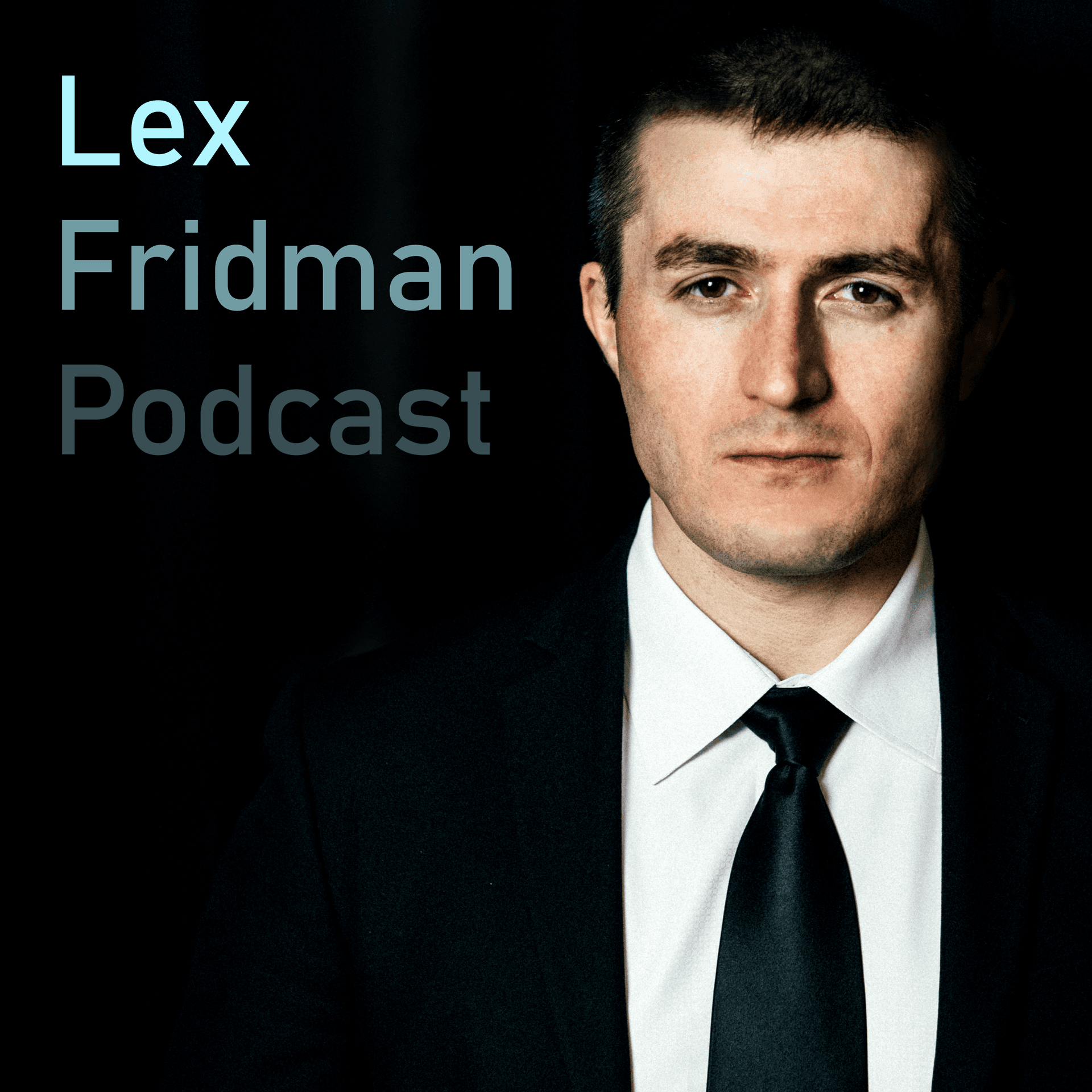
Lex Fridman Podcast Episode #482 - Pavel Durov: Telegram, Freedom, Censorship, Money, Power & Human Nature
Summary In this episode of the Lex Fridman Podcast, Lex interviews Pavel Durov, the founder and CEO of Telegram. The conversation delves into themes of freedom, censorship, personal discipline, and the intricacies of running a tech company. Pavel shares insights on his ascetic lifestyle, the philosophy behind Telegram's development, and the challenges he faces from governmental pressures. He emphasizes the importance of user privacy and freedom of speech while discussing the technical aspects of Telegram's architecture and its role in modern society.
Key Concepts and Discussions
Introduction
- Pavel Durov introduces himself as the founder of Telegram and discusses his commitment to free speech and user privacy.
- Lex highlights Pavel's disciplined lifestyle, abstaining from alcohol and maintaining a rigorous workout routine.
Philosophy of Freedom
- Freedom vs. Fear: Pavel discusses how fear and greed can corrupt the values of freedom. He emphasizes that living fearlessly is essential to upholding one's principles.
- Philosophical Views on Life and Mortality: Pavel contemplates mortality and the importance of living life fully, free from the fear of death.
Personal Discipline
- Pavel shares insights into his disciplined lifestyle, including a strict diet, exercise regime, and avoidance of addictive substances.
- He believes that self-discipline is crucial for maintaining clarity of mind and achieving success.
Telegram's Development
- Lean Philosophy: Telegram operates with a small engineering team, focusing on innovation and efficiency rather than sheer numbers.
- User Privacy and Encryption: Pavel explains Telegram's approach to user data, emphasizing that no private messages have ever been shared with governments or third parties.
- Technical Innovations: Telegram has introduced many features ahead of its competitors, including unique messaging and chat functionalities.
Government Pressure and Censorship
- Pavel recounts his experiences with government pressures in Russia and Iran, highlighting the importance of resisting censorship.
- Legal Battles: He describes the Kafkaesque nature of his legal troubles in France, where he faced arrest for his work with Telegram.
Financial Aspects of Telegram
- Profitability: Pavel discusses Telegram's journey to becoming profitable without relying on invasive advertising practices.
- Subscription Model: The introduction of premium features and subscriptions has significantly contributed to Telegram's revenue.
The Role of AI and Technology
- Pavel shares his thoughts on the potential of AI and cryptocurrency, particularly in the context of freedom and user autonomy.
- He discusses the development of TON (Telegram Open Network) and its importance for the future of cryptocurrency and digital identity.
Personal Reflections
- Pavel reflects on his upbringing and early education, emphasizing the importance of competition and personal motivation.
- He shares personal anecdotes about his family, particularly the influence of his father on his values and philosophy.
Conclusion
- Lex and Pavel conclude the podcast by reflecting on the significance of freedom, the human spirit, and the pursuit of knowledge and innovation.
Timestamps
- 00:00 - Introduction
- 02:46 - Sponsors, Comments, and Reflections
- 11:29 - Philosophy of Freedom
- 14:37 - No Alcohol
- 22:42 - No Phone
- 28:38 - Discipline
- 49:50 - Telegram: Lean Philosophy, Privacy, and Geopolitics
- 1:05:12 - Arrest in France
- 1:21:23 - Romanian Elections
- 1:32:18 - Power and Corruption
- 1:41:50 - Intense Education
- 1:53:51 - Nikolai Durov
- 1:58:19 - Programming and Video Games
- 2:02:33 - VK Origins & Engineering
- 2:19:46 - Hiring a Great Team
- 2:29:02 - Telegram Engineering & Design
- 2:48:04 - Encryption
- 2:53:01 - Open Source
- 2:57:48 - Edward Snowden
- 3:00:20 - Intelligence Agencies
- 3:01:32 - Iran and Russia Government Pressure
- 3:04:41 - Apple
- 3:11:38 - Poisoning
- 3:43:53 - Money
- 3:52:45 - TON
- 4:02:35 - Bitcoin
- 4:05:34 - Two Chairs Dilemma
- 4:12:14 - Children
- 4:23:24 - Father
- 4:27:55 - Quantum Immortality
- 4:34:27 - Kafka
Key Takeaways
- Resilience Against Censorship: Pavel's commitment to free speech and user privacy drives his efforts to innovate within Telegram, despite pressures from governments.
- The Importance of Discipline: A disciplined lifestyle has helped Pavel maintain focus and clarity amidst the challenges of running a tech company.
- Innovation and User-Centric Design: Telegram's success stems from its approach to user privacy and continuous innovation in messaging technologies.
- Philosophical Reflections on Freedom: The conversation explores deeper philosophical themes about the nature of freedom, the role of technology, and the value of human connection.
Final Thoughts Pavel Durov's journey with Telegram is a compelling story of innovation, resilience, and the fight for freedom of expression. His disciplined approach to life and leadership serves as an inspiration for those navigating the complexities of modern technology and governance.
Written by AI. May contain mistakes. Listen to the episode to check what was said.
Transcript
Automatic transcript. May contain errors.0:00The following is a conversation with Pavel Durov, founder and CEO of Telegram, a messaging platform actively used by over 1 billion people. Pavel has spent his life fighting for freedom of speech, building tools that protect human communication from surveillance and censorship. For this, he has faced pressure from some of the most powerful governments and organizations on earth. In the face of this immense pressure, he has always held his ground, continuously fighting to protect user privacy and the freedom of all of us humans to communicate with each other. I got the chance to spend a few weeks with him and can definitively say that he's one of the most principled and fearless humans I've ever met.
0:46Plus, when I posted that I'm hanging out with Pavel, a lot of people, fans of his, wrote to me asking if he does, in fact, privately live the disciplined, ascetic life he's known for. No alcohol, stoic mindset, strict diet and exercise, including a crazy amount of daily pull-ups and push-ups, no phone except to occasionally test telegram features, and so on. Yes, he is 100 % that guy, which made the experience of hanging out with him really inspiring to me. I'm grateful for it, and I'm grateful to now be able to call him a friend. This podcast conversation is in parts philosophical about freedom, life, human nature, and the nature of government bureaucracies.
1:32And it is also in parts super technical, because to me, it is fascinating that Telegram has a relatively small engineering team, and yet is able to basically out-innovate all of its competitors with an insane rate of introducing new, unique features. Just like the meme of the Simpsons did it first, when you consider all the features we know and love in our communication apps, in almost every case, Telegram did it first. So we discuss it all, from the Kafkaesque situation he's in the midst of in France, to the rollercoaster of his life and career, to his philosophy on technology, freedom, and the human condition.
2:15And, by the way, while this entire conversation is in English, we make captions and voiceover audio tracks available in multiple languages, including Russian, Ukrainian, French, and Hindi. If this is of interest to you, you will need to head over to the Lex Friedman channel on YouTube, where you can switch between language audio tracks by clicking the settings gear icon, then clicking audio track, and then selecting the language you prefer. Here, we only provide the original English version. And now, a quick few second mention of each sponsor. Check them out in the description or at lexfriedman.com slash sponsors.
2:53It is, in fact, the best way to support this podcast. We got Miro for team collaboration, Masterclass for learning, Uplift Desk for my favorite office desks, Finn for customer service AI agents, Element for electrolytes, and Shopify for selling stuff online. Choose wisely, my friends. And now, on to the full ad reads. I do try to make them interesting, but if you skip, please still check out our sponsors. I enjoy their stuff. Maybe you will too. To get in touch with me, for whatever reason, go to lexfriedman.com slash contact. All right, let's go. This episode is brought to you by a new sponsor, Miro.
3:38It's an online collaborative whiteboard platform. You know, like for brainstorming ideas together with your team, except on the interwebs. They have this space called the Innovation Workspace that blends AI and humans, human creativity, to develop ideas. So this is for multiple people. So it enables teams to brainstorm, prototype, and iterate fast on the ideas. I think a really big part of a successful team is being able to brainstorm. Each individual person in a self-motivated way is coming up with ideas. But then those ideas are put into the same kind of system where they can be integrated. And the tension between those ideas can develop even better ideas.
4:25And so you go and go and go and constantly improve. So I think Miro is a really nice platform for that brainstorming process. Help your teams develop great ideas into results with Miro. Go to Miro.com to find out how. That's M-I-R-O dot com. This episode is also brought to you by Masterclass. And they're a new class called the Power Playbook, How to Win at Work. It's actually a masterclass by a super strong and popular professor from Stanford, Jeff Pfeffer. He has a lot of excellent lectures and books that study power. And this masterclass is a sort of an applied study of power. It provides a playbook that breaks down the rules of power and teaches you ways how they can be applied in the workplace.
5:17It's like the Game of Thrones, but in the 21st century capitalist system. There you go. It's a basic communication, body language, all that kind of stuff, how to position yourself so that you get a promotion, figuring out how to be influential. I started listening to this Masterclass and it's excellent. I highly recommend. It's called The Power Playbook, How to Win at Work. And it became available on August 21st, so you should be able to get it now. And you can get an additional 15 % off any annual membership at masterclass.com slash lex. That's 15 % off at masterclass.com slash lex. This episode is brought to you by Uplift Desk, the very desk I'm behind right now.
6:00And I have many, many more of them in this whole place. And I have several of them in the podcast room. In fact, four. And in that very room that you can see on camera, those desks have brought me a lot of happiness, both in the standing desk position and in the sitting position. I mean, it's just really, really excellent product, really excellent company. Brings a smile to my face every time I think about them. They have never disappointed in their customer service, in the large selection of products that they provide. There's like some ridiculously insane number of possible desk combination you could choose from.
6:41The look, the size, all the different characteristics you can pick. I've been a fan for a long, long time, long before they were a sponsor. And when they became a sponsor. That's like a dream come true. So please go support them so they continue being a sponsor because it's really cool when a product over the top definitively has made me happy for many years and they also are a sponsor. Go to uplifteddesk.com slash lex and use code lex to get four free accessories, free same-day shipping, free returns, a 15-year warranty, and an extra discount off your entire order. That's U-P-L-I-F-T-D-E-S-K.com slash Lex.
7:24This episode is also brought to you by Finn, a world-class, popular, excellent performing AI agent for customer service. 65 % average resolution rate, trusted by over 5 ,000 customer service leaders, including some AI companies, including Anthropic. By the way, Anthropic has been killing it recently. But anyway, the fact that they trust FIN shows that these guys are legit. Their FIN AI engine is continuously improving, which easily allows you to do the analyze, train, test, and deploy loop continuously over and over and over and over while it improves and gets better and adjusts your particular context and a particular set of customers and everything is always getting smarter, hopefully leading to happier customers.
8:11It's built to handle complex, multi-step queries like returns, exchanges, disputes, delivering high-quality personalized answers. Anyway, go to fin.ai.lex to learn more about transforming your customer service and scaling your support team. That's fin.ai.lex. This episode is also brought to you by Element, my daily zero-sugar and delicious electrolyte mix that brings me a lot of joy. I drink it in the morning, I drink it in the afternoon, I drink it in the evening, sipping on it right now, I started doing a thing that makes my life significantly in a small way, but it feels big, better when I go to hard training sessions that go for, you know, 90 minutes to two hours on the mat jiu-jitsu, you know, round after round after round.
8:59For a long time, I usually prefer not to have much water just so I can focus on the training. You know, every once in a while, I'll go to the water fountain, that kind of stuff. But bringing a cold bottle of water with a packet of watermelon salt element in it, it's just that little break of sipping on this drink that I've come to associate with home, and it's a little bit cold in the Texas heat. I don't know, it's just such a cool feeling. It's a good feeling. It makes me feel happy. You get a free eight-count sample pack for free with any purchase. if you try it at drinkelement.com slash lex.
9:42And finally, this episode is brought to you by Shopify, a platform designed for anyone to sell anywhere with a great looking online store. I built one in minutes at lexrumor.com slash store and have a few shirts on there. They're constantly upgrading every aspect of Shopify. It's kind of incredible. Now, I heard that they've upgraded fulfillment. So everything to ship stuff, If you're selling stuff online, you got to ship it most of the time. And all of that is now built into Shopify. We already know that you can sell stuff online with Shopify. But again, the thing I'm going to keep talking about, which makes it incredible, is that Shopify is this super scalable cloud infrastructure.
10:27Originally, in large part, built on Ruby on Rails. and huge brands use Shopify Plus for enterprise grade scale. I'm also reading here that Shopify can support headless commerce. So you can use Shopify just on the back end and then do your own front end completely using React, Vue, and Next.js. What do you know? Sign up for a$1 per month trial period at shopify.com slash lex. That's all lowercase. Go to shopify.com slash lex to take your business to the next level. today. This is the Lex Friedman Podcast. To support it, please check out our sponsors in the description. And now, dear friends, here's Pavel Durov.
11:29you've been an advocate for freedom for many years writing that you should be ready to risk everything for freedom what were some influences and insights that help you arrive at this value of human freedom? I get to experience the difference between a society with freedom and a society without freedom pretty early in life. I was four years old when my family moved from the Soviet Union to northern Italy, and I could see that a society without freedom cannot enjoy the abundance of opinions, of ideas, of goods and services, even for a four or five year old kid it was obvious like you can't experience all the toys the ice cream of sorts the cartoons in the soviet union that you can access in italy and then i got to realize something even more important you don't get to contribute to this abundance without freedom and at this point it was pretty obvious to me you also wrote Свобода важнее денег translates to freedom matters more than money.
12:41How do you prevent these values for freedom being corrupted by money, by people with influence, by people with power? Well, the biggest enemies of freedom are fear and greed. So you make sure that they don't stand in your way. If you imagine the worst thing that can happen to you and then make yourself be comfortable with it, There's nothing more left to be afraid of. So you stand your ground, and you remember that it's worth living your life according to the principles that you believe in, even though this life can end up being shorter than a longer life, but lived in slavery. Do you contemplate your mortality?
13:32Anything about your death? Oh, yes. Are you afraid of it? in a way you have to go against your instinct of self-preservation and it's not easy we are all biological beings hard-coded to be afraid of death nobody wants to die but when you approach it rationally you live and then you die there's no such thing as your death in your life you stop experiencing life once you die. So you have to ask yourself this question, is it worth living a life full of fear of death? Or it's much more enjoyable to forget about this and live your life in a way that makes you immune to this fear? At the same time, remembering that death exists so that every day would count.
14:24Yeah, remembering that death exists makes you deeply feel every moment that you do get. That's why I love reminding myself that I can die any day. In many ways, you live a pretty stoic existence. I got a chance to spend a couple of weeks with you. In many ways, you seek to minimize the negative effects of the outside world on your mind. You've written, quote, If you want to reach your full potential and maintain clarity of mind, stay away from addictive substances. My success and health are the result of 20 plus years of complete abstinence from alcohol, tobacco, coffee, pills, and illegal drugs.
15:09Short-term pleasure isn't worth your future. Let's talk about each one of these. Alcohol. What's been your philosophy behind that? That one is quite easy. when I was 11 years old, my biochemistry teacher, he gave me this book he wrote. It was called The Illusion of Paradise. And there he would describe the biological and chemical processes that happen in your body once you consume this or that substance. It was mainly related to illegal drugs, but alcohol was one of these addictive substances that he covered. so it turns out that when you drink alcohol, the thing that happens is that your brain cells become paralyzed.
16:01They become literally zombies. And then next day, sometime after the party is over, some of your brain cells die and never get to normal. So think about this. if your brain is this most valuable tool you have in your journey to success and happiness, why would you destroy this tool for short-term pleasure? This sounds ridiculous. Yeah, in many ways, it's a poison we'll let in our body. But by way of advice, what advice would you give to people who consider not drinking? You know, a lot of people use alcohol to enable them to have a vibrant social life. There's a lot of pressure from society. you know, at a party to drink so you can socialize.
16:50So what advice would you give to them, to people who imagine having a social life without alcohol? Well, first of all, don't be afraid to be contrarian. Set your own rules. Secondly, if you feel you need to drink, there must be some problem you're trying to conceal. There's something that, some fear you're not ready to confront. And you have to address this fear. If there is a good-looking girl you're afraid to approach, get rid of this fear. Approach her. Practice. Do it again and again. It's pretty banal, but this advice works. Fix the underlying problem, which is usually at the very bottom is always going to be fear.
17:38Work on that. and very often people are trying to escape something in their lives with alcohol what is it they're trying to escape what is this problem you have to get to the bottom of it your mind is trying to tell you something valuable and instead of addressing it directly you are flooding it in alcohol, which is sort of a spiritual painkiller, but works only temporarily. And then you have to pay the debt with interest. So what do you do? I mean, you've been in a lot of gatherings, a lot of parties. Is there some challenges to saying no? For me, not at all. I've been always ready to stand my ground and say no when I feel something's not right and it's extraordinary how easily we humans are affected by what we perceive as majority because nobody since ancient times, since million years ago wants to be left out by the tribe we are scared that we won't become accepted anymore, which thousands and millions of years ago meant we're going to starve to death.
19:00So we have to consciously fight this inclination to be agreeable with everything that the majority imposes on you, because it's quite clear that many things that the majority, many activities the majority is engaging in, are not bringing you any good. So that's another fear you have to face, going into a party and the fear of being the outcast at that party, of being different than others at that party, at that social gathering, in the crowd of humans, be different. That's a fear. That's a fear. And it's quite irrational if you think about it. It was something that made a lot of sense 20 ,000 years ago.
19:50it makes zero sense today. Because if you think about it, if you do the same thing everybody else around you is doing, you don't have any competitive advantage. And you don't get to become outstanding at some point in your life. Yeah, that's one of the things we talked about sort of by way of advice is if you want to be successful in life, you want to be different. Differently. And perhaps, I think you said, you want to achieve mastery at a niche. So find the niche at which you can pursue with all your effort and achieve mastery. And the niche being different than anything that anybody else is doing.
20:34Can you explain that a little bit more? So obviously in order to contribute to the society you're in, to the economy of the country you live in, you have to do something that is valuable. but if you're doing something that everybody else is doing anyway what's the value of it now it sounds easier than it is done to do something that nobody else is doing because we humans are surrounded by all kinds of information which makes us want to copy what we are perceiving at the same time there are so many areas which you can explore that have nothing to do with the information you receive on the daily basis.
21:18So it's extremely important to curate the information sources that you have so that you wouldn't be somebody who is left to the will of AI-based algorithmic feed telling you what's important so that you end up consuming the same information, the same stuff, the same memes, the same news as everybody else. But rather, you should be proactive. You should deliberately try to set a goal, an area that you want to explore, and then actively search information that is relevant to this field, so that one day you can become the world's number one expert in this field. And it's not that difficult to do that.
22:16You have to just remain consistent. Because nobody else is trying to do that. Everybody else is just reading the same news and discussing the same news every day. But this way they don't get to have a competitive advantage. Yeah, majority of the population becomes slaves to the AI recommender systems. AI-driven recommender systems. And so the content, everybody's fed is the same thing and we all become the same. On that point, one of the different things you do is you don't use a phone, except occasionally to test Telegram features. But I've been with you for two weeks. I haven't seen you use a phone at all in the way that most people use a phone, like for their social media.
22:58So can you describe your philosophy behind that? I don't think a phone is a necessary device. I remember growing up, I didn't have a mobile phone. when I was a student at the university I didn't have a mobile phone when I finally got to use a mobile phone I never used phone calls I was always in airplane mode or mute I hated the idea of being disturbed
23:29my philosophy here is pretty simple I want to define what is important in my life. I don't want other people or companies, all kinds of organizations telling me what is important today and what I should be thinking about. Just set up your own agenda. And the phone gets in your way. It provides distractions. distractions it guides what you should be looking at what you will be looking at so you don't want that you want to quiet the mind you want to choose what kind of stuff you let inside your mind yes because this way i can contribute to the progress of society or at least i like to think this way and this makes me happier how often do you find quiet time to just think and focus deeply on work without any distractions.
24:31You mentioned to me that you value quiet mornings. Yes. So the thing I'm trying to do, I try to allocate as much time as possible for sleep. Now, even if I allocate, say, 11 or 12 hours for sleep, I won't sleep for 11 or 12 hours. So what I end up doing is I end up lying in bed thinking. And some people hate it. they say you have to take a sleeping pill but i never take pills i love these moments i get so many brilliant ideas or at least they seem brilliant to me at the moment while i'm lying in bed either late in the evening or early in the morning that's my favorite time of the day sometimes i go i wake up i go take a shower still without the phone beautiful ideas can come to you while you're doing your morning exercise, your morning routine, without a phone.
25:33If you open your phone first thing in the morning, what you end up being is a creature that is told what to think about for the rest of the day. Same is true in a way if you've been consuming news from social media late at night. But then how do you define what is important and what you really want to become in life? Now, I'm not saying you have to completely stay away from all sources of information, but take some time to think about what's really important for you and what you want to change in this world. So you definitely try to avoid digital devices for as many hours as possible in the morning just to have the quiet thinking time plus the crazy amounts of push-ups i know it's kind of kind of counterintuitive because i founded one of the largest social networks in the world after which i founded the second largest messaging app in the world and you're supposed to be really connected but the conclusion you reach very early is that the more connected and accessible you are, the less productive you are.
26:50And then how can you run this thing if you're constantly barbarded by all kinds of information, most of which is irrelevant to the success of what you're trying to build? You know, the entire world can be fascinated by a fight, the quarrel between the world's richest man and the world's most powerful man. But for the vast majority of these people following this saga, it's irrelevant. It won't change their lives. And in any case, they can't affect it. So it's a bit pointless. Of course, there are people who are engaging in activities that require them to be up to date of everything that's going on.
27:38but 99 % of people aren't. Yeah, the internet, social media presents to us drama in such a way that we think it's the biggest thing in the world, the most important thing on which the tides of history will turn. But in reality, most things will not turn the tides of history. And so I guess our challenge is to figure out what is the timeless thing. What is the thing that's happening today is still going to be true in 10, 20 years. And from that, decide what you're going to do. And that's very difficult on social media because everybody's outraged. The news of the day, whatever the quarrel is, that's the thing that's, everyone thinks the world will end because of this thing.
28:23And then another thing happens the next day. And they're trying to influence your emotions. Yeah. That's how you get into trouble because you can be forced to make conclusions that are not in your best interest. I've seen you be, once again, quite stoic about your emotions. You ever get angry? You ever get lonely? You ever get sad? The roller coaster of human emotion. And when you do that, when you make difficult decisions? I'm a human being like everybody else. I do get to experience emotions. Some of them are not very pleasant. but I believe that it's the responsibility of every one of us to cope with these emotions and to learn to work through them self-discipline is particularly important because without it how can you overcome this seemingly endless loop of negativity or despair that ultimately leads to depression for some people.
29:30I normally never have depression. I don't remember having depression in the last 20 years at least, maybe when I was a teenager. But one of the reasons for that is I start doing things. I identify the problem. I can see a solution, and I start executing the strategy. If you are stuck in this loop of being worried about something, nothing's ever going to change. And people often make this mistake thinking, oh, I should just have some rest and then regain energy. This is not how it works. You gain energy by doing something. So you start doing something, then it happens. You feel motivated. You feel inspired.
30:25and then ultimately you do something else a little bit more a little bit more and in a few years who know you may end up achieving great things yeah that's the thing that people really confuse if if you're stuck in a depressive cycle even when you really really really really don't want to do anything to do something try try to make progress because the good feeling comes in the end of that. The whole point is to do first and then feel, not feel and then do. Exactly. And going to the gym is a good example. There are many days when you don't want to start working out, but you have to overcome this initial reluctance.
31:07And then you get to a point that you enjoy it and you think, oh my God, it was such a good idea to come to the gym today. but it's similar to pretty much every activity you get to write some code write a small piece of code first and then you get inspired then you'll come up with more ideas you need to write a novel or just write a paragraph this is pretty obvious and it's not a secret but because we are bombarded with all kinds of information that is not really important for us in terms of becoming successful, we often forget the important things. And this is one of them. We've been working out every single day.
31:57You have been working out for many years pretty intensively. So I think a lot of people would love to know what's your perfect daily workout regimen. Let's say on a daily, on a weekly basis. I do 300 push-ups and 300 squats every morning. And in addition to that, I go to the gym normally five, six times a week, spending between one and two hours every day. So push-ups and squats are still a big part of your routine. Yes, this is how I start my day. I'm not sure they do a lot in terms of changing your body, but they're definitely a good way to practice self-discipline. Because you don't want to do these push-ups in the morning most of the days.
32:46Squats are particularly boring. They're not that hard. They're just boring. But you overcome it. And then it's much easier to start doing other things related to your work, for example. When I can, I also take a nice bath. Because it's another exercise of self-discipline. I think the main muscle you can exercise is this muscle, the muscle of self-discipline. Not your biceps or your pecs or anything else. Because if you get to train that one, everything else just comes by itself. Everything else becomes easy. We should mention, I went with you to Banya, and I think it's fair to say you're nuts.
Read the full transcript
33:40in terms of how much you can handle. And I didn't even see the worst of it. Can you just speak to your crazy escapades in the banya, what value you get from it? So both the heat and the cold. I don't know if it's crazy. I think it's quite natural and normal by this time. But maybe I could just get used to it. So banya is this extreme kind of sauna practiced by Eastern Europeans. Yeah. But it is done in a way that maximizes heat. And they also use all kinds of herbs and branches. And it's a much more holistic and natural experience. Then a necessary part of it is you get the cold plunge. And then you go back.
34:33And again, this is one of those things that Maybe in the moment Is not always that pleasant Particularly if you go to extreme temperatures You don't feel great I don't always feel great But this feeling is passing It's only a few minutes Same with the ice bath You have to suffer a bit And then you get to feel great For hours and days after what's more it gives you this long-term health benefits in a way you can look at it as alcohol in reverse alcohol will give you this short fleeting pleasure for an hour for a couple of hours but then you will be paying for it with long-term negative consequences I'd rather do Bania and ice bathing We swam the length of a large lake in France a couple times Can you talk through why you value these multi-hour swims?
35:39I left swimming for hours The longest I swam was five and a half hours in Finland It was quite cold I got lost in the process Barely could find my way back But the reason I do it, yes, you feel great after. You're shaking a little bit. You feel great after. You cross a huge lake, and I cross many lakes. Geneva Lake, Zurich Lake. And every time you feel this achievement, which makes you happy, makes you feel strong, and then you're more ready to other challenges. and of course when you know you're going to start a journey that will last a few hours you're reluctant to do it but you swim for 10 minutes and then for 20 minutes and then for 30 minutes and it teaches you this incredible patience that I think is necessary if you want to achieve anything in life and it's pretty meditative lake versus ocean Yes, and you don't have to go too fast.
36:52You can be slow and enjoy the moment. Until you get lost in those five and a half hours. Did you panic if you're going to be able to find the shore, find your way out? Not really. I'm a reasonably stress-resilient person. I didn't panic at that moment. And there were worse swims I had that were shorter, but involved accidents and about some of them. So that wasn't the worst by far. but an important thing about swimming and physical activity in general is that it makes your mind clear and your thinking process is becoming more efficient because at the end of the day the efficiency of our brain is limited by how much sugar and oxygen our heart can push through blood to our brain how can you make this go faster or how do you make your lungs more efficient how do you make your heart more efficient in doing that physical activity is the only way I know of so it's not just staying healthy or trying to look good it's also
38:11being productive. It's also being stress resilient. All of these qualities are necessary if you want to run a large company, if you want to start a company. I'm surprised when I started doing this more than 10 years ago that more CEOs didn't engage in sports. the situation changed in the last several years which is great because back in the day if you take 20 years ago there was the stereotype that if you're strong you must be not very smart and vice versa which is a complete lunacy very often these two things go together so for you working on it's not just about staying healthy it's actually valuable for the work that you do as a tech leader, as an engineer, as a technologist?
39:04Oh, yes. When I can't train, I can instantly feel that stress is creeping on me. Yeah. So even in situations where I'm constrained, I can't go to gym. I just keep doing push-ups. I just keep doing squats. Yeah. I mean, that's the cool thing about... Body weight exercise, you can just do it anywhere. You can just pop all 50, 100 push-ups before meeting. Don't you feel weird when you have a day without physical activity? Yeah. If I go a day without doing push-ups at the very minimum, that's a shitty day. And if you can do pull-ups, it's even better. Yeah. I got to ask you about your diet too. No processed sugar, no fast food, no soda.
39:57intermittent fasting sometimes once a day only, sometimes a couple times a day. So take me through your philosophy on the no sugar, no soda, just clean food. Well, sugar is pretty easy because it's addictive. The more you consume sugar, the more you want it, the hungrier you get. So if you want to stay efficient and healthy, why consume processed sugar? you'll just end up snacking all the time intermittent fasting so saying eating only within six hours and not eating for 18 hours every day also brings structure into your day and into your eating habits so you don't crave sugar anymore because you know if you eat sugar and then you're unable to snack, you're just punishing yourself.
40:59I read a few books on longevity. I think something everybody agrees on is that sugar is harmful. No, I'm not militant about sugar. You can eat berries, fruit, if you feel your body needs it, but it's not true to think it's necessary to consume sweet things not for children not for adults red meat i stopped eating it about 20 years ago because i just felt heavy every time i had it so i guess it's individual it's my metabolism my digestive system isn't agreeing with this kind of food. So I normally eat seafood of all kinds and vegetables. This is the basic source of calories for me. Yeah, and like all things, you said short-term pleasure isn't worth your future.
42:04So a lot of things we all know, that alcohol is destructive to the body. Tobacco, pills, processed food, sugar, But society puts that on you, makes it very difficult to avoid. So I guess it all boils down to discipline. Yes, and trying to identify the real cause of an issue you're experiencing. If you're experiencing a headache, one solution would be to take a pill and then the headache disappears. What this pill would actually do in most cases, it would mute the consequence. Your feeling of pain. It's a painkiller. It will not eliminate the root cause. So you have to ask yourself, what is it that is causing this headache?
42:55Do I need to drink some water? Is the air quality here bad? Do I need to start getting more sleep? Is there something wrong with people around me? They're stressing me out. There must be some reason why you're experiencing a headache. But if you take a pill, you're not removing this reason. You're actually making it worse. Because this harmful factor is still there. It's like you're piloting a helicopter. And there's some red signal, some red lamp starts to blink and it starts producing bad, unpleasant noise. What would you do? You would try to figure out the cause and eliminate it. Maybe there is some bounty next to you and you have to avoid it.
43:45Or you take a hammer and smash the signal. I think the answer is quite obvious. So why are we constantly doing this regardless? Oh, because everybody else is doing it. Because there's a whole industry trying to persuade you that this is the right thing to do. so it's incredibly important to analyze yourself and try to get to the bottom of things so you generally try to avoid all pills all pharmaceutical products yes i've been staying away from all of that since i became an adult when you're a teenager your mom would typically say we need to take this pill otherwise you know the world collapses um yeah once i became a grown-up i said no i don't think that the producers of pill are incentivized in the right way they are not really interested in eliminating the root of the problem they would rather have me depend dependent on the pills they're producing so that I could buy them forever.
44:56And then I also realized, no, I'm not saying that you should never take pills. There are obviously some diseases that you can only fight with antibiotics, for example. So I'm not suggesting we go back to the Middle Ages. But what I'm saying is we overuse pills. Yeah, it's always good to study and deeply understand the incentives under which the world operates so that you don't get swept up into the forces that operate under these incentives. And big pharma is certainly one of them. Pharmaceutical companies have a huge incentive to keep the problem going versus solving the problem. It's wise. This is something I practice every day.
45:44I read some piece of news and I ask myself, who benefits from me reading this? Then you can end up coming to this conclusion that maybe 95 % of things we read in the news have been written and published because somebody wanted you to buy some product, support some political cause, fight some war, donate some money. let's do something that would benefit other people and this is not a problem to support causes that you truly believe in as long as it was your intentional choice and you're not being manipulated into fighting other people's wars and that takes us back to the original thing we started talking about which is freedom one of the ways to achieve freedom of thought is to remove your mind from the influences, the forces that manipulate you.
46:50That's really important to realize. The content you consume, especially on the internet, when a large percentage of it is designed to manipulate your mind, you have to disconnect yourself. Be very proactive understanding what the biases, what the incentives are, so you can think clearly, independently, and objectively. And again, it ties back with restraint from alcohol. Because if your mind is clouded, how can you analyze yourself? You'll always be dependent on opinions of others. You always follow the mainstream. And then whatever the authorities or whoever in charge will tell you, you'll believe it.
47:41Because you don't have a tool of your own to rely on to come to your own conclusions i have to ask you this this is something that came up you don't watch porn i don't think i've heard you talk about this before what's the philosophy behind not watching porn you know there's a lot of people that talk about uh porn in general having a very negative effect on young men on their view of the world on their development of their sexuality and how they get into relationships and all that kind of stuff so what's your philosophy in not consuming porn i don't watch porn because i just feel it's a substitute for a real thing that is not necessary in my life if anything it just forces you to exchange some energy, some inspiration to a fleeting moment of pleasure.
48:42It doesn't make sense. And in any case, as I said, it's not the real thing. So as long as you can access the real thing, you don't need to watch porn. But then if you can't access the real thing, You shouldn't watch porn as well Because it means there's some deficiency in your life Some problem that you have to overcome Yeah, analyze the underlying cause And again, this goes back to the theme of investing in a long-term flourishing Versus short-term pleasure There's a theme to the way you approach life I try to be strategic I try to act under assumption that I'm not going to die in one hour from now and I'm going to stick around for a bit despite the fact that we are all mortal.
49:37So why would I exchange the mid and long term for the short term? It doesn't make any sense. Quick pause, bathroom break. Yeah, let's take a break. All right, we took a break and now we're back. I got to ask you about Telegram, the company. I got to meet some of the brilliant engineers that work there. Telegram runs lean relative to other technology companies that achieve the skill that Telegram does. It has very few employees. So how many people are on the core team? Let's say the core engineering team. The core engineering team is about 40 people. this includes back-end front-end designers system administrators can you speak to the philosophy behind running a company with so few employees well what we realized really early is that quantity of employees doesn't translate to quality of the product they produce in many cases is the opposite.
50:45If you have too many people, they have to coordinate their efforts, constantly communicate, and 90 % of their time will be spent on coordinating the small pieces of work they're responsible for between each other. The other problem with having too many employees is that some of them won't get enough work to do. and if they don't get enough work to do they demotivate everybody else by their mere existence they're still there they're still getting the salary but they don't do anything and if they don't do anything more often than not they will start trying to find their purpose elsewhere maybe inside your team but not by doing productive work but by finding problems that don't exist within the team.
51:44And that can disrupt the team and the mood inside it even further. Also, when you intentionally don't allow some of your team members to hire more people to help them, they will be forced to automate things. In our case, we have tens of thousands of servers around the world, almost 100 ,000 distributed across several continents and data centers. If you try to manage this system manually, without automation, you will probably end up hiring thousands of people, tens of thousands of people. But if you rely on algorithms and the team is forced to put together algorithms in order to manage it, then it becomes much more scalable, much more efficient, and interestingly, much more reliable as well.
52:52And more resilient to the changing geopolitics, to the changing technology, all of that. Because if you automate the distributed aspect of the data storage and all the compute, then that's going to be resilient to everything the world throws at you. I suppose if you have people managing all of it, it becomes stale quickly. Yes, humans are attack factors. and if you have a distributed system that runs itself automatically you have a chance at increasing the security of speed and speed of your service this is what we did with telegram while also making it much more reliable because if some part of the network goes down you can still switch to the other parts of it.
53:47Yeah, one of the big ways you protect user privacy is that you store the data. The infrastructure side of Telegram is distributed across many legal jurisdictions with the decryption keys. So it's encrypted in the cloud. The decryption keys are split and kept in different locations so that no single government or entity can access the data. Can you explain the strength of this approach? The way we designed Telegram is we never wanted to have any humans, any employees have any access to private messaging data. That's why since 2012, when we've been trying to come up with this design, we always invested a lot of effort into making sure that nobody can mess with it.
54:48Like if you hire an employee or any of the existing employee, they can't break the system in the way that would allow them to access messages of users. And then, of course, we launched an encrypted messaging that is even more protected, but it has certain limitations, so you still have to rely on an encrypted cloud. So an interesting engineering challenge was how you make sure that no point of failure can be created within your team or outside. So no employee can even access user messages. So that's the thing. You know, we're talking about encryption. We talk about privacy. We talk about security, all these kinds of things.
55:29I think the number one thing that people are concerned about, about which there's also misinformation, is about private messages. so telegram is very very protective of the private messages of users so you're saying employees never can access the private messages have any governments or intelligence agencies ever accessed private user messages in the past no never telegram has never shared a single private message with anyone, including governments and intelligence services. If you try to access any server in any of the data center locations, it's all encrypted. You can extract all the hard drives and analyze it, but you won't get anything.
56:25It's all encrypted in the way that is undecipherable. That was very important for us. That's why we can say with confidence there hasn't been ever a leakage of data, any leak of data from Telegram. Not in terms of private messages. Not in terms of, say, contact lists. Do you see in the future a possible scenario where you might share user private messages with governments or with intelligence agencies? No. We design a system in a way that's impossible. It would require us to change the system, and we won't do that because we made a promise to our users. We would rather shut Telegram down in a certain country than do that.
57:18So that's like one of the principles you operate under, is you're going to protect user privacy. I think it's fundamental. Without the right to privacy, people can't feel fully free and protected. I mean, this is a good place to ask. I'm sure you're pressured by all kinds of people, all kinds of organizations to share private data. Where do you find the strength and the fearlessness to say no to everybody, including powerful intelligence agencies, including powerful governments, influential, powerful people? I guess part of it is just me being me I stood up for myself and for my values since I was a little kid I always had issues with my teachers because I would point out their mistakes during classes and at the end of the day what's important is to remind yourself that you have nothing to lose they can think they blackmail you with something they can threaten you with something, but what is it they really can do to you?
58:30Like, worst case, they can kill you. But that brings us back to the first part of our discussion. There's no point living your life in fear. As for Telegram, it's incredibly successful, but if we lose one market or two markets or pretty much all of the markets, I don't care that much. It won't affect me. It won't affect my lifestyle in any way. I will still be doing my push-ups, you know? So you don't like encryption. You don't like privacy. You think you should ban encryption in your country, like the European Union is trying to do now for all the member states. Well, go ahead and do that. We'll just quit this market.
59:20We won't operate there. It's not that important. They all think that somehow we profit from their citizens. And the only goal tech companies have is extracting revenues. And it's true. Most tech companies are like this. But there are projects like Telegram, which are a bit different. And I'm not sure they realize that. So for you, the value of maintaining your integrity in relation to your principles is more important than anything else. And of course, we should say that you also have full ability and control to do just that because you, Pavel Durov, own 100 % of Telegram. So there's no other anybody with a say on this question.
1:00:09There are no shareholders, which is quite unique. Very unique. I don't think there's anything even close to that in any major tech company. And this allows us to operate the way we operate. To build this project and maintain it based on certain fundamental principles. Which, by the way, I think everybody believes in. I think the right to privacy is included in the constitution of most countries, at least most Western countries. but it's still under attack almost every week. And it often starts with well-meaning proposals. Oh, we have to fight crime. We have to do that. We have to protect the children.
1:00:57But at the end of the day, the result is the same. People lose their right to such fundamental thing as privacy. They sometimes lose their right to express themselves, to assemble. and this is a slippery slope that we witnessed in pretty much every autocratic country or country that used to be free and then became autocratic no dictator in the world ever said let's just strip you away from your rights because i want more power to myself and i want you to be miserable They all justified it with very reasonable-sounding justifications. And then it came in stages, gradually. And after a few years, people would find themselves in a position when they're helpless.
1:01:48They can't protest. Every message they send is monitored. They can't assemble. It's over. So you see Telegram is a place that people from all walks of life, from every nation, can have a place to speak their mind, to have a voice. In the context, in the geopolitical context, you're mentioning that governments, when they become autocratic, naturally, it's the way of the world, human nature, and the nature of governments, they become more censorious. They begin to censor. I know it's justifying it in their minds, perhaps assuming that they're doing good. perhaps some of them assume they're doing good but interestingly it always results in the state accumulating more power at the expense of the individual and then where does it stop?
1:02:48you know, we humans are not very good at finding the right balance and in this case, the right balance between chaos and order between freedom and structure. We tend to go to extremes. I think you still consider yourself a libertarian. There is something about government that always, over time, naturally, builds a larger and larger bureaucracy. And in that machine of bureaucracy, it accumulates more and more power. And it's not always that one individual member of that bureaucracy is the one that corrupts the initial principles on which the government was founded. But just something over time you forget.
1:03:36You begin to censor. You begin to limit the freedoms of the individual, the ability of the individuals to speak, to have a voice, to vote. It just gradually happens that way. And the government is not some abstract notion the government consists of people and these people have goals they would naturally be inclined to increase their level of influence to have more subordinates to have more resources and that's how you end up in an endless loop of ever increasing taxes, ever increasing regulation, which ultimately just suffocates free market, free enterprise, and free speech. So you do want to have very, very strict limitations on the extent the government can increase its powers at the expense of citizens.
1:04:41Ironically, you don't have those limitations. You're supposed in all countries, which are considered to be free. It's supposed to be the constitution that protects everybody. But interestingly, it doesn't work always this way. They are able to find very tricky phrasings in order to cover out exceptions. And then the exception becomes the rule. On this topic, I'd love to talk to you about the recent saga of you being arrested in August of last year in France. I think I should say that it's one of the worst overreaches of power I've seen as applied to a tech leader in recent history, in all history.
1:05:34so it's tragic but I think speaks to the thing that we've been talking about so maybe can you tell the full saga what happened you arrive in France I arrived in France last year in August just for a short two day trip and then I see a dozen of armed policemen greeting me and ask me to follow them They read me a list of something like 15 serious crimes that I'm accused of, which was mind-boggling. At first I thought, there must be some mistake. Then I realized they're being serious, and they're accusing me of all possible crimes that the users of Telegram have allegedly committed, or some users.
1:06:35and they think i should be responsible for this which again like you said it's nothing it's something that never happened in the history of this planet no country not even an authoritarian one did that to any tech leader at least at this scale there are good reasons for that because you're sacrificing a big part of your economic growth by sending these kind of messages to the business and tech community. So they put me in a police car and I found myself in police custody. A small room, no windows.
1:07:29just a narrow bed made of concrete I spent almost four days there in the process I had to answer some questions of the policemen they were interested in how Telegram operates most of it is public anyway and i was struck by very limited understanding or should i say even lack of understanding on behalf of the people who initiated this investigation against me about how technology works how encryption works, how social media work. I mean, there's something darkly poetic about a tech founder of a platform where a billion people are communicating with each other and you're on concrete, no pillow for days, no windows.
1:08:32It's like a book. I mean, it reminds me, I mean, he's a fan of Franz Kafka and he's written about the absurdity of these kinds of situations. Hence the Kafkaesque stories. There's a story literally about the situation that he wrote, perhaps predicted, called The Trial, where a person is arrested for no reason that anybody can explain and is stuck in the judicial system for a long time. that nobody, fascinatingly in that story, neither the person arrested nor any individual member of the system itself fully understand what is happening. Nobody can truly answer the questions. And eventually the person, spoiler alert, is mentally broken by the whole system, which is what bureaucracy can do in its most absurd form.
1:09:19It breaks the spirit, the human spirit, laden in all of us. that's the negative side of bureaucracy I agree with you on the absurdity of this thing because if this was a good faith attempt to fix an issue there were so many ways to reach out to Telegram to reach out to me personally voice their concerns and solve any alleged problem in a way that is conventional and diplomatic, the way every other country on this planet solves these problems, including with Telegram, and we did it dozens of times. Yeah, you have a nice page showing, this is kind of like details that most people don't really think about, but Telegram is at the forefront of moderating CSAM and terrorist groups.
1:10:21there's a nice page telegram.org slash moderation that shows just the incredible amount of groups and channels that are engaged in terrorist activity and activity that are blocked actively blocked found and blocked by telegram so and a lot of this work like you said because of the automation is done with machine learning just the scale is insane this is stuff that most like noobs like me who are just chatting it up on telegram don't think about but there's just like an immense number of people essentially doing things that violate the law on there and you have to find them immediately and catch it.
1:11:00I guess all platforms have to deal with it and Telegram was doing a great job of dealing with that kind of content and what you're saying is the French government had no idea. Do they even know what machine learning is? It's a concept that is challenging to explain to them, but I think they will learn much more about it by the end of this investigation. That's my hope. In any case, you're right. I mean, if you look at Telegram, we've been fighting harmful content that is publicly distributed on our platform since 10 years ago. Actually, since the time we launched public channels on Telegram. and since something like 8 years ago we had daily transparency reports on how many channels related to child abuse or terrorist propaganda we're taking down daily, every day we've taken, maybe we'd take down hundreds of them, and if you include all kinds of content that we remove, all the accounts, groups, channels, posts, that would amount to millions of pieces of content every week, hundreds of thousands every day.
1:12:27And then somebody would read the newspaper, get enraged because they would read something about child porn, and this is a subject that is very emotionally charged, and start doing something not based on data and logical thinking and laws, but based on emotions driven from inaccurate input. Yeah, I think we should make pretty clear that there's no world, no reason that the French government should have arrested you. But here we are. That's the situation you're in. So to be clear, you have to show up in front of a judge All of this is beautifully absurd. It would be hilarious if it wasn't extremely serious.
1:13:14You have to show up in front of a judge every certain amount of time. And what is that experience like? In France, they have this role of investigative judge. I don't think you have it in many other places in the world. It means I'm not on trial. I'm being investigated. and in france it's not just the police or prosecutor asking me questions it's a judge which in my experience is more like still a prosecutor but it's called a judge and that makes it harder to appeal so if you're limited in say countries where you can travel then to appeal that restriction will take you a lot of time. The investigation itself should have never been started.
1:14:06It's an absurd and harmful way of solving an issue as complicated as regulating social media. It's just the wrong tool. so we objected and appealed the investigation itself we did last year I believe we are still not even given a hearing date for the appeal because the process is painfully slow not just for me but for everybody which made me realize the system may be broken in many levels. You have other entrepreneurs affected by the French test system telling me horror stories about their experiences where businesses got paralyzed by very unnecessary actions of investigative judges that ended up being unjustified and biased.
1:15:24And in the end, you can perhaps solve it when you reach a higher court and you'll get justice, but you'll lose a lot of time and energy in the process. So this is the only thing that is, I hope, different and will be different in this case compared to the story you told from Kafka. I mean, but it does, as Kafka describes, break a lot of people with time. To Wendy Hope, we should say that you were for a long time not allowed to travel out of France. Now you can travel to Dubai. We're now in Dubai. Got to meet many of the people that work at Telegram. Telegram is headquartered in Dubai. but you're not allowed to travel anywhere else when do you think you're coming to Texas to hang out with me over there that's a hard question to answer because it doesn't depend on just my actions I can just say this I am patient I will not let this limitation on my freedom dictate my actions.
1:16:49I will, if anything, double down on defending freedoms because I experienced firsthand what the absence of freedom feels like at least during these four days in police custody or when you're just stuck, unable to communicate with people that are important to you when you don't even know what's going on in the world in relation to you personally. So I have no crystal ball that would tell me the future. I can't say that I am pessimistic. I think we've been able to gradually remove most of the restrictions initially imposed on my freedom last August. If the French government or the French intelligence agency want to have a backdoor or a way to access private user messages, what would you say to them?
1:17:58Is there anything they can do to get access to the private user messages? Nothing. My response would be very clear.
1:18:12But it won't be very polite, so I'm not sure. It's good to say here. It's good to say because you're wearing a tie. Yeah, it's a serious adult gentleman-like program. Yeah, but that is a concern that people have is when you have so much pressure from governments that over time they'll wear you down and you'll give in. And then, of course, other places use that as propaganda to try to attack you. You get attacked by basically every nation. So, it's a difficult medium in which to operate. It's difficult to be you, fighting for freedom, fighting to preserve people's privacy. But is there something you could say to reassure people that you're not going to sacrifice any of the principles that you've just expressed if the French government just keeps wearing you down?
1:19:03I think the French government is losing this battle. This battle is wrong. the more pressure i get the more resilient and defined i become yeah and i think i have proven that in the last several months when there were attempts to use my situation being stuck here in France by approaching me and asking me to do things in other countries, blocking certain channels, changing the way telegram works. And not only I refused, I told the world about it. And I'm going to keep telling the world about every instance. Any government, in this case, in particular the French government, tries to force me to do anything.
1:20:04And I would rather lose everything I have than yield to this pressure. Because if you submit to this pressure and agree with something that is fundamentally wrong and violates the rights of other people as well, you become broken inside. You become a shell of your former self on a deep biological and spiritual level. So I wouldn't do that. There are probably other people in the world that would consider that. But I don't care. Telegram disappears to something people don't understand, including in these intelligence services or governments. I don't care. I'll be fine. If they put me into prison for 20 years, which, let's be clear, it's not something that I think is realistic, but let's just think about it as a hypothetical situation.
1:21:12I would rather starve myself to death and die there, reboot the whole game, than do something stupid. Let me ask you about an example of the thing you're talking about. Tell the saga of Telegram in the Romanian election. So amidst all this, you are still fighting to preserve the freedom of speech. What happened? And what were some of the decisions you had to make? So when I got stuck in France, unable to leave the country for a few months, I was offered to meet the head of state foreign intelligence services through a person I know quite well. He's actually a well-known tech entrepreneur in France, and he's well-connected.
1:22:01And he said, this guy wants to meet you. I said, okay, fine. Let's do that, but I'm not promising anything. I took the meeting, and in this meeting, I was asked to restrict what I see as restriction of freedom of speech in Romania. I don't know if you follow the whole saga with the Romanian elections they had a presidential election last year the results got cancelled now Romania at that point when I had this meeting was preparing for a new presidential election the conservative candidate was not somebody who the French government was supportive of so they asked me whether i would be shutting down or ready to shut down channels on telegram that supported the conservative candidate or protest against the pro-european candidates so they called the guy they liked i said look if there is no violation of the rules of telegram which are quite clear.
1:23:17You can't call to violence. But if it's a peaceful demonstration, if it's a peaceful debate, we can't do this. It would be political censorship. We protected freedom of speech in many countries in the world, including in Asia, in Eastern Europe, in the Middle East. We are not going to start engaging in censorship in Europe. No matter who is asking us. And I was very clear to the guy who was the head of French intelligence. I said, if you think that because I'm stuck here, you can tell me what to do, you're very wrong. I would rather do the opposite every time. And in a way, that's what I did. I had a small debate with him about the morality of this whole thing and then at a certain point just disclosed the content of this entire conversation because I never signed an NDA I don't ever sign NDAs with any people like that I want to be able to tell the world what's going on and that's quite shocking to me that you would have people in the French government trying to get advantage of this situation of course if they had nothing to do with the start of this investigation itself and use it to reach their political geopolitical goals I consider it an attempt to humiliate myself personally and millions of Telegram users collectively.
1:25:15And it's quite strange that the same agency asked us to do certain things in Moldova as well. So even before that, I think it was October last year, or September, I was arrested in Paris in late August. and then again approached to an intermediary and asked would you mind taking down some channels in Moldova because there is an election going on and we're afraid there's going to be some interference with these elections could you please connect with the representatives of the government of Moldova and take care of it We said, we're happy to take a look at it and see if there is content there that is in violation of our rules.
1:26:11And they sent us a list of channels and bots. Some of them were, so it was a very short list, and some of these channels and bots were in violation indeed of our rules. And we took them down, only a few of them. The rest were okay. then they said thank you and sent us another list of dozens of channels, many many channels we looked at these channels, we realized that there is no solid foundation to justify banning them and we refused to do that but interestingly enough the French intelligence services that were asking us to do this in Moldova, let me know through their contact that after Telegram banned the few channels that were in violation of our rules in Moldova, they talked to my judge the investigative judge in this investigation that has been started against me and told the judge good things about me which I found very confusing and in a way shocking because these two matters have nothing in common why would anyone talk to an investigative judge that is trying to find out whether Telegram did a good enough job in removing illegal content in France what does Moldova have to do with it I got very suspicious at that moment remember it happened after we blocked a few channels that violated our rules, but before we refused to block a long list of other channels that were completely fine, which is people expressing political views, which I may not agree with, but it's their right to express them.
1:28:37Not extreme views, not views that call to violence. that wasn't extremely alarming that was a moment when i told myself that there may be more going on here that i initially thought initially i thought yeah some people are confused about how technology works and here after this case in Moldova I get much more suspicious so by the time that head of intelligence services met me to ask about Romania to help them silencing conservative voices in Romania I was already wary of what can be going on next. Yeah, so clearly this was a systematic attempt to pressure you to censor political voices that the French government doesn't agree with.
1:29:48And we should say that you have fought for freedom of speech for left-wing groups and right-wing groups. It really doesn't matter. So it's not you don't have a political affiliation, political ideology that you fight for, you're creating a platform that, as long as they don't call for violence, allows people from all walks of life, from all ideologies to speak their mind. That's the whole point. And it happens to be conservative voices in the remaining election that the French government wanted to censor because currently the French government leads left. But if you flip everything around and the government will be right-wing, you'd be fighting against censorship of left-wing voices.
1:30:32And you have in the past many times. Exactly. Ironically, we received a request from the French police to take down a channel of far-left protesters on Telegram in France. We refused to do that. We looked at the channel, peaceful protesters. It doesn't matter for us whether we're defending the freedom of speech of people leaning right or leaning left. During COVID, we were protecting activists that were organizing the Black Lives Matter events. And the other side, the protesters against lockdowns, we protect everybody as long as they are not crossing the lines and not starting to call to violence or incite damage to public property.
1:31:41It's a fundamental right to assemble. It's interesting that people who haven't had this experience of living in countries that don't have freedoms, don't always realize how dangerous it is to gradually compromise your values, your principles, your freedoms, your rights. Because they don't understand what's at stake. Yeah, these things become a slippery slope. So you've, for many, many years, including currently, have spoken very highly of France. You love French history, French culture. I think this situation, this historic wrong that's been done, is put simply as just a gigantic PR mistake for France.
1:32:44There's no entrepreneur that sees, that aspires to be the next Paul Dourav, to create the next telegram, sees this and wants to operate in France after seeing this. there is no justification for this arrest there's a misapplication of the law all kinds of pressures all kinds of behavior that seems politically motivated all that kind of stuff all the excessive regulation and the bureaucracy a nightmare for entrepreneurs that dream to create something impactful and positive for the world so what do you think needs to be fixed about the French government, the French system and then zooming out because you see similar kinds of things in Europe that could enable entrepreneurs, that could reverse the trend that we seem to be seeing in Europe that is becoming less and less friendly to entrepreneurs.
1:33:36What can be fixed? What should be fixed? I think the European society must decide where they want the ever-increasing public sector to stop increasing. What they think should be the right size of government. Because today, if you take France, for example, which is a beautiful country with a lot of talented people, but public expenses are 58 % of the country's GDP. it's maybe as much or more than in the latest stage of the Soviet Union. So you have this disbalance where you have many more people representing the state as opposed to people trying to bring the country's economy forward by creating great products and great companies.
1:34:47the startup field and my field social media field has been affected by it immensely there was one great startup in this realm in france in the last 10 years it was a location-based social network was eventually sold to snapchat but before it was sold the founder asked me whether he should sell i told him never sell you have a great thing going you have lots of users you have organic traction in many countries and the first of the kind of this kind success story in france but then he sold anyway in a couple weeks and later i met him he's trying to do a new thing now i met him and i asked him like i was trying to understand what went wrong.
1:35:41And one of the things he told me about is that while he was trying to run his company, competing with Facebook, Instagram, Snapchat, having all this pressure from investors, trying to hire the best people and persuade them to go to Paris. And he did a great job, by the way. But while he was trying to do that, he got also attacked by some silly investigation again involving the data protection issues which lasted forever and was gradually sucking blood of his team and his company constant interrogations disclosure requests and you know this is a young company it significantly increases the level of stress and at some point i think the pressure was too much he decided to i'm gonna just sell it eventually turned out that there was no issue the investigation ended as far as i understand with no charges but such investigations they have a price, they have a cost and unless the society realizes the cost of projects of companies, of startups that are never created or are sold to the United States at the very early stage or other countries resulting in decreased economic growth things won't change I think we just talked to a guy a few days ago who left France and started a business here in Dubai.
1:37:39And one of the reasons he had to leave France is that the government started an investigation on his company, and they've frozen his bank accounts. And this investigation that involved taxes lasted for many, many years. I believe he said eight years. and at the end of these eight years the government reached to the conclusion that there was nothing wrong he's good it's okay in the meantime his corporate bank accounts were frozen his business died the only reason why he was able to retain sanity is because he moved to Dubai and started a new company, which is incredibly successful, and now he's enriching this city, which we're in right now, with his great ideas and creativity.
1:38:38And by the way, having interacted with him, there's like a fire in his eyes, the human spirit that fuels entrepreneurship. Whatever that is, he doesn't have to do. He's made a lot of money. He probably doesn't have to do anything, but he still wants to create. and that fires what fuels great nations build build build build new stuff expand all of that and regulation suffocates that you have to cherish this people yeah but i guess the french public or some part of the french public was misled and i don't know when maybe perhaps since the time of the french revolution to believe that entrepreneurs are somehow their enemies they're the evil rich people that are the cause of all problems as if only you could make the rich share their ill-gotten wealth with the rest of the population then every problem will be magically solved in reality though a lot of these people that are starting such companies with fire in their eyes are sacrificing their lives, their livelihood, they're working 20 hours a day, they're experiencing immense stress in order to fulfill their vision and bring value and good to the society around them.
1:40:02They create jobs, they create great services, they create great goods, they make your country grow, they make your people proud. You have to cherish them. But what does the system do to them? it squeezes them out. Because perhaps there was somebody in the tax authority that decided to advance their career and perhaps was too ambitious and not too smart. So as a result, the company was destroyed. And now the same entrepreneur, by the way, who we talked to, is invited to come back to France. He's been offered really good terms. He said, you're going to open this new venue on Champs -Élysées. We're going to give you the best location.
1:40:53We're going to fund part of it. Tax breaks. And he said, never, just forget about this. It's impossible. I'm not coming back to France. He's traumatized by the experience. And he's French. He was born there. He has a French passport. so unless things like this change France will and the rest of Europe will keep struggling with economic growth with budget deficits with unemployment and all the other relevant social and economic metrics yeah it's heartbreaking me as many of these nations I appreciate the historic and the cultural value and I hope Europe and France flourish but this is not the components that are required for flourishing.
1:41:43Quick pause. I need a bathroom break. All right, we had some tea. We're back. Let's go back a bunch of years to the beginning. You mentioned you went to school with a super intensive education. So I thought it'd be really interesting to look at some of the powerful aspects of that education, from the languages to the math. Can you actually describe some of the rigorous aspects of it and what you gained from it? At the age of 11, I got the opportunity to enter an experimental school in St. Petersburg, where I lived, and we had to pass a rigorous test to get accepted. But the idea behind the school was that if you try to squeeze as much information as possible into a brain of a teenager, making a focus on maths and foreign languages, then there will be some changes in the brain of the student that will allow the student to understand most other disciplines.
1:42:54But we had a class as a result that didn't have any single focus. It was very widespread across a lot of disciplines. You would have four foreign languages at least, including Latin, English, French, German. In addition, you can get ancient Greek. You would have classes like biochemistry or psychoanalysis, evolutionally psychology. The difference of this class as opposed to other classes in the same school, which was part of the St. Petersburg State University, and called academic gymnasium, was that unlike other classes which were specialized in some single subject like physics or math or history, this one tried to get the best from all of the specialized classes and bring it into one curriculum.
1:43:55Since it was an experimental class, it wasn't possible to become a straight A student, to be excellent in all the subject. It was considered crazy to even try. So it's assumed nobody's able to handle it, you're just pushing the limits of the human mind. Four languages in parallel. Math, evolutionary psychology. Just overwhelming the mind and see what happens. Yes. It was an experiment. And it was in the middle of the 90s, remember when Russia, particularly its educational system wasn't regulated as much as it is today it was in the middle between the two stages of the Russian history the Soviet history and the modern Russian history of the 21st century in any case I learned a lot from that experience first of all, why I got into this school because I kept being kicked out from other schools.
1:45:00Challenging authority? I was good at all subjects, but not behavior. You know, we had this behavior grade in the Soviet Union in the early 90s. Perhaps they even have it today, I'm not sure. I was very bad at behavior. Always challenging the teachers, always pointing out their mistakes. By the way, that's not such a bad thing, right? Like if you were looking back, there's some value to that, right? For young people to maybe respectfully, but challenge the authority, the wisdom of old, right? I think I was very lucky to be able to do that and to be able to get away with it in the end. Because normally if you keep challenging authorities, you just get kicked out of old schools.
1:45:52and then you end up nowhere. So I eventually got into a school where challenging teachers was not fully okay, but it was something that you could do. And then you would start a debate with the teacher. And normally they would allow you to express your point of view. And then some objective truth may come out of it as a result.
1:46:20but at that point I was pretty bored with my life you know, every teenager gets to a point when they have this sort of existential crisis what's the point of life what am I even doing here at some point I decided since I have to go to school anyway I might as well try to do something impossible and become the best students and get an A or what we called 5 in the Russian system on every single subject. And that kept me busy for a while. It was incredibly difficult because you didn't have enough time. Even if you just studied all the time, not doing anything else, You didn't have any time left to prepare all the homework, tasks, and get ready for the tests.
1:47:23So I ended up using the breaks between classes. But I got to the result I wanted to get to. I got the excellent mark in every subject. And that kept me happy for a while. what did you understand about an effective education system from studying four languages at the same time doing such a diversity like if you were to design an education system from scratch for young people especially in the 21st century what would that look like you posted about the value of mathematics as a foundation for everything yeah i still think math is essential It's something that shapes your brain It teaches you to rely on your logical thinking To split big problems into smaller parts Put them in the right sequence Solve them patiently Try again if it doesn't work This is exactly the same skill you need in programming In project management and start it when you start your own company.
1:48:34And it's one of the few subjects in school which encourages you to develop your own thinking as opposed to rely on what other people have to say and just repeating their opinions. That is extremely valuable. And of course, once you're good at math, you can apply it in physics, in engineering, in coding. And it's not surprising that most of the most successful tech founders and CEOs are very good at math and coding because ultimately it's the same mental skill that you rely on. but back then in the school I realized something else as well it's that competition is really important competition is key this is what motivates a lot of teenagers when they're at school and if you remove competition out of the education system you end up forcing kids to start competing elsewhere.
1:49:58For example, in video games. It's a trend you see now in many countries, including in the West, when well-meaning authorities or parents say, we don't want our kids to be too stressed. We don't want them to feel anxiety. So let's just get rid of all the public grading system, all these rankings of who won, who lost. We don't want any of that. And part of it is justified, but as a result, some kids lose interest. Yes, you eliminate the losers, but you end up eliminating the winners as well. And then if you're overprotective of the kids in that age, they grow up, graduate schools, the universities, and they are still not prepared for real life because real life is constant competition for jobs, for promotions, for customers, and it's more brutal.
1:51:08What you have as a result is high suicide rates, high unemployment, all the things and negative trends you see now in many countries which thought eliminating competition from their education system was a good idea they still persist they still think competition is a bad thing they try to eliminate competition from their economy as well to an extent, saying we're going to make sure the losers don't lose and the winners don't get too much. But as a result, they make their entire systems less competitive, their entire economies. Some of them in Europe are now struggling to keep up with China, with South Korea, with with Singapore, with Japan, and other places where the education system was based on ruthless competition.
1:52:13So this is a hard choice any civilization has to make. We support competition understanding that eventually leads to progress in science and technology and abundance for society at large. or we remove competition thinking that somehow we can shield the future generations from the stress that competition inevitably causes yeah i mean it's grounded in a good instinct of compassion you don't want people who are who suck at a thing to feel pain but it seems like struggle is a part of life either you do it earlier you do it later and it's true that's such a good point that competition does seem to be a really powerful driver of skill development.
1:53:04Like you mentioned, pursuing mastery. There's something in human nature that, especially for young people, if you can compete at a thing, you're going to be really driven to get good at that thing. If you can direct that in the education system, as China does, as many nations like you mentioned do, then you're going to develop a lot of brilliant people, resilient people, people that are ready to create epic shit in the world. I think there is a lot of evidence proving that we are biologically wired to compete and establish our understanding of what our qualities are and talents are in relation to other people around us.
1:53:47And this is one of the ways society self-regulates. Speaking of competition, your brother, Nikolai, he's a mathematician, programmer, expert in cryptography. He has won the IMO International Mathematics Olympiad. He got gold medal three times, ICPC programming two times, has two PhDs in mathematics. And you have worked together for many years creating incredible technologies that we've been talking about. So what have you learned about just life from your brother? Well, first of all, I must say I learned pretty much everything from my brother. Everything I know, because when we were used to be kids, we slept in the same bedroom, like beds a few feet away from each other.
1:54:43And I kept bugging him with questions. I would ask him about dinosaurs and galaxies and black holes and Neanderthals. Everything I could think of. And he was in my Wikipedia back in the time when we didn't have internet access. He's a unique prodigy kid, probably one of a billion. He started reading at the age of three, I think. And he pretty fast got so advanced in maths. By the age of six, he could already read really sophisticated books on astronomy. Sometimes when he did it in public places like buses or metro, my mom was criticized by people who were witnessing it. They would tell her, why are you mocking your own kid with this serious book?
1:55:39It's obvious the kid can't understand everything there. It's too complicated. that even we don't understand anything there. There's some formulas. And he was already sucking in this knowledge. He just has this thirst for information. So he was the source of all kind of great facts, useful things, inspiring things. He taught me pretty much everything I know. At the same time, he's incredibly modest and kind. And this is something I think a lot of people that think they're smart but not generally intelligent lack. More often than not, people who are truly intelligent, they're also kind and compassionate.
1:56:40And he is that. Definitely. You actually have been staying out of the public eye for the most part. You've done very few interviews. You're pretty low-key, but your brother is in another level. He's been staying out of the public eye. What's behind that? And part of it is his natural modesty. He doesn't need to do it. He doesn't feel this urge to show off, brag about stuff. I tried to avoid it as well, but at a certain point I realized that me being too private, too secretive, becomes a liability because it creates this void this emptiness that people and organizations that don't like Telegram very much are willing to fill with inaccurate information and they're willing to spread the narratives about Telegram, which can result in strange situations, some of which we discussed earlier.
1:57:51For example, this French investigation. Yeah, I've gotten to know you more and more, and there's a deep integrity to you that I think is good to show to the world. There's a lot of attack vectors on user privacy. And I think the most important, the last wall of protection is the actual people that are running the company. So it's important to some degree for you to be out there to showing your true self. So we should say that also you didn't mention, but you're a programmer from an early age. You started coding at 10. First things you built or a video game at 11. and then eventually 10 years later, 21, you programmed the initial versions of VK single-handedly.
1:58:36Can you talk to me about your programming journey that led to the creation of VK? What was the VK stack? Was it PHP mostly? How did you figure out how to program websites? All of that. I wasn't interested in programming websites at first. I didn't even have access to the internet when I was 10 years old. But I liked video games. I didn't have enough of them and the scarcity forced me to start building them more computer games just to play myself it's actually an interesting thing that we sometimes don't realize it but scarcity leads to creativity and one of the reasons you have so many people who love to code coming from the Soviet Union or other places which didn't have much access to modern technology and more importantly, modern entertainment, is that perhaps we were not so much distracted by all this abundance of different entertainment options, which is not to say it's bad to have those options.
1:59:51It's just a fact that we sometimes don't appreciate. so I started to build computer games my brother would sometimes guide me for example I would create a turn based strategy of course two dimensional backline three dimensional is too much for me but it wasn't as sleek in terms of the scrolling FPS frames per second parameter. And I asked my brother how to optimize it. He would guide me. And this kind of learning and training really shaped my coding skills when I was younger. Then I started to create video games for my classmates. When we played, for example, tic-tac-toe on an infinite field in my class during the breaks you know and not tic-tac-toe the three in a row this is about five in a row and an infinite field this is a much more interesting game and it gets quite complicated if you keep playing it my classmates used to love it and some of my classmates were really smart you know champions of math olympiads sons and daughters of professors at the university.
2:01:18And I decided, no, I want to win every single time. I don't want to lose even a single time. So how do I win? I need to practice more. But how do I practice more? I need an opponent stronger than myself. So I coded this game so that I would play against the computer. And the computer would calculate, I think, four moves in advance to choose the optimal strategy. that wasn't enough four months in advance I would still win over it if I tried to calculate five or six it was too slow so I asked my brother to help me out here so he made this algorithm eventually I trained myself to win every single time even with the computer back then we didn't have modern CPUs and I could still retain some self-confidence.
2:02:16Would go back to school during breaks, play with my classmates, and soon people started to lose interest. None of my classmates wanted to play this game anymore. I killed the game. Yeah. So after that, when I got into the scene at Petersburg State University, it was quite boring just to study, because it was too easy. So I thought, what can I do there? I created a website for the students of my faculty first. I organized the creation of digital answers to all exams and digitalized version of all lectures, which was something very unique back then. Remember, it was 25 years ago. I would put together a website where I would publish all these materials and pretty soon it became super popular I opened a discussion forum there in a few years I expanded to the university with all of its other departments and then to other universities we ended up having tens of thousands of users just as a student's portal.
2:03:43We had all kinds of social features there, friends lists, photo albums, profiles, blogs, all of it. It was quite successful. And after I graduated the university, one of my ex-classmates from the school reached out to me after reading about my successes in a newspaper, the main business newspaper of St. Petersburg. And he asked me, are you trying to build a Russian Facebook? I said, I'm not sure. What's Facebook? So we met. Since he graduated at an American university two years before that, he showed me Facebook. I thought, well, I can already have all of this technology, but it's valuable to know which elements I should get rid of in order to scale this thing and have millions of users.
2:04:47This is also something people don't appreciate, that sometimes in order to move forward and have more success, you have to get rid of things, including technology. Getting rid of features is super important. Simplify, both for scaling and for making it amenable to just growing the user base where people get it immediately. Yes. Otherwise it's just too complicated for the new user. The existing users will be happy. They'll be praising you. They will be asking you to add more stuff to make it even more complicated. So it's easy to lose track and get disoriented if you're only relying on the feedback of existing users.
2:05:39So as a result, I started the website called vkontakte or VK. It means in touch in Russian. Initially, to solve my own personal problem, I graduated the university that same year, and I wanted to be in touch, remain in touch with my ex-classmates from the university and the other fellow students. And of course, as a 20-year-old, I wanted to meet other people, including good-looking girls. So I started to build it from scratch. For that one, I thought, I'm not going to use any third-party libraries, modules, because I want to make it as efficient as possible. I was obsessing over every line of code.
2:06:28But then how do you start something that large? I didn't have any prior experience of creating a project of that scale which would involve everything before I would reuse some existing solutions here I wanted to build from scratch so I called my brother he was a postdoc student in Germany at that time in the Max Planck University and I asked him What should I start from? And he told me, just build a module to authorize users. Not just to log in, you know. Not even to sign up, just to log in. Because you can pre-populate the database with credentials and emails and passwords. It doesn't really matter.
2:07:25But once you see that you can type in your password an email and you're in and it tells you hello using your name then you will have a clear understanding where to go from there yeah i mean that's true that's one of the best advice i've ever got in my life it's it worked perfectly by the way i started to build it and And before I knew it, I would have there on the website photo albums, private messages, this guest book we used to call The Wall back on Ikea, I guess in the early days of Facebook. We'd end up building something even more sophisticated than Facebook at the time with more features.
2:08:16I had a girlfriend at the time I asked her, we need to somehow come up with a database of all Russian schools and universities and departments and subdivisions she did a great job trying to source all this information online or sometimes writing emails to universities saying which departments you have exactly at this point we need to know or reaching out to the Department of Education, both in Russia and then in Ukraine and then eventually in Belarus and in Kazakhstan and other countries where VK ended up to be the largest and most popular social network. So we did a few things that were quite unique at the time.
2:09:06And for the first almost a year, I was the single employee. of the company. I was the back-end engineer, the front-end engineer, the designer. I was the customer support officer. I was the marketing guy as well. Coming up with all the warnings and announcements. Coming up with competitions to promote VK, which worked quite well. That was an incredible experience that gave me knowledge of every aspect of a social networking platform. Also understanding of how much a single person can do. Exactly. It's one of the reasons why I'd like to think I'm an efficient project manager and product manager inside Telegram because I will not take anything but ambitious deadlines from my team members if somebody gives me oh i need three weeks to do that i always reply well i built the first version of vk in just two weeks why would you need three weeks it seems like something you could make real in just three days three weeks what are you going do the rest of the three weeks apart from the three days.
2:10:40And, you know, the team knows me and that's why we are able today at Telegram to move at a very good pace of innovation. Every month we're pushing several meaningful features. I think out competing everybody else in this industry in terms of what you can do within a short time frame. So yes, that experience was invaluable. As for the stack, I started from PHP and MySQL, Debian Linux, but very soon I realized I need to optimize this. I started using memcached. Apache servers were not enough anymore. We had to set up Engine X and my brother was still living in germany so he couldn't help me much for the first year of building bk sometimes i would manage to get through to him through a call i would use an old school phone to call him with wires i said what do i do how do i install this thing called nginx i'm not a linux guy if he felt particularly kind that day and not too busy he would show me the way to do it or set it up himself.
2:12:07But for the most part I had to rely on just myself.
2:12:14Having him there though helped when we started to grow fast and started to scale it. Because at first you realize one server is not enough. I need to buy another one. Then another one and another one. the database should be in a different server then you have to split the database into tables then you have to come up with a way to shard the tables using some criteria that would make sense that wouldn't break your user experience when we got to over a million users and beyond a dozen of servers surviving without the input from my brother in terms of taking care of the scaling aspect of it became impossible.
2:13:04I remember asking him to come back. He said, you need to help me with this thing. It's starting to be really big. What was worse is that since we became popular, somebody started to do DDoS attacks on us. As it always happens. Right. And then we had people that wanted to buy a share of VK. and interestingly every time we had a negotiation day the DDoS attacks intensified
2:13:40so we had to come up with a way to fight it I remember having many sleepless nights trying to figure it out so that was your introduction to all kinds of bad actors DDoS business then later you'd find out there's such a thing called politics and then later geopolitics but this is the initial stages that it's not just about creating cool stuff it's having to deal with as you now have to deal with the telegram is seas of bad actors trying to test the limits of the system trying to break the system unfortunately if we didn't have bad actors and pressure, it will be the best job ever. You just get to create.
2:14:34Yeah, yeah. And so the help from your brother, like you mentioned, Nginx and sharding the tables, some of the scaling issue is algorithmic in nature. It's almost like theoretical computer science. It's not just about buying more computers. is figuring out how to algorithmically make everything work extremely fast. So some of it is mathematics. Some of it is pure engineering, but some of it is mathematics. Yeah, so at that stage I could do the basic stuff. I could understand how I implement scalability into the code base, how I short my tables in the database, where I enclosed memcached instead of direct request to the database.
2:15:29That was quite easy because it was still PHP back in the day. When my brother got back from Germany somewhere around 2008, I asked him, can we make it even more efficient? can we make it super fast and at the same time so that we would require even fewer servers to maintain the load and he said yes but php is not enough i'll have to rewrite big part of your data engines in c and c++ i said okay let's do that he invited the friend of his to help him another absolute champion in world's programming contest twice in a row and they put together the first customized data engine which was far more efficient than just relying on MySQL and Memcached because it was first of all more specialized, more low level So they rewrote in CC++?
2:16:43a large chunk of it. Like, for example, the search, the ad engine, because VK had targeted ads. They built that. It was very efficient what they did. Eventually, the private messaging part, the public messages part. At some point, we realized there are very few websites online that load faster than VK. Nice. I remember in 2009, I went to Silicon Valley and I met Mark Zuckerberg the first time and some of the other core team members of early Facebook. Remember, Facebook was just four or five years old then. And everybody kept asking me, how come even here in Silicon Valley, BK loads faster than Facebook?
2:17:35Everything seems to appear instantly on your website. what's the secret sauce that was one of the things that made them very curious and that was always important to you to have very low latency to make sure the thing loads because that's one of the things telegram is really known for even on crappy connections and all that kind of stuff it just works extremely fast everything is fast as one of the core technological ideas we prioritize speed we think that people can notice the difference even if it's just like 50 millisecond difference, the difference is subconscious. It also allows us not just to be faster and more responsive, but also more efficient when it comes to the infrastructure, the expenses.
2:18:29Because if your code executes faster, it means you need fewer computational resources to run it. so there is no way you can lose in making things faster and that's why we have always been very careful when hiring people i would only hire a person if i'm ultimately certain it's the best option if you hire somebody who is maybe a little bit distracted unexperienced you may end up with inefficiencies in your code base that results in tens of millions of dollars of losses. And think about the responsibility. Like, if we jump to today from the VK days, Telegram is used by over a billion people. They open it dozens of times every day.
2:19:25Imagine the app opens with a slight delay, say, half a second delay, multiplied by dozens of times by a billion. It's centuries, millennia lost for humanity without any reason other than just being sloppy. That is so important to understand and so wise that it's actually, if you're just a little bit careless as a developer, you can introduce inefficiencies that are going to be very difficult to track down because you don't know that it can be faster. Like the code doesn't scream at you saying this could be much faster. So you have to actually, as a craftsman, be very careful when you're writing the code and always thinking, can this be done much more efficiently?
2:20:13And it can be tiny things because they all propagate throughout the code. And so there's a real cost in having a careless developer anywhere in the company because they can introduce that inefficiency and all the other developers won't know. They'll just assume it kind of has to be that way. So there's a real responsibility for every single individual developer that's building any component of an app like Telegram to just always ask, okay, can this be done more efficiently? Can this be done more simply? And that's like one of the most beautiful aspects, the art forms of programming, right? Oh, yes, because when you manage to discover a way to simplify things, make them more efficient, you feel incredibly happy and proud and accomplished.
2:21:08And to your point, I can recall a few instances in my career where firing an engineer actually resulted to an increase in productivity. say you have two Android engineers building their app and then just they just can't make it they're not keeping up with the pace of the feature release schedule and you think I probably have to hire a third one but then you notice that one of them is really weird falling behind the schedule, complaining some of the time, doesn't assume responsibility. And he asks, so what if I just fire this person? And you fire this person. And a few weeks, you realize you actually don't need and you never needed the third engineer.
2:22:03The problem was this guy who created more issues and more problems than he solved. That is so counterintuitive because, you know in developing tech projects we tend to think that you just throw more people into something and then things get solved miraculously by themselves just because more people means more attention from them now that's again extremely powerful you know steve jobs talked about a players and b players and there's something that happens when you have b players which is kind of like the folks you're talking about introduced into a team that can somehow slow everybody down they demotivate everybody and it's very counterintuitive that you basically part of the work of creating a great team is removing the B players it's not just hiring more generally speaking it's finding the A players and removing the people that are slowing things down oh yes because the other thing that people don't realize is how demotivating working with the B player is.
2:23:17Everybody can tell if the other person, the other engineer they're working with is really competent. And it's very visible if the person is not comfortable. They're asking the wrong questions. They keep lagging behind. And at a certain point, if you're an A player, you get this dissatisfaction, this feeling that you are not able to realize your full potential, accomplish what you're really meant to accomplish because of this person working next to you or pretending to work next to you. And by the way, in some cases, it's not because the person is lazy. In some cases, it's just, you know, the mental, the intellectual ability is not there.
2:24:09It's not about experience. Most often it's about natural ability and persistence. In 90 % of cases, it's just the inability to focus on one task for an extended period of time. Not everybody has this ability. So for people who do have this ability, It's an insult to work alongside someone who is distracted and cannot go deep in the projects that they're responsible for. What's, on this small tangent, what's your hiring process? So you've shown, you've talked about how you use competitions often, coding competitions to hire, to find great engineers. What's your thinking behind that? Well, it's in line with my overall philosophy.
2:25:06I think competition leads to progress. If you want to create an ideal process for selecting the most qualified people for certain specific tasks you have in mind, what can be better than a competition? a coding contest where everybody who wants to join your company as an engineer or just wants to get some prize money or validation can demonstrate their skills and then we just select the best or if we are not certain because there's not enough data to hire somebody we just repeat the contest with another task get more data get more winners then repeat again and at some point you realize oh actually this guy has competed in 10 of our contests since he was 16 years old or 14 years old now he's 20 or 21 he won in 8 of these competitions he seems to be really good in javascript on android java and also c++ why not hire this person there is some consistency there and a lot of these people they have never worked in a big company before which is priceless because in a big company people tend to shift responsibility they have this shared responsibility wherein nobody fully understands who can take credit for a project, who can take blame for a project.
2:26:52Inside Telegram is pretty clear. And these competitions are the closest experience to what people will have when working at Telegram. So for example, we want to implement certain very tricky animation and redesigned to the profile page of the Telegram's Android version. And the Android app, it's an open source app. Anybody can take its code and play with it. So as a result, we would not just select the best person and hire this person. We would also select the best solution to the problem because we would not suggest the contestants to solve trivial problems. It's something that's valuable. It saves a lot of time for us in terms of development.
2:27:46And because I always had these large social media platforms, which I could use to promote these competitions. Somehow, both VK and Telegram were very popular among engineers and designers, other tech people. I had no issue to promote these concerts and find the right people ever. And what can be better than for an employee of your company, of somebody who has been a user of it? If this person has no prior experience of using Telegram, their understanding would be very limited. Why would I even try to hire somebody from LinkedIn who worked at Google and other companies, is used to receiving salary for nothing, is used to shift responsibility and being stuck in endless meetings and have very limited understanding of what Telegram stands for.
2:28:58It's just crazy if you think about it. Yeah, but because of that, you're extremely selective and slow in hiring. So people really have to earn their spot. and as a result I got a chance to sit in in one of the team meetings where people discuss the different features that are being developed, the different ideas some of which are at the very cutting edge and so you get to see behind the scenes how it's possible to have such a fast rate of idea generation. So you generate the idea, you implement the prototype and then you eventually it becomes an actual feature in the product and so that's why you have this kind of half hilarious half incredible fact that for many as compared to WhatsApp and Signal, you've led the way on many other features.
2:29:49Many of the features we take for granted now. Many of which we know and love. Like the auto-delete timer. That was seven years ahead of any other messenger. Message editing. Replies. These are all like obvious things. I've even forgotten for some of them that they even were never part. I mean, I think auto-delete timer is a really brilliant idea. We implemented it in 2013 in the secret chats. The funny thing about it is then when other apps started to copy it, like WhatsApp seven years after, and then Signal and some other of these apps, they initially even copied the exact timestamps. So, for example, if we had like one, three, and five seconds, they would also have one, three, and five seconds.
2:30:41They tried not to change it because they were not sure what was the magic sauce behind the feature. And ironically, it happens with many of these things. For example, when we design how you reply to a message and you have a small snippet showing that you're replying to this message, and now you're typing your response. Then there is a small snippet into the message itself that if you tap on it, highlights the original message you're replying to. Seems pretty obvious, but there are certain design decisions that we were implementing at the time and we got this vertical line on the left and all these other small things that are completely arbitrary, right?
2:31:24You can do it in a different way. But somehow the entire industry ended up copying exactly that solution. So now whenever you go to WhatsApp, Instagram Direct, Facebook Messenger, Signal, it doesn't matter, you would see exactly the same or pretty much similar experience. Because nobody really wants to take the risk and innovate. If something works, why not just copy it? Yeah, but we should say that it's done extremely well. The vertical line and the highlighting. I mean all of these are tiny little strokes of genius by highlighting the text in a certain way that from a design perspective makes it very clear that this part was written before and the thing under it is your reply the distinction between the different formatting of the text I mean there's a listen I know how much typography is an art form there's a lot of interacting graphic artistic elements inside telegram that all have to play together extremely well like you pointed out to me this thing that just blew my mind which is the background gradient of telegram shifts it changes and it adjusts really nicely to the bubbles the chat bubbles and then there's like graphic elements on top of the gradient that all interplay together so all of that has to work really nicely without sacrificing clarity everything's just intuitive that's very difficult to create that is art and on top of that super fast that's the hardest part like to make it make it look so that designers love it is one thing the real challenge is make it look the way the designers love it and make it work on the weakest device as possible oldest cheapest smartphones you can imagine.
2:33:20So if you take the moving gradient on the background of every Telegram chat, this is something most people don't notice, but they can feel it. Yeah, they notice it subconsciously or something like that. There is a pleasant feeling. There's a feeling, there's a pleasant feeling when you're reading a chat. And that's where the design contributes to that. I think a gradient really does. I really love that about telegram, the gradient. Not the technical thing you described, but the feeling of it. And then the technical aspect of creating that feeling is incredible. I could probably come up with all kinds of algorithms of rendering that gradient that's going to be super inefficient.
2:34:06And so doing that efficiently is like... Or efficient, but not too beautiful. Because even doing something so trivial as a gradient can result in noticeable lines in the gradient that person can instantly say, oh no, it's not the right thing. So you can have to introduce certain randomness there. And then you have the gradient, but it's not enough. It's too plain. You want to have certain pattern as an overlay, but it should be simple enough not to distract you from the content, but it has to be entertaining enough to create a good feeling about the whole app. And another question, what kind of objects you want to include in this pattern and how this pattern would work.
2:34:52Will it be based on pixels or would it be vector-based? And you want it to be vector-based so they will be infinitely scalable and high quality. And then I think for the default pattern and the default background, which is based on four colors, it's not a gradient based on two colors, it's four colors, and they're constantly shifting. I probably look through several thousand variations of that. Because it is such an important decision to make. It's the default. Of course, you can change it. Actually, you can set up your own four colors for that. You can change it. No way. Really? Yes, you can do it.
2:35:33And you want to rely on certain deeply hard-coded biological properties of the human mind, right? So which color do you want to use? Is it going to be blue? is it going to be yellow, is it going to be green? Because each color has a different meaning in our brain. And what kind of objects you want to put there. Something from our childhood, something from nature, or something that can create a different kind of mood. And this is just one detail of the app. So there are many details. When you send a message, you are done typing a message, and you then tap send and then the message gradually appears in the chat.
2:36:16How does it happen? So you want the input field to slowly morph into the actual message. To the message, yeah. And you want this to be done regardless of the contents of the message because sometimes the width would be different. Sometimes it would be containing media or a link preview or other stuff that will change the message bubble. So you go through countless different scenarios and make sure every one of them works great, even if this message contains 4 ,000 characters. And then you look at all the platforms, iOS, Android, and all the old devices, all kinds of outdated operating systems and the hardware and you cross the tool because you can have this really bad old phone but using the newest operating system version so what do you do?
2:37:21What kind of bugs do you get there? And then of course since Telegram works on tablets as well and our iOS version works on an iPad which I love a lot you have to understand that Everything can be really big, so it can consume a little space on your screen. And then it will trigger using more computational resources to render it. So there are a lot of nuances to it. But as long as you obsess over every small detail, at least every detail that really counts, you can get to a user experience. If you're really used to Telegram, if you've been a regular user for at least a few weeks, going back to any other messaging app feels like a serious downgrade.
2:38:15Yeah, I mean, there's so many really magical moments. Like, for example, the way a message evaporates when you delete it. That is a really pleasant experience. Oh, yeah. And boy, was it hard to make. Particularly on Android. this is this thanos snap effect right so the message is broken to tens of thousands particles which go away like dust in the wind it looks great but it was so hard to make probably one my one of my favorite gooey graphical things it's just art it's it's pure art it's is incredible so it's good to hear that it's been really fought over and thought through. It's extremely well done.
2:39:07No, you can't pull it off if you're not going deep in this. And then you don't want to distract people from their communication with all this additional animation. So you want them to be invisible in a way. They create the feeling, but they don't create distraction. Yes. And in order to do that, you have to overcome even more challenges. For example, you mentioned this deletion effect, message evaporates. If you do the animation, if you show the animation first, and then the message that is preceding the deleted message that is going after the deleted message move closer to each other, then it doesn't feel right.
2:39:57It feels too long, too imposing. so what you want to do is you want the message to disappear while the messages around it go closer to each other to fill the resulting gap and then you imagine what it involves redrawing the entire screen so on top of this very complicated animation you have to think about things like which kind of messages were there before, after, that just adds to complexity. And once again, on all kinds of devices, all kinds of operating systems, all kinds of tablets, phones, desktop, all of that. But you know, once you accomplish it, it gives you this immense sense of pride.
2:40:49Because nobody is doing this. Nobody really cares. In a way, maybe they're right not to care. Maybe nobody notices this. But there is something about it that feels wrong when such things are neglected, because I understand that every day, tens of millions of people around the world deleting messages. What kind of experience do they get? Is this an experience that maybe even subconsciously inspires them and makes their hearts sing even a little bit? fills them with joy, lightens up their mood, even a little bit, by 0.001%. Or is it something that is just basic? And I think if we can bring some value in people's lives, even through these subtle details, we have to definitely invest our time in it.
2:41:53and some joy, not just sort of value, value like productivity, but joy. I think Steve Jobs, Johnny Ive talked about this. They will put so much love and effort in the design of everything including things that weren't visible in the initial PC, personal computers, because they believe that you somehow, through osmosis, the users will be able to feel the love that the designers put into the thing. And you're absolutely right. I mean, it's not about deleting messages. Like, I feel a little inkling of joy when I see that evaporation animation. It's just nice. I'm happier because of it. And so I feel that effort.
2:42:37And I think, you know, billion users feel that. People like when other people care. Yeah, yeah, yeah. That's exactly what it is. And of course there's the more sexy things like all the emojis and the stickers, the gifts, many of those are just, they're a little like art pieces. That's again an intersection of art and technology. Because you look at the stickers which Telegram launched way before most of these other apps. Three years and eight months ahead. Ahead of WhatsApp, yes. But the stickers that WhatsApp ended up launching three years and eight months after, the first version was not really good because they just did regular GIFs or WebM videos, which were not based on vector graphics.
2:43:33What we did is vector animations. Each of these stickers is only several kilobytes. sometimes maybe maximum 20-30 kilobytes in size, but it says 180 frames. We were able to run them at 60 frames per second on all devices. And it's also very challenging. It was a challenging thing to do. We had so much headache trying to make it work. Nobody even tried to do anything like this before us because it's crazily difficult. But as a result, you have these fluid animations. You have this really nice user experience. Somebody sends you a sticker, you don't have to wait for it to load because it's so lightweight.
2:44:17And it starts moving instantly. And then, of course, it's not just engineering. You have to find designers that are able to create these stickers using vector graphics, which means they're based on curves described by formulas, not just created as photographs with pixels. where do you find these people again we did competitions but was not easy to assemble a team of artists slash artists artists slash engineers i would say that are able to do something like this this is a unique form of art and this allowed us to do a revolution in stickers then another revolution in animated emoji that you can add into messages custom animated emoji i don't think anybody did that i think telegram is still the only one allowing users to do that because you can include a hundred of animated emoji in a message and they will be animated and they will be moving and your device won't crash it's probably unnecessary and crazy but we think somewhere in this intersection of art and engineering true quality is created and then of course more recently we expanded into what we call telegram gifts which are essentially blockchain-based collectibles that you can demonstrate on your telegram profile so that they get social relevance but you can also use them to congratulate your friends and close the with their birthdays and other holidays.
2:45:59And that was received extremely well. Yeah, they can hold value. They can increase in value. You can trade them in that aspect. But to me still, the vector graphics, and it's not just simple graphics. It's incredibly intricate graphics. So the vector makes it very efficient, but it also allows you to create, maybe incentivizes the artist enables them, incentivizes them to create super detailed, intricate elements and then the final result, like you would think it wouldn't matter, but the final result has a lot of stuff going on and it allows you to scale on arbitrary devices and now it's like this little usually GIFs from back in the day and still in meme form are low resolution.
2:46:53And so that descends, usually people don't have to put details and intricate art into it. But here with vector graphics, it's like a million things going on. And it allows you to play with different animations. Like you showed me this thing where you send and you hold for a while on the send button. And so you can share with the person you send a message to this animation that you've encoded. Like there's a bunch of stuff going on when they read the message. Yes, we have a lot of features like that when we use this art to allow people to express themselves. And most people don't even know about these features.
2:47:31I didn't know about it. That was cool. That was cool. The other application of the same technology is reactions on Telegram. Because we made it a goal
2:47:44to make sure that people feel joy when they just send you a like. Something so trivial is just adding a like to a message. It should be an action that you want to perform again and again and again. So another feature is on the more serious side is anti-encryption. So you led the industry in that. It was launched one year and three months ahead. Can you speak to why you decided to add end-to-end encryption, how you developed the encryption algorithm in the beginning? What was your thinking behind that? So in 2013, when we were launching Telegram, we were aware of the serious issue with privacy.
2:48:38that Edward Snowden made very clear. And we thought, yes, we're designing this product in a way that is already extremely secure, but we want to make sure that not even we can access user messages. And we understood very clearly that a bunch of people who were born in Russia don't necessarily inspire trust. So that's why we made Telegram open source. so all our apps have been open available on github since 2013 and then we added into an encryption in our secret chats which whatsapp copied a few years after one year and three months ahead they just started to test it they rolled it out i think 2016 which is three years after us and the only reason i think the rest of the industry had to do it is because we set the standard
2:49:44it was incredibly important back in the day and at the same time we realized certain limitations of end to an encryption so within that design that architecture you can't support very large chat communities with consistent persistent chat histories you can't support huge one-to-many channels you'd have issues with maintaining bots that have lots of incoming messages multiple device support becomes tricky people will end up losing some of the documents they share so we also saw a lot of issues and we ended up having this sort of
2:50:37hybrid experience where depending on your use case and your requirements you can choose the level of encryption that you want to have. So that's why you chose to go opt-in for end-to-end encryption. So the trade-off there that you're describing is between for people who really care about specific messages, extreme privacy on those messages, and usability, like being able to sync across multiple devices, having groups that are 200 ,000 people. So all of those features that quality of life features, there's a trade-off between those and end-to-end encryption. So you lean towards letting users sort of enable end-to-end encryption for cases when they want to be super secure.
2:51:26yes and secret chats are not just end-to-end encrypted you know there are certain limitations that are both their feature and the bug for example you can't screenshot them you can't forward any document any message from them which is not necessarily something you need when you're trying to get some work done and you're just communicating with your team on a project so it became very clear to us that there are different needs here and if you try to combine both in one type of chat you will end up losing a lot of utility you know we are telegram we don't use any collaboration tool for teamwork we use telegram to build telegram so we felt instantly when we were trying to switch to, say, secret chats to share large documents and try to get work done.
2:52:29It was just not adapted for it. At the same time, if you were really paranoid, you think, you know, I don't want to be screenshotted, I don't want to have any leaks, I don't even trust Telegram, I only trust code. secret chats are the best option. I believe it is the most secure means of communication today. And we should say that there's a lot of other aspects to this that are important. For example, Telegram is the only app that has open source reproducible builds for both Android and iOS. Why is this important? So you need reproducible builds in order to verify that the app really does what it claims, really encrypts data in a way that it is described on its website.
2:53:26For that, you need to make your apps open source for any researchers to have a look at it. So Telegram has been open source since 2013. Apps like WhatsApp have never been open source, so you don't really know what they're doing and how exactly they encrypt your messages. What's important here, though, is to understand whether the version of the app that you download from the App Store corresponds exactly to the source code that you can view on GitHub. And for that, you need reproducible builds. As you said, Togum is the only popular messaging app that does that. we allow people to make sure both on Android and the IRS that the source code of Telegram on GitHub and the app you're actually using is the same app.
2:54:27I think it's incredibly important, not just to gain people's trust, but just to stay transparent and open about it. When I make this claim that Telegram's secret chats are the most secure way of communicating, I really mean it. because I haven't seen any fact contradicting this claim. At least among the popular messaging apps, you say WhatsApp, Signal, iMessage, none of them have reproducible bills on both iOS and Android. None of them have, at least at the same level, put so much effort into making sure that the algorithms that you use in order to encrypt data are not algorithms that have been handed to you by some agency in order to create a honeypot.
2:55:33At least from what I know about our competitors, I don't think they went through the same process. So we should say that the entirety of the software stack in Telegram is done from scratch internally to Telegram. So we're talking about not just the encryption, but everything running on the servers. So the servers are built out, the hardware and the software are all done internally, which is one of the ways you reduce the attack surface on the entire stack that handles the messages. It does make it more secure. Because if Snowden's relations taught us anything, it's that very often open source tools, modules, libraries that are used by everybody ended up having certain flaws and security issues that make your software vulnerable.
2:56:32It's also a way to make sure you're doing things the most efficient way possible.
2:56:42But it's extremely difficult to do that. You really have to have exceptional talent in your team to achieve this level of thoroughness, to go to a low level of coding that allows you to recreate from scratch database engines, web servers entire programming languages because the programming language we use on the back end to develop the API for the client apps is also entirely built by our team yeah so removing minimizing the reliance on open source libraries is extremely difficult as most companies they rely on open source libraries well I wouldn't say we completely independent from that we use Linux on the back end there's no way of avoiding it for us at the moment but for the most part we are much more self-reliant than most other apps you mentioned Edward Snowden a long time ago you wanted to work together with him perhaps to share expertise to understand the full realm of this of what it takes to achieve cybersecurity.
2:58:03What do you make of his case? What lessons do you learn from what he has uncovered? And maybe even broadly, what impact has his work had on the world, do you think? Well, the main lesson is not everything what it seems. And you would discover, and this is something that I found quite shocking at the time, that a lot of people who you thought were
2:58:34security and cryptography experts ended up being agents of the NSA in one way or the other, promoting flawed encryption standards. You wouldn't end up discovering that your government that was supposed to be limited in how it can surveil its people actually doesn't consider itself that limited. And that was very valuable for the world to understand. I guess it also can be a lesson demonstrating that we humans don't get their balance right. So 9-11 created a situation when the government had to respond. And it responded, but it overreacted. It ended up in deroding certain basic rights and freedoms, including the right to privacy, because the government always wants to increase its powers, and the government always tries to do it at the expense of citizens.
2:59:47You have the situation when the cure is worse than the disease. I think he was incredibly brave to do what Edward did. I didn't get to work with him. Whoever sees him in person, we keep in touch. We sometimes communicate. But we're not close. I still, I think, what he did is laudable. I hope someday we meet. You yourself have faced... The full force of various governments, intelligence agencies. Is there any intelligence agency you're afraid of? Any government you're afraid of? I think they're all equally, should be equally afraid of or equally not afraid of, in a way. It's not that this intelligence service can kill you and the other can't kill you.
3:00:48They all can kill you? I guess they all can kill me, one way or the other. but it's a matter of whether I'm afraid of death. This goes back to the beginning of our conversation, I think, multiple times. So you're in general fearless in the face of the pressure. That would be a very bold statement, but I proved to be quite stress resilient. And it's not that you don't have fear. You can have fear, but you overcome this fear.
3:01:22I don't think there is anything at this point that can happen to change the way I am. So you went through a lot from 2011 to 2014, government pressure that you refused to give into that led you to create Telegram and let go of VK. And then in 2018, Russia and Iran decided to ban Telegram. That was another example of pressure. Can you take me through that saga in 2018? so in 2018 telegram started to become popular I think we had something like 200 million users
3:02:12and it increasingly became popular in places like Iran and Russia and other countries where sometimes people have something to hide from the government in Iran people used Telegram to protest against the government they had these huge channels they were used to organize the protests and eventually the government couldn't keep up they decided to ban Telegram people would still keep using it though using VPNs It didn't help. The government invested a lot in coming up with their own messaging app. They had several teams competing for the title of the National Iranian Messaging App. All these apps failed.
3:03:17People still preferred Telegram. Interesting, Iran banned Telegram, but WhatsApp wasn't banned. or at least they unbanned WhatsApp soon after. At the same time, starting in mid-2017 or late-2017, Russia demanded that Telegram hands them the encryption keys. They thought these things exist, something that would allow them to read messages of every person on Telegram or at least every person on Telegram in Russia. and we told them it's impossible if you have to ban us, ban us and this is what they ended up doing in spring 2018 and that was quite fun because they were trying to block our IP addresses but we were prepared for that and we came up with this technology that allowed us to rotate IP addresses, replacing them with new ones every time the sensor blocks our existing addresses.
3:04:32And then it was completely automated. We had millions of IP addresses. We would be burning through them. We set up this movement called digital resistance when system administrators and engineers all around the world, both inside and outside Russia, could set up their own proxy servers and their own IP addresses for Telegram to rely on in order to bypass censorship. We ended up spending millions of dollars on that. And as a result, the sensor got crazy there. There would ban IP addresses and larger subnets of IP addresses than huge subnets, which resulted in a weird situation where parts of the country's infrastructure started to go down.
3:05:28People were trying to pay for groceries in the supermarkets, and nothing would work because the Russian sensor blocked too many IP addresses. And some of the subnets were used to host other unrelated services. even some Russian social networks and media got affected banks so they had to start being more selective in how they combat our anti-censorship tools the biggest resistance we got at the time was from Apple Apple didn't allow us to update Telegram in the App Store saying for at least four weeks that we have to come to an agreement with Russia first. We said it's not possible. They said we will allow you to push your update for Telegram worldwide except for Russia.
3:06:34We didn't want to do that. It almost lost hope. At some point I said maybe this is the only way. maybe we should leave the Russian market stop allowing users from Russia to download the app from the app store which would mean it's over
3:06:57we helped organize certain protests in defense of telegram and privacy and freedom of speech in 2018 in Moscow there was hilarious people flying paper airplanes I saw that and at some point I decided I have to make a statement I have to say that Apple sided with the sensor that we are trying to do the right thing here but without Apple we can't do much because people can't download your app anymore
3:07:34I published it in my channel and then New York Times picked it up with the picture of the protesters flying paper airplanes. Apple was criticized in that story. And I thought, well, Apple should probably come back to the right side of history here. And I waited for one day and two days. In the meantime, since we've been unable to update Telegram for more than a month, it started to fall apart because the new version of iOS came out and it made the old versions of Telegram obsolete some features that used to work stopped working and users all over the world started to suffer people that had nothing to do with Russia from other parts of the world experienced issues with Telegram.
3:08:42So it was really serious, and I said to my team, you know what, if by 6 p.m. today, I think it was a Friday, nothing changes and Apple doesn't allow us to push the version of Telegram through, let's just forget about the Russian market. Let's keep going because the rest of the world is more important. It's sad, but what can we do? Which, by the way, removes all the people that want to protest, all the people that want to talk in Russia, and removes their ability to have a voice in the most popular messaging app in that part of the world. Yes. Magically, 15 minutes to the time I was planning to remove Telegram from the Russian app store in order to proceed globally, Apple reached out to us and said, it's okay your update is approved and we managed to keep playing this hide and seek game with the sensor bypassing censorship through digital resistance in Iran it was a little bit different because we realized it would have been too expensive to try to come up with all these IP addresses and in addition it was not clear whether we wouldn't be in violation of the sanctions regime so we did something else we created an economic incentive for people who would set up proxy servers for telegram any person, say an Iranian engineer could come up with a proxy server distribute its address among users in Iran and whoever connected through the proxy of this person would be able to see a pinned chat an ad placed there by the system administrator the owner of the proxy and this is how you can monetize your proxy so it created this market
3:11:02which resulted in Iranians fixing their own problem. And as a result, we kept millions or maybe tens of millions of Iranian users. Up until this day, I think Telegram is still banned in Iran today, but we probably have something like 50 million people relying on Telegram from that country. So that people find a way around. People find a way around. That's ingenious. That's really great to hear. I have to ask you about this. After having spent many days with you, I learned of something that you've never talked about at the time, have not talked about to this day, that there was an assassination attempt on you using what appears to be poisoning in 2018.
3:11:59I think to me it showed the seriousness of this fight to uphold the freedom of speech for everyone, for all people on Earth that you're doing. I have to say it would mean a lot to me if you tell me this story. Well, this is something I never talked about publicly because I didn't want people to freak out, particularly at the time it was in spring 2018.
3:12:30we were trying to raise funds for Tone, a blockchain project, working with all kinds of VCs and investors. In the meantime, we had a couple of countries trying to ban Telegram. So it wasn't exactly the best moment for me to start sharing anything related to my personal health. but that was something that is hard to forget that you know I never fall ill I believe I have perfect health I very rarely have headaches or bad cough I don't take pills because I don't have to take pills and that was the only instant in my life when I think I was dying I came back home opened the door of my townhouse the place I rented I had this weird neighbor he left something for me there around the door
3:13:41and one hour after when I was already in my bed so I was living alone I felt very bad I felt pain all over my body
3:14:01I tried to get up and go to the bathroom but while I was going there I felt the functions of my body started to switch off first the eyesight then hearing then I had difficulty breathing everything accompanied by
3:14:29very acute pain heart, stomach or blood vessels it's a difficult thing to explain but one thing I was certain about is yeah, this is it you thought you were going to die? yeah this is it because I couldn't breathe I couldn't see anything it was very painful I think it's over I thought well I had a good life I managed to accomplish a few things and then I collapsed on the floor but I don't remember it because the pain covered everything I found myself on the floor the next day. It was already bright. And I couldn't stand up. I was super weak. I looked at my arms, with my body. Blood vessels were broken all over my body.
3:15:35Something like this never happened to me. I couldn't walk for two weeks after. I stayed at my place. and I decided not to tell most of my team about it because, again, I didn't want them to worry. But it was tough. That was tough. Did that make you afraid of the road you're walking? Meaning all the governments, all the intelligence agencies, all the people, like we mentioned, it's like you're playing a video game. You started with VK where you're just trying to build a thing that scales, and all of a sudden you find out there's DDoS attacks attacking the security, the integrity of the infrastructure, and then you realize there's politics, and then you realize there's geopolitics, and all of these forces are interested in controlling channels of communication and you're just a curious guy who created a platform for everybody on earth to talk and all of a sudden you realize there's a lot of people attacking you how did that change your view?
3:17:01did that make you more scared of the world? Interestingly, not at all. If anything, I felt even more free after that. It wasn't the first time I thought I was going to die. I had an experience when I assumed something bad is going to happen to me a few years before that, also in relation to my work. but after you survive something like this you feel like you're living on bonus time so in a way you died a long time ago and every new day you get is a gift and the first time you're referring to would that have to do with the complexity that was happening with the pressure from the government on VK, and then you had to figure out the increasing pressure and you had to figure out what to do, and you understood that you're losing control of VK at that moment?
3:18:14The first of these instances was in December 2011. December 2011, you had this huge protest on the streets of Moscow. they didn't trust in the integrity of the election results to the state Duma in Russia and remember 2011 I still lived in Russia running VK there was no telegram so the government demanded that we take down the opposition groups of Navalny from VK that had hundreds of thousands of members and that were used to organize this protest. And I very publicly refused to do that. I just decided it's not the right thing to do. People have the right to assemble. And I mocked the prosecutor who handed me that demand.
3:19:20I put out a scan of it. and next to it a photo of a dog in a hoodie with its tongue out and I said this is my official response to the prosecutor's request to ban opposition groups that was very funny at the moment but then I had armed policemen trying to get into my apartment and
3:19:51And I thought about many things at that moment. I asked myself, did I make the right choice? And I came to the conclusion that I made the right choice. And I asked myself, what would be the next thing that would logically follow from this? And I realized, they're probably going to put me in prison. so what am I going to do about it? I asked myself and I told myself I'm going to starve myself to death it's something that probably many men have they're ready to die for other people or certain principles they strongly believe in I'm not alone here I guess Edward Snowden was ready to die as well or some other people like Assange also at that moment I realized there's no way to communicate securely I need to tell my brother what's going on they're probably going after him how do I tell him without betraying him because in 2011
3:21:08remember WhatsApp was already there I think they launched in 2009 but it had zero encryption all messages were plain text in transit meaning that even your system administrator let alone your carrier had access to your messages it was only after telegram started this push for encryption that these other apps suddenly remembered that privacy was in their DNA as WhatsApp founders famously stated but it must have been a dormant gene in 2011 in 2011 there was no way to send a message in a secure way and I also told myself if I'm going to survive this I'm definitely launching a secure messaging app somehow it ended up not being too bad.
3:22:13I was summoned to the prosecutor, answered some silly questions, fewer questions that I had to answer more recently in the French investigation case. But it was the beginning of the end. it was clear that there's no way I'm going to be allowed to run VK the way I wanted it to run. That was the moment I packed my backpack and just started to wait. just they moved to a hotel and realized any day I can leave the country I kept running VK I started to design Telegram and assembling the team
3:23:17but I knew my days in Russia were numbered first I really have to say for myself from I think millions maybe hundreds of millions maybe the entirety of earth thank you for putting your life on the line in those cases I think freedom of speech is fundamental to the flourishing of humanity so and it depends on people willing to put everything on the line for their principles so thank you quick pause I need a bathroom break All right, we're back. And once again, we had a super long day. And the fact that you would spend many hours with me. Thank you for powering through. We got this. It's already late at night.
3:24:06Thanks for doing this. Okay, so there is increasing indication, I think, from things I've seen online that Russia is considering banning Telegram. First of all, do you think this might happen? And what effect do you think this might have on humanity? And in general, what do you think about this? It can definitely happen. As you said, there are certain indications. There have been certain test attempts to partially ban it. Telegram is no longer accessible in parts of Russia, such as Dagestan. And it would be incredibly sad if Russia restores its attempts to ban Telegram because currently it's been used by its population for all kinds of purposes, not just personal communication or economic business activities.
3:25:08but also it's the only platform which allows the russian people to access independent sources of information if you think about media outlets such as bbc or any other non-russian sources of information they're only accessible in russia through telegram in the form of telegram channels their websites are banned Some other social media sites are banned. And as you said, there are indications that Russia is planning to migrate users from existing messaging apps such as WhatsApp and Telegram to their own homegrown tool, which would, of course, be fully transparent to the government and wouldn't allow voices independent from the government to express themselves.
3:26:15It's certainly an alarming trend. We see these attempts in countries that are not famous for protecting freedom of speech, but also increasingly in countries that have been known to protect freedoms. And this creates this vicious circle Because in a way, European countries Trying to fight freedom of speech Under pretexts that sound legitimate Such as combating misinformation or election interference They create precedents and they legitimize restrictions to freedom of speech, which then in turn be used by authoritarian regimes. And they would say in places like China or Iran that they're not doing anything different.
3:27:21It's a norm now to restrict voices that don't go in line with the mainstream narrative. That's sad because one of the things that makes our life interesting is this abundance of different viewpoints, of different people that we get to experience. You limit the freedom of people, you inevitably decelerate economic growth, level of happiness, the way people can contribute to the society, the way people can express themselves, I personally think it would be a huge mistake to ban a tool like Telegram in any country, particularly a large country such as Russia, because the Russian people are incredibly talented and resilient people.
3:28:20they are among the first to start utilizing some of these recent innovations that Telegram implements they are the early adopters I say them also the Americans perhaps other people from Eastern Europe like Ukrainians and Southeast Asians they are among the first people to start using any new edition that we launch they're incredibly hungry for innovation so all that said there's uh as part of the propaganda and in general there's attacks on you all over the place there's misinformation i've read a bunch of things that are i think in a systematic way lying about you lying about telegram uh from all angles why do you get attacked so much by everybody protecting freedom of speech is not a way to make a lot of friends because you would inevitably find yourself in a situation where you would be protecting the freedom of the opposition to the current government in any country to express themselves And then the initial reaction and a very basic instinctive reaction of any government would be to say, oh, our opposition shouldn't be trusted and allowed to express themselves because they actually are agents of some foreign rival, a geopolitical force that wants to destroy our country.
3:30:12This is something that every authoritarian regime in history used. You take Stalinist Russia or Nazi Germany or Maoist China. They'd always use the same trick that say we need to limit your freedom of speech because these people who are masquerading as opposition are actually the agents of this other country that wants to take over that's why dear citizens forget about their freedoms and now increasingly you see similar attempts in free countries the initial instinct from say president macron's team when they're confronted with some footage for example the footage of his wife slapping him would be to say it's all fake Russian imagery something that is inaccurate something that is misinformation or interference and then when they are confronted with more information they have to refine the narrative so when a you find yourself in a situation that you're running this platform like telegram and then you protect the freedom to express of ideas that don't go in line with the mainstream narrative you often find yourself in this crossfire when the forces in power will say that that you must be working with some foreign government that they don't like.
3:32:06Inevitably, they would say that, oh, if you're protecting these voices, it's not right. They love you when you're protecting the freedom of speech in a country that is far from them, or better yet, in a country that is their geopolitical rival. They praise you for that. But then they have this bipolar attitude when you do the same in their own country. And they say, no, no, no, no, no. We loved you for protecting freedom of speech, but not here. Not in my backyard. We don't need it here. We're all right. We have free press.
3:32:49And then you will find yourself in this weird spot that Ukrainians say you work for the Russians. the Russians say you work for the Ukrainians.
3:33:01And all this schizophrenia is something that we had to deal with for some time. Because it's a very easy way to attack you. At some point you don't understand where it is coming from. Is it our competitors? We must give credit to our competitors if it's their invention to launch these kind of rumors because at a certain point they must have realized they can't compete technologically on the product side. So they must do something like this. Or it's just governments launching these rumors, trying to discredit the platform, trying to scare their citizens away from it because they understand that their power and grip of their own country is in danger as long as they allow a pro-freedom platform to operate.
3:34:00And through all of this, we should say over and over that you are simply preserving the freedom of speech for all people of Earth, no matter what they believe, as long as they don't call for violence and as long as they're not doing some of the criminal activity that we discussed, including terrorists organizing. But other than that, it doesn't matter what they believe, left-wing or right-wing. You're just preserving their freedom of speech. Do you think people of Ukraine, people of Russia and people of Iran, people of all over the world understand that despite the propaganda against you? I think people are smart.
3:34:38Every time I meet somebody from one of these countries you mentioned, in real life, people recognize me in the street. See here in Dubai, they come over, they seem incredibly grateful and understanding. The propaganda in each of these countries would tell them a number of things, but they learned to discount it. That's why they're so happy that Telegram exists, is because the way they can understand the world around them is to receive conflicting mutually exclusive viewpoints from sources that hate each other and try to understand what really is true. Because there is no such thing as an unbiased source of information.
3:35:34When the war in Ukraine started in 2022, I instantly realized telegram is going to be used to spread propaganda by both sides
3:35:51and I didn't want to tell them to be used as a tool for war and I said and I posted it publicly I suggested maybe we should just suspend the activity of all politics related channels in both countries for time of the war maybe we shouldn't have channels in these two countries and then interestingly people from both countries
3:36:25revolted against this they told me both people in ukraine and in russia that i don't get to babysit them and decide for them what sources of information that they have to be granted access to. They are grown-ups that can make these decisions for themselves. They understand that there is a lot of propaganda. They learn to see through this propaganda. They learn to be able to tell truth from lie. and in this time of war it was particularly valuable for them to receive as much information as possible because their relatives their friends who are getting affected and are still getting affected they want to understand what was going on at that moment i realized people are smart people get it people can see through it if you ask most people in any of these countries do you agree that access to telegram should be restricted for whatever reason they would say no they hunger to have a voice they need a voice and they need a place to share their opinion securely I have to ask in the question of leadership in the LaPointe interview you.
3:37:56The journalist said that you're often compared to Elon Musk. And you highlighted some interesting nuances around that, that you're quite different, that Elon runs several companies at once while you only run one. And Elon can lean more on the emotional side while you deliberate and think deeply before acting. Can you expand on this? Also, there's an interesting point that he made that everybody's weakness is also a strength. Everybody's strength is also a weakness. There's a dual nature to all our characteristics. So on the topic of Elon, what have you learned from his style of leadership? What do you respect about him?
3:38:41First of all, I don't think there is such thing as a negative personal trait. In most cases, our bad traits and our good traits are the same trait, or at least have the same source. Of course, there are some extreme examples, but I'd say 99 % of people, if you analyze the character, their bravery can be seen in recklessness in other situations like depending on circumstances you would see exactly the same personality trait and it will be either a good thing or a bad thing because humanity is perfect as a whole and each of us is different for a reason we have evolved to be different to complement each other's abilities so that together we're invincible.
3:39:42And even if you take a person as complicated as Elon, I believe that certain traits that Elon demonstrates that people criticize about him are also the sources of his strength. For example, his emotionality is derived from the fact that he cares about issues deeply. And he is willing to start as many wars and as many fights as it takes to change the world in the direction that he thinks is right. He also seems to be able to extract motivation from all these wars and personal conflicts, which is again not something to be underestimated at a certain point in the life of a successful entrepreneur the question of motivation starts to be the primary question if we are talking about the richest person in the world and the most famous entrepreneur in the world you have to wonder how does he motivate himself and if starting a war on X debating certain issues or becoming personal with other CEOs criticizing them if these activities help Elon to innovate and start new projects he should be doing more of it there's nothing wrong in being non-agreeable actually it's one of the main traits of a successful entrepreneur not agreeing with things and every time somebody like Elon but there's no somebody like Elon it's just Elon at least from the entrepreneurs I know and I personally interacted with he's unique in the sense that he keeps launching new things, running them in parallel, and he doesn't seem to be stretched too thin.
3:42:10Well, some people think he is, but he manages to still demonstrate success in all or most of his endeavors. so again you can criticize Elon for being emotional but would he be the same person without this I doubt that and the incredible team sees motivated too there's an element of that which you've spoken about the team at Telegram you know assembling a team of A players as we've talked about is a skill in itself and that's also a big part of the the leaders that we've discussed it's like what judged in part by the team you assemble and one of the necessary character features to enable that is to be ready to be unpleasant you have to be ready to insult some people if their work is inferior you have to be ready to fire them without remorse so in order to be an efficient a great entrepreneur and enrich the world of innovations you have to do unpleasant things most people will shy away from it and
3:43:38in a certain sense entrepreneurs sacrifice their peace of mind in order to contribute to the world around them And Elon is a great example of that. I have to ask you about the big picture telegram. We've already talked about the fact that you own 100 % of it. And there's a lot of, on the business side of it, the business structure of telegram is fascinating. You've invested 100, maybe hundreds of millions of dollars of your money. As far as I know, you take a salary of what,$1? One dirham, it's one. sort of that. One third of a dollar. And in 2024 was the first time Telegram was profitable. So one of the interesting questions is here that we could talk for many hours about, but I'd love to get a high of you picture.
3:44:37So you've, you've left what I understand, what I think is a huge amount of money on the table by sticking to your principles. For example, not doing advertisement that's based on user private data, which basically every social media company does. So the only advertisement that Telegram does is based on channels and groups, based on the topic, not the private data of the individuals. And the other thing is, which is also gangster and incredible, is you don't do a news feed, which is the most addictive and engagement-inducing aspect of social media, which feeds the very kind of addictive downside of the internet, the distraction, the engagement, drama, farming aspect that we've talked about in the very beginning that you try to resist, that you think is damaging the human mind at scale.
3:45:34So anyway, that's just speaking to the fact that you're leaving a lot of money on the table. So how the hell were you able to be profitable? What are the ways that Telegraph makes money? Yeah, we had to innovate a lot in order to reach a point where we are profitable without having to resort to dubious business activities involving exploiting personal data of users. Something that most of our competitors do. Because money has never been the primary goal, at least not for me. When I sold the remaining share of my first company, and I had to do it below market price because I didn't leave Russia completely without any pressures, you know, I reinvested the vast majority of everything in Telegram.
3:46:40telegram is an operation that is losing money for me personally i never i didn't extract more from telegram than i invested in it i never sold a single share
3:46:54but i also didn't want to sell telegram so how do you reach a point when you're profitable without sacrificing your values one of the ideas we explored was a subscription model but only for certain additional features. We wanted to keep all the existing features free and just add more business-related tools or tools for advanced users that they would have to pay for, say,$4 or$5 a month. It was quite unprecedented at the time. it wasn't considered a viable option for messaging apps to do that we launched the premium subscriptions for telegram in 2022 and now we have over 15 million paid subscribers this is some very significant recurring revenue so we would receive more than half a billion dollars from premium subscription salon this year and it's growing fast for that we had to innovate a lot we included over 50 different features into the premium package and then how do you make an app that is already more powerful than any other other messaging app on the market.
3:48:32Even more useful so that people would be ready to pay for this extra. That wasn't easy. That took a lot of effort. And you're constantly adding features. We're constantly adding features. It's actually fun to watch. Just the rate of adding. And some of them are subtle. Like the updates to improvements, expansions of polls, for example. Yeah, so you keep improving the existing features and adding new ones. And every time when you add a new feature, you don't want to clutter the app. So in a way, they're not in your way. They're invisible. That's not an easy thing to do. And most of the features maybe are not even known to the majority of our users.
3:49:16But when you need them, they're there. So premium is one source of our revenue. We also have ads, but they're context-based, not targeted. Of course, we leave probably 80 % of value on the table because we are not ready to engage in all these practices, exporting personal data. Just to be clear, targeted ads is what most social media companies, most tech companies that do any kinds of advertisement do, and that's the kind of advertisement that uses personal data from users. Just to clarify. And when you said 80%, that's a lot of money. Of course, because we would never use, for example, your personal messaging data or your context data or your metadata or your activity data to target ads.
3:50:10It's sad that it became synonymous with the internet industry, this kind of exploitation. but we are happy with the fact that we managed to make telegram profitable despite that we're also experimenting a lot with blockchain based technologies we're the first app to allow people to directly own their username and their digital identities using smart contracts and nfts removing telegram from the picture so for example telegram cannot confiscate your username from you it's impossible we do a lot of things related to the ecosystem of telegram we have a thriving mini app platform millions of mini app developers launching their own bots and applications so a lot of people are making millions of dollars on the Telegram platform.
3:51:14Yes, we enabled them to receive payments from the users through in-app purchase mechanism provided by Apple and Google, which I think was the first attempt of this kind to allow that both on iOS and Android and on a big platform so that third-party developers of mini-apps, which are basically websites so deeply integrated into Telegram that you can't tell whether they're a standalone or they're part of their overall experience. And by providing this payment option, we are able to extract a commission from these transactions. But it's a very low commission. Presently, it's 5%. So we're not greedy here.
3:52:12We want people to succeed in building these tools for our users. We understand that many apps bring us users. The more users we have, the more successful and relevant Telegram becomes. We need third-party developers. I think at this point, Telegram gives developers by far the most powerful tools to create. Plus, there's a bot API. And, I mean, you have to tell me about the Ton blockchain and the crypto ecosystem available through Telegram. So what is Ton, aka the open network blockchain? Tone is a blockchain technology that we initially developed in 2018 and 2019. And we started to develop it because we needed a blockchain platform to be integrated deeply into Telegram.
3:53:08Because we believe in blockchain. We think it's one of the technologies that enable freedom. but at the time if you look at bitcoin if you look at ethereum they were not scalable enough to cope with the load that our hundreds of millions of users would create they would just become congested and i asked my brother can we create a blockchain platform that would be inherently scalable so that no matter how many users or transactions there are it would split into smaller pieces which we call short chains and would still process all transactions and he thought for a few days and said yes it's it's possible but it's not easy and we started building it we ended up succeeding in developing that technology but we couldn't release it because the SEC, the Securities and Exchanges Commission in the United States, was unhappy with the way the fundraise for TAN was conducted.
3:54:22So we had to abandon the project, and the open source community took over. Luckily, because we constantly conducted those contests, for third-party developers there was a thriving community around ton which now stood for the open network as opposed to its prior name telegram open network and so this project got eventually launched without our direct involvement and it's thriving now because everything we do like I said this blockchain based tokenized usernames telegram accounts are all based on and its smart contracts it's the only way for third party developers and creators to withdraw the funds that they earn through our revenue sharing programs for example with channel owners we do a 50-50 split of ad revenues.
3:55:38It's also the only way to transact on Telegram. For example, if you want to buy ads on Telegram, you should use Don. All the new things we launch, for example, let's say gifts that we mentioned earlier, which you can define as a reinvented socially relevant nft integrated into a billion user ecosystem but at the same time available on chain transferable which you can own directly also based on ton incredibly fast-growing space we only launched them half a year ago and now as a result of this telegram gifts, Tone has become, I think, the largest of the second largest blockchain in terms of daily NFT trading volumes.
3:56:40So yeah, like you mentioned, it is a layer one technology as opposed to being built on top of Ethereum or Bitcoin, and it's able to achieve the scale and the speed of transactions that's needed for something like Telegram. and like you also mentioned the gifts you recently launched uh some snoop dog gifts is there going to be some other celebrities in the pipeline yeah i'm a big fan of snoop and that's why when they reach out suggest to do something together so let's launch some snoop related gifts and it was really fun. We managed to sell 12 million worth of gifts within 30 minutes. 30 minutes.
3:57:27Well, there you go. I even got a few, but yeah. After this, we have many requests from many really high-profile influencers that in a way are lining up. So from my perspective as a fan, it's just interesting to see what kind of art you create for any kind of celebrities, athletes, musicians, because the Snoop gifts are all just, going back to our previous conversation, just beautiful pieces of art that encapsulate certain memes, certain aspects of Snoop that everybody knows, these cultural icons that he represents. It's cool. It's just, and the detail, the incredible detail of the art of the individual gifts It's just incredible.
3:58:15And each of these GIFs is scalable because it's vector-based. It references certain points in Snoop's creative biography. And each of them has countless different versions. We had to create over 50 distinctive versions of each. Yeah. And then each individual piece is unique because it also has a unique background, unique icon. and the background. It's something that we reinvented because we didn't like the old-school NFTs. First of all, they were not relevant socially because, okay, you have an NFT. Where do you demonstrate it? A Telegram gift is there next to your name. It's part of your digital identity on Telegram.
3:59:06And then you can create collections of gifts and show it off on your profile page. but it also the other thing that we wanted to reinvent is the aesthetic part of it most NFTs are just ugly and they're not based on any sophisticated technology so what we did with Snoop's Gifts I think represents an example of
3:59:40beautiful, aesthetically pleasing, and at the same time very accurate in terms of references to this specific artist's biography, mixture between art and technology, which I think is quite rare. I'm quite proud of it. I think it's a new trend, a new phenomenon. It's only half a year old, so let's see where it goes. we're gonna select our next influencer or artist to be part of it hey listen I'm really proud I got a Snoop gift next to my name and I figured out that you can add even more by pinning them it's like a cool little art icon we didn't expect it by the way we just had a lot of fun launching these things and then we realized that one of the first collections we issued we sold each piece at something like five dollars and then the minimum price of any items in these collections currently is something like ten thousand dollars and it keeps going up so i was quite surprised with the reception i realized you know when you are trying to monetize social media platform in a way that is consistent with your values, you're forced to find ways that benefit your users, not exploit them.
4:01:13People love these gifts. People love the fact that they can congratulate a person close to them with something valuable and at the same time something beautiful. Also, some people make a business out of it, which is funny. They resell these gifts. we recently met a guy who earned several million dollars just from buying and selling it's a real market it's a real market it's just something that he did in a few months and last year when we launched many new features for the mini apps on telegram and the payment options for them and the other monetization options, the same guy earned$12 million from mini-apps.
4:02:04And I know several people, just anecdotally, I earned$10 million, I earned$3 million, just a matter of months, single-handedly. Sometimes they would have a team of two, three people. So whenever I hear stories from people who were able to build businesses on top of Telegram. This makes me incredibly proud. And many apps include games. They include tools, services of any kind. It's an app within the ecosystem of Telegram. Let me ask you about crypto in general. So you've been an early supporter of cryptocurrencies, Bitcoin. You've bought into Bitcoin early on. You kept buying. maybe you could speak to the reasoning why you kept buying Bitcoin.
4:02:53Do you think Bitcoin will go to a million dollars? Do you think it'll keep increasing? And Bitcoin and all the other cryptocurrencies. I was a big believer in Bitcoin since more or less the start of it. I got to buy my first few thousand of Bitcoin in 2013. And I didn't care much. I think I bought at the local maximum. It's something like$700 per Bitcoin. And I just threw a couple of millions there. And a lot of people after Bitcoin later next year went down, somewhere close to$300,$200, started to express their sympathy to me. They said, oh, you're a poor fellow. you made this horrible mistake investing in this new thing, but don't feel bad about it.
4:03:50We still have some respect for you. And my response to them was, I don't care, I'm not going to sell it. I believe in this thing. I think this is the way money should work. Nobody can confiscate your Bitcoin from you. nobody can censor you for political reasons this is the ultimate means of exchange and again I'm now talking about Bitcoin but it relates to cryptocurrencies in general so I have been able to fund my lifestyle so to say from my Bitcoin investment some people think if I'm able to rent nice locations or fly private it's because I somehow extract money from Telegram but like I said Telegram is a money losing operation for me personally Bitcoin is something that allowed me to
4:05:02stay afloat and I believe it will come to a point when bitcoin is worth one million dollars just look at the the trends the governments keep bringing money like no tomorrow nobody's printing bitcoin there is a predictable inflation and then it stops at a certain point
4:05:29bitcoin is here to stay all the fiat currencies remains to be seen uh let me ask you a deeply philosophical, serious question. In your first Tucker interview, you had two interesting chairs in the background. I think they reference a now legendary meme. The choice is piki tachone or hui drachone. What is the philosophical wisdom in the dilemma that these two chairs present? Have you had to face the dilemma yourself, personally? Not this exact dilemma. I think this is a riddle that people have to face in Russian prisons. And metaphorically, it's describing all the situations where you presented a choice between two suboptimal options.
4:06:22When you're running a big business or when you're running a large country, it is similar. You sometimes face this dilemma. What are you going to do? This very horrible thing or this also very horrible thing. So I think the right answer to this riddle is not to do any of these things. Reframe the question. Design a solution that turns a disadvantage into an advantage and then use it to cope with the other side of the problem. So do you know the answer to that riddle? No, somebody on the internet said, не ходи туда, где задают такие вопросы, which is basically try to avoid the situations where such dilemmas present themselves, where there's no right answer.
4:07:24This is one of the ways to answer this question. If you got to a tricky situation, that probably earlier you made a certain mistake. You fucked up already. It should have been avoided. But the other quite creative answer to this question is that
4:07:43you take the sharp objects from one of the chairs or the spikes and then they use them to cut off the objects from the other chair. And you know what objects I'm talking about. That's a very engineering solution. I'm glad somebody came up with that. I believe this is the right answer. We are often being manipulated by politicians, by corporate leaders to make a choice from two suboptimal options and then when we are forced to make this choice and we make this choice, it's almost as if it's something that we have to assume responsibility for. I don't think we should be buying into that. Okay, on this theme of absurdity and ridiculousness, there's an object here that appeared in the...
4:08:44Not many people seem to have noticed this. People should go watch your excellent conversation in the Oslo Freedom Forum behind you. I'm no archaeologist, but I believe this is a, how should I put it, a walrus penis bone. And it was behind you. You told me that you brought it with you to France and back to Dubai. I assume it brings you luck of some sort. why did you bring it with you everywhere? Is it kind of like, you know, in America they have a wishbone? Is it just a large wishbone? Because a wishbone brings you luck. And I should also point out that just like with Telegram with the art, there's tiny little walruses.
4:09:36And thanks to you, I had to also find out that a lot of mammals have a bone inside their penis. And the evolutionary advantage, I guess, of having a bone is quite obvious. It actually raises the question of why humans don't have an actual bone inside their penis. A lot of questions there. That's a very interesting subject. The reason I have this is because a tribe that is almost gone extinct in Siberia and Mongolia called the Venki passed me this gift from them. Normally, they would craft something like this only for their most respected leaders. It is supposed to be a token of their appreciation for bravery, courage, leadership.
4:10:26Ironically, it also translates in a very specific way into the Russian language. In Russian, walrus's penis means something a bit funny, which is often used to describe nothing. So, for example, if you're being requested by, say, a certain government or a certain business partner to provide something that you're not willing to provide, you can just politely have this penis bone in the background while you're doing the video call and hope that they would through osmosis figure out the deep message it is an indirect rebellion by the way in the former Soviet Union there was in a lot of places throughout history some of the rebellion had to take this kind of symbolic metaphoric form through poetry, through children's stories.
4:11:35It's the beauty of human language and art that we're able to do that. Say F-U to whatever forces that try to overpower us. We say F-U through poetry, through art, and sometimes through a rather large walrus penis bone carried by what appears to be either a happy sumo wrestler or a cat of some sort. They asked a lot of questions about this walrus's penis bone in the airport. Both here in the UAE and in France, they are always very interested in this thing. There seems to be some confusion over how many kids you have. it's often said to be over 100. Can you explain how many kids you have? The truthful answer to this question is I don't really know how many biological kids I have exactly because at a certain point in my life, about 15 years ago, I decided that it was a good idea to be a sperm donor.
4:12:47initially a friend of mine asked me to help because they were trying to have a baby with his wife and they experienced certain health issues that prevented them to do it the natural way and he told me we don't want to just rely on some random anonymous genetic material we want somebody we know and respect to be the biological father of our kid. And I said, you gotta be kidding me. Sounds ridiculous. What are you even talking about? But then I realized it's actually a serious issue. And they were not the only couple struggling with that. So eventually I got persuaded into doing more of it. I can't say I'm incredibly proud of that, but I think it was the right thing to do, particularly at the time when I thought, okay, I probably don't have much time on this planet left.
4:13:49Things are getting trickier and trickier. So if I can help some couples have babies, let's do it. And then more recently, when I was working on my will, I realized that I shouldn't make a distinction between the kids conceived naturally and the kids who are just my biological kids that I've never seen, as long as they can establish their shared DNA with me, someday, maybe 30 years from now, they have to be entitled for a share of my estate after I'm gone. And that made a lot of noise in the news for some reason. People get very excited by this kind of news. I got a lot of messages from people claiming they're my kids.
4:14:54I got a lot of requests from people asking me to adopt them. The memes were priceless. But understanding that it's not a thing that most people do, I don't see anything wrong with it. If anything, I think more people should be donating sperm. So we should say like the 100 plus kids is from that and you also have naturally conceived kids. And it was a pretty bold decision from a financial perspective to treat them all equally. And also quite interesting was that you kind of said that they don't receive any money for the first few decades of their life. Can you describe that thinking? Yeah, I think overabundance paralyzes motivation and willpower.
4:15:54It's extremely harmful, particularly for young boys, to grow up in an environment where they can be proud, not of their own achievements, but of their father's achievements, of their father's wealth. This removes the incentive to work on developing their own skills, removes the incentive to study, to work. So I thought if they're going to have this, money it should be something that they would only get when they're already adult it's still risky but one of the reasons I decided it makes more sense to divide this huge wealth that I'm likely to leave behind among a hundred or more than a hundred people is that it won't be too much for every single descendant.
4:17:16But at the same time, some people did the calculation. It's still many, many millions of dollars for each child. So I'm not sure it helps too much. On the topic of abundance offline, we had a lot of fascinating philosophical discussions, one of which was about the Mouse Paradise Experiment, also known as Universe 25. It's an experiment from the 1960s and early 70s conducted by ethologist John B. Calhoun. and we can talk about this one for hours also, I'm sure. But it was an experiment with a few hundreds of individual mice compartments and they provided them with unlimited food, water, nesting, no predators, stable temperatures, and frequent cleaning.
4:18:13Basically, the definition of abundance as far as mice go. And the interesting aspect of this experiment is that at first the population doubled, It grew very quickly, but then it leveled off and certain really negative social things started happening. Like mothers neglected to kill their young, violent attacks and hypersexual activity became widespread. Some quote-unquote beautiful ones, largely inactive, well-groomed mice withdrew, refusing to mate or interact. So all of these kind of societal qualities that we see as negative for the functioning of a society started to emerge because of the abundance.
4:18:53And finally, the collapse, the reproduction rates crashed, social dysfunction spread to the next generation, and eventually just went extinct. It didn't just plummet to a low level, it plummeted steadily to zero, despite the fact that there was ongoing resource abundance. as uh this description states the last miles died surrounded by untouched food and water so i mean there's deep wisdom to that about abundance it seems you've mentioned this in different contexts throughout this conversation is it seems like scarcity it seems like constraints it seems like non-abundance is essential for human flourishing, which is a counterintuitive notion.
4:19:44It's true for mice, and I think it's probably true for humans too. We have evolved to overcome scarcity. Almost by definition, there has never been such thing as infinite amount of food or entertainment in our lives. before now. We seem as a species to lose our ability to identify purpose in a world where you have everything and everything loses its meaning. Restrictions are important. I think though that they should be coming from within. It should be self-restriction rather than a restriction in order to create purpose and meaning in life. In a way, I was lucky in a very counterintuitive way because I grew up poor.
4:20:44I didn't have money when I was a teenager. I had the same jacket for years, which was bought on a second-hand marketplace. My father wouldn't receive his salary as a university professor for months. because the Russian state was almost bankrupt back then. My mom had to juggle two jobs to take care of us. It was not easy, but it also created purpose. It created meaning. It created priorities. It allowed us to focus on things that mattered. It allowed us to develop our character and intellectual abilities. Now, if we had everything, why do anything? This mice suffered a societal collapse that was irreversible.
4:21:57And this is not an accident. and this kind of experiment has been repeated countless times. At a certain point, social dysfunction and the erosion of social roles becomes contagious, and the society gradually degrades into a chaotic collection of individuals unable to take care of the next generation or even to produce the next generation. And it goes extinct. It's fascinating because we're creating technologies and this is what AI is proposing to our future generations as a problem to solve, which is AI may very well create abundance. And so we will be like these mice, potentially. Whether it's AI or other kinds of technologies, that increase and give more and more to all of us.
4:22:58And it is a thing that is good, decrease the amount of suffering in the world, increase the quality of life. But as we reach towards that abundance, the fabric that connects us, rooted in our biology that's developed by evolution, might create a real challenge for us. We should find the right balance between chaos and order, between self-restriction and freedom for creativity. your father recently celebrated his 80th birthday you had a conversation with him he gave you some life advice I think he mentioned to me one of the things he said was not to just speak of your principles but to live them to lead by example I think this is something you already do well maybe can you speak to what you've learned about life from your father maybe some of the lessons he told you in the conversation you've had with him on his birthday I'm incredibly lucky to have my father he's a person who wrote countless books on ancient Rome and ancient Roman literature dozens of scientific papers and I always remember him working.
4:24:27He would be busy typing his books and articles in an old school typewriter back in the late 80s, early 90s. He was relentless. The example he said to myself and my brother was priceless. Some people make this mistake of thinking that you can instill the right principles in the future generation or into your kids by saying things to them. But kids are smart. They discount words, they look at the actions. So observing our father was a big lesson by itself. it wasn't necessary for him to say anything to us and then at the same time he was incredibly patient emotionally resilient my mom, a great woman, incredibly smart highly educated but she would sometimes try to test the patience of my father and it's a trait rooted in our biology there's an evolutionary explanation for that women sometimes tend to do that and he demonstrated incredible patience all the time he told me recently you shouldn't give the wrong example to the people around you and in particular to your kids because you can do the right thing nine times out of ten, but you make a mistake once, and they will instantly copy it.
4:26:20If you're telling your kids not to use a smartphone, but you're using a smartphone all the time yourself, and coming up with all kinds of sophisticated, brilliant explanations why they shouldn't be using a smartphone, it won't land. It's bound to fail. So you lead by example, And there are other numerous lessons. Staying positive. Looking at the bright side. Never despair. Be honest. And you know, he told me last time I spoke to him that AI can have consciousness, can be creative, but it cannot have conscience in a way. It cannot be moral. it cannot have deeply rooted principles cannot have integrity in the meaning that we understand it as human beings I love the fact that you're talking to your 8 year old father and you're talking about AGI and the difference between human the human spirit, human nature and what AGI, AI is able to achieve and conscience is the thing that humans have, the ability to know the right from wrong.
4:27:45This is the lesson that he gave me.
4:27:50One of my goals in life is never to disappoint him. Another thing we've talked about, which I think is a fascinating topic, is the power of the mind, power of thought. do you believe you can affect your life and reality by thinking about it, by manifesting it into being? What do you think? There are many explanations why it works. One thing most people agree on is that setting goals and staying positive and confident does allow you to achieve the things you want to achieve. it's very hard to believe though that you can just manifest things into being without applying effort in the direction that seems to be logical
4:28:52maybe some people exist that can just sit on the bank of a river and materialize things by the power of their thought but I'm not sure I'm one of these people I always found it more easy to believe that if you couple this optimism and faith with logical action then it is bound to be successful prolonged effort hard work coupled with Positive, focused thinking about the thing. Oh, yes. Over many, many, many days. It is possible to imagine our world as a high-dimensional universe where humans have the ability to navigate through it with the power of belief, which is coupled with positive emotion and logical thinking but we are getting into an esoteric realm we don't have any proof of that but we also know that we probably at this point haven't discovered even 1 % about this universe I agree with you fully and I like what you said in the way you were thinking about it you've told me before that maybe there's a way that with effort and with a focused mind you can shape you can morph the sort of landscape of probabilities around you and it's a nice way to visualize it that somehow our effort and our focus changes the things that are likely and less likely.
4:30:55And by focusing on it, we make those things more and more likely. At least as an estimate, as the kind of field that we, through our thoughts and through our actions, change that field. And then there's 8 billion of us doing so. And together, there's this collective intelligence that creates the world we see around us. Like the mice. And like you said, us as a humanity together are perfect. I like that you said that. I admire your belief in the fact that we get to experience this together because it's not obvious. Maybe each of us experiences his own or her own universe. And maybe every second the universe splits into a billion of different universes and everything that can happen happens and there is a universe where say I died in 2013 maybe every time I die I actually get to shift to a parallel universe when I don't die and then it keeps going and at certain points we achieve this quantum immortality when we are 1000 years old but that a lot of people from other versions of reality think we are long gone.
4:32:26Yeah, this is something you explained to me, the idea of quantum immortality, which is a thought experiment, which I find deeply fascinating, people should look into it, which is very crisp, clean consequence of the many worlds interpretation of quantum mechanics, that we as conscious beings can't experience our death. You can only, as we branch into these many worlds, only the living consciousnesses get to experience it. So in some sense, yeah, there's many universes. If we were to seriously take the many worlds interpretation of quantum mechanics, there's many universes where you died many times, especially you.
4:33:08and I'm glad we're in a universe where we get to share the table with this impressive bone, a little humor and a lot of serious topics covered today. Once again, I can't say enough. A giant thank you from me and a giant thank you from hundreds of millions of people that follow your work for you fighting for the freedom of all of us to speak and creating a platform where we can do so. And thank you so much for talking today, brother. It's been an honor getting to know you and to be able to call you a friend. Thank you for saying that. I'm also incredibly grateful to you and to the fact that I happen to be in this version of reality when I haven't died at least yet.
4:33:59And hopefully we'll get to spend more fun moments in the years to come together. Thank you, brother. Thank you for listening to this conversation with Pavel Durov. To support this podcast, please check out our sponsors in the description. And now, let me try to articulate some things I've been thinking about. If you'd like to submit questions or topics like this for me to talk about in the future, go to lexfriedman.com slash AMA. I'd like to use this opportunity to talk about Franz Kafka, one of my favorite writers. The reason he has been on my mind is that his work, The Trial, and The Case of Pavel Durov in France has, let's say, eerie parallels, both metaphorically and literally.
4:34:44Of course, The Trial is a work of fiction, but I think it is often useful to go to the surreal world of literature, even of the over-the-top dystopian variety, like 1984, Animal Farm, Brave New World, the trial, the castle, metamorphosis, even the plague by Albert Camus, all to better understand our real world and the destructive paths we have the potential to go down together, which also hopefully helps us understand how to avoid doing so. So let me zoom out and speak about Franz Kafka. Who was he? He was an insurance clerk who wrote at night. He died young and almost completely unknown, and he asked for his manuscripts to be burned.
4:35:31Luckily for us, his friend, Max Broad, refused to do so, giving us the work of what I consider to be one of 20th century's greatest writers. In his work, Kafka wrote about the cold, machine-like reduction of humans to case files through the labyrinth of institutional power. He wrote about an individual's feeling of guilt even when a crime has not been committed. Or, more generally, he wrote about the feeling of anxiety that is part of the human condition in our modern chaotic world. His writing style was to use short declarative sentences to describe the surreal and the absurd, and in so doing, effectively, I think, convey the feeling of an experience versus simply describing the experience.
4:36:18For example, famously, his work The Metamorphosis opens with the following lines. As Gregor Samsa awoke one morning from uneasy dreams, he found himself transformed in his bed into a gigantic insect. He was lying in his hard armor-plated back, and when he lifted his head a little, he could see his dome-like brown belly divided into stiff, arched segments, on top of which the bed quilt could hardly keep him position and was about to slide off completely. His numerous legs, which were pitifully thin compared to the rest of his bulk, waved helplessly before his eyes. Kafka, I think, effectively uses this image of being transformed into a giant bug stuck on his back to convey a feeling of helplessness and uselessness to his family, to his job, to society.
4:37:15The feeling of being a burden to everyone, dehumanized, alienated, and abandoned. The feeling of being only temporarily valued as long as he served some function for his job or for his family and quickly discarded otherwise. I will probably talk about this work in more depth at another time because it is so haunting. And I think it is such a profound description of the burden of existence in modern society for many people. But here, let me talk about another of his work, The Trial. In this novel, the main character, Joseph K., is a successful bank officer. And he's arrested on his birthday for an unspecified crime by a kind of amorphous court whose authority is everywhere and nowhere.
4:38:06He navigates a labyrinth-like legal system where everyone knows about his case, but no one can really explain it. The so-called trial never actually occurs in any conventional sense. Instead, Joseph K.'s entire life becomes the proceedings leading up to the trial. In a sense, the trial is the state of being accused itself, a permanent condition rather than a singular event. Kafka's genius in this work was to show that modern institutions don't need to hold trials. They just need to hold you in the permanent looming possibility of one. Public attention to this case, both positive and negative, gives Joseph K.
4:38:46a feeling of constantly being judged by people around him. This wears at his mind, and his psychological well-being begins to deteriorate. In a sense, the trial doesn't need to convict him. The internal psychological turmoil and the external social scrutiny performs the conviction and the eventual execution. When exactly one year after his arrest, Joseph Kay is visited by two men who walk him courteously through the city to an abandoned quarry and stab him in the heart without Joseph Kay resisting. To me, the trial shows that tyranny's final victory isn't when it kills you, but when you hold still for the knife, not because you're forced, but because you've been exhausted into submission.
4:39:38Once again, it is a haunting story of the soullessness of bureaucracy in its suffocation of the human spirit. I highly recommend this short book, and I'll probably talk about it even more in the future. I don't think it's especially useful for me to speak to any parallels between the trial and Pavel Diroff's case, because after all, the trial is a work of fiction. But on a positive note, let me report that as far as I saw, Pavel has maintained optimism and a general positive outlook throughout this whole process. What I always fear in such cases is that a bureaucratic system can wear people down, exhaust them into surrendering.
4:40:18I saw none of that with Pavel. I don't think he knows how to give up or give in, no matter how much pressure he's under. Again, this is truly inspiring to me. Also, now that we're talking about it, let me mention some other of Kafka's work that was moving to me. The castle has similar description as the trial does of the absurd inaccessibility of those in authority, of the nightmarish bureaucracy. The character in the castle is also named K. Both bureaucracies operate through exhaustion, endless deferrals, procedures, waiting rooms. Again, highly relevant to modern times. I can also highly recommend Kafka's In the Penal Colony and Hunger Artist.
4:41:04Both are too interesting and weird to explain in depth here. But let me say The Hunger Artist is a story that I think is relevant to our modern day attention economy, where so many people want to be famous. It tells the story of, let's say, professional faster who performs starvation in a cage as entertainment. And he slowly loses his audience to newer spectacles. So much so that eventually when he starves himself to death, nobody cares. Kafka's work is heavy. It serves as a warning for the nightmare that civilization can become. And yet, I think it is also a source of optimism. Because when we can recognize elements of our own world in Kafka stories, when we can see elements of our institutions in the trial or in the castle, when we can see ourselves in Gregor Samsa, we're not just diagnosing the disease, we're proving that we're still human and wise enough to see it and name it.
4:42:04Kafka gave us the goal to resist against such systems that try to dehumanize us and to ensure that individual freedom and the human spirit keep flourishing. I think it will. I have faith in us humans. I love you all.
From the publisher
Pavel Durov is the founder and CEO of Telegram.
Thank you for listening ❤ Check out our sponsors: https://lexfridman.com/sponsors/ep482-sc
See below for timestamps, transcript, and to give feedback, submit questions, contact Lex, etc.
Transcript:
https://lexfridman.com/pavel-durov-transcript
CONTACT LEX:
Feedback - give feedback to Lex: https://lexfridman.com/survey
AMA - submit questions, videos or call-in: https://lexfridman.com/ama
Hiring - join our team: https://lexfridman.com/hiring
Other - other ways to get in touch: https://lexfridman.com/contact
EPISODE LINKS:
Pavel's Telegram: https://t.me/durov
Pavel's X: https://x.com/durov
Telegram: https://telegram.org/
Telegram Contests: https://contest.com/
SPONSORS:
To support this podcast, check out our sponsors & get discounts:
Miro: Online collaborative whiteboard platform.
Go to https://miro.com/
UPLIFT Desk: Standing desks and office ergonomics.
Go to https://upliftdesk.com/lex
Fin: AI agent for customer service.
Go to https://fin.ai/lex
LMNT: Zero-sugar electrolyte drink mix.
Go to https://drinkLMNT.com/lex
Shopify: Sell stuff online.
Go to https://shopify.com/lex
OUTLINE:
(00:00) - Introduction
(02:46) - Sponsors, Comments, and Reflections
(11:29) - Philosophy of freedom
(14:37) - No alcohol
(22:42) - No phone
(28:38) - Discipline
(49:50) - Telegram: Lean philosophy, privacy, and geopolitics
(1:05:12) - Arrest in France
(1:21:23) - Romanian elections
(1:32:18) - Power and corruption
(1:41:50) - Intense education
(1:53:51) - Nikolai Durov
(1:58:19) - Programming and video games
(2:02:33) - VK origins & engineering
(2:19:46) - Hiring a great team
(2:29:02) - Telegram engineering & design
(2:48:04) - Encryption
(2:53:01) - Open source
(2:57:48) - Edward Snowden
(3:00:20) - Intelligence agencies
(3:01:32) - Iran and Russia government pressure
(3:04:41) - Apple
(3:11:38) - Poisoning
(3:43:53) - Money
(3:52:45) - TON
(4:02:35) - Bitcoin
(4:05:34) - Two chairs dilemma
(4:12:14) - Children
(4:23:24) - Father
(4:27:55) - Quantum immortality
(4:34:27) - Kafka
PODCAST LINKS:
- Podcast Website: https://lexfridman.com/podcast
- Apple Podcasts: https://apple.co/2lwqZIr
- Spotify: https://spoti.fi/2nEwCF8
- RSS: https://lexfridman.com/feed/podcast/
- Podcast Playlist: https://www.youtube.com/playlist?list=PLrAXtmErZgOdP_8GztsuKi9nrraNbKKp4
- Clips Channel: https://www.youtube.com/lexclips