In short
Dr. Zach Bush argues that health and longevity depend on gut/soil biodiversity and “biosis” (interconnected relationships). He claims modern medicine and biohacking fail by focusing on drugs, supplements, and isolation rather than restoring ecological communication networks. He links glyphosate use to microbiome disruption and accelerated “aging-like” disease, and emphasizes nature exposure (e.g., forest bathing) and social reconnection as healing.
Guest backgrounds
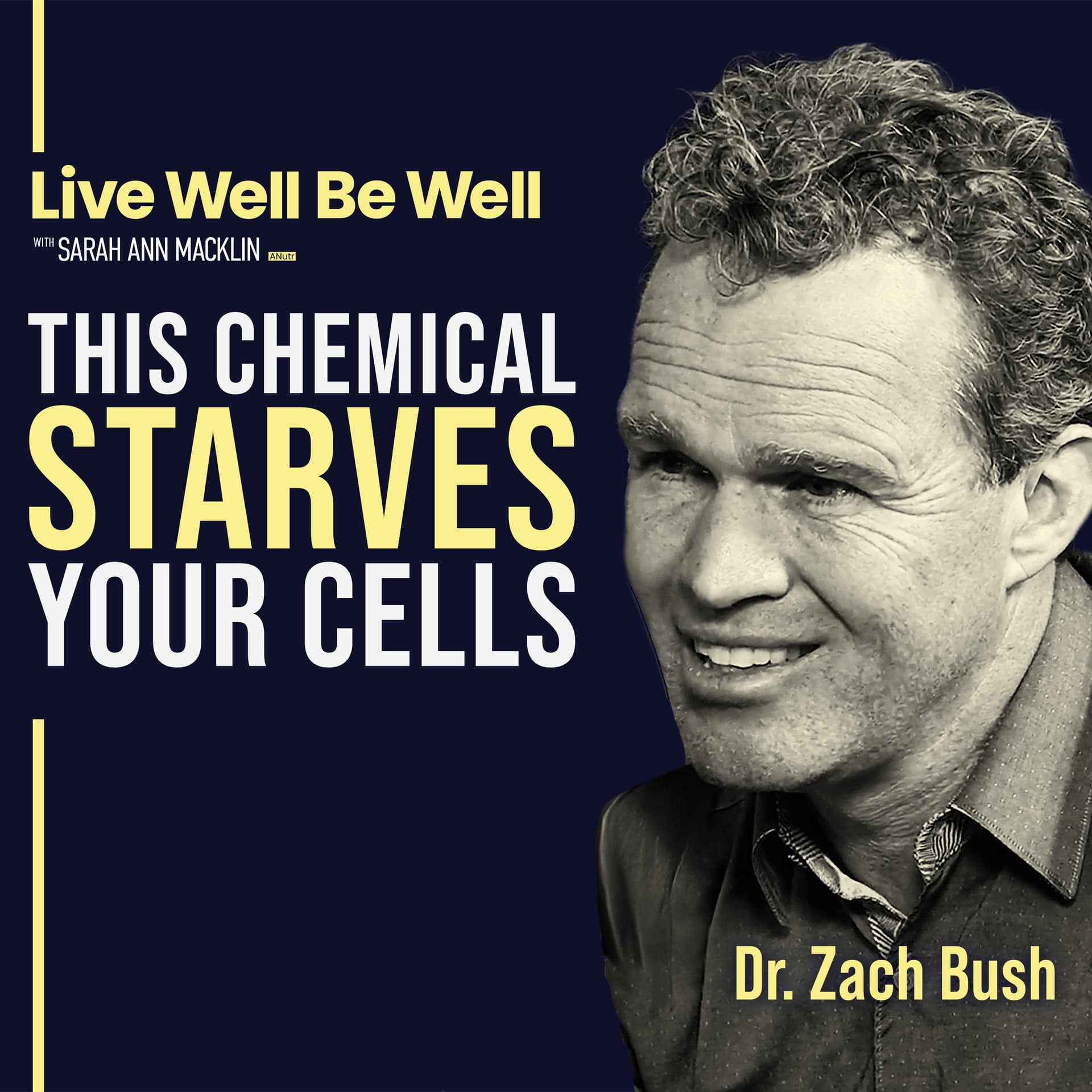
Dr. Zach Bush is a triple board-certified physician, educator, and regenerative farming advocate focused on disease prevention, the microbiome, and longevity. The host is a nutritionist who says she shifted from conventional nutrition toward “nourishment,” inspired by Bush’s nature/microbiome ideas.
Key claims
The colon has more biodiversity than other ecosystems; gut biodiversity drives cognition; stress reduces gut biodiversity; glyphosate is an antibiotic-like herbicide that kills soil organisms; removing “communication networks” can drive cancer without a “nuclear event”; forest bathing lowers sympathetic stress and restores biodiversity; multi-generational living supports longevity.
Notable examples
4 billion pounds/year glyphosate globally; children as young as two with cancers now seen in older adults; keystone species (beavers, bison, wolves) restoring rivers/microbiomes; Japan prescribing forest bathing for depression; Los Angeles meals eaten alone in cars (over 30%).
Written by AI. May contain mistakes. Listen to the episode to check what was said.
Chapters
Tap a time to open that second in VOThe Biodiversity of the Human Colon
0:00 to 0:34
Discover the astonishing biodiversity present in the human colon and its implications for health.
“We have just recently found out through genetic sequencing that the human colon holds more biodiversity than any other ecosystem on the planet.”
Introduction to Dr. Zach Bush
0:34 to 1:32
Learn about Dr. Zach Bush's background and his contributions to health and the environment.
“We use about 4 billion pounds a year of glyphosate globally.”
Connecting Health with Nature
1:32 to 2:30
Explore the impact of modern living on health and the importance of connection to nature.
“If you're a biohacker, you are also doomed to failure because we have a 100 % aging process that is in human journey.”
Shifting Mindsets on Longevity
2:30 to 4:25
Discuss how to redefine longevity beyond biohacking and metrics of success.
“I'm so excited to be here with you in this entire audience.”
Defining a Life Well Lived
4:53 to 7:30
Dr. Bush shares his philosophy on living a fulfilling life inspired by childhood joy.
“We push them into their emotional bodies, and we ask for a performance.”
Dr. Bush's Shift from Traditional Medicine
7:30 to 10:46
Hear Dr. Bush recount his journey from conventional medicine to a holistic approach to health.
“you know, tiny, tiny little babies that were perfectly formed.”
Healing and the Body's Natural Processes
10:46 to 13:20
Insight into the body's constant healing mechanisms and the importance of nurturing them.
“The question that came to my mind, which is seeing as a doctor you're treating people who are sick, they're coming to you and they're ill.”
Interconnectedness and Health
13:20 to 14:01
Understanding the relationship between health, ecosystems, and biodiversity's role in wellbeing.
“If you are connected to a natural ecosystem of biodiversity, you are literally bulletproof because the humans aren't in the system.”
The Impact of Keystone Species on Biodiversity
14:01 to 18:28
Learn how rewilding keystone species affects biodiversity and health.
“Not only does the microbiome recover, the rivers start flowing again.”
The Connection Between Disease and Soil Microbiome
18:29 to 22:40
Explore how the health of our microbiome affects disease rates in children.
“So me trying to ask a question on our microbiome, which obviously is the operating system that you call it, is so difficult to then ask your question around nature because they're so intertwined.”
Show all 20 chapters
Nature's Role in Healing and Self-Discovery
22:41 to 28:00
Discover the power of nature in healing and personal transformation.
“That doesn't actually stress me very much.”
Interconnectedness of Nature and Technology
28:00 to 29:50
Explore how incorporating nature's wisdom into technology can benefit humanity.
“of reality that is filtered to the language of a colonial empire that has sucked the life out of this planet because it believes it's separate from nature.”
The Importance of Biodiversity in Child Development
29:50 to 31:20
Learn about the detrimental effects of modern schooling on children's connection to nature.
“to return to the soil systems in your body.”
Building Community and Connection
31:20 to 34:00
Discover strategies for isolated individuals to foster community connections.
“because it is absolutely the opposite of nature.”
Nourishment vs. Nutrition
34:00 to 36:00
Understand the concept of nourishment as it relates to food preparation and health.
“Those are the metrics that seem to play out to life that will take you past 100 years again and again.”
Reconnecting with Soil Health
36:00 to 39:30
Examine the relationship between soil health and human health, including innovative practices.
“going to our supermarkets, if we go to our supermarkets rather than the farmers, how should we be approaching our nutrition?”
The Future of Nourishment and Longevity
39:30 to 41:30
Discuss the potential of soil and nature to replace supplements in promoting health.
“the human system to the intelligence of soil to get them back on track.”
Humanity's Role in Nature
41:30 to 42:00
Reflect on the importance of human connection to nature and the consequences of disconnection.
“completely failed our ability to be the nourishing source for Earth or our children.”
The Role of Humanity in Nature
42:00 to 48:00
Explore how humanity's ability to appreciate beauty impacts the natural world and ourselves.
“I see no evidence that we were becoming intelligent.”
Finding Stillness and Compassion
48:00 to 51:40
Learn the importance of stillness and compassion in achieving well-being and personal growth.
“And if we're presence in our bodies, we carry an enormous amount of information from deep, deep resources within the body that are remembered more than they are learned.”
Transcript
Automatic transcript. May contain errors.0:00We have just recently found out through genetic sequencing that the human colon holds more biodiversity than any other ecosystem on the planet. Wow. Blowing away coral reefs, rainforests, whatever you can think of as diverse ecosystems, the human colon holds more. There's so much more than what we're just seeing through our lens. We now know that the intellect of a human is the result of biodiversity in your gut. What we see is two-year-olds with cancers that we had 20 years ago and 80-year-olds. Our children are aging at an extreme rate because of their disconnect from the biology of our soil system.
0:34Dr. Zach Bush is a triple board certified physician and renowned educator whose work on the microbiome, disease prevention, and regenerative farming is transforming the way we understand health, longevity, and the environment. We use about 4 billion pounds a year of glyphosate globally. 4 billion pounds of a chemical that has been demonstrated and patented as an antibiotic against bacteria, fungi, and protozoa. Can you explain the power of nature that it has on our health in general? When you take away that communication network, you don't need a nuclear event to drive a cancer epidemic. You just need daily life.
1:06In Los Angeles, more than 30 % of meals are eaten alone behind a steering wheel. You cannot be nourished by a meal. No matter how superfooded out your smoothie is, it will not nourish you to health if you're eating that in isolation behind a steering wheel in traffic because you are not knowing nature's connection to your body. How do we shift our mindsets to understanding that this is really where true longevity stands? We've got to break our hearts over the broken promises of the biohacking industry. If you're a biohacker, you are also doomed to failure because we have a 100 % aging process that is in human journey.
1:42Firstly, I want to say thank you to tuning in and listening to the show. It means a huge amount. And connecting with all of you is something that I absolutely love as part of this journey of growing the show. One of my biggest goals of 2025 is doubling the reach of this show. And I can't do that without your support. So I would love to ask you a favor if you can press subscribe or follow on whichever platform you listen to. This helps us reach more people. And for me, elevating women in science is so fundamental and ethical and scientific information. So if you feel the show empowers you and gives you the information that you've been seeking, I would love to ask a favor in return and to hit that subscribe button and help me reach the goal that I've set for the show of 2025.
2:29Thank you. Zach, welcome to Live Well, Be Well. I'm so excited to be here with you in this entire audience. It's a pleasure. I have been so inspired by your work. Like, truly, the fact that you are creating an incredible ecosystem of human health, which is not just concentrated within the mind and the body, but within a whole ecosystem of the planet. And how we're viewing that and how you're really trying to get us to expand our mindsets to connect, that there's so much more than what we're just seeing through our lens and what we're talking about today. I was really trying to figure out where I was going to start this conversation because there are so many, there's so many areas that I could go down.
3:14I'm a nutritionist. I have been very focused on the work in nutritional science and I came to a point about eight years ago where I was banging my head against a wall because I felt that we weren't seeing things clearly and people were leaving my clinic and coming back in three months later. we needed to change so much more than that and now as I'm looking at health expanding more than ever it's going to be an eight trillion dollar industry by 2027 I really think we need to be having like deep conversations around our health so much more than just the longevity conversation that many are having today so I love that you've written a quote that it's not just about living longer but living more fully.
3:58And so I wanted to start off by asking you a question on how do you personally define a life well lived? The first thing that comes to mind on that is Khalil Gibrand. He was one of the greatest philosophical minds of the 20th century, perhaps. And about 100 years ago, he was asked, how should you parent? And he said, it was very easy to parent really well. He said, all you have to do is make sure that every day you try to think more like your child and make absolutely sure you never make them think like you. And I think that's a life well lived, is a life in which you resist the temptation to become an adult in your mind, and you resist the temptation to believe that you're responsible in a cosmos as grand as it is for anything, ultimately.
4:43And no child wakes up with a sense of burden of responsibility when they're in their joy. We train them into that responsibility. We break their relationship to their joy, and we tell them that it is going to be metriced on their ability to fit themselves into a duty, responsibility, performance model of a life lived. And so we push them into the mind. We push them into their emotional bodies, and we ask for a performance. And in that, we take them out of their magic. And so, a life well lived, we will find out again and again, is a life that finds its way back into the heart and the mind of a child.
5:27I love that. You said one of my favorite words, which is joy. My other one is play, which I think we've lost a lot of adults. You started off as a conventional doctor, I want to say, one that did a very inspiring work, but then you made a huge shift. Can you tell me about that shift, that moment, when you started changing the landscape of how you saw health and medicine? The seed for that shift was planted actually before I became a medical doctor, so I was actually going to engineering and was excited about that. I was a blue-collar kid, grew up in Colorado, and was building cars at a young age.
6:02Loved pounding on metal and welding and restoring classic cars. I was a blue-collar kid. And the coolest thing I could think of, because my dad was pretty insistent that I should think of something other than being a mechanic, and so engineering seemed like an obvious extension of that. So I thought about robotics. It seems like maybe that would be cool because it was a word that I'd heard of, but I didn't know what to include. So I was going that direction and then had my heart broken, which is such a wonderful thing. So I finally got my first girlfriend when I was 18 or something. I was terrified of girls for the previous 18 years and 52 years old.
6:36I'm not sure I'm any less terrified of women today. But there's an incredible moment that comes with that first heartbreak. And only as dramatic as an 18-year-old can be. I knew I just needed to take a year off of college to deal with my heartbreak. And in that moment, my aunt called me from the Philippines and said, what you up to? And I said, I just decided to take a year off like four hours ago. And she's like, oh, what are you going to do? I said, oh, I'm interested in travel and came up with something. She said, well, you should come to the Philippines and birth babies. And I was like, holy smokes.
7:05That's, oh, okay. Like that was about all the thought that went into that. So I worked in a tire shop busting tires for six months to make enough money to get a plane ticket over to the Philippines and stayed there for six months birthing babies. And I was immediately hooked. I couldn't unsee what I'd seen. I was watching women born and lived in abject poverty, bringing forth babies that were five pounds at the most, you know, tiny, tiny little babies that were perfectly formed. I couldn't feel, it was just too ridiculous. How is this woman with absolutely no support, with abject poverty in a tin shack with sewage running outside the front door.
7:50How are these babies being born so perfectly? What the heck is going on in these women? And then I would eventually find my way into the medical field through all those subspecialties, and I would be trained out of the thing I witnessed, which was the miracle. And I came to believe that these were basically life was a series of traumas, and everything was a pathology and everything had a drug to treat the pathology. And it was my job to be the technician at the pharmaceutical table to figure out what chemical I was supposed to put in every one of those bodies to help it through its disease journey to death.
8:27If they had disease that got worse or they died, I was a failure as a doctor. So as you can tell, given that we have a very high percentage of death as humans, you're kind of doomed to fail as a doctor if the metrics were handed. We have to embrace the fact that we are born. It is such a freaking miracle. And so the turn of events that happened as my heart got shattered from my profession, those seeds that had been planted with those babies in the Philippines was the reseeding of my joy. Because when I fell out of academia after 17 years in that space, I found myself in farm fields of Virginia with a rural clinic that was serving fifth-generation poverty and food deserts that were, you know, people not even equipped with grocery stores.
9:15Everybody's eating out of gas stations, which is the case for much of America now. We have food deserts that cover the vast majority of our country. And so I started there, and I watched people birthing. And this time, instead of babies, they were rebirthing their own bodies. And And that became really the regendering of my hope of like, my gosh, with almost no resources, a woman can bring forth a perfect baby in the squatting villages of the Philippines. And a fifth generation poverty family in rural Virginia can rebirth itself by growing a garden in the backyard, starting to regain health sovereignty, which gives them a sense of dignity.
9:58and in one moment of dignity they can lose judgment on their journey and they develop that moment of play and that moment of joy that you so love and they get healthy really quick and the definition of health has to be held loosely because many of them would die from collective trauma to them but they died in joy with a sense of freedom a sense of sovereignty that they had most of their life and so they died well and so live well we're going to have to lose our fear and death, and when we start dying well, we will live much different lives. So much to be said on what you've just explained to us.
10:35Maybe some listeners' minds needing to take a moment to nourish what you've just said on the profound impact of how we're looking at our symptoms rather than our root causes. The question that came to my mind, which is seeing as a doctor you're treating people who are sick, they're coming to you and they're ill. what are the bodily signs showing when the body is ready to heal the body is always ready to heal in fact the body is always healing the body is healing the moment that it's conceived and so the amount of friction in the universe towards life is infinite there's constant tearing at the cellular at the molecular at the atomic level of life there is friction and so without a constant healing machine, you would have never made it to cell number five, let alone 70 trillion cells that have teamed together to rebirth themselves constantly.
11:33Your entire gut lining, billions of cells, dies and is rebirthed every three days for your entire life. You are a healing machine at a rate that you cannot conceive of. To accumulate disease, you have to create a rate of injury that supersedes that constant rate of healing that you're walking around with. to do that you have to keep repeating the same story and that story is largely you don't deserve to be here you don't deserve nature you don't deserve to be nourished and so you deserve need to serve at your own exhaustion you need to put everything else before yourself you've got to you know perform here before you deserve a paycheck you got to do this before you deserve to be loved, whatever it is.
12:20So this journey is just so simple in the end of, wow, we've got such an opportunity right now to let go of the performance of being human and become much more childlike in our receipt of the nature that is inherently driving this miraculous machine that allowed you to self-organize in your mother's womb from the likes of one cell into 70 trillion cells that actually can't even thrive for a single moment if they weren't already in concert with 14 quadrillion bacteria that live inside of your cells that we call mitochondria. And so this question, I think, you know, probably four hours ago, started around the question of, like, what is this journey going to look like as we start to understand health in the context of our ecosystem?
13:05You mentioned the microbiome. Health is ultimately a concentration of light energy in a body that allows for enough energy for communication to be uninterrupted. A cell with unfettered access to information can never disease. If you are connected to a natural ecosystem of biodiversity, you are literally bulletproof because the humans aren't in the system. We left. Human intervention has the opposite result of a keystone species. Keystone species is measured by its impact on an ecosystem. If you put beavers back into the rivers of the southwest in the United States, our deserts go back green again.
13:44Within a couple of springs, those beavers are recovering the microbiome of the soil. They're recovering macro and microflora and fauna. You put bison back into the plains of Texas, same result within two springs. You put wolves back in Yellowstone. Not only does the microbiome recover, the rivers start flowing again. What wolves have to do with rivers, nobody ever guessed. But the fact is a keystone species, an elephant in the bush of Africa, white lions in Timbavati, South Africa. Every time one of these keystone species has been rewilded, it increases the biodiversity within it. Humans, for the last few thousand years, have been doing the opposite.
14:27Every single place we have set foot, we create monoculture. We decrease the connectivity between species by driving out the biodiversity in creating monoculture in the name of health or food systems or whatever it is. And so we have had antibiotic effects on this earth. Biosis is a cool word. You just look up the word biosis and just like maybe put that front and center of your life, you know, mantra of what does it mean to live well. Biosis means in reference to the interconnected relationships that allow life to occur. so biotic or biosis means the interconnected relationships that allow life to occur antibiotic was a pretty good name for what we would create in the 1940s it wasn't the first antibiotic we created but penicillin would become the blockbuster we had created a really effective antibiotic that had been used in undermining human health for a long time and that's alcohol And so from alcohol to penicillin, we had made a paradigm leap forward.
15:341940s, we get penicillin. By the 1960s and 70s, we find chemicals related to those antibiotics that can kill weeds. And so we started using megatons of antibiotics in our soil systems by the 1970s and 80s. Today, if you just pick one of our many, many herbicides, there's dozens of herbicides on the market that work very effectively at killing things in soil systems, but the granddaddy of them all is glyphosate. It's the single molecule and active ingredient in Roundup, which you've probably got in your garage if you have one. It's probably in your grandmother's shed. This product has made it into every single household worldwide, really, and it's been used in every farm field, essentially, globally for generations now.
16:19Currently, we use about four billion pounds a year of glyphosate globally. Four billion pounds of a chemical that has been demonstrated and patented as an antibiotic against bacteria, fungi, protozoa, every single type of organism that grows in soil has been shown to die under the pressure of this chemical. When you pour four billion pounds of a potent antibiotic into the soils of the earth, the metabolic life force decreases. And our laboratory, as mentioned, had showed that that microbiome produces the communication network that allows cells to thrive even in nuclear events. When you take away that communication network, you don't need a nuclear event to drive a cancer epidemic.
17:02You just need daily life. And what we see is two-year-olds that are now housed at Texas Children's Hospital in six towers of that skyscraper city that we've built as a children's hospital, two-year-olds with cancers that we hadn't 20 years ago seen in 80-year-olds, osteosarcomas and the like. Osteosarcoma was something that wouldn't happen until you're really at the end of life. You needed a really radical decrease in cell-cell communication at the bone marrow level to get an osteosarcoma. We have two-year-olds with that disease now. What that suggests is that a two-year-old has reached the aging phenomenon on of a loss of communication decades before grandmother got there.
17:49And so our children are aging at an extreme rate because of their disconnect from the biology of our soil systems, from the biology of the soil system within their own body, which we call the gut microflora. So as the soil systems die under our farm fields and within the guts of our children, disease is an inevitable outcome. and we cannot technologically remove ourselves from that disease. We cannot drug ourselves out of this condition. There is only one pathway back into the survival of our species and it is a reconnection with nature at this level of the microbiome of soil and food systems.
18:27There's a lot to unpack there. So me trying to ask a question on our microbiome, which obviously is the operating system that you call it, is so difficult to then ask your question around nature because they're so intertwined. And a lot of people today are searching for one answer, right? They're like, what can I do to optimize my gut microbiome? What can I do to optimize my longevity and my lifespan? What can I do to optimize my endurance? What can I do to reduce my stress? And so we had these very specific silo questions to different parts of the body. Yeah. And that was my journey with my patients is everybody's looking for a solution for their dis-ease.
19:08And we all have great dis-ease in our days and in our lives and in our sleep and our dreams. We are burdened with a lot of disease right now. And nature has a lot of grace towards that. And so nature doesn't expect us to figure it all out. She takes us on a journey back into that health. And so really what it comes down to is we can see the same effect of Chernobyl, perhaps. Nuclear event happens, massive nuclear leak. We have this, you know, contamination of the soil system. A devastating event happens. And so humans stop doing stuff in the space, and nature comes roaring in there and just does so much beauty, and it's now one of the most vibrant ecosystems on the planet.
19:51This is what I saw in my patients over and over again. They needed the nuclear event in their life to stop doing the things that were driving them to their disease. And so over and over again in our clinic, every single day, we heard somebody say, that diagnosis of my cancer a year ago was the most important gift I ever received from God. That was my path back towards self. That was my moment that I stopped doing everything that I had been doing to harm myself. That was the moment that my priorities reversed. We need the nuclear blast in our life to change directions as radically as we need to change directions today.
20:30we mentioned at the beginning of the pre-show questions, the last thing that I will do in this human body is let go of judgment. We have to let go of judgment to make progress towards this healing process within the body. And so we have to realize that whatever stress patterns we have lived out, whatever traumas we have, we're the perfect amount to get us to the breaking point. We have to shatter the human psyche to get to the human heart, and then we have to shatter the human heart with so much desire for love until we get to the quiet space in our core. That's the human journey, and everybody will die in that silent, quiet, still space.
21:13You will be there when you die. You will die alone in the same way that you birthed alone. The moment you came in, you saw strangers around you because they had already cut themselves off from nature. You came in as an expression of an ancient soul connected to the source and abundantly provided for it every fractal of reality, and you stared into the faces of strangers who had cut themselves off from that very nature and then slowly would train you to do the same. you came in very much alone and you will leave alone there's no family member that will go on that journey with you through that eye of the needle to the other side of the veil you will do that alone and it will be beautiful and you will be surrounded by all of the frequencies of love that you can imagine and you will realize that you are completely accepted and you will realize that everything you feared and everything that you felt any guilt and shame over were absolute fabrications of the human mind.
22:19And so there's this invitation to every patient that would walk into my clinic and each one of you is stop looking for the thing outside of you to solve your problem and just go into that silent space inside of you as fast as possible. And I could have been told that a million times, but it wasn't until I hit the wall, shattered, broke, had the nuclear event in my life. And those nuclear events for me were human relationships because I don't really mind. I don't need money to be happy. I don't mind losing money. I don't mind being out of money. That doesn't actually stress me very much. But the end of relationships are brutal on my psyche.
22:55So there's something inside of me that has a false belief about the role of human relationships and the necessity for them to never end, for them to be successful, that I had to overcome. And so welcome in the nuclear bombs that will come. Mine happened in relationships, yours might be bankruptcy, whatever it is. Look forward to them in some ways, because otherwise you're going to continue the numbed-out journey that each of us are on until the nuclear blast goes off. And then we have the chance. Then we have the chance for radical transformation. When I'm thinking about everything that you're saying, and I'm thinking about the conversation around self-worth, that's something that I really root a lot of conversations around health on this show.
23:40But something that I've always been so inspired by your work, essentially, is when you speak about the interconnection with nature, which you've just done so beautifully. There was a post on your Instagram that inspired me to write a very long article. And made me realise the connection back to my roots. And it was a post on how nature heals. And there was five slides. You had the power of the birdsong, the power of the water, the blue mind theory. You had the power of sunlight and moon regulation. We're on a full moon right now as we're having this discussion. Healing of grounding, forest bathing, all of these wonderful words.
24:27And I read it and I must have sent that to, I mean, a lot of people, but it inspired me to write a lot of articles after that. I don't want to use the word escapism but there's something about you you've referenced the words letting go you've left referenced the words of judgment there's something about being in nature where all of that's forgotten and I really think about the connection to the microbiome when I'm in nature as well can you explain the power of nature that it has on our health in general and how some of the things that I've just referenced the kind of science behind that and the power because I think sometimes people might think, okay, forest bathing is a bit woo-woo.
25:05A lot of science in this. And whole nations are getting behind that. In Japan, if you have come in with any symptoms of depression, their first prescription is forest bathing. And so whole nations are realizing that this is a very affordable and effective method that far exceeds the benefits of any small molecule chemicals that disrupt your neurology in the name of antidepressant. and so very potent science and very big public health outcomes being measured globally around something as simple as forest bathing and so how does it work why does it work what's going on with that and this comes down to that concentration of light energy produces intelligent life and so the more microbiome that you touch the more ecosystem that becomes intimately involved with your body, the more energy you're going to concentrate per cubic centimeter.
25:57And we have just recently found out through genetic sequencing that the human colon holds more biodiversity than any other ecosystem on the planet. Wow. Blowing away coral reefs, rainforests, whatever you can think of as diverse ecosystems, the human colon holds more. What about the colons of other animals? Way more. And so you look at other mammals and you look at dogs or rooster or whatever you can think of in these systems of, you know, go to the reptiles, go on down the line, they're all diminished in their biodiversity compared to the human colon. And so when we talk about the microbiome, what we're talking about is actually the cellular intelligence of a human system.
26:39And we now know that the intellect of a human, the ability of your neurons to transmit frequencies and neurochemicals that would produce a thought or a creative output is the result of biodiversity in your gut. And so there are billions of nerve endings that poke out through your gut lining to speak and listen directly to the microbiome. And the microbiome is putting data streams into your central processing unit. And so you are the most complex quantum computer that's ever been designed by nature on this planet. And the reason you elicit intelligence is because of the biodiversity of the inputs.
27:23Which brings us to maybe a funny thing that led right before this conversation. You mentioned that your depression coming out of TED because you had listened to what was going to be the future of humanity and the whole thing was about AI. AI is not an intelligent system. AI is a mirror that we can look in to see the results of human thought. But the thing that we should be afraid of AI is not its computational power, not the speed of which it does. It's the lack of biodiverse inputs that should terrify you about AI. Because what you're getting when you type into chat GPT is you are getting a filtered version of reality that is filtered to the language of a colonial empire that has sucked the life out of this planet because it believes it's separate from nature.
28:10It's not the technology that we should be worried about. It's the lack of diverse inputs. I think we will solve this crisis of AI and its existential threat as soon as we give it the information stream of the microbiome. Computers can read that. Computers can get the data from soil metabolomics. Computers can read the data from our genomics in forest floors, in farm fields, and in human guts. We need to give it biodiverse information streams and these computer systems will give us an image that we can't believe the simplicity of. It will make sure that everything that gets outputted in chat GPT is not from human perspective but is from the earth speaking its truth, which is we are all interconnected and there's nothing you can do that doesn't have a consequence in nature, but there's a lot of things you can do that makes those consequences extremely beneficial.
Read the full transcript
29:08You can get outside and you can lay down on a forest floor and you can breathe. As soon as you do that, it turns out that your neurology shifts from sympathetic nervous system in which you're producing an overstate of cortisol and other neurochemicals that then are communicated out the tips of the neurons within your gut lining to diminish the biodiversity within your gut lining. So the forest will decrease your stress, which will decrease the antibiotic behavior of your stress hormones. and you will suddenly release the biodiversification in your gut because you looked through the sky or the branches of a tree.
29:43And so you're staring through that fractal of a tree up into the sky and the clouds are overhead and you relax your body and the biodiversity will immediately begin to return to the soil systems in your body. And you will start to have creative thought again. And you will start to think creatively about the problems or the blocks that you believe you have or whatever it is. And so this process of forest bathing is going to immediately unleash biodiversity because you've decreased your stress level. There are billions of things that we don't understand that are going to happen in that same instance that are going to improve your health.
30:19But that general concept of biodiversity equals energy and intelligence is a critical piece of the puzzle for us to start to really focus into. What is the biodiversity of inputs that your child is getting. If your child's experience is to be woken up out of sleep prematurely so they could be rushed through an unhealthy breakfast and stuffed in a bus or a car to be rushed to a school in which they will be separate from nature all day and they will be staring at data screens and information that was filtered through the language of a colonial mind that was afraid that it got kicked out of nature and will train that child to believing that is separate from everything, and then it comes home and it is put back into a family system where everybody feels like they are an island unto themselves, disconnected from one another, desperately trying to have a conversation around a hurried dinner table that gives them some sense of success as parents or a family unit, and then everybody's rushed to homework and then bed.
31:17That system has to end and will end very soon, because it is absolutely the opposite of nature. Can you talk me through what that system should look like? it's being done all over the world fortunately and it was done for tens of thousands of years it looks like grandmother and auntie and uncle and a family unit integrated into a village in which children wake up in the morning as their body would awake them with the rooster or with the birds of the air and that child wakes up in a sense of awe and amazement and wonderment as to what it will discover today and immediately runs outside and connects with a few friends and they run around until breakfast is prepared by the village and then the food is shared around the fire, around table systems, and there's a sense of nourishment that goes far beyond the calories and the food.
32:06We need to learn how to experience life together again. And we're going to do that when we get out of the nuclear family. What about somebody in their 20s, 30s, 40s who has the nine-to-five job, lives in an urban landscape, food deserts, not close to their families, they've moved away. What advice do you give to that person who's listening? I would get connected to as many people as fast as possible in small ways and big ways. And I think the easiest way to do that when you're really feeling isolated is to start volunteering. And so get out of your work environment and start to connect to humans under a sense of service and a sense of a gifting economy.
32:48When you are able to experience nature gifting itself through you to somebody else, you experience a very high vibration inside yourself that we might call joy. And so this joy that comes through the service of being present for another human being is really a radical experience. And it's one that's not being trained into our children today. In my generation, there was actually still semblance of this that were part of our daily lives. But it's really been lost in these recent generations. But if you're in your 20s and 30s, I would highly recommend checking out the opportunity to engage with elders in your community.
33:22And I highly recommend that you check out the opportunity to engage with small children in your community. Sitting with an elder will give you the experience of being that young heart and mind that sits next to the wisdom of an elder. You got to get multi-generational as fast as possible because that's the only score that we found in blue zones that works to create longevity. And so we can't find any similarities in the food they eat or the ecologies they live in or the temperatures that they live by. But we find it again and again that multi-generational living, specifically discovery of somebody you don't know on a regular basis where you're getting seeded with new human experience, new human relationships.
34:02Those are the metrics that seem to play out to life that will take you past 100 years again and again. There's no biohacking technology that's come along to equate to human interactions. Human fellowship is the best medicine we've ever found. And for that, it benefits from the biodiversity of the experience. And that biodiversity of input, that biodiversity of experience is what will create a healthy farm field, a healthy food plate, a healthy child. And so this is where, as a parent, again, think like your child and never make them think like you. How many resources and connections and new ideas can you put in front of your child that have nothing to do with the way you're thinking?
34:43Make sure you never make your child think like you." That was Khalil Gibran's observation and wisdom that a hundred years ago, and I think every single generation since, we have done the opposite. We have absolutely branded our children into the minds of the adults that are so full of fear, guilt, shame, and judgment. And for all of that judgment, we radicalize our children to kill each other again and again and again. You can hear that I'm kind of dumb-sacked about what I'm about to say to you now. I think that think like a child, never let them think like you is such a profound quote. When we're thinking about what we're feeding our children, I can't not have this conversation with you without touching on nutrition.
35:23That's where my wheelhouse started. I still believe it's a really important part of human health, but I don't believe it's the magic pill by any means. I'm hearing you talk about, here I go into the interconnectedness, I hear you talking about nutrition, I hear you talking about soil health, I hear you talking about biodiversity, everything that everyone is worried about now is the biodiversity of our soil health. So now people are supplementing because we are feeling that we can't get enough nutrition from the food because of soil, not biodiverse by any means. So when it comes to food, when it comes to when we're going to our supermarkets, if we go to our supermarkets rather than the farmers, how should we be approaching our nutrition?
36:10How should we be thinking about this? I think my breakthrough in nutrition science came when I finally let go of the word nutrition and started to really lean hard into the concept of nourishment. When it comes to food, you will be nourished when it is prepared with the same loving tender care that your grandmother would have prepared it for if she was still with you. It is the energy in which the food is prepared that's going to nourish you more than the micro and macronutrients that are in the food. And we are seeing the results of this in the United States. Los Angeles, I imagine, has more green smoothie shops than any other place in the world.
36:52In Los Angeles, more than 30 % of meals are eaten alone behind a steering wheel. You cannot be nourished by a meal, no matter how superfooded out your smoothie is. It will not nourish you to health if you're eating that in isolation behind a steering wheel in traffic because you are not knowing nature's connection to your body. And so this changed my clinic radically, and the breakthrough happened for us around Ayurveda. and Ayurvedic nutrition has been around for 9 ,000 years while our modern nutrition sciences have been around for about 50 years. The 9 ,000 years turns out has beat out the 50-year experience of nutrition science because Ayurveda is about nourishment to the individual.
37:35And so there's a very simple survey that you can take. Jump online, Ayurvedic nutrition survey, take those questions, and it's going to tell you your personal balance or imbalance between three energy systems within the body. And these three elements within the body, three doshas as the Ayurvedic science would define them, can be balanced by the preparation of food uniquely. And so when I talk about the gut microbiome, what we're really talking about is are you being nourished or not? Because no matter what nutrients you put in the gut that has been clipped from nature, you cannot get the nourishment from the food.
38:10And so this is where we move towards meeting people where they're at today. And in 2012, we started extracting soil elements that are made by the microbiome to see if we could reverse chronic disease by putting people back in touch with ancient soil systems that had never been touched by the human antibiotic behaviors. And the results were insane. We did them many times before we even believed the results. I used my body as my laboratory because I had no money to do much science, and so I was putting this in extremely high volumes into my own body, watching my own laboratories, watching my own body response to it.
38:51The more soil I put into my body, the more remarkable the results got. And under the microscope, we saw things happening that we thought previously impossible, in which cells would not only start to repair and regenerate, cells could actually backtrack themselves into stem cells. They could back themselves up in space-time to some previous potential for life-giving behaviors. And so we were literally watching things under the microscope happen as we put human cells back in the relationship to soil. So that became a supplement stream of products there. That's intelligence of nature is that brand.
39:28And in the intelligence of nature, we've seen that it takes a simple reconnection of the human system to the intelligence of soil to get them back on track. And from that revenue we created the farmer's footprint and we created the Project Biome which is now looking to see can we create such verdant soils on the planet within the next decade that the whole supplement industry goes away completely. I would like to make the entire supplement industry obsolete by 2030 because it's almost our only shot at recovering from the ecosystem and therefore extinction level stress and species. Can we get so much nourishment in the soil in the next five, ten years, that we make the entire concept of a supplement ludicrous?
40:08Because every single plant that grows on this thing is finally carrying not just the nutrients, but the nourishment capacity, because it never got divorced from the microbiome. I would love the day to see when the supplement market falls down. But sitting here and seeing where we are going, which is the longevity culture, which is basically formed with biohacking, supplementation, quite rigid regimes, you know, the 5am club. This is where I feel and I worry that most people believe that true health is. You mentioned earlier one of my favourite places, which is the Blue Zones and Dan Buena and all of his incredible work that he does.
40:55how do we shift our mindsets to understanding that this is really where true longevity stands probably heartbreak we got to break our hearts over the the the broken promises of the biohacking industry we have to break our heart over the broken promises of our pharmaceutical industries we have to break our hearts over the promises of our doctors you know our we have to break our hearts as doctors, that we can't actually provide nourishment or health for our patients through our chemical toolbox. We have to break our heart. We have to come to realize that we have completely failed our ability to be the nourishing source for Earth or our children.
41:37And then we got to let nature take back over. And it will happen very quickly. And so there's going to be a group of people that are going to prove out that people have 100 % death rates, and age at an accelerated rate under biohacking technologies. Do you think we've become AI? I don't think we've become intelligent. I think if we became artificially intelligent, I would welcome that. I see no evidence that we were becoming intelligent. I think that we are getting a lot of information, and that information is choking out our intelligence. If we are not in our creative flow, then we have stepped out of our human behavior.
42:18If we are no longer able to generate unconditional love through our capacity to see beauty, then we are not being human. We'll disappear from the planet quite quickly because we simply fell out of our role within nature. Nature doesn't need us to make the planet healthy. Nature didn't need us to come along to be smart, because there's many species more intelligent than us around the cosmos, no doubt. Why did we come along? And why have we been allowed to persist at such a detriment to the nature that has been birthed to us? us because we can see beauty, because we can generate frequencies that increase the biologic life force in other beings.
42:56When we tell a plant that we see it and it is beautiful and I love you and I'm so grateful for you, the plant exerts growth factors across the root system that will increase the nourishment of the plant. When a human tells a tree I love you, the tree improves its health. That is a role for humanity to play. What are you supposed to do as a human? You're supposed to go see and proclaim the beauty you can see. In a way that I'm interpreting it, how I work with my patients in clinic, which is I have a very big arm focused on compassion and self-compassion. And that sharing of love with others and love with ourselves and forgiveness, I believe is at the core of an antidote that can be really helpful to start accessing these areas to allow ourselves to let go of what we should and shouldn't be doing and have more compassion.
43:52How do you see compassion in this? What I have learned through hospice and my own journey through my own spiritual experiences, my own journey of life itself, I've learned that unconditional love, the true form, the true vibration of the feeling of love in a body begins and is really birthed through grief. And it's not until you really intensely know grief and you really embody the deep surrender that comes from the realization that you cannot protect that which you love, and everything that you love is going to disappear. And so it's only in that realization of the finite reality of the beauty that you see that you might love right now, that you're going to actually start to vibrate in the full feeling of love.
44:36And it's going to hit joy, and it's going to hit loss, and it's going to be grief again. It's going to take, it is big wave surfing. These little tiny ripples that we call emotions are human abstractions of the feeling. And then we go pursue those seven little bandwidths, and we will decide if we had a good or bad day based on the number of times we triggered those seven-second experiences. An emotion has been measured many times in human biology and neurology. An emotion of fear, guilt, shame, things will trigger a neurologic signal that lasts less than seven seconds. And so the amount of stimulation that a human needs if they're going to live a life emotionally is ridiculous.
45:15And so we will create so much drama in our lives so that we are constantly experiencing an emotion so that we feel alive because it's terrifying to stop having the emotion because then you feel nothing and then you're numb because you disconnected yourself from the body which is a column of water that's capable of feeling and so when we talk about compassion we're talking about developing a body that can feel everything and never take the opportunity to dumb it down to a single emotion never have the tendency to see somebody else having a feeling or even an abstracted emotional experience and try to match it.
45:53That's what empathy is. So a lot of people in this world have gotten stuck in transmitting the frequencies of hopelessness or heartbreak or victim or whatever it is so that they can get the attention from another empathic soul that wants to match that vibration. We need to step out of empathy and into compassion and we need to give each other the ability to be witnessed in the big wave surfing of life so that we're allowed to feel everything, and we're always witnessed today, every point in the feeling, and not just congratulated or recognized or consoled when we hit one of those frequencies of emotion.
46:28Thank you for explaining that so beautifully. It's something that I had missed from my own life for a very long time. And for me, it was the missing ingredient. Compassion. Compassion eating is something that I talk about a lot and am a true believer that it's something that adds a lot of nourishment to our plates, self-compassion and compassion to others. But my sadness is that we're never taught it and we drive from success in another way and it's normally an external success and we hide our weaknesses because we're scared of them, scared of the judgment. But compassion holds such a beautiful force.
47:16And you spoke so much, especially in the pre-interview and the compassionate cure, that's what it's called by the way, Zach. That's what those pre-questions are on, the compassionate cure on my substack. Compassion is the heart of what I believe we really need to learn more about, to have more safety in ourselves. And for me, that is what living well, being well is. That's kind of the core of the concept of the work that I really want our listeners to know and connect over, connect over compassion. We need it more in this world than ever before. And so it leads me to my final question to you, which is, What does live well, be well mean to you, Zach?
48:00Ultimately, it's presence. And if we're presence in our bodies, we carry an enormous amount of information from deep, deep resources within the body that are remembered more than they are learned. You came especially here right now to break the patterns of everything that's occurred before. And you're going to do that by becoming still. and you're going to find the stillness by breaking your mind and your ability to keep up with all the details of life and all of the doingness and you're going to shatter your mind's ability to keep up with it and you're going to get hopeless for a moment and then you'll find enough vibration within you to start to see beauty around you again and your heart will start to pump and you'll start to live a life within your heart and then you'll shatter your heart enough times to get down into your womb into this quiet still place inside of every single human being that sits between the belly button and the floor of the pelvis.
48:53And you will live well and you will be well when you start to act only in response to what you see from that point of stillness. Because everything else is reactive. And it's going to be in that action, that proactivity that comes from the wonderment that's going to happen as soon as you stand still. Because you're going to see an open door. and you're going to walk through that door outside again. No matter how you feel right now, you are a miracle healing machine. If you weren't, you would have died long ago. You would have never come to be. You are a healing machine that's vibrating right now in the memory of what it could have been and what it was designed to do.
49:35And so just stand still for a moment and let your biology catch up. Let the memory of what it feels like to be you catch up with you. You're just sick enough right now to slow you down. If you voluntarily just halt for a moment
49:53Just feel it right now Feel your back right now Feel the energy behind you Can you see and feel something catching up with you?
50:13Can you feel what that feels like inside your belly right now?
50:30I can feel it in my chest and my throat right now.
50:36I'm catching up with myself.
50:44There's no more questions.
50:50There's something there inside of you that's you. And that feels good. So stay in that space as long as you can. Until you get distracted from it again. and you're compelled to go run ahead of yourself again. Go chase down something outside of yourself to try to ameliorate the fear, the guilt, the shame inside your body. And then you'll slow down again. Maybe it'll be through sickness. Maybe it'll be through deep fatigue. Whatever it is, you'll slow down again. It's inevitable. And that's the gift that you're experiencing right now. we will slow down together as a species now and there will become a turning point
51:41and then i'll meet you there and we'll do it together thank you that's a very meditative end i hope no one was driving when they were listening to that because they might have crashed the car that'll slow you down that will slow you down I think you need to record some bedtime stories for people to listen to, to go off to sleep, and to feel calm in their bodies. You read my mind. That's one of my retirement goals. I'm going to record a whole lot of children's books for them. I want to read to kids all over the world. That's one of my dreams. Well, you've just recorded, I think, one of them on our podcast.
52:22So, I'll give the for that one and you can have it. It's all you. Get that one out there. Get those to every child on the planet. You are well. You have space. You knit yourself together. You are well. Thank you, Zach, for coming on and sharing such a wealth of wisdom with all of our listeners. And I'm very thankful with my time today. So, thank you, Zach. Honored to be with you all.
52:54Thank you.
From the publisher
⚠️ Trigger Warning: This episode contains discussions of grief, trauma, death, childhood illness (including cancer), and environmental toxins. Listener discretion is advised — particularly for parents and caregivers of children affected by illness.
If you’ve been navigating your health through routines, biohacks, or supplements but still feel disconnected, burnt out, or unwell, this conversation may shift everything.
True healing is rarely about control. And it’s almost never linear.
In this episode, I sit down with Dr. Zach Bush, a triple board-certified physician in internal medicine, endocrinology, and hospice care, and founder of regenerative health company Farmer's Footprint, to rethink everything we’ve been told about medicine, longevity, and what it means to feel whole. Dr. Zach's research reveals how the human gut microbiome contains more biodiversity than any other ecosystem on Earth, including rainforests and coral reefs, and how this internal garden directly influences our capacity for creative thought, emotional resilience, and physical healing.
This isn’t just about symptoms or protocols. It’s about connection to nature, to others, and most of all, to yourself.
We explore how modern health has become more fragmented than ever, and why the root of healing might be much quieter, much simpler, and much more human than we’ve been led to believe. Dr. Zach explains how your body regenerates your entire gut lining every three days, why stress hormones function as internal antibiotics that destroy beneficial bacteria, and how forest bathing measurably shifts your nervous system from sympathetic overdrive to parasympathetic healing, which is why Japan now prescribes it as first-line treatment for depression.
Together, we explore:
• Why the body is always healing at rates we can barely comprehend, unless we get in the way
• How the gut’s biodiversity mirrors the richness of our inner and outer environments
• What real nourishment means (and why food prepared with love heals differently than nutrients consumed alone)
• The specific physiological changes that occur during forest bathing and why biodiversity exposure enhances creativity
• How to practice presence in your body as medicine
• Why multi-generational living is the only consistent factor across all Blue Zones for longevity
• And why stillness, beauty, and presence are not luxuries but essential medicine
You’ll come away with a deeper understanding of your body not as a project to manage, but as an ecosystem to listen to. Plus practical tools for reconnecting with the healing intelligence that's been with you all along. And maybe, like me, you’ll find yourself exhaling, softening, and remembering what it means to live well and be well.
Love,
Sarah Ann 💛
***
If you enjoyed this episode, you might also like:
Simon Sinek: The ADHD Superpower - Why It’s My Greatest Advantage
https://www.youtube.com/watch?v=6fnTHiI8oY0
***
Sign up to Sarah’s Compassionate Cure newsletter:
Science Simplified, Health Humanised. Join thousands in exploring actionable insights that prioritise compassion, clarity, and real-life impact. https://sarahmacklin.substack.com/
***
Highlights:
Introduction (00:00)
Birth in Poverty vs. Conventional Medicine (05:45)
Why the Body Is Always Healing & How Disease Begins (10:50)
How Major Life Crises Trigger Healing and Personal Growth (18:46)
How Nature Heals the Body & Restores Microbiome Diversity (23:47)
Why Human Connection Is Key to Longevity in Blue Zones (31:26)
Why Nourishment Matters More Than Nutrition or Supplements (35:59)
Why Intelligence Without Compassion Disconnects Us from Nature (41:57)
Why True Compassion Begins with Grief, Not Emotion (43:54)
What Living Well Means to Dr. Zach Bush (49:58)
***
Let’s be friends!
📷 Instagram: / sarahannmacklin
📹 Subscribe: / @livewellbewellsarah
🐦 Twitter: / sarahannmacklin
📱 TikTok: / sarahannnutrition
💌 Newsletter: https://sarahmacklin.substack.com/

