In short
How sex hormones, partner contact, diet (especially fiber and fermented foods), stress, and environment shape the gut microbiome—and how this may affect mood, metabolism, fertility, and even personality/neurodivergence. Also covers why gut microbiome testing is often over-marketed and gives practical “what does healthy poo look like?” guidance.
Guest
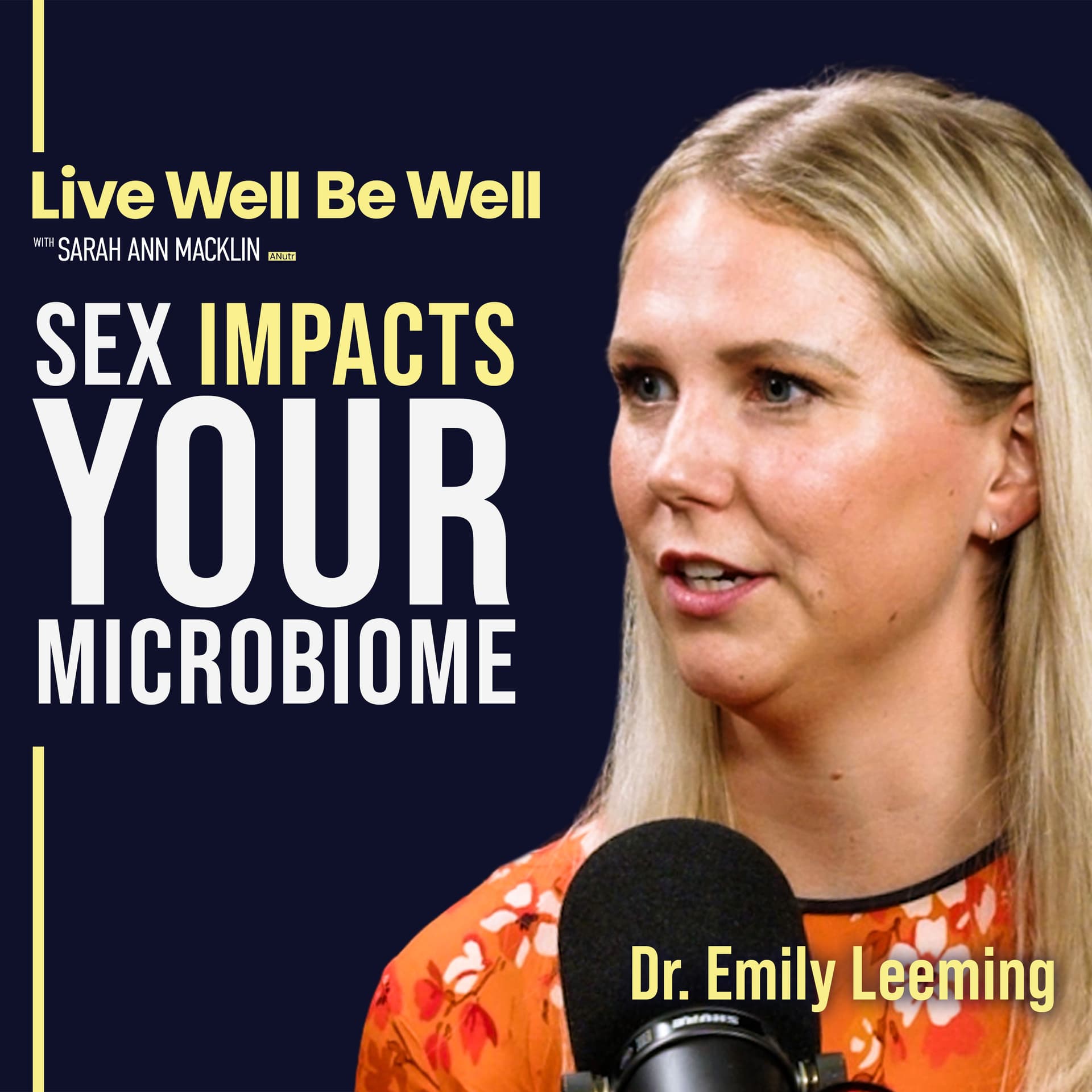
Dr. Emily Leeming, gut health scientist and dietician; works in gut microbiome research (mentions King’s College London and collaborations with Harvard). Focuses on how microbiome products influence brain and health.
Key claims
Women’s microbiomes diverge at puberty and become more similar to men’s after menopause as sex hormones fluctuate. Gut diversity is a marker of gut health; menopause is linked to lower diversity. Fiber and fermented foods can increase microbial diversity (e.g., “six servings” fermented foods/day). Sex and close intimacy transfer microbes (kissing >10 seconds; “~80 million microbes” mouth-to-mouth). Partner reinfection may contribute to recurrent bacterial vaginosis—treat both.
Notable examples
Mouse studies where fiber-fed healthy mice increased sperm count and swimming power; probiotic yogurt in older male mice improved testosterone and “bigger balls.” Soil-hand hygiene hypothesis: hand-rubbing in soil increased gut diversity in two weeks. Fecal microbiota transplant case reportedly improved IBD but coincided with hot flushes/brain fog.
Written by AI. May contain mistakes. Listen to the episode to check what was said.
Chapters
Tap a time to open that second in VOEpisode Discussion
0:00 to 14:00
“Female microbiome versus a male's microbiome, are they fundamentally quite different?”
The Impact of Gut Microbiome on Male Fertility
14:00 to 17:06
Explore how gut microbiome and fiber intake can influence male fertility.
“kind of much later in life, you know, 80 years old for kind of a couple of people in a certain study.”
Microbial Exchange and Its Effects on Health
17:06 to 22:33
Learn about the microbial exchange during sexual intimacy and its implications for health.
The Social Aspects of Gut Health
23:57 to 28:00
Understand how social interactions and relationships affect gut microbiome diversity.
“So I think, yeah, that's really important.”
The Role of Gut Microbiome in Health
28:00 to 30:02
Explore how gut microbes influence our health and well-being.
“them kind of feel kind of more hospitable and perhaps that's where our microbes are playing a part.”
Debating Gut Microbiome Testing
30:02 to 31:28
Understand the limitations and misconceptions around gut microbiome testing.
“I mean, even for me as a nutritional scientist, I find it overwhelming because my opinion is that there is no gold standard test out there.”
Understanding Your Gut Health Through Stool
31:28 to 38:00
Learn how stool analysis can indicate gut health and what to look for.
“Yeah, very, very much in agreement with what you've said.”
Gut Health, Mental Health, and Neurodiversity
38:00 to 41:32
Discuss the connection between gut health, mental well-being, and neurodiversity.
“But now it's like, yes, this is, you know, this is going back the other way because our gut is very chatty and it's telling, you know, it's feeding back information to our brain.”
Research Trends in Gut Microbiome and Neurodiversity
41:32 to 42:05
Examine the emerging research on gut microbiome's influence on neurodivergent traits.
Understanding Gut Health and Anxiety
42:05 to 44:19
Explore the connections between gut health, anxiety, and neurodivergence.
“But I think we've got to be really careful that if something's a factor, then great.”
Show all 18 chapters
The Hygiene Hypothesis and Microbial Exposure
44:20 to 46:31
Discuss the hygiene hypothesis and the importance of microbial exposure from soil.
“Well, if we think about anxiety in the gut microbiome, it would be affecting it because it is having that direct link.”
Gut Health and Aging: Alzheimer's Connection
46:32 to 48:28
Investigate the relationship between gut health and aging-related diseases like Alzheimer's.
“A lot of people are talking now about the gut connection with the brain and the mind and potentially Alzheimer's.”
The Importance of Everyday Healthy Choices
48:29 to 51:18
Learn how daily choices impact long-term health and wellbeing.
“And I think when we think actually about the bigger picture of the research, we see that diet seems to play a role in preventing Alzheimer's.”
Mindfulness and Gut Health
51:19 to 53:05
Understand the role of mindfulness in improving gut health beyond diet.
“diaries out to my patients who come in we obviously have kind of like write everything down and one One of the columns is, are you eating alone or are you eating with people?”
Practical Steps for Improving Gut Health
53:06 to 56:00
Identify five actionable steps to enhance gut health and overall wellbeing.
“as opposed to having this checklist of things I know I have to do.”
The Importance of Fiber for Gut Health
56:00 to 1:01:50
Learn about the critical role fiber plays in gut health and how to incorporate it into your diet.
“Second one, I'm like, OK, we've talked about fiber, but we just don't seem to know day to day what the high fiber foods are.”
Diversity and Polyphenols in Diet
1:01:50 to 1:07:40
Discover the significance of dietary diversity and polyphenols for gut health.
“So we've got fermented foods and stress.”
Breathing Techniques for Stress Management
1:07:40 to 1:09:50
Explore how breathing techniques can help manage stress and support gut health.
“I think that's a really, I want to say achievable, but things that people can work towards to try and start supporting their gut microbiome.”
Transcript
Automatic transcript. May contain errors.0:00Female microbiome versus a male's microbiome, are they fundamentally quite different? We do see differences between men and women, and this tends to actually happen when girls hit puberty. We see this kind of divergence between men and women. We see through menopause, where we see this kind of fluctuating decline in sex hormones, that microbiome then becomes more similar to the man's microbiome as well. Emily Leeming is a gut health scientist and dietician. Exploring how the microbiome shapes our mood, metabolism, and mindset. The more sex that we have with somebody who's got a good gut microbiome, the better our own gut microbiome will be.
0:36You're transferring in just by kissing someone for more than 10 seconds. Did I say 80 million? 80 million microbes from one mouth to another. The people that you live with and are particularly intimate with, you have a more similar microbiome with them. Pick your partner wisely. There's a part in your book that talks about emerging research that shows that men's gut microbes can influence sperm production and fertility. We see that in mice studies, for example, that by giving a mouse healthier gut microbiome, you know, their sperm kind of dramatically increases in numbers and health. There was a great study that came out a couple of years ago that showed that six servings of fermented foods a day increased microbial diversity.
1:13Everything that we touch and eat has live microbes in it, and Apple has 100 million live microbes. Gut health doesn't have to be complicated. I think it's been way over complicated. Let's just go back to what are the small, important things that you can be doing that completely intuitively fit within what are the key principles that you can apply. Firstly, I want to say thank you to tuning in and listening to the show. It means a huge amount and connecting with all of you is something that I absolutely love as part of this journey of growing the show. One of my biggest goals of 2025 is doubling the reach of this show and I can't do that without your support.
1:50So I would love to ask you a favour if you can press subscribe or follow on whichever platform you listen to. This helps us reach more people. And for me, elevating women in science is so fundamental and ethical and scientific information. So if you feel the show empowers you and gives you the information that you've been seeking, I would love to ask a favour in return and to hit that subscribe button and help me reach the goal that I've set for the show of 2025. Thank you. Emily, welcome to Live Well Be Well. I'm so happy to have you here. Thanks so much. I love being here. It's great. So we're going to divulge everything on the gut microbiome today.
2:32And it's quite an interesting one because we've had a lot of conversations on the gut microbiome on this podcast. And every time I seem to come away with something new. So when I was looking through your book, the thing that drew me the most attention where I really, really want to start, which I think is becoming more explicit than ever before is the differences between men and women. So then I thought, well, the gut microbiome, is there a difference between a man and a woman? So that's my first question. Is there a female microbiome versus a male's microbiome? Are they fundamentally quite different?
3:06So we do see differences between men and women. And this tends to actually happen when girls hit puberty we see this kind of divergence between men and women and this is a lot because we have this relationship between our kind of female sex hormones like estrogen with the gut microbiome but obviously I think it's also the fact that you know our bodies you know we've got a reproductive system that's kind of different and our microbiome is so in tune with what's happening in with our kind of body systems so we see this kind of slight difference happening and I think I really want to clarify it it's not to say that one is kind of quote-unquote better than the other I'm not sure we'd have a kind of like you know a kind of microbiome war over that mine's better than yours but then we see through menopause where we see this kind of fluctuating decline in sex hormones that that microbiome then becomes more similar to the man's microbiome as well and I think the other thing that's really interesting is that women's kind of guts are also kind of slightly different from men so you've got a slightly different length in the colon for example so you've got kind of you know perhaps maybe there's a difference because of that as well which the colon the lower in large intestine being where the home of these kind of trillions of tiny living organisms that are microbes that make up your gut microbiome um and that you know that's probably also maybe contributing a little bit to the differences but i think this also ties back to what about in disease you know conditions yes um and i i kind of feel um you know it's quite difficult i think it becomes a little bit too simplistic to talk about what types of microbes that you have i think probably noticed throughout the book i don't think i either mention any names of microbes barely i was happy i was happy to see that by the way and because the reason for that is because we see relationships between different microbes being different in men and different in women.
5:06And we're seeing differences whether living in London versus living in a different country or different continent. I think it's really difficult for us to say in this certain disease, this goes up and this goes down. And we know that unanimously across the board. And I think actually it's about what are those microbes doing? um what are they producing what are they making and that's the thing that's having an impact on our health you can see me like scrolling through this book because i wrote some of the notes down but not all of them when i was researching this last night and i really want to get into the men's microbiome as well because i found some really interesting points that you said in there but because we started with women and estrogen i have to just pick up on that um and you said it's an important regulator to work with estrogen with your gut microbiome and obviously that connects a lot to menopause when your estrogen levels drop, which we know can have a massive effect on our health and women's health and how their brain's functioning and how they're feeling.
6:03If we struggled hormonally with our levels of estrogen or sex hormones in general, does that impact our gut microbiome as a woman before menopause? Yeah, so I think we see that there's this kind of two-way relationship. So it's not just that the microbes are influencing the levels of estrogen, but it's also that having your estrogen levels that kind of is knocking, having a knock-on effect on your gut microbiome. I think, well, I think I have to caveat with this is that this is a really new, exciting area of research. You know, the gut microbiome, we only started researching 20 years ago. We had maybe a handful of studies.
6:38And then we now have about 60, 70 ,000 research papers that have come out. And then when we're looking at this, it's like only the last, you know, when it comes to the brain, particularly, it's the last couple of years and so when we're looking at women we're looking at this pattern of what we see versus like an intervention of this causes that so what we tend to see is this kind of relationship that people who have menopause tend to have a less diverse gut microbiome which is a kind of um you know the best marker that we have at the mouth for what a healthy gut microbiome is and that you know therefore you know we've got this kind of uh potentially this key window that if we're looking after our gut health and menopause it could maybe be a kind of more important time for us to help that and could there be a relationship there between managing menopause symptoms and we see that in the research as well people who tend to eat a more plant-rich diet tend to have less menopause symptoms but whether that's a knock-on effect or whether that's just something that's giving us signals to we need to dive into this more.
7:48Well, I do just find it completely fascinating because as you said, the research is still really early. But I think if we can try and explore preventative measures as much as possible, you know, I mean, looking at helping diversify your gut microbiome isn't something that's worrying. You know, it's something that's actually relatively positive. Whether we know if that's going to have a direct impact or not, it seems a no-brainer for me. for one to explore that and try to start connecting dots together the one thing that i found really interesting is that you wrote mums with a lower diversity of gut bacteria and a fewer certain good bacteria are more likely to deliver their babies earlier yeah so again like you know is this a kind of signal and we see that you know and i think this goes back to also you know with diet being a kind of key impact on our gut microbiome is that then that you know the mum's not necessarily got you know the right nutrition stores without having an impact on the gut microbiome we know during pregnancy that your gut the mum's gut microbes are producing molecules that then kind of cross into the baby and kind of support the baby in that way so again these like little I think little insights from the research at the moment of like is this you know really impactful and I think there's a few other studies that I mentioned as well that kind of just giving us these kind of little nudges and cues that we can then take and explore further.
9:13I mean this is real kind of new emerging science. Fascinating. Yeah. You know faecal microbiota transplants are quite they're also very relatively new and mostly with people that struggle with inflammatory bowel disease or anything that's very kind of very serious when it becomes people's bowel health And I love that you wrote in this chapter on the female microbiome with the gut story, a newspaper featured a man who had a fecal microbiota transplant from his mum in an attempt to improve his symptoms on inflammatory bowel disease. Whilst his symptoms had dramatically improved, he also started to experience his mum's menopause symptoms of hot flushes and brain fog.
9:50Scientists still need to test to see if this is true or not, but it's interesting all the same. I found that quite fascinating. Yeah, and I'm very excited for the next couple of years in research because I think menopause research has been, you know, absolutely not given enough funding at all. I mean, it's diabolical. I'm excited for you, but I'm also worried because, you know, a lot of this has now been removed, sadly, on the American side of women's health, which is, I think, we're going to see a surprisingly worrying low dip in any research towards women. Yeah, and I mean, this has had a knock-on effect in the research that I do at King's College London already because we you know we work closely with Harvard and you know we've lots had even yesterday conversations around how can we make sure that we're still getting you know we're very worried about the funding that we've got and we're looking at early colorectal early onset colorectal cancer and they've got microbiome and diet so I think you know this is this is it's very easy to tear things down um it's going to be much harder to put it back into place so I think yeah what's what's happening in the us is going to have ramifications around the world and yeah very very concerned um yeah for women's health yeah especially especially yeah yeah which is a big thing diversity uh you know absolutely looking at um i think there's really key product women and you know looking at kind of diversity in uh different populations as well definitely problematic yeah if you're a white male you'll be fine um let's go on to the male gut microbiome on that face you talk about how male gut health um all their microbiomes interact with testosterone so they're kind of predominant sex hormone can you explain how the gut health actually influences male hormones so again it's this kind of relationship uh kind of a bit like kind of And we see that, you know, in my studies, for example, that by giving a mouse a kind of healthier gut microbiome, you know, their sperm kind of dramatically increases in numbers and health.
11:51Yeah, well, they have bigger balls. When you gave older male mice probiotic yogurt, they had bigger balls and they grew more hair and levels of testosterone. So they've got luscious locks. I think when people say, you know, what do you think the future of the gut microbiome is? And I think I wonder if we're all just going to be banking, you know, having a stall bank for the future so that we get our kind of capitalized on our more healthy microbiome when we're more youthful. Or we have some kind of primo, probably stallions of men who are donating their, you know, with luscious luscious larks and eminent sperm who are then donating to other people.
12:30but perhaps that's a sort of bit of a joke really but there's lots of other things that will be more important well one thing that is important and i find this a really this is a really interesting area for me because i think for so long women were always seen if there's an infertility problem we always look to the women very very quickly um however you know infertility rates in men are dramatically rising for a copious amount of reasons there's obviously not one there's so many confounding variables to why this is happening. But I do find it really interesting now that I think as women may be going to fertility clinics getting checked, men are now also doing the same.
13:06And a lot of men are struggling, sadly, with their fertility. And there's a part in your book that talks about emerging research that shows that men's gut microbes can influence sperm production and fertility. So this is quite interesting, which is something we might have looked at. I think when it comes to, you know, fertility and, you know, babies and children, a lot of the research has, you know, not to say that, but that area of research has looked at the relationship with the mother and not necessarily with the father. and so these kind of cohorts where they're tracking these children over time from birth and now like bringing in that relationship with the father and seeing kind of you know because we need that understanding that you know again from fertility but also through kind of childhood development and you know with the gut microbiome for example you know we see the kind of mother's microbes are kind of still in their children's you know present in the children's guts you know kind of much later in life, you know, 80 years old for kind of a couple of people in a certain study.
14:08And that's also where you're getting your microbes, you know, from birth is from that skin contact with the mum. But now it's like, well, what about the dad? Because that hasn't been collected. But of course, it's with the dad as well. Like having that skin contact is then, you know, getting those, that transmission of microbes from the dad's skin to the baby as well. and likely also later in life that's still being kind of a few being present and just seeing that relationship um that that that gift that you get at birth from both your parents yeah and you mentioned a part in here about um fiber fed healthy mice to sick mice doubled their sperm count and boosted their sperm swimming power a sign of healthy egg seeking sperm by 20 fold by transplanting the gut microbiome from basically mice that were fed fiber food your favorite f word yes my favorite f word so do you think that i mean i know i'm not trying to say this is like a one-all solution but i really do think that sometimes we can become very reductionist in just thinking about the medical side of things and not always combining it with the holistic side you know i guess from reading that one piece of research again it's not a meta-analysis again we can't draw a succinct conclusion but there's not going to be any harm to thinking okay well if I'm you know a man who does have low sperm count and I am struggling to conceive with my partner maybe adding some more fiber into my diet could be a good preventative step.
15:35Yeah and I think you know if we step back and actually look at the wider research in terms of you know nutrition as a whole you know we know that's really important and I think you know I talk quite often about the gut microbiome being like a piece of the puzzle in your health and actually, you know, really recognizing the impact of food that you're having almost this twofold benefit from the food you're eating. You're getting 92 % of the nutrients from the food you eat are absorbed in your small intestine, which is kind of that first long tube pipe that happens after your kind of swirling sack of acid with your stomach.
16:09And only then whatever's left over is then falling on the table of your gut microbiome so you're getting that kind of the nutrient nutrients that uh you know will be helpful for male or male fertility um and then also you know is actually this action of of the gut microbiome and and that's you know obviously a kind of newer and developing and of course these are my studies you know it's really difficult for us to then say is this you know de facto in humans but again um yeah sometimes research translates sometimes doesn't but i think it makes sense in the bigger picture when we're talking about nutrition well i don't think saying have more fiber in your diet and some probiotic yogurt is hard for health advice to think about no you know what it is it's kind of looking at this and saying well okay we're not going to say this is going to maybe entirely solve your solution but if a man is listening and he's just received a low sperm count this could be one productive step right to kind of introduce and i think when we know that the microbiome is you know yes it's helping you digest your food it's you know making certain vitamins but it's also influencing all the other areas of your body and systems and this is what we're seeing a relationship with the gut microbiome all these different areas and it's kind of how impactful that is it's probably you know as again it's about this holistic aspect all these things together so looking after one key key piece of the puzzle amongst everything else yeah so i'm gonna move on to within this part something that i'm sure everyone would love to hear which is sex great because i think people always want to hear about sex perfect let's talk about it so i found something really fascinating in this part as you can tell i was obsessed with the male and female gut microbiome because it's again it is new interesting research and i'm all for human connection and within human connection obviously sexual intimacy is a big part within partners you write that during sex there's a microbial exchange between partners can you talk about this what's happening when we're having sex and we're transferring we're transferring lots of stuff right yeah talk to having a happy time um and i think we've got to recognize that the microbiome so we talk about a lot about the gut microbiome so this collection of tiny living microbes that live in your gut but we also have microbes all over our skin there's a vaginal microbiome and then also for men there's kind of this you know in the kind of pipe the urethra kind of microbiome as well um and so there's this kind of change of bodily features also in your mouth i mean you're transferring in just by kissing someone for more than 10 seconds yeah did i say 80 million yeah 80 million microbes from one mouth to another again to zoom back the people that you live with and particularly are intimate with you have a more similar microbiome with them than you do with kind of friends and family and various levels so so that's all kind of you know pick your partner wisely um but during sex there's then this kind of back and forth um between uh you know between the vaginal microbiome obviously depending how much you're using protection and also kind of the man as well um and i think you know this is again a new piece of research that's come out in the last few months looking at bacterial vaginosis which is this kind of infection that women can get that are very common and researchers have talked and I think lots of clinicians and everybody has talked for a really long time saying but why is this coming back this is coming back I'm taking the antibiotics I'm taking a medication this keeps coming back for me and surely it's because my partner is harboring it and and therefore I'm then getting reinfected and they've now shown that that is the case and actually you need to be targeting both you know both parts of the couple um to be there knocking that on the head um and again i really hope that we'd learn that sooner but again a new interesting thing i think is so impactful for many people iron is one of the most common deficiencies that i see in clinic especially in women and it's not just about feeling tired low iron can impact your energy your focus your mood and even your immune system.
20:13It's something we really need to be aware of because if left untreated, iron deficiency can become very serious. Now, UK data shows that around 20 to 35 % of women aged 18 to 50 do not need the recommended dietary guidelines for iron intake. And if you're pregnant, menstruating or following a vegetarian or vegan diet, your needs are even higher and therefore you're more at risk. So that's why I often recommend Spartone. Now, this is a naturally sourced iron-rich water that comes from the Welsh hills. It contains ferrous iron, the most absorbable form, with studies showing up to 40 % absorption, so your body can actually use what it takes in.
20:54Now, it's also incredibly gentle. It's one natural ingredient, there's no harsh tablets, and there's no digestive issues. I use it myself, and it is my go-to in clinic. You can pick up Spartone at Boots, and if you've been feeling low in energy, it's absolutely worth checking in on your iron with your doctor or GP. Well I just find it so interesting because I think when we're thinking about the gut microbiome we're always like what am I doing and how has my environment affected me we're not thinking about our partner that we're sleeping with or our household and you know I guess I don't know is this a weird question to ask if you had if one partner had a less diverse microbiome and another partner had a more diverse microbiome would the one that had more effect the one that had less or would it would it be that impactful or not i think unfortunately i mean again we need to know more about this but it's kind of been seen as potentially the other way that actually it's kind of going to maybe bring you down if you're the more the more the healthy one um why that is we don't know but again that could you know i think we need to know more about whether that is the case or not um and you know that's kind of curious because I think it common sense would say it would be the other way around yeah I'm glad that you said that I may feel better no no absolutely no no absolutely because you think you know you'd be sharing but um yeah I think that's a question mark that we we want to know more about I've got this moment now of Brian Johnson when he's interviewing who he's going on a date with with his normal checklist asking how good is your gut gut microbiome because he doesn't want to get infected with poor quality microbiome this is the guy who's biohacking himself you know anti-aging protocols of two million a year interesting really interesting the other thing that i found quite interesting and we're talking about diversity is in there you said does sexual preference make a difference to your gut microbiome and you said it seems so because we don't know why yet but men who have sex with men are more likely to have a more diverse gut microbiome than men who have sex with women yeah but of course we don't this is a kind of pattern thing so it could be that men who are having sex with men are kind of looking after themselves better you know they're having a better diet they're more fit um you know um so i think you know that's jury's still out on that but i think it's a fun little signal of you know um you know is it is it there's something else going on there yeah it's fascinating all these like curious questions as you can tell i was fascinated by this entire chapter so essentially my conclusion on this is that the more sex that we have with somebody's got a good gut microbiome the better our own gut microbiome will be I mean I think sex is good health generally right so I think you're getting exercise which we also know is related to a healthier gut microbiome you're de-stressing again really important for your gut microbiome so I think so often with a gut microbiome we talk about food and I totally get that because it's an easy thing we can change and it's one of the main contributors to the gut microbiome but I really like to also say look microbes are everywhere and you know we're interacting with different people and again even to take that to the point of you know people who are really lonely tend to have a less diverse gut microbiome and I think you know there's so much about us collecting microbes and in the environment we're in the people that we're hanging out with sharing a meal we're transferring sharing microbes, shaking someone's hand, hugging them.
24:24So I think, yeah, that's really important. I mean, think about evolution. Before humans were even on this planet, it was dominated by microbes. This is really, you know, everywhere is owned by them. And we're probably more likely to be the parasites that they're harboring. I think so. 100%, I can agree with you more. But I think it's an exciting kind of message to say sex is good for your gut microbiome. human connection is good for your gut microbiome absolutely you know you mentioned something there very interesting which i really wanted to talk you know the social gut versus the lonely gut because i know that we can talk a lot about food but i think these common denominators of the gut aren't spoken about enough and sometimes there's a reductionist view on just eating certain foods to help your gut microbiome flourish when actually there's all these other common denominators that you can be doing um that sometimes might be a bit more fun for others as well if you're not a foodie knowing that you can pull these other levers as well is also important yeah and I think also um I think I posted something on Instagram a while back that it was kind of I think it was a list of 10-15 kind of surprising things that you're doing for gut health um already and kind of listing these things you know spending time in nature and I think people just to kind of give people a bit of I think because gut health is such a trend and it's quite often been taken you know to you know a lot of kind of bold claims being made and yes it is impactful but we've got to find that that scientific evidence base between that but so many things that we're already doing are supporting our gut microbiome and it's all those kind of you know factors together and you know I think going back to they're talking about a perfect diet for example and the stress that that then causes yeah which we spoke about in the compassionate cure questions earlier yes exactly yeah and saying that um you know that stress is then perhaps having more of a negative impact um on on your body and how you're feeling because we know how powerful stress is so of course we can't avoid it all the time no but we can help to manage it which is essential yeah well you mentioned something then i don't know if you remember the study i could always try and find it and we can come back to it because i know when you write a book you include so many incredible studies you're not going to be able to remember each one but you know you have mentioned that studies now show links between the gut bacteria and personality traits like how conscientious we are and our empathy levels which i find fascinating so are we just microbial zombies yeah that's after watching the last of us oh yeah last of us which is all about the mycelia turning into mycelium zombies yeah exactly um when i read that line the day after i watched watched that series i was like well i think emily's onto something yeah yeah how does our gut microbiome help these personality traits you know more empathy more conscientious what do you remember the studies so so this was a study where i was looking at the association of finding that certain microbes certain types of bacteria were linked with being more conscientious or kind of um also being more social and we see this in in mice as well like the sociability element that if you kind of take germ-free mice for example don't really like interacting with their um their fellow mice um and and just seeing this sociability part really kind of playing a role with your gut microbes and i think we we don't know that much about this it was kind of probably actually the one study i was kind of found about this personality link but i think when we look at that in relation to what we see with the mice and the sociability and those changes.
27:58There's also been probiotic studies in mice that kind of shown that kind of giving certain probiotics and make them kind of feel kind of more hospitable and perhaps that's where our microbes are playing a part. But I think when it comes to the gut microbiome it tends to be that when the gut microbiome is in the gut you know it's more in the driving seat. When it is coming to other aspects of a body rather than perhaps being the full orchestra it's kind of acting like kind of tuning the violin um you know making sure that you know and just kind of fine-tuning what's happening but perhaps you know it's very much more in this kind of supporting act um and i think when we look back again we talk about this evolution where these gut microbes were here before us we have co-evolved with these microbes so we've learned to use their waste products they've learned to kind of use us in ways to help them, you know, feed on the food that we eat to help them flourish and support them.
28:54So, you know, perhaps there is kind of this element in that. And I think when we think about, for example, probiotics helping with sleep and helping with stress, you know, is it so far-fetched that perhaps, you know, tiny little tuning elements on, you know, certain aspects of our personality. But again, I think, you know, we're talking about, I really prefer to talk about food and whole foods because really that's what is feeding our gut microbes and helping them to flourish and I think really going back to that dual aspect again of you're getting the nutrition that you need for your brain and for your body and then also supplying your microbes with the food they need to then produce all these different special molecules that kind of travel into your body and help to support your brain and your brain health so yeah kind of interesting little kind of little sprinklings of things and I think we'll know I mean it's really only been the last you know I say five ten years I try to think when I started first working with a gut microbiome even the way that we sequence and we understand what gut microbes are there and what they're doing has so changed and technology what it's given us and what we can understand now it's just absolutely so rapidly changing I think the next five ten years will be phenomenal now that we have AI as well I think it's just going to be so rapid I think we're having things shooting back and forth totally I think that's I think that's the one part of AI that I'm very excited about is um everything within the health sector I think that feels to me within the medicine side of things with AI is really exciting um and I think maybe this is a good time to put it in about gut tests because I know we're speaking a lot about this and I think most of my listeners who listen to the show will know about having the 30 plants a week and making sure we're having good amounts of fiber which we can definitely go into in a bit but I think the step before we get there as a lot of people then go okay well I want to now figure out you know where is my gut microbiome like how many good gut microbes versus bad gut microbes do I have do I need to get more of some and less or the other.
31:04And it can feel very overwhelming. I mean, even for me as a nutritional scientist, I find it overwhelming because my opinion is that there is no gold standard test out there. The test of gut microbiome and the amount of influx that I have people coming to my clinic saying, can you just send me for a test? And the disappointment in their faces when I say, well, no, because there's not one that's going to legitimately tell me actually where your gut microbiome is. There's lots of fancy ones that are sold, but actually the science is kind of still not there what is your perspective on this because i posted something yesterday on this on influencers talking about fertility tests gut microbiome tests and people are spending a lot of money because that it's not insecurity but people are like well okay this is a really big part of my health so i'm going to spend the money to get the information people want people really want to improve their health but i feel like we're stuck in kind of a marketing machine around it Yeah, absolutely.
31:58Yeah, very, very much in agreement with what you've said. Actually, a paper came out, I think a month or two ago, that was a, you know, consensus statement of experts in gut microbiome. And 90 % of the experts agree that the science just isn't there yet. what I tend to say is that um yeah a few things so firstly um you know if you are wanting to get a gut microbiome test just to know who's there for a bit of kind of fun um then you know and you've got the money for it and you don't mind spending the money then fine but if you are wanting thinking that it's going to help diagnose something if you're thinking it's going to give you any advice that couldn't just be found elsewhere um then don't because the science we just don't have the science yet to give specific food advice to give any kind of diagnosis and really that's you know 300 400 pounds is so much money uh and those core key principles of of looking after your gut microbiome you know as you say kind of diversity of different plants um you know looking after thinking about fiber thinking about fermented foods and all these things are there you know I've got them all listed in the book are all you know very much you know applicable to everybody and actually you know instead I say that you know the free way the cheap way of looking after your gut health and seeing how healthy your gut is it's happening on a daily basis for most people it's basically just looking in the toilet bowl and looking at your poo your body is telling you how healthy your gut is from literally how often you're going what kind of colour it is, what the shape is, and if you're having any kind of digestive discomfort around there.
33:42So I talk about poo a lot. I'm a big believer in talking about poo, not talking about bowel movements or stools, you know, I think. So am I, this is what I talk about. Every patient who comes and looks at me like they're terrified to divulge and I'm like, there's nothing you can say that is going to surprise me. But I'm trying to find, you've got this great little, here we go. Yeah, there's pictures of. I'm just going to put this up to the screen to see you can zoom in if you're watching on youtube i like it that you put it in the intestine yeah it's on it's in the sausage packing factory you know it's on its way we're down this way so you basically have lots of different ways that one stalls can look one stool someone's stool can look and can you just explain like what's healthy i said actually i don't like using that word because that's quite reductionist you know what we what are we looking What are we hoping for?
34:32What are we hoping for? What's a good poo, Emily? What is a good poo? Okay, so you're lifting up the toilet lid, you're having a look every single time you go, and we're looking for, I actually need anybody who wants to tell me how a better way of saying this, because I actually don't want to say a food-related thing anymore, but we always talk about like a sausage, and I think we shouldn't be saying sausages. So I'm, I'm, anybody wants to message. There's so many contexts that can be taken in. If anybody wants to message and give some better analogies, I'm, I'm working on it. So I'm open to it.
34:57So effectively you're looking for a smooth sausage or a sausage with cracks in it. If you are having kind of dry kind of rabbit droppings and pebbles, that's more kind of constipation. That's going to probably feel quite uncomfortable. You're probably having a lack of water, lack of fiber, water helping to hydrate everything and keeping everything mushy enough to move through nicely. And then at the other end, when you've got kind of mushy poo, you know, maybe it's coming through very fast. You've got diarrhea. again that's something that you know fiber can also help with as well but it's also depends on that person so yeah so you're looking for your sausage sausage of cracks what is healthy you're going between three times a day to three times a week so whatever is normal within that if you're having a change in you know uh kind of how often you're going that's lasting more than three weeks that could also be a sign that maybe there's something going on and then we're looking at the colour so we want it to be brown kind of nice rich brown if it is kind of red or black that could be a sign there's blood in the poo and that could just mean that it's worth getting checked out with your GP might not be a problem but it could be a risk factor for certain things happening and then I talk about kind of also like how are you feeling like is it coming out nice and easily are you sitting on the poo?
36:19Are you sitting on the poo? Are you sitting on the stool? Are you sitting on the loo for ages? Where you should put your feet up, right, when you go to the bathroom because that helps level, is it the pelvis? So it's kind of the rectum, the last bit that it's coming, you know, the kind of pipe that's coming, that the poo's coming out of, it can get kinked in the way that we kind of just sit normally. So actually you want to be more as if you're kind of squatting like back in the, you know, back in caveman times so actually just having something simple if you're really struggling and you've got constipation or you're just feeling like it's just not coming out easily pop your feet on a poo stool put on a stool doesn't have to be a specific you know any stool there are poo stools that you can buy on amazon yes um and that just means you want your legs to kind of be um kind of what we say perpendicular so kind of um parallel to the ground yeah and that will just help to kind of straighten everything out and help things come through easily uh so yeah so that's and then you know again to go back to this this discomfort and how you're feeling like i i always try and say to people a little bit bloating after a meal is totally normal we're so obsessed with flat stomachs and thinking oh my god a bit of bloating is terrible and but actually that's probably a sign if you've had a very fiber-rich meal that's a sign of probably a healthy gut microbiome because when those gut microbes feel on the fiber yes they make those special molecules but they also make a bit of gas as a side effect so yeah feeling a bit bloating for an hour after meal absolutely fine if you want to go go for a walk you know that will help to um things to feel more comfortable do some farts if you need to again a total normal thing kind of you know let it all out and but if you are having bloating that is staying up and feeling very uncomfortable throughout the day again that's something that you know a few probably diet and lifestyle things can perhaps help and do you know I think so many people live with feeling having kind of digestive problems and thinking that it's normal to feel like that or there's there's nothing I can do about it please please please please go and see a qualified nutritionist dietitian go to your GP get a referral or whatever it is just seek some help because it is I just see time and time again people just suffering and thinking that they should just get on with it and actually you know please please don't I really kind of call to action there to to yeah get it sorted if you can and I think also like living in that chronic state is not good for our mental health you know there's so many connections between the brain and the gut and I think when you are living constantly in pain or there's something going on there like it does affect how you're feeling it can make you feel more depressed or more anxious yeah you know it does there is a direct link that we know people that have ibd or ibs have higher levels of depression and anxiety yeah exactly so i think you know thinking about that connection is really key when it comes to to our gut microbiome as well not just thinking okay well it's just because i'm in pain it's like actually this is going to be affecting my overall performance how i'm feeling my happiness all of these things together yeah Well, it's really a two way street.
39:33You know, I think we've recognized for a long time that when you feel stressed that you either rushing to the bathroom because, you know, you've got diarrhea, but for some people it's constipation, things will really slow down. But now it's like, yes, this is, you know, this is going back the other way because our gut is very chatty and it's telling, you know, it's feeding back information to our brain. And I think, you know, again, going back to this feeling sick in our stomach, you know, and that kind of actually in kind of you know more kind of everyday level that is that happening yeah and kind of feeding back information so linking to mental health now my real area of love um is adhd autism and neurodiversity now i only really kind of noticed this as you sat down um i became quite engrossed and as you can tell from what i was asking you the beginning female and gut microbiomes and but with adhd autism and neurodiversity is a big conversation we've had dr chris palmer on the show talking a lot about metabolic health and how it affects our you know different neurodivergent traits what is the research on this um because i think this is such an interesting area it's one that's becoming such a big topic of conversation as more and more people are as they're getting older getting a late diagnosis of a neurodivergent trait so is there any research yeah so it's i would say it's blowing up on Instagram a lot about the connection that we know we currently see which I think is overstated versus what we have in terms of the evidence.
41:05What we tend to see in humans is that people with ADHD tend to have a kind of more slightly different gut microbiome whether that is a problem or not you know who knows that we just see a kind of slight kind of shift. Talking about autism we also see that as well that there's a slightly different gut microbiome but I think again these are like patterns and it's quite difficult for us to know whether that actually is kind of a strong relationship with the gut microbiome maybe kind of causing kind of certain different traits and I think you know with autism I think a really important example here is that you know people with autism tend to have quite different diets you know kind of struggle to have that kind of variety of diet and actually are we just seeing that difference in the gut microbiome because it just happens to quite often be a different kind of diet happening.
41:58In mice I think we see that perhaps you know when they kind of try and model certain things that you know certain kind of probiotics in mice have maybe just helped to kind of ease certain traits so it might be that if you're really struggling with sleep that that's been something that's kind of just been kind of helped with but I think we're really cautious about not overstating gut health and I think this is where gut health has become like you know it's just grown legs and wings and and I think just kind of reeling it back in um and I think there will be more research on this area um as we come along but I think you know could it be that looking after your gut microbiome might just help you kind of um you know if you are struggling with certain aspects you know you may not be Could it be that just looking after gut microbiome is one kind of little piece in the puzzle in that?
42:49But I think we've got to be really careful that if something's a factor, then great. And maybe that's something you can work with, but also not overstating that, you know, this is all, you know, cause, quote unquote, or this or that. And I think that's really important to just be careful on the middle ground there. So until we have more research, you know, let's see. It's interesting how you're talking about the guts going up to the direction going up to the brain. I'm also like, well, if somebody's neurodivergent, are they having different signals going down to the gut? Because it's bi-directional.
43:20Is it both ways? Is it directing the gut in a different way than a neurotypical brain? We're all unique and different in our own way, as is our gut microbiome. Our gut microbiome is as unique as a fingerprint. Perhaps we are just all as unique in a fingerprint, and it doesn't necessarily mean anything unless you're looking for support with a certain, I guess, a dial of a certain trait or kind of symptom that's happening that you're wanting to maybe just you know dial down but you may not want to or need to i think that's very individual unique decision but you know perhaps it's just that you know we are different our microbiome is different we all work slightly differently and our microbes and our brains are communicating in a slightly different way and therefore appearing slightly different well it's interesting because if we take the fact which is people that have IBS, okay, have higher levels of anxiety, especially in women with ADHD and also men, but it's been seen quite a big link in women that have anxiety.
44:20It's actually connected to ADHD. Well, if we think about anxiety in the gut microbiome, it would be affecting it because it is having that direct link. We know that stress causes a difference in the gut microbiome. So it makes logical sense in the way of how I'm thinking about it yeah and looking at foods and lifestyle practices to support the gut microbiome could be a really healthy factor for people that are neurodivergent yeah absolutely and I think it's really that I think that stress is such a key element because you know is this why we see this relationship with sleep it's because actually it's that um kind of communication between the gut microbiome and stress and kind of both ways and actually that can then you know has a knock-on effect you know because i think we so often think about stress as just being in our head but it's not it's in our entire body and that then making things kind of like a domino effect kind of elsewhere yeah i completely agree well thinking about the food um we mentioned but something that i found really interesting which you mentioned very briefly in the five questions for the compassionate cure is the environmental microbes and you mentioned a study about adults simply rubbing their hands in soil three times a day they saw an increase in their gut diversity within two weeks um so i guess are we too clean for our own good is a question well that's absolutely that's a hypothesis that's kind of kind of very well known about the hygiene hypothesis which is like are we too too quick for the dettol spray and we're i shouldn't say a kind of brand but just you know spraying things left right center and you know recognizing that yes there are kind of harmful microbes that we want to be getting rid of but actually there's many that are friendly and harmless too and you know with these microbes all around us on every single surface but particularly in soil soil is you know perhaps one of the most you know kind of microbial rich and dense um kind of populated and just spending time with soil is just you know it's it's changing our microbiome of our skin and then if we think how often you know we're touching things and then perhaps eating them we're touching our face uh that then is then probably kind of going down into our gut microbiome and we see with studies of gardeners for example gardeners tend to have a more diverse gut microbiome actually how many shrubs and plants you have in your garden is also meant to be a signal of so um but that could be that maybe those people are keen gardeners and therefore more likely to spend time in the garden um and you know i say you know you know if you if you can't if you don't have space for a garden you can you get a little house plant and um or get outside and just yeah join a community community garden or hang out in the park then that that is such a kind of you know we're breathing them then you know and actually i think you know we've really got to recognize we talk a lot about fermented foods being you know containing these live microbes but actually you know everything that we touch and eat has live microbes in it and apple has a hundred million live microbes um so just and that's within it because it's got a little plant microbiome so we're we're constantly kind of taking these microbes in um from all around us wow i love that 80 million from transferring a kiss for 10 seconds yeah and an apple 100 trillion microbes 100 million 100 million came from that was me really getting so many trillions another thing that i find really interesting is like we're obviously now quite obsessed with aging in the conversation of health and longevity and it's a very big one that many people are trying to biohack um one of my least favorite words but it's interesting i think you know dementia is the leading cause of death in the uk anyway um cardiovascular disease is the leading cause of death in America.
48:15A lot of people are talking now about the gut connection with the brain and the mind and potentially Alzheimer's. I know you touched on it very briefly in the book, but where are we currently with the research on that? Yeah, so we think that perhaps, you know, these kind of signals kind of happen in the gut and that's kind of early, early stages. And I think when we think actually about the bigger picture of the research, we see that diet seems to play a role in preventing Alzheimer's. There's a relationship there earlier on, but actually when you're kind of in the sticks of things, it's very difficult for us to perhaps see any kind of sizable difference.
48:54And it could be that this kind of relationship with the gut is something that we can then kind of change and it's basically a kind of lever for us to get involved with. We see the same with Parkinson's disease as well. People can have constipation up to 20 years earlier before they see any motor symptoms and you know is there then this relationship with the gut um that's happening and we see again you know people with parkinson's people with alzheimer's tend to have a different gut microbiome um but they also tend to have lower levels of these special molecules called short-chain fatty acids which are produced and made by your gut microbiome when they feed on fiber so i think it's it's really interesting again to see what might play out in that but I think you know we haven't talked I just think the everyday kind of context and language that we talk about health brain health just doesn't seem to get talked about and I think we kind of think of it oh well I'll look after it when there's a problem but actually we all need to be thinking about our brain health right now and this is the impact that we could be making you know 20-30 years from any time before if we can really be thinking about that and I think I think I really talk about in the book a lot is actually really just about I think we've talked about health and how can we prevent a disease and illness later in life for quite a long time and yes that's really important that's how we work as researchers we tend to look at diseases or conditions but actually the food we eat and our health is our day-to-day it's our mood it's our energy it is kind of that joie de vivre you know that you know that is health as well on all those days those are kind of literally all kind of bundled together for for your health across your lifetime um so there's kind of you know impacts in making a difference right now and you know again i think i talk a few about those in uh studies and in the book as well about um you know people eating more fruits and vegetables across eight weeks tended to be happier than um the kind of other group uh and kind of little kind of seeing these kind of signals and changes and kind of psychologists looking at people's kind of diaries and their kind of you know their emotions but also the foods that they'd eaten and seeing that people who said they were more happy it tended to be related to you know tended to be eating more fruits and vegetables the day before but they didn't see that kind of the other way around no I do when I give food diaries out to my patients who come in we obviously have kind of like write everything down and one One of the columns is, are you eating alone or are you eating with people?
51:31Another column is how you're feeling. Um, the social context, uh, how long did it take you to eat this food? Like there's a lot of different columns. It's not just about the food because for me, they don't work in isolation. If somebody is grabbing a last minute sandwich, running to the tube, mindlessly stressed, running, answering an email, that's a completely different context to sitting down with the same sandwich with somebody having a great conversation or maybe being on FaceTime to their mum and talking while they're having their sandwich and being mindful or sitting in a park and looking out across and just noticing what's going on around them just for 10 minutes.
52:08It's a very different context. And I think that's the thing that we can become so siloed on like one thing, which is interestingly enough, like we have touched on the food here, but I've not wanted to make that the main part of this conversation because I think we've done a few conversations on the gut microbiome and it's become very specific on food which I think is great but I think there's such a bigger context when it comes to our gut health and especially when we look at mindfulness studies and relationship to the gut microbiome things that have really helped my own personal gut health isn't the food it's actually a lot of the other things I've done alongside it, taking more time for myself, being more kind to myself, not rushing around, becoming more mindful, doing breathing exercises, doing more somatic body work, like cranial sacral, where it relaxes your nervous system.
53:00My body feels in a different state. And then I feel way more connected to the things that maybe I want to eat and should be eating, as opposed to having this checklist of things I know I have to do. yeah absolutely I think that's why I felt so strongly when I was writing the book that I wanted um I put it kind of a gut brain mindset which is you know your relationship with food and how you're approaching eating so you know are we just looking for we're looking for kind of small consistent changes but actually you know don't sweat it if it's not perfect we don't want perfect talking about food rules and how damaging that can actually be and actually I talk a lot about can we make those changes most days?
Read the full transcript
53:39And I think that's so important that we think about the whole thing. So I talk about, you know, I have that chapter on loneliness. I have, you know, in the kind of 10 hacks at the end, you know, there's, you know, a whole chapter on breathing techniques to really kind of just wrap it all together. But again, it's so small, simple things that we can be doing that aren't going to break the bank, that don't... And I think, again, it's the mental load of having to, you know, do things that seem very complex and I just really want to break that down and say gut health doesn't have to be complicated I think it's been way over complicated let's just go back to what are the small important things that you can be doing that completely intuitively fit within you know you don't have to do any complicated weighing or counting it's just you know what are the key principles that you can apply they're very simple and that you can just be like yeah I've got it right I'm gonna move on my life and then that brain you know span opens up to the fun and your work because everybody's spinning too many plates I know it's exhausting yeah life is too short um so yeah hopefully this is gonna just take some of that load off and just support your health and well-being in many different ways so I know that you had 10 but I want to break that down into five life so if there's five things that someone and I and I hate this sounds like such a clip but it's not meant to be it's kind of this is the practical side if someone's like okay well this is really interesting I've we've gone through the aging brain we've gone through the environmental factors we've gone through connection we've gone through sex we've gone through female and male health it's really interesting and I've taken away lots of practical things that one can do but if someone was like now okay I'm gonna finish this episode I'm gonna go and do five things to implement over the next couple of weeks what would you want those five things to be first off I'd say focus on fiber fiber has been you know forgotten and thinking it all just kind of some shoddy reputation of being bland and boring you know just something that helps you have a nice smooth poo yes it does that and we should be giving it you know lots of credit for that but it has so many benefits and I joke about it as being a bit like um uh you know when lois lane hangs out with clark kent from superman you know she just thinks he's some kind of boring uh well kind of nice but slightly dull you know man um and he's actually superman flying around in this cape and i think fiber really is that kind of closest thing to superfood it's not just helping with our gut microbiome but it's great for our heart health um it's great for our metabolic health you know there's so many things that we can be um you know doing more but for our gut microbiome it is really its favorite food and 93 percent of us are not eating enough fiber so it's something we can i wrote that down earlier because you mentioned that in our five questions i haven't brought it up yet but it did shock me that's gone up since i last looked at the statistics actually which kind of surprises me because i feel that we speak more about health than ever before i don't know why it's going up?
56:40On average we're eating about 20 grams of fiber a day in the UK that's slightly up from kind of 18 which it was before that's a deficit of kind of 35-40 % so I think just for me that signals that you know that is one really simple impactful change that you can make for your health and the beauty of fiber-rich foods they're also densely packed with many other nutrients that are going to mean that you kind of naturally meet your nutritional needs in many other ways as well so So that is probably my first one. Second one, I'm like, OK, we've talked about fiber, but we just don't seem to know day to day what the high fiber foods are.
57:19I think we're very quick at knowing what the high protein foods are. You know, I'll say to someone, you know, list it off the top of your head. They'll say meat, eggs, you know, fish. Can we do the same for fiber? And actually say, you know, whoever's listening, you know, please, you know, think is anything coming to mind? and no we don't have to be stuck on you know dry justy brown flakes or kind of bland wholemeal bread fiber is found in fruits vegetables beans legumes whole grains nuts and seeds so we've got this wide variety of fiber and lots of different fiber types that help support our health so i talk a lot in the book about what i call the bg bgs which is a little bit like you know the bgs you know 70s band you know saturday night fever so we're throwing our gut microbes a party and this affected so b g b g s so beans greens berries grains is in whole grains and then seeds is in nuts and seeds and actually of those it's the beans whole grains and nuts and seeds that tend to contain the most fiber so i think that's quite surprising often because i think yes we want more fruits and vegetables but to make it really easy for us to hit that 30 grams of fiber a day that's recommended if we're focusing on having a handful of nuts a day as a snack you know i keep uh them in a jar by my kettle so i can kind of see it when i'm making a cup of tea um if we can getting you know berries most days also contain you know lots of polyphenols are really important for our brain um they tend to be the most kind of fiber rich fruit you know frozen berries, chuck them onto your breakfast, have them as a snack or have fresh, you know, whatever works for you.
59:02And then, oh, sorry, I feel like I was talking about berries and beans. I wanted the wrong bee. You've got that. There's an extra bee. But beans, you know, we could be eating so much more of. Just half a can contains seven grams of fiber. So that for most people could just by adding that in, that's, you know, you're already nearly hitting your 30 grams. we just need a little kind of extra extra top up um and then the whole grains you know i think when people say i really want to invest in my gut health i say if you're going to spend money on something spend it on the things that are going to make it easier for you to eat healthily so that could be kind of um you know those pre-cooked sachets of spelt or grains you know that that for me is like um you know if i'm going to splurge on something it's those kind of things um because they are expensive um you don't have to you can you know buy them in bulk and pre-cook them but that's where i'd be putting my investment if you're going to spend money you know those simple things are going to make it easier for you so we've got fiber yes two three four and five okay and then we talk about diversity um i'm actually not a big fan of the 30 plants a week message um the reason for that is that i think it's very individual i think if somebody really likes sand they find it easy then great and i think the message of diversity is really important we do want a range of different things um but i prefer to talk about colors of different fruits and vegetables giving you lots of different you know we talk about polyphenols you know which are also good for gut microbiome lots of different types of fibers um and also thinking about food groups across the day yeah the reason i'm not that hot on the 30 plants a week um message is that it's actually just based on one study which is a kind of guesstimated survey question so it's not even rigorously correct to dietary data it's literally you know how many plants do you think you've eaten across the week and the people who said that they ate 30 plants or more likely were probably just eating more fruits and vegetables overall um and i think when that when practically for many people writing down every single plant you eat every single day can feel really overwhelming and especially you know if you're like oh well you know I ate a tomato on Monday so I can't have it on Wednesday and then you've got loads of food waste left over and it can be really expensive so I think if you find that works for you great but don't feel like it's the be all and end all kind of take the message the core message which is yes let's have a more diverse diet we know that but again finding that sweet spot for you and your lifestyle and not feeling like you have to write everything a single thing down.
1:01:48No that's not healthy. Yeah. So fibre diversity. Diversity and then we're going to talk about so I mentioned about polyphenols so polyphenols are effectively these kind of plant compounds that give the colour to many fruits and vegetables that we know and love and we think of them almost as acting a little bit like how fiber does and feeding the gut microbes and so by getting a range of different colors you're then getting a range of different polyphenols and not just great for your gut also great for your brain as well and we see kind of studies with particularly the ones found in berries for example really helping to support your kind of cognition and keeping you feeling alert and focused and then I think we'd really have to talk about that stress element right yeah and talking about breathing and breathing number four what would you say number four is uh so number four well I feel like I mean I think we could talk about fish I mean there's so many things fermented foods no wait you just said stress did you not think that should be one of them well one of them is yes where are we at for So we've basically got fiber, diversity, polyphenols.
1:03:00Yes. So we need two more. So we need two more. Yeah. So we've got fermented foods and stress. Let's do that. Fermented foods. Yeah. But you've got to narrow me in. Can't be stress. I'm being really stressed now. It's got to be applicable. Oh, we're just doing food. Yes. Yes. No, it's got to be. No, no. We can be anything. Oh, yes. Five things that people can do for their gut health. Yes. So I was going to say breathing techniques. Breathing technique. Okay. Right. These are our five. This is what we're doing. We live well, be well, gut health. there we go okay so let's go to fermented then fermented foods the research um there was a great study that came out a couple of years ago that showed that six servings of fermented foods a day is linked with no actually kind of caused um increased microbial diversity so a more healthy gut microbiome and lowered measures of inflammation um so that i feels i think very overwhelming for people six servings kind of oh my gosh you know I've got to fit all these in actually that you know I think often with these studies how we do them is that we tend to make them you know quite a big change so that we can make sure that we can see an impact across what is a relatively short period of time which is a couple of you know weeks or months so actually making those changes even if they're smaller but more consistently over time so let's say months or years even if it's kind of one or two servings is still going to have a benefit.
1:04:23We still see this in, you know, and we see this in other studies that, you know, even 100 grams of kind of live microbial foods, which can not just be, you know, your fermented foods, but also we talked about, you know, fruits and vegetables containing live microbes, is also kind of seen to be a great thing. In terms of the research, when we talk about individual fermented foods, it tends to be that kefir has the most research behind it so if you're starting on a fermented food start with kefir um it yeah has has the most impact um from what we know so far in terms of how much research has been done kombucha is an interesting one because i think it gets a lot of air time but actually we've only had a handful of very small kind of human studies on it um so kind of just to kind of um kind of bring that into context and then we want to talk about and then we want to talk about breathing and breathing i've made you pick one because i think stress is such a encompassing word that but it's like what's the one thing that we can do for our gut health and so breathing ether is one of the key levers that we can pull i mean breathing is essential to be alive but breathing techniques i think when we're you know we can't avoid stress right and for me it's um it's very much a breathing techniques are a great tool to help us manage that stress um and i really like breathing techniques versus you know i think people are a fan of yoga great go for it but actually you want something that you know you can use right in here and now whether you are standing in the queue you know at the supermarket and wanting to kind of probably you know maybe punch the person in front of you or you're feeling incredibly um or you're in a meeting and you know you're just your blood levels are kind of rising and you're thinking oh god um breathe you know these breathing techniques you can often you know so many of them you can just do and nobody notices you're doing them yeah so you know i just think really great there's kind of box breathing um which is effectively kind of breathing in for four holding for four breathing out for four holding for four so again really simple or just kind of letting out a really long sigh so kind of just sighing out hold it for a second and sigh out a bit more the psychological sigh great there we go um these the techniques that actually the Navy SEALs use, which for anyone who, I mean I don't think anyone listening to the show thinks it's weird because it's so rooted in science, but I feel like when I say that, people that go, oh really?
1:06:53Like some of the toughest men on the planet use these breathing techniques to get their nervous systems regulated. Yeah, absolutely. And I think, you know, performance as well. Like, you know, that's exactly why they're getting themselves in the zone. They're calming themselves down. um and you know that's you know stress it's you know if we can't avoid it because everyday life can we help ourselves manage it and um and that's really kind of a key key way that i like to kind of talk about it amazing so we've got fiber diversity polyphenols fermented foods which kind of in a way i feel like all encompass i know it sounds like a lot but it all kind of encompasses the same types of foods it's all your whole grains your plant-based foods basically that is that sector.
1:07:37And then a breathing technique as well, whichever one you feel works for you. I think that's a really, I want to say achievable, but things that people can work towards to try and start supporting their gut microbiome. Absolutely. And I think it's, you know, finding that first thing that works for you, slotting that into your life, you know, making that a habit and then, you know, maybe picking up the next thing. And then if you feel that life's getting a bit too tough and stressful it's okay to step back a little bit and then just you know get back on um it's a little bit like um you know if you're sat now that's taking you a certain direction you know if you go down a wrong route you don't suddenly say oh my god that's it i'm gonna go back i'm gonna just chuck everything in the bin um you think okay i'm we're going in a slightly different route i'm gonna refigure myself back on you know and you keep on going and you actually probably might have a better journey you might see something that you never expected to see exactly so emily this has been an amazing conversation and different which i'm really happy about i feel like you know it's really important to talk i mean the gut microbiome is as individual as somebody's fingerprint um and i love that we kind of made it even more individual looking at men versus women which i think is important um and not just categorizing it into into one um but i always leave with one question to all of my guests which is emily what does live well be well mean to you i think it means connection joy um making peace with the gray i love that making peace with the gray all the beauty is found in the gray areas so yeah exactly exactly we just need to kind of step back a little bit you should have asked that as the fifth as the fifth answer for the compassionate cure five questions peace with the past i know you could sneak that in that would be great thank you and i know that you are writing your next book so i'm excited to get you back on when that is done it's an accomplishment so i know you're deep in the writing process at the moment so hopefully we can have the pleasure of having you back on when you when you've released your second book thank you
1:09:58Thank you.
From the publisher
Your gut isn't just about what you eat.
It’s about how you live, love, feel, and breathe.
In this episode of Live Well Be Well, I sit down with Emily Leeming, PhD, gut-brain researcher at King's College London and registered nutritionist whose work bridges the gap between cutting-edge microbiome science and practical wellness, to uncover the hidden forces shaping your microbiome. We go far beyond food and supplements to explore how hormones, intimacy, stress, and human connection are quietly reshaping your gut health every single day.
Emily reveals why men and women have fundamentally different gut microbiomes, how a 10-second kiss transfers 80 million microbes between partners, and why stress, trauma, and even loneliness might impact your gut health more than any probiotic.
This isn't about achieving perfect gut health. It's about understanding that your microbiome is alive, responsive, and deeply interconnected with how you feel, relate, and move through the world.
In this conversation, we explore:
• Why men and women experience gut health differently
• How estrogen fluctuations and menopause alter women's gut diversity
• Why testosterone and sperm quality are linked to gut health in men
• The surprising ways sex and cohabitation change your microbiome
• How stress, loneliness, and trauma can shrink your microbiome
• The emerging connections between ADHD, autism, and gut-brain signaling
• Why breathwork is one of the most underrated tools for gut health
• The truth about commercial gut testing versus listening to your body
• What stool reveals that gut tests don’t
• The role of polyphenols, fibre & fermented foods in microbial diversity
• How gardening, touch, and community naturally diversify your microbes
You'll leave with a completely reframed understanding of gut health. One that honors the emotional, social, and hormonal dimensions of wellness alongside the nutritional ones.
Love,
Sarah Ann 💛
***
This episode is sponsored by Spatone – the No.1 iron-rich water supplement.
This is a product I genuinely believe in — one I’ve used personally and recommended in the clinic for years. Spatone is a natural iron-rich water that’s incredibly gentle on the stomach. No harsh tablets, no digestive upset — just one naturally sourced ingredient that works.
If you’re looking for iron support that actually feels good to take, this is the one I trust. You can pick up Spatone at Boots or buy it online at Amazon: https://amzn.eu/d/bV0IKft
***
If you enjoyed this episode, you might also like:
How to Heal IBS, Improve Gut Health & Fix Digestive Issues | Sarah Macklin
https://www.youtube.com/watch?v=VC2KP3FaZZk
The Gut-Mind Doctor: The Mind & Food Strategies That Can Heal Your Gut Microbiome | Dr. Emeran Mayer
https://www.youtube.com/watch?v=yL5ZtoJAUBs
The No.1 Oral Microbiome Expert: How Your Mouth Could Be Causing Infertility! | Dr. Katie Lee
https://www.youtube.com/watch?v=J3BCy4e5co4
***
Sign up to Sarah’s Compassionate Cure newsletter:
Science Simplified, Health Humanised. Join thousands in exploring actionable insights that prioritise compassion, clarity, and real-life impact. https://sarahmacklin.substack.com/
***
Highlights:
Introduction (0:00:00)
Do Men and Women Have Different Microbiomes? (0:00:39)
How Menopause Reshapes The Gut (0:03:31)
Gut Health, Testosterone & Sperm: What Men Should Know (0:09:17)
Can Sex and Intimacy Change Your Microbiome? (0:15:27)
How Loneliness and Stress Affect Gut Health (0:21:41)
Are Gut Tests Worth It? What Your Stool Can Tell You (0:27:26)
Neurodiversity, ADHD & the Gut-Brain Axis (0:37:01)
How Food, Mood & Microbes Interact (0:47:27)
5 Science-Backed Tips for a Healthier Gut (0:52:33)
What Living Well Means to Dr. Emily Leeming (1:06:13)
***
Let’s be friends!
📷 Instagram: / sarahannmacklin
📹 Subscribe: / @livewellbewellsarah
🐦 Twitter: / sarahannmacklin
📱 TikTok: / sarahannnutrition
💌 Newsletter: https://sarahmacklin.substack.com/

