Ask ChatGPT

 Live Well Be Well with Sarah Ann Macklin | Health, Lifestyle, Nutrition
23 Nov 2026 · 5m · 5 chapters
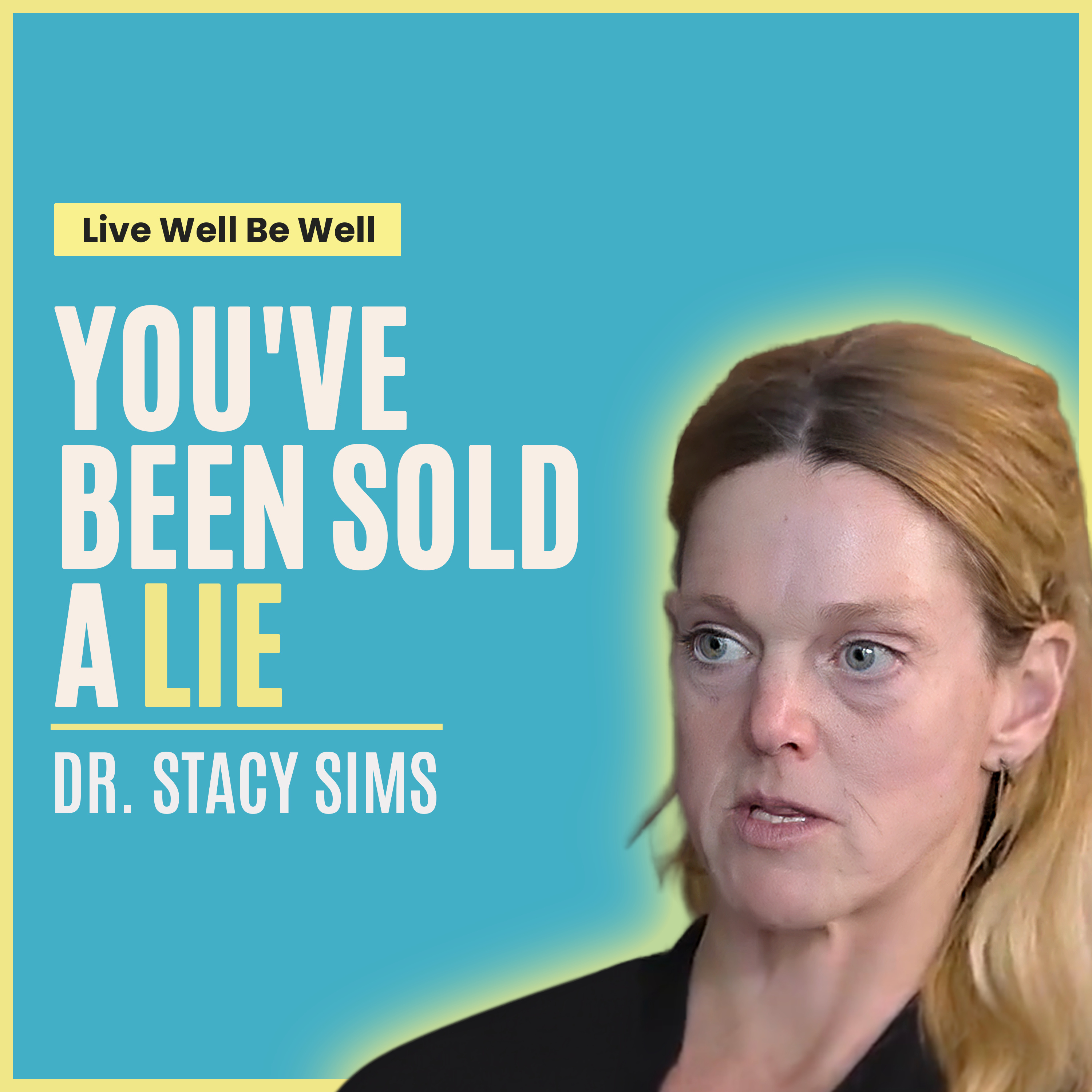
Explains menopause timing and stages (perimenopause, menopause as one calendar day marking 12 months without a period, early/late postmenopause) and argues that life after menopause can improve with the right preparation.
Dr. Stacy Sims, researcher/author and clinician who studies women’s health and has done lab work and interviews with women.
early postmenopause can still include hot flashes, brain fog, and negative effects; late postmenopause is a “flatline” with no hormones. Many women report better sleep and ability to build muscle and feel confident after symptoms settle, especially if they start earlier.
media portrayals like women “aging out at 40” and Golden Girls (actresses ~52, portrayed as old/dowdy) are cited as sociocultural misconceptions.
Written by AI. May contain mistakes.
Learn about the definitions of menopause and its distinct stages.
“So when do we get to that kind of end through the other side?”
Explore what women experience after reaching postmenopause and the benefits.
“Menopause technically is one day on on the calendar that marks 12 months of no periods.”
Discover the positive aspects of postmenopause that can enhance life.
“and they're in postmenopause that they can kind of hit the ground running.”
Examine how media representations shape perceptions of menopause.
“Because if you look at popular media, you look at just TV programs, movies, women age out at 40.”
Understand the importance of lifestyle changes during menopause.
“And that's why we're having these conversations to make women aware that it's not something that happens to you.”

Get the gist, explore an idea or ask about something said.
 Claude
On Live Well Be Well with Sarah Ann Macklin | Health, Lifestyle, Nutrition, what are the key points of this episode?
Searching your listeningAutomatic transcript. May contain errors.
0:00So when do we get to that kind of end through the other side? I'm so aware of how I'm talking about the language of this, but like how, when we feel that we flattened, what age is that? Yeah. So this is, depends on when you go, when, so menopause itself is defined as one day on the calendar where you have 12 months of no period. So we could say menopause, it could be a birthday on your calendar that marks now you're in a new biological state. We have early postmenopause and late postmenopause. Now with early postmenopause, some women still experience hot flashes and some brain fog and some negative effects, even though they have no periods.
0:40And that's just your body's still winding down. Late postmenopause is about the six or seven years after that one point in time. And that is completely new biological state where you completely flatline, no hormone, anything. So how you go through perimenopause and hit that one point in time and how your early postmenopause, that's going to dictate what you need to do. So your menopause is 12 months. So it's still perimenopause. Okay. Menopause is one day. One day? Yeah. Menopause is one day? Yeah. That's what I mean. Like menopause. I've never heard that. Menopause technically is one day on on the calendar that marks 12 months of no periods.
1:23All the time before that is perimenopause and all the time after that is postmenopause. So menopause is one day? One day, yeah. I don't think people think, well maybe it's just me that I don't know about that. No, it's common where people think peri and postmenopause is all menopause. Yeah. But perimenopause, you have early perimenopause, late perimenopause, then you have the one day on the calendar that's menopause. And then you have early postmenopause and late postmenopause. And what's it like in postmenopause? I'm not there, I don't know. But generally.
1:56Because I didn't think we would talk about this part. No, they don't. And I was like, maybe it's important to just put it out there. To put it out there. Yeah, so from research, lived experiences, like being in the lab, talking to women, friends who've gone through it on the other side, it is when everything settles down and it's new clarity, and then you know how your body's going to behave. And you can get into good sleep. You can build muscle. You can be confident in what you're doing. but most say they wish they had started earlier so that they are getting through perimenopause in a much better mental and physical state so that when they actually hit the other side and they're in postmenopause that they can kind of hit the ground running.
2:37That sounds quite a nice phase. Yeah. Which is quite nice. I always feel like it feels very heavy and I'm really aware to not want this conversation to feel heavy for women. Right. But it's quite nice thinking that that's quite a calm end. Yeah. And I think, again, it's a sociocultural construct around menopause. Because if you look at popular media, you look at just TV programs, movies, women age out at 40. So there, you know, you don't really see the other side. Did you see Debbie Moore? I know. Getting her Golden Globe? I know, exactly. She's in her 60s. I know. Amazing. That show Golden Girls.
3:16Yeah. It was on one of the Nick at Night reruns or something last week. And the average age of the women that were playing the Golden Girls, besides the mom, Estelle, was 52. But they all were made to look old and dowdy because that's what people thought menopause was about. So if you have that as a representation and that's what you've grown up with, And then in the media, people are saying, oh, menopause does all of these negative things to you. It becomes quite a scary endeavor where people don't talk about how you can get through this. And it's a natural process of life. And you get to the other side and it's still beneficial.
3:58And you can still have life and keep performing well and just expanding. And that's why we're having these conversations to make women aware that it's not something that happens to you. It's something that does happen, but you can actually do things to keep your life intact and navigate through it. But you do have to be willing to change. And you also have to be willing to embrace the uncomfortable. What I mean by that is embrace the uncomfortableness of high-intensity work, resistance training, changing the way you're eating. because our society is so ingrained into being so comfortable in the right environment, doing the same thing every day, that when we start to invoke change or being uncomfortable, it's scary.
This week's Live Well Be Well Moment is with Dr Stacy Sims, exercise physiologist, nutrition scientist and author of ROAR and Next Level.
My book 'Healthy Shouldn't Be This Hard': https://www.amazon.co.uk/Healthy-Shouldnt-Be-This-Hard-ebook/dp/B0G1DHNRV5
📖 If this resonates, you can join the thousands who read The Compassionate Cure each week.
https://sarahmacklin.substack.com/
Let's be friends!
📷 Instagram: https://www.instagram.com/sarahannmacklin/
📹 Subscribe: https://www.youtube.com/@livewellbewellsarah
🐦 Twitter: https://x.com/SarahAnnMacklin
📱 TikTok: https://www.tiktok.com/@livewellbewellpodcast
💌 Newsletter: https://sarahmacklin.substack.com/