
 Live Well Be Well with Sarah Ann Macklin | Health, Lifestyle, Nutrition
13 Nov 2026 · 8m

 Add vo to ChatGPT or Claude to ask about everything you hear
vo listened to this episode to put together the overview and transcript, so there may be the odd mistake.
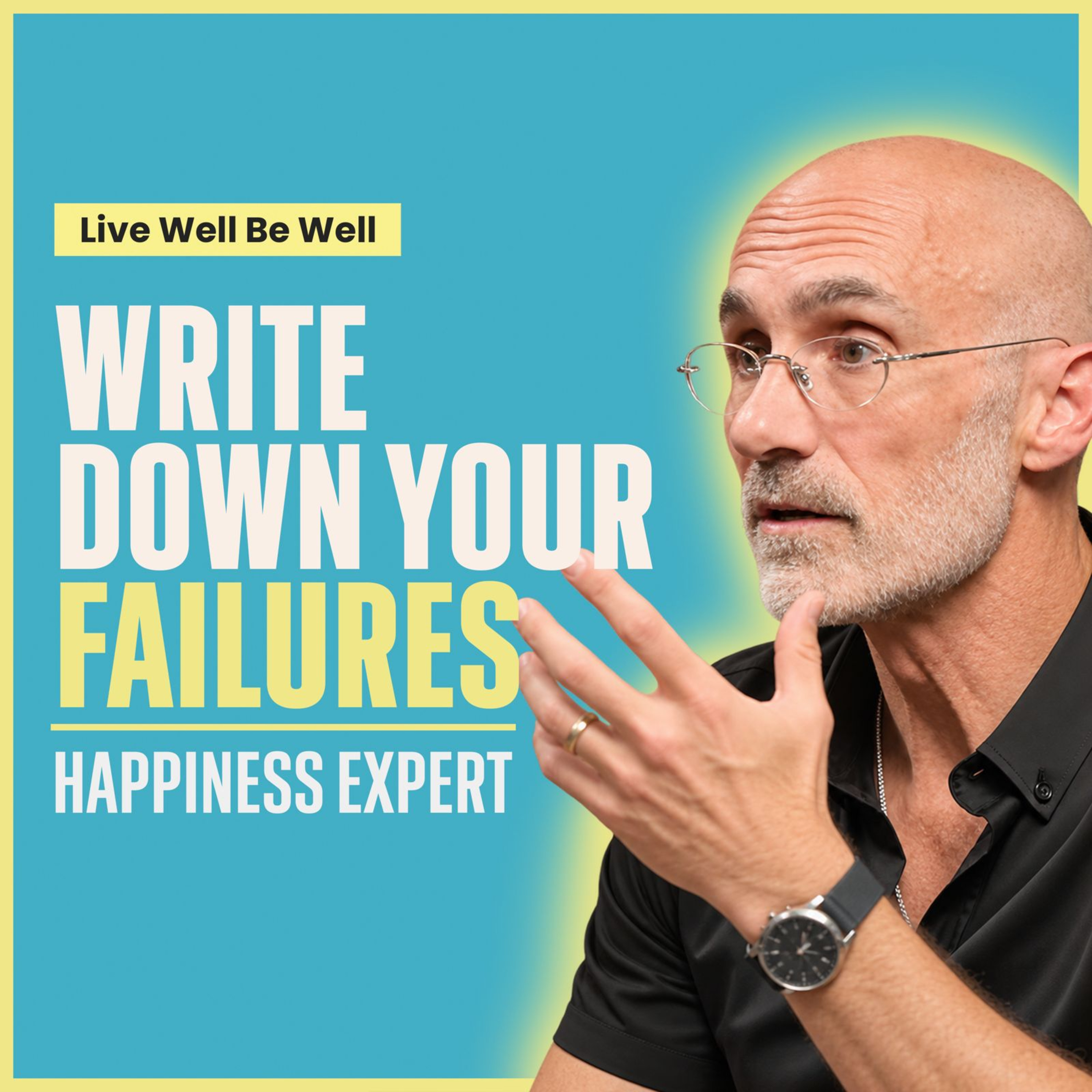
Dr Karan Rajan discusses how everyday hearing habits may affect dementia risk, focusing on noise exposure, hearing loss, and the (limited) evidence around wireless headphones/EMF.
Dr Karan Rajan (host/guest expert), plus the interviewer’s anecdotal references (e.g., a friend who is a DJ; the host’s own experiences at Formula One and a women’s final; “Brian” who advocates earplugs).
Hearing loss is associated with increased dementia risk, partly via reduced sensory input and social isolation. Inner-ear hair cells (stereo cilia) don’t regrow; loud noise bends them, causing lasting damage. Wireless headphones/EMF are unlikely to cause harm; high-quality data is lacking, and stress from fear matters.
Formula One and stadium concerts causing “hum/buzz”; ear “cleansing” vacuuming being extremely loud; using earplugs in coffee shops and at events like Wilderness/IBIZA.
0:00Last week, not an attractive thing to say, but I don't really care. I have my ears syringed. Oh my gosh, it was the most strangest, exhilarating experience I've ever had. When they kind of like suck out into your eardrums. Basically, I just felt like I couldn't hear. And so anyway, I went for this kind of ear cleansing, I want to say, place. And then I became quite interested in thinking about hearing in general. because actually I realized how sensitive it was when they were kind of vacuuming in my ear and it was very, very, very loud. And then I was thinking, I don't know if I think about my hearing that much.
0:39Listening to Brian when he came over last year, he's been speaking a lot on his platforms about wearing earplugs when you're around certain speakers. I have a lot of friends that are DJs who have actually started to get like, is it titanus when their ears? Yes, tinnitus, yeah. Yeah. And then I also heard on some podcasts on people saying and this is why i'm like this is very anecdotal obviously about wireless headphones not being great for being near the lymph nodes and like you shouldn't be wearing them so i was like well i've never actually thought about this it's perfect time to have this conversation so hearing let's start hearing how should we be thinking about looking after our hearing because most of us are walking around with heavy music in our ears listening to live well be well or music or your YouTube, how should we be protecting our hearing and how important is that?
1:27Dr. Karan Rajan: Yeah, in terms of the importance, I would say for a number of reasons, just, you know, for the actual, you know, hearing quality and preventing that from degrading, it's important, but also longer term, it is one of the best levers we have to reduce our risk of dementia because hearing loss has associations with increasing your risk of dementia. That's because you're getting the sensory input, right? Yes, and also the fact that it may be tied to social isolation as well. If you can't hear and engage in conversations and there's that social isolation element, which is also a risk factor for dementia.
2:03Dr. Karan Rajan: So hearing, getting your hearing tests and wearing hearing aids if it's getting worse, none of that should be taboo. Go and do that thing. But also the actual cells, the kind of hearing cells that we have, the stereo cilia that we have inside our ears, they don't grow back. Once they're damaged, they don't grow back. You've got a limited set. When you are exposed to loud noise or noise in general, they bend. And when they bend, that produces this kind of electrochemical signals, which then we register as sounds. That's kind of a translation that happens in our ears, like a little processor. If it's very, very loud noise, they can bend to a point where they take longer to kind of unbend.
2:47Dr. Karan Rajan: and if you've gone to a sports game, you've gone to a football game in a stadium or a music concert or after a night out and then you come to a quiet outside, you've got this general hum and buzz in your ears and so your hair cells being bent. That's how I felt after I went to Formula One the other weekend. Very loud. Yeah, and those would be useful times to have something in your ears. I mean, I went to the women's women's final a couple of years ago and I felt like that as well. It's intimate, but it's loud. Everyone's clapping off to every point. It's loud. You hear that. And, you know, that's a huge thing.
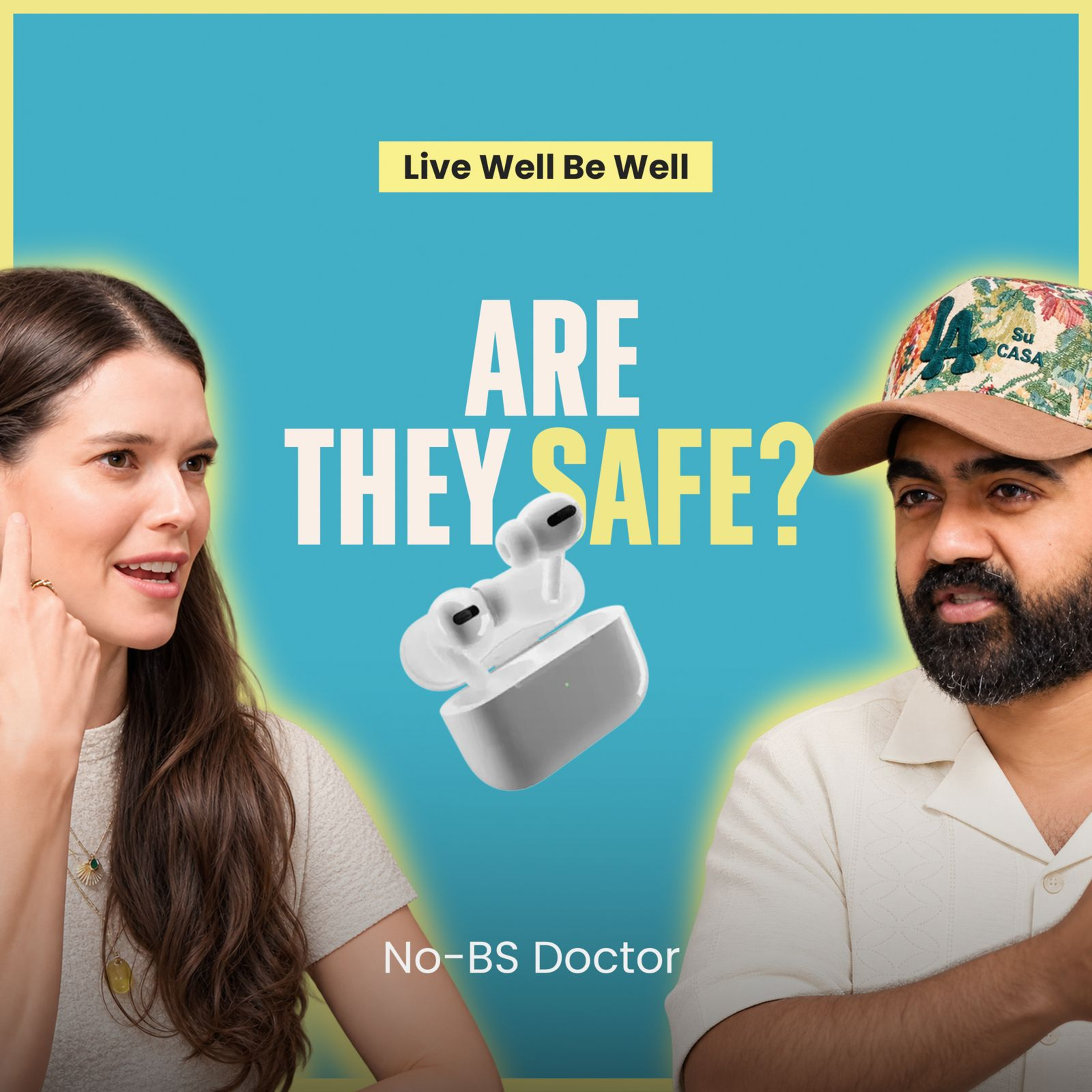
3:22Dr. Karan Rajan: So once you lose it, that's it. It's gone. You know, those hair cells. So worth maintaining that. And also the air buds thing you were mentioning, the sort of, you know, wireless versus, I think there's too much made of that, honestly. I think. Yeah, because I think the argument people make is about this EMF, electromagnetic frequency. That's non-ionizing radiation. It doesn't damage your cells in any way. It doesn't do anything. There's no high quality data suggesting it does. I would say that's a lot of fear mongering, but each to their own. If someone feels safer wearing wired headphones or something else, do whatever you've got to do.
3:58Dr. Karan Rajan: But if someone's already wearing wireless headphones, it's not going to cause you any harm. Really? Yeah. That's really happening. I'm willing to change my tune. If someone can show me consistent, high quality, with follow-up data, RCT, I'm willing to change my tune. He made a very big claim that he had, you know, his Bluetooth headphones and he was getting cysts behind his ears. And then as soon as he stopped wearing them, his cysts went. And he was like, I've realized it's so near my lymph nodes. This is obviously causing concern. That obviously spun me out. Someone who wears their wireless headphones all the time.
4:33And so that's why I wanted to kind of like set the record straight on where is the data on this? and am I going to be getting cysts behind my ears from not wearing wireless headphones?
4:43Dr. Karan Rajan: Yeah, listen, you know, without speaking on anyone specifically, there are certain people who may speak about a topic who are not topic experts, right? Speaking of N of one data is fine. And if someone has noticed that they've seen a regression in a problem because they stopped doing a certain habit, please carry on. If that's going to make you feel good, please carry on. even if that's contrary to what the data suggests, you do you, right? It's the same as like, if someone's taking collagen supplements for whatever, and then they feel some benefit and you like it and it's not causing you harm, sure, go ahead.
5:20Dr. Karan Rajan: But as long as you know that the data is not supportive over X, Y, and Z. And I would feel the same about this as well. If it's stressing you out, the fact that you are now worried about this nebulous harm from EMF or wireless headphones, and that stress is causing you tangible harm in your life, please do whatever you can to reduce your stress. Yes. And that's, I think, the main thing. So some people can get caught up in that trap as well. But I am yet to see high-quality data exposing any sort of consequential harm from using wireless headphones. I use it. I know a lot of people who do who don't have any problems as well.
5:59Well, I think that's just setting the data straight, which is just really, really helpful. um and when should we be using is it why is it would you say earplugs what is it when you put them in your ear obviously yeah is it earplugs yeah yeah there's loads of brands out now where
6:15Dr. Karan Rajan: you wear these sort of earplugs I think because I wear loop when I work just because I my neuro divergency struggles with very big sounds so I just like to put them in when I'm in a coffee shop but I don't think about it for my hearing I just use it for more of my yeah my concentration but if we're going to so for instance i was at wilderness this weekend should i have been wearing headphones um not headphones the plugs yeah that would have been a good occasion to do that so anywhere where you're going to be likely exposed to a lot of noise and to be honest even living in london and just walking around in traffic all the time and people are drilling somewhere randomly which seems to be everywhere you can make a case for wearing it all the time except when you're at home basically okay i'm going to ibiza this weekend i'm gonna buy some yeah that would be a very good occasion but it's been you know i just it's one of those things that you don't tend to think about when you're that young yeah and it's this is the time when you have to do it because it's preventative absolutely all of these habits that we think about we should be doing it in our 20s and 30s and just linking it back to dementia for example people are often diagnosed with dementia in their 60s and 70s and beyond, but the seeds for that, the risk factors are sown in our 20s and 30s, the habits that we have in the second and third decade of life.
7:35That's one of the things that scares me the most because my grandmother had Alzheimer's. And so I think, you know, watching somebody decline, who you love, he was very smart. I find it interesting. She actually had a lot of high sugar. But apart from that, she walked every day. She belonged to the church. She had a community. You know, she was very smart. and I kind of think about all these things you're meant to be doing and then you can still get it.
7:58Dr. Karan Rajan: Yeah, nothing you can do can make you immune to any disease. We're just trying to stack the deck in our favor as much as we can. Yeah. You know, like sleeping better, eating more fiber, exercising more, maintaining a healthy body weight, social interaction. All of these things are just risk-reducing habits. Nothing's going to make you immune, right? And I think we have to have context of that as well. I think that's so important.
This week’s Live Well Be Well Moment is with Dr Karan Rajan, NHS surgeon, bestselling author and Chief of Science at Throne Science.
He explains why protecting your hearing is one of the best things you can do to lower your risk of dementia, why the cells in your ears never grow back, and whether wireless headphones are actually anything to worry about.
My book ‘Healthy Shouldn’t Be This Hard’: https://www.amazon.co.uk/Healthy-Shouldnt-Be-This-Hard-ebook/dp/B0G1DHNRV5
📖 If this resonates, you can join the thousands who read The Compassionate Cure each week.
https://sarahmacklin.substack.com/
Let’s be friends!
📷 Instagram: https://www.instagram.com/sarahannmacklin/
📹 Subscribe: https://www.youtube.com/@livewellbewellsarah
🐦 Twitter: https://x.com/SarahAnnMacklin
📱 TikTok: https://www.tiktok.com/@livewellbewellpodcast
💌 Newsletter: https://sarahmacklin.substack.com/
Scan the code with your iPhone camera
Listen in the app.