
 Live Well Be Well with Sarah Ann Macklin | Health, Lifestyle, Nutrition
18 Nov 2026 · 1h 20m

 Add vo to ChatGPT or Claude to ask about everything you hear
vo listened to this episode to put together the overview and transcript, so there may be the odd mistake.
The episode debates why many people feel “doomed” about the future (AI catastrophe, climate making society untenable, falling birthrates, debt leading to war/autocratic chaos, and ideological winner-take-all conflict) versus why the guest argues optimism is more realistic and useful. It also explores how social media and doom-scrolling intensify pessimism, why people crave certainty/control, and how “good news” is less compelling than drama.
Zachary Karabell, author and editor behind the “Edgy Optimist” newsletter; he discusses his investing background and writing career, including being motivated by the post-2000 era’s repeated crises. He also appears as the host’s conversation partner (the host is not clearly identified in the transcript).
Fears aren’t realities; pessimism can become an arrogant false certainty and a self-fulfilling doom loop that reduces investment, education, and action. Yet people often feel optimistic about their own lives even when they’re pessimistic about the world. Social media can worsen pessimism (Karabell cites his poll: 71% pessimistic about the world; 76% say social media made them more pessimistic about their own life).
South Korea’s “four no’s” movement (no babies, no dating, no men); retirement accounts/investments contradict stated beliefs that markets are rigged; nuclear-annihilation fear as a historical parallel to AI fear; “Tomorrow World” as an example of lost future-dreaming.
0:00I certainly have moments where I'm like, okay, is AI actually going to kill us? I actually did a poll. How many people feel optimistic or pessimistic about where the world is headed? 71 % said they felt pessimistic. You're the edgy optimist. I am. If you want someone who's listening to this to change one view or belief about their future, what would you want it to be? Fears are fears, but fears aren't realities. Anyone can list what the top five things that are going to screw us all. AI that's going to either obliterate life as we know it or enslave us. We're going to live in a warming planet that is going to make human society in many parts of the world untenable.
0:39No one's going to have babies. We are living on borrowed time by accumulating massive debt that's going to lead either to war or to some sort of autocratic chaos. You mentioned something there about people having less children. Everywhere in the world, women are having fewer children. And the rate is startling. More and more people are saying, I don't want to do it at all. And women are saying, you know, there's a whole movement in South Korea of the four no's, right? No babies, no dating, no men. I've got another reason. Yes. From a woman. Yes. And I think that is being, like, massively overlooked.
1:11I think that is a theme cross-culturally. So the 71 % on Instagram who said they feel bad about the state of the world. Look, I do think... Zachary, welcome to Live Well, Be Well. Thank you. I will. I will try to live well and be well. Well, we're going to do that today. Okay. Because we're going to explore optimism and pessimism. Now, I actually did a poll on my podcast. Now, just a caveat. You write the Eddie Optimist newsletter. Correct. Just to kind of say where we're going to go. Now, I actually did a poll on my Instagram before coming on to this. And the poll was, how many people feel optimistic or pessimistic about where the world is headed?
1:55I'm going to tell you the results, but not yet. What do you think the results were? I think that 70 % were pessimistic about where the world is heading and 30 % were optimistic, but that if you'd asked them about their own lives, it would have been the reverse. Interesting. Did you see my poll? I did not see your poll. Okay, so 71 % said they felt pessimistic and 29 % said they were optimistic. I swear to God, I did not see your poll. People are like, this is a spoof. People, you definitely knew. No, I did not. I mean I do read your Instagram sometimes but I did not read that I was too busy recovering from my night well but I think if you'd ask them how they felt about their own lives well then I did ask them another question oh you did I'm sorry I'm preempting again I did ask them another question which I was going to bring in later but interestingly I then said has social media made you feel less or more pessimistic about your own life I would say more than the 71 % said yes 76 % said more.
3:01Because I tie, and we're going to go into that a bit later, because I think the news is a really interesting current state of affairs of where we are right now, also in how we're viewing the world and where it's going, and the dystopian of the AI future that we feel that we're heading into without any form of control. All different things that are shaping beliefs, feelings, thoughts. But before we get into any of that, what is your definition of optimism? So my definition of optimism is cribbed from David Deutsch, who was a British theoretical physicist who I think recently died in his late 90s.
3:36And that optimism is not the certainty that tomorrow will be better than today. Optimism is the humility that none of us know. And there's a way of actually looking at pessimism as more of an arrogant statement of certainty about future outcomes, that you know things are going to be worse. So my definition of optimism is, one, none of us know. Two, we need to be humble in the face of that unknown. And three, most crucially, that given that we are all in the business, literally, figuratively, metaphorically, of crafting the future for ourselves, for our families, for our communities, for the world, it is incumbent upon all of us and each of us to try to work toward creating a future that is of our dreams and not a future that is of our fears, and that that is what will determine that future, which is also cribbed a little bit from Karl Popper, who was a late 1940s intellectual.
4:37So those are my definitions of optimism. What was it about the second question that you said, if their people are more in control of their own lives for the future, that they would remain more optimistic? It's not that. It's that in general, in my experience, people tend to feel somewhat good about their personal lives. And they feel, for instance, that their children's schools are decent, that their local community is good. that their neighbors are good people. It's when they start talking about the world beyond their own personal experience that the equation flips. So people are, in most parts of the world, very negative about the world or about the government or about the state of education, crime, health care.
5:27But they are much more constructive and positive about their own experiences and their own lives. So an interesting conversation that we had actually on iMessage, which disappeared very rapidly and I asked you to repeat. Yes, which you've now learned. Thank you for teaching me how to say it. It's very different in America. Nobody iMessage is in Europe. Because everyone WhatsApps. Exactly. That wasn't what you taught me. But optimists are more likely to succeed, which was interesting because there's a saying that pessimists sound smart, but optimists make money. Yeah. Now, this one's very debatable and unprovable, meaning there's no data set, scientific study of double blind, of a group of optimists and a group of pessimists, and you studied them from 15 to 65.
6:14I would like to see that study. That would be great. Yeah. What was that English filmmaker, the documentary 30 and up, and the one where he went back to the kids a generation every five or ten years? Oh, yeah. That's just come out because now they're 70. Okay. So yeah, he's done it every decade for like 60 years. So it'd be fascinating to like do that with optimism and pessimism and just sort of see. Although even then you probably wouldn't have a large enough. 70 and up. 70 and up. But it was like 10 and up, 20 and up. So we don't really know. And it's debatable. And many people will say, well, actually pessimists are better investors.
6:48They're better at kind of gauging the world because they're looking out for threats. and then when inevitably things go wrong, they are prepared, whereas an optimist sort of walks around dreaming of beautiful things that don't happen. I don't know. I do think that societies, though, that are mired in dystopian doom loops that are sure that the world is focooked, those societies tend to fall into the dysfunctional patterns that are very familiar for sort of sclerotic problematic countries or societies where, you know, think about it. If you really firmly believe that tomorrow is going to be worse than today, if you really, really in your bones believe that whatever system that we're living in is corrupt, cannot be changed for the better, cannot be remediated, if you really believe all the negative things that are happening, that the planet is going to warm to the point of human extinction.
7:52There really isn't much point in investing for tomorrow, starting a business. There's not much point in getting an education. There is not much point in doing anything other than getting as much as you can, as quickly as you can, to live as well as you can for as short a period of time as you have, or to protect your clan and your family, us, not them. and you see that behavior in I don't know countries like Egypt or which are perfectly semi-functional but but do not tend to have the dynamism of crafting something going forward because it it seems pointless and hopeless and you know one of my real concerns about the world today is is the waning of that culturally I think can become its own self-fulfilling doom loop its own self-fulfilling prophecy because when you start losing the ability to to foresee a better future it becomes an obstacle to creating a better future um and even then you know there's a disjuncture between how people are actually behaving and what they think so if you did a i'll use the the british way of doing this the corollary i say corollary but you guys say you We say a lot of things differently.
9:10I can't even say it. I'm getting all tripped up. If you ask a room of people, do you have a 401k, a pension plan, a state pension plan? Do you have some sort of retirement account? You know, most people, middle class and up in many parts of the world, UK, Europe, United States, will say yes. you will ask them do you think the stock market is rigged or it's a casino and most people will say yes but most of them are de facto invested in that market every day all the time if you say do you think there's a bubble in AI and is it a bad thing many people will say yes almost everyone owns a share of NVIDIA because their retirement accounts are in index funds, of which NVIDIA is one of the largest companies in the world, along with Apple.
10:08So even then, behavior, do you think your kids should get a college, get a good education? Almost everyone will say yes. So we are behaving as if tomorrow is going to be better than today. We're behaving as if stocks are going to go up and education is going to be worth something Because if we really believe that tomorrow is completely a disaster, there certainly would be no reason to invest in stocks, right? You don't put money into something with the conviction that it will be worth less tomorrow than today. And why would you spend time and energy on education? Why would you take on debt? Why would you buy a home?
10:47What about the crypto market? Well, that's a little. I mean, everyone who invests in crypto thinks it's going up. I mean, nobody thinks it's going down. They think it's going, like, way, way, way up. They may be completely wrong about that, but they believe it. But something that I find quite interesting that I took from that, do you think pessimism is a form of control? I mean, that's interesting in that I think that's where people have remarked that they feel pessimism is an arrogance because it's a false certainty about bad future outcomes. So in that sense, yes. I mean, I do think human beings everywhere from time immemorial crave certainty and control.
11:30They certainly crave stability and safety. Yeah, it's a human need. That is a human need. Whether or not, I mean, there are clearly some societies and some sets of humans who are much more willing, you know, let go, let God, who are willing to let go of control. And a lot of religions, I guess, do to some degree preach that, you know, control is an illusion. but they preach the control as an illusion because human beings want it like you no one ever passed a law to prevent people from doing things that they weren't doing no religion ever preached virtues that were not in the face of the vices that they are juxtaposed to so you know there's a reason that these things are are tried to be inculcated because human beings are always trying to know.
12:16And false certainty is endemic. But a lot of people will take false certainty over genuine uncertainty because uncertainty can be unsettling and scary and, you know, the unknown. Another thing about optimism, right, is it's the willingness to confront, embrace, plunge into the unknown. It's the willingness to try to explore it, to know it, whether that's the unknown of the human body, the unknown of consciousness, the unknown of new territories, as they said in Star Trek, new life and new civilizations. Guys, it's taken me eight years, but I finally wrote a book and it's called Healthy Shouldn't Be This Hard.
13:04And actually became bestseller this May. Very exciting. Now, if you want more self-compassion in your life and you want to know the reasons on why that is so important I tell you all in this book and I give you a lot of tools to help you get there it's definitely been a lifesaver for me and I know many people that have read it it has for them too so if you want to check it out head to my bio or the show notes below you'll find the link to the book the thing that you're saying about optimism though it's not positive thinking right that's not what it is it's about i guess well you said humility but also i guess there is hope with optimism i guess that's a big part of it yeah but my poll 71 of people feel very pessimistic yes so what happens when culturally society starts believing or starts losing faith in the future ahead like how does that shape us because I can think about that as an individual level I can think about that in relationships you know you you're looking online you're like I'm never going to meet somebody and you become this false prophecy self-prophecy in your mind that you're never going to meet anyone or I am an introvert so I don't want to go to parties and no one's going to speak to me and everyone's going to hate me so you go into that party and you're quite closed and then you leave early and you told yourself yeah actually nobody was going to speak to me so i can think about that on an individual level what happens but then what happens when on a societal level 71 of people who seem to follow me and to be honest if i was maybe asked that question i would be quite split in how i would answer it takes form and more of a pessimistic view although what's intriguing is you are anything but pessimistic in your outlook, in what you write, in your show.
14:58Yeah. So clearly people are not following you to have those views reinforced. Exactly. It's the opposite. Right. They are following you because there is some desire either to challenge those views or break out of that self-imposed doom loop and maybe collectively imposed doom loop. And, you know, the social media question is fraught. I think there is an emerging consensus of all the harm social media did a generation of young people who kind of came of age 2012 and at the time on Instagram and some of these really start defining what we would now call social media Facebook was around before that and so was the smartphone but like just in the past that 10-year period you know and yet as anybody who scrolls through anything which is all of us there's still a lot of just amusing wondrous entertaining informative uplifting stuff the executive director of the progress network which is the non-profit i founded uh named emma varva lucas is coming out with a book about how to stop doom scrolling how to kind of train your own algorithms train your own feed and i think people kind of know this that you can cleanse your feed train your feed it's not it's not a purely passive experience um it can feel that way but it's not and i think the issue is more when we get rooted in a societal narrative of and look i mean you and i anyone can list what the top five things that are going to screw us all we're gonna we're gonna be in some matrix Eric's nightmare of rise of the machines and or AI that's going to either obliterate life as we know it or enslave us.
16:46We're going to live in a warming planet that is going to make human society in many parts of the world untenable. No one's going to have babies, so the population is going to go from too many to too few with vertiginous speed. we are living on borrowed time by accumulating massive debt of every government and every person in the world that we will be unable to repay and we're living in a world of contrasting ideologies that seem hell-bent on having a winner-take-all mindset that's going to lead either to war or to some sort of autocratic chaos. And those are not happy visions of the future. And also most people feel like their government is corrupt, that society has stopped representing them, that things aren't affordable, that only a few are benefiting while the rest either muddle through or suffer.
17:42And if those attitudes become too entrenched, then you get back to the conundrum I talked about at the beginning, which is why bother, right? you don't even it's sufficiently innervating that it doesn't even generate radical passionate action of like I'm going to do something about it, tear it down, rebuild it, it leads to sort of an ennui and a disengagement and a throwing up of the hands and I am concerned and I say this more as an American than anything else because I think a lot of the ingredients of American success were a sort of overweening naive optimism The American dream. The American dream.
18:23But it was also a, you go to these world's fairs in the 30s, 40s, 50s, and the Hall of Tomorrow, and people go to Disneyland now. There's Tomorrow World. It's very hard to imagine someone creating Tomorrow World today, even though today is the Tomorrow World that was forecast in those moments. And I think if we stop dreaming of the possibility of a better future and a better world, it does concern me that we're not able to create it. I mean, weirdly enough, the Chinese Communist Party does have a vision for a better world. It is not a vision that I particularly would want to inhabit, but it is a coherent vision.
19:04Very different structure. Very different structure, yes. One person's vision? I think they think it's a party's vision, articulated by one person. That would be the generous way to put it. How did you get into writing about the edgy optimist? Like what was it about this view of optimism that intrigued you? So it was 2009 and I had been investing a lot, but I'd also written a bunch of books and was starting to write more. But it was also on the heels of the financial crisis or what I guess non-Americans call the global financial crisis.
19:43and I was struck by just how negative everything had been really since the internet bubble crests in 2000 so March of 2000 the Nasdaq makes a peak which it does not then recapture until I think 2015 or 2016 then 9-11 happens in the United States then the markets kind of fall apart again in 2002. And then you have all these really dramatic corporate scandals, Enron, WorldCom, Parmalat in Italy. And then you have the housing bubble, and then you have the U.S. war in Iraq. Then you have the global financial crisis. And it's sort of been a litany of things since then, although at that period of time, China is taking off, India is doing better, Brazil is actually creating a functional democracy.
20:34so the story was not like everywhere in the world was grim but it was certainly true that for the most part um every time i gave a speech every time i did a hit on television everything was always about you know when's the shoe gonna drop when's the thing gonna happen that's bad and relentlessly and people trying to game out like what what the next crisis was gonna be no one was thinking about like what's the next opportunity gonna be and yes they were doing that too and investing and so i thought look it's it would be worth looking at um the upside that we're not looking at but i also felt like having remembered the 1990s when you did have this brief moment of kind of western euphoria uh you had it in europe after the formation of the european union in 1992 not at all you know you had it with like in in the uk with the election of tony blair everyone thought you know it's like the world is going to be new um you had it in the united states politically with you know a lot of different factors end of the cold war and technology and the internet and computers and it was all going to connect us and make us rich and and i i thought like that was a moment where my optimism was never oh things are perfect so the reason i called it the edgy optimist is that i also wanted the opportunity to pivot should the cultural needle move back in the direction of the 90s.
22:05Because in the 90s, I would have, you know, had I been doing this, I would have been saying, wait a minute, don't get too far ahead of yourself. There are things that are also not working here, hence the edgy part. So it would not have just been, ah, this is all incredible. Now, since I started doing that, and then the column stopped for about six or seven years, although I kept writing for different publications, uh there we seem to be in no immediate risk of a sudden outbreak of optimism so the edgy part remains i think a i never want to be accused and i never want to be the person wearing rose-tinted glasses you know i'm not a pollyanna i'm not uh the the candide figure in voltaire saying this is the best of all possible worlds although maybe at times i do say that like i i I do think this is probably the best of all worlds that have been possible to this point.
22:56That we live in today. Yes, albeit radically incomplete and radically imperfect. So that's why I called it the Edgy Optimist, because I didn't want it to be walking through a field of daisies without a full recognition that the human condition is constantly a muddled mix of terrible and beautiful, of immense ability to create an incredible capacity to destroy. And that needs to be, I think, respected, honored, acknowledged always. Guys, we have hit 100K on YouTube. Can you see this epic plaque that is behind me? Thank you to every single one of you that has subscribed and helped grow the show with beans an absolute massive amount to me and everyone who works on this show.
23:44And if you haven't, If I could please kindly ask you to press subscribe, it would mean the absolute world. Thank you. I mean, I find it interesting. The people that are more optimistic, I naturally gravitate to. I mean, you just naturally do. I feel like it's a weirdly unspoken superpower. Yeah. In that way, you tend to have more friends. You tend to fill yourself with more opportunities. Is there an understanding on why people are more optimistic or pessimistic? None that I know of. I mean, look, there is a nature-nurture reality here that is there are cup-half people, there are cup-half-full people, there are cup-half-empty people.
24:25I think you can see, you know, there are Eeyores and there are Poos and there are, you know, Piglets and all of the above, right? Which one are you? You know, I don't, I mean, that's a good question. Which one are you? I feel like if Tigger and Eeyore had a love child, That would be Zachary. Which is a, I'm trying to picture what that would even look like. A lot of ears.
24:57So I don't know that that is something you choose. Temperament. You know, I think life experience moves the needle, nudges us in one direction, nudges us in another. trauma obviously shapes things so you can be inclined toward one and be pushed by life experience somewhat toward the other and the other question which i have much more over the past 10 years or so is am i simply feeling am i is it easier for me to look at all the things that are going right in the world because so many things have gone right in my own life and while my my own life is not you know one one breezy moment after another you know net net from a kind of a cultural perspective things have gone more right for me personally and professionally than they have gone wrong um and we could get into the philosophically what does that even mean right and wrong so it's easier to then go oh you know do you think that's your optimistic view i don't know i don't know because this what i always find really interesting is the conversation around luck how is one lucky and you can distinguish that in many ways obviously you can be born into more of a lucky more privileged life um you know which that's very much both of us like we're sat here we've you know we had a roof over our head you know we weren't starved you know the very like basics of human needs but then it can evolve what type of class were you born into maybe more prevalent in the UK than the US but you know class system is also a big thing of like a privilege into life you maybe get an extra fit up but then after that how much does luck play a part in whether you're more optimistic more curious put yourselves into situations or hold yourself back clearly luck is such a huge part of anybody's you know quote unquote success if by success you mean the ways in which society measures success you know job career income family luck plays a huge part in all of that and no one should ever think that whatever they've done is purely a product of anything that they've done it may be partly it may be substantially but it is never purely and bad luck is also endemic you know i've written a lot of books none of them become bestsellers is that bad luck it's bad luck if your entire goal in life was to write a best seller whatever that means we've still got one coming out next year my point you can plug it if you want my point being you know i don't know that that counts as bad luck but it certainly doesn't count as good luck uh marketing marketing yeah no the marketing was fine uh but how you interpret your luck is very much up to you you know do you do you integrate bad experience do you integrate challenging painful difficult experiences as part of a a negative thesis of one's life or one's society do you integrate them as none of us you know my mom um used to say nobody gets out of life alive so you know do you my tracks yes yeah that's yeah i mean that may not be the most uplifting stuff uh I'm an optimist so like how you interpret luck do you interpret it as something done to you do you interpret it as we're all subject to a series of things that we could call lucky or unlucky and how do you do that do you not think that you can create your own luck like I think you're born into different forms of where you start but do you not think that you can also create your own luck or that you can put yourself in those positions where you're open to more opportunity, like more surface area?
28:56I think you can meet more people, you know, which if you're in any profession known to man, knowing more people is better than knowing fewer people. You just never know. You never know what those things will lead to. I think constantly putting yourself in harm's way, What I mean is constantly doing things where there is a possibility of failure is a way to generate your own luck. Because what you're doing is you're giving yourself the opportunity. With the full knowledge that that is also the opportunity for things. To go wrong. Yes. So you have to be, you know, whatever, dumb cliches, no pain, no gain.
29:45But it is also a truth. High risk. Yeah. High reward. Yeah. I'm a big believer in the surface area. Yeah. I do think that the more that you can expand, for instance, I mean, this podcast came out of nowhere. This podcast came out of me sitting in my room with a 10-pound mic in the midst of COVID, feeling really isolated. I had no idea what I was doing. You could use the mic for weightlifting too. Exactly. You know, there's five kgs building all the muscles that I need. which you also write about which i also write about that's true yeah you know well i can do at the same time but it did i mean it did change the course i had no idea how i had no idea how it's going to change the course of my life and it wasn't it didn't just kind of happen it was hard but the increase in surface area has been something that i had no idea that was going to come out of something that i started the amount of people i mean we've done over 500 episodes there's 500 conversations it was such a breadth of different verticals not just health I mean it's kind of expanded far beyond that now and when I think about luck I think I'm completely in agreement with you that a lot of it can be what you're born into and the opportunities that you have but when you get to a different type of conversation around like the increase in surface area and thinking about people that are maybe more curious I think you can really kind of expand your luck because you're more likely to be put into situations you're more likely to not fear the rejection and just go for it and not overthink it more touches which are more opportunities and you know the reason why roulette is such a dicey game is is you really are it's it's an extraordinary bet on very very singular luck yeah um now if you bet on every single square on the roulette table then you have reduced the luck you've also spent more money and you've you've you've diluted the gain but the point being um you know we shouldn't live our lives like a roulette wheel you know if you've got a great idea it's great that you've got a great idea odds are still that that great idea will go nowhere, no matter how great the idea is, for all sorts of contingent reasons.
32:06But if you've got 10 great ideas, or 10 drives, or 10 designs, the more you try, the more you expose yourself to just the fickle fortunes of fate, turning your way and not turning against you. When I first tried to write a book, weirdly enough, it's funny I'm saying this because I hadn't been thinking about it, I wanted to write a book about gambling in America, culturally. And I wanted to write a book about things like lotto winners and Indian casinos and to see how the culture of gambling was woven into particularly American history. I think I got 20-plus rejections for that book. I had an agent, so that was useful.
32:48I think it was easier to get an agent then. and then I tried to do another book about the irrational fear of Islam and I got even more rejections but in that process I also got a lot of notes and letters from some editors who rejected the book saying not really for me I don't think this is a great idea but a promising young writer I look forward to hearing his next idea. Maybe that was, I don't know, 15 % of all those rejection letters had that sort of note. And at the time, I took away from that, wow, this is great. I didn't land the deal. This didn't work out. But I got a lot of encouragement along the way going, okay, this is the right track.
33:39And so what I took from it wasn't, got all these rejections and i'm like i'm not sugar cutting i didn't love getting the rejections i didn't sit there going whoo that's great man but i really did take from you know i took the crumbs that i could take and and use that as fuel to keep going rather than going oh but i didn't i didn't will myself into that that simply was how i experienced it But I think, yeah, I think I see myself as quite similar in that, in many ways. I mean, I was told I wasn't smart at school, and then I killed myself to understand my brain, and, you know, I got one of the top grades.
34:23Right. So it was like the opposite, you know, somebody telling me no, I wanted to see a yes. It took me a while to get there through those couple of years, but it propelled me. and similarly when I had my book I didn't get the first offer I got rejected but it propelled me I think a guy told me that I was never going to write a book so I said I'm a copy of this that's more also you reacting to the no by going I'm not taking no for an answer but it's interesting because I think for some people that's really hard to hear like it wasn't easy for me to hear it made me angry but I used that anger as a force to be like, no, I want to prove, I want to prove this to myself that I can do this.
35:09And nobody should never tell you, like, you can't do something. That is definitely true. I mean, I think in general you should never say that to anyone because you never know. You never know. You know, and I think that's... I mean, except maybe about certain sports things. Like if someone said to me, you know, I will never play center for an NBA basketball team. I mean I feel like that one someone could say fairly like that doesn't strike me as an inadequate and inaccurate thing to say I will never be Pope I think was as much as I loved the vestments so I think there's some things you can say to people you'll never do that but you should be really careful about what you say particularly to any kid oh you'll never dot dot dot first of all like what's the point yeah i mean also it just wasn't true yeah and also people will like they can figure out on their own steam what they can and can't do absolutely and should but i think that is the difference between how you can take information and use it as a force similarly to your book rejection i think this is something that a lot of people don't talk about is the rejections before they get there because i think there is this lovely thing on social media now where you can open up social media and you can just see everyone smashing it right immediately but not struggle to get there you know and you're you know i was told a lot of the time to not stop working like you're overworking and then everyone tells you well done when you make it which i find quite interesting you know it's kind of the 10 years of intensity but when you make it it's kind of like well done you've done really well i mean this has always been the joke right nobody posts pictures of a shitty day, right?
36:55Or, you know, there's no, like, video online of a family fight. Or a bad Christmas. You know, or people looking right down. I mean, who goes and has the perfect Christmas every year? You never see pictures of it. You never hear about it. Everyone looks good. You know, everyone smiles in their Christmas cards. And people have joked about this for years, right? It'd be great to have some alt version of where people posted true pictures of their holiday. Or quotes that were said. The bad ride from the airport, the cruise where you got sick. Whatever it is, it never shows up. It all looks beautiful and wonderful and perfect and idealized because that's the image we want to portray on that.
37:46We don't want to see, which is weird, right? Because we do want to see and listen and consume all the bad news. We don't want to consume personal bad news. Why is that? That's quite an interesting... I don't know. I never thought about that. Yeah. We're not hungry for good news collectively. I write about this a lot. Well, you write about good news. Yes. And there is some fantastic publications that also focus on good news, but they don't seem to do that well. No. And I think as a commercial entity, nor do mine. Which is why it's a non-profit. If you think about the Daily Mail. Yeah. Not a compendium of good news.
38:24I mean, it's very dramatized. Every headline is very dramatic and soul-destroying at the same time. And it's fear-mongering. But it's read by millions. It's one of the biggest publications. They're very good at it. They're very good at it. But why are we so drawn to it? I mean, is it like a dopamine hit? What is it? because I feel like news has always been around for nearly the last 100 years, since the newspaper came out. Interestingly, that's when the definition of success was changed. Interesting. Because I find the definition of success fascinating. And it actually changed when newspapers came out.
39:08And because it was more to succeed in public for that very reason. But if you look at that, news has become maybe and i could be wrong but more intense more negative i think the velocity of it has become more intense and we're having the noise is much louder there are far more inputs coming at us you know it's not just the daily paper or one tv show or one radio program or before that a paper if you read so the idea of news coming at you is also along with the definition of success a very in human terms a recent phenomenon i mean there's always gossip and there's always heard on the rialto and you know human beings did convey information to each other somehow some way um i i think there's the tolstoy line at the beginning of anna karenina where it goes essentially there are no novels about a happy family because every happy family is the same but every unhappy family is unhappy in its own particular way and you know this is long before the modern news not long before but it is before the modern news that he's writing that and it's an observation about human beings are drawn to drama and for the most part happiness optimism contentment can feel both static and boring a new a weather report that says the next five days are going to be sunny and temperate isn't really interesting it might be useful but it's not interesting whereas an impending hurricane or a nor 'easter or a tsunami are interesting those are dramatic those are big things that are happening there is no good news as it is understood because it doesn't draw human attention the way drama does.
41:08And that has been true forever. So think that there's only one difference between a Shakespearean comedy and a Shakespearean tragedy in the arc of the story. What is it? What is the one difference between comedy and tragedy? Death. Tragedy ends in death and comedies end in Shakespeare and comedies. Love. They end in love. They end in marriage. That's why Romeo and Juliet was such a tragedy. That's right. But the arc beforehand is almost entirely the same. You start with an established situation, established relationship, established a monarch, a society, and then something happens that upends it, that disrupts it.
41:56the disruption in it in tragedy ends very badly the disruption in comedy ends with either order restored or love found but in order to get to a good ending you still have to go through drama right it's not like a comedy and a romance there's no romance film there's no chick flick that doesn't have a breakup or a near breakup or something that threatens the relationship in the middle in order to get to something positive at the end. Because otherwise it wouldn't be interesting. A love story is interesting because there's something that threatens it, even if it ends well. So I think that is part of the problem of good news.
42:43We don't know how to frame good news in a way that is dramatically compelling to our craving for stories.
42:55And some of what I do through the Progress Network does beam out little stories of good news, and it does so kinetically and visually and somewhat interestingly. Most of what I write is not, hey, there's good news. It's, hey, we're not paying attention to this to our collective detriment, and here's why, which is both good news and bad news. It's like, hey, there's a problem here. And the problem is we're not paying attention to things that are going well. But it is not simply, hey, things are going well. Because things are going well isn't interesting for the most part. Except occasionally as an offset to the avalanche of all the things that we're looking at that are going badly.
43:33How do people navigate? Or how do you navigate, for instance? Because I have to take breaks. Like I have to take breaks from reading the news. Because I don't feel great. Yeah, I think to me it's just data. And neutral data. In that I'm, I think what I've internalized is it's all just part of a story. It is never the story. And so while I feel it's very important, I like to be informed, and I like to read a lot of different sources, I don't take any of it as a proof statement of anything. It is all limited. It is all partial. it is all only one sliver of anything that is going on at any one time and so I don't tend to get lost in it because I don't believe it to be the truth with a capital t and a capital t I believe it to be a truth and one that is useful to be aware of and that to me makes it much easier not to sink into the pit of despair although you know I certainly have moments where i'm like okay is ai actually going to kill us uh what i've i i remember the kind of vestigial fear not very vestigial the deep fear of nuclear annihilation that oscillated through most societies from like the late 40s really into the late 80s i mean today but people are not as palpably scared of nuclear war or at least they're not talking about it the way they are talking about ai or the way that you know we're talking about technology killing us but it's there you're right it is a fear that sort of floats out there uh at some point we we learn to live with the uncertainty and the fear of nuclear annihilation it's not that it went away we simply well first of all we it didn't happen right so that was comforting in that the possibility of it loomed for decades and it didn't happen so people genuinely became less scared and it became more part of this is just one of many things that are threatening assuming that ai doesn't kill us first of all i feel about the ai thing i mean we're into extremes here with ai it's like we're either gonna be back into a community and all not needing to work because the robots are doing everything for us and we live a harmonious life again and go back to feeding our purpose or ai is going to genuinely kill us right and if it's genuinely going to kill us i feel at this point you know i'm not going to lose a lot of sleep over that because it doesn't matter meaning if it's going to happen it's going to happen there's certainly nothing i'm going to do about it or you're going to do about it or any of But I guess I may interrupt you on that one because people will say that we're training the AIs right now.
46:31So even everything ourselves as consumers are feeding into the AI, like our beliefs and how we feel is all training and algorithmically giving the AI its strength that it's got. So we do kind of partly, smally. I mean, not on a government level. If we all stop today magically, you and I just stopped going online. so I'm only gonna buy books hard you know hard gonna buy your yes please healthy shouldn't be this hard available in the UK and we're gonna read hard copies of of magazines I don't know there would still be plenty frontier models would still consume vast content that we're not generating because there's enough out there to feed it I don't think there's a I mean I think we're past that point now sadly but yeah so if this is happening it's happening It's, yeah.
47:21And, you know, living your life as if it's not seems to be the wiser view because the alternative. That you just ignore that it's not happening? No, what I mean is if we're headed to some sort of Armageddon days, then we are. And we're not going to change it. And I don't know what the probability is. You know, it is neither high nor non-existent. I believe it to be closer to non-existent than high. but you know people come out there and like i think there's a 15 chance of ai doing x i'm like where did you come up with the 15 you know what's your data set how'd that how'd you do that one um
48:03so reading the news does entail if you're going to be at all aware occasionally stepping back and challenging our own filters and presumptions of i think things are going to be okay but maybe they're not you know i think whatever is going on in the middle east and whatever will have happened in the middle east by the time people are listening to this will be uh chaotic and destabilizing but is also not likely to change the overall arc of the world's trajectory anytime soon but it could you know things can feel very different five weeks from now if the israelis and the americans attack iran after the elections because they can and then that leads to a cascade of things that are hugely disruptive much more than they already are disruptive then the question about all these things right and partly it's not just how do you live your life emotionally but it's like literally how do you live your life in the face of a series of things that are terrifying and threatening.
49:11Do you plan for those? Do you spend, because every choice we make in a 24-7 world is a choice of energy. Do you plan for those things? Do you build a bomb shelter if you're worried about nuclear war? I find it very liberating to live in Manhattan because I feel like I don't need to plan for anything because nothing I can do will get me out of this island when something colossally bad happens. I don't need a bomb shelter because I couldn't get to it. You certainly can't have one on the island in your apartment building. I don't even feel like I need to put away food for a period of time because why bother?
49:47This is the worst place in the world to be if a truly catastrophic event or events happen. And therefore, in my mind, it's probably one of the best places to be because it removes the temptation to plan often with futility for the worst case scenarios. it is it's also quite sad then of you to be like well if anything happens i'm screwed no i find that actually you find that quite freeing i do i do one because i think that well i guess your choice is taken out of your hands at that point right i feel the likelihood of those things is low but certainly not not as bob wright would say not non-zero so what are you willing to live with and i think a lot of what we read fills out a dotted line toward worst-case scenarios.
50:35Because back to the point we were making, the beginning of optimism and pessimism, it is trying to nail down some certainty of future outcomes. Why are we so bad at sitting in the middle? Because we've sat through this whole chat going one extreme to the other. I mean, this feels like a very relevant conversation, not just in optimism and pessimism, but in just the world's view right now. Why are we so bad at sitting in the middle? because that's sitting with the unknown and uncertainty as a daily companion and people you know that's uncomfortable or it can it can feel uncomfortable right but we can't just kind of sit more slightly towards the optimism or i mean it is kind of one end or the other yeah so i mean that's that's i mean that is what i try to preach which is sit with that uncertainty and skew toward we are capable of creating better outcomes for ourselves individually and collectively.
51:34And that one read of human history is that that is what we have done. That's another big question, right? Do you look at the history of humanity and do you see an endless repetition? Do you see progress defined as often material but sometimes emotional? do you see regress, all the things we've lost, all the things we've destroyed in the name of progress, in the name of society? There too, you know, there's a lot of temperament that goes into which glasses do you view in the past. You know, some of my optimism about the United States today is predicated on a much darker reading of the American past than many people.
52:19So I don't look at the American past and go, oh, my God, I'm shocked at all the things. Slavery, disenfranchisement, conquest from the Native, all the things. But because I look back and think, we've done a lot of really bad things. We've not been a shining city on a hill. We may have had a shining city on the hill ideal, which is great. and the present is less a sharp break than a manifestation of lots of currents that have been there all along that makes that to me makes it easier to go well here we are confronting this again we have muddled through and it is a good bet that we will continue to muddle through it is also entirely possible that we will not same thing about humanity same thing about ai you know it is it is a constant question of, is the past prologue?
53:15Is the human drive to create and know and be ultimately going to be stronger than the selfish, greedy, nihilistic, anarchic drives of human beings? I believe that it will. I believe that it has. I believe that most of humanity would have treated the world that we are in today as a utopian dream, although some of humanity would have bemoaned the loss of place, belonging, society. But a lot of people who were belonging and place in society in the communities that we romanticize did not have ideas of self-awareness, did not have ideas of individuality. Maybe that was better for people to be defined collectively rather than individually.
54:12So there are trade-offs. I would rather be in today's trade-offs. I would rather live in the chaos of today's world than the conformity of communities and tribes where you belonged. That doesn't suit. Not everyone would say that. Many people would say, I would trade self-knowledge, self-actualization, self-whatever, the choice of the relationships you have rather than the relationships that were provided to you by your community. All these things, I think, are magnificent, but they come with costs. I mean, the cost effect is an interesting one. And I think individualism is an interesting perspective, but there's also parts within that where it feels like it's also gone backward.
54:58but you don't have as much freedom as maybe we think we do in certain parts and i would say we never had as much freedom as we thought we had and that what you're identifying is you know the work yet to be done rather than something that was that we've lost uh and a lot of this you know again i i always welcome the debate about this because I don't think it I don't know that there's a right answer I know there are right questions you know which is are we really seeing a past can we ever actually know the past let alone our present but I do think a lot of what we think was true in the past probably wasn't when we think about community and belonging I do think people believe they belong to communities at different points in time in different places but but usually at some real cost to the human spirit some real gain too but i feel like we've lost so much community we have and it's interesting that you say that because i think every generation which is a very annoying trait but every generation would be like in my generation and it's like a known statement that people come out with it was so much better in my generation and we didn't have this in my generation and you know i think there is there is parts where we do have more freedom and more individualism and i want to say freedom of speech but like sometimes i don't think so um and i think it's very dependent on the person you ask true you know i think like you'll have a very different view to maybe i will have a very different view to different parts of the world and different states and how people will see it in their own category and sometimes we feel like we've propelled but sometimes we feel like we've just escalated so far backwards that it feels unhopeful do you think there was a time when x y and z was sort of discernibly palpably better i feel that my my parents generation felt probably the best generation it just felt a little bit more simpler women were having more rights at that point but there was less social pressure there was less consumption of information all the time but we still had it at a good degree there was less comparison more outwardly I think there was obviously parts that I feel worse about where people didn't travel as much and didn't get to explore the world but also maybe people felt more content with where they were and I think there can be like this greed that many of us can feel today of the more more more that we constantly need um and the more nomadic lives as much as they are you know incredible to explore the world become very isolated and you end up living in this you know your own perspective and actually becomes a lot narrower than wider i mean i do agree that one of the dominant themes particularly of whether we're in late-stage capitalism or not is that more is prioritized over enough and and partly that's the drivers of a system that is about maximizing output it's not about maximizing happiness or contentment it's about maximizing output and so more becomes the the litmus of whether or not a society judges itself to be strong, successful, healthy.
58:42Even if many individual people are striving for and would be content with enough. But even then, the definition of enough is very fuzzy. We demand more living space. We demand more square footage or square meters. We demand more caloric variety. We expect all of these things, and we would feel somehow, I don't know, unfulfilled if that was not in the offing and so this tension between sort of more and enough given that most of human history was striving for just enough to live and most of today those elemental things are no longer the animating needs you know for all the inequities and inequalities, most human beings on the planet today have enough food, have enough shelter, and have enough medicine to live decent material lives.
59:46By the way, there's always the problem of these things in that you make the generalizations and there's an immediate instinct or need to say yes, but. Yes, but what about parts of Congo? Yes, but what about Sudan? What about 400 million people in India who are poor? So it's like it is a generalization. It is not a generalization that applies to every single human being.
1:00:14But that is then not enough. We're not all basking in the contentment of our material affluence. Quite the contrary. we seem to be everywhere in the world angrier. I know. Well, look at France right now and the riots. You know, kids, you know, I say kids because that sounds really degrading. Young adults at schools are angry. They're angry at the system. They're angry. They're angry at the cost of education, the cost of housing, the unaffordability of things that are, you know. That's the difference, I think, that I was also trying to get to with the difference of the generations now coming up with my parents.
1:00:55They could buy houses. They were way more able to make a star in life, it felt like, than maybe where today is. It's weird in the United States in that home ownership level have been in the mid-60%, almost unfailingly, except for a blip around the time of the housing crisis where it inched up to about 69%. So for all of these vicissitudes, there are no more or less people as a percentage of the population who own their homes in the United States than there were in 1970. It's been more volatile in Europe. Homeownership rates went up more, more quickly in the 1960s, 70s, and 80s, and then plateaued and then went down a bit.
1:01:42It's not the case in the United States. It is absolutely the case in all these countries that the age at which you purchase your first home has definitely gone up. It is equally true that the age at which you get married and potentially start a family has gone up, which is often kind of coincidental with buying that home. I am not making any vast conclusions from what I've just said. I am throwing out the questions of even there where we make some assumptions about there was a period of time when you could do X, Y, and Z, and now you can't. It is true that a single breadwinner, usually the male, was able to support a family of four in most of the Western world post-World War II.
1:02:25That was never the case in Brazil, Argentina, whatever, India, you name it. So it's a very particular slice of humanity that you can make that generalization. But what they were providing was far less materially abundant than what is now being provided. Smaller homes, less stuff, not as many vacations. So it's like, yes, but, again, I don't have conclusions for this other than to say it's a much slipperier bogey to compare to than we think. Because just like today, current generations always look at the youth and bemoan. Totally. And they always look at their own past and celebrate. and that's been going on for hundreds of years for as much you know the Greeks were talking about it which is more than hundreds of years so I don't know I mean you mentioned something interesting there which was birth rate I mean it's dramatically dropped I mentioned earlier one small part of it is people don't want to have children because they're uncertain of the future that they're going to go into but then there's also this other kind of debate about inflation and people can't afford homes and they're stressed about being able to start a family but i also think there's more going on i know you wrote a column about this it's also going on everywhere in the world for for different cultural reasons you know like one thing we have to account for is we all focus on what our national causality is you know why is democracy troubled the united states or why did brexit happen or why are the french rioting or why are the students rising up against Modi in Delhi, which is also happening today.
1:04:07What's going on with South Korea and the trial against the prime minister who tried to declare martial law? But everywhere in the world, women are having fewer children. And the rate at which birth rates are going down everywhere sharply, quickly. And that's true in Nigeria. That's true in Pakistan. That's true in Bangladesh. It's true in places that even five years ago it wasn't true. And the rate is startling. Now, you could say, here are the things that are in common. Women get more education, more access to birth control, and move into cities, and family size shrinks. That's just true. But it's happening really quickly everywhere.
1:04:49And not everyone sees that lens the way you describe people in the West see it, meaning you will not hear people throughout the world saying, I don't want to bring my children into this world because of climate change, or I don't want to bring my children to this world because it's not affordable. It is absolutely true that women are marrying later, getting more educated, better access to health care, and are saying in whatever language, in whatever way, I don't want four kids. I don't want three kids. I don't want to bear the burden, literally, of that reality. And then in East Asia and parts of Europe now, other than France, more and more people are saying, I don't want to do it at all.
1:05:25And women are saying, you know, there's a whole movement in South Korea of the four no's, right? No babies, no dating, no men. Maybe it's three. I think it's four. So that's a phenomenon that seems to transcend specific cultural attitudes or reasons. That is. I got another reason. Yes. From a woman. Yes. I actually mentioned this in the last podcast that I was on, but I didn't actually say this part of the line, which is quite interesting. I sat on a plane coming here from London to New York. and I was deep in my work and a woman turned next to me and she was like oh interesting what do you do I think she could see like sign-offs for my email and I was like oh I'm in health and I have a podcast blah blah like heavily researching for these podcasts going over on the plane and she was reading a book by Carl Jung about midlife crisis I was like interesting tell me more like why are you reading that and she said well have you thought about motherhood and she said how old are you I said I'm 37 and I said yeah I have um but I will think more about it when I feel like I've met the right person otherwise it's kind of like just me thinking about it on myself and I said what about you and she said she said are you stressed about it and I said no I'm okay and I said how old are you and she said I'm 39 and I've just come out of a relationship and I'm really stressed and I'm trying to figure it out and I felt this feeling in me that I've had with a lot of women and maybe this is just more in certain circles that do want children but don't feel like they found the right person to have a child with for multiple reasons and I asked her you know what is it that you're looking for like why didn't work out and she said i just feel that i'm meeting men that don't want to do any work on themselves and i i knew she's sitting there reading a book about how she can get better you know she's kind of taking this on as it's like her fault um and that's a really big thing that i'm seeing the the self-knowledge gap it's that you know i think women maybe feel like they trying to do it all and maybe men aren't meeting them there yeah i mean that would certainly be a version of why like women in south korea are basically saying they've sort of had it with men and that that is a lot of the statement there uh i think that is a theme cross-culturally i mean it but i don't think it's being spoken about no i mean i guess it depends i mean you're obviously speaking about it i'm yeah i mean and I'm bringing it to light because I, you know, there's parts of where you're like, do you talk about this?
1:08:11Should we bring it up? And I'm like, actually, it's so prolific in the conversations that I'm having off air with so many women. Yeah. But you watch debates about it and it's about couples that are together that just don't feel like, you know, they can cope with bringing a child in for copious reasons or financial, which I completely agree with. But there is a big shift of women not having children for a completely different reason. and I think that is being like massively overlooked. I mean it would be interesting like talk about a focus group or talk about to like get a dozen women from radically different socioeconomic and cultural places and see what rhymes in that.
1:08:53Because I'm sure that again I keep using the South Korea but you could say the same thing about Japan. You know China has its own odd dynamic of this And there's less about women saying they can't find the right relationship than it's about them saying they can't find the right man. With a certain standard of I want a man who is gainfully employed. It's hard to understand what's going on in China. It does seem often that there's more of a transactional reality and an economic imperative. So the absence of children is often from a perspective of this isn't economically tenable. and women saying I'm not going to do this unless I believe it to be economically tenable, which includes a man who is economically tenable, but not just that, like doing the work, whatever version.
1:09:41So I think you'd find echoes of this almost everywhere, even though it's in very different contexts, right?
1:09:52And unfortunately, I don't know how soon we're going to have any real ability to understand what's going on, because it's sort of happening in real time. Real time is never the right time to understand what's going on. You can observe a trend, but really understanding what's going on. I mean, is there something fundamentally happening between relationships between men and women that is pointing in any particular direction? Is it noise? Is it a trend? Is it a phase? It certainly feels like a trend. certainly feels like something is changing that is dramatic and is going to lead to a very different world in 20 years.
1:10:29If the population of the planet gets old and smaller, it's going to challenge capitalism. It's going to challenge marriage. It's going to challenge all the things that were so embedded. So what's the upside of a world that is aging without children coming in, in the masses, with maybe robots then looking after us to replace the young children. One upside is it puts a lot less pressure on the resources of the planet because fewer people need less stuff and older people need less stuff. So in the sense of if a palpable concern is the amount of pressure we're putting on the environment because we're trying to make all this stuff, fewer people and more affluent fewer people, which is also what's happening, it just will consume less and that's actually you know that's good for the environment that's good for the climate whether you know whether we can get through the next 20 years without tipping the balance um in climate in climate yeah but no seriously if there's five billion people who are you know basically in a technology world where most resources are generated printed you name it we will put less pressure on the planet.
1:11:50That's good. We still have to get from here to there. Do you think that's possible? I do. I absolutely think it's possible. Of course, because you're the edgy optimist. I also think, look, people bemoan, oh, if there aren't fewer people, then there will be less creativity and less ideas. I'm like, look, if there's 6 billion people on the planet. If ancient Athens could have creativity with a few thousand people, we'll be fine with 5 billion or 6 billion. if you want someone who's listening to this to change one view or belief about their future what would you want it to be well to the 71 uh on instagram who said they feel bad about the state of the world i look i do think yeah and this is such a you know trite thing to say do what you can do to make your life and the lives of those around you better than it is today.
1:12:46However you define better, whether that's better relationships, more concord, more love, more communication, more stuff, whatever. That's the offset. To the degree that you can pay attention to things going on around you that are beautiful and magical and wonderful and appreciate those. you should do that and it doesn't it doesn't make all the things that are terrible and scary not terrible and scary but it gives some perspective of that's not the only thing that's going on and that fears are fears they may be grounded they may have reasons but fears aren't realities fears are fears and they can become realities they can they can be based on genuine concerns but they're not they're not tangible um you know love isn't tangible either but love at least points you in the direction of something constructive fear i mean a fear at best is a warning sign to be aware but it's never a good place to act from you know militaries train soldiers to short circuit the fear reflex right because fear in the face of threat either you know fight flight it it it's destructive yeah it disengages rational thinking acting from fear is destructive and so yeah i mean this is like life 101 but not acting from fear and trying to do your best to to create a better environment for yourself and those around you is all i think any of us can do yeah and then that's contagious yeah and it mirrors it's true if you spend time around somebody who is very pessimistic for a while you don't want to spend time around them anymore but that gets back to what i was saying and i know i have to wrap up that uh fear of ai has no real utility for most of our daily lives it may be a legitimate fear there is a non calculable possibility that we have we are too far down this track and that at some point in the near future what we have created will disrupt life in highly destructive ways for most of us there's not much other than that fear that can be done about that i mean you could take all of money out of your bank you could find you know you try to move to the fjords you could there are things you could do that would be highly disruptive of life that most of us are living that might inoculate you from the worst of that but at great cost yeah and so living with the fear you know walking hand in hand with it looking at it in the face and recognizing that there too there's not a lot that you can control but you can control how you behave and you can try to shape your own life accordingly but we can't control whether ai is going to kill us and so dwelling in that i don't think is healthy well it's only point dwelling when you have agency over right an agency you have agency over how you think and feel right Right, that's what you can at least control.
1:16:15Which leads me to my last question. Yes. Which is, Zachary, what does live well, be well mean to you? I think it means some, I think we just answered that as to what it means for me. It means everything I just said about how does one live in the face of a world of challenges.
1:16:37And that is not like the power of positive thinking. that is like what can I control and what can I not control and really facing that honestly and openly because all you can do is try to shape your own life. You can't control outcomes. You can't control the world's going to respond to you. You can't make editors accept your work or a job give you a promotion or climate not to warm or air not to kill you. And in the interim, you can... I mean, like all this, every sage from time immemorial has said some variant of these homilies and of these questions, but they remain inherently true.
1:17:33There was a headmaster at my kid's school who every year he would say, tell your parents you love them, read, read, and read some more, and try to treat your friends well, or something like that. He gave the same petty little words. And what was great about it, it's like, yeah, all good advice. And if we could just kind of live some of those things. Don't live your fears. Live your hopes. Live your love. Live well. be well be well live well that's the entire premise of the show exactly live well be well yes that's what we try to create absolutely zachary thank you thank you we are going to plug your book right at the end okay when is it coming out it's coming out in may of 2027 and what it's about it will be called it is called fields of invention how we made corn and corn made us and it's a look at how human beings invented the food that we eat and the substances that we use for all sorts of things from fueling our cars to to drywall you know starch so it is a techno-optimist look at corn something that most people i think think has been largely destructive and which i am trying to show has also been an essential ingredient in a lot of the the the solutions that have solved a lot of our problems and then created problems that then need solving feels like a lot of life today yes a lot of different parts of life today zachary thank you so much for coming on to live up do sign up to the edgy optimist it's fantastic and I am leaving this optimistic that I'm just going to forget about AI until I open my news app in 25 minutes.
1:19:31Exactly. Thank you. Thank you.
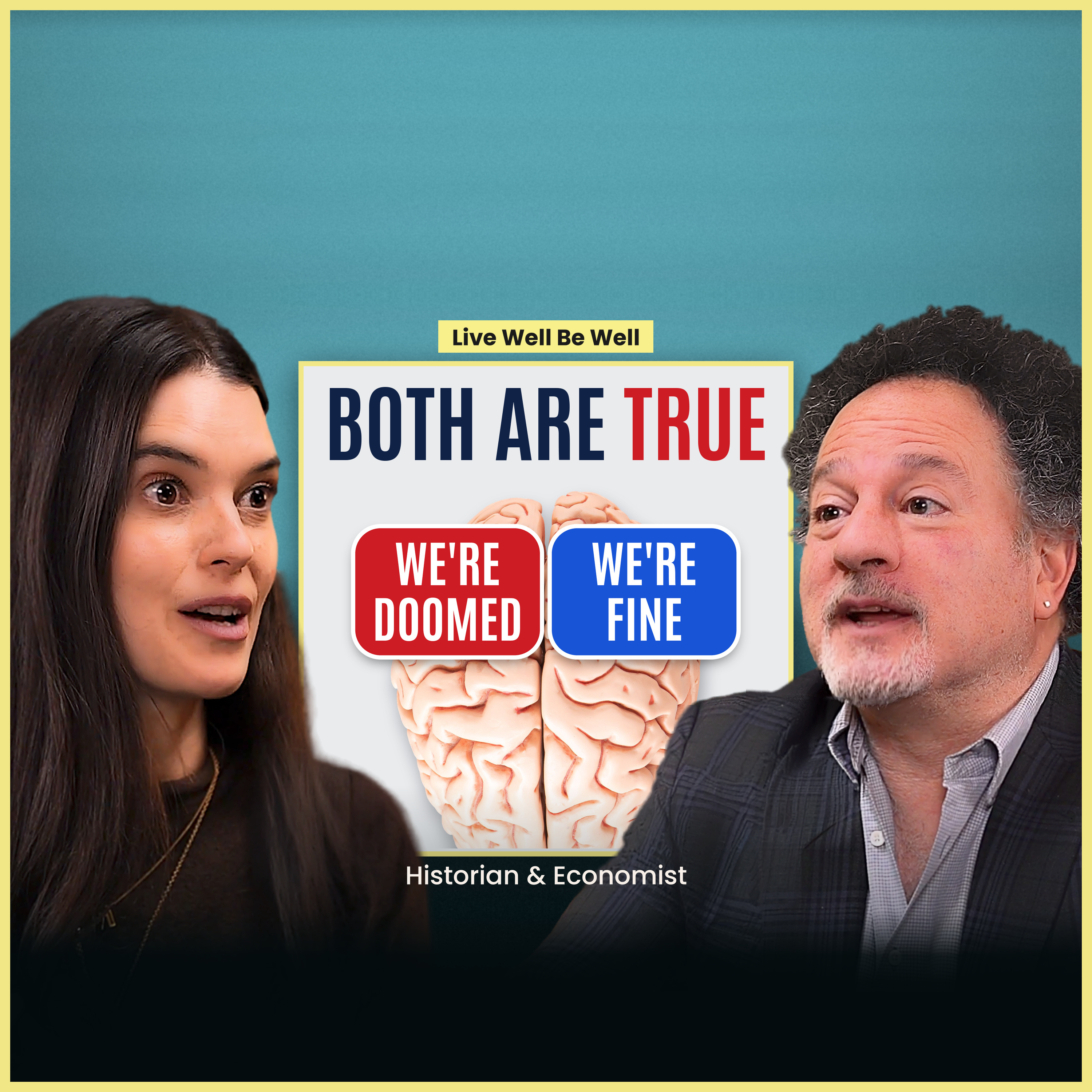
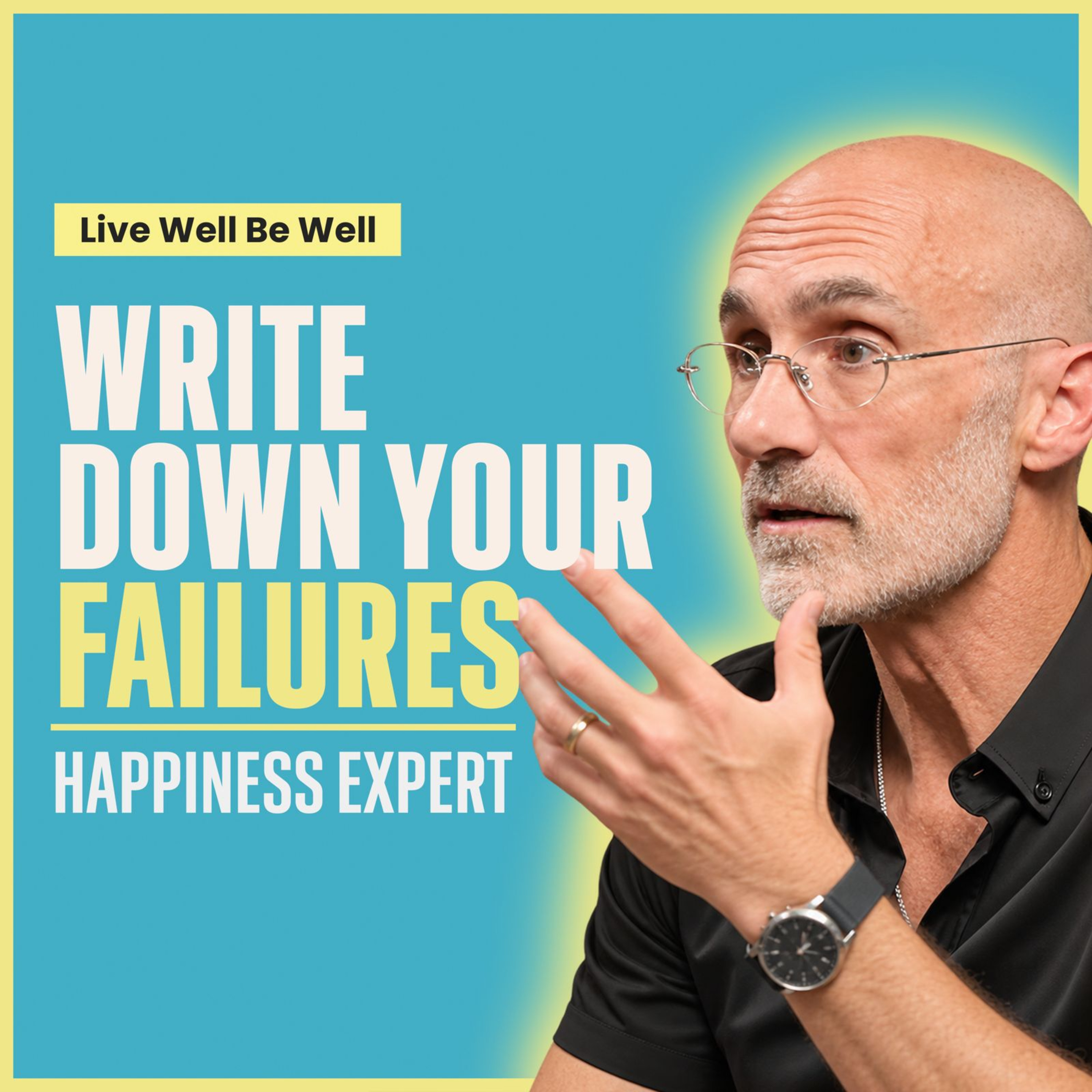
Before we recorded, I asked you on Instagram whether you feel optimistic or pessimistic about where the world is heading. 71% of you said pessimistic. So I sat down with historian Zachary Karabell to ask whether that feeling is right.
Zachary is the founder of The Progress Network, writes The Edgy Optimist, and is the author of books including The Leading Indicators and Inside Money. He started writing about optimism in 2009, just after the financial crisis, when every conversation he had was about when the next shoe would drop. His argument isn't that everything is fine. It's that pessimism is a false certainty about the future, and that acting on it is what makes it come true.
What we explore together:
•Why 71% of you feel pessimistic about the world, while most people feel fine about their own lives
•Why optimism isn't positive thinking: it's the humility that none of us know what's coming
•The "doom loop": how losing faith in the future stops us investing, building and even dating
•Why bad news grabs us and good news doesn't, from Tolstoy to the weather forecast
•Is AI actually going to kill us, and how to live with fears you can't control
•How to make your own luck: more people, more attempts, more rejections
•Why women everywhere are having fewer children, and the reason I think is being overlooked
•More versus enough: are we really worse off than our parents' generation?
Love, Sarah Ann 💛
My book 'Healthy Shouldn't Be This Hard': https://www.amazon.co.uk/Healthy-Shouldnt-Be-This-Hard-ebook/dp/B0G1DHNRV5
Let's be friends!
📷 Instagram: https://www.instagram.com/sarahannmacklin/
📹 Subscribe: https://www.youtube.com/@livewellbewellsarah
🐦 Twitter: https://x.com/SarahAnnMacklin
📱 TikTok: https://www.tiktok.com/@livewellbewellpodcast
Zachary Karabell:
📖 His new book, Fields of Invention: How We Made Corn and Corn Made Us (Penguin Press, May 2027): https://www.penguinrandomhouse.com/books/696044/fields-of-invention-by-zachary-karabell/
🌐 The Edgy Optimist: https://edgyoptimist.substack.com
🌐 The Progress Network: https://theprogressnetwork.org
References:
Hinton on the odds of AI wiping out humanity (The Guardian, 2024): https://www.theguardian.com/technology/2024/dec/27/godfather-of-ai-raises-odds-of-the-technology-wiping-out-humanity-over-next-30-years
2024 first year to pass 1.5C (BBC News, 2025): https://www.bbc.co.uk/news/articles/cd7575x8yq5o
Global public debt (IMF): https://www.imf.org/external/datamapper/GG_DEBT_GDP@GDD/WEOWORLD
Births per woman (UN, via Our World in Data): https://ourworldindata.org/grapher/children-per-woman-un
US home ownership (US Census Bureau, via FRED): https://fred.stlouisfed.org/series/RHORUSQ156N
Home ownership in Europe (Kohl, Harvard Dataverse): https://dataverse.harvard.edu/dataset.xhtml?persistentId=doi:10.7910/DVN/KCH2T7
Chapters
00:00 Trailer
01:19 Welcome Zachary Karabell
01:44 The poll: 71% feel pessimistic
03:20 What optimism really means
07:07 The doom loop
09:14 Why our money says we expect a better tomorrow
13:48 When a society loses faith in the future
16:22 The five fears everyone can list
19:15 How he became the Edgy Optimist
24:19 Are we born optimists or pessimists?
26:44 How much of life is luck?
28:40 Can you create your own luck?
31:27 Roulette and increasing your surface area
32:28 The rejections behind his first book
36:53 Why we're drawn to bad news
40:01 Tolstoy and why drama grabs us
43:32 How to read the news without despair
44:35 Is AI actually going to kill us?
50:54 Why we're so bad at living with uncertainty
51:40 Muddling through: a darker read of history
56:48 Did our parents' generation have it better?
58:48 More versus enough
1:00:55 Can young people still buy a home?
1:03:19 Why birth rates are falling everywhere
1:07:32 The self-knowledge gap
1:10:55 The upside of a smaller world
1:12:14 What he'd say to the 71%
1:16:17 What Live Well Be Well means to him
1:18:24 His new book, Fields of Invention
Scan the code with your iPhone camera
Listen in the app.