In short
Longevity and metabolic health—how to avoid “aging faster” by optimizing nutrition, sleep, exercise, stress, and root-cause biomarkers. The episode argues against “snake oil” longevity trends and emphasizes measurable, habit-based prevention (especially for metabolic dysfunction and Alzheimer’s risk).
Guest
Dr Darshan Shah, a longevity/functional medicine clinician with longevity clinics in LA and “thousands of patients worldwide.” He discusses medical training, root-cause functional medicine, and uses continuous glucose monitoring and biomarker tracking.
Key claims
- Creatine monohydrate is “one of the most well-studied” supplements; it supports muscle/strength and may reduce cognitive decline in Alzheimer’s (notably in women).
- Poor metabolic health is a major root cause of chronic disease; he cites 80% of Americans as having poor metabolic health.
- Hemoglobin A1c optimal target is ~5.2 or below; he views 5.9 as a problem even if some guidelines call it “fine.”
- Vitamin D should be 50–80; he says 90% are chronically low and recommends D3 with K2 to avoid calcium overabsorption.
- Quarterly biomarker testing; sleep/activity/weight trends should be tracked thoughtfully to avoid data obsession.
Notable examples
- Continuous glucose monitor “six-week learning program.”
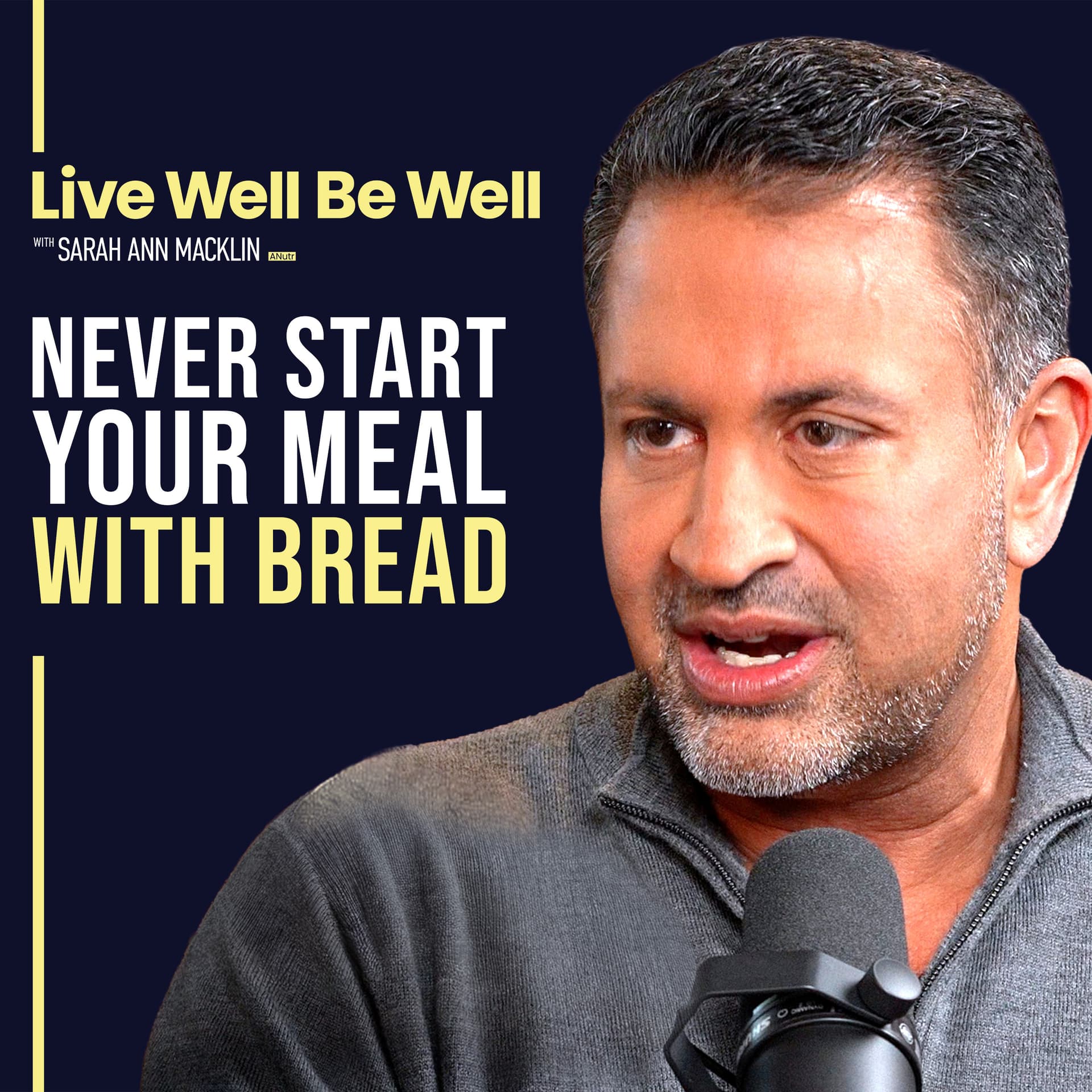
- Meal order: start with vegetables/protein (avoid bread first) and do 5–10 minutes of activity after meals to blunt glucose spikes.
- Alzheimer’s prevention via early identification of “types,” testing for metabolic/inflammation/toxins, meditation/brain rest, and reducing toxic burden at home (e.g., non-toxic cleaners like Branch Basics; avoid antibacterial sprays and toxic pest sprays).
Written by AI. May contain mistakes. Listen to the episode to check what was said.
Chapters
Tap a time to open that second in VOExploring Creatine and Longevity
0:00 to 0:24
Learn about the benefits of creatine and its impact on longevity.
“Talk to me about the importance of longevity.”
Understanding Key Biomarkers
0:24 to 1:01
Discover vital biomarkers for health, including the importance of Vitamin D.
“Which biomarkers should we be looking at?”
Defining Longevity and Its Trends
1:01 to 1:25
Discuss the evolving definitions and trends in the concept of longevity.
“We always start building this pyramid at the base of nutrition, exercise, sleep, and emotional health.”
Functional Medicine Foundations
1:25 to 2:14
Learn about the foundational elements of functional medicine.
“If you are a regular listener to this show or Live Well, Be Well, or this is your first episode you're listening to, I really want to ask just a very small quick favor.”
The Misconceptions of Longevity
2:14 to 2:53
Understand the misconceptions surrounding longevity and health advice.
“Well I am here in one of your longevity clinics in LA and I think it's really interesting because I want to delve everything into longevity today.”
The Reality of Modern Longevity
2:53 to 4:08
Examine how modern lifestyles impact longevity and health outcomes.
“So, you know, longevity has been around for a long time, but people keep assigning different definitions to it based on what they're trying to sell you.”
Functional Medicine Explained
4:08 to 5:55
Dive deeper into what functional medicine entails and its approach to health.
“And so people have figured this out a long time ago.”
Root Causes of Poor Health
5:55 to 8:02
Identify the root causes of poor metabolic health and their implications.
“And then on top of that, we add some of the cool new technology around biohacking.”
Using Technology to Monitor Health
8:02 to 11:46
Learn how continuous glucose monitoring can transform health management.
“And that's why I love functional medicine, because people just feel great after you practice with after they put this into practice.”
Navigating Health Data Overwhelm
11:46 to 14:00
Explore strategies for managing health data without becoming overwhelmed.
“And then people have realizations and they change their entire life and they change whether or not they head towards disease, you know.”
Show all 40 chapters
Understanding Data Overwhelm in Health
14:00 to 15:28
Learn how to manage data overwhelm in health tracking and its impact.
“at the data for a temporary amount of time while they're instituting behavior change.”
The Importance of Sleep Tracking
15:28 to 17:12
Discover effective strategies for tracking sleep without stress.
“I think data is really helpful to get people to understand where they are.”
Key Biomarkers for Health Monitoring
17:12 to 20:57
Identify essential biomarkers to monitor for optimal health.
“That's a scale that sends a little electrical current through your body, and it tells you your fat mass and your skeletal muscle mass.”
Key Biomarkers for Health Monitoring
21:07 to 21:17
Identify essential biomarkers to monitor for optimal health.
Optimal Ranges for Health Biomarkers
21:17 to 23:58
Understand optimal ranges for blood sugar and other biomarkers.
“And this little gadget helps you on your journey.”
Understanding and Improving Vitamin Levels
23:58 to 28:00
Learn about important vitamins and how they affect health.
“Now, that's what we do for all of our patients.”
Understanding Aging and Metabolic Health
28:00 to 30:30
Learn how biomarkers relate to aging and the role of metabolic health.
“And so these scales now only cost$20,$30.”
The Role of Creatine in Longevity
30:30 to 33:11
Explore the importance of creatine for muscle mass and cognitive health.
“So one thing that I'm thinking about there as you're saying this, because muscle mass is a real indicator that you're saying.”
Nutrition Fundamentals for Health
33:11 to 35:43
Discover essential nutritional habits and their impact on metabolic health.
“And big picture, the way I look at nutrition for almost every human, is you want to get three things right.”
Audience Engagement and Show Goals
35:43 to 36:22
Hear a brief request to support the podcast and its future content.
“And then, you know, I'm always measuring metabolic health with hemoglobin A1c.”
Genetics, Longevity, and Alzheimer's Discussion
36:22 to 40:01
Discuss how genetics influence longevity and the risk of Alzheimer's disease.
“I think a lot of these things are also like the fun, there should be the fundamentals of health in my opinion, right?”
Preventive Measures Against Alzheimer's
40:01 to 42:05
Learn strategies to reduce the risk of Alzheimer's through metabolic health.
“And then you have your other grandmother that was smoking and drank alcohol and everything and lived to 90.”
Understanding Alzheimer’s and Prevention Strategies
42:05 to 44:28
Learn about Alzheimer's disease types and prevention through lifestyle changes.
“His message is basically like there's different types of Alzheimer's due to different things and you have to find out what type of Alzheimer's you have and you can do that through testing.”
Reducing Toxic Burden in Life
44:28 to 45:08
Discover ways to minimize toxic exposure in your home and diet.
“And then lastly, what I would say too is, you know, I keep talking about toxins is like really, really reducing your toxic burden in your life.”
Navigating Everyday Toxins
45:08 to 47:46
Understand common household products that may contain harmful toxins.
“You know, most people wear deodorants, most people wear perfumes, most people wash their hair with silicons and things.”
Addressing Microplastics and Detoxification
47:46 to 49:23
Learn about the impact of microplastics and effective detox strategies.
“Like sprays for ants and cockroaches and all these things.”
Introduction to Peptides
49:23 to 50:19
Get to know peptides and their significance in health and wellness.
“There's probably like 30 or 40 things that you need to do.”
Peptides and Gut Health
50:19 to 56:01
Explore how peptides can aid in gut healing and overall health.
“So something I really want to touch upon, you know, cause I spoke to you this at dinner last night is peptides.”
Understanding Gut Health and Healing
56:01 to 57:44
Learn about leaky gut, its impacts, and how to heal it using peptides and nutrition.
“And what happens when you have gut that is inflamed is, you know, our gut is only one cell layer thick.”
Peptides and Aging: Exploring Solutions
57:45 to 59:36
Discover how peptides can help mitigate aging and support the immune system.
“But I think we're going to see more and more research come out as people realize the massive potential of these peptides.”
The Right Age for Peptide Therapy
59:37 to 1:01:04
Understand when to consider peptide therapy based on biological age and health status.
“And is there any risks for taking these?”
The Importance of Gut Health
1:01:05 to 1:02:28
Explore the vital role of gut health in overall well-being and its connection to various health issues.
“You know, a lot of young people have gut issues.”
Personal Health Journey and Emotional Impact
1:02:29 to 1:04:35
Hear about the physician's personal health journey and the emotional aspects of wellness.
“The gut is really controlling a lot of what's going on in our body, okay?”
The Interconnection of Health and Happiness
1:04:36 to 1:08:15
Learn how emotional health influences physical health and the importance of self-care.
“How much do I think emotions play in health and wellness or in my personal health and wellness?”
Future of Health: Empowerment Through Technology
1:08:16 to 1:10:00
Discover how AI and wearables could revolutionize personal health management.
“is a reframing into, I would say, giving yourself time for self-care.”
Empowerment Through Mindset and Health
1:10:00 to 1:11:58
Learn how mindset influences health decisions and the future of chronic disease management.
“And so at that point, you're not going to have any excuse except not having the right mindset, right?”
The Role of Technology in Health
1:11:58 to 1:14:19
Discover how technological advancements like GLP-1 can impact chronic disease rates.
“with some of it right like we've eliminated massive amounts of death from infectious disease but people still get infectious disease, right?”
Taking Control of Your Health
1:14:19 to 1:15:39
Understand the steps you can take today to prevent chronic diseases and improve health outcomes.
“And so it's just understanding that you have the power and then just taking the steps.”
Living Well and Finding Balance
1:15:39 to 1:17:23
Explore what it means to live well and maintain a balanced life despite challenges.
“You know, the amount of conversations I've had on this show, the amount of knowledge that I've consumed, doesn't mean that I do it all.”
Resources for Health Improvement
1:17:23 to 1:18:10
Find out about resources and tools for improving health and reducing toxic exposure.
“Thank you for inviting me to your beautiful clinic, Next Health.”
Transcript
Automatic transcript. May contain errors.0:00Dr. Darshan Shah:Talk to me about creatine. Talk to me about the importance of longevity. Creatine is one of the most well-studied supplements in human history. It can help you not only retain muscle mass, but build muscle mass. And it can also help you increase your strength, which is just as important as muscle mass. The other thing that's really interesting that was recently found out was people that took creatine had lower levels of cognitive decline in Alzheimer's disease too, especially women. That's the biggest killer in the UK. Meet longevity expert Dr. Darshan Shah. Which biomarkers should we be looking at?
0:30Vitamin D levels is very important. 90 % of people are chronically low in vitamin D.
0:36Dr. Darshan Shah:I'd love you to mention for people that don't understand why you're saying K2. If you don't take it with K2, it's going to also absorb a lot of calcium with it. And calcium can deposit itself in blood vessels and other places. You don't want to overabsorb the calcium. I worry that longevity has now become a trend. Longevity has been around for a long time, but people keep assigning different definitions to it based on what they're trying to sell you. What is functional medicine? We always start building this pyramid at the base of nutrition, exercise, sleep, and emotional health. And then we build up from there by adding functional medicine.
1:12Dr. Darshan Shah:I said this morning to one of my friends, what do you think about peptides? And his answer was, I think I'm scared about them. When I think about testosterone many years ago, we were all thinking that we should be taking testosterone. and now we realize that's not the truth. So how would you answer that? Great question. So the way I would think about it is... If you are a regular listener to this show or Live Well, Be Well, or this is your first episode you're listening to, I really want to ask just a very small quick favor. If you could please hit the subscribe button or leave a review, this helps the show more than you can imagine.
1:47Dr. Darshan Shah:It means the world to help growing this show. And you all know that I have a huge thing to want to hit 100 ,000 on YouTube this year and I can't do that without your support. I really aim to bring you the best guests possible out there and I pride myself in doing that for the show because it's so important but to keep the guests coming to get them to be bigger and to bring more helpful information to your ears and your eyes I really would love to ask you to subscribe to the show. Thank you. Well I am here in one of your longevity clinics in LA and I think it's really interesting because I want to delve everything into longevity today.
2:25Dr. Darshan Shah:It is the biggest buzzword of 2025, leading into 2026. It's only going to get bigger. I think it can be very confusing for people. I worry that longevity has now become a trend. I want to start with a quote, okay? And this is what I think captures where so many people feel right now, which is, in a world drowning in health advice. The smartest thing you can build is discernment. And so I want to begin there. What actually works when it comes to longevity and what is longevity? Yeah. So, you know, longevity has been around for a long time, but people keep assigning different definitions to it based on what they're trying to sell you.
3:07Right. And so there was a time, I think over a hundred years ago where people were selling snake oil and they said, snake oil will help you live longer. And then snake oil became the longevity product of the time. And then guess what? People found out it was just snake oil. And it didn't work, right? And so, you know, unfortunately, that whenever there is a basic human need and desire to have something, people will try to sell it to you, and they'll try to overblow the promises and to take your money, sadly, right? Yeah. But the reality is longevity, and the newer definition is, you know, You see all these biohackers trying to do everything under the sun, and they spend millions of dollars on their health to try to live longer and add more years to their life.
3:55And the reality of the situation is, is you don't need to spend millions of dollars. You don't need to do all the 5 ,000 supplements. We've actually had the technology to live over 100 years for centuries now. They do this in the blue zones, right?
4:09Dr. Darshan Shah:Done, yeah. Yeah, exactly. And so people have figured this out a long time ago. And to me, true longevity, the definition of longevity to me is that we add healthy, productive years to the life that you're going to live, right? Whether it be to 85, 90, or 100 or more. And the reality of the situation is we know that we have this technology. Unfortunately, our environment and our habits and our routines and our lifestyle have been working against our bodies. And we're actually living less and less healthier lives. But the funny thing is, is that we're living longer, right? Through medical technology, through pharmaceutical agents, through surgeries, through hospitals, all of that.
4:50So we're living in this really weird space right now in 2025 where we've added many, many years to our lives already. Our life expectancy has doubled in the last 150 years. But a lot of those years are being filled with unhealthy years. And so there are things that work and your audiences, you know, might be a little surprised. It's probably things they already thought of, like is all the things they do in the blue zone. Really getting your nutrition right. Really getting your sleep and your movement and your stress management right. But the really cool thing is that now we have modern day technology and tools to help us do this.
5:27And to counteract our environment, but also to help us point our lifestyle in the right direction. And so when I talk to my patients that come and see me, and we have thousands of patients all over the world now, is we always start building this pyramid at the base of nutrition, exercise, sleep, and emotional health. And then we build up from there by adding functional medicine, which is, you know, we can talk a lot about functional root cause medicine. And then on top of that, we add some of the cool new technology around biohacking. And so we kind of build this pyramid based on your routines and daily lifestyle habits.
6:05Dr. Darshan Shah:So you mentioned there functional medicine. Yeah. It's one of the most fascinating areas of health, but a lot of people might still be confused exactly what this is. Now, some people who listen to this might have seen a functional doctor. Some may have just heard this for the first time. So what is functional medicine? Thank you for asking me that question. So, you know, functional medicine is what I use to change the trajectory of my health after I got my nutrition, exercise, and sleep in order. And basically the way I like to describe functional medicine to people is it is all the things that medicine has kind of ignored as being a part of health.
6:41And the reason is, is because previously there weren't a lot of things that you could do about it, right? There were a lot of pharmaceuticals you could throw at it, not a lot of surgeries you can do. So we just never really addressed it. But if you really look at functional health, it's understanding that your hormones, that your gut, that your detoxification systems all have a lot to do with how healthy you feel and how long you can avoid chronic disease. A lot of people like to call functional medicine root cause medicine. And I like that term as well. Root cause medicine means that all the diseases out there, you know, there's thousands of named diseases, right?
7:19We all know cardiovascular disease, that most people will die of a heart attack. We all know Alzheimer's, neurodegenerative disease. We all know about diabetes. All of those are due to eight or so root causes that Dr. Jeffrey Bland described back in the 80s. And those eight root causes, if you can optimize along those eight areas of your biology, you will avoid all of the diseases out there. And the side effect of avoiding disease is not all depressing, just avoid disease all the time, is you actually feel incredible. And so functional medicine is a route for you to put into place habits and treatments and therapies that were not available in traditional medicine to truly, truly become your healthiest self.
8:03And that's why I love functional medicine, because people just feel great after you practice with after they put this into practice.
8:10Dr. Darshan Shah:So what would be some areas of, you know, looking at functional medicine was that next upgrade from sleep movement, like the foundations of health that we should all be doing. Tell me some areas of functional medicine. Okay, let's talk about those eight root causes and what we can do. So one of the root causes, which I think is the most important root cause, is poor metabolic health. Poor metabolic health, as you know, is how our body is able to handle the energy that is in our bloodstream all the time. Usually that comes from our food. And people have poor metabolic health right now. In fact, in America, 80 % of people have poor metabolic health.
8:44This was just a study published last year. and people have poor metabolic health because we take in a lot more energy than we use. Okay. And what I mean by that is energy in his rawest form comes in the form of sugar. And so people are taking in a lot of sugar, either in the form of just direct sugar, like desserts and things like that, but more likely in the form of ultra processed food and restaurant food and fast food drinks and drinks exactly and drinks and all of that energy is taken in through our gut and then it gets dumped into our bloodstream and our body if it can't use the energy in our bloodstream it can't use a glucose in our bloodstream it becomes toxic it starts sticking to everything and we can't have that so what does our body do it secretes insulin to push that glucose into fat
9:34Dr. Darshan Shah:right? Now, this is happening, like I said, to 80 % of Americans plus constantly. And so people are getting diabetes. And so poor metabolic health is one of those reasons why people are getting all of the diseases. We know that if you have diabetes, you have a much higher chance of heart disease and Alzheimer's and all of it. In fact, depression, everything, obesity, visceral fat, all of it. And so how do we solve this problem, right? Well, you and I both give a lot of dietary advice, right? And so we talk about nutrition a lot and what not to eat and what to eat. But I mentioned earlier, there's modern technology available that can help us kind of accelerate and really understand how to fix this problem.
10:19And so today that modern technology comes in the form of a continuous glucose monitor. This is a monitor. It's like a little patch you wear on your arm. and it tells you every five minutes what your blood glucose is. And it feeds this data to your phone. And when you have this data, you can see what is causing your blood glucose to spike and stay high. And once you know what that is, you can avoid those things. And what we do with our patients is we have them wear a continuous glucose monitor for six weeks and they learn so much. They learn not just what foods spike their glucose, but also what habits are spiking their glucose.
10:59Habits such as starting a meal with a basket of bread, right? That is a massive glucose spike. Instead, start your meal with vegetables or a protein. That's going to keep your glucose low. Another habit that helps people control their glucose is after every meal, have about five to ten minutes of activity, whether that means going for a walk or doing some squats or just anything. Don't just sit there or plop down in your bed or on a couch. Simple habits changes like that can keep your glucose level steady. And even if you're developing diabetes or have developed diabetes, you can completely reverse this.
11:41And so it's a six-week learning program with a continuous glucose monitor. We usually pair them with a nutritionist who can give them the advice and tell them why they're having spikes and why they're not. And then people have realizations and they change their entire life and they change whether or not they head towards disease, you know. So that's one of the eight root causes. Would you like another example? I would.
12:03Dr. Darshan Shah:I was actually thinking about something as you were saying that because one of the things that I talk about, you know, a lot of my work is based on self-compassion. I get people to try and dance before they eat, to move their body. and you know if you really want to make it boring because it's fun right that's also part of the joy but it opens up the glut for transporters which also helps bring in and your your glucose and helps start regulating that so if you can start doing some movement before you eat you're kind of priming your cells ready to be able to absorb that better exactly and so it's you know not only is it fun but also it's also better for your health it is exactly you know i find that really interesting, like a small walk after dinner as well can help uptake those glucose, as you just said.
12:46And it's interesting that people, you know, we don't intuitively know these things, right? Like it's almost like our body tells us after a meal that we need to rest a little bit and digest, right? But it's that rest and digest, especially if you have a lot of carbohydrate that you've just eaten, that actually causes diabetes in the long term. So it's a little bit counterintuitive almost. And so the continuous glucose monitor is a great feedback mechanism using technology so that you really understand what's going on in your biology in the moment, right? And so this can be really, really helpful.
13:16Dr. Darshan Shah:Yeah, I think it's interesting, right? Because we now have so much data on what we can use, but then the worry is people can become obsessed with their data and then kind of disconnect from how they feel. So how do you help people navigate through that world where you get to show them where their baseline is, like it's important to understand what your biomarkers are, and that can help you understand yourself. But where do you draw the line where it's like, okay, now it's unhealthy. You know, every person is very different in how they handle data. And you're absolutely right. There are a subset of people that get overwhelmed with the data and actually causes more stress, which is, as we know, a negative detriment to your health.
13:55So we don't want to create more stress for sure. And then you have a lot of people that are okay with looking at the data for a temporary amount of time while they're instituting behavior change. And then we stop looking. And then you have people that just want to know the data all the time, right? And so what we really try to do is there's never a one-size-fits-all solution in health. We have to be able to talk to our patients, understand where they're coming from at that moment, understand when it's helping, and understand when it's hurting, and hold their hands through the process. For a lot of our patients that get data overwhelmed, we tell them don't look at the data.
14:32what we're going to do is you're just going to wear this thing for two weeks. You're going to come back in two weeks and I will look at your data for you. And then we'll compare it to a food log. And we're going to sit and we're going to talk. We're going to discuss what's happening here. And we're going to learn together. And that's a really good way to help people that have too much data. You don't have to look at it yourself. However, I will tell you that the people that love the data, they make immediate improvements because they can see what's happening in real time.
15:00Dr. Darshan Shah:I can identify it. Exactly. And so it'll be a little bit slower if you're, you know, too much data is overwhelming for you and you need me or a nutritionist or a coach to look at it with you, but that's okay. We're not in a rush here because whether it takes you six weeks or six months, you'll make the changes and those changes will last you a lifetime. And that's what's important is to make habit and routine changes that last a lifetime. Yeah, I think that is the most important thing. I think data is really helpful to get people to understand where they are. The thing that I find really interesting, and maybe you can help me understand this, is I love wearables and I'm wearing two right now.
15:41Dr. Darshan Shah:But I find I have to be really strict with myself because I'm the person who can become obsessed with data. and sometimes if I'm looking at my sleep score and it's bad I then feel worse so how do you manage like how does one manage that so I think sleep score is one of those that you can actually feel worse when you when you look at it because you kind of you know it's what you talk about it's like you have this lack of self-compassion for yourself and you beat yourself up over getting a poor sleep score you know and so I think sleep score is the one area that I tell people look at like weekly averages more than the actual day-to-day data, obviously you're going to know if you had poor sleep, right?
16:23And so sometimes it's a good idea. I actually, you know, put my ring that I wear on no Bluetooth mode and I don't synchronize it until the week is over, but I keep a diary too. So I understand like, what day did I get poor sleep? What did I do that day? I look at my diary and I'm like, ah, that's what happened. I had a dinner really too late. And And when I have dinner at 9 p.m., I know my sleep gets messed up. I feel it's so much better to look at sleep on a week-to-week basis than it is to look on a day-to-day basis, right? Because then you can be more a student of your sleep and your behaviors rather than reactionary.
17:00So sleep is one of them that I don't look at it every single day. Activity, I do try to look at it on a daily basis because then I can make micro adjustments the next day and try to make up for low activity days, you know? I also, you know, I have a scale at home. It's a bioimpetence scale. That's a scale that sends a little electrical current through your body, and it tells you your fat mass and your skeletal muscle mass. And so I step on that on a weekly basis. Sorry, a daily basis as well. And then I look at the trend on a weekly basis. And so, you know, I always tell my patients, I don't care about what your weight is.
17:33I do care about what your skeletal muscle mass is, right? And so week over week, if things are going lower, you know you need to pick up your protein intake. you know you need to increase your time lifting heavy weights at the gym. So those are kind of the important ones I look at on a weekly basis. And then biomarkers I look at on a quarterly basis.
17:52Dr. Darshan Shah:Okay, so talk to me about these. Which biomarkers should we be looking at? Yeah, there's about 10 important ones I think that every person needs to know. And the analogy I give people is like you don't drive your car not knowing what the fuel level is, right? You don't drive your car if you have a non-electric car, not knowing that the oil is really, really low. Even the windshield washer fluid, you want to know. And so we drive our cars year after year not checking anything. And so I agree, you do want to listen to your body. You do want to listen to yourself. However, the problem with listening to your body and listening to yourself is this, is that our bodies are very resilient, especially when you're younger.
18:36And you can build up a lot of biological damage before you feel symptoms, right? So sometimes you want to look at how is your biology doing way before you have symptoms and the way to do this by looking at blood tests. And so some of the blood tests I like to look at are hemoglobin A1c. This is a three-month average of your blood sugar level. Once again, it tells you if your metabolic health is off. doctors use this to diagnose diabetes actually. There's another measure of inflammation. Inflammation is another one of those root causes of all diseases when your immune system is overactive. This biomarker is called CRP, HSCRP.
19:17I look at that. We also look at a marker called APOB, which is a collection of all of your damaging forms of cholesterol, especially when you're over 40 and you have some risk of heart disease, maybe a family history or other risks. And then we look at testosterone levels in both men and women, especially after the age of 40. So these are some of the blood tests that we like looking at because they give us a really good indicator of how things are working from a big picture level.
19:44Dr. Darshan Shah:As someone who has spent a long time studying the mind-body connection, I'm constantly asked, what do I use to track my health? Since April, you've probably seen, if you're watching this show, me wearing a piece of tech on my arm, and that is no watch, because I genuinely believe it has been one of the most thoughtful and mind-aware pieces of tech that you can wear. Unlike most wearables that focus just on your steps or your sleep, Know Watch is a bit different. It gives you real-time insights into your nervous system, the invisible engine that calibrates everything from your stress to your sleep to your recovery, your rest, and ultimately your health.
20:20Dr. Darshan Shah:With its stress recovery metric, it doesn't just show you how long you were stressed for, but also how long you recovered. It shows you your homeostatus. And that to me is where real health begins. And I think it's all something that we're craving. And most importantly, it does this without dragging you back to your phone, because that motion just depletes you. It delivers meaningful health insights to you only when something genuinely matters, using AI to turn complex signals into clarity that you can understand. And in just five days, it calibrates to your body and creates your personalised health fingerprint.
20:53Dr. Darshan Shah:You can try it for 30 days completely free. And if you're curious, now's the time because they're giving you guys 15 % off with my code LWBW15 if you head to knowwatch.com. And you guys know as listeners of Live Well Be Well and this whole community that understanding yourself in the most mindful way is one of the most powerful things that you can do for your health. And this little gadget helps you on your journey. When it comes to ranges, you've just mentioned a few there, what ranges should these be in? Like, where should our blood sugar typically sit? Because I know, scarily, in the UK, once it gets to six, you're then pre-diabetic.
21:36Dr. Darshan Shah:But I know that you look at a much lower level of this. I'd love for you to talk to me about this, because I worry that people go to the doctor and go, well, I always mind saying this, it's my father. My father has been pre-diabetic, and we've worked really hard to get him back. And then he'll go and he'll say, I'm a 5.9, I'm fine. And the doctor has said, and the diabetic nurse is like, oh, you're fine, you're doing really well. And you can imagine me as a daughter, he was very much in this health sphere of knowing about this. I'm like, no, it's not. I don't want to discourage you and say it's bad, but there's so much more that we could do.
22:12Dr. Darshan Shah:And his response is, but my doctor said that it's great. Yeah, and this is the problem, right? Because I think in medical school, of which I went to medical school and I was taught this way, you look at these blood work results and you really just look for the number where you're diagnosed with the disease. Because then you can prescribe a pharmaceutical for that disease, right? But we're not taught optimal ranges. So the optimal range of hemoglobin A1c is 5.2 or below. That's where you want to aim for. Now, the problem is, in the UK, 5.9 is considered not pre-diabetic. But in the United States, 5.7 is considered pre-diabetic.
22:53So, you know, there's no difference in the laboratories for the most part. It's just you just use a different number.
Read the full transcript
22:59Dr. Darshan Shah:Yeah. That's arbitrarily picked, right? And so the other issue is that it takes a decade to go from 5.2 to 5.7 for many people, right? And so you want to know when it's headed in that direction. So when you're going to 5.4, 5.5, 5.6, you know you're going in the wrong direction. 5.9, in my view, is a problem. Like, you've got to keep working on this and get it closer to 5.2, right? And I think that no one's going to really do this for you. Sadly, medical professionals, in the United States especially, don't have the time to really deal with all of this. And so what happens is you look at the blood work paper.
23:41I've done this before. You get the paper. If nothing's red, you just put it aside and say everything's fine. Next patient. And so you really have to take control of this yourself and really have to understand what are those critical biomarkers and what is the optimal range and why they're important.
23:56Dr. Darshan Shah:So how often should people be getting these blood tests, in your opinion? In my opinion, quarterly. Yeah, in my opinion, quarterly. Now, that's what we do for all of our patients. I think quarterly you can really make changes. I think especially if you're over the age of 40, quarterly is a really good idea. However, at least every six months, once a year is just not enough. So you mentioned four of that. What were the other ones? Is D3 with K2-1? Yeah, so vitamin D levels is very important. Your vitamin D is a hormone in your body. Without it, many of your body systems just don't function as well.
24:34And your vitamin D level should be between 50 and 80. 90 % of people are chronically low on vitamin D. Vitamin D is the only vitamin your body can make, and it's made by exposing yourself to sunlight. Sadly, we spend a lot of our times inside with all of our clothes on, and so we just don't make vitamin D like we used to. And in the UK, we don't have sunshine. Exactly. So sadly, you're going to find many people have low vitamin D, and then the solution is vitamin D3, K2 as a supplement, right?
25:05Dr. Darshan Shah:I'd love you to mention for people that don't understand why you're saying K2. Yeah. So vitamin D comes in the form of vitamin D3, which is what's really well absorbed. However, if you don't take it with K2, it's going to also absorb a lot of calcium with it. And calcium can deposit itself in blood vessels and other places. You don't want to over absorb the calcium. And so vitamin D3, K2 prevents that calcium absorption problem. I love that. I call it like the signaling kind of enzyme that kind of helps push it into where it's going. Exactly. Right. That's another way to think of it too. What else is on your list?
25:41Dr. Darshan Shah:Everyone's getting their pens and papers out. Yeah. And so just to make it easy for your audience, I do have this as a free guide on my website. So if you go to drsha.com slash biomarkers, you can download a free guide to these biomarkers. and you can bring this guide, print it out, bring it to your doctor and say, I want you to test these things. And most of the time they'll be like, oh, okay, that's kind of cool. You have this. Yeah, sure. Why not? They say no, then you have to push them. And if they don't do it, then there's ways you can get these blood tests yourself. In the UK, you can get them yourself.
26:13In the United States, you can go to any lab and get it yourself. So it's not hard to get it yourself. And believe it or not, it's really not that expensive to get these blood tests now. It should be available for less than$200. So then the other biomarker is vitamin B12. Okay, so this is another indicator of how much nutrition you're getting and how well your nutrition is formed. And if your vitamin B is low, then it generally means you're probably not getting enough nutrition in your diet along all your vitamin levels, right? And the solution is obviously get a better diet going, right? But what I would say is that there's some targeted supplements I really like until you get your nutrition completely dialed in.
26:58And so vitamin B is another one of those supplements that I really like.
27:01Dr. Darshan Shah:That's also good to look at absorption, isn't it, with the gut as well. You can also see if there's some gut problems going on. Great point. Yeah, a lot of people don't absorb enough vitamins as well. And so then you have to start healing your gut and getting it to absorb better. So a really good point. So it's an indicator that something's not going on, that's not going correctly. Yeah. I mean, you know, a lot of the biomarkers I look at are not blood tests. Like I mentioned, skeletal muscle mass is one, right? And so getting a special scale will give you this number every time you step on the scale.
27:34And what I would almost tell everyone to do is if you have a scale that just tells you your weight, you should throw it away. That number is not valuable. Everyone's weight is a combination of your muscle mass, your fat mass, your bone mass. And if you're trying to lose weight, the best thing you can do is increase your skeletal muscle mass. You will lose weight and you will completely change your body composition. And so a scale that just gives you your skeletal muscle mass is so much better to follow. And so these scales now only cost$20,$30. And so you can get them online and they're super easy.
28:09and they're very, you know, you can argue all day long about the accuracy, but it's really the directionality that matters. And so like we talked about earlier, and so that's another biomarker that I really like.
28:20Dr. Darshan Shah:So when it comes to aging in general, like we're doing these as preventative measures, right? All of these biomarkers are asked to kind of keep us in good health. But when we're thinking about aging, well, I think that's everyone's, I wouldn't say fear, but maybe concern. People are aware that as they get older, they want to age well. They want to be able to move well. They want to not have joint pain. They want to feel supple and flexible. When it comes to functional health and functional medicine, what are your main areas that you focus on? If someone comes in in their late 30s and says, help me, I don't want to age.
28:56Dr. Darshan Shah:I don't want to age and I want to stay young. What would you say? Okay. So the reason I'm picking these biomarkers is they're all an indicator of aging. Right. Right. Poor metabolic health will increase your risk of all the chronic diseases and also increase the amount of fat on your body. It will also increase the amount of visceral fat, which is fat underneath your abdominal muscles. And all of this leads to accelerated aging. Okay. Okay? Poor skeletal muscle mass leads to decreased mobility, decreased balance, and poor bone health. Your bones are attached to your muscle. And people think, oh, my bones are not healthy and I have osteoporosis because I don't have enough calcium.
29:37That's not true. It's because you're not using your muscles enough is the reason that you have poor bone health, right? Another thing that leads to accelerated aging is a diet that is devoid of nutrients. So not having enough vitamin D3, vitamin B also leads to accelerated aging, right? And so the things that cause you to age faster are in general detectable by these biomarkers. A lot of these are detectable because they point to you're just not getting your lifestyle right. Your nutrition is not good. Your movement is not enough. Your sleep is disrupted and you have too much stress, right? And so once you understand how these biomarkers point to those problems and you start modifying your lifestyle to optimize these biomarkers, your aging slows down dramatically.
30:29Dr. Darshan Shah:Wow. Okay. So one thing that I'm thinking about there as you're saying this, because muscle mass is a real indicator that you're saying. Massive, yeah. The biggest thing that's booming right now, which is really interesting, is creatine monohydrate. Everyone's obviously talking about, you know, around 10 grams is what you should be taking a day of creatine for men and women. Actually, really important for postmenopausal women. There's some interesting research coming out now. I mean, obviously, we're putting more women now great into trials. And so we're seeing actually it's benefiting women too.
30:59Dr. Darshan Shah:Talk to me about creatine. Talk to me about the importance with longevity. Sure. Creatine is one of the most well-studied supplements in human history. There's hundreds of thousands of studies on creatine. and what I can tell you about it is that it's very safe. It can help you not only retain muscle mass but build muscle mass and it can also help you increase your strength which is just as important as muscle mass okay. The other thing that's really interesting that was recently found out was people that took creatine had lower levels of cognitive decline in Alzheimer's disease too especially women.
31:34Dr. Darshan Shah:That's the biggest killer in the UK. Yeah, yeah, and it's rising every year, especially in women. And so I think creatine can be also one of those like critical core supplements that people can take. I'm not a big supplement pusher, but I will tell you that there's some supplements, just because we live in an environment and a society that is constantly pushing us to the brink, we're using all of our nutrients much faster than our, you know, ancestors did back in the 1920s or 30s. And we just need more, you know, and sadly pair that with the lack of nutrient density in most of our diets, and we're just not getting enough nutrition.
32:11And so creatine can be one of those supplements that can be very helpful. Yeah.
32:16Dr. Darshan Shah:How do you look at your like daily nutrition? Yeah, you know, it's hard, right? Because, you know, this is something you talk with people about all the day. And it's really understanding that you have to get it right, I would say 80 % of the time, right? And you have to give yourself some leeway because we can't always eat perfectly every single meal. The problem is people get it wrong 80 % of the time. And then when they're gained a lot of weight or they just don't feel good about themselves, they're not feeling good, then they go on a diet, you know, and I'm doing quotation marks and that diet helps them get it right for a little while, but it's usually a very restrictive diet, which then causes other problems, less nutrients, and they lose muscle.
32:58And then they have a different problem, right? And so they're going on this back and forth flip-flop of diets that don't work, and then they get upset, and they gain weight, and it goes back and forth, right? So it's really, really critical in my mind to just have good habits in place. And big picture, the way I look at nutrition for almost every human, is you want to get three things right. Number one is you want to start every meal with vegetables for the most part, if you can, and specifically high fiber vegetables, right? And so vegetables have a lot of nutrients in them, obviously, especially if you buy them organic and especially have a good variety of vegetables.
33:36And one of those critical nutrients is also fiber. And fiber is critical to your gut health. It can really help you also move the food through your body, move toxins through your body, get glucose out of your body as well. Second is protein. We have a severe lack of protein intake in the United States and also in most Western countries. And so getting enough protein from well-sourced protein sources, whether you're vegetarian or you're a meat eater or a pescatarian, you can get enough protein in. And lastly is getting essential fats in, right? And when I say essential fats, I mean good fats from fatty fish, from olive oil, from nuts, from avocados, healthy fats.
34:17And if you can focus on those three things and just swear off ultra-processed food, naturally, for 90 % of people plus, you're going to optimize your diet. Because you just can't help it but get an optimal diet. Think about it. If every meal, breakfast, lunch, and dinner, you start with a fibrous vegetable and lots of colors of different vegetables. Then you add in like a really good source of protein and you make sure that you have some olive oil on it or a handful of nuts or maybe an avocado. You're going to be full. You're going to be satiated. You're going to feel great. And then, yes, I'm not saying swear off carbohydrates.
34:53Not at all. Carbohydrates are a very important part of our diet.
34:55Dr. Darshan Shah:That's the fiber. Right. Well, yes, it's true. Carbohydrates are – fiber is carbohydrates, but I'm talking about like starchy carbohydrates, right? Yeah, yeah. Potatoes and breads and those – chips and those kind of things. Yeah, okay. But if you make that the last part of your meal, what happens is you naturally eat less of it. And you will prevent metabolic disease by eating in this pattern, right? And then just move a little bit before and after. And so, you know, I know this is becoming, like, I'm trying to make it, like, really simple for people. But I just try to put, give people some simple rules that they can easily get some quick wins.
35:26And then they, obviously, you and I both know, it's not that simple sometimes. You have to customize it. You have to factor in gut health issues. Some people are sensitive to some vegetables. obviously. And working with a nutritionist can be very, very helpful to really dial in your diet. So that's how I look at diet, big picture. And then, you know, I'm always measuring metabolic health with hemoglobin A1c. The minute it goes over 5.4, I'm like, uh-oh, we have to make a change. That's when we start looking at putting a continuous glucose monitor on and start making some adjustments.
35:55Dr. Darshan Shah:I'm interrupting for one moment to ask one small favor. Please subscribe to the show. This helps it grow more than you know. And I'm so bad at asking this from you. I'm so bad of thinking about this, but you know, my goal is a hundred thousand to get to on YouTube. And I really want to bring you more content and better guests and bigger episodes. And we can only do that with your help together. So please do hit subscribe. Thank you. I think a lot of these things are also like the fun, there should be the fundamentals of health in my opinion, right? The interesting things that I wanted to ask ChatGPT, because I was like, longevity is such a big thing right now.
36:34Dr. Darshan Shah:Let's see what, you know, Chad thinks. So I said to him, like, what are some of the biggest questions that people want to know? And do you know what he said to me? I thought I'm actually making it a man. I don't know why. It's completely gender neutral. It's an AI. You can change the voice. It said that we all know someone who lives to 95, who smokes, drinks, and they do everything wrong, yet they still live long. It's an interesting kind of point on this, right? And I think about, so then I had to think about connecting this to a story within my family. One of my grandmothers was incredibly healthy.
37:09Dr. Darshan Shah:She walked, she had a walking group, so she walked 10 miles every week. She grew her own food. She was Christian and she worked very much in the community. You know, she would always make sure that she was cognitively active. She was a teacher. so she would do all these things that you would say is healthy right she sadly got alzheimer's and she had it for 12 years um so she was diagnosed in her 70s and you know sadly passed in her 80s and i would and i would always say to my parents you should be doing this and you should be doing that and my mom's response was well your grandmother did all of it and got alzheimer's and i was like good point and then my other grandmother was the opposite she was a vegetarian But apart from that, she smoked, she drunk, you know, she had a very, like, hectic lifestyle, the opposite of my other grandmother.
38:01Dr. Darshan Shah:And I'm like, wow, she lived till she was nearly 100. Wow. That's amazing. So... Explain that. Yeah. Okay, I'll give you two explanations. One explanation is about your healthy grandmother, right, that did everything right. There are hidden risks out there that people don't really consider. And specifically for Alzheimer's, there's a few that I think are really important to recognize. There's a lot of toxins in our environment right now. And she might have had some toxic exposure that could have led to her Alzheimer's disease, right? Now, the other thing is that even though people sometimes think they're eating healthy, you can still develop metabolic disease by the patterns of eating, right?
38:46And so it would be really interesting to know what was her hemoglobin A1C, for example. And lastly, there is a lot of variability in how people's hormones decrease as they go through life. Right.
39:03Dr. Darshan Shah:Okay? And so there's quite a few hormones that we know of, like testosterone, estrogen. But there's also like growth hormone, IGF-1, for example. there's thyroid hormone and so sometimes aging decreases our hormones we know that right specifically sex hormones testosterone estrogen women fall off a cliff after perimenopause and they go through menopause so that could be a major effect for one grandmother right especially if she had children very early and she had maybe early menopause too the the effects of this is compounding over more time because it's interesting because women get more um not more alzheimer's women are more predisposed to getting alzheimer's yeah and they do get more alzheimer's yeah there's many more women with alzheimer's than men yeah but i think it's like a two to one ratio and that must be connected to the menopause in some way it's absolutely connected to estrogen yeah and so the message there is you know if you're a woman make sure if you're going through perimenopause or menopause see a really really good hormone doctor that can tell you like what you can do to kind of normalize your hormones, right?
40:13Yeah. And then you have your other grandmother that was smoking and drank alcohol and everything and lived to 90. And some people have just genetic resilience, you know, really, really good resilience that they build up over time. And they are not genetically susceptible in anything. And in fact, they have genetic blessings that can help them detoxify a lot better than other people can as well. I, for one, don't want to play like genetic roulette, you know, and I want to give myself the best chances that I can, not just to live longer, it's just really to be healthy for a long time, you know? And so I think, I think it's really important that, you know, don't look at the people that won the lottery as something that is true for everybody.
40:58Some people win the lottery, right? I don't care how many times you buy a lottery ticket sometimes, you might never win the lottery, right? And so we have to kind of stack the deck in our favor, you know, with our habits.
41:10Dr. Darshan Shah:So Alzheimer's is a big thing. I know you have like a five-stage approach to Alzheimer's. This is probably the thing that I'm the most nervous of. One, because it's in my family. So I've seen it firsthand. I've seen how it can cause just a lot of pain to not just yourself, but also the people around you. It's one of those diseases that really affects the family, but it's massively on the rise. I had so many different conversations on this show with Dr. to Chris Palmer, where he talks about it as a metabolic kind of problem. And, you know, we see a rise in obesity and we see a rise in mental health.
41:42Dr. Darshan Shah:I've had the brain doctors on here who talk a lot about, you know, Alzheimer's and what we should be doing. It is on everyone's minds, I think, you know, the fact that we could all get this at some point. What are your kind of main things that we should be doing to avoid Alzheimer's or to try and reduce it and look at prevention? Yeah, my favorite researcher in this, I love Chris Palmer too, by the way, but also Dale Bredesen is excellent. Have you interviewed him yet? I'll make the introduction. You should have him on for sure. His message is basically like there's different types of Alzheimer's due to different things and you have to find out what type of Alzheimer's you have and you can do that through testing.
42:21And once you know, then you start working on those things and you will decrease your chance of getting Alzheimer's. The critical piece of this puzzle is timing to know as soon as possible. Okay. And so, um, some of the, some of the reasons people get Alzheimer's are poor metabolic health, high levels of inflammation, high levels of toxic exposure, all of those things we can test for, right? We talked about the continuous glucose monitor. We can do a urine toxin test for toxins and see what toxins are building up. We can check for inflammation with the HSCRP and go looking for where you have inflammation.
42:59And so even if you have a genetic susceptibility to Alzheimer's disease, you can prevent it by removing all of these problems, right? The other things that you can do to prevent Alzheimer's is to exercise your brain and keep it healthy. How do you do that? Meditation is really, really good. You want to give your brain time to rest. In this life, we rarely give our brains time to rest, especially with our cell phones. We feel like we have to keep our brains constantly active all the time. And that's a big problem. That's what's leading to a lot of buildup of toxins in our brain, right?
43:34Dr. Darshan Shah:Yeah. I always say the best way someone can do that, that's how I say to myself, when you're in a queue, don't get out your phone. Right. The automatic thing when you're in a queue, what do you do? Get your phone out. Right. Or you're in a waiting room, I better get my phone out. Yeah. And that's the moment. Because I think it can be really hard to go home and just be like, I'm not going to look at my phone. But actually, we have so many moments in the day when we might go and get a coffee. when you're going to the bathroom yeah massive just don't take the phone into the bathroom with you exactly exactly they're the big there's not a time to go look at the phone no one did that until like 20 years ago right this is the thing yeah so i think i think that is a real problem and so you know giving your brain time to relax and just kind of empty is really important when does your brain clean itself it's at night when you sleep so making sure you get really really good sleep and you prioritize sleep is super important.
44:31And then lastly, what I would say too is, you know, I keep talking about toxins is like really, really reducing your toxic burden in your life. That could come in many forms, like, you know, air purifiers at home, opening your windows at home, not drinking out of plastic water bottles all the time, filtering your water, either with a reverse osmosis unit or through filtration devices, making sure the products you put on your skin aren't toxic products, right? And then eating organic food and staying away from ultra-processed food, all of that will reduce the level of toxic exposure to your body and let your body catch up and kind of mitigate for the toxins you do get exposed to.
45:06So that's very important.
45:09Dr. Darshan Shah:You said something there which I think might not go over people's minds, but they might not digest it in the way that I haven't done in the past, where you said not putting toxic things into your home or toxic things into your body. You know, most people wear deodorants, most people wear perfumes, most people wash their hair with silicons and things. You know, we wear makeup. It's all of the, you know, we wash our clothes sometimes in strong chemicals. We put bleach in the home. I think these like daily things, like most people would struggle to think about alternatives or they think about, well, no, I want to smell good.
45:47Dr. Darshan Shah:So I don't care. I'm going to wear that perfume because I love it. Like, how can you navigate this to reduce the tox? Because I think people may not even just be aware of how much is in their home. Yeah. There's a lot of toxins in our home. And most of the toxins we get are from our home, believe it or not. And so you really need to look at all the products you're using, specifically your cleaning products for your clothes and for your home, and try to find non-toxic versions of those. Which is what? Okay, so for example, we think that we're supposed to have a different spray bottle of cleaner for our glass and another one for our furniture and then another, and they need to smell really good and they need to have antibacterial in it.
46:28All of those things are very negative and you don't need a different cleaner for everything. So there are companies now that make non-toxic cleaners. For example, there's a company called Branch Basics and all they have is one cleaning product And you just mix it in different concentrations for your windows, for your furniture, for your countertops. And you just use that. And it works great. And it still smells good. And it's still, it is non-toxic. And you don't want to kill all the bacteria in your home. Because when you kill all the bacteria, you're still going to have some bacteria behind.
47:04Those are going to be the strongest bacteria. And those are going to replicate. And so now you have strong bacteria that you cannot kill throughout your entire house. house. And so you have to have that balance. So instead of killing all the bacteria, you just want to like wipe it off and get rid of it and get it out of your house, not kill it all. Okay. And so it's really not about anti, uh, antibiotics or antibacterial cleaning products. Stay away from those and try to find non-toxic versions. And there's different, you know, all over the world now, people are making non-toxic cleaning products because we realized finally, that our cleaners are really causing a lot of health problems.
47:43And the other big thing I would say is a lot of people have in their home anti-pest products, right? Like sprays for ants and cockroaches and all these things. And those are flies, very toxic, right? And there are non-toxic products for those too. Believe it or not, peppermint repels a lot of bugs.
48:04Dr. Darshan Shah:really yeah i'm the worst i'm always like yeah i don't want that fly yeah you're spraying this chemical into the air then you're breathing it and it's not good for you yeah like yeah that's actually that's just made me see i'm see even i'm not aware of this this is the thing i took all the time and then i'm like oh yeah i was spraying that all over myself the other day oh yeah that's a problem it's a problem yeah and so i think once you realize you can start doing the research, you can figure this out. And it's not that hard, actually. I would say the other big hidden danger that we have, and this, I think, is going to become a major, major problem in the next decade, so you should know now, is microplastics.
48:45Dr. Darshan Shah:Oh, yeah. We did a big episode on this. You did. Great. Yeah. People need to listen to that episode. They do. Yeah. It's scary because I didn't want it to be a fear-mongering episode. No. That was the thing. And there was a lot of things. I mean, a lot of it was from kitchens, you know, like your topping boards and making sure you air your home correctly. Like all of their quite actually simple solutions. Simple solutions, right. But it's just the awareness. But I think the worry about it is people can switch off because it sounds so scary or like there's no hope. And we're surrounded by so much of it that it's like, well, what can we do?
49:17Dr. Darshan Shah:But there's actually a lot that we can do. There's a lot you can do. It's a Pareto principle. There's 20 % of the actions that'll detoxify 80 % of your life. So there isn't an unlimited list. There's probably like 30 or 40 things that you need to do. You don't need to do them all today. But if you do them like maybe one a week for the year, then in one year, you will completely detoxify your life better than 85, 90 % of people out there. And your body can do the rest. You know, your body is made. It's an incredible machine. You have this liver, the most complicated organ that exists in us. Why do I say that?
49:52Because every organ in your body, except for your brain and your liver, we have a medical replacement for, but we don't have it for your brain or your liver. Okay. And so your liver is so complex because it can find toxins. It can get rid of them in your bile and your stool. And the rest of it, you can get rid of in your sweat, in your, by hydrating yourself well and going to the bathroom. You can get rid of toxins, but not when you're overwhelmed with toxins, you just can't catch up. Right.
50:19Dr. Darshan Shah:So something I really want to touch upon, you know, cause I spoke to you this at dinner last night is peptides. Yes, let's go there now. Because I'm dying to get there. Yeah, and this is how we're building the pyramid, right? We went from the basics of nutrition, exercise, sleep. We talked about functional medicine, hormones, detoxification, gut health. And now we can start putting in some of these fun, cool kind of modern tech into our lives to really accelerate our health journey. And peptides is one of them. Yeah, so this is, people might not know what peptides is. So before we even talk about this part, explain what a peptide is for people that have just no idea what we're talking about.
50:58Peptides are chains of amino acids. And, you know, we're all built from amino acids, right? Every protein that we eat, every protein in our body is made out of amino acids. Peptides are short chains of amino acids that your body uses as signaling molecules. Okay. It's really easy for our cells to make peptides. and so they make them to send signals to other cells in our body. The first peptide we ever created and isolated was called insulin. Insulin was a game changer because people and kids were dying of type 1 diabetes. So when we were isolated insulin, figured out how to make it and give it to these type 1 diabetic kids, they lived long, productive lives.
51:38And so it was a game changer. The second, I would say, game-changing peptide that we've all heard of is GLP-1. GLP-1 is a peptide that is made in our gut to signal you're not hungry anymore, and it causes you to decrease the amount of food that you're eating. Now, what's incredible about peptides is our body's been making them since the dawn of humanity. We make them naturally. This is not a chemical drug that we've synthesized in a lab. And so these peptides have multiple biological effects throughout our body. For example, there's actually GLP-1 receptors on your immune cells that tell your immune system to stop being so crazy and to calm down a little bit.
52:19And so these type of biological effects can be really, really beneficial. And so there's thousands of peptides that are in our body, maybe even tens of thousands, hundreds of thousands. We probably know about a few hundred of them. And just like GLP-1s, there's a list of these. There's different names. and we can get these compounded from compounding pharmacies, and they can send them to you, and you can inject them. And so why are they injected versus a pill? Well, if you think about it, if you take any protein into your body, any chain of amino acids, your gut will break it down really rapidly, so you don't really get a good dose.
52:58And so that's why you have to inject it underneath the skin.
53:02Dr. Darshan Shah:So even oxytocin is a peptide, which I find really interesting. Yes. So there's a whole kind of area now of the longevity space of people looking at peptides. I have to admit, I have no really idea about them, which is why I was really interested to speak to you today about it, because it came up on a few panels that I was on. And, you know, I don't have the expertise on that to talk about it. I don't know. And then a couple of my friends were asking about them and like, you know, I really want to understand them. And I was like, okay, well, I think I need to talk about it on the show. So here we are.
53:33Dr. Darshan Shah:And I said this morning to one of my friends, what do you think about peptides? And his answer was, I think I'm scared about them because, you know, if I think, it was a really interesting example. So this is why I want to really talk about it because there's a lot of confusion. He said, when I think about testosterone many years ago, we were all thinking that we should be taking testosterone. And now we realize that's not the truth. Like it's very dependable on when you should be taking it and how much and what age. And there's so many factors now that we've understood about it. So his answer to me was, well, I feel similar about peptides.
54:05I don't really know much about it.
54:07Dr. Darshan Shah:And I worry in 10, 15 years that I could have done damage to myself. So I was like, great, that's where I'm going to start. So how would you answer that? So here's how I think about peptides. Peptides are natural biological signals that we've made, right? We've said that. And when can you get in trouble with peptides? Well, if you don't dose it correctly, so you overdose on it, or you don't dose it the way the body would naturally use it. Right. And so you really, and that's what happened with testosterone, right? It was like, people were taking way too much of it, way too long, too early in life that it affected their fertility.
54:41And people learned the hard way, right? Because they were getting it a lot of times illegally. They weren't talking to a professional on how to use it. Exactly. Exactly. And guess what? The same problems exist with peptides. So your friend has a right to be concerned for sure. And I would say that we have a lot of data on some of the peptides. And so those are the ones that I feel safe using for myself and my patients, as long as they're listening to me on the dose, as long as we are cycling them the way the body would cycle them. And as long as we're sourcing them well, right? Like, I mean, you can get a lot of these peptides on the internet now yourself, and there's no idea what the quality of those are.
55:19So we make sure that when we source the peptides, that we're sourcing them from a reputable pharmacy and we're testing it as well.
55:25Dr. Darshan Shah:Yeah, because that's really important. There's a lot of things in that connection from very toxic to the body that aren't removed, right? Which you know when it's regulated from a physician that it is. So one thing I'm really interested in is the gut. Yeah. Because there's a very specific peptide that they work on with inflammation and gut problems. So can we talk a bit about that? Yeah. So one of the peptides I found extremely helpful for the gut is one called PPC-157. And so a lot of people have leaky gut or they have damage to their gut from ultra-processed food. Maybe they took too many antibiotics and it's really messed up their gut, right?
56:01And what happens when you have gut that is inflamed is, you know, our gut is only one cell layer thick. And so these enterocytes, they separate from each other and you get leaky gut and then the toxins kind of easily flow through your gut wall. And that's a big problem, right? Because that creates your immune system to become very overactive and you get inflammation. So how do you heal this? Well, number one, you stop taking the thing that is causing your gut to be inflamed. So whether it be antibiotics, non-chlorida, anti-inflammatory drugs, ultra-processed food, all these things, stop them, take away the thing that's causing the problem, and then give your gut what it needs to heal.
56:40And so one of the things that is a signal for your gut to heal is called BPC-157. It's actually made in your gut. So this is one of those signaling molecules made in your gut. And when you take this one peptide orally, it actually signals your gut that things are okay now, we can heal. And so we use that in combination with collagen, bone broth, glutamine, and a few other probiotics to heal people's gut. And it's a really well-known peptide. A lot of people have taken it and very low side effect profile, actually. I actually never seen anyone with a side effect from it. And it's been really helpful to help people with leaky gut and gut issues.
57:19Now, here's the crazy thing about it, though. The same peptide, BPC-157, if you inject it, it can actually help joints to heal. It can help you heal from surgery faster. It's just a healing peptide overall. So it works beyond just the gut. It can work anywhere in your body if it's injected.
57:37Dr. Darshan Shah:Wow. Wow. And there's a lot of research on this, like big randomized control trials. I would say there's a good amount of research on it. Nowhere near the kind that the pharma industry can fund, you know. But I think we're going to see more and more research come out as people realize the massive potential of these peptides. Wow. And then what about aging? When you're looking at peptides and like what ones would you use when somebody's looking at their aging? So I would say, you know, aging is due to a lot of different factors, right? And so I can tell you some peptides that help with some of the factors of aging.
58:10One of those factors of aging is your immune system as we age becomes less and less able to do its job. It becomes less able to find cancers and get rid of cancer. It gets less able to fight infections, for example. Your immune system is actually very intimately involved in the healing processes through your body. So as you age, your immune cells become less and less able to do their job. And there's a peptide called TB500, which helps your immune system to work better. And so TB500 is a fantastic peptide for people with autoimmune diseases, but also for just keeping your immune cells healthy and young and vibrant.
58:48So that's one that I use. Another issue with aging is after you turn about 55 or so, your growth hormone levels start going down quite significantly. And so we measure proxy for growth hormone called IGF-1. And if your IGF-1 level is low, we can give you a growth hormone secretagogue, it's called. These are peptides like CJC or Tessamorlin, the two names of them, that promote or push your hypothalamus to secrete more growth hormone. Okay? And so we try to dial it up a little bit because we know that when we dial up the growth hormone, you sleep better, you heal better, you build more muscle, you put on less fat.
59:31all of these things that can lead to early aging as well. So those are a couple of aging peptides, I would say.
59:37Dr. Darshan Shah:And is there any risks for taking these? Like, are there any, obviously, if it's not via a black market, let's just take, the risks are massive, I think, if you don't get it via a physician, right? Because you have no idea where that's coming from. So if we take that out and we're doing it the proper route, are there any risks with taking peptides? Yeah, for sure. Like, if you over, so each one has different risks, right? I would say BPC-157 has a very low risk peptide. But for example, if you take too much teslamorin and you have your growth hormone go too high, that can also lead to problems.
1:00:06You get high blood pressure. You can get more inflammation, actually, believe it or not. So you really want to make sure that you're dosing it appropriately.
1:00:14Dr. Darshan Shah:Okay. And so the interesting thing is at what age? I mean, I'm guessing nobody in their 20s, obviously. But 30s, 40s, 50s, like when should we be looking at these types of things? I would say yes to all those. Yeah, it just kind of depends on how your body is biologically at that age, right? Obviously, as you turn 50, 55, 60, these are going to become more and more important in your life. When you're younger, like say in your 30s, say you hurt yourself in a sporting injury or something, BPC-157 could be very appropriate, you know? I have friends who are 40s, they maybe go through a knee surgery.
1:00:52We put them on Tessa Moreland and BPC-TB500 to help them heal from surgery a lot faster. And so these are just all tools that we can use depending on the status of the person and kind of what they're going after. You know, a lot of young people have gut issues. And so we'll still use BPC for their gut.
1:01:09Dr. Darshan Shah:It's a big thing, the gut. I think it's one of the biggest engagements that we have on this program. Ah, yeah. Anything that we do in the gut microbiome, people are so eager to find out more because I think everyone's suffering in such a range of different scenarios. And I also think that there's not always a simple solution with a lot of gut problems. Sometimes people think that they can't understand why they're not being solved. And so they just live with a painful gut. Yeah, you know, I think a lot of people live with this because their traditional doctors don't really have much to offer them, right?
1:01:43If you go see a gastroenterologist, what are they going to do? They're going to scope you. They're going to look down your esophagus. They're going to look up the other side.
1:01:51Dr. Darshan Shah:They're going to do a lovely colonoscopy and a lovely endoscopy. Right. And you can see what's going on microscopically with those. But microscopically, what's happening is your gut microbiome could be damaged. You can have leaky gut. Your endocytes could be damaged. There's so many other things that we can see now with advanced testing that we use in functional medicine that can really help people, you know? And we have so many better treatments now, too, the more that we understand the gut. Yeah, I think it's one of the most, like, you know, the most important powerhouses of our systems. I mean, the more we understand the microbiome, the more we are truly understanding that there is a gut-brain connection, there's a gut-heart connection.
1:02:32The gut is really controlling a lot of what's going on in our body, okay? And so the healthier your gut, the healthier the rest of your body is going to feel.
1:02:41Dr. Darshan Shah:So you qualified as a medical doctor at 21, am I correct? Yeah. What made you, because this is, I want to say this is a new area of health. It's not in some domains and it is in others. Some people might be hearing this for the first time this year or the last few years. You've been surrounded by this for a while. What made you switch into this world? Yeah. More into the precision prevention side of things. It was my own personal health journey. So when I graduated from medical school at 21, I immediately went into becoming a surgeon. I love surgery. I did general surgery, trauma surgery. I was at the hospital all night long operating on people, sometimes 14, 16-hour cases.
1:03:21I then went to the Mayo Clinic to train, which is one of the best hospitals in the country, in my opinion. And we did all sorts of complicated surgeries every other day. So the way Mayo operates, you go to the operating room every other day and you spend the entire day there. Sometimes you're in two or three different surgery rooms at the same time. And then I started to practice and I did that for a long time of surgery. And so I spent 25 years in surgery and you can tell it's like hard work, intense work. And I got really sick myself, multiple medical issues, blood pressure, diabetes, autoimmune, and I needed to get healthy.
1:03:56And what I found in Western medicine was I just kept getting more and more pills to cover up the symptoms. And I just did not want to be on a handful of pills because I just kept feeling more and more horrible from the side effects of those pills. And so I was wanting to get off of my 10 prescription medications. So I went out there and learned the science of health. And it's a completely different science, you know. And so I went out there and learned nutrition and exercise and functional medicine and got myself healthy. And that's what made me say, like, I want to practice this type of medicine now.
1:04:28I'm done being kind of a cog in the wheel of typical Western medicine, you know, and want to do something different.
1:04:35Dr. Darshan Shah:How much do you think emotions play in that? How much do I think emotions play in health and wellness or in my personal health and wellness? Yeah. Because I feel like your journey is the... It's not the typical journey, because a lot of people don't always go to that extreme, but yours is you got to a point where it wasn't working, and you saw a change. Yeah. But also, that's an emotional journey at the same time. And health, I think, is an emotional journey. Yeah, absolutely. You know, I would say for me personally, um, when I first did it, I was frustrated and angry. and as I got better, the emotions kept me going, right?
1:05:14Because I felt like finally I was taking care of myself. I was feeling better about myself and I was feeling more energy and, you know, like I could do more. People were telling me, you look so much better, you know? I lost 50 pounds over the course of a year. And so, and that was probably too fast, but, you know, I feel like I did it all naturally, you know? And so I was really feeling that I went from a state of not feeling great about myself to a state of just feeling really, really good about myself. And so emotions kind of was the wind behind my sails, I would say, of this journey. I would say for most people, emotional health is another major category of where we need to focus our attention at the beginning, during, and after this health journey.
1:06:05And so some people have more effect of their emotional health on their overall health than others do. For example, people that have suffered traumas before, people that are really suffering from poor self-worth. You know, you talk a lot about this. And I think, you know, you have to make that part of, I would say, the beginning of the health journey, rather than the consequence of a health journey. I think a lot of people want to get thinner or, you know, just look in the mirror and feel better about how they look. And they think that that's going to emotionally heal them somehow. And it doesn't do that a lot of times.
1:06:46It has to be the opposite, right?
1:06:47Dr. Darshan Shah:Yeah, it does, because actually it's this never-ending journey of acceptance. And health is, in an interesting way, health is a metric of control, because you can control it. You can control your behaviors, right? Right. Right. And so it's one of those things that you're like, well, if I tweak that and do this and do this, I will naturally get to that state of looking in the mirror and feeling great. Similar to money. Yeah. You know, if I get to my million pounds a year, I'm going to finally be happy. When I get to five million a year, I'm going to finally be happy. You know, when I get to 500 million, when I sell my company for a billion, and it's like, are you ever going to be happy?
1:07:29Dr. Darshan Shah:You know, it's interesting. And I think there's this, and I'd love to talk to you about it, and I'd love to know if your patients feel this, sacrificing parts of these external metrics for joy and happiness? I would say that I talk a lot to my patients about this, you know, because people sometimes do get very obsessive and they do too much and they're always focused on their health and they deprive themselves of joy for what they think is going to lead to ultimate health and they're not happy. And I always say that that's causing you more damage than good, you know? You're getting more stressed.
1:08:05You're spending less time in joy than you are in, you know, stressing about your health. And that's a problem, you know? And so, you know, the way I try to look at health, health is a reframing into, I would say, giving yourself time for self-care. I use the word self-care a lot because, yeah, health is really caring for yourself. Right. And I think that really makes more positive, right? And there's a lot of ways to care for yourself, but it gives you more empathy for yourself when you refer to it as self-care.
1:08:39Dr. Darshan Shah:Yeah, I love that. It's definitely been like a bit misconstrued with a bubble bath, but I think self-care needs a reframe. I think it needs an upgrade. And I think it's one of the main pillars of longevity. Yeah. Because if you care, if you actually care about yourself, you're going to have a, you're going to make the choices that are right for you, right? Right, exactly. So, I mean, everyone's probably listening to this going, well, that is, we really have gone through the pyramid, we kind of ended up at the peptides, which for me is really, I'm finding a really fascinating area to understand more about.
1:09:08Dr. Darshan Shah:What are you most excited about that's going to come up in the next kind of, because there's so much with AI as well, where I'm like, that's where I'm quite excited about with healthcare, where everything's going to start turning. And I think we will turn way more towards preventative. What are you most excited about? I think things are going to come in different stages. So the first thing that's going to happen is people are going to be so much more empowered to really take control of their health, right? And that's going to come through a combination of wearables giving data back to an AI and the AI really understanding your entire health journey and then giving you real personalized, real-time feedback.
1:09:50and then for the first time, you're not going to feel like, I don't know what's going on and I don't know what to do because you are going to know what's going on and your AI is going to know what to do and it's going to tell you. And so at that point, you're not going to have any excuse except not having the right mindset, right? Because then it's just really getting the right mindset. So once you feel empowered, you're going to be able to make real-time changes for yourself. And then people only start going to the doctor when things are really bad, right? Which is what the healthcare system was really developed for in the first place.
1:10:22It wasn't meant to keep you healthy. It wasn't meant to reverse chronic disease. It was built for when you get into an accident, when you have a heart attack, when you get diagnosed with cancer, when you have a severe infection. And so that's really exciting because, you know, we all see these curves of how unhealthy people are getting. Obesity is rising. Alzheimer is rising. You know, diabetes is rising. And you see these graphs. You're like, oh, this is horrible. Like pretty soon 100 % of people are going to have 100 % of everything. And I think the reality is, I think we're going to reach in the next five years a point where that plateaus and actually reverses.
1:11:00And the next 20, 30 years is going to be on the downtrend, all of it. I do think there's technological advancements that are going to really help this to turn around and go back down. One of them is GLP-1, for sure. I think GLP-1 is number one out of 100 different technological advances that are going to come in the next decade. And the compounding effect of technological advances and people having agency and being empowered over their own health using technology is really going to lead to a place maybe in our children's generations where all of the problems that we talk about now are going to go away.
1:11:41you know and you know i might be overly optimistic but i do think that i'm echoing the sentiments of people that are really in this industry right now that there's going to be a point where we virtually eliminate chronic disease in the next few decades well it's like how we eliminated infectious diseases exactly exactly right and look we're going to struggle with some of it right like we've eliminated massive amounts of death from infectious disease but people still get infectious disease, right? We're going to eliminate massive amounts of death from chronic disease, but people will still have some weird things happen and go on.
1:12:17But then we're going to figure out those things too. And it's an incredible world out there. Like, I mean, I don't see how we don't constantly keep heading towards a life of mostly being healthy.
1:12:29Dr. Darshan Shah:Well, I love that because we need optimism. Yeah, I'm very optimistic. And without that, we don't have, I mean, I mean, there's not a life worth living if we don't have hope and optimism. I mean, then it's all very, I love that you said it all feels very heavy because it can. And I think that coupled with like just the overwhelm of what you're meant to do, people can sometimes just feel like a bit stuck or, you know, a bit numb. And I'm not quite sure what they're meant to be doing. So I'm hoping I'm definitely educated in this podcast. So thank you so much for sharing all your knowledge. You're so welcome.
1:13:01And I'll give your readers one more tip. Like, don't wait for someone to come to you and say, look, I made this app and it can tell you everything you need to do. Like, you know, this exists right now. And so all you need to do is get your blood work done. Take some of your wearable data, wear wearable for a little while, take the data, export it and take the PDFs of this and upload it to ChatGPT and just ask it questions like, what should I be concerned about? What are the things that I can do to improve the markers that are off? And then obviously, like, you know, ChatGPT is not a doctor, so it discussed the results with the doctor, but you will get good information right now today.
1:13:38And the people I see doing this today are truly accelerating their pathway to staying away from chronic disease, right? And so all of the top 10 causes of death, you know, the CDC publishes a top 10 list of why humans will die. These are all preventable things, right? One of them is actually car accidents. So, you know, you can prevent car accidents, wear your seatbelt, you know, don't drive distracted and drunk. But also like heart disease is very preventable now. Alzheimer's can be prevented. Many of these diseases can be prevented. Diabetes, we talked about a lot today, can be prevented. And so you can do that now, today, everyone can do it.
1:14:21And so it's just understanding that you have the power and then just taking the steps.
1:14:26Dr. Darshan Shah:Yeah, I think that's the most important thing. It's the power. because a lot of people, I think, and you know what it's like here, but in the UK you can't get a doctor's appointment and it can feel very frustrating. And then they have so many patients to see. You get 10 minutes and sometimes you've got three things to ask you. And you can kind of just end up giving up and go, oh, well, it just feels too much of an effort. So I think I love that you said ChattwT because I do think like being curious with what we've got out there and obviously making sure that you seek medical advice afterwards.
1:14:53Dr. Darshan Shah:But some of these things are the basics. And so that's where ChattwT can be a real help. Absolutely. And I think like, you know, the device your doctor is going to give you about, you know, what vegetable should I eat today? How much protein should I be eating? All this stuff is like, you're not going to have enough time with your doctor to get this advice. And so I think we just need to be stopped being frustrated with this medical system and know that there's other solutions out there. AI is one solution. There's incredible practitioners just waiting to hear from you. Many nutritionists, there's, you know, trainers at the gym.
1:15:27They're just waiting for you to call them. waiting exactly so give them a call and start start making you know start making moves with your health because i promise you they can add up um if you do them and detoxify your life like go out there and learn about let's type into the computer what are the toxins in my house and how do i get rid of them yeah the information is there for you just waiting on your podcast
1:15:48Dr. Darshan Shah:this is the whole reason i made this five years ago was because i struggled to find it And I know it's a very different climate now that we're in, but it's literally changed my life, this show. You know, the amount of conversations I've had on this show, the amount of knowledge that I've consumed, doesn't mean that I do it all. It doesn't mean that I live this like monk life life at all, but I'm much more attuned to things that I know are going to be better for me than worse, as opposed to not being, you know, I didn't have as much self-awareness before, because I didn't have such an amount of information at my fingertips, which now I feel so grateful for, but I'm so grateful that I get to share it with everyone too.
1:16:26Yes, absolutely. Absolutely.
1:16:28Dr. Darshan Shah:So I always ask one question and it's my final question, which is Dachshund, what does live well, be well mean to you? You know, it's, I was just thinking about this as a response to your last question so I can answer it. So that's a really good, um, that's a really good, um, uh, question to end with. So for me, I think living well and being well is not about getting it perfect all the time, right? I don't get it perfect all the time, but I will tell you because I get it pretty good 80 % of the time, I'm living the most energetic life I've ever had probably since I was like a teenager, right? And I'm 53 years old now.
1:17:06And so for me, living well is getting it right as much as I can day to day and sticking to my daily routines and daily habits so that I feel great and I can have more time with my friends and my family. And that's it. That's all there is to it.
1:17:25Dr. Darshan Shah:I love that. Yeah. Thank you. Thank you. Thank you, Dash. And I'm so glad we got to do this. Me too. Thank you for inviting me to your beautiful clinic, Next Health. If everyone wants to find more about you, obviously we know that they can go and down your biomarkers. But where else, like what else can they find you on? And please tell them everything because you have so much. Yeah, well, thank you. So I have a podcast also called Extend that you were graciously accepted to be on as well. So thank you for doing that. Extend my podcast. And then also my social media handle is at Darshan Shah MD.
1:17:55And then I give everyone my website, drshah.com. I have other tools on there on how to decrease your toxic exposure, improve your sleep, biomarkers. And so it's all free stuff on drshah.com.
1:18:07Dr. Darshan Shah:Amazing. And Next Health as well. Yes, at my clinic. So if you happen to be in the United States, also you're looking to come to the UK very soon, next-health.com. Can't wait. Sign me up. We have clinics all over the US and Vancouver and Dubai as well. Yeah, amazing. It's incredible. It really is incredible what you've built. And thank you for just pioneering preventative health and medicine. It's so important and I'm very thankful that you're doing it. My pleasure. Thank you for having me.
1:18:40Thank you.
From the publisher
👉 Join thousands in exploring actionable insights that prioritise compassion, clarity, and real-life impact. https://sarahmacklin.substack.com/
Longevity is everywhere right now, but has it become a trend instead of a truth?
In a world overflowing with health hacks, supplements, and promises of a longer life, it has never been harder to know what actually works. Beneath the noise, there is a clear science to living well for longer, but only if we learn to tune out the hype and return to what our biology has been asking of us all along.
Today I am joined by Dr. Darshan Shah, medical doctor, longevity expert, and founder of Next Health. Dr. Shah became a doctor at 21 and has since guided thousands of patients through metabolic healing, functional medicine, and evidence-based longevity. Together, we explore what truly extends your healthspan and what does not.
This conversation is a practical and compassionate look at longevity, what it means, where to begin, and why most people focus on the wrong things. Dr. Shah breaks longevity into a simple health pyramid, starting with foundational habits, then biomarkers, hormones, detoxification, brain health, and emerging therapies such as peptides.
Here’s What We Dive Into:
- What longevity truly means, and why adding years is different from adding healthy years.
- Why metabolic health is the most important predictor of long term wellbeing.
- How simple habits before and after meals support better blood sugar regulation.
- Why quarterly biomarker testing may be the most effective prevention tool we have.
- What optimal blood ranges look like, and why normal ranges are not always healthy.
- How functional medicine identifies the eight root causes behind most chronic disease.
- Why toxins, microplastics, and everyday chemicals affect long term health.
- How women’s hormones, menopause, and brain health relate to Alzheimer’s risk.
- What creatine offers for muscles, cognition, and healthy aging.
- Why peptides are rising in popularity, and how to approach them with safety and clarity.
Love,
Sarah Ann 💛
***
This episode is sponsored by:
NOWATCH: The compassionate health tracker
Connecting body and mind with unique stress recovery insights so you can live fully today
15% off with code LWBW15 at nowatch.com
***
Let’s be friends!
📷 Instagram: / sarahannmacklin
📹 Subscribe: / @livewellbewellsarah
🐦 Twitter: / sarahannmacklin
📱 TikTok: / sarahannnutrition
💌 Newsletter: https://sarahmacklin.substack.com/
***
If You Enjoyed This Episode, You Might Also Like:
Improve Your Health With Biohacking: Expert Tips From Dr Molly Maloof
No.1 Gut Scientist: Insane Fiber Benefits to HEAL YOUR GUT & Beat Disease | Dr Will Bulsiewicz
***
Sign up to Sarah’s Compassionate Cure newsletter:
Science Simplified, Health Humanised. Join thousands in exploring actionable insights that prioritise compassion, clarity, and real-life impact. https://sarahmacklin.substack.com/
***
Highlights
What real longevity means and why it matters (00:00:00)
The rise of chronic illness and metabolic decline (00:03:12)
The eight root causes behind most modern diseases (00:06:58)
How continuous glucose monitors reshape daily habits (00:09:41)
Using data without falling into overwhelm (00:13:28)
The biomarkers that matter most for preventive health (00:16:44)
Why normal blood sugar is not always optimal (00:20:26)
Muscle mass and metabolism across the ageing process (00:20:26)
Creatine for strength, cognition, and longevity (00:28:14)
Toxins, microplastics, and their impact on long-term health (00:32:48)
Alzheimer’s risk and the role of women’s hormonal health (00:38:07)
Peptides, benefits, and precautions for safe use (00:47:22)
***
Love what you’re hearing?
My small ask is to please rate and review Live Well Be Well. This helps the show expand and allows me to keep producing these with the best quality guests. It means a huge amount to me, so thank you.

