In short
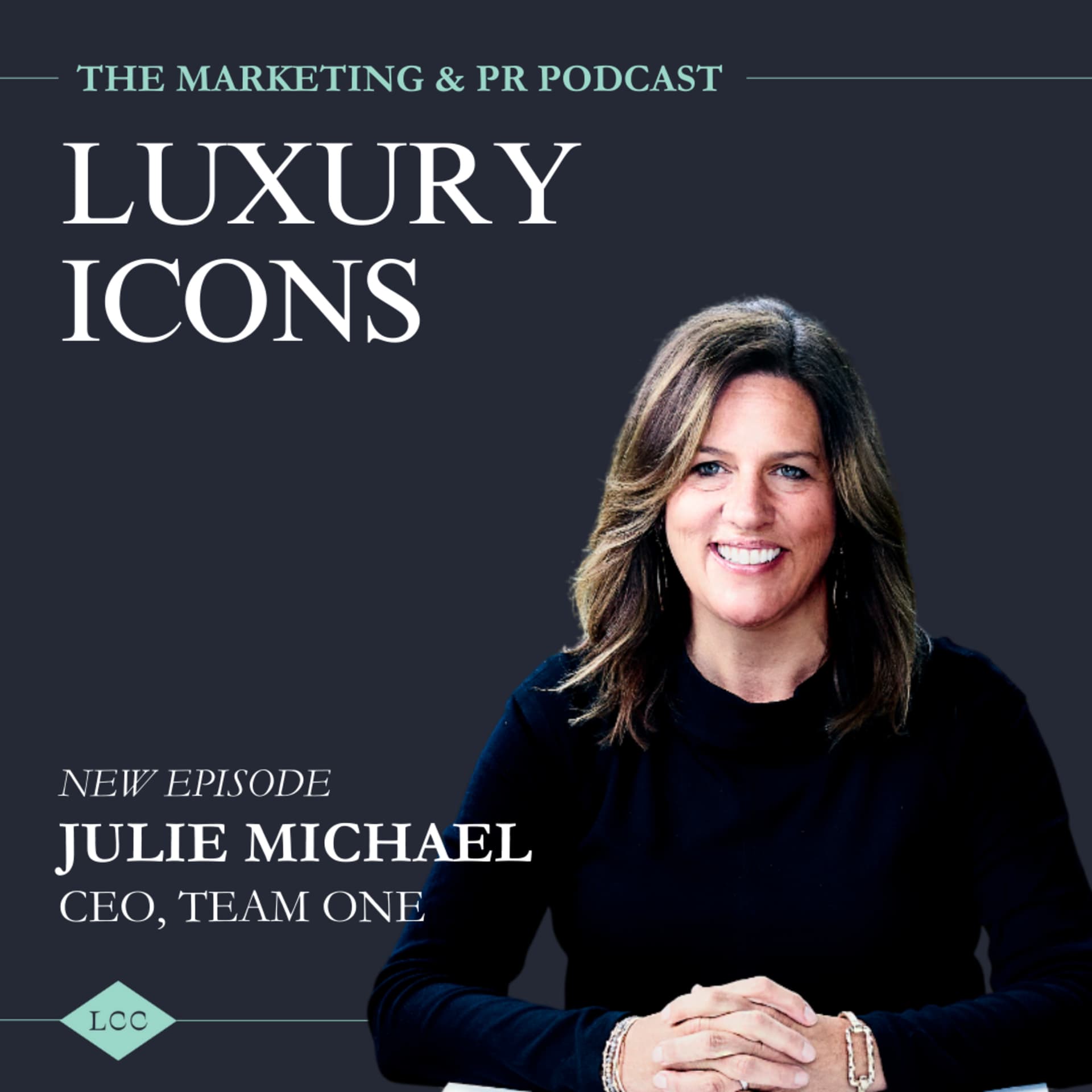
Julie Michaels (Team One) discusses how luxury branding is shifting from “elitist/exclusive” storytelling to “high life worth,” driven by listening to next-gen affluence and by purpose, learning, and emotional security. She previews insights from Team One’s Global Affluent Collective Research (since 2010; top 10% earners across 22 countries; ~4,200 consumers; qual+quant methods including surveys, interviews, salons, ethnography, semiotics).
Key claims
“anything that smells elitist or uninclusive is an anti-strategy”; luxury’s exclusivity is redefined as personal choice, not “I have/you don’t”; continuous learning is “ultimate luxury” (95%); motivations are inward (transformation, knowledge, community, life optimization); first-gen wealth seeks assurance; third-gen wealth seeks transcendence; experiential/IRL engagement grew ~40% post-COVID.
Notable examples
Ritz-Carlton “Leave Better” (transformative hospitality mantra); Lexus (CG/special effects; “treat guests like home”); admired campaigns/brands include Loewe/Japanese ceramics, Louis Vuitton Fifth Avenue trunks, Tiffany Blue Conservation, and Ritz-Carlton x Late Checkout (Gold Lion).
Guests
Julie Michaels, CEO of Team One (elite brand strategy, digital media/planning, creative campaigns for Ritz-Carlton, Lexus, Cathay Pacific; part of Publisers Group).
Written by AI. May contain mistakes. Listen to the episode to check what was said.
Chapters
Tap a time to open that second in VOIntroducing Julie Michaels
0:45 to 1:26
Rosie introduces Julie Michaels and her background at Team One.
“Cathy Pacific and provide brand strategy, digital media and planning and creative campaigns.”
The Changing Role of Exclusivity in Luxury
1:26 to 2:55
Julie discusses how elitism and exclusivity are evolving in luxury branding.
“And we need to do it in person next time.”
The Importance of Listening to Affluent Consumers
2:55 to 4:24
Julie explains the significance of understanding affluent consumers and their motivations.
“You know, it used to be very few had access.”
Insights from the Global Affluent Collective Research
4:24 to 6:43
Julie details the findings of their research on the affluent population and generational wealth.
“Collective, which I think we'll talk about in some detail based on your intro, where we've reached a decade plus of insight into what affluence truly, truly value.”
Evolving Motivations in Affluence
6:43 to 8:44
Discussion on how affluent individuals prioritize life experiences over material possessions.
“We also talk a lot about kind of inward motivators.”
Luxury Brands Should Focus on Purpose
8:44 to 10:33
Julie advises luxury brands to find purpose beyond mere luxury to engage modern consumers.
“And how do you advise your clients to respond to this?”
Transformative Experiences at the Ritz-Carlton
10:33 to 11:50
Julie shares how Ritz-Carlton implements transformative experiences for guests as part of their brand strategy.
“And it's basically a flip on the traditional hospitality script.”
Adapting Strategies for Generational Differences
11:50 to 14:00
Julie discusses the different needs and preferences of first, second, and third-generation affluent consumers.
“So how do you create a comfort for folks that are kind of first time in this universe?”
Growth of Experiential Marketing Post-COVID
14:00 to 15:01
Learn how experiential marketing is evolving as consumers seek connections post-pandemic.
“So the other thing we've really seen is a huge growth in our agency in the experiential part of our business.”
Emotional Connections in Luxury Branding
15:01 to 17:45
Explore the importance of emotional resonance in luxury branding and advertising.
“And it's all about who's who's made the most people cry.”
Show all 18 chapters
AI's Role in Luxury Marketing and Creativity
17:45 to 19:25
Understand how AI is being integrated into luxury marketing without compromising authenticity.
“us with workflow it helps create capacity it helps me brainstorm even Even some generative AI, like image creation, I don't think we should ever AI people.”
Heritage and Culture in Luxury Brands
19:25 to 21:52
Discover how luxury brands are balancing heritage with modern culture to stay relevant.
“And that's why you're seeing so many collabs that are really cool right now, too.”
Adaptations of Luxury Brands in Economic Uncertainty
21:52 to 23:30
Learn how luxury brands are adjusting their communications strategies during economic challenges.
“So for me, that even comes to automobiles because one of our, you know, an awesome client we have worked with since the very beginning is Lexus and they truly make the finest automobiles.”
Pitfalls of Luxury Brands Working with Agencies
23:30 to 28:01
Identify common pitfalls in the agency-client relationship within the luxury sector.
“I wanted to ask you as well, obviously we are in this time of economic uncertainty for luxury brands, it's a bit of a bumpy ride environment.”
Navigating Agency-Brand Relationships
28:01 to 30:16
Learn about the common pitfalls luxury brands encounter with agencies and the importance of clear goals.
“Thinking about your place in the industry as an agency, what would you say is sort of the biggest pitfalls luxury brands fall into when working with agencies or indeed actually when agencies are working with them?”
The Shift in Luxury Marketing
30:17 to 32:14
Explore how luxury brands are adapting to a new paradigm of PR, creators, and cultural engagement.
“It's more of a authorship, editorial, you know, PR is such an important function for luxury brands.”
Future Trends in Luxury Branding
32:15 to 36:00
Discuss the rise of ethical affluence and new luxury models focusing on sustainability and consumer demands.
“I mean, the combination of your insights and a bit of, I guess, influence of VIP magic, it's where it's at, definitely.”
Defining Ultimate Luxury
36:01 to 37:18
Julie shares her personal definitions of luxury centered around live experiences and cherished moments.
“Julie Michael, what is your ultimate luxury?”
Transcript
Automatic transcript. May contain errors.0:05Welcome to Luxury Icons, the marketing and PR podcast created by the Luxury Communications Council. I'm Rosie Shephard, the founder of the Luxury Communications Council, the world's only membership network dedicated to advancing the global luxury industry by uniting, supporting and championing marketing communication leaders. This podcast is dedicated to meeting some of the industry's most prolific leaders, delving into the challenges and opportunities that we face together.
0:34Today, our guest is Julie Michaels, CEO of Team One, who are an elite team of aspiration architects headquartered in LA and a part of the Publisers Group. Julie and her team work on major luxury brands such as the Ritz-Carlton, Lexus, Cathy Pacific and provide brand strategy, digital media and planning and creative campaigns. Now, Julie and I met at CanLion where she joined an LCC event I was hosting for NBCUniversal and shared such fascinating insights that I knew immediately that we needed her to be on Luxury Icons. And what particularly struck me was an important piece of research that the team conducted annually, their Global Affluent Collective Research.
1:14And the 2026 edition is about to be published and she's kindly agreed to share some insights with us today. So Julie, welcome to Luxury Icons. Thank you. It's so nice to be here with you today, Rosie. I really appreciate it. I know. And we need to do it in person next time. But in the meantime, we have to do it transatlantically. I want to start with something you recently said in an interview. You said something which I thought was fascinating. You said anything that smells elitist or uninclusive is an anti-strategy these days. Can you share a little bit about what you meant by this and how you feel the role of exclusivity is changing in luxury branding?
1:53Sure, I'm happy to talk about that. The quote was in context of a conversation about aspirational storytelling and the point I was making was that luxury in and of itself is no longer just a strategy. When people talk about kind of the old codes of exclusion or elitism, it really feels out of touch. So anything that smells kind of elite or I have and you don't have is no longer in the cultural conversation. In fact, it's kind of a turnoff. But to be clear, things that are rare and special are still very luxurious. We just lean into, and of course, not everybody invests in luxury at every time.
2:36So it's not meant to be ubiquitous. It's just meant to say that it is about a personal choice and not an I have, you don't have. Because luxury's relationship with exclusivity has been kind of redefined over time, really, if you think about it. You know, it used to be very few had access. And so that in and of itself defined luxury. but what we're finding is that luxury needs to be more meaningful it needs to be more worthwhile and people will really invest in the things that are worthwhile to them so something that's more seductive than off-putting is how I would sum that up and you also emphasize that um listening first and aligning strategy creation and culture all together is what really matters to affluent consumers.
3:30You've said that in an interview. Is that sort of your general approach when dealing with your clients? I would say that it's our secret sauce. So knowing next-gen affluence is really the thing we strive to do as well as we possibly can. So when we know what they think, how they work, how they make decisions, what truly motivates next-gen affluence, that's where we can best help our clients make connections with them because otherwise it's a brand kind of shouting into the sphere without a consumer that's engaged or interested or in touch with that brand. So for us, listening is a non-negotiable.
4:15It's a fundamental thing of how we view our work at Team One. And it is a really important part of that is the Global Affluent Collective, which I think we'll talk about in some detail based on your intro, where we've reached a decade plus of insight into what affluence truly, truly value. And then we kind of take that, combine that with cultural insight. So we're not just following or reacting to the trends. We can help our clients be on the forefront of shaping those trends. Yeah, perfect. Let's talk about the report now. So it's a little black book of ultra high outwards. How many people do you speak to?
4:52How does it work? Tell me. Yep. So we've been doing the Global Affluent Collective Research. It's a proprietary research program that we do at Team One. We've been doing it since 2010. And we've been researching Global Affluence, the top 10 % of global earners across 22 countries, and totaling about 4 ,200 consumers. So it's a QualiQuant, there's everything from surveys to interviews to small group salons to ethnographic research, semiotic studies. It's a very in-depth study that we've been doing year over year, and it really is global. So we're targeting the top 10 % of global earners. Now, what that looks like in the United States versus China versus Russia versus South America, those all look very different, but our goal is to talk to, call it top 10%.
5:42Okay. And, and so what sort of questions are you posing to them? Um, what are you asking them about? You know, it's, it's everything. It's some of the things you wouldn't expect. It's everything about their personal relationship with their money and their wealth. There's a theme from this year's study about generations and that a lot of marketers talk about Gen X, Gen Ys, and Gen Z as their target. One thing we found, for example, is when you're a first-generation earner of wealth versus a second-generation earner of wealth versus a third-generation earner of wealth, they have a really different relationship with their money.
6:23And if they've watched their parents become wealthy, if that's where the equity event happened, they have a really different relationship when they're trying to honor the heirlooms of their family or recognize the work their parents did. So that's a really interesting thing that we've been trying to get into is what is your relationship with your money? How does it affect your family and your decision making? We also talk a lot about kind of inward motivators. And I can get into some of the stats too around how people are wanting to live their best life. Like a life of worth, a life that's optimized.
7:02These themes are very, I don't want to say self-focused because that sounds selfish, but they are very much about taking control of one's life and what they believe is going to be an optimized life. When they look at their life from the beautiful lens of their deathbed someday and they go, did I live the life that I wanted to live? People think that thought often and especially people of means and affluence because they know they can have impact with their money and with their influence. And so it's a very kind of it's becoming more inward than it ever has been. That's so interesting. Were there any big surprises this year that you didn't anticipate that came out of the research?
7:49Yeah, the big theme, I mean, there were several. The big theme is that it's, you know, really the words high net worth have really morphed into high life worth. And so if you think about it, it's really not about material items. It's not about what do I own, but who am I becoming? So we heard a lot of things like themes were transformation, knowledge, community, life optimization. These are higher motivators now than any kind of outward display of wealth. So even somebody who buys a beautiful handbag or choose to fly a private jet, they justify that not by the outward expression of that, but how that gives them a tool to see their family or a tool to save time or a tool to feel confident when I walk into a charity event.
8:43So it's the motivators are really evolving as our society evolves. And how do you advise your clients to respond to this? How should luxury brands sort of learn from this and activate accordingly? So there are a few things. Luxury for luxury's sake is gone. And really a luxury brand needs to find its purpose beyond a price value relationship. So think about it as return on worth. And when a brand is really just obviously featuring benefits and luxury, that becomes a commodity pretty fast. And so our value proposition that we try to get our clients to work on is really integrating this kind of excellence with impact.
9:33so a high life worth kind of storytelling rather than just products and features. We think about how our brands help customers learn something new. That's a big one, and I can maybe give you an example from a client that we work with, which is the Ritz-Carlton, and obviously it is one of the most valuable hotel brands and travel brands in the world, and it's got this wonderful heritage that we want them and they want to hold on to, but they also have to be really accessible to modern affluence and not be a brand of the past, but be a brand of the future. So one stat we learned from our study is that 95 % of the respondents said that continuous learning is their ultimate luxury.
10:19Not just that they're interested in continuous learning, but their ultimate luxury is learning, And that's 95 % of the respondents. So the example I would give is the Ritz-Carlton launched a campaign. It's actually bigger than a campaign called Leave Better. And it's basically a flip on the traditional hospitality script. Instead of asking guests to stay with the Ritz-Carlton, we asked the Ritz-Carlton to stay with them. And so the idea of creating, yeah, so you get personal transformation and growth on site and then you leave with a new feeling a new self a transformed self a refreshed self a better self and that's how they create guests for life they really help their customers you truly transform during travel and I'll tell you it's way more than an advertising message it's actually an operating mantra for them so every person who works at Edwards-Carlton is tasked with creating a transformative experience for their guests whether you're the housekeeper the bellman the front desk everybody's watching listening thinking about how they can really create education or something different you know for a guest so that it's a very memorable yeah and exactly as you say memorable and something you can take home with you and therefore you know you probably want to then go back with chapter two and then And that's that repeat business right there.
11:49Fascinating. Yeah. Beyond the sort of enrichment, sort of, I guess, self-improvement piece, was there any other sort of big insights that you'll be taking away and advising your clients of that came out of the reports you're just publishing now? Yes. So I would get into that generational wealth piece a little bit more, Because what we're finding is as first generation affluence have an equity event or something that brings them a new sense of confidence or even just security, they require a feeling of assurance that they're making the right choices in the things they purchase. So how do you create a comfort for folks that are kind of first time in this universe?
12:39We talk a lot about that, how to reach them, how to make sure it's like, this is okay, and this is accessible to you, and this is something that'll make your life great, or help you with your own life purpose. But then next generation wealth is really interesting. You get to a third generation of wealth, and the signals are different. It's funny, they don't feel as comfortable because they grew up with a lifetime of wealth. And so they always feel like there's more to be had or they're searching for something a little more transcendental than the kind of history they've grown up with. And so we think about how to appeal to those generations as we put messaging together.
13:18And it even goes down to how we build websites and how we create experiential work and things like that. So interesting. And actually, I can't even imagine having to break down a strategy to that degree of personalization that you're thinking of who might this appeal to on such a granular level, what generation they are. That's serious personalization. Yeah. Well, and I think about, I want to build on that for a minute because since COVID, we have found, I think the other stat to share is something like, well, I'll get it right here. 89 % of the Global Affluent Collective define key life moments through meaningful connections with 90 % actively seeking relationships to elevate their lives.
14:05So the other thing we've really seen is a huge growth in our agency in the experiential part of our business. We call it IRL. It's the in real life stuff that people really missed out on in COVID. And Affluence especially, you know, this stat proves it. They want to be part of a community. Now they want their privacy. They want to respect their boundaries. And our experiential division has grown like 40 % in the last year because brands are really wanting to create meaningful connections through shared passions that are, you know, get out from behind your screen and be in person and experience something.
14:46And I'm sure you're finding this on your podcast too, where people want to connect with you more than ever. And people want to be at events and conferences and dinners and kind of once in a lifetime experiences. It's really been fascinating. And I know some of it's just the COVID ricochet, but some of it is also that you know affluent people are sometimes lonely and loneliness is an epidemic right now and so we think how can brands they can't solve the whole problem but how can they do little things to help people be connected to their passions to learn more to meet others to do something that they can't do on their own that's really been a you know a big change in our business is this whole in real life thing yeah it's it's i mean it's a big conversation at the moment and um and frankly you know that is pretty much what the luxury communications council was built on you know that we needed to get out of our silos of working in luxury brands and and actually you know have those relationships have those conversations and that was about sharing best practice i guess rather than um rather than i guess the more sort of consumer side of things, which is more about camaraderie, relationship building, and indeed, I guess, sharing emotions, which is what seems to be driving all the conversations around brands at the moment, all the Christmas adverts have just come out in the UK, probably in the States as well.
16:15And it's all about who's who's made the most people cry. It really is. Well, and it's so funny, because now, you know, Halloween ends, and the next day, it is right into the holidays. It starts I feel like a slippery slope till the end of the year, right? It just goes fast, but it is, it really is about tugging on heartstrings. And I think there's an insight there that we are seeing in our data, which is people want the shopping part of it is becoming a little less important. And it's more about giving experiences, creating experiences, being with family, rekindling friendships. I mean, our data shows it and I'm sure advertisers are capitalizing on it with all their holiday messaging.
16:56Yeah, absolutely. And just anecdotally, like we feel that in our own lives, you know, it's that human connection is just more fundamental than ever. And as you say, mostly probably because of COVID. And I love how brands can be so creative. I mean, as I said earlier, we met at Cannes. That really celebrates the best of creativity. Are there any particular brands that you really consider to be leading in that luxury space in terms of creativity? Who do you admire? Oh, there are so many. I there's creativity happening in every corner of the globe there's so many brands doing interesting things I have a few examples I'd love to share but first I would love to say something about AI because there's you know there's a lot of debate around AI especially when it creates to luxury when comes to luxury and authenticity and I'm on the AI bandwagon I love it as a tool it helps us with workflow it helps create capacity it helps me brainstorm even Even some generative AI, like image creation, I don't think we should ever AI people.
17:55I don't think brands should ever get into that space or AI their product. But any kind of CG or special effects, we work on Lexus, for example, which is such a well-made luxury car. And there are really cool things you can do in film to really create a new background and show it at somebody's home versus a photo shoot out in the desert. So there's so many great things you can do. So just going on record, I'm a fan of AI, and I just think it's going to really help brands that are creative do great things. The three things AI doesn't do. Number one, it doesn't have vision. Number two, it can't make decisions.
18:35And number three, it doesn't have taste. So there will always be the need for people who have great ideas and brands that bring purpose. It can never be replaced by AI. So a couple so to answer your question, thank you for that little detour with me. To answer your question, there's so many brands doing cool things. We saw several of them at Cannes. I think I think LVM. First of all, I would say the brands that combine heritage with culture are the ones that are getting it right. So those that are being pure fads chasing the next trend, they come and go. The ones that are only steeped in heritage become dusty.
19:15So it's really that intersection between honoring your heritage and what's special about it, because it truly is a differentiator. And then a cross section with culture. And that's why you're seeing so many collabs that are really cool right now, too. A couple of brands I love. So, of course, there's several LVMH brands. And I think you've had Matilda, their chief brand officer on your podcast. It was wonderful. Human, doing really great things. I thought the work that Loewe did with the Japanese ceramic company was absolutely incredible. I think it won a Grand Prix at Cannes. I also love the Louis Vuitton Fifth Avenue trunks.
19:59It's such a simple idea, but it's larger than life. It's so spectacular. Selfishly, I'm really proud of the Ritz-Carlton work and the partnership they did with the Madrid fashion brand, Late Checkout. that was something that we had a hand in early on and our clients just took it and ran with it and did such a great job and they won a gold um lion at can yeah and actually we we've spoken about that campaign so many times both here on the podcast but also in luxury communications council firesides and various other meetings we do like it comes up again and again as best practice so congratulations to your team for that like that's thank you really amazing carlton deserves all the credit and the people at late checkout they're really a creative bunch Yeah, it's wonderful.
20:44I mean, I also, I don't know if you remember the, I think Tiffany, it was Tiffany that did their iconic color program called Tiffany Blue Conservation. And it was a partnership with Pantone and their foundation to save, you know, ocean conservation. I thought that was beautiful. I've also, I've always loved in-home luxury too. I think especially in the U.S., luxury is really equated with home. The type of home, the environment you create, the amount of money you spend on your home. So there are brands like Miele and Gaggenau, which make amazing beautiful kitchen appliances that are not cheap to put in your kitchen.
21:25But they're all about inspiration for chefs and the art of the kitchen. And I just think if you have a chef in your life or someone who loves to cook, you know exactly what that means and what that feels like. So there are just so many brands doing really cool things right now. And I also, my aperture for luxury is a little broader than the traditional kind of jewelry watches, fashion handbags kind of thing. I mean, I think it's anything that affluence are paying more for and kind of doubling down on to have a special experience. So for me, that even comes to automobiles because one of our, you know, an awesome client we have worked with since the very beginning is Lexus and they truly make the finest automobiles.
22:09They do not skip a detail. And so, you know, they're amazing and their service is impeccable. And I think about that brand too. And, you know, we've had the privilege of being a part of it for a long time, but it really, it comes from their, you know, their original mantra, which is to treat guests to treat all their customers like guests in their home and to build the finest automobiles and they still 37 years later thrive on that yeah wonderful yeah the creativity we've had to do with that i mean we've helped them do partnerships with celebrity chefs 100 thieves gaming like an esports team we've helped them do partnerships with anderson pack through amazon so really bringing a very kind of that where I started this, which is heritage founded, what is your unique and ownable POV?
23:03And then how do you intersect in culture and with modern and next gen affluence? And that's, I think the sweet spot for all these brands I just talked about. I know I talked for a long time, but I was excited about this question. And I do have a lot of examples that I'm thinking about and really celebrating. That's great and actually I'm not familiar with those home examples you gave so I will definitely be looking those up. Thank you for sharing them. I wanted to ask you as well, obviously we are in this time of economic uncertainty for luxury brands, it's a bit of a bumpy ride environment. How do you see luxury brand communications adapting to that?
23:43Are they adapting to that? Are you advising your clients to adapt to that? What's happening your side? Yes, I mean, everybody's feeling it. Everybody's worried. This feels like a common conversation. The economy goes through ups and downs. You know, we are in a certain period of time right now with some political uncertainty and economic uncertainty. I would say that I would say a few things. First is uncertainty is when aspiration becomes even more important. When the world feels somewhat unstable, we all want to feel anchored, and we seek out brands that clearly stand for something that aligns with our values.
24:25They tend to avoid things that feel frivolous or gravitate toward things that, you know, don't have real worth. So the brands that can deliver real value and real worth are the ones that people will still pay more for. And I'm sure you've seen this stat. It was a recent report, but the top 10 % of earners in the United States now account for 50 % of the spending in the states. And this is a record high. So while the current economic environment feels uncertain to many, we know that affluence tend to be more, first of all, optimistic, and second of all, resilient. And so they tend to spend through the dips.
25:02They often see economic turmoil as a chance to build something new, launch a new business, reinvent their lives, take advantage of something they've always wanted to take advantage of. So it's not to negate that there aren't real economic pressures that are facing people, but it's also to say that in times like this, it's the affluent and the people we study are the ones that can sometimes bring the most stability because they have the spending power. And they're also, they tend to be optimistic, like they're land on their feet kind of people. They're people who say now is the time for me to try something new or start a business or build an app or write an AI agent or do whatever.
25:45You know, these are the times that affluent people sometimes lean in versus step back. And in terms of how brands are responding to this, I mean, what we're seeing this side of the pond is certainly, you know, lots of the brands are really doubling down on those absolute 0.1 % of customer base and actually, you know, sort of, sort of, I guess, pulling back from targeting that more aspirational customer and just really going in lots of in-rail life events, actually, to that, to that absolute, you know, loyal customer that's their sort of highest spenders. Is that what you're seeing your side as well?
26:23We are seeing that and I'll add the word and afterwards. So we're seeing, of course, with the separation of wealth and that, you know, more wealth is being put into the top 10%, 5%, 1 % as there's a disparity growing, which of course, there's a social commentary we could talk about for an hour on that topic as well. But what we're seeing is that you have to shore up your base. You have to shore up your lifetime customers, your high value customers, the people will pay without blinking, the people who will pay full price or any price to have what they want. This is the time you cannot walk away from those customers.
27:06And at the same time, there's some level of kind of creating emotional security or intimacy that we as brands have to have with those customers. So I would say the and part is that it's also a time for people who are coming into money or kind of reinventing themselves and looking inward where a brand can have a message that's one of maybe reaffirming meaning or reigniting emotion or maybe even giving validation, showing empathy to people who are maybe a little uncertain, where a brand can really create a fan for life during hard times. So I would say yes, double down on your core and kind of your most valuable customers and loyal customers and use it as an opportunity to create a conversation with new customers also.
28:00Yeah, that's great advice. Thinking about your place in the industry as an agency, what would you say is sort of the biggest pitfalls luxury brands fall into when working with agencies or indeed actually when agencies are working with them? what advice would you give to sort of both sides of the coin of that okay that's a good question I think there are a few things I mean there's a price to being dull there's a price to not getting noticed and sometimes when luxury brands just play it too safe or cling too much to tradition it may feel good in a boardroom but it may not play in a living room.
28:41And so, you know, one thing we talk a lot about is the noise is getting louder, the clutter is more, the messages are exponentially growing. You would rather spend less and make your dollars work harder and say something interesting versus kind of defaulting to something that feels safe. And that's especially scary for luxury brands or traditional brands, because you never want to break the holy grail of being able to charge a premium for the product or service you sell. So I would say that's kind of when magic happens is when if a brand stays too close to tradition and an agency maybe chases too much novelty, the sweet spot is where those things meet in the middle.
29:28And so the best relationships are built on trust and also a shared ambition. I can't tell you how many agency client partnerships I've seen, and even within our own agency, where you don't sit down at the beginning and say, what does success look like one year from now? Let's write the headline to the thing. What is our KPI? What is our measurement? Is it love? Is it desire? Is it sales? Is it share market? Is it winning China? Is it, what is it? and let's get crystal clear about it so that every decision we make together is always every you know like in a in a crew boat everybody's roaring rowing in the same direction every time we make a decision and so for me that's where when you asked you know what can be kind of like the pitfalls it's when you're not doing those things yeah exactly i think i mean having worked agency side ourselves i think you know it's so easy just to listen to the client and just nod along and say and give them what they want and not challenge actually when they're looking for that stability um when actually you really do know better that you see you know you have more ears and eyes on the ground as to what other luxury brands are doing and indeed looking to other vertical sectors like you see what customers and consumers are responding to and taking those knowledge that knowledge and actually pushing the the client to make that happen is i mean it's crucial knowing their customer better than they do is the secret sauce to know the buyer because we will never know their brand better than they do but we can know their customer as well as or better than they do and i think that's it you're also i think about your business rosie because you're on to this idea which is you know traditional ad agencies and luxury just don't exist i mean yeah yes brands do ads, but it's more of a publishing model.
31:21It's more of a authorship, editorial, you know, PR is such an important function for luxury brands. And I think, you know, I'd love to hear your thought on this too, but the idea that brands are publishing with creators and influencers and co-authoring with partners and they're working toward PR and social media, and it's really less about the perfectly curated ad, those still exist and there's a place for them for sure. But this idea that sits in the middle of creators, influencers, PR, and kind of cultural conversations, that's, I think, where the sweet spot is for luxury brands right now. And I feel like, Rosie, you're tapping into that in your world and what you're doing, and I feel like that's kind of almost what you're building your business on, which I think is awesome.
Read the full transcript
32:14Oh, you're very kind. And right back at you. I mean, the combination of your insights and a bit of, I guess, influence of VIP magic, it's where it's at, definitely. Just before I let you go, I've got sort of two final questions. I wanted us to sort of think ahead a little bit, three to five years, so near future. I guess, how do you think the communication space will be changing to be in line with, I guess, what consumers are demanding or indeed what luxury brands, how they're progressing in the market. Get out your crystal ball. What have you got for us, Julie? I have a couple of thoughts. The first is, I think we will see a rise in ethical affluence.
33:01There's so much swirling in our political environment. And then I I think about the fears people have with AI. I think about what's happening in crypto. I think about the things in our society that make people feel like maybe ethics are in question. And I feel like there will be a rise. I don't feel it. We're watching the trends. And we see that there's a rise in this idea of living a better, more optimized life. And that includes living a very ethical life. And almost it's like, you know how some brands are certified. It's almost like people want to feel certified in that I've, you know, I've lived a life, you've lived a life that you say, I put my head on my pillow every night and slept great because I knew I lived a very ethical existence.
33:53I think that's going to there's going to be a rise to this. And it'll be interesting how brands keep talking. I mean, we use the word authenticity way too much in this business, and I don't love that word. And it is it's part of what is next, which is what is a true self, a true answer, a an ethical response to our environment and our, you know, both economy, politics, sustainability, all the conversation. So I think that is one theme, this idea of kind of ethical affluence. The other thing I would say is that there will be emergence of new brands and new kind of luxury outlets. So think about, you know, you and I talked to Caroline Gardner at The RealReal.
34:38Think about that business and the idea of luxury resale or rent the runway. I also think about what Patagonia is doing with their upcycle recycle program where they allow people to send back merchandise and it gets upcycled and recycled and that no longer remember secondhand used to be seen as like don't even think about it yeah now there is no there's people that are sustainably minded and it answers a need for affluence and so those are the kind of companies and I know there'll be a next wave like that too the kinds of companies that are going to emerge which are going to answer people's need to not have tons of clutter to not have to manage their stuff all the time but to have great experiences and take care of the world we live in so there I think there's something there I mean granted these are predictions and trends we're seeing but there could be a future where these kind of brands continue to pop up yeah I mean And look, anecdotally, even just myself, my friends, my family, all of these are things we're talking about.
35:45So it feels like, you know, there's both those categories. There's definitely, you know, there's something there. And we'll see how it goes and see how what brands can then adapt to that to use it in their strategies. It's interesting. I have one final question for you, Julie, which is the question that we ask all of our guests at the end of Luxury Icons. Julie Michael, what is your ultimate luxury?
36:12I am going to answer with two things. I'm probably cheating a little bit. The first thing, my ultimate luxury, is live music. Nothing can replace it. I love being in the first 10 rows. I love the way it surrounds you. You put your phone down. You can celebrate someone's talent. You probably spent a lot of money for those tickets in many cases. And that's anything from going to see the symphony to the Hollywood Bowl to Red Rocks to the Bluebird Cafe. For me, it's the ultimate luxury and it's something that I find myself planning and thinking about often. And then the second one is I love a beautifully set crowded dinner table with delicious food, great drink, friends, family, loud laughter, noise, where you stay for an extra two hours and you just sit at the table after the meal's over.
37:10To me, that's a luxury that I just when those moments happen, you go, OK, soak this in because this is this is what you live for. and so those are my two things that I think are you know my personal luxuries. Love it thank you so much for sharing those with us and thank you so much for your insights we will wait and see if your predictions come to light and no doubt continue this conversation very soon thank you Julie. Thank you Rosie we'll see you soon.
From the publisher
Designing Desire: The Architects of Aspiration
Why do some luxury brands endure for generations while others fade into the crowd? Julie Michael, CEO of Team One unpacks the mechanics of aspiration, sharing how Team One helps brands like Lexus and The Ritz-Carlton balance heritage with cultural relevance. For luxury leaders, aspiration isn’t just a feeling—it’s the design principle and system for connecting with next gen affluents that keeps brands iconic in a culture that reinvents itself daily.
Julie previously served as Executive Director, Account Management, overseeing the agency’s Lexus National and Dealer Association accounts, and has been with Team One since 1998. She held a number of senior management positions, including director of experiential marketing, director of business development, and executive director leading numerous agency clients, among them Icelandic Glacial, The Ritz-Carlton, Marriott, HSBC Premier, Häagen-Dazs International, American Express, Flexjet, Anaheim Ducks, and Procter & Gamble.
Before joining Team One, Julie was the Marketing Director at a premier Northwest resort, Crystal Mountain, running all aspects of marketing and sales. Admittedly, she still misses the “research” part of that job, which she admits involved spending more time on the slopes than in her office.
Julie is both fiercely competitive and “Minnesota nice.” Team One clients benefit from her tenacity and flair for making the seemingly impossible, possible. She has led dozens of integrated marketing programs for modern brands, from launching the car-of-the-future with Steven Spielberg to giving affluents permission to fly private jets again. Protecting pricing power and shifting market share for clients drives her competitive spirit.