In short
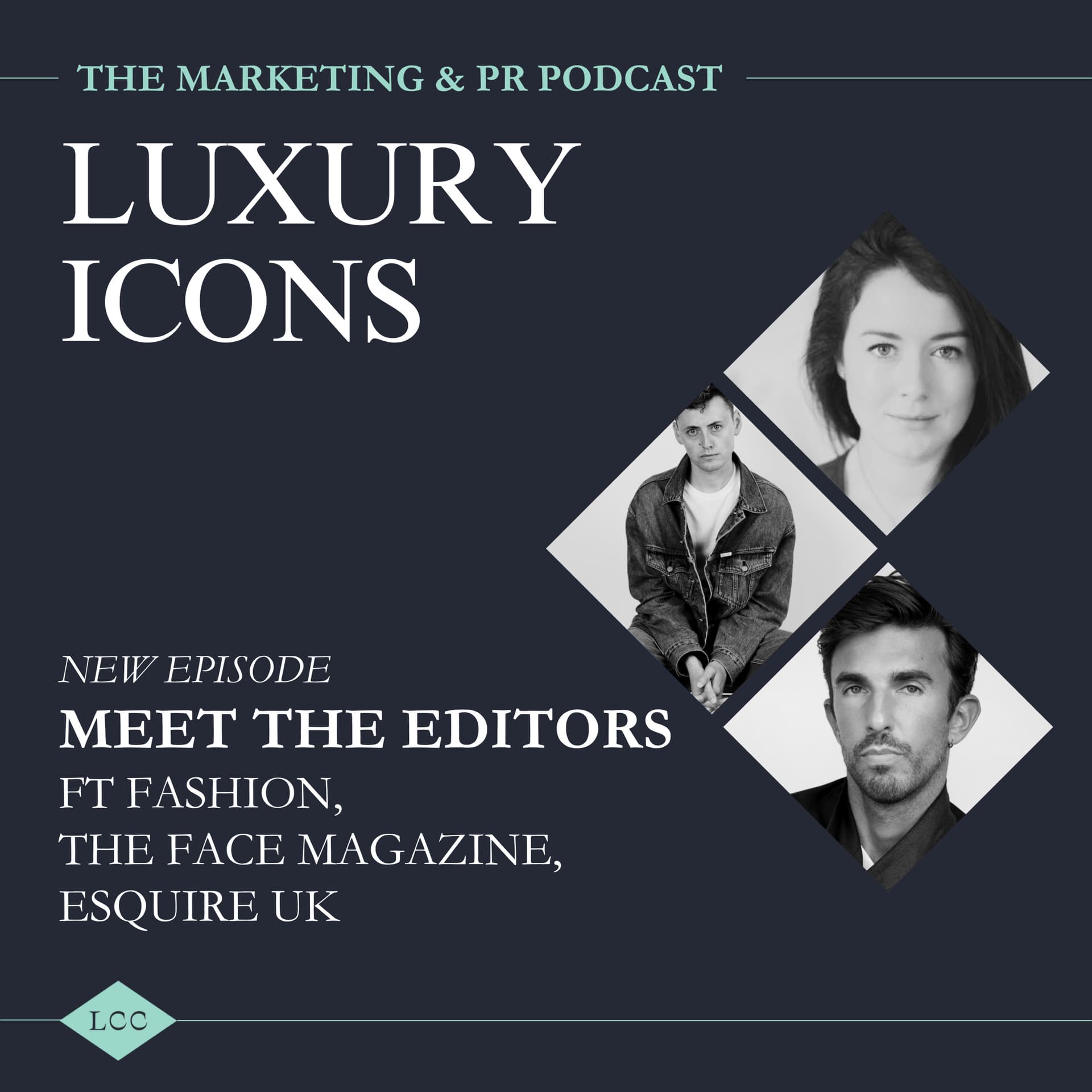
A live “Meet the Editors Panel” with Financial Times fashion editor Lizzie Patton, The Face editor-in-chief Matthew Whitehouse, and newly appointed Esquire editor-in-chief Theo van den Bruyka, discussing how luxury and style media should evolve and what brands must do to stay relevant.
Guests (backgrounds)
- Lizzie Patton: Fashion editor at Financial Times; returned to FT after a decade as New York Times European Styles correspondent; writes on luxury, culture, and business; also curates FT’s annual Business of Luxury Summit.
- Matthew Whitehouse: Editor-in-chief of The Face (relaunch in 2019); joined in 2019 from ID magazine (art and cultural editor).
- Theo van den Bruyka: Newly appointed Esquire editor-in-chief; built reputation in men’s style, luxury and culture; previously led editorial strategy at Soho House; formerly style director at Esquire and GQ.
Key claims + notable examples
- Patton: Luxury demand is shifting; consumers feel “shortchanged” amid pricing elevation; no “China” growth engine; watches/jewellery more robust; 70% of Richemont sales are jewellery; “buying down” to newer value brands (e.g., Me and Em, Cezanne); Ralph Lauren pivoted ~70% inventory to core items (polo knitwear) to reduce consumer confusion; “Made in Italy” crisis needs systemic investigation (Milan prosecutor probes, including Todd’s).
- Whitehouse: The Face targets youth via curiosity and “now” coverage; prioritizes engagement over follower growth; examples: Charlie XCX (Brat), General Tager (Wednesday Netflix timing), Jack Grealish (Man City win), Adele (record release day); launching Face China; new creative director Johnny Liu.
- van den Bruyka: Esquire is moving from quarterly to bi-monthly; manifesto centers “platform for good men” (anti-toxic masculinity without soapboxing); “Better Men” list expanded from 20 to 100 with judges; launch dinner with Jonathan Bailey; “Esquire Sessions” for closer access; contributors include Nick Foulkes (watches/jewellery), Ben Cobb (style column), Raven Smith, Caroline Issa, Charlene Prempe, Gianluca Longo, and new style director Zach Maui.
Written by AI. May contain mistakes. Listen to the episode to check what was said.
Chapters
Tap a time to open that second in VOIntroducing the Editors
0:45 to 1:55
Introduction of the three editors representing distinct fashion perspectives.
“FT's blend of signature intelligence, precision and global business insight.”
Lizzie Patton's Role at FT
1:55 to 4:50
Lizzie discusses her role as fashion editor and her broader editorial responsibilities.
“The very first one we did, which was eight years ago.”
Decoding Luxury's Recent Challenges
4:50 to 7:40
Lizzie shares insights from her piece on the decline of luxury appeal and consumer expectations.
“But fundamentally, it comes down to people feeling shortchanged and how do you stop them feeling shortchanged and start them feeling like they're getting what they want from a luxury purchase again.”
The Resilience of Watches and Jewellery
7:40 to 10:30
Discussion on the robustness of the watches and jewellery market amidst economic changes.
“that they don't really necessarily want to buy more product at the moment.”
Shifts in Consumer Spending Patterns
10:30 to 13:00
The panel explores the trend of wealthy clients buying down and their changing preferences.
“It's interesting because obviously we've had so many conversations about brands sort of re-making or reinventing themselves as a word.”
Ralph Lauren's Strategic Shift
13:00 to 14:01
Insights into Ralph Lauren's successful pivot towards core products and addressing consumer confusion.
“This is a story I think the FT should be doing and haven't done yet.”
The Impact of COVID on Journalism
14:01 to 15:00
Explore how COVID-19 influenced journalistic approaches and audience engagement.
Probing Luxury Through Family Dynamics
15:01 to 18:09
Discuss how family size and identity relate to perceptions of luxury and status.
“And he said actually a quote in this about that, which was like, you can't fake family.”
Editorial Direction and Internationalization
18:10 to 19:12
Learn about the shift towards international coverage and editorial strategies.
“So that's probably my big splurge for 2026.”
Introducing Matthew Whitehouse: The Face Magazine
19:13 to 20:16
Meet Matthew Whitehouse and discover the core values of The Face magazine.
“Our next editor is Matthew Whitehouse, editor-in-chief of The Face magazine.”
Show all 25 chapters
Curiosity and Audience Engagement
20:17 to 22:48
Understand the importance of curiosity and engagement in The Face's audience.
“You know, I think they're curious people.”
Timeliness in Content Creation
22:49 to 24:48
Discuss the challenge of capturing timely moments in magazine publishing.
“our audience and being where they are you know and and being where the energy is, I think.”
Collaborations with Luxury Brands
24:49 to 28:00
Discover how The Face collaborates with luxury brands to maintain authenticity.
“And tell me more about some of the work you're doing at the moment with luxury brands.”
Engagement and Audience Insights
28:00 to 29:20
Learn about the importance of engagement and trust with audiences in media.
“There was some, the guys did some research into it that was really interesting, because I feel it, you know, on a kind of feeling level, but there's something, we did some research into an engagement.”
Exciting Developments at The Face
29:20 to 30:50
Discover the upcoming projects and strategies at The Face magazine.
“Amazing, well perfect, I am going to ask you the final question which we ask to all of our editors or all of our interview guests before we go, so Matthew Whitehouse what is your ultimate luxury?”
Theo van den Bruyke and Esquire's New Vision
30:50 to 34:20
Explore the innovative vision and changes at Esquire with Theo van den Bruyke.
“I'd love to delve into your vision for the title.”
The Better Men Initiative
34:20 to 36:10
Learn about Esquire's 'Better Men' initiative and its purpose.
“But I feel pretty confident that everyone is a good guy.”
Creating Meaningful Connections
36:10 to 40:00
Understand how brands aim to connect meaningfully with their audiences.
“We had our cover star Jonathan Bailey there.”
Personal Growth and Authenticity in Media
40:00 to 42:06
Discuss the importance of personal growth and authenticity in media representation.
“And I think this, you know, this idea of kind of looking at introspection and masculine vulnerability is really key.”
Building Connections in Luxury Media
42:06 to 45:05
Explore how luxury brands must engage intimately with their audience.
“And yeah, I think everything we do should have an element of kind of connectedness.”
Esquire's Unique Position in Media Landscape
45:06 to 47:30
Learn about Esquire's strategy within the competitive media market.
“So the more that we can do that as a brand, I think the better placed we are for the future.”
The Role of Local and Global Content
47:31 to 50:02
Discover how Esquire balances local relevance with global storytelling.
“And that can be from the magazine, the newsletters.”
Career Highlights and Future Plans
50:03 to 51:46
Hear about the guest's proudest career moments and what's next for Esquire.
“I was very proud of getting the global exclusive first interview with Virgil Abloh, which I did in Paris just after his first show, which was just an extraordinary moment.”
Upcoming Projects and Innovations
51:47 to 53:41
Get insights into exciting upcoming projects for Esquire in 2026.
“what's next well we just shot our cover for the next issue which is good i'm very excited about But yeah, sorry, go on.”
Defining Luxury
53:42 to 54:02
The guest reflects on what luxury truly means to them today.
“Well, obviously it's time, but really I've just bought a stupidly expensive coat from the row that I absolutely cannot afford.”
Transcript
Automatic transcript. May contain errors.0:05Welcome to Luxury Icons, the marketing and PR podcast created by the Luxury Communications Council. I'm Rosie Shephard, the founder of the Luxury Communications Council, the world's only membership network dedicated to advancing the global luxury industry by uniting, supporting and championing marketing communication leaders. This podcast is dedicated to meeting some of the industry's most prolific leaders, delving into the challenges and opportunities that we face together. Now we have our Meet the Editor series. I'm delighted to bring you three brilliant editors. If Lizzie wants to make her way up here, you are first.
0:41They are representing three very different approaches to covering contemporary style. FT's blend of signature intelligence, precision and global business insight. We follow that with The Face, the voice of youth culture, fearlessness and rebellion. And we'll finish up with Esquire, the refined style, modern masculinity and timeless storytelling. But firstly, I'm delighted to introduce Lizzie. There we go. There we are. Oh, nice. Big, big you. Now, Lizzie Patton is the fashion editor of the Financial Times. Now, she returned to the paper just a few months ago after acting as a decade over at the New York Times as the European Styles correspondent.
1:26Now, she covers the intersection of luxury, culture and business with a sharp, authoritative voice. Hi, Lizzie. Hi. Thanks for joining. And I should also clarify, my byline is Elizabeth, but I do like to be called Lizzie because Elizabeth still makes me feel like I'm getting told off. There we go. So I'm very excited to join you. But this also feels like a real full circle moment for us because, well, not only we used to have a lot of fun in New York together back in the day, but you were one of my very first speakers for the LCC Leaders Forum. This is true. The very first one we did, which was eight years ago.
1:57And some of you have been coming to all of them ever since. So thank you so much. Now, firstly, let's start with the basics. Can you share exactly what your remit covers over at the FT? Sure. So in terms of editing, I'm responsible for anything that goes in the FT weekend newspaper pages. HTSI, set pretentity, anything on newspaper print, that's me. I also write regularly and across the paper so I'm just as likely to write a feature for weekend as I am corporate coverage for the main pages and I like it that way and this is actually the first time I've ever been an editor I've largely been a reporter and a writer so I've been flexing that muscle as well and then the last thing just because this crowd is the right one for me to mention this too I'm also responsible for the annual FT Business of Luxury Summit and making sure we get great speakers, great agenda.
2:46And I'm curating my first one for next May. Perfect. And just to clarify, you write well beyond fashion. Yes. So the reason I've always written about fashion is because I do see it as a bit of a Trojan horse into anything you want to write about. So fashion is a way of writing about social change, politics, technology, business stories, which is something I've always basically tried to do. That's not to say there isn't an enormous amount to write about luxury and fashion, about the wonderful characters, the business trends, but I also have form in making that a way to write about anything I want.
3:22And you do, which is perfect for many of us. And now, let's look at your first piece. It was entitled Why the World Fell Out of Luxury, or Out of Love with Luxury. It felt like a really big, bold piece to kick off with, didn't it? sort of like announcing the elephant in the room. Can you tell us more about it? Yes, so this ran just before Fashion Weeks in September. And I sort of did a series of pieces. I started in August, which I felt I wanted to just sort of set the tone in how I was looking at the world at the moment and also how I think our readers are looking at this world at the moment.
3:57You know, we obviously have a very specific reader demographic and I think a lot of them wanted to be heard. So this piece was really decoding the last two years, looking at a lot of anecdotes as well as hard data and saying actually how have we got to this moment and what might come next? Who's going to thrive and what do some brands need to do to survive? And it was obviously a lot about sort of the highs and lows of the premium brands. It was about, well, it was about from the consumer perspective but also from the corporation's perspective. Yeah, and it's about, I think, you know, this big question that everybody's been talking about in this room and beyond, which is pricing and that elevation up, up, up.
4:40And now how we make sure that a consumer looking to buy at any stage and stage of the market feels like they're getting value from that offering from the brand. And that's a different question and scenario for different brands. But fundamentally, it comes down to people feeling shortchanged and how do you stop them feeling shortchanged and start them feeling like they're getting what they want from a luxury purchase again. We used to talk to Dan about that. We did. I love that, by the way. It was brilliant. It was brilliant, wasn't it? Looking, obviously, you referenced this sort of growth. You know, carrying LVMH's results is low-digit growth and, you know, in different markets.
5:18Richemond doing much better. Lovely. Would you have anticipated that the watches and jewellery market is more robust? Yeah, because this has always been the case, right? You're in an economically volatile moment. Where do people want to put their money in things they perceive to be of a greater investment value? and they were doing the same thing 5 ,000 years ago. They were looking at gold jewelry and trying to use that as an investment thing. So I think the main thing I think about, and obviously the earnings season has just closed and it's been a little bit better, I would say, than analysts were expecting, so that's a good thing, was that basically there is no China on the horizon anymore, is there?
5:55There's no automatic double-digit growth coming from a specific geographic market and that has propelled two decades of growth for this market. And so, again, you just have to think about growth in a different way. What are you looking to achieve? I think with Richemont, you know, are there any Richemont people in here? Probably. Never mind. I wasn't actually going to say anything particularly rude other than. No, no, I really wasn't going to say anything other than rude. Other than it has been a bumpier few years for them in the last few years than for others, actually. And their results haven't necessarily been as stellar as some of the others.
6:25And then there is this sort of correction coming through, given they're so heavily weighted towards jewellery. It was interesting I saw. I was also off maternity leave for the last year. So actually it's been quite a kind of reintroduction back into the space. But 70 % of their sales are now jewellery. And there's still this perception that it's fundamentally a watch business. And that's been happening in the background as well. So yes, that was basically the question though, right? That jewellery is what is the sort of cornerstone of their sales. And they're doing that much better. So it doesn't surprise me.
6:55And sort of other sort of, I guess, periphery markets. we've talked about interiors about how actually people are looking to adorn spaces rather than perhaps adorning themselves yeah i mean we were just we were mulling that you know these are and this is sort of the forum where these conversations are so fun but i was saying that i think a lot of and this isn't new either but i guess there is this movement slightly away from soft fashion and people are thinking about different things i keep hearing and seeing in this new role about interiors specifically i think people somehow feeling much more comfortable adorning private spaces spaces that people aren't necessarily looking at or seeing, but they still want to use their wealth or their sense of personality to decorate that.
7:34And I mean the experience economy, which has been around forever. But I just keep hearing, especially from an ultra high net worth community, that they don't really necessarily want to buy more product at the moment. Hence why we're seeing this rise of what we were calling the cheaper challenges, like me and Em and a whole demographic there, from a high net worth client who are buying down as opposed to the aspirational customer buying up. But they are still spending. It's just in these different and occasionally more discrete spaces. And actually, was that something you covered in that piece?
8:05Or have you covered generally sort of this buying down? Yeah, because I see it as a sort of quite important trend that we should be paying attention to, which is that there is actually genuinely a very wealthy client at the moment who has stepped away from some of the brands that are outlined in this piece. And I think they see a value for money in these brands that are pretty new, like Me and Em in the UK or Cezanne in France, which has just hit half a billion dollars worth of sales last year. And they are just offering a different value proposition. And they're thinking, well, I just think that's a really interesting thing because I think most people assume those brands are catering to people for whom that's a reach.
8:42But actually, there's a lot of people buying down as well. Yeah, it's really interesting. There obviously are a few exceptions. You wrote a really interesting piece about Ralph Lauren. Can you tell us a little bit about that? What have they done differently? Yeah, I just think, you know, Ralph has had a really stellar couple of years. And when I came back from maternity leave at the beginning of the summer and was just reacquainting myself with what had gone on in the market, because I'd largely switched off, to be honest. You know, Ralph had just totally outperformed in terms of its share price, in terms of its sales.
9:16The last 12 months have been so rough. And there they were doing something great. and Ralph Lauren isn't necessarily always perceived as an outrunner of the market. So I looked into why it was and I mean, oh gosh, there's loads of reasons, but the top line was basically that they have done this quite strategic pivot away from trend-led collections across the board to around 70 % of what they call core, which is all the product that you would associate with Ralph Lauren. So cable knit sweaters, polo shirts. And actually now that is what they make 70 % of their annual inventory. And that's what a lot of people want.
9:48And then obviously a lot of the marketing is around the extra 30%. But what Patrice Louvet, the CEO, said, especially in this piece, was just actually the consumer is so confused now. We were trying to give them too many things and tell them too many stories. And actually, at a time when what America looks like or what Americans look like is kind of up for debate, but actually everyone kind of loves the Ralph Lauren version of what America looks like, we're going to double down on that. And also, we kind of know what everybody wants from us. So we're going to make sure we don't put ourselves in a risky place commercially and double down on a kind of inventory decision.
10:27And that's paying off both in terms of the stock market and in terms of sale. It's interesting because obviously we've had so many conversations about brands sort of re-making or reinventing themselves as a word. New fonts, new branding, refresh, refresh, refresh. And we've seen actually, I'll shout out for Burberry, who've actually recently gone back to their, or not so recently, fairly recently gone back to their original DNA and demographic profiling and things like that. And it's really interesting to see actually, we consumers just don't need new, new, new, which is the natural instinct of us marketeers.
11:01And also, I mean, not to tease my own content, but we do have a piece, a big piece running later this month on British heritage brands. And the report has been showing me some of the numbers. and actually there is this real reversion at the moment to heritage, to countryside aesthetic. Is it a reaction to AI? Is it a reaction to everyone just suddenly feeling overwhelmed and wanting to sort of go towards something more functional? And I don't know, it's a super interesting space and actually the reporting looks... I haven't actually finished editing it yet, but it does look interesting and it definitely plays into this as well.
11:34We'll look forward to reading that. Thinking further afield, and actually it's an interesting sort of... it makes sense to go here because there's a problem at the moment in Italy with this made in Italy. Yes. Okay, I was like, have I got that wrong? No, no, no. Okay, perfect. So we'll call it a crisis for the sake of it. Yeah, no, it is a crisis. Okay. It's obviously, you know, very much thinking about the DNA and what that means as a sort of holistic umbrella brand in its entirety. Tell us a bit more. Okay, well, so just a little bit of background. Someone didn't read her briefing notes. No, I did read my movie.
12:13No, so just a little bit of background, I guess, about me. I got my first front page at the New York Times doing supply chain investigations into the Italian luxury supply chain. So I do understand it, and I've spent a lot of time looking at it. And I think what I thought was interesting about this year, which I would term an annus horribilis for the Made in Italy label, is that none of these allegations are new to me. They're not new to people who've really studied the industry. And I think what I found interesting about this year is this failure to just engage with it as an issue. This conversation is still, well, it's just a few bad apples and this isn't a systemic issue.
12:56It's kind of depressing that that's not happening. I'm really interested. This is a story I think the FT should be doing and haven't done yet. but about why it's all coming out now and why the Milanese prosecutor has suddenly decided that right now is the moment to strategically target a number of brands. I don't even yesterday, you know, they've just announced another probe into Todd's and that was interesting as well because Mr. De La Valle has been one of the most vocal proponents that there's nothing wrong at the moment with the system. But, you know, this is a crisis moment because it really devalues people's sense of what luxury is and there has been so much focus on craftsmanship by the entire industry for the last five years.
13:33And that's why you should pay these prices. And then this is a really bad moment if people are already reassessing what value is, if they're suddenly going, well, can I really trust these brands? So it is really problematic. I personally, I am not in the luxury industry on that side of the fence, but I think I would just open my, put up my hands and say, yes, actually we have a problem. And the thing we're going to work on is fixing this rather than continually saying, there is nothing, there is no elephant in the room. um so yes they're not oh oh there yes well that's yeah one of the pieces exactly well that wasn't italy but yes the supply chain yes well exactly i just wanted to highlight that you know you are very much known for this actually really deep investigatory journalism yeah and one other thing i'd just say about it not to like toot my own horn per se but actually what's been really interesting to me is i wrote a lot of this just before covid and during covid and a little bit after COVID and sometimes it was quite hard to meet the audience actually the pandemic changed things a little bit but I was really writing it purely from a journalistic perspective because I was somewhere that had the budget that let me do it that gave me the weeks to go off and do what's proper investigative work and and and it wasn't that some of them did extremely well but not all of them did extremely well but I do think public consciousness is pivoted and people are are focusing on this now in a way that a few years ago they weren't so you know that's something that everyone journalists should be mindful of the industry should be mindful of the attention has skewed a little bit more towards these things than it was historically definitely and this is on the front page of the new york times it's amazing um the sort of other piece of your um of your i guess puzzle that you work on is really interrogating how i guess social trends so family identity gender also then play into the fashion industry um you wrote a recent piece about um how larger families are a new signifier of wealth and status this is what i meant about using it as a trojan horse and just writing about whatever you want to do but yeah this was one of the first pieces i did in august when i came um and it's just it's it's just tongue in cheek really but it comes from conversations i'm sure everybody's having now which is oh my god raising one child is expensive, two is expensive, three feels like a real luxury and then of course at the moment and especially in the moment that America is in at the moment there is all this publicity around these families that aren't even three or four, there's, you know, Ballerina Farm is one of the most popular influences at the moment and I think they've got eight that last, I don't even, I can't really keep up, but I, you know, I think sometimes it's, you know, luxury is about how people live and how they spend their money and children is a huge part of people's lives and how they spend their money um so it is a status symbol and i just wanted to kind of probe and explore that and it was sort of slightly playful but actually there's there's all the economic data to back it up as well it's also so interesting because actually it sort of it feels like it's the one thing you can't fake so if you can rent a handbag you can rent a dress and actually there's a smart strategist on tiktok who i really like called called eugene healy i don't know if any of you follow him so he was on the lcc podcast That's the latest one.
16:48Which I have loaded to listen to. But he's really smart. And he said actually a quote in this about that, which was like, you can't fake family. And there's obviously a lot about counterfeits out in the conversation about luxury in the moment and how you are authentic. But actually, you can't fake family. And that's something that, as a result, holds a pill. Finally, Lizzie, what can we look forward to seeing? More of what's coming up next? What's going on? What's coming up next? Yeah, I mean, it's been so interesting to move to editing and shaping coverage as well as writing coverage. I think I would just say in terms of the style pages, I am looking to really internationalize the pages.
17:28There is a really great British core to some of our coverage, but we've seen a lot of success in writing about the Gulf and writing about America, writing about China. I'm talking more brands are coming from there or trends that are coming from there. I've also probably brought a slightly more corporate tone to the weekend pages my bet being that actually everyone's concentration is so shot at the moment that they're that more inclined to dwell on a story with a coffee with a little bit more space and time on a Saturday afternoon than they are um if we pump it out at 7 a.m on a Tuesday and everyone squashed on the central line and so that's just a play I'm you know giving you all my experiments that haven't necessarily worked yet but but i do but i have been seeing some of that but also i do think i feel really privileged to have the ft as an audience again because everybody is curious and they're educated and they want to learn um and so i do see it as a great opportunity to introduce people to new brands they really do like being told how to spend their money perfect um and final question for you lizzie this is the question that we ask all of our interview guests um lizzie pattern what is your ultimate luxury i know it's so lame but it's true but because i have two tiny children i just want to have a coffee by myself that would be the ultimate luxury um i hear you in terms of like if i was going to splurge in the next year um and i know this is a kind of old school thing but i have been thinking about it i actually think i'm going to get a bespoke suit made for myself no i'm doing i mean i did public speaking before but i'm doing more and actually i just do think there's something really really special about it and there's some really good operations right here in London who can help me do that.
19:06Come on, fashion girls, hook her up. So that's probably my big splurge for 2026. Amazing. Thank you so much, Lizzie. Thanks, everyone.
19:18Our next editor is Matthew Whitehouse, editor-in-chief of The Face magazine. Now, Matthew Whitehouse joined the role in 2019, ready for the relaunch. He was previously at ID magazine where he was the art and cultural editor Now, just in case you don't know, The Face originally launched in the 1980s and was relaunched, as I said, in 2019. They focus on music, fashion, film, politics through a mix of daily content, social podcasts, and, of course, quarterly print editions as well. Now, I asked a number of our Big Fashion House members how they were reaching Gen Z and Gen Alpha, and The Face just came up again and again, which is wonderful.
20:02So, first of all, welcome to you, Matthew. Thank you. How would you describe The Face's core audience demographic and cultural mindset? Has it evolved since the 2019 relaunch? I mean, I think it fundamentally stays the same as it always has been for The Face, and it's curiosity. You know, I think they're curious people. They're probably the first in their kind of friendship group to know about things or want to know about things. And I think they turn to The Face because we are the people who are often very first to things. So curiosity, I'd say it's the main thing. Good haircuts. Yes. is a core part of it.
20:34But yeah, that curiosity, I'd say. And what would you say some of the work you're most proud of is? I think, I mean, for me with the face, it's when we capture now as accurately as possible, I suppose. And so by that, I mean, when it comes to the face, I'm not really interested in the past particularly, and I'm not really interested in the future at all. I really, really like now, and sort of looking around and adding context to it and adding depth to it. So it's when we've had moments like people on the cover that have been particularly timely, which is a hard thing when you make a quarterly magazine to predict, well, what's going to be timely in three months' time or six months, however you're planning it.
21:08But we've had things like we did Charlie XCX's first piece of press for the Brat campaign. We did General Tager on the cover the day that Wednesday came out and that became the biggest show ever on Netflix and all that kind of jazz. Jack Grealish on the cover the day won the league with Man City. You know, these really, really timely moments. I think when you get that right, I think that's the most exciting thing. Amazing. and how would you describe the Face's core audience today in terms of sort of the demographic and the sort of cultural mindset I mentioned that already but I guess I want more about sort of the relationship with the readers do you feel it's different between you and them in terms of how you are in contrast to other magazines well I'd say that we're very close to our audience you know I think we kind of speak to them at eye level I suppose you can feel it I wish there was a more scientific way to say, but you can feel that closeness with the audience.
22:03There is a scientific way to say engagement. That's one thing that we look at, really, particularly with the face. We don't chase exponential growth for the sake of exponential growth. It's kind of meaningless when it gets to that stage. What we look for really is engagement. Are we engaging with our audience? Do they like what we do? Are they involved in what they do? So I guess it's that closeness. And so, too, I think that age of a magazine, when the face relaunched, the face was the internet. you know it was where people went for everything there were these totemic things magazines they're not so much anymore you know people turn to us for authority and trust but they don't want to be dictated to so we need to listen as much as we talk to our audience and that's something I think we do really well at the face.
22:43So more conversation less authority? Yeah well the same authority but it comes from listening that trust comes from from listening to our audience and being where they are you know and and being where the energy is, I think. It's no point just dictating to your audience anymore. You have to listen to them as well, and that's something that we try and do. You obviously have this incredible breadth of topics, and that might be music, film, style, activism, etc. But you're also quite sex, drugs and rock and roll, is that fair to say? Me, myself? Well, that's a different conversation. The magazine, is that fair to say?
23:18Yeah, I mean, what young people are interested in, right? So to that point of kind of meeting our audience at eye level, we talk about the things that our audience talk about. And I don't think that they're necessarily edgy things. I don't think The Face is a particularly edgy publication at all. I think we want to be where the audience is at. And so we have the same conversations that they have. We show up in the same spaces that they show up. As I say, we meet them at eye level. So yeah, I suppose we do cover those things as well. I think lots of people would think it is edgy. Yeah. But you're probably surrounded by, it is already the readership, they are cool anyway.
23:58So it's sort of, yeah, it's a sort of a, they're not looking to you to be cool because they're already cool, I would have thought. That's true, that's true. But I would also politely refute the idea that the face is edgy. And I'll explain why, because I've worked at Youth Culture Publications now for nearly 12 years. and never once in those 12 years have we sat in a room and gone, how can we make this edgier? How can we freak people out a little bit? How can we shake up the straights? Never done that once. But what we have done consistently over those 12 years is gone, will young people like this?
24:30How can we talk to young people? Will they respond to this really, really well? And so I think it goes back to that point of kind of meeting your audience where they are and to just describe that as edgy and sort of put it over there would be to ignore a large section of the population and that audience. Okay, great. And tell me more about some of the work you're doing at the moment with luxury brands. Yeah, I mean, some of my favourite work that we've done has been with our partners. You know, I make a quarterly magazine. I like kind of working to briefs, I suppose. A magazine has a start and an end.
25:11It's finite, you know, so I kind of like the idea of working to a brief. And so some of my favorite moments that we've done, I suppose, go back to that idea of kind of like who you have on the cover, you know, and it feeling very, very now, as now as possible, you know. So I think brands constantly turn to us for our advice on talent that they should be working with. You know, I think we're very good at choosing people that are on the cover of the magazine. And for that trust, I suppose, and it's continuing. I suppose the work that we do is always in service to our audience, you know, and continuing to build that trust with them.
25:40So that's what makes me excited. Being excited, I suppose, is the most important part of the job. My job basically is to go into rooms and have an idea and try and convince everyone that it's the most exciting thing that they've ever heard, so they'll go and work on it. And then they go and work on it, and they make the reader think it's the most exciting thing they've ever heard, and they tell their mates, and they think it's exciting. So it's passing on that excitement, I suppose. And can we have a few examples of some of the talent that you've helped bring to you? Yeah, well, Charlie was great.
26:03I loved that. That was at the start of the Brat campaign, and that was a great piece of timing. We've been offered Charlie XX for the cover numerous times over the years since The Face has been back. But we chose that moment specifically. You know, as I mentioned, Jack Grealish was great the day he won the lead. General Tager the day Wednesday came out. He did Adele the day her record came out. It's that timeliness. You know, people often say, who puts your dream person to have on the cover? And I mean, I can't really have Paul McCartney on the cover of the face. It would be my dream person. But I would always really like to have the most timely thing possible.
26:30So I hope that when the face comes out, it feels very now. You know, there was an exhibition at the National Portrait Gallery at the start of this year about the face. And it was fantastic, you know, and it had all of the sort of old face stuff and had the new face stuff. And it was the first time, I suppose, that I've seen the new face situated with the old face. You know, I'm constantly making the new face and saying, what's the new face? It's not the old one, you know. And you saw it situated next to it for the first time. And what I really took away from it was the commonality was that we do now what they always did.
26:59And that is try and be as now as possible and to sincerely and accurately reflect what now is. You know, and you hope that in the same way where you pick up a copy from 1992, you go, yeah, that's what it felt like to be young and alive in 1992. to when you pick up a copy from 2025 in 10, 50, and 20 years, you hope that's what it felt like to be alive in 2025. Love that. And for luxury brands who want to work with you in a commercial way, how does that process work? How much sort of, I guess, creative license do you guys need? Yeah, tell us about that. I mean, we're very, it's a bit of a wonky word, but we're very intentional about the work that we do, I suppose.
Read the full transcript
27:32You know, we're very deliberate and we're very economical with the work that we do and we're very precise with the work that we do and so too with the people that we work with. again it's that excitement it's sharing that excitement and both being excited about the same thing I think is really really important and it's not entering into anything inauthentically I think is really important but as I say a magazine is working to a finite boundary and a brief you know so we kind of like that too but what I found is that people turn to us for two reasons really and it's that engagement level you know that trust and that authority that we have with our audience we don't have the biggest following in the world, but we have a really, really strong engagement rate.
28:12There was some, the guys did some research into it that was really interesting, because I feel it, you know, on a kind of feeling level, but there's something, we did some research into an engagement. I believe our competitive standard engagement rate is under 3%, as is over 7%. So it shows, you know, that that engagement is really, really powerful. We have a great open rate on the newsletters. You know, people click through and spend a long time on the website, all of that kind of stuff. I feel it, you know, and so it's their turn to us to reach audiences like we can. Amazing. And finally, Matthew, what's coming up next?
28:42What can we get excited about as well? Lots of exciting things. I mean, with the face, it is, I sound like a broken record, but continuing to be where that energy is, continuing to show up, you know, where people are. We've lots of business things that we're announcing, which are really cool. You know, we're launching a face China, which is really exciting for us to be able to communicate to that many people. I think is a really amazing opportunity. we're announcing a new creative director Johnny Liu who's a fantastic art director we'll be announcing that soon and I think for us it's continuing to be where the energy is and continuing to build that trust with our audience and that engagement with our audience which is for me is the most important thing Amazing, well perfect, I am going to ask you the final question which we ask to all of our editors or all of our interview guests before we go, so Matthew Whitehouse what is your ultimate luxury?
29:29Oh my gosh, I'm going to be a bit soppy with my answer and I'm going to say time is something that I really would love more of and time because getting a few days is one thing I have a little baby at home I want to spend more as much time as possible with him and time because I've got so much more to do, there's so much work to be done and so much more to do and I want the time to do it. Well I'll let you crack on and do it. Perfect. Thank you so much Matthew. Thanks.
30:02Perfect. We are next delighted to welcome Theo van den Bruyka, the newly appointed editor-in-chief of Esquire. I'm just going to flick through these because I didn't get through all of these. We had so many amazing pictures of the face. Look at all these incredible things. There's probably someone who can do this at the back for me. Oh, hey, there we go. OK, perfect. Now, he returned to the title that helped launch his journalistic career. Now, Theo has built his reputation across men's style, luxury and culture. He previously also led editorial strategy as global editorial director at Soho House, after serving as style director at Esquire and GQ.
30:46Hi, Theo. Hello. Welcome. Hi, everyone. And congratulations on your first edition that came out this month. Thank you. It's an absolute triumph. Thanks. So, I've got a little slide here. Hang on. There we go. There they are. There they are. I'd love to delve into your vision for the title. I'm just going to firstly mention, though, that you are upping the publication frequency, which I find incredibly exciting because it is really bucking the trend. So quarterly to bi-monthly. Yes. Yeah, from four to six issues a year. Wonderful. Yeah. Can you tell us about the manifesto and vision for the next chapter of Esquire?
31:20Yeah. So when I started, when I got the job at Esquire, I was obviously very excited. and kind of went into it thinking, okay, amazing, I've got this men's magazine that I believe in and loved for a very long time to play with. What can I do? How can I make it relevant? Because, you know, it had become a little bit dormant as a brand over the last couple of years. And I kind of thought, and, you know, I was helped a lot by having worked at Sofa House, I think, for a couple of years, and learned how to build brands, as opposed to just working in a magazine and thinking, well, we do it, therefore it's right, and thinking, actually, what do I need to give the consumer?
31:57What do they expect from us? What do they not know that they need that we can provide? And my thinking was that we needed a very clear purpose. And for me, that was to create a kind of platform for good men. And I think the idea was very centered around, you know, there's this whole conversation about toxic masculinity. There's this idea that men are very lost. There's a lot of conversations about men that when they're not really in the room. And I kind of thought, well, actually, what we need to be is a harbor in that stormy sea and provide a space that platforms good men doing good things in all of our kind of facets, whether that's through style or grooming or whatever it is, film, TV, culture, and present a kind of alternative to men.
32:45because a lot of the content that is being pumped out at the moment is celebrating a kind of very negative form of masculinity. And I think I don't want us to be hand-wringing. I don't want us to be overtly political necessarily or kind of soapboxy or bleaty about the topic. I want us to be celebratory. I want it to be an exciting, wonderful space for good men to come together and build fellowship and community on that journey with our readers, with the brands that we work with, just creating a kind of sense of cohesiveness on that kind of better men. Better men. I feel that there's, and I say this in full sincerity, there's a real profoundity to what you're doing here.
33:26And I'm afraid I am going to embarrass you by quoting you back to yourself. I'm going to read, I hope I didn't mess it up, and I'm going to try. This is, I believe, somewhat something of the manifesto. You say, this is for the good guys, the men who try, those who strive to be kind, engaged, active. It's for those who are role models to their children and present for their partners, leaders in thought, style, and creativity. The men gathering years with grace and looking ace while doing it, putting their best Prada Shod foot forward. Nobody's perfect, of course. We all make mistakes. But this Esquire first ever better men list is a celebration of the men who consistently do better in everything they do, wherever they do it.
34:08It's beautiful. Thanks. I think that point about not perfect, just better is kind of key let's come back to that we talk about a list, tell us about the list when I was thinking about the better men issue and I knew I wanted to have multiple covers because to have one better man felt like quite a lot of pressure for that cover stuff so we'll have multiple covers there aren't just three better men we need to look at people from not just film or TV or music or you know those big industries that we love but from the arts from politics from activism from all of these different areas that our readership is interested in and therefore we kind of came up with the idea of having this list and it started as kind of 20 and i was like okay that's not really enough that's not covering the gamut so then we went up to 50 then it was 80 then it was 100 and we brought in a panel of judges to help us decide who we put on the list um but it was it was interesting to put together i mean that you know there were moments when i I wish we could do a CRB check on everyone on the list because you never know what's going to surface later down the line.
35:13But I feel pretty confident that everyone is a good guy. Oh, no. Well, you never know. You've got a great communications team. The crisis team are ready. Yeah, we have. But no, it was an important, it felt like it needed to be at the heart of the product. And all of the covers, cover stars, are built into that list. they're part of the list so it's this comprehensive kind of celebration of good men and then you did a little party didn't you? we did do a party yeah which looked very fun it was great actually it was really brilliant lovely Paula sorry the Rosewood team I had lovely Paula from Claridge's host for us yeah she's one of our founding members actually she's wonderful yeah of course and we did a very wonderful black tie better men dinner in partnership with Boss and BMW Pironi, Glenn Morangi and others.
36:08And it was, yeah, it was a real success. We had our cover star Jonathan Bailey there. We had Naomi, lots of men from the Better Men list. And it was a really wonderful way just to kind of celebrate that moment. And it was very much a launch dinner, but there will be some of the photos there, but there will be an extension of this theme moving forward. And we kind of need to think that's the big piece of work at the moment to think how we can bring this to life, bring the Better Men messaging to life continually throughout the years in a way that is relevant for our brand partners, of course, but also really central to this kind of Better Men pillar.
36:50How can we bring meaning to the topic without it becoming a kind of factious thing that we just, it's one and done, which I really don't want it to be. I think it needs to be really central to everything we do throughout my tenure at the title. So, yeah, it could be an awards. It could be a summit. We'll see. Watch this space. You mentioned in the piece that no one's perfect, coming back to that piece. And I really, actually, really enjoyed reading your memoir, The Closet, that came out. Was it last year or the year before? No, it was 2023. Okay. Well, I've just read it. Sorry, I'm a bit behind the times.
37:23But the sort of sense of personal growth was a really amazing prevailing theme in that. It was a memoir, and we'll come back to it in a little while. But this was also really strongly reflected in the Letters to Your Younger Self campaign that you've just done, or initiative, probably, you'd call it. Do you want to talk about it first, or shall I show...? Maybe show it first, and then we can talk about it. Oh, we just need a little sound on that one. Oh, try that one more time. Oh. Ah, thanks. My name's Jonathan Bailey. And I'm here with Esquire Yukai. And I'm about to read you a letter to my younger self.
38:07Dear David, You will wonder if your difference is a burden. But let me tell you something. It is your own path that you are forging. Everything about you. You're living proof that dreams can and do come true. And you'll be styled by Robert Rabensteiner for a cover of Esquire. And you'll be proud of yourself for that. You've only got one shot at life. Make your own mistakes. but you need to make mistakes to be the man that you'll become. Your difference is your gift. You're curious and utterly relentless. Don't wait to be told, just look in the mirror. So it's going to get even more emotional, believe me.
38:43All best. Hold it, Johnny.
38:50Yeah. Yeah, I agree. I do feel quite proud of that. Yeah, when we were thinking, as I say, I feel like this messaging, it could very easily become something that we use, we throw away, and it doesn't really feel like it adds up to anything. And I think, for me, everything we do as a brand has to have that kind of core meaning. And actually, it speaks to what one of your earlier presenters was saying about this idea of kind of integrity and authenticity in luxury. And actually having a voice that people can relate to and communicate with directly and feel heard and seen by. And I think we have a responsibility to be that.
39:36And these videos, you know, we're like, well, what can we do that isn't, like, asking someone what their favourite flavour of crisps is or, you know, whatever. It's normally what's in your man bag. All of that. And there's a place for that. Which we love. But it does feel more profound. I think you need that, like any brand, you need that very constant stream of messaging that tells people what you're for and what you're about. And for a brand that is trying to reinvent itself and bring itself back to life, that needs to be clearer than ever. And I think this, you know, this idea of kind of looking at introspection and masculine vulnerability is really key.
40:11And it's something that's very key to me personally, too. Like you say, with the book, The Closet, you know, I was not going to too much detail, but during lockdown, as I think many of us probably experienced, I had a little bit of a personal crisis, I guess. I work was very strange. I was writing about clothes, my underpants for GQ on my sofa at home. I was like, what am I doing? This is completely ridiculous. and my relationship was falling apart, and I kind of realized I had to stop drinking, and I decided I needed to do something that had meaning, and I needed to feel proud of myself, and I hadn't really felt proud of myself for quite a long time, and I thought, well, I love clothes.
40:49How can I do the clothes thing with meaning, bring that all together, and The Closet, which is a book about kind of my journey and my coming out story through the prism of clothes that shaped my life, was the first step in that. And for me, it was incredibly important. And the response I got to it, particularly from young gay guys and older gay guys who'd read it, was so moving and surprising, I guess, that I realised actually there's something in this. There's something in honesty. There's something in radical honesty. There's something in kind of sharing and being authentic and being open and doing it as a man and in a kind of elegant, refined, whatever kind of way.
41:30And that's what I'm trying to imprint on new Esquire because I think people want it. I think people kind of crave it. And are your readers able to get even closer to you through sort of events and things like that? Yeah, that's a big aim. Before I started at Esquire, a big revenue stream for me was going and doing brand talks, you know going doing kind of styling sessions and whatever and it was really interesting because I'd go and be in say Dior's private suite and speak to their top clients about you know the new trends or how to wear a neoprene legging for you know big Saudi guys who are never going to wear a neoprene legging but it was that sense of communion that I found really interesting and it's like okay brands like Dior or any of these big big brands they need to have these grassroots moments they need the kind of runway to reality conversation to be to be held and they need partners like me to help them do it they need a human face and i loved it i loved that kind of connection with with the consumer and being being close to them and having that conversation understanding what they wanted and um and again i've kind of thought well that's kind of what i want to bring to esquire i want people to come to our events like esquire sessions which is our new always-on talk series and feel like they have access to me, access to our editors, access to the talent that we have access to.
42:57It's about repackaging that access. And yeah, I think everything we do should have an element of kind of connectedness. Yeah, great. And thinking just back to your first issue, you showcased this sort of absolute dream team of contributors, both on the editorial but also on the production side. I mean, there was Nick Feltz, Giga Luca Longer, Ben Cobb, Caroline Issa was also there. It really was amazing. Are there elements of that issue of which you're particularly proud or are you going to be working with those contributors long term? Tell us. Yeah, they're locked in. Nick Foulkes is doing our watches and jewellery coverage alongside Johnny Davis, our luxury editor in-house.
43:36Ben Cobb is writing a style column. Raven Smith is writing for us. Caroline Issa does a wardrobe mistress column. Charlene Prempe is doing a design column design kind of edit every month who else is there but Gianluca Longo is doing a little bit of interiors for us there are other people that I should remember but I can't who else did you say that's probably that's probably the core core team but then we just hired Zach Maui as well who was a gentleman's journal before I worked with him at GQ and he's our new style director he's brilliant, beloved. So, and again, he's very out in the world. He's very accessible and present and people know him and that's what I want Esquire to be.
44:22I want it to be connected to the conversation and the culture. It's interesting you say that because when AI is sort of breathing down creators' necks, you know, being a journalist could be a dangerous ambition as with many of our roles, frankly. But when you've got a personality that people know and understand and frankly have a backstory and people are waiting for their individualized views and content. That's actually what people want. Totally. We don't want another robot story. This is it. And in real life is the antidote to AI. I feel as kind of perplexed and bewildered and overwhelmed by the very concept of AI as everyone else does, I'm sure.
45:00But for me, that kind of human contact, those moments where you actually are with someone in the room and have a connection with them, that's completely AI proof, right? So the more that we can do that as a brand, I think the better placed we are for the future. I'm conscious I'm dotting around a little bit, but you mentioned you're working with some of the former contributors of Gentleman's Journal and GQ. Where do you see Esquire now sort of taking its place within the sort of wider ecosystem of publications? You know, obviously Gentleman's Journal, GQ, you've got the Rake, the Monocle. Are you looking to attract a certain profile of individual?
45:37Is it? Yeah, tell me. Yeah, I think it's interesting to look at that. When I started, I kind of looked at the span of that men's market in media specifically. And obviously, you've got, as you say, the Reagan Gentleman's Journal at one end of the spectrum. It's very traditional. It's very local. They do what they do very well. Then you have the kind of more business premium angle of Monocle. And then you have the global kind of fashion behemoth that is GQ. And it's great. You know, everyone does what they do brilliantly. But for me, I feel like Esquire has an opportunity to own a very local brand of British elegance.
46:13And it's this kind of undone, easy, slightly tongue-in-cheek thing that has been done very well by all the editors before me, by Jeremy, by Alex, Bill Mez. And really developing that and speaking with a very local voice and with local contributors and local content and local cover stars to a degree. and it's you know when I think about like a person that embodies that it's not quite right but you know like Haider Ackerman the way he wears tailoring that's the kind of way I see a GQ sorry an Esquire reader wearing tailoring why I say how I see a GQ reader wearing tailoring but you know what I mean it's a very it's a kind of easy undone kind of louche elegance.
46:57No understood and and Just picking up on that, how does the interplay between the local and global content work? Are some pieces going to be going global? Definitely. We don't have a quota. We don't have a specific amount that we need to do. But I have a very close relationship with all of the global Esquires. We have an amazing network of 25, I think it is now, maybe it's 24, titles that all work together. so if there is an opportunity for me to which is actually happening next month I'm interviewing someone very big in our industry that will be shared globally you know I've been able to secure it part in part because I've been able to access that network so when we want to use it to amplify the storytelling that we that we particularly want to kind of get behind then we can and that's a great thing you know it's a good thing for brands it's a good thing for us but it also means that there is a very strong focus on local editorial that's relevant to the local market because you know as much as the reader definitely wants it the industry also wants it and i've heard that a lot in the conversations i've been having um and have you defined yet how you'll be working with luxury brands um on the more i guess the more commercial as much as possible you'll take anyone I'm sure exactly there's some parameters tell us well I mean we will I think there's been a bit of a strange idea that you know there has always been this church and state idea in magazines between kind of commercial and editorial and I am very firm in the belief and Matthew touched on it a little bit earlier that actually some of the best content you can create can be done commercially you know like a lot of our brand partners have amazing access to talent you know the clothes they produce are fantastic we want to style our talent wearing them we want to feature them so you can do really really great things that really um you know work for both parties and work for the reader most importantly um so i am most excited by brands that want to have creative conversations with us and who want to kind of create something unique together that can really cut through.
49:13I think that for me is important. Perfect. And that can be from the magazine, the newsletters. Totally. And that's the thing. It's an ecosystem. And I say this to my team all the time. I think we need to, and we're doing it, but we need to break the idea that the magazine is the only thing and everything is beneath it. It's at the center of our solar system, for sure. And everything orbits around it. But we have to treat everything with equal care and importance because, you know, we need to meet our readers where they are. Yeah, exactly. Getting back to you, you've obviously had this very exciting career on the editorial side of things.
49:50It looks impressive. It also looks like you've had a lot of fun. What would you say are your career highlights and some of your proudest moments? Oh, gosh, that's actually a really hard question. I was very proud of getting the global exclusive first interview with Virgil Abloh, which I did in Paris just after his first show, which was just an extraordinary moment. And to be in the environs of a creative kind of visionary like that was just absolutely amazing. A lot of those kind of designer interviews have always kind of been things that have got me most excited. you know interviewing donatella versace when i was about 24 was kind of mad um you know though so those have been big moments the the book was definitely probably the most important thing i mean this relaunch has been probably hard work than that i have to say well yeah it's interesting as well because you know when you when you do a book you kind of you put your blood sweat and tears into it you know and it really is an emotional drain like it's it's an incredible process.
50:59You have to rake yourself. And it's exhausting in many ways, but it's also very insular and solo. And then you put it out in the world. You have a nice party. I did mine with Gucci, which is great. And then it's there. And you don't know. And people may have it on their bookshelves. Some people might be kind enough to tell you that they've read it and they enjoyed it, but most people won't. So that's it. It's gone until you write a new book. Whereas with a magazine, it's like, okay, we've done it. We've had the party. And it's like, oh shit, we've got to do another one. and then another one and then another one and it's an onward stream so at the moment this is the proudest thing that i've ever done but i'm not someone who stays still for very long and i am already very very cognizant of the fact that i have a lot more to do next year and to matthew's point like there's a lot of work to be done well my next question was one issue down what's next well we just shot our cover for the next issue which is good i'm very excited about But yeah, sorry, go on.
51:56No, no, I was going to say a bit more broad than that. Great that you've shot the cover. Tell me about what's coming up for 2026. What should we get excited by? So 2026, we have a lot happening. Obviously, we're going up to six issues. We are really kind of, we've got most of our Q1, no, sorry, H1 cover stars shot and confirmed. So that's very exciting. but we are doing a work issue for May-June which we're currently working on the cover staff for that so what I want to do is try and build out each of the pillars that relate to the better man idea with a specific issue so work, relationships, style, kind of betterment and theme the issues around those kind of core ideas we're building out our lists I think people love lists we do our list of 50 best things in the world we do our better men list We'll do a Best Dressed Men in Britain list, importantly.
52:54We will be bringing that Better Man messaging to life in multiple ways. I'm figuring that out at the moment. We're working towards the idea of a summit, potentially in the beginning of 2027. And there will be a version of the Better Man dinner at the tail end of 2026. We are working on a podcast, myself and a fellow editor, which is very exciting. We have the Esquire Sessions franchise, which will be our always-on at Soho Muse House, which we're kind of building in talent for at the moment. We have... What else have we got? We... Oh, God, what have we got? It's not enough. It's a lot. That's a lot.
53:31It's a lot. And, you know, obviously building out our social and video franchises. Exactly. Refining all of those things. It's exciting. Very exciting. And we can't wait to see all of that come together. Teo, my final question to you. what is your ultimate luxury? Well, obviously it's time, but really I've just bought a stupidly expensive coat from the row that I absolutely cannot afford. And that is my current absolute luxury. Fine. Because every time I wear it, I touch it. I was like, fucking hell, this is amazing. Yeah, yeah, yeah. Okay. All right. Well, thank you so much, Té. That was wonderful.
54:07Thank you.
54:12All right. and that is it for the Luxury Communications Council Leaders Forum a very big thank you for our speakers today what a line up and thank you so much to our amazing partners please do shout out if you would like to be connected to any of our partners that you've met today, thank you all so much for joining us, your homework is to listen to the podcast
From the publisher
Step inside the world of editorial excellence.
In this special episode of Luxury Icons, recorded live at the Luxury Communications Council Leaders Forum 2025, Rosie Shephard is joined by leading Editors:
- Elizabeth Paton - FT’s Fashion Editor
- Matthew Whitehouse - Editor-in-Chief at The Face Magazine
- Teo van den Brooke - Editor-in-Chief at Esquire UK.
We explore how storytelling, inclusivity, and immersive experiences are reshaping luxury media.
From global perspectives to bold creative collaborations, discover what’s next for editorial and audience engagement.