
In short
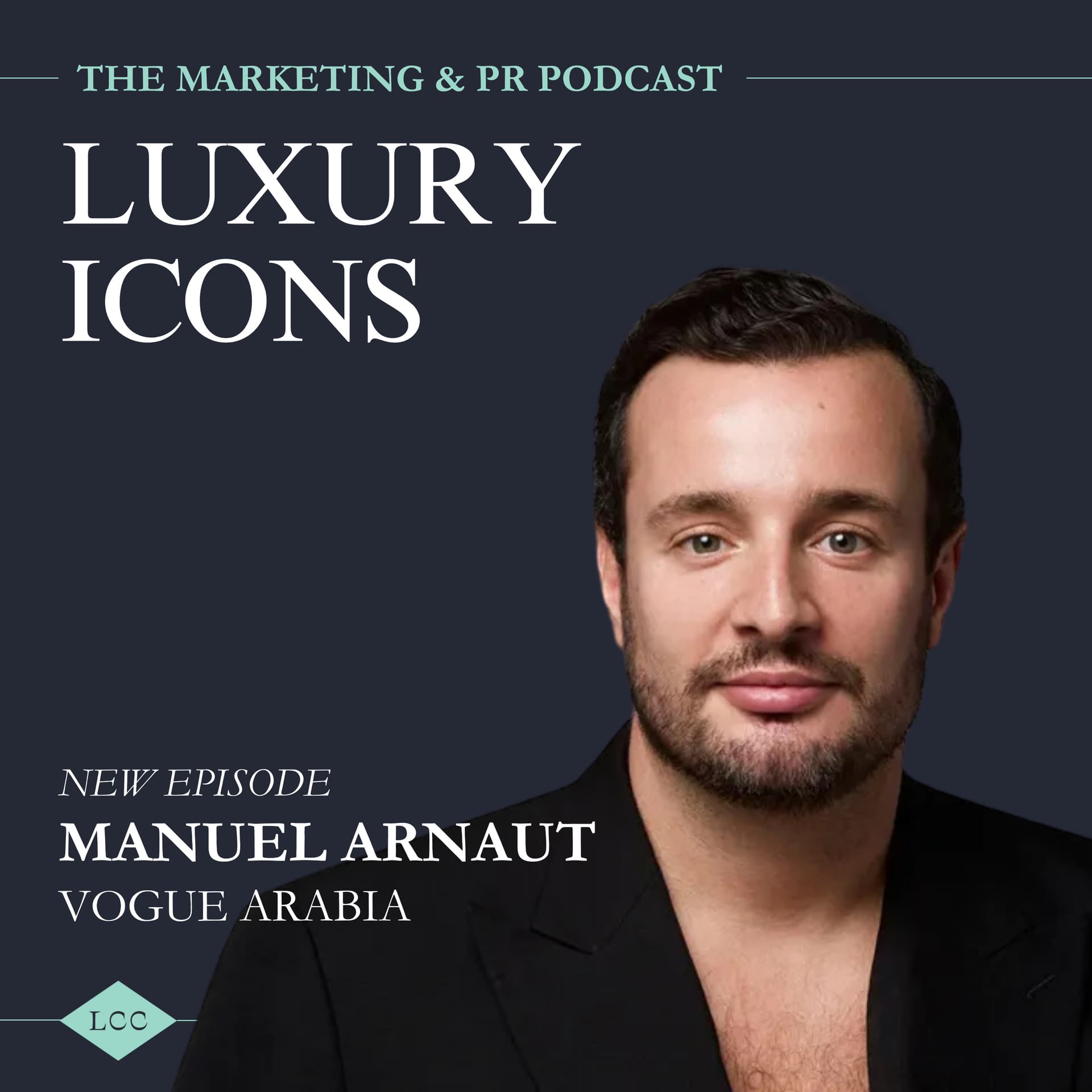
Podcast Episode Summary: Manuel Arnaut of Vogue Arabia
Podcast Title
Luxury Icons: The Marketing and PR Podcast with Rosie Shephard
Episode Title
Manuel Arnaut of Vogue Arabia
Episode Overview In this episode, host Rosie Shephard interviews Manuel Arnaut, the Head of Editorial Content at Vogue Arabia. The discussion revolves around his journey in the fashion industry, the strategic vision behind Vogue Arabia, and how the magazine shapes cultural narratives within the region.
Key Points Discussed
- Manuel Arnaut's Journey into Fashion
- Late bloomer in fashion; discovered passion for writing.
- Interned at Vogue Portugal, which ignited his career in fashion media.
- Emphasizes the competitiveness of the fashion industry and the need for passion.
- Vogue Arabia's Impact and Reach
- Launched in 2016, Vogue Arabia has reached approximately 400 million people worldwide.
- Print circulation stands at 35,000, with a digital monthly reach of 3.2 million.
- Strong presence on social media, particularly Instagram with 1.7 million followers.
- Cultural Representation in Vogue Arabia
- Balances global leadership with a local perspective.
- Focuses on showcasing regional talent, particularly women in leadership roles.
- Discusses how the magazine's narratives adapt to cultural nuances, such as modest fashion.
- Creative Risks and Editorial Decisions
- Highlights the importance of authenticity in storytelling.
- Shares examples of covers that sparked global conversations, including a controversial cover featuring Kris Jenner.
- Discusses the necessity of taking creative risks in a competitive market.
- Market Insights: The Luxury Segment in the Middle East
- Discusses the growth of the luxury market in the Middle East, emphasizing the region’s economic health.
- Encourages brands to recognize the diverse demographics within the region, including various expatriate communities.
- Audience Engagement and Content Strategy
- Emphasizes the need for brands to tailor their communications for different cultural audiences.
- Highlights the importance of unique storytelling that resonates with local traditions and themes.
- Focuses on the balance between local content and global narratives.
- Future Directions for Vogue Arabia
- Upcoming initiatives include the launch of an Arabic website and a series of events like the Ball of Arabia.
- Plans to enhance video content and experiential marketing efforts to engage younger audiences.
- Legacy and Vision
- Manuel expresses his desire for Vogue Arabia to be remembered for creating meaningful cultural moments through its editorial content.
- Reflects on the pride of achieving significant milestones, such as covers featuring influential figures and cultural references.
Conclusion The episode provides a deep dive into the intricacies of luxury fashion publishing in the Arab world, showcasing Manuel Arnaut's vision for Vogue Arabia as a platform that combines local authenticity with global appeal. His dedication to representing regional stories, while navigating the challenges of the luxury market, highlights the evolving narrative of fashion in the Middle East.
Key Takeaways
- Authentic storytelling is crucial in luxury publishing.
- Understanding local culture and diversity is key to engaging a wide audience.
- The luxury market in the Middle East is rapidly growing, necessitating tailored marketing strategies.
- Creative risks can lead to impactful media moments but require careful consideration.
- The legacy of Vogue Arabia is built on cultural significance and empowering regional voices.
Written by AI. May contain mistakes. Listen to the episode to check what was said.
Chapters
Tap a time to open that second in VOThe Impact of Vogue Arabia
0:45 to 3:02
Discussion on Vogue Arabia's impressive statistics and reach since its launch.
“the print circulation is 35 ,000 per issue but there's a monthly reach of 3.2 million across digital social platforms and that goes across of course Saudi, UAE, Kuwait, Qatar, Bahrain and the wider Arab world.”
Manuel Arnaut's Journey into Fashion
3:02 to 4:50
Manuel shares his unconventional path to the fashion industry and his early experiences.
“And you have been at Conde Nast for a number of years, all of your career, is it?”
Lessons from Competitive Media Careers
4:50 to 5:46
Manuel discusses the challenges and competitiveness of working in media and fashion.
“I was the worst in school and I think that from my class I'm the one with the best job.”
Cultural Influences on Management Style
5:46 to 8:07
Exploration of how Manuel's Portuguese background influences his leadership at Vogue Arabia.
“and Annie's there in the middle with the sunglasses.”
Vision for Vogue Arabia's Future
8:07 to 10:10
Manuel outlines his vision for Vogue Arabia and its focus on regional fashion and women’s empowerment.
“So first of all, we are the only edition globally that it's printed in two languages, in both English and Arabic.”
Distinct Features of Vogue Arabia
10:10 to 12:34
Discussion on how Vogue Arabia differs from other global editions, including bilingual content.
“And presumably there are some pieces from here that then go viral around the world.”
Navigating Local and Global Perspectives
12:34 to 14:06
Manuel explains how Vogue Arabia balances local insights with global leadership.
“Is it sort of more about the financials or, yeah, how do you bridge that subject?”
Understanding the Diverse Gulf Market
14:06 to 15:00
Learn how to navigate the diverse consumer market in the Gulf region.
“So, of course, that we speak to the Gulf Arab breather, but there's also the Indian community.”
Cultural Nuances in Fashion Communication
15:00 to 15:48
Discover the challenges of addressing different cultures in fashion marketing.
“So this is a reflection of how brands are doing so well here.”
Balancing Regional Representation in Vogue
15:48 to 17:24
Explore how Vogue Arabia balances content for different regional audiences.
“There's actually, there are three Vogue's.”
Show all 29 chapters
Authenticity in Brand Messaging for Ramadan
17:24 to 18:35
Understand the importance of authentic branding during culturally significant times.
“that there needs to be more done I suppose in terms of how brands approach all these different markets simultaneously because many times we hear from Europe there is sort of this more sort of pan-middle-eastern approach?”
Political Themes in Vogue Arabia
18:35 to 19:34
Learn how Vogue Arabia approaches political themes while remaining non-political.
“Not everyone wants to be featured, and then the people that want to be featured are a little bit used and abused and are everywhere.”
Cover Story with the First Lady of Lebanon
19:34 to 20:40
Hear about the impactful cover story featuring the First Lady and her roots.
“And also, once again, when you speak about the topic with some authenticity and from a different angle.”
The Scandal of Featuring Women in Saudi Arabia
20:40 to 22:34
Explore the challenges of featuring women in Saudi Arabian media.
“Gosh, what a brilliant idea as well, taking her back to her roots.”
Showcasing Nostalgia and Culture in Covers
22:34 to 24:53
Discover how nostalgia plays a significant role in Vogue's cover stories.
“This one, to be honest, I didn't expect it to be so problematic, I have to tell you.”
Highlighting Palestinian Voices in Media
24:53 to 26:52
Learn about Vogue Arabia's efforts to spotlight Palestinian issues and talent.
“I mean, it's not just about the covers that we do.”
Creating Impactful Fashion Content
26:52 to 28:00
Understand the role of fashion in sparking critical discussions in society.
“So we thought that Plastia Lakad, which was one of the journalists that was covering the invasion of Palestine, we thought that she was really the right person to have a conversation with Saja.”
Vogue World and Regional Representation
28:00 to 29:25
Learn about the significance of Vogue World and regional representation in global fashion events.
“to really to produce content that makes people think, opens discussions and that really represents the region on a global stage.”
Creating Statements Through Covers
29:25 to 31:00
Discover how Vogue creates impactful statements through its cover designs.
“And there's one more cover that I just wanted to...”
The Art of Timing in Fashion
31:00 to 32:32
Understand the importance of timing in delivering fashion content and stories.
“We've got a few more covers here which we won't go into.”
Innovative Events and Collaborations
32:32 to 34:44
Explore Vogue Arabia's upcoming events and collaborations focusing on art and fashion.
“Just coming back to sort of I guess the more specifics of the magazine, were there any particular contributors that you were very proud to bring to the table last year?”
Bridging Traditional and Digital Media
34:44 to 36:54
Learn how Vogue is blending traditional and digital media to engage younger audiences.
“We are also going to work with incredible golf artists to help us to create not only a very immersive experience in the venue, but also special digital covers for the event.”
Leveraging Hospitality Partnerships
36:54 to 37:58
Discover how Vogue collaborates with hospitality brands to amplify messages.
“And you know that hospitality here in the region, it's so competitive that it's also very important for the hotel brands to have the right partners.”
Navigating Commercial Challenges
37:58 to 40:09
Understand how Vogue balances creativity and business in their operations.
“Because I think that you guys agree with me, there's always a new opening.”
Successful Brand Collaborations
40:09 to 42:00
Learn about effective brand partnerships and notable campaigns from Vogue Arabia.
“And do you feel that there are untapped opportunities that brands should be aware of for the work within the whole ecosystem of Vega Arabia?”
Celebrating Heritage Through Fashion
42:00 to 42:34
Discover the impact of cultural representation in fashion campaigns.
“It was something that was elevated, but not celebrity.”
The Evolution of Vogue Arabia
42:34 to 43:45
Learn about the ongoing mission of Vogue Arabia and its future direction.
“5, where we've done a video with different women from the region that kind of like represented the different pillars of Chanel No.”
Cultural Moments in Fashion History
43:45 to 44:56
Explore how Vogue Arabia creates significant cultural moments.
“little bit but it's it's just a continuation of of of the very successful work that we've been doing.”
Defining Personal Luxury
44:56 to 45:53
Understand the meaning of luxury from the perspective of Manuel Arnaut.
“We have a bit of a tradition at LCC where we ask one particular question to all of our guests.”
Transcript
Automatic transcript. May contain errors.0:24Manuel Arnaut:Thank you very much.
0:30Manuel Arnaut:everything that you have built over the last however many years and last year of course the title moved over to be owned and operated by Condé Nast in the region I just have a few statistics I'd like to share because they are incredibly impressive so firstly Vogue Arabia has reportedly reached around 400 million people worldwide since its digital first launch in 2016 the print circulation is 35 ,000 per issue but there's a monthly reach of 3.2 million across digital social platforms and that goes across of course Saudi, UAE, Kuwait, Qatar, Bahrain and the wider Arab world. In particular Vogue Arabia's Instagram audience is 1.7 million and some social posts actually reach up to 18 million views which obviously is also incredibly impressive.
1:16Manuel Arnaut:Manuel I'd like to take you back to the very beginning of your journey. Can you recall your first encounter with luxury or fashion and I guess the thing that really inspired you to be want to be part of this world?
1:27Rosie Shephard:Actually, I was kind of like a late bloomer in terms of fashion. I was terrible in school. I never liked to study. I was always the naughty one in the principal's office. So I really didn't think that I had a talent for anything in particular. But then I found that writing was really the thing that I was good at. And then when I was thinking about where do I want to write? Who do I want to write for? What do I want to do? And I was like, oh, Vogue. It has to be at Vogue. So it was kind of like of an innocent choice. I don't have that moment that I saw someone wearing something on the street and I was like, oh yes, I want to work in fashion.
2:04Rosie Shephard:It was kind of like of a progression of my identity. And I was lucky enough that when I finished my degree in journalism to be able to start my internship at Vogue Portugal, where I started as an intern, I did all the evil tasks of having to carry the bags for the shoots and to put tape on the bottom of the shoes so that they wouldn't scratch and we can give it back to the stores when we had to borrow them from stores. So it was really not planned, but once I got into it, I was very passionate about it. I always say that we have a very hard job and working in media and working in fashion. People sometimes think that it's not a real job, you know, because this year is going to parties and this year is going to events and to sit in Fashion Week.
2:53Rosie Shephard:But it is really competitive and it's really something that you need to be passionate about if you want to survive. So once I was in that hamster wheel, you know, I was like fully on it and very passionate about it.
3:06Manuel Arnaut:And you have been at Conde Nast for a number of years, all of your career, is it?
3:10Rosie Shephard:So I always worked with Conde Nast magazine. So I did Vogue Portugal for six years, then I was editor of GQ, then I moved to Dubai to launch Architectural Digest. and then I was with a licensing partner for I think seven years or eight and now I moved to Condé Nast. So in total, it was actually funny because when I got my job at Vogue Arabia, the New York Times came out with an article, Condé Nast Veteran Manuel Ardoin. I was like, veteran, what do they mean?
3:39Manuel Arnaut:It's outrageous.
3:41Rosie Shephard:Yeah, and I was 33, so I didn't really feel like a veteran. But yes, in total, yes, I'm a little bit of a condenas dinosaur.
3:50Manuel Arnaut:And looking back at your career so far, what experiences have really shaped the way you lead Vogue Arabia now?
3:57Rosie Shephard:Well, I have to tell you that being Portuguese, I think that really helped in the type of management that I do. I'm used to work with extremely low budgets. and sometimes my colleagues from US and UK, they don't understand how we make things happen. So I think that coming from a country where there's really very small budgets and a very small scale, it really helps you to be creative and to be creative with the money that you have and really to be focused. So definitely that. I also did gymnastics when I was younger and I do feel that doing sports, and especially if you are at a certain level, it also helps you to build some stamina that at the end it's going to be very important for the work that you do.
4:45Rosie Shephard:Once again, I tell this to all my friends that have children. They're like, oh, you're so bad in school. It's terrible. I said, it's fine. I was the worst in school and I think that from my class I'm the one with the best job. So it's all about, I think, how you build yourself growing up and how your parents make you focusing on other stuff, stuff that doesn't really need to be studying, but definitely sports and coming from Portugal, I think that were the things that really helped me to build a successful career in fashion.
5:16Manuel Arnaut:Absolutely. And can I ask, do you have one particular moment, sort of the proudest moment of your career?
5:22Rosie Shephard:Proudest moment of my career. I have to tell you that when I was younger and I used to read American Vogue, and I'd be like, oh my God, one day, I wish that I would meet Anna Wintour and that I would sit with her. And sometimes I'm like at the Ritz and it's very funny how we have our meetings because it's all a little bit secret, you know. So we are calling to a meeting and you go to the Ritz and the full restaurant is empty and Annie's there in the middle with the sunglasses. And I'm like, oh my God, my life is a movie, you know. Yeah, yeah, yeah. So these are the moments where that sometimes I do have to pinch myself and that I'm proud that I reached some sort of leadership role at Conde Nast, which was always my goal and that I have as my direct boss in the winter.
6:11Manuel Arnaut:Wow, we'll talk a bit more about that in a minute. But I wanted to ask, when you were first appointed, did you have a clear vision of how you wanted to take Vogue Arabia forward or did it more sort of crystallise as you went?
6:24Rosie Shephard:I had, yes, an idea of what I wanted to do, but it is something that always changes. And the core was there. I knew that I wanted to speak about regional fashion. I knew that I wanted to showcase to the world the beautiful things that happened here in the Middle East. When I told my parents that I was coming to Dubai and I was going to work for Architectural Digest, my mom was like, oh my God, and the war. and you know so coming from Europe there is a really really a lot of preconceived ideas about the region so being here I really wanted to showcase that that we have so many so many talented people also the role of women in society it's something that I was always very passionate about to to speak about in the magazine and to show that the women in the region are powerful are this now looks like such a cliche girl power but but they are in leadership positions They are taking the decisions.
7:24Rosie Shephard:Look at the government of Dubai, where I think that more than half of the ministers are women. So fashion, of course, the social nuances of the region, I was very interested. But then, how you bake the cake, you kind of like add ingredients as you go. So even today, we still have the same goals and objectives. And of course, communicate all our international partners to our audience. but the way that we build that narrative, we have to adapt and to listen to the market and to what is happening. And this is how we progress.
7:59Manuel Arnaut:And thinking about how Vega Arabia fits sort of within the wider portfolio, what would you say are the sort of main, I guess, differences or contrast between your edition and the sort of wider global ones?
8:12Rosie Shephard:So first of all, we are the only edition globally that it's printed in two languages, in both English and Arabic. It's the only country or region that has that privilege. We do, I mean, the Arab world is different from any part of the world. So we have a different language in terms of fashion. There's modest fashion that we have to speak about. We have to speak about high jewelry, which is a very important segment for us at Vogue Arabia. I remember that when I was doing Vogue Portugal, It was in the biggest and most complicated economic moment in my country. And I remember that my editor at the time, she was like, don't put very big stuff because people are going to be very upset with us.
8:57Rosie Shephard:Here it's a little bit the opposite. We show the best of the best. We show the most luxurious, the most unique, the things that were crafted by amazing artisans. So we have that privilege to really showcase in the most amazing, glamorous and imaginative what's going on in the world. So in the world of fashion. So I would say that we are definitely slightly more glamorous than some of the editions just because every country has a different style and aesthetics and the language and of course those cultural nuances that are different.
9:35Manuel Arnaut:And you mentioned Anna, of course. We'd love to know how you sort of balance, I guess, that sort of local perspective with that global leadership and global vision. Yeah. And how does that work?
9:47Rosie Shephard:I mean, it's a conversation that we have every month. Anna is not sitting in the office with us telling us what to do. She's just more helping us for all the folks to be aligned, but she's not telling me do this do that she really trusts the local editors and yeah it's more about communicating but Condé Nast really wants us to speak locally they really want us to feature local content they really want us to I mean since we launched for one year we didn't have any syndicated cover so most of the most important pieces of content are focused in the Middle East but of course we are part of an international American company and we have all to communicate and to be all in the same line of thought.
10:39Manuel Arnaut:And presumably there are some pieces from here that then go viral around the world. I was hearing about this particular Kris Jenner cover which is really beautiful.
10:50Rosie Shephard:That must have
10:51Manuel Arnaut:been a really exciting moment when that went viral.
10:54Rosie Shephard:Yeah this was an exciting moment but it was also a cover that had some backlash. The thing is doing a magazine is kind of like making a puzzle, you know, and some moments and some covers you have to take the risk and you need to accept that there's a risk, especially about these covers. People are like, oh my God, you're going to have backlash. Yes, we were going to have backlash and I'm not, it's not the first time that I'm doing a cover. So I know exactly what are the pros, the cons, what's going to go well. Sometimes I can even write the comments that we are going to have on Instagram. But the thing is, you need these moments.
11:27Rosie Shephard:It cannot be everything by the book. It cannot be everything vanilla. And this cover that we did have bad comments on social media was also the September cover from all the Vogue's, all the Condé Nast publications that had the biggest impact on the media. So we have Nermini's here, she's our, she was very busy those days. She was like, Manuel, another story, another story. I think that we have around 100 clippings globally, including the New York Times, the Standard, any single possible media that you could think of wrote about this discovery in a positive way. So you need always to assess the risk and to understand on the slate of the content that you do, if there's one that you can be a little bit more risky.
12:12Rosie Shephard:So we were very naughty with this one, the next one we were very good and by the book. I like it, okay.
12:18Manuel Arnaut:Naughty and nice. Okay, perfect. It's such an interesting time for this region and I feel more so than ever so last in October many of you were here sitting in your chair which was actually Morrell who's the president of caring for the group who I'm sure you know very well and and you know we were very much talking about how you know even just looking at the statistics it's the Middle East that has the most caring growth above all markets it's the only market really having any sort of double digit growth and you know I feel that you must get the question a lot, you know, why the Middle East, why now, when you are talking to brands and looking to sort of invest in this market, what do you tell them?
12:59Manuel Arnaut:Is it sort of more about the financials or, yeah, how do you bridge that subject?
13:04Rosie Shephard:First of all, I would invite them to go to our malls, to go to Mall of Emirates, to go to Dubai Mall, and to see really how people are, I said Mall of Emirates because of you guys, you see that I'm paying attention? To go there. To go to the malls in general. Let's put it this way. And to really to see how people behave and the traffic that we have in our malls. I think that I'm blessed to be able to travel the world and I think that our mall experience is really the most elevated. And I don't remember even in China and US to have an experience like this. Plus the amount of people that are actually shopping.
13:41Rosie Shephard:And we have the biggest boutiques in the world and still you have to wait and you have to queue. Now I think that you cannot queue, but there's people there and you have to wait for your turn. So we are, thankfully, in an economy that it's very healthy. Also, I think that what's very interesting here in Dubai, and I always tell these to brands, and we also do that at Vogue in a more discreet way, but we try to target the pockets of audience. So, of course, that we speak to the Gulf Arab breather, but there's also the Indian community. There's also the Russian community. So there's so many possibilities and so many people that you can speak to.
14:19Rosie Shephard:But of course that you have to trim your offers the way that you communicate. You need to choose the right talents. So there's a lot of diversity. There's a lot of business to be made. And also I feel that now people here arrive to, they are sophisticated in the way that they purchase. They want quality products. They want the best. So for brands that are focused on selling the best and things that are done in the most amazing way, people do value, they value and they understand why it's expensive, you know, and they are OK with the fact that it's expensive. So I think that this combination is really, I mean, the brands have the numbers.
14:58Rosie Shephard:This is just theory. The numbers are there. So this is a reflection of how brands are doing so well here.
15:04Manuel Arnaut:Yeah, it is amazing to see how sort of shopping is a ledger destination out here in the same way, sort of, well, unlike many, many other markets where it's sort of, you know it's yeah it may be a necessity for some it may be a pleasure for some but it's not it's just not the same in terms of sort of how many hours are exactly as you say spent in these glorious malls um you mentioned you're you're obviously talking to many different sort of dissections of your different audience but of course you know in europe we have british folk we have spanish french you know they're all dissected how do you even possibly go about talking to all of these different cultures and communities simultaneously there must be different mindset behaviors, you know, traditional restrictions, etc.
15:45Manuel Arnaut:How does that work?
15:46Rosie Shephard:Yeah, well we are not the only Vogue that that has more, that aggregates more than one country. There's actually, there are three Vogue's. One for the Baltic countries, there's also Vogue Latin America, so for the full it's Mexico and Latin America, and there's another one that I don't remember because I didn't finish my coffee yet but it's revokes that that that that have Scandinavia exactly so it's a focus can you have here thank you I mean yes there are differences between the countries but there's also a lot of things in common and we do have 11 editions so in every edition we try to focus and to target different audiences and and the different countries even in the way that people dress sometimes we do something thinking about the woman in Lebanon.
16:35Rosie Shephard:Other times we do something thinking about the woman in Saudi. So we really do try to have that balance. I give you now an example for our Ramadan issue that will come out in February. We shot different royal families of the Gulf at home in different countries and we have multiple covers shot in multiple countries. So we really try to make that balance. And then of course we have our website and social media that has infinite possibilities and that we really can dissect all the countries, speak about there's no limit of space. So we always try to find a balance and it really works and for the brands also they really love to have this proposition and this vogue that is unified and it has been working really well.
17:22Manuel Arnaut:Speaking of brands, do you feel that there needs to be more done I suppose in terms of how brands approach all these different markets simultaneously because many times we hear from Europe there is sort of this more sort of pan-middle-eastern approach?
Read the full transcript
17:35Rosie Shephard:I think that what sometimes I feel that brands are not doing right it's that there's a little bit of a standardization of the way that the content is being produced so for instance the Ramadan campaigns okay it's like an avalanche of our Ramadan campaigns and they are all a bit the same you know with the same protagonists with so I think that it's important to make an effort to go deeper to think in a more authentic way it's exactly like like the magazines the brands also needs to communicate and to approach the different audiences using the local talents working with local teams folk using the the right messengers to convey their their their their messages for
18:20Manuel Arnaut:for these markets and also shine a light on new talent and you know educate I I guess the wider audience is important.
18:27Rosie Shephard:It is complicated because we also live in a part of the world where it's not as easy to get talent, also for cultural reasons. Not everyone wants to be featured, and then the people that want to be featured are a little bit used and abused and are everywhere. So we do need to put effort on it to finding the right messengers for the right messages. But thankfully, we cover 22 countries, and there's so much talent.
18:53Manuel Arnaut:Yeah, exactly. And I'd love to sort of shine a spotlight on some of those now. Obviously, you know, there's some type of content that consistently resonates. But are there particular stories that you feel are sort of most urgent or maybe even themes that are really, really relevant to Vogue Arabian right now? I have a few examples which I wanted to share. There we are.
19:15Rosie Shephard:Okay. Can you tell us about this one? Yeah, I mean, so the stories that really speak to people are stories, things that have to do with what's happening in the world. Of course that we are not a political magazine, but the themes that are related to empowerment, to politics. So these are topics that are quite important. And also, once again, when you speak about the topic with some authenticity and from a different angle. This cover with the First Lady of Lebanon is a great example, where we did one cover where she, yes, looks like the First Lady that you expect her to be. But then on the second cover, we asked her if we could go to the neighborhood where she was born.
19:56Rosie Shephard:And actually, that building is the building where she used to live. And if she could be shot with her neighbors. These are her real neighbors that knew her mom. She's wearing jeans and she's wearing sneakers. and this was a moment that for me was very special because it's that importance of authenticity and doing something that it's different. There's a very very nice video that I invite everyone to check with the neighbors and they are crying and they are all clapping and she's arriving to the neighborhood so it was really nice and really a privilege to be able to work on the first big media appearance of the First Lady before she went to speak in the United Nations and before the Pope came to Lebanon.
20:39Manuel Arnaut:Amazing. Gosh, what a brilliant idea as well, taking her back to her roots. I've got a couple more examples, but feel free to deviate.
20:47Rosie Shephard:So this one was our first big international scandal. Oh, great.
20:52Manuel Arnaut:We love a scandal. Keep your team busy.
20:56Rosie Shephard:And this cover also shows how the content resonates differently in different parts of the world. This cover was done in June 2018 when women were able to start driving in Saudi Arabia. And what we've done now, you see royals in the magazines and the ladies from the Gulf, they are okay to be in the magazine. When we did this cover in 2018, you could not travel to Saudi, you could not get a visa and it was absolutely impossible to feature a female royal from, I think, any royal family from the Gulf in the cover of a magazine. So, first of all, if you look, she's wearing high heels. She's on a red convertible in the desert in Jeddah.
21:38Rosie Shephard:The veil is a little bit kind of like falling off. She's wearing leather gloves. In this specific month, and the daughter of the king of Saudi, this was an atomic bomb. I think that there's the only way that I can describe this. It was an atomic bomb. Then, what was interesting about it? Local audience. Amazing, fantastic. I had people from Saudi, friends from Saudi crying because this was such an important moment for the women locally that were able to drive and to have the daughter of the king making this statement because a lot of women, yes, you could drive but the parents didn't want them to be the first ones but when this came out, it's like okay, if the daughter of the king can drive we can all drive so locally, yes and then we were absolutely destroyed in international media where are the activists that were arrested that the vulgar Arabia is completely down death and that escalated.
22:35Rosie Shephard:But once again, it was one of those. This one, to be honest, I didn't expect it to be so problematic, I have to tell you. But it's one of those covers that still people talk about and that after the storm, I still think that we made the right decision.
22:52Manuel Arnaut:Yeah, great. That's beautiful as well. OK, and then there's a couple of more examples.
22:58Rosie Shephard:So in terms of content that resonates, Jihan is laughing because when I was with Jihan on a press trip and I tell Jihan, I'm going to do a cover with Samir Ghanem, she was like, what? She's like, it might be your last cover. But it was not my last cover, thankfully. So two things that are very important in these two covers. With Samir Ghanem, people also react very well with things that speak about nostalgia, the things that speak about culture, speaks about traditions. and Samy Ghanem is one of the most iconic Egyptian comedians. This was, I think it was during Ramadan or close to Ramadan. He had, we did a happy issue.
23:37Rosie Shephard:I don't really remember if it was Ramadan or not, but he had a very famous character called Fatuta. It was like a miniature clown that used to wear a green suit. We went to his house. It was crazy work. We went to his closet. We found the green suit. We made him wear the green suit on the shoot and people loved it. Why? Yes, I have to tell you that it is a bit of a bizarre cover. And if I was not living in the Arab world, I would say this editor lost his mind to mix Samir Ghanem with Adriana Lima. But it's this unexpected and this nostalgia appeal that people really love. And then, very, very important, we were the first of all globally to have a cover with a model and this was also something that was bombastic on the news.
24:21Rosie Shephard:But for me, it's just I was just surprised how this didn't happen before. So in a way I was really happy that we were able to be the first ones to have this statement, to put a model on the cover of Vogue. But once again it was unfortunate that it took so long.
24:39Manuel Arnaut:Yeah, okay, great. We also want to talk about your sort of really amplifying Arabian voices. It's part of your sort of vision for the magazine as we heard. How does that sort of work in practice within the magazine? and your wider ecosystem?
24:57Rosie Shephard:I mean, it's not just about the covers that we do. It's also about the content that we produce on digital. Even going to the shows of the Arab designers doing Fashion Week, it's very important. Sometimes I go to the shows and I'm the only editor there, which for me, it's a little bit strange. But being there, supporting, introducing people, introducing designers to retailers, putting the spotlight on incredible women from the region, This is really an ongoing thing that we do. It's not something that we do this month and we don't do in the next month. We also created a really cool program called Buy Out of Designers where we did this huge campaign with the biggest stars in the region where they are all telling people to buy out of designers.
25:39Rosie Shephard:So we just do that in everything that we do.
25:42Manuel Arnaut:And in terms of sort of wider talent pool, presumably you're putting a spotlight on actresses, actors, artists.
25:50Rosie Shephard:I would say that 80 % of the work that we do is focusing on regional stars and celebrities and talking about local themes. If people want to read about Madonna, but yes, we can also do it from time to time because the consumer here, I also don't like people to think, oh, you just need to speak about Arab stuff. People from the region, they travel the world. They go to London, they go to Paris, they want to know the best of the best. But yes, we do focus more on regional talent.
26:21Manuel Arnaut:Can you tell us a little bit about this cover?
26:23Rosie Shephard:So this cover was actually a really important project for us. You guys know the movie about Palestine, about the girl that died inside the car. I think that is now on the run for the Oscars. Sasha Kulani is the star of that movie. So we decided to speak about this topic and to put the focus on Palestine and on this actress that is kind of like of a new talent. And then we thought, how are we going to make this more interesting? Once again, to speak about the topic with authenticity and with authority. So we thought that Plastia Lakad, which was one of the journalists that was covering the invasion of Palestine, we thought that she was really the right person to have a conversation with Saja.
27:08Rosie Shephard:And I like that they are two young girls under 30. so to give also a fresh perspective and really to have our audience to relate to them through their age, through their experiences. So we had discovered where it was basically a conversation between both.
27:25Manuel Arnaut:Fascinating. And I guess it feels like you really are trying to start conversations and have a real cultural impact.
27:34Rosie Shephard:Yeah, I mean, I think that, of course, at Vogue we love shoes, we love bags, we love restaurants. but we do a magazine for people that most and most importantly have a brain and that like to learn about the world and that have a critical thinking so yes of course that fashion is super important for us it's at the core of what we do but even the way that we tweet fashion we don't we just don't do like red you know we explain why it's red and this is just a continuation of that to really to produce content that makes people think, opens discussions and that really represents the region on a global stage.
28:16Manuel Arnaut:I was interested to hear that you were the only addition actually to send representatives from the region to Vogue World in Hollywood. Can you tell us a bit about that?
28:27Rosie Shephard:So Vogue World is Vogue's most important event that takes over, that happens always in a different location and it has different themes. This year the theme was, was this year or last year? Oh my god, this was this year still right this year? 2025 so last year because I'm already working on on the September cover of this year so I'm a little bit confused. It was all about cinema and the link between cinema and fashion and I don't think that it would make any sense especially when we live in a region where cinema is such an important part of our industries, not to send a real representative of our industry to Hollywood.
29:11Rosie Shephard:And we selected Mona Zaki, that was the star of the Um Kul Tum movie. And it was the best possible decision because the movie is absolutely sublime and Mona is such a class act and the perfect ambassador for the region in the Global Vogue event.
29:25Manuel Arnaut:Exactly. And there's one more cover that I just wanted to... Actually, did you want to quickly talk about this piece?
29:32Rosie Shephard:Yeah, this was also a cover. This is not the right slide, but the real cover has the logo on top of this Tatrya's piece. This was also something that we did for Palestine when really everything started to happen. We wanted to create a statement, But once again, Vogue is not, I mean, we are not Time magazine. So we had to think of a way to communicate our support to Palestine in a way that felt elevated and Vogue. And with the support being there, but not with, you know, not with a bomb scene or something. So we thought of doing a cover with Tatres from different parts of Palestine. we actually spoke with a specialist that helped us to build this piece of fabric that really doesn't exist because usually each region has one motive, but we did something with the different motives from the different regions.
30:28Rosie Shephard:And this was also like a huge, huge talking point and people loved it. And I was very proud that also our leadership allowed us to do this statement because once again, we are part of an international organization. and it's not Manuel's magazine, it's a Condé Nast magazine. So this was something that I had to discuss with Anna, to discuss with the leadership, explain what we were doing and to really to be allowed to do something like this made me proud to work at Condé Nast.
30:58Manuel Arnaut:Yeah, I can imagine. Lovely. Great. Thank you for sharing that. We've got a few more covers here which we won't go into. This one, however. This one I almost lost my hair, organizing this cover. Even if you don't know the background of this cover, that is something that makes you stop in your tracks.
31:17Rosie Shephard:Yeah, I mean, it's also one of the important things when you are producing content and that is rule number one. It's the timing. You need to speak about the topics before anyone else. And you need really to try to produce your messages in the most powerful way. Monazaki was the star of the Umkusum movie, so it was also the opening of the Egyptian Grand Museum. So we put the dots together and to speak about this important movie and about the opening of the museum, we thought of bringing Monazaki to the Egyptian Grand Museum to shoot the cover there. It's actually really cool because the cover on the left, it's actually, there's a very famous picture of Umkusum in front of the Sphinx, also with the profile.
32:01Rosie Shephard:so we tried to do the same shot. And then the earring that Mona is wearing is a replica of one of the earrings that Um Kul Sum used to wear in her concerts. So there are many layers and details that made this cover special to us, but I see that there's people here from Egypt producing in Egypt sometimes as these challenges, but we survived.
32:26Manuel Arnaut:Well, what a result. and you know it really sort of ended the year on a very high note with that cover. Just coming back to sort of I guess the more specifics of the magazine, were there any particular contributors that you were very proud to bring to the table last year?
32:41Rosie Shephard:Yeah, so we at Vogue one of the things that it's also important is that we really work with with top writers and top journalists and of course top photographers and this is something that it's very important for us at Vogue. It's to produce, but really to produce with people that we admire. Ala Gorani, who was CNN news anchor, is now our monthly contributor. So every month she writes a column for the website. This is something that I was really, really proud of because it really shows the authority that we have in the region. And once again, yes, you can go and read about the nail polish colors of the year, but you can also read something written by Ala Gorani.
33:22Rosie Shephard:So this balance is really important for us. And also to work with Norman Jean Roy that shoots the covers of American Vogue and American Vanity Fair. It was something that we were super proud. And this was both two accomplishments that we just had very recently.
33:40Manuel Arnaut:Amazing. Gosh, well, congratulations on bringing these incredible talents to the table. I wanted to talk about next year. No, this year, 2026. It's all getting very confusing. and various special issues themes focuses what what have you got for us well the first thing
33:57Rosie Shephard:that we are super excited is that we are bringing back in a similar but a little bit different the concept of the ball of Arabia it's going to be on April I don't remember if it's 16 or 17 but it's 16 or 17 we are still going to rebrand it and have a different name but it's basically that moment that really all the ecosystem of Vogue comes together and where we have the most elevated glamorous fabulous guests but always with a very important cause behind so this year we are going to do a ball dedicated to the link between art and fashion and we are going to offer scholarships to people that cannot have access to art education so this is the end goal with this wall we We are also going to work with incredible golf artists to help us to create not only a very immersive experience in the venue, but also special digital covers for the event.
34:53Rosie Shephard:We have also something very cool happening for Ramadan. We are hosting a Suhur in Sharjah in collaboration with Shekhabudur Al-Kasimi, which also is a moment that we are quite proud of. What else? It's going to be a very busy year. We have the launch of the Arabic website. so until now the website has been only in English so we are doing now the Arabic website that will have completely different content it's not going to be just a replica of the English website and yeah I would say that these are three standouts that we are quite excited with and special editions
35:28Manuel Arnaut:watches and jewelry that that's a special edition that's also an ongoing
35:31Rosie Shephard:topic for us but we have a very strong interest in watches and jewelry we started the watches and jewelry supplement last year that was very successful to celebrate the 10 years of Dubai Watch Week. We will do it again. And this is paired with a format that is actually quite revolutionary in the world of magazines. And it's actually going to be now started to be recreated in other Conde Nast magazines. It's called Jewelry Decoded. And the way to explain it in a very simple way, it's a talk show about jewelry where we have a host and we have a guest. And they speak about high jewelry in a very informal way.
36:08Rosie Shephard:They try the pieces, but there's also a lot of history behind. And this is something that we do on our website. The episode has around 10 minutes, but then we have cuts for Instagram of around one minute. I think that even for the brands, it's super important to find ways to communicate their product in an informal, entertaining way to the young audience. Who is consuming now? And who is the people that have the phone in the hands? Well, basically all of us, but the younger generation has a very strong relationship with the phone and what they see on the phone. So we are trying to approach these very serious topics in a more informal way, that it's still informative to try to target these younger audiences.
36:51Manuel Arnaut:Oh, great. Well, is that that has launched already?
36:53Rosie Shephard:This is ongoing already. We are preparing now the second season.
36:57Manuel Arnaut:Okay, perfect. And then other vertical sectors, travel, anything sort of we should know, there's quite a few sort of hotel groups in the room that yeah ways they can work with you yeah we
37:06Rosie Shephard:have a lot of we've been doing a lot with tourism boards we've just done a very big campaign with the RIA we are working with the Uzbekistan tourism we worked with desert walk so we do a lot of like marketing and and and comes related to hotels it's a topic that for us it's important editorially already we have a living section so we are always covering restaurants hotels all of it but we also, through the power of Vogue, we are able to really amplify the messages of, we work a lot with Jumeirah Group, we do events, we host events, we create video content. So this is something that we do and that does really well because we are able to, through that 1.7 million followers and those 18 million views that we have in some videos, to really to, you know, to spread the message about hospitality and about the new hotels that are opening in the region.
37:57Rosie Shephard:And you know that hospitality here in the region, it's so competitive that it's also very important for the hotel brands to have the right partners. Because I think that you guys agree with me, there's always a new opening. I think every day there's always a new restaurant. People ask me, where should I go for dinner? I'm like, I don't know.
38:15Manuel Arnaut:And in terms of sort of other things set in the diary, the June Saudi edition is annual.
38:21Rosie Shephard:Yeah.
38:22Manuel Arnaut:Any others that we should have?
38:23Rosie Shephard:We have our annual Saudi issue, like you said. It's in June, yes. and then of course our September issue that is always a big success and March which is also our anniversary issue just before the Wall of Arabia.
38:34Manuel Arnaut:Okay, so quite a lot to do in 2026.
38:36Rosie Shephard:Yeah, actually I should be running back to the office.
38:40Manuel Arnaut:A few more minutes, just bear with me. We've got just a few more questions. So thinking about the commercial element of Vega Arabia obviously this intersection of creativity and business there must also be a sort of challenging tussle between the two. How does that balance work?
38:55Rosie Shephard:It's not challenging, to be honest. For me, it's a pleasure to work with my commercial colleagues. Some of them are here. We are, yes, a media house, but we are not a charity. We are a pro-profit publication, right? So the magic of what we do is to also, I have to say, that we really, really have the privilege to work with the best brands in the world. Some of them are here in this room. So it's really not a challenge. It's all about cooperation and there's always the right way to do it right. You also need to be very honest with the reader and what is advertising should be signaled as or a partnership should be signaled as a partnership.
39:41Rosie Shephard:At Vogue, everything that we do, because we are proud of these collaborations. For us, it's not a problem to do a shoot with Chanel or with Cartier. We are proud of it. So everything is marked, everything is very transparent and it's needed because we have to pay the bills basically. So it's important to work with brands and the job of the editor nowadays is to create this relationship and really to make it work for both sides.
40:09Manuel Arnaut:Perfect. And do you feel that there are untapped opportunities that brands should be aware of for the work within the whole ecosystem of Vega Arabia?
40:17Rosie Shephard:Yeah, I think that experiential is something that brands should also rely more on Vogue, because we do bring a very interesting group of people together. The creation of our events is always very elevated and we are able to create something very unique. And also video, I think that, of course, we already know that we do work with the best teams and the result is always very interesting. But I think that video is also something that I don't see that there's that investment from brands and video should be there. What we do at Vogue, and this is always what we suggest to brands, is to really to work on a 360 package that really is what serves better the brand, where there's something in print, something on the website and on social, and if there's an experiential part, this is really the, you know, the golden ticket.
41:09Manuel Arnaut:Yeah, exactly, the full 360. Are there particular things that you think the best brand partnerships utilize? How can brands sort of get it right?
41:19Rosie Shephard:I can tell you about a couple of collaborations that we've done that for me were very nicely done and I was very proud to produce. One, we did a full Vogue edition for Van Cleef & Arpels, and this happened when they opened their salon in Dubai Opera. and we've done something that was very special because first of all the full edition was was was dedicated to this brand about different projects that they had but we were also able to shoot the cover of the supplement with the great granddaughter of Queen Nazli from Egypt and we asked her to wear the necklace of Queen Nazli the very iconic Van Cleef & Harpels necklace it was kind of like of inspector gadget kind of like job to find this lady she accepted and to have the great-granddaughter of the Queen wearing the necklace of the Queen on the cover was really something that still gives me a little bit of goosebumps.
42:16Rosie Shephard:And once again, it was authentic. It was something that was elevated, but not celebrity. It was very chic, niche, but with very strong impact. So I think that that was something that we did that was really good. Also, not because Jehan is here, but I was very proud of what we've done with 100 years of Chanel No. 5, where we've done a video with different women from the region that kind of like represented the different pillars of Chanel No. 5. And it was really beautiful to see the diversity of women coming together to celebrate this iconic fragrance. And this was actually a kind of like of a 360 thing that we've done where there was like a beautiful shoot, but then a video that we loved.
43:02Manuel Arnaut:Well, I need to see this. It sounds amazing. Final couple of questions. How do you see the Vogue Arabia role evolving over the next couple of years?
43:13Rosie Shephard:Like I was telling you before, and people always ask me, oh, now you guys are at Condé Nast. What is it different? It's not really nothing very different, to be honest. I think that we've been consistent across the years. What we do now is a continuation of the work that we've done. yes with some differences but the pillars of being authentic the pillars of supporting local designers telling the stories of the region and really offer the best platform for our partners they are still there like I said the way that you cook the cake the ingredients always change a little bit but it's it's just a continuation of of of the very successful work that we've been doing.
43:56Manuel Arnaut:Perfect. And casting you 10, 15, 20 years, however long and beyond, what legacy would you hope to leave at Vogue Arabia?
44:05Rosie Shephard:Well, I hope that I will be on a desert beach drinking a daiquiri in 15 years.
44:10Manuel Arnaut:I'm coming right behind you.
44:14Rosie Shephard:I mean, I just hope that people feel that the content that we produced, that was really meaningful. And I do feel that we really, with some of these covers, that we created really cultural moments that I think that will be forever in the history of pop culture in the Arab world, like the princess driving, the first cover with a nijabi model. These are moments that really... We have sometimes... I get blown away the other day. We did a cover with Rihanna, and she was wearing the hat of Queen Nefertiti, and this cover was in the Victorian Albert Museum. and for me to go to the museum and to see the cover that we worked on, you know.
44:54Rosie Shephard:I'm like, did we really do this? Yeah, you should be really proud. That's wonderful.
44:59Manuel Arnaut:Yeah, lovely. We have a bit of a tradition at LCC where we ask one particular question to all of our guests. So Manuel Arno, what is your ultimate luxury?
45:10Rosie Shephard:My ultimate luxury? You know, coming from a country like Portugal, where I have to say that even having an amazing job, you do struggle. I think that my current life where I'm able to, yes, of course, that we work day and night, it's tough. But living a life that allows me to be independent and to really to be self-sufficient and to make my own decisions. And if I want to go here or go there, I can without being worried with anything else. I think that that's really my ultimate luxury. I know that a lot of people would say it's to have time, time to spend with your family. Yes, all of that is also important, but I would have to say that for me in this moment in time and coming from a kind of like difficult work environment before, I think that having this job is really what keeps me grounded and that I think that it's a luxury.
46:05Manuel Arnaut:Well, perfect. Thank you so much for your time today. It's been a wonderful conversation.
From the publisher
What does it take to build a modern Vogue Arabia - and shape cultural moments that travel far beyond the region?
In this special episode of Luxury Icons, Rosie sits down with Manuel Arnaut, Head of Editorial Content at Vogue Arabia, for an inside look at the strategy, storytelling, and stamina behind one of the most influential fashion platforms in the Arab world.
Recorded live at The Luxury Communications Council Dubai Fireside, Manuel reflects on his unconventional path into fashion, his years across Condé Nast, and how Vogue Arabia balances global leadership with a fiercely local point of view.
He shares why authenticity matters more than ever, how the magazine spotlights regional talent and women in leadership, and what it really means to take creative risks - especially when a cover becomes a global conversation.