 Marketplace Morning Report
10 Nov 2026 · 8m

 Add vo to ChatGPT or Claude to ask about everything you hear
vo listened to this episode to put together the overview and transcript, so there may be the odd mistake.
The episode covers two Marketplace segments: hot inflation and local backlash to data centers.
Brian LeBlanc, head of economic analysis at PNC Bank. He says October CPI rose 0.4% (still “hot”), inflation has exceeded expectations for three months, and there’s little sign of meaningful slowing in late 2026. He argues Fed Governor Christopher Waller’s comments “seal the deal” for a December rate hike and could justify a 50-basis-point move; strong labor and GDP growth make it harder to bring inflation to target. Notable example: Bessemer, Alabama’s $14.5B QTS hyperscale data center—clearing forests, a mayor ousted, and residents considering moving. Also cited: Urban Institute data—about 25% with credit records have debt in collections; ~30% for communities of color; median collections debt ~$2,900.
0:01Inflation came in hotter than expected this month. What that means for consumers and policymakers. From Marketplace in Washington, I'm Kimberly Adams. The Bureau of Labor Statistics released its latest inflation measure this morning. The Consumer Price Index went up four-tenths of a percent in October. That's a smaller increase than we saw in September when CPI was up six-tenths of a percent. For more on this, let's welcome Brian LeBlanc, head of economic analysis at PNC Bank. Brian, good morning. Good morning. Thanks for having me. So inflation is a bit cooler than it was in September, but is still quite high.
0:38What do you make of this report? I would still characterize this as a hot inflation print. Consumers did not get the reprieve that we were expecting. And now this is three months in a row now where inflation has come in above expectations. And if you look in this report, I'm not really seeing any evidence that inflation is, you know, meaningfully slowing in the second half of 2026. Earlier this morning, before we got the data, Federal Reserve Governor Christopher Waller said that he would support the Fed hiking rates again in December and left the door open for an even bigger hike if inflation is too hot.
1:11How do you think Waller and the Fed are going to interpret this data? It's clear that this kind of seals the deal on a December rate hike in our view. And I do think it's almost at the cusp where they have to consider or at least discuss a 50 basis point rate hike. clearly there's just no slowing in the inflation data that we've seen in recent months and the Fed's going to be hiking rates to try to bring that back down to target. The other part of the Fed's dual mandate is stable employment. Do you think the labor market is strong enough right now that the Fed can feel safe about hiking interest rates in order to tamp down inflation?
1:45Yeah, inflation has been stuck at this smoldering 3 % pace for much of the past two years. But the Fed was willing to look through that because they were concerned about the labor market. But that's just not the case in 2026. You have job growth improving, the unemployment rate falling, GDP growth strong, if not reaccelerating. All of that is good news, but it does mean that the Fed is going to have a more difficult job bringing inflation down and it's going to require additional rate hikes. Brian LeBlanc is the head of economic analysis at PNC Bank. Thank you so much. Thank you very much. Thank you.
2:49everything together for a smarter, simpler audit experience. Because your audit shouldn't slow your business down. Discover a better way to get audited at ThoroughPass.com. That's T-H-O-R-O-P-A-S-S.com. ThoroughPass, AI-powered, expert-led. New numbers out today from the Urban Institute find that nearly a quarter of people in the U.S. with a credit record have debt in collections. That rate is even higher for communities of color. Marketplace's Nancy Marshall-Gensar has more. The Urban Institute says the median debt in collections is about$2 ,900. Almost 30 percent of people living in communities of color are facing debt collectors compared to 20 percent in majority white communities.
3:34According to the urban data, people in the South have the most debt in collections, led by Louisiana, which also has the highest student loan delinquency rate. Nationwide, the Urban Institute says around 15 percent of all student loan borrowers are at least 60 days past due or in default. People living in Mississippi have the highest rates of delinquency on auto or retail loans and credit cards, with around 9 percent laid on those payments. Other consumers who aren't in collections are still struggling to keep up with inflation. The personal savings rate is down and credit card balances are up.
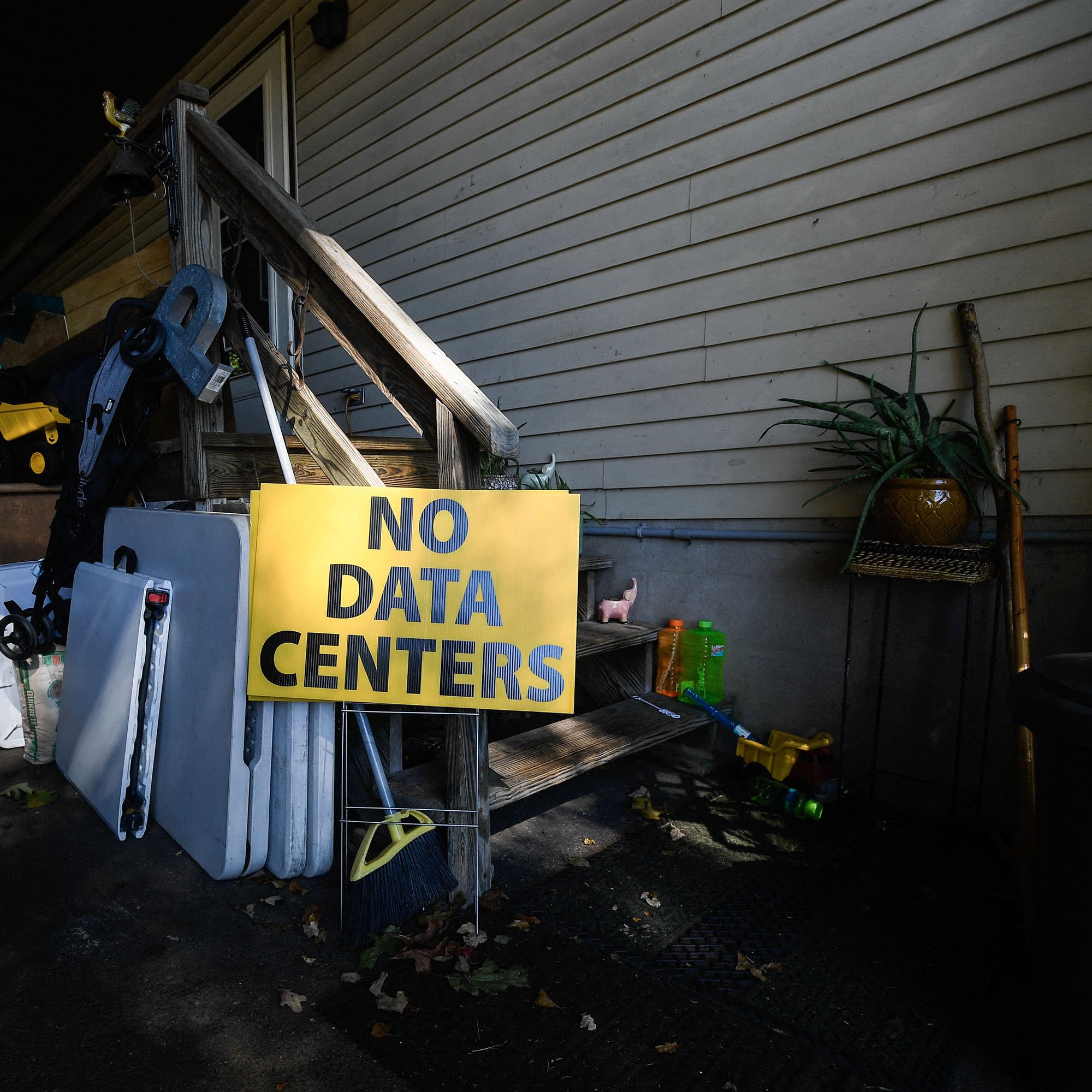
4:10I'm Nancy Marshall-Genzer for Marketplace. Voters in dozens of parts of the country had to decide last week whether to ban or limit data center development. And largely, voters said yes. But elsewhere, people have to rely on local elected officials to make data center decisions for them. And in many places, they're not happy with the decision those officials are making. One example is a proposal to build a data center in Bessemer, Alabama earlier this year. It's resulted in a mayor being ousted, a swath of local forest being cleared, and dozens of people thinking about moving. Marketplace's Kaylee Wells has the story.
4:47Every morning at 6.30, at the edge of a giant clearing the size of a couple supermarket parking lots, the trees start coming down. The towering evergreens fall one by one. It smells like a Christmas tree lot in the neighboring backyards. In the middle of the clearing, there's an industrial-sized chipper turning those trees into mulch. Three weeks ago, this started. I meant with abandon. One of the site's neighbors says when he talked to the workers clearing the trees, they said... You will be amazed how fast this is going to move. Well, they've proven themselves correct. We aren't using his name because he's afraid of retaliation from his new neighbor, the developer of a$14.5 billion hyperscale data center that's got hundreds of acres of forest left to clear.
5:35Despite lots of opposition, the city council has permitted this work. I've been an elected official myself. Terry Michael lives nearby and served on a local school board. And so when I saw city after city municipality of no elected official being willing to speak up and be for the people, Now, they might have a private one-on-one conversation with someone, but they are not publicly saying anything. The mayor signed a nondisclosure agreement. He got ousted. The new mayor asked the developer, QTS, to pause construction and meet. QTS kept working and postponed the meeting. Charles Miller is a policy director with the Alabama Rivers Alliance, which is an environmental group that fights data center projects.
6:21I'm two years into doing this work and it boggles my mind that you would be an elected official and not get something just ironclad, absolutely unbreakable. The city council members didn't respond to multiple requests for comment. The developer declined an interview. Its website advertises it'll generate more than a billion dollars in tax revenue over 20 years and promises$10 ,000 for college to every local high school graduate in the next four years. It says it'll pay for its energy, mitigate noise, and limit impact. Miller says the developer did not give any benchmarks or goals. We've seen hyperscale data center developers break that trust all over the country, and it just blows my mind that somebody would take their word for anything.
7:08So now, the man whose backyard abuts the construction says he's got a decision to make. His wife is blind and frail. My wife exists today for one reason. She loves to sit on the porch and listen to birds. She came, I found 32 today by their chirping. But with the clear cutting, she can't hear the birds anymore. He's worried the data center will drown them out too once it's operating. If this happens, that woman's gone. She won't exist. I know her that well. I've been married to her for 60 years. So what are we supposed to do with this? He says the developer has offered to buy his house. After 43 years there, he and his wife are deciding whether to sell.
8:00In Bessemer, Alabama, I'm Kaylee Wells for Marketplace. And in Washington, I'm Kimberly Adams with the Marketplace Morning Report. From APM, American Public Media. Hey, it's Bridget here. I'm the host of Million Bazillion from Marketplace. That is a show that answers the questions that kids have about money. And we want to hear from current and previous listeners of Million Bazillion. So if that's you and your family, could you please take a moment to complete our short anonymous survey at marketplace.org slash survey. Tell us how Million Bazillion shaped the way you or your kids think about money, the economy and real life.
8:36And if your kids have outgrown the show, what would you like to see from us next? Marketplace.org slash survey. Thank you.
Many communities across the country voted last week to ban or limit data center development. Elsewhere, people have to rely on local elected officials to make data center decisions for them, and in many places — like Bessemer, Alabama — they’re not happy with those decisions. There, a mayor’s been ousted, a swath of local forest has been cleared, and dozens of people are debating whether to move. Also on the show: hotter-than-expected inflation and a look at debts in collections.
Every story has an economic angle. Want some in your inbox? Subscribe to our daily or weekly newsletter.
Marketplace Morning Report is more than a radio show. Check out our original reporting and financial literacy content at marketplace.org — and consider making an investment in our future.
Stories from this podcast:
Scan the code with your iPhone camera
Listen in the app.