 Marketplace Morning Report
16 Nov 2026 · 7m

 Add vo to ChatGPT or Claude to ask about everything you hear
vo listened to this episode to put together the overview and transcript, so there may be the odd mistake.
California’s new climate-reporting law for greenhouse-gas emissions tied to electricity use by large companies, including AI and data centers, and a court ruling that may block the most detailed future reports.
David Brancaccio, Marketplace “Future Effects” correspondent.
California requires detailed greenhouse-gas disclosures from large firms in the state (public, private, and some big nonprofits/universities). A federal appeals court upheld parts of the law but struck down more revealing supplier/distributor reporting for next year, citing U.S. free-speech protections. Researchers say hard data linking emissions specifically to data centers is limited.
UC Santa Barbara professor Eric Massonet notes most firms report total emissions, not data-center-only emissions. The episode contrasts indirect estimates from AI training/inference with scarce confirmed company data.
0:00Vantage Score, the modern credit score used by 3 ,700 institutions, including nine of the top 10 banks. Using over 400 % more data than legacy credit scores and built with trended and alternative data, Vantage Score is more predictive, scoring 33 million more consumers than conventional credit scores. Now accepted by Fannie Mae and Freddie Mac for conforming mortgages, VantageScore 4.0 safely unlocks approximately 2.7 million new mortgages and up to$1 trillion in new loans. Better credit score, better data, better mortgage decisions. VantageScore.com Trying to get the data behind the environmental impact of data centers.
0:41From Marketplace in Washington, I'm Kimberly Adams. People in communities around the country want to know more about the environmental effects of artificial intelligence. The challenge is many AI companies guard this info like a trade secret. While federal law does not require greenhouse gas disclosures, as of this week, California law does. But a new legal ruling means the most detailed of these climate reports may never see the light of day. Marketplace's future effects correspondent David Brancaccio joins us now to discuss. Good morning, David. Good morning. California passed a law a while back, but the deadline has just hit.
1:20Which firms had to submit reports on greenhouse gas emissions? It's companies with publicly traded stock. It's private ones and even a few big nonprofits like universities. I mean, so not small businesses, but the biggies that do a billion dollars or more in revenue in California in a year. They need to reveal the greenhouse gas they put out, plus how much of these gases come from generating all the electricity that a company uses. And not just artificial intelligence companies. No, this deadline applies to all companies with a big footprint in California. But it'll be especially interesting to see what specifically the AI companies and the data center firms send over to California regulators here.
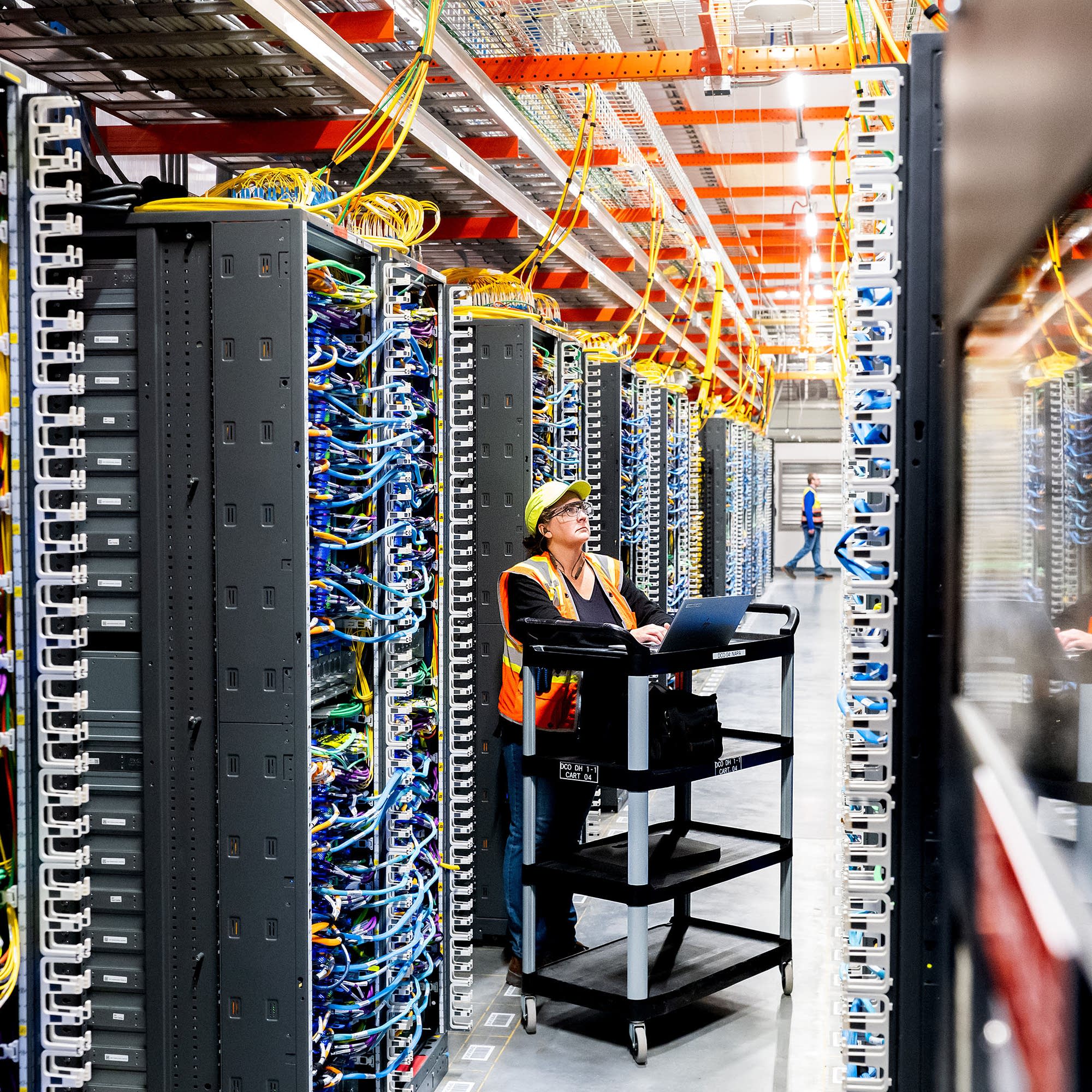
2:03because I spoke to researchers who say that while we have indirect estimates of carbon dioxide emitted when they use enormous computing power to both train AI and to answer our chat questions, make fake videos, and so on with the technology, we don't have that much confirmed hard data, even from companies that routinely put out more general climate reports. Here's Eric Massonet, a professor at UC Santa Barbara. Usually companies will report their total emissions for the entire company, Office buildings, the transport fleet, the data centers, the labs, everything they operate. Only a few companies will tell us how much emissions are associated with just their data centers.
2:43He's at the Bren School of Environmental Science and Management there. Now, all of this did not come without controversy. The deadline came on Tuesday and all these greenhouse gas reports were due. But what was ruled illegal about all this? A federal appeals court said company climate reports and their electric power reports are cool, but potentially even more revealing reports that California had required for next year are now null and void. These would have been reports that include emissions from company suppliers and distributors. And the court said forcing third parties to report in this way is a violation of free speech protections in the Constitution, which is a big deal because a lot of the greenhouse gas spilled might come from third party data centers under contract to AI companies, not the AI companies themselves.
3:30So California environmental regulators will never get the supply chain information? California does have the option of appealing to the Supreme Court, by which I mean the often business-friendly U.S. Supreme Court. And, Kimberly, the AI industry does often point out that their tech doesn't just emit climate gases, right? AI might also be a tool to find new efficiencies that reduce gas emissions. Now, researchers tell me this is certainly possible, but they have no idea if it would be enough to offset the problem. Marketplace's David Brancaccio on the Future Effects Beat, covering decisions made now shaping our futures.
4:09David, thanks. Absolutely.
4:26Vantage Score. the modern credit score used by 3 ,700 institutions, including nine of the top 10 banks. Using over 400 % more data than legacy credit scores and built with trended and alternative data, VantageScore is more predictive, scoring 33 million more consumers than conventional credit scores. Now accepted by Fannie Mae and Freddie Mac for conforming mortgages, VantageScore 4.0 safely unlocks approximately 2.7 million new mortgages and up to$1 trillion in new loans. Better credit score, better data, better mortgage decisions. VantageScore.com. This episode is brought to you by Business Roundtable in partnership with the Human Potential Network.
5:07Skilled tradespeople build, maintain, and strengthen the infrastructure and communities Americans rely on every day through its Skilled Trades for America initiative. Business Roundtable is bringing together leading employers to expand training, apprenticeships, and other pathways into these essential careers. To learn more about how America's leading companies are investing in workers, visit businessroundtable.org. The next reading of our labor market comes out on December 4th with the unemployment report from the Bureau of Labor Statistics. Earlier this year, one category called NILF, not in the labor force, hit a new record, nearly 106 million Americans.
5:50Now, there are many reasons why folks might be neither working nor actively looking for a job. And that brings us to the latest installment of our series, Clocked Out.
6:01David Brancaccio: My name is Adam Bernstein. I'm 61 years old. I live in Huntington Beach, California. And I was an elementary school principal in a public school district. So I was a principal for about 26 years. Prior to that, I was a teacher. Being a principal requires a lot of juggling, a lot of prioritizing, a lot of just problem solving of the multiple issues that come up at a school site. You know, I kind of fell into it after I graduated from college. I traveled for a while and came back and there was an opportunity to start teaching and, you know, got into it and enjoyed it. And after a while, you know, thought that, you know, maybe becoming an administrator would be something I would like.
6:59David Brancaccio: Well, you know, it's a demanding job and, you know, financially, I didn't really need to do it anymore. And also, you know, I just kind of started noticing that some of the things that didn't bother me before just kind of started becoming a little more burdensome. And I just there were just some things that, you know, kind of started weighing in the other direction. And I decided to decided to retire. Several years ago, a principal colleague of mine, when she retired, she told me that she was going to serve on the Orange County Grand Jury. And it always just kind of sounded interesting to me, you know, and I kind of just kept it in my back pocket and thought that maybe when the time comes, I would try something like that.
7:46David Brancaccio: I literally started the training very soon after I retired, and that's just basically because of the nature of when the grand jury term starts. The grand jury serves an important role. We do indictments. And then the other thing we do is provide some oversight onto all county operations. I've been at it since July and I've found it very rewarding and very interesting.
8:18David Brancaccio: You know, I see it as just a nice transition into regular retirement from what I was doing before. Adam Bernstein in Huntington Beach, California. If you've left the labor force, we want to hear about it. Head on over to Marketplace.org slash clocked out. In Washington, I'm Kimberly Adams with the Marketplace Morning Report from APM American Public Media.
People in communities around the country want to know more about the environmental effects of artificial intelligence. The challenge is, many AI companies guard this info like a trade secret. Marketplace's future effects correspondent David Brancaccio joins the program to discuss a California law requiring large companies to disclose greenhouse gas emissions — and a ruling against it. Then, as part of our Clocked Out series, a retired school principal decides to keep busy by serving on a grand jury.
Every story has an economic angle. Want some in your inbox? Subscribe to our daily or weekly newsletter.
Marketplace Morning Report is more than a radio show. Check out our original reporting and financial literacy content at marketplace.org — and consider making an investment in our future.
Scan the code with your iPhone camera
Listen in the app.