
In short
Podcast Episode Summary: Marketplace - "Rural hospitals were already short-staffed. Then came Trump's H-1B visa fee"
Episode Overview In this episode of *Marketplace*, host Kai Ryssdal discusses the economic implications of the Trump administration's $100,000 fee on new H-1B visa applications, which poses significant challenges for rural healthcare systems already facing staffing shortages. The episode also covers the downturn in cryptocurrency, a makeover for Panera amidst declining fast-casual dining sales, and developments in the electric vehicle (EV) market.
---
Key Topics Discussed
- Impact of H-1B Visa Fee on Rural Healthcare
- Background Context:
- H-1B visas are crucial for filling skilled healthcare positions in rural and low-income areas.
- The fee increase from $5,000 to $100,000 could severely limit the ability of healthcare facilities to recruit foreign workers.
- Case Study: Frederick Health Hospital
- Chief Nursing Officer Jamie White discusses their challenges in recruiting nurses due to the new fee.
- They had 29 nurses poised to accept job offers, which are now on hold.
- Reliance on stopgap measures, such as overtime, is currently the only option to manage staffing.
- Broader Implications:
- Experts warn this fee will exacerbate healthcare access issues in rural communities, leading to longer wait times and increased burdens on patients.
- Alternatives like the EB-3 visa exist but are slower to process.
- Cryptocurrency Market Downturn
- Current Situation:
- Bitcoin has lost a quarter of its value since reaching a record high.
- The crypto market has seen a significant decline, prompting a reassessment of its stability and viability as an investment.
- Expert Opinions:
- Investors are now viewing Bitcoin more like a risky tech stock than a stable asset (often referred to as "digital gold").
- Concerns about contagion in the market due to interconnections between crypto and traditional financial assets are raised.
- Future Outlook:
- Despite the downturn, there is optimism about future investment opportunities, including the potential for a crypto ETF boom.
- Panera's Challenges in Fast-Casual Dining
- Company History:
- Once a pioneer in fast-casual dining, Panera is struggling amidst intense competition and changing consumer preferences.
- Sales Decline:
- A notable 5% drop in sales due to inflation impacting consumer willingness to pay for dining experiences.
- Panera's attempts at cost-cutting and menu changes have not resonated well with customers.
- Market Positioning:
- Experts suggest that Panera’s broad menu lacks a clear identity compared to competitors like Cava and Jersey Mike’s, which have stronger brand focus.
- Electric Vehicle Market Trends
- Sales Surge:
- EV sales reached a record high due to consumers rushing to purchase before expiring tax credits.
- As of now, there are more than 6.5 million EVs on the road.
- Industry Response:
- Post-tax credit expirations, car manufacturers may shift focus back to internal combustion engines due to profitability concerns.
- Experts believe that despite current challenges, the long-term future remains in electric vehicles, especially as global markets transition faster than the U.S.
---
Key Takeaways
- The new H-1B visa fee could significantly hinder rural healthcare systems already facing staffing issues, leading to longer patient wait times and strained services.
- The cryptocurrency market is experiencing a downturn, raising concerns about its impact on the broader financial landscape.
- Panera's struggle to differentiate itself in the fast-casual market exemplifies the challenges faced by many dining establishments amid changing consumer habits.
- Electric vehicle sales are thriving, but industry shifts in response to changing incentives may alter the market dynamics in the near future.
---
Conclusion This episode of *Marketplace* provides a deep dive into how recent policy changes are affecting critical sectors of the economy, including healthcare, technology, dining, and transportation. It emphasizes the interconnectedness of these sectors and the broader implications for consumers and businesses alike.
Written by AI. May contain mistakes. Listen to the episode to check what was said.
Transcript
Automatic transcript. May contain errors.0:00This is the story of the one. As head of maintenance at a concert hall, he knows the show must always go on. That's why he works behind the scenes, ensuring every light is working, the HVAC is humming, and his facility shines. With Grainger's supplies and solutions for every challenge he faces, plus 24-7 customer support, his venue never misses a beat. Call QuitGrainger.com or just stop by. Grainger, for the ones who get it done.
0:31What do you like? Crypto? EVs? Fast, casual dining? Because we got it all. From American Public Media, this is Marketplace.
0:51in los angeles i'm carl risdell it is tuesday today 18 november good as always to have you along everybody stocks go up as we know and they go down bonds the same the dollar and oil and gold to all of them, if not the actual economy, then very closely tied to it. And for most of this year, it had looked like cryptocurrency was making a play for the economic mainstream as well. The crypto exchange Coinbase joined the S &P 500. Congress decided to let big banks play with stable coins. Even stalwart crypto holdout JP Morgan said it would let its clients use Bitcoin as loan collateral. And then reality started to bite.
1:33Bitcoin, as you know, the OG cryptocurrency, has lost about a quarter of its value since its record high back in October. The overall crypto market down about a trillion dollars. So with crypto decidedly not on the upswing anymore, what happens now? Marketplace's Matt Levin gets us going. Longtime crypto investors like Lee Drogen at Starkiller Capital are used to watching crypto prices fall off a cliff. But he says this most recent nosedive was different because crypto had reached the top of the cliff like just a second ago. It's the ferocity of the reversion from a good momentum new high straight into basically a crash.
2:16Bitcoin true believers will tell you the cryptocurrency will ultimately become digital gold, a safe store of value against inflation and rising national debt. Well, we still have sticky inflation and a rising national debt, but right now investors are viewing Bitcoin less like gold and more like a risky tech stock. There are just, you know, a lot of different things coming together at the same time that are causing investors to be scared of risk assets in general. And crypto is the risk asset of all risk assets. For you non-crypto folks out there, I know what you're thinking. What do I care if a bunch of crypto bros lose their Lamborghini savings fund?
2:54Well, if your 401k is invested in an index fund that tracks the general stock market, you probably own some stock and crypto companies. Todd Baker is a lecturer at Columbia Law School. If there's a downturn in those parts of the markets, the equity markets, the crypto markets, there would be some knock-on effect on spending. And that could hurt the real economy. Baker also worries about new rules from the Trump administration, allowing more banks and other financial actors to loan money for crypto. The question is contagion, and that involves who's providing leverage to whom in the overall system.
3:29And I think there's very little transparency to that when it comes to crypto. Even though prices might be down now, crypto enthusiasts say there will be more opportunities for everyday investors to get in on the action. Matt Hogan is at Bitwise Asset Management. I think it's going to be a crypto ETF palooza over the next year, right? The doors are open. An ETF is short for exchange-traded fund, basically an easy way for investors not fluent in the blockchain to put their money in crypto. I'm Matt Levin for Marketplace. Bitcoin actually up about a half percent over the course of the day. Equities, however, decidedly not.
4:05We will have the details when we do the numbers.
4:25We pause now for a detour into the fast, casual restaurant space. Shake Shack, Chipotle, those kinds of places. There is a zillion of them. Maybe it's there are a zillion of them. Don't know. But therein lies the challenge at the heart of this next story. Panera was once a fast, casual darling. Now she's one of many. So it's going to do a makeover, a menu refresh in some new locations. This is not, however, the first time Panera's tried to switch things up. And last time, the changes didn't go so well. Marketplace's Kristen Schwab looks at the fall of Panera against the rise of increasingly fickle consumers.
5:01It's kind of hard to remember how much of a pioneer Panera was in the late 90s and early aughts. It defined fast casual dining, metal silverware, counter to table service, big comfy booths next to a fireplace. They had a specific vibe to their restaurants. Robert Byrne at Technomics says it wasn't long before other restaurants copied. So other people get to come along and tweak your recipe for success. Panera's recipe is a dining experience that echoes a full-service restaurant. Panda Express and Chipotle's versions are more like elevated fast food. That difference became a weakness for Panera when inflation kicked in.
5:42Suddenly, people were not excited to pay more to dine next to a fireplace. Steven Zagor is a restaurant consultant. Panera was transactional and not so transformational. Panera cut costs, and fans complained about shrinking portions, digital kiosks, and the disappearance of favorite menu items. High CEO turnover and lawsuits over its caffeinated beverages didn't help. Between 2023 and 2024, sales fell 5%, according to Technomic. Their business eroded. And the challenge is not becoming wallpaper. Because when consumers are watching their wallets, each dining occasion is precious. So their mentality is kind of all or nothing.
6:23They go grab a meal deal or a steak dinner. Lily Jan, a lecturer of food and beverage management at Cornell, says those dining experiences provide different value. Either it's the volume of food or it's the quality of food or it's the experience. The problem with Panera is it plays to the middle by design. That's something inherent to fast casual restaurants in general. And why chains like Cava and Sweetgreen are also seeing customers pull back. I don't know of any one particular brand that's kind of like killing it, if you will. But the ones I find that have the strongest sense of self are doing better.
7:01Like for Raising Cane's, the focus is chicken, and for Jersey Mike's, it's subs. Panera got lost in a sea of soup, salad, pizza, bagels, and of course, those controversial energy drinks. I'm Kristen Schwab for Marketplace.
7:31Electric vehicle sales in this country just had their best quarter ever because, as it turns out, incentives really do matter. People rushed to buy EVs before federal tax credits expired at the end of September, and there are now more of them on the roads than ever, more than six and a half million. But incentives work the other way, too. And now that President Trump and Republicans in Congress have stripped away most of the regulations that had made making and buying EVs attractive, Car makers aren't making as many. And in point of fact, you're making more cars and trucks with internal combustion engines.
8:07So Marketplace's Henry Epp reports now on what happens to the EV market. Chris Bendell of Colchester, Vermont, just bought a new 2025 Chevy Equinox EV. And like a lot of brand new cars, it comes with plenty of features. Want a seat warmer? Sure. There's three levels. You can kind of just do whatever feels comfortable. Okay. He can also start it up remotely. There are tons of screens on the dashboard. It's a big upgrade from his last car, a 2014 Mazda CX-5, which he brought to his mechanic in late September. Turned out to be one of those visits to the repair shop. The guy was like, you got a lot of rust.
8:45You know, the car is OK. It had 90 ,000 miles. But he's like, you know, in a few years, this is going to be pretty rusty. You know, I would say sell it now, trade it in, make it someone else's problem. This happened just a few days before the$7 ,500 federal tax credits for new EVs expired. Bendel had been planning to make his next car an EV, so he decided to jump. He spent about$20 ,000 on the Chevy after the tax credit and a bunch of other discounts. He figures he'll save money in the long run. Because I have solar panels, because I charge at home, because I don't drive as much, I'm not spending any money on gas.
9:18In Exeter, New Hampshire, Amy Farnham recently bought an EV, too. She assumed her next car would be a hybrid because they have better range than pure electrics. I have kids that play hockey, so that's a lot of driving around New England. But when she started to see the ranges on some of the newer models... I changed my mind. You think, why not? Why not go full EV? She bought a used 2023 Nissan Aria. It can go over 300 miles on a single charge. Amy Farnham, Chris Bendell, and thousands of other buyers are the reason why EV sales surged in the third quarter and are expected to decline in the short term.
9:58Because people move their purchases forward in time. Elaine Buckberg is a senior fellow at Harvard's Salata Institute for Climate and Sustainability. She's also the former chief economist at General Motors. With that pull forward of demand and the Trump administration's rollback of vehicle regulations, carmakers have cooled on EVs. They're explicitly delaying when they're going to bring out new models or in some cases pulling back models. So they're just not moving as ambitiously into the market as they had been planning to six months ago. And they're planning to sell more gas cars, which for most companies are more profitable than EVs.
10:36And right now. They're looking at this landscape where they're facing multibillion dollar tariff hits. So they really need to think about their profitability. But most auto industry leaders still say that the future of cars is electric, Buckberg says, for a few reasons. Big auto markets in other parts of the world have been transitioning to EVs faster than the U.S., especially China, especially now. And most auto companies are global. You know, the global market will continue to go EV, and automakers won't want to be making new internal combustion engine cars just for the U.S. And those emissions regulations in the U.S.
11:15might not be gone forever. The car companies, they know that it will come back. Gil Tal is director of the Electric Vehicle Research Center at UC Davis. Emissions regulations have swung back and forth depending on which party controls the White House. So for car companies… I think that in the long run, they know that they need to find a balance. They cannot just go back to zero in any way. And they'll have to meet at least some consumer demand for EVs. Most, but not all, EV owners, Tal says, stay EV owners. Many of those drivers who just bought one before the tax credits ended will want another EV in a few years.
11:52Though Chris Bendell, the new Chevy Equinox owner, is on a longer timeline. He hopes his new car will last him 20 years. I'm going to try and take good care of this and drive it into the ground. And then in 20 years, who knows what we're going to be driving? Super EVs. Probably with even better seed warmers. I'm Henry App for Marketplace.
12:24Bank of America had a report out today, a survey of more than a thousand small and mid-sized business owners. 77 % of them said their costs have increased this year and 76 % said they've had to raise prices as results. One of the big reasons? I bet you can guess. Starts with a T, ends with Arif. Here's today's installment of our series, My Economy. My name's Allie Trela-Jones, and my derby name is D-Stortion, so everybody calls me D. My business is the Bruised Boutique Skate Shop, and we are in Nashua, New Hampshire. her. So my business started from a idea that we should start a roller derby team in New Hampshire.
13:08And a friend came up to me at a 4th of July party and said, do you want to start a roller derby team? And I said, yeah, what's roller derby? And she brought me to a roller derby game and I saw these incredible women whipping around the track. And I said, I don't know what this is, but I know I want to do this. So my team had no place that they could get roller derby equipment. I decided to put up a website and look into some different vendors where we could get some wheels and some of the smaller things that people couldn't get at their local skate shop. We ended up renting a 500-square-foot brick-and-mortar shop in Nashua, and the next year we were in a bigger space, And this past year, we ended up in a 3 ,000 square foot space.
14:00In the past couple of years, things have really changed. So you used to be able to get a pair of roller skates for around$100. And it's really upped to almost double what they used to be. I would say the biggest reason our costs have changed is going to be the tariffs that were put in place, especially the ones that are from Canada or from China. A lot of the manufacturers who make beginner skates or beginner pads have a lot of materials that come from those areas. Even the handmade skates that we make that are very high-end and are manufactured in the U.S., they still get a lot of their parts from overseas.
14:42we've had to start thinking about taking out loans or getting more inventory and we ended up amassing a lot more inventory than we usually have this can be a little bit of a strain for a small business because when you have more inventory that equals less cash in hand
15:06every day I literally say to myself every day I'm like how am I able to support myself this seems like a weird fever dream my husband and I are able to pay our mortgage I don't know that we're financially set up to ever retire but I think some of those things when you're a small business owner you try not to think about in the future you just try to go this is something I'm passionate about This is something I enjoy, waking up every day and going to work and helping other people have fun.
15:39Ellie Trolla-Jones, Nashua, New Hampshire, the Bruised Boutique Skate Shop. She is still skating every day, by the by. You know, this series doesn't happen without your help, so let us know what's going on, would you? Marketplace.org slash myconny.
16:11Coming up. The fee is a non-starter for these employers. $100 ,000. But first, let's do the numbers. Dow Industrial is down 498 points today, 1%, 46 ,091. The Nasdaq down 275, 1.2%, 22 ,432. The S &P 500 dipped 55 points, 8 tenths percent, 66 and 17. Kristen was telling us about the state of the fast casual business. Cheesecake Factory's Nasdaq ticker is CAKE, which is kind of elegant, I guess. The purveyor of avocado egg rolls and fried mac and cheese rose 1.4 % today. The Shake Shack stock ticker is S-H-A-K, which could be interpreted as a hip misspelling of either Shake or Shack. It is also, though, kind of elegant.
16:59The purveyor of the sandwiches called Shake Stack and Chicken Shack subtracted eight-tenths of one percent. Today, you are listening to Marketplace.
17:13This is the story of the one. As a custodial supervisor at a high school, he knows that during cold and flu season, germs spread fast. It's why he partners with Grainger to stay fully stocked on the products and supplies he needs, from tissues to disinfectants to floor scrubbers, all so that he can help students, staff, and teachers stay healthy and focused. Call 1-800-GRAINGER, click grainger.com, or just stop by. Grainger, for the ones who get it done. This is Marketplace. I'm Kyle Rizdahl. We talked yesterday about the big home improvement retailers, how their earnings this week might be a decent proxy for how consumers are feeling as we wait for government data to start flowing again?
17:57Well, Home Depot reported this morning, not so great. Earnings last quarter fell short of expectations, and the company says sales growth and profits for the year are not going to be what they had thought they would be. Lowe's reports tomorrow. Some Marketplace's Carla Javier spent her day looking into the state of home improvement and what we might learn from it. One reason why Home Depot's results were underwhelming is that the housing market is kind of stuck, says Jamie Katz, a senior analyst at Morningstar. I think once you see more people putting their homes up for sale and more people buying homes that are put up for sale, you will, you know, in turn see more spend on home improvement.
18:36Home Depot also blamed its results in part on a third quarter that had fewer damaging storms than expected, which meant the retailers sold less plywood, roofing materials, and generators. Though Drew Redding at Bloomberg Intelligence says the real cloud hanging over the home improvement industry, like so many others, is consumer caution. When sentiment is weak, you're going to defer spending on discretionary items. And that's really what we're hearing from the home improvement retailers and the building product manufacturers, which supply them, is that consumers are taking a wait-and-see approach.
19:11They want to see how the economy shakes out. They want to see what happens with tariffs. In the meantime, Redding says homeowners are forgoing big ticket renovations to focus on maintenance, repair and smaller projects. You know, painting a room or fixing a water heater, fixing plumbing, updating maybe fixtures. While we're not talking about doing a full bathroom remodel, maybe we'll replace some of the plumbing, the toilet, the faucet, things like that. But Home Depot's results don't capture the whole picture of what's going on in the$600 billion home improvement industry, says Rachel Drew at Harvard's Joint Center for Housing Studies.
19:48Home Depot is serving a segment of the remodeling industry. They're generally serving homeowners who are working on do-it-yourself projects. Drew says the indicators she tracks, including potential buyers coming off the sidelines and increases in permits for larger projects, still point to slow but steady growth in home improvement going forward. I'm Carla Javier for Marketplace.
20:17It's not like it ever goes out of the news, but the health care system in this country is dealing with a lot right now. Affordable Care Act subsidies are set to expire, as you might have heard, a time or two. New Medicaid restrictions loom. Not to be forgotten, finding enough health care workers is difficult in the best of times. And it's gotten harder, thanks to President Trump's new$100 ,000 fee on H-1B visas, which are used to bring highly skilled foreign workers into this economy. The fee used to be$5 ,000, by the way, or sometimes less. Those visas are usually used by technology companies, true.
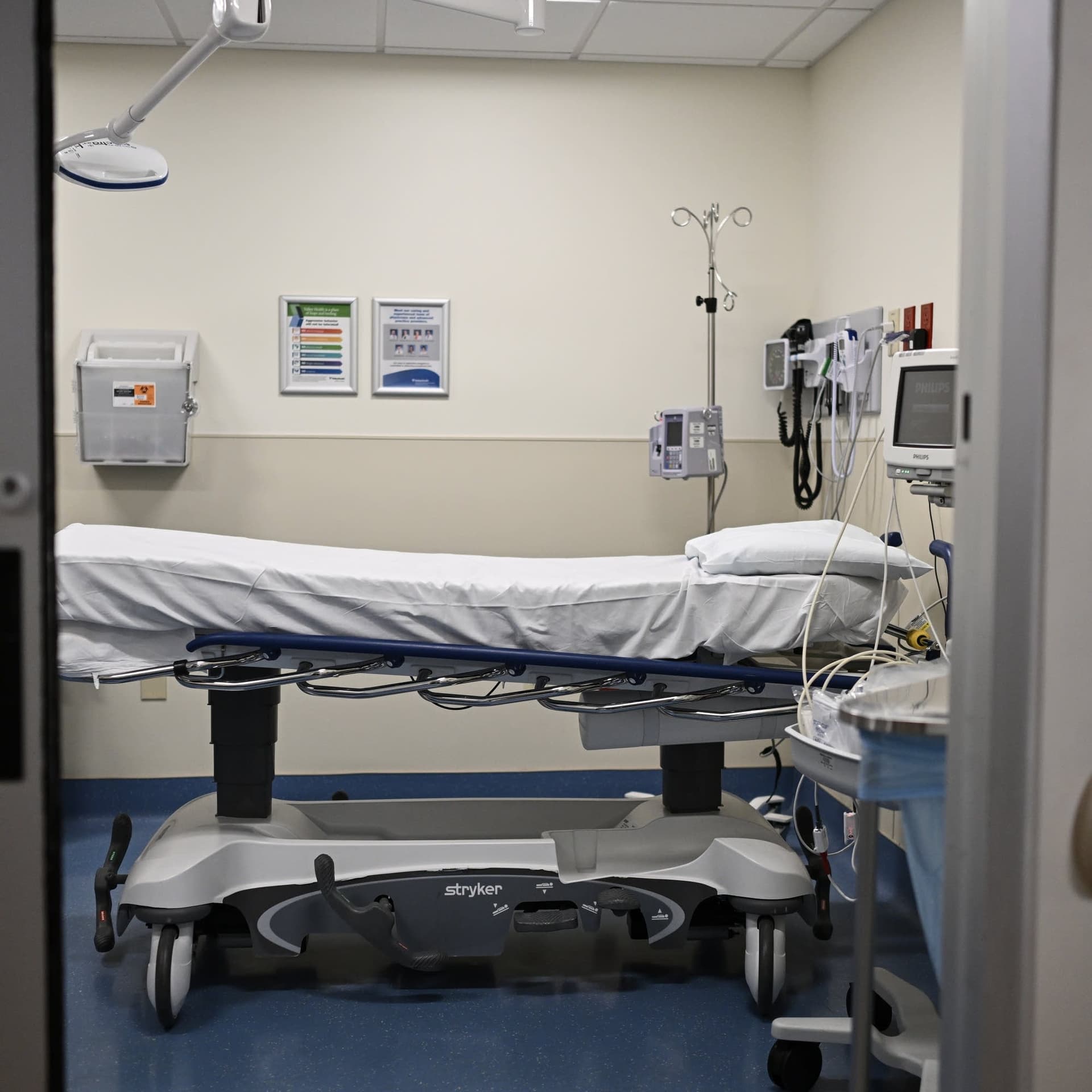
20:53but they have become a critical pipeline for trained health workers taking hard-to-fill jobs in rural and low-income communities. Marketplace's Novosafo has another story in our occasional series about immigration policy in America's workforce. We're calling it Help Not Wanted. Frederick Health Hospital is the only one in Frederick County, Maryland. Patients would have to travel as far as 50 miles to get to another hospital. We see about 70 ,000 to 80 ,000 emergency department visits, one of the busiest emergency departments in the state. That's Jamie White. She's the chief nursing officer at Frederick Health.
21:30Not only is her hospital one of the busiest, it's also chronically short-staffed. White says it can't compete with the salaries at hospitals in urban areas or with jobs that allow for more work-life balance. If I have a choice of working all night long on my feet for 12 hours or I'm able to work in a clinic Monday through Friday, there's a lot of nurses that are choosing to do other things than working in a hospital. This year, Frederick Health finally decided to recruit from overseas. And just as foreign applicants accepted job offers, President Trump imposed the new$100 ,000 fee on H-1B visas.
22:13The expectation before the September change was to pay a fee of around$200 per nurse for the H-1B visas. But the$100 ,000, we can't afford paying that for one nurse. So we will not be able to do this if that's the case. The 29 nurses Frederick Health was expecting right around this time of year are not coming. For now, White is relying on stopgap measures like more overtime. Similar scenarios are playing out across the country. Anne Rose Johnson-Lewis is Director of Legal Services at Worldwide Health Staff Solutions. The firm typically brings in 200 to 300 nurses a year through H-1Bs, mostly headed to the Midwest.
22:59The fee is the non-starter for these employers. They just simply cannot afford it. It's not sustainable. So at the moment, H-1B for healthcare workers is at a standstill. There is another visa called EB-3 that's used to bring in nurses, but processing times for that visa can take several years. The H-1B is faster. There are a couple of lawsuits now challenging the new fee. A lot of employers are kind of just waiting to see what would happen with those lawsuits. Meanwhile, the new fee is not just limiting nurses. It's affecting doctors, surgeons, and a whole host of other healthcare workers. Physician assistants, nurse practitioners, nurse anesthetists, podiatrists, chiropractors, and optometrists.
23:46Micah Liu's list goes on from there. Liu is a clinical fellow in medicine at Brigham and Women's Hospital. He crunched government data on visa applications for an article in the Journal of the American Medical Association. Healthcare workers do make up a small percentage of each year's H-1B visa applications overall. But Lou found that within the healthcare system, H-1B visas play a critical role. The big takeaway there is that, you know, the most rural and impoverished communities depend much more heavily on H-1B-sponsored physicians and healthcare workers than other communities. In fact, Liu found that health systems in rural areas brought in twice as many H-1B workers as urban ones.
Read the full transcript
24:32Janessa Graves, director of the University of Washington's Rural Health Research Center, says providers in hard-to-reach and sparsely populated areas are worried because the new H-1B fee could worsen access for patients. There is a persistent and ongoing workforce shortage, And that results in long waiting times for local care or lots of driving and a huge burden for patients who may not have transportation or the funds to get from point A to point B to the city to see a specialist. Graves says there's some hope that health care providers can apply for exemptions from the fee. That's what Frederick Health did.
25:12But it's unclear how long that process could take or if the Trump administration will grant those exemptions. I'm Novosafo for Marketplace.
25:38This final note on the way out today, courtesy of our friends at the Yale Budget Lab, they looked at President Trump's idea that maybe he would take all the tariff money the government's collected this year and give it back to people in the form of$2 ,000 checks. Again, and just because tariffs are taxes paid by American consumers and businesses. Got to say that. Anyway, the Yale Budget Lab did the math. Giving$2 ,000 to every family making less than$100 ,000 a year in this economy would cost around$450 billion, basically using up all the tariff receipts for the year. Macroeconomically, very slight impact on GDP and on inflation.
26:16Oh, and also because, you know, this is important, Congress would have to buy off on it. Jordan Mangy, Zaneel Maharaj, Janet Wynn, Olga Oxman, Virginia K. Smith, and Tony Wagner are the digital team. And I'm Kyle Rizdahl. We will see you tomorrow, everybody.
26:44This is APM. Imagine a future where chocolate and coffee are rare and expensive, where cheap nutritional staples like corn and wheat are threatened. Sounds unpleasant, doesn't it? Well, we could be heading there if we don't recognize that the climate crisis is also a food crisis. I've seen yields drop because of drought. And believe me, boy, have I seen them drop. We have had dry spells that have lasted years. I'm Amy Scott. This season on How We Survive, we investigate how the climate crisis is threatening our most vital food systems and how scientists are racing to develop alternatives that will shape the future of food.
27:34Listen to this season of How We Survive on your favorite podcast app.
From the publisher
The White House’s $100,000 fee on new H-1B visa applications is adding extra pressure to health care systems in rural and low-income areas. Historically, the visa has been a critical pipeline for skilled health workers in hard-to-staff settings. Affected hospitals are already feeling the added strain. Also in this episode: A bitcoin downturn won’t just hurt crypto bros, Panera announces an overhaul amid floundering fast-casual sales, and the EV market soldiers on, despite sunsetted tax subsidies and emissions regulations.
Every story has an economic angle. Want some in your inbox? Subscribe to our daily or weekly newsletter.
Marketplace is more than a radio show. Check out our original reporting and financial literacy content at marketplace.org — and consider making an investment in our future.


