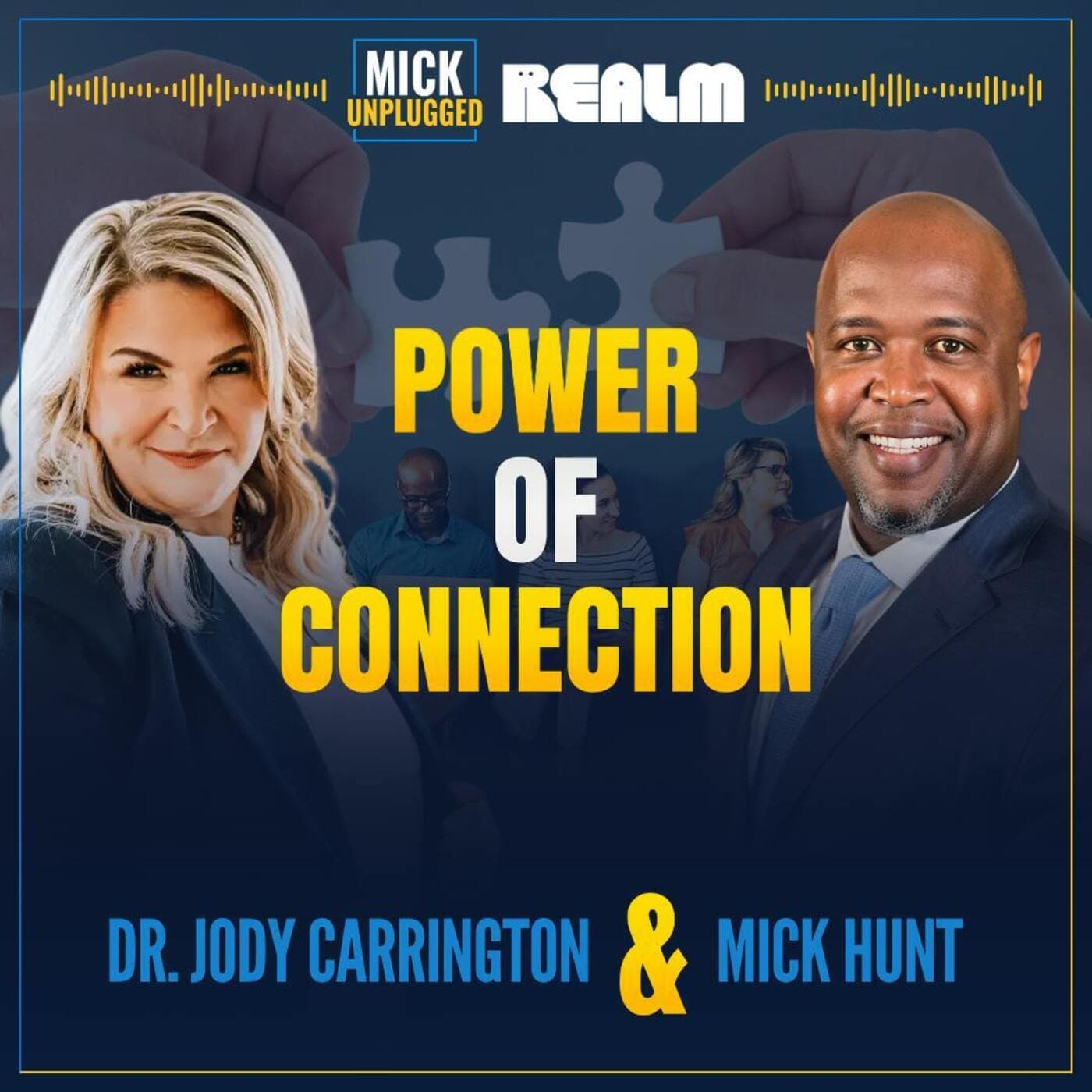

In short
The “loneliness epidemic” and why authentic human connection can’t be automated; neurobiology, emotional intelligence, and being “seen and heard” to reduce suicide risk and burnout in families, workplaces, and leadership.
Guest backgrounds
Dr. Jodi Carrington is an Alberta, Canada psychologist, trauma expert, best-selling author, and global speaker. She grew up in a deeply racist environment with limited exposure to people of color, later earned a PhD, worked on a locked psychiatric inpatient unit for kids, and became a civilian member of the national police force.
Key claims
Humans are neurobiologically wired for connection; relationship requires physical presence and authentic interaction (AI can’t replace it). Eye contact and in-person presence teach safety and empathy. Burnout is losing access to your best self due to constant access and lack of stillness.
Notable examples
Her childhood “bombshell” story of discovering she had an adopted-out biological sister living nearby; her keynote exercise asking audiences to make eye contact; and practical advice to drop shoulders/tongue to signal safety, then give compliments and repeat.
Written by AI. May contain mistakes. Listen to the episode to check what was said.
Chapters
Tap a time to open that second in VOThe Need for Connection
0:00 to 0:25
Learn about the neurobiological need for connection and its importance in our lives.
“Whoever made us said, I'm going to make you neurobiologically wired for connection.”
Jodi's Journey and Philosophy
1:22 to 2:09
Exploration of Dr. Carrington's background and her philosophy on connection.
“That was the best intro in the history of intros.”
Understanding Privilege and Purpose
2:09 to 5:36
Discussion on privilege, purpose, and the responsibility to foster inclusivity.
“That is literally how I feel like every day.”
The Loneliness Epidemic
5:36 to 6:33
An insight into the current loneliness epidemic and its implications.
“You know, when we, at the top of the show, we said, you know, I can't, I feel like I'm just getting started.”
Wired for Connection
6:33 to 7:44
Exploring our neurobiological wiring for connection and its challenges.
“And it just feels like such an honor, such a privilege to do what I do every day, which is really talk to people about how much they matter.”
The Difficulty of True Connection
7:44 to 10:46
Examining the challenges of making authentic connections in modern society.
“Number one, whoever made us said, I'm going to make you neurobiologically wired for connection.”
Personal Story of Discovery
10:46 to 14:00
Dr. Carrington shares a pivotal personal story about connection and family.
“um you're gonna be you know what we need is the physical presence of another human being to do this.”
Dr. Jody's Adoption Story
14:00 to 18:19
Dr. Jody shares the emotional journey of finding her biological sister and the complexities of family dynamics.
“She even stood in my aunt's wedding party at six months pregnant and nobody knew.”
Processing Surprising News
18:44 to 23:04
Dr. Jody discusses her initial reactions and feelings upon learning about her sister.
“Jodi, like so many questions in hearing that story, right?”
Unpacking Emotional Intelligence
23:04 to 27:44
The hosts delve into the role of emotional intelligence during familial challenges.
“to them sometimes, I was like, do you ever think that carrying that secret for so long contributed to the breakdown in your marriage?”
Show all 15 chapters
Navigating Modern Leadership
27:44 to 28:00
A discussion on the challenges of emotional regulation and empathy in leadership today.
“What I think is really underestimated in this world of leadership or reconnecting in human relationship that is really getting in the way right now is we've never been this overwhelmed.”
Understanding Burnout and Leadership
28:00 to 31:16
Explore how access to leadership has changed and its impact on burnout.
“You can't give away something you've never received, which is why EQ is a privilege.”
Tips for Overcoming Feelings of Unseen
31:16 to 33:56
Learn practical techniques for making yourself and others feel seen and heard.
“Jodi, I could literally talk to you all day.”
Tips for Overcoming Feelings of Unseen
34:20 to 35:06
Learn practical techniques for making yourself and others feel seen and heard.
The Art of Connection in Speaking
35:29 to 38:23
Learn how humor and presence can enhance communication and connection.
“I have a keynote in a couple of days and I think that's, I'm going to open the keynote.”
Transcript
Automatic transcript. May contain errors.0:00Whoever made us said, I'm going to make you neurobiologically wired for connection. Okay. You disconnect from an infant, they die. We will never automate relationship. No matter how good we get at the AI, if you understand in your business, in your organization, in your family system, that the only AI that's going to matter in the next generation more than anything is authentic interaction, you will be wildly successful.
0:25Mick:Welcome to Mick Unplugged, the number one podcast for self-improvement, leadership, and relentless growth. No fluff, no filters, just hard-hitting truths, unstoppable strategies, and the mindset shifts that separate the best from the rest. Ready to break limits? Let's go!
0:50Mick:Ladies and gentlemen, welcome to another exciting episode of Mick Unplugged, and today we've got something very special. She is the psychologist shaking up boardrooms, classrooms, and living rooms, reminding us that connection isn't soft, it's your freaking superpower. From trauma expert to best-selling author and global speaker, she's redefining how we lead, how we heal, and how we rise. Please join me in welcoming the fearless, the grounded, the electric, Alberta, Canada's finest, Dr. Jodi Carrington. Dr. Jodi, how are you doing today, dear? Oh my gosh, better now? That was the best intro in the history of intros.
1:30I think we need to go on the road.
1:33Mick:Let's go. I'm ready. I'm ready if you're ready. I am. I'm ready. Thank you for having me. I know. I'm so excited. Tell me more about this amazing place. So this amazing place is in the room right now with Dr. Jodi, one of the most inspiring people that I know, one of the smartest people that I know. I'm a huge fan of your podcast, by the way, as well. I'm a huge fan of your books. It's hard to be a bestseller, but after reading them, I know why. So congratulations and kudos to you. Thank you so much. Yeah, it's been a wild ride, but I'm just loving it. And I feel like we're just getting started.
2:09Do you know that feeling?
2:10Mick:Absolutely. Yeah. That is literally how I feel like every day. It's like some days I wake up and it's like, how did I get here? And a lot of days it's like, holy crap, we're going places, right? Yeah. Yeah. So Dr. Jodi, again, a huge fan of what you do. I love how, you know, as someone who is very well educated, you have this unique ability to break things down in like simple terms. And that's why I think your books are easy reads, your conversations, your communities are as large as they are, because you are very relatable. And I always like to ask my guests, like, what's your because? What's that purpose that you have that's deeper than your why?
2:50Mick:Like, what drives Dr. Carrington every day? Hmm. That is such a good question. So I'll tell you this, like, um, I don't know if this video recorded, but I'll tell you my story. So I grew up in a little town called Viking, Alberta, Canada, white, straight, able-bodied and deeply racist. I didn't see a person of color until I was in grade three in this country. Uh, there was an attempt at a cultural genocide of indigenous peoples that I did not know about because mostly because of my privilege. I got a PhD in this country and not one time did I learn about the residential school system. I didn't understand the true meaning of starting on third base until I started to serve.
3:37I became a civilian member of our national police force. And then I took my first job was on a locked psychiatric inpatient unit for kids. and so hitters, kickers, biters, many of the kids were in care and in my privilege not one time did I pause and say what happened here? How come there is such racial disparity? How come there's such financial disparity? How come, right? What, why in my particular country right now are there certain people, indigenous peoples relegated to unfertile plots of land, what we call reservations who made that decision when we all start in exactly the same place, when we all end in exactly the same place, when our DNA as human beings in this human race is 99.98 % the same.
4:32Race is a social construct. And we did not ever talk about that. So I feel like I was so lucky to be in a place where I would be exposed to things and be in a position to treat people who have experienced things that I cannot even fathom. And as my career evolved, it became very clear to me that the only purpose, the only reason I'm here is to understand what this privilege has given me and that I better use it. And that my kids will not be better than me. And they, I mean, they've got so much room if I think about all the ways that I needed to grow. but I can't tell them how to be inclusive or kind or anti-racist.
5:30I need to show them. And it has been the greatest motivator of all time. You know, when we, at the top of the show, we said, you know, I can't, I feel like I'm just getting started. Mostly I feel like I've never been more grateful to be alive. We're in a center, in the center of what people would often say to me is a mental health crisis. It's a loneliness epidemic like you cannot imagine. One in four adolescents in this moment have a plan to end their lives. The loneliness epidemic is massive. High-strived suicide in your country and mine is middle-aged men. And I think that the capacity, the ability to make significant shifts right now in this world is so easy because the bar is so low.
6:15Correct. It's never been this easy. And so I feel so lucky to be able to have that insight and then to be able to be in a very privileged body that I better use. And so I think that that is the greatest motivation. And it just feels like such an honor, such a privilege to do what I do every day, which is really talk to people about how much they matter.
6:46Mick:I freaking love that. I freaking love that. You know, again, being such a huge fan of yours and taking this conversation a little bit deeper, you often say that connection is why we're here. Right? Like, I think that's one of your principles is connection. What was your moment that made that more than just theory, but an actual pillar of who you are? Oh my gosh. Do you want it in rank or alphabetical order? Like, I feel like, I feel like, um, I'll just tell you this. I mean, this is the newest revelation for me when I think about, um, the human race. Okay. So there's two rules of the human race, whoever created us.
7:28And I kind of like made this up in my head, but this is after being a psychologist for 20 years, I, I, I think that there's two rules. So number one, whoever created us, and it doesn't matter to me what you believe in Jesus or Buddha or Yahweh, the great big bang, however we got here as humans, we're way more alike than we are. different. And there's sort of two rules. Number one, whoever made us said, I'm going to make you neurobiologically wired for connection. Okay. You disconnect from an infant, they die. We will never automate relationship. No matter how good we get at the AI, if you understand in your business, in your organization, in your family system, that the only AI that's going to matter in the next generation more than anything is authentic interaction, you will be wildly successful.
8:08okay because you will never automate relationship the fact that if we could do this podcast in person our neurochemistry would be remarkably different than it is right now now because of technological advances we can be in two different countries and do this beautifully which i'm very grateful for yeah the idea is that we will very quickly underestimate the importance of being in the same room of showing up when somebody loses their dad of being uh at our kids dance recitals Like those are the things that we will never automate in this loneliness epidemic. So that's the number one. That's the number one rule.
8:45We're neurobiologically wired for connection. The second rule, whoever made us, threw a curve ball. And they were like, despite the fact that I'm going to make you neurobiologically wired for connection, the hardest thing you will ever do is look at each other.
8:59Isn't that ridiculous? And I think that that is, and people say this to me all the time. Oh, what do you mean? I'm very good at connection. I, I look at people. No, you don't. You, I mean, if we were in the same room, I mean, I often do this when I give a keynote, I get people, I say them to them, you know, make eye contact right now with somebody in the room. And it is remarkably difficult because if I'm a room, it doesn't matter. I'm in with police officers or teachers or CEOs or fortune 500 execs, or I'm at the United Nations. I gave a talk at the United Nations and I said to the people in the room, um, I want you to make eye contact with, look at each other.
9:33And there's a lot of like, like arms are crossed and you know and sometimes there's cultural differences in eye contact but I got to tell you we all use our eyes to judge safety we all use our eyes if we are able-bodied or we are we're visually able to make and kids on the spectrum people say this to me all the time what about kids on the spectrum people on the spectrum and on the autism spectrum still we use this. And what's fascinating to me is we've never had so many exit ramps. We've never had so many opportunities to look away. And it is estimated that our great grandparents looked at their children 72 % more of the time than we look at our babies today.
10:14And why that becomes critically important to know is that, you know, as you said, connection for me is one of the pillars because we're neurobiologically wired for it. And the only way you learn, um, empathy, kindness, uh how to speak how to how to emotionally regulate is somebody has to show you nobody can tell you nobody can text an infant and be like hey calm down right right right the physical presence of another human being is what we need when we are in our most dire straits and we don't need somebody to tell us what to do like it's okay it's okay let's plant a tree um you're gonna be you know what we need is the physical presence of another human being to do this.
10:57And for me, to your question, the epitome for me, I mean, the thing that comes to mind the most is this story and feeling scene that I talk about that you mentioned about. I wondered, you know, why connection and human connection was like such a big thing for me. Why did it become the thing I write about and talk about and, you know, went to school for? So I grew up in this little town, Viking, Alberta, Canada, with a mom and a dad and a brother, a younger brother. And my mom and dad were like, you know, in this small farming community, they were very involved in the community, very connected.
11:31We, I thought, had everything together. My mom and dad ended up getting divorced. And it was like a shocker. Like I didn't see coming because I never felt like there was any disruptions that I can recall. And now I really think about an underlying sadness that was there quite a bit. My dad was very disconnected from us. and it's, I mean, they go on to get new partners. Curtis and I become, you know, successful and married and, you know, all these things. And then, um, at one point I think I was 35, I was pregnant with our first baby. And my mom said, you know, I I'd love you to come home to the farm for the weekend.
12:05You're, you know, my Aaron, my husband was away and she's like, why don't you come home to the farm for the weekend? I was like, that's amazing. Of course I will. So I come home and my mom and dad at that point had been divorced for 20 years. And so I'm, we're, I'm sitting at the kitchen table where I grew up and in the door walks my dad and my brother, which is not uncommon. My mom and dad are still, you know, we're still reasonably good friends, but they just sort of walked in. And then we all ended up sitting at the kitchen table where, you know, we had sat our respective seats when we were kids.
12:31And, um, and I was like, what the heck is going on here? And my mom brought out the lemon loaf, which is like the universal sign of death, you know, like obviously somebody's going down. And so I'm looking at my brother, like what is happening right now. And my mom starts to cry. My dad starts to cry. And in my head, I'm like, okay, so, so somebody's dying. Right. And then my father says to me, um, your mother and I need to tell you to something that we haven't told anybody in 40 years. And I was like, what? I know. I mean, I talked to my mom every day. I talked to my dad every few days. Like, I don't understand what do you mean?
13:04And so then I'm like, obviously dad's gay. Like, what is the other thing that you cannot tell? You know, this is in my head, you know? And right at this point I'm, I'm, I am excited because nobody's dying. I'm like, that's amazing. Let's talk about and then he said, um, he said, you have a sister and everything went quiet. And I remember again, even there being relief in that because nobody was dying, but I, we just looked at each other and he, he was like, you have a full biological sister. Your mother and I got pregnant. Um, when, you know, we were in our teens and our late teens and, um, we decided that, uh, we couldn't tell anybody and they didn't, they were like high school sweethearts.
13:51Okay. So they, they grew up on farms, like three miles from each other, both very staunch Catholic families and they didn't want to disappoint their parents. So they bound my mom's belly. She even stood in my aunt's wedding party at six months pregnant and nobody knew. And, and then they found a home for unwed mothers. Um, I don't know how they would have done this, you know, back in the day when they were, whatever they were 17, 18 years old. And he took her to a city called Calgary, which is probably about three or four hours from where they were and dropped her off. They made this big story that she was taking a job for the summer, for the winter, wherever it was.
14:26And, um, she had alone in that process. My dad just dropped her off, wasn't allowed to stay. My mom had to make the decisions about, you know, signing the forms and, you know, she did have some say in who could adopt her. But her story is horrific in terms of, you know, like they, she wanted to see my sister. And so she got to hold her for 20 minutes and then never saw her again. And, and my dad picked her up a few weeks later. And she said, she remembers that, you know, while she was there, There was very lovely social workers and, um, but people that were very clear with her that like, you will never look for her.
15:05You, this is the decision you made. You will never look for her. And so, um, when my dad picked her up, she said, she remembered she had crocheted, um, a skirt and a vest and that, that he picked her up and they never talked about it. And she said sometimes like on her birthday or things like that, they would sort of like, Like, you know, mom would be crying and, you know, dad would sort of comfort her, but they would just be like, okay. So they decided to get married or they got married, um, four years later and then had me a year after that. So I look a lot like my sister. Um, and so when they, um, you know, I just cannot imagine what that would have been like, you know, holding a baby girl five years later, you know, all of the things in your body and nobody knows they had to go to a city to have me, um, because they couldn't use our local physician because he would have seen the scar.
15:56And so they made the story, you know, that I, she had complications in her pregnancy with me so that, that, you know, they could deliver somewhere where nobody would know. And, and so it's just, it's taken, we've, she'd now been in our life for, for 15 years. And my gosh, she looks exactly like my mother. She, if we're in the same room, you can't tell us apart. Like we sound the same. Our manners are the same. She got a degree. We were at the same university. We live six blocks away from each other and we never knew. And she married a firefighter and they have a little guy who is in between our three children.
16:30Um, and he looks more like me than my boys do. Um, and it's just lovely. We now, you know, it's, it's not like, I don't, I feel closer to my brother for sure. We just lost our dad, um, a couple of months ago. And I, I feel so much more connected to my brother, obviously, because we have the history that's deeper. um but it's so fascinating to watch the nature versus nurture play out in front of your eyeballs and you navigating grief together and you know what she's allowed to feel and i'm not allowed like the resentment and the you know the the the sadness and like all those things so i'm so grateful before my dad died that you know we had 15 years to kind of navigate those things and i asked those hard questions like you know did you marry mom because you loved her did you feel guilty You know, how often did you think about Val?
17:19And, you know, they named her Kimberly at birth. And then, yeah, and then her parents, her adoptive parents, lovely humans, named her Valerie.
17:29Mick:Okay, here's something my younger self would have benefited from. Most of us picked a bank at 16 and never looked back. And it's been nickel and diming us ever since. That's where Chime comes in. Chime is changing the way people bank. They're not like those traditional old banks that gatekeep the perks and pile on fees unless you carry some massive balance. Chime is the most rewarding, fee-free banking. No overdraft fees, no monthly fees, no minimum balance fees. Here's where it stacks up. You get 5 % cash back on your Chime card in a category you choose, like gas or groceries. You build credit through regular, everyday spending with no credit check.
18:06Mick:Your savings grow at a rate nine times the national average. And if you're ever in a pinch, Spot Me spots you up to$200 fee-free. Join the millions who are already banking fee-free with America's number one choice for banking. Head to chime.com slash mick. That is chime.com slash mick. It only takes a few minutes to sign up, and Mick Unplugged listeners can earn up to an extra$350. Chime is a fintech, not a bank. Banking services and Chime card provided by Chime's bank partners. Qualifying direct deposits required. Terms and limits apply. Go to chime.com slash disclosures for details. Dr. Jodi, like so many questions in hearing that story, right?
18:50Mick:One, condolences on the passing of your father. So my heart goes out to you and your family. Thank you. Um, the story is so unique in the sense of there wasn't a child that was born from infidelity, right? This is a full biological older sister that you have, right? So for 30 plus years, you're the oldest, right? Like, you're in charge, you make all the decisions, you get in trouble, you get the blame for things, but you're also the oldest, right? So I'm the oldest. that I know of. Just watch yourself because when you least expect it, boom! That one has questions, right? But talk us through for the listeners and viewers just of what it's like to sit there as Dr.
19:41Mick:Jodi Carrington. Hearing from your parents this bombshell news, right? Like, yeah, You have another sibling. And oh, by the way, the sibling lives up the road, right? There are probably times that you were in the same room, the same building, the same, we call them grocery stores here, the same market, right? Like probably hundreds, no exaggeration, probably hundreds of times you were in the same vicinity. And then you get that news. So walk us through the emotions that you had that moment. It's similar to what you just said. I mean, I was like, you know, dad said to us, you know, would you like to meet her?
20:33And in my head, I was like, yeah, like maybe, you know, next Christmas or something like we just need some time. And, you know, my brother, he's crying. He's nicer than I am. And, you know, he's like, of course, dad, like I'd love to we'd love to meet her. And he's like, good. Well, she's in the garage. And I was like, are you freaking kidding me right now? And she always hates when I tell the story because she said I actually wasn't in the garage. She was on her way in her car like 20 minutes away. But I was like, basically, you were like a puppy. Like they were just waiting for you. And so I was like, you know, to your point, I was like, just whoa, 30 seconds ago, I was the oldest and the only daughter.
21:11Now I'm the middle kid. Like I am not. No, thank you. No, thank you. So it was being in charge.
21:19Mick:So now you got to fight for attention in 30, 30 seconds. I am not a fan. I am not a fan. And she is, she's got a very big personality too, which is sad. Um, and lovely, but I like, we often say now, like if we grew up together, we'd kill each other. Like I, yeah, it's something, it's something. So it's, you know what I was most surprised actually, like as a adult, and I think I know this to be true, but like as a, as an adult woman, how many childlike emotions came when I knew that she and mom were having lunch or that, you know, she knew something I didn't know, or, you know, is, does she get to come to Christmas now?
22:01And like, what do we do? Like, you know, all of those things, like I, I felt so often, like it was such a juvenile response. Like I would be crying and like hanging up on my mom. I remember my aunt had to get on the phone one time where it was like, okay, Joe, like you, it's okay that your mom is spending time with her. I'm like, no, it's not. How come they went for lunch and nobody told me, you know? And I was like, Jesus Lord, because I think that, you know, there's so much about it. And, you know, I know this to be true. You have to name it to tame it. And I think the secretiveness and, you know, you say this is so unique.
22:32It's so funny. Once I wrote about it or talk about it, so many people say, um, we, I have a sibling I didn't know about. oh my gosh, this happened to us. Or I know, you know, so many times, you know, just one generation ago, it was just so blasphemous to have a baby out of wedlock and it happened so often. Right. And so the secrecy, the shame, the guilt, the things that, you know, so many people carried. And, you know, we had some time, I don't know that we ever addressed it fully, you know, never with my dad, I think as much as we needed to, but certainly with my mom, like I said to them sometimes, I was like, do you ever think that carrying that secret for so long contributed to the breakdown in your marriage?
23:15And my mom was like, no. Hmm. Okay, cool.
Read the full transcript
23:21Mick:There's something more, Jodi. Do you want to know the real reason? I'm like, oh, okay, sure. You know, like, so I think that sometimes, you know, and I said to her, and I think I asked my dad this too, like if she had never found us because she came to them because the rule in their 17 year old bodies were was that you never tell anybody and you never look for her and so I said to mom like would you have told me like let's say like on your deathbed or let's say you know I mean at the birth of my child would you have no never and I could just see her be 17 in that moment being like no that that was the rule.
24:05We did not, we were not. And I was like, wow. Like, so all of their parents, both of my, you know, my dad's mom and dad and my mom's mom and dad both went to their grave, not knowing. And we had a lot of time, like my mom and her mom were very close. And so she, they had a lot of time at the end of her life. They, you know, she was in the hospital and we had lots of time to sort of walk her home. And I just, I said to her, like, was there any moment where you just wanted to say to her, Hey mom, here's the thing, you know, that I want you to know about. And, you know, we don't, I don't know where she is cause she hadn't found us yet.
24:37Um, but you know, here's the, and she's like, never, never, I would have never considered it. And I'm like, okay, well that's, that's very clear. Got it. You know, it's just, it's so interesting to me about how, so sort of our, our, some of our beliefs live in the time in our bodies when it was embedded. And I know that as a psychologist, you know, oftentimes the question is, does it come back to your childhood? Does it always come back to your childhood? And the answer is yes. Every time it's where we're imprinted in terms of, you know, how we love and how we feel like we deserve to be loved and you know what that looks like.
25:15And can you overcome those things? Oh my goodness. Yes. I wouldn't do what I do if I didn't believe that to be true, but it often does take a reflective look at how those rules were set within our systems that then dictate how we show up in our roles as parents or as partners.
25:31Mick:Yeah, it's wild. And, you know, as I sit here and I listen to this story, and for those that know me in the leadership space, you know, like Forbes and Fortune have kind of branded me as like the voice and face of modern leadership. And one of my things is emotional intelligence, right? So EQ. And as I'm sitting there, I'm like, wow, Jodi had to go through all five of the EQ values in like 20 minutes, right? So self-awareness. How do you make this not about you in that moment, right? Like how does Jodi evolve or respond to this moment? The second one, self-regulation. How do you just not snap?
26:15Mick:Right. And maybe you did, but you still had to experience it. Then empathy. Right. So so now your sister arrives. How are you empathetic for what she may be going through as well, too, in this situation? Right. Then you've got social skills. You've got to interact with someone that is probably going to be just like you, have the same feelings that you have, have the same traits and habits that you have, but you don't know that. And then motivation, understanding what's the motivation now, right? I'm sure in my mind, that's going to be probably the first emotion that I'm having with my parents.
26:54Mick:Like, what's the motivation now, right? Like, is there something that's about to happen when this person walks in the door from the garage, right? Like, what's the motivation of this moment now? So I applaud you for probably at the time, or maybe you did because, you know, you went to school for this. You studied this. But being able to have true emotional intelligence around this moment, hearing you tell the story, I hear, yeah, she's coming from an emotionally intelligent spot right now. Like, I applaud you for that because you had to experience it all in a very short period of time. Oh, I, well, I, I, I love that conceptualization.
27:35What I, what I think is interesting in this world of leadership is, you know, even then it's, it's 15 years ago that I had the capacity to sink into that. What I think is really underestimated in this world of leadership or reconnecting in human relationship that is really getting in the way right now is we've never been this overwhelmed. So in order to do all the five things that are a part of EQ, you need to be emotionally grounded. Correct. You can't give away something you've never received, which is why EQ is a privilege. Yep. You can't give away something you never received. And so in this time of leadership, what I often hear people talk about, I mean, I, I, you talk about this all the time, but you know, people always want me to talk about burnout and now they want me to use different words, like resilience and, uh, like it's all the same thing.
28:28Okay. Uh, but we should be burnt out right now. My ability to lean into my sister would have been so much harder today than it was 15 years ago for a few simple reasons. Okay. In order to access empathy, emotional regulation, um, anything that requires me to be grounded in my own body means I need some stillness. I need some noise, some noiselessness. And if you think about what happens to those of us responsible for leading other people right now, A, they've never had this much access to us. We're the first generation of leaders where we don't get a break. So when I get up in the morning, my phone is attached to me because I mean, I'm a big deal.
29:17I mean, just like you, you know, you never know. There might be somebody wants to talk to you. Okay. And it's so easily accessible. Okay. When my dad would come home from work, just imagine that when my dad would come home from work one generation around ago, nobody could get him. Can you imagine that? He was one of the most successful businessmen I've ever seen at his funeral. The vast amount of people in all of the businesses that he built came. Do you know what else I got to tell you the story, which is really interesting every every girlfriend he had one of the children came so he built relationships so beautifully in relationships that even he left i was like hey who are are you do are you wanda's daughter from 1983 yeah i just wanted to i was like i said to curtis check that look at that There's another one.
30:12Now I tell you that story because relationship is the undermining thing of any piece in relationship, in leadership. The idea is when I don't have access to my own self, because so many people have access to me, I lose access to the best parts of me. Not my capacity to be a great leader. I lose access to it. And that's the definition of burnout. You don't lose your ability to be great, you lose access to it. Let's never underestimate our ability to continue to serve and to show up for people. If we don't look after ourselves and this feels selfish, we are not built for this. Rest is for us synonymous with lazy.
30:53Yeah. It's what our dads taught us, many of us, um, which made sense to us. Cause we, I only, we only had eight hours a day then to push through. Now, everybody has access to us all the time. So our ability to sink in and be emotionally intelligent is the thing that I think we're going to have to work the hardest in this next generation.
31:14Mick:Totally agree. Totally agree. Dr. Jodi, I could literally talk to you all day. This is amazing. Listen, anytime. You are amazing. No, you're the amazing one. I promise you that. But I don't want to end the conversation without you giving a couple of tips to our viewers and listeners directly to the person that's listening or watching right now that feels unseen. Because if there is one, and I don't, everybody that knows me knows, I don't throw the term expert, guru, or legend around. But if there is one of those, if there is an unseen guru, If there is someone that is an expert at understanding and helping people be seen, it is you.
32:01Mick:So for that viewer or listener right now that's like, I feel a little unseen. Whether that's in the work environment, in their personal life, in a relationship. What's a couple of words of wisdom that you want to give that person? All right. there's three things that I think matter the most in order to show up for the people we love. And it all starts with us. So you have to go in first. I need to get back to the best parts of you first. And how you do that real easy is you do this with me real quick. Drop your shoulders, drop your tongue from the roof of your mouth, wiggle your toes and let your gut up.
32:46that's a relaxed body that is indicating to your neurophysiology that you are safe and we spend very little time here we are worried about our babies and our parents and our jobs and our podcasts and all the things are we making an impact are we too much are we not enough and that causes our body to slam our tongue to the roof of our mouth and puts our shoulders up which would indicate historically that we're in danger okay when you live in a marginalized body, this happens anyway, because the truth is it is more dangerous than it is for many people. So being able to do this on purpose is going to be one of the greatest interventions and gifts you can give yourself.
33:24If you are indeed safe, you need to remind your body of that because there's so much information that would suggest our beeping of our Apple watches, the notifications on our computer indicate to our, and our tongues are at the roof of our mouth for the vast majority of the day. Okay. So drop it. When you get to that place, then you give it away like it's free because it is. So I want you to wave at your neighbor. I want you to wink at the kid at the seven 11. I want you to give somebody a compliment and watch the magic unfold. Then you put it on repeat because just when you think you're relaxed, you're going to check in with your shoulders again and they'll be like hanging around your ears.
34:11So you go in, then you go out and you put it on repeat.
34:16Mick:Okay, here's something my younger self would have benefited from. Most of us picked a bank at 16 and never looked back and it's been nickel and diming us ever since. That's where Chime comes in. Chime is changing the way people bank. They're not like those traditional old banks that gatekeep the perks and pile on fees unless you carry some massive balance chime is the most rewarding fee-free banking no overdraft fees no monthly fees no minimum balance fees here's where it stacks up you get five percent cash back on your chime card in a category you choose like gas or groceries you build credit through regular everyday spending with no credit check your savings grow at a rate nine times the national average and if you're ever in a pinch spot me spots you up to two hundred dollars fee-free join the millions who are already banking fee-free with America's number one choice for banking.
35:06Mick:Head to chime.com slash Mick. That is chime.com slash Mick. It only takes a few minutes to sign up and Mick Unplugged listeners can earn up to an extra$350. Chime is a fintech, not a bank. Banking services and Chime card provided by Chime's bank partners. Qualifying direct deposits required. Terms and limits apply. Go to chime.com slash disclosures for details. I'm borrowing that. It's all yours. I am totally borrowing that. I have a keynote in a couple of days and I think that's, I'm going to open the keynote. And you know, my favorite. Selfishly, I need everybody to relax when I come on stage.
35:49Mick:Yes. And again, right. Like, I think it's like, you know, you know, this as, as a speaker, right? Like, you know, you, humor is important. This, it is the most vulnerable emotion on the planet is joy. And so when I can get people laughing, I am funny. And so are you. And it is, that is the greatest trick of being a good speaker because you need to get people back in a place where they can, their, their prefrontal cortex is on so they can take in the information. Okay. Funny joy is a place to do that. And often I get them to drop their shoulders at the end because what will happen is they'll get tired.
36:24When you tell your body it's safe, it just wants to sleep because we're all over tired. We've never, we lay in bed at night like this. No, no, no, no, no, no. And so when you tell them to drop their shoulders, they start to yawn. And so I often open with humor and be silly and like try to get them engaged and, you know, do these things about like, you know, you're not that good, like give it up. And it's not a criticism, it's a liberation. we are here. You're not that good. You're not going to undo multiple generations of abuse, neglect, and trauma. You're not that good. Okay. Give it up. Your only job is to do the next best right kind thing.
37:02Mick:Dr. Jodi, I love you. I love you too. I just got to tell you that. Thank you. You were freaking amazing. I didn't need to tell you you're amazing. You knew that, But just the human that you are, the way that you embody connection, the way that you embody being present, I think that is your superpower. You are – I know a lot of people. I know a lot of famous people. You are probably top three of the most present people, the most present spirit. This is the best interview of my life. I want to be back every week. We can probably make that happen. We can probably make that happen. I needed those words today.
37:50Thank you for those.
37:51Mick:No, no. And I mean that from the bottom of my soul and the bottom of my spirit. And what's crazy for the viewers and listeners is there's 10 other conversations that I need to have with Dr. Jodi, but I wanted everyone to not know her story because she's more than a story, but to see and hear her brilliance on air or on video is truly remarkable. So thank you. Thank you. Thank you for having me. And for all the viewers and listeners, remember, your because is your superpower. Go Unleash It.
38:32Mick:Thanks for tuning in to this episode of Mick Unplugged. If today hits you hard, then imagine what's next. Be sure to subscribe, rate, and share this with someone who needs it. And most of all, make a plan and take action because the next level is already waiting for you. Have a question or insight to share? Send us an email to hello at mickunplugged.com. Until next time, ask yourself how you can step up.
From the publisher
Dr. Jody Carrington is a renowned psychologist, best-selling author, and global keynote speaker known for shaking up boardrooms, classrooms, and living rooms with her powerful message that real human connection is our ultimate superpower. Hailing from Viking, Alberta, Dr. Jody draws on her rich background—from working with trauma survivors and her experience in Canada’s national police force, to leading transformative conversations on mental health and leadership. Her relatable, insightful approach cuts through the noise, helping individuals and organizations rediscover the importance of authentic interaction in an increasingly disconnected and tech-driven world.
Takeaways:
· Connection is a Biological Need: We are neurobiologically wired for connection, and no matter how advanced AI becomes, authentic human relationships can never be automated or replaced.
· Privilege and Purpose: Dr. Jody’s journey has taught her the power and responsibility that comes with privilege, and she’s on a mission to use her voice to foster inclusivity, compassion, and genuine connection—especially in a world grappling with loneliness and division.
· Rest Fuels Leadership: True emotional intelligence and effective leadership require rest and self-care; when we neglect our own well-being, we lose access to our best selves and our capacity to authentically connect with others.
Sound Bites:
· "We will never automate relationship, no matter how good we get at AI."
· "The only AI that’s going to matter in the next generation is authentic interaction."
· "You can’t give away something you’ve never received, which is why EQ is a privilege."
Quote by Mick:
“How do you make this not about you in that moment? How doesJody evolve or respond to this moment?”
Connect & Discover Dr Jody:
Instagram: https://www.instagram.com/drjodycarrington/?hl=en
Website: https://www.drjodycarrington.com/
YouTube: https://www.youtube.com/c/drjodycarrington
Facebook: https://www.facebook.com/drjodycarrington/
Podcast: Unlonely with Dr. Jody Carrington
TikTok: @drjodycarrington
Book: Feeling Seen: Reconnecting in a Disconnected World
🔥 Ready to Unleash Your Inner Game-Changer? 🔥
Mick Hunt’s brand-new book, How to Be a Good Leader When You’ve Never Had One: The Blueprint for Modern Leadership, is here to light a fire under your ambition and arm you with the real-talk strategies that only Mick delivers.
👉 Grab your copy now and level up your life → Amazon, Barnes & Noble, Books A Million
FOLLOW MICK ON:
Spotify: Mick Unplugged
Instagram: https://www.instagram.com/mickunplugged/
Facebook: https://www.facebook.com/mickunplugged/
YouTube: @MickUnpluggedPodcast
LinkedIn: https://www.linkedin.com/in/mickhunt/
Website: MickHuntOfficial
Learn more about your ad choices. Visit megaphone.fm/adchoices
See Privacy Policy at https://art19.com/privacy and California Privacy Notice at https://art19.com/privacy#do-not-sell-my-info.


