Ask ChatGPT
 Monetary Matters with Jack Farley
5 Nov 2026 · 56m · 21 chapters
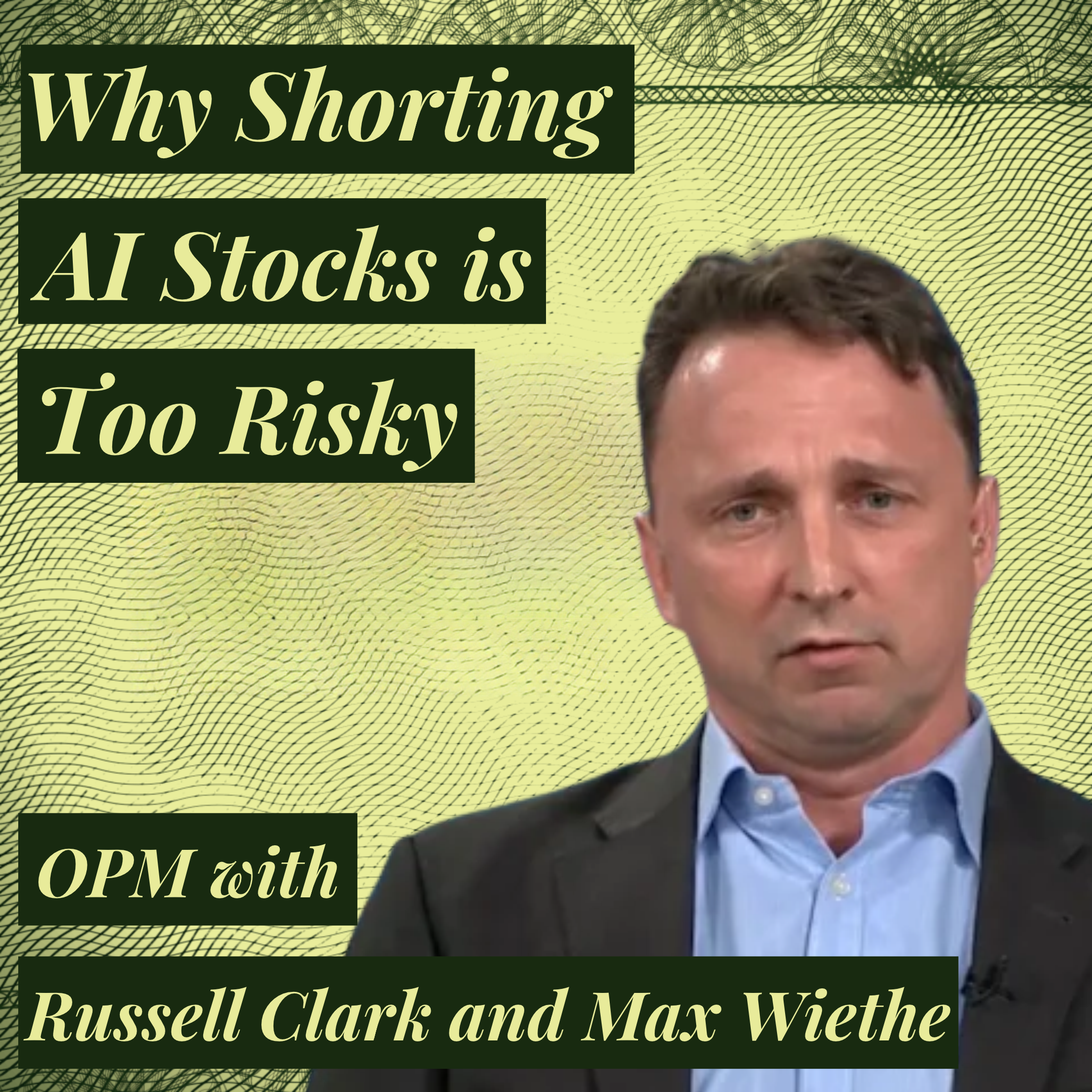
Russell Clark (Brumby Capital) argues the AI “build-out” trade is hard to short because demand for compute is still strong, government/data-center politics may be a false signal, and the main macro risk is persistent inflation/wage pressure plus scarce capital. He also discusses post–U.S. midterms implications for fiscal spending, bond yields, and where to look for shorts/longs in a higher cost-of-capital world.
Russell Clark, founder of London hedge fund Brumby Capital; writes a Substack at russell-clark.com. Background implied: experienced short-seller/hedge fund investor.
(1) Shorting AI lacks a clear “smoking gun”; overbuild shorts usually require logical overbuilding, but AI capex is driven by existential competitive pressure. (2) Data-center restrictions could raise prices via capacity constraints, not cool inflation. (3) Capital is becoming scarcer as governments spend more and wages stay high, pressuring funding markets. (4) AI issuance may crowd out parts of treasury/corporate liquidity, but equity demand for AI investment hasn’t broken.
China overbuild/consolidation cycles; hyperscalers’ “fully booked” data-center demand; Oracle capex/capital raising; Anthropic/OpenAI funding; SpaceX raising equity; Nvidia/TSMC driving DRAM/NAND price increases; Apple favoring buybacks; Japan banks as a potential long; U.S. homebuilders and franchise restaurants as potential shorts.
Written by AI. May contain mistakes.
Explore the impact of government policies on inflation and wages.
“This sort of theme of governments spending more, inflation being stronger, wages going up, I think that's just reinforced.”
Discussion on the midterm elections and implications for economic policies.
“Russell, thank you so much for joining me today.”
Examine the political landscape around data center construction and its economic effects.
“is to start off with, we'll probably have quite extreme left policies being sort of bandied around.”
Analysis of the risks and opportunities in short selling AI investments.
“They keep saying that they're fully booked out for this year and next year.”
Explore the complexities and risks involved in shorting the AI market.
“And the flip side of that as well, the other big problem I've got with it is it's very easy for me to see the AI trade as like a strategic trade, sort of like a Cold War defense military spending type thing.”
Discuss the implications of increasing equity and debt supply in the market.
“There is so much equity and debt supply coming.”
Understand the shrinking pools of capital and their effects on different sectors.
“As somebody who's looking at this environment, do you think that that's a place to find short exposure?”
Explore the financial struggles and debts faced by restaurant chains.
“Obviously, there is such a focus on affordability from the Democrats.”
Discuss potential government solutions for housing affordability issues.
“So I don't see any easy way out for them.”
Analyze inflation trends and the impact on interest rates and the economy.
“Everything is a trade-off when it comes to the housing market.”
Examine corporate spending on infrastructure and its effects on the market.
“And it brings me somewhat to this idea of what we're all kind of looking for, like the big sector to short or to go long, whatever it may be.”
Discuss how share buybacks influence market behavior and company valuations.
“Is it just, I want to be along the people who are opting out of that fight, who aren't obviously existentially exposed?”
Consider the impact of technological advancements on major companies like Apple.
“you know, is technology changing so quickly that the buyback in tech doesn't make any sense?”
Explore investment strategies in response to changing economic signals.
“So in the rising yield environment, it sort of feels like it should be negative for equity markets.”
Delve into short selling opportunities and risks in today's market.
“You know, I would sort of say, like, about a year ago, I quite liked the idea of European defense.”
Explore why Japan's housing market presents unique investment opportunities.
“within that sort of huge market, there's a lot of volatility.”
Understand the historical impact of U.S. policies on Japan's tech industry.
“And it did feel like there was some pushback from voters that inflation was starting to become a problem.”
Discuss how foreign tourism affects domestic perceptions in Japan.
“That's be like the Mexicans coming to LA and saying, wow, it's so cheap here.”
Delve into the implications of Trump's tariffs and economic strategies.
“Interestingly, a lot of the stuff that he put into place, Biden chose to continue.”
Investigate the possible outcomes of U.S. foreign policy towards Iran.
“The war is one of the few things that it's not a war that was declared by Congress.”
Explore the relationship between oil prices, inflation, and wages.
“But like I said, the bigger issue more is what happens when Trump steps down and almost certainly gets replaced by a Democratic president.”

Get the gist, explore an idea or ask about something said.
 Claude
On Monetary Matters with Jack Farley, what are the key points of this episode?
Searching your listeningAutomatic transcript. May contain errors.
0:00This sort of theme of governments spending more, inflation being stronger, wages going up, I think that's just reinforced. I think some of the talk is about the Democrats sort of stopping data center construction. The problem they've got there is you've always got this sort of cudgel of China's getting ahead of America. When you have policies to push up wages, the inflation increase is really not cyclical anymore. It's a sort of systemic. So there's a sweet spot for yields, which I think we've been in, and now I think we're getting to that sort of pain spot. This episode is brought to you by Sarmaya Partners, who manages a return to tangibles ETF, LENS, ticker L-E-N-S.
0:42The Sarmaya thematic ETF built for a return to tangibles. Learn more at SarmayaETF.com and see the show notes for disclosures. Let's get into it. Welcome to Other People's Money. I am joined today by Russell Clark, founder of Brumby Capital, a London-based hedge fund. He also writes a substack at russell-clark.com. Russell, thank you so much for joining me today. Yeah, thanks for having me, Max. It is an eventful day. We are recording this the day after midterms in the U.S. It was a blue wave, a blue NAMI, whatever you want to call it. I'd love to get your initial reaction. It's hard to see it as a sort of resounding endorsement of Democratic policies because there weren't really any.
1:25It's more a rejection, I think, of the way President Trump has gone about with his second administration. You know, I think, you know, the average person on the street, you know, wants to see more money is, you know, what I think is a universal theme. And we saw this in Brazil as well. Like when Lula was behind in the first round, he came out and basically showered people with money, was able to turn around, you know, a significant deficit in the final round or runoff election. I think with the Trump administration, what we've seen is I think the sort of cracking down on immigration was largely successful.
2:09So that really took away like a big policy support for his program because it's seen as successful. So it's sort of baked into the system now. And I think that when people looked at like high oil prices, I think cutting like food benefits as well. And the some of the Doge programs that were pushed through, I think really, you know, I think it was really hurt a lot of his base. You know, and you can see that with some of the big swings like in farming districts as well. You know, I think it's very common in politics that if you're successful at some point, you think you can get away with a lot of things just on the back of your personality.
2:49but ultimately people want more money in their pocket. That's why they normally vote for change. They're dissatisfied with the status quo. I think he failed to address that. So what I find very interesting about the result, and it's something I've been talking about for a while, is that I think at some point markets will have to think about what does a democratic president with the House look like and what do those policies look like? And, you know, what does the next president look like? You know, and that's where I think it gets interesting. You know, definitely the sort of nomination process will kick off probably halfway through next year.
3:34And what I find intriguing if US politics runs to form is to start off with, we'll probably have quite extreme left policies being sort of bandied around. and you have to wonder, does the bond market take it in its stride or does the bond market start to react to these sort of policies? For me, the big takeaway from this is what I've been calling pro-labor policies or inflation policies should probably get another leg up because I don't see Donald Trump approving any tax increases, your vt lows as far as i can tell but so the where they will be able to meet in the next couple of years will be on spending increases so i can't see the budget deficit coming down so everything sort of points to me that the uh yes you're right about the initial reaction as equities down and back up again that's probably correct with a view that fiscal spending is going to increase uh the market where i think that looks more interesting will be bond markets and when or if they sort of start taking a longer term view that uh fiscal consolidation is never going to happen which is what i think is the most the the correct read i think from what's happened overnight so i'd be surprised if mark has moved one way or another in it uh in the short term i just think you know the the sort of theme of governments spending more uh inflation being stronger wages going up i think that's just reinforced um would be my read of it uh i would be surprised to see i think some of the talk is about the democrats sort of uh stopping data center construction um they may do something there i feel like uh the problem they've got there is you've always got this sort of cudgel of China's getting ahead of America that you can always play against data center restrictions.
5:43Or alternatively, the big hyperscalers start building more data centers elsewhere in Europe or Japan, something like that. So the politics of the data center story, which maybe gets priced in in the short term, feels also like a false trade in my view. As far as I can tell, the hyperscares need more data centers. They keep saying that they're fully booked out for this year and next year. So the demand story is still there. So something we'll have to give. And the politics, I think, would point towards some restrictions, but the story keeps going. That was maybe the one policy that did sort of go through almost all of the Democratic candidates.
6:25As you said, there wasn't a lot of policy prescription coming out of the campaigns. It was just very much things are not good. We need to make a change. That was essentially the argument made by just about every candidate aside from data centers. Do you think if politicians do follow through, it sounds like that's not your base case, but if they do follow through and we cut data center spending significantly, is that going to create a slowdown in the economy and perhaps a head fake on inflation? Yeah, it could do. Although, you know, from what you can see is, you know, the demand for AI, both from like a competitive point of view and from the consumer, and it's so strong that if you don't get the building, you're going to get more inflation, if that makes sense, as the capacity constraints will push through more pricing increases for whatever, you know, because basically price would be on your way to ration demand.
7:24um but you know i think you know if anything it could even play into elon musk's hands so he argues that you can't build enough data centers uh on earth so you have to go and build them in space which is his big argument for for spacex so you know plays into his hands to a certain degree the real question will be like you know how how much retribution will the democrats be looking for for you know must being so blatantly tied to you know the republican party in the first couple of years and you know for his efforts with doge that's the real mystery question there um but like i said you know the data center is a tricky one you know where from some of the people i've talked to they sort of knew that there were some risks with the democrats uh coming into power so they've actually sort of almost over permitted so that they could then say okay we will not we had permission for this data center we'll throw this one away so that they can throw sort of political bones or democrats um it's a tricky one the demand side definitely seems to be there and the logic of ai which requires exponential increases in compute doesn't really change it uh like my feeling is what I think is most likely to happen is what I can see in Europe and in Japan to agree that they're moving to much more pro-growth policies having stagnated for so long.
8:51And so they'll probably start welcoming these data centers if they can get the cost structures right for them. So, you know, that would, if that was the case, you know, sort of feed into a more weak dollar type trade, which we've seen today as well. One of the things that you wrote recently that was interesting to me was you were examining the AI trade, the build-out trade and saying, is this an attractive short? Certainly has looked like it over the past few months, but you took a look at it and you said, I'm not sure whether there actually is a great short opportunity here. And I think about you as somebody who has an eye for short selling and this particular brand of short selling.
9:36And so when you said, I don't think the risk reward is there on the short side for AI, it was something I took note of. Why don't you see a big opportunity for short selling on the AI trade? So normally for the good short opportunities I've seen in my career, normally what happens is that for some reason an industry overbuilds. Okay. And industries don't overbuild because everyone's an idiot, which is sort of, you know, everyone's a fraud, which is where I think most short selling cases start with. You know, assuming someone running like a multi-multi-billion dollar company, or in the case of a hyperscaler's multi-trillion dollar company, that these guys are like morons is to say like Jeff Bezos doesn't know about IT and tech demand, or Mark Zuckerberg doesn't know what he's doing or Elon Musk doesn't know what he's doing.
10:32This is a terrible place to start your sort of short thesis in my view. Now, what you do get in markets is occasionally you get overbilled for very logical reasons. So the best, you know, some of the two best shorts I've had in my career, one was it sort of China related. So the Chinese industry, what normally happens with Chinese industry, they have a huge build-out phase. And then the one with the most market share, the government will then come in at some point and say, you're the biggest, you're the one that gets to consolidate this industry and normalize it. And so you have to be the biggest if you want to be the one that survives.
11:15So this creates this terrible incentive structure where they massively overbuild and then there's a collapse. but it's very logical from a Chinese perspective. I have to be number one if I'm going to be a survivor. And once you understand that, it's relatively easy to understand that cycle. I have to say, Russell, that sounds exactly like where we are now. You could argue that. The problem I've got with it is, so a friend of mine, a very clever friend of mine said, I should actually read the situational awareness essay, which he wrote a couple of years ago and then launch the hedge fund on the back of it.
11:51And it was fascinating. He's basically saying compute needs to go up exponentially to get a linear increase in the ability of AI. I thought about that. So financially, it's crazy because it's basically saying you need to spend hundreds of billions more for incremental increase in the compute power. And so that's where a lot of the short cases come from. They're saying this is crazy use of capital it's all they're going to end in a deflationary bust. The problem is, is that when I look at AI, for companies like Google and Microsoft, it's an existential threat. So they need to invest. Google in particular, I always feel like is very exposed because I don't even search for Google anymore.
12:36I just search everything on ChatGPT. We saw that in earnings. We saw it in earnings. And when I watch YouTube, they're just so jam-packed full of ads. You can see that the advertising power of it brand is weakening but they've still got a lot of cash so they've got to invest and you know i saw it was of the view that they were all investing basically to try and bankrupt either open ai or anthropic so earlier this year i thought oh there is a chance here maybe you know that something breaks right um you could see i could see some weakness there and then all of a sudden you know Elon Musk comes along with SpaceX, raises a hundred billion to invest, to create his own language, large language model.
13:20And he's done it all through equity, basically. And I was like, okay, so, you know, the credit markets are sort of saying we don't want to lend any more money, but the equity markets are okay with this. And so now your argument, you know, the argument of the AI boom is over. it has to be sort of confirmed by you know equity markets sort of saying we don't want to fund this anymore so if you know SpaceX collapsed for example that'd be a good sign um but you need I don't see that in the equity markets as of yet um I don't see this sort of people saying they don't want to fund it they're not happy about it but they don't want to fund it I don't see it And the flip side of that as well, the other big problem I've got with it is it's very easy for me to see the AI trade as like a strategic trade, sort of like a Cold War defense military spending type thing.
14:16And so, you know, the risk you run is the government does come in and start offering support. So it's the flip side of the data centers, Democrats are going to toast the data centers. There's a very real case where the governments will come in and try and support the spending because they want to stay ahead of China, if that makes sense. So, you know, it could be a short. It's just that the risk award to me is very finely balanced where, you know, you think it's a short and then suddenly, you know, the IPO market says, yes, we'll fund another two, three hundred billion of investing. And then you sort of, then you are like, OK, this continues.
15:00So, yeah, I find the risk award very tricky. And, you know, I've tried at various times to fool about showing the AI trade at various times. And what seems to always happen is the demand is still there. And, you know, that's been the case for a few years now. And when you read the situational awareness, you sort of went, okay, this is the model that these guys are using for investing. And what's been very interesting for me is like, even with like Oracle, which has seen a share price down 50%, they haven't really cut like they've just started to reduce the capex but it's not like they backed away from it and that there were the numbers they're pulling are very strong it's just that they're still doing capex so i look at all that and i was just like you know risk award looks not great yeah i mean oracle might be pulling back on capex a little bit but they just tapped both the equity and debt markets for 10 billion apiece um in the last two days obviously that hasn't they haven't fully raised the money but they've announced their plans to do so so uh i would say even if they in their you know last earnings have signaled some sort of cutback on capex they're certainly still raising money i guess the operating cash flow was actually quite up quite a lot so that's always been the problem with the ai thing is you invest heavily and then the money comes later and what we saw with both anthropic and open ai is that money is there uh the big short case for that is that money is not real.
16:30It's just capital from elsewhere being moved around the system. So when the capital flow stops, the demand stops. That's, you know, which is a sort of dot-com bubble type argument. You know, but will the investing stop? Normally what causes spending to stop is prices falling. So like GPU prices falling or rental prices falling or cloud prices falling. Now I look as far, everywhere I look, it's the opposite. It's going up. Uh, so, you know, it's a, like I said, it's a, it's a tough short. There's no smoking gun for me. Uh, it's all circumstantial evidence, which is given the risks in short selling.
17:08It's not enough for me. Uh, but I'm still looking for a smoking gun. And if I see it, I'll call you up and ask you to get me back on here so I can correct everything I've said. Hey everyone. Hope you're finding value in my questions. I've got a quick question for you. How much of your portfolio actually depends on the physical world. If you own the S &P 500, more than a third is tech. Energy, materials, and precious metals, about 5%. Sarmaya Partners believes the next cycle belongs to Tangibles, the energy and metal sectors that have been under-invested and under-loved for a decade. They call it a return to Tangibles and LENS, ticker L-E-N-S, the Sarmaya ETF, is an actively managed ETF to express this view.
17:50And active is the point. The team follows the themes across sectors, market caps, and borders as the cycle evolves, adding where they see opportunity and trimming themes that look overextended. Miners, energy, precious metals, critical metals, all in one actively managed ticker, LENS. When inflation runs, stocks and bonds can fall together. Lens adds real asset exposure with the potential to diversify both the stock side and the bond side against inflation and geopolitical risk. Learn more about the Lens ETF, their full data in comparison, including performance at SermayaETF.com. Investing involves risk, including the possible loss of principal.
18:30The fund's investment objectives, risks, charges, and expenses must be considered carefully before investing. This and other important information is contained in the prospectus, which can be obtained at SermayaETF.com. Please read the prospectus carefully before investing. I guess I would ask about Anthropic, I mean, and also the existing public companies, There is so much equity and debt supply coming. I'd say with the benefit of hindsight, it's pretty clear that there was at least some crowding out of the treasury market from the AI issuance. It's something we heard about, and depending upon which bond investor you ask, they would say that's impossible.
19:08It's the biggest market in the world. But I think now we can see that there was definitely some impact there. But historically, the market just cannot handle this much equity issuance. I recently talked to the head of capital allocation at GMO who did a study on it, and they said that each 1 % of market cap that's issued is good for about a 4 % underperformance from average, and that if SpaceX, Anthropic, and OpenAI in a 12-month period come out, at the valuations that they're saying, it would be somewhere between like 4 % and 6 % of market cap. And then you throw in Google and Oracle and Meta and all of these other companies issuing, even though it's not an initial public offering, that's just quite a lot of equity supply.
19:59So your argument is that for now, it appears that there is insatiable demand for all of this investment and this supply is not going to overwhelm the market beyond the question about demand for compute. What about the demand for the financial assets? It's a very intriguing question because bond yields have been going up and I think they still will still go up. And my argument has been that's mainly political driven by big fiscal deficits and focus on work, on wages. But you could make the argument that interest rates are going up because we suddenly have this huge demand for capital that hasn't existed before.
20:38So a lot of the last, until a few years ago, 10 years prior to that, was really about equity markets, really about returning capital to investors in big size. So the share buybacks, these sort of things. And personally, I think the reason Oracle share price being so weak is they went from share buybacks to issuing shares, which the market didn't like. It's still priced, still price was a very attractive company, just not as attractive. And so you could argue that we've moved to a different world. We're not in a world that's free of peace or conflict anymore. The US is in a sort of Cold War conflict with China.
21:16Russia is in an actual war with Ukraine. And typically in war environments, it's very difficult for governments to curtail spending. And unemployment tends to be very low because there's lots of jobs for people to do. And that's sort of the environment we're in. It's very different to what we were in 20, 25 years ago, an age of peace and fiscal discipline. We're now back in the sort of age of investing, defense spending going up, capital investing more and more money. And so capital and deposits are becoming more scarce. And I think for when I was a kid, the first sort of the money I had, you could put on a sort of what we call a long-term deposit basically a deposit you can touch for 12 months to two years you get seven eight percent um you know and i think we're going back to that type of environment where you know capital is scarce for whatever reason is it politics is it ai wall whatever you want but they all seem to be pointing the same way um and it's hard to believe the ai market is squeezing out the treasury market i would just say that the u.s fiscal outlook does imply a much higher uh interest rate than what is currently being charged would be what i would say to that okay so you think it's far more likely the treasury market is squeezing out the ai debt markets yeah i think the ai debt markets are definitely squeezed out other court you know is basically taking liquidity out of the other corporate markets because they're offering you know if you take the soft bank offering uh was like seven eight percent for three-year money in europe and in japan which is uh how it's tremendously high you know so these these sort of offerings i think are squeezing the corporate debt market i think the sovereign markets are really just reflecting the the outlook for higher inflation uh and still rising wages in my view this competition for capital this this world that you're talking about that sounds potentially bad for these private alts managers, the private credit managers, private equity.
23:32As somebody who's looking at this environment, do you think that that's a place to find short exposure? Where are the shorts that do jump off the page to you? That looks like a very interesting area. So part of the thesis of this sort of rising cost of capital is that, uh you know so you know if you go back in the idea of like big foreign reserves right foreign reserves being held in treasuries or fixed income it's a very relatively very novel concept it only really started in the 80s and it's sort of Kissinger and the petrodollar if you ever ever studied that so basically when the dollar left the gold standard you know yields blew up and then so Kisicu convinced OPEC nations to buy treasuries instead of taking gold.
24:21And then Japan followed suit. They bought treasuries instead of gold. And then China did the same, Korea, you know, a lot of countries did the same. So we ended up having these policies which were sort of, the reason the Japanese bought treasuries and the Chinese bought treasuries was they were trying to stop the exchange rate for appreciating. So they didn't want wages to go up. They wanted to stay competitive as sort of a free trade world. And so these countries generated huge pools of capital. And these pools of capital, they went into treasuries. I think a lot of them went into private equity, some of the big private equity funds, some of the big sovereign wealth funds.
24:57We had all these policies that generated huge pools of capital, which benefited businesses that could tap into them. And so, you know, what we're starting to see is these pools of at least treasury holdings are declining. They're declining in China. that declined a bit in Japan. Basically, no one wants to hold treasuries anymore. And so the pool of capital available for those asset managers is shrinking. And the reason they're shrinking is governments are sort of doing the opposite. They're trying to push wages up and keep wages relatively high in real terms. And that requires governments to spend.
25:33That requires governments to push up interest rates to protect the currency. And so, you know, yeah, what I sort of see is this pool of available capital is getting smaller and smaller. And so you're going to have to see corporates look for other funding sources. And that's certainly something we've seen with the AI companies who have huge demands for capital at the moment. They're tapping all sorts of different financial areas to try and get that capital. And that's sort of the world I see is that actually growth is going to be good. it's just funding is going to be a problem. You know, getting the money is going to be a problem.
26:12And how that will affect equity markets, I think, remains to be seen. So are there any areas that you think are particularly exposed to needing access to funding markets that you have in the, whether it's stay away from or you're actually looking at them as shorts? So I think the alternative managers are problematic. They have been already weak. so you know so maybe it's a bit late on that one um but one area i think that looks interesting is u.s u.s uh home builders um well talk about looking weak they've looked even weak they've been the weakest part of the market yeah well they've not really cracked they've just sort of held up there but their margins are still very high um you know if long end of the bond market does sell off like that crimps demand to a degree i don't think it's going to be like a gfc type issue with the home builders.
27:04But what I can see is they come out and say, do you know how we used to make like a 15 % margin on our homes? Well, now because of labor costs, because interest rates have gone up, because energy prices have gone up, actually we only really can make 5 % to 7 % margins as their profit margins come in a long way. And that's how I could see those stocks derate quite substantially um for example that's sort of the way i look at it you know um you know and there have been uh you know i still quite like the uh restaurants uh so the restaurants the franchise restaurants have this sort of uh way of getting capital which they get from their franchisees uh basically they make them buy the restaurants and and they take a cut of sales but these franchisees are really feeling the squeeze of higher energy and higher interest rates so that what we saw like mcdonald's last quarter is actually had to pay money back to the franchisees so they had money to renovate the stores and so the cash flow is starting to reverse and we're seeing a lot of restaurant chains be very weak uh so it still feels to me like we haven't had a full reckoning a full reckoning of all the debt that's been sort of taken out to be used in different assets over the last few years.
28:27I think that's still ongoing. Obviously, there is such a focus on affordability from the Democrats. That's really what they won on. Do you think that there is a policy solution in any way that will support it? The problem you'd have with that is that the long end of the bond market probably wouldn't like a big sort of household grant, given where the fiscal deficit is. So the spend would probably be counteracted by a sell-off in the long end of the bond market um you know i think you know ultimately you know when you look back at when house prices were very affordable uh in the uk anyway the government built loads of them uh they went out and had a huge sort of home building spree which was sort of government financed um in the states i don't know the states is it feels like uh like i said it doesn't really pay to build them uh but then as far as i can tell young people can't afford them as much as uh they used to so you sort of seem to be stuck uh in a between a rock and a hard place it'll be interesting to see what the democrats can actually do um nothing really for me comes to mind but you know other than throwing more money at people so like a big one-off distribution to working class people or something like that which i think they're thinking about anyway um but i think there's sort of there's no for me honestly the other the only thing i could see them do perhaps is convincing the fed to begin a qe program to cap long but long end of the bond market that would be pretty bad for the us dollar so we create some inflationary pressures, I think, at least.
30:16So I don't see any easy way out for them. Everything is a trade-off when it comes to the housing market. We haven't spent much time talking about the Fed. The last meeting was a pause. We're expecting rates to go higher. The inflation data has not been great. It's looking like we are still in the midst of a hiking cycle. Look, if we get a slowdown in data center spending, the bond market has reacted by pricing in fewer hikes for whatever reason. They view that this data center spending is inflationary. Do you think that we are going to get some sort of head fake from all of these factors that people are attributing inflation to?
31:10and that we might actually get out of this hiking cycle sooner. I must say, you know, where energy prices are today, and if you still like the jolts number on employment in the US, which is a very, very good number, you know, I think I'm pretty much the same as the average man on the street. I don't see prices falling. You know, prices went up a lot in the last few years. and you know I was always surprised when the fed stock you know cutting rates last year because I was like I haven't seen any price decreases I'm not seeing things suddenly getting cheaper here uh you know and you know what I think happens is whenever we have these sort of increase in energy prices prices get pushed up to preserve margins and then nothing gets given back when they come back those energy prices and if anything you know the wages also go up which very hard to cut that's the thing about wages you know when you have policies to push up wages the inflation increase is really not cyclical anymore it's a sort of systemic uh increase uh and that sort of feeds into less and less capital uh available for uh investing so cost of capital goes up i mean that's one of the other sort of interesting things is that the big tech companies were huge owners of spare cash but now all of that's going into you know uh ai spend and infrastructure spend so cash piles everywhere are falling um and you know what is what i find really fascinating is that even when uh the the tech companies are all sort of charged eight nine percent corporate bonds they take it um which i find really intriguing it's not like you know it's not they're not scared of high interest rates and i guess it's just because the growth they see is so phenomenally good yeah well there's one exception to that that's apple right of the big tech companies that reported they were the ones that have probably done the least amount of capex they announced that they're returning something like 25 billion 28 billion i forget the exact number to shareholders via buybacks.
33:31It is quite different. And it brings me somewhat to this idea of what we're all kind of looking for, like the big sector to short or to go long, whatever it may be. And is it more of a spread market, right? Where you're not just saying, I want to be short all of big tech, but if you have one company that doesn't really seem to need to be spending all of this capex to maintain their business, perhaps not facing an existential threat, and you have all of these other people competing with each other as the cost of capital rises. Is it just, I want to be along the people who are opting out of that fight, who aren't obviously existentially exposed?
34:15And is that how you're approaching this market? well i mean that has been the sort of interesting aspect of the market yeah share buybacks have been the the big winner and apple has been a big winner from that um you know and you know it's that has probably been the big change since 2016 is that share buybacks have been such a major driver for this market um and when you you know it's there's sort of been the biggest buyers of the market because i guess that's where all the money is these days in corporates um you know and how long can they continue it's a good question i mean share buybacks for apple at sort of these valuations with these sort of interest rates seem uh nominally value destructive it's a bit trickier because from a once you uh price and tax incentives and other things um you know maybe it works uh But the share buyback is what the markets really love.
35:15And so that seems to be the way to do it. That's why I say Oracle sort of looks interesting because if they're saying that CapEx is picked out and they're going to have cash to buybacks, that company could rapidly re-rate hires. That's sort of why I think it's not a great short here. But yeah, buybacks being the key. you know i thought higher interest rates and higher cost of capital would probably maybe put an end to the buyback story i sort of think of buybacks as a bit like private equity in that you sort of take the balance sheet and run it through the pnl which has not worked for private equity in in the last couple of years but still seems to be working in the big listed equity companies maybe because they don't have any debt maybe that's a big problem with private equity is they take on debt to do that.
36:10So, yeah, the only issue you have to ask yourselves, and this has always been, for me, the issue of the buyback, is that, you know, when you, especially in the technology space, you know, is technology changing so quickly that the buyback in tech doesn't make any sense? And with Apple, what I find interesting with Apple is that it's been a long time since Apple came out with a new era-defining technology. know under you know since jobs died you know it's been a phenomenal investment but actually from a tech perspective it's been a real sort of marginal changes at best and then pushing up a price in its products as much as possible um so it's a value creating for shareholders but you know has it it hasn't actually developed anything new for a while and the question is you know in the tech space can that continue it maybe i guess so it's it's a it's a very interesting question but you could see you know i i sort of wonder in if we're in the ai agent era that we're heading to does apple maintain its cache so you you have this very clear view on rates rising inflation staying high How much are you expressing that via direct sort of mechanisms like rates, currencies, et cetera, versus trying to find these knock-on effect equity marketplace?
37:40So in the rising yield environment, it sort of feels like it should be negative for equity markets. So I think a good example is France, probably the worst market this year. Its yields have gone up. um you know it's been under bomb pressure that's totally what i would expect in the rising you know so like there's a sweet spot for yields which i think we've been in and now i think we're getting to that sort of pain spot where markers go okay you know something's got to change and they start pricing change um so i think we're at that point now which is i expected it to come earlier um so you know i sort of think about well okay if capital is getting scarce you know can i look for people who benefit from owning or having capital available so i still quite like japanese banks they have a large deposit franchise it's still very cheap and it's you know the opportunity to sort of reinvest those deposits into higher jgb yields or even higher treasury yields if they choose is increasing and these the banks have been terrible investments in japan for 30 years until recently so i still quite like that um you know and i sort of look around for uh i think this year has been intriguing where we've nvidia sort of chips have been expensive for ages and what we've seen is tsmc has been reporting increasing uh semiconductor prices for years and that's fed through into semiconductor equipment we suddenly saw that sort of pass into to DRAM and NAND flash.
39:15So as we sort of got to the limits of the production capacity of those areas, we suddenly saw price increases. So I look around for areas where we could see that type of change, where we suddenly go to full capacity and pricing moves higher. And there are some areas that sort of look interesting there. So you're sort of looking for trades at work in this environment of growth, nonstop growth. It is tricky, though. You know, I would sort of say, like, about a year ago, I quite liked the idea of European defense. But when I looked at it, you know, actually the CapEx has gone into that area. So the supply-demand seemed to be matched up.
39:58And so the outlook for that seemed less attractive. And you see that a lot. You sort of see huge moves. We've seen it with the DRAM NAND companies this year, huge moves up as pricing uh as pricing improved and then market suddenly goes okay well now are we going to get the capacity increase is pricing going to disappear so the equity sort of disassociate from the rising prices uh so i think the long book is i find a long story surprisingly difficult uh i think the only thing that seems to be working is buybacks and they again i question that where they make sense but buybacks in the us seem to be the one trade that still holds up uh you know but i look across the sort of range of industries it has been interesting how they suddenly sort of sometimes just warn on cost pressures and then market says okay you're not going to have the cash to buy back shares or whatever uh so it's you know i feel like we even though i said truly it's difficult the short side looks more interesting it's just i'm not sure the ai is the right one to go go for uh you know there seems to be weakness out there in many places not being perfectly correlated to the exact view is is a is a risk mitigation aspect here it's a portfolio construction idea that that you really can't bet your entire portfolio exactly on one thing but if it is the guiding force you want to find things that are kind of exposed but are not necessarily correlated to each other and bonds are bonds are tricky because it depends on which you know this year the short end of the bond market is a place to have been short in particular so but you would need to access that that in a in a in a meaningful way you would probably need access to futures and that sort of thing the long end of the bond market whether etfs available has been a bit more choppy certainly like it was weak and then it was strong this would be a more difficult trade.
41:59So, you know, again, you know, even though short bonds make sense, within that sort of huge market, there's a lot of volatility. So it's no, my sort of feeling is there's no easy trades here. The one market I do like for whatever it's worth is Japan. Purely from the point of view that I think in most markets, increasing property prices are seen as sort of as political negative that makes sense uh the young voters who i think are really in charge so the boomers i think are gone as a voting powerhouse has it's moved down to millennials and younger uh you know they would much prefer cheaper housing prices or higher wages they can buy nice houses um and so there's this pressure to sort of keep house price under control that doesn't exist in japan as far as i can tell you know i think they are a-okay with house prices going up which makes it to me a more attractive market if that makes sense purely just because they've come out such a long stagnant stagnation they're not so worried about the inflate in asset inflation that makes sense so that's a market i find more interesting Obviously, Japan started to deal with inflation for the first time in a very, very long time.
43:23And it did feel like there was some pushback from voters that inflation was starting to become a problem. The weak currency, you know, it comes across in some of the anti-tourist rhetoric. Do you think that that was just a reaction to dealing with inflation for the first time? I'm going to tell you the Japan story from my new interpretation, having looked at it again. um so the whole japan stagflation era which sort of began in the 90s was the byproduct of the americans not being happy with japan doing so well in the 80s so japan developed in the modern semiconductor industry so nan flash d ram all of this in japan they dominated in the 80s and they had the best tech industry as we are well all should be aware well aware of the americans like have the biggest and best tech industry uh and you know they don't like other people owning that market for defense reasons and other reasons and so what happened in the 80s is americans came to the japanese and said look we need you to stop competing in semiconductors which they agreed to there's an agreement from 1986 about basically japan saying we won't we won't undercut us semiconductor producers anymore and i think the the other part of that was that they were sort of willing to limit Japanese market share.
44:42So Japanese market share was capped. They weren't going to grow it anymore. And so what then happened was the best companies in Japan, this is sort of going back to looking at Apple, the best companies in Japan stopped investing into Japan. They started investing all of their tech and all their capital into Korea, Taiwan, China. So if you go from having all your best companies investing too heavily to not investing into your country at all, what do you end up with with stagflation and then i think what's happened is since china has become like the enemy investing in japan has become acceptable again and in fact geopolitically japan looks like a great place to build new fabs uh you know and to build out a new semiconductor industry so what i see in japan is yes the extreme yeah they had stagnation but it was politically driven and now they have inflation and growth i think which is also politically driven um and so i think growth is going to be good uh and that's just that's the japan story for me i think u.s policies is what drove deflation in japan um as for tourists i think it is extremely tough for the japanese to see chinese tourists coming to japan and saying how cheap it is and buying loads of Japanese stuff.
46:01That's be like the Mexicans coming to LA and saying, wow, it's so cheap here. That's, uh, you know, you know, that would, I think if that's the sort of mindset that would, it would engender. So I speak Japanese, I get Japanese Tik Toks and there's this guy just saying, oh, he's going to LA, he's LA airport. The kid went to, you know, Joe's juice to get like a juice or water, a sandwich and something else. and it was like and it cost him 70 bucks he's like what how's that play i mean that's probably la airport prices but yeah you know you can see like you get 20 bucks sandwiches in the states sometimes and you know 10 juice you know you go this makes no sense um you know but that is actually you know what the whole policy of trump's policies of tariffs and industrial policy is meant to do is meant to jack up prices in the states and make the u.s economy bigger uh and that's why i struggle to see the democrats uh unwinding those policies absent some sort of uh debt crisis and then i think we move back to free market policies again so what are the policies that you think are going to carry over you know certainly trump 1.0 was all about sort of the first trade war with China wasn't the tariff era one.
47:25Interestingly, a lot of the stuff that he put into place, Biden chose to continue. And then he picked it up and took things from where he had left off with Trump 2.0. What are the sorts of things that you think are going to stay in place both through this last two years of Trump and then whoever comes next, whether it's a Democrat or Republican? I think if voters could have chosen what they had to vote for, so midterms are the midterms but you know if voters could have chosen what was going to be on the sort of voting form would be like ending the iran war would probably have you know won in like an 80 90 percent landslide it's a war i think you know i understand the logic of starting it but the logic of continuing it has you know made little sense to me um once they showed that iran wasn't going to be like a venezuela where they could come in easily win change the political regime and it started to become like a dogfight it seemed like a crazy war to keep doubling down on uh especially as oil prices went up diesel prices went up and it's very hard to understand uh and i think that's the thing is is because it's so hard to understand no one can explain why it's happening.
48:41And I think that was what probably cost a lot of votes for the Trump administration, I would say. Other policies, you know, I think like, like I said, culling like food stamps, you know, getting rid of Obamacare, which has been extremely popular. He didn't do it in his first term, even though he sort of, you know, said he was threatened to. It was weird. In the first term, he seemed far more politically astute. Perhaps he had better advisors. It's certainly it's certainly not hard to get the impression that the the cabinet in trump point two is very low powered uh you know and not very good at their jobs in general um you know so there's a I would think you know when the Democrats probably will they won't disagree with the immigration policies they might try and soften some of the implementation I don't see tariffs really changing that much um you know i don't see industrial policy changing that much i don't see pro-union policies changing that much um i don't see the fiscal deficit change that much you know like i said i think uh you know it's just really like some of the more extreme policies that really took money from people's pockets that were the problem well trump certainly could be called vindictive, right?
50:04The war is one of the few things that it's not a war that was declared by Congress. It's an executive action. It is one of the things that he can essentially unilaterally decide whether he wants it to continue or not. He's got two years. I mean, do you think this is a sort of, I'm going to take my ball and go home and I don't really care? even though people voted to as you said as a rebuke of the war um it does seem like he could just say well i don't really care i i want to defeat iran and and you know like like nixon going to china 50 years later you'll love me you know nixon going to china was a genius move to you know begin the end of the u.s the soviet union because he split that block off uh you know and I said, originally I was very supportive of the Iran war in so far as they are a bad regime.
51:03And I had assumed given the sort of 40, 50 years that Israel had to sort of think about this war, which they've been thinking about, they finally had the US layer. I was expecting the execution to be far better than it has been um the execution has been poor uh and you know it's it's just yeah it's just been poor really and because it's hard to understand um you know it's not worked out you know no one really cares about the venice way the thing goes over in a day um but this one's been very poor and really it's sort of showing the us to be weak which is always a bad look i think maybe Maybe Trump thought that if you go to war, typically your ratings get a boost.
51:50Normally that helps if people declare war on you rather than you going to war. But I think he just made a misjudgment. But like I said, the bigger issue more is what happens when Trump steps down and almost certainly gets replaced by a Democratic president. And then the Democrats control all sorts of three branches of the executive. You know, then, then, you know, you're looking at some real changes. And, you know, I think the likelihood that they're very progressive policies cannot be dismissed at this point. Okay. And if we do get a pullback in the war, obviously oil is going to react. People are going to price that into inflation and probably into the rate hiking cycle.
52:41Do you think that's the wrong move? to to put too much on the oil price day to day in thinking about inflation right now with oil is it's a very tricky one because it it does look like it's sort of for me it looks like a dead asset to a degree um so what's intriguing is you know the the the benefit if there is a benefit the iran war is suddenly u.s shell production is going up again so that's i think you know you're starting to see increase in rigs production looks to be going up uh if you look at long dated natural gas futures in the states they're actually declining so the market is seeing the production coming on and saying actually we're going to have an oversupply again in a few years time so the u.s shale industry is gearing up uh and when we look at like oil consumption in china it's already looking like so road consumption uh driving consumption of oil is already topped out in China at a much, much lower level than in Europe or the US.
53:38And what we can see now is that sort of road demand for oil is topping out in all those places and starting to decline. So you got this sort of like, you know, when I look at oil, I sort of feel like we're sort of looking at, you know, like a dead commodity in a way. You know, it doesn't mean the price can't go up, but it's just like the link between energy consumption and GDP is starting to break. And so it's why there's no new refineries built in the States, because when you do the sort of long-term, you know, return on equity profile of it, the end value looks very low and it's not that far away.
54:20So it's difficult to get a sign off on it because the demand isn't there. Being in the UK, you know, all we see is petrol stations closing down they're never never opening you do get sort of electricity charging places opening now and they're all over the place and that's sort of where we're going so i feel like oil is like a distraction uh in short term it does move markets but the bigger driver inflation to me just seems to be wages and i think that's going up um well i think for me the cycle is structurally we inflation because wages are going up uh when oil price goes up the fed sort of says we're going to raise rates when oil price goes down the fed says we're going to cut rates uh even though actually the structural driver of inflation is not oil it's wages um and so they sort of as soon as they in my view as soon as they start cutting rates or think about cutting rates the long end of the bond market actually sells off because they're saying oh actually you're not dealing with the real driver of inflation here, which is very tight employment markets and rising wage.
55:28All right, Russell. Well, we will leave it right there. People can follow along with your views. You are writing very frequently at your sub stack, russell-clark.com. As well, you're on X at rampagingrus. Thank you so much for doing this. We'll get it out quickly. Thank you. Nice talking to you, Max. I hope you enjoyed that. I want to say a big thank you to today's sponsor, LENS, ticker L-E-N-S, the Sarmaya thematic ETF, which gives real asset exposure and the potential to diversify a 60-40 portfolio. Read the prospectus at sarmayaetf.com. Disclosures in the show notes. Thanks for watching.
This episode is brought to you by Sarmaya Partners. Learn more about Sarmaya’s LENS ETF, their full data and comparison, including performance here: https://sarmayaetf.com/
Russell Clark, founder of Brumby, joins Other People’s Money to unpack the market fallout from the recent US midterm elections. They explore the systemic shift toward pro-labor policies and wage-driven inflation, which Clark believes will persistently drive bond yields into the pain zone. The conversation also tackles the massive AI data center build-out, with Clark breaking down exactly why betting against this exponential trend remains an incredibly dangerous game for short sellers. Finally, they discuss the shrinking pool of global capital, what it means for private equity and US homebuilders, and why he believes Japan is quietly emerging as the most attractive market for investors.
Read Russell’s Substack: https://www.russell-clark.com/
Follow Russell on X: https://x.com/rampagingruss
Follow Max on X: https://x.com/maxwiethe
Follow Other People’s Money on:
Apple Podcast https://bit.ly/4e7QJ1M
Spotify https://bit.ly/3Yhaazi
YouTube https://bit.ly/3C63VXR
X https://x.com/opmpod
Important Information
The Fund’s investment objectives, risks, charges and expenses must be considered carefully before investing. This and other important information are contained in the prospectus, which may be obtained by following the links Prospectus and Summary Prospectus or by calling +1.215.330.4476. Please read the prospectus carefully before investing.
There is no assurance that the fund will achieve its investment objective. The Fund may not be suitable for all investors. Investors should continue to review their investment objectives and risk tolerance periodically.
An investment in the Fund involves risk, including possible loss of principal. Exchange traded funds (ETFs) trade like stocks, are subject to investment risk, fluctuate in market value and may trade at prices above or below the ETF’s net asset value (NAV), and are not individually redeemable directly with the ETF. Brokerage commissions and ETF expenses will reduce returns.
ETFs are subject to specific risks, depending on the nature of the underlying strategy of the Fund, which should be considered carefully when making investment decisions. For a complete description of the Fund’s principal investment risks, please refer to the prospectus at https://sarmayaetf.com
Metals and Mining Companies Risk. Metals and mining companies can be significantly affected by events relating to international political and economic developments, energy conservation, the success of exploration projects, commodity prices, tax and other government regulations. Investments in metals and mining companies may be speculative and may be subject to greater price volatility than investments in other types of companies.
Management Risk. The Fund is actively managed and may not meet its investment objective based on the Adviser’s, Sub-Adviser’s, or portfolio manager’s success or failure to implement investment strategies for the Fund.
Shares of the Fund Are Not FDIC Insured, May Lose Value, and Have No Bank Guarantee.
The Fund is distributed by PINE Distributors LLC. The Fund’s investment adviser is Empowered Funds, LLC, which is doing business as ETF Architect. Sarmaya Partners LLC serves as the Sub-Advisor to the Fund. PINE Distributors LLC is not affiliated with ETF Architect or Sarmaya Partners LLC.
Timestamps:
00:00 Intro
01:06 Midterms Blue Wave
03:00 Bond Market Fallout
05:17 Data Center Politics
09:08 AI Short Thesis
13:10 Equity Funding Still Flows
17:17 Sarmaya Partners LENS
18:44 Capital Scarcity Rising Yields
23:19 Short Ideas
26:38 Homebuilders
30:23 Fed Hikes And Sticky Inflation
33:11 Buybacks vs. Capex
42:14 Why Japan Looks Different
47:11 Which Trump Policies Persist
50:00 Iran War Politics and Risks
55:29 Conclusion