Ask ChatGPT
 Monetary Matters with Jack Farley
23 Nov 2026 · 15m · 3 chapters
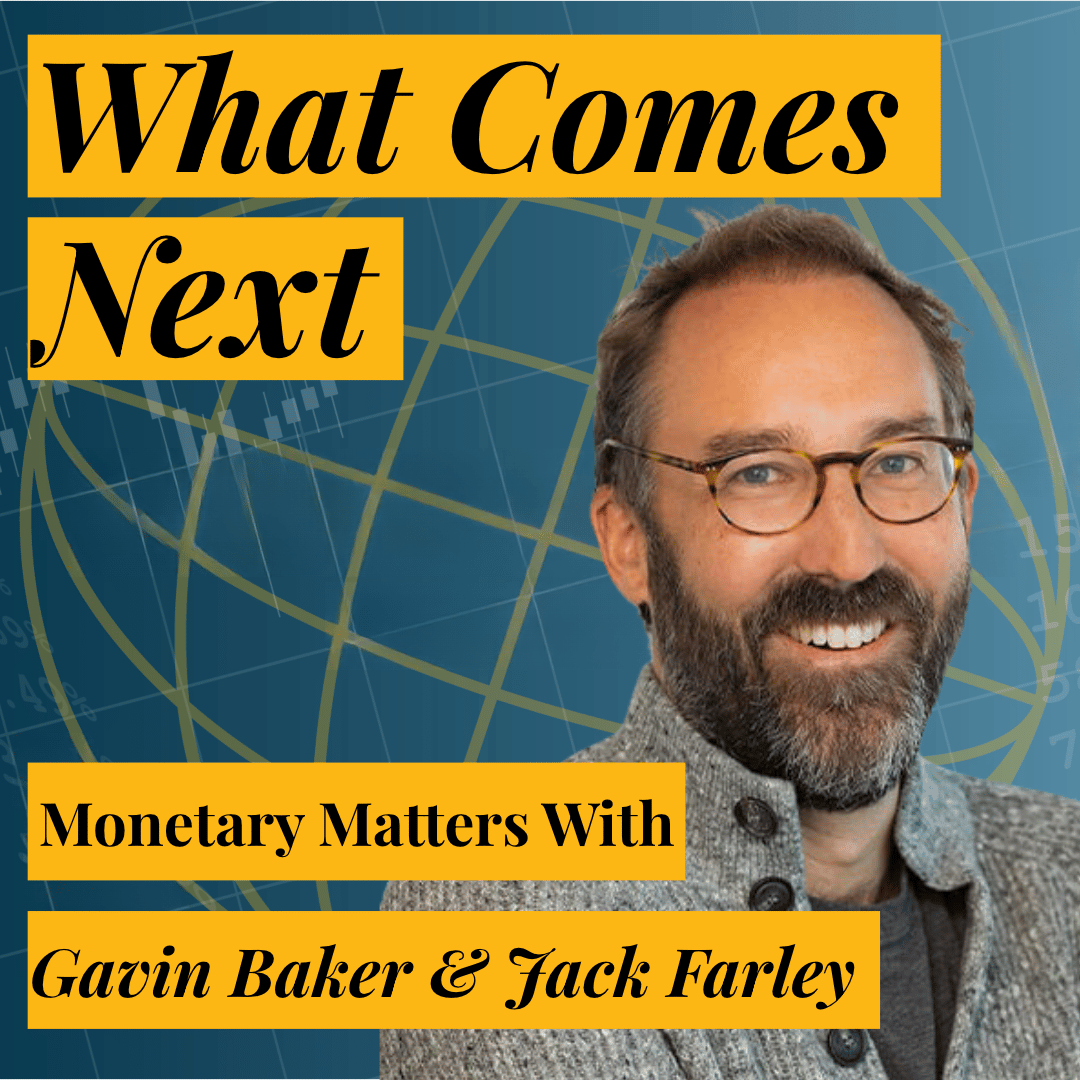
AI and semiconductor investing outlook after NVIDIA’s earnings, including the “AI capex cycle” length, why semi-stocks fell, and key bear cases for frontier models.
Gavin Baker, leading tech/semiconductor investor at Atreides (recorded Nov 18 at the TomorrowX Summit).
the market’s Jensen Wang CEO probability is far too low; shareholders likely want Jensen back; semis are down because ROI math ignores open-weight models’ compute demand and on-prem GPU deployments (e.g., Michael Dell’s 6,500-customer GPU server/rack/cluster use). The AI buildout may resemble a long-duration “railroads” style cycle; second-derivative peak suggests stabilization as guidance improves (NVIDIA raised guidance from 70% to 75%).
Claude Sonnet/Haiku vs Opus; OpenAI scientific discoveries; Anthropic going public; GPU rental prices rising.
Written by AI. May contain mistakes.
Gavin Baker discusses NVIDIA's leadership situation and the semiconductor market.
“We are here with Gavin Baker of Atreides.”
Discussion on capital expenditure in semiconductors and the AI market's future.
“Gavin, beyond just NVIDIA, why are semi-stocks down so much over the past two months?”
Exploration of bear cases for AI and emerging positive trends in the sector.
“Just because I think it's going to be a long duration build out.”

Get the gist, explore an idea or ask about something said.
 Claude
On Monetary Matters with Jack Farley, what are the key points of this episode?
Searching your listeningAutomatic transcript. May contain errors.
0:00This very important conversation with leading tech and semiconductor investor Gavin Baker of Atreides was recorded on November 18th at the TomorrowX Summit after NVIDIA's earnings, but before NVIDIA's board reinstated Jensen Wang as CEO. So when you hear us talk about Jensen's being out, that was the situation at the time. We recorded other great conversations at TomorrowX, so stay tuned for that in the coming days. Here's Gavin. This episode is brought to you by Sarmaya Partners, who manages the Return to Tangibles ETF, LENS, ticker L-E-N-S, the Sarmaya Thematics ETF, built for a return to tangibles.
0:33Learn more at SarmayaETF.com and see the show notes for disclosures. Let's get into it. We are here with Gavin Baker of Atreides. We are at the TomorrowX Summit talking everything in telecom and semiconductors and AI. Gavin, this is an incredible event. You must be exhausted. I've got a lot of energy. Yeah. I got a lot of energy and I am happy that people seem happy. People are getting value out of the conference. The companies are happy. The investors are happy. FinEx seems happy. Media seems happy. I'm glad that the conference is creating value for people. And then I am optimistic. You know, we're asking every CEO these three questions about what AI is doing to make the lives of ordinary Americans better.
1:22And I think we're going to be able to stitch together a pretty neat YouTube video that we can put up. And then if some of them are good enough, we'll run a Super Bowl ad. Just, you know, this is the truth about AI. Gavin, looking at kind of the market implied odds of whether Jensen, the next CEO of NVIDIA, who it will be. The market is signing roughly a 10 % probability that Jensen is going to be the next CEO, not the interim CEO who's the former CFO. How are you thinking about those contracts? We don't trade on the prediction markets. But I think the odds that Jensen comes back as CEO are dramatically higher than 10%.
2:05At the end of the day, Jensen's going to testify before Congress. I believe he is going to be exonerated. There are no charges. Jensen has not been charged with anything. There's just a lot of innuendo. And I do not believe that Jensen was violating the export ban. I do not believe he is turning a blind eye. I don't believe he was knowingly endangering American national security. I think everything he was advocating for is pro-national security. So I'm optimistic that has the facts come out that maybe those odds will start to rise. I think that if the shareholders want Jensen back as CEO, he's eventually going to be back as CEO.
2:50And do you think the large passive holders, the Black Rocks of the world, is their vote on the fence? Look, we have seen large passive holders vote for Elon's pay package. These passive holders, they do look to the best interests of their shareholders. shareholders. And I would just observe NVIDIA was up 4 % going into the earnings call after a very strong quarter. And after the board chair, the new board chair, Harvey Jones, said Jensen would not be reinstated as CEO, well, NVIDIA is down today after a very strong quarter. And I do think at some level that is shareholders voting with their feet.
3:35and I do think we can just look at where NVIDIA stock was before Jensen resigned and where it is now. Harvey Jones on the NVIDIA call said that the board had unanimously accepted Jensen's resignation. It took, I don't know if it was two hours, but for there to be a story in semaphore that there was a faction of NVIDIA's board of directors who wanted Jensen back. So I think that is a positive sign, as is the fact that I have yet to speak to a single shareholder, employee, or partner who does not want Jensen back. Very interesting. Gavin, beyond just NVIDIA, why are semi-stocks down so much over the past two months?
4:24What do you think is going on? You know, I think a few things. I think a lot of people are looking at, they're saying, okay, we're going to spend round numbers, you know, a trillion and a half dollars on CapEx. The way they're thinking about the ROI on that CapEx is they're adding up the ARRs of Anthropic and OpenAI and say, okay, maybe that sums to 120 billion. And then let's give Muse, GrokBot, Gemini another 30 billion. and let's add in some incremental advertising revenue. And you're not getting to a very good return on that spend. And I think that this calculation is missing something very important.
5:07One, it is all of the extremely high-growth private companies. There are a lot of companies that are tracking to Anthropics' growth rate while burning less cash that are fueled by open source. and open source drags more compute and CapEx with it. And people are clearly getting a return on those open weight tokens. Otherwise, their share of token spend has grown significantly. And I think it's also missing that the most interesting thing in a lot of ways at this conference was you're talking to Michael Dell about the fact that they have 6 ,500 customers putting GPU servers, GPU racks, GPU clusters in, and running open-weight models on-premise.
5:56And that doesn't appear anywhere in that calculation, but customers are definitely getting a return on that spend.
6:04So I think that kind of started it. I think the market is very focused on second derivatives. And the second derivative probably of CapEx growth And year over year growth has peaked. And if you look at semiconductor cycles for the last 20, 30 years, generally once the second derivative peaks, it's a typical semi-cycle, the growth doesn't go like this, then like that, where you keep growing, you get a high rate, but you have all these different bands to get into different events. often once things, you know, sort out a little, you get double ordering, inventory, et cetera, et cetera. And I do think that the build out for AI may end up being more like the railroads than any other technology analog that I think is, you know, comes to mind over the last 50 or 60 years.
7:00And that was a big chunk of American GDP for 60 years. And I think this could be very similar. And I think as the market gets confidence in a variety of proof points that, hey, NVIDIA last night told us that they raised their guidance from 70 % to 75%, I think that's a good indicator for 27%. So as the market gets more confidence in 27%, gets more confidence that we can grow again in 28%, I think a lot of these stocks can stabilize and maybe start to work. Evaluations are certainly really, really attractive right now. Its sentiment is there is a lot of bearish triumphalism on X. There is a lot of, yeah, even the bulls are bearish.
7:47Yeah. Some of the bulls. Yeah, I'm not bearish. So the second derivative often during semiconductor cycles, that is the time when it falls sharply. You said the second derivative has peaked. So it sounds like you think this time is different. Why is this time different? Just because I think it's going to be a long duration build out. Yeah. It's not, this isn't a, I don't, I think this is going to be a semiconductor cycle much longer than ones in recent memory. And the old adage for semiconductors and cyclical industries is you want to buy when PEs are low and earnings are low. excuse me, buy when PEs are high and when earnings are low, and trim or be cautious when PEs are actually low and earnings are very high, because that's off at the peak.
8:36So do you find that that generally was true of semiconductors, and do you think that's different now? One of the reasons semis were historically so tricky was that you got peak multiples on peak earnings and trough multiples on trough earnings, and so that made them way more volatile than other cyclicals. We're certainly not getting a peak multiple right now. I mean, I believe it's the most extreme example. There's a Japanese NAND memory producer that trades at a forward multiple of less than two. So one way to say that is the market's extremely cautious. The other way to say that is the market thinks that the sell side estimates for the next months or 24 months are way too high 100 and we'll see yeah do you think do you think they're wrong i mean i haven't i i i will admit this is kioshi yeah yeah yeah okay so my question is are they wrong not about kioshi but the general semi-stack i think it's hard nvidia raised earnings guidance last night yeah that's the biggest semiconductor company they raised their earnings guidance i think a lot of people were worried about that it were well i know a lot of people were worried Nvidia my cut numbers they raise numbers now because I I from my perspective because the board chair said that Jitson's definitely not going to be reinstated stock is down instead of up on great numbers that's the market voting with its feet about who they want to CEO but undoubtedly they were very very strong results I'm curious your view on the custom a6 you know the broad comms of the world Al Chips, their challenge to NVIDIA's large dominant share in advanced chips.
10:21What was your view before Jensen left and what is your view right now? He was the one pushing NVIDIA as a company. He was the one pushing the frontiers of technology. Jensen was the one with really unparalleled supply chain relationships which were an enormous advantage to Nvidia. So Jensen leaving as CEO, our Jensen, the board deciding not to reinstate him, is a godsend for all of Nvidia's competitors and a disaster for Nvidia's shareholders. Do you think that the Asian suppliers with whom Jensen had these very close relationships and was able to secure these terms, do you think that those contracts that you're, you informal agreements are at risk and actually that that could help the pricing power for these Asian suppliers.
11:13I think NVIDIA was uniquely advantaged by Jensen's relationships with suppliers that he had built over 30 years. What are the bear cases that you were taking the most seriously and what are the ones that you think are just BS? The biggest bear case is the ultimate unknowable bear case is we do not know what the returns to superintelligence are. If we get to a place where a model today that is at the frontier can probably fit on your phone in three or four years, as we get better and better at making these models smaller and smaller and distilling them, it would be interesting. We should look. You should throw this up.
11:55Look at Claude Sonnet or Haiku today relative to Opus a year ago. And if we get to a point where there are not increasing returns to intelligence, you know, I think that would be a problem. And I do think on that front, it is an exciting proof point that these models solved Navier Stokes, made those very important scientific discoveries that OpenAI announced. I think Anthropica is announced now. So these models are making new scientific discoveries. But listen, I think as long as this intelligence is getting more economically useful and token elasticity, demand elasticity for tokens is positive, I think those are the two most important things to watch for AI fundamentals.
12:47And then where that filters through to the market is GPU rental prices. and those are going straight up. They're up dramatically over the last month, three months, year. And I think that is reflection that has AI becomes more economically useful, compute becomes more valuable. And in some ways, you know, okay, we have all these constraints, financing constraints. Well, the cure for a lot of that is higher GPU rental prices that improve the ROI. Ikeanthropic going public is going to be important for the AI trade. Well, Gavin, it's been a pleasure. What do you think, what are you excited about a positive thing in AI in 70s that you think folks right now are not paying attention to, but they should?
13:29Listen, there are a lot of stocks that are very dislocated valuation-wise, outside of memory. And these companies are not commodity companies. They're growing at high rates. They have a lot of IP. They have real barriers to entry. They're less sensitive to units because they're taking dramatic share. share. And so I think companies that are taking a lot of share and are going to take share for the next several years and are at pretty low multiples, I think that's an interesting place to look, whether that's in semis or other parts of the AI ecosystem. Gavin, thanks so much. Thank you. Hey everyone, I've got a quick question for you.
14:07How much of your portfolio actually depends on the physical world? If you own the S &P 500, more than a third is tech. Energy, materials, and precious metals, about 5%. Sarmaya Partners believes the next cycle belongs to tangibles. The energy and metals sectors have been underinvested and underloved for a decade. They call it a return to tangibles, and LENS, ticker L-E-N-S, the Sarmaya ETF, is an actively managed ETF that they manage to express this view. And active is the point. The team follows the theme across sectors, market caps, and borders as the cycle evolves, adding where they see opportunity and trimming themes that look overextended.
14:46Miners, energy, precious metals, critical metals, all in one actively managed ticker, Lens. When inflation runs, stocks and bonds can fall together. Lens adds real asset exposure with the potential to diversify both the stock side and the bond side against inflation and geopolitical risk. Learn more about the Lens ETF and their full data and comparison, including performance at SermayaETF.com. Investing involves risk, including possible loss of principle. The fund's investment objectives, risk, charges, and expenses must be considered carefully before investing. This and other important information is contained in the prospectus, which may be obtained at SermayaETF.com.
15:21Please read the prospectus carefully before investing.
This episode is brought to you by Sarmaya Partners. Learn more about Sarmaya’s LENS ETF, their full data and comparison, including performance here:
https://sarmayaetf.com/
Recorded on November 18 at the TomorrowX Summit, after Nvidia's earnings but before Nvidia's board reinstated Jensen Huang as CEO, Gavin Baker of Atreides Management joins Jack Farley to discuss Jensen, Nvidia, and the state of the AI trade. Gavin explains why semiconductor stocks sold off, and why he believes the market's AI return-on-investment math misses both fast-growing private companies and the open-weight models enterprises are running on-premise. He makes the case that the AI build-out may look more like the railroads than a typical semiconductor cycle, and discusses valuations at a moment when, as Jack puts it, even the bulls are bearish. Jack and Gavin also cover what Jensen's departure meant for Nvidia's competitors and suppliers, the AI bear case Gavin takes most seriously, and why GPU rental prices are a key signal to watch. Recorded November 18, 2026.
Gavin Baker on X https://x.com/GavinSBaker
TomorrowX Summit on X https://x.com/TomorrowXSummit
Jack Farley on X https://x.com/JackFarley96
Follow Monetary Matters on:
Apple Podcasts https://rb.gy/s5qfyh
Spotify https://rb.gy/x56dx5
YouTube https://rb.gy/dpwxez
Important Information
The Fund’s investment objectives, risks, charges and expenses must be considered carefully before investing. This and other important information are contained in the prospectus, which may be obtained by following the links Prospectus and Summary Prospectus or by calling +1.215.330.4476. Please read the prospectus carefully before
investing.
There is no assurance that the fund will achieve its investment objective. The Fund may not be suitable for all investors. Investors should continue to review their investment objectives and risk tolerance periodically.
An investment in the Fund involves risk, including possible loss of principal. Exchange traded funds (ETFs) trade like stocks, are subject to investment risk, fluctuate in market value and may trade at prices above or below the ETF’s net asset value (NAV), and are not individually redeemable directly with the ETF. Brokerage commissions and ETF expenses will reduce returns. ETFs are subject to specific risks, depending on the nature of the underlying strategy of the Fund, which should be considered carefully when making investment decisions. For a complete description of the Fund’s principal investment risks, please refer to the prospectus at https://sarmayaetf.com/
Metals and Mining Companies Risk. Metals and mining companies can be significantly affected by events relating to international political and economic developments, energy conservation, the success of exploration projects, commodity prices, tax and other government regulations. Investments in metals and mining companies may be speculative and may be subject to greater price volatility than investments in other types of companies.
Management Risk. The Fund is actively managed and may not meet its investment objective based on the Adviser’s, Sub-Adviser’s, or portfolio manager’s success or failure to implement investment strategies for the Fund.
Shares of the Fund Are Not FDIC Insured, May Lose Value, and Have No Bank Guarantee.
The Fund is distributed by PINE Distributors LLC. The Fund’s investment adviser is Empowered Funds, LLC, which is doing business as ETF Architect. Sarmaya Partners LLC serves as the Sub-Advisor to the Fund. PINE Distributors LLC is not affiliated with ETF Architect or Sarmaya Partners LLC.