
In short
Naked Astronomy Podcast Episode Notes
Episode Title
Apollo 1, Frank De Winne, and Moon Museum
Episode Overview This episode of Naked Astronomy serves as a bumper end-of-year edition featuring notable discussions with astronaut Frank De Winne, the director of the Apollo 1 movie, and insights from a Moon museum in Pittsburgh. The episode also touches on various topics including space exploration, historical space missions, and cultural influences in space media.
---
Key Segments
- Interview with Frank De Winne
- Background:
- Frank De Winne is the first European Commander of the International Space Station (ISS) and a veteran of two ISS missions.
- He has contributed to ESA's ISS program and is involved in future space exploration initiatives.
- Key Insights from De Winne:
- His initial impressions of the ISS vs. training environments were starkly different, particularly due to the complexity and clutter of the actual space station.
- Discussed the evolution of the ISS from his first short mission in 2002 to a long-duration mission in 2009, highlighting the expansion of the station and the growing international collaboration among astronauts.
- Emphasized the importance of emotional well-being and interpersonal dynamics during long-duration missions, noting how a larger crew provides more social interaction.
- Reflected on the achievements of the ISS, particularly its role in fostering international cooperation in space exploration despite current geopolitical tensions.
- Future of Space Exploration:
- De Winne discussed plans for ESA’s Terra Nova project, emphasizing the need for Europe to develop independent capabilities while maintaining international collaborations.
- Expressed optimism about the future of human spaceflight and the potential for a thriving low-Earth orbit economy driven by commercial interests.
---
- Apollo 1 Movie Discussion
- Overview:
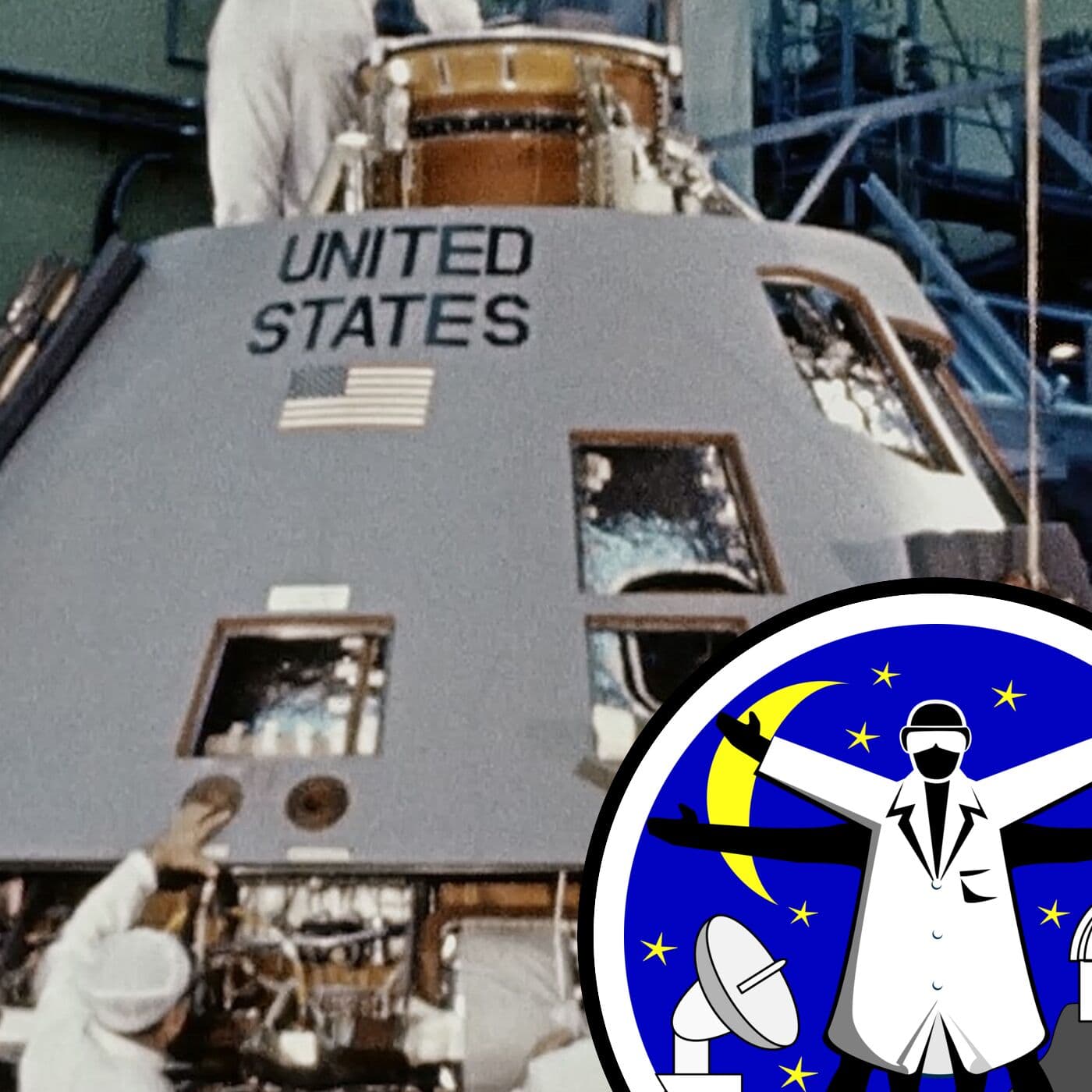
- The conversation transitions to a new film about the Apollo 1 disaster, directed by Mark Craig.
- Film Focus:
- The movie explores the human story and the lives of the astronauts who tragically lost their lives during a routine test due to a cabin fire.
- Mark Craig discusses his motivation for presenting a fresh perspective, focusing on personal stories and the broader implications of the disaster.
- Historical Context:
- The film aims to illuminate the high-stakes environment of the Apollo program, emphasizing the challenges and pressures faced by astronauts and NASA.
- Craig reflects on the inevitability of tragedy within the intense pace of the Apollo missions, emphasizing lessons learned that are relevant to today's space initiatives.
---
- Visit to the Moon Museum in Pittsburgh
- Overview:
- The episode features an exploration of a Moon museum located adjacent to a lunar lander construction site in Pittsburgh, aimed at educating the public about space exploration.
- Museum Highlights:
- Offers interactive exhibits that engage youth in the science and engineering of space missions, promoting awareness of careers in aerospace.
- The executive director discusses the museum’s mission to spark curiosity and make the aerospace industry accessible to all.
---
- Cultural Conversations
- Wes Anderson Chat:
- A discussion about the influence of Wes Anderson's films on space culture, highlighting his unique aesthetic and storytelling style.
- Community Engagement:
- The episode closes with an emphasis on community involvement in space education, encouraging listeners to connect through postcards and social media.
---
Key Takeaways
- The ISS represents a significant achievement in international cooperation, showcasing what humanity can achieve through collaboration in space.
- The Apollo 1 disaster serves as a poignant reminder of the risks involved in space exploration, and understanding these stories can foster appreciation for current and future missions.
- Engagement in space-related education is crucial to inspire the next generation of engineers, scientists, and astronauts, making initiatives like the Moon Museum pivotal in this effort.
- Cultural narratives in films and exhibitions can influence public perception and interest in space exploration.
---
Closing Remarks
- The episode wraps up with a promise to return in 2026, highlighting the ongoing journey of exploration and science in space.
Contact Information
- Listeners are encouraged to reach out via social media and mail for competitions and discussions, reinforcing community engagement.
---
This structured format provides a comprehensive overview of the podcast episode's discussions, key insights, and takeaways, suitable for readers seeking to understand the themes and narratives presented.
Written by AI. May contain mistakes. Listen to the episode to check what was said.
Transcript
Automatic transcript. May contain errors.0:00Attention all personnel, please clear the launching area. fire fire oh baby i'll give it to you that looks really good yes it does it sit on okay keep the chatter down in this room are you ready to begin yes i'm all set yeah hello welcome to space boffins we're in partnership with the naked scientists and i'm richard hollingham and i am c nelson and we've decided to make one big episode and just throw basically everything we've got at it for the end of 2025 basically isn't it rich so we'll speak in a moment to a distinguished astronaut we'll visit a space museum in pittsburgh and a new exhibition celebrating the mercury 13 in london plus we also discuss a new film on the apollo 1 disaster with its director mark craig they were doing something for the first time that had never been done before and they were trying to reach some impossible goal and they were trying to do it in a hurry previously on space boffins we made a rash promise anyone under 25 they will always have been a human in space that's amazing isn't it who should we interview for that just find an astronaut any astronauts we'll see what we can do you've been on the iss well you'd be pleased to hear that we have found an astronaut.
1:31Down the back of the sofa. Yeah, you always just find one there. We have found an astronaut to talk about that 25th anniversary of the continuous occupation of the ISS. And it's not just any astronaut. No, it's Belgium, European Space Agency astronaut, Frank de Wynne. He's a veteran of the ISS. He's flown to the space station twice, first for a short-duration mission in its early days in 2002, and then for a long-duration mission in 2009, when he became the station's first European commander. Frank has since led ESA's ISS programme and now heads up the agency's plans for future space exploration, called Terra Nova.
2:16We asked him what his first impression of the station was when he first visited some 23 years ago. The first impression of the ISS was that it was completely different to what I trained on on the ground. Because, of course, on the ground, all the modules, okay, they are representative from the overall layout. But, of course, then on the space station, you have so much computers, so much scientific experiments, so much cameras stowed all over the place, stowages, well, goods that you use, experiments, spare parts, that it looks completely different from this clean module that you have when you're training.
2:56And how many people were there when you were first there on the station? When I was first there, we were a crew of three that flew to the space station, and a crew of three was there, so we were permanently with six people, because it was still a Soyuz rotation flight, as we said. We flew up with one Soyuz and came down with the other Soyuz. So pretty crowded at that point? It was pretty crowded because the space station was very small, of course, at that moment. We just had the U.S. lab. We had the airlock and then two modules from the Russian segment. That was basically it. It's not like the space station is there now with all the nodes, with the JEM module, with the Columbus module, with all our scientific modules that we have on board.
3:40Now, those seven years before your next mission, and that went from 11 days with your first one to six months, had the space station grown at all? Was it different or was it still sort of pretty much how you remembered it? No, the station was completely different by the time I arrived. The Node 2 was attached to the front of the US lab. and then we had if you look forward in the flight direction on the left side you had the Japanese module, the JEM with also their storage module on top, the JPL on the right side you had the Columbus module, of course our European module where I spent most of my time during European science and technology development so yeah it was completely different And what was the dynamic like then because you've got these long duration missions and many people living together for prolonged periods yes the dynamic was i think not much different than we had on the first missions even maybe a little bit i would say more flexible because of course on those first missions there only were three crew members and at a certain moment only two so you can imagine if you're only two crew members and these are the only people you can interact with for six months of time.
5:01It's, of course, very stressful after a certain moment. When you have six people, at least you have a little bit more variety with the people that you can talk and discuss about. We also had the Shrupal missions coming to our crew. We had three shuttle visiting crew, and at that moment we were 13 on the space station. So, okay, it was good moments, yes. And did it feel at the time that you were participating in an incredible international collaboration above the Earth? Or were you, as so many astronauts report, just busy focusing on, I've got this to do today, I must get this done? Well, I think it's a little bit of both, of course.
5:45When you wake up in the morning in a space station, it's the first time that you do. You go to the timeline, you say, okay, what is my job today and what do I need to get done? But there are also, of course, moments that you can reflect. The Saturday is kind of half a working day and it's a cleaning day on board of the space station. The Sunday is a little bit more relaxing day where you can discuss with family and friends, but also with your colleagues on orbit. And of course, during those moments, you really think, okay, this is really amazing what we are doing here together. When you wake up in the morning, do you have to double take that maybe you're, we wake up in a different position to the way you went to sleep, but also that you're in this such odd environment.
6:26Was there ever a point where you just got used to that? Yeah, you get used to that, of course. In the beginning, it's clear that it's, first of all, difficult to fall asleep in microgravity, but you have your sleeping bag, so you still wake up about in the same position as that you go to bed. But in the beginning, of course, you wake up and you say, oh, God, what is happening to me? Where am I? But that's maybe the same if you travel on holidays. But of course, after a while, you get used to the environment. And okay, that is what it is. It's your space, it's your living environment, and you get on with your job.
7:01Do you have to get a sense, I don't think I've ever asked this to an astronaut, of what is up and what is down? Do you decide, or is it built into the design, what is up and what is down? What is up and what is down is built into the design of the space station, indeed. For example, all the labels are printed in exactly the same direction, yeah? All the text, you have also all the lights in every module is on what we call the ceiling or the top, and all the outlets, for example, for the power outlets are on the deck. So you see that it's built into the design that you have a natural way that you can orient yourself in the space station.
7:40Now, you've done a number of important tasks, both on your short duration flight and your six month one, including operating the robotic arm to dock Japan's first cargo vehicle. What for you, though, were the highlights? Were they operational or were they more personal? For me, I'm an engineer. I'm an alpha person. So for me, the highlights was the job done and the job well done. Of course, capturing the first HDV vehicle was certainly a highlight. Then also at a certain moment, we had the critical failure, for example, all the oxygen generation system in the US segment. And we had to take it apart and change a filter.
8:26This was not supposed to be done on space. We were not trained for that, but still we had to do it because we had to repair that specific piece of equipment. Otherwise, we would run out of oxygen and have to come back. So fairly important, yes. It was a fairly important task indeed that I did together with my good colleague, Bob Thurst. And of course, if you bring such a difficult repair to a good end and then afterwards the systems are working, then of course you're very happy. Was that when you were commander or was there a challenge when you were commander? It was when I was a commander. But again, this had nothing to do with me being commander or not.
9:05I think on board to the space station, first of all, the commander is not the boss of the operations. The boss of the operations is the flight director that sits on the control center. And they decide, and he or she decides what the tasks for the day are and how do you work your day. But every astronaut is then trained to do whatever he's trained for and is capable of doing. Now, there's a whole generation of people now who have only ever grown up knowing that there have been people living in space on board the space station, which is an amazing thought, really. What for you have been the achievements or the legacy of the space station?
9:51The achievement is, first of all, that we were capable and able to build such an incredible infrastructure and space. I don't know how many assembly flights in total, but I was told more than 100 assembly flights in total were needed to build the space station. Secondly, that we were able to do this with partners from all over the world, Japan, Russia, Canada, Europe, and in Europe, many different countries together. For me, it's still amazing that you can build the Columbus module here in Europe, launch it to space, it docks to the space station, and it works. It's like the biggest plug and play that you can have.
10:33So it's amazing that we are capable of doing that as human beings. So that is certainly one of the legacies, I would say. The other one as well, and that we now unfortunately see wringling in the current world, is the fact that at some point in time, we were able to work together and live in peace together with each other. Luckily, in the space station, we are still able to work together because the space station is there. We still fly with our Russian colleagues to the space station. But unfortunately, the situation on the ground has changed dramatically. That was something I wanted to talk about, actually, in particular in your new role.
11:13Are a lot of these international collaborations falling apart, or will they fall apart once we lose the International Space Station? I've seen just from the ESA ministerial, there's a clear focus on Europe doing a lot of things itself, having its own capabilities in many of these areas that have traditionally been done with partners. Yes, I think the world is changing. The geopolitical situation around us is changing. That's clear. And we need to take stock of that also in our cooperation project in human exploration. Our goal in ESA is still to cooperate. That is very clear. We do not want and we cannot do, by the way, space exploration by ourselves.
11:56And we don't also think that it's a good way to do it by yourself. We still think that cooperation in space is the way to go for exploration, especially. But we need to bring our own capabilities. That is something that we have learned now over the years, is that we want to be a stronger partner. And if you're a stronger, want to be a stronger partner, you need to come something with your own capabilities that you can bring to the table. Leo Cargo Return Service, for example, is a very clear example of what we want to do. Argonaut to the moon is another example. We want to bring our own capability that we can land on the moon and we can bring assets, be it science, be it technology, be it resources to the moon.
12:38And of course, we don't want to do this just for a European lunar program. We want to do this in an international lunar program. But we want to come with our own capabilities that we can bring to the table to be a better partner. With the current economic climate and issues across the world, and there are lots of challenges geopolitically, as we sort of referred to earlier, does it ever concern people like yourself that there is a potential there for what happened with Apollo in that we achieved so much, managed to land on the moon, and then all of a sudden through politics, you know, that was it.
13:20Nobody went back to the lunar surface for, well, we're still waiting for a human being to go back to the lunar surface. Could that happen with space stations as well in terms of when the ISS goes? Is everything going to be secure enough in terms of having somewhere where lots of different nationalities can go to? Or might there be this lack of momentum as with Apollo? It's very difficult to say today. What we can say is that all the partners that we are discussing with all see the importance of continuing in low-Earth orbit. We still need to develop a lot of technologies that can work for an extended period of time in space.
14:02And these technologies, it's very difficult to test them on Earth, if not impossible. And you're certainly not going to test them on your first spacecraft that's going to fly to Mars. So you need an environment in which you can test those technologies, and that is for sure low Earth orbit. And you also need to do science. There is a lot of science that you cannot do here on Earth because here on Earth we have gravity. Whatever we do, there is always gravity. You cannot take gravity out of the equation. The only place to do that is in space. And so therefore, research in microgravity will remain the driving factor for our scientific community.
14:40And the third component is that we see now as well, there is a lot of commercial interest that comes to say, okay, can we do things in space that I cannot do here on Earth, but that brings my company, my business benefits here on Earth. And so we see also a lot of private investment that is slowly getting there. It's not a full market, but we think that there will be a Leo economy. Will it be in five years, in 10 years, in 15 years? it's difficult to predict from my side i'm not a businessman i'm an astronaut a program manager but this will come this will come and so might there be a gap after the international space station maybe maybe not we aim not to have a gap will it be a gap of 50 years certainly not that will certainly not happen do you miss it i mean would you like to go back if someone said right we're going to put you on that well you could choose couldn't you you could assign Could you sign yourself a mission?
15:36Is there something you miss about being in space, about that sort of extraordinary freedom, particularly, you know, of just being able to move around however you want and seeing the Earth below? Well, yes, there is a number of things that you miss. Of course, like you say, it's a fantastic outpost. When you look outside the window and you see this beautiful planet below, it's, of course, something that you miss. The freedom of floating around or always be in the state of free-floating is very nice. You can experience it a little bit in a bath or in a swimming pool, but being in a permanent state like that is something that you miss.
16:10But also the sense of accomplishment. Again, in the space station, you are an astronaut, you get a task, you have 10 things to do during the day. At the end of the day, you have accomplished 10 things. You know what you have accomplished. You have done science. As a program manager, it's a little bit more difficult at the end of the day sometimes to say, okay, what do I have achieved today? You need to have a lot of discussions with the member states, with the industry, how to move forward, what the next projects are, and those discussions are not always easy. And so, yes, the sense of accomplishment is also something that you miss.
16:45But I could certainly not assign myself because in ESA, it's the Director General who assigns astronauts to their missions. ESA astronaut Frank Devin, proving that space muffins deliver on their promises. Should that be your logo? Delivering on our promises. Well, I mean, it's not a very reliable logo, is it? No. Because we often don't. That's like saying, and we'll put this on Facebook. Yeah, that's right. Maybe not. I mean, we will eventually. Yeah. I think it's fair to say we will eventually deliver on our promises. Yes, on certain things. And then other things, the things that matter. Yeah, that's right.
17:21Exactly. As we're on the subject of how wonderful we are. Or not. It's also an opportunity to say how wonderful you. As in me. The listener. oh okay oh is it's more than one we know we know it's a hell of a lot more so i guess i think everyone has got in touch uh particularly mark he suggested we do something on the team restoring an apollo flight computer and it is cool there's a youtube video on it um so i'm going to follow that up and uh nick he bought the andy saunders book about mercury and gemini on our recommendations great stuff I hope he's not disappointed you can't possibly be disappointed by that he also recommends and I do want to watch this the BBC series Once Upon a Time in Space which is all about the early space shuttle missions yeah it's meant to be very good and if you liked that can I also suggest our BBC World Service documentary which I made a few years ago called The Equal Rights Stuff which is presented by the excellent Nicole Stott.
18:23And that's a radio. That's a radio program. So you can get that on. Everywhere. It's still there. Some app. It has some great music in it as well. Oh yeah. And a nice bit of Star Trek. That's true. Oh well, can't be bad then, can it? If it's got Star Trek in it. Well we're going to talk about a new film now on the Apollo 1 disaster. It tells the story of three astronauts Gus Grisham, Roger Chaffee and Ed White, who unfortunately died during a routine test on the launch pad in January 1967 after a fire broke out in the capsule. Here's an extract from the trailer. Time was passing. We had to meet these goals.
19:04It was pressure, pressure, pressure. It was just a disaster waiting to happen.
19:15Well that's part of the trailer The Apollo 1 Fire has been written about well plenty of times there are articles, books and it's shown in the opening sequence of the Apollo 13 Tom Hanks movie and the recent film Fly Me to the Moon the Scarlett Johansson one which sort of it's a sort of theme throughout that film and this latest documentary though which will be on Channel 4 here in the UK from the 7th of December goes much further than the technicalities of the disaster. It's a human story, told for much of it from the perspective of the families of the astronauts, including Martha Chaffee, Rogers' widow.
19:52We learn about the lives of the astronauts as well as the, well, inevitability of the disaster. I saw a preview of the film a few weeks ago and spoke to the director and one of the co-producers, Mark Craig. He directed also the Gene Cernan film Last Man on the Moon and has spent almost a decade working on this latest project. He explained where the inspiration for the film first came from. I mean, I can answer that in two words. Martha Chaffee. I was interviewing Martha for the Last Man on the Moon documentary and we touched on the subject of Apollo 1 because at the end of the day, she and Roger were next-door neighbours to Jean and Barbara Cernan and, you know, she was part of his story.
20:37and I knew he helped her out quite a lot after Roger died. And I think it was just the way in which she recounted that event and the aftermath, just various little details that really left me and our cameraman quite emotionally affected. I thought, wow, I've just learnt a lot of personal details that I was unaware of before. Now, a lot of those details didn't really have a place in a movie about Gene Cernan, but they stuck with me. And I stayed in contact with Martha and we exchanged emails and I saw her at one of the screenings. And I just began to consider the possibility that there might be a new and fresh look at what is, after all, a very familiar subject, Apollo 1.
21:30But as you probably gathered from my previous films, I'm really always interested in the human story behind a historical event. I just wanted to try and unearth a new insight into those three men, you know, that we didn't know before. because it is really a family drama these films that their strength i mean both last man on the moon and and this and the eileen collins uh film which has you know overlap of executive producers on it it doesn't matter if you're interested in space or not they work as a powerful story and i just thought we could maybe talk about those astronauts because they were you know certainly Gus Grissom, Ed White were already, you know, American heroes when they died.
22:16Roger Chaffee, this was going to be his first flight. I mean, these would have been one of the crews that went to the moon. Yeah. I mean, there's no doubt in my mind that had they lived, you know, two or more of those three men could well have journeyed to the moon. Ed White, if you look at the natural rotation of missions. You know, he was in line for a command down the line. And going into this project, I, you know, I'm very aware that, as you yourself just said, you know, it's ultimately all about that event and the legacy of it in a way. But I was very keen to celebrate what they achieved in their lives, not just focused on the terrible manner in which they died.
23:05I was aware they were all sort of A-list astronauts, if you can call them that. So let's spend a bit of time seeing what Gus Grissom did before Apollo 1. Let's enjoy Ed White's, you know, spacewalk and other things that he did, which I didn't know before. And the same with Roger, you know, I mean, Roger, before he got selected, was quite a, you know, an achiever in the U.S. Navy as a flyer. And I think certainly from the course of the research that I did, Gus Grissom was certainly very complimentary about Roger as being just a really smart guy. And I think they were a great crew. To some extent, your film is a film about the Mercury and the Gemini program, you know, and celebrating, you know, Ed White as the first American spacewalk of Gus Grissom's incredible space career prior to Apollo 1.
24:04Well, I do touch on those missions, but at the same time, I wanted to show that none of them were straightforward. Gus Grissom had problems. Ed White had some problems. They were doing something for the first time that had never been done before. And they were trying to reach some impossible goal, you know, almost. And they were trying to do it in a hurry. And what I was trying to do by covering that aspect of their astronaut careers was to highlight that fact that nothing is a given. And also the ever expanding infrastructure of NASA, which was spread all over the country, was quite an unwieldy entity, you know, to try and bring together and coordinate.
24:52and you've got components being made on one coast and other components being made on the other coast and the manned spacecraft centre, as it was called in those days in Houston. And as Chris Craft in his interview in the film sums it up, it gets complicated. And I tried to convey that in the film. Because you look back at any Mercury, almost any Mercury mission, certainly every Gemini mission, they could have ended in tragedy. Was there an inevitability that there would be a tragedy at some point, just given the pace of the program? And as you say, and as the film makes clear, all this vastly complicated network trying to do something that's nearly impossible, given the technology of the time?
25:37There's technology and also, I think, a certain amount of mindset. You're talking about a group of people, obviously, all men in those days. They'd come from military backgrounds. They were people for whom World War II was a fresh memory in that time of the late 50s, early 60s. And I think military pilots and test pilots are used to losing colleagues. As I think Rusty Schweickart, one of our interviewees, said, you know, he goes, of course there's going to be problems. So I don't think anybody was kidding themselves that there weren't going to be some accidents along the way. but I do think that the manner in which the Apollo 1 incident happened did catch everybody by surprise because they'd been doing a whole bunch of procedures for some years at that point and hadn't had a problem but that was probably you know more to do with with a little bit of luck you know and then that luck finally ran out.
26:42I mean there is a sense whenever you tell the Apollo 1 story of foreboding and foreshadowing isn't there because you look at all the faults with that spacecraft all the problems with that spacecraft and the problems with the door and the fact they're in this oxygen-rich atmosphere it's sort of shocking that that was allowed to happen does it still shock you that this tragedy happened on the launch pad in in the way it did that they died in a fire in a matter of matter of seconds yeah because i think in addition to family members who let's be honest you know they were the emotional ingredient of this film you know to recount personal details about those three men but i also spoke to a flight director an astronaut and three engineers of different types one of whom actually worked on the interior of the Apollo 1 Block 1 command module.
27:44And through his descriptions and reliving of that time, I really did, I could almost shut my eyes and visualize the interior of that command module and see that there were too many problems, that there was too much uninsulated wiring, that there was too much velcro that they hadn't quite worked out the stowage of everything then they were still using paper checklists which were that thick you know the seat covers were flammable all this kind of stuff and of course you know in hindsight we can see it's an accident waiting to happen but part of the problem was the fact that everything had gone pretty well up until that point america was on this great quest for the moon and you know we were heading in the right direction they were just riding this wave of positivity and optimism and and all that kind of stuff and i think nasa by the end of 66 probably thought oh you know couldn't do any wrong that's precisely when something can come along and surprise you but but yeah certainly i and and here's the thing this is just my personal take on it you know us guys are very good sometimes about compartmentalizing things.
29:02You know, we're good at focusing on one task and hopefully doing it quite well. And I think in a predominantly male workforce, all those very smart and talented, capable guys were doing their job. The problem was nobody was really looking at the big picture properly and thinking, oh, okay, well, if you take oxygen and you put it in an environment with lots of flammables and you put lots of improperly insulated wiring in there and then you shut a hatch which can't be opened in a hurry, you know, and I think that was, I think, part of the problem. You know, a lot of people doing their bit well and saying, you know, but the bigger picture was not so good.
29:52And I think that's ultimately why a lot of the NASA and the subcontractor management got fired in the aftermath. I mean, it strikes me, and it's a fantastic film. I mean, I absolutely loved it, because you go into it thinking, well, how are they going to tell this story when the actual event only took a few minutes? But it does strike me, it strikes me that it's 60 years ago, almost 60 years ago, this happened. But the ripples are still being felt, and the story is just as relevant today when we're returning to the moon? Well, I think it's exactly that, you know, the fact that the Artemis program is sending humans to the moon again in the near future.
30:36And that raises the stakes. We're doing it with new technology, with a workforce that wasn't around in the Apollo era. And, you know, maybe there's a little hint of a new space race as well. We don't know what the Chinese are up to and you know America I know wants to get back there before anybody else and certainly put the first woman on the moon which is would be great you know I look forward to that day immensely so it's very relevant to human spaceflight today and you know it's a big old rocket and there's however million components in it and they've all got to work pretty well to get the mission done, you know, and that's what's fascinating and somewhat breathtaking.
Read the full transcript
31:29Mark Craig, director of Apollo 1, which is a de Havilland Digital 71 films and stopwatch production. De Havilland, they're good, aren't they? Yeah, they are good. Because they were obviously with the recent Spacewoman film, Eileen Collins, who was on the podcast very recently. Very recently, was it last time? Probably. If you're in the UK, you can see the TV version of the film. It's just slightly abridged. That's on Channel 4 from the 7th of December. I imagine it'll be on the More 4 catch-up service as well. I've actually done a screenshot of that. That's the only way I can remember things, is to send myself emails and screenshot things.
32:07And I saw an ad for that film. And I thought, oh, yeah, I know you've seen it. Unfortunately, I haven't. But that was it. I thought, yes, I've got to see that. So, yeah, it's in the US. it's been shown at film festivals. In Germany, it'll be at festivals around Cologne because one of the producers is from Cologne. Oh, and that's very luckily coinciding with an awful lot of ESA staff personnel and astronauts in the training centre. Where Frank Devin's based, actually, where we spoke to him from. And they're hoping to get it distributed more widely, particularly in the US in 2026. So they have a distributor, so they're just going to get it out there a little bit more.
32:48As Sue said, I was at the premiere in London at Channel 4 headquarters. They're a lovely little cinema there, actually, because I guess they used to have film four, didn't they? Well, I still have film four, but they used to make a load of films. So they have a probably proper little preview cinema. It was beautifully shown. Gerry Griffin was there, the Hollow Flight director. Oh, we like him, yes. He is lovely. I think we last saw him in the Moonwalker exhibition, which is coming back. It is coming back. Apparently, yeah. In central London. Yeah. Yeah, it's a film about people. It's got home movies in it from the families and a lot about the astronauts.
33:25And a few laughs in it as well. I think what was particularly funny, Gus Grissom was not a fan of the press, of the media. And so when he had his house built, he had it built back to front so there were no windows at the front so the media could not bother his family. Oh, you can understand why. Particularly at that time, you were in a fishbowl weren't you? But that was what was expected from them as well. So I mean they're very interesting. It's a fascinating film. It's a great film. I mean it's a terrible disaster. You know there's going to be a disaster but actually the film is much more than that.
34:00That's like the Apollo 13 which I know is not a documentary but you treat it as such because you love it so much. That's the same isn't it? You know the outcome but it's still a thrilling watch. Yeah and then look out for the Richard Hollingham credit in the credits. How exciting. I was so excited when it was. I know. I wasn't expecting that. I know. You were bouncing around like a kangaroo when you came there. My contribution was a morning in the office here, getting the old 16mm projector out and showing some film that Mark had that hadn't been seen since the 1960s. Aren't we lucky that we keep all sorts of stuff like that?
34:37I just happen to be around the house or the office. We do have a lot of, we do have, in fact, looking out of the studio, door there's a sort of rectangular glass window through the studio door so i can see it right ahead of me that's one of the oldest um cinema projectors around isn't it yeah that's from about 1914 i think that's a 35 millimeter maybe a little bit later i love the way it's it's it's in front of pictures of astronauts and um a lovely um one of her digital circle paintings of the international space station how appropriate by the space artist jackie burns who we've had on the program and i ended up buying one of the pictures i just love it so much if you do ever visit uh space muffins hq then there's an awful lot i know yes there is and in fact to the right of that projector is one of those sort of space art um pictures that we found in a junk shop in a charity shop in Phoenix Stone.
35:37But they're quite well known, aren't they? They are actually. They're actually worth more than we paid for them. I love them. I love them. I mean, I have to say, if anyone is listening and thinking about visiting, there's nothing here worth any money. Yeah. Oops. It's just tat. But it's a tat from a lot of many eras. Yeah. Tat. Tat with heart. That could be a logo. Yeah. I think that's more for our lives. This is Space Boffins. End of year special and we're in partnership with The Naked Scientists. Do get in touch with us on Facebook, X. I hate saying X. I'd rather say Twitter. X just sounds X-rated.
36:17Yeah, I know. I don't know. Anyway. Well, it pretty much is, isn't it? Yes. Yeah, that's true. Yeah. Or Instagram or email us via podcast at spaceboffins. I can't even say it. Email us at spaceboffins. No. Email us at podcast at spaceboffins.com. Do you know what? It's far easier just to send us a postcard. Yeah, just send us a postcard. The address is on the Boffin Media website. Yeah. But our email's on the Boffin Media website. And they all come to my inbox anyway. So any combination of space boffins or Boffin Media will probably reach me. Okay. Now, you've been to a premiere without me. At least I have been to a press preview of the Wes Anderson exhibition, which is at the Design Museum in London on my own, without you.
37:06Because Asteroid City is one of my favourite films. Exactly. And there's that space connection. I mean, it is a fabulous... It's tenuous. It's tenuous, but it's fabulous. And I was there and I was happy to be there because I do like Wes Anderson films. And there's little sections devoted to his very early films and his first film, which actually had Luke Owen and his brother whose name has just flown out of my head. But anyway, right from the start, they were involved. And it goes from there through all the ones that, you know, whether it's the dispatch, the French dispatch, I think it's called.
37:45The one with the... Grand Budapest Hotel. Yeah. Oh, well, the Grand Budapest Hotel is one of my favourites. Because they have a model of that, don't they? Yeah. I absolutely love that. and in fact as you know I was just sending pictures everywhere of perfume bottles and if you've seen that film you'll understand why cologne plays a very large part yeah it's absolutely one but my favorite one of my favorite sections was that the Grand Budapest Hotel the most recent one I'm terrible at remembering titles of films I'll have to the one where um the the James Bond woman Leia somebody got a kit off she was dressed as a prison guard and she was naked for a lot of the films see if you haven't seen a Wes Anderson film this might give you a reason to see it but that was very good can you remember what that was called?
38:34oh dear what am I? I don't think I've seen that oh it's brilliant no Asteroid City is the reason I would like to go and then there's a big it's at the end why? you have to talk and the one who's seen it why do you want to tell me? no because on your pictures they have the vending machines yeah I thought that was so cool Are they full-size vending machines? Yeah, yeah. They took up... The vending machine takes up one side of the wall, which is absolutely brilliant. They've also got, like, the model of the alien that appears. They've got the model of the crater that was used for, you know, the asteroid crater of Asteroid City.
39:08They've got all sorts of things there, props from the set. With the train, didn't they? Lots of space stuff, lots of math stuff. Yeah, little bits of trains. It's just a delight. But the whole thing is a delight. And the reason the exhibition is so good is that it gives you an insight into the creative process because they've even got all the notebooks that he has written for each film. And he's sort of immaculate in terms of how he sets out his storyboards and does little drawings and writes little things about it. The detail is incredible. And so you're seeing this and that creativity goes in every aspect.
39:45and he also works with incredibly creative people. So even somebody who'd done the music had sort of transposed some artwork onto part of the original score to give it to him as a present. Delightful is a word that I don't often use, but it is a delight. It's absolutely delightful. So yeah, if you like space, Wes Anderson, you'll want to go. That's the Design Museum in London. Yeah, the Design Museum in London. Brilliant. No, I want to see the real estate vending machine. I guess that made me laugh every time in the film. In our last podcast, we visited Pittsburgh, Astrobotic in Pittsburgh, Pennsylvania, to talk about their ambitions in space and see their latest Lunar Lander Griffin under construction.
40:29The clean room had windows on both sides. The side we were on, the side with mission control. And on the other side, there's a small but perfectly formed moonshot museum, which is aimed at four to 18-year-olds. Well, we met up with the museum's executive director, Dr. Jamees Brown, to find out more about it. And we began by asking her for the pitch, which allowed them to stick a museum onto the Lunar Lander cleanroom. So we are the only museum in the world where you can see a real life Lunar Lander being built in real time. However, when we're talking about making the space industry accessible and helping people find their place in space, that's exactly what we're about.
41:11How can we spark curiosity, open minds, and get them aware and educated on the past of space exploration, what's going on currently, and how they can be a part of the future? This is now one of the top attractions on Google in Pittsburgh. We love it. We are three years young, and so we're just excited to add to many of the resources that are here in Pittsburgh. But we're excited to know that the region and the rest of the world is acknowledging the great work that's being done here, and we just continue to hope to make an impact on the community. Now, it's fair to say this museum is small but perfectly formed, rather like you and me, darling.
41:49We're intimate. Yeah, intimate. So let's take us through what you've actually got because we're surrounded by, we've got lunar landscape on the wall, we've got what looks like a very futuristic living room here with a view of the moon through the window. Where would you like to take us to first? You know, we really focus on all the forms of steam. You know, what better way than, you know, one of our main attractions, our rover station that's right in front of a lunar lander. Yeah, so I should say, floor to ceiling window on one side of the museum, you're looking into the clean room, a lander and a rover under construction.
42:24Absolutely. And we're really excited to help our guests and the rest of our youth understand how to rethink space and place. So you see one version of the museum now. However, we have a system with the push of a button. we can completely change the experience that you'll have here today. So we can change this station into a new experience and each one that you see across the board. And we're doing some work with NASA to bring in some other modes as well. So we're really excited about that. Okay, let's go. We've got a couple of little tiny rover wheels, square, basic size of a shoebox as all things used to be.
42:58And now you've got these things here, little buttons, neutron spectrometer scoop water pump drill so is this to help people design a mission effectively absolutely so at this station what you're doing is you're going to be able to construct a single rover to detect water ice and be able to extract that and then our second mode actually allows you to work with two rovers at the same time can you get them to communicate and work together which is all about moonshot museum as well how can we get people to connect and communicate with each other while they're doing the space exploration here on site um and what resources and tools do you need why do these ones work and why do they not work if you have an incorrect piece so if you want to test one out we can maybe do a small okay we're going to start right over here on the screen okay oh right okay engineer we want everyone to touch everything interact with it starting okay your objective is to find ice and bring back a sample for testing to use three tools and slot them into the body okay well we're going to find ice well we're going to need power we're going to need a battery i think or do we need a solar panel let's have a battery let's have a drill for the ice and let's have a scoop and that's very interesting so right there in front of you oh so there you have enough power i've done two out of three you can use the drill to dig up and then i've got one more to go so ye of little faith richard Well, I was just thinking you ummed and erred over the battery, but that's the obvious.
44:28Oh, no. Excuse me. I've just put in the neurospectrometer. I've got three out of three right. Very good. But why did you choose the battery? I ummed and erred over the battery because I knew it needed a power source, but then I spotted there was another one that said solar panel, and that's what I hesitated. And I thought, oh, no, no, no, you won't. You'll just have a battery. If you were looking for ice, you'd be in a crater, so there wouldn't be any sun. I think you're fine. It says congratulations. Yeah, well done. This rover can travel short distances, detect ice and retrieve it for testing.
44:55So you could work here. But that's exactly the thought that we want our guests to come away with is that, you know, they too can go into space. It's so far and sometimes it's a little bit hard to get access to. But experiences like this, being able to engage with some hands on interactive opportunities for our youth that come and get to engage with some of the astrobots, which are professionals from, you know, the company that you all just spoke with. that can be life-changing, really open their eyes as to what's a possibility and what are some of the actual jobs that are available to them in the future.
45:26You've got a science background, haven't you? Or you're a doctor? Are you going to say, no, I can check your ears? It's a bit of everything. So my STEM would be, my piece would be math. So I'm very business mindset, really excited about that. But the doctorate is actually in helping afford educational opportunities to students around the region, making sure that it's accessible, which is a really great fit here when we're talking about making the aerospace industry accessible, what resources, avenues, relationships need to be had in order to make sure that that's possible. So I like to say I'm a community engineer.
46:01We have some mechanical engineers back there. We have some electrical engineers. But Moonshot Museum, their executive director is a community engineer. Is it important that it's in a city like Pittsburgh? I mean, Pittsburgh is a successful city. And also Carnegie Mellon is a fabulous university for technology. It's a successful city, but it's not somewhere you'd associate with space. And it's, you know, I mean, it's not bang in the middle of the country. It's nowhere near the middle of the country. But it's quite a long way from the places that you associated with space, like Houston or Cape Canaveral, for example.
46:35Absolutely. I think that, you know, it's really important, actually, that it's in Pittsburgh. We have, you know, an industrious past that a lot of people know about, and we're shifting to this ed tech. You know, you mentioned Carnegie Mellon. We have Pitt, you know, coming up, and we have a new AI Avenue. And so, you know, with all of these great technological resources coming here with this great industrial background, I think that just is the perfect merger for something like space, especially when you're looking at something with, you know, with Griffin and Lunar Landers, which is a nice combination of both.
47:05You know, us having that great accessibility for those educational resources, our great museum institutions such as Moonshot, allows people to understand that, you know, there are various aerospace professionals and talent no matter where you're at, whether you're in the south of the U.S. or right here in Pittsburgh, PA. And you also don't have to leave Pittsburgh to be a part of the space industry, and that's really important for all of our yinzers. Is that because most users don't leave Pittsburgh, PA? I think it's kind of hard to leave when we put fries on salads. It's a little bit, you know, you come for the Lunar Lander and you stay for the fries on salads.
47:41I thought I was being a bit cheeky there, but you took it one step. I'm very pleased about that. I do like, in fact, we could sit down here. This is almost like a lunar living room you've got here. So this is sort of, you've got it, you know, on the side, at home in space. so on the let's walk across and go and go and sit when we sit and engage just to your point yeah think about the living room you think about family and people coming together having conversations and that's exactly what our space debate table does it brings people together it allows us to have conversations about you know how would you govern your lunar city would you you know think it's ethical and unethical if an astronaut were to sell jewelry made out of moon rock?
48:25How would you handle some of these things if someone from a foreign country was seeking asylum on your settlement? And sometimes you get really insightful and thoughtful answers. And sometimes you get our youth saying, I don't know them. And that's okay. Or, you know, they also want to join in that entrepreneurial spirit of being able to be able to construct, you know, jewelry from themselves. And so it's really interesting to see people's thought process. And in our mission mode, it actually allows people to see if they're more teamwork oriented, if they're more individual, if they want to move at a faster pace, if they're more slow with government.
48:59And we know that all walks of people, different countries move at different speeds. And it celebrates, again, the collaborative thought process. How can we come together to establish our settlement? How can we come together to ensure that space exploration as a whole is healthy, it's strong, and it's thriving? Do you find when you're sort of overhearing these kind of conversations or facilitating these conversations that the kids are ahead of the adults on this? Because, you know, the adults are just bickering over the moon. And there's talk about America being there next or China being there first or, you know, conflict on the moon, whereas the kids are kind of working it out.
49:38Yeah, I think our youth are a little bit more open minded. I think that also is just kind of just some of that nature of still being able to develop and still growing. I think where sometimes you see that extra, extra spark of magic is when you have our youth and our adults engaging with each other. How can you give the season an experience that, you know, our elders may have? And with that combination of youth where they're maybe thinking of a different way that might have not been forged before. And how do they do cross-generational collaboration? And that's really important because once you enter the workforce, you know, everyone is not from the same generation as you're from.
50:13They're not from the same region. And that cross-generational, that cross-geographical collaboration is going to be needed in order to make sure that space exploration, again, like I said previously, is strong, it's healthy, and it's thriving. I quite like the way when you look out of this window here onto the lunar surface, it's so industrious. At first, I thought an astronaut to the left had a walking stick. And I thought, they've got elderly on the moon. It's actually... They're ticking. Yeah, it's thinking it's getting a soil sample. It does look like a stick, though, when the spade is in there.
50:49You've got people coming in and out, walking back and forth, doing tasks, setting up solar panels. You're thinking here about the future. Yes. So we are really focused, again, 40 years, like you just spoke about, 40, 50 years into the future. What does that look like? And our big saying is, how can we help others find their place in space? And so in order sometimes for people to actually believe something, for them to dream it, they have to see it. There's just something different about seeing yourself in a certain position, seeing yourself in a certain role. And to your point, seeing what the speculation is of what does the future of space look like on the moon.
51:28And then how can we backtrack those conversations and start to work together to get there? And do they feel that actually this is realistic, that there could be bases on the moon? There could be homes on the moon. I mean, you got on the wall, you know, at home in space. Actually, families living on the moon. Is this something that sort of sparks their imagination, do you think? Yeah, I think, you know, lunar settlement is something that's, you know, definitely hopefully in our future. I don't know if Astrobotic was able to speak to you, but they have an amazing resource called Volt. And it's, you know, helping bring power and generate that to be able to make something like this more realistic, to help lower the cost of space exploration.
52:09And so it's definitely something that I hope I get to see in my lifetime. And it's definitely something that I hope our visitors get to be able to work on and be a part of. There's, you know, millions of heroes that never get to leave the earth. And so in order for us to make that, you know, a possibility, we're going to need all of us. And it's going to take some people making those, you know, lunar canes that you spoke of. So we can have our elderly still out there working. It's going to take our, you know, future engineers. It's going to take our future government officials, our future communication departments to be able to make this happen.
52:41So we're just really excited to be able to have a piece of that. Where else can you see a lunar lander under construction anywhere? Absolutely. And then only 40 percent of what we do is what you see. The other 60 percent were out in the community. We're out at the schools. We're engaging with the people, working on making sure that they have access to the resource. We have a mobile moonshot, which is able to replicate what we have here, and we take it out into rural parts of the community. We do work in Ohio and West Virginia. We have virtual programs that have expanded to eight different states.
53:14We've had general admission guests from 22 different countries. And so space is just something that brings everybody together, whether we're looking at the physical capsule of Moonshot Museum or expansive horizon throughout the greater community. We really work on pushing these resources and this information out to everyone. Dr. Jameis Brown at the Moonshot Museum in Pittsburgh. And once again, thank you to the lovely Astrobotic team for helping with our visit. They were lovely. It was a great afternoon. We had a lot of fun. I think they missed a trick, though, because they're located in Pittsburgh.
53:47They could have located just outside Pittsburgh. And you see it. We went on the interstate out of Pittsburgh. moon township there is a township called moon and i took a picture of it i wasn't driving at the time i hasten to add you uh but uh yeah i was very excited about that yes they really missed a trick there yeah now as you know our podcast covers all things space and while that's often astronauts engineers and space scientists we've also featured musicians poets and artists so when the london-based Australian artist Eva Dixon got in touch to invite me to her exhibition entitled Mercury 13, referring to the 13 American women pilots who passed the astronaut physical tests in the early 1960s, naturally I had to go.
54:38It's a multimedia event inspired by Wally Funk and uses materials including reclaimed timber, fire hose and stolen street signs to celebrate an alternate timeline where Wally, not Sally Ride, became the first American woman in space. Eva began by explaining her inspiration for the exhibition. So I'd been reading about Mercury 13 for the last five years and I'd read your book and I had become obsessed with Wally specifically and that was how I knew that it needed to fictionally be Wally that had gone to space during the Mercury missions. So you decided then to choose Wally as the member of the 13 that went into space And this was before For All Mankind came out, this idea, wasn't it?
55:23Yeah, so I just think there's something brilliant about how rambunctious and intense and brilliant and overly obsessed she was and is with the idea of travel and aviation. And something about that I think is really akin to working as an artist and it really resonated with me. Okay, so let's go through. You'll have to talk me through what we're seeing because it's sort of modern. it's not traditional art it's a mix of textiles and I don't know what to call them it's a sort of what do you call them? Well they look like paintings but they're not really made with paint so a lot of the materials we're looking at so there's work that's made with the back facing side of mats that are linen backed there's carpet tacks that are acting as frames there's a lot of silks and used ratchet straps that are sort of woven together and this one here that's sort of about a metre and a half almost square.
56:18They look like orange straps from aircrafts. That is actually what the reference is from. So I really, my grandfather was in truck driving and generally I work with ratchet straps a lot and when I was looking at images of aviation and the ways in which you keep or secure cargo, I was thinking about how I could replicate that sort of within the structure of a canvas. And in it you've tucked behind one of the straps a little photograph here that looks like an old Kodachrome photo. It is a Kodachrome photo taken with the Hasselblad that was modified for the moon landing. So when I was 15, I went to the Kennedy Space Station, did the full tour, went to the gift shop they have hidden past, like wherever the launchings were from, met this very old man, bought this deck of postcards from the 60s, and that picture specifically used to be on my studio wall from high school until it ended up on this.
57:08It sounds like you've got the Sue Nelson, the Wally Funk gene. You've got the obsessive gene here. Yeah, I've got, I remember I've got my Fisher Space pen. I've got lots of pictures printed. I've read a lot of books. Every time there's a new book that's published with the Hasselblad images, my partner buys it for me for Christmas. Fabulous. And so you've got these paintings that sort of aren't paintings that have, and do they all have a connection to the Mercury 13? theme. So I think it was more sort of like a loose premise of finding a way in which I could fictionally assert that Wally had gone to space and I love the idea that if someone googles them that one day they might be confused and think she did.
57:47Like sort of inserting what I think should have been history. Like also you know like that rover was repaired with a map on its wheel when it failed? They used a piece of map. Do you know about this? No I don't. So I can't remember which moon landing it was but there was an issue with the tyre and they repaired it with one of the moon landing maps and I am have been obsessed with that because Michelin also has Michelin maps for you know running out of tires so there's a few things that are sort of loosely based around so that's why that one has the map that's wonderful I mean that silver material I must say reminds me of the spacecraft material that they use on yeah like yeah so that's actually made from a sun visor but I was thinking about the heat shields they use for re-entry and sort of materials that I think are overtly futuristic but also my aunt has in her like toyota corolla because it is a sun visor and there's something about that like lo-fi hi-fi tech that i think is really interesting because early space travel was so cowboy was so material like it was so based on materials and the action of something happening it's and you say was it lowbrow did you say or low yeah lowbrow low culture yeah low i mean let's let's confront the elephant in the room here it's not an elephant It's a Mercury 13 capsule made of wood and cardboard and silver.
59:00It's very Blue Peter. I know you're Australian, but you've been here long enough to know that reference. Yes, I do. Look, I think that sometimes when you're telling someone, especially in fiction, you tell someone something and they believe it, I think that it looks enough like a command module that you just have to believe it is. And with the way they assembled those early spacecraft, this is like a lot more low tech. but I mean you sort of just believe it is so you sort of accept the narrative that Wally went up in the garden shed she went up in you know she would have put it together yeah exactly because like you know she just did it um so it's made up of old paintings of mine insulation tape timber carjacks scrap wood ratchet straps it's very um it's a tetanus hazard but you know and it's got 13 on You've got a little NASA logo on one side, a little Snoopy on this side, and Little Lady and Funk written on it.
59:51Little Lady, what's that reference? Little Lady was actually the name of one of her planes, I believe. And so that's what that's from, because, you know, captains for those missions were deciding a name. And so I thought, what would have she called it? And I was like, I can't decide what Wally Funk would have called her craft. So I had a look, and that's what she'd called something before, so it sort of felt right. Fabulous. And also, with her name on, I noticed, in the corner there, behind a group of people, we can just about see it, there's an image with funk on the side of the frame and what look like darts in it.
1:00:20Explain that. NASA propulsion map. I found an image of a NASA propulsion map and I was just thinking, I think darts have this wonderful quality of intercepting something and things are very flat and there's something about aeronautics and the tail of a dart that makes me think of those, like the small pocket paper craft you sort of get and assemble, so that's sort of what I suppose I was thinking about and it had got to a point with making the show where I was thinking about the funk as a word so much that it sort of just felt like the natural iteration. And I've got to say that you're wearing what looks like a NASA flight suit.
1:00:54Where on earth did you get that? I bought this on Vinted, but apparently it is an original one. I have questions, though, because none of the mission patches have consecutive members, so I don't know. But either way, we're leaning into it, and I've got my moon shoes. And you've actually created a Mercury 13 mission patch. Do you have it on? It's on my flying jacket. Ah, I was going to say, I can't see it. So I have a big flying jacket covered in patches. And so the original logo, do you know the person who made the original logo? Great, okay. Well, it's quite phallic. Have you looked at it? The original Mercury 13 was made in 1999 by a random man for like sort of NASA's last minute recovery of, you know, acknowledging the Mercury 13.
1:01:34And it's very erotic. It sort of looks like this rocket's taking off. I would not say it's... I looked at it and thought, this is so... Is it very phallic? It's bad. It's really bad. And I thought about the other mission patches of that time and I kind of thought those women had been given a disservice, so I thought, I need to do this. With every show, I give something away, and I think if that little piece of WALL-E or of the Mercury 13 is travelling with the 150 people that end up with them, then that's one more person that's read about these incredible women and that's sort of the success in it for me.
1:02:04So how did you feel then when you saw her go into space with Jeff Bezos? I, you know, it's funny to feel so moved for someone that you don't know. Like, the sort of amount of pride and sort of... I feel frustrated in that I feel like she really did deserve that opportunity sooner, and her being the oldest person in Space and not talking about her age is quite complicated too. But I think she's just remarkable in every way, so seeing that her singular goal came true is sort of like... It actually kind of gives me profound hope in what was otherwise very dire circumstances. Okay, now, before I let you go, I've got one thing for you that I bought and I want you to have, and it's in, because you said you listened on the audiobook.
1:02:50Yes, I did, so I feel like I know you. Yes, because I narrated that. Thank you so much. And I've signed it. If you open it, you will see that I've signed it, but also I've given you one of the few copies I've got with Wally's signature on it. Thank you so much. Oh, no, don't make me cry. Thank you so much. Oh, don't cry. That's amazing. Thank you. You're welcome. Well, it's a rather nice feeling to make Christmas come early for artist Eva Dixon there. I'm absolutely thrilled as well that my book and Wally's Extraordinary Life played a role in her exhibition. Well, you can catch it in its final few days if you're in London at WIP Space in Wandsworth until December the 11th.
1:03:36Admission is free. And while there may not be handmade biscuits with the number 13 iced on them as there were at the opening, which I loved, I had rather too many, there's plenty of fun stuff there to enjoy. Speaking of which, I have one of Eva's wonderful Wally Funk mission patches to give away to one of our listeners. Simply send us a postcard. Yes, you see, I've got that in so that people can send us a postcard saying why you'd like one of those patches and send it before Christmas. And if you're lucky, it'll be on its way to you in the new year and we'll announce the lucky winner. So you've got to say why.
1:04:13You can't just send us a postcard. There is an element of competitiveness here. Yeah, why you want it. And obviously, of course, there might be still some copies of my book, Wally Funk's Race for Space Before Christmas. In fact, if you go onto the website of Saki Books, S-A-Q-I, because it was published under an imprint of theirs, Westbourne Books. If you Google Wally Funk's Race for Space, there's a code at the moment which you can easily find online and you'll get the book for half price, I think, or 40 % off as any of their books on that website. Does that affect your royalties? Probably. Probably.
1:04:49Look, it's fun. If you're interested in Mercury 13, go to the exhibition, buy my book and get a mission patch with Wally's name on it. The address to send that postcard is, as we mentioned earlier, on the Boffin Media website. Do you have a Wes Anderson update? Oh, yeah, I do, because it really annoyed me that my brain had frozen. So I looked it up, particularly that one with the naked actress. the Phoenician Scheme that's that one and there was one that I don't know why I forgot I was thinking I was struggling to remember the one with the I was going to say the one with Jacques Cousteau but it wasn't it was called The Life Aquatic with Steve Zizou but it was effectively based on Jacques Cousteau and the Darjeeling Limited oh that's that's the one you love that the one with that's bizarre where they're going across India but it has a terrible tragedy in it as well it does no spoiler I mean, I think that's the thing about the Wes Anderson films.
1:05:48It's some really serious stuff, even, you know, in Grand Budapest Hotel. Yeah. Oh, yeah. Terrible, serious underlying it. Oh, yeah. The Phoenician. I didn't. I watched that on a flight. Didn't. Oh, you didn't do it? I love that. I love that. I'm quite disappointed in that. The other films that he's done and they had models from was The Fantastic Mr. Fox. That was great. You forget that that's one of his. Moonrise Kingdom. I've not seen that film of his, so I need to see that one. French Dispatch. At least I think I got that name right. That was quite fun. That was set in a newspaper office in Paris.
1:06:21And it was Luke and Owen Wilson. So at least I remember the name. The Royal Tenenbaums. I love that film as well. That was quite wacky. That had Ben Stiller and Gwyneth Paltrow in it. Yeah, amazing. Yeah, so. Fantastic. Lots of things to go and see. And yeah. Yeah. What a nice podcast to finish on. What a variety. Well, I suppose people listening should be the judge of that, really. Don't send us a postcard if you're judging us. Yeah. Why would you? I never get that. Oh, no, sometimes people do, don't they? I never get why people write negative reviews of podcasts. Here's some free content giving to you free.
1:07:02I know. Why write something snarky about it? I did reply to somebody like that. Actually, to be fair, I think 99 % of things people will say are really nice. they're just like oh my goodness I've only just discovered it well one we get a lot is I've just discovered this I'm now going back to listen and they do listen to all that which is really lovely because it's nice to have other podcasts have come and gone fallen by the wayside and we're carrying on we're like herpes we just don't go away the space equivalent of herpes don't think that's my logo you can reach us on email facebook x and instagram see that is something to complain about complain about my co-host um we'd love to hear from you um we will try to give you a shout out in the podcast it is lovely to get the emails and and comments on facebook and everything um next time we will look ahead to 2026 um because it's pretty exciting uh it'll include artemis 2 the first stage of america's return to the moon that's i mean i i applied for accreditation for it to go along to the launch whether i will or not if you do tbc if you do i might be a plus one on but it's still vague i mean you know it's sometime between february and april at the moment i think they put it all together i did i know yours will be official accreditation but when i went via um nasa social which they'd also you know put up applicants for i was very lucky because the flight literally within minutes of going up it didn't you know the launch was hold as is very common and i was fortunate enough that i hadn't booked my return flight for a couple of days later because the flight was did go the next day at the moment there were some people there who'd you know come in and then went out and then missed it well at the moment it's by april so i may or may not go but you may be gone for quite a while i may or may not go but uh it's something we're certainly absolutely going to cover and hopefully covering for other people as well.
1:09:03We also hope to be speaking to a shuttle astronaut. Is this another promise of Space Muffins' promise? Well, it's all fixed. Oh, I know. It's all fixed for next week. It's all lined up. In progress. Not someone we've spoken to before. Oh, exciting. I know it is. Yeah. So another year of Space Muffins to look forward to. Well, at least another month of Space Muffins. You know, it's only taking a month at a time. thanks to the UK Space Agency for all their support this year to the Naked Scientists for hosting us and you for listening thank you thank you