In short
Tribute to Apollo/Gemini astronaut Jim Lovell, plus a discussion with author Andy Saunders about restoring and remastering Mercury and Gemini mission photography (including “space selfies”), and a segment comparing UK launch companies Skyrora and Orbex aiming for near-term launches from UK spaceports.
Guest backgrounds
- Andy Saunders: author/photography specialist who restores NASA human-space-program images; previously wrote an Apollo-focused book.
- Derek Harris: head of business development at Skyrora (Glasgow-based); background includes locating and preserving the Black Arrow heritage.
- John Bone: Chief Commercial Officer at Orbex (near Inverness); leads commercial strategy for UK launch plans.
Key claims
- Lovell’s missions included Gemini 7 (14-day weightlessness), Apollo 8, and Apollo 13 command; astronauts’ piloting fundamentals matter when automation fails.
- Saunders says NASA film originals were in a frozen vault; he uses thawed raw scans plus digital processing/stacking to reveal detail and create vivid, “taken yesterday” images; captions/transcripts provide context.
- Skyrora: Skylark L suborbital (~11m, ~50kg) and workhorse Xcel for ~315kg to sun-synchronous/polar orbits; uses Black Arrow heritage and 3D-printed production; plans at least three demonstrators.
- Orbex: Prime micro launcher to ~200kg LEO from SaxaVord; selected for ESA European Launcher Challenge; Proxima targets ~4.5 tons; uses propane/biopropane to cut emissions (claimed 96% less carbon vs kerosene).
Notable examples
- Apollo 13 montage excerpts (oxygen leak, power-down, “Houston, we’ve had a problem”).
- Saunders’ “selfie” example: Michael Collins’ visor photo digitally processed to show his eyes; discussion of early “first selfie” claims.
- Lovell’s “husbands or wives” comment about Mars crew compatibility.
- Skyrora: Black Arrow R3/R2 heritage preservation.
- Orbex: “taxi vs bus” analogy for precise insertion vs cheaper rideshare.
Written by AI. May contain mistakes. Listen to the episode to check what was said.
Chapters
Tap a time to open that second in VOTribute to Jim Lovell
0:45 to 3:25
Discussion about the life and achievements of astronaut Jim Lovell.
“Plus, we'll also be comparing rockets between two companies hoping to launch possibly within months of each other from the UK.”
Montage of Apollo 13
3:25 to 9:40
A montage featuring Jim Lovell's voice and critical moments from the Apollo 13 mission.
“mixed with extracts from the Apollo 13 mission.”
Reflections on Jim Lovell
9:40 to 11:44
Hosts reflect on their experiences with Jim Lovell and discuss his legacy.
“The only time we bicker, or pretty much the only time we bicker, is when we're in the car.”
Andy Saunders and Space Photography
11:44 to 13:45
Introduction of Andy Saunders and discussion on restoring NASA images.
“We're going to talk now about the missions that came before Apollo, Mercury and Gemini.”
Restoration Techniques Explained
13:45 to 14:00
Andy explains his techniques for restoring images from Mercury and Gemini missions.
“So that's what I've done in terms of the still photography.”
The Art of Space Photography
14:00 to 15:11
Learn about innovative techniques in capturing space images from past missions.
“They must think, oh, we're onto a win-win situation here now.”
Historical Context of Space Imagery
15:11 to 17:55
Explore how historical space photos evoke nostalgia and excitement for the past.
“And similarly, I always think of them in black and white.”
The Evolution of Space Photography
17:55 to 20:45
Discover the transition of photographic technology from Mercury to Gemini missions.
“It's that kind of retro looking spacecraft and spacesuits, but also still futuristic at the same time.”
Selfies and the Astronaut Experience
20:45 to 23:20
Understand the significance of the first selfies taken in space by astronauts.
“I think the ones that do it for me, because I'm so into the Gemini missions, are those interior shots of the spacecraft.”
Behind the Scenes of Space Missions
23:20 to 28:00
Gain insights into the challenges faced by astronauts and the stories behind lost footage.
“I think it was lithium hydroxide had leaked into their oxygen supply.”
Show all 24 chapters
Immersive Experiences of Space Missions
28:00 to 33:18
Explore the powerful combination of transcripts and imagery that brings space missions to life.
“And then, yeah, when you combine that with the imagery, I think it's quite a very powerful mix.”
The Legacy of Gemini and Mercury
33:18 to 34:06
Understand the importance of Gemini and Mercury missions in paving the way for Apollo.
“And also, he was very keen to point out that, you know, it's not just about the photographs.”
Listener Engagement and Feedback
34:06 to 34:26
Hear how listeners interact with the show and share their appreciation.
“first to launch from the uk but this is space boffins and we're in partnership with the naked scientists you can reach us on facebook instagram and via x and you can also email us podcast at It's spaceboffins.com.”
Postcard from a Fan
34:26 to 37:18
A listener shares a postcard and thoughts on the podcast and recent episodes.
“That's something that Don in Buffalo, New York has done.”
UK Launch Developments and Future Plans
37:18 to 42:00
Learn about the recent advancements in the UK space sector and upcoming launches.
“Earlier this month, the UK Civil Aviation Authority granted the first ever vertical launch licence to a UK company.”
Funding and Market Positioning
42:00 to 45:16
Learn about the funding strategies and market positioning of UK launch companies.
“We're lucky to be well funded from our owners who own the company as we're private.”
Sustainability in Rocket Launches
45:16 to 49:18
Discover the focus on sustainable practices in new rocket designs.
“I think my wife would prefer if I didn't spend as much getting tattooed and spend a bit more time at home walking the dogs.”
Competitive Landscape for Launch Services
49:18 to 52:19
Understand the competitive dynamics between UK launch services and SpaceX.
“So we're using sort of more, let's say, modern approaches to construct the vehicle.”
Future of UK Space Launches
52:19 to 56:01
Explore the future prospects and challenges of space launches from the UK.
“Well, you've heard the pitches from both companies.”
UK's Ambition for Satellite Launches
56:01 to 58:24
Discussion on the UK's aspirations and timetable for satellite launches.
“We want to see that development of your launch capabilities continue that brings benefits to communities across the UK.”
The Nature of Space Launch Delays
58:25 to 1:01:01
Exploring the challenges and delays associated with space missions.
“You cannot think, oh, yes, it's going to launch in March next year because we know that it's likely to be delayed and these things take time.”
Concerns Over NASA Funding Cuts
1:01:02 to 1:04:21
Debate on the implications of cuts to NASA funding and its effects.
“come from its own government, considering it's often being considered a jewel in the crown.”
Listener Engagement and Dialogue
1:04:22 to 1:06:01
Encouraging listeners to share their thoughts and engage in discussions.
“We just genuinely, as Brits here, we don't get it when you have something that wonderful.”
Listener Engagement and Dialogue
1:06:40 to 1:06:58
Encouraging listeners to share their thoughts and engage in discussions.
“from lashes for days with the viral liquid lash extensions mascara to lift and color from the brilliant eye brightener.”
Transcript
Automatic transcript. May contain errors.0:12Hello.
0:27Welcome to the August 22nd. 25 edition of Space Muffins. We're in partnership with The Naked Scientists and we're supported by the UK Space Agency. I'm Richard Hollingham.
0:38Sue Nelson:And I'm Sue Nelson. This time we've crammed a huge amount in. We celebrate the life of Jim Lovell and talk to author Andy Saunders about his new book on the Gemini and Mercury missions. Plus, we'll also be comparing rockets between two companies hoping to launch possibly within months of each other from the UK. Well, another Apollo legend died this month, Jim Lovell at 97. His first mission was with Frank Borman in 1965. Gemini 7 proved that humans could survive in weightlessness for 14 days. The prime pilots for the Gemini 7 mission, Frank Borman and Jim Lovell, have arrived at Mont Complex 19.
1:25They're in their lightweight suits. They have their helmets attached. Five, four, three, two, one, zero. Ignition. Engines start. We have a liftoff. We're on our way, Frank. Yep.
1:48Jiminy 7, Houston. Do you still read us? All there, Houston. Sorry to disturb your lunch, but we have a message here we think you'd be interested in. We're coming up on a special time here. About five seconds.
2:05Mark, you have just exceeded the world's manned space flight endurance record. I love that. It also sounds so retro, doesn't it? It just sounds so long ago, all that. Yeah. So Jim Lovell went on to command the final Apollo mission, Gemini 12, the most successful of the programme that would prove spacewalking.
2:29Sue Nelson:He was a member of the crew of Apollo 8, the first flight of the Saturn V rocket, taking humans around the moon, but will best be known as commander of Apollo 13. Now, I was lucky enough to interview Jim Lovell for BBC Future, something Richard has never forgiven me for. No, because I set up the interview. It took weeks to set it up. A lot of being very nice to PR people. And then it turned out I was on the flight at the time of the interview. So you had to do it. I missed it completely. You snooze, you lose. But as well as, you know, interviewing him myself, although that was never for broadcast, because that was for a print interview.
3:14Sue Nelson:Space expert and friend of this podcast, Kate Arkless-Grey, did talk to him for Space Muffins back in December 2013 when he was in the UK. So by way of tribute, we've put together a short montage of that interview mixed with extracts from the Apollo 13 mission. It begins just before the accident which blew off the side of the command module on the 13th of April 1970. And this is Jim Lovell describing the spacecraft to TV audiences in a live broadcast that few people watched. Roger, Houston. All we plan to do for you today is turn out in the spaceship or Odyssey and take you on through from Odyssey into the tunnel into Aquarius and show you a little bit of the landing vehicle.
4:08and your TV operator is now resting on the center couch looking at Fred Hayes. His head is now just about at the beginning of the tunnel. Jane, we've got one more item for you when you get a chance. We'd like you to stir up your cryo tanks. In addition, I have a shaft and trunnion. Okay. Or look at the Comet Bennett if you need it. Stand by.
4:42We've had a problem here.
4:46Can you say again please?
4:52Houston, we've had a problem. Main B, bus, undervolt. Roger. Main B, undervolt. Stand by at 13. We're looking at it. We had a pretty large bang associated with the caution and warning. I think everybody was apprehensive doing things for the first time or in a strange situation and position. I think training overcomes that. I think the reliability of the equipment you have, even though we know it was built by the lowest bidder, it was important. And so astronauts, by a group, live on the edge. That's the type of individual that you will see that will volunteer for going into space. This is Apollo Control at 57 hours, 46 minutes ground elapsed time.
5:46The black team of flight controllers is now on station in Mission Control Center looking at possible alternate missions as we have an apparent serious oxygen leak in the cryogenic oxygen in the service module. And now we're in the process of powering down the command module. Less than 15 minutes remaining of electrical power to the CSM. With the automation we have today and the miraculous advancement of electronics and the computers and things, I think we become sort of complacent and rely on it. We learn the fundamentals of flying. And the small aircraft that we started in are basically hand piloted, not much in the way of automation.
6:38But as you get older and you fly getting more sophisticated aircraft, the aircraft builders, of course, want to make life as easy as possible. I will be putting in automatic systems that will allow the pilot more time to think and to relax and do things. and autopilots have become very sophisticated. But if you always have to keep in mind the idea that they have no brains, they're doing just what they can do, and when the power fails or something else gives in or there's an overabundance of ice on the wings and they can't comprehend that, then piloting skills, the basic fundamentals of stick and runner, are very necessary to be a very good aviator or pilot.
7:26You can go back green in if you will. Sergeant, you have anything? Yeah, two things. We're figuring, looking at this CO2 problem with you. At one point in time, we'd arrive at various levels of CO2. If you look at the simplest of Martian flights, that is a circumnavigation of Mars, no orbiting, nothing else, you'd have to say at least 17, 18 months to do that. It means that you have to have very reliable equipment. You have to have a sense of redundancy, that there's more than one in case one fails. You probably have to have a nice mixed crew. I would suspect that it would probably be pretty good for husbands and wives to make that trip.
8:12People who really live on the edge and are compatible with each other. and a vehicle big enough to carry the supplies and the returned fuel and things like that that are necessary. Odyssey Houston, we show you on the mains. It really looks great.
8:29Extremely loud applause as Apollo 13 on main chutes comes through loud and clear on the television display here.
8:42Sue Nelson:Jim Lovell, who died in August, aged 97. It was great hearing his voice again, actually. Obviously, something that you didn't get to do in person. No, I actually have. I did actually go to one of the space lectures when they used to do space lectures in Pontefat. Yeah, I know, because you got his autograph, didn't you? for our wonderful uh like nasa press so it's the press pack from apollo 13 yeah with the landing the lunar thing yeah um and it reminded me of how lucid he i mean when i spoke to him he's in his mid-80s practically and i was i remember saying to you afterwards how i couldn't believe i was talking to somebody in their 80s now this isn't to diss everybody who's over the age of 80 of not being able to put a sentence together but oh my goodness he was totally I mean good grief I forget things now and I'm nowhere near that he was so on it so smart totally focused very concentrated it's really good but when he mentioned that they probably need husbands or wives you probably saw my eyebrows we both winced yeah we both winced at that because I mean obviously Richard and I get on very well because we work together.
10:01Sue Nelson:We live together. We're married. We go on holiday together. The only time we bicker, or pretty much the only time we bicker, is when we're in the car. So being in the equivalent of a car going to Mars would be an absolute nightmare. And I think only one of us would make it a lie there. And my bet is it would be me. yeah great thanks well i was thinking it's really nice to have a montage again we used to do a lot of montages in the podcast it's really nice it's an old skill it's a nice old radio skill yeah it's a good one you do like a montage but no i mean it was a very short interview that kate did uh with him we were able to grab and it was just lovely to everything he said was interesting and of interest i thought no it was absolutely great and um i'm forced to say this of course But if you want an excellent and award-winning program on Apollo 8, Richard made Message from the Moon for BBC Radio 3 back in 2018.
11:04Sue Nelson:But you can still find it if you Google BBC Radio 3 Message from the Moon. It is a very good program, actually. And all those missions are also featured in our audible series, The Space Race. Which also won awards. Uh-huh. They're just everywhere around the office. They are everywhere. Just scattered. We don't do what people with Oscars do, though, do we? We don't put them in the toilet. Is that what they do? Yeah, you always hear actors say, where's your Oscar? Oh, that's just false modesty, though, isn't it? It is absolutely. Yeah, that's an actory, lovey thing, isn't it? That's also, if you were that modest, why would you put it in a room which pretty much everyone will go to use and see?
11:45Sue Nelson:Yeah, that's a statement, isn't it? Exactly. Yeah. We're going to talk now about the missions that came before Apollo, Mercury and Gemini. Andy Saunders is the author and photography expert who restores images from the NASA human space program. His last book was on Apollo. Rather wonderful it was too. Absolutely wonderful. His latest is called Gemini and Mercury Remastered. And it is also wonderful. That's superb. Well, before we hear from Andy talking about his process of creating crystal clear images of the early US manned space program, here's a bit of John Glenn's first orbital flight just to get you in the mood.
12:28I can see the whole state of Florida just laid out like on a map. Beautiful. Even from this position out here, I can still see clear back to the Mississippi Delta. orbit number three out in the atlantic the recovery forces are ready the atlantic columbus crossed it in three months linbergh in 33 and a half hours john glenn in 14 minutes one of the reasons that everything we've seen today has been of relatively poor quality is that original film was so valuable and delicate it was the originals went when they got back to earth they were processed they made duplicate set and the originals went into this frozen vault where they've remained pretty much untouched for half a century they then moved from houston so the mercury and gemini film moved from houston to the national archives so everything we've seen has been based on duplicates or copies of duplicates or copies of copies so there's this gradual degradation in the quality of the images which has always frustrated me with the apollo missions and with these missions it's exactly the same so i wanted to go back to the original source and so thankfully NASA had brought this film out of the frozen vault, thawed it, scanned it, and it's using that raw data, those images from the scanner, to apply some digital process for some time, and we can pull out detail that we've never been able to see before.
13:47So that's what I've done in terms of the still photography. I also apply this quite unusual technique. It's based on astrophotography that is stacking principle that I then further developed during the Apollo project. It's quite a similar method but it means that i can take account of movement within the frame that you can't do with ordinary stacking so i developed a process during that that i also applied to the 60 millimeter film that was taken on mercury and gemini so those are the two kind of sources of film and the two approaches to making it look as it's never been seen before i mean you make it sound quite easy there they've got to trust you with this the material they must trust they must trust
14:27Sue Nelson:you, Andy, after the success of the Apollo book. They must think, oh, we're onto a win-win situation here now. I think, I mean, it's not sponsored in any way by NASA. I didn't need permission from, well, we needed permission to do the book, but all of photography is as it should be, is open source. But yes, they do like what I've done, especially with the Apollo book. It celebrates the history, but also gets people excited about the future of space exploration and what NASA is doing. So they support what I do but it's not uh you know sponsored by NASA as such I was quite struck probably actually even more so than the Apollo book maybe because these images aren't quite as familiar how fresh they are it was like looking at pictures taken from the International Space Station they're so vivid yeah I mean and that with those comments I've had about the books before is although it's you know the two-dimensional it's it's print on a paper they are very immersive I think now that they do look like they were taken yesterday that can pose a bit of a frustration because what I want to do the book is is also tell these incredible stories that we're doing this in the 1960s yes limited technology they were taking extraordinary risks so when you see the images you can be tricked to think oh this was oh look there's a stunning shot of earth taken perhaps like you say from the International Space Station so the captions are very important to ground us and to remind us of when these were actually taken something also a bit different in this book I've got a kind of a some bits at the start and at the end that are some of the pre-mission photographs and some of the post-mission photographs in black and white and from those you can they really place us in this area you know these retro spacesuits and this very basic technologies they're doing the training so that's the purpose of those as well as just to remind us this was being done in the early to mid 1960s.
16:21Sue Nelson:And I think that's that was a really good idea, because I do think the first image for me that comes to mind with particularly, you know, the Mercury missions is that famous black and white picture of them all in their silver suits. And similarly, I always think of them in black and white. So I think you're right. It does give you a bit of a shock because you just think, oh, my goodness, these these were taken recently. And then you have to double think and think no like you say these missions all happen between 19 well started 1961 they ended in about 66 yeah so that's um 60 years ago it is it's incredible yeah makes you rethink history really in your mind you we've got to stop thinking about historical events in black and white yeah that's true yeah but it also like say it helps just tell that the story and that you can kind of feel how basic the technology was.
17:17Some of the images, you can actually see the spacecraft as well. So those that are during the mission, you can see how kind of rudimentary they looked, kind of riveted together. Something you could perhaps not together in your shed today is how they appear. So there are...
17:30Sue Nelson:Oh, they do in real life, actually, having seen a few. They do look like that, yeah. So some of the mission photography, you do get those reminders of, oh, wow, look at what they were doing back in the 60s with this basic technology. And it's just the photographs, particularly from Gemini, quite an intoxicating kind of aesthetic to them. I don't know if you noted that going through the book. They just, it's a look that's clearly referenced in modern day sci-fi movies. It's that kind of retro looking spacecraft and spacesuits, but also still futuristic at the same time. Quite an unusual look. And it's just perfectly, that area is just perfectly captured on these great cameras and on the warmth and the tonal variances in film are just perfect to capture that.
18:17And the Mercury pictures, I mean, you know, anyone who's seen a Mercury capsule will know how cramped it is. I mean, it's extraordinary. It's almost like they built the spacecraft around the astronaut. But there was a kind of a built-in camera and then the astronauts took their own cameras. I was quite intrigued about they kind of worked out that they wanted to take pictures in space and they had to kind of plan it out themselves. Yeah, I mean, they were, as you mentioned, I mean, John Glenn quite famously said, you don't really get in the Mercury capsule, you put it on. You know, it is tiny. And you can just imagine this tiny little protective blanket as they're orbiting Earth at 70 ,500 miles an hour in this, the most alien of environment, most dangerous environment.
18:59And yeah, NASA weren't keen on the early astronauts taking a camera at all. The capsules weren't conducive to taking photographs, but also they were very short missions. They had to be laser focused. They didn't want them to be tinkering around with cameras, to be quite frank. So on Alan Shepard's mission and Gus Grissom's, that were the suborbital flights, they just had a camera that was pointed out of the window that automatically took photographs every six seconds. But when John Glenn was going up and he's going to go into orbit, he said, no, people are going to want to know what it's like to be an astronaut.
19:30I'm going to see things no human has ever seen. I want to take photographs. I want to take a camera. He went for a haircut and Cocoa Beach walked past this drugstore and spotted this automatic camera and they bought it and I said I want to take this$40 I want to take this into space so he persuaded NASA to allow him to take it they made they adapted it with like this pistol grip to make it easier to use and with it he took the first handheld photographs of earth from space and that was really the birth of space photography and a lot of these astronauts were keen photographers Wally Shearer he took the first Hasselblad into space and then it was really the development of the camera was kind of an iterative process then throughout it's really in Project Gemini when bigger capsules more time better equipment then suddenly we see these photographs particularly of Earth that are just not only some of the first taken of Earth from space but some of the finest ever captured on film and I mean they are just stunning and that's partly due to the altitude that they flew to and the International space station today and ever since we tend to orbit around 200 250 miles gemini 11 held the record actually the earth orbit altitude record for 58 years they flew to 850 miles that was only broken last year on the polarist dawn mission so they flew to these altitudes they had these great cameras and that's why these photographs are just now the certainly now they're processed from that original film just looks so crisp and stunning.
21:00I think the ones that do it for me, because I'm so into the Gemini missions, are those interior shots of the spacecraft. Because, I mean, if the Mercury was constructed around one astronaut, the Gemini, it's like two, and for two weeks in some cases with those missions. The strap particularly, there was a selfie that Michael Collins took, and you're seeing it to his eyes. Yeah. Did you, I mean, did that exist as a picture like that? Or did you sort of bring that out? Did you bring out the face the same way you, when you brought out those, you were able to bring out the faces from the visors of the Apollo astronauts?
21:41The Collins one did. The first selfie in space is kind of a bit of a toss-up between two Apollo 11 astronauts, fully enough. Michael Collins on Gemini 10, whose mission was first, but his was taken inside the spacecraft. and Buzz Aldrin, who took the first, he was out on an EVA, so he would say, well, mine's the first selfie in space.
21:59Sue Nelson:I think it might be. He said that a lot, hasn't he? Yeah, yeah. But the photograph that's used, it wasn't actually the first. So he took a series and the one, because it was apparently of higher quality, he selected that image. That's ones that's traditionally considered the first selfie in space, but actually took one before that that's in the book, and that wasn't, I think this might be the one you're referring to actually, this didn't look that great from the RAW file. You can't really see much through his visor, but now I've digitally processed that. Yes, we can see, we are looking into his eyes.
22:34And reading the transcripts at this moment, he said, you know, I've got some photographs left on this, some film left on this camera. We're taking photographs of everything else. Why don't I take photos of something else? I'll lift my visor and I'll smile. so he's smiling in that photograph it's quite difficult to see but can you see his eyes and like say we're looking into his eyes as he's out on this eva in 1966 and in terms of the the other images that you see in time yeah so it's the one i was thinking about actually was the interior one of michael collins seeing his eyes and he just i mean he looks exhausted i mean they all look exhausted they all look exhausted well given what the i mean what michael collins was went through on his EVA.
23:17I mean, on his first stand-up EVA, he and John Young, they went blind because their eyes started to water. I think it was lithium hydroxide had leaked into their oxygen supply. So that EVA was cut short because he thought, well, the hatch mechanism is quite complicated. If I can't see, I can't close the hatch. So that was ended quite soon. And then on his umbilical EVA, I mean, in the book, there's actually a black page for this because it's the only EVA ever not captured on film because he lost his Hasselblad. John Young was focusing so much on not crashing into the Agena that they were close to that Michael Collins was trying to perform a spacewalk over to.
23:55He's too focused on that to take photographs. So there are no photographs. But what happened on that EVA, again, is a story that just had to be told. He's told it, of course, in his autobiography. But I try and do it through the images and in sequence in the mission. So he quite rightly looked exhausted in that photograph. In terms of the 16mm film, going back, you did ask about Mercury in these tiny spacecraft. So you put the cameras from John Glenn's mission, and yes, there was a 16mm camera in the instrument panel. Yeah, sort of looking up at it. Looking at them. So it's a pilot observer camera they referred to as, and it was to see how does a man operate and function in space.
24:38there was a chest mirror so they could see the instrument console so they could see you know what is pressing the and the lights and i could use those lights as i'm going through this film to work out when each section of imagery was actually taken what part of the flight were they in and they're just perfect for this stacking principle so this is where i was trying to separate out all these separate frames align them and perfectly stack them and that is quite difficult when there's a lot of movement. Mercury is perfect because they were in this couch strapped in, in a couch that's molded to their body, so they couldn't really move very much.
25:13And this camera was on them through the whole flight. So I could lift hundreds and hundreds and hundreds of separate frames, stack them. And that's why those images now look almost like a photograph.
25:25Sue Nelson:Do you have a personal favorite? Is that one of them? Certainly the one, I mean, the ones of Earth, I think I do love because you can just feel the silence you can you can imagine what that particularly when they're out on an EVA the view they they had and you can feel the scale but really it's as with the Apollo photographs it's those that show the human side to the missions that are probably my favorite and certainly the ones of John Glenn you know to be able to almost step on board the space that's something I've always wanted to do to go back in time somehow sit inside that capsule and observe and watch these incredible moments in history, these most incredible ever human voyages.
26:04And this imagery now, it's how I get closer to it. It becomes more immersive, more visceral. And so to see him during that mission in this way, and those images also, they also look like they're straight from a sci-fi movie, but this is real life in 1961, 1962. So yes, those are, and the front cover is another one. It's Ed White. That's not 16 millimeter film. That's actually two photographs that are stitched into a panorama of Ed White after his historic spacewalk. And these were massively underexposed, a little bit like the cover of Apollo, but with some time and effort.
Read the full transcript
26:43Sue Nelson:Beautiful detail and light. It's the light on it. I think that cover picture, you could imagine that on a movie poster, couldn't you? Yeah, so that was Peric. And the fact that it's Ed White and he's staring out of the window into the heavens. He's got the star chart above his head. And of course, it's a very poignant shot because, of course, Ed White, along with Gus Grissom and Roger Chaffee later, were killed in the Apollo 1 fire. And I was grateful for Ed's son and daughter to allow me to use that on the cover. It's quite a poignant shot. Whenever I work on a documentary, I'm so absorbed by the subject that I start dreaming it.
27:23Sue Nelson:I start hearing the interviews again and again. I start dreaming about the subject because you are equally as absorbed in this project and with those images and you've said what you've wanted to do is be part of it and somehow go back. Have you not dreamt it? Have these images not made their way into your dreams? They never leave. You know, when I'm pros at them, I'm doing them all day, all evening, weekends to try and get, you know, they took 5 ,000 photographs. there's hours of 16 mil film and going through every single frame so particularly yes those poignant ones of these brave men that made these journeys and I'm reading the transcripts at the same time so I've got that context and that's what I want to do with the book is when you match the context to the visual that you become immersed in it is well it is just that it is very immersive and just reading the transcript even without the images I mean if anyone wants to learn more about these missions just go and read the transcript so almost everything that was said to each other when they were out of ground contract or with the ground during the missions was recorded on tape they were later transcribed and they were declassified in the late 70s and you can just go and read I've read every word of every single mission as I had to to research the book and I was reading them and I was I'd realized I'd suddenly let out a breath had been holding my breath I don't know for how long shoulders were tense I mean it's just the human drama that went on these missions is just incredible.
28:52And then, yeah, when you combine that with the imagery, I think it's quite a very powerful mix.
28:58Sue Nelson:So you've been into space, really? Yeah, I don't need to go. I couldn't go because I'm claustrophobic, but I don't need to go. Well, it's just as well then that they're in your own head. And they're not brave enough, to be quiet. You know, they were just, they were a different breed, weren't they? I mean, it's just... Yeah. Well, thank you for bringing it to us as well. with the sorry i have some gemini question questions because i love gemini i i just find i don't know what you know you've now immersed yourself in these missions and i've read just extracts from some of the the transcripts and just seeing your pictures have just made them the whole thing come alive so much more i've been lucky enough to interview astronauts about gemini missions i can't believe they happened and the things they did and like you're saying the space with Mike Collins, the Gene Cernan one went wrong as well.
29:50I mean, Neil Armstrong almost died. I mean, almost every mission, something almost went fatally wrong. Yeah, yeah. And the speed that they progressed as well, you know, there was 10 missions in 20 months. They were launching a rocket, and within days, they were erecting the next ready to go. And, yeah, they were just pushing the boundaries on every single mission. And it is just extraordinary. When we see through today's health and safety lens, I mean what they were doing was was bonkers really and we were very lucky I mean I was in touch with uh Gene Cranston in the the research and he said you know it was often just blind luck that they got home like he's mentioned Neil Armstrong and Dave Scott almost died Gene Cernan quite right should have died on that EVA what went on there is just extraordinary yet Michael Collins going back to the Mercury days John Glenn had just been told his heat shield may have come loose so he may well burn up in the atmosphere during re-entry and i've managed to find you match the the transcripts and all the other information i can find to find that moment so there's an image in the book of him in that moment as you know there's 3 000 degree fahrenheit heat 12 inches from his back there's a bit of an orange glow you can see in the capsule and he's just there kind of holding steadfast not knowing if he's you know about to burn up in in the atmosphere it's just a portrait of that courage every mission something went wrong but they can continue to push the boundaries these evas again reading the transcripts they for example on gemini four so the first spacewalk jim mcdivott would say ed where are you i can't i can't see you and he'd say well i'm at the back near the adapter section uh don't fire the thrusters because i'm right near them and mcdivott saying well i need to fire them because you're you know moving the spacecraft around by all your movements affecting the platform and white said okay i'll just move out of the way okay i'm out of the way now you can fire the thrusters and then on michael collins on on gemini 10 he was at the same situation but collins couldn't think which thruster he was near because he's he's tumbling around and again he's close to thruster he said don't thrust now particularly that bad thruster and john young says what do you mean the bad thruster he said you know the one that that squirts up because he couldn't think what number it was and John Young says, oh, do you mean thruster number 16?
32:11And Michael Gannon's thinking, well, I don't know which number it is. Just don't, you know, if that thruster fires, it goes with a space suit and it's instant death. But, you know, what is not the most effective critical control measure, is it, to make sure you don't die, is to just chat to each other and say, oh, by the way, do not fire your thrusters. But I love this, the rawness of these missions. That's something that I love. And these are stories that people don't realise. And people think, you know, how do we manage to get to the moon? A lot of people think that we just, right, we decide there's an Apollo 11 and Neil Armstrong is the only man that's walked on the moon.
32:46But Gemini, these forgotten missions, were where all those developments, all those techniques required to be able to reach for the moon, this is where it happened, this was the training ground. And they had to go through all of this pain and take all of these risks in order to then reach for the moon on the Apollo programme.
33:03Sue Nelson:Andy Saunders, whose latest book is called Gemini and Mercury Remastered. And I think our review, it was within that interview, really. It's just, it is superb. Just extraordinary insight into those missions. And also, he was very keen to point out that, you know, it's not just about the photographs. There's a lot of text there. and that is is what makes it as well actually in terms of the fact that he's put those photographs together with what was said at the time and you get the story of it beneath so it's it's far more than a coffee table book yeah i think there's a lot of information in there and insight and you do feel as if you're reliving the missions yes because there are there have been a lot of picture books if you like of the moon landing so they and they're great and they're good in any way but it needs to be put in context and i think that's what he does really really well well in a moment we'll jump to the future and hear from the two companies hoping to be the first to launch from the uk but this is space boffins and we're in partnership with the naked scientists you can reach us on facebook instagram and via x and you can also email us podcast at It's spaceboffins.com.
34:22Sue Nelson:Or, as we often say, send us a card, a postcard. But guess what? That's something that Don in Buffalo, New York has done. Have you got it, Rich? It's beautiful. It's got a lovely rocket, like a retro rocket. It's a lovely retro rocket on the top. On the front. It's not so much a postcard, but it's a beautiful piece of artwork card. Yeah, it's a made in USA card. 100 % recycled. Good. But it will sit on the desk. And it's a lovely message in it as well. It is. So I'm not going to read the whole thing, but I'll read a little bit because, you know, we like being told how wonderful we are. Always love your show.
35:01And I particularly enjoyed your recent one with Bruce McCandless III and Emily Carney talking about their book Starbound. And I really like the highlighted Dave Giles' song, The Last Man on the Moon.
35:15Sue Nelson:And we played a bit of that, didn't we? We did. It's one of my favourite space songs. If you haven't heard the story behind the genesis of that song, you should have a beer with him someday and have him share it with you. Well, we will do that. I think we will definitely do that. I also have a plan. I mean, maybe if I say it now, it might actually happen with Dave. Yeah. So for reasons I won't go into, we have a Mixcloud account. Mixcloud enables you to put music out, like Spotify, as you can actually do a radio show on Mixcloud. so I've been talking to Dave and we talked about this about three years ago I think originally of doing a music show a Spaceboffins music show music special at Christmas maybe What about copyright?
35:59No, that's the whole point of Mixcloud so you can actually play commercial music because they take care of their royalties I'm so behind on all this But we have a subscription because a radio program we made a while back we still have the subscription
36:12Sue Nelson:I'll leave that to you because you're the one who listens to music I just read Yeah. So I think it'd be quite fun. I mean, it might be that no one listens and it's just our own self-indulgence. Yeah. Well, remember we did that show. With Samantha Christopher. Samantha Christopher, a European astronaut who was our presenter. Which is also on Mixcloud. So that's on Mixcloud. Oh, that's on Mixcloud. Because that was a lot of space-related music, wasn't it? Yeah, exactly. That was for some, like, United Nations environmental thing. I can't even remember. No, I can't either. But it was good fun. It was good fun.
36:45Sue Nelson:And she enjoyed it. And it's a really good show. I listened to it a little bit. I found it the other day. So it is on Mixcloud. I can't tell you what it was called, though. But if you look up Samantha Cristoveretti on Mixcloud, I think it's probably the only show she's ever done. Wow, wow, wow. Yeah, there you go. Thanks to the UK Space Agency, I was able to be at the UK Space Conference this year, where we recorded the Supermassive podcast with astronauts, and I gathered a whole load of interviews for space boffins. We're going to hear now about one of the most exciting developments in the UK space sector in recent years, launch.
37:21Sue Nelson:Earlier this month, the UK Civil Aviation Authority granted the first ever vertical launch licence to a UK company. Glasgow-based Skyrora has been licensed to launch and operate its suborbital Skylark L vehicle from the CAA licensed spaceport at Saxevoord in the Shetland Islands off the Scottish coast. Meanwhile, Orbex, which has its HQ near Inverness, also plans to launch its first rocket in the coming months. Now, it's among five launch companies shortlisted by the European Space Agency to take part in the European Launcher Challenge, which supports the development of new launchers. Well, one of these companies could be the first to launch into orbit from Europe.
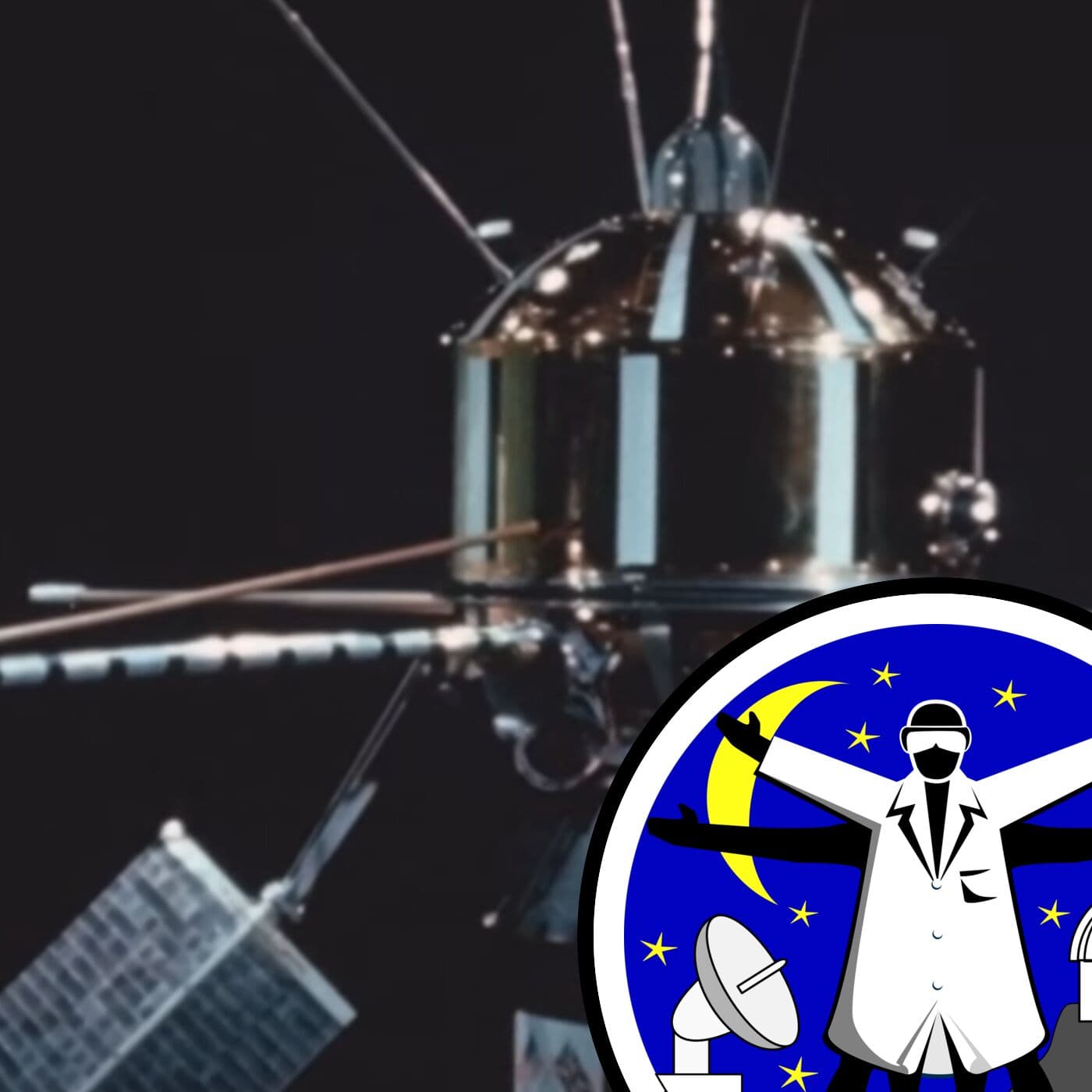
38:11We'll hear from Orbex in a moment. First, Derek Harris, head of business development at Skyrora. It's rocket's based on Britain's first launcher, Black Arrow, which launched the Prospero satellite from Australia in 1971. I asked him to tell us about the launchers they're developing. We have two that are really there. So we have Skylarkel, the first of which we launched in 2021 out of Iceland. And we are hoping to launch the other one from the UK in the near future. It's only about 11 metres tall, suborbital, and has around a 50 kilo payload capacity. But the main workhorse that we have at the moment will be Xcel.
38:54It will be due to launch in around Q426, possibly Q127, depending on licensing. but it can take up to 315 kilograms to sun synchronous and polar orbits. How much of the technology is new, is developed in the UK? That's a great question. When you say is it new, because our program really harks back to Black Arrow, we use the same high-test peroxide and kerosene mixes that they did. So there are a lot of similarities with the engines but I think what the biggest thing is the technology around how they're being produced with the 3D printing and things instead of sort of being hand chiseled out as such.
39:34So there's a huge similarities going back to the historical launches that the UK used to actually take part in. And is that important to you and to the company that it has that connection to the UK's first successful launcher? Oh, very much so. One of my first jobs with Skyroda was to actually locate Black Arrow in Woomera and talk with the locals over there. so what happened is we negotiated to bring it back to the UK by basically building them a new sort of town hall that they could use. From then we had a little bit of a show with it in Edinburgh and then we actually passed it down to the Farmer Air and Space Transport Museum and we're currently working with the other museum at the moment to see about getting it completely properly, not restored but looked after so it doesn't get in any worse condition for that purpose.
40:26So it's very important that that heritage lived on and there is a small section which turned out not to be from R3, which was R2, which we actually keep in the workshop. So as soon as our team goes through to do their day-to-day job, they see what they're building on, the grandfather of the company. So we take that quite seriously, that heritage, and it's something I think drives a lot of the team forward. And this is an unflown, presumably, Black Arrow that could have flown? No, no, these are both parts that have flown. So the R3 was the one that actually launched Prospero, and that's one that's currently in the museum and an R2 was one that had a it took off but I don't think was as successful as R3.
41:06It's almost like picking up from where that they left off. Well if you look back into what the 1971 I think it was was the last launch we actually had the perfect small launcher we were 50 years ahead of our time in that regard so sometimes they say don't reinvent the wheel which makes sense but when you've got new technology to make that wheel easier That's what you do, and really that's what Skyroda's been doing, is developing the technologies alongside it to make it better so it can be faster, stronger, cheaper, but agile and adaptable as well. When you're developing this, you know, and in fact you mentioned a failure there, that a lot of rockets fail on the first attempt, second attempt, sometimes more than that.
41:51How many failures are sort of built into what you're planning? From our planning purposes, we've looked at at least a minimum of three demonstrators as the minimum plan so far. We're lucky to be well funded from our owners who own the company as we're private. That was the plan from day one was to at least a minimum of three attempts of the full launcher. But now, because we've diversified our business case, which has allowed us to have other funding coming in, that's allowed us to say, well, we know we've got that minimum of three there, so we can continue going until hopefully we get it right.
42:23But touch wood, as you say, no one's done it first time. Could we break that record? I think that was the whole idea around the build-up approach. So using Skylarkel as a test vehicle, the second one of that. So I think when we first talked, the first one was like 33 % and then 66%. And because we've done this iteration process of it, we're hoping that will put us up in a higher level of success rate. But as you said, it could be first time, second time. But I'm sure we'll get it before third time, that's for sure. and what's the potential of this because i mean you're not alone there's also orbex there are also potential other horizontal launches in the pipeline there obviously must be a market for launching from the uk we know there's a market for small satellites can you get the price point right though because everyone at the moment it's just basically going with spacex well i think that's it so we have never tried to compete on price for spacex and my background being non-engineering, non-space, has actually tried to put our customers at the heart and the focus of this.
43:27I like to steal lines and you'll hear this, so we're reassuringly expensive. Wasn't that a beer? It very much was. Stellar toit, I believe. But the whole thing is to have that customer at the heart of that mission. So instead of going with SpaceX and making yourself for that last mile, our third stage will take you that last mile. It will put you there. we do expect our price point to come down as we start to go into mass production but so far the price point that we're sitting at has actually not really batted too much eyelids of a lot of people which has been nice to see so we i can't say that we are going to be outpriced by spacex because we're really coming alongside the rocket lab model that way now i spoke to a small satellite company spaceforge we've spoken to them twice on the podcast they're massively into sci-fi references geeky references they control their satellite from the the sat cave you've gone one better you've you've covered yourself in tattoos that are completely geeky yeah very much so so everyone laughs and they're like oh you must be so into space and things i'm like it wasn't when i grew up sort of thing i was never a man that wanted to be an astronaut i wanted to be a ghostbuster if i'm honest and that kind of led into my fascination with comics and your reference to being covered in tattoos yeah I'm covered in Marvel tattoos from Deadpool Gambit and then the other side I've got sort of Godzilla and King Kong things like this so really I love a particularly boring life when I'm not working I go out to the football with my dad I don't really drink I don't smoke I play video games and read comics so it was a hobby I picked up when I was 18 and I kind of ended up spreading let's say that it sounds like a pretty good life to me pretty much I'm in a good position so I can't moan too much as I say it.
45:17I think my wife would prefer if I didn't spend as much getting tattooed and spend a bit more time at home walking the dogs. So we'll see how that goes.
45:24Sue Nelson:Derek Harris and his tattoos from launch company Skyrora. Well next John Bone, he's the Chief Commercial Officer for Orbex. They're also developing two different types of launcher. We will be initially launching a micro launcher called Prime from Scotland. It can take up to 200 kilograms into low earth orbit. So we'll be launching that from Saxoford next year. And then we'll be ramping up the cadence of that, doing more launches per year as we go through. And the recent news, of course, is that we've just been pre-selected for the European Launcher Challenge from the European Space Agency, which is great news.
46:03We're all excited about that. And as part of that program, we'll be further developing our prime vehicle, but also looking to develop a much larger vehicle. So the goal of the European Launcher Challenge is to look at giving Europe more resilience, more competitiveness, both within Europe and outside of Europe at a global level. So what we've done, we've analysed the market and seen where the gaps are. One of the major gaps that was left the Ukraine war was the Russian Soyuz vehicle. So Russian Soyuz vehicle was used for many European launches. I think it launched most of OneWeb, for example. So we've identified that as a bit of a gap.
46:45The vehicle that we've got looking to develop as part of that European launch challenge is called Proxima. And we're stepping up from 200 kilograms all the way to four and a half tons. Humans have been building rockets, well, for hundreds of years, the first orbital rocket in 1957. You're starting from scratch, or presumably you could look back and say, well, don't do it this way, do it this way. But, I mean, what is the challenge of starting a new project like this? There were a number of design choices made, and a lot of those design choices were around sustainability, and sustainability of space, but also sustainability of the environment.
47:25So we made a key design choice early on to use propane, biopropane, rather than the usual RP1 kerosene type of fuel, which is used in SpaceX Falcon 9, for example. And the main reason for that was to reduce the amount of emissions. We had a study done by Exeter University to calculate for Prime, our micro launcher, if using propane, what is the difference between a propane vehicle and a kerosene vehicle? And they calculated it was 96 % less emitting of carbon. Wow. So is that a selling point for you then? Would that make a difference in the market that you can say that actually this is a more sustainable way to launch the space?
48:07This is more environmentally friendly. Because, I mean, rockets, you could only make them so environmentally friendly. We like to think it was a selling point. And I think with movements now, there's the EU Space Act, which will only be enacted until 2030, looking at more about the sustainable use of space. I think in the past, when there was a few launches per year, nobody really minded that much. But with SpaceX launching two or three launches per week, when you're launching that frequently, we have to understand what that is doing to the planet. So from our perspective, choosing propane was that first step.
48:43It's not been, let's say, an easy choice for us. You mentioned how difficult it is to create a lot of effort. Well, by choosing that, we also chose a structure for our tanking system, which instead of stacking the tanks like everybody else is doing, we use a coaxial system. So it's a tank within a tank within a tank, which has its own problems, but it has its own benefits. So it reduces mass, it's all carbon fibre. but also it helps in the propellant and the engine. So, for example, not that this helps, but all our engines are 3D printed. So we're using sort of more, let's say, modern approaches to construct the vehicle.
49:23So, yes, these vehicles have been built since 1957, but they've been built in a particular way. And what we were focusing on was, yes, sustainability with the fuel, but also reducing mass. This is a micro launcher, so we need to make it as low a mass as possible to get as much payload on there as possible for the propellants that we have. Given all the innovation, how many failures can you afford? Because we have seen companies come and go, Virgin Orbit, the most recent UK example, where it's just disappeared. I mean, it seemed extraordinary. I went around the factory. They were doing 3D printing.
49:57They were doing all these things. Big-scale operation. A failure completely lost the company. Yeah, I think with any organization, with any launch organization, you have to cope with what you call failure. I mean, I think, you know, the recent launch of ISAR, for example, okay, it didn't get into orbit. It got off the pad and they got 40-odd seconds of really good data. And they managed to test the flight termination system, which is crucial for safety. So from the point of view of success, it depends what you measure success with. But you factor that in is what I mean. You know, if it doesn't quite work the first time, you've got that factored in.
50:31Absolutely. You have to as an organisation, as a commercial organisation, make sure that you can manage for those setbacks. But ultimately, the goal is provide that rapid access to space, the regular cadence of these launches from UK soil. And can you take on SpaceX in that respect? Because I've spoken to, I won't mention the company, I spoke to a company the other day that makes satellites. They always go with SpaceX because it's the cheapest option. They don't want to always go with SpaceX, but they always go with SpaceX. Yeah, I think there's two things to say about that as well. One is, if you don't care where your satellite particularly is, if polar orbit, 550 kilometers, 10.30 in the morning, and you want to get the cheapest one, go with SpaceX.
51:19We can't compete with that at the moment with Prime. What Prime gives you, the smaller vehicle, is if you need to go into precise orbit at a precise time of day or precise inclination or precise altitude, then we can put you where you want to be. So it's a sort of bus analogy rather than the taxi analogy. So you bus, you can jump on it, you get off, you have to walk to wherever you want to be. With the prime vehicle, it's more of the taxi analogy. You call a taxi when you want it. It takes you to where you want to be, exactly where you'll be, when you want it. So it's that sort of analogy. With Proxima, it's a different situation.
51:53so as we step up to that larger vehicle we've designed it and modeled it and commercially modeled it in terms of the business model so we can be globally competitive so from the point of view of having both vehicles we have the taxi service and we have the bus service so if you want to deploy a big constellation you can use proximate to deploy it if you need to replenish it and particular satellites in particular orbits you can then use prime to do that and i think that's actually a unique service. Even SpaceX doesn't have. John Bone from Orbex. Well, you've heard the pitches from both companies.
52:30Let's get an overview of where we are in terms of launch from the UK with Emily Dynely. She's the head of international engagement for the launch team at the UK Space Agency. I asked her if there was enough business for several launch companies. I think the global small satellite market really like data we've seen from a number of different sources, it presents substantial growth opportunities. So lots of different forecasts showing that not only has that grown significantly over the last few years, but projected to do so significantly more over the next few years. And European demand for satellite is forecasted to be worth up to 50 billion.
53:07You know, there's forecast to be kind of per year, hundreds of satellites launching. I think from a UK perspective, different companies are developing different vehicles and services, and that's to serve different market segments. There's different selling points from different customer types, different types of payloads, suborbital launch, orbital launch. So, you know, whilst I think the UK offer is not ever been kind of designed to compete with the likes of SpaceX for that kind of very large launch ride share, there's definitely different market segments and niches that different companies can target.
53:41And what we're seeing is that that's what they're doing. Would this be a market for the whole of Europe, if you like, all the satellite manufacturers potentially could consider the UK as a launch site? Yeah, I mean, in terms of our international engagement, we very much want to kind of position the UK's launch capabilities as being something that can contribute to Europe's access to space and to global access to space. So looking at both the commercial, the institutional and defence and security markets. I mean, there was all this excitement building up to Virgin Orbit. Are you concerned, though, that we just have a repeat of that, that these companies or companies could just come and go?
54:21I think in short, no. The Virgin Orbit launch in 2023, that demonstrated that launch is possible in the UK. It was a culmination of a huge amount of work on the legislation, the safety licensing, international agreements, also all the operational cooperation between all the different parties. And that brought a lot of valuable lessons on the operational requirements and the challenges of space launch. But there are some really important differences with the launch companies that are preparing to launch in the next 12 to 18 months. So their launch technology services, one very important difference is that whereas Virgin Orbit use what's called a horizontal launch system from an aircraft, launches from Saxeville will use vertical ground launch technologies.
55:05I think, of course, with any space launch, there are challenges with doing first test launches with any launch system and any spaceport. But very valuable progress and learning comes from each test launch for those companies. But I don't think it's really relevant to talk about comparing or kind of a repeat of that event in 2023. What about horizontal launch? I mean, is there still potential for that from the UK? I think it very much depends on the customer relationships and the demand that's there. Because what Spaceport Cornwall did was to kind of showcase what is possible, what's feasible and operational to gain the license for that.
55:42And then going forward, it's really about whether there's kind of the business model and the customer demand for doing that. So I think that's to be seen. What's the role of the space agency here? I mean, do you see yourselves as sort of enablers of this? Or is there a wider geopolitical benefit of having launched from the UK, from Europe? Overall, in terms of kind of the government ambition, we want to see the UK become a European leader in small satellite launch. We want to see that development of your launch capabilities continue that brings benefits to communities across the UK. Very much looking forward to seeing those first vertical launches taking place in the not too distant future and to kind of the continued growth of the different sites and companies.
56:24But yes, of course, it's important to be part of those programmes on the international stage as well. So the UK plays a really active role in the European Space Agency. And we're also part of what is now a new NATO programme, the StarLift programme, which is again, looking at kind of cooperation on launch activities across NATO allies. What sort of timetable are we talking about here? I mean, it's always a loaded question. Do you mean in terms of those first launch attempts? What sort of timetable are we sort of looking at in terms of when we might see the first launch or the next launch attempt?
56:56Yeah, well, I think we always take our cue from the companies that are working on developing those capabilities, they're the ones kind of putting the infrastructure and the operations and the technology in place. So in terms of first launch attempts, Rocket Factory Augsburg, we understand, is still working towards a first launch attempt this year. But obviously, as we know, for all first launch attempts, there are kind of a significant number of uncertainties in terms of specific dates around airspace windows and weather windows and all sorts of things, and also kind of testing milestones that have to be gone through, then I think we're looking forward to across the next sort of 12 to 18 months, you know, hopefully further first launch attempts from other companies, Orbex, Skyrora, High Impulse, the German company that also has plans to launch from Saxavord and, you know, hopefully further launch attempts from Rocket Factory Augsburg as well.
57:47Pretty exciting though. Yeah, we're going into undoubtedly kind of an exciting period in terms of hopefully fairly close to that first launch attempt now or first vertical launch attempt, shall I say. Yeah, it will be really positive to see that operational progress made. Emily Dynely from the UK Space Agency looking ahead to the first possible launch from Scotland next year. It is genuinely exciting. She was trying not to say exciting too many times.
58:16Sue Nelson:It is exciting, but it does feel like we've been on tenterhooks and on the verge of this excitement for a long time. And I know that's the nature of space and emissions in general. You cannot think, oh, yes, it's going to launch in March next year because we know that it's likely to be delayed and these things take time. But I do feel as though I've been waiting for it for a very, very long time. But it does feel as if a sort of critical mass has been achieved finally. And that now it's not just talk, it's action. There's solid, you know, methods and infrastructure and everything is getting in place.
59:06Sue Nelson:And that I feel now like, you know, they all do. This is going to happen and it's going to happen soon and it's going to be very exciting. I do slightly worry that everyone will be so excited about it. But when they go to see the launch, they'll just be like, oh, yes, like a big firework. Because it's not going to be like, you know, a massive launch from Florida or anything like that. But it's still going to be quite good. I mean, I have to say that, you know, the second launcher that we heard about from Orbex, I mean, you know, If it's on a par with Soyuz, that is a substantial, that will be a substantial rocket.
59:43Sue Nelson:Will they let you, like the Russians, you know, just stand around within a couple of hundred meters smoking a fag? I very much doubt that. Also, whether that would launch from Scotland, it's a sort of, I mean, you know, they have actually a Soyuz size launch pad in French Guiana for Soyuz. Oh, yes, yes. So, you know, it would perhaps make sense if it went from there. But, I mean, I can't speak for these companies. I think, you know, it has been going. You know, Launch UK was launched in 2017. So, you know, eight years ago, you know, quite a long time ago. There was a lot of hype at the time. What I feel, I agree with you, there's sufficient momentum now.
1:00:22There are sufficient number of companies as well. We're not just pinned on one company like Virgin Orbit.
1:00:28Sue Nelson:Yeah, which obviously was mentioned in those two interviews. Yeah, which we talked about. There are several companies here. You know, if one doesn't make it, there's a good chance another will. But, you know, they all say they've got a number of failures planned in to their system. So, you know, let's hope it all happens. Yeah. And as we've discovered with NASA recently, you never quite know what is going to happen. And it can come from unexpected places. And you and I sort of touched on this in previous podcasts. You know, we never thought that the sort of, not demise of NASA, but it definitely sort of decreasing and shrinking of NASA would come from its own government, considering it's often being considered a jewel in the crown.
1:01:20And so it was quite heartening to see that recent letter that was signed by a number of NASA bigwigs. Yes, so basically it's all the surviving heads of science at NASA.
1:01:33Sue Nelson:Including our friend Thomas Zabirkin. Thomas Zabirkin, we heard from in June. So this was the letter that went to the House Appropriations Committee in the States. Pretty strongly worded letter. You can find it online. It talks about, you know, if these sort of cuts happen, it would cede US leadership in space and science to China. It's quite a big warning about what that China will effectively overtake the US. US. It talks about, you know, as you've just said, Sue, investments in NASA science have been and are a powerful driver of the US economy and technological leadership. I mean, I could go on.
1:02:14I've highlighted various bits in here. An interesting line, you know, it's again highlighting China. The Chinese space science programme is aggressive, ambitious and well-funded.
1:02:24Sue Nelson:The bit I like, can I just give me that letter? Because there was a bit that I know you hadn't highlighted it, but it was this line really sort of touched me. As former stewards of NASA science programmes, we have also seen the power of these programmes to inspire and motivate bright minds from all corners of the nation and around the world. And I think that's so true. Reading, it's like a week doesn't go by where I haven't read, oh, this science centre that's associated with NASA is going to close. And those science centres have massive programmes with local schools, local colleges. You know, I did just like many people don't get it.
1:03:10Sue Nelson:I don't get it. And I think for me, it's that thing. It's the motivation and the inspiration as well as the sort of world class science and engineering that goes on there. And it is, it's like your brain, you use it or lose it. If you stop using it, you will lose it and you will lose your position in the world as what is at the moment the world's leading space nation and agency. And yeah, that doesn't mean other countries aren't going to get there and do really well. They will. But it's just a shock to see it crumble at the directions of its own president. It does seem absolutely extraordinary.
1:03:54Sue Nelson:Yes, I know some people might argue, well, you'll get all these private companies, but then they've always worked with NASA anyway. There's always been private business. So I don't see it as a sort of competition. But, you know, if anybody here is listening, because we know we have lots of listeners in the States, if you are Republican leaning and you see the benefits of this, get in touch. Yeah, let us know. Because it's really interesting. We'd like to hear some counter arguments. We're not saying we're not closed minded enough to listen to the benefits. We just genuinely, as Brits here, we don't get it when you have something that wonderful.
1:04:31Sue Nelson:Where are the positives here? Please do, yeah, get in touch. Let us know. we will not ridicule you in any way we genuinely want to dialogue about this because it is important and it's that's something that i think is genuinely needed is no matter what your politics always have a dialogue in the running order i've written comments on podcast i don't know what that means do you want to comment on the podcast yeah i think that went rather well yeah about that there we go that's great uh that is space boffins for august yes i know it's september but that's for august we work in a parallel universe where time and space are concepts in a black hole the edge of a black hole there we go yeah that would be it yeah a quick shout out to emma who's in the studio with us who's on work experience here hello say hi there we go uh do get in touch via social media email post pigeon whatever uh we'll be back next month or thereabouts you say post a pigeon no not post a pigeon by post or pigeon it just i just had this in my mind please don't post a pigeon no please don't post a pigeon now i can see it no please don't post a little stamp on its breast it's wearing a helmet if you want yeah don't send a pigeon i mean i shouldn't have put Fair enough, do not send anything by pigeon.
1:05:55Sue Nelson:Please do. Don't. Be like World War II, secret messages and everything. No, we don't want secret messages by pigeon. I'd love a little scroll, a scroll by pigeon. I'm happy with postcards and cards. Well, my grandparents in Liverpool, next door, they kept pigeons. And I used to love going in the back garden and just seeing them all, you know, whirring around the sky and then all coming back together and cooing yeah it is i mean yeah yeah pigeons are amazing pigeons no uh do what don did and send us a card or a postcard with a pigeon on no uh we'll be back next month thanks for listening cool cool from lashes for days with the viral liquid lash extensions mascara to lift and color from the brilliant eye brightener.
1:06:46Thrive Cosmetics is the go-to for amplifying everyday looks. Plus, every product is 100 % vegan, cruelty-free, and made with clean skin-loving ingredients that work with your skin. Amplify your everyday. Go to thrivecosmetics.com slash shine26 for an exclusive offer of 20 % off your first order. That's Thrive Cosmetics. C-A-U-S-E-M-E-T-I-C-S dot com slash shine26.