
In short
Naked Astronomy Podcast Notes
Podcast Information
- Title: Naked Astronomy
- Source: The Naked Scientists
- Episode Title: Mission Control, Starliner and Space Factories
- Air Date: February 2026
- Hosts: Richard Hollingham and Sue Nelson
Episode Summary In this episode, the hosts discuss NASA's Artemis II mission, detailing mission control operations with insights from NASA flight director Fiona Antkowiak. The episode also explores the challenges faced by the Boeing Starliner mission and features discussions with UK companies about the future potential of manufacturing in space.
Key Topics Discussed
- Artemis II Mission
- Overview:
- Artemis II is poised to be the first crewed flight of the Orion spacecraft, aiming to take astronauts around the Moon.
- Mission control is structured to prioritize the safety of astronauts, the spacecraft, and the mission objectives.
- Challenges:
- Recent issues with the helium system have delayed the launch, causing the spacecraft to be rolled back for fixes.
- A historical comparison was made with Apollo missions, emphasizing that delays are a normal part of ambitious spaceflights.
- Mission Control Operations:
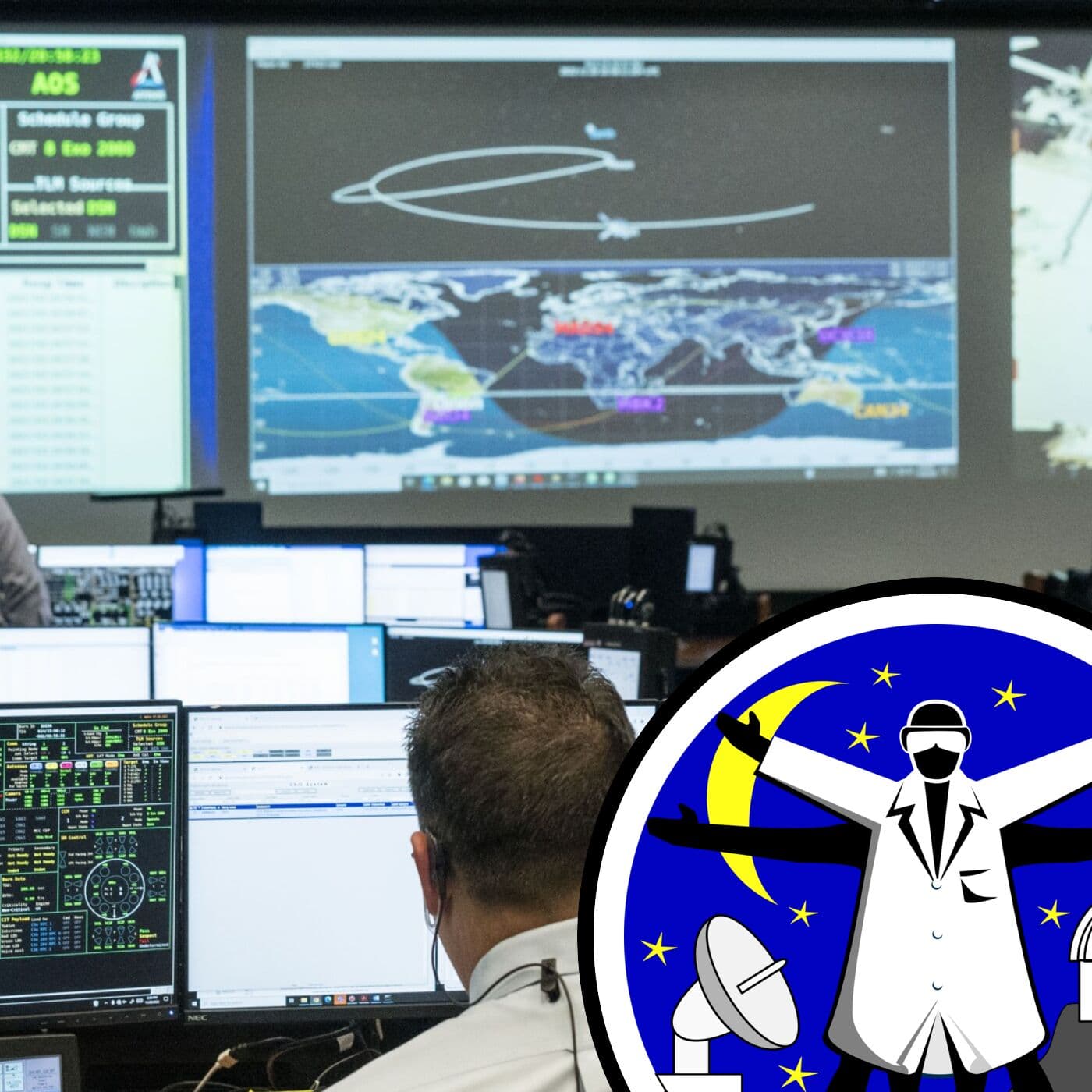
- Fiona Antkowiak describes the role of mission control, which involves technical experts making real-time decisions to ensure crew and spacecraft safety.
- The mission control structure has remained largely consistent since the Apollo era, with an emphasis on teamwork and technical expertise.
- Autonomy vs. Control:
- The Orion spacecraft has a degree of autonomy, allowing astronauts to maintain safety independently when communication is lost (e.g., behind the Moon).
- The balance between ground control commands and autonomous operations is crucial for mission success.
- Key Decision Points:
- The translunar injection burn is highlighted as a critical moment during the mission, requiring confidence in the spacecraft's systems.
- Boeing Starliner Mission Issues
- Type A Mishap:
- The Starliner experienced serious thruster issues, leading to a designation as a Type A mishap, a term used for significant failures leading to the loss of crew or vehicle.
- NASA is focusing on accountability and ensuring technical causes are understood before flying crew again on Starliner.
- Future of Manufacturing in Space
- Space Forge:
- Focused on developing in-space manufacturing capabilities, specifically high-quality semiconductors and optical fibers in microgravity.
- The benefits of reduced defects in crystal structures due to microgravity were discussed.
- BioOrbit:
- Aims to manufacture drug crystals in space, potentially revolutionizing cancer treatments by enabling self-administration of drugs.
- The impact of reducing the need for hospital visits for cancer treatment was highlighted as a significant advancement.
- Economic Considerations:
- The potential cost-effectiveness of producing high-quality materials in space was emphasized, along with the implications for various industries, including pharmaceuticals and telecommunications.
Key Takeaways
- Mission Control's Role: The structure and operation of mission control have evolved, yet core responsibilities remain consistent; prioritizing safety and effective communication is paramount.
- Delays are Normal: Delays in space missions are common and often necessary to ensure safety and mission success.
- Future Innovations: The future of manufacturing in space is promising, with advancements in semiconductor production and pharmaceutical applications, potentially leading to significant societal impacts.
Conclusion This episode provides a comprehensive look at the Artemis II mission and the challenges faced by Boeing's Starliner while also exploring exciting developments in the field of space manufacturing. The discussions emphasize the importance of safety, innovation, and the collaborative effort involved in advancing humanity's presence in space.
---
Support The Naked Scientists: [Donate](https://www.thenakedscientists.com/donate)
Written by AI. May contain mistakes. Listen to the episode to check what was said.
Chapters
Tap a time to open that second in VOArtemis 2 Update
0:46 to 2:14
Discussion about the Artemis 2 rollout and launch delays.
“I think a lot of Americans, it was amazing to see the number of people who were like, oh I'm hoping I can change my flight to go and see it as well.”
Technical Challenges in Space Missions
2:15 to 3:29
Exploration of technical issues faced during the Artemis 2 preparations.
“And in January 1972, Apollo 16 had to be rolled back, taken apart after a mistake was made during fueling.”
Role of Mission Control
3:30 to 5:15
Insights into the responsibilities and structure of mission control for Artemis.
“Do we have any potential launch dates after April?”
Decision-Making in Space Missions
5:16 to 7:49
Understanding the decision-making process during mission control operations.
“and are able to make decisions based on that data about what needs to happen to, like I said, keep the crew safe and the vehicle safe.”
Translunar Injection Explained
7:50 to 10:27
Detailed explanation of the translunar injection process for Artemis 2.
“The reason that we make sure they have that ability is we might have a planned time that we don't have communication with them.”
Communication Challenges with the Crew
10:28 to 13:05
Discussing the loss of communication with the crew during lunar flyby.
“And my colleague Jeff Radigan will be making that one as the mission lead.”
Astronaut Experience During Lunar Flyby
13:06 to 14:02
How astronauts will experience their lunar flyby and observe the moon.
“One of the cool things about that, though, is while we don't have signal with the crew, that's some of their best moon viewing opportunities.”
Observing the Moon: Astronauts' Moment
14:02 to 14:52
Learn how astronauts will capture their experience while observing the moon.
“But I guess that is a moment for the astronauts, isn't it?”
Reentry Dynamics: From Space to Earth
14:53 to 16:06
Discover the challenges and procedures involved in the spacecraft's reentry.
“So from ISS, you come home at 17 ,500 miles an hour.”
Mission Control: Training and Vigilance
16:07 to 17:39
Understand the training and preparations Mission Control undertakes for launches.
“And then, of course, the crew has practiced that a lot as well, both with us in our simulations and then on their own in some training.”
Show all 32 chapters
Overview of Artemis Mission Control Operations
17:40 to 18:38
Learn about the centralized operations of Artemis Mission Control compared to Apollo.
“And we are prepared, therefore, to address it.”
Hierarchy and Roles in Mission Control
18:39 to 21:48
Explore the hierarchy and roles within the Artemis Mission Control team.
“And I asked him how the room differed from the Apollo Murr.”
Preparing for the Unexpected: Simulation Training
21:49 to 25:40
Discover how simulation training prepares teams for unexpected spacecraft scenarios.
“the engineers who designed, built, tested, and put this vehicle together, we know the most about the spacecraft.”
Complex Challenges in Spacecraft Operations
25:41 to 28:00
Understand the complexities of addressing failures in spacecraft operations during missions.
“And with those simulations, what sort of scary scenarios do they throw at you?”
Understanding Spacecraft Failure Scenarios
28:00 to 29:25
Learn how mission control prepares for potential spacecraft failures during simulations.
“and in our telemetry set that we see during the simulation, they can make the vehicle look like to us with telemetry overrides what is happening.”
Reflections on the Columbia Mission
29:25 to 31:38
Explore the lasting impact of the Columbia mission on flight controllers and safety protocols.
“So cases have included they've they've simulated a leak in the cabin pressure vessel.”
Excitement for Artemis and Future Missions
31:38 to 34:03
Discover the excitement surrounding the Artemis program and its goals for lunar exploration.
“We, you know, as part of the training that we do, we also have really, as an agency, learned from those accidents.”
Listener Interaction and Postcard Reading
34:03 to 35:34
Engage with the podcast hosts as they read a listener's postcard and share thoughts.
“I have written a feature on Mission Control.”
Starliner Mishaps and NASA's Accountability
35:34 to 37:51
Learn about the issues faced by the Starliner spacecraft and NASA's response to the mishap.
“This is from Ed, who is in California, Oakland, California.”
The Future of Manufacturing in Space
37:51 to 41:33
Explore how UK space agencies are funding studies for manufacturing advanced materials in orbit.
“It experienced all sorts of problems with its thrusters, leaving the astronauts stuck in orbit on the ISS for eight months.”
In-Space Manufacturing with ForgeStar1
41:33 to 42:00
Understand the importance of in-space manufacturing and the lessons learned from the ForgeStar1 project.
“awards recently well now the uk space agency is funding three new studies in the space manufacture of advanced materials in orbit.”
Introduction to ForgeStar1 and the Plasma Process
42:00 to 43:40
Learn about the ForgeStar1 satellite and its role in space manufacturing.
“who we've heard from before on the podcast, with a study they've called To Forge, Too Furious.”
Advantages of Semiconductor Manufacturing in Space
43:40 to 46:05
Discover how microgravity improves semiconductor production quality.
“And what's the advantage of making these semiconductors and these substrates in space as opposed to much cheaper doing it back on Earth?”
Scaling Up Semiconductor Production in Space
46:05 to 48:06
Explore the challenges and approaches to scaling semiconductor production in space.
“How do we understand the process to be able to make sure that next time we do it, when we're ready to actually return it, we can get it right because we've done the groundwork before.”
Economic Benefits of Space-Made Semiconductors
48:06 to 50:00
Understand the economic implications of manufacturing semiconductors in space.
“and obviously you need investment for this as well.”
The Future of Pharmaceutical Crystals in Space
50:00 to 52:07
Learn about the potential for producing drug crystals in space for cancer treatment.
“You've got UK Space Agency funding these studies.”
Challenges and Innovations in Crystal Production
52:07 to 54:46
Delve into the specific challenges of producing crystals for drug delivery.
“The founder and CEO of BioOrbit is Dr Katie King.”
The Future of Space Manufacturing Infrastructure
54:46 to 56:03
Discuss the necessary infrastructure for future space manufacturing and its implications.
“So we have that in a matter of months, which is extremely exciting.”
The Future of Pharmaceutical Production in Space
56:03 to 58:09
Learn about the potential for human presence in space-based pharmaceutical manufacturing and the timelines for development.
“Particularly if you're working with pharma, do you see the future then as sort of private space stations crewed with maybe a couple of pharmacists who can oversee the hardware and the development of these crystals?”
Discussion on Dr. Katie King's Insights
58:10 to 59:31
Explore the implications of Dr. Katie King's work and the societal impacts of space manufacturing.
“that production in space is a thing for humanity.”
Consolidation of Space Experiments
59:32 to 1:01:01
Understand the concept of consolidating space experiments and the benefits of a collaborative space factory.
“You know, you consolidate all those things.”
Anticipating Upcoming Space-Themed Content
1:01:02 to 1:01:41
Get excited about upcoming space-themed series and shows, including discussions on alternate histories of space exploration.
“I have to say, I enjoyed more the parallel history one.”
Transcript
Automatic transcript. May contain errors.0:01Attention all personnel, please clear the launching area.
0:06Trey Perryman:Fire, fire. Oh baby, I'll give it to you. Yeah, that's really good. Yes it does, it's dead on. Okay, keep the chatter down in this room.
0:17Richard Hollingham:Are you ready to begin?
0:18Fiona Antkowiak:Yes, I'm all set here.
0:21Richard Hollingham:Hello, welcome to the February 2026 edition of Space Muffins. We're in partnership with The Naked Scientist and supported by the UK Space Agency. I'm Richard Hollingham.
0:32Sue Nelson:And I'm Sue Nelson. This time we'll be talking to one of NASA's Artemis flight directors. Plus, are factories in space the next big thing? We'll hear from two companies who think so.
0:45Richard Hollingham:Well, all I can say is I'm glad I didn't book a flight.
0:50Sue Nelson:I think a lot of Americans, it was amazing to see the number of people who were like, oh I'm hoping I can change my flight to go and see it as well. Coming from 3 ,000 miles away is just a slightly bit different isn't it?
1:02Richard Hollingham:Yeah so we had the Artemis 2 rollout to the pad the first wet dress rehearsal and then the launch postponed. The second dress rehearsal I mean it all looked good and they set the date for March the 6th as early as March the 6th. Then there was this slightly frantic email I got on Friday afternoon which was in literally the email said in brief and just a link to the latest blog on Artemis from NASA yeah and yeah we had the astronauts in quarantine it was all looking good for launch and then it's not anymore.
1:37Sue Nelson:Suddenly it wasn't no well as we record this on the 25th of February Artemis 2 is due to be rolled back to the vehicle assembly building to fix a problem a different one this time with the helium system.
1:48Richard Hollingham:Helium system which is used to pressurize the as I understand it helium essentially replaces the gas in the tank so there's always some gas in the tank it's a neutral gas that's how i understand it lovely i might misunderstand it but that's how i understand
2:03Sue Nelson:good well sure somebody will tell us yeah if it's not they will yeah yeah i mean it it's a bit frustrating but we know we all know that this is an ambitious mission it's happened before with the apollo program i've seen a lot on social media saying this never happened with apollo So, well, actually it did. I think it happened twice. And in January 1972, Apollo 16 had to be rolled back, taken apart after a mistake was made during fueling. So this is normal. In fact, let's face it, you don't want it to launch without having sorted all these things out. Absolutely.
2:37Richard Hollingham:And this is a pretty critical issue.
2:39Sue Nelson:But it is, to be fair, though, I mean, you were quite surprised how worried I was because I, well, it is no, I think these missions, when there are human beings involved, I do feel nervous because this has not been done for a long time. It's not been done for a long time.
3:02Richard Hollingham:But as far as the astronauts are concerned, yes, I mean, it is. But as far as the astronauts are concerned, this is a much safer system than the space shuttle in that there is an escape system. So if anything did go wrong during launch, well, there's an escape system to get them off the pad. I was going to say, what happens if they're on the other side of the moon? Well, physics dictates that they will come back. So, you know, I mean, there is a lot that can go wrong with this. But it's crazy not to just wait another couple of months and get it right.
3:28Sue Nelson:Do you think it's going to go in April? Do we have any potential launch dates after April?
3:36Richard Hollingham:No, so I've got the mission availability here. And obviously, this could change between us recording and this actually being published. At the moment, the earliest is 1st of April. So it's the first, 3rd, 4th. April Fool's Day. Yeah. 3rd, 4th, 5th and 6th of April and then the 30th of April. All right. So a bit of a gap. Yeah. 30th would be great for me because I'm already in the States then. So that would be really convenient. So if they'd like to arrange it around the end of April, that would be really useful. So we're hopefully looking at an April launch window. So the 10 day Artemis 2 mission around the moon and the first crewed flight of Orion.
4:14Richard Hollingham:Well, I've been speaking to mission controllers working on the flight in Houston. First, we're going to hear from one of the flight directors, Fiona Antkowiak.
4:24Fiona Antkowiak:We have, I think, nine flight directors working the mission. So we have three shifts a day, 24-7 support for the 10-day mission. And we're able to break it up and let a decent chunk of the office have a chance to work with the crew.
4:38Richard Hollingham:Just give us a sense of the role then of Artemis mission control. Is it how we all think it is? Because most of us have this idea from probably Apollo 13 of how mission control is set up.
4:53Fiona Antkowiak:Yeah, Apollo 13 is actually quite accurate. So your ideas are pretty good. So the role of mission control is ultimately to keep the astronauts safe on the Orion spacecraft. Secondly, to keep the Orion spacecraft safe. And then third, to achieve the mission objectives. So we structure our work to do those items in priority order. The way we do that is we have a team of technical experts who also have trained in what we call console skills, so communication, teamwork, leadership type skills that are monitoring data coming down from the Orion spacecraft and are able to make decisions based on that data about what needs to happen to, like I said, keep the crew safe and the vehicle safe.
5:37Fiona Antkowiak:That team is led by a flight director. So my console's job is to make any decision necessary to keep the astronauts safe and the vehicle safe. And we do that by taking the input from the team around us and then making the right decision for the mission. In terms of the layout, it looks a little more modern than you saw on Apollo 13. but it's a pretty similar room in the sense that you have a bunch of people sitting at these consoles who are looking at this information coming down from the spacecraft and then able to send commands to the spacecraft as well.
6:07Richard Hollingham:Now Chris Kraft conceived the idea of mission control, the structure of mission control. Has that changed much or is this the same way it works, the hierarchy, the decision-making process much the same as when it was first operated in in the early 1960s?
6:23Fiona Antkowiak:It's really quite similar. The structure that Chris Kraft put together as the first flight director has really stood the test of time. At the end of the day, the key of what he put together is that you have an on-console flight director, and that person has ultimate authority to make any decision needed for a quick turnaround decision. Obviously, if we have more time, we do consult with other people outside of the room as well. And the expectations really on our team are also quite similar from the 60s. So the expectation is that our team members are technical experts in their systems, and then able to work together as a team to succeed, basically, at keeping the crew safe.
7:01Fiona Antkowiak:And so, you know, some of the specific positions have changed, and a little bit of the layout has maybe changed. But the core of what Chris Craft put together is still what we're doing today.
7:10Richard Hollingham:And that applies to does it to the communication with the crew, So they're not being bombarded with messages from different people.
7:18Fiona Antkowiak:Correct. Yeah. So we have a position called CAPCOM stands for capsule communicator. We called it that on ISS too, actually. And so going to Orion, it actually makes sense as a name again. So we have a capsule. But the CAPCOM position's job is to be the single voice from the ground to the crew.
7:34Richard Hollingham:And how much is controlled, if you like? It's called mission control. How much is controlled by you and the team and how much is actually autonomous in the Orion capsule?
7:46Fiona Antkowiak:Yeah, good question. So the crew on the capsule always has the ability to do anything that would keep them safe on their own. The reason that we make sure they have that ability is we might have a planned time that we don't have communication with them. For example, when they go behind the moon, we don't have communication with them or we could have a failure that caused a loss of communication. So they always have the ability on board to keep themselves safe. In a normal day, it's a pretty good balance. So our goal is that the crew doesn't have to be, you know, manually working with controlling the spacecraft unless we're doing a test, which we are on this mission a few times to have them do that.
8:23Fiona Antkowiak:And so from the ground, we set up the spacecraft to do what we want it to do. I use that wording because a lot of the time we're sending up commands that will then kick off an autonomous sequence on board because we do have, you know, on Orion quite a bit more autonomy than we had on Apollo. And so there's less need for the crew or us to perhaps take individual actions as part of the normal plan. And we're more able to kind of program or tell the vehicle what we want it to do using some of the onboard autonomy. And then in terms of failure response, the vehicle has what we call failure detection, isolation and recovery capability.
9:02Fiona Antkowiak:So it, in response to certain anomalies, will take what it thinks is the first correct action. The goal of that is not to optimize, it's to be safe. And so then what we would do from the ground is look at the system and likely do a little bit more reconfiguration to get the vehicle in a more optimal state.
9:19Richard Hollingham:And one of your big decision points during this mission will be leaving Earth's orbit and heading to the moon. I mean, what is that going to be like? That will be the first time anyone has made that collective decision since 1972.
9:36Fiona Antkowiak:Yes, that's called translunar injections. That's when we take Orion out of a highly elliptical big orbit around the Earth and send it on its way to the moon. It's a huge decision. You need to make sure that the spacecraft is ready to support the crew for about, you know, a week to 10 days. Once you make that choice, you don't have a lot of quick ways to get home. And so what the team will be looking at for that decision is kind of twofold. We have what we call flight rules and those document the criteria needed to be go for an activity. So for the translunar injection, there's a set of criteria related to successfully performing the burn.
10:14Fiona Antkowiak:And then there's also a set of criteria related to making sure that the spacecraft can support the crew for the whole mission. And so part of the reason that we're putting Orion into this big orbit around the Earth for about a day is to allow us to do things like check out the life support systems. Now, we had a great Artemis I test. We learned a lot. That vehicle didn't have people on it. And so the systems that react to the crew in terms of scrubbing carbon dioxide and making their atmosphere clean, those first 24 hours of Artemis II are really important to give us a good handle on their capability before we do that TLI decision.
10:51Fiona Antkowiak:And so it's certainly a big decision. And my colleague Jeff Radigan will be making that one as the mission lead. He'll be on console for that shift. And like I said, his team will be looking at the data they have to make sure that they have confidence that the crew has what they need for that about a week between the time we make that burn and come home. And then, of course, the spacecraft can support the burn itself.
11:12Richard Hollingham:Because there is no rescue system, is there? I mean, if something goes wrong on the International Space Station, you can get people back. Once they're on their way to the moon and on that trajectory, there's not much you can do.
11:24Fiona Antkowiak:There's much less you can do, yeah. So on ISS, you have the ability to get home within hours if you need to, to somewhere on the planet. Once we do that trans-lunar injection burn, there are abort options, but they're multi-day. And so it is possible to get home sooner than the original plan, but it is still lengthy. And so we want to be pretty confident in the performance of the spacecraft before we go make that decision.
11:51Richard Hollingham:And what about that point where the spacecraft is going out of contact with the Earth? I mean, again, that sort of harks back to Apollo days where the spacecraft, every time it went around the moon, they'd lose communication with Earth. Is that nerve wracking? I mean, I suppose you know the physics of it, you know, the spacecraft is going to come back. But that must be a bit disconcerting. inserting?
12:17Fiona Antkowiak:Yeah, I mean, we certainly like having communication with our spacecraft. It's a nice, warm, fuzzy to be able to hear the crew and see that telemetry data coming down. We have a little bit of more recent experience with that for on the order of minutes when vehicles reenter the Earth's atmosphere. And so when a vehicle is coming back to Earth, there's a point in time when it's engulfed by plasma to a level that you have a planned loss of signal. And so So going behind the moon is somewhat similar to that in the sense that we know ahead of time the predicted start and end time. You know, like you said, physics tells you that.
12:50Fiona Antkowiak:And you know that in the middle, you don't expect the data. And so there's certainly a little bit of comfort in that. It also is, like I said, we like our data. And so I think as you get near that time that the comm comes back, you have a whole room of people in mission control just staring at their screens, waiting for the data to come back on time. One of the cool things about that, though, is while we don't have signal with the crew, that's some of their best moon viewing opportunities. So during this lunar flyby, they will be observing the moon. They have cameras. They have maps of the moon.
Read the full transcript
13:22Fiona Antkowiak:They're going to get to see some portions of the moon that we haven't put human eyes on, which is super cool. And they'll be recording kind of commentary as they do that so that our scientist friends can listen to that later, even though we won't be able to hear it live.
13:35Richard Hollingham:I remember interviewing Apollo 15 astronaut Al Warden, who said he always enjoyed when they were out of contact with Earth because you didn't get this chatter from mission control.
13:45Fiona Antkowiak:Yes, Al's a great guy. I had a chance to meet him a number of years ago. And yeah, it's it takes a special personality to be able to be, you know, alone in a command module, in his case, going around the moon while his buddies are on the ground. But yes, I know that he enjoyed his little quiet periods on the back of the moon.
14:02Richard Hollingham:But I guess that is a moment for the astronauts, isn't it? That is a moment where they can just look out of the window and enjoy the moment more or capture the moment more.
14:13Fiona Antkowiak:Yeah, definitely. And as I mentioned, that for Apollo, I'm sorry, Artemis 2, it's a single, single pass by the moon. Right. It's just one big swoop around. And so we're actually reserving a couple hours on their timeline to just observe the moon. And so part of that, we will have communication with them, which gives them a chance to, if they have questions or they want to ask the scientists about a specific thing they're looking at or the scientists want to provide feedback on, hey, can you get a more better description of this particular thing? We're very interested. They can do that. But then, like you said, once we get into that loss of signal behind the moon, it's just the cruise time.
14:52Fiona Antkowiak:they'll continue to observe the moon they'll continue to give commentary that's recorded it's really just them and the moon at that point that's extraordinary what about re-entry then
15:02Richard Hollingham:that's another a moment of tension i suppose and and again where you lose communication with the capsule coming back into the earth's atmosphere at some speed yes yes so the orion capsule comes
15:18Fiona Antkowiak:back towards the Earth's atmosphere at about 25 ,000 miles per hour. So from ISS, you come home at 17 ,500 miles an hour. So it's a pretty significant difference when you're coming back all the way from the moon, which makes sense. And so reentry is super dynamic. At a high level, what we're doing is we're taking 25 ,000 miles an hour of inertia and energy in this spacecraft and lowering it to zero miles an hour as you splash down on the surface of the Earth. And so So we have a heat shield that keeps the capsule safe as we do that, because you make plasma, as I mentioned earlier, from the friction of that very fast capsule hitting the atmosphere.
15:58Fiona Antkowiak:So it's certainly a dynamic time. Really, launch and reentry are the most dynamic and the most dangerous phases of spaceflight. And so when we've done training, we've trained for every phase of the mission, but the ascent team and then the entry team have done a lot of very specific training to be able to help the crew through those phases. And then, of course, the crew has practiced that a lot as well, both with us in our simulations and then on their own in some training.
16:27Richard Hollingham:One of the things I miss a lot from the shuttle era is the wake up music. We used to wake the crew of the shuttle every morning with something from Mission Control. Are you reintroducing that with Artemis?
16:41Fiona Antkowiak:We are, yeah. And we actually on Boeing Starliner also had wake up music. So we have done it since shuttle. But yes, we will have that for the crew. I don't know the music, so I'll be as surprised as the rest of the world when we hear it. But there will be wake up music for the crew.
16:56Richard Hollingham:And what's the feeling like now in the build up to launch? Because I guess you've had a lot of simulations, you've practiced a lot of things that could go wrong. Is everyone reasonably relaxed?
17:09Fiona Antkowiak:Yeah, it's a good question. I think people are certainly confident that we are ready. I wouldn't say we're relaxed. But like you said, we've had a lot of opportunity to train. We do a lot. We spend a lot of time in mission control with a simulator running. And we have a great team of instructors who put in malfunctions that stress us and make sure that we are able to react. Our goal is that, you know, we do a simulation and 10 things break in three hours. And on the real mission, that number should be smaller. And we are prepared, therefore, to address it. So I think our team is quite confident.
17:48Fiona Antkowiak:We are ready. Our products are ready. The crew is ready. And so we don't really ever relax in mission control. We have a set of foundations and one of them is vigilance. And so I think our team has done a really good job of being vigilant. But we were anxiously watching the rest of the rocket prep and hoping that we'll be able to fly it in a couple of weeks.
18:09Richard Hollingham:Fiona Antkowiak, one of nine flight directors overseeing Artemis 2. I spoke to her a couple of weeks ago when we were a little bit more optimistic about the launch date. Now, the Artemis Mission Control Room, where Fiona works, is only part of the setup to oversee the mission. Also in the building in Houston is the Orion Mission Evaluation Room, known as Murr.
18:33Sue Nelson:Murr.
18:33Richard Hollingham:Murr.
18:33Sue Nelson:Murr.
18:34Richard Hollingham:Trey Perriman is the Orion Murr. Murr. Trey Perriman is the Orion Murr lead. And I asked him how the room differed from the Apollo Murr. Murr.
18:45Trey Perryman:From my understanding, the Apollo MER was more decentralized or distributed. So the people that worked that function that I do today here in the control center did so at their contract facilities. The difference here now with this Artemis II mission is that we've centralized the team. So I have a large team of government. So NASA, our contract, our prime contractor, Lockheed Martin, the European Space Agency, and then their prime contractor, Airbus. Rather than decentralizing or spreading those to different sites, we've all collected them here together in one room. So in a sense, it's different because we've centralized.
19:31Trey Perryman:Now, I still have, we have those remote centers set up to call upon if we need to. But another large difference to help this room and to help us do the job during the mission and actually after the mission, there's a lot of work that will happen after the mission, is that there's a lot of digitization. We really have a significant amount of data that's different than Apollo, where the volume of telemetry that comes off the spacecraft now is much, much larger, as you can imagine, due to the advancements in technology and the growth of the system. So we have insight throughout the vehicle, and it's a much more complex vehicle.
20:08Trey Perryman:And so that demands a more complex and robust way of monitoring and responding when we need to.
20:14Richard Hollingham:How does the hierarchy work? Because we know with mission control, you know, everything goes through the flight director. You've got a clear line of communication with the spacecraft via the Capcom. How does it work in terms of what you do that makes sure that everyone knows what's going on? Right.
20:31Trey Perryman:That's a very good question. At least I could speak for the Artemis campaign and what I do here for the spacecraft. The Orion-MER team has a unique and different perspective and role than the flight director and his or her operational team. During the course of the mission, we have a handful of operational teams. The flight director is perhaps the most famous one. So during the mission, that team is responsible to fly the vehicle. And should problems come up, they are the ones to do the quick response. Before the flight director, we have a launch director. So Charlie Blackwell Thompson at KSC is responsible as an ops agent before the flight director has the authority to be responsible to launch.
21:16Trey Perryman:and the flight director. And then when we recover, the ops agent there is a recovery director, a NASA director responsible with the U.S. Navy to retrieve the spacecraft and recover its crew. During all of those phases, the Orion-MUR is responsible not to operate and not to do immediate response to issues, but to monitor the spacecraft performance in significant detail and to lead resolution of problems. There's a difference between responding to a problem and resolving the problem. And because the team, the Orion-MUR team itself, is comprised of the people who, the engineers who designed, built, tested, and put this vehicle together, we know the most about the spacecraft.
21:58Trey Perryman:So we support all those ops agents through the mission to help them understand what's happening where they may need a little bit more engineering help, and for us to really help when there are problems, resolve them. Because it's crucially important we get that crew home.
22:14Richard Hollingham:So is it effectively like you have a, you know, in Apollo, I just liken it to Apollo, but you had the console in mission control and then behind them, they had the team in the MIR. Would that be how it works?
22:26Trey Perryman:That would be how it works. We, you know, sometimes words don't do it justice. We are here for sure in the control center in a different location. I don't necessarily work directly for the flight director. I work with the flight director. I don't work for the launch director. I work with her. So we are well integrated. In fact, these operational agents just spent the last couple of days really confirming are our teams ready and do we work well together. But yes, we are here in Houston in the control center working with the different ops agents.
22:59Richard Hollingham:And how much practice have you had then to develop that? Because there's been nothing like this. This is very different to how the International Space Station operates, for example. Because you've got this very dynamic mission. You've got things happening all the time. You've got this experimental spacecraft heading into deep space. I mean, there's a lot going on here.
23:19Trey Perryman:There's a lot going on. And you ask how we, I think you asked how we prepare and train. it really starts, to be honest, with how we've designed the spacecraft. So as I say, this team that supports in real time are the same people that designed it and built it. And so we built in robustness. We built in the capabilities that the ops teams will need and the crew to really make sure that this vehicle can tolerate different unusual or unexpected scenarios. But when it came time to form the team to identify which engineers will support, we then set upon training. And so we first for every we call them consoles for every function of the spacecraft.
24:00Trey Perryman:We have a console that are experts in that function. So we have a life support console. We have a propulsion console. We have a trajectory analyst. So these are people that are experts in their field. They qualify themselves to be experts in that field. And then during the training with the team, we do simulations. So we've done 43 simulations for the Ryan Murr team. This is a team of about 200 people. And so we put ourselves through paces. We were in all of those sims. We worked with the flight control team. Many of them worked with the launch team and many of them worked with the recovery team.
24:36Trey Perryman:So we exercised all phases of the mission, ran through a whole bunch of scenarios. These simulations are key to determine not just what do we do for a problem, but do we know how to respond? What do we need to talk about? How do we need to think about this? What are the resources outside the MER that we need to call upon to answer questions? And then how do we how do we just communicate? Sometimes it's it's it's just an effort to talk to one another and exchange the right information. It's a complex spacecraft. It is a is an unforgett. It's not an unforgiving mission trajectory, but it's an it's a critical one.
25:12Trey Perryman:So the exchange of information and knowledge amongst one another and amongst other teams and Artemis, very important. So and that's what a lot of the training does. So we have completed the training for those people really to make sure we know what we're talking about. We can represent that knowledge base to the people who need it and and we can do so swiftly. We don't want to be the long pole. We want to make sure we're given the answers when the crew and the ops team needs them.
25:41Richard Hollingham:And with those simulations, what sort of scary scenarios do they throw at you? Are you the one throwing that at the team or is someone outside coming in and doing it?
25:51Trey Perryman:No, if you want, I can at some point describe to you the team structure itself. That would be great.
25:57Richard Hollingham:Yeah, do that first and then you can give a sense of what you have. Right.
26:01Trey Perryman:So the Orion-MUR team here in the control center is staffed with 24 consoles. 18 of them are specifically focused on vehicle functions and systems. We also have some integration consoles, people who represent Lockheed Martin, who built much of the spacecraft. We have a European Space Agency console position that's responsible for the European portion of the spacecraft. About half the spacecraft is European provided. So we all work together. This team, every shift is managed by what's called the MER manager. So this is a person who sits at the back of the room and he's responsible or she's responsible for the activities during that shift, making sure the teams are tracking the spacecraft performance appropriately, addressing the issues.
26:50Trey Perryman:And primarily is the interface between the flight director, the launch director, the recovery director. That MER manager has that overall big picture view. My role is above that. So I have a different role. I'm not a flight. I'm not a controller. I'm not a MER manager. I'm not a console operator. I am in charge and I am responsible with management to communicate what's going on with our management leaders. It's important for the management who are really the risk deciders. The crew are the risk takers. management or the risk decision makers, they need to also understand what's going on. So the architecture, the MER supports the vehicle, the ops team and leadership.
27:28Richard Hollingham:So with the simulations, then what sort of things have been thrown at the team? What sort of things have been, because presumably you've been involved in that. So they've given you these simulations and you as manager have got to make decisions. Well, what do we do?
27:42Trey Perryman:Right. So when we support these simulations, every one of them has failures. I mean, we know walking in, there will be problems. We don't know how many and in what areas. So when we do these simulations, the instructors, the people who organize the training event and script the cases, and in our telemetry set that we see during the simulation, they can make the vehicle look like to us with telemetry overrides what is happening. And so they orchestrate how they script that sim. And in the scripting, they usually fail many different components of the spacecraft at different times. Sometimes the failures might come rapidly.
28:23Trey Perryman:Some may be spaced out. Very often, the failure cases we've been presented with are not just intricate on their own, but they interact with one another. So you can imagine a scenario where you have a propulsion system that has a fault somewhere, perhaps a thruster has failed offline, but a navigational system in another part has also failed. And it's important for us to understand not just whether we can recover those, but if we can't recover those, what's that mean to the spacecraft? Can it continue? How can it continue? How do we reconfigure the spacecraft to account for those faults? And what do we do about it with the mission?
29:02Trey Perryman:A lot of those failure cases have been thought about ahead of time when we've written down for this scenario or that scenario, what do we do? But very often we find scenarios in our training and perhaps in real life that just don't fit the predefined, predetermined decisions. And so that's what my team and the ops teams have to do to figure out what we didn't think about this ahead of time. What does it now mean? So cases have included they've they've simulated a leak in the cabin pressure vessel. So the cabin itself was leaking out air. We've had fall cases where engines didn't fire or failed.
29:39Trey Perryman:There was a scenario where we had a, it's private, it's not known to us, but the crew member on board would have an issue and we have to, maybe we don't know what the specific medical concern was, but we otherwise have to plan for something like perhaps we return home early. We might have failed a GPS receiver, avionics box computer, a hand controller the crews used to fly this thing may have faulted. So it could come from anywhere. It can come from all different angles and usually they interplay together.
30:08Richard Hollingham:Do you ever get nightmares about this stuff when you think of all the things that could go wrong?
30:14Trey Perryman:Yeah. Yes and no. In 2003, I was a flight controller on Columbia's last and final mission. And I definitely have memories of that. And that haunt is not necessarily the right word or nightmares isn't necessarily the right word, But it is for sure in the back of my mind that what we do here in this building, in my room and with the flight director and his or her team, immensely important. And sometimes we have to be put in positions we weren't expecting. But you have to be in that position and you have to answer the questions that come up. So the nightmares aren't necessarily, is my team ready?
30:59Trey Perryman:It's more about what's going to happen and how rapidly can we get that resolved, you know, to make sure that we're bringing this crew home. You know, everybody has work nightmares. Sometimes it's just a matter of how I work with another person or how, you know, my management views me. That seems to be more of a problem. But I'll be honest, that Columbia accident has permanently, I think, left a mark for me.
31:27Richard Hollingham:And I imagine on a lot of people who will be there and on NASA, because it's part of the lessons learned program, isn't it? That something like that shouldn't ever happen again.
31:37Trey Perryman:Oh, absolutely. We, you know, as part of the training that we do, we also have really, as an agency, learned from those accidents. And in fact, annually, all of the NASA civil servants are required to take a proficiency training course. Usually it's online to help us not forget and to think about the things that were contributors to accidents and the mitigations the agency has put in place to prevent that. So that as we as as we learn over time, we're also continuing to remember that and teach the next set of engineers or scientists or specialists. It's very important. And this agency does that, I think, very well.
32:22Trey Perryman:And then during these simulations, we practice those sort of mitigations and processes and organizational things. And for me, my leadership style is more of an interpersonal. I enjoy getting to know people on my team and I talk to them like, you know, like a person, like just a friend or a co-worker, as you would imagine. So I relate to them my own experiences, and that included Columbia. It includes other activities we've done as a human spaceflight organization, just to make sure that we're all thinking about the reality of what can happen and remind ourselves of what to do about it should that happen.
32:59Richard Hollingham:So we talked about the things that could go wrong, but I guess there's a real sense of excitement of all the things that are going to go right. But after so many years of preparation for this mission.
33:10Trey Perryman:Yeah, I'll be honest. It is an honor for those of us who who get to do this. It is extremely exciting to embark upon this return to the moon. Now, you remember Apollo. The mission for Apollo really was land on the moon. And we did that successfully for Artemis. It's land on the moon and develop a sustainable infrastructure that's used not just to land on the moon, but to teach ourselves how we can sustain long term spaceflight, human exploration and go to Mars. And so to be at the cusp of this right now in the Artemis program, this is our second flight, our first manned crewed flight. It's incredibly exciting for many of us.
33:58Trey Perryman:And we just feel a sense of honor and pride just to be part of this.
34:02Richard Hollingham:Trey Perriman, the Orion Merlead at Mission Control in Houston. And I'm not going to say it. I was looking at you.
34:11Sue Nelson:It's all right. I was tempted.
34:14Richard Hollingham:I have written a feature on Mission Control.
34:16Sue Nelson:Was it for BBC Future?
34:17Richard Hollingham:It is for BBC Future, which will be published a little nearer to the launch. It was going to be published this week, but obviously it's not going to be now. I think, just a final thought maybe from me on Artemis, we'll forget about all this once it's actually launched. Of course.
34:33Sue Nelson:That's always the way. Think of Hubble.
34:36Richard Hollingham:And at least, in a way, it's building up the excitement, isn't it?
34:39Sue Nelson:One would hope so. It was noticeable just literally in the sort of 48 hours before the original March launch date that all of a sudden it's a bit, I think it's just typical news outlets. They can't see more than 24, 48 hours ahead of them because they wanted to be new. All of a sudden it was as if it had suddenly come to their attention.
35:01Richard Hollingham:Yeah, well, I think judging by some of the other emails, which I won't share, I think it had.
35:06Sue Nelson:Yes, yes, yes, I know exactly what you're referring to. This is Space Buffins. We're in partnership with the Naked Scientists. Do get in touch via Facebook, Instagram or X. Email us, podcast at spaceboffins.com or send us a postcard. You can find the address on our website. What's that? I've got a postcard. Yay! Where's it from? Let me see the stamp, please.
35:31Richard Hollingham:Is it a British? No, it's a US flag. Oh, it's a US flag. Lovely, lovely stamp. This is from Ed, who is in California, Oakland, California. And I have to say, this is dated, and this is not our fault, it's dated the 13th of December. So it's literally taken two months to reach us.
35:53Sue Nelson:Did Ed not pay the postage? No, no, no, it's been stamped. Because it looks like he's got two stamps on there. No, he's got two stamps.
35:57Richard Hollingham:He's got the right number of stamps. It was stamped in Oakland, California on the 20th of December. Oh, wow. Yeah.
36:04Sue Nelson:Sorry, Ed. so I'll just read a little bit of it
36:06Richard Hollingham:thank you Ed anyway thank you for doing this just a note to say thank you for your podcast I don't miss an episode
36:13Sue Nelson:Ed we love you
36:14Richard Hollingham:which is more than can be said for us
36:15Sue Nelson:we sometimes do that's fab I love it
36:18Richard Hollingham:so I'm going to read all of it but I hope you have a great Christmas
36:23Sue Nelson:we did thank you
36:24Richard Hollingham:we did yeah that was good someday hope you can make it to California NASA Ames is not too far from here in fact I have been to NASA Ames several times we just don't get to do as much travel as we used to really if we do it's holiday yeah i've been promising myself i would send a postcard for several years oh that's lovely yeah and we did we
36:44Sue Nelson:got some good interviews from california i think just we didn't we go was it pre-covid or was it just after covid that we went we visited virgin galactic and various things that was pre-covid was it it's hard to know now when did we last go to california it's like in marvel it's the blip COVID is the blip. I think that was before. I don't think I've been to California since. Have we been to California since? Well, that's what I'm trying to remember. I don't think so. But we've got quite a lot of travel coming up this year.
37:13Richard Hollingham:Yeah, so we've got US trips potentially to Florida. Oh, Kansas City. If we've got any listeners in Kansas City, get in touch because I'm going to Kansas City, which is a lot harder to get to than you would imagine. Or maybe when you look at the map, you would imagine. and also Pennsylvania. And we'll be in Europe quite a few times. And we'll be in Europe, yeah, yeah. So we're doing lots of stuff. So, yeah, get in touch with us. Send us a postcard. The address is on the Boffin Media website. We should also talk about Starliner before we get into our next interviews. And that's the Boeing spacecraft that carried Sonny Williams and Butch Wilmore to the International Space Station in 2024.
37:54Richard Hollingham:It experienced all sorts of problems with its thrusters, leaving the astronauts stuck in orbit on the ISS for eight months. Now, NASA just published the results of its inquiry. And I mean, they are damning. This is not journalistic speak. They are damning. Here's part of what NASA Administrator Jared Isaacman said at the press conference. Today, we formally designate this event a Type A mishap to ensure lessons are fully captured for future missions. Programmatic advocacy exceeded reasonable bounds and placed the mission, the crew, and America's space program at risk in ways that were not fully understood at the time decisions were being contemplated.
38:32Richard Hollingham:This created a culture of mistrust that can never happen again, and there will be leadership accountability. Now, our path forward, NASA will continue to work with Boeing as we do all of our partners that are undertaking test flights. Sustained crew and cargo access to low-Earth orbit will remain essential, and America benefits from competition and redundancy. But to be clear, NASA will not fly another crew on Starliner until technical causes are understood and corrected. The propulsion system is fully qualified and appropriate investigation recommendations are implemented. Leadership accountability sounds pretty chilling, doesn't it?
39:06Richard Hollingham:I wouldn't want to be one of those leaders.
39:08Sue Nelson:I know, they'd be thinking about who's for the chop and the culture of mistrust. Yes, it is damning. Putting people at risk.
39:17Richard Hollingham:And just to be clear, this Type A, that is the same category as the two space shuttle missions that were lost. So Challenger and Columbia. I was about to say what's Type A. I've not heard that. Yeah, yeah, yeah. So it's the highest level in that categorisation. And I haven't read the full report. I've just sort of flicked through and looked at the press release and stuff. I mean, it does sound like it could have been a lot worse, a whole lot worse. And potentially putting the crew of the ISS in danger as well. You've got faulty thrusters as you're approaching the ISS and you can't control your spacecraft.
39:49Richard Hollingham:We saw what happened with Mir, with the spacecraft slamming into it. So, yeah, yeah, yeah, absolutely.
39:56Sue Nelson:I think at the time when, you know, these delays with them coming back from the space station, I think a lot of people felt at the time or people who are interested in space that there was always something more going on than was being said at the time. Yeah.
40:14Richard Hollingham:I mean, I went to some of the press conferences. I mean, you know, online. I was on the phone. It's a very old-fashioned system. You're essentially on the phone and you call in to these press conferences. And there was a real gap. There was a, you know, I think there was a point where you felt NASA had been forced to have this press conference. It was quite a few weeks between, you know, the delay and this press conference where they started to share the details of what had gone wrong with these thrusters. So, you know, it does sound like there's a kind of new culture around Starliner.
40:48Sue Nelson:sounds like the the the new head teacher that comes in and and decides to shake everything up and like shout it a few people get them on their toes and um sort things out you know what he's
41:01Richard Hollingham:done publicly and what he said publicly around this and around artemis he's very impressive yeah yeah i mean i don't you can't i can't speak for what's going on in that so we have no inside knowledge uh but yeah i mean we could easily get some inside knowledge i think you think yeah let's see what we can get for next yeah send us on a postcard some inside knowledge
41:21Sue Nelson:please that'd be very welcome right let's let's move on from that to manufacturing in space which is seemingly the next big thing uh it was certainly a hot topic when we went to the global space awards recently well now the uk space agency is funding three new studies in the space manufacture of advanced materials in orbit. And the three companies include Orbi Sky, who are looking at the processing, a special type of optical fibre in microgravity that can transmit light with up to 100 times less signal loss than a traditional silica fibre. Another recipient was Space Forge in Wales, who we've heard from before on the podcast, with a study they've called To Forge, Too Furious.
42:08Sue Nelson:I can't look, this still makes me laugh. Well, I spoke to Steve Gray, who's the satellite operations lead and is also responsible for ForgeStar1, which was the first UK satellite to receive an in-space manufacturing licence from the UK Civil Aviation Authority.
42:26Richard Hollingham:ForgeStar1, we launched it back in June. And since then, we've been learning a lot. Effectively, it's a really exciting project to be part of. The whole point is that we learn stuff. you know it's not there for us to make materials that we bring back and sell it's there for us to go and learn how to make a manufacturing satellite in space so we launched it we started the commissioning process turning various things on understanding how space had been different to the testing we'd done on the ground and then once we got everything turned on we turned on our manufacturing payload and we have our plasma which is very exciting There was a lot of excitement here in the SAC cave when we first turned on the payload and we got our plasma.
43:11Sue Nelson:Remind us now, why did you want to generate plasma?
43:14Richard Hollingham:That is the environment that we need to manufacture our semiconductor materials. So the process that we want to use to manufacture semiconductors is effectively we feed our gases in and then we bombard that with radio waves. A bit like in the microwave oven that you have at home. it's got the spinny plate because you have the hot spots we want the hot spots so in those hot spots when the gases go into those hot spots we just strip the electrons off and we're left with a plasma and then they can settle down onto the substrate and we can grow our material in 4 star 1 we don't have a substrate we have everything to make the process we can make the plasma we can prove that we can create the environment and then the next step is to add the substrate in and start growing in space as well.
44:00Sue Nelson:And what's the advantage of making these semiconductors and these substrates in space as opposed to much cheaper doing it back on Earth?
44:09Richard Hollingham:Three things. The most important one is the microgravity environment. So effectively what these semiconductors are is they're a crystal structure. You build them up literally an atom at a time on top of each other. And the fewer defects you have, the better the performance of that semiconductor. And gravity, what it does, it basically creates more forces and it pulls various dislocations, various defects into your structure as you're building it up. And in space, with microgravity, we have fewer of those, so we can make a higher quality product. The other things we get basically for free is these processes need to be done in a carefully controlled vacuum, which on Earth, you need all these big vacuum pumps.
44:50Richard Hollingham:In space, we open a window doing air quotes, you just open a valve and you have a vacuum that is better than you could get on Earth quite easily. And then the other one we have is temperature, because you can get extreme high temperatures or extreme low temperatures by just being in the sun or not. It's quite a unique environment.
45:07Sue Nelson:So everything's going well so far, exactly as planned. And you've now started this new project, which I believe stars Vin Diesel, because it's called Too Forged, Too Furious. Yes. What does this one do?
45:24Richard Hollingham:We do like to have fun with the names. I know you do. So this one is the next step on. What ForgeStar 1 is doing is it's creating the environment. Too Forge, Too Furious is adding in the ability to grow some semiconductors as well. So we have sort of two difficult things to achieve. We have the make semiconductors in space and get semiconductors back from space. This is driving forward that make semiconductors in space bit. So we will take it a step further. We will have a substrate, we will grow semiconductors on that substrate, and then we'll have basically a semiconductor lab that's in space that will tell us, did we grow what we thought we would grow?
46:05Richard Hollingham:You know, how's the process? How do we tweak the process? How do we understand the process to be able to make sure that next time we do it, when we're ready to actually return it, we can get it right because we've done the groundwork before.
46:17Sue Nelson:Obviously, here on Earth, semiconductors are in huge demand. And you're starting this process here. It's small scale to begin with. Would you be able to scale this up in space?
46:30Richard Hollingham:Yeah, there's sort of two approaches to that. There's scale it up in space and there's the fact that we just have to, I'll explain this in a second, but we just have to start the process in space. The quality of what you make is also based on the quality of what you start with. And so if we can make some wafers, some semiconductor wafers in space that are extremely pure, purer than we actually need them to be for certain applications, we can bring that back and then we can start growing more on Earth on top of those extremely pure ones. So that helps us scale in the still high quality sectors, but not quite as premium as you get actually back from space.
47:08Richard Hollingham:We can grow more and we can scale in that direction. So it's like the space equivalent of a sourdough starter. That's a very good analogy. Yes.
47:18Sue Nelson:Thank you. So I don't do this, but I know so many people who do, but they'll talk about the quality of what you've got. And then once you've got that starter, you can make amazing bread from it. And that's the same with these semiconductors and these crystals.
47:31Richard Hollingham:Yes, exactly. Yeah. And then the other side of that is also just having more satellites. The intention is that we make this in a way that we can just then add more and more and more satellites that are each doing it independently. And we go down this kind of fleet approach rather than having necessarily all the eggs in a basket in the middle or some kind of constellation where they all work together. It means that if they're individual, then they can all just go at their own pace to do their own thing and we can just scale in that way.
47:58Sue Nelson:And what are the economic benefits here? Obviously, you've got to offset the cost of your satellite with what you're getting back and obviously you need investment for this as well.
48:08Richard Hollingham:Yeah, yeah. So the material we want to produce, it should reduce energy consumption. so the the example i like to use is the 5g towers you actually need one every few hundred meters so there's an insane amount of 5g towers in the uk and roughly half the energy that it takes to run that is keeping it cool the idea is the material we want to make will conduct that heat away more easily which means you don't need to use as much energy and actually given the i can't remember the exact number but it's on the order of one percent of all the uk's energy consumption goes on 5G. And so if you can have that, or you can make a big dent into that, then actually, there's a huge saving to be made by using less energy on a direct user side.
48:53Richard Hollingham:And then there's also the fact that you're using less energy. And so there's the economic benefit of less climate change. So it's the two sides of the coin that the company that buys it to use it saves money, and the society that encourages it saves money on both sides.
49:09Sue Nelson:Where else could these high-quality semiconductor crystals be used and applied?
49:16Richard Hollingham:Anywhere that you have higher powers or that it really matters that you need to save power. You've got various grid level stuff, you've got electric car chargers. If you ever see them at the service station, you'll see the charging unit and then a big block next to it to keep the charging unit cool. satellites. We use chips on our satellites and we think, oh, if there was only some material that we could apply to the top that could keep this chip cool, oh, wait, we should make some of that. And then, you know, we hope that we can get this down to the point where it then starts to filter into more and more consumer products.
49:50Richard Hollingham:But that's a long way down the road. I'm not promising that one for this year.
49:55Sue Nelson:So we can see the potential advantages here across a number of areas. You've got UK Space Agency funding these studies. How much more investment do you think you're going to need to take it to that level?
50:08Richard Hollingham:It's a big question, more. So UK Space Agency are funding the 242 Furious mission, the study at the moment, and then hopefully that grows out into a mission. We're also working with the European Space Agency to fund our other mission that we're working on, which we're calling the Foundry. So that is basically where we bring it together. So that's one that comes after the 2-4-H2-Furious because we've got the platform that can make material and then something to bring some material back as well. And then investment rounds will inevitably come because that is an expensive process to make satellites.
50:44Sue Nelson:Indeed. You know, is the future of this manufacturing in space, is this the way things are going? Because you're not alone in terms of seeing this as a really good potential market, which makes you then think, oh, is it going to be a bit of a race?
50:58Richard Hollingham:Yes, I think it's going to be a massive thing, specifically for, at the moment, things that are very expensive per kilo. So I don't foresee iron being produced in space or concrete and then brought back. It's really cheap stuff that you can make loads of. It's things like semiconductors, drugs, fibre optics, that are really lightweight, but really high impact. And so you can get a lot of bang for your buck, as it were. In terms of competition, more competition, the better, because there's so many different products out there that could be made better with space. There's space for so many companies.
51:29Richard Hollingham:And the more industry knowledge there is, and the more precedent there is about returning things from space, the better it is for everyone. We celebrate the success of our competitors, because it means success for us.
51:41Sue Nelson:Steve Gray from Space Forge. Now, Steve mentioned several reasons to manufacture high quality crystals in space there, including drugs. And the third company to receive UK Space agency funding wants to do exactly that. It's called BioOrbit and their study is called PHARM as in P-H-A-R-M due to the huge potential within the pharmaceutical industry. The founder and CEO of BioOrbit is Dr Katie King. We want to make crystals of drugs in space and that can enable different ways of administering cancer treatments. So you can take a treatment that normally you have to inject intravenously, i.e. into the vein, and you can turn it into a self-injection through these crystals.
52:32Sue Nelson:You can make a really highly concentrated drug. A bit like with diabetics, the way they can inject their own insulin. Exactly the same. So we want to bring that paradigm shift to cancer treatment so that patients can treat themselves at home and manage it themselves rather than having to go to hospital. and that is a material science problem and you need space to make these crystals in order to make these at-home treatments. I mean that's a hugely bold ambition that would affect millions of people's lives. I'm assuming this is not going to be easy and it's going to take a little time but let's go back first of all to that crystal itself.
53:11Sue Nelson:What particular crystals are you working with? We're building the hardware that can be used with all sorts of drugs so we would be making crystals of antibody drugs or of small molecule drugs. So that means basically ones that are synthetically made versus ones that are made out of proteins. It's agnostic in that sense, but primarily we want to make anti-cancer antibody crystals. Keytruda is an example of a drug that we'd like to make some crystals out of. They can be made on Earth. You know that they will be better quality in space. Do the costs work as well in terms of those advantages? Yes.
53:55Sue Nelson:So you can make bad quality crystals on Earth, but you cannot hit pharmaceutical grade without space. But for some drugs, it's that you can't form crystals on Earth and you need space in order to even get the crystal in the first place. So it really depends on the drug and the shape of that drug and all sorts of other properties as well. And it's surprising, you might think, well, surely this sounds ridiculous in terms of price, but actually the costing checks out because these drugs are already so expensive. So the percentage increase is very small relative to the cost of the drug. You can save more money through moving the treatment to the home.
54:35Sue Nelson:You save more than the excess cost. And what stage are you at at the moment in terms of missions? We have our first mission in a couple of months with our proof of concept manufacturing line. So this is testing the core technology that then enables for mass scale up in the future. So we have that in a matter of months, which is extremely exciting. And then after that, it will be more about making our first commercial platform. And how do you scale up? Because this is the tricky bit, isn't it? Yeah, so in terms of making that happen, the reason why in-space manufacturing is now possible, and even a few years ago, the idea was crazy, is because how space infrastructure is changing.
55:17Sue Nelson:So SpaceX has completely changed the cost of launch, and it's just dropping and dropping and continues to when Starship comes online. Like we're another order of magnitude lower than where we're at now. so the possible viable markets and viable applications in space opens up as that threshold comes down but the next piece is the re-entry SpaceX gets you there and then you need the other infrastructure to bring you and your products back down and there are about 30 different companies working on re-entry satellites so the way I see it is that these are your courier systems these are your DHL your FedEx your UPS etc who will take you to and from space and it's because of the infrastructure that then we only need to focus on the hardware that makes the product itself.
56:03Sue Nelson:Particularly if you're working with pharma, do you see the future then as sort of private space stations crewed with maybe a couple of pharmacists who can oversee the hardware and the development of these crystals? Because I'm assuming it can't all be done with no crew. Well, we're building an automated system to avoid the need for humans. But I do see later down the line that you will have a human presence. Just the same way with factories and pharmaceutical factories now, you have people maintaining it and making sure that the manufacturing is according to different quality standards. I think it'll be exactly the same thing and we'll have those people in space.
56:40Sue Nelson:So I think a lot of the R &D will take place on Earth, but you'll need your maintenance staff. It sounds like a very hopeful future. How long do you see it as getting to that stage where we are now producing crystals that could be self-injected? So there are a few different stages. I think first you have that R &D stage with a particular drug to see how the crystals form in space. For that, I think we're maybe two years away for that R &D phase. Then you'll have to produce a certain quantity to go through any toxicity studies. that could take another three to 10 years dependent on whether the drug is a completely new drug or whether you're taking something that's already on the market and turning it into an injectable.
57:28Sue Nelson:So it's faster if something's already been approved. And then after that, it will just be about churning it out. So I would say as an absolute earliest, probably six, seven years, more likely 10 to 12. I always remember having done stories on these sort of things in the past where things are being developed. It always ends up 10 to 15. It's just that length, isn't it? But you know, these things take time. Well, it sounds incredibly exciting. And you must be excited about it all as well. Oh, so excited. I think it's a real privilege to be able to work to make your vision a reality. And I truly believe that it's inevitable that production in space is a thing for humanity.
58:14Sue Nelson:And I think that time's now, and that's why it's worth pushing now. Because 10 to 15 years might sound like a long time, but really that's so short. And that can really make huge impact and changes to how we all experience cancer treatment. And that's really just, it's a short amount of time in the sense of different generations. So make the change, like make the impact now, build that team to try and change it. And we'll see the reality in a decade. Yeah, really excited to be a part of that and do our bit to push it forward. CEO of BioOrbit, Dr. Katie King. Now, I think you're a little disappointed that I didn't ask her about her mum, weren't you?
58:54Richard Hollingham:Yes, I was disappointed you didn't ask her about her mum. Who is her mum? Carol Vorderman. Yeah, and you didn't mention it at all.
58:59Sue Nelson:No, no, no. To be honest, I forgot. And also a bit embarrassing. But to any non-UK listeners, Carol Vorderman, very well known in Britain for hosting for probably 20 years or so. Not hosting. She was like the maths whiz in a programme called Countdown.
59:20Richard Hollingham:Before she was replaced by a younger model.
59:22Sue Nelson:Yes, isn't that the way? They allowed all the old crinkly men to stay. But that's another story.
59:28Richard Hollingham:I mean what she was saying I mean they're both really interesting interviews I thought she was saying you know the technology is inevitable I mean there's an amazing potential for this isn't there like all these things you just want the funding I mean hopefully there's a lot of venture capital funding as we know I also like this idea of a potential fleet of
59:46Sue Nelson:effectively little satellites all doing the little manufacturing it's it's in in orbit it we mentioned early on about the um you know less signal loss from those optical fibers if you have you know really pure crystals there is enormous not just potential but there are a lot of applications for all of these pure very pure crystals because that's just the way our society
1:00:13Richard Hollingham:is run i mean i can't help thinking a lot of this would be it would make sense to consolidate a lot of these experiments and a lot of these systems on one satellite one space station you know you
1:00:24Sue Nelson:could have a private space station or a big big one big factory with lots of a bit like a business
1:00:29Richard Hollingham:like a business park you mean absolutely you know because that's how they work on lots of individual companies all doing their own thing you know i mean we mentioned nasa ames earlier that's where a lot of space companies consolidate in california there's the same here in the uk we know i've seen similar in Germany and ESAF, similar. You know, you consolidate all those things. So, you know, I mean, the space station's already got private experiments on it and lots of university experiments and other things. But I just think you could put the whole lot together and have some sort of, you know, either crude or robotic craft going to and from Earth.
1:01:01Sue Nelson:Speaking of the future, for all mankind, a new season will be. Yeah, I think it's in March, isn't it? I know. I can't wait for that.
1:01:10Richard Hollingham:I have to say, I enjoyed more the parallel history one. of that series when you had the Soviet Union landing on the moon first. Oh, I quite like that. I love an alternate reality.
1:01:20Sue Nelson:Yeah, I like that, but I really enjoyed the Mars series. I think it's gone a bit too sci-fi for me. Oh, too sci-fi. Come on, you can't be too sci-fi. Goodness sake.
1:01:31Richard Hollingham:And that is Space Puffins.
1:01:33Sue Nelson:Too sci-fi for you? No, no. Thank you to the UK Space Agency for your support. We'll be back in around a month's time. Send us a postcard. Thanks for listening.