In short
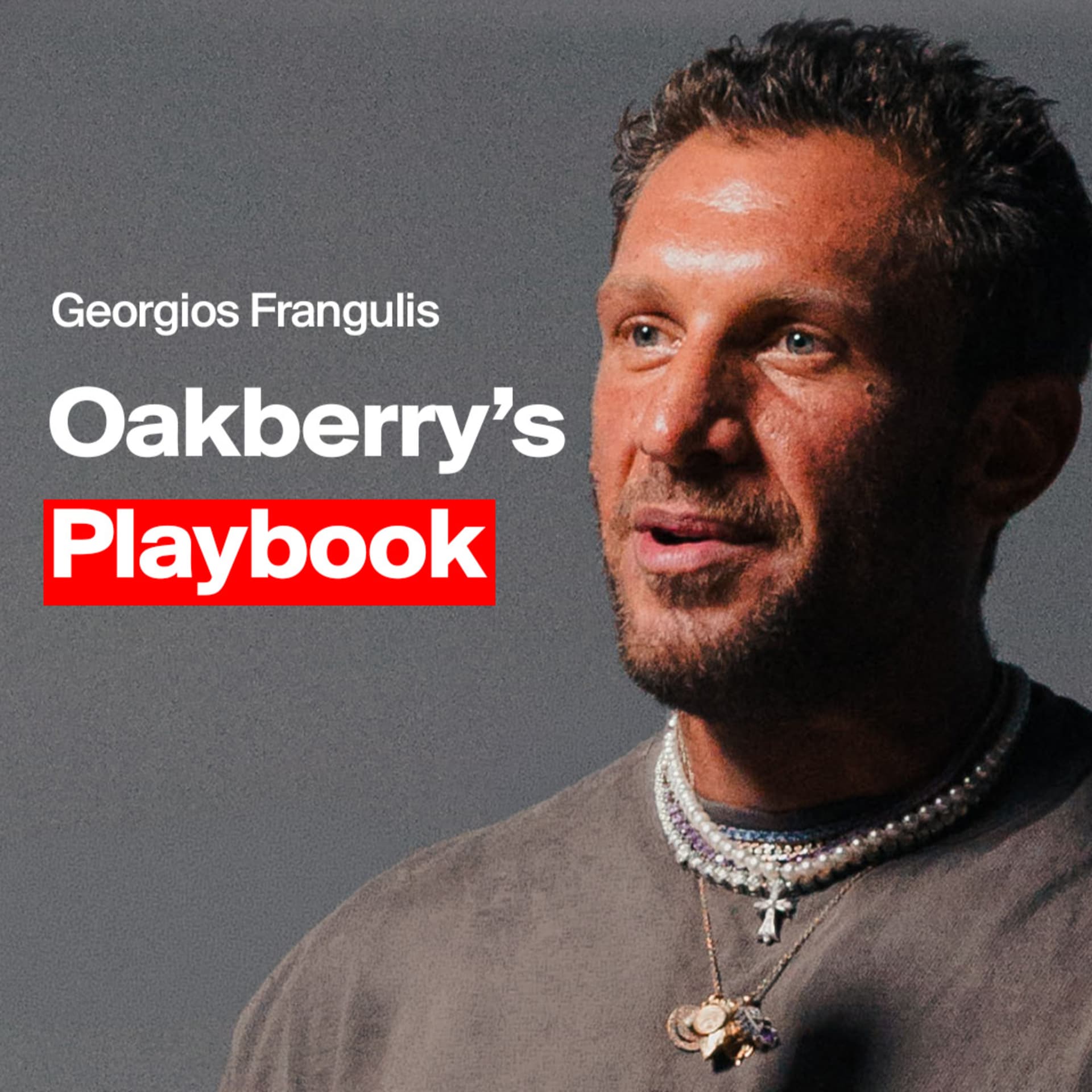
Georgios Frangulis, founder of Oakberry (acai), explains how franchising scaled Oakberry to 1,000+ stores in ~9 years, including franchise mechanics, unit economics, master franchise structures, and why Oakberry “verticalized” its supply chain by producing its own proprietary acai.
Guest background
Georgios Frangulis is the entrepreneur behind Oakberry. He describes going “completely broke” and being diagnosed with cancer, then using an insurance check to open the first Oakberry store in a mall he considered the worst location. He later built a global franchising system with 1,000+ locations across 40+ countries.
Key claims
- Franchising works because franchisees use “other people’s money” and follow standardized operating playbooks.
- Franchisees receive brand/IP and strict operating guidelines (pricing, POS, uniforms, menu, approved vendors) to keep stores uniform worldwide.
- Typical fees: one-time franchise fee (5–10 year contract) plus monthly royalties of ~5%–12%; marketing fund contributions ~1%–4% with global-only spending.
- Franchisees run their own P&L (labor, stock, training via manuals), and must treat it like “hedged entrepreneurship,” not passive investing.
- Oakberry targets ~15%–18% EBITDA for healthy franchise operations; payback in the US is often ~18 months (US startup cost cited as ~$200K–$300K).
- Oakberry verticalized production to protect standards and margins; acai supply is tied to the Amazon and spoils within 4–5 hours after harvest.
Notable examples
- First store opened in a “shittiest” mall location; Oakberry later reached 900+ and now claims 1,000+ stores.
- Master franchise example: royalties split (e.g., 6% corporate total split into 3% to master franchisee and 3% to corporate).
- Verticalization example: Oakberry spent ~$15M (2020–2021) to buy a ~2,500 sq meter production plant to replace third-party production.
Written by AI. May contain mistakes. Listen to the episode to check what was said.
Chapters
Tap a time to open that second in VOOvercoming Adversity: Georgios' Journey
0:34 to 1:57
Discover Georgios Frangulis' inspiring story from battling cancer to founding a franchise empire.
“It can help you with practically anything on the web, like restoring a vintage motorcycle from a 50-page restoration block, or finally break down that long article you've had open for weeks.”
Understanding Franchise Agreements
2:03 to 3:20
Learn about the roles and responsibilities of franchisors and franchisees.
“Let's pretend like we're fifth graders here because not a lot of people know about it.”
Franchise Operations and Standards
3:20 to 7:12
Explore how franchises maintain consistency and operational standards across locations.
“And that means that that person or that company, they're going to be basically the franchisor in that specific market.”
Marketing Funds in Franchising
7:12 to 8:30
Understand the importance of marketing funds and their management in franchising.
“you know how they're going to treat you, you know that they're going to ask your name because they're going to write your name on the cup.”
Franchisee Responsibilities and Operations
8:30 to 10:40
Discuss the expectations and responsibilities of a franchisee in running their business.
“we put together a free PDF of two playbooks.”
The Economics of Franchising
10:40 to 14:02
Analyze the unit economics and profitability potential of franchise operations.
“So that doesn't, okay, if we, let's say - You have to spend it.”
Understanding Franchise Economics
14:02 to 18:01
Learn about the financial dynamics, costs, and profits involved in franchising.
“Because it has the potential to be a super profitable business once you grab something that is already proof, established.”
Startup Costs and Payback Periods
18:01 to 21:00
Explore the initial investment and expected payback timeline for Oakberry franchises.
“So we can have a super small footprint from 40, 50 square feet and have a full operational store.”
Market Strategy and Competition
21:00 to 23:26
Discover Oakberry's approach to market penetration and competition in the U.S.
“so california it's usually starts yeah i mean on on like of course in fashion and etc but in f &b and healthy food concepts like California.”
Franchise Growth Plans in the U.S.
23:26 to 26:36
Learn about the franchise growth plans and market focus for Oakberry in the U.S.
“but we're opening 10, 12, 15 locations, corporate locations in the U.S.”
Show all 46 chapters
Master Franchise Agreements
26:44 to 28:00
Understand the structure and financial arrangements of master franchise deals.
“3 % stays on master franchisee, 3 % goes to corporate.”
Master Franchisee Agreements Explained
28:00 to 29:12
Learn about the requirements and fees associated with master franchise agreements.
“So he has to open a certain amount of stores in a certain amount of time in order to be compliant to the agreement.”
Real Estate Considerations in Franchising
29:12 to 31:29
Explore the challenges and strategies of real estate in the franchising business.
“We prefer to verticalize it in another way, which is manufacturing the product, than to verticalize into real estate, which is definitely not our business.”
The Traits of Successful Franchisees
31:29 to 34:28
Discover the key characteristics that differentiate successful franchisees from unsuccessful ones.
“But when we're talking about I have 50 stores in Saudi Arabia, I mean, I have no idea where to open a store in Saudi Arabia.”
Franchise Structure and Corporate Culture
34:28 to 37:48
Understand the internal structure of a franchise operation and the importance of corporate culture.
“that is already established and try to change everything or disagree to every new menu item or whatever, they're going to be unhappy and yeah, usually it doesn't work.”
Franchise Renewal and Ownership Transition
37:48 to 41:38
Learn about the process and options available when a franchise agreement term is ending.
“So the term ends, it's five years, 10 years.”
Franchisor Strategies for Acquisitions
41:38 to 42:00
Examine how franchisors manage acquisitions and the rationale behind buying back franchises.
“Everybody has to be happy about what's going on.”
Franchisor Strategies for Franchise Buybacks
42:00 to 43:10
Learn about how franchisors handle buybacks and franchisee transitions.
“So either we buy back, either sometimes we had franchisees, they said like, yeah, I made a lot of money.”
Introduction to Scaling and Funding
43:37 to 43:48
Discussion on scaling the business and recent funding rounds.
“Guys, this is something that I use every single day, non-negotiable.”
Vertical Integration in Acai Production
44:53 to 47:58
Insight into the decision to verticalize and control supply chain.
“This is a job for Indeed sponsored jobs.”
Sourcing Acai and Community Impact
47:58 to 55:24
Exploring acai sourcing and its impact on local communities in Brazil.
“Do we like switch our focus on let's become producers, let's verticalize or let's keep growing.”
Transporting Acai: Logistics and Challenges
55:24 to 56:00
Details on how acai is transported from harvest to production site.
“So economically, it's very tough for them to find something that would actually bring some money in.”
The Journey of Acai Fruit Transport
56:00 to 58:30
Learn about the unique methods of transporting acai fruit and its properties.
“these cooperatives, we have to make sure that the fruit gets to our factory in a four to eight hour window.”
From Law School to Business Vision
58:30 to 1:03:19
Discover the personal journey of the guest from law school to entrepreneurial aspirations in the food industry.
“So when I had the idea of Oakbury in LA, in California.”
The Birth of Oakberry in Brazil
1:03:19 to 1:06:31
Explore the origins of Oakberry and the challenges faced in establishing the brand.
“to start it in LA because I see people like going crazy over it.”
Overcoming Adversity and Starting Up
1:06:31 to 1:10:01
Learn how personal challenges, including health issues, shaped the opening of the first Oakberry store.
“And we basically got this spot and now we have the whole operation set up in our heads.”
Overcoming Cancer and Starting a Business
1:10:01 to 1:13:52
Learn how overcoming a cancer diagnosis led to the opening of a successful kiosk.
“You know, if she was on a different day, the lady that took the phone.”
Sponsor: Momentus
1:13:53 to 1:14:40
Get premium supplements with guaranteed ingredients.
“Most Americans today are walking around deficient in omega-3, vitamin D, and magnesium.”
From Kiosk to Franchise Expansion
1:14:41 to 1:19:04
Discover the strategic approach taken to franchise a successful kiosk concept.
“All eight episodes now streaming only on Disney+.”
Navigating International Franchise Markets
1:19:05 to 1:21:28
Explore the challenges and successes of franchising in Portugal and beyond.
“So when you have someone coming to you willing to open a franchise, it's because they already fell in love with the brand.”
Brand Marketing and F1 Partnerships
1:21:29 to 1:23:25
Learn about the unique brand marketing strategies and partnerships with F1.
“I'm going to Portugal in a couple of weeks.”
The Premium Perception of F1 Branding
1:23:25 to 1:24:00
Understand the impact of F1 branding on consumer perception and marketing.
“As you guys can see, I say it a lot of times.”
The Global Reach of Formula 1
1:24:00 to 1:25:19
Explore the vast international marketing potential of F1 as a platform.
“and two in Italy, but you're in a lot of different markets.”
Brand Activation in Major Events
1:25:20 to 1:27:05
Learn how brands like Oakberry effectively engage audiences at high-profile events.
“to show the brand and position it at the same time at the super premium level.”
Experiencing Success at High-End Events
1:27:06 to 1:30:04
Understand the financial and branding benefits from participating in prestigious events like tennis tournaments.
“So I think that's a super effective way of having your brand related to an event that is actually super highly positioned without having to spend a lot in marketing.”
Investing in Formula 1 and Soccer
1:30:05 to 1:32:10
Gain insights into the strategic advantages of investing in F1 and soccer clubs.
“But if you watch the Drive to Survive on Netflix, you're going to see Oakberry 20 times, 25 times.”
Acquisition of Le Mans FC
1:32:10 to 1:36:33
Discover the journey and motivations behind acquiring the Le Mans soccer club.
“because my biggest dream was ever to own a Formula One team or a piece of a Formula One team.”
Reviving a Historic Club
1:36:34 to 1:38:00
Understand the challenges and successes in revitalizing a historic soccer club.
“So he did an amazing job for 10 years and brought the team back from sixth division to second division.”
Exploring Sports Investments and F1
1:38:00 to 1:48:25
Learn about the undervalued nature of sports franchises and the potential of F1 as an investment.
“So Venezia partnered up with Drake, Nocta, they do a bunch of cool stuff.”
Exploring Sports Investments and F1
1:48:28 to 1:48:51
Learn about the undervalued nature of sports franchises and the potential of F1 as an investment.
“That's the energy State Farm brings to insurance.”
Navigating Personal and Professional Life
1:48:51 to 1:52:06
Understand the integration of personal relationships and business for better life balance.
“I think it's interesting that, you know, I'm seeing in the health and wellness space.”
Adrenaline and Post-Match Reflections
1:52:06 to 1:53:28
Explore the emotional aftermath of a tennis match and its impact on the player's mindset.
“She, I know she thinks a lot about her father and family.”
Physical Fitness and Cardio Preferences
1:53:28 to 1:54:48
Discuss different fitness regimens and how personal preferences shape workout routines.
“You know she can be beaten if she doesn't have her best game.”
Influential Books and Role Models
1:54:48 to 1:55:56
Delve into favorite books and entrepreneurs that inspire personal and professional growth.
“But, I mean, Irina in cardio, she can do...”
Vision and Future Goals for Oakberry
1:55:56 to 1:56:46
Understand the limitless vision for the Oakberry brand and its potential growth.
“We're going to pop that up and add it to the book list.”
Social Media Presence and Engagement
1:56:46 to 1:57:24
Learn about the importance of Instagram and connecting with audiences online.
“And as a brand, so many different products and approaches that we can still tap into.”
Transcript
Automatic transcript. May contain errors.0:02The 2026 Chevy Equinox is more than an SUV. It's your Sunday tailgate and your parking lot snack bar. Your lucky jersey, your chairs, and your big cooler fit perfectly in your even bigger cargo space. And when it's go time, your 11.3-inch diagonal touchscreen's got the playbook, the playlist, and the tech to stay a step ahead. It's more than an SUV. It's your Equinox. Chevrolet. Together, let's drive.
0:31Georgios Frangulis:This episode is brought to you by Google Chrome. You think you know a browser, but Gemini and Chrome? That's new. It can help you with practically anything on the web, like restoring a vintage motorcycle from a 50-page restoration block, or finally break down that long article you've had open for weeks. Gemini and Chrome is here for it. Ready to make anything online make sense? There's no place like Chrome. Check responses set up required compatibility and availability varies 18+. I was completely broke. I got diagnosed with cancer, and I had to figure out how to open the first Oakberry store, but I was 100 % sure that this is not going to take me down.
1:04It's the perfect store. Georgios went from dead broke and battling cancer to building Oakberry, a global empire with over 1 ,000 stores. From scratch, I created the business to be franchised. We opened the first shop in this shopping mall that we thought was the shittiest one. From day one, the operation takes off. In this episode, we tell you everything you need to know about franchising and the one decision that almost broke his business. Oakberry has a thousand locations. It's already a big company, but we're still a startup. If you lose that feeling and you get too eco-oriented, then you're done.
1:44It's 2016. You have no money. You have cancer. You have an insurance check. You go all in on this acai shop, Oakberry, now 900 plus stores, 40 plus countries, a franchising empire. For everybody out there listening, you are going to learn any and all things about franchising and obviously Georgios' story. So let's start with franchising. Let's pretend like we're fifth graders here because not a lot of people know about it. What does the franchise Zor get? What does the franchise Z get? Just kind of walk through it from like a macro level. What does it look like? So franchise is one of the most, I'd say, consolidated and obvious ways of expanding a business and that's basically because you are using other people's money to expand your brand.
2:31Why would someone do that? Because in order for you to franchise a business, you have to make sure that that business is profitable, has a good operation, you have all of the guidelines and someone doesn't have to think much. They just have to play by the book and they're going to have something that it's already basically proved and the market is already kind of ready for that. So whenever you think about most of the biggest franchise chains in the world, you're going to think about food and beverage. So if you go McDonald's, if you go Subway, a good part of Starbucks, so all of the major brands that we see everywhere, they're usually not all corporate owned they're franchised and the franchise business runs in a way where you basically give the right to someone to operate your brand in a certain location you can either have a single franchise or you can have a multi-unit franchise someone that's going to develop your brand in a specific region with a development plan in a certain amount of time or you can have a master franchisee, which usually goes either state or country.
3:45And that means that that person or that company, they're going to be basically the franchisor in that specific market. And they can like sub-license almost. Exactly. So there's different ways of doing it. There are master franchise companies that are only or mostly corporate. So they're going to take that region and they're going to open all corporate locations or they're going to sub-license or sub-franchise. There's a different approach to franchises and licensees. That's basically, it basically depends on the law of each country or each state here in the US, but it's basically the same. You're licensing your brand and you're giving your knowledge and your products for someone else to sell.
4:35So this franchisee, they're going to pay you a franchise fee, which is basically a specific amount that they're going to pay for a contract that is usually a five-year to 10-year contract. One-time non-recoupable, I assume, over the term. Yeah. They pay it once the franchise agreement is signed. They're going to pay you the franchise fee, And then they're going to pay you a percentage of their revenues every month, which is usually from 5 % to 12%, depending on the business. And that's basically the royalties that they're paying for the ongoing use of your brand, your products, your development, and etc.
5:15Let's double click on that. So from a brand perspective, obviously, name, likeness, logos, trademarks, etc. What about like the playbooks and the systems? Obviously, they also get product. Like, what do they actually get? Is it an operating system? Is it the backend technology? Is it best practices? Like, double click a little bit more into that. So you're going to have guidelines on how your employees are going to work on whatever they're going to wear, on which POS system you're going to use, what's going to be the price of the menu items. So the franchisee cannot just pick a random price and sell it for whatever.
5:49That's guided by the brand, by the corporate. it. The overall menu, I assume everything on the menu, everything on menu. Yeah, of course. And, uh, all of the IP that you have and you're allowing them to use, it's all preset. So basically from table tents to whatever they're going to have in store from the paintings that they have on the walls in the store, everything is preferred vendors. So every, every piece and inch of the store, i.e. the person that prints the menus, they must go through the master franchise store, correct? They go through corporate or through the master franchisor, and they have to not just follow that, but they usually they're obligated by the contract to do that.
6:31So it's not an option. You have to make sure that the standards are super up to date or up to code. And that's why someone goes to an Oakberry store or to whatever other franchise in a country, and then they arrive in another one and you know how to order, you know what you're going to expect, and you know how it's going to look inside of a store because even the finishings, the tables, whatever, how the whole look and feel looks, it's basically, I mean, it's all the same. So if you arrive in China and you go to a Starbucks in China and you arrive in New York and you go to a Starbucks in New York, it's basically the same.
7:07You know how to order, you know what to expect, you know how the employees are going to be dressed, you know how they're going to treat you, you know that they're going to ask your name because they're going to write your name on the cup. So it's keeping the standards is basically it's what you need to be successful as a franchisor. And that's what the franchisee is expecting for you to give them the standards. I'll say it is something super entrepreneurial for you to open a franchise because there is risk related to that. but that risk is I would say much much less than trying to start something from scratch because someone had already thought about all of the the details and etc and you know that you're the product the supply chain the brand and I mean I'd say franchises either they're verticalized or not and by verticalized I mean the franchisor holds the whole supply chain or produces everything that you're going to sell in your store.
8:04That's key because if you go to a store that looks exactly the same, but then you try the product and it's completely different, it makes no sense. And it doesn't matter. I'd say the biggest goal is for whatever customer to have no idea if that's a franchise or that's a corporate location. They should be the same. They want uniformity throughout. And we're going to get into the verticalization on the product side that you've done now a couple of years in that I definitely think is one of your moats. Hope you guys are enjoying the episode. we put together a free PDF of two playbooks. First, Giorgio's retail and branding frameworks and how we scaled Oakbury to 45 countries and 900 plus locations.
8:43And second, all things franchising, A to Z, everything you need to know. Links at the top of the description. Enjoy the rest of the episode. Let's just keep double clicking on just the overall business and unit economics as a franchisee. So you mentioned, I think you said like 8 to 15 % they pay you. A like a marketing fund. How does that go? That, that levers up to corporate. And then do you guys have complete autonomy on what you do with those marketing dollars? Yeah. Basically the marketing fund. So the marketing fund runs completely separated from the corporate finances. So this is actually a fund that it's a nonprofit fund that has to invest everything that it requires from all of the franchisees.
9:25It's like a different hold co almost? It's a different that company? Exactly, yeah. How nice. Into marketing. And the marketing has to be basically global marketing. So it doesn't make sense for you to grab money from your franchisee in whatever, in Spain, and then you spend doing something in Brazil with it. So whatever we have on the marketing fund is going to be in global initiatives. So basically, if we're going to do Formula One, which is something global, and it's going to be used throughout the whole chain and all of the countries, all of the markets that we operate, marketing fund is going to be funding that.
10:02Usually it's not enough. So corporate, it's always like also investing a lot in marketing because basically you have to make sure that the, I mean, the company is still able to, to have the awareness that you expect. You have to raise money because if you, if you, the 2 % is not going to be enough until you get the scale to actually make impact. Exactly. So there is a super important factor on investing in marketing. When you're a brand, then you want to grow that brand and you want to make sure that everybody knows like what you what you're selling what do you what you believe in and etc so marketing fund it's super important but yeah there is like a breakthrough phase over there and before that there is a heavy investment from the franchisor until you get to a certain point where it becomes sustainable for you to have all of these initiatives through the marketing fund but basically that's another obligation on a franchise agreement, the franchisee is going to pay usually one to 3 % on a marketing fee that has to be invested.
11:02So that doesn't, okay, if we, let's say - You have to spend it. That's great. If you have, you can have a, whatever,$10 million sitting on a marketing fund that never goes anywhere. It's going to be there and it's going to be invested in marketing. So you have the one-time fee over five to 10 years. You have the whatever, 8 % to 15 % royalty that they give back to corporate, the 1 % to 4 % marketing fund, and then the franchisee. Are they running this operation? Are they running like the full P &L? Like they need to hire the labor. They need to do everything else. So they're running their own business basically.
11:35A hundred percent. So that's a super common mistake sometimes when someone shows up and say, yeah, I want to open an Oakbury franchise. And they think that, okay, I'm just going to put my... It's not a job. It's like a, it's somewhere in between a job and entrepreneurship. It's like a hedged entrepreneurship. Yeah. Yeah. Which is, I would say it's a super smart choice, you know, like, yeah, you kind of eliminate a bunch of the risks over there, but you have to have to still make sure that you're going to be working. You have a place, you have a restaurant, you have people coming in and out. You have to make sure that you have all of your products, that you have stock, that your employees are well-trained.
12:15And of course the franchisor, they're going to train your employees and etc but it's impossible for us to keep up with whatever if you turn over on employees in a thousand stores or two thousand stores you basically cannot have the franchisor training your new team every day or every other week so basically you have the standards you have the guidelines you have the manuals and then you just follow that to make sure that everything is up to the standards of the franchisor so it's a I would say it's a job and a common mistake as as I was saying, is that sometimes people think that they're basically putting money in the bank and they're going to get like...
12:54The S &P. Yeah, exactly. So if you expect 5 % return, then yeah, you don't have to work, just leave the money in the bank. If you expect to have like payback on your investment in like a year or 18 months, you're going to have to work. And another thing that is super common in the US market is multi-unit franchisees. So even like Shaq, Shaquille O 'Neal, he owns, I don't know, like... Hundreds and hundreds, maybe thousands of random dominoes and... Dominoes, five guys, car washers, like, and basically then you build a team. Once you have a team, because the operation is simple at the end of the day, your margins are much, much better.
13:38And then you have... More economies of scale because... Yeah, I mean, you have something that it's operating without the need of your day-to-day regular work because you basically build a team. And they have multi-unit and master franchisee companies in the U.S. They're public companies. I mean, you can basically invest in a master franchisee in the U.S. Because it has the potential to be a super profitable business once you grab something that is already proof, established. and then you create all of this waterfall of corporation underneath something that is already proved. So you eliminate risks in one side, on the other side, and you have a super steady business that it's, I'd say, almost bulletproof.
14:23Yeah, what's really interesting from a unit economics perspective, when I look at like my business and other businesses, I look at kind of three things as a percent of revenue is cost of goods, marketing, and then OPEX, the humans. The reality is, is they don't even have marketing costs. Yeah. And the cogs are probably really, really good because you're getting huge economies of scale. And then I imagine like OPEX is fairly flat. Like they're probably hiring fairly junior people, I would imagine for that. And then maybe like one like mid-level manager. So I definitely see probably a good profit there.
14:55What does it look like on the front end? I know like a McDonald's is like millions of dollars. Like how much is like an Oakberry that one-time cost? And then like, what does this business look like? How much EBITDA does it look like? How big can it be? And I know, you know, you can show us the range or something, but for the last like nine years, like what can you tell us about that? On a franchise level? Yeah. So there is, I would say we are now in 50 countries. The P &L is very, very different from country to country. Because basically you have markets like New York where you're going to pay crazy rent.
15:29You're going to pay high labor. but you're going to sell more than whatever city in Brazil where you have cheap rent, cheap labor, but you're not going to sell as much. So at the end of the day, what you have to make sure is that bottom line is going to work. On average, we like to keep our rent at 15 % of your revenues maximum. That's healthy. And I mean, with all of the difference between the markets, if we get from 15 % to 18 % of profits, that's a very good franchise operation. 15 % to 18 % EBITDA. EBITDA, yeah. Yeah, nice. Yeah, that's a super healthy franchise operation. We're not aiming to reach that spot on the first month of operation.
16:18After the store is mature, which is basically after a year operating, so basically you went through four seasons and et cetera, then yeah, okay. If you're making 15 % to 18 % within a year, you're in a sweet spot. And that's going to basically give the franchisor the possibility of opening more shops with that same franchisee in that specific region. Because it's much easier for us to have one person operating 10 stores in a certain location. You don't want fragmentation. You want one person. You're dealing with one company or one person. And basically, their margins are going to be much better.
16:56because like for an Oakberry, you have one to two employees per hour, not more than that. So you don't need a manager to operate an Oakberry. It's basically dumb proof. The young Brazilian usually. Yeah. You rep on the Brazilians hard. Yeah, yeah, yeah. I mean, it just runs in the blood. They love it and you don't have to explain much because they just know how it works, you know? So it's easier for us to have someone that already knows what acai is and they explain with pride. Like, yeah, something that it's coming from their family, from their home country. So yeah, we have a strong Brazilian base working in our shops everywhere.
17:33I've gotten two and I hear the accent right away. Yeah. Great to hear. So I know something like McDonald's is millions of dollars. Like how much is like the startup cost for something like Oakberry to just kind of back into like a payback period? In the US, anywhere from two to 300K, we have the advantage of being a simple operation that doesn't need gas, doesn't need ovens, doesn't, I mean, we basically have a machine, we have sinks and fridges. That's it. That's all you need. So we can have a super small footprint from 40, 50 square feet and have a full operational store. Huge advantage. It is.
18:11Huge, huge advantage, man. It is. Even when we're looking for the spots, there are not many companies on F &B that can operate in 40 or 50 square feet. So sometimes we can get better rent negotiations because we're basically getting a spot that nobody wanted. But these spots, they are there, they exist, you know, and there has to be someone to take them. And we're usually who does that. So if you have a store on this two to 300K range, we're expecting payback in, I'll say 18 months. That's healthy. We had stores that had payback in two months. We had stores on six months, a lot of stores that would pay back in a year, but 18 months is steady.
18:59Even more talking about the US market, which is super competitive and not competitive, not necessarily in our specific industry, but it's competitive because there's so many options on F &B everywhere. 18 months is what we're looking for. But on the Aceri side in the US, I feel like you guys are the premium option. There's not many options, I feel like. It's like mom and pop, but you guys are the premium kind of one at scale, correct? I mean, I'm 100 % biased to answer that, but yeah, but it's something that is growing. The difference is in the US, usually whoever started something more like acai-oriented, they focused on a specific region.
19:40So you have like a brand that is super well-known in New Jersey. They have a hundred locations in New Jersey, but that's it. Then you have someone doing the same in Arizona and they're focused in Arizona. We took a different approach in the U.S. So we did Florida, New York, California at the same time, Hawaii. Now we're going to do Texas. So, I mean, I cannot guarantee that that's the right approach or the right strategy, but that's what we have been doing in so many different markets and so many different cultures and it's been working. So it is super competitive, I would say, overall because of all of the options that you have in the US but on the acai market and I don't even see like Oak Berry as the company that is going to take all of the market share on acai I think acai has the potential and the capability of becoming a category as itself like Greek yogurt was 20 years ago that nobody nobody was eating Greek yogurt and then someone started it someone did it right and then it became a whole new category it always starts in california go greek you ever go there it's a fucking amazing yeah yeah i love that even like even oakbury started in california in a way because that's where i was living when i had the like the idea of of creating oakbury so california it's usually starts yeah i mean on on like of course in fashion and etc but in f &b and healthy food concepts like California.
21:14Even more when 10 years ago, 12 years ago, California was the hub for whatever people were like trying to create on the healthy food industry. Yeah. I feel like you could just walk the aisles of Erwan and just kind of see where everything's going. That's like where it starts is there first. Exactly. Yeah. It's amazing. And I know you guys aren't like from a split perspective, like you don't have a heavy penetration in the US, right? You guys are still way bigger internationally, correct? Yeah. Yeah. We got around 50 locations in the US. And that's something that we haven't announced yet, but we're now over a thousand locations worldwide.
21:50So we're at a thousand 23, 24 locations. Can't keep up fast enough, man. I was looking, it said 900 plus. That's what I found. Yeah, but I would say that's the official information. We didn't told anyone. So I'm telling here the first time that, yeah, we're past a thousand locations. So if you think about the size of U.S. for Oakbury now, it's not our biggest market, far from being our biggest market, but it's definitely our biggest focus. So our HQ is in Miami. We have a team sitting here in the U.S. because, I mean, it's not rocket science. It is the biggest franchise market in the world. From a consumption perspective.
22:34Yeah, exactly. And also like, okay, you can have a super successful business anywhere. If you're not successful in the U.S., that's always going to be something that even when you want to, if you want to go public, if you want to raise like, okay, why, why it doesn't work in the U.S.? You know? That's where scale is, is in the U.S. I mean, there is other specific markets, massive markets like Asia, like Japan, China, South Korea. Those are massive franchise markets. But at the end of the day, nobody really care about them. You know, if you have a thousand locations in China, it's like, yeah, of course, there's five billion people there.
23:14Of course, you have a thousand locations in China. If you have a thousand locations in the U.S., it means you're doing something right because of the competitiveness that we were talking about a while ago. So 50 location spots in the U.S. now, that's where we are sitting. but we're opening 10, 12, 15 locations, corporate locations in the U.S. every year for the past three years. And we took a different approach in the U.S. So we're mostly corporate in the U.S. Out of this, let's say, thousand stores that we have now, 850 are franchised, 150 are corporate. Meaning, exactly meaning that on the corporate level, you guys own that.
23:54Yeah. Which just means all that profit margin flows to the Holtco. To the whole goal, yeah. So in the US, we took this approach of let's go corporate, not because we think it's going to be the most profitable market necessarily, but because we know that we cannot fuck up in the US market. So we want to make sure that we are operating those stores and that we are able to test everything before and make sure that, okay, now we're ready to franchise. And now we feel that we're ready to franchise in the US. That's why We have new deals signed with some states or markets in the U.S., like Texas. And they'll commit to open up X amount by X amount a year.
24:37Yeah, we signed Texas. We have a 90-store development plan for Texas with a master franchise partner, someone from the industry. And then, yeah, it makes sense for us. I mean, the U.S. is almost like a continent. It's a massive country. So we're going to still be focused on these three key markets where we're already operating at. New York, basically Manhattan, South Florida, Southern California, and the rest. Then, yeah, now we feel like we're ready to go for specific partners to develop these specific regions. And then the scale changes completely because we're opening 10, 12 stores a year. these guys are going to be opening just in texas 10 12 stores a year then in another 10 stores in hawaii a year then on on this the northeast of the country so boston washington another 10 15 a year and then basically what happens is you start to grow the company with the help of partners but with the feeling that, okay, we tried before, we know what works, you know what doesn't work and it's just, I would say, healthier as an environment to everyone, every stakeholder on the chain.
25:58And we're live on match day as Doug reaches for a buffalo wing. He's got it. Oh, and he's gone for a can of Pepsi too. What a finish. There's no doubt about it. It just tastes better. Match days deserve Pepsi. Study and play. Come together on a Windows 11 PC. And for a limited time, college students get the best of both worlds. Get the Unreal College Deal. Everything you need to study and play with select Windows 11 PCs. Eligible students get a year of Microsoft 365 Premium and a year of Xbox Game Pass Ultimate with a custom color Xbox wireless controller. Learn more at windows.com slash student offer.
26:39While supplies last, ends June 30th. Terms at aka.ms slash college PC. everybody out there listening we're going to pop up to kind of visualize this flow chart this like master franchisor that pays you know x amount of years and they have to open up 100 locations let's just say do they pay you like a minimum guarantee and then there's some sort of like split royalty or something almost like a sub licensing is that how it goes yeah so if you have a master franchise deal we charge six percent royalties on corporate so if you have a master franchise you're going to split that in two so three percent of the sub franchisees on the region controlled by the master franchisee, they're going to pay 6%.
27:173 % stays on master franchisee, 3 % goes to corporate. Same for the initial franchise fee that I told you about. So let's say if it's$20 ,000 as a - 10 ,000 ladders up, 10 ,000 stays. Exactly. And they need to pay you probably a minimum guarantee and it's a draw against it, correct? Yeah, basically the same way that a single unit franchise is going to pay you that initial franchise fee, the master franchisee is going to pay you an initial master franchise fee, which is, of course, much higher because he's acquiring the rights for a country or for a state. So what we do is we're going to do the math to figure out how big that market is, what's the potential on the market.
27:56We have to draw from scratch together with the Master Franchisee a development plan that is going to be binding. So he has to open a certain amount of stores in a certain amount of time in order to be compliant to the agreement. And he pays a non-recupable fee to you. Exactly. Wow. Love that. So that's kind of on the master franchisee side. If you go down below, on this real estate side, you briefly mentioned, I'm sure you've seen the movie Founders. The book is amazing, McDonald's. So are you guys going to be in the real estate business? Like how does that look? For us, we operate in like smaller spaces.
28:31First, I mean, it doesn't make much sense because you're going to have to really try to find the spots and negotiate something that it's basically a 40 to like 60 square feet space, or even if it's 400, 500 square feet space, it's not usually what the developers are willing to sell. That's the spot that it's just there. It's sitting. Nobody wants to sell it and nobody wants to buy it. Interesting. Plus it doesn't make much sense on, because the rent is low, doesn't make much sense for us to allocate that much capital in order for us to acquire something, than to charge that rent from the franchisee.
Read the full transcript
29:08That's what McDonald's does. You keep it asset light and just keep it super straight light. Exactly. I mean, as asset light as possible. We prefer to verticalize it in another way, which is manufacturing the product, than to verticalize into real estate, which is definitely not our business. Yeah, that would be probably hundreds of millions of dollars to do something like that. I didn't know McDonald's makes more money on the real estate than the food, which is absolutely crazy. It's crazy, but it's super smart from their perspective because they have, you go to McDonald's, it's a big operation.
29:38It's usually a corner lot, drive-through, et cetera. So - Valuable real estate. They're going to buy a piece of land and they're going to build it for you. And you're basically hooked to them like forever. So it ends up being a good deal for everyone, but you have to become like a massive corporation to be able to invest this amount of money in order to keep growing. So they started doing it, I'll say, 30, 40 years into their relationship and went to scale that. So that's why they're basically the only ones doing it. So who picks the locations ultimately? You guys pick the locations or the franchisees?
30:20So when you look for a master franchisee, you look for someone that has a lot of knowledge in that region. So it's not like someone random that is going to, oh, I think like whatever. North Carolina is a great market. Yeah. Okay, where do you live? I live in Virginia. Why do you want to, like, why do you know about North Carolina? We need someone that is, you know, like, special. Deeply passionate about North Carolina. And understands the market. Yeah. Because being honest, I know shit about North Carolina. You know about North Carolina? Come on, baby. I love North Carolina, but I mean, not to the point that I can choose what's the perfect spot to sell acai there.
30:59So you have to have someone that has that knowledge, that ability. So whenever you look for a master franchisee, you're going to look for someone that has that knowledge in that region because we know that we don't. For a single unit franchisee, then usually we're going to say, okay, we have this spot available. And then you have someone that is willing to open something at that lead. We know that that lead is from that specific region. and then it's a simpler choice because basically we have pre-approved that spot. But when we're talking about I have 50 stores in Saudi Arabia, I mean, I have no idea where to open a store in Saudi Arabia.
31:38So we partner up with a group that owns several other brands in the region, a group from Saudi Arabia, and then they're the ones that are going to choose the locations. And what we're going to do is basically we have to approve that, which is basically like, yeah, if you really do it. But if you're willing to invest your money there, I mean, who am I to say that it's not a good option in Riyadh or in Jeddah or in Macca, you know? So you have to partner up with experienced people in the industry. What is like the psyche? Like what does this human look like that wins with franchisees? Because if you actually add it up, like a couple of my buddies sold like five, six gyms and they made like eight figures.
32:19Like you can make a lot of money if you have a lot of locations. What have you seen? What is the commonalities between people that win managing franchises and the ones that don't. I'm curious who that person is. I think first you have to understand that you're coming into a certain industry where you have to follow rules. So if you were someone super - Can't do it. Yeah. I mean, I wouldn't be a good franchisee. And I tell that to my franchisees, like it's just not who I am because I like to create stuff and I like to develop stuff. And I'm not saying that we listen to all of the ideas coming from the franchisees.
32:57And there is a bunch of items in our menu that they came from franchisees giving feedback. But that's up to us to choose if we're going to actually have that or not. So I would say the biggest difference on being a successful franchisee is knowing that you're going to come into something where you're going to have to follow the rules. because someone is looking, I mean, someone is looking. Very closely at everything that you're doing. No, no, no. I'm looking for you and before you. Someone is already concerned about that. So you've got a different part of the operation to care about, which should be great because like that's it, you're taking a lot of risk off the table.
33:39So you only have to worry about 50 % of what a normal person would have to worry about with a business. Thus focus on that 50 and not the other. I'll say not even 50 because. 20. Yeah. Yeah, yeah. I mean, you got it all. Like you don't have to think about your suppliers. You don't have to think about your architecture. You don't have to think about your machinery. You don't have to think about your brand identity. You have to think about your P &L. That's it. And your P &L is guided. So you just have to make sure that you have that specific amount of employees per turn, that they're well trained by the guidelines.
34:17And basically that's it. Like, you know, it's a big advantage. Whoever understands that, they're happy, successful, and they usually make a lot of money as franchisees. Whoever thinks that they're going to come to a brand that is already established and try to change everything or disagree to every new menu item or whatever, they're going to be unhappy and yeah, usually it doesn't work. You ever terminate any agreement? Yeah, of course. I mean, it's part of the reason. When you have a thousand stores, it happens. Last thing, and I want to get deep into the story and how you started this and obviously a supply chain.
34:55I'd love to know like the operating rhythm and like the corporate infrastructure. So like how often do you talk to the franchisees? And then ultimately, what is the team up top? There's obviously you, your partner. And then what does that business look like from the inside? Oakberry has been changing a lot, of course, because we've been growing in a super fast pace. For context, he's growing faster. You're basically growing faster than any other franchisee. Yeah. I think it was 40 % year over year. Yeah, on revenues, we're growing at 40. We did 41 % from 24 to 25, 42 % from 25 to 26. So that's something that it's easy when you have 10 locations, 20 locations.
35:35When you get to the point where you have like 400, 500, 600 locations, then yeah, it's a big number. it's a big growth. So we've been developing the company as we grow and we have to make sure that from corporate, because one of the biggest tasks of the franchisor of basically Oakbury, Holtco is to make sure that everybody understands and keeps the culture that we created back in the day. So in order to have that, I would say most important part of the company is to have It's me to a point where I have to talk about the brand. I have to make sure that people understand how much I love what we do and why we did that.
36:20But in order for that to get to your franchisees, you have to have your GMs, which is basically your general manager in a certain region. And this is the person that is going to be in direct contact with franchisees, master franchisees. And these are the guys that actually are going to guide the brand in order for it to have the same, let's say. Uniformity across everything. And the same love around the whole chain, the whole structure. These are mini CEOs. So if you're in Texas and it's nine o 'clock at night and the machine breaks, ultimately it's going to ladder up to that GM who's the mini CEO of that region.
36:58Exactly, yeah. So that's at the end of the day, more important than me, more important than our CFO, than our COO, than our CMO. Because these are the guys, and we have one for the Middle East, one for Europe, one for Asia, one for the US, one for Latin America. And these are the guys that they know every franchise, every franchisee, every master franchisee on a super personal level. They know a college, the kids are going, they know everything. Exactly. So they go wherever they are, they go for their house and they're going to have pizza together, you know, like, and that's super important. So I would say this is key, not just for Oakberry, but any brand that has this kind of growth, you have to have someone that takes a super personal approach on the day-to-day relationship with the franchisees and master franchisees.
37:49Makes sense. I want to wrap up on the franchisor. Last couple of questions here. So the term ends, it's five years, 10 years. The franchisee has had success. All I know is like a bunch of my friends in Jersey, like their family just has tons of like Dunkin' Donuts and Taco Bells and they're just swimming in cash. It's five years, the term is up. What happens? So there's different options, of course. Usually you have a good franchisee, you have a good relationship. The franchisee wants to keep the business. You're going to renew the contract. And that's, I'll say, the more common consequence when you're close to the end of the franchise agreement.
38:29Do they have some sort of like rofer or do you have the ultimate say like, does Georgios decide if Johnny in Texas gets to re-upper now? Exactly, yeah. So, I mean, it has to be like this unless you're not franchising, you're actually selling pieces of your company. If your franchisee can renew the agreement by their choice or if they have a right of first refusal, then basically you're giving them a permanent option to operate your band in that space. And if you give someone a permanent option, you sold that piece of the company and it becomes a bit of a, I would say, unleveled relationship. So if you're a good franchisee, good operator, you're happy, we're happy, you're going to be there forever.
39:14So obviously they're making great cash flow. They, you know, it's as little as two months, which is absolutely crazy. 12, 24, 36 months. They start making cash. What happens if they're 20 years in and they want to flip it? Can they flip it to anybody or do you guys have the approval? We're always going to have to approve if they are selling their franchise because basically we run a background check and we have to make sure that whoever is coming in the business has the same ability to run that store or that region with the same level, same quality. So franchisor always, because basically it's going to be a new franchise agreement.
39:50There is an option that is also super common in the franchise market overall, which is if it makes a lot of sense, maybe the franchisor wants to acquire your franchise. So we have done that in Portugal, in Spain, in Australia. We basically - To flip the switch. We bought back all of the operations. So we bought back our master franchisee in Australia. We bought back our master franchisee in Spain, in Portugal, in Italy. That boy confident. You confident. I mean, it's super good for them. So imagine someone... Yeah, they get liquidity and then... Exactly. So if they invested, they got payback in 18 months, then they operated and made money for another three years.
40:31And then you say, okay, would you be willing to sell? I mean, why not? You know, like already invested, got payback, made money for three years. And now I have the opportunity of getting liquidity buy the whole combine out all of my operations it's usually a super good deal and that ballpark if you're going to buy like a couple franchises just ballpark on a multiple level yeah on like the bottom level like if someone sells their franchise they've ever three four years was it like eight times ebita ten times ebita four times ebita three to five i would say because basically like because it's basically cash flowing and at that point it's it's and it's it's an agreement that has a specific term.
41:15Oh, I gotcha. I mean, the franchisee, whenever he comes on a franchised operation, he knows that he has the right to operate that for five years or 10 years. Yeah, so it can't be that high of a multiple because they only have five or 10 years. If it's too high of a multiple, then basically the franchisor, they just simply don't renew it. They better behave, those people, huh? Those people better behave, huh? I mean, you have to make them happy. Everybody has to be happy about what's going on. But whoever opens a franchise business, they know that. It's not like hidden in the agreement. That's the main part of the agreement.
41:54You have the right to export this brand for a specific amount of time, five years or 10 years. Whatever happens after that happens. So either we buy back, either sometimes we had franchisees, they said like, yeah, I made a lot of money. but I want to move to Bali, you know? I don't want to be here anymore. So you guys want to buy, but it's in some sort of place where we have no team, no operation, so it makes no sense for us. Then we have to find someone else to buy that operation. We approve and yeah, everybody's happy and everybody moves forward. But this is always an option. The franchisor acquiring back those franchises.
42:35What we did in Spain, Portugal, and Italy, we basically created a team we called it Oakberry South and Europe and then combined it's 130 something locations in these three markets we bought it back we built a team, everybody's happy made a lot of sense for us because of course the franchisee is trading at 3-5x but we are trading at 15-20x there's a lot of margin over there a lot of free game on franchising right there I appreciate you, bro. Guys, this episode is sponsored by Ketone IQ. I often sit down in this chair for over three hours and stay super dialed with ketones. It's a completely different category of fuel for your brain, clean, sustained, and no crash.
43:24I take a shot before recording, before deep work, and any session that I need to be sharp. Head to ketone.com slash openresidency for 30 % off your first subscription and a free gift with your second shipment. That's K-E-T-O-N-E dot com slash open residency. Guys, this is something that I use every single day, non-negotiable. Give it a try. Let's talk speed and scale. Like I said, you guys are flying year over year from a top line perspective. You raised 60 plus million from BTG Pactual. Why'd you do that? Do you hear that? Sounds like breakfast is ready. Because Quaker's coming in hot with morning nutrition.
44:07100 % whole grain oats and a good source of fiber to fuel the rhythm of your morning and kickstart your day. And that sounds absolutely delicious. Fuel to start whatever's next. Quaker, official sponsor of FIFA World Cup 26.
44:28Georgios Frangulis:When you need to build up your team to handle the growing chaos at work, use Indeed Sponsor Jobs. It gives your job post the boost it needs to be seen and helps reach people with the right skills, certifications, and more. Spend less time searching and more time actually interviewing candidates who check all your boxes. Listeners of this show will get a$75 sponsored job credit at Indeed.com slash podcast. That's Indeed.com slash podcast. Terms and conditions apply. Need a hiring hero? This is a job for Indeed sponsored jobs. So basically in 2021, we did our first race, which is before this one.
45:06That race was to verticalize the company. By verticalize, I mean, we felt like it was time for us to make sure that we could produce and supply our acai in order to make sure that we had capability and volume to expand in the pace that we have been expanding since we first started. Let's give context. Let's rewind for a second. We'll get more into your backstory. So you're just starting and it's just one-to-one. You're using a random acai farmer in Brazil. And then you're like, fuck, I need to control just everything. Supply, demand, make sure it's the same. And then that's when you had that aha moment, correct?
45:42Yeah. And then we got to a certain level, to a certain size, where it became just too much of a liability for us to have a third party producing our main product. Of course, we always had our own recipe and our own formula. so we had a third party producing our recipe, our proprietary formula of acai. That you own. That we own, yeah. That is very, very important. So many people let the third party make it and then they can't leave and go to another factory. You got to own that. That's, yeah, that's basically... A lot of people. Yeah. I've seen people at like nine figure exits, the holdup at the end, like a bullshit like electrolyte mix.
46:16They didn't own the proprietary blend. Then they got gouged at the end. Yeah, then basically you want a brand. But once your brand relies... on like products and you're delivering that product to someone else, I would say it's as important or even more important for you to have full control and to own all of the IP on that. So we always own the IP. What we had was an agreement with a third party that would produce our formula, package and deliver it to our stores. But we got to a certain level and we were growing on a pace. Where are we at? How many stores? We're like 400 stores. Yeah. So around 200 stores in Brazil.
46:58Risky business, bro. 400 stores relying on this one. It's not easy for us to raise money. And acai supply chain is super specific. And we can tap on that later. But it's like the only place you can source acai is in the Amazon region. So in the Amazon rainforest. So it's not like, okay, if you're producing whatever protein bars, and then you can build a factory anywhere. You have to build a factory inside of the Amazon forest because the acai goes bad in four to five hours after you harvest. So your factory has to be there. So it's not something super easy for you to figure out. Forest is only so big.
47:37It's, I mean, it's massive. Not the easiest place to approach. Not the easiest place to get licensed to operate at. Probably one of the hardest ones. So we, I mean, we had to choose up to this level, up to the 400, 500 store level. What was our goal? Do we like switch our focus on let's become producers, let's verticalize or let's keep growing. And once we have the volume, then we become our own suppliers. And we chose the second way and it made a lot of sense for us. So, but yes, basically risky business. And it was relying on a third party up to the 500 store level. We're going to roll up here a bunch of B-roll of this probably amazing operation.
48:30I'm sure it looks absolutely crazy there. It is crazy. Yeah. So you're 400, 500 stores deep. You know, you have to do this. Let's get into like the details. What happens there? Like at that point, you're dealing with a manufacturer. You probably have a very good idea of the costing, the economics, you know, the operating rhythm. what do you do? Are you, you, you find out that you need to raise X amount of money. You find out, you know, a different piece of real estate where you can do it. Like what goes through your brain there? So I would say the first idea for us was we have to make sure that we can keep the standards.
49:04That was because we started to expand to so many different countries at the same time. and we said we cannot we cannot fuck up any of there's no markets because once you start operating and you burn that market you burn it for good so basically like playing war game you know like you have to make sure that everything is going to be operating and up to the standards and when you're relying on on a third party you always have to rely that they're going to keep the the quality on the same level, but they have their margins, they have their P &L. So I said, okay, I like, we better do it ourselves.
49:45And that was the first motive why we chose to verticalize was to make sure that we got the standards. And alongside with it, of course, then margins are much, much higher for us by producing our own product and delivering it to our stores. So once we sit down and start to do the math, okay, if you have a franchise business you're making, again, we make 6 % on royalties. If all of the selling of the product is also produced by us, my take rate goes from 6 % to 18, 20 % because I'm selling the product that the franchise is much higher margin. And of course, never comes easy. So there is a big investment that has to be made in order.
50:29How big of an investment is that? Is that like eight figures? Multi-seven figures? No, there was, so we raised around 15 million USD in 2020, late 2020, early 2021. Proceeds were all towards the verticalization. So we spent basically$15 million to buy a plant. And how big is that plant? Just for context. It's a big plant. It's like a - Football field? Is it big? No, no, no. Oh, bigger, bigger, yeah. Bigger. I mean, the whole lot is much bigger than that. The plant is probably like in square feet, I'll go square meters, around 2 ,500 square meters of a plant. So that's like the production site.
51:14But then you have everything like around that because you got to have the trucks coming in and out and you're going to have the acai trees around and you're going to have your lab. And I mean, it's a full operation. and I can show you some imagery and then you're going to understand how specific it is. So you guys dumped all that money in and like an example, like I've switched production before. It's like you're dumping the money in and obviously from a cash versus accrual perspective, like you're obviously losing the$15 million, but your margin obviously increases and then eventually you cross the chasm and it's just profitable like forever.
51:48Yeah. And basically because we already had that volume of like 500 locations operating, it was easy for us to understand that the cash on cash and the payback on that investment would be first like a no brainer. So it's a win-win for you to scale locations as well too because it helps your payback. Exactly, exactly. Wow, love that. What is that at its simplest form? Because all I do is just go to Oakberry and enjoy the smoothie with a little PB in there. How are you transporting like the Acedee? Because that's like a slushie, How are you doing that? So coming from the harvesting, the acai grows in palm trees only in the Amazon region in Brazil.
52:31So we have like four states in Brazil. They're all like Amazonian region. And that's the only place where you can harvest acai. And there's no like acai plantations. There's no one planting their acai. The acai is native. So all of the acai that we harvest is native acai. The local population before, they would eat the acai themselves, but they would cut down the acai palm trees to sell the palm heart of those trees because they didn't... Understand what you can actually get out of it, extract out of it. Exactly. Without having to cut anything. And then you got acai every year on your backyard, basically.
53:09So just for clarity, acai only comes from Brazil. It does not come from anywhere else. That's it. Only from Brazil. A little, little bit in like the Peruvian Amazon region, but 99 % from Brazil, from, from the Amazon region of Brazil. So it's, it's a super specific fruit. And basically you either have it on that environment or you'll not be able to have, you can try to plant acai elsewhere. It's going to have less, much less antioxidants, less fruit. less quality. So that's why, and, and basically the availability of the native acai that is already just basically sitting there, it's too much. Like, let's say that the market, the whole acai market in the world now uses 5 % of the acai that is natively available now.
54:01So. So hypothetically you can get 10, 20 times bigger. You would never be a problem because I mean, that's it. You're using 5 % of. You could have 50 ,000, you could be McDonald's. Maybe it will be a problem. 20x. That would be a great problem. And then if you have to, okay, we got to a certain point where the native acai is not enough, then you can start to plant acai in a region that has the same weather and etc. Of course in Brazil because it has to be there. And then once we harvest, so we have, we call it co-ops, which is basically cooperatives of local population in the riverside communities in the Amazon region.
54:42Then we're going to certify these people because in order for us to have our product certified, organic, FDA, USDA, organic in Europe, and et cetera. Craziness, right? Crazy. Crazy. So we certify them and by certifying them, it's not like, okay, you guys know how to harvest. You guys know how to harvest. You guys know where to harvest. You guys use the right appliances to harvest. Your kids are going to school. You have health. These are full-on employees, the people in the fields. So it's a big job, but it helps a lot the local population because they're in a super secluded kind of situation over there.
55:23They're by the rivers. There's no big cities around. So economically, it's very tough for them to find something that would actually bring some money in. Once you give them the opportunity to harvest something that is in their backyard and guarantee that you're going to buy what they're harvesting and you're going to make sure that they have the right structure to do that, that their kids are going to school. You're giving back to the community at the same time that the community is helping you to have the best product, the freshest and et cetera. So once it's harvested by these local communities, these cooperatives, we have to make sure that the fruit gets to our factory in a four to eight hour window.
56:10So the transport is all done by river in the middle of the forest. You got videos of this transporting in the river? Of course I do. Was this 1988? Let's throw that up there. That's the only way you can do it. This is some American gangster shit right here. I love that. That's the only way you can do it. And because the fruit, the acai fruit. So when you think about an acai fruit, it looks like a blueberry, but 85 % of that is a big seed. So we got like 15 % of poop and 85 % of seed. Poop? No, poop. Poop. I thought you said poop. I thought you said poop. Sorry about the accent. Yeah. I'm glad it's poop and not poop.
56:46I mean, basically the acai looks like poop. I mean, it's just, it's purple poop. That tastes amazing. Dude, if you're shitting purple, you have to go to your doctor ASAP. I'm not shitting purple. The texture of it is a little dicey. You got to get used to it. No, yeah. I agree. I mean, I'm glad people are getting used to it. So 15 % pulp. 15 % pulp. Yeah. And once you have it harvested and you're putting it in a boat, you have to make sure that it's going to reach your factory in 48 hours. 4 to 8, not 48. We're going to clean the fruit, separate the seed, and then we're going to make like 50 kilograms fruit bars, and we're going to get them frozen.
57:32Like frozen blocks you're delivering. Exactly. No, that's what we're going to have in the factory. And then they're frozen. Once they're frozen in the factory, just the fruit itself, then we have, now it's frozen. So now it's not going to go bad. Then we're going to use that fruit. You add water, you add agave, and then I cannot tell you the full recipe here. But then you can disperse it elsewhere. And then you have the final product. Then we have it in seven kilo buckets, frozen again. and then that's why we ship everywhere. So it's seven kilo buckets of the final product. When the seven kilo buckets, when they reach our stores, the franchisee, they're going to pour that into the machine that we have in store.
58:15And the machine basically is just going to give the right texture and density to the product. We're at 7-Eleven making slushies. Yeah, like the machine actually, it's - You're the American, you're the Brazilian gangster. You're Denzel Washington in the farce. We're going to pop that up. We're going to make your own movie poster. You know what's cool? So when I had the idea of Oakbury in LA, in California. That was about the idea. Yeah. So that's 20. I went to law school in Brazil, finished at law school, moved to Miami to work on real estate. I wanted to develop real estate, but I had no money, no nothing.
58:49So I got some money, landed from family and friends, buy a piece of land, actually very close to where we are in Wynwood with a friend of mine, and bought an apartment to flip. That's 2014. In 2014, it's election year in Brazil. I would say the... Crazy nasty elections over there. Everything that's going on is insane. And the wrong side won that election. I know. So the US dollar back in the day was 2 to 1 against the Brazilian money. FX. It's more now, right? Now it's 5 point something. But in 2014, in two months, it went from 2 to 4. So basically I got screwed because I had no money and I was getting money.
59:32Your money just cut in half. Exactly. So if my money cut in half in one way and I had already this piece of land in Miami and the apartment, I said, okay, I'm going to sell this. And it's half of money going this way, but it's double the money going back that way. So I made basically 100 % profit on the FX, paid whoever I got money from and ended up with like 100K profit. I said, okay, I have to figure out what I'm going to do with my life now. And this is like, this is all I have. With a law degree, that's probably useless. Completely useless. But I knew it would be useless because I never wanted to be like a lawyer.
1:00:13I just went to law school because I don't know. Oh, yeah. Let's do. Bro, you don't look like a lawyer. No, I know, I know. You could be my lawyer, though. There you go, bro. I'm good convincing people, though. There you go. Yeah. So then I said, okay, like, what's the best place for me to go if I have no idea on what I'm going to do with my life? L.A. But in a way, if you're focused, LA. If you're not focused, you can... I went to LA when I was 21, 22-ish, and I did door-to-door sales. I was there for 18 months and basically, quote-unquote, failed. Yeah. Yeah, you go there when you're confused and you just want a little dabble, a little testing.
1:00:51That's it. That's it. So I went to LA 2015, and I would just go back in the day. Santa Monica was still booming, and I would just go to Santa Monica, sit there, and just look at people and see what they're doing. when are they coming down from their offices, what time they're having lunch, what they're grabbing for lunch, how much they're spending, which spots are packed, which spots are empty. People watching. Yeah. Yeah. That's it. And sipping my iced coffee. And then there was one spot selling juices, smoothies, and acai bowls. And that's like 12 years ago. This has to be like mom and pop. Some like low mom and pop.
1:01:35It wasn't mom and pop. It was like a juice spot that had like two locations. Now they have over 100 locations. So I saw the spot and I said, okay, people lining up to buy acai bowls in LA. They waiting like 20 minutes for them to prepare an acai bowl. And it was like 20 bucks, 20, 22, 25, depending on if you're going to add like granola, peanut butter, whatever. Which is 35 now. Yeah. I said, okay, this must be the best acai bowl ever because people lining up and it's expensive and it takes forever. By being Brazilian, I know what good acai is. So yeah, first day, just got on the line, ordered the acai bowl, 30 bucks acai bowl, which back in the day, hurts.
1:02:19Like a half a percent of your net worth maybe? Yeah, that was close. Dude, it was the shittiest acai bowl I've ever had in my life. I said, okay, like people are eating this because there is some self-marketing, self-awareness going on on acai. Because they're having that because they know it's healthy and it's becoming trendy. But this is definitely not up to the standards of the F &B in the U.S. Everything is like super top level in the U.S. Has like standards and good product and quality. and I said, okay, maybe if I come up with a business that has all of the pillars of the F &B operations in the US with good acai and a cool brand, I might have something cool.
1:03:02And then I started to draw Oakberry from scratch from this idea, this experience that I had while I was living in LA. And this is your like mid, late 20s. Yeah, I was 20, like 26. Nice. Yeah, 25, 26. Then once the business was like ready, theoretically in my head, I said, okay, I'm going to try to start it in LA because I see people like going crazy over it. Of course, I couldn't rent any spot in LA because I had no money. I had no credit score. I wasn't like a resident in the US. No track record. Zero. Yeah. Plus it wasn't like I was coming to the realtor saying like, yeah, I want to open like a burger joint.
1:03:46What are you going to sell? I'm going to sell acai, boss. It's like there's Brazilian fruit and this and that. Like, yeah, I mean, you sure you're going to be able to afford like$15 ,000 rent in Santa Monica? I'm not sure, but I'm quite confident on the whole idea. Like there's this dude selling acai here and it's, you know, people lining up for it and paying 25 bucks a piece. Yeah. Okay. Couldn't convince anyone. And that's like 2015. I tried for the whole year. So I lived in California for that year, trying to get this first spot. And then I got to a certain point where that 100K that I made, it was basically almost over.
1:04:26I said, okay, like I cannot wait any more time. So moved back to Brazil. I said, I'm going to start it here in Brazil. Money doubles up there. Yeah. Money doubles up. Plus, like I was born and raised in Brazil. So I knew people there. I know it would be much easier for me to rent a spot. I know that to explain what acai is takes two seconds because everybody knows what acai is in Brazil. And then in Brazil, the problem was the order. Acai was so common and widely available that people didn't want it to rent me a spot because they were like, okay, why you want to open an acai shop on this shopping mall?
1:05:03High supply. We have another 10 like juice spots selling acai. And then I was like, okay, it's different. I'm going to do it with standards. You're going to have the look and feel of a fast food operation. We're not going to do bowls. We're going to do in cups so we can see the layers. It's unlimited toppings. The branding is much more on the American market oriented kind of branding and not something, and Brazilians, they love that. They love when it feels like it came from outside of Brazil, they give much more. My cousins from Brazil, they stay with us all the time. They're ridiculous, bro.
1:05:38They just eat up anything that's American. It could be bottom shelf American, but if it's just American, it's better than top shelf Brazilian. It's insane, bro. Exactly, exactly. And not necessarily is, but that's how people feel about it. So also in Brazil, I couldn't convince people easily because, yeah, like it was, I would be just one more guy trying to sell acai in Brazil. And acai was like a commodity in Brazil. Nobody took over the commodity and create a brand around it. And that was the whole idea. So there was a new shopping mall that they just opened and it was just before Christmas in Brazil, which is the most expensive part of the year for rent in shopping malls.
1:06:17And they had one spot available, 60 square feet spot available. I said, fuck it, I'll take it. You know, like it was my like last option. That's tiny row. Yeah, like two tables of like this combined. so during that period i invited a very good friend of mine called renato to join me on the the crazy project he was also like in a in a period yeah like yeah no clue on what to do he went to renato worked out well baby that worked out worked out well for him there yeah he's been the greatest partner ever like we never had a fight which is crazy and i'm not the easiest guy to handle. So it's, yeah, he's the goat.
1:06:59And we basically got this spot and now we have the whole operation set up in our heads. We just don't have the money to open this first location. That's September, October, 2016. I'm getting married in October, October 1st, 2016. But in August 2016, I got the diagnosis of the cancer. So from August 2016, I was completely like broke basically because those 100K were long done. Then I got diagnosed with cancer mid-August. I have the wedding coming on, on October of the same year. And I had to figure out how to open the first Stockberry store, myself and Renato. So it's the perfect storm. Like nothing is going - Sounds like a rough couple months there.
1:07:52Yeah, nothing's going right. But I was always super confident. I was always super faithful also, like on a way of understanding stuff and how to believe that stuff is going to happen in a way. And I just think it's much easier for you to have faith in something that something's going to happen and by that I mean like having having faith that there is someone or something bigger helping you on achieving like whatever you want so I was never desperate it wasn't easy of course but I was always 100 % sure that first like this cancer is not going to take me down like I'm I'm going to be okay of course praying like crazy and super nervous but you have to have to figure how to do it and then when you're like at the bottom like there's you can choose to and i really think it's a choice like you can choose to just let it sink and be depressed and then yeah fuck it like my life sucks and i have no money and i'm fucked and i'm gonna get married and i don't have the money to provide like or you can say like okay you cannot get any worse than this and try to work around that and and towards solutions.
1:09:08So I did got married on October 1st. Then I did the surgery to remove my thyroid and the cancer on October 16th. And then I said, okay, now I have to find the money to open the first Oakberry store. Basically, I said, okay, first I have to save money. So I started to call the bank and insurance just to cancel everything because someone was charging me 20 bucks a month, 40 bucks a month, 60 bucks a month. And then I called to cancel a life insurance that some manager in the bank sold me three, four years before that. There was in Brazilian money, 64 reais, which in USD is like 15 bucks a month.
1:09:54And the lady that got on the phone, when I said that I wanted to come to her, she said, no, but this is a very good insurance because it also covers harsh diseases i said which kind she said like like cancer i said yeah i just got diagnosed and got surgery for for cancer removal said oh so you can get 75 of the of the insurance price i said what should i do she said just send your diagnosis and and yeah they're probably gonna wire the money i said fuck this you know when you when you feel like that god is like lighting you like like with a big light like this and and he's fuck okay did that got the money from first got clean from from the cancer didn't have to do chemo didn't have to do radio didn't have to do yodel like it was it was perfect and i had like a a tumor the size of a golf ball on my neck so i was super concerned about it as as i should be but that's also like it i cannot think about other stuff or or in a super scientific way for me it's like it's faith and it's blessings and you have to you have to take it in this this way at least i prefer to take it this way and also like you're calling someone on like a talent marketing and she's going to explain to you that they have okay you you you're also covered for heart diseases like why would she do it like okay I'm canceling.
1:11:27You know, if she was on a different day, the lady that took the phone. Yeah, the luck of the draw. You were talking to that day. So it was just the combination. And then you start to feel like everything that seems that is going wrong and then everything starts to go right. And you're like too low on the bottom that basically just not being sick anymore and having a little bit of money. It's already like the greatest thing on earth because that's all I needed. I needed to feel like I'm healthy and I needed a little bit of money to open a six square meter kiosk. So that's basically what happens.
1:12:04And then in December 6th of 2016, we opened the first Stockberry shop in this shopping mall that we thought was the shittiest one. And from day one, the operation takes off. So we start to get a lot of traction. Why? I think that by doing something that was super well known in Brazil as a product, which is acai, but with the American standards, because I draw the business for the American standards, the Brazilian customer felt like, okay, these guys are doing something different over here. And it was better, easier with the cooler branding and et cetera. and then it took off. And the word of mouth helped us a lot in the beginning because we had zero money for marketing.
1:12:52Did you have like USA in the brand identity? Like, I feel like if you would have thrown like a USA flag, like on the store, it would have helped. I didn't, but what I made sure was I didn't want it to have anything related to Brazil. So Oakberry, it's a name in English. And even the store, like it was like - South American. Yeah, I felt like it was full of wood and I would say more of a sleek look then usually when people try to sell acai they go for a bunch of like brazilian flags and stuff that's what i don't want to do because that's what everybody else have been doing and that helped a lot i got a lot of in the beginning because people are like uh not true brazilian maybe yeah like said um i'm just trying to sell acai in brazil i'm investing my money i'm hiring people so i'm probably doing more than most of you.
1:13:46So let me do my shit here and let's see who's right and who's wrong. I was right. They were wrong. Yeah. This episode is brought to you by Momentus. Most Americans today are walking around deficient in omega-3, vitamin D, and magnesium. Three of the most foundational things in energy, recovery, and sleep. And even if you're already taking supplements, the industry is so loosely regulated that you really don't know what you're taking. I know the team behind Momentus personally, and that's why I trust it. Every product, every batch is third-party tested for NSF, certified for sports. So what's on the label is exactly what's in the bottle.
1:14:20It's why over 200 pro sports teams trust them and why my whole stack is theirs. Omega-3, vitamin D, magnesium, and creatine every single day. If you're putting real effort into your health, you want to know that it's actually working. Go to livemomentous.com, use code OPENRESIDENCY for up to 35 % off your first order. What was the biggest learning lesson from kiosk one to let's just say 20 locations in the beginning the first like year or two looking back marvel television's wonder man an eight episode series now streaming on disney plus a superhero remake not exactly what we'd expect from an oscar-winning director simon williams audition for wonder man i'm gonna need you to sign this assuming you don't have superpowers i'll never work again if anyone found out my lips are sealed Marvel Television's Wonder Man.
1:15:12All eight episodes now streaming only on Disney+.
1:15:16Georgios Frangulis:This episode is brought to you by Palmolive. Family time isn't just the big moments. It's weeknight dinners. Sitting around the table, everyone talking all at once. So when the plates are empty and the sink is full, use Palmolive Ultra. Palmolive's most powerful formula removes up to 99.9 % of grease, leaving your dishes sparkling clean. And the new convenient pump makes cleaning even easier, so you can spend less time tackling dishes and more time together. Shop now at palmolive.com. So I knew that I wouldn't have the money to expand the business. So from scratch, I created the business to be franchised.
1:15:54So when I was drawing Oakberry, I was drawing it in a way that it would be super easy for us to duplicate and then it would be super easy for us to open the other shop. So it was very, very standardized from the beginning. And I think that the challenge of trying to open the business in the U.S. and having to open the business in Brazil at the end, that was actually what made it easier for us to go from 1 to 20 because people started to understand that we were doing something that made sense for the Brazilian market. And we started to get a lot of interest from customers that wanted to become franchisees.
1:16:36So the challenge in the beginning was the challenge that any small business has. Like you stuck on trying to find suppliers because I had one shop and I had to convince someone to produce a recipe that I came up with to sell in one acai kiosk. So that's why I said I'm good in convincing people because I had to make sure that they would believe that, okay, this is the first one, but maybe and my speech was like we're gonna have 30 stores in in five years or something you know in five years we had 500 stores but the speech was a bit more I'd say a bit less confident and I don't like to pretend there was like a massive challenge I think the challenges they came before opening the first shop once we opened the first shop I had put so much work on what I wanted oakberry to be that was much easier after we started than before opening up the first location so good lesson for people out there to listen to hard just to get it started yeah i mean not necessarily you're gonna of course then you have challenge day-to-day challenges and and yeah you have to deal with an operation that it's basically live and then yeah you're gonna have employees not showing up and and your granola supplier not delivering and then you're out of granola But these are all like minor issues when you compare it to everything that I've been through beforehand.
1:18:02And I think that also made me a bit tougher on how to deal with whatever problem we had. We had many, but nothing that it's like, oh, that was the biggest challenge. The biggest challenge was before. Once we started, biggest challenge was for me to wait. Because from week one, we started to have people calling and trying to open franchises. And I said, okay, I'm not ready to open a franchise yet. I have to make sure that this work, it's working for a week. I have to make sure that it's working for three months, six months before selling a franchise. And then it's a big responsibility. That's very rare too.
1:18:40I mean, I get Instagram story ads from plenty of different types of franchise looking for franchisees. And obviously you guys do kind of this macro brand marketing, which we'll get into. But you guys don't do marketing to get franchisees, correct? That is very rare. Yeah. Very, very, very rare. Yeah, I think that the connection becomes much, much deeper. And as I said in the beginning, the culture is the most important thing for us. So when you have someone coming to you willing to open a franchise, it's because they already fell in love with the brand. They already fell in love with what you're doing.
1:19:16So basically, first, the lead conversion, it's basically one to one. I'm not going to sell the franchise if I don't want to sell the franchise. But I don't have to convince you to buy a franchise because you already know the brand. You probably love the brand. You love the product and you understand what we are doing. So we chose this organic expansion approach and it proved itself to work quite well. You can expand fast and organically at the same time. So I just feel like when you try to sell the franchise and not the brand, you're kind of losing focus on what the main reason why the company exists.
1:19:56So, I mean, everybody that is buying an Oakbury franchise is because they love Oakbury, not because they love franchises. So that's what I want to happen. What percent of your franchisees have at least one-eighth Brazilian in them? That's a good question. I'm half Brazilian. Have at least? Have a little bit of Brazilian blood in them. What percent? It's got to be at least 25%. At least 25 % for sure. But this ratio is changing a lot. So as we go more global and the company becomes bigger and like different markets, we're starting to get more and more. Business people. They see the business opportunity in conjunction with the brand.
1:20:33Exactly. And in the beginning, when we first opened, so we opened Portugal. One of, so after I brought Renato in, I brought another friend called Fabiano that invested super early in the company. We used the money to open our second location. And another friend of mine from school days called Ricardo. His background was franchise. So it helped a lot because he already understood that market. His family business is a franchise consultancy company. So Ricardo in 2019 moved to Portugal and became our master franchisee in Portugal. Did an amazing job. Portugal is a super small market, super tough market.
1:21:12He opened 55 locations, okra locations in Portugal. If you put that in perspective, having 55 oak berries in Portugal, it's like having 2 ,000 oak berries in the U.S. So the guy did an amazing job. You guys are running Portugal. Yeah. I'm going to Portugal in a couple of weeks. I'll check it out. Yeah, Portugal is great. I love that. Where are you going? Lisbon for a wedding and then Spain and London. I'm excited. I've never been to Lisbon. Lisbon is nice. Very cool city. And there's one oak berry every corner in Lisbon. We have like 30 locations in this one. So it's one of the key cities for us.
1:21:50And in the beginning, it was like people that I knew. And they were like, okay, oh, I live in Australia. Some friend of mine that lived in Australia. And they fell in love with Oakberry. And okay, this could work over here. Should I do it? Yeah, please do it. Yes, please. Yeah. So in the beginning, less professional, massive franchisees, super related to the founders of the company. and super related to Brazil. From 2021, 2022, after the verticalization of the company, in a much more professionalized environment that we were able to create, like a well-structured team, then we started to be approached by big groups, like the group that is our partner in the Middle East or in South Korea or the one that's going to do it in Texas.
1:22:40And I think that's just a natural path also. Love that. Whisper Flow is a voice to text tool that I use every single day. Let me show you. I'm going to answer a real email right now without typing. All right, so I got this email from Taiga saying they're flying out tonight. What are the small things I need for tomorrow's shoot? Watch what I do with Whisper. What's up, Taiga? So we need a bunch of Ketone IQs for the team. We need the portable steamer. We need the hanger. We need an extension cord. Make sure the extension cord is white. The third camera. and actually on the third camera, ask Jake to see if we can borrow the camera from the guy locally so we don't have to pay for the baggage fees.
1:23:20And then we'll go from there. Let me know.
1:23:25As you guys can see, I say it a lot of times. So go to whisperflow.ai and use code OPENRESIDENCY for one month free of Whisper Flow Pro. Well, you started with brands. Let's jump into brand now. You know, you're not doing direct conversion digital marketing to get the franchisees, but you do a lot of brand marketing. Let's start with F1. I know you have a passion for it. You have partnerships with Haas, Alpine, then also SailGP. Most brands pick one. You're running a bunch. How do you look at brand marketing and why'd you partner with F1? I mean, I'm super biased on F1 because I love F1 on a personal level.
1:23:59And I think that it's probably the biggest platform when you think about the world as a whole, because basically you have 24 races throughout the season in 24 different countries, or I mean, 18 different countries because you have like three, four races in the U.S. and two in Italy, but you're in a lot of different markets. Hovering a lot of ground. And every F1 weekend, it's an event that it's the size of a Super Bowl. Like Cannes or Art Basel, yeah. Yeah. I went to the F1 in Vegas. And that's one weekend. Yeah. We got another 23 like that one. And the aura around F1, like when you see any brand in an F1 car, you don't have to explain much.
1:24:46Like people immediately respect brands in F1 cars. Premium. Super premium. Yeah. But at the same time, like it's a super premium product when you think about the paddock in Vegas. But whoever is watching F1 on TV, it's not necessarily a premium. Or mass, yeah. Super mass. and it's on TV 24 times a year in 150 countries. So which other platform I could use to be as effective to have 24 opportunities throughout the year to show the brand and position it at the same time at the super premium level. And I couldn't think about anything else. Maybe you could go for the biggest soccer team in each country.
1:25:36Yeah, it would cost me$20 million to do that or more than that. In F1, F1 and people think F1 is super expensive. Not that crazy. Not that crazy. A couple million. A couple million. Yeah. And then if I do the math, like, okay, I have 50 countries and I'm spending a couple mil a year. so basically like if you divide that two mil by 50 markets that i'm targeting by 24 races during the season i'm basically per country spending three four k wow a good way to look at it and then also obviously being there on the paddock biz dev content the whole entire flywheel yeah that's what people really go for is that yeah usually that's what people go for but i think and we could feel that at Oakbury, the difference that it made on how the brand is seen after you're in F1.
1:26:31We've been doing cool stuff since 2018, 2019. So we have doing a bunch of tennis tournaments as vendors in these tennis tournaments. Yeah, what does it look like from, so for F1, it's logo on car and then also tennis as well too. Are you guys like activating like little Oakbury pop-ups or you guys have permanent locations within stadium? What does that look like? Yeah, so we have locations, permanent locations in certain stadiums, certain tracks, and we have pop-up locations in some of the races in F1, some of the COGP races, and in a lot of tennis tournaments. So Indian Wells, Miami Open, US Open, Roland Garros, a bunch of them, Madrid.
1:27:12So I think that's a super effective way of having your brand related to an event that is actually super highly positioned without having to spend a lot in marketing. Because basically, okay, like Indian Wells, we did$500 ,000 in sales in nine days in Indian Wells. Crazy. Like we had two stores, lines 24-7. We're not investing in marketing. They're going to take like 20-25 % of my revenues. But even if I break even, it's a great deal because I can tell the story of Oakbury and Indian Wells in a way that people know that I'm not paying to be there. I'm actually offering my product and being successful in an event that it's super, super high end.
1:27:59And that's the same with the Miami Open, with the U.S. Open. And you'll probably get a franchisee and you'll probably get a bunch of new people that try it once and then they're going to go back and get the LTV. So it's very good overall. And we're good at telling the story. So we're going to do videos. We're going to get a lot of content from what we are doing at this tennis tournament or at F1. And then we're going to use that in our social media and et cetera. And it just feels very real because it is real. Like you're not seeing Oakberry as a sponsor doing a match. You've seen a thousand people buying Oakberry and eating Oakberry.
1:28:33And you look at the stands and you see like hundreds of people holding Oakberry cups and eating Oakberry during the matches. I think it's super effective and even more cost effective. For people out there that may or may not want to invest in F1, which I know a lot of my buddies that their marketing budget is way bigger than one or two million. What's the advice you would give them? Pull the trigger, it seems like. if you're shipping globally, especially if you're shipping globally and you can get in for one, two, three million dollars. If you want to position your brand in a certain way, F1 is a statement without having to say anything.
1:29:07Yeah. So it's going to make people understand that whoever is there is doing something right or is doing something big. And you just look at the other brands in the cars and it's Red Bull, Oracle, Google, massive oil companies, the Hilton Group. And then you have your brand alongside with these guys. you position yourself on the same level. That's how the public is going to see and understand what you're doing. So if you have to position your brand, F1 is, for me, the most effective platform. And if you have to connect with that many countries or markets at the same time, in a way that you don't have much time to talk about it, F1 is super effective because being there, it's already the message that you want to pass.
1:29:52People are just seeing it and that's enough. You don't have to explain. Because you don't have to, you have to be a motorhead or an F1 fan to understand the aura around F1. Plus now there is like Netflix and then you're thinking about the races. But if you watch the Drive to Survive on Netflix, you're going to see Oakberry 20 times, 25 times. And there's so much like see-through and just random marketing. Then there's the F1 game. And because you're in the car and you have Oakberry there and kids are playing the game on their computer or PlayStation, Xbox, and there's Oakberry there all the time.
1:30:31Yeah, it's like, it's probably the best place to say something without saying anything. I don't know. Do you know the APL boys, Goldstone Brothers? Yeah. Yeah, they're amazing. They're going to be on the pod, you know, 15 years plus of doing less is more. and they've been, they're so understated and they've been in F1 for a while and they've done a great job of just getting that brand association. No, they're great. I love the brand. I love their product and yeah. And they love watches too. So we met because of watches. Yeah, that's going to be a great episode. They're the first tandem. We're actually in the middle of like building a table to have them on because it's going to be two of them because they're twins.
1:31:05It's going to be good. Yeah, I feel like that, you know, if we like put a graph up here of like sports that hit the masses from a world perspective and like bougie and premium. I feel like you have all aces. You have like soccer, tennis, and F1. So I want to go with the soccer. So you have ownership stake in this Le Mans FC. Crazy story for people out there. If you haven't seen the F1 movie, it's all over it. Crazy, crazy names on this cap table. Jokovic, Massa, Magnuson, Cordier, all of these elite athletes. How did this actually come together? Trading at Schwab is now powered by Ameritrade, bringing you an expanding library of education with even more ways to sharpen your trading skills.
1:31:45Access new online courses, insightful webcasts, articles, engaging videos, and more, all curated just for traders. Plus, guided learning paths with content designed to fit your unique interests. No sifting to find exactly what you need so you can spend your time learning to trade brilliantly. Learn more at schwab.com slash trading. So it comes together heading back to F1. because my biggest dream was ever to own a Formula One team or a piece of a Formula One team. And I was with a friend that owns a private equity in Brazil, and we were trying to figure out if we could first get funding and find an F1 team to buy a stake at.
1:32:33And then he was looking at investments in the soccer industry also. And then he was like, yeah, you know, we went to Portugal We're looking at some clubs in Portugal. Then we went to Spain. And then we went to France. And I found a very nice club in France called Le Mans. He said Le Mans because I'm crazy about motorsports. And Le Mans is basically the biggest heritage in motorsports because of the race of the 24 Hours of Le Mans that's been there for 100 and, I don't know, 105 years or something. Iconic, for sure. Super iconic. Even, yeah, the movie Ford versus Ferrari. and so it's super mainstream and everybody heard the name Le Mans at least once because it happens every year for the past hundred years.
1:33:19And when he said Le Mans, I said, fuck, there must be, you know. Something's wrong. Something you're not telling me. It seems like an underpriced asset. Yeah, it's just too good. And he's like, yeah, and the club is, the infrastructure of the club is amazing. The club used to be a first division club, got a financial penalty, got dropped six division in France 10 years ago and then it started to scale back up and back then it was on third division so I basically fell in love with the story in 30 seconds I said you don't have to pitch anything else because like I'm Brazilian so I love football I have my football club attitude in my arm and and I love the only thing only sport that I love more than football than soccer is F1 so motorsports racing.
1:34:07I've raced myself for like over 10 years. There you go. So I said, okay, this is the biggest coincidence, if you can say coincidence. And then we started to, yeah, negotiate and make sure that we could try to participate. Ended up that we acquired the whole team. And when I... How much does this cost? Give me a ballpark, a range. It was ballpark 20 million. Damn. Yeah. Do you get ownership of the stadium as well? The stadium is a public stadium from the municipality, from the city of Le Mans, what we can get, and it's part of the plan, is for us to get the concession of the stadium. So then basically we can operate the stadium.
1:34:46You operate the stadium for free, and then you get all of the IP, and then you just take on all of the operating costs, and then you run it like a business. Yeah, yeah. And plus, and the stadium is inside of the track. So the Le Mans track, race track, is around the stadium. So from one side of my stadium, I can see the main straight of the track. From the other side, I can see the center of the track. So, like, you cannot take those two situations in a separate way. Like, Lema Football Club and Lema the track and the racing heritage, they're super connected. Because basically the city lives on motorsports since forever.
1:35:26And is this like a developed team? Do they have like a Nike or Puma deal on the jerseys? Or is this like a very underdeveloped team? The team, so you're a soccer guy. Yeah, I'm a soccer guy, yeah. So, you know Didier Drogba? Of course. Drogba came from Le Mans. That was his first club. Gervinho came from Le Mans. Nice. That's the golden age of Le Mans football club when they were in first division and they got dropped to sixth division. They went all the way from sixth, one to sixth to two with Drogba. Drogba was only like 20 years, 15 years. It took... Big hit, big hit. It took eight years. Wow, okay.
1:36:00So the guy that bought the team when he was on sixth division, I mean, he didn't even bother him. He took the responsibility of trying to make the team work again. Because imagine that you're in first division in France, which is like one of the premium leagues in the world. So you have first division salaries, first division structure, and then you got dropped to sixth division. Basically, you're immediately broke because you lose all of your sponsorship, TV rights, and et cetera. But you still have that big infrastructure, training centers, all of your facilities, all of your employees. So it was a big, big work for us to restructure that on a much different size and to then start to think about the on-pitch stuff to make sure that the team could go back to where it belongs.
1:36:48So he did an amazing job for 10 years and brought the team back from sixth division to second division. When we negotiated and came in, the team was on third division, moving towards second division, which is last year. So from the 24-25 season. And then we qualified, got promoted to second division. And now we are third place on second division, one point away from the second place. And first and second, they both got promoted straight to League One. And then third, fourth, and fifth place, they play playoffs kind of mini tournament to see who's going to be promoted. So it's looking good. We definitely didn't expect that.
1:37:30But when I thought about the story and then you think about other clubs like Como in Italy, they're doing a great job. You got like a place that has a big name. You think about Lake Como, you think about nostalgia, the premium element. Exactly. A lot of heritage. It's cool. and just a bit like F1, a statement by itself. You don't have to explain much about that. So I think Como, Le Mans, they have this same characteristic. Venezia, also in Italy. So Venezia partnered up with Drake, Nocta, they do a bunch of cool stuff. Como, they're doing an amazing job. They brought Rigi, Villaseñor from Rood.
1:38:10He's the chief band officer of the club. It became the place where like, okay, if you're a VVIP and you're in Italy, you go to the Como match. You got to do a creative director. You got to do a jersey collabo. I got the kid super long sleeve Manchester City. I know you got something. I know you got something. We're going to do cool stuff. We're going to do cool stuff with people that you had in the pod already. So, yeah. I may or may not know who that is in the back of my head. Is it going to be your first sports asset, your last one, or are you going to have like a whole portfolio of sports teams?
1:38:44Is that a goal? definitely not the last one no i mean i love i love sports and still my dream to own something in formula one at some point so i'm gonna keep working towards that but i just think that sports are super undervalued still i mean of course if you think about the celtics or the lakers then yeah remember when balmer bought the clippers i forgot for how much and people thought he was crazy and nerdy i don't know two three four five x yeah no the what was the celtics that i don't even know what the numbers are, but all of them have crazy multiples. How many billions? Because there's just a finite, from an asset perspective, there's a finite amount.
1:39:18That's one reason why people say, yeah, F1 is already too expensive valuation-wise. And I said, dude, think about it. F1 is this massive platform. There's only 11 teams in F1, and they are worth less than a Major League Soccer team. Like, how do you think that's too high, too expensive? you know just on on scarcity and you think there's only 11 of these in the world and then you compare to football teams to basketball clubs to even NFL teams you know like it's much more scarce the sport's growing like crazy there is this Netflix effect that brought younger audience to F1 and a female younger audience to F1 girls now they're crazy about the drivers and that all like adds a lot and i still think that okay five years ago you could buy an f1 team for 200 mil now 1.5 and up still that netflix show was was the one the trigger i was trying already but nobody would nobody would give me money because they now f1 is done like f1 is not gonna work i mean yeah cord versus ferrari did a lot too yeah um last couple blocks before we get to the end here i want to go a little bit into personal brand we haven't talked about waifi yet number one the tightest player in the world, Irina Sabalenko.
1:40:35I'd love to know, just on a personal level, business and personal. It's very meshed. How is that doing that? That's something that I'm going through right now with my wife is just like trying to create separation. Give me your thoughts on it. I'm curious. We're off the record right now, but on the record right now. I've tried to create separation and I don't know if, like I know people can do it. I can't. Neither can I, bro. I keep negotiating down the blocks of like, offline. Yeah. And I, and I feel like I would either lose joy on the personal level or on the work level, if I had to switch off completely on each of those.
1:41:18So that's how I operate. And that's how I feel. I'm, I'm more useful on both sides. So no work life balance. It's just all one life. You look at all one thing. And it's not like, yeah, there's no work life balance because you have to be working 24-7 yeah you're working 24-7 but you're enjoying 24-7 also so like if I'm okay I'm with Rina and she's going to play a match I'm going to turn off my phone and I'm going to be watching the match if she sees that I'm watching on the box and texting she's going to be pissed second I know that I'm not going to be paying any attention so I'm not even giving the attention to whoever's texting me over there so you have to learn how you work how you operate better and and just make sure that that's the path that you're going to follow.
1:42:02And for me, it works. I feel like it works well this way on having no boundaries between personal and work. And to be honest, I've been doing it like this since, since I started Oakberry. Not many guidelines or divisions on, okay, now at 8 p.m. I'm going to turn off my phone and I'm not going to answer anyone until tomorrow morning or the other way around. oh we have to have a day that we have to go for a dinner with your like you keep putting too too much rules on something that it's i mean if you if you feel better doing it in a different way and you're not going nuts just keep doing it because at least for me feels like it's working you know like on a business level it's working on a personal level i'm happy so why why like think too much about it people think too much about stuff that they sometimes they already have the solution and yeah sometimes they just over overthink i feel like during her matches is like the only time i can just imagine if she's like down a little bit and she just looks up and sees you on her phone no that it cannot happen it's the only time outside of that you can look at the phone but during that you can't fuck it up i mean of course as any other girlfriend fiance wife or women you're having dinner and you're on your phone for too long she's gonna you know yeah okay you're gonna be on your phone forever but that's it that's just part of any any relationship but if i'm on the phone during a match she's gonna get pissed yeah how did you feel when she called you out on national television i'm gonna pop that one up too that was funny bro uh we had just started talking like a couple couple weeks ago and i like let my wife know like who the guests they were talking to and she had seen that that's how she knew you because of that how'd you feel when she did that i mean i was i got rad and i was definitely not expecting it because she won a tournament and she was, it was the speech after winning the tournament in Australia, the first tournament of the year, everybody was watching it.
1:44:00So whatever she said there would go viral. And yeah, I mean, it was super cute from her, but I was already planning to propose long before that. So yeah, it was just - You have to make sure she knows that too. You can't let her think that that was like the trigger. No, no, no. She does. She does. She does. Because ended up when, when I finally proposed after the pressure and not because of the pressure then she would talk to like our friend that designed the ring and then yeah we've been doing it for like i don't know six months and yeah so she knows that it wasn't there it wasn't because of that but yeah i just i was i was surprised but yeah it just takes a bit of the pressure off right i mean if she's gonna she's gonna say yes yes or no once she put the pressure i know that at least the yes is is coming whenever I'm down on my knees.
1:44:52You want to marry me? Like, yeah, you're ready till day you want. So at least a bit of less of pressure. You got the wedding coming. That's a whole other one that you have to worry about. We don't have to talk about that. I want to go into just this last company you're involved in, and then we're going to go into QuickStrike. You recently launched Prompt Shop. Walk us through just what that is. Let's just brush on that and just tell the audience. So I have a bunch of different investments, usually in an industry that I know well and that I know that I can help. So either like CPG or F &B, never something in technology.
1:45:26And a very good friend of mine, Jack Duhan, also a Formula One driver, he got dropped from Alpine last year, mid-season, and he's a super smart kid and started to work towards like something that could get his head and his mind out of the phone. Yeah, and out of the feeling of, okay, I got dropped mid-season, and it wasn't pretty what they did to him. So he had to have something else to think about. And he went full on on this idea of creating a marketplace for AI. That's basically what Prompt Shop is. So it's an agentic marketplace for AI. If I need a solution, I don't know where to find that solution.
1:46:15I either have to go to Claude and try to create it myself, or basically you don't know where to go because there is no marketplace for that. And there is a marketplace for everything. So from Chop, the main idea and the first idea in the beginning was let's connect whoever is creating these agents and the solutions with the people that needs these agents and the solutions. It doesn't matter if it's a solution that is going to help you with your supply at your Oakberry store or with video editing or with whatever sort of solution or agent. Anything with AI based. You're aggregating and curating a marketplace that people can pick.
1:46:55Everything that comes on the platform is vetted. So we got to make sure that whatever is there, it's a reliable product. So we passed all of the products before for a certain period of time, and then they got qualified and then they go on the platform. And then there is another important vertical on Prompt Shop, which is SMBs, small and medium businesses. So, and as like a franchisor, every Oakberry store is a small business. And I know that AI could be super useful for my franchisees to help them controlling their P &L, to help them with their supply, with ordering, with their taxes, and etc.
1:47:38But it's basically impossible for a franchisee to either develop or find like a software company to sell them this kind of solution. So Prompt Shop has an important arm that is tapping just on small and medium businesses with a curated, like bundled solution for small and medium businesses in F &B, in the franchise business. Then you have a specific solution for car washes. You have a specific solution for gyms. And yeah, that's also super helpful because basically this size of business, they're on a limbo, you know? They don't even know where to go. Exactly. And there's no one willing to do that for them.
1:48:22So we're going to be the ones doing that for them.
1:48:25Georgios Frangulis:This episode is brought to you by State Farm. You know those friends who support your preference for podcasts over music on road trips? That's the energy State Farm brings to insurance. With over 19 ,000 local agents, they help you find the coverage that fits your needs. So you can spend less time worrying about insurance and more time enjoying the ride. Download the State Farm app or go online at statefarm.com. Like a good neighbor, State Farm is there. I like that, man. I think it's interesting that, you know, I'm seeing in the health and wellness space. I'm not sure if you know about the wholesale marketplace.
1:48:59You know about the company Health with an F? it's very much so like that is going in early and just kind of aggregating giving people solutions I love that alright man we're going to go into Quickstrike it's been an amazing chat I'm going to fire away a million questions story let's go worst business advice you've ever received do not go international you guys are very very wide yeah I mean when I was looking at the numbers it's absolutely crazy the ratio of countries to doors you guys are in the most countries on a per door basis yeah And I got this advice from an early investor that wanted us to just tackle Brazil.
1:49:39And yeah, I'm glad I didn't hear. You've raised over$60 million. What was your biggest learning lesson there? You have to be very, very confident on what you're doing. Because once you decide that you're going to raise, you have to know that you, yeah, now there's other people, money's over there. and you're going to have much more responsibility on whatever you choose to do. And yeah, just got to choose the right one to put the money. Money is always available. It depends from where the money comes. You can literally fuck up your whole company and get stuck because of who's putting the money in.
1:50:17So choosing the right investor, the right partner, someone that actually trusts what you're telling them that you're going to do with the money, it's key. If Oakberry fails, what did you do wrong? The question I ask all the people that are light years ahead of me is I go, how do I fuck this up? It's one of my favorite questions. I think getting too confident on what we've done till now and just thinking that, yeah, the game is already won, you know? So again, keeping this startup kind of mindset helps a lot on, yeah, okay, we're big, but that's why even, okay we reached a thousand locations i'm not a super celebratory kind of guy you know like fuck we did a thousand like okay another day and that's it because i still think there's so much more to be done and i think you have to keep that feeling if you lose that feeling and you get too ego oriented then yeah then you're done one insecurity that still drives you not being able to provide to people I love.
1:51:22What is your wife like five minutes after winning a Grand Slam?
1:51:28I would say it's getting more and more common, so it's becoming... Hey, flex! No, she's five minutes after winning a Grand Slam, she's just trying to realize everything that she's achieving. And I mean, she's winning a lot, but every time she's super thankful to what's happening and i would say it's more of a contemplatory kind of moment for her i'm i'm more excited than her you know like on that moment and then then she realizes moving forward so i would say the the biggest biggest time for her is like okay, that last ball and yeah, like 10 seconds, adrenaline goes to the roof and then, and then she settles down.
1:52:15She, I know she thinks a lot about her father and family. Her father passed in 2019. So yeah, it's more of a, I would say, contemplatory kind of moment where she's thinking about everything that she's, she's achieving. I'm sorry, bro. I may or may not have set you up. What What is your wife like five minutes after losing a match? Fuck. Cut this part, guys. We might cut this part. You know, it all depends on the match. If she lost the match because someone overplayed her, she's going to be pissed, but she's going to be okay. Like, yeah, it was a tough match. I remember one match she played against Iga in Madrid two years ago.
1:52:54It was like a three-hour match, like tie breaks and et cetera. Like, you cannot be pissed because you lost that match. and then she was like, yeah, this was, she was peaced, but it was a super tough match. If she loses a match because she lost focus or lost confidence, then she's going to be peaced and she's going to be blaming herself for a longer time. And I think that's what also just keeps her going, you know? She is the best in the world, but she knows that she has to improve on stuff and it's an ongoing kind of situation. You know she can be beaten if she doesn't have her best game. Yeah, and she hates losing so much and she suffers so much that she's, okay, I'm not going to lose anymore, you know?
1:53:43And that definitely helps. One word to describe Jack Dohan. Fuck. One word to describe Jack. Trustworthy. One word to describe Stodguy. Kind. Kindest. Beautiful hair. Two words. A number that you track that most founders ignore. What's that one number you look at? I think a bunch of founders don't think about bottom line. Simple and profound. Like you're growing like crazy and yeah, but if you're not making money. I believe you had a 25 that you've completely abandoned. Money is a limited object or factor. What did you learn from taking the bar? I think he doesn't want to be a lawyer. Yeah. I mean, I think that I've learned a bunch of stuff, but that I wanted to be an entrepreneur.
1:54:36Last question before my final four. Strength or cardio, is there any exercise Irina can beat you in? Do not lie. For sure, any leg exercises. She can beat me on all of them. And cardio? What do you mean? Dude, she's the... Are you a cardio guy? I don't look at you as a cardio guy. I do cardio every day, but I do like... Like a zone two? you're doing like any of the high rock stuff and that's it no i don't like high rock stuff is aggressive yeah too much too much four by four noesian four by four you ever do that no what is that a couple oh it's great you go as hard as you can for four minutes break for three four minutes break for three bro it is very very aggressive and it's only 28 minutes no sometimes i go for some like high intensity cardio if i have like 20 minutes and then i'm going to try to use that 20 minutes better.
1:55:22But, I mean, Irina in cardio, she can do... She's going to be on court for three hours, then she's going to run two or three miles, then she's going to be on heavy bike for another half an hour. It's a different level. Favorite book or podcast and why? I think Onassis is the favorite book. It's a story about Aristoteles Onassis. It's a biography on Aristoteles Onassis, which is He was the richest guy in the world at some point, a Greek guy. And yeah, just one of the most amazing stories ever. I love biography, so. We're going to pop that up and add it to the book list. Entrepreneur or brand that you want to give flowers to and why?
1:56:02I love what George and Michael Hinton are doing. Represent. Yeah. Great episode. We'll pop that up. What else? What's the other question? Yeah, throw up one more. Another brand. I mean, I always give all of the credit to Starbucks. I think they have done the biggest job in creating a brand and a community around F &B. I agree there. Last question I ask everybody, how big can Oakberry be? That's a question that I never answer because I really don't have an answer for that. I think whatever goal you settle, it's actually like a limitation. So yeah, in the number of locations, like why set a limit?
1:56:45I think we got basically the whole world to conquer still. And as a brand, so many different products and approaches that we can still tap into. So yeah, we can be the biggest healthy food brand in the world, basically. Virtual Ninja. I love it. Where can everybody find you? I'm going to pop a bunch of links down below. Where's the best place to find you? Good Instagram follow. Good Instagram follow. But where can they find you? At Georgia's Fangu. And yeah, that's all I do. I'm not a, I got a page on YouTube. I don't even know, but we're going to have the link over here. So yeah, basically that's it.
1:57:20Instagram is all I operated. My man, appreciate you. Thank you, man. What's up guys. If you guys got this far in the episode, I would assume that you enjoyed it. If you got any value, it would mean the world if you hit the subscribe button, give it a like, post a comment, tell a friend. We could keep going bigger, bigger guests, bigger locations, more value. See you in the next episode. You can't reason with the sun. Trust us. We've tried. This summer, it's time to put that angry ball of fire on mute. Columbia's OmniShade technology is engineered to protect you from the sun's harsh rays that can burn and damage your skin.
1:57:57The sun is relentless, but so is our gear. Level up your summer at Columbia.com to spend more time outside and less time slathering on aloe lotion. You're welcome. Columbia. Engineered for whatever. The right window treatments change everything. Your sleep, your privacy, the way every room looks and feels. At Blinds.com, we've spent 30 years making it surprisingly simple to get exactly what your home needs. We've covered over 25 million windows and have 50 ,000 five-star reviews to prove we deliver. Whether you DIY it or want a pro to handle everything from measure to install, we have you covered.
1:58:32Real design professionals. Free samples. Zero pressure. Right now, get up to 50 % off with minimum purchase. Plus, get a free professional measure at Blinds.com. Rules and restrictions apply.
From the publisher
Georgios Frangulis is giving you The Oakberry Franchise Playbook, every framework and unit economics breakdown from the episode in one free PDF → https://openresidency.com/georgios-frangulis-playbook?utm_source=youtube&utm_medium=description&utm_campaign=georgios_frangulis_playbook
In this episode, we sit down with Georgios Frangulis, founder of Oakberry, to break down how he built a 1,000-plus location franchise empire across 50 countries starting from a 60-square-foot kiosk in Brazil. He walks through the full franchise model, unit economics, verticalization, and the Amazon supply chain that became his moat.
We also go deep on the Le Mans FC acquisition, the F1 and tennis sponsorship strategy that built the brand without direct-response spend, and how he stays in startup mode at $300M in revenue. All signal, no fluff. Enjoy!
📬 Get in Touch with Open Residency
Instagram: https://www.instagram.com/openresidency/
Instagram: https://www.instagram.com/markbrazil/
LinkedIn: https://www.linkedin.com/in/markmastrandrea/
Website: https://openresidency.com/
Email: info@openresidency.com
🎯 Powered by
Ketone-IQ -
Visit https://ketone.com/openresidency for 30% OFF your subscription order PLUS receive a free gift with your second shipment—fun surprises like a free 6-pack, Ketone-IQ merch, and more.
Momentous -
Go to livemomentous.com and use code OPENRESIDENCY for up to 35% OFF 1st Order
Wispr Flow-
Visit https://ref.wisprflow.ai/open-residency-jun26 and use code OPENRESIDENCY for 1 month FREE of Wispr Flow Pro
00:00:00 Trailer
00:01:05 Franchising 101
00:04:19 What Franchisees Actually Get
00:07:53 Royalties, Fees, Marketing Fund
00:12:13 The Multi-Unit Franchisee Playbook
00:13:27 Unit Economics, 15 to 18 Percent EBITDA
00:18:31 Why Oak Berry Went Corporate in the US
00:25:01 Master Franchise Structure Explained
00:42:04 Verticalization, the $15M Factory Bet
00:49:41 The Amazon Supply Chain
00:55:47 The Origin Story, Cancer, and First Store
01:06:45 The Insurance Check That Started It All
01:19:52 F1 Sponsorship ROI per Market
01:22:52 Tennis, Indian Wells, and $500K in 9 Days
01:27:35 Le Mans FC and the Sports Investment Thesis
01:40:53 Prompt Shop and the AI Marketplace
01:44:31 Quickstrike Questions