In short
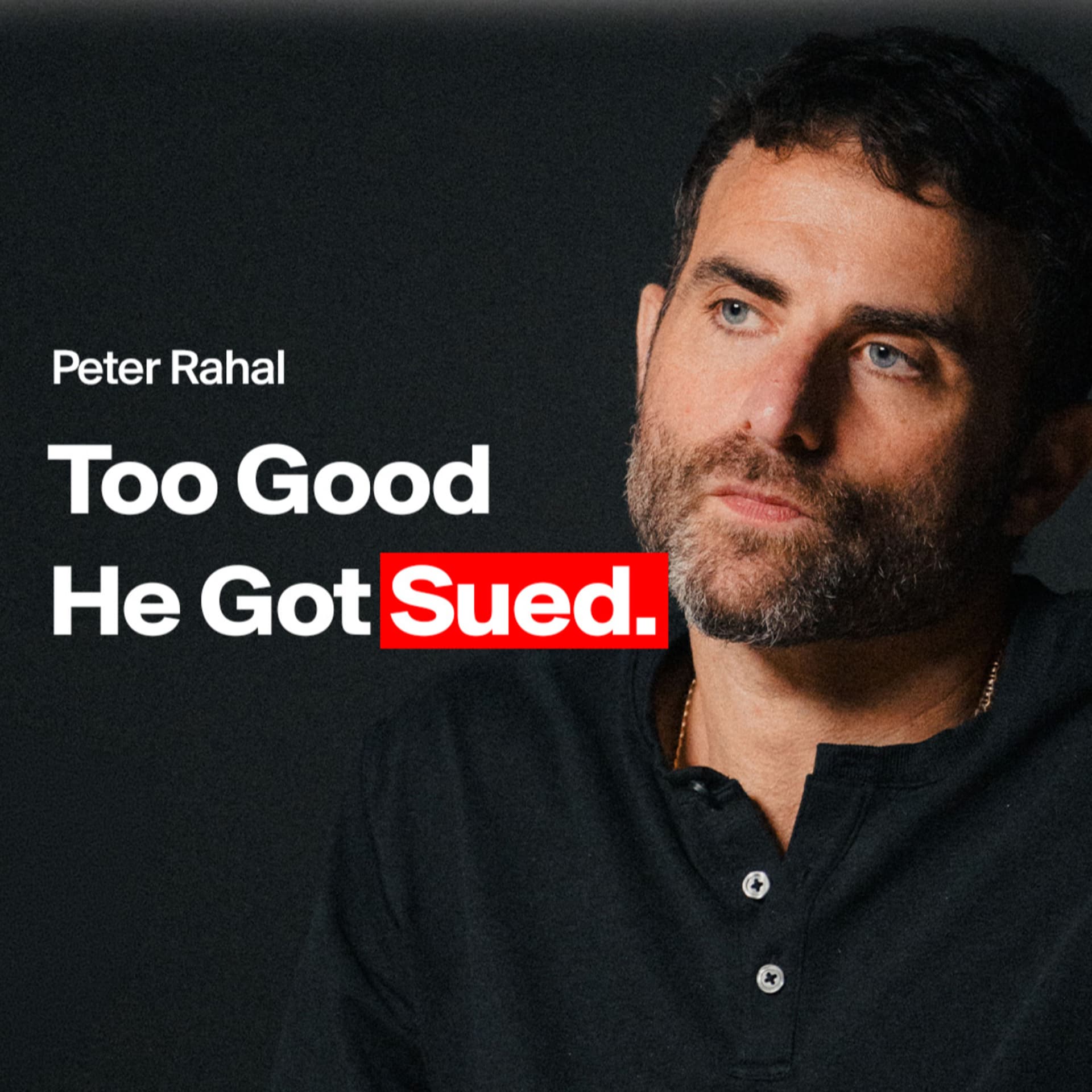
Peter Rahal (RXBAR founder) explains how David Protein scaled via breakthrough product engineering, viral/brand marketing, aggressive sampling, and navigating multiple lawsuits. He also discusses acquiring the EPG ingredient supplier, managing supply-chain risk, and why “non-obvious but true” creative wins.
Guest backgrounds
Peter Rahal is a multi-time founder who built RXBAR to a ~$600M exit. He’s now scaling David Protein, a brand valued at over $1B within two years. The other speaker(s) are podcast hosts/entrepreneurs (not clearly identified in the transcript) who discuss marketing and unit economics with him.
Key claims
- David’s nutrition dispute came from plaintiffs using a bomb calorimeter (measures energy burned) instead of metabolic measurement; EPG metabolically doesn’t count as the same calories as measured.
- The lawsuit(s) were dropped/dismissed; media virality amplified education, generating ~200M impressions in a week.
- Scaling EPG required vertical integration; after acquisition/merger, supply-chain bottlenecks and out-of-stock risk were addressed.
- Marketing strategy: “non-obvious, but true” ideas; heavy sampling plus paid ads, influencer/podcast credibility, and big creative stunts; performance marketing is less central.
- For CPG, unit economics can work immediately with ~40–50% margins (as discussed).
Notable examples
- TikTok-driven virality after a viral creator video; 5,000-bar TikTok giveaway; launch email list ~40,000.
- “David vs cod” campaign using protein-to-calorie comparison.
- RXBAR-style packaging concept: ingredient-first, minimal logo.
- Truck ads in NYC; podcast endorsements (Huberman mentioned).
Written by AI. May contain mistakes. Listen to the episode to check what was said.
Chapters
Tap a time to open that second in VOUnderstanding Competitive Tension
0:43 to 2:12
Learn how creating competitive tension can enhance enterprise value.
“on up to$2 million in eligible purchases per calendar year.”
The Challenges of Running a Large Company
2:12 to 4:00
Explore the complexities of managing a large, legacy business.
“Stay to the end, you're going to hear about it all.”
The Innovator's Dilemma
4:00 to 7:00
Understand the difficulties of innovation within established companies.
“your body doesn't have the enzymes or process to break that down and use it as energy.”
Experiences Post-Acquisition
7:00 to 10:06
Hear about the transition to running a brand within a larger corporation.
“As an entrepreneur, you want to identify dependencies and reduce the risk of those dependencies.”
The Mindset of a Founder
10:06 to 12:15
Discover the mindset needed for a CEO when transitioning after a sale.
“So anyway, whether the deal happened or not, we would have been out of stock.”
Investing and Lessons Learned
12:15 to 15:11
Learn about the key takeaways from investing post-exit.
“usually better for you items are always like, yeah, it's better for you and it tastes like shit.”
Leadership Style and Principles
15:11 to 17:27
Understand the principles of servant leadership and its importance.
“And I think an underrated feature of it is the generosity of it.”
Avoiding Dependency in Leadership
17:27 to 20:26
Explore the risks of fostering dependency on leadership in teams.
“Because if you're in beverage, if you're like, we're seeing this with ice cream, it is impossible, very difficult to get samples.”
Navigating Launch Strategies
21:52 to 22:45
Understand how pre-launch strategies and anticipation build momentum for a successful product launch.
“So yeah, that was the, Then we got this like attention wheel and virality on TikTok.”
Evaluating Profitability and Trade Shows
22:46 to 24:42
Learn how to assess profitability in CPG businesses and the role of trade shows.
“companies where it's just like, okay, first round, we lost 19 million.”
Show all 42 chapters
Creative Brand Marketing Insights
24:43 to 28:00
Explore unconventional brand marketing ideas and strategies for success.
“Guys, I asked Peter before all the topics he wanted to talk about and I say digital marketing, he just goes, nah.”
The Contrarian Approach to Business Ideas
28:00 to 29:10
Learn about the importance of non-obvious ideas in business and marketing.
“So it's arguably, it's like a contrarian approach.”
Marketing Strategy: Brand vs. Performance
29:10 to 30:50
Discover how to balance brand marketing and performance marketing in business growth.
“And what I love about the creative process is like you have to tear up the script, right?”
Influencer Marketing Insights
30:50 to 32:30
Understand the evolving role of celebrities and influencers in brand marketing.
“but when we're in five years, 10 years, maybe it should be all brand marketing.”
Navigating Industry Challenges
32:30 to 33:50
Explore the impact of public scrutiny and the importance of brand integrity.
“So there's a need for sort of like a arbiter of truth and chief science officer of some type, something like that.”
The Importance of Due Diligence
33:50 to 36:20
Learn about the need for thorough research when partnering with influencers.
“I mean, for me personally, it's like, I think you create the tornado early.”
Word of Mouth Marketing Strategies
36:20 to 39:20
Discover how to turn service failures into opportunities for customer loyalty.
“Four years later, still fucking ripping.”
Brand Development Insights
41:20 to 42:00
Gain insights into the process behind branding and product naming.
“So you guys definitely have been called polarizing in the marketplace.”
The Evolution of Power Bars
42:00 to 43:00
Learn about the history and naming challenges of RX Bar in the context of power bars.
“In the late 90s, if you were to go walk a grocery store, the category would be called power bars.”
Crafting the RX Bar Identity
43:45 to 49:50
Understand the strategic decisions behind RX Bar's branding and product positioning.
“You're clearly working at Zootopia 2 Now available on Disney Plus Rated PG I would imagine they had probably started, the fall from grace was already there.”
Navigating the Retail Landscape
50:35 to 56:00
Explore the strategies RX Bar used to break into retail and achieve rapid growth.
“And you see it on shelf, like craft beer.”
Retail Strategy Insights
56:35 to 58:29
Explore effective retail strategies for new brands and products.
“We just briefly touched on it because that's what the main answer I see is they go into retail, they go into Erwan.”
Understanding Target Customers
58:29 to 1:01:08
Identify and understand key target customer profiles for products.
“And so you want to be patient with that.”
The Rise of Hyrox and Fitness Trends
1:01:08 to 1:03:28
Discuss the emerging fitness trend of Hyrox and its market potential.
“But the reality is that most Americans are really struggling with maintaining the ideal body weight.”
RXBAR's Origin Story
1:03:28 to 1:10:03
Learn about RXBAR's journey from inception to major market player.
“there's this whole culture, there's a different cultural thing.”
Fast Followers and Market Position
1:10:03 to 1:12:03
Learn about the competitive landscape and the role of early market entrants in the DTC space.
“Like you guys with the only ones feeding this, how long into that journey were there fast followers to come on and try and take market share from you?”
Key Decisions in Building a Brand
1:12:04 to 1:13:45
Discover pivotal decisions made at RxBar that influenced its success.
“I mean, they're just the biggest retailer.”
Navigating Manufacturing Dependencies
1:13:46 to 1:15:49
Understand the risks of manufacturing dependencies and how to manage them effectively.
“But then a larger customer came in and bought out all their volume.”
Building Strong Supplier Relationships
1:15:50 to 1:17:15
Learn the importance of empathy and transparency in business partnerships.
“And Coca-Cola used to just like 180-day terms, 360, like just abuse, used all their leverage.”
Understanding the Sale Process
1:17:16 to 1:19:53
Gain insights into the complexities of selling a company and negotiation strategies.
“Let's just fast forward all the way to the end.”
Evaluating Buyers: Private Equity vs. Strategic
1:19:54 to 1:22:11
Explore the differences between private equity and strategic buyers in company valuation.
“They're going to want a two X at least in a two year period or something.”
The Art of Transparency in Deals
1:22:12 to 1:24:50
Learn how transparency can build trust and strengthen business negotiations.
“And so it was like quickly, it was obvious we were doing something.”
Leadership and Management Dynamics
1:38:01 to 1:39:59
Explore the balance between micromanagement and macromanagement in leadership.
“And great leadership is knowing when to micromanage and when to macromanage.”
Future Roadmap and Product Expansion
1:41:06 to 1:43:56
Delve into the expansion plans and new product developments for the brand David.
“So we'll ultimately have multiple brands in a decentralized way, which I'm very excited for.”
Creating Consumer Surplus in Product Development
1:43:57 to 1:48:21
Understand the concept of consumer surplus and its significance in pricing strategy.
“I think the fundamental thing is concept in economics called the consumer surplus.”
The Impact of Protein Trends on Food Industry
1:48:22 to 1:50:48
Discuss the importance of protein in diets and its implications for food trends.
“And so - That is fucking crazy to think, to say that out loud.”
The Role of Market Perception in Protein Sources
1:50:49 to 1:52:00
Examine the market perception of soy protein and other alternative sources.
“Truck drivers, construction workers, office workers, pregnant women, like everyone comes through 7-Eleven.”
Understanding Funding Expectations
1:52:00 to 1:53:10
Explore the complexities of financial expectations in business funding.
“Yeah, like what kind of return do they need over what timeframe?”
Reflections on Business Beliefs
1:53:10 to 1:55:16
Discuss insights on what matters in business beyond just making money.
“Gotta hold off on that, ladies and gentlemen.”
Navigating Investor Relationships
1:55:16 to 1:58:05
Learn about the importance of investor diligence and communication.
“And then something up in the, like the NAPG came to me.”
Lessons from Entrepreneurship
1:58:05 to 2:00:58
Discuss the impact of market conditions on entrepreneurial success.
“Probably getting out of retirement and starting David.”
Future Projections for David
2:00:58 to 2:01:59
Hear predictions for the growth potential of the David brand.
“Do you think entrepreneur versus market?”
Transcript
Automatic transcript. May contain errors.0:00Open Residency Hosts:Today we helped a latte for Sam coffee shop get an insurance quote simply and easily and made sure a floral delivery van was able to make someone's day. We're the Hartford with decades of experience insuring millions of unique small businesses. When it comes to your small business insurance.
0:20Peter Rahal:Thank you.
0:22Open Residency Hosts:One size absolutely does not fit all. Get a quote or find an agent today at the Hartford dot com slash small business.
0:30Peter Rahal:Experience a membership that backs what you're building with American Express Business Platinum. Get two times membership rewards points per dollar on eligible purchases in key business categories, as well as on each eligible purchase of$5 ,000 or more, on up to$2 million in eligible purchases per calendar year. American Express Business Platinum. There's nothing like it. Terms apply. Learn more at americanexpress.com slash business dash platinum.
1:00Open Residency Hosts:We're sitting there in the open. We're like, holy shit. The product's so good, we got sued over it. It's so good, people don't believe it. It's so good, it tastes like it's 280 calories, but it only is 150.
1:10Peter Rahal:That's Peter Rahal. He built RX Bar to a$600 million exit and is now aggressively scaling David, a brand valued at over a billion dollars in under two years.
1:20Open Residency Hosts:Every fucking brand does some stupid thing. It doesn't move the needle. It's a waste of time. You gotta find ideas that are not obvious, but true. It wasn't obvious to sell COD. It wasn't obvious to do a campaign in a big photo shoot. That wasn't obvious, but it was a really good idea.
1:34Peter Rahal:We get into how he engineers breakout products, the viral marketing moves that makes David impossible to ignore, and what no one tells you about getting sued multiple times.
1:44Open Residency Hosts:Younger entrepreneurs just want to be really aggressive. That's a big mistake. What mountain are you climbing? It's your life's work, so you've got to pick the right mountain.
1:59Peter Rahal:Guys, by the end of the episode, you guys are going to know exactly how Peter scaled and sold his company for$600 million and now is on another run with David Protein. 255 days in, he raises that a$725 million valuation. Stay to the end, you're going to hear about it all. I want to start with the lawsuits though. Let's start with the first one, the calorie. Is David actually 150 calories?
2:21Open Residency Hosts:Yeah, David's 150 calories.
2:23Peter Rahal:Walk through it. Tell us how and why, because the calories in the protein are out of control.
2:27Open Residency Hosts:Yeah, so the plaintiffs that filed the case used an instrument called the Balm calorimeter, which is simply a device that burns material and measures the energy out of it. And so that's how the unit of energy of a calorie is measured. That is not how you measure certain foods for nutritional facts, because the nutritional facts are a measurement of metabolic energy, not just energy broadly. Good examples like fiber, allulose, those have 0.4 and 2 calories per gram instead of 4. If you burn those in a bomb calorimeter, you get 4 calories per gram. And so, yeah, so they use the wrong device. And then we have an ingredient called EPG, which is this revolutionary fat replacer.
3:17Open Residency Hosts:It's a triglyceride, so it has a lot of energy in it. And if you burn that with a bomb calorimeter, it will show up as nine calories per gram of fat. However, metabolically, the body does not pick it up as nine. That's why it's so special. That's why the David product is so special because it tastes like it's 280 calories, but it's only 150. So they use the wrong device. And this is pretty common. Like the whole food industry uses more. It's based on a metabolic device. not what you burn physically or literally. And a good example is like wood. If you were to like take wood, use a ball in the calorimeter, it will show some amount of calories.
3:57Open Residency Hosts:However, if you were to chew wood and eat it, your body doesn't have the enzymes or process to break that down and use it as energy. So yeah, a simple misunderstanding. And the case has been dropped.
4:10Peter Rahal:Congrats. Thank you. A couple of days before this, it got dropped. Love it. It's top April now.
4:15Open Residency Hosts:And then the thing I wonder is like, why did this go so viral, right? Like at our, at our X bar, my previous company, this has happened. It happens all the time in the food business. Like this is like a whole industry around class actions and things. But for us, it was a big deal. And I think it says something about how breakthrough the product is.
4:33Peter Rahal:And as a multi-time founder, I'd love to know just for people out there that maybe you're on their first ride, what goes through your head when it just comes on your desk and or the email or letter that you got the lawsuit?
4:43Open Residency Hosts:Well, I, yeah, I'm experienced. So like when I first heard about like, oh, of course, not surprised. We knew this was going to happen because of this groundbreaking technology that that is part of the territory. And then also if you measure through a palm calorimeter, not a metabolic chamber, like you're going to show up way over. So we knew it. And when I first, you know, it was on my desk. I'm like, OK, great. Well, we're obviously we'll fight it. The thing different the second time is how different media is. So like the way it happened was like, you know, some random Tuesday, I'm like in a management meeting and then all of a sudden I'm like, it's gone viral somewhere.
5:20Peter Rahal:Because someone just lit off a class action lawsuit and then it just went crazy.
5:22Open Residency Hosts:No, it's more the class action happened in January. It's more that a really funny content creator made a great video that went viral on TikTok. And that virality caused media to pick it up. Everyone like pick it up. But the news had happened in January. So the different, like, I think in 2015, if this happened, we're never gotten picked up. So that's what's different second time. So the good thing is we have an amazing team and we went right into action. And second time founder, you just have to not listen to lawyers and go communicate.
5:54Peter Rahal:You were telling me that off camera. I completely agree now. It's a combination of intuition, LLMs, and maybe like 20 % of the lawyer bill you used to play. Just dabble in there in the lawyer bill. Do you think all press is good press?
6:07Open Residency Hosts:No, I don't think it can't be true. Think about like people getting canceled and stuff like, yeah, I don't think it's all press is good press because all press is not true. Like the misinformation thing is like wild right now. So no, I don't think it's all.
6:21Peter Rahal:Let's back into the epigree because you guys bought that company. And then there also was this kind of antitrust violation by a couple of people that were using it. What's the story on that for people out there that that haven't heard it?
6:32Open Residency Hosts:Yeah. So when we started David, epigee was this amazing ingredient, amazing technology. It was sitting there in the open. We're like, holy shit. And then got really close to the company. Cause like to me, my, my view is like all paths were either to like us acquiring them, merging or them being a problem. Because when you have a single source of, when you have that sort of dependency, it's a huge risk. Bottleneck for scale. Bottleneck for scale. well, just if something goes wrong, it's out of our control. Pricing power. Just, yeah, it's just nasty. As an entrepreneur, you want to identify dependencies and reduce the risk of those dependencies.
7:09Open Residency Hosts:So I got close to the company and, you know, they wanted me to invest in it. And I was like, I'm not going to invest. And then as David took off, we got product market fit. They've been around and no one's really was successful with the ingredient. And one day they came to me and was like, hey, Peter, we've got a crazy idea. They're like, how about you take it over? They came to you. Yeah, because it's really, really hard. So the problem with scaling a new ingredient is you have a chicken or the egg problem. So you create the ingredient, you go to market, and you want to sell to large companies because they have the volume.
7:48Open Residency Hosts:And they'll say, oh, it's very interesting, but you're the only one that makes it. It's too expensive. and there's not enough supply to support our potential demand. So there's not enough supply to support the demand and then there's not enough demand to support any sort of building of supply. So you actually, these businesses really need to have a vertical integration.
8:10Peter Rahal:You can't incrementally grow. You need to be vertically integrated and or have big supply so then you could go to the people that actually would see shaded demand.
8:19Open Residency Hosts:Yeah. So that chicken or the egg problem is inevitable. So the way you do that is through your own vertical integrating, getting a product to market and scale. And they are super aware of that. And so we acquired them and merged. And then...
8:33Peter Rahal:Why didn't anybody come after these guys? Why didn't anybody else try and acquire them?
8:36Open Residency Hosts:There were a couple. There had some clients that had success with it. And yeah, and it's also like not a lot of people knew how to apply the product. So yeah, and then in that transaction, it totally changed our aperture of our vision and where we can go. So, but that year, so two, two factors. There's one prior to that deal, I had negotiated a supply agreement with them. And part of that supply agreement was in a change of control. We would have continued supply. And then we had most favored nations on inventory. So anything they made. And pricing? Yeah, and pricing. Most favored nations is that if anyone comes into the market and gets a better price.
9:19Open Residency Hosts:Have to match it? Yeah, have to match it. And then same thing on inventories, like most favorite nations on inventories, like if there's any open supply, we have the first right to it. And so after the deal, scaling a supply chain is really hard. You have to manufacture, you have to build new equipment. We're talking about actual new equipment. Apigee was not able to support David's business with the transaction or without the transaction. So we were in an out-of-stock situation after the acquisition. And so obviously we bought the company. We paid a lot of money for it and we merged with them.
9:52Open Residency Hosts:So, There was no supply. After the deal, there was really no supply. What does that look like?
9:56Peter Rahal:You guys raised a bunch of money, you broke off some of it, and now you merged and they're on their cap table now?
10:01Open Residency Hosts:It was a cash equity deal. So we bought -
10:04Peter Rahal:So you raised 75 and some of that went to them plus equity.
10:07Open Residency Hosts:Yeah, exactly. So anyway, whether the deal happened or not, we would have been out of stock. The plaintiffs would have been out of stock. And then on top of it, if the deal didn't happen, then we wouldn't have the resources to actually go build a supply chain to go scale EPG manufacturing. So, yeah. And then the thing is, there was no commercial efforts to negotiate. There was just litigation. So it's done. Yeah, that got dismissed.
10:34Peter Rahal:It's a good day.
10:36Open Residency Hosts:Yeah. Yeah, it's a battle out there.
10:38Peter Rahal:I definitely do think it's one, if not many, of the modes that you guys have. For me, when I look at it too, like the Epigee, it has other applications as well too. Like you can put this in tons of other different snacks and foods, correct? Yeah. What are some like sample examples?
Read the full transcript
10:52Open Residency Hosts:Yeah, the way to think about it is where are there items or categories or products that are dependent on fat? So the most obvious one is ice cream. What makes ice cream so special is cream and sugar. One pint of ice cream full fat is like 1 ,000, 1 ,200 calories. It's crazy, bro.
11:10Peter Rahal:You a ninja creamy guy?
11:11Open Residency Hosts:Ninja creamy. No, I'm not an ninja.
11:13Peter Rahal:It gets it done.
11:13Open Residency Hosts:It does get it done.
11:15Peter Rahal:Those numbers are bonkers though, bro. Like if you go and look at like a Ben and Jerry's or something, it is insane.
11:20Open Residency Hosts:It's an energy bomb. Yeah. And so like, it's kind of a problem. You can't really, you shouldn't really be eating that. But why it tastes so great is because it's fat. And so that's an obvious category that an application is ice cream. And so, so the framework is like, where are there a lot of things dependent on fat? And then another one would be fried foods. Wow. Like fried foods are delicious. Obviously, one of the things that makes him terrible is the oil uptake and the energy density of that. So that's a good application. I think it's a safe bet to say,
11:49Peter Rahal:we're going to get into the future a little later, but you guys are going to basically dominate in all these characters.
11:53Open Residency Hosts:And that's the goal, yeah.
11:56Peter Rahal:Because you're going to really be able to arbitrage. I mean, what is that? Is it two to one as far as some of these kind of key metrics, whether it be fat or whether it be calories, you're getting like a two to three to one ratio.
12:06Open Residency Hosts:We can get 50 % reduction in calories. Insane. Yeah, with the most important thing, without a major like taste compromise. Because usually better for you items, usually better for you items are always like, yeah, it's better for you and it tastes like shit. It's better for you, but yeah, it's like, people are like, ah, it's okay. And then it's like, but it's good for you. It's like that, you can't have that argument. Everything needs to be a parody or better taste and texture wise.
12:31Peter Rahal:How are you managing like the trust, like with your customers and the retailers with why this is going on. I mean, we said that all press isn't good press. Obviously, explosive stuff is going on on the internet. But like, are your retailers concerned? Are your investors concerned?
12:43Open Residency Hosts:No, the investors understand. Retailers get it because they're in the industry. And the way you build trust is it's like the truth prevails, right? So like science prevails over time. And the messaging is like, yeah, the product is so good that we got sued over it. Like, it's so good. People don't believe it. It's so good. It tastes like it's 280 calories, but it, it only is 150. And so that's a bit of like taking the negative press and turning it into like an actual, the truth of the story and that builds positive momentum. But any, yeah, like any new, new thing, anything innovative that's so different is misunderstood.
13:23Open Residency Hosts:Part of the education process is like these moments of articulating the benefit and explaining it. So,
13:30Peter Rahal:um, I almost feel like they just were like top of the funnel and they just filled like this net new funnel for you guys of just new people to understand and know about you. Some people may or may not even care how many calories to be completely frank with you. And then you get the ripple effect of actually educating on what it is and the calories.
13:44Open Residency Hosts:Yeah. I mean, yeah, like net positive. I think it is good in the long run because it's a mass education thing. And like we got 200 million impressions in a week. So here's where like, it is good press. Like what would you pay for 200 million impressions?
13:59Peter Rahal:Back into the CPMs, I mean a lot. Yeah.
14:01Open Residency Hosts:One thing that was inevitable for us to do is educate on calories, right? And like a lot of people just don't understand energy and calories. And so, so I do think that over time, it's a positive.
14:13Peter Rahal:Love that. Let's move on. So definitely supply chain is one of the most that you have. We'll get into some of the others. I want to get into kind of the machine. You guys went like zero to a hundred million dollar run rate very, very fast. Let's kind of talk about like the launch because you guys basically took over Instagram on the launch and the marketing mix. I guess let's just first start off with like marketing mix. Like how do you guys spend your dollars?
14:34Open Residency Hosts:Yeah, I'd say most of it is paid ads. We do a lot of sampling. Like one of the advantages of this product is it's very easy to trial and sample. And so letting the product do the work is like super foundational strategy and people love free stuff. And so just giving away trialing products, mission critical.
14:53Peter Rahal:And that's trialing at retail. that's given to influencers anywhere and everywhere.
14:57Open Residency Hosts:Yeah. Be very liberal with trial.
14:59Peter Rahal:Let's stop there for a second. I feel like not enough people do that, man. Straight up, bro. That's how I built my whole entire business is we were sending thousands and thousands of pieces of art. You get the content, you get the distribution, you get the social proofing, you get the relationship, the business. I mean, it's everything that you get.
15:13Open Residency Hosts:Yeah. And I think an underrated feature of it is the generosity of it. And so when you receive a gift, it's unexpected. it's starting a relationship off positively. And so like in your head, it's like, oh, this is free. This was given. I'm lucky. Like you're like starting the relationship off with the brand or company in a positive way. And so it's going to, and it's going to taste better. Everything's positive about it. And so generosity is underrated probably. And so that's like, that's always like a foundational thing. Just like trial, paid ads. We've done these truck ads. You see everywhere over New York.
15:52Open Residency Hosts:We have trucks run around the city on the routes with good ads.
15:56Peter Rahal:I think that's underpriced as well, too. The guys at Mellon, I was just there, and they wrapped multiple trucks, and you're just, you have 24-7 Billboard.
16:04Open Residency Hosts:Yeah.
16:04Peter Rahal:It's insane.
16:05Open Residency Hosts:Yeah, and that's a good one. And then that was mispriced like two years ago. Probably the pricing's gone up. Another one would be podcasts. You know, good podcast hosts.
16:15Peter Rahal:Give him a shout. Who we got here? Who are you guys with?
16:18Open Residency Hosts:Huberman's great. He's the main one. And, you know, think about the podcast thing is like the audience feels like they know them personally, right? It's not like an actor or anything where you just like don't really understand. Like you feel like you're friends with them.
16:32Peter Rahal:Parasocial relationship, 100%.
16:33Open Residency Hosts:Yeah, so it's an interesting thing.
16:35Peter Rahal:So that's like our main, those are our main things. On the sampling side too, before we just move on, like this is how I look at it. I'd love to know if you just look at the same way, just like from an LTV to CAC ratio. It's just like, if you do the math, it's like if you give someone one bar, like how many bars do you need to give out to just make it back on LTV. It's that simple. It's like, if you just do the math on LTV and you're like, hey, I can give away 10 free bars. And if I get one person to buy and then they want to win on LTV, it's that simple.
17:02Open Residency Hosts:Yeah, yeah. And like the anecdotes are overwhelming. Like you don't even need to do any analysis. It's like, if you have a good product, right? Like if the product you know tastes good for something that costs, you know, it's like 325, we sell it for, it's the way to go. And the thing I always tell our team is like, we cannot take for granted that we have a product that is an individually wrapped item that is not too expensive that we can sample. Because if you're in beverage, if you're like, we're seeing this with ice cream, it is impossible, very difficult to get samples. Like it's heavy to ship.
17:36Open Residency Hosts:It needs to be frozen. Like you can't achieve trial very easily. So any new brands growing, like trial is the most important thing. Because when you get, and it's like, you get trial, you get awareness, you start a relationship with the customer. And yeah, so it's like a foundational thing.
17:52Peter Rahal:To put a pin on that as well, too, for people out there listening, he gave very, very hard advice. I completely agree. And I stopped doing this. I was doing this in the beginning with Iconic. Fuck the attribution. You don't need attribution. It could just be a fixed line item on your P &L. I'm going to give away X amount of free stuff. And then just like for us, like we were only D to C then. It's just like, does the EBITDA look good? Straight up. And it's like an intuition type thing. It makes, you just have to be common sense.
18:16Open Residency Hosts:Yeah. And it's like, you're giving instead of getting money to ads to like go through this process like take that money put it in inventory and give it to customers or potential customers but you want to be smart with like who you give it to and how you do it but it's i think it's a way better use of resources
18:30Peter Rahal:than just giving to facebook so it's late 2024 you guys are launching as i mentioned like you guys literally came out of nowhere like literally like you hit instagram with like a bag of bricks walk us through kind of some of those like strategies and you know you did a million dollars in the first week you guys sold out there's there was a lot of pre-planning so yeah walk us through some stuff yeah so being a second time founder planning the seed early of like like six months out that like hey something's coming so hey introducing david introducing the
19:03Open Residency Hosts:product building into the anticipation and then just your channels or third-party channels through my, just my channels, which was mostly LinkedIn and X.
19:11Peter Rahal:And then that dribbled into probably some earned media.
19:14Open Residency Hosts:Yeah, exactly. Then a journal earned media, like the industry picked it up and, and then picking a date, right. And so like, here's the launch date and just, so building some anticipation and then had a hypothesis that we would have like brand market fit on TikTok. TikTok's, I think fitness products do really well there. And so one idea that worked really well was doing a 5 ,000 bar giveaway on TikTok and just sign up and first 5 ,000 will get it. And then in general, so in general, very aggressive sampling, pre-launch sampling campaign.
19:52Peter Rahal:And again, to back into that, it's not that aggressive. It's how much money? It's not that much money.
19:58Open Residency Hosts:It's not crazy. Yeah, it's not crazy. And so one, they got something for free. They entered a little thing, got it for free, and it was novel. It had credibility because I was involved. And then it had also crazy great differentiation with macronutrients. And then design as well, disruptive design. And so all those factors together, everyone wanted to share it.
20:23Peter Rahal:And early.
20:23Open Residency Hosts:They feel cool. Yeah, exactly. There's like a scarcity or exclusivity thing. So all those like factors and tactics were stacked up into a big trialing thing. And then their product is good. You're here at 28 gram protein bar. You're just gonna be like, oh, it's like probably, you know, not going to taste good. So something interesting in the protein bar market is like expectation minus reality is like happiness. The expectation is really low on protein bars because protein is the most important macronutrient, but it's difficult. It doesn't really taste great all the time. Ready to soundtrack your summer?
20:56Open Residency Hosts:With Red Bull Summer All Day Play, you choose a playlist that fits your summer vibe the best. Are you a festival fanatic, a deep end DJ, a road dog, or a trail mixer. Just add a song to your chosen playlist and put your summer on track. Red Bull summer all day play. Red Bull gives you wings. Visit redbull.com slash bright summer ahead to learn more. See you this summer.
21:21Peter Rahal:When you need to build up your team to handle the growing chaos at work, use Indeed Sponsored Jobs. It gives your job post the boost it needs to be seen and helps reach people with the right skills, certifications, and more. Spend less time searching and more time actually interviewing candidates who check all your boxes. Listeners of this show will get a $75 sponsored job credit at indeed.com slash podcast. That's indeed.com slash podcast. Terms and conditions apply. Need a hiring hero? This is a job for Indeed sponsored jobs. I only got a couple that tastes good.
21:52Open Residency Hosts:Yeah, like it's a market's tough. So yeah, that was the, Then we got this like attention wheel and virality on TikTok. That was really helpful. And then another thing in that hype phase or anticipation building, we got like 40 ,000 person email list. So the day we launched, we just like 40 ,000 people got it, had been waiting for it, went viral on TikTok. And yeah, that set the momentum for the week.
22:20Peter Rahal:And then you sell out. Was that a good or a bad thing, you think?
22:22Open Residency Hosts:Like I think about it as like selling out is good if the replenishment window is like two weeks. Like if it's over two weeks, then it's, I think it causes some demand destruction.
22:35Peter Rahal:Outside out of mind at that point. Yeah.
22:36Open Residency Hosts:Like, so if, yeah, the gap's too long, it's a problem. But if it's short enough, it's great.
22:41Peter Rahal:Makes sense. What about like profitability and unit economics? I mean, all of these companies in your space, I don't know how people invest in some of these companies where it's just like, okay, first round, we lost 19 million. Second round, we lost 9 million. Then we lost 4 million. How do you look at profitability and unit economics?
22:58Open Residency Hosts:For CPG businesses, the math should work right away, depending on the product or category 40 to 50%. Wow. Yeah. So CPG, the math should work right away, I think.
23:12Peter Rahal:And that's 40 to 50 on your website? Yeah.
23:15Open Residency Hosts:Wow. Yeah. Yeah. And that's the whole most interesting. The mega scale people like Reese or Mars or Hershey, they have very different margin profiles.
23:26Peter Rahal:So for people out there that would be launching, there's obviously you had the credibility from RX Bar. What about like these trade shows? Do you leverage like the trade show and or any other distribution channels to kind of get it?
23:36Open Residency Hosts:So trade shows, they're really effective. But if you look at like, what's the objective of a trade show? Say it's a natural expo West, the objective would be to get retailers. Like I am there to get in front of buyers, category buyers and get new distribution points. Like that's the goal. But for us, it's a really expensive. It's like a lot of the company's energy. It's a lot of resources to go do those. And so we opted out simply for the reason that we have those relationships with retailers and we don't necessarily need to be there. But if your objective is that and you can't get that, they're a good place to be.
24:12Peter Rahal:There are people that are more advanced, second time founders. you actually think that those expos may or may not even be relevant anymore if you have the retail connections.
24:19Open Residency Hosts:Yeah. I think I, I mean, all stakeholders that go there kind of view it as like exhausting.
24:24Peter Rahal:It is. It's like football over there. It's crazy, dude.
24:27Open Residency Hosts:Yeah. Like I, I'm happy to get on a plane and just go, go to the customer, you know, but it is, it is one of those, it's a good scale. Like everyone's in the same place, same room. So there is a benefit, but I just don't ever default do things, right? Like you just got a reason from why.
24:42Peter Rahal:First principles. Yeah. You don't just need that to go to go let's talk about like performance marketing versus brand marketing i feel like you're more of a brand marketing guy and you do these like crazy campaigns i got a whole list of them here this cod billboard vibrators and pr boxes copy free subway ads the mean girl lawsuit response is really good yeah is there like an actual strategy behind these pulse campaigns or like a cadence or a process so obviously i don't like i don't like
25:08Open Residency Hosts:performance marketing personally. I think it's, it's, it's important.
25:11Peter Rahal:Guys, I asked Peter before all the topics he wanted to talk about and I say digital marketing, he just goes, nah. Yeah.
25:17Open Residency Hosts:I just don't think it's that interesting. And yes, it's valuable. I don't mean to diminish it, but I don't think it's interesting. And I don't think it's, if you're dependent on it, I think it's a problem.
25:27Peter Rahal:My thesis is a lot of people think they're brands and they're not, they're marketing companies. And I think that the threshold is like, dude, I think the threshold is like 200 million and it might even be more. Yeah.
25:38Open Residency Hosts:And it's like, I think it's like not a good use of resources or capital. And yeah, so I'm more of a brand marketer ad guy. Like I like good ads. Like I think they do a good job.
25:48Peter Rahal:Traditional advertising, like David Ogilvie, like billboards and campaigns.
25:53Open Residency Hosts:And so our framework, or the one I like to think about and I push our team is, if it's, it's, you got to find ideas that are not obvious, but true. So if they're obvious and true, they won't work so they have to be not obvious for example i'll give you some like obvious ideas that are not good david and goliath something with the name david and getting a bunch of davids in a room golden ticket uh those are all bad ideas because they're obvious right like i whenever interviewing people it's always funny like those are the those always come up as like marketing ideas it's like oh you should do something with goliath those are the first ideas from the llms
26:35Peter Rahal:the first thing.
26:35Open Residency Hosts:Yeah. They're just, and they're so my point is like, well, how do you determine if they're good? If they're obvious, they're not good. So a non-obvious idea that is good is cod. Okay. So no one would, if you would just survey everyone, no one would come up with that idea. The reason why it's good is because there was a story around our website, having it as a, on a comparison chart, cause it has the most protein to calorie ratio of any item out in the world. So David's number two to cod. Okay. We did that on our website. So it wasn't obvious to sell cod. It wasn't obvious to do a campaign in a big photo shoot.
27:04Open Residency Hosts:And like, that wasn't obvious, but it was a really good idea.
27:06Peter Rahal:It was confusing and it drew a lot of attention. And then it was true.
27:10Open Residency Hosts:Yeah, it was true. And the juxtaposition between boiled cod and David gold is funny and powerful and it communicates a lot. Another like non-obvious good idea is like RX bars packaging, like reducing the logo to where you almost can't see the, you don't know what the brand is and leading with the ingredients was not an obvious idea. And it was a good idea. We'll pop that up as well as it was just like, yeah, four egg whites, two cashews,
27:37Peter Rahal:three or four things.
27:38Open Residency Hosts:And conventional marketing, conventional brand design would say like, oh, logo is number one. And I remember teasing that out to some more conventional marketers back before we launched. And they're like, oh, that's terrible. Like, where's your logo? Where's your claims? Where's your differentiation? So with brand marketing, I think that's, that's the main idea is like, What is not obvious that is actually true? So it's arguably, it's like a contrarian approach. So good ideas are not obvious.
28:07Peter Rahal:It's a similar mental model to investing.
28:09Open Residency Hosts:Yeah, completely.
28:10Peter Rahal:Yeah.
28:11Open Residency Hosts:Yeah, yeah. Same.
28:12Peter Rahal:Is you just want to find something that maybe even is early too.
28:15Open Residency Hosts:Yeah, like the perfect example we just had, this was like April Fool's. Every fucking brand does some stupid thing and it's so obvious. It doesn't move the needle. It's a waste of time. like a non-obvious idea would actually just be launched a normal product. I was just going to say that.
28:32Peter Rahal:Just do something that actually is real.
28:34Open Residency Hosts:Yeah, exactly.
28:35Peter Rahal:And then people will be like, oh, is this April Fool's? Too good to be true.
28:37Open Residency Hosts:Yeah. So I hate April Fool's for that reason. And it's like, if you look at like on Instagram on April Fool's, it's like, oh, it's just so obvious at this point. And therefore none of it's a good idea.
28:48Peter Rahal:And is this a repeatable system that you guys are doing with all these ideas? Because I mean, you guys have been in market, I don't know, like two years. And I mean, I listed off four or five and you just announced some like supermodel as like your chief beauty officer. Like you guys are keep doing these big, bold things. Is this like a work back schedule or like quarterly or by year? Like we need to do it? I'm not.
29:05Open Residency Hosts:There's not so much structure to it, but our goal is every quarter do something. And what I love about the creative process is like you have to tear up the script, right? Because it can't be obvious, you have to keep ripping it up.
29:17Peter Rahal:Obviously the Mean Girls thing, like it happened like 24 hours after, but obviously you guys knew behind closed doors that stuff was happening. But like from idea to execution, What was the window like for that?
29:26Open Residency Hosts:Oh, no, it was right. It was like, this is an emergency. We have to go right away. And again, we have super talented people and the ability to make content. And we just like went for it.
29:37Peter Rahal:What does that look like? I know that you guys are in office, like everybody's in office.
29:40Open Residency Hosts:Everyone's in office. And it's like war room style. Like, you know, we go. Whiteboard? Yeah, whiteboard. We go in a conference room and it's like, I'm like clear my calendar. Like, let's go. I'm in there, but we have, you know, there's like a small, small little. small team.
29:56Peter Rahal:Army of creative Swiss Army. Yeah. Love that. How are you looking at kind of like this brand marketing versus paid marketing from what's just called zero to one and one to a hundred? How important is the sequencing?
30:08Open Residency Hosts:Yeah. So brand marketing is always important. However, it's riskier, right? So one out of 10 ideas work. There's creative risk with it. So in general, I look at it as one spectrum would be brand marketing, performance marketing. In your early days, it's like 90-10. 90-10 performance, 10 brand marketing. In your life cycle, as you get distribution and get household penetration and have awareness, it should migrate to almost all brand marketing. So we're at a life cycle, I would call us like a teenage boy. We're still growing. We have a nice mix of 60-40. but when we're in five years, 10 years, maybe it should be all brand marketing.
30:57Peter Rahal:Wow.
30:58Open Residency Hosts:And the reason is you have good brand marketing that raises the tide for everything. And you have the distribution points to absorb all the benefits of it.
31:07Peter Rahal:Because you don't need the quote unquote attribution. It's just going to seep to one of the zillion points of distribution.
31:12Open Residency Hosts:Especially an omni-channel business. You have like so many, it's like, I don't actually don't care where customers buy the product. I just wanted to buy it where it's the best place for them. and so the most efficient way to do that is good brand marketing.
31:24Peter Rahal:What about celebrity and influencer? I guess we should just back into starting with Norton, Huberman, and Atiyah. How do you guys look at having celebrities on your quote-unquote cap table?
31:34Open Residency Hosts:I think people that have the same approach to nutrition was important. People that I personally learned from and are rooted in facts and are really pragmatic. And for David, all that mattered, I thought, was nutrition thought leadership, not athletic or anything like that or lifestyle. So that's how we thought about it. And I think there's a lot of fatigue in the market for celebrity and influencer stuff. It's been so played out. So I think the best days are behind it. But in the nutrition world, I think it's important to have certain credibility with really thoughtful people on the topic because society is generally confused around nutrition, right?
32:15Open Residency Hosts:I've been in nutrition since I was 12. every five years. It's like five years ago is starve yourself. It was fasting. It was like, that's the next thing. And then carnivore. And then now eat five small meals a day. Like it's so dynamic that it just leaves everyone confused. So there's a need for sort of like a arbiter of truth and chief science officer of some type, something like that. Yeah, it's helpful. But I do think like the athletes, like when I started as an entrepreneur in like 2012, like professional athletes sold product.
32:49Peter Rahal:I just don't think that's a thing anymore.
32:51Open Residency Hosts:Yeah, I don't think athletes sell product anymore because they're just genetically, like they're not relatable. Like LeBron James is a specimen. I can't relate to him.
32:59Peter Rahal:Yeah, I mean, there's some crazy, crazy studies done with people with millions and millions of followers. And then like, you know, an influencer with a micro following of like 10 ,000 followers and they can push more product.
33:08Open Residency Hosts:Yeah.
33:08Peter Rahal:That is like, that is factual now. That is no longer subjective.
33:11Open Residency Hosts:Yeah, and like that wasn't the way three or four years ago. Completely agree. Yeah.
33:15Peter Rahal:What's up, guys? Hope you guys are enjoying the episode. There are a lot of gems in this conversation. So we put together a free PDF going inside the brain of Peter. From RxBar's packaging to David's explosive launch to how to actually build brands that cut through. If you want it, link is down below in the description. Enjoy the rest of the episode. What about like timing on this? Because I do think obviously you had RxBar and you had leverage in the marketplace. But I think the fact that you stacked the deck early when you guys came out and it was just like the macronutrients, Peter Hall a second time.
33:47Peter Rahal:And then you had all of these scientists. What advice would you give to founders out there from that? I mean, for me personally, it's like, I think you create the tornado early. And if you need to give up something to start, I think you do it because it just amplifies and gets the ball rolling fast. What's your thoughts on that?
34:04Open Residency Hosts:Yeah, it's so situational. So it's hard to give general advice. You know, at our expert, I had no credibility to even attract anyone to trust me. So I didn't have the means to bring anyone into the company. I mean, we couldn't even get investors. But as a second-time founder, it's like, oh, Peter's going to make a protein bar again. It's just a much easier thing to back. So yeah, for first-time founders, I would be more patient. And you need to get product market fit first, I think, before you bring in, try to like bring in outside support.
34:44Peter Rahal:These guys were just assuming that right out the gate, you're going to have product market fit. Yeah.
34:48Open Residency Hosts:And we brought them along. Like I was developing the product, sending it to them. They're like, oh my God, this is a breakthrough thing. But you know, if I was my first time founder, I don't think they pick up a phone. I mean, they get so much solicitation. Everyone wants to work with them.
35:04Peter Rahal:I just think if you're at 10, 15,$20 million, you just get that asymmetric benefit with one of these guys and what's really really good about the marketplace now is i do think it's top heavy huberman like dude i've heard of some of the numbers with this guy from like an affiliate perspective it is out of control yeah it is out of control but i do think there is this new kind of cohort of these random doctors that have a
35:27Open Residency Hosts:a very very specialized yeah that have a hundred thousand followers on instagram they're probably
35:33Peter Rahal:going to go on the upswing that you can get for a really good deal.
35:35Open Residency Hosts:Yeah, that's the arbitrage is like an up and come. If you can find, if you can go more venture and find an up and comer or like king make someone, that would probably be the best. That's the arbitrage right now.
35:45Peter Rahal:Which you can king make someone if they're good at content and they have actual real credible.
35:49Open Residency Hosts:Yeah. Like, actually like, and I just generally think we're in the market. I think there's just fatigue on influencers, celebrity endorsement.
35:59Peter Rahal:No celebrity, doctors. Doctors. Doctors and specialists. Yeah. The crazy, crazy thing. But they're like celebrities though. Like that's a Cuban celebrity. The craziest thing about him, man, is I know that he has done like ad reads on podcasts from four years ago. And they are still ripping on the post-purchase survey on how did you find out about us? No longer with the company. Four years later, still fucking ripping.
36:24Open Residency Hosts:Yeah, I mean, he's insane. He's a very special talent. I mean, he's loved. He's like the voice. He'll be, and he'll have a voice in America for a long time.
36:34Peter Rahal:I completely agree. Let's just go right to it. The Atiyah in the Epstein documents, it gets on your desk. You hear about it. What goes through your mind?
36:41Open Residency Hosts:Yeah. Like, so it got released Friday night. And so I wake up Saturday morning to like, I look at my phone on accident. It's like, Oh, Peter's in the files. I'm like, Oh, that's a surprising, but like a lot of people are. So, and then, uh, yeah, I just realized like, Oh, it's really getting, he's getting picked up a lot like he's being he's a big target and then it was clear that like the public was just going after him and you know it puts you as a brand it puts us in a tough spot and so what peter came to is like hey listen i'm i just need to focus on my family i need to focus on my practice and like take a step back then you know obviously it was a company we stand with the victims and the injustice like the DOJ is totally failing in providing justice.
37:31Open Residency Hosts:Like it's, it's pretty gross. And so I do think like if the DOJ did do its job and do justice, I think it'd be a very different situation. But, you know, the doctor is going to get targeted, not the businessman or sleazy politician. It's expected almost. Yeah.
37:51Peter Rahal:I mean, he definitely, I mean, of anybody and everybody, I don't even want to call out other names. I mean, for me, yeah, I feel like he was the name most, him and Trump were the two names that I feel like were the most circulating through the internet. Yeah. Yeah. And one other name, but I don't want to, I don't want to drop other names for people in this podcast right now. You guys could go on the internet and see yourself.
38:11Open Residency Hosts:Yeah. But it's an obscene file. This is, it's, it's just as gross what's going on. I mean, now there's a war and no one's talking like, it's all swept on the rug. So the public should be outraged and I totally understand.
38:26Peter Rahal:Yeah, it's upsetting. I mean, that's the risk that comes. It's not like key man risk, but like with signing deals with these people, they're going to be faces of your company knowing that the company could rise or fall based on how they're receiving the marketplace.
38:37Open Residency Hosts:Yeah, yeah, totally.
38:39Peter Rahal:You got to do crazy due diligence on this. And obviously this is something that you never could have expected.
38:43Open Residency Hosts:No. Absolutely crazy.
38:44Peter Rahal:So right now from an influencer perspective, obviously you're leveraging the social proofing and the science backed from now Lane and Huberman. You're doing Huberman's podcasting. On the influencer side, are you guys still just spraying the market with tons of free products?
38:58Open Residency Hosts:Yeah, yeah. And affiliates on TikTok is big. But I view this as like David's friends. Like we just want to align and be friends with a lot of people in the market and do it with product and build a relationship.
39:11Peter Rahal:For everybody out there listening that has a brand, I challenge you to give more free shit. Give more free shits. Give 10 % of your marketing budget a free shit and it'll just come. it'll come around. It's so crazy, man. Yesterday, a guy got like a damaged piece of art. It happens like 2 % of the time. And then like, I was like, pick another one on me. And just like that guy, just again, it's not necessarily free. That guy's going to do so much for me just because he's getting something for free. The word of mouth marketing, people forget word of mouth marketing
39:38Open Residency Hosts:is the number one thing. Yeah. A hundred percent. You went viral word of mouth. But like what you just described is called the paradox of service failure.
39:46Peter Rahal:What the, when bad happens, it's good. Yeah.
39:49Open Residency Hosts:So if someone has a bad experience, you can actually turn those into really positive by customers for life if you over deliver. So they got the art, it was broken. If you like make that right wholly, proactively, then you have a customer for life.
40:07Peter Rahal:I look at it as like, let's just say like equilibrium is at zero. They're at negative 10. You bring them from a negative 10 to a 10. Yeah. So you get this like 20 point markup as opposed to a 10.
40:15Open Residency Hosts:Yeah. And guess what? They're they're going to go talk about it. So you have that word of mouth.
40:19Peter Rahal:Yeah. You got to be nice, but not too nice there. Sometimes they take advantage of some of those people. It gets crazy. You can see that. You can always tell those. I'm going back and forth with my customer service guy. Like this guy is trying to scam us right now. Ask him for QuickBooks links and wire back this. Yeah.
40:32Open Residency Hosts:I guess your product's expensive. Yeah. For us, it's like the scam rate's fine if it is there.
40:37Peter Rahal:AOV's 400. Yeah. I'm in a different world. Yeah. Yeah. Your LTV is nice though. Guys, this episode is sponsored by Ketone IQ. I often sit down in this chair for over three hours and stay super dialed with ketones. It's a completely different category of fuel for your brain, clean, sustained, and no crash. I take a shot before recording, before deep work, and any session that I need to be sharp. Head to ketone.com slash openresidency for 30 % off your first subscription and a free gift with your second shipment. That's ketone.com slash openresidency. Guys, this is something that I use every single day, non-negotiable.
41:17Peter Rahal:Give it a try. Let's get into the brand. So you guys definitely have been called polarizing in the marketplace. Why the name? Why the packaging? Like, how did this all come into fruition?
41:29Open Residency Hosts:Yes. So branding is important. And coming off RxBar, I wanted a really good name because RxBar had a name problem.
41:37Peter Rahal:It's a doctor prescription.
41:38Open Residency Hosts:Yeah. Yeah, exactly. So it's like confusing. And then actually it started. So the actual story is when my non-compete came up, I had fantasized about buying the trademarks of Power Bar. So for anyone who's grew up in the nineties, we're going to bring that up. Yeah, show a power bar. So power bar was the brand. It was the Kleenex. In the late 90s, if you were to go walk a grocery store, the category would be called power bars. That was the vernacular. And even when I first started RX Bar, if I talked to like an older customer in their 50s or something at the time, it's like 2012, 13. They'd be like, oh, you're making power bars?
42:19Open Residency Hosts:Like that was, it was the brand. So -
42:22Peter Rahal:Is it like rubber?
42:23Open Residency Hosts:That's how you know it works. There you go. It's like Chinese medicine. So anyway, I had a little bit of this like PTSD from a naming. And I was like, oh, the Power Bar brand had more or less died. I had gotten close with the Post Holdings CEO from selling RX Bar. And so my first phone call after the non-compete was to him. It was October 6th. I was like, hey, would you be willing to sell those trademarks? He's like, absolutely.
42:52Peter Rahal:You tell yourself no one wants your college-era band tees. But on Depop, people are searching for exactly what you've got. You once paid a small fortune for them at merch stands. Now, a teenager who calls them vintage will offer that same small fortune back. Sell them easily on Depop. Just snap a few photos and we'll take care of the rest. Who knew your questionable music taste would be a money-making machine? Your style can make you cash.
43:18Open Residency Hosts:Start selling on Depop, where taste recognizes taste. Zootopia 2 has come home to Disney Plus Let's go Get ready for a new case We're gonna crack this case and prove we're the greatest partners of all time New friends You are Gary the Snake And your last name The Snake Dream Team New habitats Zootopia has a secret reptile population You can watch the record-breaking phenomenon at home You're clearly working at Zootopia 2 Now available on Disney Plus Rated PG
43:53Peter Rahal:I would imagine they had probably started, the fall from grace was already there. What are they doing? Like a couple hundred million at this point?
43:58Open Residency Hosts:No, they're, they're in North America. They were dead basically. Yeah. And so you could just tell they're, you know, nothing to do with it. They had a European business, which is where the complexity was. So tried, you know, for six months was negotiating that and it was clear it just wasn't going to work. So my power bar fantasy was over and then just went to the drawing board. However, one, you can see the design is quite influenced by PowerBar. It's all gold.
44:27Peter Rahal:I was going to say that, but I wasn't going to say that. It's kind of similar. With the big block from a color scheme. It has the big block.
44:33Open Residency Hosts:They didn't do that, but the main communication that we borrowed was gold. And gold has a ton of meaning. It's premium. It's expensive. It's beautiful. It's feminine. So in our brief, that was like, all right, I want it to look like PowerBar. Actually, our DNA was a third Power Bar, a third Huberman, and like a third me DNA. Interesting.
44:56Peter Rahal:That's in the brief.
44:56Open Residency Hosts:Yeah. The brief's really good.
44:58Peter Rahal:We need to see that brief. You give us the brief?
45:00Open Residency Hosts:I want to frame it.
45:01Peter Rahal:Give us a little piece of the brief.
45:02Open Residency Hosts:I'll give it to you. Look in the description below, guys. A little brief. The brief is actually a really great tool or example to show entrepreneurs on how to do a brief. Because a lot of times they'll look for an agency and be like, go make and they don't give any direction or have no vision. And then it's like a shitty process and they blame the agency. It's literally on you.
45:21Peter Rahal:They're like the, they're like the little hand holders.
45:23Open Residency Hosts:Yeah. I say this all the time. If you have a bad experience, the creative, the responsibility is on you, not them.
45:28Peter Rahal:I agree.
45:29Open Residency Hosts:So that's a bit of the context on that. And then I wanted a really good name. I was like, I don't want a name that's confusing. You have the power bar thing. And then the second thing is positioning wise. Our ex bar was writing an ideology. It was was writing paleo and it was a really vulnerable position. And I did not wanna ride a diet trend. I wanted to ride something that was based around facts and evidence.
45:54Peter Rahal:So protein calories, protein calories,
45:57Open Residency Hosts:like those are facts, not agnostic around ingredients in the sense that like, that's not your differentiation. So that was the positioning. And then when you look at protein bars, the purpose of them, they're high performance tools in a way, and the DNA of the brands, like it's all around high performance. Like it's about excellence. And the fourth factor would be, if you look at nutrition, if you study nutrition bars, they are driven by one thing, weight loss. That's really what people want. They want it to taste good, but they're coming to the category for weight loss. PLPs, baby. Yeah, and that's the main driver in general.
46:35Open Residency Hosts:Like there was Atkins in the 90s, weight loss, that was anti-carb. And then paleo was fundamentally about weight loss. Whole30 was about weight. We call it weight, like body recomposition is a better way. And then fasting, what was that about? Keto, what was that about? So the pattern was, that's the common through line, weight loss. So I was like, all right, I want to build a weight loss company or body recomp company without being one. Because if you look at the ones that are like weight loss, historically, they're like Slim Fast, Jenny Craig, Weight Watchers, they're fucking terrible brands.
47:09Open Residency Hosts:So the question was like, how can we be a weight loss company without being a weight loss company? And that was briefed to a really great creative group, Dayjob. Shout out or plug. Shout out, Dayjob. They're great. That's big. Chicago? No, Los Angeles. And so what came out of that is the masterpiece, the sculpture of David.
47:34Peter Rahal:Yeah, so no name. You didn't have the name.
47:36Open Residency Hosts:You're giving them, is this packaging and name or just? And the brief was like, we need a name and we need packaging. But here's all the variables. Weight loss company without being a weight loss company. Gold. Had to be gold.
47:47Peter Rahal:Day job, I'm coming back to you. You guys should have done that Facebook artist deal. And they should have swapped that bag of cash that you get. We've took care of them.
47:53Open Residency Hosts:You've taken care of them. Yeah, don't worry. Yeah, so those are the briefs. And then out of it came a symbol of all those things, which is Michelangelo's masterpiece, The Sculpture of David, which is a 15 foot masterpiece that is like the perfect human body. It signals all these things. So great name. Made sure it was available.
48:14Peter Rahal:How was it available? You have it like,
48:16Open Residency Hosts:obviously specifically for the categories. I don't know.
48:18Peter Rahal:Yeah. I don't know what class this is. It was available.
48:20Open Residency Hosts:Yeah.
48:21Peter Rahal:Damn.
48:21Open Residency Hosts:I had some risk, but it was available. Um, not available in Italy, but everywhere else. And then another really important thing in branding is, and our brand is gender so david's very masculine it's a very strong name david it's biblical it's a the biblical hero it's really strong but then the gold's very feminine and so we wanted gender tension in the name and even mixing gold with color is very feminine so that that and like when you look at what art is art is usually these these these tension points, there's these paradoxes. And so when there's good art, there's like, it sticks in your head.
49:00Open Residency Hosts:It lives around free. It has, it strikes an emotion. And so. What were you thinking there?
49:04Peter Rahal:Were you just thinking Tam? Like you just want to hit a bigger Tam guys and girls. You don't want to.
49:08Open Residency Hosts:No, I wasn't even thinking about Tam. One thing I would, was thinking about is, so there's a thing with gender. Men will not consume something that is feminine. We're just insecure. We just, we're not buying feminine things. Women will consume masculine things if they're aesthetic or beautiful. I understood that. And so I wanted to be masculine, but also have this tension with feminine. And then another tension point is like, David is antiquity. There's history. It's a very powerful thing. Michelangelo is the Renaissance, but then also really innovative ingredients. So bringing in that tension as well into the brand.
49:46Open Residency Hosts:And so that's my analysis of like why we had brand market fit. And then the other thing with the gold is, so in the 2010s, beginning of the natural movement, the design architecture was leading with flavor as your primary communication color, and then brand is your secondary communication factor. And so what that meant is if you look at the categories, all the communication is flavor, brand is second. So for us, I wanted to inverse that how it used to be in the early 90s. Think like a brand like Reese, it's primaries orange and then they communicate flavor secondary. And so our -
50:25Peter Rahal:And that was just a contrarian bet that you're going to go back to what used to work.
50:28Open Residency Hosts:Yeah. And so that's a really important design thing that we are brand communication first and then flavor communication second. And you see it on shelf, like craft beer. If you ever go like shopped craft beer, it's just like a kaleidoscope of like it's random colors yeah and visually to me it's like yelling at me it's like it's visually very noisy and so i can't identify okay it's hard to shop and nutrition bar category is not too dissimilar where you look at it it's just flavor colors it's like a kaleidoscope and so the opportunity was like can you bring some calmness with one large color gold that has a ton of meaning in it so that was another thing we did with the brand
51:10Peter Rahal:You might go down as one of the most, like one of the goats from a packaging perspective. I think you could be the goat of the packaging. Thank you. I mean, let's back into the RX Bar thing, just real quick, just to jump into that. I mean, you guys were sub$10 million and then you do this one big rebrand. We talked about it briefly. Why don't you just give us a quick background on that?
51:30Open Residency Hosts:Yeah, so RX Bar started when I was young, 25.
51:34Peter Rahal:First, ugly. It's ugly, the first one. We're going to pop that one up.
51:37Open Residency Hosts:Yeah, it's ugly. And I designed that on PowerPoint because that was a tool I knew how to use. We had no resources.
51:43Peter Rahal:Powerpoint makes no sense.
51:44Open Residency Hosts:Yeah, it was just easier for me. And like, whatever, what's the Adobe? Like, I forgot the tool. Like, it was just harder back in like 2012. Like, I didn't, I still was like, I almost used PowerPoint. It's like clip art on PowerPoint. You can make it happen on there.
51:57Peter Rahal:You can piece it together.
51:58Open Residency Hosts:And that, but that was just to get in the game. I was like, I just need packaging. I'm not, I don't have the money to hire a designer. And if I did, I would have fucked it up. Like, so I just did it and got product market fit with CrossFitters, paleo people, but like it didn't work outside of that culture. So called early adopters of just normal, healthy yuppies, the brand didn't resonate.
52:18Peter Rahal:That's the danger of trend versus fad there. You went too deep in that one. Yeah.
52:22Open Residency Hosts:And so we had to cross the chasm to just normal consumers who weren't paleo. And our differentiation, like the only thing that was differentiated was when I would pitch the product and be like, you know, like here's an RX bar. someone would be like, well, what is it? And I'm like, well, it's like eating three egg whites, two dates, six almonds, four cashews. That was like my pitch when we were giving away product. They're like, oh, that lit up. But like saying, oh, we're 12 grams of protein. Oh, we're this. Like we're in protein, no man's land. Brand name was confusing. So we had all these problems.
52:55Open Residency Hosts:And so the way to solve the problems was through design. And so in a competitive category, you got to do bold things. And our name was confusing. The only thing people cared about was the quantifiable food ingredients. And so as you can imagine in that brief, it was like, hey, make the name small, like use negative space. And then we're in protein no man's land. So we got to communicate protein differently. So that's why three egg whites were at the top. Three egg whites sounds more valuable than 12 grams of protein.
53:27Peter Rahal:Three egg whites sounds more valuable than 25 grams of protein in my brand.
53:31Open Residency Hosts:And then the other thing is...
53:33Peter Rahal:damn it, this is in the brief.
53:35Open Residency Hosts:Yeah. And if you look at, so if you go to a cafe and order eggs, right, you are actually upcharged if you want egg whites. And so there was this value communication around egg whites. It's like a premium expensive thing. So that was important. So we communicated our protein. We did have a claim at the bottom, but the primary was using the quantifiable,
53:57Peter Rahal:like three egg whites because of the ideology of it's more money and it has more protein yeah and you guys don't even call out the protein it's obviously on the nutrition facts but yeah and
54:07Open Residency Hosts:it's a good example in branding it's like branding is not just your logo and name it's it's the whole thing is how you communicate i mean i can't tell you how many times i meet people and they're like oh what do you do i'm like oh i started rx bar they're like i don't know what that is i'm like yeah you do it's the bar with the ingredients on the front you know so that i don't think it's like i don't recommend it it's like not a good brand system but it solved what we had like the other choice was to like completely rebrand the name and rebrand the product and that would have been just too expensive and too hard and so we alienate probably the cohort of crossfit which is your early adopters and they were the, yeah, it was just like, we had momentum.
54:49Open Residency Hosts:And, and so we had, we had to do the best with what we had. And that's where it landed.
54:56Peter Rahal:And all of this too, I never hear this answer. So that's absolute gems for people out there listening. I don't even think people are like giving briefs and using a third party agency. I don't think a lot of people do that. A bunch of my buddies that have big companies that not do that. So that's interesting. And also it's just contrast thinking at retail, you just want to contrast like you kind of touched on that like it just it needs to stick out as different that's
55:19Open Residency Hosts:like the big thing different yeah it's differentiations mission critical it has to be valuable differentiation which a lot of people don't like that's a misunderstanding is it has to be valuable and the old school differentiation that i wish we all we had is is actually price you know like price is the best differentiator but in cbg it's very hard i think the world is
55:42Peter Rahal:Moe's definitely moving more and more and more towards price. Most creators are just duct taping together a bunch of different tools to run their podcast and their newsletter. Your audience, the analytics, the attention, it's all split. Everything is fragmented. This is where Beehive changed everything for us. It's where Open Residency runs our newsletter and they just dropped a new native podcast tool. Upload your audio and immediately get distributed to Apple Podcasts and Spotify. If you're hosting somewhere else, just paste your RSS feed and your entire back catalog, the metadata and the episodes all carry over.
56:14Peter Rahal:One platform, one login, everything talks to each other. Head to beehive.com slash openresidency for 30 % off your first three months. Just enter code mark30 at checkout. That's B-E-E-H-I-I-V.com slash openresidency and code mark30 at checkout. Stop renting your audience, start owning it. Let's get into retail. We just briefly touched on it because that's what the main answer I see is they go into retail, they go into Erwan. It's usually their first, wears their holes in the space from a product and ingredients perspective, and then wears their holes from an aesthetic perspective to get the contrast.
56:49Peter Rahal:Tell us about retail. So you guys went zero to a hundred very fast and just holistically with David. What was the strategy on retail?
56:56Open Residency Hosts:One thing is in a new business or new brand, I think you want small bites. You want to build, like build building blocks of distribution. You want a distribution where you have a high confidence of success. And then if you get a distributor set up like Unify or Kehi, you want to make sure that you're moving enough volume through that DC to make sure that they're successful. So there's like a critical mass component with the distributor that's getting onboarded. There's like a volume component with how many stores there are. So you can think of it as like, there's an appropriate way to build building blocks of distribution before you layer on a large player, like the mass target or Walmart.
57:40Open Residency Hosts:No specialty. Special specialty stores,
57:42Peter Rahal:like any, any one individual lane that you could just get this. Yeah.
57:45Open Residency Hosts:Or a regional grocery, like Wegmans Publix. Those are great retail partners to start because it's geographically confined. So you can really target them. You just don't want to bite up more than you can to choose. So, so when you think about retail distribution, the main objective is like, how do I, how do I ensure we're successful there? And like, can we support it? Can we service it? That's, that's number one. And so younger entrepreneurs, full of lead will probably just want to be really aggressive. And that's all the time, man. That's a big mistake, I think.
58:17Peter Rahal:Oh, you're early and you're in Walmart, you're not going to sell through and they'll never take you ever again.
58:20Open Residency Hosts:Yeah. Like it's attractive. Like, oh my God, if we do that, it's, it's attractive because you're like, oh, if we get this in, it works, we've made it. And it's, it just don't, you don't want to take risk, unnecessary risk. And so you want to be patient with that.
58:32Peter Rahal:You said something that really interesting. And I'm just thinking as like a marketer in the back of my head, the, the geographical concentration makes it interesting because then you can do supporting marketing via billboards, targeted digital marketing, or even seat influencers in that, in that range to just kind of hedge your bet.
58:50Open Residency Hosts:Why geography matters is you can then stack marketing tactics to an area to get a market moving and drive all that awareness and so
58:59Peter Rahal:all the tactics compound like little bighorn from facebook they just started with one and they just
59:04Open Residency Hosts:yeah yeah just go out and out and out yeah if you if you create too much service area you and you don't have the resources you just won't do anything well what about like specific icps
59:15Peter Rahal:like it's so weird because you talk about the tension between males and females like an example is like my wife loves the bars i love the bars people have all kind of different let's just call on like hobbies, like your stuff. Are you guys like zoning in on specific ICPs? Like, do you guys know the exact person that you want?
59:30Open Residency Hosts:Yeah. Yeah. So at our Oxbar, it's like very, very defined. It was people who did CrossFit and people did the paleo diet.
59:37Peter Rahal:Sub 12 % body fat, four times a week CrossFit.
59:40Open Residency Hosts:Yeah, and there was about 2 million of those people. And like, it's very clear to target. With David, it's a little broader, but some of these profiles would be, they used to be called biohackers. I would call them now like high performers. like people who really want to optimize their life. They are efficient. They are smart. They love optimizing. So the optimizer, the high performer, they're taking life seriously.
1:00:03Peter Rahal:They have the Oura Ring or the Woobox. They're tracking their calories. Yeah, exactly.
1:00:06Open Residency Hosts:You can find correlations with other products. Yeah. If you have an A sleep, you're a high performer, right? And then another one would be anyone who's interested in body recomposition. So, and with body recomposition, that is either wanting to increase muscle or wanting to decrease fat. So that would be bodybuilders. That's a big tam because then you got like the GLPs, you got the bodybuilders, you got older people who realize resistance training is really important and later in life. And then, yeah, anyone who's interested in weight loss or losing body fat, which is a huge, huge, huge part of the population.
1:00:43Open Residency Hosts:And then like a niche one is like, I like to define it as like, who are customers who need to be fit or thin for their job.
1:00:51Peter Rahal:Ooh, I like that.
1:00:52Open Residency Hosts:So models, anyone in front of a camera and big David protein guy right here. Yeah. Like if you're on camera all day, you're looking at yourself a lot. And so you become self-conscious and you realize you got to be in shape. So those, those were the early groups that we were like cohorts or however you want to call it. But the reality is that most Americans are really struggling with maintaining the ideal body weight. And, And that's why GLP-1s are just taking off. It's just like, in our society, it's really hard to not overeat calories.
1:01:27Peter Rahal:You have such a sicko hedge on that, man. And it's just like, that's the GLP 101. It's like, you just, the one thing is, you need to get your protein. And this is like the quickest way, most efficient way that you can get it.
1:01:39Open Residency Hosts:Yeah, because if you're on GLP-1s, that's anorexia, right? Like it's forced, but through an intervention.
1:01:45Peter Rahal:Guys, we don't endorse those on here. Just, I'm just saying that. I just need to throw that out there.
1:01:49Open Residency Hosts:Yeah, I teach their own. But if you're on them, the downside is muscle loss. The one way to mitigate, there's two ways to mitigate it, is protein and resistance training.
1:02:03Peter Rahal:Which the latter is usually not going to be the case for the person that's going on GLP-1.
1:02:07Open Residency Hosts:And then when you're on a GLP-1, you don't want to eat. So you need something that's very protein dense.
1:02:13Peter Rahal:And that tastes good too.
1:02:14Open Residency Hosts:Yeah. Yeah, you show that, yeah.
1:02:17Peter Rahal:Talking about ICPs there, I have been so bullish on this for so long. We actually have not talked about it at all off camera. Like CrossFit, I think you would agree is probably fading a bit. I mean, the Michael Jordan of CrossFit is actually doing Hyrox now. Hyrox, why is no one riding that wave? People are not riding that wave. Like, okay, the RX bar formula with CrossFit, I don't think brands are pushing as hard with Hyrox. If you look at Hyrox quarter over quarter, they're crazy, bro. I'm trying to get him on now. He's based in Europe, the founder of Hyrox. I'm so intrigued by that type of workout.
1:02:51But what do you think?
1:02:53Peter Rahal:I think that there's a huge hole for people. And I'm not saying it has to be like a protein bar, just anything to attach to that movement. Yeah, I mean, isn't cadence? Not enough. Not enough. Which Ross, we should definitely go harder on. Yeah, because with - Because you thought RX bar, you thought CrossFit. Can you say a brand? Yeah. Like Puma's kind of in there. Yeah. But someone should ride that association.
1:03:13Open Residency Hosts:But the thing is the difference between, there's, it's not really apples to apples, that's apples and oranges a bit because the, I would say CrossFit was like very special. It was a changed fitness. There's way more community than, and like there's gyms, there's this whole culture, there's a different cultural thing. High Rocks is really about running. So I think you're seeing running really take off. Like there's a lot of these great running brands. And so rather than, I think you can address that customer through just running.
1:03:46Peter Rahal:I don't necessarily agree with that. I see you're saying like CrossFit was like a big contrast. This is more like incremental kind of change. I see what you're saying on that. But like run clubs, like isn't High Rocks 50 % running? Yeah, which everyone says that's what kills you. But the reality is, as a runner, like the first thing is like the lunges, bro. Like you need very, very strong legs for High Rocks. Yeah. So I would argue that it's the lifter that's moving to High Rocks and has to train on running versus the runner that's going
1:04:11Open Residency Hosts:to train legs yeah and i think but crossfit in 2013 was like super cool it was like a legend yeah and and there were crossfit gyms everywhere proliferating and they were awesome there were these really tight cultures and they wore they all wore reebok nanos they all drank kill cliff they all drank progenix they there was like it was a different sort of thing and it wasn't pedestrian like not not to hyrox is like more like normal human normal human like crossfit was really intense you had to do olympic weightlifting gymnastics running super intense so
1:04:50Peter Rahal:i mean it wasn't like the snatches and stuff it's like you need to be an athlete and know how to correctly have form to do that versus hyrox i think like anyone really yeah which is probably
1:04:57Open Residency Hosts:why it has will have more scale yep and longevity but i i'd argue that you can address that through running. Because everyone I talked to just high rocks is like, it's about running. And even X CrossFitters, they're like, I'm like, what's different? Like CrossFit's like different level difficult. Skill wise, this is all about running. Like if you're good at high rocks, you have to be a really great runner. So if I'm marketing to that, I would focus on running. But I would get my, I would invest in the community in a big way. But like, are there high rocks gyms popping up that are just like branded high rocks no but i think it's starting to like percolate
1:05:35Peter Rahal:some sort of kind of licensing franchising model where you're like because again i remember like a year or two ago like typing into yelp like high rocks gym and trying to find people that did the simulation that's just starting okay now yeah because if there was that community aspects and then i think it's gonna morph i think this is one of those things that's early and true like
1:05:53Open Residency Hosts:i don't know man i'm just so bullish on that sport yeah the things like food fashion fitness we always need novelty. There's always a need for novelty. So the problem is people will get fatigued and in five years, there'll be something else. So as a brand, the risk is like, this is why with CrossFit, we didn't really want to anchor to it too strong. And if you think about it, we're, us, RX and Rogue were the only ones that can transcend the CrossFit market. I was just going to say,
1:06:21Peter Rahal:all those are the brands that you just said are all in the graveyard.
1:06:23Open Residency Hosts:Yeah. Kill Cliff was the strongest brand. I thought it was the best brand. had Navy SEAL DNA. It was just like, you drank that stuff. You felt like you're a badass. You felt like you were working out with like Jocko Willing. Oh yeah. And so I think... Don't get too close. Get close, but not too close. Yeah, there's risk if you sort of... And it's arguably, and this is what I felt with CrossFit and Paleo. It's actually like, it's the obvious idea to do that, but it's actually lazy. And then it creates risk and you don't need to do that.
1:06:52Peter Rahal:Makes sense. We just like quietly went over view scaling a company and selling it for 600 million, RxBar for people out there that don't know who you are. I don't want to go too, too deep into it, but just a couple of minutes. Can you just walk us through kind of that origin story? Maybe start with like year by year revenue so people can understand and know the scale.
1:07:10Open Residency Hosts:Yeah. So Jared Smith and I were childhood friends and started it. We started working on the business November of 2012, launched April, 2013. First production was my parents' basement. We're working on the weekends.
1:07:28Peter Rahal:Shout out Mama Rahal. Let's go, baby.
1:07:30Open Residency Hosts:Yeah. And then, you know, made production, drove, drove, delivered products, had a Shopify store and launched. And we had product market fit with CrossFit gyms from day one. I remember I delivered the first two cartons to River North CrossFit and sold out that day. So 24 bars in one store.
1:07:50Peter Rahal:This is you cooking up in the kitchen at the crib, like fresh, fresh bars.
1:07:54Open Residency Hosts:Yep.
1:07:55Peter Rahal:Yep.
1:07:56Open Residency Hosts:So right, 24 for a day. That's a lot.
1:07:58Peter Rahal:Were you in the cult then? The CrossFit cult?
1:08:00Open Residency Hosts:Yeah, I was a big member. Yeah, there you go. And then, so the mission was, all right, we got product market fit in CrossFit. Let's go to every single CrossFit gym. And then like one data point was we sold product to a convenience store in Chicago. Like we're near the gym, River North CrossFit. And then we had product in River North CrossFit. We sold like one bar a week at the convenience store. Velocity game. Let's hear this. And then we sold like 150 at the CrossFit gym. So pretty obvious. You just sell the CrossFit gyms. It's not working at a convenience store with the set of all the competitors.
1:08:37Open Residency Hosts:At a CrossFit gym, it's made for them. We're alone. There's no other bar. So, and we just had a map in our office of like all the CrossFit gyms that we just like put, like we're just, the main KPI of the company was like get CrossFit gyms. so april 2013 to that end year we did six hundred thousand dollars in sales the following year we did two million and then that's when we're like all right how do we cross the chasm to natural grocery mass market that's when that brief came and that's you guys wanted the rocket ship yeah and then we did the brief and then decided to go into retail wegmans was
1:09:14Peter Rahal:the first retailer wegmans is back baby again david wegmans special place let's go
1:09:21Open Residency Hosts:Very special retailer.
1:09:22Peter Rahal:Shout out Wegmans. Yeah.
1:09:24Open Residency Hosts:And then third year, we did 36 million. Little 18X markup, guys. Yeah. And then the following year, we did 161 million. Little 5X. And that's the year we transacted to Kellogg. It was October 6th. And then the following year, we did about 220, 240 million in sales. And then Kellogg probably did what Kellogg's does, which we'll get into that. Kellogg's great. Nothing bad to say about Kellogg. And then I stayed on for a year after I left in March of 2019. I think a big thing to point out with that, I mean, you found a very uncompetitive market.
1:10:03Peter Rahal:Like you guys with the only ones feeding this, how long into that journey were there fast followers to come on and try and take market share from you? Yeah.
1:10:11Open Residency Hosts:So one of the advantages of we're DTC, Amazon DTC and Trader Joe's was like most of our volume in 2016. So in the syndicated data, we weren't that big because those numbers aren't showing up. Oh, wow. So that's why like when we sold and the number was public, everyone's like, where did this come from? So that was one advantage. We didn't get fast followers. And then after we sold, that's when they all came. Like Epic Bar, Made One, Orgain, a couple others. But they never, those fast followers just don't really usually work. I mean, if you study Kine, Cliff, the Quests, they all had those and those, they don't really work.
1:10:56Open Residency Hosts:When did you actually know it was going to work? I knew right away it was going to work. It was just the degree in which it was going to work, I didn't know. But I knew it was going to work in CrossFit. Because if it worked at that one gym, it would work in California, Florida.
1:11:09Peter Rahal:Was this your first company?
1:11:10Open Residency Hosts:It was my first, like...
1:11:12Peter Rahal:Real company? Yeah.
1:11:13Open Residency Hosts:I had started two other things that failed. They didn't really start. But one was a coffee shop, a donut shop called Cream and Sugar.
1:11:23Peter Rahal:I feel your passion for coffee. I'm very passionate about coffee too. Yeah, me too.
1:11:27Open Residency Hosts:And then the other one was a sleep shot, like Dreamwater.
1:11:32Peter Rahal:Ooh, early.
1:11:33Open Residency Hosts:Yeah, but I'm glad both those didn't work.
1:11:36Peter Rahal:Yeah, you did decent. Yeah. What do you think was like the biggest decision you made at RxBor that people don't know about? Let's just assume the rebrand was the big one. What's something that people don't know that happened or you did that my audience is going to be mind-blown?
1:11:50Open Residency Hosts:You know, it's hard to say like one big decision. There's, you know, a successful company is a collection of really good decisions. I think, you know, there's a decision not to go to Walmart early, which was big. We said no.
1:12:02Peter Rahal:That's always a good thing.
1:12:04Open Residency Hosts:Yeah, yeah. I mean, they're just the biggest retailer. I mean, they're the 400-pound gorilla. And the reason why, we just weren't ready for it. Like, we couldn't, it would have been too overbearing. And I don't think our product was good for Walmart because we were in protein no man's land and we were expensive. Like, so. Another one was switching a date supplier was a big one. So we had one date supplier, they're lower cost. And then I found a better quality date that was more expensive. It was about 30 % more expensive, but it made the product much better.
1:12:37Peter Rahal:And so TV, just more sticky. Everyone liked it better.
1:12:40Open Residency Hosts:Yeah. Yeah. It's all about products. So that, that was a decision that I think.
1:12:44Peter Rahal:That's a big decision. I mean, that's one of the four core ingredients. I probably raised your cogs a couple of percent, right? Yeah.
1:12:49Open Residency Hosts:And And so I think that was probably, there was an inflection point of like a material improvement in the product that hurt our cost of goods, I would say. Yeah, that would be the best decision that no one knows. What about, I think of that scale, at some point you probably almost died or almost ran
1:13:07Peter Rahal:out of money. Any stories there or was it smooth sound? Because you guys didn't raise money until the exit, correct?
1:13:13Open Residency Hosts:We never raised money. We just took some debt. we had a dependency on a manufacturing partner. No dependency on one single manufacturer. Basically, yeah. For entrepreneurs, if you should be scanning your business, if there's a dependency, you should be understanding it and mitigating it. And so we had a dependency. This is where I learned all this. So we had a dependency. They're a great manufacturer. And I had a good relationship with them. I was a force of nature. I sleep at the plant. Like I just, you know, they love that. I was committed. But then a larger customer came in and bought out all their volume.
1:13:53Peter Rahal:This is why you got that most favored nation.
1:13:56Open Residency Hosts:You just need to protect yourself.
1:13:58Peter Rahal:Yeah.
1:13:59Open Residency Hosts:And we figured it out, but it was like this moment of like, oh, this is really a fragile business, right? Like, and we almost died there because you couldn't make products. And then if you do, you got to like go to a new manufacturer. Then there's all types of risks there. ultimately figured out a way to work with them. But yeah, that was like, you know, in the middle of our growth.
1:14:19Peter Rahal:You would say just always have backup manufacturers, uniformity in product. I think another thing too is like understanding and knowing how you're positioned in the market and the leverage, like maybe they have, you know, their whole entire production going on and they need to fill it up. Like there's costs to just keep it running and need to fill up their line. That's something, understanding and knowing how much volume you've done over a long period of time and you're credible and you're actually paying your vendors. I didn't realize for me, it took me like six, seven years in to realize like, wow, we've done like a good amount of business for six, seven years and we pay our guy net 30.
1:14:52Peter Rahal:Like people want our business. I feel like people don't understand and know how they're positioned in the market and the leverage against the vendors.
1:14:59Open Residency Hosts:Yeah. And I don't, I don't like the word leverage. I think having strong partners and good relationships really strengthen the business. And like, there's a term mutualism, which we use at the company. And it's this idea that it's really the empathy. And if you can have empathy for your partners and not use leverage when you have it and build a really, really strong network, it makes the business really resilient and really strong. And so that's my approach with our suppliers and is trying to make those really competitive advantages.
1:15:34Peter Rahal:And that sounded a little animalistic when I said that, the leverage. I get it.
1:15:37Open Residency Hosts:Yeah, because like, I think when you do get power, if you abuse it, it will come back and bite you.
1:15:44Peter Rahal:Especially it could have hurt you with like tariffs or COVID, like times like that. Yeah, exactly.
1:15:48Open Residency Hosts:Like you don't know. And there's a story where my dad taught me this. My dad, he's an ingredient supplier. And Coca-Cola used to just like 180-day terms, 360, like just abuse, used all their leverage. It's Coke. They're just, and for their orange juice business, they would just beat up suppliers. beat them up and like just RFP them to death. And then there was an issue with the crop. And guess what? They all did. They got, they got, they're like, no, I'm sorry. There's some symmetry. And so in any business where you have these sort of interdependencies and like relationships and you want to make sure those are healthy and strong.
1:16:28Yeah.
1:16:28Peter Rahal:I agree with that. I think the easiest two levers is always just the terms and the cogs, the net terms and the cogs. You could always toggle those. Yeah. Yeah. From a cashflow.
1:16:36Open Residency Hosts:yeah you want to have good deals like i think those are separate things but you don't but you ask you want to make sure they make money like everyone needs to make money and it in general like i don't want to do business with somebody who's always fucking i'm grinding me to the bone like it sucks like no one that doesn't feel good and then like my framework is like if they get an email from me are they like oh fuck yeah or are they like yes happiness they feel good that i'm
1:17:01Peter Rahal:you know i'm there and i'm that's a very simple good mental model i like that one yeah like so
1:17:05Open Residency Hosts:So I want people to get emails from me and be like, oh, he's fair. He's tough, but he's fair.
1:17:11Peter Rahal:I like that. Tough, but fair. That's a good one. I'd like to think I'm in that arena there. So they buy you for 600 million. Let's just fast forward all the way to the end. What happened in and around then from a negotiations perspective, other offers? I'm sure that there's the worst is probably when you get like an LOI and then like it's closed, but it's not closed yet. The money isn't in. You got to hit the numbers. what are the big things you learned from that like window of like fuck yes we're gonna sell and then actually get the bag um investment bankers don't sell the company management team
1:17:45Open Residency Hosts:sells the company i had this misconception that like investment bankers do all of it the investment banker runs the process and is coordinating but they're the broker they're really helpful but like the management team the ceo needs to sell the company so So that was a misconception I had going into it. And then running a process is really important. That's what the banker does is design a very thoughtful process and the timing of it. And you see this with fundraising too, because ultimately fundraising is a sales process. If you don't have deadlines and a proper like stage gate approach, it will just like drag on for too long.
1:18:23Open Residency Hosts:Like you need the constraint of time. So our process was, there's a good like design process. And then it needs to be competitive. If you're just talking to one company, there's no competitive dynamic or tension.
1:18:35Peter Rahal:As many companies as possible, do you recommend?
1:18:37Open Residency Hosts:No, because then you're wasting time. But there are two types of potential buyers, private equity and then strategic, so operating companies. And so we knew private equity would want to basically buy some piece of it and then two years later sell it which i didn't want to do because then i i just i i thought rx bar like belonged in a portfolio and was at scale tim would be better at a strategic or cpg business so for us it was like all right we're going to prioritize strategics because that's where we want to be and then maybe a few private equity groups just in case so like eight to ten you invite them in and then you go present and meet and give an offer, initial offer, and then narrow it down.
1:19:27Peter Rahal:So how would you, like, if we can just categorize the strategics and the ports like Kellogg's, Unilever, et cetera, and then the PEs, how would you, and I know this is whatever, 10, 15 years ago, but like when you look at that, what type of like similarities and differences are there between each as far as how they evaluate the business? Are you going to get a better multiple on this side or this side? Like what are the key things to look at on each side?
1:19:48Open Residency Hosts:Well, private equity, you have to put yourself in their shoes. They are, if they're going to buy it for 300, they're focused on IRR. They're going to want a two X at least in a two year period or something. So you just have to make, do the, you have to put yourself in their shoes and underwrite with them. So you can understand what it makes sense.
1:20:04Peter Rahal:As if you were operating the company, like we go this many doors, this much revenue. Does this make sense?
1:20:09Open Residency Hosts:Yeah. Just you, it's all about their under understanding their underwriting and the underwriting of a strategic is different. Like at Kellogg, they're thinking longer term. They're about earnings per share. If you can grow earnings per share for them, that's great. And you want to make sure there's some synergy or strategic benefit if you get into their distribution, they can help you internationally, they can grow top line. But their main KPI is growing earnings per share. So there's different, right, between those two.
1:20:37Peter Rahal:How do you play that game over there? Like, they obviously want to get the best price. But it. So it's like, let's just say you're in 400 Walmart doors and there's 4 ,000 Walmart doors and like, you know what their capabilities are. Like, are they going to want to do financials showing the max? That's going to kind of hurt their price. Correct. Like, how does that go back and forth as far as like, do they want to show how big it can be? Cause that's just going to drive up the price versus like, yeah.
1:21:03Open Residency Hosts:And they're underwriting, they're saying, all right, well, how much distribution's left? That's like easy growth. They can just really figure out what the existing portfolio, not future innovation. What is the TAM of this product and business?
1:21:17Peter Rahal:Is that something they're going to give to you or is that an internal thing on their side?
1:21:20Open Residency Hosts:No, that's just like, I mean, they're not sharing that, but it's an obvious, like, if you're in their shoes, like what are they? Again, they want earnings, growing earnings per share. So yeah, you just got to, it's basically empathy. It's like that helps position it for both the types of buyers. And I think in general, just be like really, there's this expression someone taught me that I think is really funny. It's like, you don't want to perfume, perfume the pig. Meaning no one, they're not stupid. So you just have to be really honest. They find out everything. Yeah, of course. Like you want it to work.
1:21:57Open Residency Hosts:You don't want it. You're not like going to trick anybody. You're not at that scale. You're not tricking anybody. So, so any caginess is interpreted as a problem. And so for example, like what we did, like, you know, when we started having meetings, like, you know, everyone's looking at my calendar, it's like, I never leave the office. And so like, why is Peter in Georgia? Like, I has no business there. And so it was like quickly, it was obvious we were doing something. And so we, as a team, we decided like, all right, we're just gonna be fully transparent. And so one thing we did is we invited all the strategics to our office and just were fully transparent about everything.
1:22:36Open Residency Hosts:And it was just a powerful thing because we had nothing to hide. And so, you know, when like Pepsi came to the office, I like introduced the president to our team, like, you know, people on our team and that just builds trust. And yeah, so I think there's this, I mean, selling a company, there's this sort of like, you're, I didn't, that's like deal, like you're making a deal and, and, and negotiating, but really it's like, all right, let's serve the collective best interest. And the way to do that is to be honest. And the way to do that is to be transparent and empathize with both our needs and just get a deal done that way.
1:23:12Open Residency Hosts:And that was our approach. And I think it's why we had, one, our team, we had no retention issue, like no one left. We also had like four of the top food companies bidding. And yeah, it was a very successful process.
1:23:27Peter Rahal:Seems like zooming out. It's like almost like it is what it is. And like up or down, it's going to be like a 10 or 20 % on the price. Like the facts are the facts. It feels like.
1:23:36Open Residency Hosts:Yeah, exactly. Well, yeah, they're, they're justifying any multiple based on the existing revenue, like the P &L and in the future, like how they can justify a higher price is determined by what is left to grow. That's easy. That's there. They're not banking on future innovation in food, in food, at least like.
1:23:55Peter Rahal:And then also you have to understand and know what's going on just like in the macro markets, the interest rates are people buying these type of companies tax too there's always these like
1:24:02Open Residency Hosts:tax benefits that are i didn't know but those factors really matter but the most important thing if your if your goal is enterprise value driving that up it's competitive because if you if you're just bidding on one it's like selling a house like if you're bidding on one person it's there's no competitive tension so creating competitive attention is really important And then, yeah, like there's actually a good analogy of like selling a company is like selling a house. If you put all your money in the landscaping, but the water's not working, the faucet, there's no water pressure. It's like, yeah, like, so you need good water pressure.
1:24:37Open Residency Hosts:It needs to be hot. It needs to be cold. There needs to be no cracks in the foundation. The landscaping does have to be beautiful, but like the whole thing needs to make sense.
1:24:46Peter Rahal:It needs to be a nice house.
1:24:46Open Residency Hosts:Yeah, holistically. And like that's the thing that like accounting, you know, a lot of entrepreneurs, the last thing to worry about is accounting. But if you can close the books fast and it's accurate and you're audited, if you're doing that well, it's like if you measure, you should measure the quality of a restaurant by the bathroom. Right. If you're paying attention to those details, that means everything is fucking good.
1:25:07Peter Rahal:If the hardest thing is done well. Yes. Or the one that's least looked at. Makes a lot of sense. Yeah. Wow. So you stayed on for CEO for 18 months post acquisition. What was that like? What did running a brand inside that monster look like? Like, you know, it's,
1:25:22Open Residency Hosts:Crash is always, like, when you're looking at a big company, you're just like, oh, they're slow. Or it's like, those are easy things. I learned a lot of, and have a lot of respect for the scale, which they operate. Like, I learned a lot of, like, it is so hard to run a mega scale, multinational legacy business. Like, it's really hard.
1:25:40Peter Rahal:Why?
1:25:43Open Residency Hosts:Well, you have so many people. You have these legacy iconic brands.
1:25:48Peter Rahal:Comes down to people, right? Just so many layers of people. Yeah.
1:25:51Open Residency Hosts:And then there's like good people that have been there for a long time. And on the innovation side, like we, we had a product, this is a good example. Like we had a nut butter that was pretty good business,$30 million for us at RX, like I got a$200 million business. It's like, oh yeah, it's good. But it's something like Kellogg's 16, whatever billion market cap. It wasn't worth our time. Like it's this like innovators dilemma. And so.
1:26:16Peter Rahal:and do you agree with that that they should just go all in on less products get economies and scale is that what is that what i think yeah like they're what they're good at is a scale and what
1:26:22Open Residency Hosts:people want and if you it's really hard to foster something innovative that is small and then yeah global business is super hard to run they are they've operations in africa india asia those are all different cultures and different needs so but but what it was like is i i went into it like it was just a different scale that i'd never seen and i just had a lot of respect for running a business that's that scale with such good history. And you know, for me as an entrepreneur, like, it was a different pace, right? Like, yeah, it's a huge ship. And so it was good for me to see like, Oh, this is the pace you have to move, how to like align interest internally.
1:27:01Open Residency Hosts:Because for me, I was, you know, it's just I was also the ultimate decision maker were there, even you have a CEO, who is the decision maker, you do need to like get alignment. And how you do that is really interesting.
1:27:13Peter Rahal:So is it possible, let's just say you guys have about a hundred people versus what they have, which is tens of thousands, let's just say, is it just, is this objective or subjective? Like they can't go as fast as you, correct? It's just too big. Like you lose, you lose speed with scale. Yeah. Period. Is that a fact?
1:27:30Open Residency Hosts:Yeah, I think so. The thing that I think handicaps them is that you're being a public company, your investors are buying the stock because they want earnings per share growth. They want a dividend. And so that's what the market that that's your the share, the shareholders are saying that and so when you're on the quarterly cadence, that matters. So if the CEO wants to really invest in new technology or something new, it's going to take what, two years to implement something the most that their earliest, you'd have to like, really convince everyone that hey, we're going to take some of those earnings, they're going to dilute earnings per share to reinvest it in something that might not work.
1:28:13Open Residency Hosts:You're just going to get fucking, you're going to get hammered.
1:28:16Peter Rahal:So you need to just think through shorter time horizons to appease the end investors. Yeah.
1:28:20Open Residency Hosts:And so the way, so the, the, they're, what they are is like really good at scale. And then they buy innovation and add that incrementally to their business versus creating it.
1:28:30Peter Rahal:And they'll also cut products that potentially alienate like that nut butter. Maybe they have another brand of the portfolio that wins.
1:28:35Open Residency Hosts:No, they're not so worried about that. It's more, it's just the resources on that just aren't worth it.
1:28:40Peter Rahal:Makes sense. Walk me through that day in 2017, the deal close. Big bag of money going in the account. Big bag. What goes through your head?
1:28:48Open Residency Hosts:Well, I hadn't been expecting it, right? So like the process started in March. So how long did the process take? My banker to - March to October 6th was signing. Close was October 28th.
1:29:01Peter Rahal:Was that the worst, that window in October where it's like in but not in?
1:29:05Open Residency Hosts:Yeah, well, it's dangerous because like, you have litigation leverage, which like someone, you know, that's like the scary thing is like, someone could just try to sue you and shake you down. It's tough out there sometimes, but it didn't happen to us. Thank God. Yeah, I mean, it was amazing day. You know, I'm a bit gonna sound sort of strange, but here's how I thought about it. And I think this is really important for founders to approach this like this is when When you're a founder and CEO, you are, you sort of have three roles and it's important that you do not commingle those and abuse them.
1:29:43Open Residency Hosts:And so one of them is your shareholder, hopefully large one. The other one is you're the CEO, which is an employee. And the other one is like a founder, which I actually is like the least important one. It sort of doesn't mean anything. It's just there. and so right like as a ceo that day it was like yeah we we did what we said we're gonna do and it was really successful but like i still had the company to run and i still had like the team to support and so as a shareholder i was like yeah awesome me and jared sort of went to dinner and acknowledged it but i didn't think it was appropriate to like overly celebrate something because as a CEO, we had more work to do.
1:30:28Open Residency Hosts:Like I, I didn't want to leave. It wasn't like a hand, the keys over, you're gone. And, you know, and for me, the money, it's like, when the money came in, it's not like I changed my lifestyle.
1:30:38Peter Rahal:It's actually, you don't have to tell us, how much money did you have? Like, it was like a couple million. Like, were you like running like paycheck to paycheck? As much or as little as you want to tell? That's kind of my personal question.
1:30:46Open Residency Hosts:My salary was 150.
1:30:49Peter Rahal:Wow. And that, and that, and before that, it was like 75, 52 years. hurting some feelings out there with that one. That's a little, that's.
1:30:57Open Residency Hosts:But when you're, when you're 27 or eight or whatever, like I didn't need, I didn't need anything. And yeah.
1:31:04Peter Rahal:You basically didn't like, didn't feel it. I don't know what it seems like.
1:31:06Open Residency Hosts:No, and I didn't understand, like when the money actually first got, I didn't even understand it. Did you like understand at that point, like interest on your money? I mean, I, I, I can't understand it, but not really like a deeper level of understanding of, of it. But, but so we acknowledged it. It was a good, good day. But the arrangement we had was we're going to run the company separately. Like we were a separate operating business. And I didn't want to leave my job. I liked my job. And so I stayed on. And so I just didn't think it was appropriate for the CEO to be like celebrating too much when the plan was to stay on and keep building.
1:31:42Open Residency Hosts:How long did it take you to actually comprehend the wealth? Probably like two years after. No, maybe less, like a year after. And that was during it. How long was the non-compete? Five years. Damn.
1:31:58Peter Rahal:Is that standard?
1:31:59Open Residency Hosts:Oh, yeah, yeah. Five or six is standard. Or two to six. You can't really go more, but any more than that because it's stopping you from working. So they don't want that.
1:32:10Peter Rahal:So after non-compete, the day that that's done, that non-compete expires, I don't know if it's Power Bar or you mentioned that earlier. First phone call, who does it go to?
1:32:18Open Residency Hosts:It was the CEO of Post Holdings.
1:32:21Peter Rahal:Sheesh. We're Power Bar. Why the same category?
1:32:23Open Residency Hosts:ultimately i feel like that's yeah not common so obviously once i left rx i was like all right i think this is a normal thing like i'm never going back to food or bars so then i like the journey of finding your next thing was like you know investing talking to other founders investing and then i like explored synthetic biology i explored other that sounds hard bro synthetic Yeah, there is, but it's really interesting. But so that use that as an example, like I wanted to learn it. I thought it was fascinating. I thought, I think biology is the next frontier. The ability to control disease. Like it's really would be breakthrough if we can control biology.
1:33:05Open Residency Hosts:And then I was getting close to this company. And then I realized like, I can't learn this stuff. I can't learn this stuff fast enough and understand it deep enough to be able to affect the product. and if I have to pick up the phone to fix the product, that's a problem. Meaning if there's a dependency on someone else for the product, I'm not getting involved. It's not for me because especially as a CEO, you have to be able to fix your product. You have to understand it deeply and I never was going to be able to do that with biology. So that experience, it was a bit of a teacher. Yeah, it was a humility thing and I was like, all right.
1:33:45Open Residency Hosts:but what I do know is food I know that really really well and so I'm just going to double along what I know and so I guess course corrected to CPG and food in particular so but I did venture off and I was but like I mean as an investor I've invested in some companies where like the CEO doesn't know the prop like that just doesn't work we talked about that off camera just a quick jab
1:34:12Peter Rahal:been there. What's the biggest thing you've learned about from a seed investing perspective or just investing period?
1:34:17Open Residency Hosts:I mean, it's, it's about the, it's about the CEO. It's all about people, but it's, investing is not for me.
1:34:23Peter Rahal:I feel like always post big exit, the use of the world, they make like 10 to 50 investments and they're like, I don't like this game. And they start their own thing. Like I'd literally see that a hundred percent.
1:34:34Open Residency Hosts:I think it's a pattern.
1:34:35Peter Rahal:Yeah. Yeah. I don't invest at all. I don't invest in anything. ETFs, S and P let's get it boys. Yeah. I want to touch on these last few things before we fire off on the quick strike, I want to get a little bit into leadership. What would you say your leadership style is?
1:34:47Open Residency Hosts:I'd say demanding, fair, present, honest, servant leader. I try to be a servant leader as much as I can. I think having a servant's mindset is important for a whole company. Like if we're all there to help each other and serve each other, it's much better. So, so I like, I want to make sure the best ideas rise, not like flat orgs, best ideas rise. and I want to make sure the talent, and I learned this from working at a bad company. Like, I want to make sure talent can like spread their wings. There's really talented people just get out of their way, like guide them.
1:35:27Peter Rahal:What does that look like in practice? Just communication?
1:35:30Open Residency Hosts:Just like you saying it? Like, I think fostering their ideas, enabling them, protecting them is important. making sure age is not status I think is important though.
1:35:44Peter Rahal:So do you leave an experience?
1:35:46Open Residency Hosts:Yeah, absolutely. Like experience should be respected massively, but it's, but, but age should not be status. Like I've worked at a company where it was like, oh, the decision making was based on because how long you stayed there, not based on merit as much. So I think as leaders in general, you have to make sure the best ideas emerge regardless of where they come from. And so you want to, yeah. I feel like you're pretty blunt.
1:36:10Peter Rahal:You just say how it is.
1:36:11Open Residency Hosts:Oh, yeah. I can't. I'll do any. Yeah. So like a communication style would be like, you know, it's like a physics thing. It's like the fastest between two points is a straight line. And I think communication should be that way.
1:36:25Peter Rahal:Everybody have access to you as far as anybody in the company can tell you anything?
1:36:28Open Residency Hosts:Yeah. Yeah. I don't have an office. I sit.
1:36:32Peter Rahal:You don't personally have an office within the office? No. We're going to pop up that image right there. we got to see that just right in the middle of pit or like a little haired sides you want no we just are all open no yeah what's a big leadership mistake from rx bar that you learned
1:36:47Open Residency Hosts:that's made you a better leader from david so if servant leadership is your style you will want to help every like solve every problem you'll want to like hey there's a problem i'm like i'm here for you. Let me like figure it out with you or for you or, and that's good in small teams. But when you get to some, the organization gets to some scale, the problem is you, you, you cause this dependency on you or you cause, you, you cause the individual to lose agency. And so it's a bit of like teaching someone how to fish versus giving them the fish. so i think in general that was one thing i did our expert i was like i was just really everything not i wasn't necessarily doing everything but i was just i was really involved in that and like helping i was good intention as a servant leader approach but then i created something where everything had to float to the top people lost agency so you're saying i shouldn't check the captions on the social media posts for our episode yeah like so exactly like i think Jocko has a book called The Dichotomy of Leadership.
1:37:59Open Residency Hosts:And I think it's like, you have to be stubborn, flexible, you have to be like, open minded, you have to be these like paradoxical things. And great leadership is knowing when to micromanage and when to macromanage. And going in and out of those things is really important. Like you got to be at 50 ,000 feet, but then you got to like parachute down and fight in the trenches.
1:38:17Peter Rahal:Clouds down the dirt, both of them. Yeah, that
1:38:19Open Residency Hosts:elevation that change is important and i think making sure the team as agency is really important and good judgment so one of the i think unintended consequences overuse of servant leadership is you
1:38:30Peter Rahal:can kind of do too much almost i feel like yeah and you're not you're not slowing down in teaching
1:38:36Open Residency Hosts:agency and teaching judgment and and that's really important as you as you scale because like things break down in middle management basically because you can have your like the manage the management team is good and that team works. But then when there's a middle management that comes in and there's analysts underneath that, that's when my culture breaks down.
1:38:56Peter Rahal:As a CEO, if you would take a step back and you're on an island for a week, what are those core numbers that you need to look at?
1:39:03Open Residency Hosts:Inventory, both finished goods and raw material, net revenue, and then cost of goods. Wow. Yeah. And inventory is kind of cash.
1:39:13Peter Rahal:It seems as though he's got a supply issue here, not a demand. So you're just, you're radically confident in the business holistically. And your, your main concern is just making sure that we have inventory and it's priced efficiently. That's your big concern.
1:39:27Open Residency Hosts:Yeah. We're in an inventory heavy business and you're managing your costs or everything. So basically the two number, you got to make sure your costs are okay and you have cash and then your demand's good revenue. Makes sense.
1:39:44Peter Rahal:last section before we get into quick strike let's just dive a little bit into the roadmap moving forward i know you have a lot of stuff up your sleeve with david you may or may not be able to share some of it but what can you share today for this thing to get ultra scale like what needs to happen and where are you guys going um ryan reynolds here from mint mobile the message for
1:40:05Open Residency Hosts:everyone paying big wireless way too much please for the love of everything good in this world Stop. With Mint, you can get premium wireless for just$15 a month. Of course, if you enjoy overpaying, no judgments, but that's weird. Okay, one judgment. Anyway, give it a try at mintmobile.com slash switch.
1:40:24Peter Rahal:Upfront payment of$45 for three-month plan equivalent to$15 per month required. Intro rate first three months only, then full price plan options available. Taxes and fees extra. See full terms at mintmobile.com. Starting a business can seem like a daunting task unless you have a partner like Shopify. They have the tools you need to start and grow your business. From designing a website to marketing to selling and beyond, Shopify can help with everything you need. There's a reason millions of companies like Mattel, Heinz, and Allbirds continue to trust and use them. With Shopify on your side, turn your big business idea into...
1:40:56Peter Rahal:Sign up for your$1 per month trial at shopify.com slash special offer.
1:41:05Open Residency Hosts:So we're building a platform business. So we'll ultimately have multiple brands in a decentralized way, which I'm very excited for. And our first brand's David. Big announcement.
1:41:17Peter Rahal:That's a big announcement.
1:41:18Open Residency Hosts:Yep. And David is all about high performance. We make tools that help you increase muscle, decrease fat.
1:41:25Peter Rahal:Same thesis across the others?
1:41:26Open Residency Hosts:No.
1:41:27Peter Rahal:No.
1:41:27Open Residency Hosts:No. David's thinking of it as like, yeah, it's high performance, protein to calorie ratio. And that's like the, that's the spear that's driving into the market that we can then build a platform from. So all energy is on David and we will be making ice cream soon. We'll have our bar portfolio, ice cream, and then looking at salty snacks. So protein chips. And then, yeah, that's most of it. We have some other stuff we're looking at in our arsenal, but that would be say 70 % of it. And then, yeah, some fun, fun other stuff coming.
1:42:02Peter Rahal:So the see-through in this, obviously you're going to get you, your team, the operational excellence, the supply chain of everything. Is this really about Epigee too? Like, are we going to see Epigee in a lot of new products?
1:42:12Open Residency Hosts:Yeah, we'll see. Yeah, you see where it makes sense, which is items that are totally dependent on fat. So ice cream's a huge one. Chocolate's a big one. Cocoa butter. And then frying. Frying's really like the coolest application. Yeah, I mean, fried food is just negative connotation with it.
1:42:27Peter Rahal:It's terrible for you. If you can lower the cows. Yeah. Yeah. Love that. When can we expect, like, What's a ballpark range of when we're going to start seeing some of this stuff?
1:42:34Open Residency Hosts:June.
1:42:35Peter Rahal:Wow.
1:42:36Open Residency Hosts:It's April.
1:42:38Peter Rahal:I'm glad that you shared that because when I asked you what you're most excited about, that's like the first thing. And when we were on the phone, I could just tell how excited you were. And then you brought in your other guy. He was excited as well, too. So I'm glad that we touched base on that. What about directly in relation to that? What about international expansion? You're going to have all this new product expansion under this umbrella. We didn't even touch on that. I don't even know. Are you guys international?
1:43:00Open Residency Hosts:No, we're not. And the reason why is the American, like the America is the best consumer market. It's competitive too. And so we need to get to scale here before we add complexity. Like there's just no other market with as many people. With RXBAR International? Yeah, we went to Canada and the UK and Europe. But like Europe, for example, like a lot of people, but the French consumer is so different than the British, the UK consumer.
1:43:29Peter Rahal:Deep and narrow would just, more products and just, yeah, like this is the market.
1:43:33Open Residency Hosts:And so I basically, I think international is a distraction until a couple of years. Like, I think we have to be bored till we go there. And yeah, this is the only market that matters in food for now.
1:43:45Peter Rahal:If you had to pick a single thing to say why this platform is going to work, what is the big thing that you can point to? I think that you have a lot of different modes, but I'm just curious hearing from you. Why it's going to work. Why it's going to work. Yeah. Yeah.
1:43:59Open Residency Hosts:I think the fundamental thing is concept in economics called the consumer surplus. And I'll use the gold bar as an example. And it's like when I'm as a product developer, that's what I'm always looking for is creating consumer surplus. And so this product's 325, it's 28 grams of protein, the protein of the meal, calories of a snack. but if you go in the market or you look at it like what do you pay to get 28 grams of protein it's actually like ten dollars fifteen dollars twenty dollars and then if if you look at our competitors like if you give kind bar for example if you were to get what they have like six grams so like 20 grams uh they have you have to eat like five kind bars so that's actually like what 10 bucks, 12 bucks.
1:44:49Open Residency Hosts:No, actually more. It's a thousand plus calories.
1:44:52Peter Rahal:You're backing into the dollars per gram almost from an efficiency perspective.
1:44:56Open Residency Hosts:Yeah, yeah. And so creating consumer surplus is the most important thing, like fundamentally. What do you mean by that? Is that from a money per... It means it's a reflection of value. So way to calculate it, be like what are people actually willing to pay for 28 grams of protein? And in the market, they're willing to pay$10 to$15 for it. We can offer it for$3.25. So that delta is the surplus. And -
1:45:24Peter Rahal:Is that the thesis with the whole entire portfolio?
1:45:27Open Residency Hosts:It's my whole approach with how I look at products. So like, look at iPhone. Like, what would you actually pay for having a computer in your pocket that's connected to the internet? Like, I'd actually, you know, it's probably$10 ,000 if you had the money.
1:45:38Peter Rahal:If you piecemeal together all the things that I use on there, yeah.
1:45:41Open Residency Hosts:Yeah, so I, But that's the key thing in product development is creating consumer surplus.
1:45:50Peter Rahal:I have never heard of that thesis or mental model. It's called consumer surplus. Yeah. Is that like a thing? People talk about that? Yeah, it's an economic term, yeah.
1:45:58Open Residency Hosts:It is an economic term. Yeah, yeah. I didn't do well in economics. I'm not an economics guy. I like the social sciences, but yeah. And then there's plenty of other problems. For example, my mouth guard, I can't sleep without it. so what i'd actually pay for that is like enormous like so there's there's certain products
1:46:15Peter Rahal:you just get that hedge and what someone would pay versus what you can offer at the market it's
1:46:20Open Residency Hosts:like like how do i'm trying to think what number it would convert to but it's just like value it's the value people have from your product so it would reflect about how much they value your product
1:46:31Peter Rahal:what about taking the bet on on protein obviously you know we talked about fads versus trends like Like, is that, are you looking at like empirical evidence? Is that, is this like a subjective thing or are you like all in on protein is the thing?
1:46:43Open Residency Hosts:Yeah, protein. So protein's not a fad because it's a macronutrient. It's not like a carnivore diet or something that like is some elimination diet. It's simply just a macronutrient. And it turns out it's like the most important, most difficult to consume, most expensive macronutrient. And so I, you know, like, I don't, it's, it's always going to be important. Maybe it's like peaking in popularity because of GLP ones or whatever. But I think the shift over the last four years is like, it's not for just sport. It's not just for bodybuilding. It's like for general wellness and optimizing life. So yes, we're making a big bet on it, but I don't, it's not comparing to like paleo or these diet trends.
1:47:30Open Residency Hosts:And, and my, my, my, what I, my hypothesis is that because of GLP ones, you, you historically had diet trends, cycle popularity every two or three years. And those are driven by the need for weight loss. And those days are over because diet, an elimination diet as an intervention for weight loss is no longer effective.
1:47:58Peter Rahal:It's just affecting your brain to be...
1:48:00Open Residency Hosts:Yeah, to be compliant on a keto diet is really hard. Keto works, fasting, they all work, but to be compliant is really hard. Now, you're going to get a drug that's really easy to be compliant. I mean, it's coming in pill form that actually gets crazy results.
1:48:15Peter Rahal:Hypothetically, they're going to have a harder time eating your delicious David protein bar than actually sticking to the diet.
1:48:21Open Residency Hosts:Yeah, yeah, yeah, exactly. And so - That is fucking crazy to think, to say that out loud. Yeah, and so it's really effective. So the days of diet fads, like there used to be just real volatility in them. Like, I think that's going to be gone because people for weight loss are going to a drug. That's great. So the intervention's just so much better. So yeah, I think it's changing sort of food forever.
1:48:49Peter Rahal:What's a prediction in that, in the CPG space, like as a whole that you think people are really like not looking at?
1:48:55Open Residency Hosts:I think, I think like a contrarian one is soy is actually a great protein source. But, you know, for like you and me, like we're, we're like North American males. So we just grew up.
1:49:06Peter Rahal:Soy sounds a little soft.
1:49:08Open Residency Hosts:Yeah. Like it's feminizing or something. And that, that like the brand of soy is so bad. I literally have no, I just think it's soft.
1:49:16Peter Rahal:It has a branding problem.
1:49:17Open Residency Hosts:Yeah. And when you see it, you're going to be like, no. Like, no matter what, it's just this default no. And it has like a full PETA-CAS score, which is just a reflection of its amino acid profile. Like, if you just look at it from first principles, you're like, oh, this is like an affordable, pretty good tasting protein source. It has a terrible reputation, but it's like, it's a contrarian thing where it's like, people disagree with you, but it's actually, you're right. Because the science reflects it. Yeah. It doesn't give you what we grew up I think he did.
1:49:49Peter Rahal:Might scoops and soy protein. Any last thoughts before we get into Quick Shrack right now with just David's roadmap? Anything else big that you want to share with our audience? David's 150. May or may not have some really cool names and branding, which we're not going to share. Obviously, you're going to announce that. Which again, the naming and the labeling, Mount Rushmore. Thanks. We're there. Quick Shrack. I'm just going to dial off a bunch of random questions and then we're good here. Let's start with our best deep dish pizza in Chicago. What you got?
1:50:17Open Residency Hosts:Giordano's.
1:50:18Peter Rahal:The 150 calorie lawsuit, one sentence, honest take. What do you have? Net positive. One skill every CPG founder needs to master. Humility. What happened at 7-Eleven? Word on the street says you got kicked out at some point.
1:50:32Open Residency Hosts:Oh, yeah. Quick story. So I think of myself as an anthropologist, which is just the study of culture. And so I like to observe shoppers. and I think C-Stores, like 7-Elevens and C-Store are really good, interesting shopping experiences because you get every different type of consumer, right?
1:50:50Peter Rahal:Like everything, high, low, everything.
1:50:52Open Residency Hosts:Truck drivers, construction workers, office workers, pregnant women, like everyone comes through 7-Eleven. And so I was just, there was one by my house that I would just loiter there watching people because it's interesting, like the behavior of a shopper. So like, do they come to the category and know exactly what they want? Do they, do they come and grab the bar, flip it? What do they look at? Do they flip it around? Are like, how long do they shop the category? There's all this data actually. And you can't get it in a survey is my point. Like it's, you have to observe. So I, I like to observe the world and yeah, I got asked to leave.
1:51:33Peter Rahal:I love doing like Zoomies, Tillies, Paxson, whenever I'm in the mall, my girl's always like, why do you want to go in Spencer's? I was like, I just want to see what the vibe is in there. I just want to see what's going on in there. What's a single biggest thing founders get wrong when they walk into a fundraise?
1:51:48Open Residency Hosts:I mean, an obvious one is like maximizing price, but that's obvious. The second thing would be not putting themselves in the shoes of the investor. So like, how do they underwrite? Where's the money coming from? Yeah, like what kind of return do they need over what timeframe? Yeah, is it, where's the money from? Whose money is it?
1:52:08Peter Rahal:And that's a question you can just ask as far as like, what's your expectations of how long and what's your expected return? Where's the money?
1:52:13Open Residency Hosts:What fund is it coming from? What is your expectation? How do you underrate? Underwrite? Like what kind of return do you need? And then whose money is it?
1:52:21Peter Rahal:Whose money is it? That's kind of an interesting one.
1:52:23Open Residency Hosts:Yeah.
1:52:24Peter Rahal:Where is this coming from? Yeah. One word to describe Andrew Huberman. He's a mensch.
1:52:29Open Residency Hosts:He's just like, he's what you see. He's just an awesome guy. Like he's just kind, generous, curious. He's exactly what you see. One word to describe Lane Norton. He's exactly what you see, too. He's tenacious. I mean, the guy is super gritty, tough, really intelligent. Yeah, he's a force of nature.
1:52:52Peter Rahal:We're going to pop up the lifting videos with him. He is a savage. Have you seen those lifting videos?
1:52:57Open Residency Hosts:And he's like 40-what plus. And he's, yeah, like, dude. And he's been doing it for, like, his whole life. He's natural. Key word, natural. Like properly. Like no hormone augmentation.
1:53:14Peter Rahal:Gotta hold off on that, ladies and gentlemen. What's one thing you believed about business in your 20s that you completely disagree with now? I think that it's all about money, maybe.
1:53:24Open Residency Hosts:Yeah, my 20, I was younger. I was probably like, oh, it's about making money. What is it about? I think it's about having impact. It's about a team. It's about creating an institution. It's about advancing society in some way. It's not just about money.
1:53:43Peter Rahal:What's the most overrated piece of marketing advice you hear founders follow? I don't know, man. What's the most overrated piece of it? What's your stack? I don't know. I mean, it's all going to be consolidated into one stack soon with this AI stuff. Yeah, just stacks. Guys, mid-market SaaS is in trouble. I'm putting it on the record right now. green oaks led your series a at 725 million dollar valuation less than a year old why them
1:54:10Open Residency Hosts:so we weren't planning on raising capital and this so i i kept getting text messages from former colleagues at rx bar being like hey this company reached out to me they're asking about you like refer referrals references and i'm like what i was like i thought i thought i don't know i was like being invested i was being investigated and it wasn't just like two it was like 20 and i'm like i have no idea why and then a friend was like hey this company wants to talk to you and i'm like i'm too busy i'm not talking to investors i'm like in my head i was like we're not raising money just focus and so i'm like no thank you and then he followed up again like two weeks later, like, Hey, he, they really wants to talk to you.
1:54:57Open Residency Hosts:Just, you should talk to them. Trust me. And I'm like, okay, I'll talk to him. And it was Green Oaks. Great. Just talk to him. Like, Hey, you know, like these, like my approach was like these companies, like David, they, the P and L should work. We don't really need a lot of capital. We should be capital efficient. So like, you know, but if something in the future opens up, we'd love to talk to you, but it was basically like, we're not. And then something up in the, like the NAPG came to me. It was like, Hey, you guys should, we want to hand it over to you. let me know timeline on this so it's like so i basically solicitations in january from my former team and then february i talked to green oaks but saying hey this we're not i think don't think we should we should be capital efficient basically and then march was epigee soliciting us for the acquisition and then i called that i called them and like hey like i think we can do a deal here.
1:55:49Open Residency Hosts:Like we're going to need capital to finance it. And then I was like, Hey, by the way, did you, and then it was them who hired like a firm to do a background check on me, which with the thing is, so I was, I had a P fund and I had been an investor in for them to be that proactive and to invest resources in, in doing that level of diligence when there wasn't a deal on the table. There wasn't even a first conversation. Yeah. Yeah. I have a lot of respect for that. Because usually if you're an investor, you kind of react to stuff like, oh, a company's raising, then you get in the process. So they had identified like, oh, this is something special.
1:56:30Open Residency Hosts:Let's go investigate. And I had a lot of respect for that. So that's one, like, that means they're serious. That means they're good. And then second, this is cliche, but they believe in great leadership and great founders and are low touch. Like I'm hold myself really accountable. I, I have really high standards for myself. I don't need portfolio management. Like I don't need some Ivy league kid checking in on me on revenue. Like we have, we measure everything. We do all, we're, we close our books. We run it like a public company the best we can at our stage. I don't want PMs, which is basically like some junior person, like checking in on me, giving me advice.
1:57:11Open Residency Hosts:Like I, I, as a second time founder, I think I've earned the, like, that I don't want to be, I just don't want someone keeping tabs on me. Now, that being said, I do have a duty to report and we do do that. And I do respect that, but I just don't want to be dragged down by shareholders that are just dragging it down. I go, I want someone to get on the, get on the rocket ship and like support us in every way. And a lot of the Silicon Valley type investors do that versus like private, like traditional private equity. They're, they're doing portfolio management, which is, I just find it not helpful.
1:57:43Open Residency Hosts:So Valor and Green Oaks were like very much that, right? They invest in big, big ideas with really great founders. So there's a precedent of that.
1:57:54Peter Rahal:I mean, they need to see, I mean, if they came in at 725, they think this thing is billions and billions and billions of dollars.
1:58:00Open Residency Hosts:Yeah, they're underwriting 10X.
1:58:02Peter Rahal:Nice flex, love that. What is the best business decision you've made in your whole life? One single decision. It's a tough question. I've never asked that.
1:58:10Open Residency Hosts:Probably getting out of retirement and starting David. Well, no. Picking Jared to start RxBar.
1:58:18Peter Rahal:All about the people. Yeah. You still close with him?
1:58:21Open Residency Hosts:Yeah. What's he doing now? He has a company called Hornbulls Chornbulls. Oh, I didn't know that was him.
1:58:28Peter Rahal:Yeah. That's a good one too. All right. Last three questions I ask everybody. Favorite book or podcast and why?
1:58:35Open Residency Hosts:Favorite podcast. I think there's a new one. I think it's Sequoia's podcast called The Long and Windy Road. That's probably my favorite one because it's CEO memoirs. or like it's Sequoia interviewing like CEOs and just about this like CEO, like being a CEO.
1:58:57Peter Rahal:Is that the one with the guys with Elon Musk in the bar or is that a different one?
1:59:00Open Residency Hosts:No, it's different. No, it's fairly new, this one. I think so. But for me, I like to learn and it's a very niche thing about like being, particularly being a CEO of a high growth company. You know, you talk about like bringing in, like it's all these niche topics of like, all right, do you, when do you bring in experience versus high learning curve people? Like what's the mix of that? Like scaling culture. Like, how do you do that? Like who's the host? Uh, he's the founder or CEO of HubSpot. I don't know. I forgot his name.
1:59:28Peter Rahal:Oh, wow. Interesting.
1:59:30Open Residency Hosts:That's new for me. Uh, obviously love like Huberman and all the health stuff, health podcasts, but current, what I'm consuming is that.
1:59:37Peter Rahal:Book guy? You a book guy?
1:59:39Open Residency Hosts:No, I, I mean, I like to consume information, but reading is too hard for me. So I do it audio and through podcasts.
1:59:46Peter Rahal:love it entrepreneur or brand that you want to give flowers to and why so i this is so cliche but the goat elon is just the king he's the biggest outlier
2:00:03Open Residency Hosts:and then greg cesario from june shine and willies don't even know june shine is the it's a hard kombucha and then they have a new brand called willies that is a thc is kombucha still going is up to the right no it's flat flattened down and so the reason why is like he's a great entrepreneur hard kombucha just sort of hit its tam hit its ceiling and then
2:00:27Peter Rahal:he pivoted and like is he the winner though is june shine the winner it was the winner in hard
2:00:32Open Residency Hosts:kombucha but no one really won and then i just his ability to pivot like there's a lot of times where like i think with entrepreneurship it's like i don't care how you how good you are as an entrepreneur, you couldn't solve the hard kombucha market. Like, you know what I mean? Like he, but he's really good, but then picked the wrong bet or was wrong in the bet. And then he was able to pivot. Like the ability to pivot, like change and actually salvage everything is really a big feat.
2:00:58Peter Rahal:How important is it? Do you think entrepreneur versus market? I mean, I just don't think you could out muscle a smaller shrinking TAM. That's the thesis. Yeah.
2:01:08Open Residency Hosts:Yeah, totally. It depends on the market, of course. Like, cause you can argue that like, Like, oh, Uber's market, like the taxi cab market wasn't that big, but they actually.
2:01:16Peter Rahal:They had a net new market. Yeah.
2:01:19Open Residency Hosts:So yeah, it's a combination, but like hard kombucha, like Elon couldn't fix that market. You know what I mean? So he's the most influential person.
2:01:26Peter Rahal:That's great advice. What you choose to work on, I still think is the most underrated thing.
2:01:30Open Residency Hosts:It's like, what mountain are you climbing? Like it's your life's work. So you got to pick the right mountain. You have to be self-aware of your own skills and abilities to do that. I have some thoughts on that off the record.
2:01:40Peter Rahal:Last question. How big can David be?
2:01:44Open Residency Hosts:I think David, if we execute all formats and keep doing our thing, I think revenue-wise can be about$1.5 billion. Yeah. Across bars, ice cream, chips, and other items.
2:02:01Peter Rahal:What's that exit? 10, 15? I don't know. I don't know.
2:02:06Open Residency Hosts:We don't plan on exiting.
2:02:09Peter Rahal:I like that. Casual one five here, guys. What's the best place for people to find you on the internet? We're going to link it out below as well.
2:02:16Open Residency Hosts:Probably X. Yes.
2:02:18Peter Rahal:Had a great time, man. Thanks. Congrats on the platform. It's going to be crazy. And congrats on bye-bye lawsuits.
2:02:25Open Residency Hosts:Yeah, yeah. Part of the territory. Oh, man. Thank you. Thank you.
2:02:29Peter Rahal:What's up, guys? If you guys got this far in the episode, I would assume that you enjoyed it. If you got any value, it would mean the world if you hit the subscribe button. give it a like, post a comment, tell a friend. We could keep going bigger, bigger guests, bigger locations, more value. See you in the next episode.
From the publisher
Peter Rahal broke it down in our conversation. We turned every framework, formula, and strategy from the episode into one free PDF → https://openresidency.com/peter-rahal-playbook?utm_source=youtube&utm_medium=description&utm_campaign=peter_rahal_playbookIn this episode of Open Residency, we sit down with Peter Rahal, founder of David and the operator who built and sold RXBAR for $600M. 255 days into David, Peter has already raised at a $725M valuation, survived a viral lawsuit, and acquired the most important ingredient innovation in food.We unpack how Peter scaled from zero to $100M run rate at lightning speed, the brand brief behind David, why "obvious but true" ideas kill campaigns, and the "consumer surplus" framework he believes is the real moat in product development. A masterclass in branding, supply chain, and second-time founder discipline. Enjoy!📬 Get in Touch with Open ResidencyInstagram: https://www.instagram.com/openresidency/Instagram: https://www.instagram.com/markbrazil/LinkedIn: https://www.linkedin.com/in/markmastrandrea/Website: https://openresidency.com/Email: info@openresidency.com🎯 Powered byKetone-IQ - Visit https://ketone.com/openresidency for 30% OFF your subscription order PLUS receive a free gift with your second shipment—fun surprises like a free 6-pack, Ketone-IQ merch, and more.beehiiv - Use code MARK30 for 30% offLink: https://beehiiv.link/209nk800:00:00 Trailer00:00:59 The 150 Calorie Lawsuit00:05:21 Epogee - The Most Important Ingredient Innovation00:13:12 0 To $100M In Under A Year. The Marketing Behind David00:29:24 Why Celebrity Doesn't Sell Product Anymore (And Who Does)00:31:34 As A Second Time Founder, What Advice Can You Give To Founders?00:39:20 Some Say Your Branding Is Polarizing, How Did You Come Up With It?00:53:34 Holistically with David, What Was Your Strategy On Retail?01:04:09 The Story Behind RX Bar And How He Sold For $600M 01:36:40 The Roadmap Ahead For David?01:46:04 Quickstrike Questions