In short
Open Residency Podcast Episode Summary
Episode Title
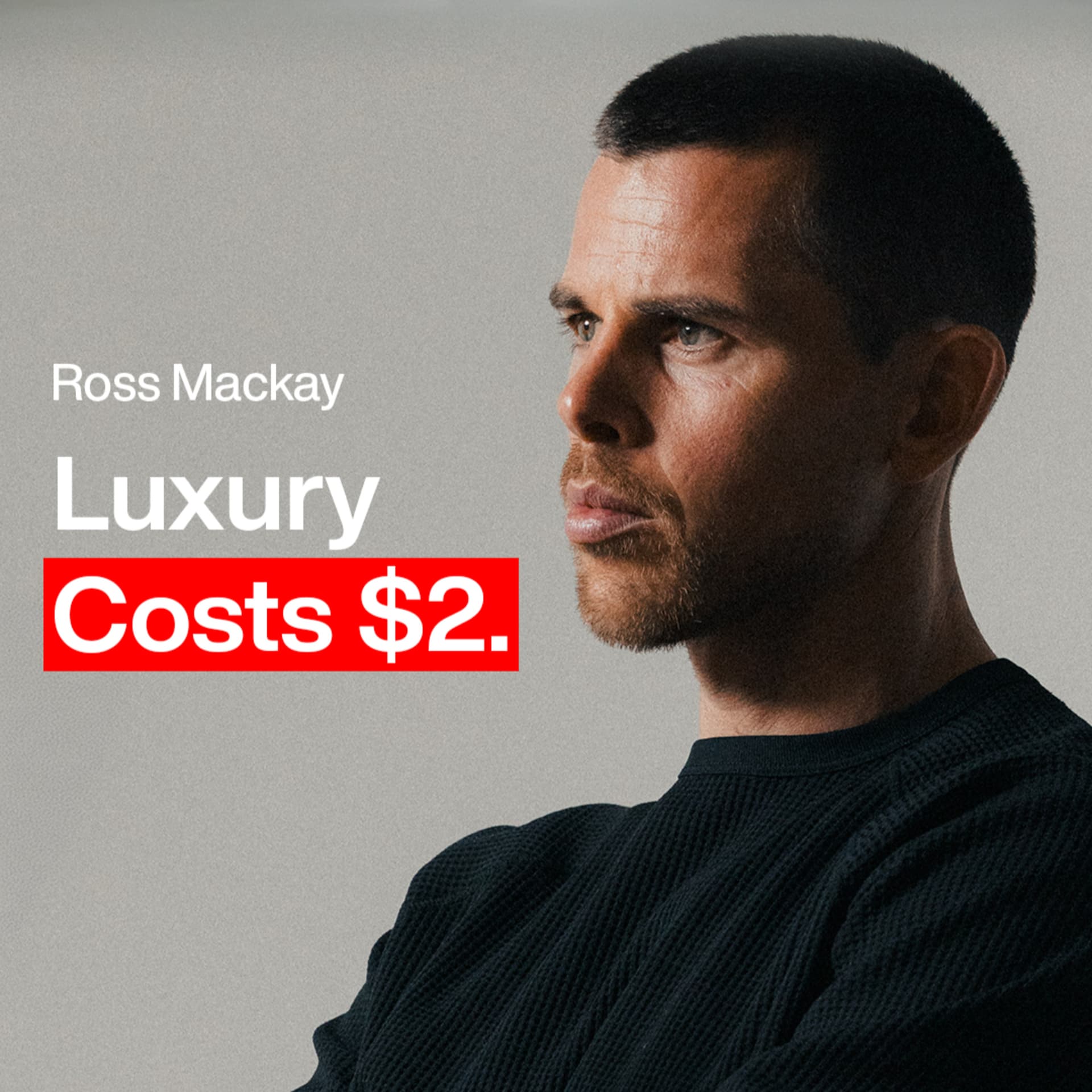
Ross Mackay - Premium Isn’t About Price — It’s About Positioning
Host
- Mark Brazil, Co-founder of IKONICK
Guest
- Ross Mackay, Founder & CEO of Cadence
Episode Overview In this episode, Ross Mackay shares his journey in building Cadence, a brand revolutionizing the beverage industry by redefining "premium" products under $3. He discusses various aspects of brand positioning, retail strategies, and operational challenges in the consumer packaged goods (CPG) sector.
Key Themes
- Premium Positioning
- Concept: Premium is not determined by price but rather by brand positioning and consumer perception.
- Strategy: Focus on creating a luxurious experience through branding, packaging, and retail presence.
- Retail Approach
- Data-Driven Decisions: Ross emphasizes the importance of data when launching products and making packaging decisions. A redesign of Cadence’s can led to a threefold increase in sales merely due to its shelf appeal.
- Distribution Challenges: Discusses the complexities of getting into retail, including navigating relationships with retailers and understanding their demands.
- Lessons from Scaling
- Mistakes: Recognizes the importance of learning from past errors such as overextending product lines without proper market validation.
- Demand Planning: Highlights the significance of supply chain management and accurate demand forecasting to avoid stockouts.
Key Takeaways
- Speed Over Capital: In the competitive beverage market, operational speed can provide a strategic advantage over larger, capital-rich competitors.
- Brand Loyalty Misconception: Consumers frequently switch brands; thus, maintaining product availability is crucial for repeat purchases.
- Community and Collaboration: Strategic partnerships with brands like Bandit enhance market reach and brand credibility.
Notable Quotes
- "Strong brands remove confusion from a category. They don’t add noise."
- "Sales cures all."
- "Not all money is good money."
Episode Highlights by Timestamp
- 00:00 - Introduction
- 00:51 - How Do You Make a $2 Product Luxury?
- 04:01 - Why Did You Rebrand 3 Times in 1 Year?
- 12:48 - How Do You Actually Approach Retailers?
- 39:54 - The One Rule To Approaching Manufacturers
- 45:30 - The Biggest Mistake A Brand Can Make
- 55:22 - Content In Your Positioning Strategy
- 01:05:24 - Why World Class Athletes Might Damage Your Brand
- 01:22:32 - QuickFire Questions
Resources & Links
- Free Playbook from the Episode: [Download Here](https://openresidency.com/ross-mackay-playbook?utm_source=youtube&utm_medium=description&utm_campaign=ross_mackay_playbook)
- Cadence Website: [https://us.usecadence.com](https://us.usecadence.com)
- Sign up for the newsletter: [Open Residency Signup](https://openresidency.com/signup?utm_source=spotify&utm_medium=ross-mackay&utm_campaign=ross-mackay)
Conclusion This episode serves as a masterclass in modern branding, focusing on the nuances of premium positioning in the CPG space and the importance of agile operational practices. Ross’s insights are invaluable for entrepreneurs and business leaders looking to navigate the complexities of retail and consumer perception.
Written by AI. May contain mistakes. Listen to the episode to check what was said.
Chapters
Tap a time to open that second in VOThe Power of Positioning
0:45 to 2:00
Discussion on how strong brands remove confusion and focus on speed.
“You've done just under$10 million in 600 days and the cat's not the bag.”
Creating a $2 Luxury Product
2:00 to 5:00
Exploration of how to position a low-cost product as luxury through branding.
“at looking at the aisle and what is everybody else in the market doing?”
Branding and Market Differentiation
5:00 to 8:00
Insights into branding strategies and market analysis for beverage products.
“And before it was just like the minimal DTC can, but it didn't work on shelf.”
Retail Strategy and Consumer Insights
8:00 to 11:00
Discussion on retail strategy, consumer preferences, and brand evolution.
“It's going to sound cliche, I think from a lifestyle perspective, when I look at brands like a Red Bull, they have a Formula One team.”
Navigating Retail Relationships
11:00 to 14:00
Exploration of how to build relationships with retailers and pitch products.
“When I see the velocity of retail and I see the data within the category of beverage grocery, I'm like, now I understand why brands are doing a hundred million dollars a month.”
Understanding Retail Pitches
14:03 to 16:40
Learn how to create compelling retail pitches informed by data.
“and cycling competitions, and marathons, and half marathons.”
Navigating Retail Economics
16:41 to 19:30
Explore key margin strategies and pricing structures for retail success.
“So you take 279, you subtract 50 % from that.”
The Importance of Supply Chain Readiness
19:31 to 22:20
Understand the significance of having a robust supply chain for retail.
“So if everything else is true and velocity is incredible and it pumps on shelf and blah, blah, blah, could you build a business that is ready for that scale?”
Distributors vs. Brokers: Understanding the Landscape
22:21 to 25:10
Learn the differences between distributors and brokers in the retail space.
“about going direct versus using distributors.”
The Role of Founders in Sales
25:11 to 27:20
Discover why founders should lead sales initiatives and build customer relationships.
“and they're more willing to spend time with them until you prove it out and successful.”
Show all 59 chapters
Lessons from Scaling Retail
27:21 to 28:00
Hear insights and surprises from scaling retail operations in the beverage industry.
“You cannot allow anyone else to speak on your behalf as the brand owner.”
Scaling Retail: Surprises and Insights
28:00 to 28:26
Discover the surprises in scaling retail for Cadence and the beverage industry.
“Yeah, we're going to, I want to jump into founder-led content because you've done a great job of that.”
Understanding Beverage Demand
28:26 to 29:40
Learn about the surprising demand and turnover rates in the beverage category.
“50 ,000 plus stores with your last company.”
Consumer Behavior in Beverage Purchases
29:40 to 30:48
Explore how consumers predominantly buy drinks in physical locations rather than online.
“listen listen You ever bought a drink online?”
Learning from Experience as a Founder
30:48 to 31:58
Gain insights into the founder's journey and the importance of learning from past experiences.
“They're going there to buy water, eggs, and cadence.”
The Mindset of a Second-Time Founder
31:58 to 32:59
Understand the mindset shifts and strategies of a founder with experience from previous ventures.
“Dude, I could tell the first time I spoke to you, I'm like, this dude is angry and focused.”
The Importance of Customer Education in Product Development
32:59 to 34:08
Learn about the significance of educating customers through product packaging and communication.
“You most definitely are a guy that's saying no 20 times before you say yes to one thing, which I love that.”
Innovation Cadence: Launching New Products
34:36 to 36:31
Explore the process of launching new products and the focus on fewer, high-quality SKUs.
“You've launched how many SKUs in under two years?”
Navigating Product Development and Manufacturing
36:31 to 39:09
Understand the rigorous process behind product development and how to work with manufacturers.
“they continue to innovate for that customer.”
Building Relationships with Manufacturers
39:09 to 42:00
Learn how to effectively build relationships with manufacturers to secure business opportunities.
“And for you guys, I would say the liquid is great, but brand and positioning.”
The Power of Face-to-Face Connections
42:00 to 42:54
Discover the importance of personal interactions in business and networking.
“I mean, you said something very profound and very simple.”
Challenges of Being Sold Out
42:54 to 43:48
Learn why being sold out can be a significant issue for brands.
“And then that's where you get, you get even more rope because, you know, it's the Conor McGregor.”
Importance of Demand Planning
43:48 to 45:04
Understand the critical nature of demand planning in business operations.
“And if people love it, they're going to get it from somewhere else.”
Navigating Product Launches and SKU Management
45:04 to 45:52
Explore strategies on managing product launches and focusing on key SKUs.
“And I just want to put a pin in and really, really point it out.”
Balancing Product Variety with Focus
45:52 to 46:55
Learn the importance of maintaining focus on core products while exploring variety.
“If that product goes into Walmart, which it's not, So that is not good.”
Creating Unique Formulations
46:55 to 48:28
Discover the process of developing unique product formulations for competitive advantage.
“If I say some of that and some of that and some of that and some of that, different manufacturers, different terms, different like volume, it starts to spread you too thin.”
Data-Driven Product Development
48:28 to 49:55
Understand how data informs product formulation and market strategies.
“is some manufacturers are just the best at doing one thing, you know, but you know, everything has pros and cons, but I would agree with you.”
The Role of Sodium in Hydration
49:55 to 51:08
Learn about the critical role of sodium in hydration and its misconceptions.
“They pop into Target, they buy my can, same thing.”
Building a Brand Around Storytelling
51:08 to 52:19
Explore how effective storytelling can enhance brand positioning.
“We're the best innovation in hydration beverage.”
The Art of Storytelling in Brand Positioning
56:00 to 56:40
Learn how effective storytelling shapes brand positioning in the market.
“into your overall kind of positioning strategy?”
Involvement in Brand Details and Culture
56:40 to 58:00
Discover the importance of being involved in brand details and nurturing company culture.
“Again, it's hard when you want to scale that to the masses, but we see it as a very, very big lever and a high importance in the business.”
Documenting the Journey for Impact
58:00 to 59:10
Understand the significance of documenting brand journeys for greater audience impact.
“YouTube George's Dom Nick Bear I actually just synced this morning with Greg from Bloom he's putting some great content out as well too.”
The Role of Personal Branding in Business Success
59:10 to 1:00:30
Explore how personal branding can kickstart a business and its eventual evolution.
“when over 10 customers, like the ROI is really, really high other than time.”
Deciding Brand Collaborations
1:00:30 to 1:02:00
Learn how to determine what makes a good brand collaboration.
“I've talked about a little bit with George as well too, is in the beginning, we called it like a hedge.”
Dream Collaborations and Innovations
1:02:00 to 1:04:50
Hear about potential dream collaborations and innovative product ideas.
“I know you guys have done a bunch of collabs.”
Defining Cadence Athletes and Brand Representation
1:05:58 to 1:10:03
Learn how Cadence defines athletes and the importance of brand representation.
“If somebody wanted to be on this quote unquote cadence team, how would they come on?”
Positioning a Brand through Content
1:10:03 to 1:10:52
Learn how to position a brand effectively by creating and distributing high-quality content.
“want to position the brand, we will not work with that individual.”
Building a Generational Brand
1:10:53 to 1:11:43
Discover the strategies for building a brand that stands out and competes on a larger scale.
“with this podcast like we're literally giving you $100 ,000 worth of agency content via content distribution.”
Evolving Hiring Strategies for Growth
1:11:44 to 1:13:32
Understand the shift in hiring strategies from generalists to specialists as a company grows.
“Matty, your CMO, said Ross, quote unquote, fucking hates meta ads.”
Setting the Pace as a Founder
1:13:33 to 1:15:27
Explore the importance of leadership pace and setting expectations in a fast-paced work environment.
“I mean, I appreciate what Maddie said, but like, I am generally on three, 4am calls.”
Effective Interviewing Techniques
1:15:28 to 1:16:33
Learn about effective interview questions that reveal a candidate's true intentions and fit.
“and I've had this conversation with multiple people on my team, is obviously there's going to be what is their core competency?”
The Importance of Clear Expectations
1:16:34 to 1:17:24
Understand how establishing clear expectations can enhance team performance and retention.
“what is that interview question that you always ask?”
Adapting to Modern Work Culture
1:17:25 to 1:18:38
Discuss the evolution of work culture and its impact on hiring and management styles.
“Like there's a time and a place for that.”
Navigating Funding and Legal Matters
1:19:03 to 1:24:00
Learn key considerations for raising capital and the importance of legal support.
“StepStone Just find the right talent for all jobs But what I wanted to tell you My daughter is studying Semester, laptop, software, software, Internet, so a master is really cheap Oh, tell her, she can get it back.”
The Importance of Hiring a Good Lawyer
1:24:00 to 1:25:10
Learn why having a good lawyer and accountant is critical for founders.
“I'm going to fire away a million questions here.”
Understanding Financial Terms
1:25:10 to 1:26:10
Discover essential financial terms every entrepreneur should know.
“a topic that I am most surprised that some of the highest level entrepreneurs know the least about is legal.”
The Journey of Capital Raising
1:26:10 to 1:27:15
Hear personal experiences and insights from raising capital in business.
“not overpricing the business, making it fair, making sure we can get people great upside in the future rounds.”
Building a Strong Business Foundation
1:27:15 to 1:28:36
Explore the elements that create a solid foundation for a business.
“And thankfully I have friends and co-founders and people in my network that are willing to like help out if we need it.”
Engaging Investors Effectively
1:28:36 to 1:29:55
Learn how to attract and engage investors in your business journey.
“The business fundamentals are very solid.”
The Superpowers of Successful Founders
1:29:55 to 1:31:28
Identify the key traits that define successful entrepreneurs.
“They felt it in the city of New York in Marathon Week.”
Leveraging Podcasting for Personal Growth
1:31:28 to 1:33:04
Discover how podcasting can enhance personal development and relationships.
“I thought his superpower was his ability to engage with people.”
Lessons from Influential Investors
1:33:04 to 1:35:08
Gain insights from experiences with notable investors and their impact.
“You know, I've never heard this guy complain, ever.”
Choosing the Right Investors
1:35:08 to 1:38:04
Understand the importance of selecting investors who align with your vision.
“But I met Peter Thiel in LA and then he flew me to San Francisco and he wrote me a$45 million check in the space of a 30 minute flight.”
Navigating Capital Allocation Challenges
1:38:04 to 1:39:08
Explore the difficulties of securing capital from informed investors.
“But like to me, it's much more than that.”
The Importance of Soft Skills in Business
1:39:09 to 1:40:13
Learn about the critical role of soft skills in business operations.
“I think it's my duty to share more light on that.”
Exploring Masculinity and Leadership
1:40:14 to 1:41:07
Discuss the evolution of masculinity and its impact on leadership.
“influencer or broker, whatever it may be, it's how you manage them.”
Mentorship and Learning from Others
1:41:08 to 1:42:01
Understand the value of mentorship in personal and professional growth.
“things that inspire my daughter through how I show up and what I build not just you know so that's one of my favorite books.”
The Impact of Consistency in Content Creation
1:42:02 to 1:43:24
Learn about the importance of consistency and discipline in content creation.
“I want to speak to a tech founder who has raised a gazillion dollars, but very different categories.”
Future of Cadence and Market Potential
1:43:25 to 1:44:23
Explore the potential growth of Cadence in the sports nutrition market.
“Like, I would have just done that back in the day.”
Transcript
Automatic transcript. May contain errors.0:00I'm obsessed with learning. I'll stay up in the middle of the night watching podcasts, reading books, studying analysts' notes and understanding what went wrong. Listen, we're not going to win on capital. We're not going to win on resources. We're going to win on speed. That's Ross Mackay, founder of Cadence, a brand that's building the world's first$2 luxury product. But Ross' real advantage isn't product, it's positioning. Strong brands remove confusion from a category. They don't add noise. Our first can was just like the minimal DTC can, but it didn't work on the shelf. We saw that data. When we launched the new Canon, same liquid, sales were three times.
0:31It was literally a packaging decision. I have an extremely high tolerance for discipline. So I don't like get inspired or motivated by external pressures too much anymore. I don't need you all to believe in me. I just need people to buy this at Target.
0:51You've done just under$10 million in 600 days and the cat's not the bag. You're going to do$40 million next year. We're going to share that playbook today. I personally think a big reason is the branding positioning. We're talking about it off camera. Let's start there. So how do you make a$2 product luxury? Yeah, we use that tagline. We're like the only thing in consumer good that's under$2 or at least under$3, depending where you buy it, that's luxury. I actually put that in chat, GBT, and I could not find anything under$3. So that's factual. You know what? I think premium as it stands doesn't need to exist through price point.
1:24It comes through positioning. It comes through content. It comes to brand partnerships. It comes to where you sell the product, where you show up. You can look at brands in the space. And I'm obsessed with this saying of premium at scale. And it's very hard to build something that's ultra premium and build scale at the same time. Very few brands have done it. On running is a good example. My dentist was on. Yeah, the best athletes in the world were on. They have the best stores on Bond Street, New York. How do you juggle both? That's something that we are constantly striving for. but internally and now externally, people are saying it's$2 luxury or like the champagne of electrolytes.
1:58And how did it start? Did it start with just an obsessive research at looking at the aisle and what is everybody else in the market doing? Yeah, I am that individual that will spend a ridiculous amount of time in an aisle watching consumers, how fast they pick up something, how we can differentiate, what's the white space, what's the price point. I think price point is often a determining factor based on category. So it's hard to price outside of the category when you're essentially selling to a consumer that is used to this brand, this brand, this brand. You can't generally give them something that's twice or three times as much.
2:32And it's been done before for sure, but under three, four dollars, it doesn't really exist. So you have to align your price point to the consumer, what they're used to, I believe. But it was an obsessive deep dive into what we felt was missing in the category. And everyone will say there's no room for another beverage brand, but we believe there was. So you started with price. And again, we were talking a lot off camera. We'll get way more into product deeper into the episode. But I think also the branding. What went into the branding kind of inspiration? Honestly, it was a true reflection of what I would be proud of to represent.
3:06When I built my first business, it was purely because it was a gap in the market. This business, I naively said, if I'm going to do anything for the next 5, 10, 15, whatever, however many years, I want to be super proud of it. I want to be proud of the branding. I want to bring you a can right now. And you're like, wow, that's impressive. And I want it to light me up. So I think as naive as it was, I built the brand on what I wanted to see. Also the liquid, what I felt was missing in the category. And then through, you know, ideation with George, who's, you know, a co-founder of the business, we felt like we had something that one, we loved.
3:40And then two, we felt that we'd differentiate on shelf. I think you have to also design the architecture of the brand to where you want it to sit. And for us, 2026 is about retail. Where do consumers going to buy this product? And it has to work on the shelf. So there's been some iterations. This is the third rebrand we've had since 300 days almost. So it's been a constant involvement for sure. Yeah, I mean, I love it. It's just super minimalist, super sleek. What have you learned in that rebrand with three different iterations now going into retail? Where are you sitting at now as far as how and why was that can designed how it is?
4:14you know i think strong brands remove confusion from a category they don't add noise and that's what we wanted to do with this can and this design we wanted to remove confusion from what is a very confusing category of sports nutrition sports hydration sports drinks beverage we wanted to be super simple wanted to ideate on unique selling points flavor etc but our first can to this can is to some extent would look the same, but it's wildly different. It's positioning, especially as we've moved into more stores, people have milliseconds to pull it off the shelf. What flavor is it? What is it not?
4:54Now we have a huge half inch colored rim. We have unique selling points like no sugar, no caffeine. And before it was just like the minimal DTC can, but it didn't work on shelf. We saw that data. When we launched into our first two stores, Vitamin Shop and GNC, we could see the feedback that it wasn't turning at the velocity we wanted. When we launched the new can in, same liquid, sales were three times. So it was literally a packaging decision. And I think for any founder that's out there building a brand, like build the design for where you want the product to sit. So it's almost like, especially for the people from an econ perspective, formerly you were very kind of like top of the funnel, cool.
5:32And now it's like almost like direct response. Like this is what is in the can. Yeah, to some extent, marrying the premium and the scale factor always. So there's just general things on a can you cannot change. We have battles internally, like no joke, my team will laugh at this, where my QA guy wants to change the call out of carbonated drink and the 12 fluid ounce bigger because FDA regulation will say it needs to be this size minute. I'm like, no, it doesn't look good. So we always juggle that line of like what you're allowed to do and what looks good. and often they're in complete polar opposites.
6:05Like genuinely speaking, like pretty much for 35 % in this can, we cannot touch it. The barcode, the UPC, the call outs, et cetera, where it's made. You know, like if you're optimizing for design, half that can wouldn't be on it, but you're optimizing for what's allowed and what's not allowed. So it's been an evolving, you know, discussion, but data informs design as well. So specifically from a product perspective in relation to the branding and positioning, obviously the words on it, the visual identity, the colors? What about like, you know, how many milligrams are in it? In terms of can size, you know, it's a fairly standard 355 ml.
6:43That's what, you know, a Celsius or a Bloom Energy or, you know, other, you know, new Olipop cans would be. I think when you're building a category and you're building within a category, you really only have to change one or 2%. I talked about this recently. You don't have to reinvent the wheel. I think for us, we didn't want to change size, can, And because consumers are so used to what they're used to, give them something they're familiar with and just make it that little bit better for us. Better was design, better was positioning, and better was liquid. I think so many brands have come and go within the sports drinks category because ultimately why they haven't worked is they haven't delivered on a great product.
7:21And all of the design and everything makes sense. But the first thing you do is you crack it open, you drink it, and it has to be delicious, has to be craveable, and that allows for repeat purchase, both DTC and in retail. So we've spent a lot of time on design, but we've spent a lot more time on the liquid itself. Makes a lot of sense. From a branding perspective, what are some of the big brands that have inspired you? Obviously, George is a co-founder, I think represents, it's like, we joke sometimes, it's like I represent liquid in a can. What are some of those other big brands that you've looked to?
7:50Because I do think when we speak, I don't look at you guys as like a CPG or like a drink company. It's way more of like a lifestyle brand, almost like a fashion or apparel company. Yeah. Yeah. It's going to sound cliche, I think from a lifestyle perspective, when I look at brands like a Red Bull, they have a Formula One team. Someone's surfing a 40 feet wave out there in the world right now with a Red Bull cap on and a Red Bull board. Someone's backflipping off the Alps in a Red Bull, you know, parachute. Like, but yet they sell$10 billion of carbonated beverage every year. So I'm inspired by brands that, and I think a lot of brands will say, we're a lifestyle brand and you're like, really?
8:31You do a run club. Are you really a rat lifestyle brand? But like, we really want to fuel the goal oriented athlete. And our innovation is the means to allow that individual to do that. So whether it's someone running across Australia, like they did a few months ago when Will did the same, we fueled his ambitions. Whether it's Herc and he's running across Cyprus or Greece or Montenegro, we're fueling those individuals. So we do see yourself as a lifestyle brand for consumers who want to achieve things within the sport of running, cycling, or whatever it may be eventually. There's brands like On who are premium at scale that have built a multi-billion dollar business, maintaining a premium positioning, but yet achieving scale, which is wildly.
9:12Once a brand becomes a victim of its own success, right? Everyone's wearing it. You don't want it anymore. Very few brands have been able to do that and continue to evolve. I'm a sucker for if I keep seeing the same t-shirt from a running brand or a clothing brand, I don't want to wear it anymore. I think that's the issue which people have within apparel. Yet within beverage, it's almost seen the more people are drinking it, the more I want it. So I think on Red Bull, obviously George and Represent 247, you know, brands like Bandit and Satisfye have done something great in the running scene. But it's honestly obscure brands like Nespresso.
9:47Nespresso is such a premium content brand, beautiful education. Big coffee guy, I completely agree. But yeah, the machine arguably is great, but the coffee's pretty terrible. It's not like a Lamar Zocca, beautiful, crafted, yet it's premium at scale. The shops are insane. The content's insane. The packaging's beautiful, but you can get one for 90 bucks, which relatively is mass America. So I think about that. I'm really inspired by brands that can achieve hundreds and hundreds of millions, if not billions of revenue, but yet maintain a premium positioning. Yeah, I think you've done a great job of that thus far.
10:19The fact that you're scaling and I still, it's almost like you want to look like you're small. Yeah. You guys look like smaller than you are. Like when you told me how much revenue you were doing, I was very, very surprised. To be completely frank with you. I thought you guys were doing two, three,$4 million. You guys were super, super small and you were waiting to take that big swing. But I was surprised you were already at where you were. Yeah. To be completely frank. You know what? I think the category scales so quickly within beverage. when I look at the brands and I'm saying they did 50 to 500 in two years, now being on the other side of beverage and understanding, because I'm doing sales.
10:55I mean, I'm just off a Walmart call like 30 minutes before I came in here. I'm flying to Austin tomorrow to meet a big retailer. When I see the velocity of retail and I see the data within the category of beverage grocery, I'm like, now I understand why brands are doing a hundred million dollars a month. because they've a lot, 86 % of people roughly in this country today will buy a cold carbonated beverage. Wow. It's insane. The category turns an insane rate. And when I moved into a new business, I wanted to do a couple of things. One was be in a category that had that velocity. Expectations are higher because buyers are saying, well, that space is moving so quickly.
11:35If you're going to take that shelf space, you have to turn at that rate, which is the scariest part of my business. How do we do that? but once you do that, this is where three, four, $5 million days exist. So we really look at two things. I think, you know, retail is distribution and marketing. That's all it is. But units per store per week is how you measure success. Distribution doesn't matter. If someone comes on here and says, we're in 10 ,000 doors, you're like, great, but how are you doing in those 10 ,000 doors? Are you winning? So dollars per store per week are another KPI that a retailer is going to look for.
12:07How many dollars are you bringing into my store on my shelf a week? and you basically win in retail every 30 days. After 30 days, you get your data, you make changes, you might drop price, you might add promotion, you might do two for four, et cetera. But we're priced so fairly in the category that we think success to us is driving trial and then winning consumers over that way because we have such great supply chain and unique economics that we're able to compete like that. I think we live in LA where$7 matches are normal, but like once you scale Mass America, like$2 is expensive. So we have to compete with the biggest drinks businesses in the world.
12:43Gatorade is a monster. And it's like sub$1 for a bottle of, you know, crap. Yeah, I want to dive a little bit deeper into retail. We talk about all the time in all the episodes. I think you know better than anybody. It's about the sell through, not the sell in. If someone tells me they're in 10 ,000 stores, that means absolutely nothing to me. How has that been for you? Have you been approaching these retailers? Have they been approaching you? What does that look like? It's been a mixture. my last business we were in not that it matters we were in about 60 000 tdps starbucks walmart costco pretty much every every retailer in the country other than sam's club we were pretty much in bjs and sam's club so i've come at this from us as a second time founder with the pattern recognition what it takes to win in retail and what it looks like to lose in retail because there was retailers we didn't win in but i have some relationships in the game whether it's direct relationships with retailers or with brokers that we utilize to to access distribution at the same time we have friends in the world which are selling beverage into retailers that just the way your phone book and your network is built, you're going to have them help you as well.
13:47So it's a combination. I'm going at people that we've done business with in the past. We're also utilizing our network and our investors to help us access distribution, but it's been amazing to help retailers build the category of sports hydration and sports nutrition because a lot of retailers are seeing this emerging trend of run clubs and run groups and and cycling competitions, and marathons, and half marathons. And when you turn around to the retail and you say, what are you doing to support that customer on their journey? Like I was just in Chicago, I go into a local CVS. There's literally thousands of runners the day before Chicago Marathon with no choices.
14:23I call CVS and say, let us be that choice for a consumer. Here's what we're doing. Here's all the cool events we've done. Here's the collage of all the run clubs we've done. Here's the sizzle reel. Let us be that brand for you. So being a thought partner. and then that's what they've been really excited about. Now we have to prove it out. Makes a lot of sense. What does that retail pitch actually look like for people that are going into their first pitch? What is in that deck and what is kind of that leverage that you can bring in and show them? The best pitches are always informed by data. The first pitch, you're going to have no data.
14:57So ideally, pitch two is, we are selling this much in this store. This could be you. Retailers can be like, wow, I'm missing out on that. If I look at what else I'm selling, okay, if I take that away and I get that, I'm going to get incrementality. Great. That's pitch two. Pitch one is much harder because you're not able to turn around to a retailer and say, we're performing at these numbers. This could be you. So pitch one is essentially, here's how we differentiate in the category. Here's the incrementality we can bring you. Here's our large DTC audience potential that we have that we're not going to shove into retail.
15:32Look at Brownlink Bloom, Greg, huge DTC business. The minute it launched it to Target, turn that off, go to Target, guys, go to Target, go to Target, go to Target. So you're taking that, and we've kind of played that playbook. We had a pretty solid DTC business. I think right now we're about 65, 66 % subscription on our website. We're now turning that off and saying, go to Target and buy in February. Because ultimately that's where the unlimited scale is. That's where the unlimited scale is. That's where you can achieve$100 million quarters, $100 million months, which we're seeing in Beverage today because we're able to drive a consumer into that space, add income mentality, drive trial.
16:06So that's where it is at. Today, the pitches so far have been, we can bring our community, which is ridiculous. It's becoming very, very strong and drive them into your retail doors. What about from an economics perspective? What type of margin profile are they looking for? What type of profile do you need on your side? Take genuinely, you're going to give a recommended retail price. So for us in, you take a target, we're$279 on shelf. generally speaking, they'll be middle of the round. You're going to have people in like an Air One at like$5, but like eradicate that from the conversation. Walmart is going to be lower than Target.
16:40They're probably going to be your lowest. Everyone's looking for 45 to 50%. So you take 279, you subtract 50 % from that. That is your selling price to the retailer. Then you have to subtract distribution costs, shipping costs, et cetera. And then that gives you your margin from cost of goods into your selling price. So anyone in CPG today, you really want to be building off like a 50 plus percent gross margin because of the cost of doing business. The biggest line item on most brands that no one talks about is trade spent 20 to 30 percent in order to activate and work with that retailer. So we've built this business ultimately with the very, very strong economics, understanding the cost of doing business in retail.
17:21So retail price minus 50 percent, that's your selling price. Retailers are going to want 50 percent margin generally for getting in. And for promotional marketing, you mean like end caps or maybe like street teams coming in, any type of event, anything? Yeah. And it could be even trade promotion. So when you go into a Walmart and you see two for four, the brand often is paying for that. If everyday price is$2.50 and now you're down for two for four, so a dollar off, you're generally paying for that dollar as a brand, 50%, maybe 100%. So that over 60 days, 120 days a year, potentially 12 weeks of the year, the brand is paying for that promotion.
17:55So it drives trial and what you're going to expect is after that trial, your velocity base jumps. So drive trial, drive trial, drive trial. Make sure you're building a business that allows for that because if not, you're going to be losing money, but you have to be making money too. And then after that promotion goes back to an EDLP, everyday low price, maybe off$2.79 instead of two bucks. When consumers come back, you've driven enough trial for that velocity at base price to jump up. That's kind of the game of retail. But again, you have to build the foundations, to supply chain and the unique economics to a low for this game.
18:29So I am radically confident that you're going to have great sell through and you're going to scale in a big way. I never think it's too late to go into retail, but some people think it's too early. For people out there listening that have any CPG brands, where do you think you need to be to be radically confident that you can go into retail? And obviously in retail, like you want to hit a home run on your first swing. It's very, very tough to have not a good sell through, get taken out and then be put back in. How and Why were you comfortable going into retail when you were? 11.58 Uhr, Mittagspause.
18:59Dein Magen knurrt lauter als der Bürohund. Und dann ploppt der Chat auf. Kantine, wie immer? Wenig später blickst du auf die wie immer mickrige Portion und denkst dir nur, wir hätten zu Meckes gehen sollen. Für den Big McDonald's Hunger. Probier den neuen Big Gouda und den Big Tasty Red Steakhouse mit 100 % Rindfleisch aus Deutschland. So long the rent is not enough to our breakfast.
19:52unit economics to allow you to scale. So if everything else is true and velocity is incredible and it pumps on shelf and blah, blah, blah, could you build a business that is ready for that scale? So don't go into retail until you're ready for that scale. From a production perspective? Production perspective and a supply chain unit economics perspective. Can I sell this into Walmart and Target and still make money while building that supply chain out wholesale? At a worst case, you would maybe say break even from a marketing distribution and just to live another day now, but then maybe later you're obviously going to get...
20:28Yeah, you're going to find efficiencies over time. But, you know, eventually, you know, costs will come down as you order more, of course. But generally speaking, you should not be aiming and going into retail until you've built the visibility into the supply chain that if this happens and we achieve this scale, we will be achieving this gross margin, contribution margin, etc. The second question I just asked is, I asked this exact thing because we have an opportunity with CVS, Walgreens, Walmart, Target this year. This is the distribution. Very obscure. New brand would go Farmer's Market, Air One, Sprouts, Whole Foods, Bristol Farms.
20:59That's what you would see in the city. You've seen it happen dozens of times. It's the natural route. COVID screwed that differentiator between natural and conventional. Now what everyone cares about is convenience. We want something in 20 minutes. I don't care if you're in that retail or that retail. I'm probably going to order off Instacart, Amazon, or wherever else I shop. And I want it in 25 minutes. So the only thing that really matters to us is accessibility. So I want to go after Gatorade. Gatorade don't sell in Sprouts and Air One. They sell in Walmart, Target, and Costco. That's what I'm going after.
21:32And I'm very inspired by the founder of David Barr, where they were like, why not going the traditional CPG route? Farmer's Market, Air One, Bristol Farm. Like you've seen that pattern happen so many times. He's like, I don't care about them. I care about Mars Bar. I don't care about the healthy snack bar that your mom and pop made in their village kitchen. Like that's how I think about this. It's so ironic because I walk to get a David Protein bar from CVS like every other day because it's right there and it's just super convenient. That's so, I'm an apology. I am not looking to build a 15,$20 million business.
22:01I want to build the next Gatorade. And how do we do that? We make it accessible to Mass America. So that's great feedback. Just understanding and knowing that from a price and a production perspective, you can handle scale if and when it comes. We only talked about it once and I want to dive a little bit deeper because you're like right in this mix right now about you briefly touched on it about going direct versus using distributors. The pluses, the minuses, the margin profile. Obviously you have a little bit less control if you go through a third party. What have you learned through daring and now cadence with retailers versus distributors, pluses and minuses?
22:39Ultimately, the end is you always have to win over the retailer. And then they're going to determine your supply chain. And they're going to ask for us to be direct distribution. Or they're going to ask us to go through a distributor, which may be like one of five guys or whatever. Direct distribution allows you to maintain margin, potentially pass it on to the customer and make it cheaper, which drives velocity. And that's amazing. Or have that money in your own pocket to spend on marketing, etc. The issue with that is you're delivering a lot of trucks, So a lot of cans and it's a big supply chain risk.
23:09When you work through a distributor, you're generally deploying your cans or beverages into one location and they're handling all of that. The con is less margin, potentially more expensive costs to do business. Is there less margin though under the notion that you're going to have to incur on the direct side, you know, that 3PL, the warehouse, like you're going to have heavy SG &A and humans managing as well. And we outsource all of that regardless. Generally speaking, direct distribution is, you know, better for the P &L from our perspective, what we've seen. And distributor margins can work on anywhere between 15 to 25%.
Read the full transcript
23:42So it's still very expensive cost to doing business. However, it's kind of a necessary evil because they also have other customers that you might not be talking to that they can unlock for you because you're doing well. And it's a whole game. You can't have one without the other and you probably want to have both. So I'm learning this world. I didn't deal with any direct distribution before. We only worked through Cisco, Unify, Kehi, like the big mafia guys. And now we're understanding the DSD network of like the Dr. Peppers of the world. And it's like, it's a crazy landscape, but it gets me super excited.
24:13I want to really, really educate. There's a guy out there listening. I actually, I know a bunch of them that follow and they wanted you on the podcast that are doing one, $2 million in protein cookies or something like that. Tell them a little bit more about this distributor game, because from my understanding, you mentioned mafia. There's a finite amount of people that are controlling all the distribution and they could basically block you from getting in anywhere versus this distribution is basically for people out there listening. It's almost like a marketing agency where they have X amount of clients and whichever client is bringing them the most amount of money, they're going to push that as much as possible.
24:50So if you could just speak on that a little bit. Yeah. I would say let's underwrite distributors to be box movers. That's all they are. They're never going to sell your product for them. Brokers, on the other hand, are sales agents on behalf of your brand. The issue with a sales agent is they've got other brands that are their favorite child and they're more willing to spend time with them until you prove it out and successful. So I think some individuals right now with a cookie business doing one,$2 million a year, they want to get into Target. You have to be the one, I would say, to win over the end customer.
25:27Once you do that, a distributor, a broker will be happy to take your business. But until you went over that anchor customer, it's very hard for you to turn up and knock on the door of a distributor and say, hey, take inventory. Good luck selling it. They're going to be, well, what's your sales team look like? Are you going to underwrite the stock? Are you going to buy it back if it doesn't sell? Because I've got six other protein cookies that are selling really, really well. Why would I take yours? You have no customers for me. What we've always been focused on is let's win the end customer. Let's turn around to a distributor or a broker and say, we'll give you that business.
25:58I want you to manage it. You can take your margin profile on it, but here's some expectations for us. So anyone out there that's building that, go in over the anchor customer yourself, do whatever it takes to get that product to that customer. Once you want to optimize, turn around to said party and say, we have this customer, now you can have them. So yeah, thank you for clarifying that. The difference between the actual distributor, which is just shipping the product versus the sales broker, which is a guy that was probably formerly a buyer of Walmart that says if any CPG brand wants to get into Walmart, come to me and I'm going to take a fee.
26:29Something like that. I know the buyer really well. Used to say, and then you turn around and you're like, don't go to sleep at night thinking that this guy, girl is doing anything on your behalf. That's one of the biggest mistakes I've ever learned. It's like, oh, we've got all these brokers out there. Like wait for my phone. No one's calling. Like build your own sales team. I'm my own sales guy. Carl, it is so crazy that you say that because in the Mark Manson episode, he talked about the importance of not outsourcing your zone of genius to someone else. And I was outsourcing our sponsorships and partners to somebody else, i.e.
27:03a sales broker, almost like an agency. And they weren't asking the questions like, what does success look like? And really, really caring. And I feel like for me and for the people out there listening, like I can just imagine sales broker in a meeting with Walmart versus Ross in a meeting. It's a fucking different universe. You cannot allow anyone else to speak on your behalf as the brand owner. No. And obviously over time, that's hard to scale. But my job as a founder is to sell, sell to my team, to join me on the mission, sell to the customer, sell to the buyer, sell to the investor. I'm a salesman.
27:40Believe in the mission, believe in the product, come and join us on the journey. Until you can't be in two places at once, Only then do you unlock a sales and distribution team. But tomorrow I'll be in Austin selling to a retailer. We have a sales team, but I'm the one going because I want to meet the buyer. I want to build the relationship. I want to understand what success looks like. And that is what's key. And that's what I've seen from the best brands in the world. The founder is still out there selling. Yeah, we're going to, I want to jump into founder-led content because you've done a great job of that.
28:09And I think that goes hand in hand with being in a sales meeting and filming it. You got a bunch of people here. To tie a bow on retail though, what do you think has been like the biggest surprise, good or bad when scaling retail for Cadence? Under the notion, this is your second ride here. I mean, you went into, what was it? 50 ,000 plus stores with your last company. Biggest surprise, I talked about scale a little bit. And when we sell into it, we're loading into Target in two weeks. We're loading into Walmart. We just got the order from Walmart just prior to this call. and I continue to be amazed at the demand planning data and sell through of the grocery beverage category.
28:56When you see brands like Olipop and Poppy doing 800 million, 500 million, I'm like, really? And then when I look at 10 to 20 units a week per store in 3 ,000 stores and you model back from that and you do a top-down build, you're like, that's$20 million for this Melonberry can in one account. we have three flavors going in and we have all these I'm like that's how brands get to a billion dollars I continue to be amazed by that because in the business before my category turned so slow so you can be in 10 ,000 doors but you're turning one unit a week this category can turn in 20 units a week same amount of doors at 20 is an incredible business so I'm just continuously amazed about how many people buy beverages every single day so it's a race to grocery that's where the velocity is listen listen You ever bought a drink online?
29:45Cadence. Other than Cadence. Slate Milk on Instacart. I love Slate Milk. Great guy. Shout out, Manny. I love you, baby. 86 % of people a day will buy a drink. Almost none of them are buying them online. So to answer your question is beware your customers. People buy drinks, not online, generally. They buy them in stores. They buy them in convenience on the way here. It might be in a 7-Eleven, might be a CVS, might be an Air One, might be a Walgreens, might be a Starbucks. I don't know where it is. but for the most of the people out there, you buy your drinks in a grocery. Therefore, I need to put my drinks in grocery.
30:20I need to put my drinks in the aisle, beside water, beside Red Bull, beside Celsius, beside whatever else it may be in as many stores as possible. That's the game of beverage. Now I have a whole other range of innovation that is largely focused on D2C and on Amazon because people don't go and buy running gels in Walmart. They buy them on the feed. They buy them on Amazon. They buy them on cadence.com. So we always position our innovation for where the customer is today. Don't try and drive a new customer into Walmart to buy a running gel. They're not going there to buy running gels. They're going there to buy water, eggs, and cadence.
30:50It's really important. How did you learn and understand about all of this? No idea, honestly. I don't know. Obsessive, I jumped in. I got an incredible learning curve because my business grew so quickly the first time around at Daring and I was surrounded by such excellence, specifically around team and investors, that I had no option. that saying sink or swim. I was kind of sinking and maybe surviving at the same time because we grew so quickly. We had so much capital. We had so many great people around us with so much practice and recognition of excellent businesses that I figured out. A lot of mistakes, some good stuff, some bad stuff.
31:29This time I'm taking all of that into the next business. I'm also surrounded by some really great thought partners, people that have done this before. And I think I'm the type of individual that is obsessed with learning. Like I'll stay up in the middle of the night watching podcasts, reading books, studying, you know, analyst notes from the public offering of Beyond Meat and understanding what went wrong. Like I'm an obsessive founder. I say it all the time, the most dangerous founders. I'm with you. I'm on the same boat as those second time founders that didn't hit a big home run on the first one and have a chip on their shoulder.
32:00Chip on their shoulder. Dude, I could tell the first time I spoke to you, I'm like, this dude is angry and focused. And when I tell people I'm angry and focused, my wife is like, you should chill with that. I'm like, no, no, no. wow, that is the exact type of weapon that I want to associate with and invest. Angry and focused. And you are literally the poster child. Yeah, I built my first business with a chip on my shoulder, for sure. More personal stuff. Family, you know, people not believing in me and that stuff doesn't bother me anymore. I'm like, I don't need you all to believe in me. I just need people to buy this at Target.
32:29But this time is a different positioning where it's a chip on my shoulder, but less angry. More methodical, more sniper. super underwritten how I've taken capital onto this business a little bit more, a bit more like, fuck you, you know, watch this grow. Not saying yes to so many people, but I agree. I'll make bets on founders that have got a bit of a lesson to teach. You said something very subtly there. I think it's one of George's superpowers as well. And it's something that I've learned the hard way that I'm just getting better at is the power of no. You most definitely are a guy that's saying no 20 times before you say yes to one thing, which I love that.
33:06One of the reasons why I would imagine the first business was hard and it might be the same kind of hurdle that you might have in retail period is just like the education on the product because you're so methodical. Like, dude, I got a package of yours, this like race recovery. It was a bunch of products. I actually sent it to the Mad Rabbit guy. It came with this beautiful illustration outlining how many milligrams were in each thing when you take it. And I was like, I have never seen a product be so informative and educational and telling me how and why and when I should take product. That obsession is, I think, is a huge moat that you have.
33:44Let's talk about products. So if you are only building on social, you do not own your audience. You are borrowing it. The algorithm decides who sees it. That is a bad business. Beehive changed that for us. It's where Open Residency runs our newsletter and growing our newsletter is the number one initiative for us this year. One place to grow, engage, and monetize with zero platform fees. They even have a built-in ad network where sponsors come to you directly through the platform. Guys, I believe in Beehive so much that I put my own money in as an investor. The team is elite, the vision is world-class, and the product is built for operators, not amateurs.
34:19If you want to give it a try, head to beehive.com slash openresidency for 30 % off your first three months. Make sure you enter the code mark30 at checkout. That's B-E-E-H-I-I-V.com slash open residency mark30 at checkout. Stop renting your audience, start owning it. You've launched how many SKUs in under two years? 13. 13 SKUs. Just walk me through that kind of innovation cadence. How do you look at products? Yeah, I think my general consensus on product is fewer SKUs are better than bloated ranges. And that's like kind of the punchline. Go really narrow and deep on what's working. Generally speaking, our mission always has been to fuel the goal-oriented athletes.
34:59So let's take like the highest level approach. What does that athlete need in and around their workout to achieve their goals? For us, the runner, the cyclist, they need pre, during, and post carbohydrate and hydration. We're a sports nutrition company. We just believe that proper nutrition starts with proper hydration. You can optimize your gut, your cognitive health, your skin, your bone density, whatever it may be. But if you're not hydrated, we believe that none of that really matters as much. So first thing you do in the morning, you drink a glass of water. Then you understand water's not enough.
35:28So you add minerals. Hopefully it's electrolytes through cadence. So like we underwrite the customer journey from 24 hours of the day. And we built a system of core race and recover. Race is energy, recover is sleep. And we take those three pillars and we launch assets under each of those pillars, depending on channel strategy or whatever it may be. So can, for example, ready to mix sashay, gel, bar, 90 % of the focus is on the beverage because that allows us to scale the most into B2B. And the other innovation is high margin subscription, channel focus distribution and innovation. It's been a year and a half, we've launched 13 SKUs, the main focus being on the beverage.
36:08And then the other innovation just keeps us grounded in who are our customer and who built the brand. I'm very inspired by brands like RX Bar who continue to build the brand within the CrossFit community and stayed there. They always built the innovation for that customer, even when they got widespread distribution. Cliff Bar, very good friends with the ex-CEO there who sat on my board previously. Same thing. They built that for the trail runner, the guy on the bike with his family hiking. Even when they built mass distribution, they continue to innovate for that customer. So we'll never lose sight of that customer, even when we get more widespread distribution.
36:39Yeah, like for me, I do feel like you guys were like early on like the Hyrax train. I think running is obviously a big one. I'm so, so bullish on Hyrax. So for anybody out there listening, you have these three kind of core pillars as far as when in the 24 hours of a day you would take it. And then these are my ICPs and then it's fitting in this distribution. And you're just building products based around, let's just call there's some core products, i.e. the gel, the protein bar, the red. So you're starting there and then what? Because I know that you're a savage and you're definitely testing all these out when you're working out.
37:12What does that process look like? We're like, okay, I want to create a bar. Where do you start? We have a very, in the beginning it's different. It was like, I want to create a bar. Let's do it. Find a manufacturer, run samples, make sure we can make money and launch it. We're very different now. We have a stage gate, it's tightly run. We have to understand size of the price. So let's take a new flavor. Let's take an orange can. It's not a net new category. So if it's a net new category, which could be, what do we not do? I mean, we don't do like a powder in a tub. We have to understand like, okay, where are we going to manufacture it?
37:47What are the margin requirements required? What is the MOQ? What is the cost to the business? What's the lead time? What's the channel strategy? And then we have to try and underwrite that with an anchor customer. So for us, we're printing millions of these cans now. We have to unlock that press go with an anchor customer. Otherwise, it's a financial risk to the business. So we won't press yes on our orange flavor until the retailer has said, we will launch orange in June. I go back to the manufacturer and say, press go. So we're underwriting some of our risks now with like guaranteed customer.
38:15In the beginning, it was basically like very inventory heavy, sitting on inventory, hoping and we can sell it D2C or B2B, which obviously is a scary game because inventory is cash and cash need to run a business. But we have a very rigorous stage gate where we underwrite every innovation unless I veto it, which is like once a year. If there's an innovation I truly believe is a yes must go, which pulls back to one or two things. One is it's a company changing innovation I think no one is paying attention to or two, it grounds us back to our mission even when the size of price is small. An example would be a carbohydrate powder.
38:53Very small business, very small category. Most people won't consume it, but it grinds us back in performance. And I truly believe my core customer needs it from us. Yet, it's not going to be$100 million SKU. Almost like an 80-20 feed your core ICP, elevate the brand cement the positioning versus let's sell a shit fuck ton of cans. 100%. Makes a lot of sense. So for anybody out there, and you kind of, you touched it on it earlier, like this RTD drink, which I'm sure you'll end up doing 90 % of your business with this, is just take something tried and true and then win on something differentiated.
39:26And for you guys, I would say the liquid is great, but brand and positioning. Yeah, 100%. Sports, hydration is not new. It's been around for a long time. Look at every single category in beverage. Alcohol disrupted by non-alcohol, or better for you, alcohol, low ABD, whatever it may be. Take soda. Two big brands completely disrupted that category. We're acquired. You look at energy. You look at Celsius, even Alani, disrupted Red Bull and Monster, acquired. Who's disrupted sports drinks at scale? It has been some cute little brands, no disrespect to them, but like no one has achieved mass distribution and taken shelf space from Gatorade.
40:02And that's really what our mission is. You mentioned MOQs for some of the newbies out there. MOQs, minimum order quantities. It's the PO that you have to put in to get the ball rolling on the production side. I mean, when you start, you don't have that built-in PO from distribution. you have no leverage. What do you say out there to people that are starting? What are the best things you can do to kind of chop those MOQs down? With beverages harder because not to get into the specifics, we have a printed can. Printed cans are higher than sleeve cans. Like there's specific things you could do to maybe de-risk the business and not go for the$2 luxury off the bat.
40:40Like you could do a sleeve can, which is a 10th of the MOQ of a printed can. So understand what's nice to have and what's must have. Printed cans are not must have. Most startup beverages will do a sleeve can, for example, but within any category, whether it's protein cookies, beverage, pizzas, whatever it is you want to do, it's your job as the founder to go to the manufacturer and say, I'm in your business. I am going to get Target and Walmart. I'm going to achieve this scale. I need you to work with me. Helps that I'm a second time founder. So when I called my beverage manufacturer, they were like, oh, okay, that's exciting.
41:10And we got very warm introductions. but the first time I called my manufacturer, I genuinely just told them I had a Walmart peel. I didn't have a Walmart peel. I just told them, oh, I've got a meeting with Starbucks and I'm going to change your business. I'm moving my product away from my other manufacturer. I'm RFPing this over. It's the first time I've told this. I just lied. I just told the manufacturer that I was way bigger than I was and I was in stealth mode and we're about to launch here and all these exciting customers. So then they trusted me and they made me innovation. They made me samples and they were willing to work with me knowing that I was going to bet on myself that one day I would get these customers and buy time.
41:44But as a founder, it's your job just to win over that manufacturer because they're getting dozens of calls a day from the next cadence to say, hey, I want to launch this. And like, if they invest their time into everyone, they're never going to have time for their core audience. So honestly, you just have to be a really good salesman. I mean, you said something very profound and very simple. And I remember the day almost 10 years ago when I just showed up in Austin, Texas at my productions door. Yeah. I can't say enough. about face-to-face showing how serious you are and meeting people in person, having a cup of coffee with them, sitting in for an hour, you can get crazy benefit of just doing that.
42:20It's insane. 15 minutes in person, help them know who you are, what your goals are, and this kind of a conversation and you're going to hope they're going to make a bet on you. So people buy from people. And I wouldn't say that was a lie either. It was like a white lie to you. You're getting some leverage in this space. You're painting a big picture. I don't say that's a lie. You think that there's a level of delusion, you know, word delusion for sure. Because you do believe it. I said some wild shit when I went into Austin and then I just remember like a year later having dinner with them and they're like, everything you said has happened.
42:55And then that's where you get, you get even more rope because, you know, it's the Conor McGregor. Say you're going to knock him out in the second round, knock him out in the second round. You're going to get, you're going to get big bucks. You're always sold out. So demand planning, You've been sold out 200 plus days. Good problem or bad problem? And how are you solving for that? Terrible problem. We sell a product that we promote as a daily consumption. When you can't consume it every day, it's not aligned to your mission. So like if you're doing a clothing drop, I think it's quite cool to be sold out.
43:24And don't get me wrong, in the beginning, it's great because it shows that product market fit exists. But ultimately, it's a problem because one, we're not doing a good enough job of supplying our customers with product they want. i.e. we're not demand planning, come back to that. And then two, when you're building a brand based on daily hydration and daily pattern recognition and daily discipline, and you can't have it every day, again, there's a problem. And if people love it, they're going to get it from somewhere else. Don't think anyone's loyal. I think that's a massive mistake brands make is they believe that brands are loyal.
43:55I mean, I try new brands all the time. I subscribe to a few brands, but I'm willing to switch. And if I can't get it, I'll definitely switch. So that's one thing I think about all the time. At the same time, we bought enough cans to last as a year, to last as a month. Like yesterday, I think. First of all, problems, we're back. That's true. And then we made an order on Friday for a million of each flavor. It's wild. I'm making those big bets to launch into one retailer. So we have a demand planning team now. We have an operations team now that are looking at data and informing with our retail team what's coming in the pipeline, what's our current velocity, let's measure it up.
44:32let's balance that against cash and inventory, how much we can support, lead times. It's a whole puzzle. But demand planning is ultimately the most important thing in your business, especially when you're in B2B. You can't call Walmart and say, give me another couple of weeks. But they're going to say, absolutely not. That's two weeks of 4 ,000 doors selling that many. I'm missing millions of dollars a week if you're not on. And if you're not on, I'll put Celsius on. That's it. Again, no one's loyal to your brand. So I think supply chain demand planning is one of the hardest things to do, but it's one of the most important things for your business.
45:04You dropped a subtle gem there. And I just want to put a pin in and really, really point it out. It's very, very dependent on the category. Totally. Because from a clothing perspective, you know, obviously you're not wearing it every single day. You know, Siegelman Stable is a great example. My buddy Max is just like, I mean, he started in the beginning. He was doing like 20 hats a run. And you just went on the website and, you know, there's 22 hats sold out and one available. Human psychology gets to you at that point. How many things you've seen? this brand sold out five times in 20. I'm like...
45:32I get that ad all the time. This brand sold out five times this year. I'm like, what does that even mean? I'm looking at it and being like, they ordered 100 every time, which is great. Then 500 people bought it. And kudos to them. But I don't believe sold out. I guarantee you B2B sold out is a massive issue. It's a problem that you should be focused on. And then D2C sold out is nice on a limited time offering. Like we're doing a drop with 247. Selling out is cool. If that product goes into Walmart, which it's not, So that is not good. That's disruptive for your company. Visuals go crazy in that 247.
46:04He just showed it to me. Looks amazing. What's the biggest kind of mistake or learning that you could share with someone based on supply chain and production? I think a great call out that you said as well too was your business is about inventory planning. Yeah. What are some other big key mistakes or learnings that you would share with someone? I think launching too many products. I'm obsessed around businesses that can build up several hundred million dollar business with one skew how great is that putting all your wood behind one arrow what that means is if I can give this can manufacturer all my capital the more cans he can buy the more salt he can buy the more water more flavor whatever they can do the more packaging like if I just keep funneling my capital into this SKU, the more cost is going to come down.
46:55If I say some of that and some of that and some of that and some of that, different manufacturers, different terms, different like volume, it starts to spread you too thin. So even though it's cute and nice to launch something else because it tickles your fancy, I would generally say, and still this SKU has reached$10 million. Don't worry about the next SKU. Don't worry about the next one and the next one, next one. Retailers do want to see two or three options. That's why we launched with a few different flavors. But we started the business with one skew, one flavor. And then we spent a year building one skew, one flavor.
47:27Then when retailers said, okay, we like citrus, what other flavors have you got? We earned the right to get more horizontally ambitious. So earn the right. Don't just do it because that one's not working and you want to do more because you want it as a customer. You have to put as much capital and efficiency behind the one skew till it reaches a certain KPI. And for us, it's like until that's doing 10 million, there's no point in doing the next flavor. Yeah. You get all the compound effect. I mean, from a relationship perspective, communication and SG &A perspective, a big thing to touch on there too, for people out there listening, I've made this mistake before you talked about, let's just say one product, the can one flavor, and then you're iterating to more flavors.
48:04It's so important that if you do these tertiary kind of ones to hit that, you know, core ICP to build brands, try and find a way to keep it with that same production facility. Because the second you deal with Johnny in Germany and Mark and Austin, it's just two completely different things that you have to manage. Different, a hundred percent. The issue you're going to have within different categories is some manufacturers are just the best at doing one thing, you know, but you know, everything has pros and cons, but I would agree with you. Stay focused. What about the cans, the satchets, the bars?
48:39What's been harder than you expected and where have you been pleasantly surprised as far as looking at the category next? I think everyone said you're going to launch a beverage business. that's crazy how much capital that needs like you know how much money you're gonna have to raise how expensive that is you know how bad the union economics are like i'm wildly surprised about how profitable the the the channel and b2b d2c and beverages i think we've nailed it on a formulation standpoint you know it's water and salt at a premium price point ish so we've allowed to build we built a formula that has allowed us to make really really really solid gross margins that when I speak to an investor, they're like, surely not.
49:15Like, that's incredible. So I'm pretty amazed by how many people told me don't do beverage. At the same time, as we've leveraged or de-risked the business to some extent by saying we're not only a canned electrolyte, we also have ready-to-mix sachets that are, again, 65 % subscription on our website. We have gel innovation for the runner that is number one selling on the feed and on our website. and we have other innovation that is extremely high subscription, very high volume and very high margin that is feeding the rest of the business. So they kind of work in tandem as like a halo effect. Chances are someone's tried my gel at Brooklyn half marathon in the bandit store.
49:55They pop into Target, they buy my can, same thing. So they're kind of married against each other and we feel like we're hitting a really good sweet spot there. You can upsell and cross sell across all of those. What about the actual liquid? Because when I drink this cola, It literally tastes like Coca-Cola to me. And we joked off camera, like Coca-Cola and Gatorade to me is like dessert at this point. This is like the actual premium fuel that I want to drink. For people out there that don't want to do the white label and just do some cool branding, stick a random product everybody does. How should they approach making their own custom product?
50:31I can give you it from my perspective and what I've seen to work. We've contacted and worked with a formulator. I think one of the things that 90 % of brands will go to a manufacturer and say, I want to launch your hydration brand. Give me your three or four options. I'll bottle it. I'll sticker it and we'll go. And there's nothing wrong with that. It allows you to get to market. Again, the moat in CPG is brand. So like ultimately, why are you focused on investing all your capital into formulation? For us, it was different. We were formulation first and brand very, very, very, very, very close second.
51:02And we cared about our formulation because we went out and said, we are the best. We're unique. We're Informed Sport approved or NSF approved. We're the best in the world. We're the best innovation in hydration beverage. Most funders, if you want to build something unique, you go to a formulator. There's a bunch of them out there. And you say, project-based, I want you to build me this. They'll build you samples. You pay for their time. You pay for samples. And you take those samples to a manufacturer. Chances are that developer knows someone. And you say, I want you to scale this up. The pros are, you own your IP.
51:32I own the Cadence Cola formula. I take that formula to my manufacturer now and say, run this. They don't need to worry about it. They didn't develop it. They don't own it. So when it comes to that big payday from Coca-Cola or Pepsi or Dr. Pepper or whoever it may be, you have IP and you have protection. So there's a way for us to transfer that technology to a co-man and they run it for us rather than the co-man white labeling for you. And you really own nothing other than your logo. We've looked at it that way. Every formulation we have has been custom formulated. We actually have full-time developers now internal.
52:04I've always been very curious and I know you've run an absurd amount of miles. So you would have like a bigger sample set than others. Like if you're making this drink and you're trying to figure out how much magnesium to put in it, how does that go? Are you doing a run with 400 milligrams and then doing a run with 500 milligrams, like almost like a split test on e-comm? Is that what you're doing? We've always approached it from a data perspective. So when we looked at the cam, it's funny I had this conversation yesterday. We have a head of innovation nutrition called Matt Jones. He's the head of sports science nutrition for the Boston Celtics championship winning team.
52:36So he's got deep, deep understanding of sports nutrition, sports science, and everything we do has been informed from studies out there in hydration or from sweat testing or from other data points that are clinically proven. And we've taken that data and we've built a formulation. So for example, this can has 500 milligrams of sodium. Why 500? Gatorade has 100. Barcode has 60. I'm using those example numbers. I don't actually know, but generally speaking, we're over index and sodium. The reason why is because the average sweat loss, if me and you both go for a one hour run right now, the average we will both lose is genetical based, not in genetics and climate, et cetera, is we'll probably lose around 800 to a thousand milligrams of sweat.
53:19Wow. You didn't know that. This is half of your run. This is 30 minutes. What is the average run club in America? Three miles. What's the average time it takes? 30 to 40 minutes. Therefore, you need 500 milligrams of sodium based on 30 to 40 minutes of high to moderate activity. So that's pulled back from data and we're able to go to a retailer and say, we're different because all your other drinks are using 50 to 60 milligrams. That's like me coming to you and say, I have a five gram protein shake. You're going to say five grams. I need 50 grams now. I need 40 grams now. I need 15 grams of creatine, not five grams of creatine.
53:54So we're never going to dumb ourselves down in innovation. We just expect over time, the next one to two years, consumers and retailers and buyers to eventually evolve to the point and say, why was I stocking a 50 gram sodium drink? That's pathetic. That's like a five gram protein shake. So we're the best in class there. And yeah, it's all informed by data. Outside of the people that are running one hour a day, just the average human being, how many milligrams should they have a day? Should they be drinking one of these a day regardless? us? It's very, yes, 100%. I think salt is such a negative connotation.
54:26I tell my mom and dad, I'm launching a brand around sodium. Sodium is bad for you, right? And you've probably heard the same thing. Again, our positioning is not for the average. It's for the goal oriented. It's the person running high rocks and activity. And then over time we scale that. However, the general population massively underestimate how dehydrated they are. And I think whether it's through food now becoming, you know, potentially over time more cleaner, less sodium, less seed oils. You're seeing that movement pretty aggressively. We're generally indexing that people will start to consume less sodium in their food and they're going to need that sodium from other things, sachets, cans, et cetera, supplements, minerals.
55:06So we truly believe that over time we'll be able to educate consumers on how much sodium they actually need, specifically within the world of sport, because I think poor hydration can affect resting heart rate. It makes threshold sessions harder. They're like now with the adoption of people pushing their bodies even further within sport, amateur sport, they're going to need more education around sodium, sweat intake, sweat loss, et cetera. And it goes back to the fact that if you can make that an enjoyable experience, they're more likely to come back time and time again. But mass America today probably don't need more sodium generally.
55:36They have enough to their diet. But in certain key pockets, we have a big enough demographic that we can scale a business to where we want to get to. Radical transparency. He's saying some people don't need it in some context. I love that. Honestly, some people don't. I can imagine with some of these foods, how much salt. This all backs into, for me, content. I think that's one of the key drivers in how you've solidified your brand positioning. How do you look at content into your overall kind of positioning strategy? I mean, ultimately, it's just storytelling. You know, we talked about the brands that we're inspired by.
56:08I'm not inspired by their liquid. I'm inspired by their brand, their storytelling. the romantic short form content they do about that individual who's achieving. Like, it's just like, I'm so encapsulated by it. And now we're consuming more and more content from brands all the time. Like it, look what it's like, just constant evolving podcast, media, YouTube, whatever it may be. So we see ourself and we see our positioning and marketing and storytelling as inspirational, yet achievable. And I think we're doing a pretty good job of that. Honestly, I think if we're doing one thing really, really well, it's our positioning within the world of running and endurance sport right now and the storytelling our brand are doing.
56:47Again, it's hard when you want to scale that to the masses, but we see it as a very, very big lever and a high importance in the business. Your CMO may or may not have said that you're involved in all the details down to the Instagram, carousel posts, the copy. Why do you think it's necessary to be that involved in all of the small minutiae in relation to the brand? I think I don't believe that that is required over time. It's just that everyone in the company is relatively new and it takes time for them to see the world how you see the world. It's a big comes back to the hiring process and people and your culture, etc.
57:23But it's so, so important that you maintain your brand equity for as long as you can, hopefully forever. And a lot of what goes on on our feed and our page or design and our campaigns is a brain dump from what's in my head along with the team. but a lot of it does come from like the inspiration that I have for how I want the brand to be portrayed so I care a lot about those minute details and I think for as long as I can I will but I think again it helps my team to understand how I'm thinking and eventually you can let them run with it but right now we're not in that position yet makes a lot of sense yeah your YouTube George's Dom Nick Bear I actually just synced this morning with Greg from Bloom he's putting some great content out as well too.
58:09I think that there's a very, very small amount of people that are putting out both entertaining, but also very educational content and inspirational content. You've done an absolutely great job. What does that look like for people out there that want to do this YouTube, this day in the life type content? We have our own process on the podcast side, but what does that look like? Is this an ideation day? A guy comes over one time a week. For people out there that want to get started, what's the simplest way to get started? one of my biggest regrets in my last company was I didn't document anything you know I got a incredible journey and some incredible moments some pinch me moments that will live in my brain forever and my photo album and I didn't get to share with the world guys we're getting to that at the end of this episode raise a hundred plus million dollars check from Peter T on an airplane we're getting to that don't worry about it keep going now and the point of that is you know I didn't post it not for any reason other than I just wasn't focused on it and it wasn't a priority and I truly believe that impact is really important.
59:05And I think that one, it helps the business and the brand evolve for a very low cost of capital. I mean, ultimately I can build a YouTube almost for free on my iPhone when over 10 customers, like the ROI is really, really high other than time. Now it's got to the point where we have people dedicated towards content and media and how can I position myself to bring in new customers? How am I involved in launches campaigns? I think there's incredible founders where you could actually turn off the brand's Instagram and the brand would still exist. I look at Ronnie at Kith. Ultimately, he's the one 10 days out from every launch who's posting before Kith is.
59:37And you can build demand. You can start to measure what we think the drop's going to be. And George obviously does it. And there's a number of other founders. I will say this brand is bigger than me. This brand could survive. With me operationally, I would know. But with me, not as the face of the brand, absolutely. I never wanted to be the, you know, you talked about one brand, a nutrition brand. I don't want to have the name of the company, my name. It's not McKay Nutrition. It's not Roth Supplements. It's Cadence and it can exist without me, but I add fuel to the fire. I help to bring in new customers, new audience, new subscribers, and I help to educate because I think people nowadays want to understand what happened and how we got here.
1:00:15It's not just this faceless brand, but it's a big time suck. It costs a lot of money now. It's a big cost of my time, but we're seeing the ROI for sure. Great YouTube channel. Definitely check it out. and you said something and we also talked about it a bit off camera. For everybody out there, I think the ultimate goal, I've talked about a little bit with George as well too, is in the beginning, we called it like a hedge. You guys got to double down with you and George out the gates is definitely utilize the personal brand in the beginning to get you off the ground. But then it should be a race to be removing yourself forward facing so the brand can live past you forever.
1:00:49That should be the goal in my opinion. I'm not on the Instagram page. There's one picture of me and George, that's it. Wow. Yeah. Did not know that. Yeah, it was one picture and we posted it 29th, 30th of December. It was a recap of the year. It's the only picture of me and him sitting there whiteboarding. So I think, you know, we see the data, how many people come in through me, how many people come in through other influencers, how many people come in through word of mouth, whatever it may be, podcast, et cetera. There's a high percentage that come in through my following. I have a relatively small modest following, but it's a very sticky, engaged consumer because I'm really talking about one or three things, business, brand, training, or my family.
1:01:25I don't have like a widespread distribution in terms of what I'm educating on. And I think that's a reflection of like what my customer and our customer today want to be fed. They want to learn about how to build a brand, how to stay fit and balance a family at the same time. And there's very few people doing that. So at the same time as building this positioning and brand, we're also thinking about how can I position myself to add, you know, how can I advantage and how can I move this business forward? But I agree with you fully, like you don't want the two and two to be inseparable. I agree.
1:01:56How do you decide what is on brand versus what is a distraction from both a personal perspective and a brand perspective? I know you guys have done a bunch of collabs. Is there any type of kind of like mental model or rubric that you say, we should do this, we shouldn't do this? No, it's got, it's got feeling. It's purely feeling, honestly. I think that's something that is a superpower. You can just feel if it makes sense for the brand. There is obviously an underwriting of allocation of time, capital, size of the prize, et cetera, but it doesn't get to there until I know it just feels right for us.
1:02:32Makes sense. I know you guys have done collaborations with like Raw, you do stuff with Bandit. What do you think makes a good collaboration for you guys? Non-competitive categories that add advantage to each other. Bandit is a good example. Bandit have one of the strongest run communities in the world. Tim and Nick and Ardith have done an incredible job there. We're proud to be a partner of that. And I would say that they've helped us tremendously in elevating access into the consumer category, specifically in the world of New York City. They will never do supplements. We'll never do apparel. We'll never do a run club.
1:03:02We'll fuel run clubs. We'll fuel apparel brands. But we're never going to go out there and try and stomp on their, it'll be hard to, they're one of the best. But we're not going to drop clothing for a quick million dollars. Like we have very fundamentally said we will not do that. If you want to collaborate and we will collaborate with Bandit in the summer. Then let us do what we do best. We'll let you do what you do best. And that is what makes a good partnership. Raw was the obscure one where we both do supplements, but my relationship with the team there is like family and they have a very different audience than us.
1:03:32And we wanted to win over some of that bodybuilding hybrid consumer and they wanted to tap into endurance. So we had very different demographics and was actually just friends sitting across the table saying, fuck it, let's do it. But I think non-competitive categories that you will never step into without the collab make a lot of sense. With the same ICP? With the same ICP. Yeah, I think Bandit's a perfect example. And I think like positioning from a quote unquote, like cool perspective, you guys are both very elevated in your category. So I think that was an absolute home run. Any other, you know, dream collaborations or someone that you want to collaborate with that you guys haven't yet?
1:04:05I know it's still early in the game. We're going to manifest it now on camera. Absolute dream is, I would like to do a sleep capsule with Nespresso. so we have a sleep product that's best served in my opinion hot so if you were to capsulate it running through an espresso espresso machine it would be like a warm soon-to-be chocolate flavor hot cocoa that would be incredible like an espresso cadence it seems very different and I bet you weren't expecting that I dropped them in the beginning but I think that would be amazing because we'd reach mass America potentially and we still achieve our mission of hydrating performance sport and there's probably a few brands right now that we're in discussions with for some stuff that's outside of clothing and maybe fit wear or something like that.
1:04:4820-30, espresso times cadence. Coming to your home. Guys, quick break. This episode is sponsored by Universal Ads, a division of Comcast. I've spent tens of millions of dollars on meta ads. At one point, it was 95 % of my marketing spend. That is super dangerous. With one algorithm shift, your whole entire business can stall. A great option is layering in advertising on streaming TV. I thought it would take weeks to set up and a big agency to maintain. Guys, it took five minutes. Universal Ads gives you direct access to a ton of premium publishers. NBC, Paramount, Roku, all the big networks. 100 % of your spend goes to actually reaching people, not middlemen.
1:05:27And the best part is there is no fees. Same workflow as Meta, upload your creative, target your audience, and launch. I've already moved massive brands spending millions of dollars a year on CTV over to their platform. I've negotiated ad credits for my audience, plus free creative and measurement services. If you're running CTV or spending six figures plus a month on paid, email us at info at openresidency.com with subject line universal. Platform dependency is dangerous. Don't make that mistake. Link below for more. If somebody wanted to be on this quote unquote cadence team, how would they come on?
1:06:02Same question that I asked George. What would you say? What makes someone a quote unquote cadence athlete? It's funny because we positioned away from our initial thesis on athletes was we don't do ambassadors. as we do athletes. The difference of an ambassador and athlete is an athlete is a full-time athlete. They are in the world of running, probably achieving Olympic qualification. They're training to compete at an Olympics, for example, within the sport of track and field, marathon, Ironman, you know, world championship level. And we did that. And what we saw from that is the cost of business is relatively high and the return of investment outside of credibility and awareness is very low.
1:06:45We'll take one of the best U.S. marathon runners, an incredible individual, one of the best athletes potentially in the country, yet he wouldn't sell one of these because like, who's like, how does that work? He runs a two, 10, two, seven marathon. Like surely it's not because of Mel and Berry cadence, right? It's so fun. I already know. You know why? Because he's got 8 ,000 followers. 8 ,000 followers. Not 80 ,000 followers. It's fucked up, bro. It's messed up. And that's like a reflection of the category now, yet we'll take individuals. I think that's a reflection of the world right now. That like, obviously, you know, you could have a smaller audience and it could be super, super sticky.
1:07:22But the reality is, is if you don't have distribution. Yeah, it's distribution. Product can only go so far. It can go far if you have superior product, but I think distribution just amplifies everything. Totally agree. So we build basically like the dumbed down version as a tier, like most brands we do. We have a few select tier one athletes that ground us in who the brand is, the authenticity, the performance. We'll compete at the highest level of sport within their realm. Olympics, Ironman, Tour de France, whatever it may be, tennis, World Championships, etc. And then we have a more volume base where it's tier two and three, where we're more focused on codes, influencer, content, ads, which drive 99 % of the revenue DTC rather than these top tier expensive customers.
1:08:04So we've juggled with it. we've just brought in a head of influencer and a head of social to manage that department because I was always scared about moving away from that top tier and what that would do to the brand and sacrifices we'd have to make on like brand authority to have no offense to running influencer Bob who's running a four-hour marathon but has 400 ,000 followers like really it feels so unauthentic but yet when I look at the Shopify and he's doing 20 grand on a swipe up I'm like well let's have 20 of him. I'm here to make money. It's definitely a tough balance. And when I, I actually know too, because I looked at your Facebook ad account and I'm in your funnel.
1:08:41What I like about you guys too, and again, you'll be able to do this for only so long and or you can scale at retail. You guys don't seem like an ad company. The ads that I get are basically from you. It's very organic. It's very authentic. It doesn't surprise me that a lot of your business is through affiliate. What's the strategy behind that of just like not doing quote unquote direct response ads? It's a reflection of where we are in a life cycle. It's a brand. You can get away with it right now. I also, you know what it is? I just, it goes back to the first question you had. I want to be proud of the brand I built.
1:09:15And I cringe when I turn on and I see some stuff. And I'm like that, me and George went for a run on Sunday. We talked about like, when is the time? What's the inflection point when you're like, fuck it? Like turn on the gas, turn on the water. It still does not have direct response ads. Yeah. You know what? Supplements are a bit different. I find a little bit like, I don't want to see an influencer like show me their outfit of the day. I don't know. I just, it's interesting. And it's a reflection of like what's working in our category. We will go harder on influencer, but yet there is a very strict guideline on the type of influencer we will have.
1:09:48I don't care how high the ROI is on Bob, but if Bob doesn't look and feel and touch how I want to, I want to be, I want to be Bob. If I don't want to be Bob, then I'm not working with Bob. So I have a big, big cringe factor. And if I don't think that individual represents the brand or at least represents where we want to position the brand, we will not work with that individual. And then to go back to your question, how do you become an athlete? You know, it's building within the pillar of performance, aspiration, quality, content. And then generally what we do is we send in our team and we shoot content with them.
1:10:22Like we're going to sign a new athlete who's in Austin tomorrow. We're flying to Austin. we're going to shoot him but we're bringing the team so we're going to bring that person along with us we're going to give them a huge amount of content on our books and then hopefully they have like the ability to distribute that and it still looks and feels like how we want to position the brand something to take out of that for brand owners out there if you develop a great brand and a great visual identity the fact that you're putting it on your books is such a huge value add to these athletes where they get the distribution the branding the costs to create the content it's the same thing with this podcast like we're literally giving you $100 ,000 worth of agency content via content distribution.
1:10:59So building that internal content engine gives you a lot of leverage in the marketplace to get, I would imagine, really good deals. And the higher you are positioned in the market, obviously, the better deals. People want to be cadence athletes. It's very hard to measure the ROI on the stuff that we do right now. But I am not hacking my way to this. I mean, if you talk to Greg, he's the same thing. He's big on brand. He has done a great job of keeping brand and community. And I mean, they're doing... Incredible numbers. They're wild numbers. But what I say to you is like, I don't care how much brand X and X is doing on D2C.
1:11:34It's not cool. I wouldn't trade that for the world for what we're doing, what we're building. I think we're building a generational defining brand that can be as big as Gatorade, yet we're going to make it as sick possible. Matty, your CMO, said Ross, quote unquote, fucking hates meta ads. That's what he said about you. So that's a good tie. He also had a lot of other great stuff to say about you, which I want to get into that. A little bit of like hiring and talent development. You went from zero to 100 people at Daring. I know you still have a small company now, but what did that teach you about hiring and what are you doing differently with Cadence from a hiring perspective?
1:12:11I think, again, I appreciate that, Matty. I don't hate ads. I just, you know, time will tell. I think in the beginning, you hire for pace, you hire more generalists. you hire people that are willing to do just about anything to you know get you from 0.1 to 0.10 potentially maybe that's 1 to 10 million i think one of the best founders in the world right now is Eric Gleiman he's the founder of ramp been fortunate enough to spend some time with him in a prior life he's now hiring you're hiring for spikes so in the beginning you take a generalist marketer who can do social media who can do paid who can maybe shoot content who can do just about everything because you're so small you need one person as a generalist then as you evolve into 10, 20, 30, 50 million, you're hiring spikes.
1:12:54I need the best content team. I need the best paid media team. I need the best creative director. I need the, like, it's not a generalist anymore in operations. It's a demand planner, it's supply chain, it's contract manufacturing. So generalists evolve into spikes, spikes being like one major skillset, the best in the world that one or two things rather than being pretty good at a lot of things. So in the beginning, we hired four generalists and now we're moving into this much more spiked approach because we're about 30 people now, roughly at the company, I'm sure we'll grow to 50, 60 people this year.
1:13:31And that's what I've done. And then the same thing, the culture starts with me. I mean, I appreciate what Maddie said, but like, I am generally on three, 4am calls. I'm not saying that's the way to do it, but I'm also up to late. Like I set the pace, I set the intensity, I raised the bar. I read an amazing book. It's called Amp It Up. It's by Frank Slootman. Slootman. I read that four days ago, randomly again. Yeah. You can go faster than you believe. Keep pushing the pace. I mean, that's the general thesis of the book. Yeah. And I think top performers want pressure. You know, a leadership sets the pace.
1:14:00Amp it up. I can get it in a week. What does three days look like? Let's settle at four days. But if you combine that over 100 decisions in a month, that's an extreme competitive advantage when you're this small. We're not going to win on capital. We're not going to win on resources. We're going to win on speed. that's how we're going to win this game to a certain point, to a hundred million. Like other than that, it doesn't matter. And people will crack. If they say it's in two weeks and you need to buy Wednesday and they can't do it, then those are the people you want on the bus anyway. We're going to pop up that book, Amp It Up.
1:14:25Light blue and white book. Incredible. Snowflake. Got like a Dutch accent. Great. Dutch guy. He's got some great interviews as well too. I've gone super deep down that rabble. It's one of my favorite books. I literally just reread it like four or five days ago. It's the best book I was at. I went to Founders Fund, a D1 Capital who led my series B at my last company. they gifted experience in Florida when money was free and they sent us all there and Frank Slutman talked to the prior co-CEO of Instacart and the and Stripe and they had a conference and it was 100 people in a room and we got to ask questions and I got to spend some time with him and it was one of the most incredible experiences I read that book I think four times I gifted to everyone who joins the company because I'm like this is there's one thing I say I'm going to financially change your position in life.
1:15:09Just give me the best you got. That's all I want from you. Just give me the best you got. Sounds like Slutman on that. I love that. And it's a short book too. It's like 200, 250 pages. And you can watch it on YouTube. Honestly, he talks about the same thing. I want to point out something too, just for people out there listening that are earlier in the journey, you talked about kind of the generalists and the spikes. A huge thing, and I've had this conversation with multiple people on my team, is obviously there's going to be what is their core competency? But then also, what are they deeply passionate about?
1:15:37where you can identify early that if they are doing six things and you're going to bring on someone to take three off their plate, you're going to want to allow them to have the decision to do the three things that they're passionate about. So you can elevate them, but also put them in a position where they enjoy their life and their future. That's just a great conversation that I've had early and often a lot of people. And it definitely pays dividends. People appreciate that too. Giving them the insight into this person is coming next. How do you want to be positioned going forward? And how do you think you can create the most impact?
1:16:08Because I think ultimately, like clarity creates velocity from individuals. If you help that individual understand the goal that we have, whether it's 2026 or 2030, and they understand how they can tangibly move the ball forward, then it's going to create velocity. So I think that's a big, big, big role. I think any founder, their job is really three things. One is to set the vision, hire the best people in the world. And if you need it, raise money. That's all you really have to do as a founder. I agree. When people are coming on, what is that interview question that you always ask? You're going to get the job today.
1:16:40I'm going to hire you. I'm going to hire you. You're going to start on Monday. I'll hire you guys. You call me in three months and you say, Ross, I'm leaving. I'm shocked. Why? We're crushing. What do you mean you're leaving? I gave you the money you wanted. I gave you the equity package and we're crushing. Dude, your stock's worth five million bucks. Why are you leaving? Why are you leaving? your decision what does that reveal to you here's an answer i've had because ross you know i worry that i won't be able to get involved in certain areas of the business that i'm really passionate about i don't need you to be involved in that i need you in that like or you know i worry that like this work-life balance thing is very important for me like sorry we're scaling from 10 to 50 this year.
1:17:29Like there's a time and a place for that. So a lot of times their answer will underwrite the type of person that they are. And it's a very hard question to dodge. And if they dodge it, I'm also red flat. Just tell me straight up. Answer I had the other day was, you know, I'm in sales, but I really love branding and marketing. I really want to sit in on those calls. I'm like, if you're sitting in on those calls, you're not selling products. If you're going to call me and say I'm really not involved in the brand campaign for the orange. I'm like, well, we got 15 people worried on that. I need you worried on this thing.
1:18:03So it's a great question. I always ask, you call me to leave. Why did you leave? Priority, expectations, good communication up front. I completely agree. I'm going to steal that one. You ever read this book, The Who, about hiring? So many people have come out and talked about it. I'm going to do a whole entire thing. I got to read it this weekend. No. Ken's from Merrill Gum and Jeff from Momentus talk about it. I got to Check that one out. You know what the problem is with this? Is we live in a really interesting work culture where it's like deemed psychotic now to be a very aggressive CEO. I think it's coming back.
1:18:36It's coming back. It is. I love that. And it's coming back a little bit and you're seeing that. But like... Schon wieder Bewerberflaute? Sie schalten Anzeige um Anzeige. Das nervt und ist doch viel zu teuer. Stop! Raus aus der Recruiting-Spirale. With StepStone All Jobs You get all the information for a year In one package to a fixed price So you spare up to 75 % For the job And are always flexible Now you have a plan on stepstone.com StepStone Just find the right talent for all jobs
1:19:10Ross Mackay:But what I wanted to tell you My daughter is studying Semester, laptop, software, software, Internet, so a master is really cheap Oh, tell her, she can get it back. You mean from the tax? But she doesn't pay. No, it's a loss of a contract. She does it very simple with Visa Steuer. And if she works, it's kaching. That's it? Safe. Visa Steuer. Get back your money. Now, try to try it out. You know what's so funny? The revenue and the EBITDA curve of the iconic art company the last 10 years is directly in proportion to the general macro statement on like hustle culture. Like from like 16 to 21 and then like COVID and like we're not in work, we got to be nice.
1:19:58And then now it's three day work weeks and like, don't get me wrong, like, you know, pros and cons, but like all in. It's so funny that you say that because we, fuck it, I could say it on here. It'll be announced by them. We just signed a partnership with Beehive, a guy named Tyler Denk. Congrats. I invested too. I mean, They are crushing it. But for me, I was talking to someone else in their space. He was in Columbia. He is in Columbia. His girlfriend is in Columbia. And he was at a wedding. The back and forth cadence, how fast he was and the aggressiveness, what he was sending me. I went, I had my first touch point with him.
1:20:34And within four days, we had a whole entire deal closed. Well, it took 10 days for the other person to even respond to me. And I was just like, the speed and psychotic has like a negative connotation, but just the speed and aggression to get stuff done. The most successful people I know reply to me the fastest. The busiest people because they have such a high ability to prioritize. Makes a lot of sense. I would love to know this answer because I actually spoke to someone on your team about this. How would your team describe working for you? How do you think they would describe that? I would say that it's a very fast-paced yet disciplined workplace.
1:21:14One-to-one. He's got a perfect match. That's basically what they said. So that's great that you have that awareness. What do you think has been the biggest hiring mistake that you've made over the years that you could share with the people listening? Hiring based on experience. I've been here before brown shoes, square toad sales guy who X and Y sold this hiring people because they have the experience doesn't mean that they have the intensity, the velocity and are willing to deal with the pressure they might just want to hire more people and sit at the top so I've hired people more green and more earlier in their career with a very high appetite for pressure and velocity and scale and then try to add experience through the ability to use things like mentor pass or book calls with like consultants or experts like we were on a call the other day my whole marketing team with greg talking about target we paid for that call and mentor pass you know like that's what i'm trying to do so bring in patent recognition to these young hungry guns not just guys who sold celsius into walmart 10 years ago i always ask the people who i'm interviewing when did you join that company because i think pre 50 to 100 million is very different than joining at like 200 million you know that's a very direct specific question that can unlock head of sales at celsius from zero to to 500 million is very different from head of sales at Celsius at 500.
1:22:50And like, where do we need that individual? How big was that team they had? Because often our teams are one people. Like my sales team other than me is one individual. So like, are they used to having seven other people do the work for them and fill out onboarding forms at Target? Or are they like, like that's how I think about it a lot. And everything you're saying is 100 % mimicking the conversation with Manny. He said one of your superpowers was he was someone that was fairly junior and you brought him upstream to be a generalist and do a lot of things. He said your ability to pick people and give them a sandbox to figure it out themselves and really empower them to take the next step in their career.
1:23:28He was very thankful for it. And he said, you've done that with a ton of people. I think your job as a founder is to make people feel 13 feet tall. You know, I was made to feel 13 feet tall by my father. And I think that you only really need one person to really believe in you. And then I'll give them the tools. Like, trust me, I'll give you the capital. or the resources or the access, like just go build it and watch how it lights people up. People don't leave jobs because you're not going to pay them enough. We'll always be able to support them financially. But like people leave because you're not making it a great place to work.
1:23:59A great place to work is like impact. They don't leave the company. They leave the founder. 100%. I'm going to fire away a million questions here. I got a ton. I guess let's first start with you've raised over$100 million in your career. What's your best piece of advice on raising money? I have a good lawyer. Never skimp on two things. One is an accountant, one is a lawyer. Hire a good early stage funded lawyer. I have one if you need one. I got a good one too. His name's Goody Agahi. I gave him a shout out already. I'm going to use Jason Cornfield, Presidio. Jason Cornfield versus Goody Agahi.
1:24:30We're going to pop them up. We're going to pop them up. We'll do some stats. You know, my guy's good. And I love him too. He's a former, he's a former tax guy turned corporate lawyer. Work with both of them, you know, figure it out. The reason I say that is because, and it's, I can say that from the position of it. I'm able to afford a good lawyer and understand like, you know, but if you can't, never skimp on it because that term sheet, the I and the T not being crossed and dotted is the difference between you controlling your business and you not. Term sheets are wildly, like they can be so detrimental to your business.
1:25:05Yeah, we've talked about it on a couple of past episodes. I think that one of, a topic that I am most surprised that some of the highest level entrepreneurs know the least about is legal. Like not even knowing what strike price means is absolute, not knowing what a waterfall means, meaning who's money, who gets the money first. That's something that at this point, I've learned a lot actually from Goody. Everybody has to learn that that's out there. It might be a reflection of the fact that you built such a good business, you didn't need capital. Like I talked to Dom this morning or yesterday and I was like talking about preferred nations and safe notes.
1:25:39And he was like, what are you talking about? And I was like, you know what that means is you're just such a great founder. You didn't need anyone else's money. We raised a million. I've only raised a million in my career, never more. How much money have you raised with Cadence? Four and a half million. Four and a half million. What'd you learn from that process? It was all from people, I would say, in my immediate network. I didn't learn anything I didn't learn from before, to be honest with you. It was relatively easy. Second time founder, good founders, great brand, good early velocity, good early signals, relatively affordable price, not overpricing the business, making it fair, making sure we can get people great upside in the future rounds.
1:26:16And we're exploring a potential capital raise right now. Would you share the valuation potentially with the audience here? It was, you know, 10 times what I raised. 10 times what you raised? We raised four and a half million. Wow. Safe note or regular? Safe note. Discount on future equity? No. Fair enough. For guys listening, SafeNet is just like a simple agreement under the notion that you're going to get the equity valuation at a future round. There's a discount on tomorrow, ultimately. It's an interesting stage because early stage, you're basically betting on a little bit of what's working with yet.
1:26:53Where do we think we're going to be in 12 months? The good news is in my business is we have such built out distribution that if we do this, if we fuck this up, we'll be at 40 next year. You know, like it's incredible. And also like, quite frankly, we don't need the money. You know, like we're in a position now where demand is very high and supply is very low. And thankfully I have friends and co-founders and people in my network that are willing to like help out if we need it. I think supply is non-existent. We talked about this off camera, the marriage of the actual liquid and the branding. I love the liquid and the branding.
1:27:28I think you guys are literally in a league on your own. You know, if I could get one point across, I raised 140 million of primary, 65 of secondary in the last four years, five years. And I'm not proud of it. I'm proud of the secondary because the only thing that matters is you create a great business. Great business creates optionality, allows you to raise capital as you sell a business. But I have been guilty in the past in priding myself on how much capital I have raised. And that is not a key indicator of how successful a founder or company is. So that is something that I do not take for granted and do not bring into this business.
1:28:03I'll raise capital to grow the business because the business makes sense with or without your money. Unfortunately, consumer packaged goods is so capital intensive. Yeah. You said something too, very, very subtly. I forgot who I heard it from, but it's brilliant. And for people out there, I highly recommend you take this when you're raising money. It wasn't even about your quote unquote valuation. It was about you're giving them a discount on the future valuation. so it's not about x times EBITDA x times revenue it's hey i'm giving it to you at 40 or 50 but this thing is going to be at 120 in 12 months and how do we get there let's look at let's do a build okay this many doors this many SKUs here's the POs if we do right and if we build that base velocity and our website DTC continues to grow at the current rate here's what it shows maybe we don't get there let's go here oh that valuation makes sense it's also stage of where you're at We're raising 20 months into a business where it's still so early and growth rates are so crazy that you kind of want to create this feeling of like getting in before.
1:29:04But we're building a great business. The business fundamentals are very solid. With a super lean team, with a lot of generalists, which makes it even more impressive. Super lean team, a lot of generalists. No one really has seen greatness before. and yeah, I always invite investors to come down and see it. So our last round was Stephen Bartlett. I love it. He's a friend of mine. George introduced us. We've done some work together. Great individual. But one of the other investors is I invited them down to our London event. Pop up, run, come and see it. Come and feel it. Don't just believe me. Come and see the 800 people that want to get tattooed.
1:29:45Speak to the store that sells our product, how it compares against the competitive. of like, I want you to come and see it and feel it. And it was really important for me. And they did, they came and saw it. They felt it in the city of New York in Marathon Week. And they were like, wow, like this is incredible. Ross knows how to sell. I love that. That's a great vision. Let them see it for themselves. Yeah. What's Stephen Bartlett's superpower? That was my next question.
1:30:16Similar to you, his level of, his level of um inform this is the informative conversation the questions he asks and the ability to seem to know just about a relatively solid understanding just about any topic is incredible and not feel like it's fluff feel i mean he's obviously surrounded by greatness he's interviewing great people great team he has too but you know alex and i we spent some time with him a day in New York together and we, he didn't touch his phone. He looked at me in the eye the whole time. For a gentleman, this phone's probably going like, I worry about my phone right now. It's going crazy right now.
1:30:57And this guy would look you in the eye, have a conversation, not talk about himself for someone that's just, he's on an obscene scale right now and generally feel interested in what I had to say, what my office manager had to say, what my assistant had to say what Alex had to say. Like it was very, very amazing and humble to see how much he seemed to care and how much he genuinely seemed to be interested in what we were talking about. And it was being around enough people who were like, yeah, bro, that's, oh yeah, yeah. And, you know, Zuckerberg's on the phone, you know, like, you know, name dropping and none of that.
1:31:27It was incredible. I thought his superpower was his ability to engage with people. It's so funny that you say that because I most definitely have ADD. I'm not clinically diagnosed. But what this podcast has done for me is like, how often do you have to sit with someone and have a deep conversation for two hours? Never. Very, very, very. My wife would love this. Yeah, I know. It's absolutely amazing. And what this has done for me, it's so crazy, is my wife sees it now because I do it on weekends. I do like, like I had a, this past weekend, I had like basically a podcast episode with someone, but it was just, I obviously wasn't filming.
1:31:59So I'm taking this exact kind of format and bringing it into my real life and doing the no phone. Like when I sit down and have dinner with someone, like when I have dinner with like one other guy, like it's basically like a podcast. So I'm basically just duplicating this format in my life and it's helping me create deeper relationships and getting smarter faster. So all Steven is doing, I know. I'm just, I'm doing what he's doing, but he's obviously a bit further ahead. I would say a bit more than a bit further ahead. He's just duplicating what he's doing on Cranmo offline at scale. This is a superpower, this podcast thing.
1:32:31Yeah. It's incredible. And I think Yeah. Getting smarter, faster. I never thought about that, but it's true. That's like my number one KPI for happiness in life. Getting smarter, faster. That is why I started doing this again. As I looked back, me and Jake spoke about it and I was the happiness because I was getting, because a lot of your intelligence is going to come through third party. So I was just meeting more people and this forces you to do deep research on the guests. So all of your superpowers are now baked into my brain through the research on the conversation. So what about George? What's George Heaton's superpower?
1:33:08Work rate, ability to endure stress. He's Kevlar. You know, I've never heard this guy complain, ever. He went for a run on Sunday. And it was a pretty tough run. I was panting. And I didn't even realize it was hard for him. And afterwards, that was so hard. I was like, you never complained the whole way. And that's George. He never complains. 15 years, no complaints. His ability to endure stress is incredible. I've never seen anything like it. Those type of friends you need in life, complainings for losers. I love that. To give people context too, do a little flex. What type of pace were you on?
1:33:43I know you're a specimen, bro. Flex on him. You know what? I'm talking to the camera. Flex on him. I know. No, I'm a - You're just randomly doing triathlons and shit. What are you doing here? Tell them. I'm not fast. I just enjoy the sport. And it was a fast run because George is training for LA Marathon and I was hobbling and keeping up with him. It was a tough run. Guys, I'm going to pop up some screenshots on here. He's being super humble right now. He's a machine by himself. If you could only focus on one metric for the next six months, what would it be? Sales. Sales cures all. Savage. We're going to keep it super simple there.
1:34:17What did Peter Thiel teach you that you still use today? Focus on the areas where no one else is looking. Go to markets and things that are so small and no one's focused on them. Tell us more. He invested in your past company. Tell us more about Teal. Teal is one of the absolute legends, early investor in Facebook if you're living underneath a rock. Anything else that really struck you from him? There is like this general aura that you get when you're around people that you, if you were to remove their name from it, there's just like an aura and a feeling of like an obscene level of intelligence.
1:34:52I've had it around him and Keith and Dan Sondheim. I was fortunate in my last company to raise money from some of the best investors in the world. I don't take it for granted. very obscure equity financing path when I went from like venture into hedge fund in this very short period of time. But I met Peter Thiel in LA and then he flew me to San Francisco and he wrote me a$45 million check in the space of a 30 minute flight. Met his whole team and it was an incredible experience. But again, similar to Stephen, just an obscene level of detail about things that you would, most people would regard to be non-important, detail-oriented individual, asking questions, asking more questions about the answer and the question, the question, the question.
1:35:31And not to trip you off, but he seemed like he really wanted to know. Like, why does Peter Thiel want to know about the packaging machine that we pack out on? It's almost like he just obsesses over details. What is the best question that you've ever gotten from an investor? Could be from Thiel, could be from someone else. It's a really good question. Ultimately, the most common slash best question is, you know, I think, where do you want to take business? I think underwrites the founder's ambition. Best question, I'm not sure. Seems like I've had so many of them, they're all a blur right now, but probably a bit of a detail into the ambition that underwriting the ambition of the founder is always something that I think is really hard to shy away from.
1:36:18Yeah, for me, I've invested in a couple of companies and I like almost all my bets outside of one. And it's a direct correlation between what I think about the individual driving the ship. If you don't have an insane belief on the individual driving the ship, I don't care how good the opportunity is. It's a no. Nearly all of my investors now have sat with my family for dinner. Because it's a genuine, I'll spend just as much time with my investors if they continue to back us through the life cycle of the company to the point where I'll talk about them so much in my home that I have to bring them into my home.
1:37:01It's a very obscure dichotomy, potentially a relationship, but I've rejected a number of investors in the last few months because I've taken them out and I've exposed them to my network and there's been red flags that have occurred that I couldn't underwrite because I was so focused on cost of capital and the check. Not all money is good money. Not all money is good money. Very, very, very little is. need is need and want is want. That's the difference. Need is need, need, and want is different. And they don't have the same outcome always. Looking back at any and all of those kind of daring investors, Peter Thiel was a big one.
1:37:38Is there anyone else that you can look back at and kind of point out and draw one or two lessons or learnings from them? I know those were some impressive names. You had Drake on there as well too. Yeah, Drake, Howard Schultz, wrote my series A through his venture fund. Raised a lot of money from a lot of fancy names. you know the biggest lessons come from the negatives to be honest with you like the board like the board dynamic and the structure and listening to investors who are not operators i've had a tough time this time around taking capital from people that haven't done what we've done built what we've built hired what we've hired like lost sleep over the fact that like this is there's no plan b whereas to a lot of capital allocators it's just capital allocation right it fits in this box because there are 10 million in sales and the subscription rate is this and their CAC is this and it fits the puzzle and do-do-do, unlock$5 million.
1:38:28There you go. But like to me, it's much more than that. And we've avoided institutional capital because I wanted to raise in the beginning from capital allocators that have been in the war room, not in the boardroom, in the war room, like actually been and built something. And that's harder to find because not a lot of operators are leading funds, but I'm finding the ones that have. Yeah, for people out there listening, if it's your first time listening to this podcast, I only am sitting across the table from people that are currently in the arena, not even people formerly, because I think the game is changing so much that being in it right in the here and the now, we're going to be able to give you guys the most amount of valuable possible.
1:39:08The worst investors, and I can, one day I will talk about this. I think it's my duty to share more light on that. Not everything I did was great, but some of the worst investors are investors only. and they make big decisions with an inch of information. They take an hour, a quarter and they make these massive decisions in a boardroom where you've just done 80 hours a week. No one knows more than you about the business ultimately, but that's the cost of raising capital sometimes. Yeah, I feel like sometimes it would just be like, what are the unit economics? What's the TAM? Is the general direction going in this way?
1:39:48And that's way less soft skills. We got to hire my friend. He was at all birds for four years leading. And you're like, wow, I'm selling cans. What are you talking about? Yeah, that's a hard now. What's the next big trend in CBG? Male testosterone, sperm health. Are influencers overrated or underrated in 2026? Depends how you manage them. Like anything in any third party, influencer or broker, whatever it may be, it's how you manage them. They need managed, they need accountability and KPIs. last four questions that i ask everybody favorite book or podcast and why i'm put up without a doubt we talked about it so changed my leadership skill in in running a business i'm put up by frank slipman favorite book and i actually just read being a man by scott galloway i think it's called life of being a man or i need to check he's got some good takes and it talks a little bit about the evolution of men not being men anymore and how we've kind of shrunk into this landscape of lowest testosterone levels and I'm not setting a good example and you know the on one end you have like the Andrew Tates who are so extreme but you know your opinion is your opinion and the other end you have you know men and women sharing the same bathroom and like where do men fit into that they've lost their way in life and I think you know what make men great again is a little bit I'm proud to be a father and I want to do like things that inspire my daughter through how I show up and what I build not just you know so that's one of my favorite books.
1:41:17Scott Galloway's recent book, I Need to Get the Name and then Amp It Up from a Business Perspective. Love that. Entrepreneur or brand that you want to give flowers to and why?
1:41:30Two founders specifically within my last year of experience. One is Dom, the founder of Raw, who has shared his phone book to me like it was his own. Walked me into a number of the accounts that we will launch into, walked me into a lot of my manufacturers, helped me with agreements, helped me with trade terms. So thank you, Dom. And someone I'm seeing tomorrow who I think is also becoming slowly a similar mentor as Greg from Bloom. I love finding mentors that have built and scaled within specific categories that I am in today. So don't get me wrong. I want to speak to a tech founder who has raised a gazillion dollars, but very different categories.
1:42:11So I'm enjoying my time with those individuals and brands, obviously, George and 247 have just been a catalyst for this whole thing. So his community is very much our community and we wouldn't be here with him. Love that. Yeah, those are two really, really impressive guys that eventually will be on the pot for sure. What about a creator that you want to give flowers to and why? I want to ask you that. Is there any creators that you see online? Because you now are, obviously you're an operator, but you got a great YouTube. channel. You know, someone that I respect a lot, and it was actually about a year ago in Australia, Alex and me and this gentleman Hercules were in Australia and he was like, I might do this content thing.
1:42:55He was working at another job at his own sort of smaller business and he went all in on it and he devoted time and discipline. And now he's, if not one of the most influential creators for our business, he also works full time at the company in the UK, leading branding community. But is he the biggest? No. But his consistency and his discipline and his impact that he's had on our business directly has been like remarkable. So I think just the conversation from might do this to you should do it. And now him actually saying, you know what, I'm going to do it because how many people have you met?
1:43:25Like, I would have just done that back in the day. I would have like, you know, I wish I'd have done that. He just did it. He left a pretty solid job and a pretty solid position in life. And he backed himself and he constantly put out content over the last 365 days and it's put him in a position now to be able to conduct great paychecks from brands to be able to add impact to our company. And he's been incredible. Great ads as well, too. I actually got an Instagram story ad from him sitting on the bleachers yesterday. We'll pop it up. You know what? He's like, he's actually about it. He does the work, you know, like.
1:43:56Oh, he's a specimen as well. Yeah, he's a specimen. He is definitely a specimen. Yeah. Last question, man. How big can cadence be? Gatorade did about$11 billion in 2025, I think. I'll need to check that number. I think there's... I believe there's a highly probable we can achieve similar scale within sports hydration, sports nutrition. And hopefully I'm there to see it. Love it, man. Amazing interview. Where can they find you? Tell us everything. Cadence, you personally. So myself, I'm on Ross McKay on Instagram, Ross McKay on YouTube, and then cadence on Instagram. We're very proud. We have cadence, the word, and then use cadence.com.
1:44:38You'll be able to find all of our store locators where we position all of the products in retail. And then also everywhere you can buy it on a website, the feed Amazon as well. So pretty widely distributed. February's target. March is Walmart, April's CVS and Walgreens. And then hopefully every shelf and fridge you open in this year will be there. Love it. Appreciate you, bro. Cheers. What's up guys. If you guys got this far in the episode, I would assume that you enjoyed it. If you got any value, it would mean the world if you hit the subscribe button, give it a like, post a comment, tell a friend.
1:45:08We could keep going bigger, bigger guests, bigger locations, more value. See you in the next episode.
From the publisher
We turned this conversation into a playbook — every retail formula, hiring question, and brand strategy in one PDF. Download free: https://openresidency.com/ross-mackay-playbook?utm_source=youtube&utm_medium=description&utm_campaign=ross_mackay_playbook
📬 The playbook behind every episode, straight to your inbox: https://openresidency.com/signup
⚡️ BTS & more https://openresidency.com/ross-mackay
TIMESTAMPS:
00:00:00 Trailer
00:00:51 How Do You Make a $2 Product Luxury?
00:04:01 Why Did You Rebrand 3 Times in 1 Year?
00:12:48 How Do You Actually Approach Retailers?
00:18:36 Going Into Retail
00:23:41 The Mafia That Controls Distribution
00:27:32 Biggest Learning From Scaling Retail
00:34:05 How Many SKUs Have You Launched?
00:39:54 The One Rule To Approaching Manufacturers
00:42:32 Being Sold Out For 200+ Days
00:45:30 The Biggest Mistake A Brand Can Make
00:49:38 How To Make Your Own Custom Product
00:51:31 Testing Optimal Ratios As A Runner
00:55:22 Content In Your Positioning Strategy
01:01:21 Collabs With Bandit and RAW
01:05:24 Why World Class Athletes Might Damage Your Brand
01:08:21 Ad Strategy For Cadence
01:11:18 Hiring Philosophy At Cadence
01:22:32 QuickFire Questions
In this episode, we sit down with Ross Mackay, founder and CEO of Cadence — the brand redefining what "premium" means in a $200B beverage category. Ross breaks down how you turn a $2 drink into luxury through positioning, packaging, retail strategy, and relentless attention to detail. From obsessing over shelf velocity to rebranding three times in under a year, this is a masterclass in how modern CPG brands actually win.
🔗 LINKS MENTIONED
Cadence (10% off with code "OR"): https://us.usecadence.com/openresidency
🎙 GUEST
Ross Mackay, Founder & CEO of Cadence
Website: https://us.usecadence.com
📬 GET IN TOUCH
Instagram: https://instagram.com/openresidency
Website: https://openresidency.com/
🎯 Powered by beehiiv
30% off with code MARK30: https://beehiiv.link/cjp31
🎯 Powered by Universal Ads
👉 Claim your credit: https://form.typeform.com/to/ckvJ86zT