
In short
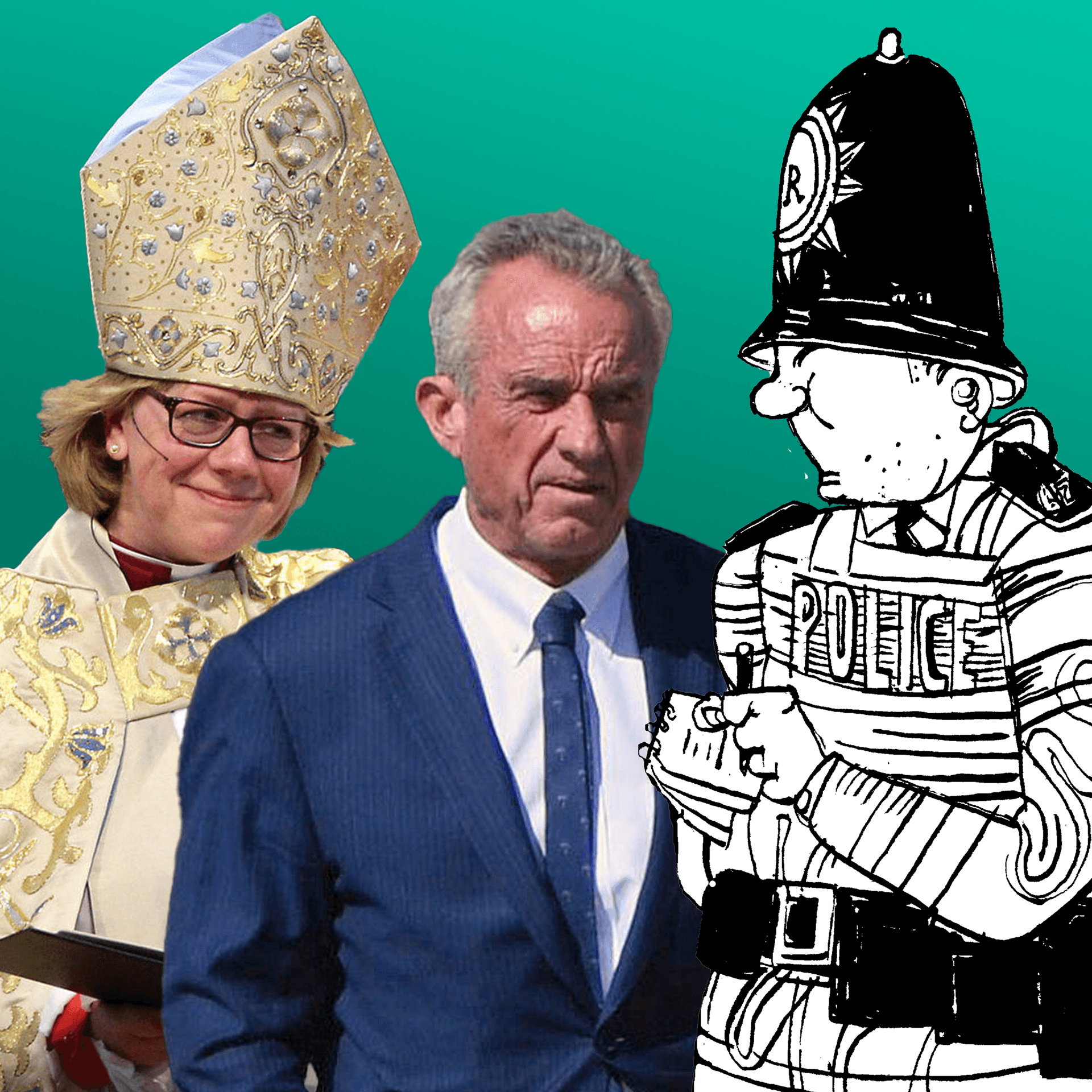
Page 94 episode 157 covers three main threads. First, the appointment of Sarah Mullally as the new Archbishop of Canterbury after Justin Welby’s resignation. Mullally’s background is highlighted as a former Bishop of London (third in command), previously Chief Nurse in the NHS, and experienced in safeguarding crises, including the London diocese’s “brain dump” scandal involving fraud by Martin Sargent and the suicide of Father Alan Griffin.
Key claims
Welby resigned over connections to serial abuser John Smythe and safeguarding failures; Mullally faces backlash from groups that don’t recognize women bishops.
Notable examples
Gaff Cotton’s conservative Anglican objections; Welby’s “drinks party” resignation story; COVID church closures.
Second, Northern Ireland police surveillance of journalists: journalists Barry McAfferty and Trevor Binney, plus BBC journalist Vincent Kearney, with claims of phone-record collection to identify sources.
Third, Andrew Hunter-Murray and Helen Lewis discuss RFK Jr and Trump’s “Make America Healthy Again,” focusing on vaccine skepticism, CDC changes, and risks like measles resurgence.
Written by AI. May contain mistakes. Listen to the episode to check what was said.
Chapters
Tap a time to open that second in VOThe New Archbishop of Canterbury
1:22 to 3:19
Discussion on the appointment of Sarah Mullally as Archbishop of Canterbury.
“But first, the three of us are going to be discussing some of the stories from the last issue.”
Church Scandals and Safeguarding
3:19 to 6:22
Exploring the scandals in the Church of England and the historical context.
“but also turned out to be sadistically beating young men in a shed at the end of his garden.”
Challenges of Leadership in the Church
6:22 to 9:36
Examining the challenges Sarah Mullally faces as a female leader.
“own record like on sort of safeguarding issues?”
Archbishop's Role in Modern Politics
9:36 to 14:00
Discussion on the political implications of the Archbishop of Canterbury's role.
“I'd say it's another positive development after 1 ,428 years isn't it really?”
The Political Landscape of the Church
14:00 to 16:00
Discussing the intersection of politics and the new leadership in the church.
“But it's going to be same sex, couples, women priests, and then assisted dying, which she's already made her position clear on.”
Surveillance of Journalists by Police
16:28 to 18:34
Exploring the police's covert surveillance operations on journalists in Northern Ireland.
“So in a way, this was principally spying on their own staff, but they were doing it by using journalists and trying to track down journalists' sources.”
The Legacy of the Loughinisland Massacre
18:34 to 22:23
Unpacking the historical context and ongoing implications of police actions.
“to protect informants that they had in that particular paramilitary organisation.”
The Daniel Morgan Case and Police Misconduct
22:23 to 26:08
Examining the unresolved murder case of Daniel Morgan and police failures.
“In fact, half of it turned out to be a completely separate programme.”
Institutional Issues in Public Services
26:08 to 28:00
Discussing institutional responses to criticism within organizations like the police.
“Both the News of the World, one senior journalist there, Alex Muranchak, was involved in putting surveillance on Dave Cook's family.”
The Complex Case of Daniel Morgan
28:00 to 31:20
Explore the intricacies and implications of the Daniel Morgan case and media corruption.
“It's not we must, you know, sort of make sure things are going better.”
Show all 13 chapters
Trump's Health Agenda and Vaccine Skepticism
31:30 to 42:00
Discuss the implications of Robert F. Kennedy Jr. in the Trump administration and vaccine policies.
“Now, as promised, Helen Lewis is off on her travels in the States, but Andrew Hunter-Murray wasn't having a slack off on her podcast duties just because of that.”
The Impact of Vaccine Skepticism in Britain
42:00 to 44:20
Explore the challenges and implications of vaccine skepticism in British society.
“And that for some parts of the right is a really potent message to them.”
Reflections on the MMR Controversy
44:20 to 45:00
Acknowledgment of past errors regarding the MMR vaccine coverage and its repercussions.
“Ian, I should just say, coming off the back of that, Helen mentioned in passing, Private, I did have a role in the MMR controversy and connections to autism, didn't it, in the past?”
Transcript
Automatic transcript. May contain errors.0:00Ready for your next adventure? Etihad's Global Sail is here. Witness Nairobi's living traditions. Set sail on Phuket's pristine waters. Or let wonder be your guide in Kuala Lumpur. Book by Thursday and take off to over 50 destinations on sail. Travel from October 2026 to March 2027. Book now at etihad.com. Etihad, beyond borders. Saturday, September 26th. Two of combat sports' most dangerous strikers collide. Bare Knuckle. Liverpool's own Darren the Gorilla Till goes to war with Cuban powerhouse Yoel Soldier of God Romero. Plus the Bare Knuckle Middleweight Championship of the World is on the line.
0:45When the reigning champ Dave the Redneck Mundell defends against undefeated British challenger Jack the Meek Cleaver Cullen. BKFC 94. Till vs. Romero. Watch it live only on The Zone. Sign up now at DAZN.com. Page 94, The Private Eye Podcast. Hello and welcome to another episode of Page 94. I'm Adam McQueen and I'm joined in the Private Eye office today by Ian Hislop and Jane McKenzie. But fear not, later in the episode we will be hearing from both of our other regulars, Helen Lewis and Andrew Hunter-Murray, who are going to be talking about President Trump and his Health Secretary RFK Jr. And their slightly peculiar ideas about how to make America healthy again.
1:22But first, the three of us are going to be discussing some of the stories from the last issue. specifically police bugging of journalists both in Northern Ireland and on our tellies, courtesy of ITV, and some of the things that have happened since our last edition came out. Specifically, we finally, after 11 months, have a new Archbishop of Canterbury, Ian. I thought you were going to say finally after thousands of years we have a female Archbishop of Canterbury, which is certainly news. 1 ,428 years since St Augustine took over, yeah, the first woman in the role. Specifically, she is Sarah Mullally, formerly the Bishop of London, and before that, I mean by any measure, is an impressive LinkedIn page, Chief Nurse in the NHS.
1:59That's not bad, is it, for two positions, Jane? Also from a comprehensive school background, which I don't think the latest few archbishops have been. But it is an extraordinary achievement, isn't it? I mean, women priests were first ordained in the Church of England in 1994. They could only become bishops from 2014. So Mullally became Bishop of London, which is effectively the third in command of the Church of England, isn't it? It's after the archbishops of Canterbury and York. Remind us, Ian, why did Justin Welby, her predecessor, why was he obliged to step down? Well, he had an unfortunate argument with someone at a drinks party at the British Museum, and he just had to go.
2:36I think we may be getting the timing slightly wrong on that one. Oh, yes, that was afterwards. No, self-regarding nonsense. He had to leave, quite rightly, because he'd been involved in one of the major scandals in the Church of England about his connection with a really horrific serial abuser called John Smythe, who'd run various Christian camps and had various connections with WellBe over the years. And we'd written about it at some length, particularly Jane had. I should say for podcast listeners, actually, if you do want the full story, if you go back to episode 126 of page 94, which was recorded last November, Francis Ween joined us to discuss the John Smythe case in depth.
3:18Essentially, it was John Smythe was an evangelical Christian who ran these camps around the country for young people, but also turned out to be sadistically beating young men in a shed at the end of his garden. That's a summary of the beginning of the story. After some people found out what was going on, he was moved a long, long way away from where he could be a problem for senior people in the Church of England off to Africa. So the fact that he was just exported to carry on behaving dreadfully was another big part of the scandal. Welby was one of the many figures in the church who was found out to have kind of connived in this relocation rather than actually attempting to tackle the problem.
4:04Yes, and it turned out he sent him a Christmas card and he'd supported the mission. And all of these things didn't quite chime with the suggestion that he knew nothing about it. And he had no links to this figure previous to when he first heard about him. And so there was a great deal of argument about safeguarding in the church, whether the head of the C of E could actually continue in his post as head of the Church of England when the safeguarding had completely failed with Smythe and more and more cases kept turning up of repeated failures with other priests, with other lay people in various positions and eventually he decided very reluctantly that he had to go and he left with no grace at all.
4:52Even after he'd been criticised for being graceless, he stood up in the House of Lords and basically said, well, you know, the main victim in the whole thing was his diary secretary because, you know, she had to rearrange stuff, which was unbelievably tone deaf, and various other bishops sat around laughing, but the one who didn't and covered her face in her hands was Sarah Mullally. Who now takes over the job. And I think maybe as a basic requirement for the job, finding your predecessor cringe-worthy is pretty good. I mean, the ongoing safeguarding issues around the church, there's an awful lot of them still ongoing.
5:28that's presumably part of the reason why it's taken a full 11 months to appoint a successor I mean the Catholic Church managed a two-day papal conclave didn't they so That's right in order to appoint an archbishop for the Church of England the first thing you have to do is appoint the panel that does the appointing and they did have a great deal of difficulty putting together a panel because of the number of various sort of bishops and senior figures who also are sort of dealing with the fallout from their own safeguarding scandals where within various different dioceses they have also failed to investigate or sort of sort of done belated or poor investigations or cover-ups so there are multiple people who you would have expected to have been on that panel who stepped aside or sort of had to be replaced.
6:21And what's Mulally's own record like on sort of safeguarding issues? So, Mullally certainly has experience of stepping into the leadership of an organisation that's in a terrible mess, safeguarding and leadership wise. When she first started as Bishop of London, the London diocese was in a shocking state. In fact, when she first arrived and started trying to impose some kind of organisation and governance and appropriate systems, there were some significant figures who quit, such as the head of operations there, a man called Martin Sargent. Now, it's not a good sign when somebody quits because there's an attempt to sort of clean things up, and it turned out that he had defrauded a Church of England charitable fund by about£5 million.
7:13£5 million? Wow. He's now in prison. Our readers will know much of the history of Mr Sargent's desire to spend the church's money on gambling and on holidays and in living quite a high lifestyle. So the fact that he quit the minute someone new came in who wanted to have a look at things was not a great sign about the mess that was there. And then the mess got even worse when he, on leaving, delivered what was called a brain dump of information, which turned out to be a lot of gossip and a lot of secondhand and unfounded rumour about all the priests and all the people in London who he'd sort of vaguely known.
8:01And the Bishop of London who came in, Sarah Mullally, had then to cope with what do I do with all this information, information in inverted commas. And there was a huge amount of criticism of the way this was handled, particularly after one priest committed suicide. So Father Alan Griffin took his own life after being subject to one of the safeguarding investigations triggered by the brain dump. And it was a dreadful time for quite a lot of other clergy who were included in this roundup of brain dumped gossip with very little evidence of any actual abuse happening in these cases. so there was an inquest and investigation into all of this and Sarah Mullally's response to the end of all of this was that she gave an unreserved apology for her part in having not sort of had processes and support in place of people quickly once all these safeguarding investigations got started well now that is an interesting contrast to give an unreserved apology for her part in it all.
9:18And I mean it is slightly ironic that we now have an Archbishop of Canterbury who was accused of overzealotry in trying to prevent abuse as opposed to underzealotry in trying to prevent abuse. You essentially can't win in the Church of England but she seems to be can't winning in a slightly more positive direction. I'd say it's another positive development after 1 ,428 years isn't it really? There are still people who are critical of her for that there are a number of other problems she's a woman as you you've I think pointed out and this is still a problem in the Church of England there's a group who don't recognize women bishops let alone women archbishops she has to reconcile that as point number one can I go for a really basic question here because what exactly is the job of Archbishop of Canterbury it's not really one job is it and it's got very little to do with Canterbury but it's in fact That's several jobs, isn't it, Jo?
10:13It is. And in fact, one of the jobs is to be Bishop of Canterbury. That's why the Diocese of Canterbury gets more of a say than any other diocese in the appointment. Right. The next tier up is to be the leader of the Church of England. Primate of all England. Primate of all England. So called because you are the monkey to God's organ grinder, presumably. Yes, that's definitely it. That's my Church of England joke. I'm here all week. But the Church of England is not the sort of only part of what's called the Anglican Communion globally. So there are Anglican churches all over the world. And the global Anglican Communion is very divided by a number of issues between the conservative and the more liberal wings, the evangelicals and the other wings.
11:03A lot of the African churches in particular are not very keen on the attitude to same-sex couples, the attitude to women bishops, and a number of other things. And there's an organisation called Gaff Cotton, which is the Global Anglican Fellowship, and they've greeted the appointment of this archbishop with sorrow. The Bishop of Rwanda in particular is not happy. the global fellowship of confessing anglicans to give them their uh their their full name yes um they they represent conservative churches not just in africa but asia as well they said they received the news from sara church in south africa dissented from that interestingly they they they popped up and said they heartily welcomed mulali as archbishop but it is it is a very odd job because as you say a large part of the global communion that she is now the head of do not recognize women priests or women bishops at all do they no and in fact they don't even recognize male bishops who've been ordained by women bishops because they don't accept that the ordaining worked if it was done by a woman.
12:04Because it's not in the direct apostolic succession. That's right. I just thought I'd throw that in. The direct apostolic succession. You don't get that in every podcast, do you? Well, I tell you, I was reading the result of who had actually got the job, and I was reading it in what had obviously been a quickly put together piece and halfway through it stopped saying mulally and it said beasley and i thought we haven't been told who the runner-up is but i think you have and this is bishop beasley who is bath and wells i don't say if you were bishop of bath and wells you'd probably want to stick there because he's got a lovely palace that's the one with a moat where the swans come up to ring a bell when they want feeding right yeah okay well best country legend there all i'm saying is there was a misprint and maybe they knew more than I did possibly yes maybe maybe next time Beasley maybe you'll get lucky we should point out also there is another part of the job as well which is that uh the Archbishop of Canterbury along with I think 26 other bishops also have seats in this country's parliament don't they in the House of Lords they do that was of course where we made his crass resignation speech uh uh joking about his diary diary secretary um but it's very odd because it is a political role I mean a literally political role in that sense but days prior to Sarah Malani's appointment her predecessor George Carey made an extraordinary intervention he did an interview with the Telegraph in which he said the archbishop the incoming archbishop should maintain a judicious silence on specific policies and said that the church had no more expertise than anyone when it comes to the ins and outs of how we handle migration for example I think the archbishop of Canterbury is meant to have views on morality and ethics that being part of the point of it and i think the engagement in politics it always infuriates politicians i mean they're very keen to invoke religion when it suits them but when religious figures get involved in politics even to say i think this may be bad or good maybe wrong maybe against conscience they get very very upset by it but as we all know i mean that there is no way of escaping politics and particularly not at the moment and she will have to deal with politics not just internal politics and there's going to be plenty of that in the church she'll have to deal with real politics i mean her name was put forward by the prime minister to the king i mean this is politics it absolutely is um george carrey i should just say for the record had resigned as a priest last december over not just his readmitting a priest who'd been banned from ministry after being accused of sexual assaults on teenage girls but actually actively pushing colleagues to give that priest a particular job so um he he might possibly consider taking his own advice on judicious silences along with justin welby i think is there not a silent order where all former archbishops could go for i don't know i'm thinking maybe 10 years a trappist location somewhere.
14:56I'm saying nothing. But it's going to be same sex, couples, women priests, and then assisted dying, which she's already made her position clear on. And as a former chief nurse, it was quite interesting because she has done this. It's an educated view, isn't it? It is. So that is quite interesting. On one of those big moral issues, we have someone who has a bit more experience. So again, that will get her into trouble. I'm sure that's politics. I mean, it is actually a bill that's meant to be going through Parliament. So there will be more of this to come. For the sake of comprehensiveness, I should say there's also the issue of COVID and the closing of the churches.
15:37And they were closed in London, even for private prayer. And a lot of priests felt that was a failure at the one time when the church was absolutely needed. I mean, with any candidate, there's a lot of baggage. So I just thought I'd mention as much of it as possible. And wish her luck, obviously.
15:59Ready for your next adventure? Etihad's Global Sail is here. Witness Nairobi's living traditions. Set sail on Phuket's pristine waters. Or let wonder be your guide in Kuala Lumpur. Book by Thursday and take off to over 50 destinations on sail. Travel from October 2026 to March 2027. Book now at etihad.com. Etihad Beyond Borders Now on to another story that Private Eye has been following for a good long while now The discovery, or rather in this case confirmation that the Police Service of Northern Ireland was for many years routinely spying on journalists in what they called a defensive security operation The journalist in question and quite a few other people have different opinions about why it might have been happening Jane, you've been following this So what's the most recent development in this story?
16:50so our last issue we were reporting on the publication of the mcculloch review so in the case of of two journalists who transpired the police had indeed been carrying out surveillance on but in the course of that case lots more cases of surveillance came to light and so the new chief constable of police service of northern ireland had had a review carried out by a KC and that was published last issue and lots and lots more evidence of surveillance came out in that including some unusual things such as anybody who had been in touch with the police press office, journalists who got in touch whether they phoned up or emailed in but so long as their phone number was available it was kept and then it was washed through the phone system to check whether anybody from any police station anywhere in Northern Ireland was speaking to journalists off the record.
17:50So in a way, this was principally spying on their own staff, but they were doing it by using journalists and trying to track down journalists' sources. Just to unpack this story a bit, this all kicked off with a documentary that was made about the Lock-in Island massacre, which was an attack on a pub frequented by Catholics in 1994, a gun attack by members of the Ulster Volunteer Force. It was actually during a World Cup match between Ireland and Italy, so you can imagine how crowded the pub was at the time. Many years later, the police ombudsman for Northern Ireland concluded that policing, what was then known as the Royal Ulster Constabulary, it's since turned into the Police Service for Northern Ireland, but the ombudsman concluded that the officers had colluded with the UVF to protect informants that they had in that particular paramilitary organisation.
18:39So journalists Barry McAfferty and Trevor Binney made a documentary about this in 2017. So we're talking, this was something that amazed me slightly. We're not going right back to the height of the troubles in all of this. This is a much, much more recent surveillance efforts, isn't it? Binney and McAfferty had their homes raised. They had documents seized. A judge later ruled that the search warrants that police had used for that raid were inappropriate. And in the course of that investigation, they discovered the police had been running covert surveillance on them for years, hadn't they? The police were desperately trying to find out who Bernie and McCaffrey's sources were.
19:11They suspected that somebody at the police ombudsman was passing information. So they were also carrying out surveillance of the people whose job it is to be the police watchdog. So they were carrying out surveillance of their own watchdog and of these two journalists to try and find out whether they had any contacts between them. They never uncovered who the source of the information was through all of this. But yes, they were using things like traffic cameras to watch where these journalists were going. They were, you know, it's a proper like TV style surveillance operation. The alleged crime in all of this, which, as you say, was never approved, was theft of an official document because the Ombudsman's report, to remind ourselves that was extremely critical of the police service of Northern Ireland, had been leaked to these journalists.
20:03who had reported it as something that's entirely in the public interest. Yes. So all of this effort and resource and so forth of the police, who clearly have no crimes whatsoever to investigate in Northern Ireland besides this, was all about protecting police reputation. This was all about who has passed information on about how badly police had handled the Loughlin Island murder investigation. Essentially, it sounds a lot like the police put an awful lot of effort into protecting potential killers who did tell them things, and going after journalists who wouldn't tell them stuff. Is that a kind of summary?
20:37Yes. The review that was published a fortnight ago, it reveals many more journalists, all of whom were investigating things like police corruption and police collusion and relations with the EVF and all that kind of thing, and some lawyers who have also sort of represented the other side in cases where, for instance, victims' families have sued the police and that kind of thing. So these are all the people who the police were surveilling. And that seems to be like enormous numbers, doesn't it? Because one extraordinary detail that came out ahead of the case which the two journalists brought at the Investigatory Powers Tribunal, and I should just tell listeners exactly what that is.
21:17They basically are an independent body which provides the right of redress to anyone who believes they've been the victim of unlawful action by a public authority using covert investigation techniques. But that includes MI5, MI6 and GCHQ, so pretty wide-ranging powers there. There were several other parties who applied to be part of this case, including the BBC and the National Union of Journalists. And lawyers for MI5 and GCHQ at that point argued that actually they held so much material on BBC journalists in Northern Ireland that they simply didn't have the time or the necessary staff to go through all of that information ahead of when the tribunal was scheduled for.
21:51That's right. So there are more tribunals covering things like BBC journalists coming up separately. and in relation to BBC journalist Vincent Kearney both police and MI5 have admitted certainly that they have his phone records now that's not the contents of the conversations it's it's the who he called and who called him records but that's hugely useful if you're trying to work out who a journalist's sources are. And as a journalist this is sort of quite terrifying I mean the idea I mean we do take source protection extremely seriously but actually in most cases you're not reporting on cases of violent killers I mean the retribution potential for if your sources are given away to anyone in in stories like this is terrifying isn't it yeah absolutely I mean yeah so much of these these cases sort of relate to the sort of paramilitary and gang violence in Northern island these are not people that you want um to get on the wrong side of the idea is it's the police who are looking into your sources but the police are the people being accused of collaborating with the very bad people um and therefore might well give your information to the very bad people that is is worrying it is all slightly reminiscent of uh as we were saying the itv drama the hack or at least half of the hack uh which um i understood ahead of its transmission was going to be the story of how Nick Davies uncovered phone hacking at the News of the World for The Guardian.
23:23In fact, half of it turned out to be a completely separate programme. Really oddly, sort of, episode two, I thought, hang on, I've clicked on the wrong thing here because it was tonally different and to be able to tell a completely different story. I've tuned into a police drama by mistake. Yeah, it was bizarre. Yeah, so it was, in fact, both halves of the drama hack are kind of stories that the eye has followed on and off over many, many years, if not decades. So the other half that wasn't specifically about Nick Davies and phone hacking was about the many police investigations into the murder of private detective Daniel Morgan in South London in 1987.
23:57And specifically the role of Dave Cook, a police officer who, I've got to say, came out slightly less heroic in the eyes coverage over the years. Jane, tell us a bit about Dave Cook and his involvement in the Daniel Morgan case. So he's a detective chief superintendent, so quite a senior detective. So he took on the investigation. I think it was the fifth reinvestigation of the case. So he was brought in to have another go at trying to find out who had killed private investigator Daniel Morgan, an axe murder, which was a number of suspects involved in organised crime. his investigation resulted this does has not so far in the episodes i've seen has not come out at all resulted in both a a high court case and an appeal court case um in which it emerged that he had coached witnesses for their evidence and um essentially this uh created the massive risk of a miscarriage of justice and the High Court upheld that this was misfeasance in public office and the Appeal Court later concluded that it was malicious prosecution.
25:11So the risks of miscarriages of justice when police officers do that kind of thing are very high. It resulted in the collapse of the trial that they were hoping to bring in 2011 and as you say an actually payout of more than half a million pounds to the people who were accused of involvement in the murder of Daniel Morgan. And the case remains, even after these five police investigations and a large independent report on it in more recent years, unsolved officially. It is a fascinating case because it does touch on a whole axis of corruption within the police, particularly in South London, which also it has kind of like tendrils that go into the whole debacle over the Stephen Lawrence murder.
25:52Our late colleague, Paul Foote, looked an awful lot into what was going on around various police stations in South London and their involvement of various officers with corrupt kind of gangland figures there. It's also got massive tendrils, which, you know, is the thing that connected it in the drama, to Fleet Street as well. What was Fleet Street? Both the News of the World, one senior journalist there, Alex Muranchak, was involved in putting surveillance on Dave Cook's family. That's depicted in the drama. But also the Daily Mirror as well. Famously, a lot of the police tapes and police bugs picked up journalists going in having a chat with Daniel Morgan's associate, John Rhys, Southern Investigations, the company he ran, including Gary Jones, who went on to become, until quite recently, the editor of the Daily Express, discussing with Jonathan Rhys, or sitting and listening to Jonathan Rhys describe how what they were up to was very, very illegal.
26:42So it is the most extraordinary case, which so far no one has got entirely to the bottom of. The commissioner of the Met Police, as you say, Mark Rowley, refused to accept the finding of the independent panel that looked into the various investigations into the Daniel Morgan murder, that his force was institutionally corrupt, just as he did the findings of Louise Casey, who ran an inquiry following the murder of Sarah Everard by a serving Met officer, that the Met was institutionally racist, misogynistic and homophobic. All of this, of course, ahead of last week's Panorama, which went into Charing Cross Police Station with some secret filming, to prove that that does pretty much appear to be the case.
27:19This applies to so many institutions. It's a default position. You're criticised. You say this institution is really important. The church, the police, the BBC, the NHS. It's so important that we continue our good work that we must shut up everyone who says we're not doing good work. Now, you can see people falling into this. And for some reason, Paula Venels comes straight into mind. This is the most blatant case of it. The post office is very, very important. and we must defend the brand. And if the police do it, it's really dangerous. I mean, it's pretty dangerous when anyone does it. But for them to devote this much time to what is essentially revenge for bad publicity, it's not really lessons learnt.
28:04It's not we must, you know, sort of make sure things are going better. It's just saying we don't like this. We're going to get our own back. And that, I mean, you know, does the police no good at all. And of course, Paula Vennels was also one of the shortlisted candidates to be Bishop of London back in 2018 when Sarah Mullally was eventually selected for the post. So we could be looking at Archbishop Paula now. Wow. The Daniel Morgan episode in The Hack, which was, I mean, I've read all the pieces. All of you have written about this for a long time and understood only some of them. I mean, it is an unbelievably complex case.
28:45But I felt there the fact that it was suddenly the news of the world spying on a policeman. I know it was there to demonstrate that they basically were out of control, the press, and spied on everybody, and thought they were above the law, literally above the police and above everyone else. But for me, it confused what was the drift of Nick Davis investigation, which was simpler to follow and ended up with various people from the murder organization going to jail and Mr. Murdoch having to sit there and have a custodied by thrown at him, which seems to me the big point of the story. But that may be just me.
29:25I mean, it did have extraordinary details which were taken directly from real life. I mean, the fact that when Dave Cook went in to talk to Rebecca Brooks, then editor of the News of the World, about the surveillance that had been put on his family. The excuse being, by the way, that they thought he was having an affair with the Crimewatch presenter Jackie Haynes, to whom he had been married for quite some years by that point. So not the most convincing excuse. She did go directly from that, escorted by the Met's head of communications, Dick Fidoccio, to a reception with the Met commissioner, which does sort of slightly suggest some fairly cosy relationships there, doesn't it?
29:59And that was a fine bit of the drama, I thought. The portrayal of Rebecca Brooks as a misunderstood and innocent woman. Absolutely. I thought it was top quality. How else could you possibly portray it, Liam? I think it's worth pointing out that Nick Davis's book, which he's rewritten, is that right? He has. He's added an extra chapter on new investigations into what he says is evidence of corporate hacking. so specifically by management at News International, as it was, to try and interfere with kind of political decisions which were being taken over the proposed takeover of Sky at that point.
30:33And I think that stuff is very interesting too, just in terms of a less confusing narrative, and it's slightly more, it's moved it on. It's certainly piquing the interest of lawyers at News International, who has re-revealed a couple of issues back, have been sending out warning letters to anyone who might think about reviewing that book or saying anything about it. Oddly enough, we have said something about that, but we didn't get the letter. So there you go. Keep reading Private Eye.
31:222027. Book now at Etihad.com. Etihad. Beyond Borders. Now, as promised, Helen Lewis is off on her travels in the States, but Andrew Hunter-Murray wasn't having a slack off on her podcast duties just because of that. So he's caught up with her to talk about Donald Trump's recent alarming claims around autism, paracetamol, or Tylenol, as it's known in the US, and pregnant women. They kicked off by talking about one of the offshoots of MAGA, the alphabetically adjacent MAHA. Here's Helen.
31:51Jane Mackenzie:MAHA is Make America Healthy Again. And it's probably going to turn out to be one of the most consequential parts of the Trump agenda. Now, let's be brutal about what Trump has managed to achieve so far is a lot of destroying things. Would I say that was the kind of thing that's the main outcome of Doge, right, is that they just cut a lot of programmes, particularly in overseas aid. Whether or not they're good at building new things that they do like remains to be seen. And Maher is a very good example of that. So it is currently being led the Department of Health and Human Services by Robert F.
Read the full transcript
32:22Jane Mackenzie:Kennedy Jr. Now, as the name suggests, he's the son of the original Bobby Kennedy, brother of JFK, and from a lifelong democratic family. He is both a lifelong environmental campaigner and a lifelong, well, pretty much lifelong, vaccine sceptic. And he has a variety of, I would say, pseudo-scientific views on a number of things. And in his position in control of the Health Department of America, he is able to do things like change the vaccine schedules, change the collection of data, all of that kind of stuff that, you know, I think might have very severe consequences for infectious disease in America.
32:59When you say vaccine schedules, is that who gets it? How many are dished out? What is that?
33:05Jane Mackenzie:Yeah, it's recommendations on basically what childhood vaccines there should be. You know, he's making the COVID vaccines harder to get. And now that's, you know, that's something that's kind of debatable about what this kind of schedule for those should be. But childhood vaccines are, you know, to the scientific community, a much less controversial topic, right? We just simply know that there are children alive today who wouldn't be because they got the MMR vaccine. Look at the rates of that. But he is, you know, he's very worried. He is deeply steeped in vaccine scepticism. And he basically got rid of the panel at the Centre for Disease Control, the CDC, that is in charge of the kind of vaccine recommendations and stuffed it with people who are much more of his point of view.
33:45It's interesting hearing about this from a British perspective, because I think in the UK, a lot of government ministers or cabinet ministers even are people without a specific axe to grind in the area that they're given the portfolio for. Barring maybe the exception of Ed Miliband, who's, you know, like did climate and energy last time and is doing it again this time and has been doing a lot in between, you know, Heidi Alexander hasn't been banging the drum for better bus provision for 30 years and has now finally been given the transport brief. So it's quite weird hearing about this from the RFK side of things.
34:18Jane Mackenzie:Yeah, and that's a reflection of really the unique way that he ended up in this administration. So, you know, the Kennedys are the big democratic Catholic family, you know, and he ran initially for president as a Democrat. and so there's this very funny dynamic where quite a lot of oppo research dump came out in you know the spring of last year which was you know designed to kind of tank him essentially because what happened at that point was that he was edging towards the republicans so the republicans loved him running as a democrat because they thought the kennedy name was going to kind of draw support away from joe biden and then suddenly hang on a minute no he's edging towards he didn't get on the ballot as a democrat he's an independent uh-oh actually what do people who hate vaccines normally vote for that's us the republicans this might be a problem and then so you started seeing this mad spate of stories after hearing lots of stuff about his great environmental activism suddenly you got to hear a lot of stories about there's this time where he think we think he might have eaten a dog he says it was a goat i should clarify for the record and then a further evolution happened at which point trump realized how great it would be to be able to have a kennedy on his ticket to say, people say I'm incredibly extreme and right wing.
35:29Jane Mackenzie:Look at me, I'm reaching across the aisle. I've got a Kennedy. And you know, somebody said that to me when I was canvassing in Pennsylvania for people's opinions and ahead of the last election. They said, well, you know, he's, you know, he's got a broad church. He's got a Kennedy. Not a good Kennedy. He's got very much one of the less good Kennedys. Yeah. I mean, there's quite a few fairly rogue Kennedy's. But yeah, anyway, so this was the point. He had a great value to Trump as a kind of fig leaf. And actually, you know what? He was very popular with that kind of Rogan-a-sphere, as I often call it, you know, the podcast sphere.
36:04Jane Mackenzie:Because what is the podcast, that bit of the Trump-friendly podcast sphere funded by? So crypto, which is, you know, money without regulation, and supplements, which is medicine without regulation. And so if you want to find, you know, pseudo alternatives to sunscreens or you want to hear discussions of like what testosterone replacement therapy which is something that Kennedy has spoken about it's why he says he can still do a pull-up at you know in his 70s all that kind of stuff then he was very friendly with that kind of establishment skeptic bit of the podcast sphere and some of it is you know just take a few vitamins and eat a bit better and some of it's avoid seed oils which is kind of neutral and some of it's, you know, maybe the MMR vaccine causes autism, which is debunked and untrue.
36:47Jane Mackenzie:So, you know, he brought a great asset to the Trump team. And as a result, he got the portfolio that he wanted, right? That was what he was always going to get. His environmental views would not have sat very well, right? If he'd been given Ed Miliband's portfolio, he might have said, you know, we should stop polluting the rivers. And that would have been quite an unpopular thing to say. But in the context of the current movement, his scepticism of traditional medicine is absolutely on brand for the Trump administration. So one point that you've made is that the Trump administration, the first one, for all its legions of faults and corruption and goodness knows what else, did actually produce COVID vaccines.
37:25But he was unable to boast about it because so many of his supporters don't like jabs.
37:30Jane Mackenzie:Yeah, there was a really funny movement in the hearing. So RFK Jr. was in front of a Senate committee here, you know, being kind of scrutinised. And Louisiana Republican Bill Cassidy, who provided the casting, deciding vote on his confirmation in this role, right, is obviously now feeling that he's been sold a pup, as well he might, because RFK Jr. Or a goat. Or a goat. Or a goat. The bone structure is very similar. You can't tell from the picture of it barbecued at all. Anyway, so, you know, he's obviously showing a bit of buyer's remorse. And so he asked RFK Jr. if he thought Donald Trump deserved a Nobel Prize for Operation Warp Speed, which, as you said, was the government programme to develop a COVID vaccine.
38:11Jane Mackenzie:And RFK Jr. went, you know, absolutely. And then Cassidy's follow up question was, well, how have you just told us that, quote, the COVID vaccine killed more people than COVID? So the Maha position is now both that Donald Trump is an absolute legend for having invented the COVID vaccine, but also the COVID vaccine killed people. Yeah it's quite it's two quite distant planks to straddle isn't it? And he is the man to straddle them because his as I say his muscle tone for a man in his 70s is exemplary So he is making it harder to get vaccines not just the COVID ones but childhood vaccines things like vaccinating children against measles and I believe that is starting to yield results isn't it?
38:50Jane Mackenzie:This is why there's a real worry about it because there have already been the first measles deaths in the US for quite a long time for about a decade and that happened in a Mennonite community so a very closed religious community and those are you know communities that have traditionally been very skeptical of vaccines anyway and traditional medicine and you know it's too simplistic to attribute that because you know the administration had only been in place for a certain amount of time but I think you can certainly say that the prominence of vaccine skepticism on large parts of the right and bits of the left what you might call the kind of crunchy left right there's a lot of kind of people who do yoga who also think the body can heal itself that you know it's not a purely partisan view I'm sure that has contributed to a culture of suspicion of medicine essentially yeah and I'm honest I've read today as well that in the US some rabies cases have also gone up so make rabies great again good lord I know that you have to go through a confirmation hearing you mentioned earlier one of the republicans who confirmed him to be approved for your seat or you know the role you've got in cabinet whatever it is Was it close with Kennedy?
39:59Jane Mackenzie:Yeah, it required a certain amount of browbeating of a couple of Republican senators who were really reluctant to pass him. And the Senate's very finely divided, right? So a couple of votes, one way or the other, would have been decisive. And there was a really substantial push by the Trump administration to get him in post. Because essentially, that was the bargain that had made, right? Like, switch to supporting us and we'll give you health. And it's a shame because immediately what happened, he also appointed his own director of the CDC, Susan Menares. She lasted 29 days before they fell out.
40:28Jane Mackenzie:And even in that time, in her first week in the job, a gunman turned up at some CDC offices in Atlanta, sprayed 500 rounds. And the gunman's rationale was, I've been driven to be feeling suicidal because of the COVID vaccine. So you can already see where the strengths of feeling that there is about the fact that, you know, the COVID vaccine was a lie or it was implementing with microchips or it was part of some, you know, sinister plot. Those are all widely held views on some bits of the Maha right. And they've real world consequences. And so Minaris has quit along with a load of other senior officials, just essentially saying you're destroying the CDC.
41:05Jane Mackenzie:Their job is going to be harder because, you know, they're running uphill basically against an administration that thinks that they're kind of corrupt and unscientific and they've covered up the downsides of vaccines. Wait, they think these guys are unscientific? They think the CDC are under-scientific. And one of their kind of prime ways that they've demonstrated this is that the CDC changed all of its advice to be gender neutral. So it would say like its advice on pregnancy would refer entirely to pregnant people, for example. And this is part of the kind of Trump line, which is essentially like, these people don't even know what a woman is.
41:40Jane Mackenzie:Why would you trust them with any kind of scientific advice? And to an outsider, I think that kind of seems kind of loopy, right? Like these are two very like a linguistic tweak is very different to like the question of whether or not a vaccine has side effects, which is something you can empirically establish. But it is part of the way that gender and the left has been used to delegitimize like left wing authority, basically. And that for some parts of the right is a really potent message to them. Now, Helen, as you know, I'm a parochialist. I care principally about British politics. is there a sign that this vaccine stuff is making its way over?
42:19Jane Mackenzie:Or are we inoculated against it? Yeah, nice, very nice. I think it's harder because of the position of the BBC and Ofcom regulation. I can't think of any of the major newspapers that are really... I mean, you know, I think they're also still feeling slightly scorched over MMR and the way that they were misled over that, right, as indeed Private Eye was at the time. So I think there was more of a reluctance to go there on vaccine stuff. online i'm sure lots of britons who get all their news from facebook are absolutely drowning in anti-vaccine sentiment but the other thing is you know like the classic phrase about american politics which is like american sneezes and britain catches a cold well america sneezes because an american's got bird flu then that person gets on a plane then britain very much could catch that cold right this is the thing is that you know we had one pandemic we're still overdue a flu pandemic it's really important that you can trust global health authorities You know, one of the big problems with COVID was the feeling of like, is any of the data that's coming out of China even vaguely reliable?
43:18Jane Mackenzie:I think there are now similar questions about a lot of the health data that's coming out of America, as well as that agency's ability to go to the poultry farm, do the testing, work out what strain it is. Is it actually anything to be worried about? Right. All of that kind of stuff. I think that ability is being eroded. And it's a real shame because actually on the other side of it, some of what RFK Jr. is saying is really basic. Like, have you considered eating a vegetable? I hear they're good, right? And when Michelle Obama did it, they were like, oh, I don't need to be told what to do by Michelle Obama.
43:47Jane Mackenzie:But actually, like the idea that you should go to the gym and eat right is a message that America, with its obesity crisis and its incredibly unwalkable places to live, could really do with hearing. So there's a kind of great tragedy about RFK Jr. that, you know, there's a lot of kook there, but there's also, you know, some quite basic advice that is probably quite good for people. And meanwhile, America has multiple, you know, terrible health crises that I don't suspect that the CDC and this health department and RFK junior are going to be able to have a lot of heft to do something about. That was Helen Lewis.
44:20And thanks to Andy. Ian, I should just say, coming off the back of that, Helen mentioned in passing, Private, I did have a role in the MMR controversy and connections to autism, didn't it, in the past? Yes, nice of Helen to bring up my not finest hour. Yes, the early MMR coverage in the eye was wrong. We accepted the findings of Wakefield's first study, as did the Lancet, and there were various other voices, but we were essentially wrong to stay with it and wrong to stay questioning it and ran a mea culpa. And the person who was right in this was Phil Hammond, our current MD, who said, no, this is wrong, and he was right.
44:56And that's it for this episode of Page 94, the Private Eye podcast. If you want to read more about the cases we've been discussing and many, many more, which will be popping up for years to come, then get yourself, first of all, a copy of the magazine. And if you like what you see, then get yourself a subscription as well. It's incredibly reasonably priced. Thank you to Jane McKenzie. Thank you to Ian Hislop. Thank you to Helen Lewis and Andrew Hunter-Murray. And thank you to Matt Hill of Rethink Audio for producing as ever. Until the next time in a fortnight, goodbye. Ready for your next adventure?
45:29Etihad's global sail is here. Witness Nairobi's living traditions. Set sail on Phuket's pristine waters. Or let wonder be your guide in Kuala Lumpur. Book by Thursday and take off to over 50 destinations on sail. Travel from October 2026 to March 2027. Book now at Etihad.com. Etihad. Beyond Borders.