In short
Social care reform in England—why it’s been politically stalled, how the NHS/social-care split creates “bed blocking” and a costly, unequal system, and what funding models (caps, levies, inheritance/estate taxes) have been proposed but repeatedly branded “death/dementia taxes” and not implemented.
Guests
Andrew Hunter-Murray (host, Private Eye); Helen Lewis (journalist/commentator); Adam McQueen (journalist/commentator). No external guests.
Key claims
Social care funding is a “lottery” once assets fall to about £23,250; councils are strapped; families pay or become unpaid carers; this also burdens the NHS. Politicians keep delaying solutions (e.g., commissions/reporting timed near elections).
Notable examples
Andy Burnham’s long-running focus on social care; Dilnot 2014 cost cap; multiple failed levies under Labour/Conservatives; hospital “bed blockers” due to lack of care placements. Second segment: Earl Spencer’s book dispute with Piers Morgan over Diana-related claims and privacy. Third segment: AI-driven author/publisher scams and fake “experts,” including misdirected emails to the wrong Helen Lewis.
Written by AI. May contain mistakes. Listen to the episode to check what was said.
Chapters
Tap a time to open that second in VOThe Urgency of Social Care Reform
0:45 to 4:42
Discussion on the need for social care reform and the political challenges surrounding it.
“When he was mayor of Manchester, he asked for the kind of latitude to try and try out some proposals in Manchester.”
Historical Context of Care Policies
4:42 to 10:59
Exploration of past political proposals regarding social care and their failures.
“The trouble is, I think there have been lots of good recommendations over the time that have been nuked for various reasons.”
Earl Spencer's Book and Controversies
10:59 to 14:00
Discussion on Earl Spencer's new book about Princess Diana and controversies involving Piers Morgan.
“The eye, I think, has pretty much made its feelings clear about Earl Spencer in the book in its cover of the current issue.”
Bizarre Columnists and Defamation
14:00 to 15:10
Discussion on the context of Bizarre columnists and defamation laws.
“We should say, sorry, Bizarre was the name of a column.”
Piers Morgan's Controversies
15:10 to 17:50
Examining Piers Morgan's history with privacy invasions and defamation.
“suing over this I mean it's quite the defamatory it's not defamatory I don't think to say he snarled.”
Charles Spencer's Eulogy and the Royal Family
17:50 to 20:30
Exploration of Charles Spencer's eulogy and its implications for the royal family.
“These are the sort of cases that will be likely to come up in any court case to demonstrate perhaps that he didn't quite have the reputation for probity and respect for privacy.”
Diana's Legacy and Media Relations
20:30 to 22:20
Analyzing Princess Diana's relationship with the media and its effects today.
“with that very telling phrase which was about we her blood family will still look after the boys.”
Scams Targeting Authors
22:20 to 26:10
Discussion about the rise of scams preying on authors and self-publishing.
“I mean, how many times has the mail splashed and put bits of this out?”
The Impact of AI on Authors and Scamming
28:01 to 29:57
Explore how AI is influencing publishing and increasing scams targeting authors.
“But it is happening a lot to writers at the moment.”
Self-Publishing and Exploitation
29:58 to 31:36
Discuss the challenges faced by self-published authors and the scams they encounter.
“I'm literally the only person here who doesn't have a book coming out.”
Show all 11 chapters
Crisis of Reality in Information
31:37 to 33:59
Analyze the broader implications of misinformation stemming from AI and its effects on trust.
“There was no evidence they actually exist.”
Transcript
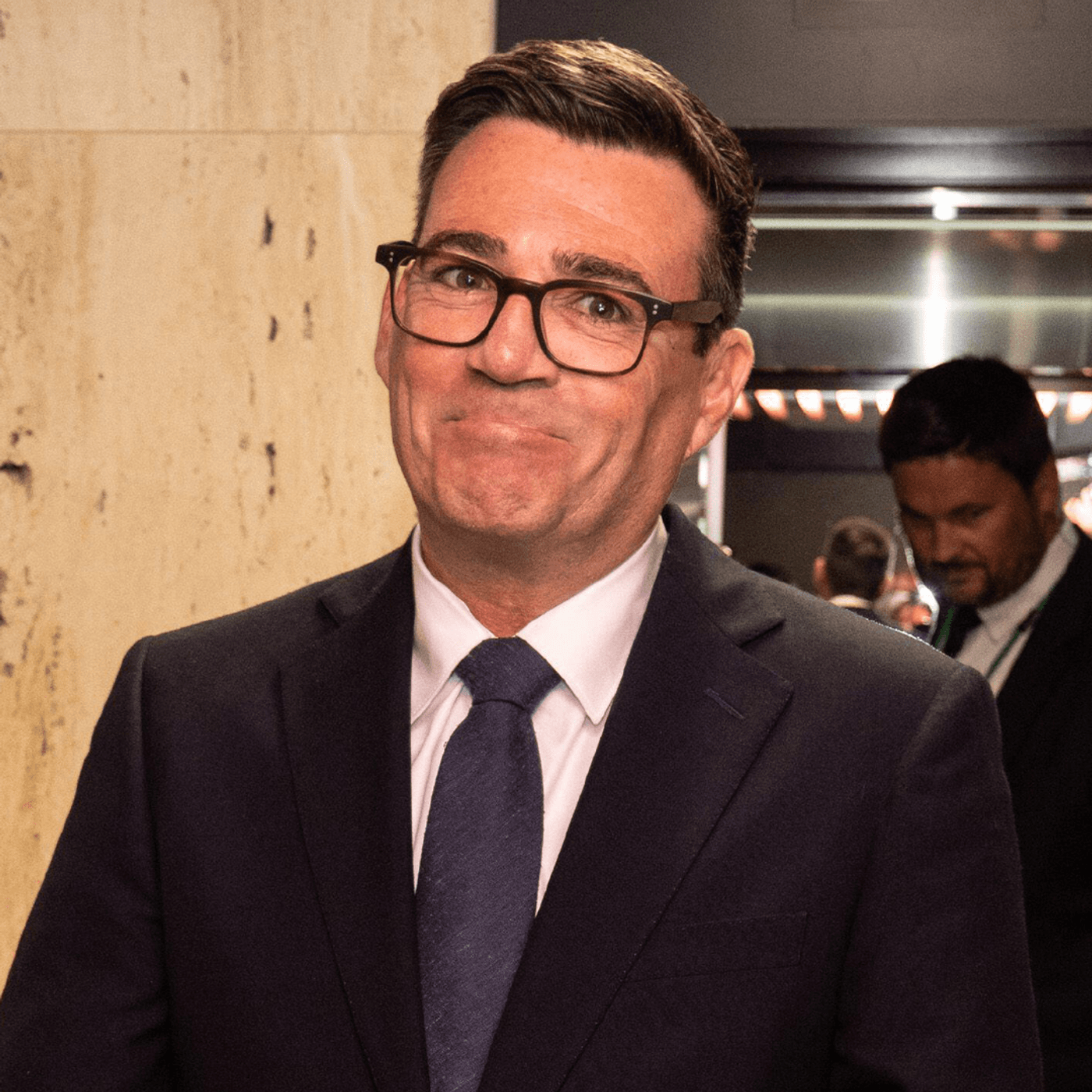
Automatic transcript. May contain errors.0:00Page 94, the Private Eye podcast. Hello and welcome to another episode of Page 94. My name's Andrew Hunter-Murray and I'm here in the Eye's new studio with Helen Lewis and Adam McQueen. We're here to discuss all sorts of things that have been in the news since the last issue of the magazine. We are slap bang in the middle of the Labour conference. We're recording this on Monday. So at the time you watched this, you may have just switched over from Andy Burnham's big speech. But one of the things he will be talking about is social care, which he has made an enormous part of his offer to the electorate of what he's trying to convince everyone that we really, really need to do something about social care.
0:35Helen, why is this such a big thing for him? Well, he's been on this case since 2010 when he was a health minister under Gordon Brown. And if you remember, he got kind of shanked by the Cameron Osborne administration who called it a death tax, his proposals back then. But he's always had this. When he was mayor of Manchester, he asked for the kind of latitude to try and try out some proposals in Manchester. I was on a panel with him. You remember that Labour conference where he was sort of seen as the coming man a couple of years ago and he was going around in his little Fred Perry polo neck? And I mean, it was sort of every Labour Party conference the last couple of years.
1:07And I made some sort of like slightly sad joke about the fact that obviously he tried this before, that Keir Starmer tried it. And, you know, it has been something he's been going on and on about for a really long time. I think given extra charge by the fact that his father died, having suffered from Alzheimer's for many years, not long ago. But it's also something that everyone has been talking about for a really, really long time. I mean, the general consensus, and it's as far as the consensus goes, for the last at least 15 years has been that something needs to be done about social care and something needs to be done.
1:33But there's absolutely no consensus on what that should be. And it's literally at least two elections. So the 2010 one, when it was branded by other parties as the death tax, the 2017 one, when Theresa May tried to come up with a solution for it in her manifesto, it was branded as dementia tax, wasn't it? So it's one of those things that everyone can agree that there's something needs to be done on, but no one can agree quite what. The problem is there's a big division between health care, NHS care and social care. So I actually re-listened to an episode we did of Page 94 in 2015 where I was talking to Phil Hammond and Heather Mills.
2:07Both of them were saying this has been a problem for a really long time. We really need to get a grip on this. As far as I can tell, almost nothing has changed in the time since we recorded that episode. So that has had an impact on millions of families, millions of elderly people who are spending all their money on care that is not state provided. People who are selling their homes, families who are having to give up all of their time and become unpaid carers. And the state is really relying on their goodwill and the fact that people like caring for their families and they feel the need urgently to do it.
2:38But this is not a sensible way to run a system. So the basic problem is one about the division between health care and social care. if you have cancer for example and you are you need help with various things after you know as part of your recovery maybe that's being visited at home whether that's getting up in the morning or getting dressed or maybe some meals cooking if you've had cancer that might well come from the nhs budget and you will be you will probably get that right because that's central government funding if you have let's say dementia that funding is supposed to come from the social care budget, which your local council administers.
3:12And councils are so strapped for cash, as you say, that there might well not be that money there. It's very, very hard to get social funding. So lots of people simply pay for it themselves and, you know, get through all of their money right down to the last. It's£23 ,250. Once your assets shrink to that level, the state steps in. But it's a complete lottery as to whether you get care or don't. It's an insane way to run a system. And yet it's just been relied on because the alternatives apparently suggesting more tax to pay for it immediately the other side will always brand it a death or a dementia tax is mad it's a madly disjointed system and it also has a massive knock-on effect on the nhs as well so i was in the uh position four years ago of a member of my family who was at the point where they were in hospital and needed to go into full-time care it was a matter of weeks and weeks that that person was in hospital for and i remember speaking to one of the nurses on the ward who said probably a third of the patients in that hospital were in exactly the same position that they were fit to leave hospital they didn't need any more treatment in hospital but there was nowhere for them to safely move on to the backlog in the system was such that the the effectively they were just becoming bed blockers so it's not just about local councils you know impacts the NHS in an enormous way as well yeah which is also very expensive and it's something that taxpayers are paying for so this mad idea that anything that's done about it will be a new huge burden on taxpayers is nonsense.
4:31This is costing all of us money all of the time and suffering for people who are stuck in hospitals or, you know, substandard care that isn't what they need and for their families as well. So as politicians have been saying for a while, someone has got to grasp the nettle and sort this out. The trouble is, I think there have been lots of good recommendations over the time that have been nuked for various reasons. So the Dilnock report was in 2014 and that essentially proposed a cap on costs, which to me seems a very fair way to say you are responsible for the first x amount if you have it right one of the things that andy burnham previously did was talk about an estate tax now i personally can't think of a better time to pay tax than after i'm dead but this for some reason is massively unpopular generally with people i think got kids they want to pass it on to them so but there is this problem which is that the current generation of retired people are the wealthiest generation and there is an issue where are you going to ask working age people essentially to preserve the inheritances that those people can pass on to their kids which will only be only a certain percentage of them it's that is likely to increase inequality right there will be a generation of people who just get massive inheritances that trickles down the system so i'm kind of nervy about the idea of this being paid for by working age people to without a kind of input from from wealth from that generation that has built up wealth yes so i think there should be a kind of it should be something that is kind of proportional to people's you know how how they have managed to accrue wealth during their lifetime.
5:52I was trying to think of a counter argument for those headers and the only one I think of was well at least then some of that you know we've got a problem at the moment where younger people are not getting on the housing ladder they there's massive inequality like that so at least maybe if money is being passed down through families but it's not even going to them is it because I mean unless you're very unfortunate and lose your parents at an extremely early age it's going to people sort of my age and above in their 50s and 60s who were probably the next proportionately wealthy kind of trance of the population.
6:16And also those people who might be then you shouldn't get in a situation where your 50 year olds the only way their retirement works is if they get an inheritance and if something nukes that then that things are i'm sure for them but we should be kind of clear about the scale of money that's being asked so the health commission said 16 billion a year which is equivalent really like these are very rough numbers to essentially 2p on income tax so you're talking about somebody on the median income probably about 700 pounds worth of tax a year anti burnham said that's higher it's not going to be that much but if you were going to provide nhs levels of universal coverage from people it is quite it's a It's a chunky old bill.
6:49We should say this is England in particular, and I think Northern Ireland as well, that we're talking about. In Scotland, the care is kind of provided. If you go into a care home, you might face a bill for accommodation. But, you know, your care is provided if you're visited a home, that kind of thing. Can I just sort of do the back and forth of it now of how completely mad this is? Right. When they were last in government, Labour proposed a national care service, right? Some people would have had to pay from their inheritance to fund that. That got branded a death tax. Labour lose that election.
7:20OK, David Cameron commissions this review. The review proposes a lifetime cap. No one has to pay more than£35 ,000. That doesn't happen. It's not implemented. Then under Theresa May, people... Well, they did sort of randomly announce that in the middle of an election campaign, which was a very kamikaze way to do it, but yes. Under Theresa May, the Conservatives propose people getting care at home pay for the costs if they are worth£100 ,000 or more, right? if they have over those assets. Labour calls this a dementia tax, May loses the election, it's not implemented. Boris Johnson pledges a lifetime cap on personal care costs of£86 ,000, a new levy to pay for it, not implemented.
7:59Rishi Sunak, when he's Chancellor, introduces a new levy on national insurance to fund a reform of social care, which Liz Truss then scraps. It is as if the entire political class have dementia, frankly. they have just completely forgotten that this is urgent and it needs resolving I'm sorry that's probably very tasteless to say but it's true but it's a very tasteless situation this affects 1 in 10 people or something like that but for those people it is just a life changing experience that kind of just sucks up all of their attention, all of their finances so it's like playing a very grim lottery.
8:34The worst one I think is maybe Keir Starmer comes in 2024 and says let's have a commission that will report in 2028 and you're like so just before a year before your planned next election, you're going to go, who fancies a tax rise? Come, we'll sort this out finally. But correct me if I'm wrong, we've not heard the speech at the time of recording, but the kind of briefing ahead of it at the weekend was that this is going to be a manifesto commitment for 2029, isn't it? Yes. That they're going to do something about this. So that still, to me, sounds quite a lot like kicking it a bit further down the road.
9:02I think it's encouraging that Burnham is at least saying, if I have to spend a lot of political capital on this, so be it. And the system, I have to say, from experience with several family members, working with it the system is brilliant once you get into it people are really really helpful and it works well to the extent that it does but it's not something anyone wants to think about either until they hear that sharp end and you do get into a crisis situation we say i mean i'm i had to move in with my parents for a while and and and provide care for them well things were sorted out and it's not until people are in that frankly desperate situation which none of the elderly people want to be in either at all yeah that's the thing is people don't want to be a burden on their families it's one of those things that people can put sort of out of sight and out of mind until it is actually brought up to them as this is an issue which you have to deal with.
9:45So yes, fair play to Andy Burnham for putting it at the forefront of political discourse because we are all going to have to face up to this either on our relatives' behalf or on our own behalf at some point. It does feel like there are lots of areas of political life where politics seems to have said enough people are willing to just cope with that, we can just sort of bodge it, which is insufficient obviously. But don't you quite like it? I quite like the fact that Andy Burnham seems to understand that he's prime minister. Right. You can do things. There's a line which I may have quoted before that Obama, I think, once said to David Axelrod, which was like, what do you want me to do with my approval rating?
10:20Like, put it on a shelf and admire it. Which was when he was trying to pass Obamacare, so trying to get health insurance reform for Americans. There is no point having political capital unless you go, this is what I want to do with it. so I think even if this turns out to be really doomed, I respect him for having analysed the issue and saying, you know, we're going to have to take on maybe he'll just flame out and he'll decide it's all too tough, but at some point someone's going to have to say we're going to do this and someone's going to have to pay for it, and if he's going to use his Prime Ministership to do that I will give him a little cheer, think of him very fondly in his Fred Perry polo neck
10:57Right, now let's come to our second section Earl Spencer Adam who he? Earl Spencer is the brother of the late Princess Diana who has popped back into the headlines recently with his new book I've read it so you don't have to Swan Song Diana My Sister very late to the Diana cash in book market Is this his first? This is his first one about Diana yes he's been telling everyone that he has written a few history books and he does I believe a history podcast he does doesn't everyone sorry anyway I don't think we can really complain about that doesn't everyone got a podcast now he writes in the introduction to Swan Song that he did it because he was asked to do documentaries around the 25th anniversary of her death by Andrew Morton and also by Alistair Campbell it's one to put in your diary to everyone's a podcaster you know imagine I've been under a rock for a fortnight what's the book about?
11:43the book is about his alimony payments to his third wife no it's not sorry sorry sorry the book is about him deciding as Helen says not to let others tell the story of his sister and his relationship with her but to do it himself as a respectful portrait. And it's also about settling scores. So you can hardly have missed the fact that he has accused Prince Charles, as he then was now the king, of reacting with barely disguised glee after the death of his ex-wife and telling the Earl, hissing, in fact, was the phrase he used at him, that she'll be forgotten soon enough. Yes, we'll forget her soon enough.
12:17The eye, I think, has pretty much made its feelings clear about Earl Spencer in the book in its cover of the current issue. But since then, there has been a development, a grievous and most Irish development, in that Piers Moron, remember him? Yes. I'm calling Piers Morgan, but they're wrong. Piers Moron has threatened to sue Earl Spencer over what he says are fabricated inaccuracies and examples of brazen falsity. Not just falsity, but brazen falsity. The worst kind of falsity. In this book. I mean, absolutely, of all the falsities, that's the one you don't want, isn't it? There's nothing funnier than Piers Morgan in full, like, pearl-clutching dance of Edith Evans, kind of, never in my life have I been so disgusted.
12:56I really enjoyed watching his segment on it. It is quite extraordinary. So what is the source of the beef? The beef? Well, the source of the beef we will come to, because there is some long-running, very, very long-running beef between Earl Spencer and Piers Morgan. We will get to that. What this is specifically about is an incident in the book where Earl Spencer recalls calling round newspaper editors, and specifically tabloid editors to uninvite them to Princess Diana's funeral on the unreasonable grounds that at that point it looked like, well, paparazzi had pursued her to her death in that tunnel in Paris.
13:24It turned out to be rather more complicated, the actual causes of that crash, than was thought of in those early days. Earl Spencer's account of it is that Piers Morgan snarled with annoyance before he hung up. I assumed Morgan must be feeling particular guilt because four years earlier he and his Sunday mirror counterpart had published photographs taken with hidden cameras by a gym owner of Diana working out in a leotard This was such an intolerable invasion of her privacy that Diana instructed lawyers to sue the mirror group and to block further use of the images. The problem is, Piers Morgan wasn't editor of either the Daily Mirror or the Sunday Mirror at that point.
13:56He was at that point the Bizarre columnist, the showpiece columnist, I think, on The Sun. We should say, sorry, Bizarre was the name of a column. He was a Bizarre columnist. He's always been a Bizarre. Was a Bizarre columnist. I have one question, which is, whose side are you on in this fight? Well, this is one of those glorious ones, isn't it? It's a bit like Hamilton versus Fyad, where you just sort of... Alien versus predator. Can they all lose? Yes, whoever wins, mankind loses. It is an extraordinary one. I mean, it is wrong. Yeah, as I say, this was in 1993 that the Mirror Photos were taken.
14:25The editor of the Mirror at that point was the late David Banks. Piers Morgan didn't arrive as editor until 1995. But I have, as well as consulting Charles Spencer's swan song this week, consulted my very pristine and unleashed copy of McNay's Essential Law for Journalists. This is the office copy. Literally box fresh. Have you ever seen it before? Why do we get sued so much? no annotations one postcard well the postcard is on the relevant page which makes it clear that to be a defamatory a statement has to lower the subject in the estimation of right thinking members of society generally or disparage the person in his business trade office or profession now you might say come on it's Piers Morgan surely he's got no reputation worth damaging I would never say that no I just did so there you go and let me demonstrate he might have a problem suing over this I mean it's quite the defamatory it's not defamatory I don't think to say he snarled.
15:14The defamatory statement is supposedly to say that he was a mirror editor in 1993. Oh. Which isn't defamatory either. That's just a mistake. So he wasn't responsible for this invasion of Diana's privacy? He was absolutely not responsible for that. Has he ever had any other problems over invasions of privacy or fake photos or anything like that? Well, you might recall, and I suspect this might have been at the back of Charles Spencer's mind when he was thinking about it, an incident just a few weeks before Princess Diana was tragically killed. when Piers Morgan faked a front page photo of her with then boyfriend Dodie Fyad in which he, and he's happily admitted to this and wrote about it in his own book, flipped Dodie's head so it looked as if the two were going in for a kiss when in fact Dodie was looking in completely the opposite direction.
15:58Now he did this specifically to spite his colleague on the Sunday Mirror, Bridget Rowe, who had outbid him for the actual photos of the two of them kissing, which obviously were quite a sensation at that point. And he wanted to get a spoiler out, as they're known in the tabloid trade, on the Saturday so as to annoy the Sunday Mirror and reduce their sales. So he had faked a photo of Diana and Dodie, Piers Morgan we're talking about now. Sorry, moron. But he had not printed those leotard gym photos. He had not, no. No, those were, we should make clear, those were considered legally and there was a court case which never actually made it to court but it was accepted that that was a massive invasion of privacy.
16:36It was a massive invasion of privacy a bit like the sort of really big precedent case that was established a few years later, which was when Naomi Campbell was photographed coming out of a Narcotics Anonymous meeting, which obviously, as the name suggests, if you're dealing with substance abuse problems, Narcotics Anonymous, you sort of deserve some anonymity. And that eventually went all the way through the court system and it was established that she did deserve privacy on that one. Guess who was editor of the Daily Mirror when they printed those particular photos? Oh, it was Piers Morgan. Yes, yeah, yeah.
17:04We could do some other ones. Nicole Kidman being photographed was being wheeled out of the theatre, operating theatre after she'd been operated on for an ovarian cyst in 1998. What? Oh, here's a familiar name. Spencer. Victoria Spencer, the first Countess Spencer, first wife of Earl Spencer. She was extremely ill and she went into a clinic where she was photographed in the grounds of this private clinic by a telephoto lens, which was splashed on the front page of the News of the World, which at that point was edited by Piers Morgan in 1995 under the sympathetic headline Die Sister-in-Law in Booze and Bulimia Clinic.
17:37This was, lest we forget, Too much even for Rupert Murdoch, the proprietor of the News of the World, who famously at the time said, it is clear that in this case the young man went over the top. The young man being Piers Pugh Morgan, 30 years old. These are the sort of cases that will be likely to come up in any court case to demonstrate perhaps that he didn't quite have the reputation for probity and respect for privacy. Can you tell me a little bit more about the serialisation going to the mail? Because that seemed like an intriguing entente cordiale. I can't imagine Charles Spencer and the Mail previously having been all that chummy.
18:12Famously, Earl Spencer and the Mail, not always sort of easy bedfellows. In 2018, he got undisclosed gambit from the Daily Mail over claims that he had acted in a heartless and callous way towards Diana. An accusation, his lawyers said, was defamatory and untrue. That was all about the issue of whether she was going to be allowed to live in the house that she wanted to live in on the Althorpe estate, which, of course, he was then master of. He'd inherited from his father. That's all covered in his book. it was also covered in a load of other letters do you want to hear about another privacy invasion by Diers Morgan okay yeah I said this was a long running beef in 2003 the Daily Mirror under Piers Morgan published letters from Earl Spencer to Diana urging her to get treatment for mental health problems they were there amongst a stash of do you remember all those things that Paul Burrell the old butler the rock kept for safekeeping it emerged up in his attic and then sold them on to the Daily Mirror where Piers Morgan was happy enough to print them we should just round off just by saying in terms of Piers Morgan's reputation and how it awfully has been sullied by the suggestions in Al Spencer's book.
19:11He was also, you might remember, sacked from the Daily Mirror in 2004 for printing fake photographs that supposedly showed British soldiers abusing Iraqi prisoners of war. I do know that one because it is up in the private eye office. Yes. In a frame. Now, Morgan has said, just to put Morgan's case, I'm not professing to be the Mother the Teresa of Fleet Street in all the time I worked there, and I didn't never make mistakes myself. That's a double negative. That's double negative. Subs, please check. Yeah, needs an editor to this. But this is a very, very big mistake, and I think he's done it in a way that's incredibly casual, and he has asked if the book can please be pulped.
19:49I do come back to an argument that Marina Hyde made in a recent column about Charles v. Charles, which is just all of these people are kind of masters at producing. I mean, this is sort of influencer beef, but rip posh. And that's basically all this is. I did wonder how much he and Prince Harry have been talking to each other because Harry posted on his Instagram or possibly Meghan's Instagram over the summer that they'd been to Orthrop where Diana's grave is on an island because they didn't really want it turning into a sort of gaudy shrine. But there is a kind of very similar critique of the royal family as only looking after its own and freezing out people.
20:25and the whole way that book is structured is about his eulogy, Charles Spencer's eulogy he gave at the funeral, with that very telling phrase which was about we her blood family will still look after the boys. So I think that the two of them may have lots of things in common about their kind of criticisms about the institution of the royal family. There's also the very presumably carefully lawyered suggestion that Diana told Charles Spencer that Prince Charles, as he was then, was in love with his valet, which was a bit of a rogue left field, and that's why they were divorcing. And then he has to garland it round with lots of, like, I don't know what she was thinking, I'm going to just chuck that in.
21:00That, again, isn't new, though. That, again, was a News of the World revelation. It was Mark Bolland at that point, who was the ex-spin doctor to Charles. This was in the mid-noughties, and he resigned and told that story that he had been asked, is Charles gay? Which was the headline on the front of the News of the World. To which I would only say that a man who fantasises about being his mistress's tampon hazard got a gay bone in his body. Yeah, that's what I mean. If he is gay, he's been doing it wrong for an extremely long time, hasn't he? Is there any prospect of these toffs leaving us alone?
21:29Or is it, are we just going to be witness to the kind of Godzilla versus Kong playing itself out for the next year? Because it's coming up to the 30th anniversary of Princess Diana's death. I think there is some revisionism even now that's happening. One of the things that's very interesting about that book is it starts with an acknowledgement that Diana used the press. that Andrew Morton's biography was essentially authorised by any other name, right? And I think that bit is something that has become more sayable. We've ended up with a more balanced picture of Diana about the fact that, yes, she was vulnerable, yes, she was hounded, but also she was somebody who stepped into that role and tried to play it to her advantage.
22:03She wasn't someone who things just happened to. And I think that has changed. And I think that's probably the understanding that people have about Harry and Meghan too, that they're not just passive recipients of these things, that this is, as you say, this is like influencer beef and these people have all got very serious PR advisors and they are all in a kind of war with each other. But no, it's of course... I mean, it shifts... I mean, how many times has the mail splashed and put bits of this out? It clearly is still shifting papers. Well, the mail, interestingly, were rushed into it because their usual thing that they do with serialisations is start them on Saturday, run them over to the mail on Sunday.
22:35And they got bumped into this one because a load of copies of it were stolen. The Dutch edition. It's always the Dutch edition. It was the Dutch edition of Omid Scobie's book that said who the royal racists supposedly were. Do you remember that? So essentially what we're learning from this long term is that Dutch publishers really need to work on their security measures. Right. The takeaway. The great takeaway. Now, we've been speaking about royal books that are full of dubious claims. But there is another thing happening in the world of books. And it was mentioned in a recent issue of Private Eye.
23:05It was all about people writing to authors, saying they're from radio stations or saying they're from national publications and offering them a bit of publicity for their book. Sounds very nice and harmless. unfortunately, these people are not real. The people offering, you know, keen, ambitious authors a bit of publicity for their book, in many cases are scammers. And this is a huge problem, isn't it? Helen.
23:30You did the Rory Stewart! It was still great to experience it in person. You can see why he gets the numbers in. How Alba managed to keep a straight face while having the kind of Wimbledon swivel at my accommodations to Alba. Sorry, go on. I think this is really fascinating. Essentially, the problem with LLMs is they have made generating huge amounts of text and actually now pictures and video frictionless and basically free. You can just spam out stuff. So you're right. So I had a book that came out in paperback. In fact, there was for a time on Amazon the Genius Myth Workbook for$10.99. And this is something you obviously, when there is a title that is...
24:07So this was just a rip-off because your book's The Genius Myth. Yeah, and this was somebody who basically had an exercise book with a square thing. that you would get lessons, takeaways from. You see that all the time on Amazon. There's probably ones for both of your books. But, you know, anything that is like a non-fiction one, it'll be like a workbook. And it's just there because people will type in Charles Spencer and they hope to get it higher up the algorithm by stuffing it with keywords and that some people stupidly will buy it. Tell you what, the former Telegraph Theatre critic Charles Spencer must be having a field day, mustn't he?
Read the full transcript
24:39Has he got a book out? But one of the other things that happens, is author spam emails, which are AI generated. Now, you might say, oh, let's all cry over the problem this is causing for high-up authors. Actually, the people it's really affecting are self-published authors who very often have got a passion project that they want to do. They want to print it up, and they are kind of easy prey for people saying, pay us five grand and we'll market it. Anyway, I've been getting lots of these. Would you like to hear the problem with this one? Yes. Hello, Helen. I hope you're doing well, writes Richard Sterling.
25:08While exploring books in the Holocaust memoir and historical biography space, a time to speak immediately stood out because of the strong tension between the unimaginable horror of Nazi occupation and the incredible resilience of one survivor's will to live and bear witness. Can you guess what the problem is with me getting an email about that? You didn't write that book. That is the other Helen Lewis, formerly Helen Katz, who is a survivor of Auschwitz. They've just gone looking for the Helen Lewis and they've incorrectly attributed that to me. So they've just guessed an email for you or they've found one somewhere online?
25:37It's come to my Atlantic email address, so it's the one that's publicly available. Yeah, so they just linked a book by someone called Helen Lewis to my publicly available email. So this is targeted at you. What is their suggestion? They want to sell me on audience discovery mapping, reader path optimisation, search visibility structuring, authority positioning. I've always been very worried about my authority position. And long-term reader flow, which sounds very like yoga or something. They just want some money out of me. Okay, here's another one. This one was very passive-aggressive, which annoyed me.
26:09Paul James writes, It's 67 reviews. Helen, that's fewer accolades than my dog gets for sitting down in order to try and sell me all basically... Yeah, I know, right? Thank you for... He's nagging you. Also not true. No, I know. Actually, it's got over 300 now. No, I mean about the dog. Where's this dog getting five-star reviews? Oh, yeah, that's the bit you were upset about. Not the injury to me, but the hypothetical dog. This is basically offering to sell me fake Goodreads reviews or fake Amazon reviews. This one, I run View Movement, writes Ty Hageman. Great name. we are an invite only social media firm serving the largest sceptics of the common narrative sorry it just makes me laugh every time just huge sceptics like to the Mr.
26:48Crea social level sceptics we have developed a specific short form method to get millions of views each week taken from your podcast talks and shows we are under NDA for most of the names we serve and remain private yeah of course you are very very handy of course you are someone else has written to me about NDAs are the new super injunction aren't they it's just where that's what you're saying now someone else says that my book cover they'd like to punch it up for me because my book The Genius Myth navigates complex human tensions and unofficial suspicions of the German-Polish borderlands. What she's done there, Joyce, if that is in fact her real name, is mixed up The Genius Myth with A Time to Speak.
27:20Put a bit of both of them in there. So this is a really widespread thing now. There's a thing called agentic work, where you ask AI agents to do a huge amount for you. I mean, it's very much like the, if you remember, Fantasia, the sorcerer's apprentice, the brooms. it's hard enough spotting humans who are fibbing to you normally but this is just such a deluge of stuff that the number of people who will fall into one of these scams increases and the worst thing is it's preying on authors who might be self-published authors authors want to hear someone has liked your book they've understood it the message is connected and by the way if you pay us just a few thousand dollars or pounds you will get in front of many more people this kind of fraud is happening to everyone.
28:01Let's not be wrong about that. But it is happening a lot to writers at the moment. There's 2.6 million self-published books a year compared with half a million traditionally published ones, according to The Guardian. So this is presumably affecting millions of people. But yeah, I think people who aren't authors, even self-published ones, will also be seeing this happening to them. For example, FOI requests. We had a story in the last mag about the Scottish newspaper being essentially one person's just over and over and over Ipso complaints, like press complaints. It's 501 years, so more than one a day.
28:32Yeah. As I say, freedom of information requests, again, it's now trivially easy just to spam them out. There is just a kind of gunging, basically, that you can now do with AI stuff. You know, other things, I think scamming is getting lots worse as well. AI means you can just target millions and millions of people. And then even if only 0.1 % of them respond, that's a good living. There was a report, I think this was in the New York Times, which is where some fraudsters will claim to be an agent and a film executive and a screenwriter. The agent's saying Hollywood would love this and, by the way, we'll put you in touch with a screenwriter who'll turn it into a script for just a few thousand dollars.
29:09There was a scam by the FBI last year which had defrauded 800 largely elderly authors out of$44 million on the idea of fake film deals. So this is happening at an enormous amount. It's very clever, isn't it? because it's extremely unlikely that an actual Nigerian prince is going to get in contact with you and say, can you put a down payment in my account and then I will send a million dollars through to you. But it's not entirely outside the realms of possibility if you've written a book that someone is going to get in touch with Hollywood and want to adapt it. And it's also probably your dream as well.
29:40So it's very targeted. It's extremely clever in that way. It used to be that the problem was fake authors. We now have fake publishers who are fooling real authors. And that was the really sad thing, as you were saying. I mean, I've been hit by a few... I also have a book coming out next month, Hobbs Volley, all good bookshops from 8th of October. But I've been hit with very, very... I'm literally the only person here who doesn't have a book coming out. I plugged your one as well. I know, it's good. Andy, have you ever written a book? There's one out in November called Everything Happens So Much.
30:08Ian will snip all of this. I know, it's all gone. Anyway, but I have been targeted with a certain amount of stuff on Instagram, bizarrely, just messages from people saying, I would love to feature you on my Bookstagram page. And when you follow the links, I mean, that bit is quite convincing. that someone obviously knows I've got a book out. They tend to target them to the wrong Instagram posts, so the ones that aren't about my book, the ones that are just pictures of my cats or something. But also, when I went to them, one of them appeared to be a page that belonged to a Nigerian pastor, which didn't strike me as, it didn't have any books on it or anything, so I didn't think that one was very convincing.
30:38One of the ones I did go through, which was quite convincing, did have a load of books on, but it was very evident from scrolling through that that all of those were self-published. You know, it was people's life memoirs and those kind of books that at the end of your life you retire and think, I would like to write something. I mean, it is easier to self-publish these days, but very possibly they've been taken in by vanity publishers and paid an awful lot of money to get those things produced. And they've now fallen for another scam where they're paying a lot of money for someone to effectively just put a picture of the front cover up on an Instagram page with no followers that no one's ever going to look at.
31:06So it is, you know, we're not talking about the kind of Richard Osmond's or even the us's of the world. This is, you know, people who are in, you know, do not have the resources and are being exploited by it. Right, they can't run it through a publisher or an agent, right? If they're self-publishing, they don't even have that level of gatekeeping. And the other thing about AI is it's now trivially easy to create a fake online footprint. You can make a photo of somebody who's photorealistic. You can make a video of that person even that's pretty good. You can make a website with an LM within seconds.
31:35So you can create a whole fake publishing house with lots of digital footprint trivially easily. Well, I'd like to come back to, sorry, just one of the candidates for the Paul Foote Award for investigative journalism this year was Rob Waugh on the Press Gazette, who had just been literally hunting down supposed experts who'd been quoted in articles in the press who just did not exist. There was no evidence they actually exist. They had LinkedIn profiles. They had photos that were AI generated. And because there were fewer resources in newsrooms, no one had done the checking that he'd bothered to do.
32:05And these people were ending up, often in kind of multiple news things, as quoted as a reliable sort of source for things. Hundreds of quotes that you see. I mean, I think that brings it back to the main point about this, which is, it's not entirely about authors having a whinge of how people trying to defraud them. It is about a general kind of crisis of reality where you don't know what is true anymore. So the example that I wanted to bring to the table, first of all, was about the Times obituary of Andy Burnham's father, Roy Burnham. The Times obituary quoted a biographer of his, Ralph Goldschmidt, who, and I'm quoting here, dinner table conversations often touched on local issues, national politics, and the everyday challenges faced by working families.
32:46Now, that book by Ralph Goldschmidt is called Andy Burnham Biography. And guess what? The front cover, I mean, the picture on the front features a man who is not Andy Burnham. It's a man who looks slightly like Andy Burnham. This is our slot. You know, this kind of stuff is infecting information in reliable places. And it's going, you know, the poison is flowing upstream, basically. Well, it used to be Wikipedia that people could just put things on. Wikipedia's got a lot more reliable now. But the assumption would have been a few years ago that if you're quoting from a book, it's going to have some more level.
33:15I mean, maybe not after examples like The Salt Path and things, you know. Maybe we're learning the books or Earl Spencer and we can come back to him, you know. Yeah, I would just advise people to learn the tells of AI writing. Because at this stage in LLM evolution, sometimes it is, you know, if you get the it's not X, it's Y, you know, that kind of thing. I used to love writing like that. I can't do it anymore because people think it's AI. Yeah, but just look at it. Or if something is just sort of regurgitating some publicly available text at you, those are kind of good signs that this might not be a real person who has written this email to you.
33:46And I want to say, closing point, if anyone is trying to take money off you to promote your book, it's a scam. People should be paying you money to print your book. Let's make that really clear. That is how publishing has traditionally worked. Exactly. Now, the people who do want to take a very, very small amount of your hard-earned money... oh neat love to see it are the people printing Private Eye magazine a fantastic publication full of stories, jokes, cartoons you name it and it's real it's written by humans it shouldn't be impressive but at this stage it is private-eye.co.uk if you would like to get a very reasonably priced subscription to the magazine or it's available at any newsstand thank you so much to Adam and to Helen thank you to Matt Hill of Rethink Audio for producing, we will be back with another episode in two weeks time.
34:35We'll see you then. Goodbye.