In short
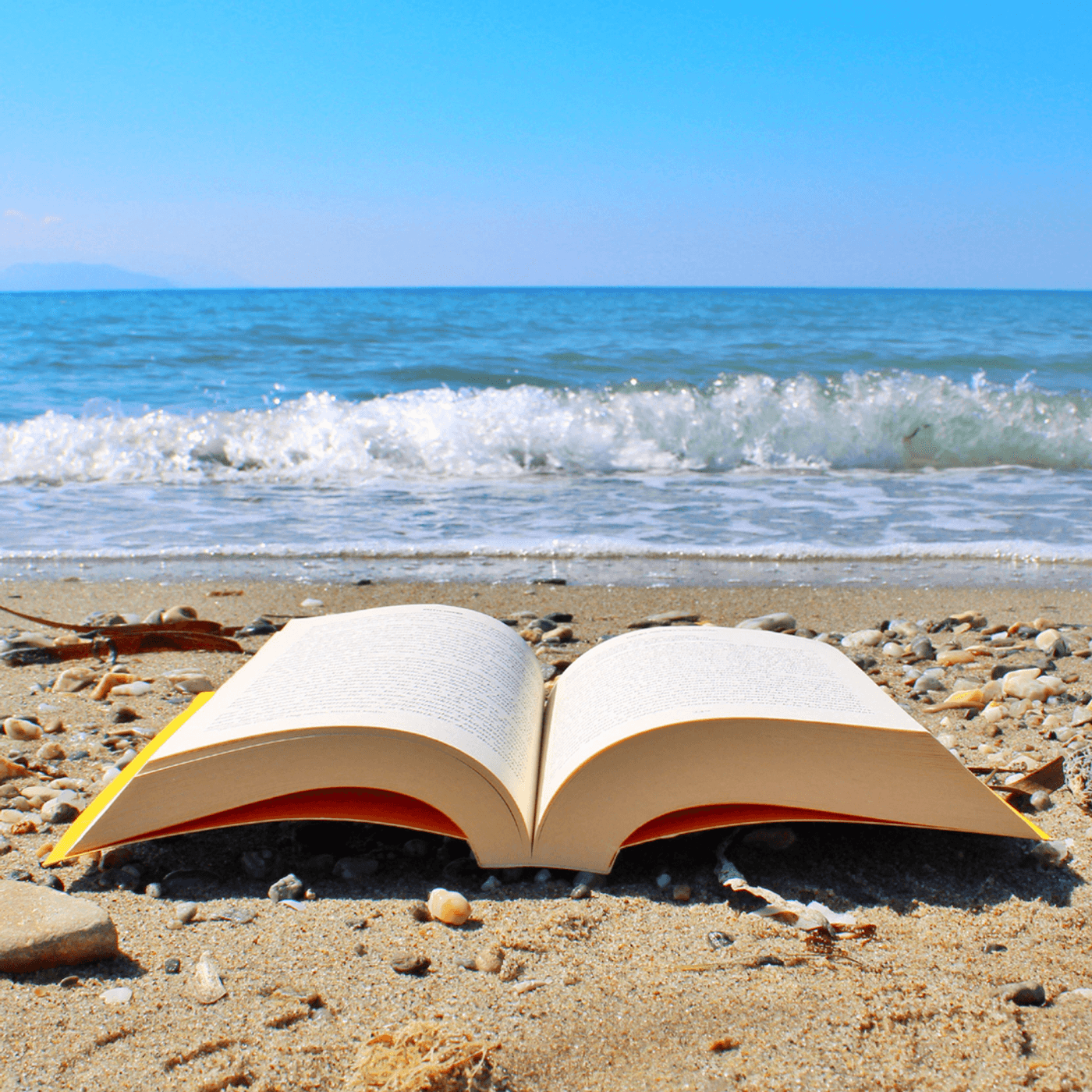
A “summer special” book club episode where Private Eye’s Andrew Hunter-Murray, Helen Lewis, Ian Hislop, and Adam McQueen recommend books about journalism, reportage, tabloid history, and language, arguing that firsthand reporting “prevents people escaping reality” and humanizes distant tragedies.
Guests (hosts)
Ian Hislop (Private Eye editor), Helen Lewis (journalist/author), Adam McQueen (Private Eye contributor), Andrew Hunter-Murray (host).
Key claims
Best journalism is eyewitness reportage; tabloids can be powerfully influential and often unethical; language and editing craft matter; media anxieties repeat across eras.
Notable examples
Rwanda genocide reporting (Philip Gourevitch’s We Wish to Inform You…); tabloid excess and faked interviews/rape-victim front pages and Hillsborough coverage (Peter Timmerdale & Chris Horrie’s Stick It Up Your Punter); Fleet Street drudgery and TV anxiety (Michael Frayn’s Towards the End of the Morning); invented foreign reporting and hotel-based “scoops” (Evelyn Waugh’s Scoop); English language history (Bill Bryson’s Mother Tongue); Victorian “hack trade” and career compromise (George Gissing’s New Grub Street).
Written by AI. May contain mistakes. Listen to the episode to check what was said.
Chapters
Tap a time to open that second in VOExploring the Best Journalism Books
0:45 to 4:40
The hosts discuss their top choices for books about journalism, starting with Ian's selection.
“As you can imagine, it's a big beach read.”
Ian's First Book: The Faber Book of Reportage
4:40 to 10:55
Ian shares insights about the Faber Book of Reportage and its significance in journalism.
“Yeah, well, tabloid fun merchant over here on the streets of shame.”
Helen's Choice: A Powerful Account of Genocide
10:55 to 14:00
Helen discusses Philip Gurevich's book on the Rwandan genocide, highlighting its storytelling power.
“And he went there and I think did about nine months of reporting over the course of several years.”
The Duty of the Reporter
14:00 to 15:01
Explore the responsibilities of reporters in presenting the truth.
“is you go, well, I'm going to make a judgment call about what I think happened here, who I think is in the right, who is in the wrong.”
Reflections on War and History
15:01 to 18:10
Discuss the impact of historical events and personal experiences in reporting.
“But it gives you the entire situation in microcosm of what it must have been like to live in Rwanda at that time.”
Michael Frayn's 'Towards the End of the Morning'
18:10 to 19:10
Delve into Frayn's humorous depiction of journalism's challenges in the 1960s.
“because one of my alternates that I decided not to do was Piers Morgan's The Insider because Jonathan said, troll Ian.”
Understanding Scoop's Relevance
19:10 to 23:06
Discover why 'Scoop' by Evelyn Waugh remains a pertinent satire of journalism.
“A journalist is sent to cover a foreign story entirely by accident.”
Journalism's Changing Landscape
23:06 to 24:34
Analyze how the role and perception of journalists have evolved over time.
“Ismailia becomes Islamalia because apparently there's been a coup.”
The Dark Side of Tabloid Journalism
24:34 to 28:00
Examine the unethical practices and sensationalism in tabloid journalism.
“that's happened in my 20 years in journalism.”
The Sun's Historical Missteps
28:00 to 31:51
Explore the notorious past of The Sun and its sensationalist headlines.
“and attempting to cover his own back and his officers' own backs for the appalling mistakes they'd made, which led to all those deaths.”
Show all 13 chapters
Bill Bryson's Mother Tongue
31:52 to 33:58
Discussion of Bill Bryson's insights on the English language and its evolution.
“I found out some really great words that I'd never heard before.”
New Grub Street and Modern Journalism
33:59 to 39:28
Delve into George Gissing's 'New Grub Street' and its parallel to today's journalism.
“His description is in the first book, Notes from a Small Island, I think, of his early career working as a sub at the Times and it just sounds like hell.”
The Evolution of Journalism
39:29 to 41:17
Examining the changing landscape of journalism and the role of integrity.
“and it's a kind of sketchy life, but it's exciting.”
Transcript
Automatic transcript. May contain errors.0:00Page 94, the Private Eye podcast. Hello and welcome to another episode of Page 94. My name is Andrew Hunter-Murray and I'm here in the iStudio with Helen Lewis, Ian Hislop and Adam McQueen. This is your summer special. Very exciting. It's silly season. There'll be no news on. So we thought we'd record a special episode. Domestic. With some beach reading for you. And we did an episode last year which was all about political memoirs and the best political memoirs there ever were. and this time we thought, well, Private Eye, let's talk about journalism. So we're going to suggest some of the best books about journalism that have ever been written, starting with Ian.
0:39We've each chosen a couple of books, basically. So, Ian, what's your first choice? My first choice is the Faber book of Reportage, edited by Professor John Kerry. As you can imagine, it's a big beach read. As you wander along the front, you'll see almost everyone reading it on their deck chairs. But don't be put off. It is a brilliant collection of eyewitness accounts of reportage from a couple of hundred BC till now. So it's got top hacks like Thucydides and sort of pieces about the death of Socrates. This is in the early section. It goes all the way up. But it's absolutely extraordinary. It's first person news.
1:24It's a survivor from the Titanic. it's someone describing the charge of the Light Brigade, the Spanish conquest of Mexico, a written account from one of the soldiers. It's the most extraordinary, I think, collection of stuff. And I'm making it sound very heavy on walls and disasters, and there's a lot of that. But he's actually got some very odd, strange pieces about ordinary human activity, about crops, about food, about the way people dress. And it's beautifully put together, But it's all framed because Carey is a great critic and analyst. And he said that with the end of religion as a shared narrative, what people have moved towards is current events, world events as something that can be shared.
2:13And it's a very convincing. It's a very, very good preface apart from anything else. But it's very upbeat about journalism, which not all of the books. My other choice is is very rude about journalism. but we can get on to that later. But he actually says in the introduction that reportage, this wave of confronting reality, prevents people escaping reality. It reminds people what is actually happening. And he says it changes its readers, it educates their sympathies and it limits their capacity for the inhuman. You get everything. You get the Holocaust. You get all of it inside this collection.
2:52And it's very uplifting. Growing up, did you have a piece of journalism that made you want to become a journalist? That's a really good question. But what did you grow up reading? A lot of fiction. Right. Was there a family paper? Did your mum and dad take a particular paper? Well, we lived abroad a lot. I mean, the South China Morning Post, I read a lot of. For a while, we're in Hong Kong. I don't remember the newspapers in either Kuwait, Saudi or Nigeria, but I'm sure they were there. But at school, as soon as I was sent back to school in England, the school had a row of wooden lecterns with all the papers laid out.
3:32I mean, this is prep school onwards. All the papers? Tabloids as well? The whole lot? Don't be ridiculous. What sort of school do you think there's one? The papers they wanted your boys reading, yes. So there was the Times and the Telegraph and the Manchester Guardian, as it probably was when I was at school. So, no, I remember the thrill of reading papers very, very early. I think why I love this book so much, and I keep giving it to young relatives and people who are going into journalism, saying this is just about being there and reporting what happened as opposed to your take on it or how you feel about it or it's a genuine curiosity about the world and how it is.
4:11Yeah, and it's that kind of theory of journalism. I think this might be in... Was it Nick Davies' Flat Earth News? The idea there is a sort of core iron ball of actual event and then you get people who were at the event and they're the closest you can possibly get. That is the first proper version of news. Then you get the analysis, then you get another layer and then eventually you get... And then you get endless opinion pieces. You get columnists. What I reckon about stuff. Colonists are like Pluto in this universe. It's a really nice idea. Right, let's go into another book. Adam, what's your first one?
4:40Yeah, well, tabloid fun merchant over here on the streets of shame. I have gone for a book, one of my favourite books, it really is, Tickle the Public, 100 Years of the Popular Press by Matthew Engel. So, as name suggests, it takes you over an entire century of the press, but it was published in 1996. So it's coming from a completely different world to the one we find ourselves in 30 years later, which is really, really interesting. The comparisons he makes all the way through, it tells you the story, basically, of his thesis is that a newspaper comes in, it undercuts the competition by going essentially cheaper, which is the key to it.
5:16So the telegraph comes in and is the one penny paper, whereas the Times cost two p. at the time um but also in lowering the expectations of uh of its audience so he's just saying what its readers want is something a bit kind of bit more bit more fun and fruity than than what came before it so he goes through uh the the daily mail era the daily express era takes us right up to the uh the the sun and and and which we're going to talk about a bit later on with my my second choice in the in the 1980s when on that real kind of mad period of tabloid excess um but the comparisons as I say that he makes then because you know he's sort of talking about the Telegraph these days being you know sort of very very very very respectable paper that's there's still you know on page three you're going to get some stuff from the divorce courts and the scandalous stuff but dressed up in a broad sheet kind of way so that we can pretend we're being respectable whilst dropping our toast and marmalade at the breakfast table and that in itself is just a world that's gone now and the Telegraph is now this extraordinary kind of reactionary kind of MAGA fan sheet as we've discussed on here before interestingly seems to be slightly swerving back in a slightly more reasonable direction under the new owner's axe will spring a little bit, maybe.
6:22We'll be keeping an eye on that one. I'm not holding my breath. Well, they basically think that climate change is real, right? That's the big... They do. They just sort of don't think we should do anything so much about it. Yeah, yeah. That seemed to be the conclusion of the recent debate. Look, it's a centre-ground position now. Absolutely, absolutely. But 1996, of course, is the absolute height of the power of the tabloids, of the sun and at that point the Daily Mirror, which was then being edited by Piers Morgan before his various other career reinventions. And it's the year after Tony Blair feels that he's got to go on pilgrimage right across the world to Australia to address the Rupert Murdoch kind of summer conference thing.
6:57So, as I say, it's just an absolutely... It's now as separate a world as the world of the Pall Mall Gazette in 1895 is. But there's all sorts of other glorious details in there that are just in passing. Do you know about mirror dinghies? Any of you boat people? So there is a boat called the Mirror Dinghy, which I had always assumed, as much as I thought about it, was something to do with the symmetrical design of it. No, it was genuinely, it was produced by the Daily Mirror as a kit thing, and it was kind of given away, the instructions were given away with the Daily Mirror in 1962 on how you could build your own affordable boat, and it came in at just£63.11 was the cost of it.
7:32You could build your own boat and go out sailing on it. So it's very much the Daily Mirror kind of being, you know, the populace, and why should only the rich people get to have these kind of fun pursuits and things? I suspect The Guardian now does it for illegal immigrants. And there we are. Alistair Heath's coming in. But also things like, he points out, the reason there are so many leather-bound sets of Dickens in charity shops and old second-hand shops is that that was a massive circulation booster war. Newspapers in the 1930s were giving away sort of bound sets of Dickens in the way that, if you remember from the early noughties, you got a DVD with every Sunday newspaper, whether you wanted it or not.
8:09Wall charts, remember? Wall charts. I was thinking about, yeah, the most bizarre thing, the War of the Wall charts, which was a bit more highbrow, wasn't it? It was the Guardian and the Independent. But you would sort of buy the Guardian and it would have all the cows on a wall chart for you. I think what ended that, though, is I think one of the papers did a mushroom and fungi one, and that you want to really be very sure that you've got that right. I know what. They hadn't. And they had not in fact, no. One of the things they recommended eating was poisonous. Do you know what they did to make up for that?
8:34They gave away a free packet of dried porcini mushrooms to all the readers, which is just like, no, sorry, do not want that. Not after that, not after that mistake. Not after the death count that I just ate. It is a brilliant book. You recommended when I joined the I that I read this book, and I did, and it was so worth doing. He's just got an amazing turn of phrase as well, Matthew Engel. He's just a lovely writer. He's an absolutely brilliant writer, and he writes it as well in the style of the popular press at any given time. So it's very, very punchy. Nothing goes on for too long. He quotes a lot.
9:03you've got a lot of these amazing headlines in there and direct quotations. But the thing that really struck me rereading it now is quite how contemporary it is in terms of, there's essentially these huge characters who are the kind of press barons of the last century. So you've got people like Lord Northcliffe, who was the founder of the Daily Mail, who ends up going spectacularly mad and thinks he's been poisoned by Belgian ice cream. Lord Rothermere, his brother, and there's a lot of detail in there. Matthew Angle puts in about his support for fascism, both for Moseley and his pal Hitler, and going over and doing all those complimentary interviews.
9:35And Beaverbrook as well, who was a man who really, really, probably the first kind of presser to really just unashamedly use his power to get what he wanted rather than try to have any sort of respectability about reporting the news. I mean, just making stuff up and trying to change leaders of the Conservative Party at will all the way. And Cecil King, of course, who was chairman of the Mirror Group and who brilliantly in the 1960s tried to lead his own coup against Harold Wilson's government and depose him. Essentially, the plan was for it to be a military thing, and he tried to recruit Lord Mountbatten and the head of the London Zoo to it, which is quite an odd set of people.
10:12So it's these fantastic stories, but it's that thing. Can I just say guerrilla warfare? Thank you very much. But it really reminded me of that way that, I mean, there's that phrase that Stanley Baldwin used about Beaverbrook, which was, you know, the wanting power without responsibility and the prerogative of the harlot through the ages. But it's exactly the same as the tech bros these days, as your Zuckerbergs and your Elon Musks and people who just want to have that power are doing it in, effectively, what's the equivalent of tabloid newspapers of today, of taking over communications outlets.
10:42I mean, slightly old-fashionedly, Jeff Bezos actually tried to buy a newspaper, didn't he, and hollowed that one out in the Washington Post. But it feels very, very contemporary in that way. So, fully recommended. Oh, terrific. Right. Let's have your first one, Helen. Well, my first one is not to be too serious today, But my choice is Philip Gurevich's We Wish to Inform You That Tomorrow We Will Be Killed With Our Families, which is an incredible book from 1998 about the Rwandan genocide. And he went there and I think did about nine months of reporting over the course of several years. And it's just, I mean, it comes back to what you were saying, which is the power of just going somewhere and talking to people whom things have happened to and writing it down.
11:22And it also sketches the racial history of the country. So when it was ruled by the Belgians, they preferred the Tutsi minority. They used phrenology to say that they looked more European. And that set up an incredible sequence of grievances between the two, which was found out through the fact that everybody had to carry an ID card with their race on it. And this is what eventually bleeds into the genocide, which is an extraordinary number, 800 ,000 people killed within 100 days. And he says at the very start, you know, it's the quickest that people have been killed since Hiroshima and Nagasaki.
11:53It's at faster pace than the Holocaust and the Second World War. but the title comes from this absolutely extraordinary letter seven pastors get herded into a church and they send a message to another pastor who they think is going to save them but doesn't he ends up basically masterminding the genocide against them and it begins our dear leader how are you we wish to be strong in all these problems we're facing we wish to inform you that we have heard that tomorrow we will be killed with our families we therefore request you intervene on our behalf and talk with the mayor we give honor to you and it's just the most you If someone told you that, that there were people who were trapped in a church waiting to die, and they'd send this incredibly polite letter saying, please, have you considered not killing us?
12:35You're a man of God. You almost wouldn't believe it. And that story was so powerful that the pastor they referenced there, he ended up getting put on trial. He had fled to America, where his son was like a cardiologist. But yeah, I think it's the most extraordinary book about the power of journalism. And the writing is also really beautiful, which was quite controversial at the time. the feeling was you didn't go and write your kind of great literary masterpiece in the face of all this tragedy but it means that it has endured and it exists and I think it's an extraordinary book I would recommend it to anybody Fantastic, can you give us the title again?
13:07We Wish to Inform You That Tomorrow We Will Be Killed With Our Families by Philip Gurevich I think it's really interesting and the way that you were talking about reportage is simply the best form of journalism to just tell people's stories straightforward and direct like that isn't it because there is a tendency with awful events particularly ones that happen overseas of just sort of this odierism that you just kind of see things on the news and think, oh, how awful. And numbers of fatalities and numbers of injuries and things just become sort of large, large numbers. And you really need to get in there and kind of humanise that experience and sort of point out, hammer home to people.
13:38What we know anyway is that these are people like us who live lives like us and have, you know, families and jobs and it's not just this. I think about it a lot because I think you have to, in journalism, you have to make judgment calls. I mean, what you were talking about, the kind of core of people who've seen something, They may all have, you know, Rashomon-style seven different ways of looking at it. And the power of actually having been there and seen it and engaged with the material is you go, well, I'm going to make a judgment call about what I think happened here, who I think is in the right, who is in the wrong.
14:05And I have the authority to do that because I was there. And so often when I read things now, I just think, well, how do you know? You've just read some other people's columns on this and then like your knee-jerk tribal thing is activated. Whereas the duty of the reporter, in my view, is to go look at everything and then go, well, here's what I think. And take it or leave it, but I've done the work. There's a fabulous piece in the Book of Revoltage about the Battle of Waterloo, but it's someone going to the battleground the day afterwards and telling you what it looks like, just telling you about the blood and the body.
14:39And there's no overarching analysis, no, oh, did the Prussians arrive too late? They're saying, this is what a battlefield looks like. I'm here and I'm telling you just this bit. Sorry, I'm interrupting. No, no, I'm only saying that because it reminds me there's a scene exactly like that in this, where they go to a church where there's been a massacre and they've left everybody's bodies in situ. And it's now been several months, so they're mostly now skeletons and they're crunching over people's bones. But it gives you the entire situation in microcosm of what it must have been like to live in Rwanda at that time.
15:11You are literally living alongside people who tried to kill you among the bodies of your friends. And he talks about the fact you can see people who got missing limbs or scars. and that's the thing I think we live in a world luckily in Western Europe that has been enormously ahistorically peaceful and just saying that for the majority of human history just seeing this kind of thing was absolutely routine and this is what it was, this is what life was it's extraordinary that sounds terrific who's your pick? right, prepare for a massive gear change because first one I've picked is Michael Frayne's Towards the End of the Morning which is, I think we might all have read it I think basically we said who's going to do it?
15:53So Michael Frayn is a brilliant comic writer and towards the end of the morning is 1967 he had worked at the Observer for several years before that and it's set in what we think of as Golden Age Fleet Street and it makes clear how shabby and miserable and what drudgery lots of Golden Age Fleet Street actually was like So it's set in a fictional newspaper and the hero, his name is Dyson, and he works on the kind of little crunchy bits of the newspaper, the nature notes or the crossword, all the bits which are not the glamorous upfront lobby-style reporting, all of that. And it's at this time where television is massively in the ascendancy, incredible to remember now, where broadcast TV was the desirable thing.
16:41And a lot of it's about Dyson trying to get on TV. basically. He's got an offer to go on and be on one of these discussion programmes which is called something like New Perspectives it's one of these classic 60s style shows where you know, blokes will Joan Bakewell sitting in a chair Everyone's smoking throughout the broadcast and he's been invited on to talk about something, I think something like race relations and it's because he's got an Indian neighbour. I mean it's incredibly flimsy and tenuous and it sort of, Frayn is satirising the politics of the time as well. And he goes on TV he completely muffs it he manages to go on TV and all he does throughout his appearance is whenever anyone's said anything he says that really is extraordinarily interesting it's sort of a quarter of an hour that's really fascinating and he even says it at the end of the summing up, the host has just summed up the whole show how unlike Chris Mason
17:38and he then is in this fever of agony the next day thinking oh my god everyone's seen it they're going to think I'm a complete twit and it turns out that no one in his life has actually watched the show and it's just wonderful it's brilliant and it really evokes that period when the newspapers were on Fleet Street when the offices were upstairs and the printing presses were in the basement and it just gets the physical nature of the work which has now completely gone from oh yeah I really miss that no papers are near their prints anymore it's funny you mention that because one of my alternates that I decided not to do was Piers Morgan's The Insider because Jonathan said, troll Ian.
18:17And obviously I immediately flicked to his little comment in. And the first thing I read in it is there's an account of him going on Have I Got News For You? And he thinks he's done marvellously well. And then he just gets all these emails going, well, you were such a twat last night. You were terrible. So I think actually, yeah, the hero of Towards the End. And that was the end of his TV career, wasn't it? But maybe it's preferable not to have anybody watch you or then everybody watch you and think you did terrible. Oh, yeah. But it's in that time of a medium, you know, the dominant medium is changing.
18:45Look at us now, filming a podcast. What is going on? What's a podcast? All of that, you know, there is this anxiety that permeates through the whole novel about, you know, are there going to be any jobs in this? And I think lots of people who go into journalism read the great journalism novels. And this is one of them. But they're often, you know, they feel antiquated, even though actually lots of the anxieties are basically identical to the modern ones. yeah I don't know if anyone's written the great kind of TikTok novel yet about I don't know what's brilliant about it is all of the characters are just brilliantly drawn aren't they, there's all little comic vignettes I always remember the editor who, very unlike our own dear leader, creeps into the office every day trying not to be noticed by everyone and tries to get to his office and lock the door before anyone can get to him and there's this sort of deputy who's rushing around kind of doing everything but also having a bit of a nervous breakdown on the way isn't it it's just beautifully done as a comic novel it's brilliant Right, that's round one but as we promised we've each picked two great works on journalism so let's have some more Ian Well, the other great journalist's favourite novel is Scoop and I can't resist choosing it It's a cliche but it feels closer than towards the end of the morning which for me is situated in a lost world but not far enough away to be completely lost Whereas Scoop seems to me incredibly current.
20:10A journalist is sent to cover a foreign story entirely by accident. They think they're sending someone else with a similar name. The man who runs Nature Notes is sent out to be a foreign reporter. And it's based on the fact that Evelyn Moore, the great comic novelist who wrote it, was sent by the Daily Mail to Abyssinia. And he was there with a man called W.F. Deeds. and W.F. Deeds was then a very young, fledgling reporter whom the main character is quite blatantly based on. Now, Deeds went on to become the editor of the Daily Telegraph. He was a huge figure and he was well-known to the eye. He used to come in a lot and I appeared with him a couple of times on Have I Got News For You, in which he was a fabulous guest.
20:57He was about 98 by then, knew all the stories and he had a very, very slightly shush in everything he said and part of the eyes early, that's enough edge stuff. Oh, really? Some mistakes, surely. Surely. Is that where this comes from? Yeah, I don't know that. With Bill Deeds. Great. And he was, again, a very good journalist who was very funny about journalism. And one of the reasons that I think all journalists like Scoop is because it's a laugh at themselves. It's a fantastic satire on the desire to get the story first. The journalists all stay in one hotel called the Hotel Liberty and they don't talk to anyone.
21:44It's the opposite of reportage. They meet no-one except each other. So they tell each other things which they then believe. And at one point all the journalists go off because there's a story breaking in a big city in Ismailia. This city doesn't exist. There is no city. They've invented it. They all go there. Boot, because he's fallen in love with some German girl, doesn't bother to go and comes across the real story of what's happening by his own laziness and ineptitude, which is pretty funny. What's the famous sentence that's from Nature Notes? Was it plashy-footed? The questing vole? Plashy-footed through the fen goes the questing vole.
22:23Yes. That's what William really wants to write about. He lives in the middle of nowhere and he writes about nature. He has to become a foreign reporter. And the foreign reporters are all, I mean, they do all drink a lot. They do make stuff up. They're very keen to get the scoop. And they'll believe anything. There's one point where it's announced there's been a Bolshevik revolution in Ismailia because one of the reporters has seen someone with a big beard who he's decided is clearly some sort of Russian agent. In fact, he's a railway worker with a beard. But it doesn't matter. And then there's a republic.
23:06Ismailia becomes Islamalia because apparently there's been a coup. And the basic story is one family run this African state. They own everything. The real story is about mining interests and who's going to take them. And you think, this story really could have been written yesterday. And the story about the hacks competing and scrabbling, that's pretty good. I mean, I can't read it without enjoying the feeling that a lot of the foreign correspondents I have known in my life fitted pretty easily into this. genuine conversation I had with a journalist around the time of the Madeleine McCann disappearance was that you told me about a load of them had been sent out to Portugal exactly like that staying in the same hotel in Praia de Luiz they used to meet in the same bar every morning at which point the Portuguese papers would be brought in none of them spoke Portuguese at all so there'd be one person who came in to translate all of them they would then just file their copy of whatever the Portuguese press was saying send it straight back also no sort of discernment of whether this was the Portuguese equivalent of the Sunday sport all the time.
24:15So absolutely no idea of how reliability of sources. And often we'll go back just as sort of, you know, in translation, or twice translated, once by the person who came in and actually spoke Portuguese and once into sort of perfect Daily Express language or whatever it was. And that was the way it was done. That was the bulk of the reporting that was done. I think it's maybe the saddest, one of the saddest things that's happened in my 20 years in journalism. But when I was at university, everybody wanted to be a war correspondent, right? We read books like War Junkie, war reporting for cowards.
24:44That was the model. Like Christopher Hitchens turning up in Baghdad with only a sort of bottle of mouthwash and a Kevlar vest. That was the figure that... And that's just gone. I mean, there were a huge number of critiques about it, that it was all very Eurocentric perspective. But I don't think that's been replaced by hearing more stories directly from the people in those affected regions. It's been replaced by nothing, by and large. Well, I think that's particularly true in print. And in broadcasting, you get Lindsay Hilsom, you get Lise Dissette, you get Jeremy Bowen. it's one of the reasons the eye has a from our own correspondence section is that these are people who are there and it would be quite nice to hear what they said rather than what is wanted.
25:23I mean, the funny thing in Scoop is Lord Copper who is essentially Lord Rothermere or a little bit of Northcliffe and Beaverbrook but he's a ridiculous newspaper magnate who says, look, I want this war to be fairly short. There's the rebels and there's the patriots. We want some skirmishes, something happens and then the Patriots win. Is that OK? And he just quite clearly has told them what to write. And you never say no, do you? You say up to a point, Lord Copper. Which is wonderful. Very useful. Very useful phrase. Up to a point, Lord Copper. Oh, terrific. All right, shall we move on to the next one?
25:58Oh, yet more unbelievable tales of appalling behaviour by journalists. Stick It Up Your Punter by Peter Timmerdale and Chris Horry, which is the uncut story, they call it, of the Sun newspaper, specifically from its founding in the late 60s through to its kind of, I don't want to say glory days, do I want to say gory days? I mean, the age of absolute excess under Calvin McKenzie through the 80s and 90s, when, as we were saying earlier, it really was a kind of like huge force in politics and in the country and selling millions of copies. Did you say gory days there? Gory days, yeah. That's perfect.
Read the full transcript
26:31Yeah, yeah, yeah. I mean, it did get, I mean, the excesses that they go into, there's an awful lot of fun along the way. which is strangely missing from the tabloids these days, I think. There's very, very little kind of joy in any of the coverage. The star and the lettuce, listrust and the lettuce, is the last of the kind of... That could have been in this book. That was a kind of last gasp, I think, of that kind of thing. I think the star has failed to capitalise on much of that since because it's been starved of resources by Reach PLC. But hang on, let's not just have me whinging about the state of the media.
26:59Come on, come on, let's give us the sun in the 80s. Is this the one that's got Calvin McKenzie firing the person who does the astrology by saying, as you will no doubt have foreseen. Yes, yeah, yeah, yeah. There's an awful lot of fun like that along the way. But there's also some really, really grim stuff. I mean, there's faking interviews with Falkland's war widows specifically because the Mirror had bought her up and had the exclusive on it. So they just made up what she might be saying, partly from the cuttings and some of it just absolutely fictional. Kelvin McKenzie was also the first editor to print a picture of a rape victim because there was no specific law that said he couldn't do that.
27:31So he put it on the front page. It was a particularly brutal and horrible rape. There'd been an awful lot of coverage about it. But Halesborough, of course, was the really, really big one in the late 80s, the disaster at the football ground, which is interesting when you read the full story behind that because not to make excuses for the kind of appalling way that the Sun presented that, and that was very specifically Kelvin McKenzie's decision to present it as the truth when it was anything but on the front. But it's also when you had background on it. I mean, the sources on that were the head of the police, who it's turned out at the inquiry since was telling absolute lies all the way and attempting to cover his own back and his officers' own backs for the appalling mistakes they'd made, which led to all those deaths.
28:08But also the local MP. So, you know, a lot of people were kind of misled along the way and telling lies along the way before it arrived in the way it did on the front of the sun in that way. So it's really interesting on that kind of like backroom stuff and how stories came to occur in the way that they did. But also, again, I mean, like my first choice, kind of a bit of a historical piece now, because this is not the denuded post-Leveson, post-lots-and-lots-of-money sun of today. Well, I mean, the sun, when I was first at the I, was just a fantastic target. I remember during the Falklands War, we ran a sun front page which had on the side, kill an Archie and win a Metro, which was a fake competition, but it wasn't far off.
28:54Genuinely, one of the stories in here is that there were soldiers who saw a copy of that out in Argentina, out in the Falklands, and thought it was genuine. I mean, really genuinely did not realise it was a spoof because it was so of a kind with the coverage they ran at that time. I mean, Gotcha, famously, was the headline when the Belgrano went down, which was literally just something that Wendy Henry, who was an executive on The Sun, shouted out when this boat had been hit by British forces and was sinking. And then, of course, it turned out lots and lots of people had died on it and they had to slightly amend that for the second edition, which then sort of got elided in the subsequent histories.
29:31I was very proud of putting gotcha on the front page when Murdoch went down and the news of the world sank with the loss of all hags. Oh, that was a glorious press there, wasn't it? Yeah. No, it is amazing. Even just flicking through it now, you just get the sense of, because this is one of the other ones you recommended when I started, just the power and aggression of the sun and how fun they made it, but also, I mean, here we are, we've got sort of the campaign against Elton John. They said he'd had the voice boxes removed from his guard dogs. It was extraordinary. It started off with supposedly the confessions of a rent boy who Elton had hired who turned out to be a complete fantasist and nothing so.
30:11But then when Elton sued, the son kind of went in all guns blazing against him because that was absolutely their attitude to things. And yes, finally, the story that did it was one that he'd had guard dogs at his mansion. He'd had their voice boxes removed because their barking disturbed him. and they literally, the story is in there, they sent a journalist round to try and get photos of these dogs and maybe interview the dogs. I don't know. They couldn't talk, could they? They wouldn't have stopped them. He literally phoned in. I think it's in the early days of mobile phones. Phoned in the office and said, I can hear them barking, listen.
30:38They went, ah, screw it, publish it anyway. And that was, at that point, the biggest ever libel payout. They paid£1 million to Elton and had to do a front page apology, which is even more of a rarity because usually these things come tucked away and stuff. Just said, sorry, Elton, across the front page. And that's when he came up with that quote, which I remember thinking this is a bit of a turning point. He said, you can call me a silly old poof if you like, say what you like, but you are not going to tell lies about me, about my dogs. And then Britain suddenly thought, he likes dogs. It's fine, the sun's awful.
31:11But it's interesting that everything, like you say, everything old is new again. Draw a direct line from that kind of treatment to Elton John joining Prince Harry's court case that you have reported on. When you know that background to the way that he was treated, as a very rare out gay pop star, then you understand suddenly why he might have had a bit of a grudge. Yes, yeah, yeah. I mean, what we said about that in the last podcast, wasn't it? It was essentially people prosecuting the past behaviour of the tabloids and it's a world that doesn't really exist anymore, whatever else you might think about them.
31:39But, you know, it was a long time coming for a lot of these people and they have got very kind of deep set reasons for... You would. The poor dogs. I've been the dogs are dead now, aren't they? I would imagine the dogs aren't still with us from 1987, yeah. Helen, what's your second one? My second one, I'm down there, is Mother Tongue which is by Bill Bryson so you'll probably know Bill Bryson as an incredible travel writer I think he's one of the funniest travel writers there is and I particularly appreciate him as a Brit who spends a lot of time in America he was obviously an American from Iowa who spent a lot of time in Settle, in Yorkshire so he's got two books on language this is one of them, the other one's called Troublesome Words and if you love journalism and you have to love the English language and its incredible, infinite, capricious variety.
32:23There's a history here of the English language, which is just really good, really good introductory history, and the kind of innate multiculturalism of English, the fact it's just borrowed, it's succeeded by just, unlike French, and having the Académie Française saying you can't say le weekend, English has just taken everything from everywhere. I found out some really great words that I'd never heard before. Have you ever heard the word uggsome before? No. It means horrid, like ugly. Like Uggsum. Why they named the boots after it? Because they're so ugly. Maybe that is. But I just challenge you to use that in a sentence in the next week.
32:57But the other thing I didn't know about this is that US and UK English have got closer together because of the dominance of American films than they were at the start of the 20th century. So until we had American movies, it wasn't standard UK English to use any of these words. Grapevine, a fan in the sense of like I'm a fan of whatever, gimmick and phony. anyway I really appreciate this because his just attention to the craft of language is really lovely and delightful and it's also a sub-editor's choice which I love we talked about reporters going out in the field but also the great unsung heroes are the subs who actually like chop the stuff into usable copy at the end of it don't they and he was a sub-editor at the times actually I think just before the whopping dispute because there's a great description of the old do you remember the old times office down at whopping so this is turned into all our yesterday's do you remember the old times office which he described and I remember I went there for work experience in about 2002 and thinking this was the perfect description.
33:49He described it as looking like the air conditioning unit for the planet. And it did. It was one of the ugliest buildings you've ever seen. I mean, yeah, great loss. Uxumist. It was the Uxumist. His description is in the first book, Notes from a Small Island, I think, of his early career working as a sub at the Times and it just sounds like hell. He's working with this mad people. mad, weird, rat-like little colleague so he can't understand and doesn't really, you know, doesn't deal with it at all. And it's unionised pre-whopping, isn't it, to the point where he's not allowed to touch certain things so he can go to collect a piece of paper from one department that he's got to take somewhere else very urgently.
34:29Yeah. But the man's on his break and he's not allowed to pick it up off the table and the man has to hand it to him. It's just the insanity of those kind of days. And the hierarchies of... The journalists aren't really allowed to mix or question the subs, and the subs aren't allowed in the print room. It was amazingly split in those days. All right, well, let's have one last one. I've picked another novel as my second one, and this one is New Grub Street. Ah! So this is another terrific one, the end of the 19th century, and it's about two characters. One is... They're both poor to start off. One is ambitious and willing to compromise on quality, and the other is dedicated to literature and the flame of knowledge and, you know, good quality writing.
35:15There is no doubt at all which one of them is going to win the race of his career and his marriage. And the whole thing is about money and about the kind of hack trade. New Grub Street is the phrase for, you know, the kind of space where these writers are all applying their trade. So you've got Edwin Reardon, who is poor but honest and doing his best with one really good novel every couple of years, which may or may not sell and might earn£100,£150. And then you've got Jasper Milvain, who is ambitious, determined to get to the top, determined to screw over his own family. He's taking money from his mother and his sisters to fund his career and is just determined to get there.
35:55And so it reads like a tragedy. And I think the author George Gissing's life was a bit of a tragedy. He was an intensely pessimistic person. And I think he died pretty young after writing a lot of high-quality novels that did not sell terribly well. Right, I was going to say, I think it's due to the obscure levels of Miserable, that book. I love it. Yeah, I mean, it's a tough read in parts, but it's terrific. I mean, it's so good, you know, and you can't help, part of me can't help really liking Jasper Mulvane in his, he's a kind of proto-tabloid hack. Yeah, I mean, he is shameless, you know. The first scene is him sitting to breakfast with his two sisters and his mother, and as he hears the clock strike eight, he says, there's someone being hanged in London right now.
36:34and his sisters go oh that's how can you mention that at the breakfast table that's disgusting and he's well I read it in the paper last night 8 o 'clock's the time they do it so it's happening right now imagine that and that's it sums up his character very well I was going to ask you a very unfair question which is who do you think are the Jasper Milvane in the Edmund Ridden of today in journalism no I mean for people who haven't read it how does that translate who's a kind of oh my gosh who's a kind of joyful but hacky hack well come on it's Piers it is Piers it's exactly what I was going to say yeah Yeah, yeah.
37:05Yeah. I mean, Jasper Milvain would be setting up his own new YouTube outfit right now. Yes, that's true. Yes, he'd be filming a lot of vertical content. And Ed Reardon would have a very earnest collection of pieces on the sub stack in the hope that someone had read them. Yes, a literary sub stack. Or perhaps occasionally writing shorts for the LRB. Oh, yeah, yeah. I mean, I don't want to pin anyone as being an Edwin Reardon because it consigns them to career and then actual death. Yeah. Well, it's a very black joke that Ed Reardon you know, the hero of the Radio 4 series, who is a pretty funny hack, who ends up writing all sorts of things.
37:42I mean, brilliant series written by... Christopher Douglas. Christopher Douglas and Andrew Nicholls. It's incredibly funny about who will write what for what money, but he calls him Ed Reardon. I mean, he calls him the other one. Yeah, right, right. Which I think is a very good joke. And Jasper Milvain, of course, is his great enemy, isn't he, who's gone to Hollywood and made really, really appalling films, mostly starring animatronic dolphins. Oh, that's great. But it's hugely successful, yeah. So it's a kind of comic retelling, if you like, of this rather tragic book. But that kind of comes back to scoop again, right?
38:14The sense if you work in journalism, there's already somebody doing better than you, making more money than you, by being less principled than you. And you have to sort of sit there going, well, maybe I'm not successful because I'm just too honest. That's what it is. And I'm too good. Yeah, it really sums up that... Mentality. A constant... Journalist mentality. ...debate of where the career is going, Should you be doing it? Shouldn't you be doing this other thing? Because the decision tree is so broad as a journalist. You can end up doing almost anything in this field. But that's why the end of Scoop is so pleasing, because William Booth really only wants to write nature notes.
38:46And the last piece he writes is really good, beautiful prose. No one's going to read it. They're going to turn it over. But he's happy. And the rest of them, less so. You know George Kissing was sent to prison at the age of, I think, 18 for stealing five shillings and two pence at his college from another student's clothes. He was a brilliant scholar, but it just completely derailed his career. So he's very pessimistic. But it is brilliant. I mean, it's so worth reading. It flies by in a depressing way. Yeah. The other thing is also the sense in lots of these books that you can kind of, there's a very grand romantic 18th century way of saying it, make a living through the pen, right?
39:25That inevitably you just have things to sell and they're your thoughts and opinions and sketches. and it's a kind of sketchy life, but it's exciting. Is that true anymore in journalism? Can you just sell a piece and live on it? You can do it as a YouTuber, can't you? I mean, effectively, that's what people are doing, of just kind of like making opinion videos and making money off the advertising. So I suppose it has sort of translated in that way, and you're sort of selling their own personalities and opinions. Yeah. But it's not all common. I think you do get people who are making it in journalism.
39:53I mean, look at people like London-centric or The Londonist, to brilliant outlets just in this city alone, which are doing it, which are kind of refreshing local journalism. The great thing about the Gissing book, which, again, it pervades journalism, and again, when I first joined the I, I said, why is everyone called Hacks? Why does the editor insist on this slightly derogatory term for everyone here? And we still have the Hacks meeting on Tuesday, and that all comes from this period of not taking the craft too seriously yourself, believing in it, but thinking there are limitations and there are things that are funny about it.
40:36Who was the very famous actor who objected to the use of the word lovey in Private Eye? I think it was... Was it not Trevor Nunn? It might well have been, yes, yes, a director rather than that. He was absolutely furious and then he found out that the word was coined by the late, great John Sessions. a great actor, and he and Kenneth Branagh used to call each other loveys when they were at RADA as a form of self-deprecating humour about being too serious, about being an actor. And John was both a brilliant actor and a very funny man. Well, I think Trevor and Emerson was like, well, we like calling journalists hacks.
41:13Yes. I was like, yeah, we do. We do do. That's fine. That's fine. Quite proud of it. Thank you. Right. So you now have eight terrific books about journalism, reporting, the English language to read enjoy your holidays, please send us your reports to the usual iEmail address, we look forward to hearing what you made of all of them That's it for this episode of page 94 If you would like more reading matter for the beach, you can get a copy of Private Eye available at your local newsstand, unless you're away on holiday in which case, go to the website private-eye.co.uk and subscribe now, so your first copy will be waiting for you when you get home.
41:48Thank you very much to all of you for listening to Ian, Helen and Adam for playing and to Matt Hill of Rethink Audio for producing. Bye for now.
From the publisher
As the summer draws to a close, Ian, Helen, Adam and Andy discuss the best books about journalism and writing ever, er, written, covering everything from Vesuvius to Rwanda to Elton John.
Further Reading
The Faber Book of Reportage, edited by Professor John Carey
Tickle The Public - 100 Years of the Popular Press by Matthew Engel
We Wish To Inform You That Tomorrow We Will Be Killed With Our Families by Phillip Gourevitch
Towards The End Of The Morning by Michael Frayn
Scoop by Evelyn Waugh
Stick It Up Your Punter! by Peter Chippindale & Chris Horrie
Mother Tongue by Bill Bryson
New Grub St by George Gissing