
In short
UK debate on social media regulation (especially bans for under-16s), mental-health effects, and platform “addictive” design; then a shift to UK local-election policy contrasts (Reform UK vs Greens), including pensions “triple lock” vs “double lock,” plus how social media/data shape political campaigning.
Guests/backgrounds
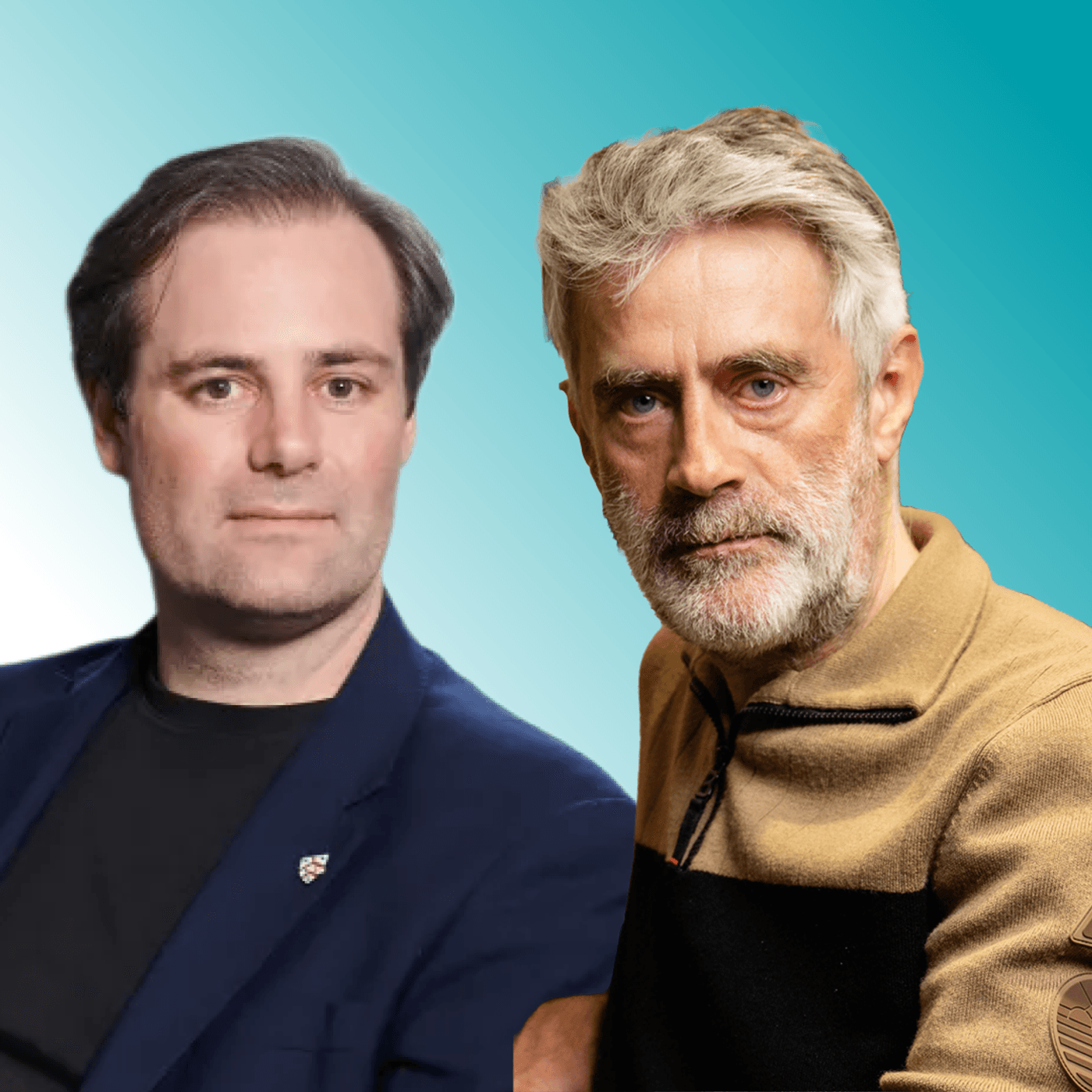
Andrew Hunter-Murray (host, Private Eye); Helen Lewis (Private Eye); Adam McQueen (Private Eye); Matt Muir (Private Eye). They discuss media, law, and politics from a UK investigative/news perspective.
Key claims
Ofcom data suggests engagement (posting/liking/commenting) is down to under half, but consumption remains high; social media has shifted from participatory “friends” use to algorithmic video feeds. Mental-health perceptions fell from 42% to 36% saying social media is good. The UK is consulting on an under-16 ban; evidence is mixed and enforcement/age-verification are weak. US fines against Meta/YouTube target addictive design and child exploitation; companies appeal. Bans may let platforms avoid changing algorithms/infinite scroll.
Notable examples
California $6m and New Mexico $375m Meta/YouTube fines; Australia under-16 ban with ~70% bypassing; X/AI/chatbots not covered by the Online Safety Act remit; lookalike audiences using email lists for targeted political ads; Reform/Greens pension proposals and carbon-funded policy mirror-image platforms.
Written by AI. May contain mistakes. Listen to the episode to check what was said.
Chapters
Tap a time to open that second in VOThe Decline of Social Media Engagement
0:41 to 3:08
Discussion about the decline in social media engagement and the recent Ofcom report.
“There's a new study out about this exciting phenomenon of social media, which reveals everyone now hates it and has gone off it.”
Changing Nature of Social Media Content
3:08 to 6:26
Exploration of how social media has evolved from personal sharing to professional content consumption.
“And whenever you read people surveyed about this, people always say in conversations, well, you know what?”
Legal Issues and Regulations Surrounding Social Media
6:26 to 10:15
Overview of ongoing legal cases and potential regulations regarding social media use, especially for minors.
“how they're going to be triaged, and to what extent it's just going to be fed into an LLM, because that's almost certainly what's going to happen.”
Debate on Social Media's Impact on Youth
10:15 to 14:00
Discussion on whether to ban social media for under-16s and the implications of such a move.
“Meta is a little bit harder, but the case rests on the fact that Meta's products are addictive.”
Debating the Impact of Social Media Regulations
14:00 to 20:30
Explore the complexities of regulating social media platforms and their societal implications.
“which would theoretically benefit all users rather than simply preventing one contingent from using the platforms.”
The Pension Triple Lock Controversy
20:30 to 24:50
Analyze the debates surrounding the pension triple lock and its implications for various demographics.
“I'm going to look at Instagram for a bit to cheer myself up.”
The Political Landscape and Reform UK
24:50 to 28:00
Discuss the current political climate focusing on Reform UK and their campaign strategies.
“And given the mess that we've talked about before in this podcast that Labour got into with the means testing winter fuel payments or restricting them, you know, still coming up in...”
Crisis in Housing and Politics
28:00 to 28:33
A discussion on the housing crisis and its political implications.
“and things like that are stopping houses being built and that is a huge crisis.”
Critique of Matt Goodwin's Book
28:33 to 30:01
An analysis of Matt Goodwin's controversial book and its reception.
“Which set do you think repulsed voters the most?”
Comparative Manifestos of Greens and Reform
30:01 to 31:33
A detailed comparison of the Green and Reform Party manifestos.
“So maybe it's something we can all agree on?”
Show all 19 chapters
Podcasts of Political Parties
31:33 to 33:07
Exploring the podcasting strategies of the Reform and Green parties.
“They've both got a carbon-based thesis of the economy.”
The Landscape of Political Content Creation
33:07 to 35:07
How modern politicians utilize media for engagement and content creation.
“And I thought, oh, that's another Green policy I'm not totally sure about.”
Authenticity in Podcasting and its Impact
35:07 to 37:14
Discussion on the perceived authenticity of podcasts and its implications.
“because that is what fills these platforms and that is where people get their news.”
Zach Polanski's Political Journey
37:14 to 37:59
A candid look at Zach Polanski's political evolution and current standing.
“I mean, there is an army out there of people.”
Personal Encounter with Zach Polanski
37:59 to 38:49
A light-hearted anecdote about an encounter with Zach Polanski.
“he changed his name because he wanted to embrace his roots more authentically he was an actor I think you find out all the criticisms that people made about Tony Blair Oh, he's a bit too slick.”
Prince Harry's Legal Battle
38:49 to 39:51
An overview of the legal challenges faced by Prince Harry involving the press.
“I do not know can you go away and do a journalism on this please?”
Revelations from the Trial
39:51 to 42:00
Key insights and revelations from Prince Harry's trial against the media.
“Well, this has been the ongoing argument, in fact, between Mr Justice Nicklin and David Sherborne throughout the trial.”
Revelations from the Trial: Harry's Relationship with the Press
42:00 to 51:02
Explore the nuanced relationship between Prince Harry and journalists during a contentious trial.
“were leaky, that they were kind of giving stuff to the press.”
Implications of the Trial's Outcome
51:02 to 53:38
Discuss the broader implications of the trial verdict involving Doreen Lawrence and media ethics.
“This would certainly appear to suggest that at that point in his life he had a, we could go so far as to say quite intimate relationship with certain journalists, I think.”
Transcript
Automatic transcript. May contain errors.0:01Thumbtack presents Tile Trouble. Every single time I use my sink, I make eye contact with the uneven grout of my kitchen backsplash. The crooked corners eye me and I'm haunted by more tiling questions than I thought possible. What kind of pro can fix a backsplash? Can I replace one cracked tile or should I replace them all? What? What if I just use Thumbtack? I can hire top-rated pros, read reviews, and compare prices with a tap. All on the app. Thumbtack knows homes. Download the app today. Page 94, the Private Eye podcast. Hello and welcome to another episode of Page 94. My name is Andrew Hunter-Murray.
0:37I'm in the Private Eye studio with Helen Lewis, Adam McQueen and Matt Muir. And we are going to start off today by talking about social media. We are. It's very exciting. There's a new study out about this exciting phenomenon of social media, which reveals everyone now hates it and has gone off it. This is a report by Ofcom, isn't it, Matt? Yeah, it's the latest Ofcom data that was published last week into UK media uses, specifically online media, showed that basically we all hate social media now, or at least we're not engaging with it in the same way that we used to. The numbers of people who are actually going online and posting, for example, to Facebook or to Instagram, commenting, liking, has dropped to just under half of people.
1:16And this has kind of led to a spate of articles that kind of hand-wringingly saying, well, is that it for social media? Now that we're banning it, are we all just going to stop using it after all? But that's not quite what the data shows. I think it's kind of important to push back ever so slightly against this narrative. Because I don't know if you notice, people still look at their phones a lot. I don't know. I presume you still look at Instagram. I do. Is it fair to say? I've only just joined. I'm a bit embarrassed about it just because everyone else is leaving. It's not too late to stop. You can kind of get out of it.
1:44It's like a proper content creator. And isn't this kind of part of what's happened? How dare you? Oh, you are, though. I've seen you on there. But the kind of casual, like, you might just post something for your friends kind of stuff is dying away and it's becoming more professionalised? I think that's basically it. I mean, there's a longstanding trope here. The media, all media will eventually, in the same way that all life forms on Earth become crabs eventually. So all media. You just threw that one in there. You can go look it up. Carcination is a real fact. But all media eventually ends up being video.
2:16And fundamentally, social media. If you think that Facebook has been around for 20 years now, more or less. And when it started, it was a place where you went to connect with friends, to attempt to flirt with people that you went to school with, break up your marriage and post pictures of your holidays. And it is not that anymore. It has become a far larger, far more complex platform, series of platforms. And effectively, fundamentally, most social media platforms are now like television. Whereas before they were lean forward participatory things, now they simply tend to be lean back. So, for example, you will log on to Instagram and rather than posting to your grid of pictures or seeing the things that your friends have posted to their grid of pictures, you'll instead be served a vast quantity of video content made by people that you don't know that is designed to entertain you, much like TikTok does, which is exactly what Snapchat does, which is exactly what YouTube Shorts does.
3:04Everything is basically now short term video. and so it's not that people are using social media less it's just the manner in which they are engaging with it has changed significantly from being something as i said participatory to something that is fundamentally about consumption we should say private eye as a traditional news organization will never ever pivot to video but your mention of tiktok's interesting right because that is kind of i think where the pivot really happened everybody decided that the kind of the for you algorithm was just a much infinitely superior way of content when it's one of the oddities of social media.
3:36And whenever you read people surveyed about this, people always say in conversations, well, you know what? I really miss the old days of Instagram where I just go on there and it would be the things that my friend had posted and I would scroll through and it would go backwards in time. And then there would be... And people always say this, but every single study that has ever been undertaken by social media companies shows that that's bollocks. And what people actually like is the algorithmic feed because they really, really like being served this continual stream of infinite content that's tailored to their very specific desires.
4:02And that is basically a post TikTok as you say, Helen thing. They were the first people to perfect that. And everybody's kind of followed suit with this. But people are posting a bit less. People are posting less. Partly because making video is a faff as opposed to words or pictures. Fundamentally that. There's a slightly higher barrier to entry. Not everybody feels comfortable doing it. And also we are now a little bit more attuned to the fact that having your face all over the internet possibly isn't a great thing for lots and lots and lots of people. women it turns out tend to have actually often quite a bad time when they post pictures of themselves on the internet for a variety of reasons whether it be abuse or whether it be someone using Elon Musk's magical nudification tool to turn them into porn stars so you can kind of see why people might be somewhat reticent and one of the other elements of the Ofcom study that was out last week or their survey is the proportion of people saying social media is good for their mental health that has come down to 36 % which I would say is still remarkably high I mean, if you use it a little bit and you just check in, see some funny videos, I mean, most of my usage, apart from the dead-eyed brand extension that I'm up to, is just checking in and seeing sketch comedy, which I don't mind.
5:14But two years ago, 42 % of people said it was good for their mental health. Now it's 36%. It does still seem very high. But it brings us on to one of the reasons we wanted to talk to you today, Matt, which is, of course, the chat about social media bans, the huge lawsuits that have been happening against Meta and YouTube. Those are over in the States. But here people are saying, do we need to regulate this quite firmly and in particular stop children under the age of 16 from using it? So can you tell us where the law is on that at the moment? So currently the government is undertaking is one third of the way through a three month consultation.
5:47So there are soliciting responses basically on the question of, yes, should there be a ban for under 16s? What would be the positive consequences of this? What might be the potential negative consequences of this? So, so far they've had somewhere in the region, they were saying a couple of weeks ago, of 30 ,000 responses, which by the standards of government consultations is a fairly big uptake. And it's got another two months left to run. There are obviously, there's a lot of interest behind this. Can anyone respond to it? Is it any member of the public? Any member of the public can do it. There are three separate consultations.
6:16One is for parents, one is for younger people, and one is for any other interested parties who may have skin in the game for whatever reason, whether it be professional or personal. exactly what's going to happen to what may well be 100 ,000 responses, how they're going to be triaged, and to what extent it's just going to be fed into an LLM, because that's almost certainly what's going to happen. Really? Yes, of course. Don't you think it'll be like they'll do a sentiment analysis on it, essentially, and they'll ask the LLM to say what percentage of these said, I hate social media, I want it banned.
6:45We're going to get a word cloud, aren't we? Yeah, without a shadow of a doubt. A beautiful dashboard. It's just a beautiful thing for showing you what it would have been like if everyone said those words in a different order. What if I don't like... In the middle of it, it'll just say feet. What if I don't like large language models? Where do I express my views about that in a way that will mean someone reads it? You're really not going to like the future very much. Okay, gosh. Okay, so this consultation is running. Am I right in thinking, I read that there are trials that are happening in 300 homes.
7:12They're going to actually experiment with cutting social media usage for children. That's absolutely right, yes. So these are limited trials that are happening around the UK. Simultaneously, there's another study that was launched last week. in Bradford, I believe, which is an exceptionally large longitudinal study over the course of a year that's going to track or seek to track the impact of social media usage on young people's emotional well-being. And that's going to run until 2027, which does rather make one wonder, OK, so are we going to take a decision on this before we have all of this evidence?
7:46Because it does feel possibly slightly premature. But the interesting thing about this, and one of the really interesting things about the debate as a whole, is that over the course of the 13 years that I've been writing about these god-awful companies and the terrible things that they've done to the world, there has been a lot of research that has passed across my desk debating the impact of these technologies on the mental well-being of both adults and younger people. And what's been striking about it is the complete lack of any sort of consensus. For every single piece of research that says, well, these things are the worst thing for young people since we got rid of child labor, There's another that says actually they have no discernible impact at all when you take into account all of the other things that are going on in young people's lives.
8:28And this kind of comes to the recent rulings in the States, which while ostensibly can be seen as very, very bad news for social platforms, probably aren't quite as definitive as the media has wanted to paint them. We should say what those are. There's a case in California where Meta and YouTube were fined$6 million for designing deliberately addictive algorithms to get children in particular in. And the other was in New Mexico, which was a$375 million fine. Just to point out, Andy, that that's 0.62 % of Meta's income from 2025. Okay, it's a start. And that was over claims that the products led to things like child sexual exploitation.
9:12Exactly. And that the platforms weren't protecting children from being approached by creeps or potential abusers or that kind of thing. Meta and YouTube are appealing those verdicts, but the aim is to try and launch as many cases as possible to try and rein them in. Basically, yes. I mean, the big one, whilst the New Mexico one has a very big headline figure, Meta themselves have kind of laughed off the fine, frankly. The one that's more significant is the LA case, primarily because there are potentially thousands of other cases waiting in the wings that were this verdict to be upheld after the inevitable appeal would set, obviously, a precedent that could then actually prove quite significant in terms of potential liabilities for the companies and requirements on them to modify their services to, frankly, potentially avoid any sort of huge long tail legal kickback.
9:59The difficulty, of course, is that a Meta is going to appeal and YouTube. YouTube has a very strong ground for appeal because I think they can make a reasonable case that they're not actually a social platform in a meaningful sense. They are. They really are just a video streaming platform. And I think they can probably do that. Meta is a little bit harder, but the case rests on the fact that Meta's products are addictive. And that's that's quite a contentious thing to prove. So, for example, there are there are literally no studies out there. No studies whatsoever that show that technology products of any sort, but specifically social media, have the same effects mentally as actually addictive products.
10:38But it is not the same as smoking or doing heroin. It does not light up the dopamine receptors. But it is. They are fundamentally designed to keep you looking at your screen and keep you on that platform, aren't they? I was talking to an anti-gambling campaigner recently who made a really interesting point about even WhatsApp, which you think of as being a relatively innocent one. The two-tick thing is designed to have you there. You've sent your message. You've done whatever you're going to do. No, you're going to stay there. You're going to keep looking. Have they read it yet? Has everyone in the group read it?
11:03Has anyone? Oh, someone's typing. Everything is about keeping you on that level. And you can feel that. I mean, I feel it myself when I'm scrolling through my phone. There's a point where I just go, put it down, Adam, put it down. And there's a bit more, a bit more, a bit more. You are entirely right. They are designed specifically because, fundamentally speaking, that's what venture capitalists demanded when they invested very heavily in these services and they wanted to see user retention and all of these things. They're not very well designed for that these days, I find, because I was on Facebook for a long, long time, left it last year.
11:30Again, exactly the same problem coming up with Instagram now, that all I seem to be getting are sponsored posts about things which the algorithm is convinced that I'm interested in. I mean, I'm a bit of a geek, but I don't need to see one million posts about those two episodes of Doctor Who that turned up in someone's attic last week, which seems to be all that Instagram is giving me. Do you also get heavily owned by the adverts? I do, because it's obviously clocked that I'm a woman between the ages of 40 and 50, so all it wants to talk to me about is hair loss and dry vaginas. Oh, Viagra, Viagra, Viagra, I'm afraid.
11:59Yeah, middle-aged men, yeah. Interesting. All I'm getting is solar panels and heat pumps. I had a very interesting experience last year where, for reasons that I can't adequately explain, the algorithm on Facebook decided that I was a gay man for about a week. And it was a genuinely fascinating insight into a world that I don't personally experience. Lots of very beautiful, well-muscled men in incredibly handsome knitwear. It was a nice time. Turned you at all? Not yet. I'll see how it goes. Our limits are on social media. Can I drag us back to the prospect of a ban, which would stop us seeing all this?
12:32Australia have just banned it for under 16s? They have. And we've had our first kind of little glimpse of how it's going. It's really early, isn't it? It's incredibly early. It's been a couple of months, effectively. And the first big proper government-mandated data on this is going to come out, I believe, in May from Australia. So that's kind of going to be the first proper official cut. But, you know, anecdotal evidence and reports that came out again last week suggested that about 70 percent of Australian kids were just swerving this. The age verification stuff doesn't work particularly well.
13:05It is actually quite easy to bypass. And, you know, we've all been teenagers at various points in the distant past. And we all know that there is nothing more powerful than a motivated teenager that wants to do something you don't want them to do. You always find a way around. and social media bans are no exception. So firstly, there's the difficulty in actually enforcing this in any meaningful sort of way. Secondly, there isn't a coherent evidence base that suggests that it is necessarily a factor in young people's mental health. Thirdly, there's also an argument to suggest that by implementing a ban for under-16s, what you're effectively doing is letting these companies off the hook slightly because rather than requiring them to make meaningful changes to the manner in which they operate, you're instead just cutting off a swathe of people from using them.
13:50Whereas it could be argued that it would make more sense to attempt to make them change the way in which, for example, algorithmic content delivery functions or the concept of an infinite scroll, which would theoretically benefit all users rather than simply preventing one contingent from using the platforms. I don't know how I feel about this, because I think my analogy for this always is tobacco. And you're right, it is different in the sense that we just had straight up and down evidence eventually by a certain point that that was killing people. But you could say all the same things, which is that kids would send their older mate into the shop to buy cigarettes for them.
14:25Or actually, should we ban it for kids or should we try and drive the tobacco companies out of business altogether? And I think all those things are true. But I think there is some social power in saying we think these things are poisonous and we're against them, even if people get around that. This is completely fair and I completely agree with you. I suppose the other point I would make, which is, I think, slightly ignored in this debate, is the extent to which over the course of the past decade, these platforms have become infrastructural. They're not elective really anymore. There is a certain extent to which significant swathes of modern life require the ability to navigate these platforms, whether it be for social reasons or increasingly for administrative reasons.
15:02There's also the fact that, OK, so 16 year olds are going to be given the vote. Right. Where do most young people currently get their news from? Oh, it's social media. Do you want to cut off the place that they are informed about the world whilst at the same time giving them the power to affect the movement of that world in a more significant sense? I don't know. You're not being socialist enough here, Matt. What you need to do is mandate them all to receive a copy of Private Eye. Stay attached to a copy of Private Eye. Are you somehow telling me that 15-year-olds don't already Private Eye? I hear there may be some of them that don't.
15:32They're not meant to, but you can send someone into the shop to get it for you. So what happens next? We wait for the consultation to end, And although, I mean, the Prime Minister has been making increasing noises about the likelihood of there being a ban in some way, shape or form. I mean, the House of Lords is obviously mad keen on this. Baroness Kidron just keeps slapping amendments onto every single bit of legislation she seems capable of doing. Yeah. I mean, she's, you know, she, she, this is very much her hobby horse. Right. This is Beben Kidron, the filmmaker, isn't it? Who made a film IRL a few years ago.
16:05Yes, exactly that, which effectively radicalized her into believing that all of these companies should be fundamentally torn apart. So many of these attempted amendments, there was one that was almost put through a couple of months ago, that would basically have banned under-16s from using Wikipedia because it was so broadly written. There's currently one about chatbots that Baroness Kidron attempted to implement into a piece of legislation, which would, I think, seemingly ban kids from using any sort of AI-related thing, which if you consider how much AI has been injected into all sorts of products, kind of becomes problematic.
16:39And this was also in evidence at a common select committee the other week when, once again, the charming, I need to remember this might as well, Wilfredo Fernandez, who is the spokesperson for X on safety. What a thankless job. You know what? I get the impression that he's very well remunerated. I think he probably sleeps quite well at night. but he was quizzed about X's algorithm and whether or not it's right wing or whatever and he gave some very smooth sounding answer about the fact that the algorithm was transparent and it wasn't challenged by anyone and that's because people don't really understand they use the word algorithm as some sort of complexive thing as though they actually know what that means and in most cases they don't and so currently for example the way the algorithm on X works is that basically it sort of throws stuff into Grok and Groktisites and no one knows how AI works.
17:33So literally nobody nobody on the planet, you can write, you can make that transparent but there's a whole big black box in the middle that nobody understands and lots of algorithms are like that now. The major social platforms are all built on maths recommendation maths that is so complex that even the people who built it can no longer really get a comprehensive picture of exactly how it functions in any given way. We haven't really talked about X being now, you know, full of very euphemistic CSAM, child sexual abuse material, which is, I mean, it's stuffed with it. This is Grok-produced stuff.
18:07Is there any appetite to tackle that in a legislative way? I mean, I presume this is in Ofcom's remit. Because it's AI services. That isn't currently under the terms of the Online Safety Act. Come again? Yeah, AI and chatbots don't currently fall within the remit of the Online Safety Act, so it will require the Online Safety Act to be tweaked. Even though they're within X. Yes, but it's AI, so it's different. Child sex abuse material is illegal. I mean, is that not just a fairly straightforward, should there not be prosecutions under existing law? Does it matter how it's produced? One might argue, Adam.
18:41Yeah, and I'm going to. I'm very prepared. I mean, yes, but I suppose there are also questions about, and without wishing to get into fairly unpleasant conversations about gravity of imagery and things like that, there are questions about the extent to which it is technically falling foul of CSAM legislation as is whether it's a gray area etc and that that is very unclear because it's also riven with code words right it's all like lita or whatever it might be like people make these arguments that what they're actually doing it's like an ambiguous teenage person and i think that's that's something that the the bai thing is also quite bad for because people can argue that i never prompted it to produce child sex.
19:20I simply said I want an extremely young looking girl but of legal age. It seems like there is an appetite in the UK to dish out a beating to plenty of these companies. It doesn't feel like it's a vote loser to say I want these things dealt with. I mean that's probably why Starmer is leading on it. It's something people want to tackle. It's one of the few areas where you can do something that people seem to want and like. The difficulty of course is that and this is something we're going to come up against again and again and again is that there's an extent to which one could argue these companies are fundamentally too big to regulate.
19:53What meaningful sanction can you place on a company that is worth literally trillions of dollars? I mean, I hesitate to say something Pollyanna-ish, but I'm about to. Some sort of global coalition where all the world's countries come together and decide to regulate in parallel. And that's definitely not going to happen when we've got a White House who align themselves completely with any sort of restriction on social media is an attack on free speech. Yeah, I mean, the State Department... On the decline of the West. The State Department was quoted, I think, a week ago, specifically calling out X as a positive vector in the war against foreign influence and propaganda.
20:25So, I mean, you know, what are you going to do, right? Well, that's... I'm depressed. It's a cheery note to move us along. It's why you bring me once every year. I'm going to look at Instagram for a bit to cheer myself up. Look at some cat videos. Let's come now to the local elections, which are happening in a month's time. I know anyone watching or listening to this will have been excited already. You'll have been watching all the launches, collecting all the pamphlets you can get your hands on already. But they are going to be very interesting. And they're going to be interesting partly because this is, I think, the first big electoral test in a nationwide sense of Reform UK and the Greens.
20:59I mean, we had a little bit of it in the last general election, but since then, their numbers have absolutely shot up. So we thought it might be worth finding out what Reform and the Greens actually propose in policy terms. The obvious place to start on this is the fact that Reform have said that they would keep the triple lock on pensions. which is a kind of really interesting kind of move for them. Because I thought it was brave and good, and therefore I couldn't really understand why they had done it. They said they would scrap the triple lock up to now. Essentially, the issue with triple lock, it was brought in in 2010, right, as a way of saying, we think that pensions have not kept up with inflation.
21:34We're going to introduce these three measures by which it will always rise. It's whichever is highest out of inflation, wage increases, or 2.5%. So even if inflation and wage increases are both on the floor, it'll still go up 2.5%. Yeah, and then what happened is obviously it acts as a ratchet and quite often you can get two bumps in a row from the triple lock. So one measure goes up one year and the next measure goes up next year and actually it goes up way above inflation. So we have this post-financial crash situation in which in real terms working people's incomes have been really stagnant but there has been this constant ratchet effect.
22:05And this, you know, the triple lock brought in for very good reasons. Pension or poverty was extremely high. We've now got a situation actually where I think if you take into account housing costs, pension incomes are on higher than working age incomes. So in one respect, what somebody should be going is, thank God, many fewer grannies are freezing in winter, well done the triple lock, job done. Unfortunately, there is a problem, which is that the older people who get the triple lock also vote in enormous numbers. So no party is willing to put any expiration date on this constant uprating, essentially, that outpaces inflation.
22:41And it's the only benefit that's pegged that way, isn't it? I mean, is that true of any... Yeah, I mean, in fact, working age benefits for a long time under the coalition were frozen. They weren't even being uprated by inflation. So actually losing money in real terms for those. So, yeah. Yeah. So reform have just said within the last week, oh, actually, no, the triple lock is a good idea. And it's, I mean, they're not the only party being dishonest on this. See also Labour, the Conservative Party, the Liberal Democrats. The Greens have been dangerously radical in that they propose only a double lock.
23:12they propose removing the 2.5 % and I think it's going to be whichever is higher out of earnings increases or inflation. Has anyone gone for the quadruple yet? Is it going to be like razor blades? Just more and more. I think there was something, wasn't that at the last general election, I'm sure Sunak proposed. Yes, it's giving me vibes I remember this. The really interesting thing is I mean I know I'm addicted to sticking my hand in wall sockets in terms of things I talk about the amazing defensiveness about this subject is really extraordinary to me because as soon as you say maybe we should have a double lock or a single lock you know maybe it should just go up with one measure of inflation and track the economy in that way people say i've worked hard all my life i've paid in why don't you take it off immigrants instead like the level of defensiveness that you might slightly tweak this benefit is really extraordinary people clearly take it in a spirit of you don't value me anymore if you say you're going to take away the triple lock like i i see one of those things where it feels like a very emotional response whereas what i think it sounds like you're saying is that it's just not sensible to say for every square on this chessboard I will put on double the number of grains of rice at some point that's going to become an unsustainable thing to do yeah if you follow the projection there would be a point at which it would consume 100 % of GDP okay if we logically take it I don't see a problem with that I don't know I think it's pretty weird and a bit um age phobic that you do right I'm just trying to be eldest in the room I know well the thing that's really interesting about it is actually it has good support throughout all age categories.
Read the full transcript
24:35This is not a situation in which absolutely pensioners love it and young people think, you know, sod you. Actually most people are in favour of the idea of the triple lock. Okay. But it's one of those things that obviously at some point it's got to end and it's a really fascinating game of chicken to see who will be the one who actually finally does it. Yeah. And given the mess that we've talked about before in this podcast that Labour got into with the means testing winter fuel payments or restricting them, you know, still coming up in... That's now become... No, radioactive, completely toxic.
25:01Yeah. There have been various other kind of gimmicky events from reform. You know, Nigel will pay all your electricity bills for a year. Nigel will give you some cheap petrol. But just you. And it's become a very lotterified event, you know, in exchange for lots of your data about your voting habits, which has been very useful. Well, learned off Vote Leave, who did an incredible job where they had essentially like a pools competition for predicting, I think it was a football thing. And it was like the chances of anybody correctly predicting all of the games was infinitesimal. But in order to sign up for it, you had to hand over, yes, very important, valuable data about your address and email.
25:37And then you could get text messages from the campaign, seen as one of the great campaigning innovations of the 2010s now. Because a lot of people who weren't really interested in politics, but were the kind of people who might vote Leave if they could be got to turn out, registered and signed up for it. So clearly Nigel Farage has learned a lot of stuff about campaigning over the last decade and a half. That's learning from social media as well, isn't it? To go back to our first topic. The email address point is actually a really interesting and important one. So if you run adverts on social media platforms, you can create what are effectively called lookalike audiences.
26:07So the idea is that you have a database of people, you have their email addresses, you feed them into, for the sake of argument, let's say Meta, so to advertise across Facebook and Instagram. Meta will look at all of these email addresses it has data about all of those people and you can say find me people who are like that so if you have a database of reform voters you can give them to Meta and Meta will go out and find you people who it thinks are like those people and who therefore are also likely to vote reform so it becomes an excellent way of multiplying your potential reach with very very very highly targeted advertising which is also how MRP polling works right is you essentially correct for sampling bias by looking at the type of people demographically that are in every constituency, and then you can kind of have more a sense of what those kind of people, where you'd expect them to vote to check your weighting.
26:52But I think it's very hard to talk about how politics has changed just due to the huge amounts of data that we have on people, but those are two very obvious examples. However, there is also still a place for the brute force would-you-like-some-free-money approach to politics, also still very popular, very popular. Yeah, but the problem that is still dogging reform is personnel-related. That's a bit of a euphemistic way of putting it. They will keep on recruiting those Nazis. Well, do you mean the Welsh candidate who did the Hitler salute? That is the one I was thinking of, yeah. There's also Simon Dudley, the housing spokesperson, who told a discussion of Grenfell Tower that everyone dies in the end.
27:28Do you know what? Just because, again, wall socket related. That comment was abhorrent. He shouldn't have said it. It was a casual, flippant, cruel thing to say when lots of people lost their lives. The point he was making, which is that post-Grenfell housing regulations mean that we haven't built a lot of housing, and that has caused a lot of misery and unhappiness from people who are stuck in mouldy, horrible, temporary accommodation because of the missing houses that haven't been built was a fair one. And it annoyed the hell out of me that everyone got their free hit in on how terrible it is.
27:57We will never have the sensible conversation that actually, for example, the staircase requirements and things like that are stopping houses being built and that is a huge crisis. That means kids are growing up in hotel rooms. Anyway, so that's my... Today, I've defended a reform spokesman. You're sticking forks into every socket you can find. Let's keep playing. I love this. The Hitler salute guy, I'm against that, just for clarity. Interesting, interesting. Okay. But they keep having these. They've got their grab bag of former Tories, many of the best and brightest. You're talking about Bobby Jay, aren't you?
28:31Zahawi, Genrich, Braverman. Which set do you think repulsed voters the most? Do you think it's the sort of Nazi saluters and Grenfell appalling tasters or the many members of Boris Johnson's cabinet. I don't know. I don't think either of those are winners in terms of attracting voters. So I read Matt Goodwin's book. I've done my time in the mines. Bloody hell. And one of the things that was really interesting to me about that book, A, it's terrible. It's just a whine of white grievance. And, like, it is sort of actually it's X in book form in that it's very poorly sourced, overtly racist, and actually just dull.
29:07Not even the interesting racism, Andy. That's what I really object to. But what's interesting about that is he got absolutely slaughtered for that book in The Spectator, in The Critic, in Unheard, in all of the... On GB News. On GB News. He did a debate with Andy 12 as a guy. And I thought, that's fascinating, that there is no solidarity on the right for this guy who's just run as a reform candidate. Suggesting to me that the most repellent figure in reform is actually Matt Goodwin, clearly. People who agree with his politics hate him personally, and I think that's very impressive. Do you think we can expect to see Goodwin caping for Restore?
29:43No, they really, really hate him. Is he not racist enough for them? They think he's a liberal squish. No, because they think you were in 2016, which is true. He was writing articles for The Guardian about how terrible Islamophobia was. They think you've just switched for attention. I'm sorry, can I just... Astonishing unanimity across the right for the hatred of Matt Goodwin. Very impressively done. So maybe it's something we can all agree on? Well, I thought it was a bad book. People who agree with politics think it's a bad book. But it's selling like the clappers, Andy. Right. It's sold more than my book.
30:12So who's the real winner here? Should we come to the Greens? Why not come to the Greens? Okay. Their policies are double lock on pensions. Very exciting. And they've got a range of other interesting proposals, haven't they? I went back and I read the Greens 2024 manifesto and the Reform 2024 manifesto. And they are interesting mirror images of each other. So the reform is basically we'll have tax cuts, huge tax cuts for both individuals and businesses. and we'll pay for that by scrapping all this net zero bollocks. So essentially, let's have loads of carbon and that's how we'll make our sums work.
30:42Also, they claim they were going to get 50 billion of savings from waste, which is one of those ones that I love. It's like sort of Planck's constant. You just put it in there to make your sums work. So their one is basically tax cuts for people we like funded by more carbon. The Green Manifesto was direct money transfers for people we like, pay rises for doctors, more money into the care system, teachers funded by a tax on carbon huh so they like there is like giveaway money in exchange for i think they were talking about 120 pounds a ton tax on carbon okay and and obviously this wealth tax of one percent on people who have more than 10 million or two percent on people who have more than one billion yeah i think they're only they think 171 so it's kind of questionable but they were just very interesting of like two big money giveaway packages in various ways either through tax cuts or direct spending, funded for by things involving carbon, which I thought you'd appreciate.
31:37Yes, that's very interesting. They've both got a carbon-based thesis of the economy. And the other thing that's really interesting is that they've both now got podcasts. Both Reform and the Greens. I've listened to the new Reform UK podcast, which is fascinating to me. The first one's out. It's about 30 minutes. It is produced and sounds exactly like a Radio 4 documentary. So it follows Nigel Farage. It even has some criticism of him. It has protesters blocking him. It's never really said quite what they object to about him, but they're boo-protesters. And it follows him giving a speech at a venue where it's a 900-capacity venue, and there's 300 people in the overflow.
32:08So he goes and gives a speech to those guys and does a Q &A with them too. So the message throughout it is... The thing that's also funny is it's voiced in a BBC... The same thing happened after the sermon on the mount. There was actually an overflow mount. Yeah, yeah, yeah, a small mount. There was a spin room as well. The spin doctors told you what he actually did, why he'd come out best. Christ has done a terrific job tonight. He's really shown that the peacemakers are going to be blessed. Yeah. Big night for the meek. But the thing that was interesting about that was also the thing. If you listen to it, you're waiting for it to turn into a kind of look around you style spoof because it sounds so exactly like a BBC docker.
32:43And he goes, Nigel is coming down the road. You're sort of waiting for it to go like he's got an enormous fish. Something completely bizarre and random. So that's one approach that it is not visualized. So it's up on YouTube, but merely as audio. Imagine. Old school podcasting. Whereas the Greens version of podcasting is Zach Polanski's bold politics. And this is much more what you have come to expect from the world of vodcasting. Say bold. Bold politics. Sorry, I had bold, like keys in a bowl. And I thought, oh, that's another Green policy I'm not totally sure about. OK. Compulsory swinging. Bold.
33:16But I think it's got something. Anyway, so it's Zach Polanski interviewing people, basically. Right. Which is the classic. I mean, Matt, you've probably listened to a million podcasts in this genre. And like you see it in the magosphere a lot, right? The same circulating group of people all just interview each other endlessly. Or Gavin Newsom. Is there a historic wall behind him with sort of, yeah, you know, the standard podcast set up. Yeah, and the branded microphone. With kind of slightly all steer and the branded microphones. But what's fascinating about that is, A, it puts him in a slightly kind of beta role, right?
33:45Because he's the interviewer, whereas Nigel would never do that, right? Nigel is the star. So it's a slightly more humble approach in that sense. But also he has basically transplanted the Corbynite intelligentsia wholesale, lock, stock and burial into it. So it is James Medway who advised John McDonnell on economics, Grace Blakely, Rachel Shabby, Owen Jones. The failure of your party becomes even more stark in this context, right? Because there was clearly an establishment there and a group of outriders and thinkers. And the Green Party has just got them. They are now all of them much more into Zach Polanski.
34:16And essentially it's going to be interesting. and we'll rerun this election with a Jeremy Corbyn who doesn't complain all the time. You know what I mean, though? Yeah, I do. In the same way that that reformed podcast is Nigel Farage going and speaking to people because he loves doing that. He loves jousting people. He loves going, oh, The Guardian won't like this. Zach Polanski loves going and talking to people saying, oh, The Daily Mail won't like this. Both of them have got that always-on content creator ability. And David Plouffe, who ran the Obama campaigns and the Kamala Harris campaign, wrote an op-ed in The New York Times last week that said essentially this.
34:46political candidates now are content creators. You need to have a studio. You need to be 24-7 pumping out your messages, owning your audience, like on, on, on. And that is, to me, is what distinguishes Nigel Farage and Zach Polanski from Kemi Badnock and Keir Starmer. And it all comes back to social media again, to square the circle slightly, because it's all about video now. You need to be punting out video because that is what fills these platforms and that is where people get their news. And that's kind of cross-demographic now. Fine, OK, so older audiences still go to mainstream media first.
35:18But for pretty much every other coterie, 50 below, it's mostly social-based discovery now. It's in feed. You see your headlines or you see people commenting on the headlines or you see podcasters pretending to podcast about the headlines that they might have read yesterday or heard about from some other podcaster. It's a soup, basically. Yeah, and the politicians that do well are the ones who are good talkers. Right. That is the kind of table stakes now to entry. So Angela Rayner is going to launch a podcast, which is exactly what you would do if you wanted to be Labour leader. Is it her and Gove, the first episode?
35:50I wouldn't bet against that. That sounds like the kind of thing that would happen. It's very interesting. This is a separate point, really. But podcasting has a reputation or a feeling of being authentic. And that's why you often get people to say controversial things, stick their fingers in wall sockets on podcasts, because people think, well, no one's really listening. I don't mean that about this podcast, which gets terrific numbers. It's more conversational. It's more intimate as a medium. It's cozier. I think that's the coosier thing. So both the things that's interesting is that Nigel Farage was like a fake documentary.
36:23You know, that was essentially, it was designed to sound like BBC content, but it was all about how great Nigel Farage was. Right. Which is really interesting for that audience. Yeah. Whereas the Zach Polanski one is basically, look at all these people who are terrific friends. You're among friends. Like being on the left is not a minority opinion. Lots of us are socialists. We should come out and say it. and creating that idea of a kind of like, here is a gang that you can be part of, which I think is really powerful. It's really interesting. Again, all things are fundamentally tied together, but what we were talking about with the changes in social media in the first part are moving from a social connection where it's your friends and you're seeing what they've done and went down in their holiday pictures to a sort of parasocial one where you are following these high-profile celebrities or politicians or whoever.
37:03And it's exactly the same thing with that, isn't it? It's you're kind of being invited into the gang and invited to come along with the person rather than it be the politician at the lectern who's just kind of making speeches and things. And he does work. I mean, there is an army out there of people. You will probably see some of them in the comments underneath this very podcast, who are absolutely vehemently, a bit like they were with Jeremy Corbyn. You know, they are fully signed up to the cause and will accept no criticism. And to see even sort of legitimate things, and Zach Lansby's been very good at this, when there have been sort of legitimate things in the right-wing press about his stances and his background, you know, absolutely.
37:34He said, well, these are smears and I will not be cowed by the right-wing media. And that's a great narrative. isn't it? I will not be cowed by the right wing media is a very good phrase under almost any circumstance no matter what you've been caught doing. You know and my big criticism of Zach Plansky I think he's an incredibly talented political performer in a lot of different ways but that he has got an appetite and a talent for reinvention Yes, he was a Lib Dem He was a Lib Dem at the height of austerity he changed his name because he wanted to embrace his roots more authentically he was an actor I think you find out all the criticisms that people made about Tony Blair Oh, he's a bit too slick.
38:10I feel like there's a journey of discovery that people are going to be going on when in 10 years' time they might kind of go, oh, yeah, that guy, he was a bit too slick. But works very well now. Works very well. Can I give you my personal scoop on Zach Polanski? Yes. I was in the same gay pub as him on Saturday night. Get out! That's what they said to me. No. Brilliantly, with my top investigative journalism hat on, didn't notice. Hang on a minute. He didn't notice you? Well, no, you wouldn't expect him to notice me, basically. I didn't notice him. we went in had a look round thought oh no it's all straight women it's all hen knights we'll have one pint and go home Zach Polanski was there on the dance floor the entire night apparently the only scoop I can give you because you're a friend of mine is very nice shoes what was he dancing to?
38:52I do not know can you go away and do a journalism on this please? it's an extremely good playlist at the food and fruit Sam and Alan free drinks please lovely there we go we've entered this with SponCon so that's good that we brought ourselves full circle We're finally going to the proper podcast. Yeah. We've got a very exciting new format this week. We are going to be doing a play. Adam, you have been following the very convoluted, long, messy and expensive trial between Prince Harry and colleagues and Associated Newspapers, the Daily Mail's publishers. And I believe you have got a dramatic extract for us.
39:31We've talked a lot about this on Podcasts Array, so I'm not going to go into all the ins and outs of it. But essentially, the story of this, at the end of the trial last week, David Sherborne, who was the kind of inevitable barrister, as he is in all of these celebrity cases for the claimants, was reduced to a closing speech in which he said that he needed, although he couldn't offer a lot of specific evidence for instances of unlawful activities being undertaken on behalf of Associated, he asked the judge to extrapolate from what evidence he had been able to find his actual quote. Hang on, that's not allowed, is it?
40:02Well, this has been the ongoing argument, in fact, between Mr Justice Nicklin and David Sherborne throughout the trial. I do mean argument. The days I was in court, there were some extremely terse words exchanged between the judge and the barristers for Prince Harry and his pals. What Sherborne said in his final speech, and this is a lovely image, but I'm not sure it's a winner, it's a bit like playing pin the tail on the donkey with us being partially blindfolded. That is how pin the tail on the donkey traditionally works. Fully blindfolded, yeah. Partially. It becomes a very easy game. He's having a look.
40:32It's at the back end. With us being partially blindfolded and there being very little donkey left for us to pin the tail on, it does not sound like the best party game ever, does it? What he was saying in that case was that they've been unable to find a lot of specific evidence for instances of unlawful information gathering, which he pins, if you like, on the fact that there is very little paperwork remaining from the period in question, which does initially look very, very suspicious, until you remember the period in question is going right back to the 1990s and into the early noughties. And the point that Associated's lawyers made when they were on the stand was that, you know, you don't retain documents for all that long.
41:13Can I ask you a question, which is, were there perhaps any amazing emails or text messages between Prince Harry and members of the press revealed during this trial? I see what you're doing. Objection. She's leading the witness. She absolutely is. So Harry's evidence right at the outset of this case, when everyone was taking a lot of notice of who was turning up at the High Court, was that he said it was heartwarming. He genuinely was on the verge of tears in the witness box on the 21st of January. He said that the Mail and the Mail on Sunday had a campaign, an obsession of having every aspect of my life under surveillance so they could get the run on their competitors and drive me paranoid beyond belief, isolating me and probably wanting to drive me to drugs and drinking to sell more of their papers.
41:51It was suggested to him at that point, actually, back in the day, he was quite keen on talking to journalists himself and members of his social circle, his kind of friends who he was palling about with back in the early noughties, were leaky, that they were kind of giving stuff to the press. He said, absolutely not. Insist they weren't leaky. He said he'd immediately cut off anyone he even suspected of talking to the press. For the avoidance of doubt, he said, I am not friends with any of these journalists and never have been. Now, in a sort of mic drop moment in the last week of the trial, a tranche of Facebook messages we're back to Facebook and social media again were revealed between Harry and Charlotte Griffiths who was the diary editor on the Mail on Sunday kind of high society diary that she used to run they did appear to show quite a lot of evidence of him being friends with her certainly for a period the period in question being December 2011 to January 2012 now we have to specify Harry is now sort of you know he's the sinner that repenteth he's entirely a campaigner against the press he's very sort of right on now him and Meghan supporting all sorts of progressive causes this is not that Harry this is Harry back in the days of partying this is not long before those infamous pictures of him in Las Vegas questionable fancy dress naked billiards fancy dress is a bit before that this is bum out Vegas Harry this is slightly pre-bum out Vegas Harry this is when he's training to fly Apache helicopters between two stores of service in Afghanistan for the army but specifically it's exactly the period of the frost-bitten penis.
43:18Frost-nipped, I think you'll find, technically. Frost-nipped penis, which he revealed... That sounds wrong. That sounds really weird. He revealed the existence of his frost-nipped penis in his autobiography, Spare, a couple of years ago. So we cannot say that we are invading his privacy. This is a privacy evasion he did himself with the piquant detail that he treated it with Elizabeth Arden cream, which was the same cosmetic that his mother... Smelled like his mother. Why have you written this down? Is there a point to this line of questioning? There is. I am merely, Your Honour, setting the context for which the following exchange of emails should be considered.
43:56I have for you a script. Great. Helen, would you oblige by being Charlotte Griffiths in this scenario? Should I go, like, 10 % posher for this? I highlight it. Could you? I would posh it up. I would absolutely posh it up. What she said was that she got the bulk of her stories from her high society friends. Matt, this is very unusual. We don't normally have dramatic readings. I'm here for the Andram. This is great. You've got a part in it. Hang on. Oh, wow. Charlotte Griffith's evidence in her witness statement on the 6th of March was that she had high society contacts from school days and she continued to socialise in high society and with the aristocracy throughout her journalistic career.
44:34I am going to take the part of Prince Harry in this, if that's all right. Matt, can you take the role of Facebook?
44:43and give us the concept. So we're reading from the bottom here. This is the full exchange of messages. Really, really, really emphasise it. There isn't a role for you. You just have to sit this one out. Do you want to be Charlotte Griffith? No, no, no, no. If you want to be Mr Justice Nicklin, you can simply sort of sit there and huff and puff a bit at this, if you like. Order. Okay. But I just do have to emphasise, this is not something we've made up. This has not been written by the Private Eye Jokes team, like the WhatsApp messages from the Prime Minister. These are genuine. I asked for these from the lawyers last week Right back to my school play where I didn't get a good role in that either.
45:13I was the narrator every year in the nativity. Still sad. It's a noble profession. No, you don't get to know. It's just like you can read, but you're terrible at acting. Well, it prefigures a journalism career, doesn't it? Source. Yeah, OK. OK, right. Fire away. I'm so excited. And action. December 4th, 2011, 8.36pm. It's H, in case you're confused by name and picture. Kiss. December 5th, 2011. Hello, Mr Mischief was indeed confused by both. F-ing awesome pick. Did you get home okay slash did you actually find your car and did you beat Arthur down the motorway more importantly? What a fun weekend of naughtiness.
45:48Can't we all get up to no good in the countryside every weekend, damn it? Smooches, CG string, kiss, kiss. December 5th, 2011, 4.15pm. It was you and the blue gulf that pulled over to let me and Arthur pass, no? I did beat him, but by accident, I think, drove most of the way with my eyes closed. I found myself eating pizza with skip of all people. Two exclamation marks. Was without doubt the best of those weekends I've been to. What a crowd. Never laughed so much in 24 hours. Mr. Mischief? How do I get that title? I was surely no worse than anyone else. Ooh, apparently a Cinderella shoe was found outside that door.
46:28So can relax. Please stop panicking. Three exclamation marks. You've got to be Terry Thomas at the end of the night. If I'm honest. a terrible hour December 6th 2011 12.17pm Yup that was me my windows were so steamed up and I'm afraid my little golf GTI was just no match for your bloody Audi I had a children of men moment This is inexplicable Presumably by this she looked out the window and saw Pam Ferris being brutally beaten in a refugee camp in Bexhill I don't know I can't explain that one I think that's a bit when the car and that one continuous shot where they're being shot at rather than or she looked out the window and realised there were no babies in the world anymore who can say How did you not end up eating Chinese?
47:03You must be mad. I dominated a duck pancake or two. Or five. I respect that. Mr Mischief is definitely a compliment, by the way. You weren't worse than anyone else. We were all competitively out-naughtied each other, which is why we all had so much fun. Phew, about the shoe. I was very worried you'd have to spend a fortune picking up the phone and ordering a new pair of freebies from Amanda. P.S. Speaking of which, did you manage to get your new phone number organised? Good that she's doing the journalism. I respect that. She slipped that in. December 6, 2011, 2.29pm. Wish it had been Chinese, but skip wouldn't allow it.
47:39Sad face emoji. No new phone number yet, but sticking with redacted phone number, but yet handed over for now. Serious withdrawal symptoms still. Had to make polite conversation with strange people who did dinner last night, begging them for money for charity. Really fun. Not. Reunion with Josh sounds fun. Hope work wasn't too dull. wherever you are. Just to specify at this point, he said he was completely unaware that Charlotte Griffiths was a journalist when he first met her and wanted nothing more to do with her when he found out at that point. December 7th, 2011, 6.57pm. We have been missing out on some serious bants on the group email front.
48:17I'm going to go in big with an amazing Marco snap to make up for lost time. Few of this week hibernating in the frozen wasteland of Parsons Green is drunken would be Parsons Green, wouldn't it? New Fulham was heading towards this conversation. Almost thirsty Thursday, though. Sounds good. Josh is such a ledge. Oh, my God, this is like... You're getting flashbacks. ...purest infernos of 2011. Can't think of anything to make anything better, but January is oh so far away. I think a team reunite might be in order before the week's out. None. December 14th, 2011, 7.34pm. Okay, I'm very unimpressed.
48:52Your skippy surfing seems to have inadvertently trumped all of the scandal on our weekend. Damn you, bloody maverick. and now you're all heading to BVI, British Virgin Islands. Double trumped, double hump. Thirsty Thursday plans. Kiss. December 15th, 2011, 3pm. Oh, I win, right? Me new heading to the BVI's got too much shit to do. Got dinner with some friends. Gonna be hung over again for the third day running. You missed a good party last night. Skippy was on great form. Mwah. January 22nd, 2012, 11pm. H-bomb. We missed you so much at Arthur's last week. Skip cracked out some serious moves, but I did pack for my three-week skiing holiday after a night with him at the box and forgot to pack skis, boots, jumpers.
49:38Basically, I've been very cold since. Goddamn drunken packing. Anywho, after some shirping in Val D and Meribel, yeah, casual, whatever. No, whatevs, sorry. Important. I've arrived in Closters and been watching some Centibale snow polo. Does that mean you're here and I can dominate you off the black runs, slash steal one of your ski boots and feel trez non-guilty. Is there much more of this? You've got one more message, and it's a goodie. January 22nd, 2012, 11pm. Oh, Charlie, I wish I was there, sugar, but unfortunately stuck in Cornwall doing army stuff. Sad face emoji. Otherwise I would have been there playing and then drinking you under the table of...
50:20Three exclamation marks. The whole thing raised a load of money, so I'm pretty happy. Just wish I could have been there, especially now that you're there. Do you ever work? Double exclamation mark, question mark. Bummed beyond belief to have missed Arthur's as well. I've been seriously busy since I last saw you but plan on getting back in the mix for Feb. You'd best be around. Hope you're really well, Griff. Miss our movie snuggles. I'm off comms all week in case you think I'm being rude but keep me posted. Kiss, kiss, kiss. Kiss, kiss, kiss. Kiss. Kiss, kiss. And there we have it. A little insight.
50:53A tour de force. So what you're saying, Adam, is he did hang out with journalists and he was communicating and having movie snuggles with them. This would certainly appear to suggest that at that point in his life he had a, we could go so far as to say quite intimate relationship with certain journalists, I think. Who among us has not had movie snuggles with a journalist? He was without sin, cast the first zone on that one. And so now the case has ended, what's the upshot? Well, Mr Justin Nicklin has retired to consider his verdict. He said it's going to take him some time to write. He wishes he could retire.
51:28We're expecting it at some point in the summer. In the end of it, I come back to the point which we made on this podcast right at the outset of the trial in January, when Ian said, can't they both lose? And after that dramatic rendition, I really would quite like them to. Essentially, I would be very surprised if the case goes in Harry and the others' direction. And there is, I mean, beyond all this, there is a really, really serious issue in this, which is Baroness Lawrence was a part of this case. The evidence on which her part of the case was based largely came from Jonathan Rees and Gavin Burroughs, two very discredited private detectives.
52:00There are rumours certainly within the mail camp that she was not keen to, she was trying right up to the last minute to drop out of this litigation. Right. She was kind of the imprimatur on this, the bit that made it serious, if you like. I mean, this was the, just as with the original phone hacking scandal, which lest we forget did start off with royals it was the hacking of harry and williams royal household at that point and their kind of communication secretaries and uh and senior staff that kicked the whole thing off with the news of the world in 2006 no one got really really excited about that scandal in 20 until 2011 when it emerged that news of the world journalists were also hacking the phone of millie dowler the missing school girl who later turned out to be murdered the hacking and illegal activities i'm saying to target doreen lawrence would be of a similar kind of gravity, I think.
52:47Yeah. If that verdict goes against Doreen Lawrence and it's discovered that the Mail were not doing that, not only has it completely destroyed a relationship which was extremely strong between the Daily Mail and the Lawrence family, who, you know, the Mail famously championed them right the way through in a way that surprised quite a lot of people. That front page that said, you know, murderers, it named the five suspects, two of whom have since been found guilty and sent to prison for Stephen Lawrence's murder. yeah I've said before that Paul Dacre literally had that front page in his office right to him that was the crowning pinnacle of his editorship he stood up for a young black guy who got murdered by as he saw it thugs and and like to him so I think this case was extremely personal I think the result of that one I think is the really kind of interesting one to watch because that's outside of the sort of realm of celebrity tittle tattle however upsetting these people may have found intrusion into their privacy so there is quite a lot at stake within this and it will be very interesting to see that judgment when it finally comes through yeah okay well we'll wait and see and of course it's going to be in private eye when it happens that's it for this episode of page 94 we will be back in a fortnight with another one until then thank you to helen adam and matt thank you to you for listening if you would like to get more jokes stories journalism cartoons all of that private eye is available now if you would like to subscribe you can do so at private hyphen i.co.uk that's it for now until next time the only remaining thanks go to matt hill of rethink audio for producing bye for now