
In short
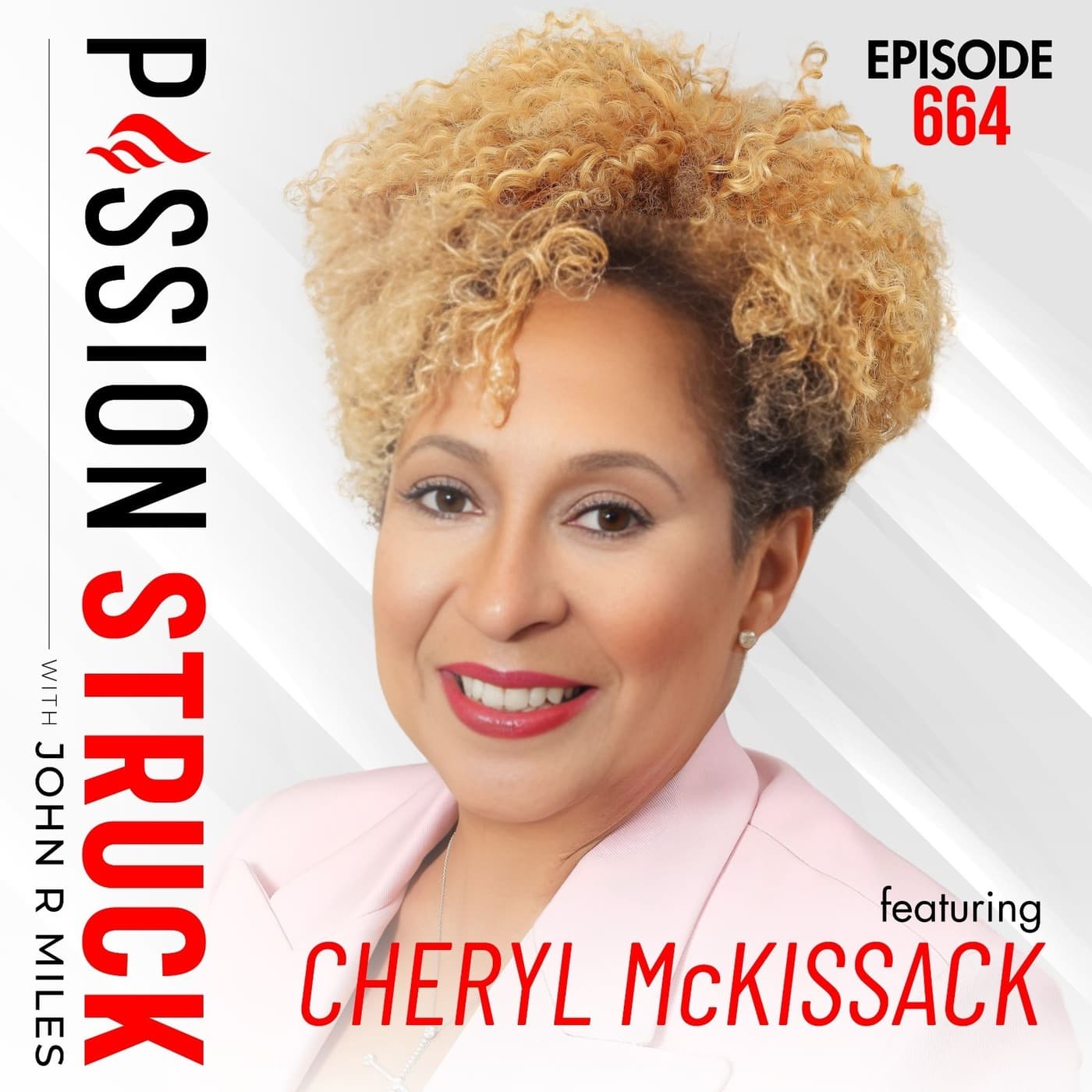
Podcast Summary: Passion Struck with John R. Miles - Episode 664
Episode Title Cheryl McKissack Daniel on Create a Legacy That Matters
Episode Overview In this episode of *Passion Struck*, host John R. Miles interviews Cheryl McKissack Daniel, the President and CEO of McKissack & McKissack, the oldest minority-owned design and construction firm in the U.S. They discuss the importance of building a meaningful legacy, rooted in personal and family history, and explore the values that have guided Cheryl and her family through generations of challenges.
Key Themes and Discussions
Legacy and Historical Context
- Moses McKissack: Cheryl's ancestor learned brickmaking while enslaved, marking the beginning of the family legacy in construction.
- American Dream: The conversation explores what the American Dream means for those whose histories include enslavement, highlighting resilience and perseverance.
Core Values Cheryl identifies five guiding principles from her family’s journey:
- Perseverance
- Preparedness
- Persistence
- Purpose
- Prayer
These values served as a foundation for overcoming challenges and building a legacy.
Personal Journey and Challenges
- Cheryl discusses the pressures of leading as a Black woman in the predominantly white construction industry, emphasizing the importance of recognizing and overcoming societal barriers.
- She reflects on her childhood experiences, particularly recognizing the realities of racism and the challenges faced by her community.
Importance of Communication
- One of the biggest challenges in delivering large-scale projects is effective communication among diverse teams and stakeholders.
- Cheryl emphasizes the need for alignment and shared information to achieve successful project outcomes.
The Role of Family
- Cheryl shares her family's influence on her values and work ethic, underscoring the importance of familial relationships and traditions in shaping identity and purpose.
- She encourages listeners to honor their own family histories and learn from past sacrifices.
Key Takeaways
- Legacy is Built, Not Given: Everyone can create a legacy through intentional choices and actions.
- Resilience Through Adversity: Transforming hardships into purpose is essential for personal growth and generational success.
- Values as a Foundation: The values we live by today profoundly impact future generations.
Final Thoughts Cheryl’s story serves as a reminder that legacy is not just for the privileged few; it can be forged through determination and purpose by anyone, one choice at a time.
Additional Resources
- For a deeper dive into the episode, including a companion workbook for reflection prompts, listeners can visit [The Ignited Life](https://www.theignitedlife.net/).
- Full episode available on [YouTube](https://www.youtube.com/@JohnRMiles) and various podcast platforms.
---
By engaging with the themes presented in this episode, listeners are invited to contemplate their own legacies and the impact they wish to leave behind.
Written by AI. May contain mistakes. Listen to the episode to check what was said.
Transcript
Automatic transcript. May contain errors.0:00Coming up next on PassionStruck. I think that's the root of who I am and what's made me the person I am today. And that is not like trying to seek approval. It's not trying to get approval. It's just more of here is who I am and here is who I want to be. You can be who you want to be over there. I don't agree with it. But let my light shine. My light is going to shine so bright that you're going to look at it and you're going to say, okay, she's a Black woman, but she's cool. Welcome to Passion Struck. Hi, I'm your host, John R. Miles. And on the show, we decipher the secrets, tips, and guidance of the world's most inspiring people and turn their wisdom into practical advice for you and those around you.
0:51Our mission is to help you unlock the power of intentionality so that you can become the best version of yourself. If you're new to the show, I offer advice and answer listener questions on Fridays. We have long-form interviews the rest of the week with guests ranging from astronauts to authors, CEOs, creators, innovators, scientists, military leaders, visionaries, and athletes. Now, let's go out there and become passion-struck. Coming up next on Passion Struck. Welcome back to episode 664 of Passion Struck. I'm your host, John Miles, and I want to thank you for being here. Over a third of you come back every single week, which tells me Passion Struck is more than just a podcast.
1:36It's a movement. And together, we're passing the ripple of mattering farther and farther. If this show has helped you see yourself more clearly or take one step closer to healing, here's how you can help it grow. First, share this episode with someone who needs it. Word of mouth is what drives this mission. Second, leave a five-star rating or review wherever you're listening. It's a small gesture that makes a big impact, helping more people find the show and reminding the algorithm that these stories matter. Lastly, I have some exciting news. I'm working on something that will take passion struck beyond the podcast, giving you new ways to engage with these ideas, apply them, and spread them into your communities.
2:16I'll share more in the coming weeks, so stay tuned. We're now in week three of our Decoding Humanity series. This week, we're diving into legacy, justice, and the choices that define us. In week one, we explored why your brain isn't just hardware. It's a meaning-making engine, with Dr. Bruce Miller and Dr. Virginia Sturm helping us see how purpose literally rewires the brain. In week two, we looked at the hidden forces of trauma, with Dr. Ingrid Clayton unpacking the FON response, and Dr. Nicole Kane showing us how to heal anxiety at the root. This week, we're asking, what do we leave behind? How do we build something that lasts, whether that's in our families, communities, or the wider world?
2:58That's why I wanted to bring you this conversation with Cheryl McKissick-Daniel. I spent much of my early career in construction and engineering, and I've seen firsthand how the projects we build become the backdrop of people's lives, Things like schools, hospitals, airports, public spaces. But the question of who gets to build those projects and whose stories get remembered has always struck me. Cheryl's story felt like the perfect conversation for this moment in the series. She leads McKessick & McKessick, the nation's oldest minority-owned design and construction firm, a company that's been building America for five generations, starting with Moses McKessick, who was enslaved when he learned the craft of brickmaking.
3:37Her journey is about far more than construction. It's about resilience, equity, and rewriting the American dream. In our conversation, we're going to explore what it means to live the American dream when your family's first chapter was enslavement. The values, perseverance, preparedness, persistence, purpose, and prayer that carried her family through more than a century of barriers. The challenges of leading as a Black woman in construction, one of the toughest industries in the world, and what true legacy looks like, not just for a company or family, but for all of us who want to leave the world stronger than we found it.
4:08If you want to go deeper, you can download the free workbook and detailed guide for this episode at theignitedlife.net. Now, let's dive into this powerful conversation with Cheryl McKissick Daniel. Thank you for choosing PassionStruck and choosing me to be your host and guide on your journey to creating an intentional life. Now, let that journey begin.
4:28Hey friends, it's the beginning of 2026 and if you're like me, you didn't come into this year to coast. You came to live with purpose to show up with energy, clarity, and intention. That's why how you start your day matters. And for me, that starts with Huel. Every morning, I reach for two things. First, Huel Daily Greens Ready to Drink. The peach and hibiscus flavor is crisp and refreshing, with 42 superfoods, vitamins, and minerals, all in just 25 calories and one gram of sugar. Then I turn to Huel Black Edition Ready to Drink. With 35 grams of protein, 27 essential nutrients, and no junk, it's a full meal that fuels focus, not fatigue.
5:06I start with Huel because I want to be present, intentional, and ready. Not just today, but every day. Start 2026 like a minute. Grab Huel today with my exclusive offer of 15 % off online with my code PASSION15 at Huel.com slash PASSION15. New customers only. Thank you to Huel for partnering and supporting our show.
5:33I am truly honored today to have Cheryl McKissick Daniel join us on PassionStruck. Welcome, Cheryl. How are you today? I'm great. Thank you, John. Well, I have really enjoyed spending the past few minutes getting to know you. And before we dive into your brand new book titled The Black Family Who Built America, I should share that I've spent part of my career in the industry that you have dominated as a senior executive at Lendlease, the former parent company of Bobas Lendlease. So I have witnessed firsthand the pressure and complexity of major construction projects, which you've spent your life around.
6:10But before we go more into your leadership today, I'd really like to go back. What was it like growing up as part of a family whose name was already woven into American building history? And when did you first realize that legacy was going to shape your own path? Well, growing up, I was very much aware that my family had a prominence because of the legacy and because of the fact that my father was an architect and that we could trace our family story back five generations. And so that was different than most people I was around. And I knew then that it had an impact because people would say, oh, we know the McKissick family.
6:59We knew your father. We know your grandfather. You guys built this. You built that. And with dates back so far, the Morris Memorial Building, 1926. And I heard those stories growing up. And that legacy has meant the world to me ever since I was very young and walking construction sites with my father. Well, your family name, for those who don't know your family background, sits comfortably besides huge names like the Vanderbilts and the Rockefellers in terms of building the great nation we're a part of. But compared to those families, it was a very different starting point. And I think this is an important thing to analyze because we're talking a lot about immigrants these days, and I wouldn't be here if it wasn't for my grandparents immigrating, but your family came through a different path than mine did.
7:56What does the American Dream mean when your family's first chapter was enslavement? Well, that's a disheartening question. It's one that I've had to grapple with, that the success that we are experiencing now really was based on the slave master that my great grandfather was given to. He taught him the trade of making bricks. And that's what started the whole business for us in construction, design and construction. And a dream is what you make it, if you ask me. And it's not really where you started, but it's where you're going. You know, you come to terms with what's happened in the past and that it may not have been bright.
8:49My ancestors didn't choose to come to this country. They were captured and brought to this country. But yet over the years, they've persevered and they've been able to make a place for them in this country. So when I look at the American dream, I definitely feel like I'm living it. I always wanted to be in a tall building in Manhattan. If you look out my window, where am I? A tall building in Manhattan. And so that is afforded to me because of the trade that was taught my ancestors and the ability to pass that trade down through five generations. So maybe you could talk just a little bit about that passing of the torch from Moses McKessick, the first to the second to the third, because those three generations really set the foundation for what the company is that you now lead.
9:44Well, as we were just talking about, while they were in the process of building out their lives and creating their legacy, there was a backdrop. And that backdrop was bigotry and hatred and racism in America, all through those three generations, years of building a business. And so passing the torch for them meant that they were extremely dedicated and passionate about what they were doing and making sure that I lived on. And so Moses McKissick I was taught the trade of making bricks, and he was able to then have his son, Moses McKissick II, build upon the foundation he already set. So he became a master carpenter.
10:36And then Moses McKissick III built upon that foundation and became the first Black licensed architect in America. and was all about the next generation growing and exceeding and doing better than the previous generation. And to me, that's what has really set a strong foundation for where we are today. I want to go back to something you just said, because as I understand it, Mozak Macasek III, as you mentioned, was one of the first licensed Black architects in the U.S. And I can't imagine what he had to overcome to get those licenses. Can you talk about that? And what does that milestone mean to you now, looking at the barriers he had to overcome?
11:26Absolutely. He got his license in 1922. So that's over 100 years ago. and they were in a situation where he and his brother had started their business and then architectural licensing laws came into effect. So they were contractors and they were designers. For them to even stay in business, they had to get an architectural license. First, they went to correspondence school and received architectural degrees. But then when they showed up to take their license, they were declined over and over again just because they were Black. But these men did not give up. They had what I call the four principles that they lived on.
12:16Perseverance, preparedness, persistence, and purpose. Now, I add the fifth one, and that's called prayer. It works for me. And so they continue to pursue these licenses by influencing the people on the board, the Tennessee licensing board at the time. And they found one person who said to the rest of the board, we cannot and should not stop these men from taking this exam just because they're Black. And he probably had to throw in there, they're not going to pass anyway. And so the McKissicks were able to take their exam. They passed. And then there was a little bit of a hiccup in allowing them to actually get their license.
13:04But they did get their license. And because they were the first Black licensed architects in America, the state licensing board for the state of Tennessee gained a lot of notoriety. And then those same people who had prevented them from getting licensed helped them get licensed in 22 other states. So it just goes to show you that the minds of men can change. And it can be influenced in a different way. is the Saul Paul story.
13:39Well, I guess before that generation, the family ended up migrating from North Carolina, as I understand it, to Tennessee. My family actually is from Chattanooga. So we're right down the road from Nashville. Yes. Well, how did that transition happen? Because I understand it was probably a painful transition at the time. Yes. So Moses McKissick II, was given as a wedding gift to a family in Spring Hill, Tennessee called the Cheers family. And he had to move. So that was customary that slave masters would give slaves as gifts. A lot of times it had to do with marriages and procreation of more slaves.
14:28And so he ended up moving to Spring Hill, Tennessee, which is about 20 minutes, 30 minutes outside of Nashville, Tennessee. And that's pretty much where we are from that we know the most about. So we can go to Spring Hill and you'll see the McKissick house. You'll see the Cheers mansion. You'll see the Maxwell family who, you know, created Maxwell House Coffee. And so that was the fun part of writing this book, was going back to all of these locations and reading all the records that were still available at this time. And that's something I want to ask you a question about. I was listening to one of your other podcasts that you did today, and you were talking about this amazing family tree that you stumbled upon that I believe is now in a museum.
15:28And I thought it was a really good story because too many of us don't go back and look at our past and honor the sacrifices that those before us came. I know my great grandparents sacrificed a lot because they were under the tyranny of Germany at the time and fled Poland to make a new life, which under those circumstances This could not have been an easy thing coming over here with nothing. But can you talk about that family tree and why it's so significant for you? Sure. As you said, I'm trying to remember if my mother or my father, but somehow I get this family tree in my possession. I really wasn't that legible.
16:13It was enough for me to understand it and have this desire to make it legible and to draw it all out. At the time now, I'm working at my father's office on the weekends. So I had access to T-squares and Leroy lettering sets and things like that. So I could really make this family tree into a blueprint. And that's exactly what I did. And then I carried it out to my current generation and the generation that was coming behind me. And to your point, Right. Everyone has a legacy and everyone has ancestors and everyone can do exactly what I did. They could just start with what they know right now. It's amazing.
17:03If you start with what you know right now and begin to just do a little research, you can start filling in the blanks of marriage certificates and birth and death certificates and things of that nature, where people went to school and where they lived and where they were born. You can just start filling out that information for future generations to come. If you don't want to go back, just fill out what you know from the generations that you do know. And I think everyone should try and create and generate some type of family legacy or document. it. One of the things we talk a lot about on this podcast is the importance of values and living your values.
17:50And as I was reading the book, it made me think that a lot of your values have come from studying your family and your forefathers, et cetera. How much have they influenced the code that you live by? Well, I think there's great influence, especially from my parents. I grew up in a different day. We didn't have internet. We only had three TV stations. So you spent most of your time in modeling yourself behind people that you knew, not people that you don't know. And it's so easy. It's infectious really to take on those personalities, those business traits, the way my father treated my mother, treated my father, the way my parents treated me.
18:40All of that is just ingrained because you're always around real people, which I think is a big thing today. It's not on Insta. We didn't have that. We would go to family picnics and it might take an hour or two to drive to the family picnic. So you're in a car with your family and you're telling stories or talking about the latest news. and then you're at a picnic with a family and friends who now you're interacting with. So everything was that way when I grew up. And so it was so much easier to look at someone and say, oh, these are the values that I respect and these are the ones I don't respect.
19:28Because you were seeing the whole person and you were seeing their life unfold. And so I definitely think that my family had a lot to do with that. Well, I think it's an important lesson because for those of the younger generations who are listening to this, we now have young adults who have grown up being influenced by many of the people that they witness on social media. And I have to say that most of the time when I'm doing social media, I'm trying to showcase the best parts of me. You know, you're not typically showing the dark parts. So we're growing up with a bunch of influencers who are trying to showcase a part of you that they want you to see, where similar to you, I really grew up in a time where I was very much influenced by the church leaders.
20:18I grew up Catholic, but the priests and nuns that we grew up in, of course, my parents and grandparents, the moms and dads of my friends, those were the people, our coaches, who really influenced us the most because we didn't have that other thing that kids did A2. And I think it's really doing a disservice to them in many ways. Interested in your thoughts. Well, I agree with you. Our parents raised us, John. I used to think I was raising my kids, but what was really happening is the internet was raising my kids. But I'm like, well, where did that come from if they do something that's strange and different if they want to wear clothes another way like where did you get that from you saw it from somewhere and you want a model behind it for whatever reason and i just think that as the younger generation begins to unfold i hope that they take some time to spend in a quiet room without their cell phones on with their parents, their grandparents and parents, friends, and really engage on everything, every topic that you can come up with.
21:38Young people should engage in a room without their cell phones and with real people because you mature that way. You learn a lot that way. Hang tight. We've got more from Cheryl McKessick coming up right after the break. Please support the brands who make PassionStruck possible. It's one of the best ways you can help this mission reach more people. You're listening to PassionStruck, part of the PassionStruck Network.
22:14All right, let's dive back into this conversation with Cheryl McKesson. Yeah, I was recently reading Jonathan Haidt's book, The Anxious Generation. He's a NYU professor. You're probably very familiar with him. But in that book, he was talking about one of the biggest regrets that young adults talk about is that during the formative years where they would have had time to spend with their grandparents, and if they're lucky enough, their great-grandparents, They were so absorbed with their phone and what was going on in the digital world that they sacrificed that time. And now they regret not getting to spend more time with them.
22:49And I remember I never got to meet my paternal grandfather. He died before I was born. But my maternal grandfather really played a huge role for me in shaping who I am. And I so looked forward to hearing his stories. He served in World War II. He was a pilot. He was just this man that I always saw of principle, that when I thought of the people I respect most, it was because of who he was and how he lived by his values. And so I always wanted to be like him. And when you hear those type stories, you know, about going to war, that's real. That's life and death. That is real. I have a really good friend, Roseanne Calvey, and her father died several years ago.
23:41But when he died, he was like 98. And he would come to dinner with us every Friday. And I would make sure I'd sit right next to him. because I wanted to hear his story, just the way he talked, his language. I just thought it was the best because they were real stories because he fought in real wars. And there was just something about his character, like you're saying, that you gravitated towards. So I want to just talk about your childhood just a little bit more, because as you were growing up, you saw both the privilege of having a respected family name and the hardship that many in your community still faced.
24:27And I would say still faced today. And I'm going to make a parallel here. My niece and nephew are both black. My brother adopted them from Haiti. And so from that experience of growing up with them, since they've both been infants, I've seen both the blessings that they have from being in our country, but also how the world looks differently upon them. How did that world and living between the two sides that you grew up with shape your perspective? And how do you think it's changed over time? Well, it's something that you deal with as a Black American. I did not realize that we were a problem for other people until I was like 11.
25:17And that was when I was at a friend's house for a birthday party and a cross was burned in the front yard. And we were a block from Fisk University, which is a black college. We were right behind Meharry Medical College, which was another black college and we were in the black neighborhood. And the thought that someone could come invade our space and do something as vile and violent as burn a cross, a huge cross in a yard, was extremely scary. And it let me know that we were not safe, that at any time something negative or violent could happen because there's true hatred out there. So it's first just recognizing that this hatred was even out there, but then to know that it would go on attack is a whole other story.
26:17Our parents tried to talk to us about that and make us feel as comfortable as possible. But they also taught us not to be like that, not to judge others the way we're being judged, but to always love and to always be your best at what you do. And I think that's the root of who I am and what's made me the person I am today. And that is, it's not like trying to seek approval. It's just more of here is who I am and here is who I want to be. You can be who you want to be over there. I don't agree with it, but let my light shine. My light is going to shine so bright that you're going to look at it and you're going to say, okay, she's a black woman, but she's cool.
27:14And I have lived that most of my life. Most of the places I go, especially in construction, I'm the only woman and definitely the only black woman and always had to live in that reality. And now I don't even think about it anymore. I have friends from all walks of life. I have business colleagues from all walks of life and I treat people the same. At least I hope I do. That's what I strive to do. And I all the time think about what my ancestors had to go through, but also where we are today because it's back in our face again. It's getting rid of DEI programs. It's in the Sunday paper I just read about the administration wanting to do away with anything having to do with slavery, just because they don't want to be reminded.
28:13Not that it didn't happen, because it definitely happened, but erasing history, you could try. You could try, but it's there, and it did occur. That kind of stuff is painful. It's painful because it reminds you of the 60s and the 70s when there were riots in the streets, when the black neighborhoods were dissected because of highways and destroyed the black communities. It seems like as soon as the black community gets a foot up, there's something to kick the black community back down. And we're going through that again in 2025. And so it's like, when are we ever going to let this go? And I always quote my good friend who wrote a song and he talks about the neighborhoods in Nashville, Tennessee, where North Nashville, where we all grew up, where the Robert Moses highways went down the streets and the effect that it had.
29:25But he always says, there's something bigger and brighter, deeper and wider and unconditionally out there for me. And living that is everything. It's interesting. I had a friend who turned me on to the biography of Malcolm X. And he was telling me that he thought it was one of the best books if you want to hear the arc of how Malcolm X became who he is and why he was such an important leader. And I read the book and I have to tell you, it was really sad to hear his family legacy and what he had to endure. It was also sad to see how he turned to drugs and everything, but then how he turned it around.
30:15And as I would say on the show, became passion struck about the cause that he thought was worth giving his life for. But I think that's one of those types of books that I really think all Americans should have to read, because it really does give a very historical sense of the challenges that had to be overcome and what he was trying to invoke with his life and the change he was trying to bring. And I don't think after reading it, he was the radical that many people may come out to be. I think he had to use radical ideas to try to get his points across, but I think he was forced there by what society was doing.
30:56Yes, I think we have much more radical ideas right now. Yeah.
Read the full transcript
31:04unfortunately just like the people in 1920 that didn't want to let my grandparents take their license to become their tests to become licensed architects those people still exist that spirit still exists today and it's unfortunate but it's still around it's at wonder there's this need to feel better than someone else. That means there is this huge insecurity that's taking place. And the insecurity could be rooted in just so many things. It could be just because you didn't achieve what you wanted to achieve in life, even though you had all the opportunity in the world to do it. Or you need to feel someone is less than you.
31:54Who knows? Or there is a legitimate feeling out there that people have. I don't know if I agree with it, that if we have DEI programs that it misplaces or takes away a spot for someone else. I don't know. But whatever it is, it's based in hate. It is not based in love. And whatever is in love will last. I want to jump forward from the 1920s that you just mentioned to a pivotal point in your family's history. In 1942, your family won the Tuskegee Army Airfield Contract, if I have the date correct. Why was that such a breakthrough and what did it teach them about, I guess, since we're talking about federal stuff, federal work, scale, but also prejudice?
32:46Well, I can't believe you're bringing this up because my mother called me yesterday and she heard me on the Charlemagne show and she said, Cheryl, you just didn't say enough about Tuskegee. You've got to make sure you about Tuskegee because it was a game changer for McKissick. This is when Franklin Roosevelt was president and Eleanor Roosevelt was his wife. and she actually came to Tuskegee. And I'm pretty sure she flew one of the planes with the Tuskegee Airmen. And just think about that. The president's wife is going to this rural country, this rural town in Alabama to meet with the Red Tails, who were the Black pilots who fought in the war.
33:37They were ostracized. A lot of people did not like what they did, although they were probably the most successful squadron there was. And so when it came time to build the new base, I really believe that she was instrumental in saying it needed to be a firm that was Black. Because this was the largest contract ever awarded to a Black firm in the history of the United States. and my grandfather and his brother, they designed it and they built it and they were extremely proud of this and as a result, they won an award called the Spalding Medal Award from President Franklin D. Roosevelt and my grandfather was then placed as a member of HUD, the Housing urban authority department.
34:35The Tuskegee construction was a very powerful story and had a great impact on the McKissicks. I think at that point, they felt recognized by the country. Wow, that is so important. And I'm going to digress here for just a second. A few years ago, I went on this retreat where we were crazy enough to do this 4x4x48 challenge, which is basically running two marathons in two days. And one of the guests who was there was Mark Ripien, the two-time Super Bowl champion quarterback from the Washington Redskins. And it was during the time that the Redskins, now the Washington football team, were looking at the new name and what they should call themselves.
35:19And he had told me at that time that the players were being asked. And one of the names under consideration was to call them the Washington Red Tails to honor Tuskegee Airmen. And I know a lot of the players were very much fans of it because it honored the uniform. They wouldn't have it honored the legacy. And a lot of them really wanted that to be the name. And I always wonder in the back of my mind why it wasn't, because I think it would have been such an honorable thing to do. And it's such a powerful thing to name the team after that. I'm trying to remember Josh Harris is the owner now, but who was the owner when they changed the name?
36:04Wasn't it the guy who owned AOL? Yeah. I can't remember his name, but that would have been fantastic. And boy, do we need that in Washington DC right now? That would have been amazing. I didn't know that backstory. So thanks for sharing that. I'm a huge football fan. We were part of Eagle Stadium. We were one of the - I know. And I know because I'm a huge Eagles fan. Believe me, I know. Fly, Eagles, fly. Yeah. I'm wearing my green. Yeah, I can't wait for the season to start. To really start. Right. Yeah. I want to talk to you about one of the most pivotal moments of your life, because I'm trying to put myself in your situation.
36:56So you are in your career, you're in New York, you're working for one of the biggest construction companies in the world, Turner Construction, and your mom calls you. And Cheryl, you need to come back to Nashville. You need to come back to the company. And I know a lot of kids, because I keep trying to get my son to join me in doing Passion Struck, keeps telling me to pack sand. What was going through your mind at that time? And how do you think now that moment changed your trajectory? Well, the way you just presented it is not really how it happened. Before she called me, she called my boss and she told my boss I was quitting.
37:45And then she called me and told me, you quit today. And I was shocked. First of all, John McGordy was my boss and I was in the estimating department and he ran a really tight ship. So I'm like, mom, I'm scared to death of him. You called him? And she's, I did. He's a nice man. He's really nice. I'm thinking, oh my God, my life is over. I'm going to honor my mother's wishes and put one foot in front of the other to see how this works out. And so the next week I start commuting from New York to Nashville. I would fly in on Mondays, work all week and fly home Thursday nights. And Fridays I would work from home, which wasn't a big thing then, in New York City.
38:38It was probably the best thing that ever happened to me. I did not realize I was ready for that and I would not have done it on my own. I did the same thing to my mother when I retired her. She didn't want to do it, but I made her do it. And she'll tell you it's the best thing that ever happened to her. So sometimes it takes a mother's intuition and their worldview to enter into your life to make you change your trajectory. I agree. Turner is a great company, but I don't know what my future would have been like at Turner. But I know now and have lived what my future is like at McKissick. And not everybody had the opportunity to do what I've done and what my parents have done.
39:30Not everybody has the opportunity to walk into a situation that's already set up. If your son is listening, he's one of the 75 million people. Listen, no one has it that good. You have to really consider it. That's what I will say. You have to consider it. And at the same time, yeah, it's natural. I think especially between a father and a son that people want to, the son wants to forge its own way without the help of the parent. And I get that. But at some point, hopefully they see what's out there versus what's already set up for them. And for our young people today, I think their opportunities are less than what ours were back in the 70s and 80s and 90s, because the companies are getting bigger and bigger, less loyalty with employers.
40:28Yep. Salaries aren't getting better. And we all know what's happening to inflation. I think the opportunity to go into a family business is definitely a good one. And I highly recommend it. And one of the things I wish I would have known more of is my family has been typically one where they've worked for major corporations. My grandfather worked for craft. My father was in sales. I myself, Fortune 50 companies. I think small business ownership is what has defined the United States and entrepreneurship over the centuries. And that is really where the American dream can become is when you take the lead of building something for yourself.
41:13And I really hope we get into more of that because now that I'm doing it myself, it becomes a completely different dimension between helping someone else earn money rather than living the impact that you want to make to the world. And that's a really huge difference because impact to me is what God wants us to make. It's why he wants us to serve others. So it's really how do you use your talents through your work to enrich other people's lives, which is what I think the meaning that we're all here for. Sure. I did want to ask. So being the CEO of this company, you have to deliver huge mega projects that most outsiders never see.
41:57What do you think is the biggest challenge in delivering them, whether it's permits, logistics, unions, politics? What's the most difficult thing to deliver one of these big things that you have to do? Communication.
42:14I swear, I don't know what it is about communication, but it's the hardest thing in the world to get alignment on. And when you think about these big projects, they're really a large data problem. It's getting everybody on the same platform with the same information so that we can build with unity. And I think that is one of the concerns that we're addressing in our industry. how to get the architects and engineers to work with the subcontractors, mechanical, electrical, plumbing. So many hands involved at Terminal One, at JFK, what is it,$8,$9 billion project now. We have 450 minority women-owned businesses working on that project.
43:05The overall number of consultants is massive. So how do you get everybody on the same page when it comes to communication? And I think that is one of the biggest challenges we have. Another challenge we have is electricity. Our energy, where is it coming from? Now we have this big push to build all electric. At the same time, we have the big push for electric cars. And so I know in New York, I happen to be on the board of advisors for National Grid. That's our biggest concern, is generating enough electricity to have the capacity that we need. And so those are the two major, oh, well, I think the tariffs are going to have some problems.
43:56We're going to have some problems with tariffs. But that's going to go away eventually. But the energy question is not going away anytime soon. No, it's not. Yeah. Well, Cheryl, I have two final questions for you. If I have this correctly, your mom has called you the Moses of your generation. Oh, that's so scary. And so if that is the case, what was the sea you had to part? And when did you know you'd actually done it? the sea i had to part was new york city and when this city throws me curve balls i throw back concrete and i am just beginning to feel like i've done it in the last five or six years there's an organization called the new york building congress that i have been a member of for 30 years.
44:59When I first got there, there were very few women. And I think I was the only Black person in the room and a sea of men. The galas were a sea of men. And now after 30 years, I am interviewing to be chair of the New York Building Congress. Holy cow. Wow. Congratulations. That's what God will do.
45:24So to me, that is a blessing, but it's also a testament to the people in America, the people who are right here side by side with all of us every single day. We do have positive perspectives. We do care about one another and we are opening up our horizons to new things. Thank you for that. By the way, I'll be the first black and female, well, black female. How incredible. Sharon, my last question for you is about legacy. What's one tradition you refuse to change and one you hope your daughters will disrupt? That's a tough one. Well, for me personally, my interface with my staff has been one of one big family.
46:19And now that I'm looking at my succession planning, I want to take that entrepreneurial sort of culture and make it sustainable. And so I would like to see my kids disrupt that, disrupt the concept of having one big family, create a more sustainable model. Thank you so much for sharing that. And thank you so much for coming on PassionStruck. It was such an honor, ma 'am, to get to interview you. And I'm super excited about that post. What an amazing event that would be. Thank you again for coming. And where can people learn more about you if they would like to? They can go to my personal website, which is Cheryl McKissick Daniel.
47:10That's Daniel without an S. And they can see us on social media at McKissick Official. Awesome. Thank you again, Cheryl, for being here. Okay. Thank you, John. It was great speaking with you. That's a wrap on today's episode with Cheryl McKissick Daniel. and I hope her story left you asking yourself, what am I building that will outlast me? Here are three takeaways that stood out for me. First, legacy is not just what you create, it's what you pass forward. Second, resilience is forged by transforming hardship into purpose, generation after generation. And third, the values we choose today become the foundation on which others will stand tomorrow.
47:51Cheryl's story reminded me that legacy is not reserved for the Rockefellers or Vanderbilts. It's available to all of us, one intentional choice at a time. If today's conversation inspired you, please share it with someone who needs to hear it and leave a five-star rating and review on Apple or Spotify. It helps new listeners discover PassionStruck and keeps this movement growing. You can find the companion workbook for today's episode and reflection prompts to help you think about your own legacy at theignitedlife.net. And don't forget to check out the PassionStruck YouTube channel for full episode episodes and highlights.
48:21Coming up next in Decoding Humanity, my conversation with social psychologist Bill von Hippel, author of The Social Lead. We'll explore how evolution shaped our psychology, why belonging is wired into survival, and what that means for how we lead, collaborate, and create meaning today. You won't want to miss it. It's a problem that youngsters are using social media so heavily. What I'm worried about is that, as you say, if it's just the straw that broke the camel's back, and if it's not the whole problem, people are going to expect big returns on these changes. And I think we're going to see small returns on these changes.
48:53I think that they'll make a difference. I think that there's a host of reasons why I think phones are bad ideas. In my book, I talk about how we become lazy in our social habits because it's so easy to get on social media and so difficult to go across town to get together with our friends. But in fact, going across town to get together with our friends is the most important thing we can do. And we don't understand our own desires sometimes. And so we do the lazy, easy, less satisfying thing. Until then, build boldly, Lead with heart, and as always, live life passion-struck.
From the publisher
In this Passion Struck episode, John R. Miles sits down with Cheryl McKissack Daniel, President and CEO of McKissack & McKissack—the nation’s oldest minority-owned design and construction firm—to explore what it takes to build a life and legacy that truly matter. From the story of her ancestor, Moses McKissack, who learned the art of brickmaking while enslaved, to her role in leading billion-dollar infrastructure projects today, Cheryl offers a blueprint for creating an impact that outlives us.
Together, they discuss the five core values that guided her family through generations—perseverance, preparedness, persistence, purpose, and prayer—and how these principles can help all of us leave something meaningful behind. This conversation is a powerful reminder that legacy isn’t reserved for the privileged—it’s built choice by choice, one intentional decision at a time.
Visit this link for the full show notes
Go Deeper: The Ignited Life Substack
If this episode stirred something in you, The Ignited Life is where the transformation continues. Each week, I share behind-the-scenes insights, science-backed tools, and personal reflections to help you turn intention into action.
Subscribe🔗 and get the companion resources delivered straight to your inbox.
Catch more of Cheryl McKissack: https://mckissack.com/about/leadership/
If you liked the show, please leave us a review—it only takes a moment and helps us reach more people! Don’t forget to include your Twitter or Instagram handle so we can thank you personally.
Get the full companion workbook at TheIgnitedLife.net
Full episode on YouTube: https://www.youtube.com/@JohnRMiles
Listen on Apple Podcasts, Spotify, or wherever you get your podcasts
Everyone deserves to feel valued and important. Show it by wearing it: https://startmattering.com/
See Privacy Policy at https://art19.com/privacy and California Privacy Notice at https://art19.com/privacy#do-not-sell-my-info.


