Ask ChatGPT
 Passion Struck with John R. Miles
17 Nov 2026 · 1h · 22 chapters
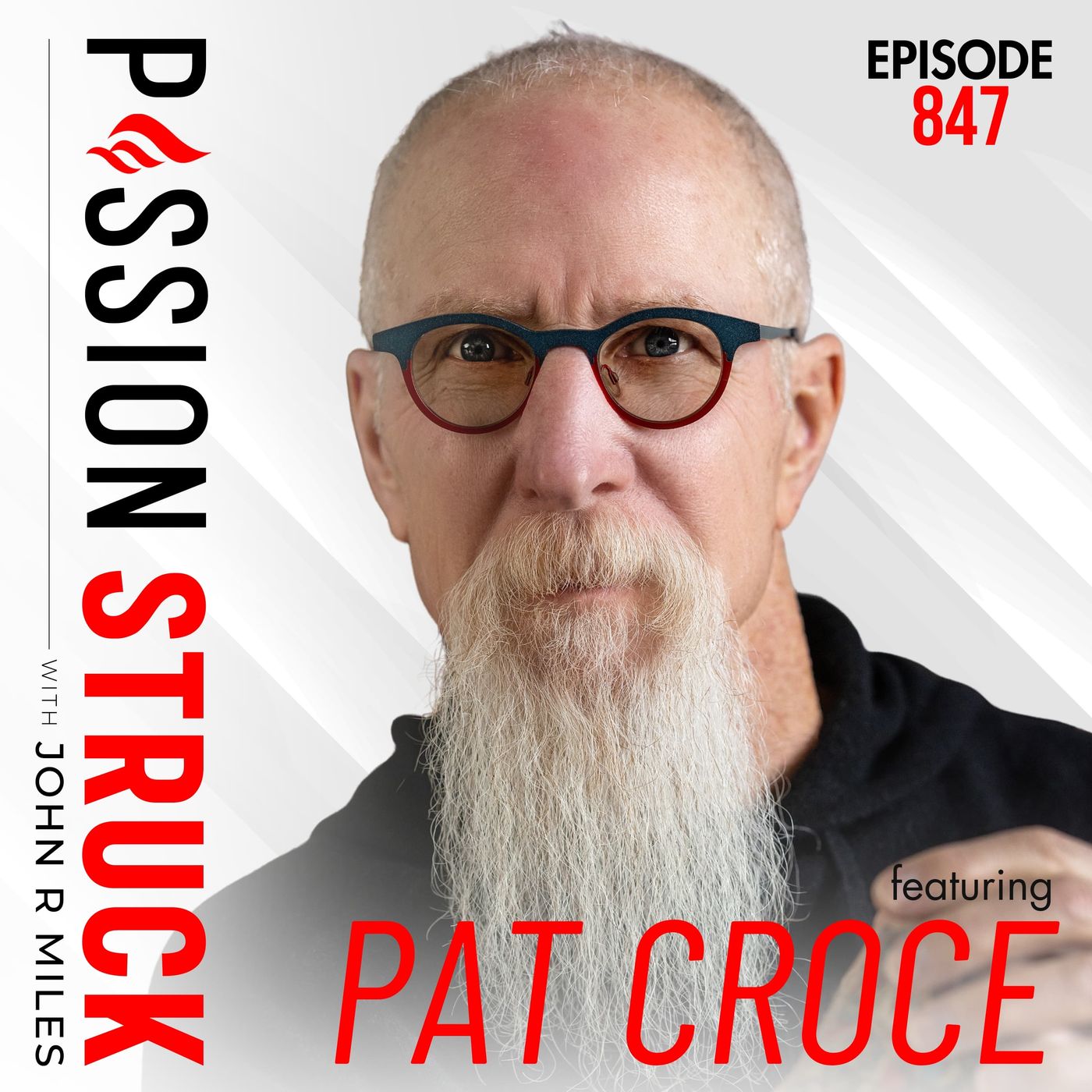
Pat Croce discusses why chasing external success often fails to produce lasting happiness, and how to “enjoy yourself now” by shifting identity from the ego/persona to a deeper “self” (spiritual/divine awareness). He emphasizes stopping overthinking by recognizing the “voice in the head” (monkey mind), stepping back as a witness, and using mindfulness-like “sacred shifts” (e.g., a six-second pause, letting-go, detaching from difficult emotion). He also frames psychological suffering (dukkha) as fear-based thought patterns and argues pain is inevitable but suffering is optional.
Pat Croce is a sports medicine pioneer, entrepreneur, best-selling author, martial artist (black belt/fourth degree), pilot/diver/adventurer, cancer survivor, and president/owner of the Philadelphia 76ers. He was diagnosed with T-cell cutaneous lymphoma (2020) and later Waldenstrom’s (rare bone marrow cancer).
External achievement dissolves wanting temporarily but re-creates lack; ego requires validation/lack; true self is aware presence; meta-awareness (“not this”) frees you from thoughts/feelings; adversity can be transmuted into gratitude/service.
His cancer journeys (including training and taking chemo at Everest Base Camp); his sister Carolyn’s pancreatic cancer and return to social work; sports leadership parallels (Phil Jackson/Zen teachings, giving players books).
Written by AI. May contain mistakes.
Exploration of Pat Croce's life and insights on happiness.
“No, this self is your spiritual self, your divine self, the self that you and I share.”
Discussion on how achievements can fail to bring lasting happiness.
“Hey friends, welcome to episode 847 of PassionStruck.”
Pat Croce shares his spiritual journey and insights into mindfulness.
“I am deeply honored today to welcome Pat Croce to Passion Struck.”
Discussion on the shift from external validation to internal fulfillment.
“Enjoy Yourself Now, and the 66 different shifts that you have in it.”
Discover how to recognize and overcome the internal barriers that prevent you from being your authentic self.
“You have to realize that you are the problem.”
Discover how to recognize and overcome the internal barriers that prevent you from being your authentic self.
“for supporting those who support the show.”
Learn how to shift your mindset and career perspective after unexpected life changes.
“And he had been at this company for well over a decade, thought he was secure.”
Discussion on being aware and the concept of non-duality and fulfillment.
“And you think, boy, is that gobbling goop?”
How meditation techniques influence success in sports, particularly basketball.
“He's one of the four Toskos, is it called?”
Pat shares his journey in writing a transformational book and the insights gained.
“And even the guest speaker at the Omega Institute.”
Discussion on the spiritual path, self-discovery, and sharing happiness.
“and I would go and interview all these great Michael Jordans and all these George Lucas and all these great superstars and put down a formula.”
Insights into psychological suffering, control over thoughts, and living in the moment.
“and that anything we do after that John which you're doing right now with passion struck comes from happiness, comes from the freedom of your authentic divine self.”
Pat discusses his cancer diagnosis and how it shaped his perspective on life.
“is the panacea of most of our suffering.”
Pat shares his personal battle with cancer and how he maintains a positive mindset.
“you looked at it as something that was supposed to happen to you.”
John reflects on his sister Carolyn's journey with cancer and her pursuit of education despite adversity.
“She was given one of the most awful ones that she had pancreatic cancer.”
Discussion on how Carolyn transformed her suffering into a meaningful life purpose and service to others.
“You can do all the medication you However, the pain that she transmuted in her mind to more presence, she got to use that natural philosopher's stone that transmutes silver to gold.”
Pat discusses his upcoming book, addressing loneliness and mental health through the lens of mattering.
“I got to make sure that everyone hears that.”
Exploring the concept of enjoying one's true self and the spiritual journey to self-awareness.
“Well, I would be happy to send you a copy.”
Explore the key insights from the discussion with Pat Croce, focusing on self-identity and thought.
“You can't, once will you not know, right, John?”
Explore the key insights from the discussion with Pat Croce, focusing on self-identity and thought.
“I don't know when this airs, but it'll be at any bookstore.”
Learn about Pat Croce's new book 'Enjoy Yourself Now' and its themes.
“So many of us spend our lives identifying with the voice in our heads, the roles we play, the achievements we've accumulated, and the expectations we've inherited.”
Discussing the importance of caring and its impacts on our lives.
“As we close today, I want to leave you with one more thought.”

Get the gist, explore an idea or ask about something said.
 Claude
On Passion Struck with John R. Miles, what are the key points of this episode?
Searching your listeningAutomatic transcript. May contain errors.
0:00Coming up next on PassionStruck. What happens when you spend your life chasing success only to discover that what you've been searching for can't be found in another achievement? Pat Croce has built an extraordinary life, but his greatest transformation came when he began questioning something much deeper, whether the person he had spent his life trying to become was really who he was. His answer challenges the way we think about identity, happiness, and what it means to enjoy the life we're living. Listen to this. When people say myself or yourself, they just think it's the mask you talked about, the persona.
0:45No, this self is your spiritual self, your divine self, the self that you and I share. We share this self. We don't share the mind. We don't share the body. I can't read your thoughts. And our bodies are definitely separate. But that which is aware, the self that is aware, as Ramana Maharshi said, God, self, and guru are one. That's the self. We are. And that's what I want people to be able to enjoy. Because once you recognize your true self, once you, even Socrates and the Temple of Apollo, the know thyself. That's a prophetic statement of those two words. Hey, it's your friend John, and welcome to PassionStruck.
1:32I'm so glad you're here. Whether you're a longtime listener or someone who just discovered the show, thank you for pressing play today. Maybe you've built the life you were supposed to want, but you've quietly wondered why it still doesn't feel like enough. If that's you, you're in the right place. Every week, I sit down with the world's top scientists, researchers, and thinkers to uncover what it actually takes to build an intentional life that matters. Thanks for joining me. Let's get into it.
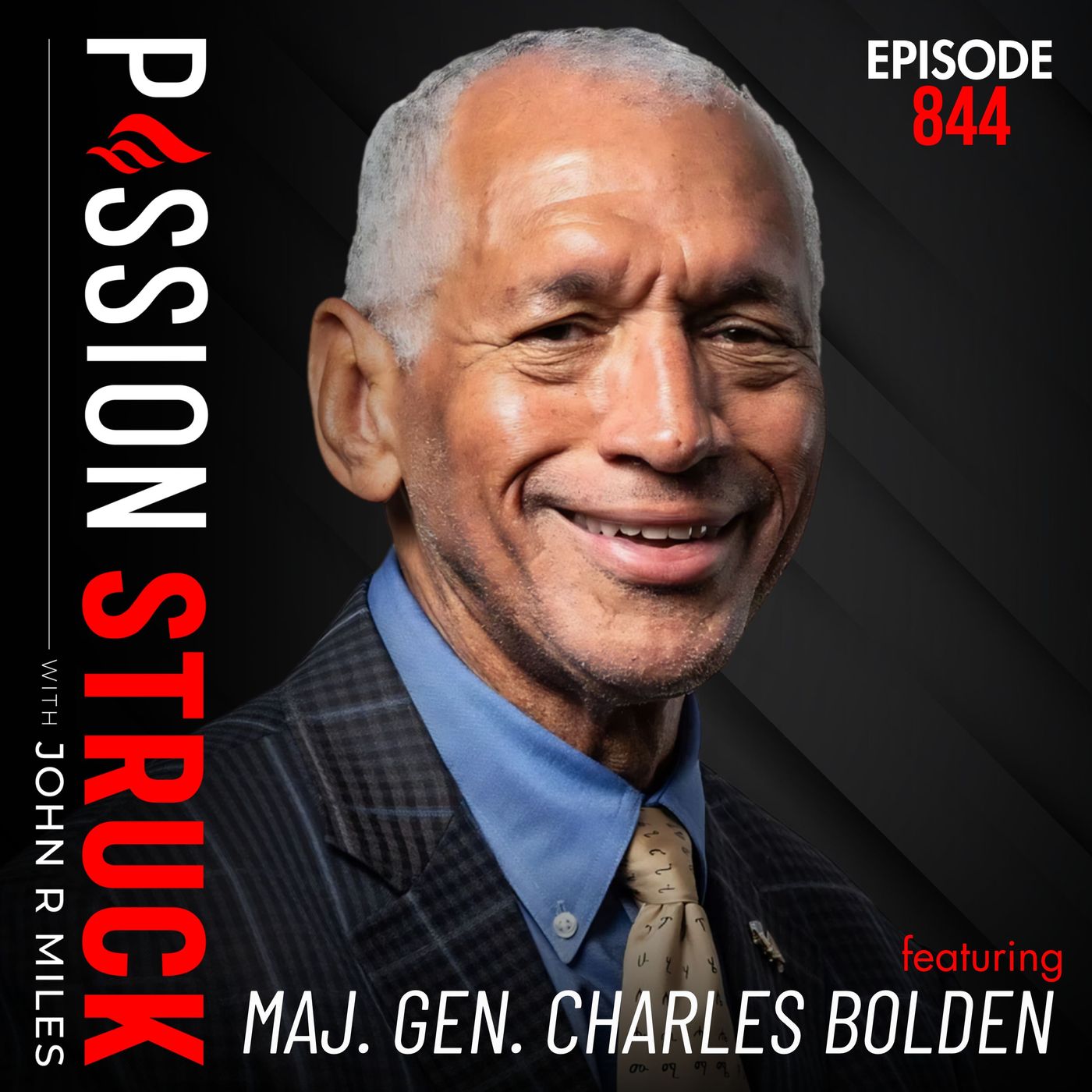
2:09Hey friends, welcome to episode 847 of PassionStruck. We're continuing our November series, The Art of a Life Well-Lived, exploring how we nourish ourselves, discover what matters, and build lives guided by purpose. Last week, we explored what it means to live well through service, leadership, and responsibility with Major General Charles Bolden and through the science of human performance, recovery, and sustainable capacity with Dr. Kristen Holmes. And today's conversation takes us into a question that I think many of us eventually confront. What happens when the things we've spent our lives pursuing don't bring us the happiness we thought they would?
2:53My guest is Pat Croce. He's been a sports medicine pioneer, entrepreneur, best-selling author, martial artist, adventurer, cancer survivor, and president and owner of the Philadelphia 76ers. He's accomplished more in one lifetime than most people could imagine. But beneath that extraordinary resume is a deeply personal story about what happens when achievement stops being enough. For years, Pat was driven by the next challenge, the next victory, the next opportunity. But eventually, he began to realize that external success wasn't resolving something much deeper. But eventually, he began to realize that external success wasn't resolving something much deeper within him.
3:42That realization sent him on a journey into mindfulness, spirituality, and a different understanding of who he really was. In his new book, Enjoy Yourself Now, Pat shares 66 shifts designed to help us change the way we see ourselves and experience the present moment. What I particularly appreciated about this conversation is that we didn't just talk about mindfulness as a practice, we explored the transformation behind it, recognizing the voice in our heads, questioning the identities we've constructed, learning to separate ourselves from our thoughts, and discovering what it means to live from a deeper sense of wholeness.
4:22We also talk about adversity, his experience with cancer, the lessons he has drawn from his spiritual journey, and how we can move from living for happiness to creating and sharing from a place of happiness. Before we get started, I want to tell you also about my new book, The Mattering Effect. It's a USA Today bestseller, and it explores what happens when we spend so much of our lives trying to prove our worth that we gradually lose touch with our own sense of significance. I call this The Great Erasure. The book offers a way to begin restoring that sense of mattering within ourselves and in the relationships and communities around us.
5:01You can find The Mattering Effect wherever books are sold, and there's a link for it in the show notes. Now, let's get into my conversation with Pat Croce. Thank you for choosing PassionStruck and choosing me to be your host and guide on your journey to creating an intentional life that matters. Now, let that journey begin. You're listening to a quick ad. You know what else is quick? Selling your car on Carvana. Just put in your vehicle information and we'll give you an offer. Done. No hassle, no negotiation, no guy from an online listing lowballing you. Which means by the time I'm done explaining this, you could have basically done it.
5:44Still haven't started? Hey, better late than never. Sell your car today on Carvana. Pickup fees may apply.
5:55I am deeply honored today to welcome Pat Croce to Passion Struck. Pat, it is so great to get an opportunity to meet you. John, thanks for having me on the show. And I got to tell you, I love the title Passion Struck. Thank you. It actually wasn't even in my vocabulary until about a decade ago. I was describing this phenomenon that I saw in so many people, including myself. After you have discovered your why, discovered the problem that you're called to solve, start igniting your passion. To me, passion struck is then what you do to execute how you serve humanity by putting your passion into the world.
6:39And when I gave that concept to a friend of mine, a mentor, he said, well, it sounds like you go from being passionate to passion struck. And I was like, that's it. Oh, that's good. I do have a chapter and you probably are aware of this, follow your enthusiasm, which was a takeoff from Joseph Campbell's, follow your bliss, but passion struck just felt so it struck me. I thought, Oh, that's good. Thank you so much for that. And I want to set a little bit of the backdrop here about why I'm so excited today to be interviewing you. I'm a Pennsylvania guy. I grew up going to Ocean City, which I know you have a love for.
7:18I've lived in Key West like you. I've spent lots of time in St. Augustine. So there's something about your story and the places we both have lived and visited that feels very familiar to me. But there's another dimension of this that is also very meaningful. So I've been practicing mindfulness myself now for about 18 years. And I have had the immense honor of sitting down with people like Jon Kabat-Zinn, Yonge Mungor Rinpoche, Mark Nepo, Sharon Salzberg, Richie Davidson, Jud Brewer, and Christine Neff and others. So I wanted to give you that background because I don't want to spend our time today explaining mindfulness.
8:02I want to go somewhere deeper. I want to go to what happened to Pat and what has led him to write this amazing new book, Enjoy Yourself Now, and the 66 different shifts that you have in it. And so that's where we're going to spend our time today. That's all right with you. Oh, John, wherever, this is your show, and I love your show. So anything, and I know you know all about shifts of perspective. So any questions you like, throw them at me. So you have been a sports medicine pioneer. In fact, an idol. Mike Schmidt actually mentioned you after mentioning God and his family, which I couldn't believe.
8:47You've been an entrepreneur, a bestselling author, a black belt, a pilot, a diver, an adventurer, a cancer survivor, and president and owner of the Philadelphia as 76ers. I can't even fathom all that you've done. And when you look back at Pat Croce, who is the person pursuing the next challenge, what do you think Pat back then was really searching for? John, you know, beyond everyone else that you can't answer a question truthfully unless you're in the present moment. So I'm only going to surmise here because I can't go back and give a hypothetical. However, I didn't know that I had a hole in me that couldn't be filled.
9:34That what's next had to come along with what's missing. So I never appreciated the now for long. All of those achievements that you talked about never brought permanent happiness. It brought happiness where the wanting energy was dissolved, but that happiness was the light of our true nature shining through temporarily because the next wanting energy would veil it again. And I wanted something more, another standing ovation, another win, another restaurant, another bestseller, something more because I was never, ever satisfied for long. Until about a dozen years ago, and Grace said, cut. Cut the movie of me.
10:20You're going in the wrong direction. Instead of all this external acquisition, you might want to check out internal transformation, but it came about in the most circuitous way. I didn't know the spiritual path, John. I didn't know anything about mindfulness. You said 18 years. A dozen years ago, I had no clue. Back at that time, do you think that what you were really chasing was achievement producing significance or was achievement being used to prove significance? for you? They both appear egoic to me. And so I would say I had something to prove and it needed attention. It needed acquisition.
11:05It needed approval. It needed validation. It needed love. In essence, it needed love. So whether it was significance to me is just some means of my ego, this body-mind ego where I'm attached to, labeled by, or identified with these thoughts and feelings that I was accustomed to be me. And until I realized the me, I couldn't define the real me that I am, that we are, that aware presence, that I needed that significance. And whether the achievement was bringing me significance or the significance was bringing me more avenues toward more achievement it just meant more to me i need it more that's when any ego does it requires a sense of lack a sense of unease because we don't know the totality of our self capital s our divine self could be called soul could be called spirit it could be called divine brahmin dal whatever words you want to use i didn't know i just didn't know what i didn't know I want to introduce something to you, a concept.
12:20I, too, have a book that's coming out in October called The Mattering Effect. And in it, I introduced this term that I believe today we're living in something that I call the great erasure. And what I mean by this is people don't necessarily disappear from the world. We're highly visible in the world. We're just disappearing ourselves. And I went through this myself, and I felt very invisible in my own life. Although on the outside, if you looked at the resume and everything else, everyone thought I was highly visible. Does that resonate with you? Oh, sure. That's good. That's good because that self, you've recognized the divine self, you know it.
13:06And what we do is we camouflage it or veil it with this persona. And for me, I felt like I had been given this calling and the calling was, the words I was given was to help the broken, the beaten, the battered, the lonely, the helpless of the world. And I think the hardest part of the whole mission has been to realize that I was one of the very people I had been called to serve. And that was really humbling because in my mind, I had a completely definition of who those people were until I woke up and realized that it's I think it's billions of people today who are living around the world, which is why I think your book is so great.
13:47Thank you. And you said when you woke up and you shifted from this beaten and broken, how did you do that? The first thing you have to realize is you have to have self recognition of the problem itself. You have to realize that you are the problem. And that what I came to realize is that I had been wearing a mask that I had put on for about 25 years, trying to prove myself to the world. And in response to that, really hiding my superpowers that I had been put on Earth to use to help the Earth. And so I first had to realize that. And then the next thing for me was I had to go through the stuck points in my own journey that were holding me back from becoming that authentic self.
14:40And part of that was some trauma that I had experienced as a child and then in combat. So I had to heal that. And after I started on that journey, it then began to reorient myself around what was my meaning in the world. what was my role in becoming the author of my own life and expressing my own agency to shape the environments around me. And then it was recapturing how I spent my time, how I re-examined the trust that I had with others, the energy that I needed to get back because I was extracting so much of my energy on others and then learning how to not only give care, but accept it back.
15:36So it was restoring those things of meaning, autonomy, time, trust, energy, and reciprocity. Beautiful, beautiful. And you say a three-letter word numerous times, how. That how is so powerful that it helped transform your separate self into the divine self so that your authentic self or whatever terms you want to use. And I've witnessed that when you change how you see, as you did, you will see how you've changed. When you change how you see, you will see how you change. And you will see how you change, how you relate to the world, Because you've taken, and that's what we suggest between you and I, John, we suggest that everyone take this understanding of your divine self and align it with your thoughts and your beliefs and your feelings and your actions and do it from a sense of wholeness, a totality, as opposed from a sense of lack and fear.
16:41Yeah, Pat, it really started the same place that your book starts. You got to change your mind, right? I did not, John, I thought my mind was me. I gave no mind to my mind. I had no idea that this mind is not an entity. It's an activity of pure awareness. However, I never even thought that you could possibly change it until I read that Pico Iyer quote, January 20th, 2015. Most of our life occurs in our head. Memory, imagination, speculation, interpretation. So if you want to change your life, you best begin by changing your mind. And John, it was like a satori. I went, what? You can change your mind?
17:29I can change my opinion. And as a physical therapist, athletic trainer in a Paris life, I could change bodies, pros, Olympians. I could change bodies. But can you change your mind? And that led me to watch. This author was Pico Iyer. No clue who he was. He had a TED Talk on stillness. As far as I was concerned, that was the least likely thing that Pat Croce would be involved in being still. I would love perpetual motion and energy. And the TED Talk talked about this silent, still space. But it led me immediately to a second TED Talk by Andy Podicombe on mindfulness. But I didn't know what the word meant.
18:12I never heard the word before a dozen years ago. And Andy Ponocombe, who I found out, was the creator of the Headspace app, meditation app, which I bought by the end of that day. And it led me to a third TED Talk on happiness with a capital H by Mathieu Ricard, the monk, the French monk, who's a Tibetan monk, who's the Dalai Lama's French interpreter. Two years later, along this path, I dragged my wife Diane to the mountains of Bhutan to be with Mathieu for a month. However, at that time, these were all new concepts to me, not experiences. Again, mindfulness, stillness, happiness. I knew nothing about them.
18:55And then what happened was I start investigating, and along the way, like you take medicine for gut pain. At some point, the pain goes away. at some point my mind shifted to a point where whoa this intimate aware feeling that was behind my eyes that which is looking in the mirror every year that never changes yes what changes was perceiving that's never changed is always peaceful and at full activity full energy that was like, whoa, it was like a major shift.
20:00passion struck yet. And if something in this conversation makes you think of someone who's constantly chasing the next accomplishment, but might be missing the opportunity to enjoy the life they're already living, share this episode with them. Sometimes the right conversation can help someone see their life a little differently. Thank you for listening and for helping us grow this community. It really does make a difference. Now, a quick break for our sponsors. Thank you for supporting those who support the show.
20:40You're listening to PassionStruck on the PassionStruck Network. Now, let's get back to my conversation with Pat Croce. It's a huge shift and I always equate it because I just had a gentleman reach out to me this week who, like so many people today, because of AI infiltrating their company, his position was made redundant. And he had been at this company for well over a decade, thought he was secure. And now he's finding himself in many ways having to reinvent his career. And he asked me, how did you do it? And I think when you're sitting there, given that you're a mountain climber, and you're sitting on the top of Mount Everest, which you've just climbed and way in the distance.
21:28If you're lucky enough, Mount Kilimanjaro, and you know you want to get to Mount Kilimanjaro, your mind doesn't allow you to see the path to get there. To me, that's where I had been sitting. And I couldn't think at that point in time, how do I change my life? And it wasn't until I changed my mind, my limiting beliefs and my way that I was seeing what success looked like, that I opened my journey up to being able to start seeing the small cues that allow you to making the incremental steps that eventually allow you to see Mount Kilimanjaro. and not only that, but to start climbing it. Is that kind of, that analogy what ended up happening to you as well?
22:17Oh, I love it. I love your analogy. Yes, because it was, first it was Pema Chodron and then it was Alan Watts and Ram Dass and Eckhart Tolle and Mingyur Rinpoche. I had time spent with him in 23 in Nepal. They all were talking the same truth, but from different paths. And prior to that first crack, that first aha moment, I wouldn't have understood the language. It's like, I didn't know what I didn't know. And that's what your show is so great about. You're allowing people to realize there's something that you may not be familiar with that can help change your world or the way you perceive the world.
22:59But just be open to the possibility. BOP, bop yourself in the head and be open to the possibility that what we're saying may truly change your life. Now, I'm not saying anything I say is true. Nothing I say is true. Nothing, except I am. That's the only thing I can experience. I perceive I am. However, they may be great pointers, John. We give pointers to those who are interested. And those pointers, if they evoke the referent to which we point, whoa, okay, I get it. That's the aha moment, right? Boom. Pat, one of the things I recognized in myself and you were asking me about is the fact that I was wearing this mask.
23:48And that mask was this voice in my head that was actually causing me to be my own visionary arsonist. Oh, good one. would would light on fire all the time the very aspirations and ambitions i had because i was letting my own inner demons carry forth my life and i love that in in the book you have this analogy of recognizing the voice in the head when did you realize that voice had been driving you for so many years and it wasn't necessarily you. John, that was for me, after realizing that I was suffering in some sense, I was angry at times, I was frustrated, expecting things of people that wouldn't come to be, comparing to other things, all those things the ego loves to do, it loves drama and conflict.
24:45Once I realized I was suffering and then I stepped on this path, that recognizing the voice in the head, to me, was a major step. That's the first big step up to Mount Everest, to recognize that mental chattering with the Buddha-termed monkey mind, where the thoughts are swinging from limb to limb, screaming and chattering and yelling, all kinds of nonsense, that it wasn't true, it wasn't you, let it flow through. That was really the first major step for me that I was not my thoughts. I am that which is aware of my thoughts. And in India, they call it the neti, not this. So that discernment is, I'm not my thoughts.
25:30I'm that which is aware of my thoughts. I'm not my feelings, that tension, that angst, that worry. I'm that which is aware of my feelings. I'm not the bodily perceptions. I'm that which is aware. And that first step of shifting from that voice in the head, that noisy voice in the head that can cause worry and drama and angst and suffering and everything you talked about. Once you can step away from the movie of me on the screen to being a witness from the audience, that first step and see that they're all temporary, but you don't change. You're still that ever-present, never-changing, imperturbable, aware presence that nothing you perceive can affect you.
26:16Nothing. So when you were setting yourself on fire, you realized that it was just the gasoline and the flames out there, but it never touched you at all. I think that's a good way to think about it. And I think what you were just describing is meta-awareness, which I think for a lot of people is hard to understand how you become aware of your awareness. But I think if I understand what you were just saying is you have to be aware of the content of your thoughts. You have to have awareness of the relationships to your thoughts, and you have to have awareness of the identity of the person having the thoughts.
26:58Is that a good way to think about it? Oh, that's wonderful. And that common denominator of all four of those suggestions was awareness and this presence of being aware you're right you're so right so that meta awareness or metacognition you were talking about i was really just talking about as you said being aware of those objective experiences thoughts sensations feelings memories dreams perceptions however when you talk about being aware of being aware so mingyur Rinpoche, he gave one powerful Dharma. John, here's what he said. He said, are you conscious? And I'll ask all your listeners and all of your viewers, are you conscious?
27:43And if you understand my words, you would most likely say yes. But where did you go? And he said, don't get lost. But if you think you're lost, then you're not lost. Where did you go? Where did you go to know that you were aware? You were aware of being aware, and that's always present. Rupert Spiro was one of my teachers. His book is Being Aware of Being Aware. And you think, boy, is that gobbling goop? That's all it is. Are you aware? Not what you're aware of, but are you aware? There's no subject-object relationship. There's non-duality. It's just pure being aware. It's so simple, but not easy that it's scary.
28:29Pat, I'm not sure if you know who Richie Davidson and Cortez-Colot are. Oh, sure. He did all the MRIs on Matthew Ricard. And Mingor Rinpoche. And Mingor Rinpoche. And it is so fascinating. Where was that? The University of Wisconsin? And it's not like Mingor Rinpoche sat down one time with them. They have done thousands of scans, and they look at his brain in the sense of being fulfilled, like feeling fulfilled. And because he has so practiced what you've been talking about in this state of self-awareness to such a high level, 30, 40, 50, 60 ,000 times in his life, he is so off the charts compared to others.
29:17it's just mind-blowing how powerful this is when you start looking at the science behind it and that's if you want to go into the science in it he can prove it with the spirituality of it and it shows that he can control i know matthew can and i read the joy of living i think that was mingren ripish's book he can control what states his mind he wants his mind to be in So he can be in a pure, peaceful state or he can be in an irritated state. They're truly, well, they're guru. He's one of the four Toskos, is it called? There's someone in charge of each of the four sects of Buddhism. I love that guy.
30:02I love Mingyur Rinpoche. I wanted to take just where we're going here to the sports world for a second. So when I think of some of the success of, let's go to basketball. When I think of some of the success of the Chicago Bulls and the Lakers, when Phil was their coach, I think that he brought forth many of the things that we're talking about to the team, oftentimes without the team even realizing what he was doing in the background. Do you think that's a good analogy? I think you're right on. I think you're spot on. What was his book? The Zen of Basketball or something? And even the guest speaker at the Omega Institute.
30:46I even tried to get him, John. In my second year with the Sixers, I spoke with him because we were eliminated from the, we were the worst team in the league that I took over. And he was still with Chicago Bulls and they were in the playoffs so I could talk to him. And I asked him if he would be interested, if he was going to retire, if he'd come to the Sixers. He says, Pat, if Michael comes back, I'm staying. And I said, yeah, duh, no, Michael Jordan. Yeah, okay. And they have to stay and get another ring. However, I loved his, I didn't know much about, I didn't know anything at the time about meditation and the way he was working with his Zen teachings and his stillness and his presence.
31:27I knew he had some kind of magic, but I didn't know what it was until afterward. Well, it's just amazing how given the egos that he had on those teams, how he was able to get those teammates to put that aside in the way that he did. It is really so powerful. And I think it's such a great leadership model to look at how many people today in the business world who are faced with the same situation, because ego is the thing that I think is one of the most decisive elements in the corporate world that I experienced. and he's a great way of showing how you can take that and turn it on its head. John, one of the techniques he used to use, if you recall, was he would at Christmas time give each of his players, Lakers and Bulls, a book that he thought was appropriate for them to read.
32:23And they would read it. Imagine. Yeah, really. Kind of like Interac excellence with A.J. Brown. Oh, yeah. On the sideline. Yes. I want to go back to the book here for a second. And I understand, and if I'm wrong, please correct me, but I understand the original proposal wasn't Enjoy Yourself Now at all. It was essentially another success book. And then... John, it was all bullshit. It was the second or third week in November of 2014. And myself and Larry Platt, another writer who works out with me, we put together this proposal of a think and grow rich kind of book, Failing Your Way to Success.
33:04and I would go and interview all these great Michael Jordans and all these George Lucas and all these great superstars and put down a formula. Well, we take it to his agent, David Black in New York. And David Black has the proposal and he's swinging around. This is nothing. You've already had a New York Times bestseller. You wrote motivation. This is no good, Pat. If you want to write a book that I will take to publishers, it has to be a transformational book. Now, right there, John, I'm thinking, WTF, what is he talking about? I had no clue. And then he goes on to say, and he's got his feet with these lizard skin boots, ostriches on his desk, and he's sitting back.
33:48And he goes on to say, the success of Tuesdays with Maury, which was written by Mitch Albom, who's a friend of mine, as well as his client. He said the success of this book was mega million copies. And Oprah made it a movie was not because of the wisdom imparted by Professor Maury on Tuesdays to Mitch, but because of the transformation of Mitch from an arrogant a-hole. These were his words from an arrogant a-hole to a caring individual. And I went, oh, right there. said so if you want to write a book it's got to be transformational right there larry platt it starts young well wait a second wait no no i'm saying hold on larry john you and i know the best way to sell is to listen to the buyer so i was just holding myself back but we left thinking okay that didn't work but like anything that crosses your path the divine universe gives you is not to you it's for you that's one of the shifts it's for you so how can you learn grow and awaken from this so we're thinking okay what's the back end of the narrative no one's going to read a book i'm again i'm healthy wealthy and happy so that i thought and that's when that quote came up that's how grace hooked me in january 20th with this change your mind well that would be a great tickler at the back of the book if i could change my mind then people would read my book john it was all ego it was all commercial it was all for more accolades it was all BS.
35:23It had nothing to do with anything other than a revised book proposal to this Mr. Black. That's all. But along the way, getting engaged with these books and teachers and my mind started one to crack and two to crack. And I use it as analogy of Michelangelo with a mallet and a pick and he's hitting it and there's a ping on that block of rock and slowly those pings form cracks and eventually michelangelo david is revealed well eventually with everything that you teach on your podcast passion struck that our mind that starts unveiling starts allowing a little more light from our divine presence until those karmic spider webs are popped and more lights coming through as what Leonard Cohen said there's a crack in everything that's how the light gets in but we all we want that crack and we want to hear you tell us okay how do we crack this mind and how do we keep it going and deepen it to a point where this divine self which is its nature is peace love and happiness the absence of unease the absence of lack the absence of other gets to shine forth and that anything we do after that John which you're doing right now with passion struck comes from happiness, comes from the freedom of your authentic divine self.
36:51And it's a sharing as opposed to a feeling more for me. It's more a sharing or from happiness as opposed to for happiness. And that's what I've found that the spiritual path is you don't stop once you've uncovered your authentic self. You come back into this world and you celebrate it with your creative expressions, communication, passionate endeavors, whatever service, whatever it might be, to allow the world to waken up with you. Bring that ripple effect of goodness out there. Thank you so much for sharing that, Pat. As I was going through the sacred shifts, as you were building them out, I thought that the first grouping was really going through what we've been talking about, the ultimate transformation about not necessarily changing what we think, but realizing that we are not our thoughts.
37:49And you did that by changing your mind, recognizing the voice in the head, which we covered, questioning that voice, unlocking the mind, and eventually discerning the seer from the scene. And then from there, the way I interpret it is now we move from what the mind is to how do we stop being controlled by it? And you have this fascinating sequence in the book. Insert the six-second pause, exercise the let-go muscle, see the shetness trigger, detach from difficult emotion. What is the progression there, and what are you actually trying to teach someone about freedom? Man, you're good, John. Thank you for that.
38:29and there is no progression anyone can pick anything you can be a spiritual magician and thumb through this book and stop anywhere as you're saying further back there it's not a process the spiritual path as far as my direct experiences it's a pathless path it's a vertical path where being a black belt in martial arts for a long time a fourth degree i say every one of your followers right now is a spiritual black belt it's not a white orange green red black no you're a black belt already a kung fu master already you just have to excavate all of these conditioned and karmic belief and behavior patterns till you get the light to shine on your true self but that six second sacred pause or rain or let me go muscle or whatever they are the secret ships is they're just ways that you can be aware that you don't have to follow same old getting the same old negative dukkha or suffering results you don't one of the things i based this book on and in my dharmas which i give every sunday with these sanghas is that the buddha said 2 ,600 years ago, pain is inevitable.
39:50Suffering is optional. Now, we're talking about the suffering, not suffering from the loss of a loved one, grief or sadness. That's a manifestation of love, your true nature. Allow those tears, crystallizations of awareness flow. I'm talking about the suffering or dukkha, D-U-K-K-H-A, that comes from psychological suffering based on fear-based thoughts, angst, anger, worry, resentment, blame, shame, complaint, expectation. If you look at any frustration that you might have, you can reverse engineer it, and I almost guarantee there will be a fear-based thought called expectation. You expect something to happen.
40:37It hasn't happened, and you're frustrated because you chose to be attached to that. We can't choose bodily pain. That's part of our human experience. But we can choose, unless there are cases where you require medication, you can choose not to suffer, not to psychologically suffer. You don't have to worry. Just come back to the now. My wife was an avid worrier until she realized some of these sacred shifts and enjoy yourself now. And it's amazing that whether it's Eckhart Tolle or anyone out there, Ram Dass, who will tell you the now is the panacea of most of our suffering. If we can come into the now where all life is, life and love are only in the now.
41:25The mind can take us through into the future or the past. But what is that? That's just a ripple of awareness. That's not real. That's like no different than last night's dream stuff. Pat, I want to lean into this a little bit more because you are a cancer survivor and you are not immune to adversity. But as I've heard you talk about your cancer diagnosis and then the way you approached it, you didn't feel like a victim as you got that diagnosis. You accepted it. Not only did you accept it, you looked at it as something that was supposed to happen to you. And then it brought forth this amazing opportunity for you to give back, which you have to the American Cancer Society.
42:12And I was hoping you might talk about that journey. Sure. Thank you. That was the T cell, cutaneous T cell lymphoma on my chest in 2020. When I thought I had poison ivy or something and it wouldn't go away and they took a biopsy and the dermatologist calls me up one Friday morning, and says, Pat, you have T cell lymphoma. I said, I have cancer? She said, yeah. I said, okay, what do I do about it? And so from there, that's 60 stitches, some surgery, and then a month of radiation and gone. However, John, one of my blood labs, the IgM, these immunoglobulin proteins that we have that help us avoid viruses and sickness, one of them was elevated.
42:55And this IgM has a precursor to bone marrow cancer called Waldenstrom's very rare and so my oncologist every three months would do lab work and we'd see it rising and rising and he wasn't concerned unless I had symptoms so it's July of 24 two years ago and I got brain fog I can't remember what tv show Diana and I were watching I'm getting headaches I don't get headaches I get stomachache but not headaches and I was having fatigue and I'm rarely fatigued. If I'm going to do a five minute, 10 minute power nap, that's it. I was taking half hour naps and not recovered. So I go in and blood labs are ugly.
43:38I'm in an anemic state. My hemoglobin's down to nine and they do a bone biopsy and they said, well, you have this rare bone marrow cancer called Waldenstrom's. I said, okay, what do we do about it? So they said, okay, there's a chemotherapy the pill, Xanobrutinib, that you take every 12 hours, and we'll see how that works. So I took it and for six months I was taking it, and the second three months of labs, they looked pretty good. So the doc says, well, let's let you stay off it for about three months, see how it works, how long it takes for it to act up again. A month later, John, I couldn't think.
44:18I couldn't focus. I couldn't memorize. I couldn't write. I went in. I said, doc, I can't deal with it. And they put me back on the chemo every 12 hours. And so it's working. It's working. I have, okay, the labs aren't perfect. My blood is compromised. However, it doesn't affect. I can train every morning. I work out. It doesn't affect anything. You and I talking, my writing, leading a song every Sunday. It doesn't. It's my body. It's not me. It's not the I am that I am, the I am that you are. It's not the divine self, the authentic self you've talked about. It's Pat Croce's mask. I'm an agency for the divine, this body, mind.
45:02It's no different than my red 79 pickup truck. It's mine, but it's not me. This body, mind, John, on a scale from zero to 10, where 10 is the deepest, darkest depression, I don't move off zero. It doesn't affect me at all. I floss every day. I take the chemo twice a day. It's like that. That's about all it is to me. And I can then tell others. And that's why when I climbed Everest and I was at Everest Base Camp, I took the chemo right there. And I took a picture of it to show people that don't let anything, body, mind, bring you down or tell you can't do something. if you're capable of doing it, there's no excuse that's valid for you to be in a negative mindset.
45:48I just want to bring in, I always love to talk about my sister Carolyn. Carolyn wasn't as fortunate as you with her cancer diagnosis. She was given one of the most awful ones that she had pancreatic cancer. And she was a practicing Buddhist. It had become the center piece of her life outside of her son. And as I saw her journey through it, it was actually a very beautiful journey in much the same way yours was because she saw her own suffering as a sign to match your book. And she grasped gratitude in adversity because she had been putting many things on hold in her life. She'd been very successful herself, had many achievements, but she had always felt like she had wanted to serve others by being a social worker.
46:48And so similar to you, in the midst of getting chemo and going through all these treatments, her Everest became going back to the University of Texas and getting a master's degree in social work, which I can't even imagine while you're going through her journey she would do, but she wanted to do it because she wanted to transmute her pain into peace. Again, going to your book by using her pain in her journey and her learnings to help bring peace to others. And I'm just, maybe you can talk about those three things, but I tried to use them in that context because she used this moment to, at the end of it, telling me that it was one of the most profound moments of her life because she ended up dying with the only regret was not being able to see her son grow up to be a man, but she had, this adversity had allowed her to unleash becoming her ideal self because she had finally done the things in life that she had always wanted to do, but kept putting on the back burner.
47:58And she used this time to go after them, which to me was a beautiful ending to her journey. John, that is the most beautiful story. What is your sister's name? Carolyn. Carolyn, that is really, for her to transmute that pain that's associated, bodily pain that's associated with prostate cancer, which is a death sentence, and to be able to psychologically avoid the suffering, the bodily suffering, there's no avoidance. You can do all the medication you However, the pain that she transmuted in her mind to more presence, she got to use that natural philosopher's stone that transmutes silver to gold.
48:47She got to transmute any psychological pain to pure presence and loving presence, a gratitude of service. She took it to the next degree. She's a sage. I think what she did is the remaining time that she had, she said yes to life. And she enjoyed the journey that she had left. And she learned to play in the paradox of the situation she faced and to come out of it, rather than being a victim, to serve others in the way she felt most profoundly called to serve at that point. in a way that no one else could serve because she was doing it through her own life journey. And as I was reading your book and thinking about her life, I thought there were so many parallels to the different stages you bring up to seeing it in my sister, which I thought was very touching.
49:49Oh my gosh. And if only your viewers and followers understood that what John just mentioned, And he used, in his monologue right there, he used all my chapter titles in a way that was so prophetic that I got to get that on tape, John. I got to make sure that everyone hears that. Because is she in your next book? She is. I dedicated the book to her, and she's in a few of the chapters. She has to be. Because if she wasn't, I'd say, well, I want her in my next book. What is your next book called? the mattering effect the mattering effect and what does that mean so the book really explores well pat i was trying to answer the question we hear about the epidemic of loneliness people burned out people disengaged growing rates of mental health and anxiety and i took a step back and I started to ask a very important question.
50:54Why do we keep treating these as all separate things when they might be symptoms of something larger? And that's the question I started to explore in the book. And what I determined the answer is it's the great erasure, which I mentioned earlier, that's happening to so many of us. And it's caused by systemic unmattering, which is where the environments and systems that infiltrate our lives from the time we're a youngster through our schooling, our careers, even many of our communities are trying to extract our worth from us by making us have to earn it, achieve it, prove it, instead of feeling it deeply.
51:39And so the book then really becomes, How do you restore that if you've lost it? Like I think so many people have. So I talk about restoring it is getting back your mattering dividend, because before you can express mattering to the world, you have to restore it within yourself, which really touches on your book. You have to build it back inside yourself first. So I bring this concept up called the mattering compass. and I say you have to restore personal mattering, relational mattering, emotional mattering, because you have to feel it. And then that unleashes impact mattering. And that unleashes the mattering effect, which is now that you have restored mattering in yourself, you can now contribute in the world around you.
52:29So that allows you to bring that to your family, to your communities, to your workplace, to your most intimate relationships. And there, mattering starts to spread from you to the world around you. And that's what the book is about. Brilliant. Brilliant. I'm going to get that book. Well, I would be happy to send you a copy. And I'd be happy to buy a copy. I think it's wonderful the way you are. I love the mattering compass, was it? The matter compass, yes. I love that. And what you're ultimately doing is elevating everyone's vibrational frequency in the realm of form so that it vibrates and resonates out and alleviates that low vibe of suffering.
53:15It brings that whole, it's a ripple effect of, I love your wording. I've never heard those words before. it. It's part of the reason I loved your book, because at the end of the day, what I am trying to do on this podcast is to help people enjoy themselves now, to enjoy their life now. Because if you look at the work of palliative care specialists, you look at the work of Tom Gilovich, they all point to 76 % of us go to our deathbeds regretting never becoming our truest self. And I think that your book is all about, given the title, how do you enjoy yourself now? Because the presence is all we have, and it's never too late to learn how to change your mind, learn who you truly are, and alter your life so you can enjoy it and not go to your deathbed with those regrets.
54:13Or wake up at your deathbed. How many, you said 76 % go to their deathbed with those regrets, but look at all the people. Sometimes it takes all the way to the deathbed till they recognize, oh, that's when they recognize it. That's right when they're at the final point. So we're here. The divine universe, John, has given you and I the opportunity and the mission to shake them till we wake them. Yes. Pat, my last question for you is, the book is Enjoy Yourself Now, but you've specifically on the cover separated your and self is in italics. What is the self you're asking people to enjoy? John knows his answer.
55:01He's just given me a chance to say, see, when people say myself or yourself, they just think it's the mask you talked about, the persona. No, this self is your spiritual self, your divine self, the self that you and I share. We share this self. We don't share the mind. We don't share the body. I can't read your thoughts and our bodies are definitely separate, But that which is aware, the self that is aware, as Ramana Maharshi said, God, self, and guru are one. That's the self. We are, and that's what I want people to be able to enjoy. Because once you recognize your true self, once you, even Socrates and the Temple of Apollo, the know thyself.
55:51That's a prophetic statement of those two words. This goes way back, but most people just think, this is myself. You and I are shaking them. No, there's something much greater than you think you are. And there might be little sadhanas or tools or secrets to ways to get there. And once you go aha once, we got you. You can't, once will you not know, right, John? Absolutely. Absolutely. God's truth right there. It was such an honor to have you on today. Where's the best place people can go to learn more about this book, you, your journey, and everything you're bringing to the world? Well, if they want to go to patcroci.com, that's fine.
56:37However, the book comes out October 27th. I don't know when this airs, but it'll be at any bookstore. You can ask at your bookstore. You can get it through Amazon, Barnes & Noble, wherever you want it, wherever you get your books. And So all I suggest is I have a different intention than most writers, maybe not John. Most writers want you to learn something new. I am asking you to read this, enjoy yourself now, to be someone new. I love it. Pat, thank you so much for joining us today. John, my pleasure. Thank you. Thank you very much. Pat, thank you for this conversation. What stayed with me is the distinction that you made between changing what we think and changing our relationship with our thoughts themselves.
57:26So many of us spend our lives identifying with the voice in our heads, the roles we play, the achievements we've accumulated, and the expectations we've inherited. And we can become so attached to that version of ourselves that we never stop to ask whether it represents who we really are. I also appreciated your perspective on adversity and the idea that we can meet life's challenges without allowing them to define us. That doesn't mean denying pain or pretending difficult things don't happen. It means discovering that there may be a deeper way to experience life even when circumstances are beyond our control.
58:04Your book, Enjoy Yourself Now, is a reminder that we don't have to wait for the next achievement, the next milestone, or some imagined future moment to begin living more fully. If you'd like to explore Pat's work and his book, we'll include links in the show notes. You can also learn more about him at patcroci.com. And if today's conversation has you thinking about the deeper questions of purpose, identity, and what it means to live a life that matters, I want to introduce you to PassionStructs Speakers, our new Speakers Bureau that has amazing voices like astronaut Chris Cassidy, F-16 pilot Michelle Curran, Jess Ekstrom, Dori Clark, and so many others.
58:47You can find it at PassionStructsSpeakers.com, or we'll have a link in the show notes. As we close today, I want to leave you with one more thought. What if enjoying your life and caring deeply about others aren't separate pursuits? What if the more grounded we become within ourselves, the more naturally that we can show up for the people and the world around us? That's a question I explore in my next conversation with Dr. Tony Nader, whose work challenges us to rethink what caring really means, and why caring wisely may be one of the most important things we can learn to do. Tony makes a fascinating point.
59:28Sometimes the people who say they don't care are the ones who care the most. They've simply been hurt, overwhelmed, or exhausted by caring. Take a listen to this. When you are in danger or when you are hurt, you withdraw. And then you have to be sure that what is the mechanism? Why did you get there? People sometimes go around carrying the I don't care as a medal. I am macho, I am a strong person, and I don't care about anything. But they deeply care, and life will bring them back to caring because otherwise there is isolation, there is sense of solitude, and the pleasure of caring is lost because caring is one of the pleasures of life.
1:00:15Until next time, I'm John Miles. stay curious, stay intentional, and stay passion struck.
What if the happiness you've been chasing through achievement, recognition, and success has been available to you all along?
Pat Croce built an extraordinary life as an entrepreneur, sports medicine pioneer, martial artist, adventurer, bestselling author, and former owner of the Philadelphia 76ers. Yet even after accomplishing more than most people could imagine, he discovered that external success couldn't resolve the deeper longing within him.
That realization led him on a remarkable journey into mindfulness, spirituality, and a fundamentally different understanding of who he really is.
In this conversation, Pat joins John R. Miles to explore the transformation behind his new book, Enjoy Yourself Now. They examine why we become attached to the identities we've constructed, how the voice in our heads can become our greatest obstacle, and what changes when we recognize ourselves as something deeper than our thoughts, emotions, and accomplishments.
In this episode, you'll discover:
Pat's story offers a powerful reminder: you don't have to accomplish more, overcome everything, or become someone different to begin enjoying your life.
Sometimes the greatest transformation isn't about becoming who you think you should be. It's about discovering who you already are.
Pat Croce is an entrepreneur, bestselling author, sports medicine pioneer, martial artist, adventurer, and former president and owner of the Philadelphia 76ers. His latest book, Enjoy Yourself Now, shares 66 perspective shifts designed to transform how readers experience themselves, their thoughts, and the present moment.
Learn more at PatCroce.com.
Get your copy of The Mattering Effect
What happens when you spend so much of your life showing up for everyone else that you start to disappear from yourself? Take the 90-second diagnostic to discover whether you're experiencing the signs of unmattering.
Explore the Passion Struck Starter Packs
Not sure where to begin? Discover curated episode collections designed to help you explore the ideas, conversations, and questions that matter most.
Every human deserves to feel seen, valued, and significant. Help make that belief visible. Wear it. Live it. Show it.
Passion Struck with John R. Miles
The #1 Health & Fitness Podcast. More than 85 million downloads.
Passion Struck is provided for educational and entertainment purposes only. The views and opinions expressed by guests are their own and do not necessarily reflect those of Passion Struck or its affiliates. Nothing shared on this podcast should be considered medical, mental health, or psychological advice, or a substitute for consultation with a qualified professional.
Hosted by Simplecast, an AdsWizz company. See pcm.adswizz.com for information about our collection and use of personal data for advertising.