Ask ChatGPT
 Passion Struck with John R. Miles
6 Nov 2026 · 29m · 9 chapters
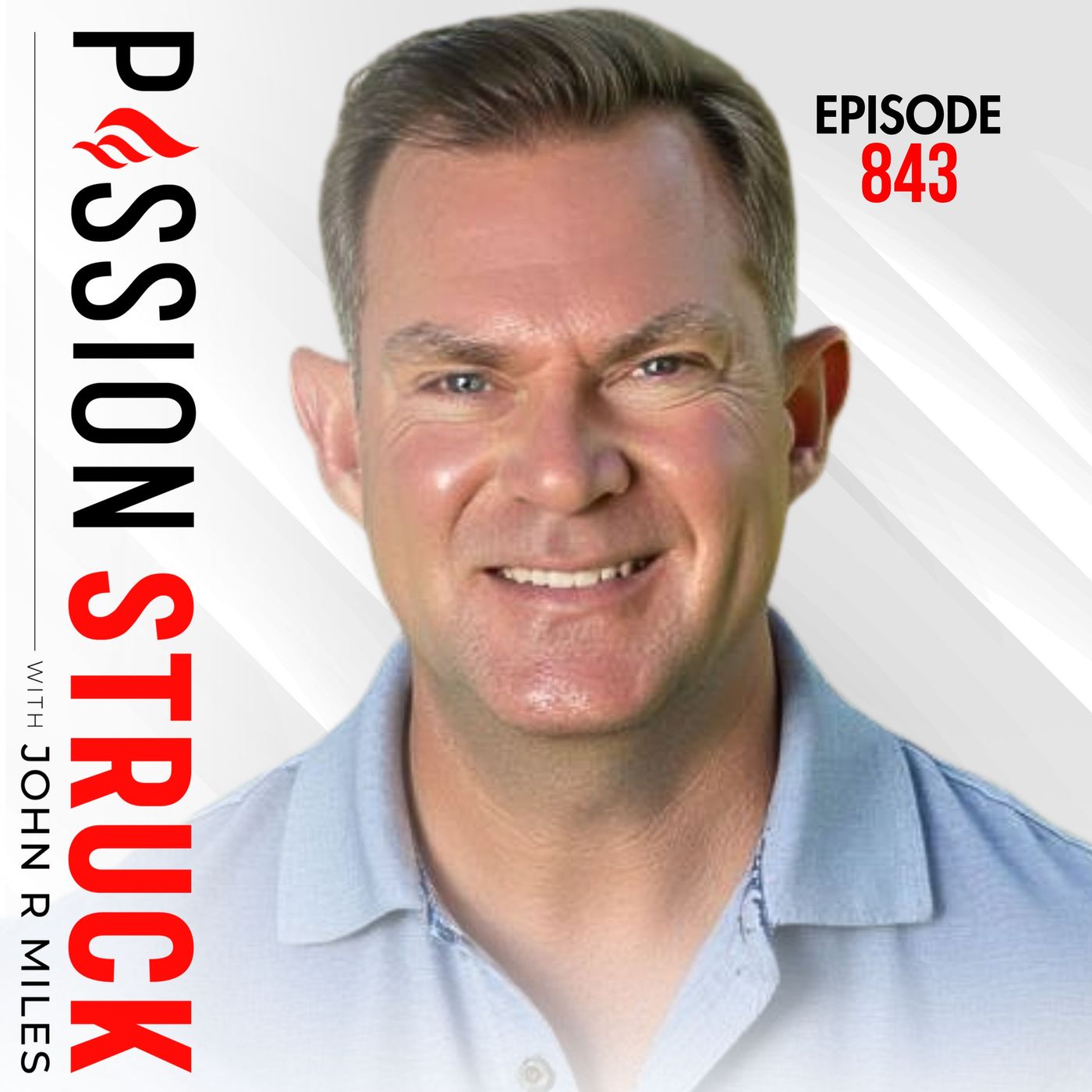
Meaning and purpose aren’t found by being “exceptional” or having a burning passion. Instead, purpose grows through ordinary connection and contribution. John argues that “mattering” is recognition that your existence counts independent of output, and he offers a practical “three clues” method plus one action within 48 hours.
No guest is interviewed. The host is John R. Miles (former Navy officer; Fortune 50 CIO; CEO; bestselling author). He references prior guests and one person he interviewed in 2022: Andreas Widmer (Swiss Guard; later CEO/professor; founded Center for Principled Entrepreneurship).
Culture confuses achievement with meaning; connection sustains life like an underground forest network; purpose is discovered by paying attention to what you can’t ignore, where your presence helps, and what you’ll take responsibility for.
Nicholas Winton rescuing 669 children via follow-through; Steve Kerr as a “not-the-star” example; Andreas Widmer’s “How may I help you?”; John’s own identity shift when leaving the military.
Written by AI. May contain mistakes.
Discussion about society's focus on extraordinary accomplishments and its impact on individuals.
“Hey, it's your friend John, and welcome to PassionStruck.”
Exploration of how to find meaning even without clear passions or talents.
“The one that asks, does my life actually count?”
Understanding how societal metrics of success can distort our self-worth.
“It takes a week of paying attention and one small action within 48 hours.”
Discussion on how everyday actions contribute to meaning in life.
“If you listen to episode 837, The Scorecard Isn't You, you recognize the machinery.”
The inspiring story of Nicholas Winton and his impact on saving children during WWII.
“Now, I want you to picture an old-growth forest.”
Advice on how to start identifying what matters in your life.
“significance looks like in real life through the story of a young clerk who never thought he had a calling.”
Learn how to identify your purpose by noticing what matters to you and the people around you.
“But the pattern fits our everyday lives.”
Understanding mattering as a two-way street can shift your perspective on significance.
“It isn't fame, status, or an executive title.”
Explore how to find meaning in everyday actions rather than titles or accomplishments.
“They're most of what a good life is made of.”

Get the gist, explore an idea or ask about something said.
 Claude
On Passion Struck with John R. Miles, what are the key points of this episode?
Searching your listeningAutomatic transcript. May contain errors.
0:00Coming up next on PassionStruck. We live in a culture obsessed with the prodigy, the founder with the billion dollar valuation, the person who seemed to know from childhood exactly what they were put on this earth to accomplish. And a lot of thoughtful people with steady jobs and good hearts are left asking, if I don't have a burning passion, does my life still have meaning? I don't think meaning works the way we've been told it does. Meaning is not an Easter egg hidden in the woods waiting for you to find it. And you don't have to be spectacular to matter. Today's episode is for anyone who's been asking that question and didn't want to say it out loud.
0:51Hey, it's your friend John, and welcome to PassionStruck. I'm so glad you're here. Whether you're a longtime listener or someone who just discovered the show, thank you for pressing play today. Maybe you've built the life you were supposed to want, but you've quietly wondered why it still doesn't feel like enough. If that's you, you're in the right place. Every week, I sit down with the world's top scientists, researchers, and thinkers to uncover what it actually takes to build an intentional life that matters. Thanks for joining me. Let's get into it.
1:32Welcome back to episode 843 of PassionStrap. We're currently in our new November series, The Art of a Life Well-Lived, where we explore how we nourish ourselves, discover what matters, and build lives guided by purpose. Earlier this week, we launched this series by looking at how we fuel our bodies and our minds. First, with Lee Cotton, in a nourishing perspective, we explored the everyday choices that shape how we care for ourselves. Then, Carly Beaudrug joined me, the creator behind PlantU, and author of the new book, PlantU Quickies. Carly has helped millions of people discover accessible, realistic ways to bring plant-based food eating into daily life without guilt or perfectionism.
2:20Both of them were making a case I like. Caring for yourself doesn't have to be perfect or complicated. It starts with small, real choices. Today, I want to take that one step further. Food feeds the body, but there's another kind of hunger. The one that asks, does my life actually count? This episode started with a LinkedIn message from a listener named Phil, who didn't ask me about productivity hacks. building wealth, or scaling a company. Instead, he wrote, John, I would love to see you create an episode specifically for the average person who is searching for meaning. How does someone who does not have a clearly defined passion, a special talent, or an obvious calling begin to discover what matters to them?
3:17How do we identify the ways we can contribute, find our place in the world and develop that sense of mattering that you so often discuss. Then he added a line that stayed with me. Perhaps there are many other people asking themselves the same question. Phil, I suspect there are. This episode is dedicated to you and to everyone walking that road. Here is what I want to offer today. Maybe the problem isn't that you haven't found your calling. Maybe you've been looking for meaning in the wrong place. And before you even have to say it, yes, I know my resume. Navy officer, fortune 50 CIO, CEO several times over, best-selling author, a guy who has held those titles telling you that you don't have to be extraordinary can sound like someone at the top of the ladder waving down.
4:14And that's a fair criticism. Stay with me because later in this episode, I'm going to tell you about the moment the ladder fell away and where I had to confront this exact question myself. Before the end of this conversation, you'll have a practical tool I call the three clues. It takes a week of paying attention and one small action within 48 hours. Before we dive in, if this conversation has you reflecting on what gives your life meaning and helps you feel that your presence matters, that is the central theme of my new book, The Mattering Effect. You can learn more in the show notes or at matteringeffect.com.
4:56Now, let's get into it. Thank you for choosing PassionStruck and choosing me to be your host and guide on your journey to creating an intentional life that matters. Now, let that journey begin.
5:12One of the most damaging messages our culture sends us is that meaning belongs exclusively to exceptional people. We celebrate the tech founder, the record-breaking athlete, and the industry disruptor. There's nothing wrong with celebrating achievement, But somewhere along the way, we began confusing an exceptional resume with a meaningful life. If you listen to episode 837, The Scorecard Isn't You, you recognize the machinery. The moment you hand people a ranking or a metric, they start wondering if they count. In The Mattering Effect, I call this the marketplace of mattering. The idea that your worth is always on loan, and you have to keep earning it through visible output.
6:03In that marketplace, if you aren't standing at the top, you start to feel secondary. And here's the underlying trap, which I explored in episode 723 back in January. Meaning tends to organize itself around contribution and action. Mattering sits underneath it. mattering is the recognition that your existence counts, independent of your output. When your worth feels conditional, meaning demands constant performance. You become convinced that unless your contribution is massive, historical, or famous, it doesn't count. And the harder we chase being exceptional, the less we notice the ordinary things we already do for people.
6:56The kindness we offer, the relationships we steady, the chaos we calm, the people who rely on our consistency. In episode 835, Dr. Nir Halavy, a professor at Stanford, and I talked about how healthy cultures give people more than one way to matter. And he brought up Steve Kerr, a bench player and sharpshooter on the championship Chicago Bulls teams, with Michael Jordan as the star. Nir told me that hearing Kier talk about the role helped him understand how people who aren't at the top of the hierarchy also find meaning and know they matter. You don't have to be the star. You have to find a way in.
7:46Now, I want you to picture an old-growth forest. Your eyes naturally look up toward the canopy, the towering redwoods, The massive centuries-old oaks. They're magnificent. But beneath your feet is a web of fungal threads wrapped around the roots of most of what grows there. They help the trees take in water and nutrients. And nobody photographs them. The redwoods get the landscape shots. The forest, though, depends on what's underneath. What if we spent our whole lives trying to be like the Redwoods and missed how much we already hold up for the people around us? Think about the neighbor who quietly checks on someone living alone.
8:40The colleague who makes a stressful office feel safer. The parent who makes a child feel safe after a brutal day at school. The friend who remembers to reach out when everyone else has moved on. These people don't get plaques. They don't give keynote speeches. But without them, the whole place falls apart. Your life doesn't gain meaning because of how high you climb. It gains meaning because of how deeply you connect. So far, we've been exploring how modern culture confuses extraordinary achievement with a meaningful existence, and why focusing only on the visible redwoods blinds us to the people who actually hold things together.
9:28Before we continue, I have a quick favor to ask. If you're enjoying PassionStruck, take a moment to follow or subscribe on Apple Podcasts, Spotify, YouTube, or wherever you watch or listen. That simple step ensures that you never miss an episode, and it helps more people find the show. And if something in this episode makes you think of a friend, a family member, or a colleague who feels stuck or overlooked, share it with them. You never know when one conversation might offer someone the permission they've been waiting for. Thank you for listening, for sharing, and for being part of this community.
10:08When we return, we're going to look at what this kind of ordinary significance looks like in real life through the story of a young clerk who never thought he had a calling. And then we'll dive into Phil's actual question. How you can begin discovering what matters to you right where your feet are planted. Now, a quick break for our sponsors. We'll be right back.
10:34You're listening to PassionStruck. Welcome back. If the forest teaches us that connection matters more than canopy, what does that look like in an ordinary human life? It looks like a man history almost forgot. In December of 1938, a 29-year-old British stockbroker clerk named Nicholas Winton was packing his bags for a ski holiday in Switzerland. He wasn't a diplomat, a politician, or a soldier. He had a standard desk job. Then, a friend called and asked him to come to Prague instead. When Winton arrived, he walked into refugee camps filled with families who had fled the Nazi takeover of the Sudetenland.
11:23He saw children sleeping in freezing mud, stripped of everything. He didn't launch an international foundation. He didn't petition governments to change foreign policy. He set up a makeshift desk in a hotel room and began taking down names. When he returned to London, he worked his regular brokerage job by day and spent his evenings typing letters on a annual typewriter, pushing through the bureaucracy, raising funds, and finding foster families willing to open their doors. Night after night of that, and eight trains carried 669 children to safety. Then Nicholas Winton went back to his life. For 50 years, he rarely spoke of it.
12:13Even his wife Greta didn't know the details until 1988 when she found a dusty scrapbook in their attic filled with lists of children's names and transit records. The BBC invited Wynton to sit in the studio audience of a television program called That's Life. life. The host, Esther Rantzen, shared his story, opened the notebook, and then asked whether anyone in the audience owed their life to Nicholas Winton. If so, would they please stand up? Dozens of men and women rose to their feet around him. Some had been sitting beside him the entire evening. Winton stood up, looked around in disbelief, and wiped away a tear.
13:08Now, if you're listening and thinking, John, rescuing 669 children from a war zone is not an average life. I hear you, but look at what Nicholas Winton actually used. a desk, a typewriter, letters, and lots of follow-up. His gift was not military heroism. It was follow-through in the willingness to keep typing after the workday was over. And look at how it began. He didn't start with a grand calling. A friend asked him to come to Prague. He saw a real human need right in front of him and he stayed. Very, very few of us will ever face a crisis on that scale. But the pattern fits our everyday lives.
14:06Picture someone who agrees to drive an elderly co-worker to chemotherapy during a rough season. No newspaper will ever write about it. but that co-worker will remember it for the rest of their life. Most of the time, meaning doesn't show up as a destiny. It shows up as a person who needs something you can do. Phil, I think I know what you might be saying right now. John, I understand I don't need to be extraordinary to matter, but I still don't know what matters to me. I don't have a burning passion. I don't have a standout talent. I don't have a calling. How do I actually begin? Almost all modern advice about purpose tells you to turn inward.
15:00Take a personality quiz, list your strengths, find your authentic passion, and then when you look inside and you don't find anything cinematic, you end up feeling more defective than when you started. So try a different direction. Instead of staring inward at an empty screen, look at how you respond to the world. Here are three clues. Clue one, what do you find hard to ignore? Not what you're good at. Not what you could turn into a business. What do you find hard to look away from? An older neighbor becoming isolated. A kid being told they aren't smart enough. The way people treat service workers when they think nobody is paying attention.
15:50Someone at work quietly feeling like they don't belong. That question doesn't ask for a passion. It asks where you can't stay indifferent. Caring doesn't always feel like excitement. often it feels like discomfort, a persistent conviction that this shouldn't be this way. And your history has left clues too. Think about the moments that stayed with you. The person who believed in you when you were terrified, or the time you were talked over and treated as invisible. Those aren't just memories. They shaped what you notice. Someone who grew up overlooked tends to spot the person standing alone at the edge of the room.
16:36Your history doesn't decide your future, but it does shape what you notice. That brings us to clue two. Where does your presence help? Think about the people who left the deepest mark on your life. Were they the ones with the most degrees, the highest titles, the shiniest resumes, or were they the ones who stayed? The people who listened without checking their watch. The ones who noticed you were hurting when everyone else walked past. The ones who gave you permission to fail and try again. So stop asking, what am I exceptionally talented at? Ask, what kind of difference can I make in the life right now in front of me?
17:25Maybe you bring order to chaos. Maybe you make outsiders feel welcome. Maybe you stay steady when everyone else in the room is panicking. Maybe you're simply willing to do the thankless and glamorous work that keeps a team or a family running. None of that will make you famous. All of it is a contribution. Now let's look at clue three. What are you willing to take responsibility for? Here's what I tell you. You don't have to know what matters most. Before you start caring, you find out by caring. Picture someone who's never felt a burning calling. One day they volunteer to tutor kids or pack boxes at a local pantry.
18:15They meet someone dealing with real hardship. They show up the next week. they start learning names. People start counting on them and slowly without ever digging up a hidden passion they start caring about whether that program survives. They never dug up a purpose. They kept showing up and it became something they cared about. Andreas Widmer who I interviewed in 2022 in episode 198 joined the Swiss Guard to protect Pope John Paul II. He told me that underneath, he felt like he was wearing a mask, pretending he knew what he was doing. The idea that he took from his discussions with John Paul II was that there has never been anyone like him, and there never would be.
19:11So if he didn't become himself, that chance wouldn't come around again. Later, as a CEO and a professor, Andreas created the Center for Principled Entrepreneurship at Catholic University. He told me, we shrink the idea of entrepreneur when we reduce it to starting a company. An entrepreneur, he said, is someone who keeps asking one question, how may I help you? I love that as a starting point for you, Phil. I'm not saying you're extraordinary. I'm saying nobody else is standing in your exact spot with your exact people. A lot of us hunt for some big meaningful why. Start with the smaller question instead.
20:02Who can I help and with what? In episode 839, John Acuff gave us a simple way to try it. He calls it auditioning a goal. Pick one new thing. Give it 15 minutes a day for seven days and see if it lights you up. If it doesn't, you have permission to try a different one. So here are the three clues. For the next seven days I want you to pay attention to these questions. What do I find hard to ignore? Where does my presence help? And lastly, what am I willing to take responsibility for? Then take one action within 48 hours. Call the isolated relative for 20 minutes. Sit down with an overwhelmed colleague and help them map the project.
20:57Show up Saturday and pick up a sponge at the shelter. You don't have to announce it to anyone. Choosing to show up and care is often how purpose catches up with you. In his work on mattering, Isaac Prilintensky defined mattering as a two-way street. Feeling valued and adding value. It isn't the same as being admired. It isn't fame, status, or an executive title. So the question you ask yourself matters. Instead of asking, what have I accomplished that makes me feel important, try asking this instead. Who experiences something better because I am in their life? Maybe it's a spouse who knows you are a steady harbor.
21:47A child who feels safe around you. A coworker who knows you won't take part in cynical office politics. A stranger whose days shifted because you looked them in the eye and treated them like a human being. Those aren't small things. They're most of what a good life is made of. We just don't hand out trophies for them. I know this experience because I had to learn it the hard way. For a long time, I defined my significance through institutions. I wore the uniform of a Navy officer. I climbed the corporate ladder. I held C-suite titles and sat in boardrooms. I'm grateful for what those roles taught me.
22:32But when I initially left the military all those years ago, the transition knocked the wind out of me. I had accepted an appointment with the FBI at Quantico. Then Congress didn't pass the budget, my class got recycled. The plan I had built, My post-military identity around evaporated overnight, and I ended up taking a job at Booz Allen, a world I had never planned to enter. On paper, plenty of people there had military backgrounds, so it looked familiar. But the ethos was different. The loyalty and sense of purpose I had known in the military weren't what drove the place. Profit and deliverables were.
23:18My yardstick for what counted as good job performance had completely changed. I'm not saying that to criticize anyone. I'm telling you because the structure that had told me what mattered was gone, and a different one had taken its place. That was the first time I had to ask who I was without it. The question underneath was simple. What happens when the uniform comes off? When the title disappears from your email signature, who are you when the institution stops validating you? If your meaning is tied to a badge or an achievement, it can disappear the moment that structure does. You can't outsource meaning, and a promotion doesn't lock it in.
24:08It comes from your choices, the values you won't trade away, and how you show up for the people around you. And once you see that, the pressure comes off. You don't have to wait until you've done something historic to feel that your presence counts. You can start that today. Phil, I want to come back to where we began. You asked how an ordinary person without a rare talent or an obvious calling can discover what matters to them. My answer is this. You don't have to become extraordinary to matter. You don't need a stage, an audience, or a title. You find out what matters by paying attention to what you can't stay indifferent to, noticing where your presence brings relief, and deciding what you're willing to take responsibility for.
25:09And then, by taking one small action right where your feet are planted. When I think back to the reason you asked me this question in the first place, I think it's because we've made this way too complicated. We've turned purpose into a puzzle you have to solve before you are allowed to start living. It's usually found in people you love, the work you do carefully, the load you help someone carry, and showing up when it would be easier to walk away. You may never be a redwood everyone photographs from the road, but you are part of what keeps the whole forest alive. Your assignment is simple. For the next week, notice three clues, and within 48 hours, take one small action on whatever you notice.
26:07this. Next time for a special Veterans Day episode, I'm joined by Major General Charles Bolden, former NASA Administrator, Marine combat pilot, and astronaut who flew four space shuttle missions. One of the most powerful stories that General Bolden shares is about initially resisting the idea of flying alongside a Russian cosmonaut, someone he had been trained to view as an adversary and what happened when they finally sat down together. It's a conversation about service leadership perspective and what it means to recognize our common humanity. And on Veterans Day it's a reminder that service is about more than the uniform we wear.
26:53I trained all my life to kill those guys and they trained all their lives to kill me and I don't want to fly with no damn Russian cosmonaut. I went to dinner prepared to go hand-to-hand combat with these guys or something. Sergei Krikulov, who ended up flying with me, came to the door and let me in. Spoke fluent English, tall. He had been a flight controller, so he was a unique cosmonaut. He was not a military cosmonaut. First thing we started talking about was our kids. I talked about Che and Kelly, my son and daughter. All we talked about that night was our families and our kids and what kind of world we wanted to leave for them.
27:27And how could we take this gift that had been given us with a wall coming down and bring our people together and make the world a better place. Before we close, I want to invite you to put these ideas into practice. If you're ready to clarify your purpose, develop your message, and turn what you've learned into a story that can make a difference for others, check out the Passion Struct Speaker School. You'll find the link in the show notes or at passionstructspeakers.com. Phil, thank you so much for writing in and for asking the question. You matter and your life is still becoming. Until next time, live intentionally and let's make this life one worth living.
28:14I'm John Miles and as always, stay curious, stay intentional, and stay passion struck.
28:29Thank you.
What if you don't have a passion, a special talent, or an obvious calling? What if you're simply trying to figure out what matters to you and how you can make a meaningful difference?
In this episode of Passion Struck, John R. Miles explores how to find purpose when you don't know what you're meant to do. Drawing on the remarkable story of Nicholas Winton, who helped rescue 669 children from Nazi persecution, John challenges the belief that meaningful lives begin with discovering an extraordinary calling.
Instead, he shares three powerful clues to help you uncover what matters, recognize where you can contribute, and start building a life of significance. You don't have to discover your passion before you start living meaningfully. Sometimes, purpose emerges through the things you care about, the people you help, and the responsibilities you choose to embrace.
In this episode, you'll discover:
Thank you to our sponsors
Uncommon Goods: Discover unique, meaningful holiday gifts from independent artists and small businesses. Get 15% off your next order at uncommongoods.com/passionstruck.
Shopify: It’s time to turn those “What Ifs” into SFX: CHA-CHING with Shopify today. Sign up for your one-dollar-per-month trial today at SHOPIFY DOT COM SLASH passionstruck.
Get your copy of The Mattering Effect
What happens when you spend so much of your life showing up for everyone else that you start to disappear from yourself? Take the 90-second diagnostic to discover whether you're experiencing the signs of unmattering.
Explore the Passion Struck Starter Packs
Not sure where to begin? Discover curated episode collections designed to help you explore the ideas, conversations, and questions that matter most.
Every human deserves to feel seen, valued, and significant. Help make that belief visible. Wear it. Live it. Show it.
Passion Struck with John R. Miles
The #1 Health & Fitness Podcast. More than 85 million downloads.
Passion Struck is provided for educational and entertainment purposes only. The views and opinions expressed by guests are their own and do not necessarily reflect those of Passion Struck or its affiliates. Nothing shared on this podcast should be considered medical, mental health, or psychological advice, or a substitute for consultation with a qualified professional.
Hosted by Simplecast, an AdsWizz company. See pcm.adswizz.com for information about our collection and use of personal data for advertising.