Ask ChatGPT

 Passion Struck with John R. Miles
12 Nov 2026 · 55m · 23 chapters
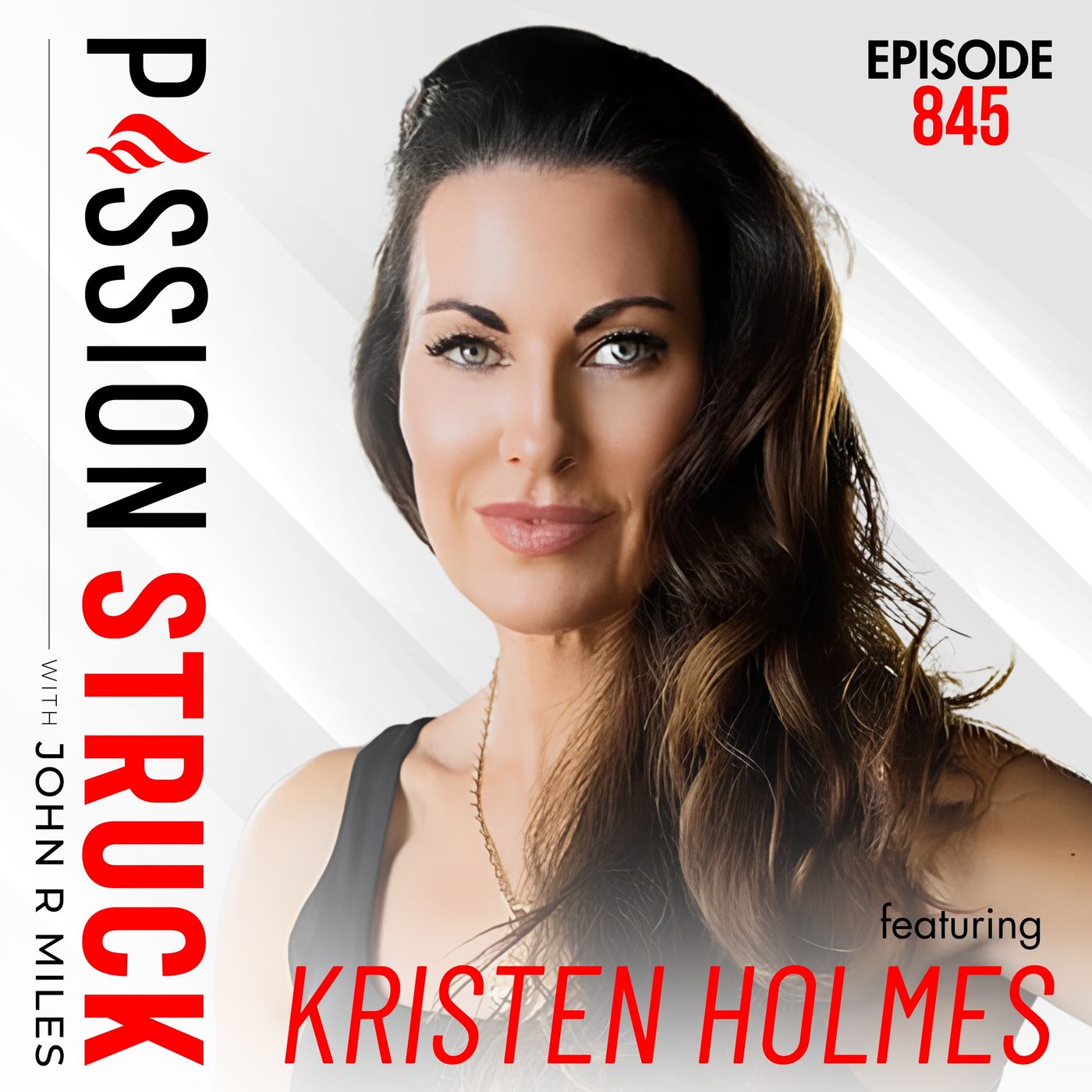
How to sustain high performance without burnout by building “capacity” (a buffer of physical/mental/emotional resilience) alongside “capabilities” (skills). Performance is framed as the expression of capacity enabled by availability to train and live under real-world demands.
sleep-wake consistency is the most important circadian behavior for resilience; circadian misalignment (including social jet lag, late meals, alcohol) fragments sleep and increases vulnerability to illness/injury and mental health issues. Identity and values must guide striving; extrinsic, outcome-tethered ambition can lead to emptiness even after success.
fixing 2–3:30 a.m. wake-ups via a consistent wake time experiment, light exposure after waking, dimming lights, and no caffeine after 2 p.m.; “availability reserve” before travel/missions/surgery; “intelligent training” domains (strength first; zone 4–5 intervals; zone 1–3 recovery movement; exercise snacks).
Dr. Kristen Holmes—Global Head of Human Performance and Principal Scientist at WHOOP; former Big Ten two-sport athlete (field hockey, basketball), U.S. national field hockey team for 7 years, Princeton coach for 13 seasons; Ph.D. psychology (University of Queensland); author of Aligned.
Written by AI. May contain mistakes.
Exploring the importance of building both capabilities and capacity for sustainable performance.
“And I would say if I were to sum it up, I think that's where we lose the plot.”
Introducing Dr. Kristen Holmes, her background, and the topic of conversation.
“Earlier in this week's conversation in episode 844, I sat down with Major General Charlie Bolden.”
Dr. Holmes shares her journey from athlete to coach to scientist in human performance.
“we nourish ourselves, discover what matters, and build lives guided by purpose.”
How Dr. Holmes developed a comprehensive approach to athlete well-being and performance.
“to be your host and guide on your journey to creating an intentional life that matters.”
Dr. Holmes discusses her transition to Whoop and applying her principles in various sports.
“I have been really trying to understand human flourishing for the better part of two decades now.”
Explaining how performance is the expression of capacity and its implications.
“I had this really poor relationship, I think, with competition and certainly with myself.”
Discussing the challenges of modern life on performance and capacity building.
“I was tortured, yet very successful by any external measure, but I could feel that I just didn't have that joy.”
Analyzing how to manage energy and the demands of life effectively.
“And really, it comes down to understanding the physiological and psychological influences that impact our energy production, our motivation, our attention.”
Learn how to balance energy demands with personal capacity to avoid burnout.
“to answer your question with the finest point, it is when our energy output, okay, the demands of our life exceed our capacity.”
Explore the significance of sleep-wake consistency for overall health and resilience.
“And alignment is what you and I are going to be talking about today.”
Understand the importance of subscribing and sharing the podcast for community growth.
“And it helps podcast platforms recognize that this show is worth recommending to other listeners.”
Discuss strategies for improving sleep and the impact of identity on performance.
“Now, let's get back to my conversation with Kristen.”
Explore the transition from seeking external validation to understanding intrinsic motivations and identity.
“But the things that I was immersed in and being an athlete were discipline, ambition, competitiveness, relentless drive.”
The importance of aligning behaviors with personal values and identity for fulfillment.
“And so I think having a process around that is critical.”
Discussing how high stakes and competition can lead to mental health challenges for athletes.
“And he works full time as the performance psychologist for Leicester rugby team, but he works in a bigger capacity for the Irish Olympic team.”
Understanding the importance of managing stress and recovery in high-performance environments.
“If you don't have a healthy relationship with striving, ambition, competition, right?”
Creating a buffer of energy and resilience to navigate life's demands effectively.
“And I think overlooked because it sounds so simple.”
Learn how to optimize recovery and resilience in high-stress environments.
“And so I think where we really can hurt ourselves is if we go into those moments already depleted, right?”
Explore the five domains of training that contribute to overall performance.
“In the same chapter, you bring up the five domains of intelligent training.”
Understand how time management affects performance and mindset.
“And these exercise snacks can be awesome.”
Discover the connection between high performance and living in alignment.
“I think, again, in the construct of modern life where we're constantly being distracted and pulled from the moment, right?”
Reflect on the importance of aligning identity with personal values.
“And this is what I hope the book can offer folks is just a little bit of a playbook or a guide to understanding how you can arrive to that place where you truly do have that self-love, right?”
Explore the concept of the true self and its significance in personal awareness.
“I can't read your thoughts, and our bodies are definitely separate.”

Get the gist, explore an idea or ask about something said.
 Claude
On Passion Struck with John R. Miles, what are the key points of this episode?
Searching your listeningAutomatic transcript. May contain errors.
0:00What's the best thing about the holidays? Snow days? Eggnog? How about cash back on just about everything you need to make the holidays feel, well, holiday-y? With Rakuten, you get cash back on gifts for everyone on your list from stores you love, like Macy's, CVS, and Ulta. You save even more when you stack cash back on top of the season's biggest sales. And beyond the gifts, you can save on decor, travel, and maybe a little something for yourself. It is the most rewarding time of the year after all. And when it's time to redeem your earnings, choose from PayPal, check, built points, or gift cards.
0:38Eligible American Express card members can choose to earn membership rewards points instead of cash back. Terms and conditions apply. Join for free at Rakuten.com or get the Rakuten app. That's R-A-K-U-T-E-N. Host Thanksgiving with industry-leading quality standards from Whole Foods Market. There are no antibiotics in their meat department ever, so carve up turkey and spiral cut ham with peace of mind. Shop organic sides like stuffing mix and cranberry sauce from 365 brand. And guess what? All their delectable pies are made with no high fructose corn syrup. Gourmet Thanksgiving flavors with the quality you want, only at Whole Foods Market.
1:20Coming up next on Passion Struck. Most of us spend a great deal of time building our capabilities. We work to become more skilled, more productive, and better at meeting the demands of our lives. But what happens when we're so focused on becoming capable of doing more that we neglect the capacity to sustain it? Dr. Kristen Holmes explains why that distinction matters and why it changes the way we should think about performance. Listen to this. I think we need to be in parallel to building capabilities. We also need to be building capacity. And I would say if I were to sum it up, I think that's where we lose the plot.
2:09And when you're not actively or intentionally building capacity, you end up adapting to a lower level of functioning mentally, physically, emotionally over time. Hey, it's your friend John, and welcome to PassionStruck. I'm so glad you're here. Whether you're a longtime listener or someone who just discovered the show, thank you for pressing play today. Maybe you've felt the life you were supposed to want, but you've quietly wondered why it still doesn't feel like enough. If that's you, you're in the right place. Every week, I sit down with the world's top scientists, researchers, and thinkers to uncover what it actually takes to build an intentional life that matters.
2:55Thanks for joining me. Let's get into it.
3:01Hey friends, welcome to episode 845 of PassionStruck. Earlier in this week's conversation in episode 844, I sat down with Major General Charlie Bolden. the former NASA Administrator and astronaut to explore service, leadership, and what it means to dedicate your life to something larger than yourself. That conversation raised another important question. How do we build a life that allows us to keep showing up for the things that matter most? Because it's one thing to have the skills, ambition, and determination to accomplish something. It's another to have the physical, mental, and emotional capacity to sustain the life you're building.
3:45And that's where today's conversation takes us. We're continuing our November series, The Art of a Life Well-Lived, which explores how we nourish ourselves, discover what matters, and build lives guided by purpose. My guest today is Dr. Kristen Holmes, Global Head of Human Performance and Principal Scientist at WOOP. Kristen is a former two-sport Big Ten athlete, spent seven years on the U.S. national field hockey team, and coached at Princeton for 13 seasons. She also holds a Ph.D. in psychology from the University of Queensland. In her book, Aligned, the Data-Driven Guide to Performance Recovery and Human Potential, she explores the relationship between our biology behavior and the way we live.
4:31One of the ideas I found especially compelling is the distinction between building capabilities and building capacity. We spend so much of our lives trying to become better at doing more, but we don't always give enough attention to whether we have the capacity to sustain it. We get into circadian alignment, sleep consistency, recovery, resilience, and the role our identity and values play and how we show up every day. But beneath all of that is bigger question. Are we building a life that is actually aligned with who we want to become? Kristin brings a fascinating combination of scientific research and lived experience to this conversation and I think you'll come away thinking differently about what it means to perform well and live well.
5:20Before we get started, a quick word about PassionStruck Speaker School. If you've ever felt that you have an important message to share but want to become a more confident, compelling speaker. The PassionStruck Speaker School can help you develop your message, strengthen your storytelling, and communicate with greater impact. You can learn more through the link in today's show notes or go to passionstruckspeakers.com. Now, let's get into my conversation with Dr. Kristen Holmes. Thank you for choosing PassionStruck and choosing me to be your host and guide on your journey to creating an intentional life that matters.
5:55Now, let that journey begin. What's the best thing about the holidays? Snow days? Eggnog? How about cash back on just about everything you need to make the holidays feel, well, holiday-y? With Rakuten, you get cash back on gifts for everyone on your list from stores you love, like Macy's, CVS, and Ulta. You save even more when you stack cash back on top of the season's biggest sales. And beyond the gifts, you can save on decor, travel, and maybe a little something for yourself. It is the most rewarding time of the year, after all. And when it's time to redeem your earnings, choose from PayPal, check, built points, or gift cards.
6:36Eligible American Express card members can choose to earn membership rewards points instead of cash back. Terms and conditions apply. Join for free at Rakuten.com or get the Rakuten app. That's R-A-K-U-T-E-N.
6:55I am absolutely thrilled today to have Dr. Kristen Holmes on PassionStruck. Kristen, so great for you to be here. Thank you so much for having me, John. I'm truly honored. Well, as I've been doing more and more of the research on you, I found that you and I are in many ways kindred spirits. We are. I have been really trying to understand human flourishing for the better part of two decades now. But I always love to hear origin stories. What got you so interested in a similar topic? Yeah. I started out as a double sport athlete in the Big Ten, playing field hockey and basketball. And then I went on to compete for the United States national team, the U.S.
7:35national team in the sport of field hockey for seven years, and then went on to become a head coach at Princeton University. And I guess if you think about that chunk of time, which is basically a decade and a half, I was always trying to understand my performance or the performance of my student athletes. And I think one of the aspects of my own career that I think really absent was I was really outcome focused as an athlete and which isn't entirely bad, but I think it really pulled a lot of the joy away from competing, right? I had this really poor relationship, I think, with competition and certainly with myself.
8:15And I think I really evolved. And when I became more aware of this kind of obsessed focus on outcomes and how that probably wasn't the path to flourishing for sure. And it certainly wasn't the path to any sort of happiness. I was tortured, yet very successful by any external measure, but I could feel that I just didn't have that joy. And when I got, when I retired from playing and I began coaching, I really started to think more about, less about outcomes and more about the process, which was so cliche, but it, the process is really all that matters. And all of a sudden I was in charge of all these young women and I wanted them to experience joy.
8:58And I wanted them to grow as young women under my care. I wanted to keep them healthy and safe to compete and to do all the things that they wanted to do as a student athlete. So I really started to change my framework from, okay, how do we win to exactly how do we flourish? And that was the basis for the performance education that I built while I was coaching at Princeton. And it was really, I was there for 13 seasons and testing this performance education platform, building some technology alongside it. I really wanted to operationalize it. So the performance education. And so I built an application that was pulling in lots of external data that was able to tell the athletes how they were sleeping and how their training and their hydration levels and how many calories they need to be ingesting based on practice.
9:50And we had a mental health component looking at all these kind of psychological factors that we know are correlated with human flourishing. And so I put all of this into an application that my athletes were using. And so I guess I really wanted to think about their experience as holistically as possible. And so in really building the skills that they needed to not only thrive as student athletes under my care, but give them an education that would carry them for the rest of their lives, right? And really, it comes down to understanding the physiological and psychological influences that impact our energy production, our motivation, our attention.
10:25And when you understand that, you have way more control over your performance and certainly way more control over the trajectory of your health. So that's really what I built at Princeton. And then I arrived at Whoop a decade ago and have been able to test all the principles that worked in my environment at Princeton. Well, lo and behold, they work at Ferrari. They work at Pauly St. Germain. They work at Florida State University, at Penn State, fencing, to basketball, to the Knicks, to the Clippers, like all of these principles apply, which is really exciting and which led to me writing the book Aligned.
11:00You and I have something else in common that I didn't know. I didn't realize you did the two sports. I went to the Naval Academy and I was recruited as a cross country and track runner. Amazing. I kept getting stress fractures and after spending months just running in place in a swimming pool for month after month, I just decided it was time to pivot. So you will never guess what sport I pivoted to. Okay. Swimming? Rugby. Oh God. Talk about the, it's hard to not get injured playing rugby. So I pivoted of all sports to rugby and I became a winger and fullback. Wow. And last year, our team was indoctrinated into the Rugby Hall of Fame of all things.
11:53That's incredible. Yeah. I love that. Right behind me. Oh my gosh, that's amazing. I love it. But I never was anywhere close to the level that you competed at. but no are you kidding that's incredible but that background i think is so important because it it really has guided a lot of my thinking on human performance and how do you get employees to perform at their best how do i perform at my best etc so speaking of that after everything you've learned studying millions of people's physiology what do you think we fundamentally misunderstand about what it means to perform at our best? That's a really big question.
12:40I think we need to be in parallel to building capabilities. We also need to be building capacity. And I would say if I were to sum it up, I think that's where we lose the plot. And when you're not actively or intentionally building capacity, you end up adapting to a lower level of functioning mentally, physically, emotionally over time. And that's certainly what I have seen in the data when, and just to zoom out a little bit, and I guess if maybe a definition of performance is helpful, I really see performance as the expression of capacity, which is enabled by availability, just simply being available to train and compete and to engage in life under real world conditions, right?
13:36We're not in labs, right? We are engaging in the world where we have to travel, we have to parent, we have to, we have all of these responsibilities right over the course of our daily life. So if we are able to express capacity consistently, we are going to perform. And also if we are able to express capacity consistently, we reduce illness and injury burden. We avoid disease, right? So I think what happens or what to answer your question with the finest point, it is when our energy output, okay, the demands of our life exceed our capacity. And so we need to be thinking, how do I actively build capacity so I can manage, I have the energy to manage the demands in my life.
14:24And I think because of the way modern life is structured. It just doesn't set us up for success. We have access to light 24-7. We have access to food 24-7. We can teleport, right, to across the world, right? And to think that we know that we just haven't adapted, right, biologically to that, right? And anyone who's experienced jet lag can feel that lack of adaptation. But yet we do it, and it comes at a cost. That's just the reality. And it's not to say that we don't travel or we shouldn't travel, but we need to be aware of making sure that when we go into those, what are going to be significant bouts of circadian misalignment or physiological perturbations, we have built capacity.
15:10We have buffer in the system, right? We have built resilience so we can manage those perturbations without it making us sick or getting injured, right? Because we're vulnerable in these moments, And you can imagine there's, you don't even have to travel to have jet lag. There's this thing called social jet lag, which a majority of humans engage in, where they have very different weekend schedules from weekday schedules. And that misalignment creates mental, physical, and emotional, has mental, physical, emotional consequences. So these are all the things that I research. I've published many papers on these topics.
15:49I'm talking about it through the lens of a scientist and then certainly see it when I'm working in an applied, from an applied perspective as well, when I'm working with various athletes who are in corporate executives who are having to manage huge travel demands. I have to do it as well. I was just in London last week. But the reality is, I think there's a lot that we can do to ensure that we have enough buffer in the system to manage these various perturbations. It's just understanding how to apply your effort. When I love you use the word misaligned, your brand new book is actually the opposite.
16:23It's titled Aligned, the Data-Driven Guide to Performance Recovery and Human Potential. And alignment is what you and I are going to be talking about today. But I want to start alignment with part of my own alignment and tie this into Whoop. You probably didn't realize this, but I was a user of Whoop for about three years. I was brought in some beta program that the VA was doing. Yeah. Gosh, like 2000, this is a while ago, 2017, maybe 2018. Yep. It was right around that time. I was really interested in it because I mentioned the rugby experience. Yeah. Some head trauma. has led to a bunch of head trauma.
17:11Sleep and sleep recovery became very important to me. And I've been three years completely sober. And one of the reasons I did that was I was using the WHOOP data to analyze what was my sleep pattern like when I was drinking versus when I was not drinking. And it wasn't only the drinking, it was the environmental consequences of drinking because it was disrupting my circadian rhythm and so i was trying to figure out because i think sleep is one of the most fundamental things you got to get right would it take for me to lock in that circadian rhythm and lock in full nights of sleep and what was very important to that journey maybe you can just talk about that for a second because i know how much you love talking about circadian rhythms.
18:02What should listeners learn from my experience and take from that? Yeah. Well, first of all, my PhD dissertation was titled circadian alignment predicts physiological and psychological resilience in humans. And the studies that I ran were on military operators, healthcare, frontline healthcare professionals, and professional athletes. And then my fourth study was on just regular James and Joes. So other folks on our platform who were not in those cohorts, but what was very consistent across, and I think what listeners need to understand is that the proxy for circadian alignment, which again predicted both physiological and psychological resilience, the proxy for circadian alignment is sleep-wake consistency.
18:48So when you engage in things like late night meals and alcohol, right, close to bed, maybe you're dehydrated, you're underfueled, overfueled, going into your sleep, that is going to create potentially a more fragmented sleep experience, but it also makes sleep-wake consistency more difficult. So that is falling asleep and waking up at regular times. And if I were to say, if I get to the punchline right in the beginning and people, hopefully they listen to the whole podcast, but if they turned it off right now, one of the things that I would want them to know is that sleep-wake consistency is the most important behavior we have as human beings as it relates to both physiological and psychological resilience.
19:33And there is lots of evidence outside of WHOOP, outside of my own research, that also validates this. We know that when we look at mental health disorders, PTSD of course is a precursor to substance abuse. It's a precursor to depression and anxiety potentially, right? It's the kindling, right, to some of these kind of disorders. And we know that circadian misalignment is present in all of those psychological or psychiatric disorders, all of them, right? So getting aligned from a circadian perspective is one of the most important things that we can do as humans and the path to building capacity back to our earlier point, right?
20:16We're building capabilities, skills, we're learning how to kind of develop the skills and expertise to navigate our jobs and sports or high school, whatever it is, right? That needs to happen. But in parallel, we need to understand the behaviors that actually give us that foundation of capacity that prevent us from having these issues that we're talking about, right? Whether it's mental health or injury or illness, right? This foundation of circadian alignment puts us in a far better position to ensure that we are protected or not vulnerable to that laundry list of things that I just read off, listed off.
20:56Before we continue, I have a quick favor to ask. If you're listening to PassionStruck and haven't followed or subscribed yet, take a moment to hit that button. It's free. It just takes a few seconds. And it helps podcast platforms recognize that this show is worth recommending to other listeners. That means your follow can help these conversations reach someone who hasn't discovered PassionStruck yet. And if something in this episode is making you think about a friend, a family member, or someone who's constantly pushing themselves, but rarely gives themselves permission to recover, share this conversation with them.
21:34It might be exactly what they need to hear. Thank you for listening and for helping us grow this community. It really does make a difference. Now, a quick break for our sponsors. Thank you for supporting those who support the show.
21:58You're listening to PassionStruck right here on the PassionStruck Network. Now, let's get back to my conversation with Kristen. The other thing I found for me personally is falling asleep was never the issue. The issue became I would wake up somewhere between 2 to 3.30 in the morning and then would have very difficult times getting back to sleep. And so when you're losing that on the regular, man, it kills you. It does. I can talk about that if you want. And that is super common as we age. And I would say that our ability to stay asleep, and you said it's easy to fall asleep. Well, most folks are walking around with some level of sleep debt.
22:41That is, they're not getting the sleep that they need at night. So by the time bedtime rolls around, they are exhausted and they fall asleep. But because they have this circadian misalignment, their cortisol levels are not in the correct pattern or the correct rhythm. And as a result, your cortisol rises too early. This is a circadian issue, right? And so you, it's how you address that is you back up to the moment you wake up in the morning. So what you want to do to fix the 2am wake up call, right? That none of us want. And if you want to sleep through the night, it starts with setting alarm at a time that you can reliably wake up at for two weeks.
23:26And this is the experiment that you want to run. If you want to avoid the 2 a.m. wake up, right? This is what I'm going to tell you exactly what you need to do. So let's say 7 a.m. is the time that you want to wake up. So you want to make sure that you're not waking up before 6.30 or 7.30. Or if your body naturally wakes up at 6 a.m., wake up at 6 a.m., right? And then maintain that. And 16 hours later, generally speaking, most humans are going to feel sleepy. Now you don't want to sabotage that natural pressure for sleep. So that means no falling asleep at 7 PM on the couch. That means which you might have to fight for the first few days because you're out of rhythm, right?
24:05But you basically stay awake, but you do start to dim your lights after your last calorie, which should be a couple hours before you intend to fall asleep. Right. And no caffeine after 2 PM. There's some simple basic stuff, right? But the things that I just told you about are the things that help us fall asleep and stay asleep and prevent that 2 a.m. wake up. The other thing that's really central is after you wake up, get lots of natural and artificial light. Light is the most important time giver that we have. And we want to bathe ourselves in as much natural light, not just when we first wake up, but throughout the day.
24:43And indeed that contrast between day and night is also what helps facilitate a restful night's sleep. And we want as much daylight, as much artificial natural light during the daytime and as much darkness during the nighttime. And that's why I said modern society, modern life doesn't set us up for success because we can bypass all these natural cues. But to think that doesn't come at a cost, you're off your rocker, right? And I think that this is one of the biggest, to go back to your earlier question about what are the things people are getting wrong, we are bypassing these natural light-dark cycles consistently.
25:22And that makes us metabolically vulnerable. We are cardiovascularly more vulnerable. We are going, when we're bypassing these signals, we move less during the day, right? We see this in the data. And you make poor food choices, right? When you are misaligned, when you're bypassing these natural signals, your ghrelin and leptin, your hunger and satiety hormones do not work as they should. Your dopamine levels do not work as they should, right? Like your motivation, reward, drive, all of those things are compromised when you have misaligned circadian rhythm. So to me, it's chapter three in the book.
26:01I start with stress and recovery. I do a little intro, stress and recovery. And then chapter three is on sleep and circadian rhythms. And I talk about this whole notion of chronotypes and we do have preferences, morningness and eveningness, which are facilitated by modern life, right? If we were all thrown on a mountain, okay, in Colorado without access to any artificial light, and we didn't have no one on this mountain had sleep and circadian disorders, We're just healthy, normal adults. We would all fall asleep about 3.3 hours after the sun sets within 30 minutes of each other. So this idea that we've got these wildly egregious eveningness and morningness is not reality, right?
26:45That is a modern construct that we have invented to rationalize our behaviors, right? That are actually making us sick. So I tackle this head on in the book, but I think it's just important to note, right? And it's important to get our children aligned, right? As soon as possible. My daughter's a freshman in college and she's a rower. So she has very early mornings, but she knows when she doesn't get this normal kind of rhythm, she doesn't feel good, right? And what is amazing for both my kids is they know what they need to do to feel good. And they know, and does that require them to be able to have conversations with roommates and make better choices?
27:25Yeah. But that's also part of managing your performance and managing the trajectory of your health. So is it possible? It absolutely is, right? When you understand these kind of very basic components. Kristen, I'm going to switch gears on you. I want to talk about identity. So one of the paradoxes I'm interested in is this. And I was someone who strove to be extraordinarily successful. And I think part of this was my military and naval academy pedigree. But the things that I was immersed in and being an athlete were discipline, ambition, competitiveness, relentless drive. But the farther and farther I got into my career, the very things that were making me successful were eventually becoming liabilities to me.
28:22And so I was wondering if you could go into the difference between healthy ambition and unhealthy ambition and how to balance that. Because I think that alignment is so important for many high performers. It is. And I this has been my life's work, frankly, is just I had that identity collapse when I retired from the U.S. team. I think sometimes it takes a tragedy in our life to force us to come to ground. And that to me was the death of my mom. I had just graduated. I was coming off the World Cup at one of the biggest events in my sport. I was a starter. I had reached everything I thought that I wanted to.
29:10And after my mom passed, I realized that everything that I was pursuing was based on achieving and these external measures of success. And I realized that none of that motivation was intrinsic. It wasn't coming from inside me. It was the external validation that I was like chasing and it was exhausting and unfulfilling. And in the end, I just, I didn't feel I didn't like myself. In fact, I hated myself. I just didn't, I just felt, I think I just, I craved, I'd look at some of my teammates and I'd look at the people around me and they just seemed so happy, so joyful. And I just felt there was a purity in how they approach things.
30:05And I just didn't feel that. And I think that this is consistent with, I think a lot of high performers and high achievers. And it's that very simple kind of intrinsic versus extrinsic motivation, right? And we know that the healthy version, right, is really feeling like your behaviors are aligned with who you aspire to be in the world, right? Which is closely tied to your identity, right? And I just didn't have a really fully formed concept of who that person I aspire to be was. It was everything I thought everyone wanted me to be, but it wasn't really who I wanted to be. So I had to basically start from scratch and reconstruct my own identity.
30:47And I write about this in the book a ton, and I developed some programming around it when I was at Princeton because I really wanted my athletes to have a sense of their identity, knowing that your identity isn't fixed. It's going to evolve as you grow and evolve, but just this awareness that there is this person that you aspire to be. And that has to come from your beliefs and your values, things that are core to you, right? And that have nothing to do with anything on the outside, right? That kind of has to be your North star and that has to be the thing that's guiding you. And so for me, over the course of the last 30 years or so, like it's really been about what do I value, right?
31:31Who do I really aspire to be in the world? And are my behaviors consistently a reflection of who I say I want to be? And I audit that like very closely. And I think once I was very honest about that process and was able to really identify what it is that I care about and who I want to be, that alignment really did follow. And so did slowly my access to joy. Of course, I have down times and as just a part of the human experience and I evolve and change and relationships evolve and change. And I kind of have to be agile and flexible, but I think I know at least the questions to ask of myself. And I know how to look at myself and my life, honestly.
32:15And I think once you kind of get a handle on things like ambition and striving, which are not bad, but they're put into context in ways that are, I think are, I hate to use the word healthier, but are not training us, not pulling us to exhaustion, not burning us out, but not taking us away from the capacity to be present, engaged in our life. And yeah, I go through all the steps of thinking about identity. It's something that you create. It's almost one of those things where you kind of have to consciously go through this process because that's ultimately that identity who you aspire to be in the world is ensuring that your behaviors are linking to that is, I just don't know if there's really anything more important than that at the end of the day.
33:00And so I think having a process around that is critical. Absolutely critical. It's the entire basis on which my upcoming book is built. The mattering effect. I love that title. Oh, it's so beautiful. I wanted to ask you, do you happen to know Jerry Hussey? No. So he is basically the Michael Gervais of Ireland. And he works full time as the performance psychologist for Leicester rugby team, but he works in a bigger capacity for the Irish Olympic team. And I remember we were having this discussion and he said, there's such a psychological difference between an athlete who set in their mind that they have to win the gold medal.
33:48And the other one who knows that they're enough and they're competing for the joy of it. And he's like, the person who's going for the gold medal is never, ever going to be enough. I know. And most likely will never achieve it. Do you find that to be true as well? I was watching, have you watched Weight of Gold? The documentary that is narrated by Michael Phelps. Yeah. Yeah. I was in the Olympic pipeline for my whole life, practically. And in one way, shape or another, as an athlete and a coach, as a coach on the national team. And I don't think that there's a truer statement. And I think Weight of Gold, if folks haven't watched it, it's an incredible documentary.
34:33It's so sad, but it gets at exactly what you just identified is this being tethered to outcomes in ways that are totally maladaptive, right? And that's when you look at essentially these folks who have achieved enormous amounts of success, right? Michael Phelps, you're like, how could he possibly not love himself, right? Or feel like he's enough or worthy. But sure enough, he didn't feel worthy. He didn't feel like he was enough, right? And it's consistent across all of the athletes who were in that documentary, right? And many of whom took their own lives because of the emptiness they felt after winning a gold medal or after competing in the Olympics, right?
35:15Which should be the pinnacle of anyone's sporting career. But it's this attachment to outcomes and feeling like if I don't achieve this thing, I am going to disappear. And then I think the other side of that is you actually achieve it. You still don't feel good, right? And that's because to your point, like all of the infrastructure that you built around that moment was tethered to the outcome, not because it was helping you live your values, right? With more joy and more energy. It was just the pursuit of the thing. And I think understanding the two sides of motivation in that context are everything.
35:57And I feel like that's where sports psychologists and mental skills coaches and the folks like Michael Treve are just are so important in those environments because a lot of us get to that level on a path that is one that isn't adaptive. right? And it's like, it gets you that far, but that collapse at the end is almost inevitable. If you don't have a healthy relationship with striving, ambition, competition, right? It's like, you have to figure that out right along the way. And it doesn't need to be perfect, but having some sort of framework to think about process versus outcomes and living your values through that competition is just critical.
36:44Having spent a lot of time with veterans, especially after they get out, it's like being a professional athlete or being a high caliber athlete because you're used to performing. You're used to having all that, to building that capacity. And then suddenly it's all gone and you're thrown into this chasm. And I think the other thing for me, and I know for a lot of veterans, a lot of high performers, is there's a huge difference between being inactive and being restored. When I think of our restoration, that restoration is part physical restoration. It's part psychological, but it's also part emotional.
37:33So how do you recommend that people attack it so they're doing all three? That's where sleep is so vital, right? Because that mental, physical, emotional, and I would argue spiritual restoration is happening during deep sleep. And so protecting that, I don't know that there's really anything more important for recovery and restoration and building capacity, maintaining mental, physical, emotional health, than getting consistent quality sleep. And some of that, we talked about some of the tactics around the circadian behaviors, which are huge. I would also add that activating and deactivating the nervous system over the course of the day is also a super important strategy, right?
38:22We often, I think we stress stress and stress isn't bad, right? But I think where it becomes problematic in a lot of these populations you just identified is that stress is not accompanied by appropriate levels of rest, right? And we can get a lot of it during sleep, but we actually need to build in some of it during the day, right? So we can prevent this buildup of stress to a point where we can't fall asleep or we have that 2 a.m. wake up. So this negative stress accumulation is another reason why we might, because we're jamming our cortisol so high all day and not balancing that with sympathetic activation, right?
39:05If we think about this from an autonomic nervous system perspective, we're taxing the sympathetic branch, right? We've got high heart rate and a lower heart rate variability, which is a feature of the sympathetic activation, a feature of stress, which isn't bad. But again, when we are asking our system to stay activated at that level all day long, it's going to come at a cost. And oftentimes that means we can't fall asleep or we're so exhausted we fall asleep, we can't stay asleep. So building in many moments of rest throughout the day is so important. And I would argue that's one of the core skills of the 21st century.
39:46As we think about the traps of modern life, right? We can just, today's a really good example of, I have just had back-to-back meetings. It was just one of those days. I traveled tomorrow. I traveled yesterday. So it's just how it is. But I've been, I went for like a two minute walk. I've been doing some breathing. I work from home today so I can have a little bit more control of my downtime. I really think strategically in how do I recharge my battery just a little bit throughout the day so I can avoid that stress accumulation. Right. And so, yeah, hopefully that's helpful, but I think thinking about it in those terms of activation, deactivation, managing stress proactively with many moments of rest is honestly so important.
40:33And I think overlooked because it sounds so simple. Yes. Where I wanted to lead this is I'm going to read from your book. You say my why is simple to reduce illness and injury and have the energy to live my values every day. A great why. And then you go into this thing called the availability reserve, which is, it reminds me of some of kind of the mattering effect, because what you're trying to do here with this availability reserve is create a surplus of strength, energy, and resilience so that you can draw on those things and moments of heightened life demands. Yes. And I think that this is so important because what you're pushing for here is, is it's because it comes a way of life that you learn how to create this availability reserve so that when you need it, if I'm interpreting the book, right, you know how to call upon it.
41:31Is that a good way to think about it? I think so. Yeah. And that's exactly the availability of reserve is essentially this buffer in the system, right? So when life does throw you for a loop, maybe it's a parent who gets sick and you have to manage not only your job and your children, but also caregiving for caregiving, providing care for a sick parent, things that happen in your life that throw you out of your routine or out of your whack. If you have reserve, you have buffer in the system, you have this availability reserve, you're going to be more equipped to handle that. And so I think where we really can hurt ourselves is if we go into those moments already depleted, right?
42:14And if you just think about it from a simple travel perspective, if I know I'm traveling overseas and I'm going to face the circadian misalignment, I try to make sure I'm as resilient as possible going into that travel. And I work with military operators, right? Same thing before a mission set where we know there's going to be sleep deprivation. We try to get as much buffer in the system, as much resilience as possible, right? So that means really stable sleep, wake times, getting enough time in bed, being like as in the green as possible, going into that mission set. Same with surgeons, right?
42:47Surgical teams, I work with various surgical teams, acute care surgeons across the country and same sort of thing. How do you spend your downtime, right? When you are in a high stakes, high stress environment, how you spend your downtime is everything. And that's really how you build this availability is ensuring that your downtime is spent restorative, right? And that might be building in the right kind of hormetic stressor. So exercise, even though that's a stressor at the right doses, the right volume, the right intensity, that is going to make you more resilient. So yeah, so this availability reserve is how do you create this buffer in the system so you can engage with the demands of life and not get sick and not get injured.
43:34In the same chapter, you bring up the five domains of intelligent training. I was hoping you might be able to go through the five. Yeah. But maybe for someone who's listening, once you describe them, is one of them a better starting point than the others? That's a great question. I would say, so the five domains are resistance training, zone four and five are just high intensity training, zone one, two, two, and three. So we're lower intensity training. Those are cardiovascular pieces and strength piece, and then exercise snacks and recovery. So those are the five domains of intelligent training.
44:09And they all matter, I think, for building resilience. They matter for brain health. They matter for reducing cardiometabolic risk. They matter for mental health, right? They all matter. But I would say starting with strength training is probably the most important. And this can be body weight. It could be squats, body weight squats. It could be pushups, just even picking up a gallon of milk, right? And just moving your body and creating resistance, right? It doesn't take that much, but I think quality muscle tissue is one of the most important things to navigate modern life, right? Because we don't, we're not on the Savannah.
44:51We're not walking an average of seven miles a day. We're not carrying water buckets for miles where we're getting that resistance. We are driving in cars. We can sit literally all day, right? A lot of us do not have quality muscle tissue. And that is, I think one of the big, one of the root causes of the cardiometabolic crisis, which is, I think at this epidemic level, you know, proportions at this stage. So, yeah. So I think resistance training is one. I think the other, getting out of breath a couple of times a week, you don't have to do a lot, but just 15 seconds, as hard as you can on a bike, right.
45:31And then rest for a minute, 15 seconds again, do that six times, right. As you get fitter, increase that volume a little bit, right. Or maybe then you start to go 30 seconds really hard and then rest for a couple minutes and then do that again, six, seven times. As you get fitter, you can go longer and faster and harder, right? And you should see that correlate with improvements in VO2 max. If you are able to track things, you'll see reductions in resting heart rate. All of these things are correlated with all-cause mortality, right? So we reduce our risk of serious chronic diseases when we start to think intentionally about how we're moving our body.
46:08And then zone one, two, and three, just our daily movement, just walks with friends and long runs, long bikes. These are so restorative to a point where I actually call them more recovery modalities as opposed to exercise or training because they are so recovery promoting. And I certainly see that in our data at WHOOP, especially zone two, controlling for all of the kind of recovery detractors. When I isolate zone two, you can pretty much guarantee a recovery above your average baseline. So it's very, very recovery promoting. And then exercise snacks is a big piece of the equation, right? Which is just trying to rethink, make movement a way of being in the world.
46:55And this is, I think where you're going with availability reserve is this idea of just thinking about availability as this kind of way of being in the world, right? And available for the people and things that you care about, right? So understanding what are the things that I care about? What do I want to be available for? And how do I back into that? And these five domains of intelligent training are kind of a path to backing into that. Of course, the circadian stuff and sleep and circadian rhythms, the stress rest, right? Management really key, but getting a program am together is absolutely critical.
47:27And these exercise snacks can be awesome. Today, I have a kettlebell and I just did 20 kettlebell swings times five. And I did a hundred just over the course of the day. It's four o 'clock and I'm going to go for a little run at five. This is a great way to these little exercise snacks to build in movement throughout the day. And I had one other thing I wanted to extend this to. In chapter six, you're talking about trust and fear, but you bring up the importance of time. And I think this is so important because what our relationship with time, like positively or negatively shapes our performance, our mindset and resilience.
48:05Those five dimensions you just mentioned are extremely important, but if you're not managing your time with them, you're at a real deficit. And I was just hoping you might be able to cover that for a couple of moments. I think about, there's essentially 12 dimensions in the book. And one of the dimensions is time. And I think about time, expectations, attachments, memory through the lens of trust and fear. And there are how we think about time. We are either accessing emotions of fear or accessing emotions of trust. And when we are present and engaged in our life, we are present. We're not thinking about the future.
48:45We're not thinking about the past. we give ourselves an opportunity to access emotions of trust, right? Fear generally doesn't live in the present as much, right? It very much lives in the future, the rumination that's happening about the future or thinking about the past in ways that are forcing into unproductive rumination about something in the past, right? So I think the challenge with time is, am I able to be present, right? Do I have the capacity to be present? And I think that's really what that dimension gets at. And I give a lot of examples from athletics and just regular life on what this looks like in practice.
49:30And it doesn't mean that we constantly have to be in the present, but I think if people were to zoom out and think about the moments where, you know, time just kind of flows and they feel really engaged, it's those moments where they're just present and they're not thinking about the past and the future, but are just in the moment with that person. And I think this is a muscle that we develop, right? Being able to direct our thoughts and attention in the moment. Gosh, I just don't know that there's anything more important, right? But that's really hard to do. I think, again, in the construct of modern life where we're constantly being distracted and pulled from the moment, right?
50:09To serve other folks' agenda, whether it's the app on the phone, scrolling on social media, whatever that thing is, right? That's keeping us from engaging in our lives. I always call it the pinball life. Yeah, that's a great analogy. Well, Kristen, we're getting close to the end. You have spent your career helping people perform at their highest level, and you've done that across every level. But after everything you've learned about stress, recovery, physiology, identity, and values, do you think the ultimate goal is actual high performance or is high performance simply what becomes possible when you're living in alignment?
50:50Oh, well, you said it just beautifully there. I don't think I can say it any better, but yeah, I think when you're operating from this truly integrated center where you feel like you're enough, yeah, like alignment is possible. And I think what's exciting is when you have that alignment, like performance and outcomes and they happen for you. And what's great is if they don't happen, you're still okay. And I think that's where I finally have gotten to in my life is that I don't need the thing to prove or provide evidence that I'm good enough. And this is what I hope the book can offer folks is just a little bit of a playbook or a guide to understanding how you can arrive to that place where you truly do have that self-love, right?
51:46And that compassion for the self. And I think it's easier to be really hard on ourselves, right? But I think if we can figure out what we care about, to your point, understand our values, get aligned with the things and the people that we care about, create, design a life around that. Gosh, I think that's when we can really feel that joy and sense of peace. Awesome. And then lastly, where's the best place people can go to learn more about you? Yeah, well, I definitely write a ton on LinkedIn. I publish a lot of articles on there and I have, I have a WordPress, it's called Feel Notes on Being Human.
52:24And this is where I share a lot of my poetry and my drawings. And so I think people might really enjoy that. And then Instagram, Dr. Kristen Holmes, I definitely publish like all of our research that comes out. I talk about our findings and a lot of them are focused on behaviors that we know are improving health and performance. I try to distill that down on Instagram. So yeah, LinkedIn, Instagram, Kristen Holmes, Dr. Kristen Holmes. Don't confuse me with the CNN correspondent who is also named Kristen Holmes. But yeah, I'm the other one. Kristen, it was such an honor to have you today. Thank you so much for joining us.
53:03Such a pleasure, John. And I can't wait to get your book. I'm so excited to read it. And just thank you for all your good work. You just are putting out just such helpful content for the world. So thank you. Oh, thank you so much. It really means a lot. Kristen, and thank you for this conversation. One of the ideas I'm taking away is that we can spend years building our capabilities without paying enough attention to the capacity that allows us to use them. We become more skilled, more productive, and more accomplished, but that doesn't necessarily mean we're becoming more resilient or more fulfilled.
53:39And I think that's an important distinction because living like you matter isn't simply about how much we can accomplish. It's about whether the way we're living is aligned with what we value, whether we're taking care of that capacity in order to sustain us, and whether we're building a life we can actually want to inhabit. I also appreciate Kristen's reminder that our identity isn't fixed. We can examine the beliefs that shape how we live, decide what matters, and begin aligning our daily choices with the person we want to become. If you want to explore more of Kristen's work, her book is Aligned, The Data-Driven Guide to Performance, Recovery, and Human Potential.
54:21We'll include a link in the show notes. And if you're an organization looking for speakers who can bring meaningful conversations about purpose, leadership, human potential, and intentional living to your audience, I invite you to explore PassionStruck speakers. We work with thought leaders and experts who help people and organizations think differently about how they live, lead, and work. You'll find more information at passionstructspeakers.com. And that brings us to our next conversation. What happens when you achieve almost everything you've ever set out to accomplish, but still find yourself searching for something more?
54:58In episode 846, I'm joined by Pat Croce. He's been an entrepreneur, sports medicine pioneer, best-selling author, martial artist, adventurer, and president and owner of the Philadelphia 76ers. But behind all those accomplishments is a deeper personal story about discovering that external success doesn't necessarily lead to lasting happiness. In his new book, Enjoy Yourself Now, Pat shares 66 shifts that helped him move from chasing the next achievement to discovering a deeper understanding of himself, happiness, and the present moment. It's a fascinating conversation about the difference between changing your circumstances and transforming the way you see yourself in the world.
55:47I hope you join us. When people say myself or yourself, they just think it's the mask you talked about. the persona. No, this self is your spiritual self, your divine self, the self that you and I share. We share this self. We don't share the mind. We don't share the body. I can't read your thoughts, and our bodies are definitely separate. But that which is aware, the self that is aware, where as Ramana Maharshi said, God, self, and guru are one. That's the self. We are, and that's what I want people to be able to enjoy because once you recognize your true self, once you, even Socrates and the Temple of Apollo, the know thyself, that's a prophetic statement of those two words.
56:40Until next time, I'm John Miles. Stay curious, stay intentional, and stay passion-struck.
56:48Thank you.
What if the secret to performing at your best isn't pushing harder but becoming more aligned?
In this episode of Passion Struck, John R. Miles sits down with Dr. Kristen Holmes, performance scientist, VP of Performance at WHOOP, and author of Aligned: The Data-Driven Guide to Performance, Recovery, and Human Potential, for a powerful conversation about the science of human flourishing.
After years competing at the highest levels of field hockey and coaching elite athletes at Princeton, Kristen discovered that achievement alone doesn't guarantee happiness, fulfillment, or even a healthy relationship with yourself. Today, her research and work with millions of physiological data points reveal how the behaviors we practice, the identities we construct, and the rhythms we follow shape our energy, resilience, and potential.
Together, John and Kristen explore why so many high achievers become exhausted chasing external validation, how to rebuild an identity grounded in values rather than outcomes, and what it takes to create the physical, psychological, and emotional capacity to navigate life's demands.
In this episode, you'll discover:
Kristen offers a compelling reminder that the ultimate goal isn't simply to achieve more. It's to build the capacity to live your values, enjoy the process, and remain available for the people and experiences that matter most. When your identity is grounded in who you want to be, your behaviors reflect what you care about, and your body can support your life, performance becomes something that emerges from alignment rather than something you have to sacrifice yourself to achieve.
This conversation invites you to reconsider a fundamental question: What if the greatest measure of success isn't what you accomplish, but how fully you are able to live?
Thank you to our sponsors
Uncommon Goods: Discover unique, meaningful holiday gifts from independent artists and small businesses. Get 15% off your next order at uncommongoods.com/passionstruck.
Shopify: It’s time to turn those “What Ifs” into SFX: CHA-CHING with Shopify today. Sign up for your one-dollar-per-month trial today at SHOPIFY DOT COM SLASH passionstruck.
Get your copy of The Mattering Effect
What happens when you spend so much of your life showing up for everyone else that you start to disappear from yourself? Take the 90-second diagnostic to discover whether you're experiencing the signs of unmattering.
Explore the Passion Struck Starter Packs
Not sure where to begin? Discover curated episode collections designed to help you explore the ideas, conversations, and questions that matter most.
Every human deserves to feel seen, valued, and significant. Help make that belief visible. Wear it. Live it. Show it.
Passion Struck with John R. Miles
The #1 Health & Fitness Podcast. More than 85 million downloads.
Passion Struck is provided for educational and entertainment purposes only. The views and opinions expressed by guests are their own and do not necessarily reflect those of Passion Struck or its affiliates. Nothing shared on this podcast should be considered medical, mental health, or psychological advice, or a substitute for consultation with a qualified professional.
Hosted by Simplecast, an AdsWizz company. See pcm.adswizz.com for information about our collection and use of personal data for advertising.