

 Passion Struck with John R. Miles
24 Nov 2026 · 52m


 Add vo to ChatGPT or Claude to ask about everything you hear
vo listened to this episode to put together the overview and transcript, so there may be the odd mistake.
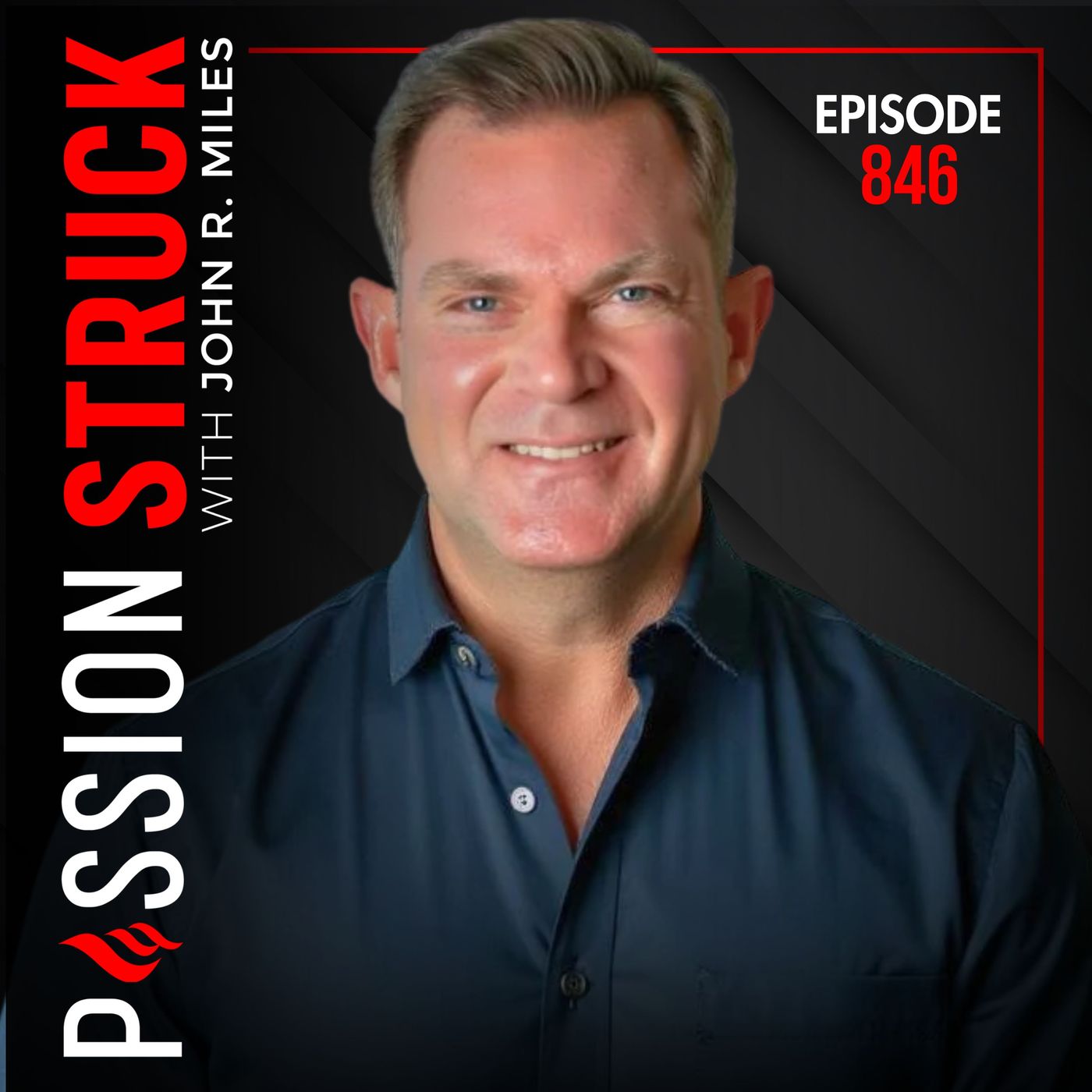
Larry Hagner discusses how men slowly “drift” into disconnection from their families, how to break old patterns, and how fathers can learn skills (not just rely on love) to build an “epic legacy” as a father and husband. He contrasts providing with being present, and argues selflessness can become self-neglect via the “provider trap.”
Larry Hagner is founder of The Dad Edge and author of The Pursuit of Legendary Fatherhood. He has spent 15 years helping men become more connected fathers, husbands, and leaders. He has four sons (plus a daughter) and has been married since age 28.
Drift is gradual and “sinister,” often normalized through work/home isolation, poor physical/emotional/spiritual health, and shallow male friendships. Marriage and fatherhood skills are learnable: connection, communication, patience, and psychological safety. Self-care increases capacity; burnout reduces patience.
COVID-era conversation with his wife that dissolved his fear; childhood “slow fade” stories involving stepfather and biological father; a 2011 incident where he spanked his son in anger and then founded Dad Edge; a “good dad” daughter-raising example via a coach’s ritualized dates and respectful standards.
0:00There's plenty to be thankful for this Thanksgiving week. Big games, major headlines, entertainment buzz, and plenty of other predictions to trade in a live market on Kalshi. America's number one prediction market platform all week long. Thanksgiving Day, Buffalo takes on Kansas City. Buffalo is currently trading at 54 % to win. A$100 trade pays out over$140 if they come out on top. Download Kalshi. Use code hoops to get$25 when you trade$25. K-A-L-S-H-I. Koushi. Trade what's next. 18 plus only. Restrictions and eligibility requirements apply. Event contract trading involves risk and may not be suitable for all investors.
0:37Koushi products are not available in all jurisdictions. Prices, values, and available markets may differ from those mentioned. For more information, see koushi.com slash regulatory. At Whole Foods Market, chef-inspired flavors meet industry-leading quality standards, especially for Thanksgiving. There are no antibiotics in their meat department, ever. So their fresh turkeys and spiral cut hams bring rich, satisfying flavors you can taste in each bite. No compromises, just quality and peace of mind you can share with every guest at your table. Celebrate the season with a holiday spread from Whole Foods Market.
1:12Bombas knows cozy winter footwear inside and out. Inside, warm merino wool, soft sheepskin shearling. Outside, fluffy sherpa and smooth suede. Inside, layers and layers of luxe cushioning. Outside, sturdy soles and grippy bottoms. Bombas Slippers and Shoes, a cozy way to stay in or step out. Visit bombas.com slash audio and use code audio for 20 % off your first purchase. That's B-O-M-B-A-S dot com slash audio. When purchased equals when donated, always. Girl, I just woke up. I'm so beat. Hey, what was the name of that drink you talked about? You know, the one all about energy, positive vibes, fruity flavors, and no sugar.
1:52What was that name again? Never mind. Got it. It's flirt, right? Do you think I can find it in Chicago? Girl, I found it. They got strawberry fling, guava lava, sunset squeeze, and berry tempting. You were right. It's so good. I'm ready. Let's go. Learn more at drinkflirt.com. Coming up next on Passion Struck. What happens when you look at your child and suddenly realize you're becoming the very person you promised yourself you'd never be? And what if the patterns you'd swore you'd break are the very ones you're passing onto the people you love the most? Take a listen to this. Oh my gosh. I was like, what have I done?
2:37Who have I become? Who is this guy? Could I actually learn how to be a good dad? Could I learn how to be married? And I went on this quest and the answer to that question is yes. You can actually learn all of these things. Hey, it's your friend John, and welcome to PassionStruck. I'm so glad you're here. Whether you're a longtime listener or someone who just discovered the show, thank you for pressing play today. Maybe you've built the life you were supposed to want, but you've quietly wondered why it still doesn't feel like enough. If that's you, you're in the right place. Every week, I sit down with the world's top scientists, researchers, and thinkers to uncover what it actually takes to build an intentional life that matters.
3:24Thanks for joining me. Let's get into it.
3:31What Larry just described is something many of us struggle with, recognizing patterns in ourselves that we swore we'd never repeat. But here's an important question. What if being a good parent, a good partner, or a good leader isn't something we're simply supposed to know how to do. What if these are skills we can actually learn? My guest today is Larry Hagner, founder of The Dad Edge and author of The Pursuit of Legendary Fatherhood. For the past 15 years, Larry has helped men break old patterns and become more connected fathers, husbands, and leaders. In this conversation, we explore the slow drift that can pull us away from the people we love, why providing for your family isn't the same as being present for them, and how the way we show up today shapes the legacy we leave behind.
4:27I'm John Miles, and this is PassionStruck episode 850. And if conversations like this challenge you to think differently and show up more intentionally in your life, I invite you to explore the PassionStruck Podcast Network. We're bringing together thoughtful voices and original conversations about human potential, leadership, relationships, health, and what it means to live a more meaningful life. Because becoming the person you want to be doesn't happen in a single moment. It happens through the ideas you consider, the choices you make, and the conversations that challenge you to grow. You can discover more at passionstrucknetwork.com.
5:06And that's exactly where we're going into today's conversation. Let's get into it. Thank you for choosing PassionStruck and choosing me to be your host and guide on your journey to creating an intentional life that matters. Now, let that journey begin. Girl, I just woke up. I'm so beat. Hey, what was the name of that drink you talked about? You know, the one all about energy, positive vibes, fruity flavors, and no sugar. What was that name again? Never mind. Got it. It's Flirt, right? Do you think I can find it in Chicago? Girl, I found it. They got strawberry fling, guava lava, sunset squeeze, and berry tempting.
5:45You were right. It's so good. I'm ready. Let's go. Learn more at drinkflirt.com.
5:56I'm absolutely thrilled today to welcome Larry Hagner to Passion Struck. Larry, so great to see you again. John, what's going on, man? Thanks for having me. This is awesome. I'm so happy to have you here today. and I'm going to start at a really interesting place. Today, we're going to be talking a lot about a book that I found to be awesome. It's called The Pursuit of Legendary Fatherhood, Break Old Patterns and Create an Epic Legacy as a Father and a Husband. What makes this interesting is about 30 minutes before this, I interviewed Terry Cole on how to break old patterns that dealt with her father.
6:37So I feel like we're having two back-to-back conversations from different angles of fatherhood and the importance of it in shaping our kids. And I know for you, you have four boys. Is that correct? That is correct. Last time I counted anyway. Yeah, I was blessed with both a son and a daughter. So I got to see both sides of it. But as you look at the four sons, has there been a big difference in each of those sons and how you have to parent them? Or has it been pretty consistent? No, they're all four totally different. My two oldest, they're 20 and 18, couldn't be more different young men. And then those two are different from my 12-year-old.
7:21And my 10-year-old is definitely different than all of them. There are some similarities, but man, totally and completely very individualistic young men. I hear you. My son and daughter couldn't be more different themselves, both from a personality standpoint and also from a physiological standpoint. It's so interesting. My brother and I are completely different. When we were growing up, my brother could eat anything he wanted and he would have a six pack abs. he's also three four inches taller than me and i would eat a carrot and seem to put on five pounds you and i cut from the same cloth that i grew up that same way i'm like all my friends can eat anything but man i've got to pack all weight same as you so it's interesting i was on your podcast and i introduced your audience to a professor at cornell named tom gillovich who's been studying people that are approaching their deathbed and he found that 76 of them all have the same regret and that's not becoming their ideal self and so when i opened up your book the introduction has a quote in it and the quote is the definition of hell is being on your deathbed and meeting the man you could have become author unknown but very much ties into the work of tom gilovich which impacts both females and males when you go back and you read that quote yourself what does that register for you?
8:54How does it hit you in the heart? So when you came on my podcast and you shared that 76 percentile, that was literally the quote that came to my mind. I didn't even mention it when you were on my podcast, but that was a quote that has been burned into my heart. I think for the better part of, I would say eight years. And I actually, I think, and I didn't know at the time, but I think it was Napoleon Hill that might've said that quote, but I wasn't really sure when I wrote the book. So I just put author on them, but I'm almost positive it was him. But I'll never forget hearing that for the very first time.
9:25I heard another, I was listening to another podcast and the guest, his name was Dominic Cortuccio, said that quote. And I remember exactly where I was in my car. I remember the left turn that I was making and I got chills all over my body just listening to that quote. And I was like, whoa, that's a showstopper. And it's really interesting because a woman I used to date when we were in high school. We dated for three years and I don't talk to her anymore, but we still remained in contact into our adult life. My wife and her were actually friends and kind of not that big of a deal when you go back to high school relationships, but she was in palliative care for five years.
10:03So she got to talk to so many people that were literally on the brink of death or dying right there in front of her. And so I think writing a book right now of things that people hold on to. And that is correct. But when I think about that for me in my life is I think about that on the daily. I like to go to bed and I do. My kids will attest to this. I want to go to bed completely and totally exhausted, physically, mentally, emotionally, maybe even spiritually. That to me is a good day. And I think about that quote is, I will leave nothing on the table today because I don't know what tomorrow will bring.
10:41so I'm going to bring my best self to my kids that doesn't make me absolutely making mistakes I make gosh I make countless mistakes on the daily but one thing that I'll share a quick story with you when we were going through COVID and this is when I think you're you know you're married to the right woman we're going through COVID I think we're like a month into it everybody was on lockdown and I remember kind of being like in my head one night as we were getting ready for dinner and my wife was like, are you doing okay? And I was like, yeah, not really. And she's like, what, what's going on? And I was like, I see the world on fire right now.
11:16And to be honest with you, I'm really scared. I'm really uncertain. What if this is the end? And I thought my wife was kind of like going to dive into that pool of victimhood and pity with me. And she didn't. and she said yeah what if it is and she didn't say another word i was like yeah what if it is she goes well do you have control over that i was like no i don't she goes yeah i don't either am i sad am i stressed out about things that are going on i am but she's let me ask you this if the world ended tomorrow any regrets and i looked at her and i felt like my entire life just flashed before my eyes.
11:58And I was like, I started asking myself questions really quickly. I'm like, well, how's my connection with my kids? How's my connection with my wife? How's my faith? And I was honored to say back to her, I actually don't. I actually don't. When my life could end tomorrow, I think I'd be at peace. And she's like, then who cares? And I don't know what it was, But then suddenly like that stress, that overwhelm just completely dissipated. And I'm not going to sit here and tell you like rainbows, sunshine and unicorns like that. Do I do I wish I would have done some things different? Sure. Am I going to die with some regrets?
12:37Probably. But it's also because I have super high standards and I know I make mistakes. But can I say that maybe 90, 95 percent of my life, did I leave anything on the table? I would say actually, no, like I've lived really intentionally. And one other quick story to just kind of hit this home. I've been doing this mission called the Dad Edge now for the better part of 15 years. If I hadn't done this mission, I'd be divorced. I would have two boys and not four. I would probably be living in a ton of regret. We just sent my first son away to college a month ago. And as much as I was sad to see him go, my wife asked me the same questions.
13:16He's leaving. Do you have any regrets? and I really thought about that. I thought about all the intentional time that I spent with him, like all the super intentional connected time that we scheduled, that we had together and as sad as heartbroken I was to see him leave for school and not to see him every day, I was able to answer that question the same way. I actually don't have any regrets. I feel like I did not leave really anything on the table with him. So I hope that answers your question. Thank you for sharing that. And as I was going through the book, you write, speaking of fathers, about the moment you saw your own father lose the sight or lose the light in his eyes.
14:02And when I was talking to you on your podcast, I brought up a concept called the slow fade, which feels awful similar to what you were writing about here. and what did you see happening to him and what did it teach you about how a man can slowly disappear from his own life without realizing it are you cool if i tell two stories here sure the man that i was referring to actually wasn't my real father he was my stepfather my mom and biological father got married really young in 1971 they were 21 and then four years later they had me and then right after they had me they went through a really bad horrible divorce and my dad left.
14:42I had no recollection of my dad whatsoever. It wasn't until kindergarten, it was about five years old, and I started seeing dads come to my kindergarten, picking up my friends from school. So I knew what a dad was. I knew I didn't have one. There's no pity or anything like that. In fact, in my five-year-old brain, I thought moms just go out and find dads. Like my mom hadn't found my dad yet, which didn't bother me. I was like, oh, she just hasn't found the guy yet. And one Friday night when I was five, my mom told me, hey, I'm going to have a friend over for dinner tonight. I work with him. He's a really special friend and I want you to meet him.
15:11I think that was her way of saying, I've been dating somebody I work with and now it's time for you to awkwardly meet him. And this guy walked in my house, never seen a male walk in my house, except for my grandfather. And this guy comes in a trench coat, three-piece suit, double Windsor tie, mustache, briefcase. He was a white collar, dad, a software engineer. And as soon as I saw this guy, I was like, oh yeah, that's a dad. All right. That guy is a dad. And I shook his hand. And literally the first thing that this guy heard out of my mouth was, are you going to be my dad? I'm just looking at him beaming.
15:40Are you going to be my dad? And six months later, my mom married him and it started out really well. And I remember the first year was great. They were married a total of five years. And I remember being about seven or eight years old. Like when things started to really go bad, he was a heavy drinker. My mom was a heavy drinker. They fought all the time. Cops would show up to my house for domestic disturbances. They'd beat the snot out of each other. He would beat me up. It was a pretty bad deal. And I think I was about seven, eight years old when I just saw this man completely crumble. And some of the symptoms were he wouldn't really interact with me.
16:13He was always in his head and he was constantly being disrespected and emasculated by my mom. He was not very nice to her. And I just saw this shell of a man that transpired. And then when I was 10, they got divorced. So that's the answer your first question, but the story, I think it's takes a bit of a different turn here, right around 10 years old when they got divorced. I started asking my mom, where did I come from? Because I know this guy wasn't my real dad. I had no idea she was married before. And then she told me two years later when I was 12, I serendipitously ran into my father and I won't go into the details of that.
16:47It's too long, but I had an opportunity to meet him and he lived three miles from us, had no idea. He was remarried at the time, had a two-year-old son, another one on the way. And I saw him every single week for about six months when I was 12. And I was over the moon, just euphoric. I'd finally been reunited with my dad. And right around month six, I kind of saw the same thing happen, like this sort of glimmer in his eye just faded. And he kind of started to distance himself from me. I saw him less and less. And then I didn't hardly hear from him. And I'll never forget being 12. And I picked up the phone one day and I said, Hey, did I do something wrong?
17:20Are we okay? And I don't don't even remember what words happened, but that was the end of our relationship. He left again. My mom continued to date really toxic, crazy men. She got married a total of three times. When I was 18, I left for college and then moved back home after that. I met my now wife in college and we got married when I was 28. We were pregnant with our first kid when I was 30. At the time, I was in a really great career, medical device sales, making great money. My wife was still working at the time. And I was in a Starbucks for a business meeting. And one of the people that I worked with, she and I were friends outside of work.
17:57So her and her husband and me and my wife would go on double dates all the time. So she knew this story. And we're sitting there having a meeting. And all of a sudden, I look up and who came walking through the coffee shop of that Starbucks that morning, good morning coffee was my dad, my real dad, the one I hadn't seen since I was 12. and I immediately knew who he was and without going into detail we ended up meeting and reuniting that day that was 21 years ago we've now had a relationship now for the past 21 years and I haven't seen that glimmer disappear yet which is good and I don't plan to it's a really unique relationship but here's what I'll also tell you about when a man loses that that glimmer in his eye.
18:40My dad and I have made amends. I've forgiven him. We're excited about whatever years we have left. I also see a man who probably carries the weight of making those two decisions. And I know it, my dad's pretty protective of his heart, I would say, and his ego, not in a bad way. But there's been a couple of times that he's shared with me the worst two mistakes he's ever made in his life. And I know he still carries that to this day. Thank you for sharing both those stories. And I'm so glad you got to reconnect with me. Larry, do you think most men actually wake up one day and decide to become disconnected fathers and husbands?
19:24Or how does this light disappear? What's your thought on that? The very first part of my book is called, so it's divided up into four parts, the pursuit of legendary fatherhood. So drift, husband, father, leader. And the first quarter of the book is all about the drift. And the drift is like this more very slow, very sinister thing that I think happens to a man over time. Let's just take the average guy who maybe works white collar, blue collar, whatever. We go into high school, we go into a trade school or go to college and then we start a career. When we're in high school and when we're in college, I think it's very easy for us to make friends in relationships because we're all on common ground, right?
20:06And we're all open to that. When a man gets married, starts his career, he tends to go inward. 70 plus men report of feeling lonely. 82 % of men go to a job they either dislike in some way or completely despise it. So 8 out of 10 men are going to a job that they really don't like or find fulfilling. We tend to spend our life into one of two places. We either are at work or we're at home. And I think one of the very first symptoms that a man sees is he allows his physical body to go. And I say that with a caveat. I don't think you need a six pack to be a good dad. I'm not saying that at all. But I think a lot of men will allow their physical bodies to go.
20:45And I think that's one of the first symptoms of the drift is like you ask most men, they don't feel confident in their own skin. They don't feel comfortable in their own skin like they used to. Add to it two thirds of couples that stay together in marriage. We all know the divorce rates, 50%, but the 50 % that stay together, two thirds of those couples are stuck in either roommate syndrome where everything is logistical and it's about the kids and about the chores, the roles, the activities, that kind of thing. And then another within that same camp is total disconnection, physical, mental, emotional, intellectual, spiritual.
21:17Only 12 % of couples that walk down the aisle and say, I do, can actually identify their relationship as working. And if you really think about those statistics, that's about the same success rate as a Navy SEAL candidate going through BUDS, about a 90 % failure rate. It's almost the exact same thing for marriage. For marriages, they're working really well. So most men are in a situation where their marriage isn't ideal. Their relationship with their wife isn't everything that they wanted. So they tend to normalize that and are like, well, I guess this is just marriage. And then that doesn't feel really good.
21:48And then add to it a guy who wants a deep connection with his kids. patience is one of the main things that we, I think we have a hard time with. And I think a lot of that's too, if we're not only impatient, sometimes with our kids, we're really self critical and we're really impatient with ourselves. We don't give ourselves a whole lot of grace on top of that. Steven Mansfield wrote a book and that's terribly long ago. He's, I think he's 70 plus years old. Now he's been in men's work for 40 years. He calls most men's relationship post college or trade school as rusty, meaning they don't have a whole lot of depth to them.
22:21You sit with your buddies at the bar, you watch the UFC fight, drink a few beers, you kind of complain about life, you enable each other. And that's the extent of our friendships. And that's why I think so many men find themselves lonely. And I think what happens over time is what gets normalized gets normal. And we think, well, this is just life. And I always want to positively disrupt that and say that doesn't have to be your life. But it happens so slowly and so sinister. And then when a man looks around at all of his other people in his community and people are living the same life, he then thinks, well, this is just life and it doesn't have to be life.
22:56But I think that is what the drift is. Before we get back to the conversation, I have a quick favor to ask. If you're enjoying Passion Struck, please take a moment to follow the show on your podcast app. It's free. It takes just a second and it means a great deal to us. Following helps you stay connected to new conversations as they come out, and it helps more people discover the show. And if you know someone who could benefit from this conversation with Larry, share this episode with them. Maybe it's a father who's trying to be more present, a husband who wants to strengthen his relationship, or someone working to break patterns they don't want to pass on.
23:34That's what the Passion Struck Podcast Network is all about, bringing meaningful conversations to people who are ready to grow and make a difference. Thank you for being part of this community. Now, a quick break for our sponsors. Thank you for supporting those who support the show.
23:53Girl, I just woke up. I'm so beat. Hey, what was the name of that drink you talked about? You know, the one all about energy, positive vibes, fruity flavors, and no sugar. What was that name again? Never mind. Got it. It's Flirt, right? Do you think I can find it in Chicago? Girl, I found it. They got strawberry fling, guava lava, sunset squeeze, and berry tempting. You were right. It's so good. I'm ready. Let's go. Learn more at drinkflirt.com.
24:27You're listening to Passion Struck on the Passion Struck Network. Now, let's get back to my conversation with Larry. I think to your point, there are so many of those relationships where you think you have this close friends group, but there's a huge difference, men or women, between actual friends and drinking friends. And I know I've gone through this in my life because I found that I just wasn't getting fulfilled by the conversations I was having with some of the groups that I was hanging out with. And I started to realize that the conversations I was having were really surface level and they really were revolving around sports activities, specifically watching sports like NFL games and stuff like that.
25:17And they really weren't more of the deep experiences that I was hoping for. And when you reach those points, I just find that you have to start shifting your environment and start shifting the friend group, or it's just going to bring more and more of that to you. Have you ever experienced that yourself? Oh my gosh. In fact, it's kind of interesting you're talking about that. So the majority of my relationships now are more that iron sharpens iron. I'm here to support you. I'm here to contribute to your life. I'm also here to be a support for other men. But I think this Friday night, I'm actually going out to dinner with a couple of guys I went to college with.
25:56I've known these guys for the better part of 30 years, but they're not my 3 a.m. calls. They're also probably not the guys that I'm going to lean into for really deep things. The relationship, quite frankly, hasn't changed much since we graduated college. In fact, I can probably guarantee that the majority of the conversation will be when we have dinner on Friday night will be about the good old days. We'll have surface level talk about other things. I could change that conversation because I know how, but we'll see if I do or not. But I know if I don't, it's literally going to be the exact same memories.
26:33We're going to yuck it up. We're going to laugh. We're going to have fun. You did this back then. You did that back then. And that's kind of the extent of it. But I think that for the majority of men, that's a lot of their relationships. Unfortunately, I think you're right. I want to go back to here for a second. You say that your childhood could have become an excuse for you to play the victim, but you eventually decided to use those experiences as an education and what not to do. And I experienced this myself. I realized early, I think my son was like 12 months to 18 months. And I realized painfully that I was picking up a lot of my father's parenting.
27:14And so I had to really make a conscious choice that I was going to parent different. But when did you find that your past stopped being an explanation for who you are and started becoming an excuse for who you remain? Or when did you come through that chasm yourself? Yes, I can give you all the specificity. It happened back in 2011. In fact, if you look on the back of the book, the first sentence of describing the book is, I became the monster that I swore to protect my kids against. And when I got married, like I said, I grew up with a mom who got married three times. I grew up with a revolving door father figures of guys that she dated.
28:04Every guy was the same kind of guy, just very toxic. I think my mom was kind of like a fixer. And every guy had some sort of substance abuse issue. Usually alcohol. I'm thinking there were a few guys in there doing drugs and that kind of thing, but there's always a substance. And when I got married, I literally made three promises to myself. I was like, okay, if I get married, it's going to be one time. Hopefully. Second promise is I'm going to be a good dad. And then the last one was I'm never going to hit my kids out of anger because I was hit a lot. I broke all three of those promises. I didn't do anything abusive.
28:35I wasn't the drunk who did anything that was absolutely terrible. I just wasn't really there. I wasn't educated on how to even, none of us are educated on how to be married. We spend, I quote this in the book, there was a study done that most couples will spend on average 1500 hours to plan for the wedding day and approximately three hours for the marriage. And it's really backwards when you think about it. It's just many of us are not taught how to be married. So I wasn't the best communicator. I would isolate. I was disconnected. I was the ultimate nice guy. I would do things to get. A lot of resentment built up between my wife and I for the first half of our marriage.
29:11Being a good dad, I was an okay dad. Maybe on a scale of one to five, I was a good four and a half on a good day. It wasn't that I was abusive, but I wasn't the most patient dad in the world. And I had no idea how to connect with these kids. And then never hitting my kids, this is when Dad Edge actually started. So my oldest at the time was six. My youngest at the time was four. He's now 18. and one night we were packing up our house because we were getting ready to move and I had spent three hours packing up their playroom like dismantling toys and getting everything together put them in boxes and I was in a really bad headspace that day like I said I was in med device sales and on that day I found out I lost my largest customer to one of my competitors made up like 60 percent of my monthly revenue because I was all commissioned and I also thought I was gonna get fired over that and I was just really in my head my wife was a stay-at-home mom So there was a lot of pressure and no excuse for what I did.
30:05My son came down four years old and he wants to play in his playroom. And I looked at him and I said, hey, I left all these toys out for you over here. You can play with. I was like, dad spent a lot of time putting all these toys in boxes, taking things apart. I was like, please don't get anything out. And I took a break and I left. And I realized like now being a dad for two decades, that's like someone who's been fasting for 10 days, going to an all you can eat buffet and saying, don't eat anything. He was the dumbest thing ever. So I come back downstairs. What do you think happened? The four-year-old pulls out the majority of everything that I had been packing.
30:37And in a rage, I turned him around and I spanked him. And unfortunately, it got worse. I spanked him so hard, he hit the ground. He fell in my hands. And luckily, he didn't get hurt. He did land face down. He landed on carpet. And immediately, I was like, what did I just do? And I went to go pick him up. So I went at him like to pick him up, like with my hands out. He thought I was coming at him to hit him again. He literally shut his eyes and shook. And I was like, oh my gosh. I was like, what have I done? Who have I become? Who is this guy? And it was that night that I was like, this has got to change.
31:19Like I know everything what not to do, but this is about as useful as you go into Home Depot and getting that new Weber grill. and you open up the manual in the box and the manual says, here's 100 ways not to put this together. Best of luck. You'll figure it out. That's what it felt like. So I realized in that moment that it's not enough to know what not to do. You have to know what to do and what good looks like. And then that night I literally started, I was just like, could this be learned? Could I actually learn how to be a good dad? Could I learn how to be married? And I went on this quest and that was 15 years ago, still to this day, haven't stopped learning.
31:54and the answer to that question is yes you can actually learn all of these things and not only am I continuing to learn them but we teach them that in our community. I think one of the most important ideas from the book is that love comes naturally but the skills don't so yes things like parenting connection communication patience psychological safety are all things that have to be learned. And boy, for me, that was a hard distinction because back in the day, my kids are 22 and 28. I certainly didn't find many books or resources that taught those things. So a lot of it was learned through trial and error, some better than others for sure.
32:39So I want to talk to you about something that I felt myself fall into. And that is something I saw represented to me through most of my childhood, and that is the provider trap.
32:57And like what I saw with my father is that for almost my entire childhood, he neglected his physical, mental, emotional, and spiritual health, maybe less of spiritual health because he had made a promise that if he got back from combat, that he would be devoted to going to church every single week, and he has kept that promise to God. But I think he had this belief, and it became something that became my belief, that sacrificing themselves for their family was noble. So when does selflessness become self-neglect? I think that's such a good topic. If you look on social media, I'm a part of other dad groups just as a participant.
33:49And sometimes I comment on things, sometimes I don't. But I watch the behaviors of men out there. and I was wholeheartedly 10 feet deep into exactly what I'm about ready to explain. So I was that guy who was very self selfless, right? I wanted to provide, I wanted to do everything for my family, nothing for myself. And what I found was in those seasons was, is I actually had very little to actually give because I wasn't taking care of myself. And I think it's really dangerous because I did this exact same thing to what I'm about ready to explain. I think a lot of guys and I see it in social media posts.
34:29I see it in conversations. It's like I work 70 hours a week and I'm not saying you shouldn't work hard. I think it's great to work hard. I work 70 hours a week. I don't have time to take care of myself. I have to take care of everybody else. And we wear that as a badge of absolute nobility. Again, I'm not taking away from a man who needs to work hard for his family. I work hard for my family too, but I'm not going to do it at the sacrifice of myself or my family. Because I think when you have a man who literally sacrifices himself, literally throws himself on the sacrificial sword with the mindset and the intent, I have to do this to take care of everybody else.
35:12you're usually going to find a man who's been pierced by that sword with a lot of burnout, a lot of dad burnout, a lot of husband burnout, a lot of overwhelm and a lot of stress. And usually it's also accompanied with not the most patient individual in the world, but yet look at how hard I'm working. I'm like this because of everything I'm doing. And I think we really need to be careful that we need to check that your self-care is almost like not carrying cash anymore, right? It's just like carrying credit cards. In other words, if you're at a fair, a county fair, which most of them don't take credit cards and your kid's like, Hey, can I have five bucks for the ring toss?
35:50And you're like, son, I don't have five bucks. I only carry credit cards. If you don't have five bucks to give him, he's not going to have five bucks. And the same goes for self-care. So if we decide to pour into ourselves just a little bit physically, mentally, emotionally, spiritually, just a little bit, we actually have more capacity for the ones we love most. I actually have asked my own family this and I've, I've encouraged other clients to ask their family is that, Hey, when you see dad working relentlessly and some of the things that accompany that like burnout and overwhelm and that kind of thing, but yet I'm working really hard, or I give myself a little bit of time for some margins, some self-care and I'm still working hard, but yet I'm more for you, which one do you choose?
36:36That sounds like a no-brainer question, but the kids won't even hesitate to be like, don't give me the burnt out guy, please. That's not what I want to see. That's not who I want to be around. Give me this guy over here. So go do whatever you need to do to be this guy, not that. One of the things that I found I was doing is I started to have this thought in my head years ago. I'm doing this for my family. And I think I'm not the only man who does it. And I think it's become one of the most socially acceptable excuses a man can make for avoiding doing the things that they need to work on the relationship, their emotions, their own health.
37:22What are some things that a man can do coming out of this to overcome that feeling? I think like I was saying in the explanation of the drift, there are so many men that don't take care of their physical bodies. I think that's one element of a few. So I think what we've done is we've dangerously embraced the dad bod as again, what we normalize becomes normal as in, well, this is fatherhood. And I think there's even like some fit shaming out there, to be honest with you. of if a dad is fit, he's selfish. And I don't think that's true. My background is actually not in this space. I went to college.
38:03I got a degree in sports med with a minor in nutrition. I was going to go be an athlete. My dream was to go be an athletic trainer for a professional team. And then I found out after I graduated, like how little the chances are that you'll be picked up by a professional team fresh out of college. So I went into sales. And then I spent two decades in the medical sales field. And nutrition, and I was also a really overweight kid. So I didn't find fitness until I was 17. And then I started really realizing all of the amazing benefits that go along with being physically able, right? And again, I don't think you need to have a six pack to be a dad, a good dad.
38:39But I think in some way, shape or form, you have to take care of your physical health for capacity. I think that the thing that fitness brings me is more for others. so if I'm 51 and I know a lot of guys my age or even younger than me that have a hard time playing 30 minutes of wiffle ball or dodgeball or going to the trampoline you know places the sky zone and all that good stuff you can go to and most men are sitting on the recliner looking at their phones instead of out there jumping with their kids and one thing that physical fitness has definitely brought me and I know a lot of others who prioritize that is more capacity.
39:19I can actually give more if I have more. So physical fitness is one emotional IQ, I think is another one. Men are taught, I think you and I grew up in a very similar generation where men aren't supposed to feel their feelings. And if you are, if you're sad or you're crying, that's wrong, that's weak. And I'm not embracing that by any means, but at the same time, a man has to have emotional IQ. Men love to stuff things down, not deal with them, and then go and white knuckle life. And usually the output of that is you're going to have less capacity for the people that you love. But if I'm more emotionally intelligent about myself, my own feelings, I'm going to be more emotionally intelligent for my kids and what they're walking through.
39:59I'm going to have more capacity. I also think a final one is I think you and I are aligned on this, but I think the spiritual health is foundational. I think like it or not a man is the spiritual leader of the family some men embrace their faith and some don't I don't judge it's you're at where you're at I know I've been through lots of seasons where faith was not the first priority and it has been for me for the past five years but I think when we follow that path of I think of our faith I know for me in particular I have an anchor in my life that is much bigger much better than I could ever be that I can emulate and then I can also lead my kids in that same way.
40:40And I don't think you have to be an expert on the Bible. Like I'm in a Bible study every single day and it's because I learned and I've always told my kids, if you ask me something about faith, I may or may not know the answer, but here's what I can tell you, we can go learn it together. And I think that's part of leadership as well, being able to give more. Thank you for sharing that, Larry. One of the things you wrote in the book is You Are Your Kid's Hero. And that sounds inspiring, but it also sounds like enormous responsibility. What does a father or mother, if they're the one who might be one of my best friends, he is the person who stays home and his wife works.
41:26So it could be either one of them. What do they need to understand about the way the child actually sees him or her? so that quote actually didn't come from me it actually came from Meg Meeker who wrote the book a strong father strong daughters hero which is a fatherhood book she's been in this space for dads for a long time she's a female she's also a pediatrician if you ask her they're like how do you know dads so well she's like I don't know dads really that well she's like but I do know kids and their dads and she's been a pediatrician I think she's in her 60s maybe 70 at this point but she's been in practice for a long time but she's wrote these New York Times best-selling books and a lot of what she speaks is truth.
42:04She says in one of her books, you're already your kid's hero. You just have to realize that as well. And I agree with you. I think that's a tremendous responsibility. But I think most parents are more self-critical. We see all of our flaws, all of the horrible things that we do. I think sometimes if we could sit back, and by the way, no matter how annoying you think your teenager thinks about you, right or like your 10 year old doesn't understand you or like your five year old and they're oblivious they all see you right it's just a matter of what season are they at in your life and i don't think we're the kids hero from an egotistical standpoint but i do think our kids give us they look to us for leadership they look to us for guidance whether they come across that they're annoyed or not they do but i think we have this tremendous opportunity to look at ourselves through the eyes of our kids.
42:58And I think if even you're, even to ask your kids, like there are sometimes like, hey, is there, are there things that I do that hurt our relationship? And my kids will be very honest with me when I ask them that question. And then I'll ask them other questions too. Like, what do you most appreciate about me being your dad? What are the things that you like about it? I'm not asking about it from a friendship standpoint, like still their dad, right? Because I'm not their friend, I'm their dad, at least not yet. And I'll be always pleasantly surprised of some of the things that I don't even shine a light on or I don't even realize or recognize, but they do.
43:31And I think that that's a really powerful thing. I think it's also important for our kids to see that we are human beings. Like anytime I'm walking through something like right now, I'm probably driving my 18 year old crazy. He's been away for school for a month and I haven't talked to him as much as I'd like. And we had a conversation this past Sunday and I was like, hey, I'd like to talk to you more. Like I'm only talking to you through text and maybe 10 minutes on the phone. I need a little bit more than that. I'm not trying to be intrusive on your life. I was like, as much as this is a rite of passage for you to go away, this is actually completely and totally new to me and your mom.
44:09We've never been down this road, like ever. You're the first one. And I think when we humanize things like that, because kids, I think sometimes will look at us through a lens of like, they've been through everything. They know everything. They don't realize that we're also walking through maybe a season that they're walking through for the first time that we are also walking through that with them. For me, my second child going off to school for whatever reason was much more difficult than the first. And I think it was just the finality that even when her brother left earlier, she was still present for the next six years and you would see her on the regular.
44:48And so when I dropped her off, that was tough. My son was tough as well, but the last one that goes, and I've heard this from a lot of parents, seems to be the hardest one because you truly then become the empty nester. And well, I want to get into one last topic before we close out. I think it's important for people to realize, and I talk about this a lot when it comes to mattering, that your kids are always watching you and they don't just inherit your genetics. They inherit your relationship patterns like we've been talking about. So our sons learn how to become men and our daughters learn how to become women by watching how we handle anger, conflict, work, marriage, vulnerability, setbacks, low points in our lives, et cetera.
45:42But I wanted to specifically ask you maybe about daughters. And I know you have sons, but what did daughters learn about love worth and what they should expect from a man by watching how we treat their mother? I think that's really important. I wrote about that in the book. There's a whole chapter on raising daughters and I was very clear that I had zero firsthand experience with this one because I don't. I've done a few things like I've interviewed amazing experts on raising daughters. I have interviewed Meg Meeker who wrote the book on it. But so I cited a lot of different things in there and I'll give you some examples that are actually in the book.
46:26I have a coach that has worked for me for the past eight years. His name is Chris. He's got four daughters and first of all I want to point out that things that are caught are taught not necessarily by our words but by our example so Chris has got four daughters what he does is at least once a quarter he takes each of his daughters out on a date and he gets dressed up for it and he makes the dinner reservations he knocks on the front door he's got a bouquet of flowers for the daughter's mom aka his wife. He asks permission for what time he would like to bring the daughter home. He opens the door for her when they leave.
47:10He opens the car door for her, makes sure that she's in. He opens the door for her when they get to the restaurant. He pulls the chair out for her to sit down. If she gets up to use the restroom or leave the table, he stands up. When she comes back, he stands up and then sits down when she does. He has deep conversations with his daughter. He's very curious about who she is, what she values, and then brings her home and thanks her for such a great night. And when you really think about what Chris is doing from a deep psychological level, he is showing what good should look like, what ideal should look like, what the standard should even be.
47:46And when I ask him, he's huge. He looks like Arnold Schwarzenegger, like even in the face. He looks like we always say get to the chopper when we see him. But he's one of the most gentle giants I know. And I was like, what are you really trying to accomplish? He's like, what I'm trying to do is set the standard for when these jokers knock on my door wanting to date my daughter. They've already had several experiences with me of what a real date should look like. So I think that's one. I also think how a man loves, communicates a woman's needs are to feel seen, to feel heard, to feel safe. And a daughter is watching.
48:17And she's also taking notes of what the standard should be. So if she has a dad that genuinely can fulfill those needs, that loves her mom, that communicates with her mom, is respectful, right? He's a validator. He's not necessarily a fixer when it comes to conversations. He's very curious about her. He loves her in the way that she receives it, maybe not necessarily the way he always wants to give it. And the girl, the daughter can see that. well then again he's setting a standard that I think will follow that young lady for quite some time and the last thing that I'll share is your daughter is always I've heard this from other experts your daughter is always asking herself consciously or unconsciously one question am I worthy of my dad's heart that one hit me really hard am I worthy of my dad's heart So there's a really interesting bond between a dad and a daughter that quite frankly, I think a dad and a son, it's not better or worse, but it is very different.
49:17And when a dad, I've heard this quote too, when a dad can aim for the heart and not necessarily the mind, he's going to win the majority of the time. So those are the things I've learned about raising daughters. Larry, we started this discussion talking about regrets and our deathbed. if your four sons were sitting around your deathbed one day what would you hope each of them would say about the man you were i think the first thing they would say is dad was always the guy with the camera i'm not kidding my kids like i just try to capture the little moments all the time whether the plan sometimes just at the dinner table like hey the last time i looked at how many photos and videos i have in my phone i kid you not it's over 129 000 and those have accumulated ever since I've had an Apple iPhone for the past 19 years.
50:10And so I think the first thing that would come to mind is dad was always taking pictures of the simple things. But I also think that what I hope they would say is that dad was my 3 a.m. call. That's one thing I've always strived to be. And there's a lot that goes to that. You mentioned the term psychological safety. One thing I've always tried to provide with my kids is a good balance between discipline, but yet psychological safety, you can always call home. And in the past year, I've become my two older kids 3 a.m. call three times. So I know that when things go really bad, they know they have a safe place to land.
50:49Always. I think that hopefully they would always say dad was playful. Dad was always willing to throw the ball. Dad was always willing to play wiffle ball, take us fishing, spend the time with us. he would have rather spent time with us than people outside the family. And that is 100 % true. I'd rather spend time with my kids than my friends. That's just the way I'm wired. So I'm hoping that those are some of the things they say. Dad loved mom really well. There was never a doubt in my mind how in love dad was with mom by the way he treated her. That's the last thing. Well, what a great way to end.
51:26Larry, what are some of the best places to get ahold of you if people are interested in learning more about you, your books, your podcasts, your programs, et cetera. I always say the best place to start is the podcast. Podcast has been around for 11 years, about 1500 and something episodes. And so the best place is the podcast. Wherever you download podcasts, you'll be able to find the Dad Edge. All of our resources are on thedadedge.com. If you want to have some fun with your kids, I got a fun free resource for you. It's called Questions for the Car. If you go to the dadedge.com forward slash kid questions, you'll get a PDF of 75 questions.
52:01They're divided up into 25 per age category. So I got questions for you. If you got a kid five to eight, got some great fun questions for you from nine to 12. Great fun questions. And the same thing for those pesky teenagers who don't want to talk to you. So that's that there's that for that. Also, if you find that you're drifting in your relationship with your wife and you want to just have better conversations, you go to the dadedge.com forward slash 25 questions. There, I've got a free PDF with 25, what I call intimate conversation starters, but they're really just really fun questions that you probably haven't asked your wife in a really long time, or maybe if ever, but you can find those at thedadedge.com forward slash 25 questions.
52:38Awesome. Larry, it was so great to have you on the podcast and thank you for having me on yours. Thank you. One of the things I keep coming back to you from this conversation with Larry is that the people we love don't simply experience our intentions, they experience how we show up. We can work hard to provide for our families, build successful careers, and believe we're doing everything for the people who matter most. But none of that replaces being present, making people feel loved, and showing them through our actions that they matter. And perhaps the most important question Larry leaves us with is this.
53:13If the people closest to you describe the person you are today, would that be the person you hope they remember? Because the legacy you're building isn't something we leave behind someday. We're creating it in the way we show up today. If you want to learn more about Larry and his work helping men become better fathers, husbands, and leaders, check out The Dad Edge and his book, The Pursuit of Legendary Fatherhood. And if this conversation got you thinking about the importance of making the people around you feel seen, valued, and connected, I'd also invite you to explore my new book, The Mattering Effect, Creating a Life of Meaning and Worth.
53:49It's about why knowing we matter and helping others know they matter is fundamental to how we live, lead, and connect. You can learn more at matteringeffect.com. And speaking of the stories we tell ourselves and the way they shape our lives, my next guest takes us into the fascinating science behind one of the most human questions we ask. Why? Dr. Tanya Lombroso is a cognitive scientist and philosopher at Princeton University whose research explores how we explain the world, make sense of our experiences, and construct our understanding of ourselves. In our next conversation she challenges a powerful assumption that explanations simply help us understand what has already happened.
54:34As you'll hear, the explanations we create can actually shape what we believe is possible and the decisions we make about our future. I hope you'll join us for that conversation. Explanations aren't just facts, they're mental acts. They are active, goal-directed, human constructions. Explanations don't just describe the past, they actually decide the future. Until then, stay curious, stay intentional, and stay passion-struck.
55:13Oh, girl, I just woke up. I'm so beat. Hey, what was the name of that drink you talked about? You know, the one all about energy, positive vibes, fruity flavors, and no sugar? What was that name again? Never mind. Got it. It's Flirt, right? Do you think I can find it in Chicago? Girl, I found it. They got Strawberry Fling, Guava Lava, Sunset Squeeze, and Berry Tempting. You were right. It's so good. I'm ready. Let's go. Learn more at drinkflirt.com.
What happens when you look at your child and suddenly realize you're becoming the very person you promised yourself you'd never be?
For Larry Hagner, that question became a turning point. After growing up around painful family patterns, he entered adulthood determined to become a different kind of husband and father. But despite those intentions, he eventually found himself repeating behaviors he had sworn he would never pass on. One moment with his young son forced him to confront the man he had become, and begin a journey that would change his marriage, his fatherhood, and the direction of his life.
In this conversation, John R. Miles sits down with Larry Hagner, founder of The Dad Edge and author of The Pursuit of Legendary Fatherhood, to examine why so many men gradually lose connection with themselves and the people they love. Larry describes this process as a slow drift: a gradual move toward isolation, emotional disconnection, unhealthy habits, and relationships that become more about logistics than genuine connection.
This is a conversation about breaking generational patterns, learning the skills of fatherhood and marriage, and deciding what kind of legacy you are creating through the way you live today.
In This Episode, You'll DiscoverThe legacy question: What it means to become the person your children can trust, learn from, and turn to when life gets difficult.
Larry Hagner is the founder of The Dad Edge, a community dedicated to helping men become better fathers, husbands, and leaders. Through his podcast, programs, and work with men, Larry has spent more than 15 years helping fathers build stronger relationships, break destructive patterns, and create more meaningful family lives. He is the author of The Pursuit of Legendary Fatherhood: Break Old Patterns and Create an Epic Legacy as a Father and a Husband.
Get your copy of The Mattering Effect
What happens when you spend so much of your life showing up for everyone else that you start to disappear from yourself? Take the 90-second diagnostic to discover whether you're experiencing the signs of unmattering.
Explore the Passion Struck Starter Packs
Not sure where to begin? Discover curated episode collections designed to help you explore the ideas, conversations, and questions that matter most.
Every human deserves to feel seen, valued, and significant. Help make that belief visible. Wear it. Live it. Show it.
Passion Struck with John R. Miles
The #1 Health & Fitness Podcast. More than 85 million downloads.
Passion Struck is provided for educational and entertainment purposes only. The views and opinions expressed by guests are their own and do not necessarily reflect those of Passion Struck or its affiliates. Nothing shared on this podcast should be considered medical, mental health, or psychological advice, or a substitute for consultation with a qualified professional.
Hosted by Simplecast, an AdsWizz company. See pcm.adswizz.com for information about our collection and use of personal data for advertising.


Scan the code with your iPhone camera
Listen in the app.