
In short
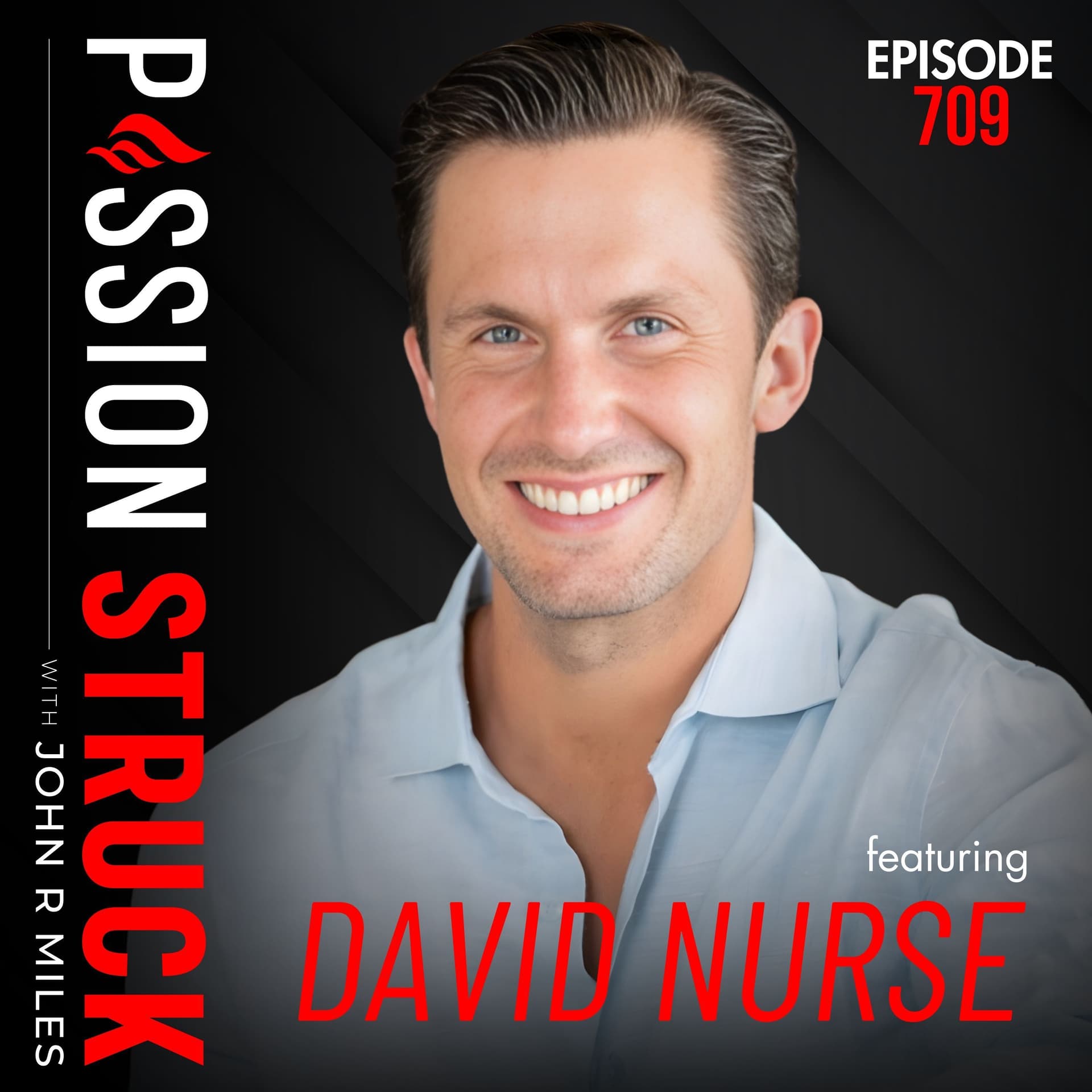
Passion Struck Podcast - Episode 709: David Nurse on How to Unlock the Flow Code Formula
Podcast Overview Host: John R. Miles Guest: David Nurse, NBA mindset coach, bestselling author, peak performance expert Release Date: [Insert Release Date]
Description: In this episode, David Nurse discusses the concept of the "flow state" and introduces his framework, the Flow Code Formula, which aims to help anyone achieve peak performance consistently. Through anecdotes from his experiences with elite athletes and insights from neuroscience, Nurse argues that entering the flow state can be a trainable skill rather than a rare occurrence.
Key Concepts and Discussions
- Understanding the Flow State
- Definition: A mental state where individuals experience heightened focus and immersion in the task at hand.
- Common Misconception: Flow is often viewed as elusive and only accessible to elite performers.
- Nurse's Perspective: Flow is a repeatable skill that can be cultivated with practice.
- The Flow Code Formula
- Based on neuroscience and practical exercises to trigger peak performance on demand.
- Emphasizes key elements such as optimal anxiety, acceptance of stress, and personal identity.
- Eustress vs. Distress
- Eustress: Positive stress that enhances performance (e.g., nerves before a performance).
- Distress: Negative stress that hinders performance (e.g., feeling overwhelmed).
- Key Insight: Stress can be harnessed as a tool for improvement if viewed positively.
- The Shift: From Proving to Being
- Transitioning from a mindset of needing to prove oneself to simply being oneself enables better access to flow.
- Example from Athletes: Successful athletes are often those who can maintain a sense of fun and freedom in their performance.
- Neuroscience of Flow
- 10-Hertz Alpha State: Optimal brainwave frequency for achieving flow, marked by deep focus and relaxation.
- Nurse discusses how this can be measured and trained, leading to improved performance in various domains.
- Practical Exercises for Achieving Flow
- Box Breathing: A technique to calm the nervous system and promote focus.
- Meta Visualization: Combining visualization with meditation to enhance clarity and purpose.
- TAP Technique: A physical cue (tapping the wrist) promoting Trust, Acceptance, and Presence.
- Real-Life Applications and Impacts
- Flow can enhance various aspects of life beyond sports, including parenting and professional relationships.
- The importance of staying present and engaged in interactions for improved personal relationships.
Key Takeaways
- Flow is Accessible: Achieving flow is not limited to elite performers; it can be developed by anyone willing to practice.
- Harnessing Stress: Understanding the difference between positive and negative stress can transform performance.
- Intentional Practice: Regularly engaging in flow-inducing exercises can lead to increased productivity and satisfaction in life.
Conclusion The episode emphasizes that flow is a fundamental aspect of human performance that can significantly impact various areas of life. By adopting strategies to cultivate flow, individuals can enhance their productivity, creativity, and overall well-being.
Links and Resources
- [Full Show Notes](https://passionstruck.com/unlocking-the-flow-code-formula-david-nurse/)
- [David Nurse's Website](https://www.davidnurse.com/)
- [Pre-order "You Matter, Luma"](https://youmatterluma.com/)
- [Flow Code Companion Workbook](#) - Download to identify personal triggers and build daily habits for accessing flow.
Call to Action If you found this episode insightful, consider sharing it with someone who might benefit from learning about flow and its applications in everyday life.
---
These notes provide a structured overview of the episode, summarizing key discussions, concepts, and practical advice on achieving flow in both personal and professional contexts.
Written by AI. May contain mistakes. Listen to the episode to check what was said.
Chapters
Tap a time to open that second in VOThe Importance of Flow
0:45 to 3:05
Exploring the concept of flow and its significance in achieving goals.
“This is the show where we explore the art of human flourishing and what it truly means to live like it matters.”
Introducing David Nurse
3:05 to 4:54
An introduction to David Nurse, his background, and his expertise.
“My guest is a longtime friend of mine, David Nurse.”
David's Recent Growth
5:51 to 9:48
David discusses his experiences and growth in the health and wellness industry.
“I am so excited today to bring my good friend, David Nurse on PassionStruck.”
The Flow Master of NBA
9:48 to 12:45
David shares a story about a standout player during NBA pre-draft workouts.
“I honestly think that it's a surprise and it's not a surprise of just how truly in people's own lives that they are.”
Lessons from High Performers
12:45 to 14:05
Insights into what separates top athletes in terms of mindset and performance.
“Like the guy who could flip that switch the fastest and what did they do differently from everyone else?”
The Importance of Deep Practice in Achieving Flow State
14:05 to 18:00
Learn how deep practice can lead to mastering skills and achieving a flow state in sports.
“He wanted to do another workout because he said there were certain things that he didn't master in that workout.”
The TAP Method for Entering Flow State
18:00 to 20:52
Discover the TAP method, which emphasizes Trust, Acceptance, and Presence to enhance performance.
“I used to work at Lowe's Home Improvement.”
Training Flow State: Insights from Neuroscience
21:36 to 24:33
Explore the scientific study behind training flow states and the brain's response to various techniques.
“Now, back to my conversation with David Nurse.”
The Flow Code Formula Explained
24:33 to 28:00
Understand the Flow Code formula involving visualization, breathing techniques, and physical movements for optimal performance.
“Now, the state of flow that is generally accepted of this is when the deepest focus and this flow, this freedom and fun rhythmic come together is what's known as 10 hertz.”
Understanding Flow Code Components
28:00 to 29:13
Learn about the techniques involved in the Flow Code formula for achieving flow state.
“Now bilateral tapping is either tapping of your temples to slow it down or tapping of your heart to speed it up.”
Show all 21 chapters
Passion and Flow State: Insights from Extreme Sports
29:13 to 30:26
Discover how passion drives individuals to achieve flow state, with examples from extreme sports.
“They got into it because they absolutely loved it.”
The Sweet Spot of Performance: Insights from NASCAR
30:26 to 32:46
Explore how top athletes find their optimal performance zone through practice and awareness.
“Yeah, what freaks me out is when I watch them, when they sleep up there and they put that little bed there with no guardrails.”
Understanding Stress: Bad vs. Eustress
32:46 to 35:32
Differentiate between negative stress and eustress, and how to leverage it for performance.
“Which if you think about that, it's crazy.”
The Role of Epigenetics in Flow State
35:32 to 37:40
Learn how epigenetics affects our abilities and the importance of mindset in achieving flow.
“So earlier this morning, as I was preparing for this, I was listening to another podcast episode you did back during the summer, and you were talking to a gentleman who has a brother who's an astronaut.”
Overcoming Distractions to Achieve Flow
37:40 to 39:12
Understand how to eliminate distractions and create an environment conducive to flow state.
“So based on your research, what do you think knocks people out of the flow state the fastest?”
Applying Flow State in Personal Relationships
39:12 to 40:54
Explore how achieving flow state can enhance personal relationships and overall well-being.
“We talked about how sports stars use this.”
Practical Steps to Experience Flow
40:54 to 41:44
Get actionable advice on using breathing techniques to reset and experience flow quickly.
“And one thing that you would want listeners who are taking this interview in to do today to experience flow, even if it's just 60 seconds, what is a starting point?”
What It Means to Be PassionStruck
41:44 to 42:00
Discover the importance of relationships and faith in living a PassionStruck life.
“What does it mean for you to be PassionStruck?”
The Importance of Relationships and Faith
42:00 to 42:46
Discover how personal relationships and faith can provide a foundation for life.
“The two most important constants in my life is my relationship and my marriage with my wife and my relationship with Jesus Christ and God.”
David Nurse's Work and Impact
42:46 to 43:34
Learn about David Nurse's journey, his work, and how he inspires others.
“Social media, David Nurse MBA, the website, davidnurse.com.”
Key Takeaways from David Nurse
43:34 to 44:33
Explore David's key insights on flow and personal development.
“People always say, all these people you highlight, I could never be like them.”
Transcript
Automatic transcript. May contain errors.0:00Coming up next on PassionStruck. If there's only bad stress and think of that in your life as like the overwhelm or feeling like you have too much stuff on your plate, it's pointless stress that is going to keep you out of the ability to get in the zone because you have just too much nonsense, the non-essentials really. But the eustress, the positive stress is the nerves that you feel before you walk on stage. It's the pressure that you might feel before you go on to a sporting arena. Like those, that type of stress allows you to perform at a higher level if you have a relationship with it that you're accepting of it.
0:42Welcome to PassionStruck. I'm your host, John Miles. This is the show where we explore the art of human flourishing and what it truly means to live like it matters. Each week, I sit down with change makers, creators, scientists, and everyday heroes to decode the human experience and uncover the tools that help us lead with meaning, heal what hurts, and pursue the fullest expression of who we're capable of becoming. Whether you're designing your future, developing as a leader, or seeking deeper alignment in your life, this show is your invitation to grow with purpose and act with intention. Because the secret to a life of deep purpose, connection, and impact is choosing to live like you matter.
1:30Happy almost 2026, friends, and welcome back to episode 709 of Passion Struck. I find that there's a moment at night that often goes unnoticed, especially in this quiet window after Christmas and before the new year truly begins. The energy of the past few days has passed. The wrapping paper is tucked away, the house is quieter, and the lights feel softer somehow. Now, for a brief sacred window, the world stops asking us to produce, improve, or perform. Nothing new is being demanded of us. That moment matters more than we think. It's a gentle pause, an invitation to notice what we're still carrying from 2025 and whether it truly belongs in the year ahead.
2:10We are in our final week of our series, The Season of Becoming. This hasn't been a year of neat resolutions. It's been a year of noticing where we've been and intentionally choosing to engage life with a little more courage and agency. Last week, my friend Nirbhashan showed us how to transition from a creator mindset to a solution mindset, turning problems into invitations. Then, New York Times bestselling author Mark Murphy broke down the five roles of high-performing teams, reminding us that we don't need to be everything to everyone. We just need to be exactly who we're meant to be. And today, we focus on the fuel for that transformation, flow.
2:51Because as we stand on the doorstep of 2026, the question isn't just what we want to do, but how we want to live. And that, right there, is why I wanted this conversation for you. My guest is a longtime friend of mine, David Nurse. David is a former pro basketball player, a two-time Guinness World Record holder, and one of the world's most sought-after mindset coaches. He's worked with over 150 NBA players, including superstars like Shea Gilgis-Alexander and top CEOs to help them find what he calls the zone. But David didn't just stay on the court. He's climbed with Alex Hanold, cooked with Michelin star chefs, and studied the neuroscience of peak performance to unlock what he calls the flow code.
3:39He's here to show us that flow isn't some elusive accident. It's a repeatable system. In today's episode, we talk about the flow code formula, the neuroscience backed ways to trigger peak performance on demand, optimal anxiety, why stress isn't the enemy, but actually the gateway to the zone. We go into the shift, how to move from trying to prove yourself to simply being yourself. And we discuss lessons from elite performers, what he's learned from sprinting with Usain Bolt and playing violin with virtuosis. If you're looking for the perfect fuel to ease back into your routine with fresh energy and intention for 2026, this is it.
4:19Before we start, a quick favor. If today's episode helps you find your rhythm, share it with someone who needs a spark for the new year. Consider leaving a five-star rating and review on Apple Podcasts or Spotify. It makes a massive difference as we head into 2026. And catch the full visual experience on our YouTube channels at PassionStruck Clips and John Miles. All right, let's dive into this masterclass on flow with my friend David Nurse. Thank you for choosing PassionStruck and choosing me to be your host and guide on your journey to creating an intentional life. Now, let that journey begin.
4:53Hey friends, it's the beginning of 2026 and if you're like me, you didn't come into the year to coast. You came to live with purpose, to show up with energy, clarity, and intention. That's why how you start your day matters. And for me, that starts with Huel. Every morning, I reach for two things. First, Huel Daily Greens Ready to Drink. The peach and hibiscus flavor is crisp and refreshing, with 42 superfoods, vitamins, and minerals, all in just 25 calories and one gram of sugar. Then, I turn to Huel Black Edition Ready to Drink, with 35 grams of protein, 27 essential nutrients and no junk, it's a full meal that fuels focus, not fatigue.
5:31I start with Huel because I want to be present, intentional, and ready. Not just today, but every day. Start 2026 likey minute. Grab Huel today with my exclusive offer of 15 % off online with my code PASSION15 at Huel.com slash PASSION15. New customers only. Thank you to Huel for partnering and supporting our show.
5:58I am so excited today to bring my good friend, David Nurse on PassionStruck. Dave, man, what is up? It's been a minute. How's life? Oh, it's good, John. It's crazy that it goes so fast. I feel like every year flies by faster and I don't even have kids yet. I really got no excuses there, but it's going good, man. Thank you. I can't believe it. Mine are now 21 and 27. I thought you were 27. I am so upset with my 21-year-old not coming home for Thanksgiving, but kids will be kids. Well, okay. You let them know. If you need me to lay down a hammer from an outside voice, I got you. Thank you, man. Well, dude, I love watching you on the socials and when we catch up because, dude, you are always climbing.
6:46You're sprinting. You're cooking with chefs. You're visiting. remote islands. What's the most recent experience, man, where you felt yourself growing again? You know what? The most experience of growth in this past three to six months has honestly been starting a company, a better for you CPG health and wellness company. I've actually got the first iteration that were protein gummies so this came by way john of my wife eating a chomps beef stick and me calling her bluff because i know she doesn't like beef jerky then she went on this thing of saying she needs to get her protein in i was like who are you i've never heard you say this by way of asking hundreds and thousands of people of what they do for healthy protein on the go it came to this conclusion there's no answer for it nobody really wants a glossy beef stick or a protein bar with too many ingredients and too many calories in it.
7:44So we created this protein gummy. I brought together some of my good friends who have all done this and scaled. So this all star team. So it's been a really growth process for me of two things, really learning this new space and also being part of a company that's building an actual product. Usually I just go talk. I go speak. I go coach. I use my voice. But now we've got this gummy that's two grams of protein per gummy. And it's got only 50 calories in a bag. So 10 grams of protein per bag and only 50 calories, all clean ingredients, no sugar. It's the best thing for on the go protein. So that's what's been juicing me up and what's been really challenging me for further growth.
8:32I love it. I have a sponsor of this show. It's collagen power powder. Yeah. And it's named after a seal who died in combat, which is why I'm so aligned with it being a military guy. But we drink this stuff. And I looked at the ingredients for the collagen power powder. My wife is looking at it the other day and she's, do you know, every time we take this, we're getting 20 grams of protein and we didn't even know. So see, there you go. And that's the craziest thing. Like the whole world's talking about getting more protein, the GLP Ozempic, like it's hard to get enough protein in and especially on the go.
9:09And with clean and healthy ingredients is me and my team, we're just, we're sick of being lied to of these other companies. They're like, Oh yeah, it's all clean. It's all good. It's all healthy. And then you come to find out there's things you can't even pronounce that rip and tear your gut apart. So we wanted to give people a healthy, clean option that's guilt-free and tastes good. Man, I love it. Dave, you are a man on the go. And across the company you're building, keynotes, clients you work with, professional athletes, people you're interviewing, is there anything that genuinely surprised you in the last few months you heard from one of them?
9:48That's a great question. I honestly think that it's a surprise and it's not a surprise of just how truly in people's own lives that they are. We often think and I often think of a text somebody or have a conversation with somebody. But really, everybody's living their own life at their own speed. And right now, it seems like a lot of people are living at hyper speed. So for someone to think of, oh, I remember this conversation I had with David or, oh, I should have got back to this text. We often assume that everybody knows what we know in terms of where we're at in that conversation dance with them.
10:30But people like they might think of us for five seconds. They might just think of that in that moment. But everybody's living their own lives. And I see this with athletes, with CEOs, with just people that I interact with on a daily basis. And I think it's one of the most important things. And I think one of the most beautiful things when people can just take that step back, reassess, realign, figure out where their essential is, figure out where their non-essential is. And ultimately, that's what I call the flow of life. And that's what I think from what I've seen. And people are seeking that and searching for just being, you know, a rhythm of life that doesn't feel ultra hurried.
11:10Nobody wants that hurried feeling. I know that to be the case with myself. And you and I have been talking about flow and optimal performance for years. And as we were talking about doing this conversation in my book, Passion Struck, I refer to this flow state as optimal anxiety, that sweet spot where anxiety sharpens you instead of crushing you. You call it flow code. Where do you see these two worlds meeting? Yeah, and that's like that too, man. I think it's the ability to operate in an attention, an attention state, right? It's high stress, but it's also complete clarity. So I think that those worlds do intermix.
11:55I don't think it's ever going to be the world where you just wake up and you can sip coffee on your patio and things are just going slow and everything. This is in perfect, euphoric, Pollyanna dimensions. it's dealing with the stress. It's dealing with the real life. It's dealing with the, you've got to be on, you've got to be focused, you've got to be locked in, but then how do you create that clarity? So I think it is exactly like you said, it's a dance and it's a rhythm, but it's also, it is attention. Yeah. And for the people who don't know you, you've coached over 175 NBA players, big basketball player yourself, brothers, big basketball name.
12:37But I wanted to ask you this directly. Out of all the people you've coached or observed, who was the biggest flow master you've ever worked with? Like the guy who could flip that switch the fastest and what did they do differently from everyone else? Man, so good. So let me tell you this story. All right. So it was 2018. I was doing NBA pre-draft. Now, this is where the college players, they come and prepare for the NBA. and it's just like heightened state of preparation where millions of dollars are on the line. They have to do great in their workouts, show the NBA teams that they're worth the money, they're worth the pick.
13:15And I've been doing this for years and I'd always ask the players that came in, I'd be like, hey, what are your goals? I want to see where they want to get to. And often the answers are, I want to be drafted in the first round or I want to be an NBA All-Star. I want to win a championship. And that's pretty normal. And I get that. But I had this player come in 2018. He was a freshman from Kentucky. He wasn't highly touted. Nobody was really talking about him. He was this gangly kid with just this big smile on his face, just this over exuberated smile on his face. And I asked him, hey, what are your goals?
13:48And he looked at me with a smile. He said, I want to be the best player in the world. And I was like, I didn't say anything. I was like, OK, no one really knows about you. Best player in the world. Like we've got some LeBron's Kevin Durant's like all right well we'll see so the very first workout we try to crush their souls basically to see what they're made of to see if they can take it and it's like a two and a half three hour workout and most guys at the end of it they're just passed out or going to the locker room and just it's exhausting it's like the equivalent like hell week it's like hell week obviously not as important as Navy SEALs but that's what we try to set it up like exactly So this kid that I alluded to, this Kentucky kid, after the workout, he comes up to me with that big smile on his face again.
14:32He says, when are we going tonight? He wanted to do another workout because he said there were certain things that he didn't master in that workout. There were certain footworks. There were certain in basketball. There's just like anything. There's so many details, but there's these intricate details in these moves he didn't master is I want to work on these. and I never had anybody say that they wanted to do those two a days especially how grueling of a workout these days are and there's only been one person that I'd ever heard of before do the same thing and a friend of mine had coached with also with the Nets years before and that player was a 17 year old Kobe Bryant that wanted more deep practice is what it's called deep practice is the one of the main steps of flow state.
15:20So as I come back to that story, and I'll tell you who this guy was, for example, if I'm shooting bow and arrows at a target, and I just keep shooting and shooting, that's fine. But that's just practice. I'm not learning from every rep. Deep practice, if I shot that bow and arrow, I'd go walk up to it, I'd see the angle it hit at, I checked the video, I'd see where my feet were at, my balance, the trajectory of it. Every single rep, I'm learning from and mastering. That's deep practice versus practice. And that's what helps you get into flow state faster and more regular. So we do these workouts day, morning, night, morning, night, working on this deep practice, deep focus.
16:00And this player last season won the MVP, won the NBA championship, won the scoring award, and he is known as the best player in the world. And it's Shea Gilgis Alexander. That's who that player was. So his ability to tap into flow, I saw from that first moment, one, because he understood deep practice. Two, he also had this vision of where he wanted to go. We call it meta visualization is where you, and it's a daily practice. We can dive deeper into that. But it's even on a daily basis of if you're just going through your day, letting your day happen to you, you're probably going to get caught up in emails or text messages or get overwhelmed because you don't have a plan for it.
16:46So this visionary plan for him to become the best player in the world. And then he's just, he's got this cool, calm confidence about him where he's just smiling all the time, having fun. And at the end of the day, the people that I see have this ability to tap into flow state. Steph Curry, I've been around a lot. He's the same kind of way. they're having fun and they're playing their sport or doing whatever they do with a free sense to them it's fun and free and i know that sounds so basic but one of my one of my favorite terms and i'll end this question with this and i think it's really important it's called simplicity on the far side of complexity and it sounds sciencey and everything but what it really means is when you start something call it basketball or whatever your passion is it's pretty simple right?
17:33You're just having fun. You're playing free. You don't really know everything that goes into it. But as you rise up the ranks, there's details, there's this, there's that. You got to think about this. And it can become overwhelming. But at the top of it, when you reach that top echelon, you're actually back to just having fun and playing free. And that's the beauty of when you know you're in your flow. I love that answer. I used to work at Lowe's Home Improvement. And Lowe's is headquartered in Mooresville, which is about 30 minutes north of Charlotte. And I used to go to Davidson College when I lived there to watch basketball games because they're not good in any other sport.
18:15And Steph Curry happened to be there. So I got to see him play. And he's another one where when I saw him in college, he was good, but never in a million years did I think he would turn into the player that he's become. using some of the attributes that you're just talking about. But whether it's Jeremy Lin or Brooke Lopez or Steph Curry, what's one specific thing those athletes do that helps them drop into the zone quickly, especially when the stakes are highest? And this is something like I even think Jalen Hurts does in the big games as well. Great. So they aren't defined by results. that's one of the biggest things that you have to be okay with failure to be able to succeed so if you're worried about if you're going to lose if you're worried about if you're going to miss shots then you'll never be able to play free enough because you'll be aiming you'll be pressing so that freedom is a huge piece of it but one of the biggest things that you know that I've worked with athletes and that I see that they do I call it tap it's literally you tap your wrist because it is the signal of the physical cue with the mental and tying those together the brain body connection is very powerful.
19:28But what TAP stands for, it's just a reminder to the athlete or the person. It's trust. So the T is trust. And trust is, do you trust that the process you are on today, the work you're putting in today will lead to the results that you want tomorrow? So basically, do you feel like you have a plan and you feel like the plan, if you stick with that, it will lead to where you want to get. And that's the first one. The second one is the A, and that's acceptance. Are you willing to accept that God has you at the exact spot in life where you're supposed to be? You're not supposed to be any further ahead right now or any behind.
20:02He's got your feet at the right spot. That's a big one because a lot of people want to think they should be further than they are when their time hasn't come yet. And then P is presence. Are you able to stay present in that moment without ruminating on the past or having anxiety about the future? and that right there allows them, they take away like, it's not about that game alone. It's trusting the process for the goals that they have in a bigger picture. It's acceptance that no matter what happens, win or lose, made shot, missed shot, that God's got them right where they're supposed to be. And then it's the presence that they're able to stay present without having to carry the baggage from the past or the future anxieties to come.
20:39So that's the best way and just like an all encompassing way of if you want to tap into flow state, if you can hit those three things and just keep that reminder, that cue of tapping your wrist for the tap-in. Before we continue, I want to pause on something important. Every single week, people ask me, John, I want to live in the zone, but I'm overwhelmed. How do I start? That's exactly why we create companion workbooks for each episode. For this conversation with David, the workbook helps you identify your personal flow triggers and navigate the York Stockson curve of optimal anxiety. Because becoming isn't a destination, it's a practice.
21:16You can download all our free workbooks at my sub stack at the ignitedlife.net. Now, a quick break for our sponsors. Thank you for supporting those who support the show.
21:32You're listening to PassionStruck on the PassionStruck Network. Now, back to my conversation with David Nurse. In the book, the person who I profiled on this topic was an astronaut, turned out to be the chief astronaut, Chris Cassidy. And Chris is a former Navy SEAL. And he told me he learned this flow state practice when he was going through BUDS. And he told me for him, I love the TAP analogy. He uses the analogy of a rubber band. He said, sometimes in life, you're a rubber band that's elastic. And other times there are moments when you need to learn how to tighten that rubber band. And it can never be tightened all the time and it can never be loose all the time.
22:18And the real key is how do you trigger yourself, which you're just describing and not many people do, of how to make it tight when you need it the most. And he said it helped him when he was in combat. It helped him when he was doing training exercises. It helped him when he was doing spacewalks because he was able to get into this zone of concentration that is trainable. And this is where I wanted to go with you because as I was reading the work that you've been doing, what you are finding is that flow is trainable. You've been working with neuroscientists mapping the 10 Hertz brainwave signature.
22:58What broke this open for you? What made you go, man, we can actually teach people how to do this? I love this. So I've always been a nerd for flow state and reading Mihaly Csikszentmihalyi, the father of flow, and his eight characteristics of flow, and then Steven Kotler's 22 cues of flow. I love it, but I've also thought that there's something more because they just talked about it and when someone was in the state of it, but not how to actually formulaically train it. and I'd interview these top athletes like Allison Felix, a track star. And I'd ask her, have you ever been in flow? I can remember her saying, she's like, yeah, I've been there three times.
23:37I got some very specific. I'm like, how did you get there? She's like, I have no idea. And then talking with a friend, Michael Chandler was a big UFC fighter. He was telling me about this fight where he could see the guy's feet moving before they moved and he knocked them out cold. I was like, man, that's amazing. How did you get to that state? He's like, yeah, I got no clue. So I was like, there's gotta be a way, right? So I went on this journey to, you know, find the top neuroscientists who have done this before and who have trained this flow state. And I found them there out of Denver, just phenomenal people.
24:09And I was like, Hey, can we do a study and get some participants and see if this code, this flow code that we've put together, and I'll go into what that flow code is, can train people to get closer to be able to get into flow state more on a regular basis and stay in that state longer. Obviously, it's a novel state where you can be kicked out and a lot of different situations can happen there. And they're like, yeah, we've seen it in these brain QEEGs. Now, the state of flow that is generally accepted of this is when the deepest focus and this flow, this freedom and fun rhythmic come together is what's known as 10 hertz.
24:45It's in the alpha state. So alpha is between eight and 12 Hertz of the brain. So you're trying to get into that state the most you can possible. So we got 60 participants. We did this whole IRB scientifically approved study. And let me tell you, that is a pulling teeth to get through, to get a scientific study approved. And we get 60 participants in, we get it funded. we have 20 of them in the up training of the brain. So when we QEEG them at the start, that scans their brain. That tells you if you're either in a slower brain. So think about as even more laid back and chill, or you're in a faster kind of type A brain like myself, and you need to calm and bring it down.
25:29So we had 20 and 20, and then we put 20 in the control group. In the control group, we gave them Stephen Kotler's 22 cues of flow, the highest flow state thing there was at the time and said, Hey, you know what, just pick whichever one you want. So we go through this study. And what we come to find is we're writing this white paper right now, is that the people who are up training their brain, they brought that presence of the we did a QEG at the end, their brain did get closer to overall in the delta, got closer to this 10 hertz, and bringing it from a downtrend situation, got closer to the 10 hertz.
26:08Now, not everybody was as high of a delta, which means a change in variance, as some of them were. But that's also like in any study that you do, you never know what everybody's doing every single day of their life. but we wanted to give it a CFO if this flow code formula, which we put together based on science and neuroscience of what can gets that brain closer to that state. So the first stage of it is meta visualization and box breathing. So box breathing, this is just a way to slow down the central nervous system is four seconds in four second, hold four second, breathing out and four second holding out.
26:50We had them do a minute rounds of box breathing. The meta visualization is what I was talking about earlier. It's mixing the meditation and the visualization together. So the meditation is on whatever word that you have or whatever picture is in your mind. And the visualization, we had them visualizing something. So if you're up training the brain, you're visualizing something that is more of a faster pace. If you're down training the brain, The visualization is more something of a calm, peaceful morning. So there's more details in this, but as the study goes, but it's a box breathing with meta visualization for one minute.
Read the full transcript
27:27The next one is an autogenic mind muscle activation. And it's just a really cool way of saying, if you're sitting there, think about it. You feel like there's water flowing from your head, you know, through your neck, through your arms, through your legs. You're basically just activating every aspect of your body. You're feeling one with it. So it's just a calming mechanism as well. The third part, that's for about a minute as well. Each one's for about a minute. So it's an easy one that you can do anywhere, any day on the go also. The third one is bilateral tapping. Now bilateral tapping is either tapping of your temples to slow it down or tapping of your heart to speed it up.
28:08So there's different ways to, it's also a regulation of the central nervous system. And the fourth one is a cross crawl disorganization. That just means you're having some kind of movement. Now the cross crawl disorganization is both sides of the body are doing something the opposite at the opposite time. So it'd be like high knees. If you're trying to up train your brain, doing high knees. If you're trying to down train your brain, you could slowly just touch your opposite toe, feel every vertebrae, just something very calming and going to the opposite side, stimulates the opposite side of the brain connection.
28:47And then the fifth piece, I know this might sound like a lot, but it's once you do it a couple of times, it's pretty easy. You get it in this formula is just a neuro connection. And I think this is the most important part. This is the part where you're doing it for a higher purpose. You're connecting for me, it's God, Jesus, whatever your higher connection is that makes the reason that you're doing what you do more important. You understand this with passion, with purpose. And we can dive more into this too, but like the interviews that I've done with these incredible flow state people, the one common theme, no matter if it's Alex Honnold climbing free solo, if it's Shea Alexander, if it's a top coffee barista, if it's whatever it might be, is they have passion for what they do.
29:34They love what they do. They got into it because they absolutely loved it. It's personified, meaning that they're actually doing it and they're not worried about the flow code. And there's some more details to it. But for these people that have gone through this study to get into flow state. Yeah. So they're passion struck. They are passion struck, man. That's why this is perfect. Seriously. But it was so cool to see us like when I was interviewing Alex Honnold, free solo guy. If you haven't seen this documentary, watch it. It's mind blowing what this guy did. And we're climbing on his climbing wall out there in Las Vegas.
30:12And he's just talking about it. He's like, I didn't ever set out to try to have a documentary. I didn't think climbing was an actual thing you could do to make a career. Because I just love doing the thing. And I just kept doing the thing. And it just led to this. So they're absolutely passion struck. Yeah, what freaks me out is when I watch them, when they sleep up there and they put that little bed there with no guardrails. I'm like, it's bad enough that you're trying to free climb it, but they have to sleep out there. Man, right? It's crazy. Yeah, the extreme sports is crazy. The other good thing about living in Mooresville, North Carolina, is we were in close proximity to both NASCAR and drag racing.
30:55And I got to meet drivers in both arenas. And a really good friend of mine is Doug Herbert, who was one of the first guys to break 300 miles per hour. And Doug had a personal tragedy where he lost his two sons to a car accident. And he started this nonprofit called Bricks, where he teaches kids safe driving now. But they would do these charity fundraisers. And through that, John Forrest and Ashley Forrest and Tony Schumacher and others would show up. And one day I was at one of these and a whole group of us were talking about this whole flow state. And I was asking them, when you're doing top fuel and you've only got so many seconds to perfect your craft, how do you describe it?
31:43And almost every single one of them gave me the same definition. They said it's on the edge, but not over the edge. And they said that they found out over time is that when they're too cautious, they go way too slow. When they're too aggressive, they wreck the car. So they had to find this zone through practice of how do you go on the edge, but not over the edge. And when they could perfect it, that's when all of them said that they had so much success. And so then I went and I talked to a bunch of NASCAR drivers and almost exactly they said the same thing. And I think it's a good analogy for what you're talking about, because you have to hit that sweet spot.
32:29And it's not easy to get into. But once you are, the research is incredible. I saw a McKenzie report that showed even executives who can get into the flow zone are able to do in two hours what their peers do in eight to 10. Totally. Which if you think about that, it's crazy. If you can devote two hours of your day to get the job done that you need to, you can spend the other six, seven hours being present with your team, getting out there on the floor, interacting. So it is such an important skill to have, whether you're an athlete, a doctor, Fortune 50 exec like I was, doesn't matter. But I wanted to ask you something about stress.
33:13What do you think differentiates bad stress from flow-inducing stress? It's a great question. So I think stress is such a thing that has a bad connotation to it. And it's what you were saying with the on the edge but not over the edge. it's that paradoxical tension that we have to come up against but eustress is a great type of stress that nobody talks about and this is a stress that makes you feel like you're alive this is the stress that makes you lock into the zone if there's only bad stress and think of that in your life as like the overwhelm or feeling like you have too much stuff on your plate it's pointless stress that is going to keep you out of the ability to get in the zone because you have just too much nonsense, the non-essentials really.
34:03But the eustress, the positive stress is the nerves that you feel before you walk on stage. It's the pressure that you might feel before you go onto a sporting arena. That type of stress allows you to perform at a higher level if you have a relationship with it that you're accepting of it. And I think one of the most important things for people in stress and just in life in general is the steps of first it's the awareness of so the awareness of is everything you have to have the awareness of and in this essence that we're talking about the awareness of that stress is prevalent and there is good stress then it's the relationship with now what's your relationship with it if your relationship with it is all stress is bad you have a bad relationship with stress but if you know that you can cultivate the good stress out of it.
34:54That's your relationship with. And then the third piece of it is the action from. Now what are you going to do with it? You've got the understanding, the awareness, you have the relationship. Now what are you going to do with it? And this is one of my favorite parts, man, is I love watching sports games at the end of the games and seeing who wants the ball in the crunch time moment. Who wants to be up at the plate in the World Series in the bottom of the ninth. Who wants that? That's the type of people that I know they take action from this and understand that stress, the eustress can be used as an igniter for their performance.
35:32So earlier this morning, as I was preparing for this, I was listening to another podcast episode you did back during the summer, and you were talking to a gentleman who has a brother who's an astronaut. And you guys, since this is an alternative health podcast, got to talk about epigenetics. You were talking about epigenetics. And I think something people don't realize is that we're really all 99 % the same. So when you think about that, what role does epigenetics play and how does our environment shape our ability to get into flow? I love it, man. I think epigenetics plays a huge role. I think there's first on the basis of genetics, yes, is your foundation and your starting point.
36:16A good friend of mine, Rich DeVinney wrote this book attributes, and it outlines, I think the 28 attributes that people have. So for example, I might be born with more of one thing and you have less of it, or you have more of this and I have less of that. That's just our starting point, our genetics. Now the epigenetics is everything we do from there on out to develop that. So it's the point of why does somebody come from absolute obscurity in nowhere and becomes someone great, does something great because they have powerful epigenetics. And I think a lot of that too, do you have the unwavering belief and sometimes incompetent confidence that you can do it?
36:57I think that's a blessing of mine that I've had is just like, I'm going to go try it. I'm going to go do it. Let's see what happens. And if it doesn't work, I'll try something else. But I don't really care of that failure piece that you know, most people want to avoid of that pain isn't something that I really worry about. So I think epigenetics and people understanding that would do the world a great deal if that was out there more and people talked about that more because genetics can also be one of the biggest excuse makers there is of, well, my parents were this way or, ah, I was just born this way.
37:33Yeah, but so what? What are you going to do from that? Well, that's where neuroplasticity comes into play, right? Absolutely. So based on your research, what do you think knocks people out of the flow state the fastest? Is it distraction? Is it fear? Is it overthinking? I think it's a culmination of them. I think distraction is the main one. I think distraction, and especially now in the world that we live in today, that is constantly on and you feel like you have to be constantly on. I think it's harder than ever to get in a in the flow state and just in the flow of your life. The answer of busy is the answer that everybody has, whether it's an excuse or whether it's a truth.
38:12I do think that the way you get out of flow state the fastest is if you're distracted, if you have. Because now more than ever, we live in two worlds, right? We live in the world of the interpersonal that we're having on the like a physical interaction. And we also live in the life of what's on this, what's on our phone, right? And I think the next generation does even more. You could be in a conversation, but you're thinking of what's happening in that text message conversation, what's happening on that Instagram thread. And it takes us away from the ability to lock in the zone. So more than anything else, distraction is the number one thing.
38:51So creating an environment, at least, especially if you're trying to get a deep focus work of where the phone's off, the notifications are off, the browsers are off. And I know you might think, well, I have to have them on. No, you don't. You really don't have to have the connectivity of the world ultimately being your dictator for your life. I want to make this applicable for all the listeners. We talked about how sports stars use this. I gave examples about the corporate environment, some other things. How does this state apply to things like being a better parent or being a better partner? Can flow state positively impact those relationships too?
39:34Absolutely. And I think that's where the big picture win of this all is and how to train to be in the zone. Because what we saw also, not just was the QEEG readings of the brain, but we also sent out surveys every single week for more of the feeling type and just the state of mind that they're in. And every single one of those ones increased in terms of feeling more peaceful. They felt more purposeful. They felt more of not in a rush. Like all of these aspects that people seek for on a daily basis, this helped with. So I think it's very applicable. And just thinking of it in like a one word or one sentence, a few words is just the effortless effort.
40:17And I think it's summed up in that is, man, doesn't that sound so attractive? If you can go through your day and not feel like you're just putting out constant fires and not feel like you're just trying to get your head above water, but it's just effortless effort. You're patient with your kids. You're not worried about what your boss says. You just have the sense of calming peace. And I think we see it these people, I always find it so attractive in people that I'm around. I'm just like, man, they're so present. They're so calm. They're listening to me. They're engaged in this conversation. And I think ultimately that's what people want.
40:53And that is what the flow code is about. And one thing that you would want listeners who are taking this interview in to do today to experience flow, even if it's just 60 seconds, what is a starting point? Yeah, I would say the breathing. Honestly, I think that's one of the best resets you can do. Box breathing anytime. And not just in the mornings. Either morning routines are great to start off your day. That's why there's halftimes. That's why there's third quarters. Take a break during the day and reset. Do a minute of box breathing. And just think about it. Where do you want the rest of the day to go?
41:27Analyze the first half of the day. What was good? What can I adjust? Game plan for the second half of the day. So I think that taking a one-minute break in the middle of the day, doing some box breathing, and having some analyzation of how the day went and where you want it to go. David, last question I have for you, given you are on PassionStruck. What does it mean for you to be PassionStruck? You know what it means? Man, I'm glad you asked. I think this is the best question there. I love that you always ask this question. For me, it is pouring into my wife and my relationship with God. The two most important constants in my life is my relationship and my marriage with my wife and my relationship with Jesus Christ and God.
42:09And I have, through those two things, being passionate about pursuing those two things on a daily basis gives me the freedom to not have to worry about the other stuff. Not have to worry about where money might come from or if I get this deal or what this person thinks of me. I know I have the two most, I've hit a home run in the two most important areas of life. Everything else, it can work itself out. It's fixable. Man, I love it. And last thing for the listeners, you've got multiple books. You're on stages throughout the country. People want to learn more about you. Where's the best place for them to go?
42:47Social media, David Nurse MBA, the website, davidnurse.com. All of it's pretty much there. I'm pretty active on social media. Of course, check out the new more or less protein gummies. I think you'll really like these. So that's the next big thing. But yeah, reach out, please. I'd love to hear from you. David, it's such an honor to have you today. So glad we could finally get this booked. Appreciate you, man. I love your podcast. I think what you're doing for your listeners and for the world at a whole, man, is just, it's all, if more people could live, passion struck, honestly, passion struck for a purpose.
43:19Think about, I think how much better the world would be. Like I say, like you go run on that for your political stance, passion struck. People are going to be passionate. I'm voting for you, man. I'm voting for you. Thank you, man. That is my main message. People always say, all these people you highlight, I could never be like them. And it's like epigenetics. All it does is come down to the choices that you make to see yourself where you want to be. Thank you again, man, for coming. Thank you, brother. That's a wrap on today's conversation with David Nurse. What a powerful way to close out the year.
43:53David reminds us that the zone isn't a rare event reserved for the elite. It's a way of life available to all of us. If we have the courage to step into our sharp edges. As we look toward 2026, remember these few reminders. Flow follows focus. Simplify your environment to invite the zone. Second, anxiety is energy. Use it as a signal that you are right on the edge of your growth. Third, comparison is the thief of flow. Stay in your own lane. Run your own race. And finally, routine leads to the remarkable. The small reps you do today are the foundation of your breakthroughs tomorrow. If David's energy inspired you today, please share this episode.
44:36Let's help more people start 2026 with a sense of purpose and flow. And as we wrap up this final week of the season of Becoming, I want to invite you to join us on January 1st. We're kicking off the new year with a deeply human conversation with Congresswoman Sarah Jacobs. She'll be sharing her personal journey, radical agency and vulnerability, proving that you don't have to have everything figured out to move forward. You just have to take the next step. I'll be honest with you, body image, body weight, food are things that I've struggled with my whole life. And I've worked really hard to get to a place where I feel neutral about food and that I don't have the scarcity mindset and that I love my body the way it is and not am constantly trying to change it.
45:21And that's really difficult work. It's work that I have to do every single day. And I hope that as a society, we do a better job of not giving the kinds of messages that I received as a young girl to future generations. If you want tools to help you navigate 2026 with intentionality, join our community at the ignitedlife.net. And for the parents and grandparents out there, my new book, You Matter Luma, is the perfect way to start the year by teaching the children in your life that they are enough exactly as they are. You can pre-order it at Barnes & Noble or go to YouMatterLuma.com. I want to wish each and every one of you a happy, healthy, and passion-struck 2026.
46:03Thank you for being the reason this movement continues to grow. Until next year, becoming isn't about reaching a finish line. It's about staying in the flow of who you're meant to be. You've been passion-struck. Now go live like you matter.
46:20Thank you.
From the publisher
What if entering "the zone" wasn't a rare accident reserved for elite athletes, but a repeatable skill anyone could train, just like strength or focus?
In Episode 709 of Passion Struck, NBA mindset coach, bestselling author, and peak performance expert David Nurse joins John R. Miles to reveal why flow state has been misunderstood as elusive when a science-backed, step-by-step system actually governs it he calls The Flow Code Formula.
Drawing from his work with over 150 NBA stars, Fortune 500 CEOs, and groundbreaking neuroscience research, including the 10-Hertz alpha wave state, David breaks down how optimal anxiety, identity shifts, and personal triggers turn stress into a superpower and distraction into deep immersion.
Together, John and David explore the neuroscience of trainable flow, why "proving yourself" blocks the zone while "being yourself" unlocks it, and real stories from sprinting with Usain Bolt to climbing with Alex Honnold that prove peak performance is accessible to all.
Check the full show notes here: https://passionstruck.com/unlocking-the-flow-code-formula-david-nurse/
All links gathered here, including books, Substack, YouTube, and Start Mattering apparel: https://linktr.ee/John_R_Miles
For more about David Nurse: https://www.davidnurse.com/
Pre-order You Matter, Luma: https://youmatterluma.com/
Flow Code Companion Workbook
Identify Your Triggers. Harness Optimal Anxiety. Enter the Zone.
Reflection prompts and practical exercises to map your personal flow triggers, navigate the Yerkes-Dodson curve, and build daily habits for the 10-Hertz state.
Download the free Companion Workbook at:
In this episode, you will learn:
- The Flow Code system: A neuroscience-backed formula to trigger peak performance on demand
- Why optimal anxiety is the gateway to flow—not the enemy—and how to use stress as fuel
- The power of "The Shift": Moving from proving yourself to simply being yourself
- Real lessons from elite performers, including Usain Bolt, Alex Honnold, and NBA superstars
- How the 10-Hertz alpha state works and practical ways to access it
- Why your identity ("who") must always lead your actions ("do") for sustainable flow
Support the Movement
Every human deserves to feel seen, valued, and like they matter.
Wear it. Live it. Show it.
Disclaimer
The Passion Struck podcast is for educational and entertainment purposes only. The views and opinions expressed by guests are their own and do not necessarily reflect those of Passion Struck or its affiliates. This podcast is not a substitute for professional advice, diagnosis, or treatment from a licensed physician, therapist, or other qualified professional.
See Privacy Policy at https://art19.com/privacy and California Privacy Notice at https://art19.com/privacy#do-not-sell-my-info.


