
In short
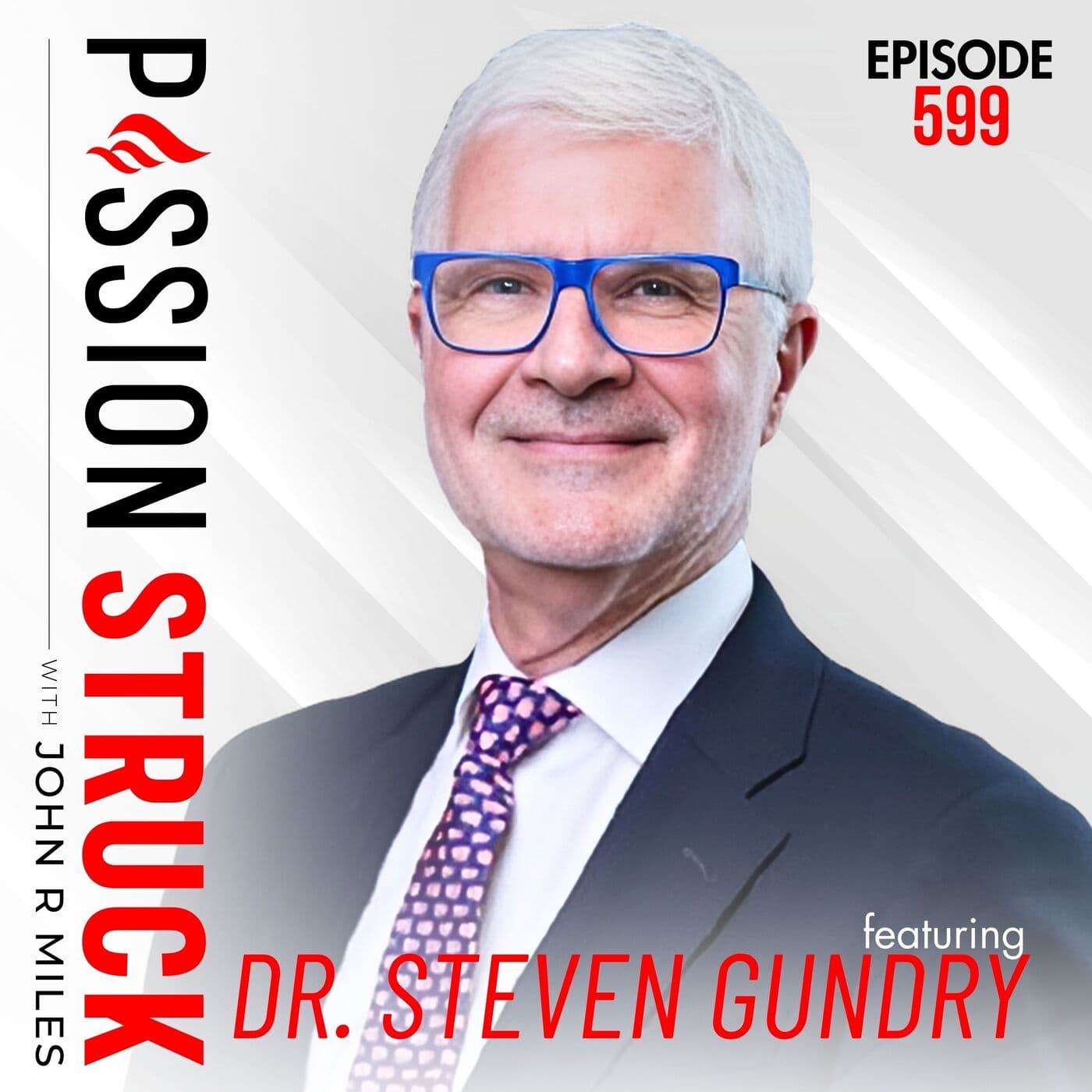
Podcast Episode Notes: Passion Struck with John R. Miles - EP 599
Episode Overview Title: Dr. Steven Gundry on How Your Microbiome Shapes Your Identity Guest: Dr. Steven Gundry Release Date: [Insert Date]
John R. Miles hosts Dr. Steven Gundry to discuss the connection between the human microbiome and mental health as outlined in Dr. Gundry's new book, *The Gut-Brain Paradox*. The episode explores how gut health influences thoughts, emotions, and behaviors, presenting a revolutionary viewpoint on human identity and health.
Key Concepts Discussed
The Role of the Microbiome
- Microbial Influence on Identity:
- Dr. Gundry posits that thoughts, cravings, and emotions may be influenced by trillions of microbes in the gut.
- He refers to humans as "passengers on a bus driven by our microbiome."
- Gut's Control Over the Brain:
- The gut microbiome sends signals to the brain affecting mood and decision-making.
- This suggests our dietary choices could be influenced more by microbial signals than personal willpower.
Health Conditions Linked to Gut Health
- Leaky Gut Syndrome:
- Many chronic conditions such as fatigue, autoimmune diseases, and mental fog may stem from leaky gut.
- Leaky gut is characterized by increased intestinal permeability, allowing harmful substances to enter the bloodstream.
- Food as Medicine:
- Dr. Gundry emphasizes the importance of diet in healing, advocating for the elimination of certain foods (especially those containing lectins and processed foods) to restore gut health and reverse chronic conditions.
Microbes and Free Will
- Microbial Decision Making:
- The gut microbiome may influence cravings and decisions, leading to unhealthy eating habits driven by bad gut bacteria.
- Research indicates that bad gut microbes can hijack hunger signals, prompting cravings for unhealthy foods.
SSRIs and Mental Health
- Antidepressants and Gut Health:
- Dr. Gundry argues that SSRIs alter the microbiome, suggesting a relationship between gut health and mental health.
- He advocates for a gut-first approach in treating mental health issues, rather than relying solely on pharmaceuticals.
The Future of Gut Health Research
- Personalized Medicine:
- Dr. Gundry discusses the evolving field of personalized medicine based on microbiome analysis.
- Understanding individual microbial profiles can lead to targeted nutritional strategies to enhance health.
Key Takeaways
- Your Gut Runs the Show: The microbiome significantly impacts thoughts, cravings, and emotions.
- Leaky Gut is Reversible: Chronic health issues may be linked to an imbalanced microbiome, and dietary changes can restore gut health.
- Food Choices Matter: Diet plays a crucial role in maintaining gut health, affecting overall physical and mental well-being.
- Reassess Mental Health Treatments: Healing the gut may be a crucial first step in addressing mental health conditions.
- Future of Health: Research into the microbiome will shape the future of personalized medicine and health care.
Connect with Dr. Steven Gundry
- [Website](https://drgundry.com/)
- [Social Media Links]
Next Episode Preview John R. Miles will speak with Anne Marie Anderson, an Emmy Award-winning broadcaster and leadership expert, to explore the mental frameworks of high performers and the art of storytelling.
Call to Action If you found value in this episode, please leave a review, share with others, and subscribe to the Passion Struck podcast to help spread the message of living intentionally.
Additional Resources
- For more insights, subscribe to the *Live Intentionally* newsletter or visit [Passion Struck Deals](https://passionstruck.com/deals).
- Explore curated episode starter packs on various topics like leadership, mental health, and personal growth at [Passion Struck Starter Packs](https://passionstruck.com/starterpacks/).
---
This structured note summary provides a comprehensive overview of the episode's discussions, key takeaways, and insights into the profound connection between the microbiome and its impact on personal health and identity.
Written by AI. May contain mistakes. Listen to the episode to check what was said.
Transcript
Automatic transcript. May contain errors.0:00Coming up next on PassionStruck. We are truly a symbiotic organism, and bacteria have been around for 3 billion years. The most successful life form ever. We've only been around in our current form for about 100 ,000 years. A lot of us now think that this bacterial part of us, the passengers are driving the bus. And they're driving the bus for a really good reason because they've had a lot of experience with living. And again, I make the argument that they are sentient beings. They see, not with eyes like we see, but they can read the barcodes on neighboring bacteria. We've known this for many years.
0:57It's called quorum sensing. They know who's in the house. And you go, well, what the heck? How could that be? Well, they carry messages. Welcome to Passion Struck. Hi, I'm your host, John R. Miles. And on the show, we decipher the secrets, tips, and guidance of the world's most inspiring people and turn their wisdom into practical advice for you and those around you. Our mission is to help you unlock the power of intentionality so that you can become the best version of yourself. If you're new to the show, I offer advice and answer listener questions on Fridays. We have long form interviews the rest of the week with guests ranging from astronauts to authors, CEOs, creators, innovators, scientists, military leaders, visionaries, and athletes.
1:46Now, let's go out there and become passion struck. Welcome to episode 599 of passion struck. Whether you're a longtime listener or joining us for the first time, I am so grateful you're here. You've turned into a movement dedicated to unlocking your potential, living with intention, and making what truly matters matter most. Before we dive in, let's take a moment to reflect on the incredible conversation I had earlier in the week. On Tuesday, I was joined by Laura and Isabel Hoff, daughters of Wim Hof and authors of Secrets of the Ice Women. we explored how cold exposure, mindset, and breath work can transform hormone balance, emotional resilience, and personal power.
2:29And in my upcoming solo episode, number 600, I'll be making a very special announcement that marks a major next chapter for this community. You don't want to miss it. Now, let me ask you this. What if your thoughts, cravings, even your emotions weren't entirely your own? What if trillions of microbes inside you were pulling the strings, shaping your mood, metabolism, and mental health in ways you never imagined. And what if fixing your gut was the key to unlocking peak cognitive performance, resilience, and longevity? That's exactly what works for today with Dr. Stephen Gundry, renowned medical researcher, cardiothoracic surgeon, and best-selling author.
3:13In his latest book, The Gut-Brain Paradox, he challenges everything we thought we knew about mental health, cravings, weight loss, and even free will. In today's conversation, we unpack the groundbreaking science behind how your gut microbes control your brain, mood, and metabolism, why the war on germs might be making us sicker, and what modern medicine needs to rethink, how conditions like anxiety, depression, and even Alzheimer's may actually start in the gut, and a step-by-step roadmap to healing your gut-brain axis and reclaiming your clarity and health. This episode is a game changer for anyone dealing with brain fog, anxiety, chronic fatigue, or constant cravings.
3:55It's also a blueprint for how to regain control of your biology and your mind. And if you want to go even deeper, check out our curated episode starter packs at passionstruck.com slash starter packs or Spotify. With over 590 episodes, we've organized playlists on topics like biohacking, personal mastery, and mental resilience to help you find the inspiration that meets you where you are. And don't forget to subscribe to my Live Intentionally newsletter for exclusive insights, behind-the-scenes content, and tools to live a life that truly matters. Now, let's get into this fascinating conversation with the one and only Dr.
4:31Stephen Gundry. Thank you for choosing PassionStruck and choosing me to be your host and guide on your journey to creating an intentional life. Now, let that journey begin.
4:45I am so honored and ecstatic today to have the one and only Dr. Stephen Gundry with me on PassionStruck. Welcome, Dr. Gundry. Hey, thanks for having me, John. It's great to see you again. And I think I want to start there. The last time we spoke, I was in a position I never thought I was going to be in. I was the editor-in-chief of this publication called Bold Business, and I had developed something called the Bold Leader Spotlight, where we looked at eight to 10 characteristics of what we thought described someone who was a bold leader. And so I interviewed you as a member of that club. So it's been nearly six years since we last spoke.
5:27And since then, your work has continued to push boundaries of what we know about nutrition, disease prevention, and now the link between gut and mental well-being. what inspired you to shift your focus to the gut-brain connection for this book? With each kind of passing book, since The Plant Paradox came out in 2017, interestingly, the Human Microbiome Project actually finished in 2017. And with every almost passing month, thanks to that project, we now know who lives in our microbiome and for those who don't know yet the microbiome the microbiome that just lives in our gut probably has a hundred trillion bacteria alone not to mention fungi and molds and viruses and worms and we're now able to identify who all these creatures are and the roles they play in our health and because we can now identify who they are we can start to see that the types of bacteria the balance of good and bad bacteria really has a huge effect on personality, on depression, anxiety, addictions, mood.
7:12And you can actually do animal experiments and human experiments showing that manipulating these groups of bacteria with food, for instance, or supplements, for instance, can have a huge impact on us and so this book is a deep dive into the gut brain paradox that our brain is basically a good receiver for signals from the cloud of our microbiome just put it another way okay you and I are on computers and I got to you by clicking on a link that took us up to the cloud and here we are my computer really doesn't have a lot of computing power we've put that up into the cloud a lot of us believe that our genome human genes is not very big but the microbiome genome is enormous and this genome actually divides constantly and constantly changes so many of us think that we've uploaded our computing power or downloaded our computing power into our gut and the gut then makes the decisions and then it uploads it i'm holding up my phone near my head it uploads that information to my brain which is merely a receiver for that information.
8:47And it's an interesting way to think about it, but Hippocrates said 2 ,500 years ago that all disease begins in the gut. So I'm just trying to catch up with what he knew 2 ,500 years ago. I'm a slow learner. Well, you open the book with incredible patient stories, people with Parkinson's, mental illness, even addiction, who all improve dramatically by fixing their gut. But how does a single protocol explain such a wide range of transformations? Really, the single protocol works. And again, I see patients six days a week, even on the weekends. The single protocol works because if people are watching on video, I have a big sign behind me, a painting.
9:36The road to health is paved with good intestines. and this is what hippocrates taught 2500 years ago and all of these various people that are described in the book all had one thing in common and that is they had a dysbiotic microbiome that means they had an imbalance of good guys and bad guys and they all had leaky gut intestinal permeability now if you'd asked me 25 years ago when i started this part of my career about leaky gut i probably would have told you it's pseudoscience but thanks to work by professor now at harvard alessio fasano who identified how leaky gut occurs how lectins and gluten are a big piece of causing leaky gut and how we can measure leaky gut with blood tests or stool tests that's opened up an entire window of opportunity to show in fact that somebody with parkinson's can be treated by restoring their microbiome into balance and stopping their leaky gut just as an example and that same protocol of restoring a balance of microbiome and stopping leaky gut can treat addictive behavior and so on down the line but about 80 of my practice now is autoimmune patients who have been everywhere tried everything and end up in my office and 100 % of these people have leaky gut and intestinal dysbiosis, an imbalance of their microbiome.
11:41This works. And like I say, I'm a slow learner. Hippocrates clearly knew this 2 ,500 years ago. He didn't have the human microbiome project to help him out, but he knew this intuitively. And I've spent the last 25 years trying to figure out how he knew it. I want to start with this important yet often overlooked scientific feud that you discuss in chapter one. You really go into germ theory, which is Louis Pasteur's theory versus Antoine Mann's terrain theory. And it's interesting because, as we all know, for years and years, Pasteur's approach dominated in modern medicine leading to this era, probably that led to when you were going to medical school, the focus on antibiotics, germ killing solutions, et cetera.
12:36But you actually argue that the terrain theory was actually right all along. And if we were to rewrite the medical textbooks today, what fundamental shift do you think needs to happen? I'll give you a striking example. One of my friends through the years is Dr. Mark Hyman. And Mark and I were talking just a little bit ago. He has a daughter who's a third year medical student at a very prestigious university. And in her third year, and there are four years of medical school, she has not had a course on the microbiome, which just flabbergasts him and me. And yet that if we could only give credence to what we now know about the influence of the microbiome, what Bouchamp knew well over almost 200 years ago now, that it's this, the microbiome in our intestines and in our mouth and in our skin, which I call the holobiome, is akin to a tropical rainforest.
13:50And there's all these interconnected species that are dependent on each other, bad guys, good guys, but they're all in perfect balance and machamp was arguing with pasteur that germs per se were not bad or good it was when the balance of this tropical rainforest or as he called the terrain became in balance that's when a disease or an infection started and unfortunately pasteur was a much better public speaker. Stuart was discovered that it was bacterial contamination of grapes being fermented in wine by yeast that caused it to go bad. And obviously he was a big hit with the King of France finding that out.
14:46So he was elevated to a great place of honor and Béchamp was relegated to the obscurity. But as I write about in the book, and I've read every book about both of them, many of the books cite that on his deathbed, Pasteur called Béchamp and his colleague Bernard to his bedside. And he said, you're right. It was the terrain. I hope the story is true because it sure makes sense. But so, again, we don't even teach this in medical schools. I'll give you a great story. I was just reading today. so one of my feeds about the new exciting research into the treatment of IBS and ulcerative colitis and what I do every day and the article was going on and on about this poor young lady who was on steroids and other immune suppressive drugs and her mother was not happy with the fact that she was on this and the exciting part of the article was well there's now we know so much more about immune suppressing drugs that we now can really pinpoint what we should be doing and buried down at the bottom of the article was the fact that this young lady figured out that was actually the food that she was eating that was her problem and that she now tailors the food that she eats and she no longer has this problem she's off of all drugs and she's actually created a business where she provides food services for people with ibs and ulcerative colitis and imagine that but the entire article was basically oh the miracles of all these modern drugs and i'm a transplant immunologist by training as a heart surgeon and a heart transplant surgeon and when i have a patient walk in on these immune suppression drugs i go i didn't do a heart transplant on you you don't have a kidney transplant you don't have a liver transplant so what the heck are you doing on a transplant drug and they go yeah you're right what am i doing on that the immune system is being told to look the other way and that's not what we want to do we want to find out what the immune system is revved up about.
17:14That's what we do. Yeah. It reminds me of one of the interviews I did last year on the podcast with Dr. Terry Walls, who you probably know. Good friend. And I think hers is a story that kind of parallels that. She was suffering from multiple sclerosis, if I have it correct, and had gotten to the point where she was actually in a wheelchair when she started to change her whole diet. And over time, she found herself riding a bike again and exercising and living a normal life. And one of the things that I really love about her work is she does a lot of patient care in the VA system. And so veterans who have exhausted all Western medicines, she invites into her clinic, but says, if you're going to commit to it, you have to commit to exactly what I tell you to do.
18:05And her results have been pretty fascinating. I have a very similar philosophy here. I can show you the path, but it's you who must walk it. And we can see people who stray. We do leaky gut tests usually every three months in our patients. And we can see slip-ups or we can see where they're really doing spectacular. And the fun stuff is it's measurable stuff. We can watch it. Just actually before I got on this podcast, I have a young man who flew in from the Midwest. He's 50 years old, had really horrible leaky gut, had liver inflammation from his leaky gut. He had vascular inflammation from his leaky gut.
18:53and he's now six months into this and his repeat leaky gut test is oh 75 percent better than six months ago and his antibodies to the various forms of wheat are 75 percent gone compared to six months ago. And his liver inflammation is gone. His vascular inflammation is gone. And he's just sitting there going, oh my gosh, look, this works. This isn't a placebo effect. He said, oh yeah, I can see it. And it's, yeah, I didn't make this up. And the excitement that people see without immunosuppressant drugs is why I get up every morning and watch this. If you're a listener or a viewer, what are some signs that you might have a leaky gut?
19:56I made the bold statement back when I wrote The Plant Paradox that if you have any disease process, whether it's, oh, a migraine headache, whether it's high blood pressure, whether it's diabetes, whether it's coronary artery disease, whether it's arthritis, whether it's a skin rash, whether it's any autoimmune disease, then you have leaky gut. I'm sorry, get over it. And Hippocrates knew this. Hippocrates, I've tried to read as much as I can about his teachings. hippocrates believed that all of us have a green life force energy which is very california speak that wants us all to have perfect health and that there were external factors that would suppress the expression of this green life force energy and hippocrates thought that a physician's job was to be a detective and to find out what these external factors were and teach the patient to remove them and then the patient's green life force energy would solve the problem would heal the patient and he was right and all I do is be a detective and teach the patient to remove these external factors.
21:24Now, since the Human Microbiome Project, the green life force energy is actually our microbiome. So maybe we should call it the brown life force energy to be more descriptive. But our microbiome, this is their home. And they would like their home to be around for a considerable period of time. It looks like it. You mentioned that Dr. Mark Hyman, a few minutes ago, and he's also my friend. I've had him on the show a couple of times. And a couple episodes ago that I did with him, we were talking about the latest book he had published and we were going through biological age and how to extend it compared to our chronicle age.
22:10And so we spent a lot of time also talking about the microbiome. And one of the things you both talk about, and it's one of the most mind blowing takeaways, I think from your book is that about half of the cells in our bodies are not actually human, they're microbial. And you take this even further by suggesting that we need to rethink what it even means to be human. Can you expand on that? My previous book, Gut Check, I introduced people to a little one cell organism called toxoplasmosis, which is a single cell parasite that has, like many parasites, has two life cycles and many parasites have to spend some time in a intermediate host to get to their final place they really want to get to and toxoplasmosis wants to get into a cat and that's where it wants to go and its intermediate host is strangely selected to be a mouse or a rat now that's a really you would think a dumb idea because mice and rats are deathly afraid of cats if they smell cat urine they run the other direction but toxoplasmosis gets into a rat or a mouse through contaminated water that a cat has pooped in and it basically goes to the brain and literally rewires the brain primarily using dopamine receptors and it makes the smell of cat urine sexually stimulating to the rat and it also makes the sight of a cat incredibly exciting and the rat literally runs to danger and gets eaten now what's so interesting about that is we know that great apes, particularly chimps, can be infected with toxoplasmosis.
24:17And why? Because believe it or not, tigers, big cats, chimps are one of the favorite foods. And these animals become emboldened around tigers. Great studies out of Yellowstone Park showing that most wolf pack leaders are infected with toxoplasmosis because believe it or not the predator of a wolf is a cougar a mountain lion and they become more bold take more risks and that's actually how they become leaders what's really scary is that humans can be infected with toxoplasmosis and people who are infected with toxoplasmosis for instance the vast majority of motorcycle riders in fatal accidents were infected with toxoplasmosis and at one point the u.s military was very interested in infecting troops with toxoplasmosis so that they would run towards danger so the reason i brought that up in that book and the reason i talk about more of this in this book is the power of a single cell organism to completely rework our thought process for that organism's benefit and in that case it's a parasite but the parallel the organisms if they're in balance within us want us to try and get the food that they need to take care of their apartment building and if everything is in balance like bishop believed then that makes a really good place to live and keeps us alive in fact mark and i obviously and i wrote the longevity paradox one of the things that to paraphrase Hippocrates is that death begins in the gut and you look at all these super old people and he and I study them around the world none of these people have leaky gut they have this incredibly rich diverse microbiome and they have a microbiome that literally fends off all these environmental toxins.
26:47They eat plastics, for instance. And people go, what? They eat plastics? Well, we have bacteria that eat oil spills and plastics are merely petrochemicals. They're just looking for carbon atoms. So again, the road to health is paved with good intestines and that's all. There was, and I know you talk a lot about lectins, and that's one of the things you're known for the most. But if someone is suffering from leaky gut, what are one or two of the foods that they're probably eating that they should eliminate completely out of their diet? I'll give you a great story. You mentioned this wonderful woman who had Parkinson's that I start the book with.
27:32And I won't go into her whole story, but she had very leaky gut. She was very sensitive to gluten, a component, a lectin in wheat, rye, barley. There's also a molecule in oats and corn that cross-reacts with gluten, just as an example. And she had antibodies to all these. And we changed her diet. We took these things away. And within a year, her leaky gut was gone. And within a year, her Parkinson's symptoms really completely abated. She was back running again. She didn't have a tremor anymore. And I saw her and her husband about a month and a half ago for her two-year follow-up. And she still looked really good.
28:22And she said, I don't know. I think I'm slipping. I can feel myself slipping. I don't know what it is, but I'm just not as good the last few months. And I said, well, let's look at your blood work. Let's look at your leaky gut. And sure enough, her leaky gut was still pretty good, but it was not as good as six months ago. Then she had some antibodies to gluten that she didn't have. And I said, I know you so well by now, but are you eating out more? Are you going to restaurants? Are you cheating? She said, oh, know i wouldn't cheat why would i and i said well something's different i said you're getting exposed to gluten and her husband perks up and he said would sharing a cutting board with somebody who's cutting bread regular bread on a cutting board do this and i said what do you mean he He says, well, our son, who's 30, moved in with us about four months ago.
29:29And he doesn't follow our diet. And every day he cuts bread on the cutting board. And then we have our bread that is safe. And we use the same cutting board. And I said, son of a gun. And when did you start noticing you were changing? And she said, it's when our son moved in with us. And so we could see it on the blood test. She knew it. And that was the contamination in her. Now people go, oh, come on, a few breadcrumbs. If you told me this again 30 years ago, I would have laughed you out of the room. But there it was. We could see it. She felt it. And again, Hippocrates was right. Just be a detective.
30:19And there it was. that was the thing that was now stopping her green life force energy from expressing itself. And it sounds so hokey. I mean, it does, because when you think about it, like you said, it's probably just dust on the board. It's just residual. Just a few molecules of gluten in some of my, what I call my canaries, is enough to do this. Again, I would have told you these people are just crazy. They're not. And we can actually measure it. And it's like, son of a gun. You're right. Look, your gut is leaky again. Look, you've got antibodies to gluten. Where'd you get those from? There it was, the sun.
31:03I appreciate you sharing that. And I want to shift the discussion to, of all topics, free will. Because you write in the book that microbes don't just live inside of us, they actually control us. They dictate what we crave, how we think, and even how we feel. And this is a radical idea. Can you explain just how much power these microbes have over our behavior? To me, again, if I look back, this seems like an incredibly radical idea. But Deepak Chopra has been talking about the intelligence of single cells they're the sentient beings some people now want to talk about the intelligence of mitochondria which are the energy producing organelles in all of our cells which are actually engulfed bacteria and i've i've come around to the way of thinking that we are truly a symbiotic organism and that bacteria have been around for three billion years the most successful life form ever and we've only been around in our current form for about a hundred thousand years and that a lot of us now think that this bacterial part of us is driving the passengers are driving the bus and they're driving the bus for a really good reason because they've had a lot of experience with living.
33:01And again, I make the argument that they are sentient beings. They see, not with eyes like we see, but they can read the barcodes on neighboring bacteria. We've known this for many years. It's called quorum sensing. They know who's in the house. I'll give you an example. There's a keystone species in our gut that's called Acromancea mucinophilia. And there's a company that makes a probiotic, Acromancea, that is a living bacteria. And I'm a big fan of them. They're called Pendulum. But there are also companies that make dead Acromancea. In other words, they're not living. What's really interesting is swallowing live akkermontia has measurable effects but swallowing dead akkermontia has measurable effects but beneficial effects and you go well what the heck how could that be well they carry messages i had a chapter in gut check my current book that dead men tell no tales but dead bacteria do and so we're beginning we're getting come to grips with what seems basically just incredibly impossible but final i have a sanskrit buddhist scholar is one of my patients and we were discussing this one day about hippocrates and gut health and all disease comes from the gut and he says i'll be back and he comes back he says i've read all the buddha's sayings in sanscript he said do you know what buddha said buddha was a contemporary of apocrates he said enlightenment comes from the intestines and i'm going son of a gun how did these these great ancient wisdom.
35:06I don't know, were the bacteria telling them about this? But we have to give these guys a little more respect. So I want to ask maybe a follow-up question to this. And I'll phrase it like this. Many people, including myself, struggle with food cravings. And we think it's a willpower issue. But you suggest that it's actually their gut bacteria calling the shots. And I think this kind of goes into what you were just talking about. Can you break down how that works? Yeah, I was first enlightened about this a few books ago. There was a fascinating Chinese study where they took volunteers and they put them on a 14-day water fast.
35:56All they got was water, which is a long time. And half the group were given 100 calories of prebiotic fiber. Now, we can't absorb this prebiotic fiber. We can't digest it. So we can't get 100 calories from it. But the gut bacteria, the important gut bacteria, this is what they love to eat. And what they found was that the people who were on a water fast were really hungry. Now, eventually that hunger went away, but it took a long time. But the people who got the 100 calories of prebiotic fiber had no hunger for 14 days. Now, it's called the gut-centric theory of hunger. And it basically says that these guys, if their needs are being met, they send text messages.
36:54In fact, GLP-1, which is the in thing, are made by gut bacteria. And it tells the brain, hey, we've got everything we need. You don't have to go looking for anything else. We're fine. Now, why are all of us continually hungry? Why do we want other foods? Well, because as I talk about, our great-great-grandparents ate whole food. and they ate that whole food whole. And there was lots left over after we digested it into sugars and amino acids and fats that kind of filtered down to our colon where most of these guys live with all this stuff that they liked to eat, all this prebiotic fiber. And so everybody was satisfied.
37:48In fact, go ahead, look at every picture from the 40s, 50s, even 60s of human beings. And everybody was skinny because we were actually eating a lot of whole foods. In fact, we were eating more calories then. Now, almost everything is processed or ultra processed. And we've stripped away all of this prebiotic fiber. And what happens is that these guys can hear us chewing. They hear us swallowing. They can hear the stuff coming down. They say, oh boy, it's coming. And nothing arrives. And I go, what the heck? I heard you eating. We've been gypped. Go find some more and keep eating until we get something.
38:36And you see the side effect of that. I thought that was one of the most fascinating and quite frankly, disturbing things that I read in the book is that our bad gut bugs actually hijack our hunger signals, making us crave the very foods like you were just talking about that allow them to multiply. These bad guys can use simple sugars and they can actually use fats that the good guys can't. and the bad guys have actually gravitated higher in our intestines to grab this stuff before anybody else can and people go wait a minute they're moving around in your intestines to grab this stuff i'll give you an example one of my offices is in santa barbara and the santa barbara channel we have whale watching and for many years all we had was the california gray whale and they're not exactly cute and they're a little boring but over the last few years we now have huge pods of blue whales we now have humpback whales humpback whales from hawaii and we now have pods of killer whales and it's what the heck are those doing in santa barbara in the channel islands well because with climate change their food sources have migrated and all they do is follow the food sources and what i want people to realize is that these bacteria are sentient beings they are following food sources number one and number two they are directing us the food consumer to get the food sources that they want and i'm sorry get over These guys have had 3 billion years to work this out.
40:33If you're someone who has these bad microbes controlling you and you want to reset your system to let the good microbiome come into play more, what are some of the best ways to do that, in your opinion? And it's all in the book. First of all, you've got to starve these bad guys of what they need. And those are processed foods, simple sugars and fats. Number two, you got to give the good guys what they need to eat. And that includes prebiotic fibers. Inulin is a great prebiotic fiber in asparagus and artichoke hearts and in the chicory family of vegetables like radicchio or Belgian endive. You can take supplements like psyllium husk, like chicory supplements, which work great.
41:30But you also have to get a lot of polyphenols in your diet. Now, polyphenols, we've learned really only the last few years, are some of the favorite foods of the good gut bacteria. And polyphenols are these bright, dark colored fruits and vegetables that you can get. And many of the supplements that I manufacture at GundryMD are polyphenol-based supplements. That's actually what made GundryMD famous. So polyphenols. But the third piece of the puzzle is you've got to get fermented foods into you or the products of fermentation. And one of the easiest things for everybody to do is add more vinegars into their diet.
42:22vinegar is a product of fermentation it's a postbiotic and we now know that it's the products of fermentation that actually give the good guys the gut buddies the one up on everybody else and one of the easiest things for people to do get yourself some sparkling water buy some balsamic vinegar, put a tablespoon of balsamic vinegar in a glass of sparkling water and have a fake Coke, as I called it years ago. And it's a great way, or put apple cider vinegar in it. It's an easy way to give the gut buddies what they need to eat. Finally, we know that vitamin D, the higher your vitamin D level, the more diverse your microbiome.
43:16And again, the more diverse, the more this terrain is balanced and diverse, the better your health. Thank you for sharing that. And I wanted to now switch to another topic that I think is becoming more prevalent in society, and that's cognitive decline. And I know whether it's Alzheimer's or dementia, both are significantly on the rise. And I've had discussions with neurologists talking about this from a neuroscience standpoint about how different plaque and amyloids aren't getting cleaned out from the system. But I'm also wondering, could this also be stemming from gut dysbiosis that is also contributing to cognitive decline?
44:09yeah absolutely as my friend dale bredesen will remind anyone who will listen if the tau protein and amyloid plaque theory of alzheimer's or cognitive decline was right then 20 billion dollars later we ought to have an effective drug targeting those and as anyone knows this has been a dismal failure every one of these drugs has been a failure despite cleaning out amyloid plaque and tau proteins so i like to use the example after 9-11 all of us remember that all of a sudden barriers concrete barriers were erected in front of government buildings in front of airport entrances wherever we thought or suspected a terrorist could drive a car or a truck or something through and we now know that with leaky gut bacterial particles or living bacteria can get through the wall of the gut and they're recognized as attacking 80 percent of all of our immune system our white blood cells are down in our gut and they're if a way of saying they're an early warning system and they send text messages up to the white blood cells in our brain which are called microglia and these guys are really the bodyguards of the neurons.
Read the full transcript
45:54And they get the message, oh my gosh, the army is advancing on the brain. Do everything you can do to protect these neurons from harm. And so I like my patients to visualize that these amyloid plaques and these tau proteins are merely concrete barriers that have been erected in the brain to protect the neurons from the terrorists who are on the way and the more people understand that this is merely a response to what's going on in the gut that's how you know this young lady with parkinson's reversed her parkinson's because there was no longer a threat and we were no longer at throughout level five or whatever it was and we could stand down and we can also watch microglial actually nibbling like pac-man the dendrites of the neurons communicating to other neurons trying to bring guys back into the fort circle the wagons because the indians are attacking and so we can watch this and i was lecturing at a neuroscience conference at harvard a few years ago about this and one of the professors stood up and he says so what's wrong with moderation and everything and because i was saying look here's the cause of leaky gut we got to get these guys stop this and he's going what's wrong with moderation and i said that's fine if you want moderate memory loss, moderate heart disease, moderate arthritis, go right ahead.
47:43I don't want that. He had no response. I can see why he had no response, given where you were speaking at. One of the things I wanted to touch on, because as I was reading chapter seven, thought it was something that was important to cover is the topic of SSRIs. And you make the compelling case that antidepressants like these don't just increase serotonin, they also alter the microbiome. And I heard you talking to Ed Milet about this on his podcast, about how you notice this, because when you take an SSRI, if it's really doing what it's supposed to do, just increasing serotonin, then you would expect it to work within 12 to 24 hours, but that's not how it works.
48:35Correct. If this is true, should we be looking at healing the gut as a first treatment for depression instead of prescribing these types of drugs? I'm not against pharmaceuticals. They have a place, but I view them. If I break my leg, I'm going to let somebody put a cast on it and my leg will heal, but I certainly am not going to need a cast the rest of my life. Once it's healed, I don't need the cast. And I view a lot of these pharmaceuticals, whether, for instance, a statin drug or an SSRI, as potentially beneficial until we can fix the underlying problem. and the underlying problem i'd submit is gut dysbiosis in a leaky gut and what's interesting with these ssris is that indeed they do change the gut microbiome into a much more rich biodiverse gut microbiome than when you started with and people with depression and anxiety have a really dysbiotic gut microbiome with some bad actors that have overgrown.
49:54And a lot of this is thanks to the active ingredient of Roundup glyphosate, which actually targets the tryptophan serotonin pathway bacteria and kills them and allows other bugs which are resistant to roundup to flourish and these ssris take a month even more to kick in because the gut microbiome doesn't change instantaneously it takes quite a bit of time as i've learned through the years to change the gut microbiome and so it's the same way i'll give you another example metformin the famous diabetic drug. We thought there was all these magical, mystical ways that metformin improved mitochondrial function, et cetera, et cetera.
50:45But now it comes to find out that metformin actually works most of its magic by changing the microbiome, by actually promoting the growth of this keystone species, Acromancea. And it takes a while for it to kick in. And what was interesting to me in patients who I had or put on metformin to treat their diabetes or their insulin resistance, about 30 % of them would get really interesting gut issues. Diarrhea is a known side effect of metformin. And about 30 % of people get diarrhea so bad with metformin that they can't take it. And it's because it's changing the gut microbiome, not because of any side effect of these drugs.
51:38And when you start looking at all of these drugs now, even for hypertension, you begin to see these changes in the gut microbiome that are happening from these drugs. So rather than saying oh the drug is having this effect on this person's blood vessels no it's having this effect on changing the microbiome and why don't we just go and change the microbiome and then we won't need these drugs and this is what i learned early on when i was still a professor at loma linda having people follow this program and these people who i operated on were on two or three anti-hypertensive drugs. They were having hip replacements and they were, many of them were diabetics.
52:29And as we went along through the months, they're throwing their blood pressure meds away. They're throwing their diabetes drugs away or they're lowering their insulin. And I'm going, this is amazing. Wow. Look at this. Just by having them eat certain foods and not eating other foods and going to the health food store and buying a few supplements look at this and that's what made me do a leap of faith and quit as chairman and professor of heart surgery and set up a clinic where i just teach people eat what an idiot but but hippocrates was right and so we see all of these effects just by getting these guys the food they need and stop swallowing razor blades, as I call lectins.
53:19Is it hard work? But is it worth it? Most people think so. So my final question for you, Dr. Gundry, is gut research is still in its early days. Where do you think the most important area of the field is heading in the next five to 10 years? We talk about personalized medicine and we talk about, well, let's look at your genes and see what your genes determine and SNPs. We have to realize that our genome isn't very interesting. There are more genes in corn than in humans. There's more genes in a sand flea than in humans. But the microbiome genetic material is incredibly vast. And the cool thing about bacteria is their genome can be exchanged between bacteria, and the viral genome is capable of changing the bacterial genome instantaneously.
54:22And these guys are constantly dividing. And so they're just swarming with genetic information. And what we now know, because of the Microbiome Project, we can do personalized medicine by knowing which bacteria does what, which messages bacteria send to control our mitochondrial function, our cellular function. I just recently came back from the annual meeting of, get ready for this, the Society of Extracellular Vesicles. and it's so we now know that bacteria and plants can send packets of genetic information to through our body to hook up with a cell a target like a neuron in the brain to tell that neuron to do something completely different that will be a benefit or a detriment to the body as a whole.
55:36And we can now, we can see these text messages. We can look and find out what that text message is. And the idea, again, that these little single cell organisms are so sophisticated that they can send out pieces of genetic material that will bind with our genes epigenetic activity it's just the holy cow talk about personalized medicine we'll know which bacteria are missing well we already know which bacteria are missing in certain people and the exciting thing is we're beginning to find out what it takes to give each of these bacteria what they need to grow and prosper it's not enough to just swallow these bacteria i can assure you you gotta know what they want to eat you gotta know what the bacteria next to them is making that they also need to eat.
56:42And so it's a complex recipe. And since I was trained as a chef by my mother, you just have to figure out all the ingredients that make the perfect cake. And that's what's going to be exciting. Dr. Gundry, congratulations on this fantastic book, The Gut-Brain Paradox. It's always such an interesting discussion every time I have it with you. And I know you're easily discoverable, but can you tell the listeners the best place to find out more about you, your work and your products? So they can go to GundryMD.com, my supplement food company, DrGundry.com, all about me. Got two YouTube channels, Instagram.
57:27Hopefully I appear when people are surfing the web, waving at them with some wonderful something to talk about. And you can get the book wherever books are sold. I've had multiple New York Times bestsellers, so they're in most bookstores. Yep. You've sold millions of them and have had tens of millions of views on YouTube. Well, sir, thank you so much for coming on today. It was such an honor. Great to see you again. And thanks for having me on your new podcast. And that's a wrap. What an incredible conversation with Dr. Stephen Gundry. His insights into the gut-brain connection, the hidden influence of our microbiome, and the groundbreaking science behind the gut-brain paradox have truly reshaped how we think about mental clarity, cravings, energy, and long-term health.
58:12This isn't just about digestion. It's about how we feel, how we think, and how we live. So as we close out today's episode, I invite you to reflect on a few key takeaways. What daily choices are you making that either support or sabotage your gut? Are your cravings and energy crashes actually being driven by your microbiome? And what would it look like to take back control, not just of your diet, but of your mind? If today's conversation resonated, please take a moment to leave a five-star review. It's one of the best ways to help this movement grow and to bring conversations like this to more people around the world.
58:45And if someone in your life could benefit from Dr. Gundry's wisdom, send this episode to them. A single share can spark real transformation. All the resources we discussed, including Dr. Gundry's latest book, are in the show notes at passionstruck.com. And if you want to see today's conversation, check out the full video on my John R. Miles YouTube channel. And while you're there, hit subscribe and join the community. If you're looking to bring these kinds of insights into your company, your team, your organization, head over to johnrmiles.com speaking to learn how we can work together. On our next episode, number 600, I'll be sharing a powerful solo message that marks a major milestone for this podcast and this community.
59:23We'll celebrate how far we've come, and I'll be unveiling something brand new that I've been working on behind the scenes for months. You won't want to miss it. Then I'll be joined by Yonge Mingor Rinpoche, one of the world's leading voices in mindfulness and meditation. We'll explore how joy and awareness can coexist with emotional pain. We do a deep dive on the Buddhist perspective of mattering and how to train your mind to become a tool for healing and deep present moment living. It's a beautiful conversation, profound, practical, and grounded in a lifetime of wisdom. At a certain level, I discovered that I have the panic of panic, what I call that aversion to panic, resist, feeling of resistance to the panic attacks.
1:00:08I'm fighting with my panic, actually. And my father said, don't fight, welcome the panic. Then I begin to welcome a little bit. it helps a little bit. And I thought, oh, now I know the new strategy. So if I say welcome, then panic will not come back. It's become a little bit like dog chasing tail, but even that fake welcome helps for me. And remember, the fee for the show is simple. If you found value in today's episode, share it, text it, post it, email it to someone who needs to hear it. Because knowledge doesn't change lives, action does. Until next time, live life passion-struck.
From the publisher
Imagine that your thoughts, cravings—even your emotions—aren’t entirely your own. That they’re being driven by trillions of microscopic organisms living inside you. It sounds like science fiction, but in Episode 599 of Passion Struck, Dr. Steven Gundry explains why this is scientific fact.
Dr. Gundry, a former cardiothoracic surgeon turned gut health expert, joined me to discuss his new book The Gut-Brain Paradox and the profound connection between your digestive system and your mental state. As he puts it, "We are passengers on a bus driven by our microbiome—and they’ve been at the wheel a lot longer than we have."
For full show notes: https://passionstruck.com/dr-steven-gundry-radically-heal-your-microbiome/
Key Takeaways:- Your Gut Runs the Show: Dr. Gundry explains how trillions of bacteria in your gut send messages that shape your thoughts, cravings, and emotional states.
- Leaky Gut Is Everywhere: If you’re battling fatigue, autoimmune disease, or mental fog, there’s a high chance you have a leaky gut—and it's reversible.
- Food as Medicine: Changing what you eat, including eliminating certain lectins and processed foods, can reverse chronic conditions like Parkinson’s, anxiety, and more.
- Microbes vs. Free Will: The bacteria in your gut may be influencing your decisions more than your conscious mind.
- Beyond SSRIs: Many antidepressants work by altering the microbiome, not just serotonin levels—a strong argument for gut-first mental health care.
Connect with Dr. Steven Gundry: https://drgundry.com/
Sponsors:
- Factor Meals: http://factormeals.com/factormeals50off and use code “FACTOR MEALS 50 OFF”
- Rosetta Stone: Unlock 25 languages for life at “ROSETTASTONE.com/passionstruck.”
- Prolon: Reset your health with 15% off at “ProlonLife.com/passionstruck.”
- Mint Mobile: Cut your wireless bill to 15 bucks a month at “MINT MOBILE dot com slash PASSION.”
- Hims: Start your journey to regrowing hair with Hims. Visit hims.com/PASSIONSTRUCK for your free online visit.
- Quince: Discover luxury at affordable prices with Quince. Enjoy free shipping and 365-day returns at quince.com/PASSION
Next on Passion Struck:
In the next episode of Passion Struck, John sits down with Anne Marie Anderson, an Emmy Award-winning broadcaster, sports journalist, and leadership expert. Anne Marie has spent years breaking barriers in sports media, navigating high-stakes environments, and coaching top athletes and executives on leadership, resilience, and communication. In our conversation, we'll dive into the mental frameworks of high performers, the art of storytelling, and how to build confidence in any field.
For more information on advertisers and promo codes, visit Passion Struck Deals.
Join the Passion Struck Community!
Sign up for the Live Intentionally newsletter, where I share exclusive content, actionable advice, and insights to help you ignite your purpose and live your most intentional life. Get access to practical exercises, inspiring stories, and tools designed to help you grow. Learn more and sign up here.
Speaking Engagements & Workshops
Are you looking to inspire your team, organization, or audience to take intentional action in their lives and careers? I’m available for keynote speaking, workshops, and leadership training on topics such as intentional living, resilience, leadership, and personal growth. Let’s work together to create transformational change. Learn more at johnrmiles.com/speaking.
Episode Starter Packs
With over 500 episodes, it can be overwhelming to know where to start. We’ve curated Episode Starter Packs based on key themes like leadership, mental health, and personal growth, making it easier for you to dive into the topics you care about. Check them out at passionstruck.com/starterpacks.
Catch More of Passion Struck:
- My solo episode on The Mattering Mindset in Love – Choose the Love You Deserve
- Can't miss my episode with Jennifer B. Wallace on the Consequences of Prioritizing Achievements Over Mattering
- My episode with The Art of Listening: How to Make People Feel Like They Matter
- Catch my interview with Laurie Santos on How to Matter in a Busy World
- Listen to my solo episode on Fading into Insignificance: The Impact of Un-Mattering in Our Interconnected Era
If you liked the show, please leave us a review—it only takes a moment and helps us reach more people! Don’t forget to include your Twitter or Instagram handle so we can thank you personally.
How to Connect with John:
- Connect with John on Twitter at @John_RMiles
- Follow him on Instagram at @John_R_Miles
- Subscribe to our main YouTube Channel and to our YouTube Clips Channel
- For more insights and resources, visit John’s website
Want to explore where you stand on the path to becoming Passion Struck? Take our 20-question quiz on Passionstruck.com and find out today!
See Privacy Policy at https://art19.com/privacy and California Privacy Notice at https://art19.com/privacy#do-not-sell-my-info.


