Ask ChatGPT


 Passion Struck with John R. Miles
29 Oct 2026 · 52m · 17 chapters
Why procrastination persists despite knowing what to do—often because people stop believing their effort matters. The episode frames procrastination as a mismatch between intentions and actions, driven by fear, perfectionism, overthinking, and “broken soundtracks” (e.g., “why bother?”). It also introduces Jon Acuff’s “four permissions” to move from intention to action: dream, plan, do, review, emphasizing small experiments instead of needing a perfect plan.
Jon Acuff, best-selling author and long-time coach on goals, mindset, and personal growth. He studies overthinking/limiting beliefs and wrote Procrastination Proof (and earlier Soundtracks). Host is John (from PassionStruck), but the guest is Acuff.
Procrastination is often a tool mistaken for a weakness; fear is the most dangerous blocker; modern distractions “fund” procrastination; identity beliefs (e.g., “I’m not a writer/athlete”) delay action; motivation returns when people see progress and impact.
Cornell research on regrets (76% never became their dreamed version); Acuff’s “permission” idea illustrated with a Bose/IT “postage stamp vs soccer field” boundary story; Netflix CEO comment that sleep is the #1 competitor; sorority sisters believing “we can’t afford a house” leading to apathy; Canada geese dog-training story used as a metaphor for simple, effective action.
Written by AI. May contain mistakes.
A deep dive into the psychology of procrastination, overcoming fears, and personal growth.
“Whether you're a longtime listener or someone who just discovered the show, thank you for pressing play today.”
Jon Acuff discusses his writing journey, the challenges of criticism, and the joy of helping others.
“I am absolutely honored and thrilled today to have John Acuff join me on passion struck.”
Learn about common misconceptions surrounding procrastination and its impact on personal goals.
“So I think it's a fun puzzle and it's my favorite one to try to solve.”
Explore personal anecdotes about overcoming boundaries and practical advice for achieving a remarkable life.
“You're listening to PassionStruck right here on the PassionStruck Network.”
Learn how perceptions of self-worth influence actions and commitments.
“And that for me, it was my worth was measured because I had a skillset that he needed desperately.”
Discover how giving oneself permission is key to overcoming procrastination.
“John, I grew up in parochial schools, and I'll tell you, one of the things that we used a lot was a permission slip.”
Explore the relationship between personal identity and procrastination behaviors.
“And as I was reading it, it made me think of this question I wanted to ask you.”
Understand the four permissions that guide personal development and action.
“thinking about the first step, which is dream.”
Discuss the challenges of comparing oneself to others and recognizing one's potential.
“So when you dream, the question is, what do I want?”
Learn about the internal signs we hold that can lead to self-sabotage.
“And it's even harder now because Instagram shows it to you.”
Examine how the belief in one's contribution matters affects goal pursuit.
“You have permission to write some new signs.”
Explore how generational beliefs about affordability impact younger generations' aspirations.
“My oldest daughter was in a sorority, told me the same thing.”
Discuss the effects of AI on young people's motivation to pursue their dreams.
“But again, young people are told the opposite.”
Learn why the twenties are crucial years for building skills and experience.
“You shouldn't use that phrase in your twenties.”
Understand the relationship between desire and discipline in reaching personal goals.
“Then I couldn't, then I stopped watching so much TV because TV was giving me nothing.”
Discuss essential factors for living a rich and meaningful life.
“What separates the people who learn not to procrastinate and become remarkable from those who spend their lives waiting?”
Insights on producing meaningful podcast content and engaging with audiences.
“yeah, I hope that you have this rich, full life by your definition that you feel good about.”

Get the gist, explore an idea or ask about something said.
 Claude
On Passion Struck with John R. Miles, what are the key points of this episode?
Searching your listeningAutomatic transcript. May contain errors.
0:00Coming up next on PassionStruck, what if the reason you keep putting something off goes deeper than procrastination? What if somewhere along the way you stop believing your effort would make a difference? Jon Acuff has a powerful insight into why that happens. Take a listen.
0:17Jon Acuff: If you don't think what you do matters, why bother? I think one of the most destructive broken soundtracks is why bother? What's the point? If you feel like nothing you do has an impact, then you don't feel encouraged to do anything. And I think even a little bit of progress is wind in sales for most people, where they go, oh, I do matter, or my contribution does have an impact, or I can see this change. Hey, it's your friend, John, and welcome to PassionStruck. I'm so glad you're here. Whether you're a longtime listener or someone who just discovered the show, thank you for pressing play today.
0:55Maybe you've built the life you were supposed to want, but you've quietly wondered why it still doesn't feel like enough. If that's you, you're in the right place. Every week, I sit down with the world's top scientists, researchers, and thinkers to uncover what it actually takes to build an intentional life that matters. Thanks for joining me. Let's get into it.
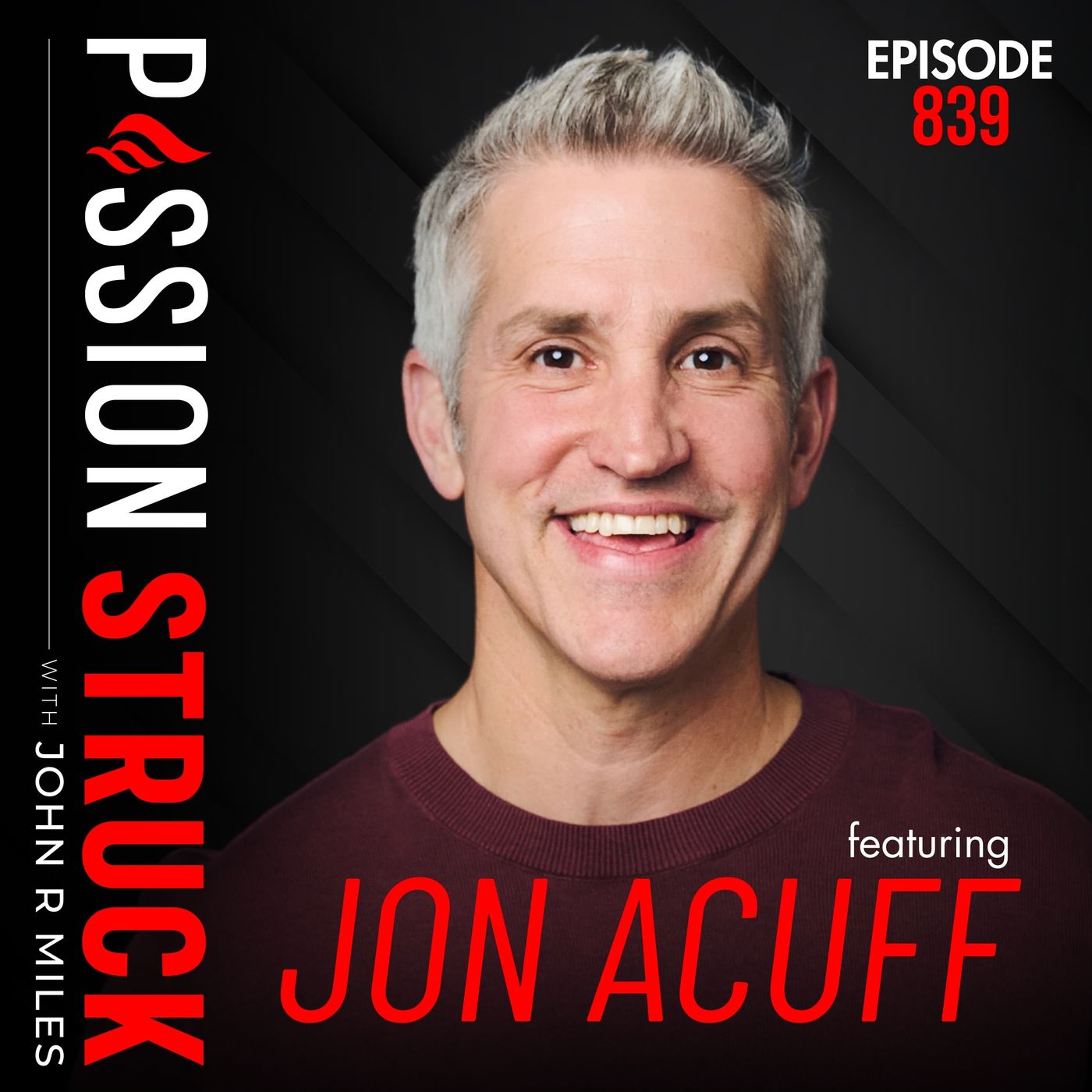
1:23Hey friends, welcome to episode 839 of Passion Struck. We're continuing our series, The Architecture of Agency, exploring the forces that shape how we see ourselves make choices and build our lives. In our last episode, Harvard researcher Alexis Redding and I explored what decades of student interviews reveal about the challenges young people face today. Her research highlighted how loneliness, uncertainty, and pressure have persisted across generations and why feeling seen, heard, valued, and encouraged can make such a profound difference as we navigate life's transitions. Before that, Stanford professor Nir Halvey and Heather Monahan joined me to explore how workplace hierarchies, competition, and difficult environments influence our relationships and our confidence.
2:08Together, these conversations point to an important idea. The environments around us shape what we believe about ourselves, but those beliefs also influence what we're willing to do with our lives. And that brings us to today's conversation. What happens when you know what you want to accomplish? But fear, perfectionism, or overthinking keeps you from taking the first step. My guest today is John Acuff, a best-selling author and longtime student of goals, mindset, and personal growth. His latest book, Procrastination Proof, examines why we delay the things that matter to us and how we can finally move from intention to action.
2:46John has spent years helping people overcome overthinking, challenge limiting beliefs, and pursue more remarkable lives. In our conversation, we explore why procrastination is often misunderstood, how fear and perfectionism keep us stuck, and why waiting for the perfect plan can become its own form of avoidance. We also discuss John's four permissions, permission to dream permission to plan permission to do and permission to review he explains why we don't need to have our entire future figured out before we begin and how small experiments can help us discover what genuinely motivates us one of the most powerful parts of our conversation centers on the stories we tell ourselves the labels we inherit the expectations we carry and the beliefs we develop about our own capabilities can quietly limit the lives we allow ourselves to pursue.
3:46And John offers a particularly important insight about motivation. When people stop believing their efforts can make a difference, they lose a reason to try. Reconnecting with a sense of purpose and seeing evidence of your own progress can help us find that momentum again. This is where John's work connects directly to the architecture of agency. Agency requires more than recognizing what has shaped us. It also requires giving ourselves permission to act, learn, adjust, and keep moving toward the life we want to build. Here's my conversation with John Acuff. Thank you for choosing PassionStruck and choosing me to be your host and guide on your journey to creating an intentional life that matters.
4:25Now, let that journey begin.
4:30One thing I've learned building PassionStruck is that creating something people love is only half the equation. You also need to make it easy for people to find it, buy it, and bring it into their lives. That's what I'm putting into practice with Start Mattering. My apparel brand built around a simple but powerful message. Every person matters. I want to take that idea beyond the podcast and my book and bring it into people's everyday lives. Shopify makes turning that vision into an online business more accessible with professional storefront themes, an AI-powered website builder, and sidekick, Shopify's AI assistant, I have tools to build my store and plan promotions without needing to be an e-commerce expert.
5:17And with Black Friday and the holiday shopping season approaching, now is the time to get your business ready for shoppers. If you're ready to launch your business before Black Friday, go to shopify.com slash passionstruck to start your free trial. That's shopify.com slash passion struck. Go to shopify.com slash passion struck today to hear your first cha-ching.
5:45I am absolutely honored and thrilled today to have John Acuff join me on passion struck. John, how are you today?
5:52Jon Acuff: I'm great. Thanks for having me, John. I am so excited to have this conversation. I've wanted to have you on the podcast for several years now. And I always feel when you really want to guest, there's just this, I think, timing in God's world where you're brought together at the right time. This recently happened with John Gordon for me as well. So I'm so glad I got the two Johns I've always wanted to have on the podcast. I'm a big John Gordon fan. So it's fun to know you guys connected. John, you've spent more than a decade now helping people finish goals, overcome, over thinking, build remarkable lives.
6:29Looking back, what have you learned about human potential that surprised you the most?
6:34Jon Acuff: There's always more. That's the first thing I would say. There's always more. I don't think, I don't know that I've ever met somebody who had tapped theirs out. I think we're always capable of more and we know it. We asked 3000 people. I did a study with a PhD named Mike Peasley. And we asked 3000 people, do they feel like they're living up to their full potential and 96 % of people said no. So we know it. And so, yeah, that would be the biggest thing is that there's always more. The short answer is there's always more. As I was writing my new book, I was researching this topic that you just mentioned.
7:05And there's this professor at Cornell named Tom Gilovich, and he has been studying regrets of people in their third trimester for years. And he's analyzed thousands of people and 76 % of them all have the same regret. And that's that they never became the version of themselves that they always dreamed they could have. So it's a huge gap when you think of three quarters of the population, their major regret. So a big group of people you're trying to address.
7:34Jon Acuff: That's massive. And I think it's also a lot of fun too, because it means there's a lot of runway. It means there's a lot more gifts to open up for you. You're not trying to find a needle in a haystack if you're trying to help people be more remarkable. There's a lot of people out there who want to be more remarkable and have a lot more to give to the world. So it ends up, it is a challenge, but it's also a, the fields are full, so to speak. The fields are full. Don't you think that's really at the end of the day what God wants for all of us? He wants us to live fully alive and he wants us to live a remarkable life.
8:07If not, why would he give us each such unique superpowers that if we deploy them in the right way, we can make such a massive difference?
8:15Jon Acuff: Well, it's, I came that you might have life and have it to the fullest or have abundant life. So yeah, I don't, I think, I think he has bigger dreams than we even understand for us. I don't think, I've never met somebody who out dreamed God where they said, Hey, I want to do this thing. And he said, no, my arm is too short. Like what I said to Moses wasn't true. It is short. I can't do that. So yeah, I don't know anybody who can out dream, out imagine, out brave God when it comes to what they're capable of. John, when I was researching this, I saw that you and I had something in common in our background.
8:48So we both discovered when we were young that we wanted to be writers. You happened to discover it a lot earlier than I did. I wish I would have discovered it in my mid thirties because I would have probably been on book eight or nine now instead of three. But how did you think about that as you were thinking about becoming a writer? Because I know a lot of people probably want to do this, but it's one of those things that I think we all procrastinate about. I certainly did.
9:18Jon Acuff: Sure. Well, part of it is, it's a challenging thing and the world talks about it in a challenging way. We kind of mythologize books. People say writing's easy. All you have to do is open a vein and bleed on the page. Oh, good grief. Oh my gosh. So I think we add a lot of pressure to the concept of it. I was telling you before we started recording, we do this event called stage and page, where we bring people in, it's 20 people at a time, and it's people that want to speak and want to write. And so a lot of people have a similar story of, I wanted to, but I didn't know where to get started. Or I wanted to, but I was afraid of the criticism.
9:53Jon Acuff: And that's a fair thing to think, meaning I never got a one-star review written about me when I was a copywriter for Home Depot. No stranger on Amazon ever said, John Acuff is terrible at writing rug headlines. He doesn't understand countertops. But when I dared to put a book into the world, I did open myself up to criticism. But the reality is I'd never trade the joy of what happened to avoid that criticism. If you said to me, okay, the worst review I could, I know the worst review I've gotten. I had a literary magazine say, Acuff's passion is undeniable, but ultimately this feels like a pamphlet stretched out into a book.
10:31Jon Acuff: That is a dagger to a writer. That is what we're all afraid of. And they said that about me. But I also know that book sold a quarter million copies. So there's no world where I would say, oh, I can avoid this criticism, but I will never get to help a quarter million people. Why would I ever choose that? So I just keep as a writer choosing that, choosing to help the person, choosing to write the thing, choosing to explore the thing, even when it's hard, even when it's messy, because I know the joy is worth that challenge. And so at this point in my writing career, that's what I remember. That's what I remind myself of, whether that's writing the book or even selling the book.
11:10Jon Acuff: Because once you publish it, like selling a book is a sprint and a marathon. You sprint to the release day and then you marathon for the next 10 years. I'm still talking about Finish that came out in 2017. That's nine years ago. So as an author, you have to have thick skin and a deep reservoir of energy to keep talking about. You mentioned John Gordon. How often has he talked about the energy bus? He's talked about the energy bus more than Greyhound has talked about Greyhound, but he's not quitting. And so that's kind of how I think about it is the joy of it is outweighs the challenge of it in my mind.
11:50if only we all had that problem where we had a book that sold millions of copies that we had
11:56Jon Acuff: to keep talking about i know to john gordon issue i would love three million copies of one of my books and have to be like oh no more energy bus or like henry cloud and boundaries i was on a flight and we sat next to each other and he co-wrote boundaries with john townsend and i said they've sold i think 10 million copies of that book or something absurd and i was like but 10 million is when that settles it. Now you feel like you have worth, right? And he just started to laugh as if there was some number that you sold enough of there. So it's never about just the number. It's hopefully about getting the message out and impacting lives.
12:29Jon Acuff: But man, it's fun to see folks like John Gordon set a really high standard of continuing to talk about a concept. Man, I love it. And I really think a lot of people, when it comes to books, they race to that finish line. And I've always hoped that what my books were something that would last the test of time and last far beyond the launch date, like we're talking about here, because I think that is what really makes a book that stands the test of time. Totally. A hundred percent. That was for me, people have asked, what do I enjoy about Procrastination Proof, my most recent book? And one of the things I enjoy is that we did the format in a specific way.
13:10Jon Acuff: We are so detailed about that. So in the book, I've never done this. This is my 11th book. It's 71 short chapters and they're not disconnected essays. I don't like when authors do that necessarily, but they're 71 short chapters because I knew if you struggle with procrastination, you don't want to read a long, thick, tedious book. You want to feel like you got to win. I love the dopamine hit I get when I finish a chapter in a book. So we were very deliberate to go, you're going to win 71 times in this book. Because when I read a Kindle and it says in the corner, 82 minutes left in this chapter, I'm like, oh, this is the worst.
13:46Jon Acuff: So I think for me, to what you just said about wanting a book to win long term, I think it is about the message. I think it is about the research. I think it is about the humor, but it can also be about the format. It can also be about how you launch it and the little details. So I think it's a fun puzzle and it's my favorite one to try to solve. Let's talk about procrastination proof. You got there a little bit before I was going to go there, but that's what we're talking I don't procrastinate, John. I don't know what to tell you. It's right there in the title. As I think about my life and especially the things I've wanted to personally accomplish, I have found just like it came down to writing or even starting the podcast, I had to research other podcasts for a year before I decided to do mine.
14:31And for me, part of that is I want to make sure that I'm fully committed to a project before I start on it. But then I also end up doing over analysis, which sometimes makes you almost doubt yourself because you start comparing yourself to others. All those things are leading me to what do you think as you research this is the reason most people misunderstand or think about procrastination in the wrong ways?
15:02Jon Acuff: Well, I think the biggest mistake people make is when they think it's part of their process. You meet people that'll go, I do my best work at a deadline. I got to do my best work at the last second. I like to wait. I'm my most creative at the last second. And what usually it's happened is that worked once in college and they thought that was now the way. So they got a B plus on a paper they stayed up all night on. And now they think that's part of their process. But the reality is nobody's first draft is ever their best draft. If we're honest and we sit on something for 24 hours, we find a better way to say it.
15:35Jon Acuff: We find a better way to do it. We find a mistake. We have an improvement. And so I think the biggest misconception about procrastination is it's a tool versus a weakness. That's the first thing I'd say about it. The second thing I'd probably say about it is I think there's a lot of people that know they want to do the thing, but they don't know how to do it. And that becomes the excuse. I don't know where to start is what I would call a broken soundtrack. I wrote a book called Soundtracks about these mindset loops we listen to. And a broken soundtrack is I don't know where to start because what you're saying is there's a perfect place to start.
16:08Jon Acuff: And as soon as I find it, oh, you better watch out. And the reality is most books, most projects, you start often in chapter three and it's messy and you have to backtrack and go, Oh, we tried this and here's what we really need to do. Here's how we refine it. So there's not a perfect place to start, but I just think there's a lot of misconceptions about what procrastination is. And I'll just define it for your listeners. Here's my definition. It's when your actions don't match your intentions. That's all it is. When who you're being is not who you say you want to be. When what you're doing is not what you say you want to do.
16:45Jon Acuff: There's a gap between those two things. And so for me, the inverse of that, the reverse of that is a remarkable life, which is when your actions match your intentions. The overlap, the Venn diagram is like an eclipse and who you say you want to be is who you're being, whether that's your family, your money, your health, it's all these things. And so once you see how simple it is, then you can start to work on the solution. I know you live in the Nashville area. And so I'm going to bring up another Nashville author who you might know, because what you just talked about reminded me of his book called The Earned Life.
17:21And who I'm talking about is Marshall Goldsmith. Oh yeah, sure. His definition of the earned life is very similar to what you were just saying. He's like, if you want to live a remarkable or earned life, you've got to match your actions with your values, and then they have to align with your ambitions and your aspirations. He says it more eloquently than I'm saying it, but there's something there. And you list out several reasons that get in people's way, fear, ego, history, time, the task itself. Which of those, when you think of this gap, is the most dangerous?
18:00Jon Acuff: If I had to say, I'd probably say fear, just because I think it's, the reality is in our modern age we live in, John, you and I, the biggest issues we'll wrestle with are mindset issues. They're just in our head. They're not physical issues. If we live somewhere, there's parts of the world where a tiger is a real issue, where there's, hey, if we go outside at the wrong time of day, a literal tiger could eat us. We don't live in that type of world, you and I and most of your listeners. So most of the things we're dealing with our mindset, meaning overthinking, perfectionism, procrastination, inner critic, imposter syndrome.
18:36Jon Acuff: They're not physical things you wrestle with their mindset. So I would say fear is probably the biggest one because it's so persuasive. It's so loud. I would say fear is probably the biggest one. And then the second one I say is culture. The big thing I tell people about procrastination in our modern world is that procrastination is the most well-funded fear in modern history, meaning Hulu doesn't fund inner critic. Netflix doesn't fund perfectionism, but every distraction in your life funds procrastination. Like my, the example I always use is the CEO of Netflix said in 2017, our number one competitor is sleep.
19:16Jon Acuff: They're worried you're going to go to sleep. So we have to at least acknowledge part of the reason it's easy to procrastinate in our modern world is we have a lot of competition for our time and for our lives. And that's not a bad thing. Like I watch TV. I'm not like I'm a monk and I spend every hour just writing. Like, I'm not saying that. I'm just, I know what the score is. And I even the odds in my favor by being deliberate about how I use my time. Let me pause here for a moment. If this conversation with John has you rethinking the goals that you've been putting off or the stories you've been telling yourself about what's possible, I'd encourage you to choose one small step you can take today.
19:55You don't need to have everything figured out to begin making progress. And if you know someone who's been stuck in overthinking, waiting for the perfect moment, or struggling to move forward on something that matters to them, please share this episode with them. If you're enjoying Passion Struck, subscribe or follow the show on Apple Podcasts, Spotify, YouTube, or wherever you watch or listen. Leaving a rating review also helps more people discover these conversations about human potential and intentional living. And if you're looking to bring thought leaders and inspiring voices to your next event or organization, explore PassionStruct speakers.
20:30You'll find more information in the show notes. Thank you for being part of this community and for continuing to put these ideas into practice. Now, a quick break for our sponsors. Thank you for supporting those who support the show.
20:47One thing I've learned building PassionStruck is that creating something people love is only half the equation. You also need to make it easy for people to find it, buy it, and bring it into their lives. That's what I'm putting into practice with Start Mattering. My apparel brand built around a simple but powerful message. Every person matters. I want to take that idea beyond the podcast and my book and bring it into people's everyday lives. Shopify makes turning that vision into an online business more accessible. With professional storefront themes, an AI-powered website builder, and sidekick, Shopify's AI assistant, I have tools to build my store and plan promotions without needing to be an e-commerce expert.
21:34And with Black Friday and the holiday shopping season approaching, now is the time to get your business ready for shoppers. If you're ready to launch your business before Black Friday, go to shopify.com slash passionstruck to start your free trial. That's shopify.com slash passionstruck. Go to shopify.com slash passionstruck today to hear your first cha-ching.
22:05You're listening to PassionStruck right here on the PassionStruck Network. Now, let's get back to my conversation with John Acuff. John, I want to talk about bows, Ted Bocelli, and geese. Sure. Yeah. So we have a one-year-old dog, and we have a squirrel problem. And we constantly are trying to put out bird seed because we have these amazing wild birds that come in our backyard. but the squirrels, no matter how many techniques and blocking mechanisms we are using, are finding ways to infiltrate it. So we've been trying to train our dog to be the squirrel chaser. And I understand when you were at Bose, there was a dog there that was trained to chase off geese.
22:48Jon Acuff: That was the best. It was the story you're talking about. I used it as a start to a story with this guy, Ted Bocelli, but the start was in, at least in Massachusetts, you couldn't hunt Canada geese and you couldn't poison them. There are all these regulations. They're a very protected bird for how many we have. We're full. We have enough of them. I'm not here to argue bird populations, but we're good. But the solution was they were trained dogs and there was one that worked at Bowes and it was the best thing to see during lunch outside the cafeteria window. And his technique was he was to round them up into a tight little fist of angry Canadians.
23:25Jon Acuff: And then he would back up 30 or 40 paces and then sprint as fast as he could into the middle of them. And they would all fly off in a panic. And you do that enough times. And I don't know how Canada geese communicate, but apparently word gets around, hey, this patch of lawn at Bo's, not good. No bueno. And so I use that as kind of the Starco story about a guy named Ted Bocelli who changed my life with a really simple illustration when I worked at Bo's. I had the same Ted in my life too. I was working for this company called the Lendlace and it was a large company and I was trying to make a difference.
24:07And a lot of my ideas were falling on deaf ears. And I got a new boss who happened to be the CIO and he really took me under his wing and started to help give me this life advice that I use today. And it sounded like for you, Ted was one of those guys. What was one of the biggest pieces of life advice you got from him?
24:30Jon Acuff: It was really about expanding your life. The illustration he drew for me, it was just on a napkin. And I was a frustrated late 20s kind of young man who had a lot of ideas and not a lot of experience. And he drew this napkin. And on it, he said, Bose is this massive, beautiful company. We create music. We are at the sound of weddings and in rock arenas. I'm like, ah. But what happens is when Dr. Bose, who founded the company, tells the second in command, say the CEO, here's the boundaries. That CEO is afraid to go over the line. So he draws the boundaries just a little smaller. So imagine a big rectangle and then a slightly smaller one inside it.
25:08Jon Acuff: And then when the CEO passes it to the president, same thing happens. president passes it to the director of marketing. And he just drew this ever constricting kind of Russian nesting doll of boxes. And he said, so you don't, as a copywriter at my level, you don't get a whole soccer field to play in and write about, you get a postage stamp. And that's really hard to live and write an expressive life inside a postage stamp. And I think that's what happens to most people. You mentioned one of our mutual friends, Steven Scoggins. And I mentioned him often because he told me a broken soundtrack his dad used to share.
25:42Jon Acuff: His dad used to say, Scoggins don't get ahead. Scoggins get by. Scoggins don't get ahead. Scoggins get by. Imagine speaking that over a young man and what that does long term, because as Steven gets more successful, he bumps into that boundary. The dad had drawn a very small little box to be in. And that's often what happens in people's lives. By the time they get to 20, 30, 40, 50, they've drawn these really small little boxes and they wonder why they're so frustrated. And so a lot of what I teach in procrastination proof is how do you break out of those boxes? How do you expand those borders and live that fuller life that you're capable of?
26:22Jon Acuff: What advice did you get from the CIO? I want to hear what was his, what did he tell you? One of the biggest pieces of advice I got from him was this. When he came on the scene, I had the responsibility for the largest function in the IT group at that point. It was a global position, lots of people, lots of budget, lots of responsibility. And then he, within the first couple of months, moved me to be his head of strategy. And I went from managing all these people, all these budgets, to I had maybe a staff of five or six. And I went through this period where I was kind of ticked off because, and he said, John, the thing about you is you have this ability to see things five, seven, 10 years in the future that most people don't have.
27:17And what we are lacking right now, the number one need I have for this organization is we have no strategy. We have no idea where we're going as an IT group. So sometimes you've got to get out of your head that the biggest impact that you can make is because of the number of people and the breadth of your role. Sometimes the biggest difference you can make is by being really crystal clear on what you're doing, who you're serving, and how you're doing it. And so he really changed my whole mindset that in order to make a huge difference, You don't need to always think of this in terms of how much budget do I have to have on me or how many employees do I have underneath me?
28:01And that for me, it was my worth was measured because I had a skillset that he needed desperately. I was the best person for that role. And so he saw my gifts and put me where he needed me the most. So it kind of changed my whole thinking. Another one he taught me was people speak with their feet. And as we were launching all these initiatives, he would say, I want you to watch what people say in these meetings. And then I want you to watch what they do over a week or two after they leave the meeting. And it was crazy. People would all go to these meetings and say, we're fully online with the strategy with these projects.
28:38And then within two weeks, about 85 % of them, their true intentions were shown by how they carried themselves and the rumor mill that you heard back about what they were saying about the initiatives. So those were two big ones.
28:51Jon Acuff: Yeah, they speak with their feet. That's good. I've never heard that one before. That's really simple. I love that. John, I grew up in parochial schools, and I'll tell you, one of the things that we used a lot was a permission slip. It seemed like you couldn't do anything in the Catholic school system without getting a permission slip from your parents. But until I read your book, I didn't really put procrastination and permission slips in the same sentence, what do they have to do with each other? It's funny. I went to a Catholic old boys high school myself. So I have a similar experience. The argument I make in the book is that's all people are waiting for.
29:31Jon Acuff: Like remarkable people aren't special or different. We often think high performers are like some different magical people. And I always tell people, if you're listening to this type of podcast, you're already a high performer. Low performers don't even know this category exists. They don't follow me on LinkedIn. They don't read my type of books. They don't come to the type of events I do. So you're already a high performer. And what you learn about remarkable people is they're really good at giving themselves permission to do the things they need to do. And one of the ways I say that is you're the most persuasive person you've ever met.
30:04Jon Acuff: Everyone is the best use it. Like you're the best John salesman that's ever existed because Because before every decision you've ever made, first you sold yourself into it. And so what remarkable people do is they talk themselves into the things most people talk themselves out of. They give themselves permission to believe it at work. They give themselves permission to try again when it didn't work. They give themselves permission to admit they don't know in a meeting. Even just to say, I don't know, can you explain that one more time? You've been around executives who can't give themselves that permission.
30:35Jon Acuff: They pretend they know in the meeting and then you find out later with their feet, boy, they really had no idea what we were talking about, but they didn't give themselves permission to be curious. And so that's what I mean about the difference between people who end up really getting after it and people who end up stuck in procrastination is remarkable people are really good at permission and they give it to themselves in creative ways consistently over time. Yeah. And as I was reading it, it made me think of this question I wanted to ask you. And that is, do you think procrastination and really permission is really more about delaying action?
31:14Or is it really about delaying identity?
31:17Jon Acuff: I think it might start as identity, and then it ends up with action. Because if you believe you're not a writer, then of course, you're not going to spend time writing. Like, why would you write if you believe, well, I'm not a writer? Or if you believe, you meet people that will say things like this, I'm not athletic. And you'll go, oh, and they'll be 38, 38 years old and go, I'm not athletic. And then they'll go, my sister was the athletic one. I was the smart one. And so when they were seven or 10, they got an identity and they're still living against that. As if you can't go then learn how to be athletic for the next 50 years, you're 38.
31:54Jon Acuff: You can't learn how to play pickleball or ride a bike or windsurf, whatever. And so I do think that identity often starts it. But of course, it would stop the action because if I don't believe I'm that type of person, then I wouldn't do that type of action. And what got me thinking about it was your four permissions. And I was thinking about the first step, which is dream. And when we dream, I think a lot of that gets into the identity we have. I remember since we're in the Stanley cup season right now, I always dreamt about being a professional hockey player. Where did you grow up? I grew up in Pennsylvania.
32:32Yeah, there's hockey there.
32:33Jon Acuff: If you had been like, I grew up in Tampa, I'd be like, there's not, there wasn't hockey when we were young, like in Tampa, but Pennsylvania, totally. I grew up Massachusetts. Hockey was everything in the Northeast. Yeah. We used to play on ponds. until the farmer started to shoot us with buck. They got a cook of a plan on their ponds. That's so funny. That's so funny. Yeah, so you wanted to be a hockey player. Oh man, I was a huge Flyers fan and I wanted nothing more in my life than to be a professional Philadelphia Flyers player. And I remember I would sit in my garage and play, but my parents would never let me play.
33:14I think it was one, because it was expensive and two, because they were worried about the injuries you would get. And I have a brother who's five, six years younger than me. And so I think one of the most pissed off moments of my life was, here you are, this kid who all he's ever wanted to do was play hockey. You're not allowed. And then my little brother, they let him play. I was so.
33:36Jon Acuff: Oh, man, man. So wait, they wouldn't even let you go out for a team. Is that what you mean? You couldn't play in the elementary school or. No. So I would play with all my friends in the afternoons, but they wouldn't let me play organizational. Well, I think I was a really good tennis player. And I think they wanted me to focus my skill sets on tennis because they thought I had a much better chance of someday getting a scholarship playing tennis and I was never going to get one playing hockey. But my point is, when you think about dreaming, I think your identity gets tied up in these things. And for some of us, you can't get beyond that dreaming stage.
34:13And that's what I was thinking of when it comes to identity. But maybe you can explain the other components of your framework, the four permissions and how they all flow together.
34:24Jon Acuff: So the four permissions are permission to dream, permission to plan, permission to do and permission to review. So when you dream, the question is, what do I want? What do I want to do? When you plan, it's how will I do it? When you are doing it, the question is just, well, am I doing it? Am I in motion? And then when you review it, did it work? And so what's fun about it is I can see times in my life where I didn't necessarily have the dream figured out, but man, I got doing and that helped me refine it. I would say right now, I'm writing a lot on LinkedIn. I am loving LinkedIn and it's, and I've got a renewed interest in it.
35:02Jon Acuff: And the soundtrack I'm saying in my own business is Instagram is fun. LinkedIn is profitable. Guess where people are who book corporate speakers. they're on LinkedIn. So I love, I'm loving writing on LinkedIn, but I don't have a perfect dream for that or even a perfect plan. I'm just writing a lot and then I'll probably review it and see what's working and then analyze the plan. So I don't think you have to have the dream perfectly nailed. In my world, I know that the question, who do you want to be when you grow up or what's your vision or what's your why shuts a lot of people down. I have a friend who spent six months trying to figure out his why and didn't change anything about his life, but he had this idea there was one perfect thing he was going to do.
35:42Jon Acuff: And as soon as he found it, then everything would settle itself. And I just don't think that's helpful. I always try to alleviate some of the pressure. I don't think you're going to have one single dream for the rest of your life. Even as your career path, we've barely talked about your career path. You've taken different roles. You've done different things. What you're doing right now is very different than the executive at Dell. And so imagine if I said, okay, at 28, you need to know your dream for the next 40 years. That would be crippling. And so I usually try to help somebody go, which of these permissions do they need to give themselves?
36:16Jon Acuff: Maybe they already have the dream and they need to plan. Maybe they're a great planner, but there's no joy in it because they kind of skip the dream stage. So let's do that. Or maybe they're a hustler. There are sales guys love doing. They hate to review. If you ask a sales guy to fill out a three field form, they're like, oh, so much bureaucracy. Get me back selling. And they're making a ton of progress, often right off a cliff. So they need to review. So usually one of the four is what's missing. And that's what I try to help people with. It is so hard sometimes when you look at colleagues, friends, classmates, and see what they're doing.
36:51I, from my Naval Academy class, by the time I was 38, I thought I was doing well until my classmate became the governor of Missouri. And another classmate of mine was flying on the space shuttle.
37:04Jon Acuff: And I would say that it's funny you mentioned that. I tell 30-year-olds all the time, you're going to feel behind, you're not. That's a human thing in your 30s. And it's funny you say that. I tell people somebody's going to have the rocket ride. In your case, they had a literal rocket ride. You're going to feel behind. And it's even harder now because Instagram shows it to you. And so that's part of it is like, no, the dream's not over. There's still lots to do. You started with people have potential. Yeah, they have way more potential. But that is funny that one of your classmates was. And it's funny, you were at the Naval Academy.
37:33Jon Acuff: I mean, most people look at that and go, oh my gosh, look what John's doing that I'm not doing. You were already ahead, quote unquote, of so many normal people. Yes, exactly. But I think we all put blinders on to the reality that we've created for ourselves, which to me, one of the anti things we do about the permission slips that we have in our lives, because we end up putting these guardrails that just slow us down, especially when we're younger. And I have a 28 year old who's looking at a lot of his classmates from high school now who are getting out of medical school and doing things like that.
38:09And he, he, so far ahead of me. And I always just point them to famous people like Martha Stewart or Sanders.
38:18Jon Acuff: That's a common one. Like where it's like, he didn't do KFC till he was in his sixties. Right. Even if you look at podcasters, look at Mel Robbins. He's a trial lawyer first. Or Arthur Brooks. He's exploded in his sixties. So you just never know. You have this chapter called, what do the signs in your stands say? Can you explain that metaphor for me and why it's so powerful? The question is really about the people that are in your life that are holding up signs. What do they say? Meaning the teachers, the parents you had, the coworkers you had. And the example I often think about is I'll sometimes deal with an executive who's in their mid forties, early 50s, and they're pulling back from an opportunity or they're even worse, self-sabotaging it.
39:04Jon Acuff: And if you pull the thread on it, you find out that when they were 17, somebody told them, you're not a natural leader. And they believed it in the moment because they didn't even know they had the permission to not believe a person in authority. They believed it in the moment. And then they listened to that soundtrack for 30 years. So one of the signs that's in their stand says, you're not a natural leader. Beware of leadership opportunities. They're actually traps. Every time they get close to one, they look up metaphorically and go, oh, I got to be careful of that. Or you see a lot of people have what I call as an acceptable success line, meaning the line of success that they find acceptable.
39:42Jon Acuff: And sometimes it's about family of origin where they don't even know how to say it. But one of the signs in their stand says, you can't make this amount of money because it's more than your dad. Or if you get healthy, your family will be mad at you. I had a guy in his 50s tell me that the other day. He said, food in my family growing up was comfort and security and culture and compassion. He said, I can't imagine going home for Thanksgiving. And my mom, and this is in the South where people make big portions, would say, I made your favorite, whatever. And he'd go, no, I'm trying to eat a little better.
40:15Jon Acuff: The mom wouldn't receive that as a food choice. She would receive that as a love versus hate choice. One of his signs in the stand says, in order to stay in the circle of your family, you can't get in shape. And you would, if you saw that on a sign in a real stand, you'd go, that's not true. But the signs we carry around internally have been written for so many different years that it's hard to see them sometimes, even though we're operating against them. So the activity I give people is figure out what's in your stands and figure out how do you write some new signs? You have permission to write some new signs.
40:49Man, I love it. John, one of the things you and I talked about before we got started today was I have a new book coming out on mattering. And one of the things I do a lot of research on is mattering. And I've heard you mention mattering a lot in the past. Do you think people struggle to pursue meaningful goals because they secretly doubt that their contribution matters?
41:12Jon Acuff: Oh my gosh. If you don't think what you do matters, why bother? I think one of the most destructive broken soundtracks is why bother? What's the point? If you feel like nothing you do has an impact, then you don't feel encouraged to do anything. And I think even a little bit of progress is wind and sails for most people where they go, oh, I do matter, or my contribution does have an impact, or I can see this change. So one of the broken soundtracks I talk a lot about in my speeches is we never reach our goals. So why do we set them? And that's a, it doesn't matter. That's apathy to me. That's what apathy tries to get you to say nothing you do matters.
41:53Jon Acuff: So why bother? And I think we, there's a lot of that in our culture right now. And I, so I'll give you an example of it. Three different sorority sisters. My oldest daughter was in a sorority, told me the same thing. And they all said, my generation will never be able to afford a house. They said, Mr. John, my generation will never be afforded a house. My kids tell me too. And so I said, number one, never let somebody in their sixties tell you how the next 40 years of your life is going to go. They don't control that. That's the first thing. The second thing is that's garbage. That's garbage because what happens is it starts as a fear.
42:24Jon Acuff: What if I can't afford a house? And then they listen to it. Then it turns into a belief. I can't afford a house. And then it turns into a law. My generation can't afford a house. And so in a situation like that, what happens is they don't even try Why? Because they've been told it won't matter. What you save doesn't matter. You're never going to be able to afford it. So then all of a sudden they go, well, it doesn't matter. So I shouldn't even try. And then they don't even have their heads lifted high enough to go, I could probably in 10 years. And then they don't see. And then people like me don't talk enough about, oh, here's what we did.
42:56Jon Acuff: We lived in the worst school district in our county on purpose because that's all we could afford. And I lived an hour away from my job because that's all we could afford. And the house was not nice because that's all we could afford. And I was freelance writing for laser hair removal companies, tire companies. I had a full-time job and I was freelancing like crazy. Our budget for our family of four was$150 a week in food. We were living off of, I told my wife, I didn't know we were poor when we were first married. I just thought we liked camping because the only vacations we ever got to do were outside because that's all we could afford.
43:29Jon Acuff: It was$11 a night. And I think when my generation doesn't share those stories enough or when they're reacted to us, okay, boomer, like even though I'm technically not a boomer, then you think it's the hardest it's ever been. And there's another thing that's a lie. It's the hardest it's ever been. My grandfather, who was 17 and lied so he could join the army early and go fight actual Nazis in a tank in Germany, would like a word with anybody in 2026 that says, this is the hardest it's ever been. No, it's not. We have so much opportunity. But again, young people are told the opposite. They're told the opposite that you'll never get it.
44:05Jon Acuff: And so then they don't even feel like they matter enough to try. And it feels so discouraging. So I, yeah, I think if you don't think it matters, if you don't think you matter or your effort matters, you don't try. I was reading this New York times article first thing, Monday morning, it was an opinion piece that basically is saying there's about ready to be a white collar blood that. And so one of the things I keep hearing from my kids and from a lot of young adults right now is why even pursue anything? AI is just going to do it anyhow. I don't even know how to get ahead of this because it's coming so fast.
44:44Do you think AI in some ways is causing people to procrastinate on their dreams? Oh my gosh.
44:50Jon Acuff: Totally. Great point, John. Yeah. But again, I go back to it and I go, okay, so then what? Even like, there's no way all jobs, like, but when somebody goes every job, here's what you need to know. Absolutes are usually broken soundtracks. Everyone's going to lose their job. AI is going to take every job. No, it's not. Absolutes are never true. No, it's not. And so you just go to that and go, okay, well, let's say it does take a lot of jobs or changes a lot of jobs. I still need a job. I still need to figure that out. Okay. Like I still need to eat. I still like, I better go get creative. That's where for me, let's just take people in their twenties.
45:30Jon Acuff: I always tell them never use the phrase work-life balance in your twenties. You shouldn't use that phrase in your twenties. These are the building years. Don't let some lazy person in their fifties be like, you got to worry about work. No, you don't. You have the most energy and most time and the least amount of finances, least amount of experience. Go combine those things. So when a young man that I'm mentoring says, I don't know if I should go back to school and get an advanced degree or have a job. I go, do both. Yeah, do both. Most people don't know they're capable of both. They set their bar so low that they don't know, no, I can figure that out.
46:03Jon Acuff: I can work on it. And I was the same way. At 24, if you had told me three years from now, you're going to start getting up at 5 a.m. to write a blog because you see it as the way out of this corporate thing, potentially, you're going to get up at 5 a.m. You're going to stop watching so much TV and you're going to get freelance jobs because your wife wants to stay home and you guys have no money, I would be like, oh, I'll never be able to do that. But let's go back to a dream. Here's a big key. The desire creates the discipline, not the other way around. The mistake people make is they think discipline leads to desire.
46:34Jon Acuff: Nope. I've never met somebody and doing this for, I don't know, 20 years, helped a million people with their goals who changed their life just because. They said, oh, today I just decided to have discipline, decided to have grit. I woke up and had willpower. It's never how it happens. No one willingly leaves to their comfort zone on purpose. And they shouldn't. It's comfortable. The only reason they leave is that something outside it is worth being uncomfortable for. So for me, early 30s, I bump into blogging, no plan, no plan, did not see doing this career, did not know I'd be doing this full time, have my own company, 50 stages a year, whatever.
47:08Jon Acuff: But I thought, oh, wow, there's a whole world out here. And if I hustle, I can talk to them. And the gatekeepers are gone. I don't need a radio station. 30 years before, I would have needed a radio station to talk to people. I have a blog that made me get up early, not discipline, the desire to feed that thing. And because I had two kids under the age of four, then I got up early. Then I couldn't, then I stopped watching so much TV because TV was giving me nothing. Blogging was giving me everything. So a lot of it is if a young person says to, or somebody in their fifties, they're like, I feel stuck.
47:39Jon Acuff: I'm like, well, go audition some goals. Audition one new goal this week for 15 minutes a day for seven days in a row. And then see if it lights you up. If it doesn't, you have permission to do a different one. Keep auditioning until you go, oh, it turns out I do volunteering at my local animal shelter. I want more time and more resources to make that happen. You'll go figure out the rest of your life to feed that fire, but you won't just change your life because nobody changed their life because they change it because there's a desire or if we're honest, a disappointment. They're not where they want it to be.
48:11Jon Acuff: And the disappointment is loud enough that they'll do something. John, I wanted to ask you one more question about the book. And then I was going to ask you a couple of questions about your podcast. Yeah, totally. Get you on your way. At the end of someone's life, this is kind of where we started. What separates the people who learn not to procrastinate and become remarkable from those who spend their lives waiting? My hope is that you've got a rich life on a couple of factors. I think there's really five games to life. There's career, there's financial, there's relationship, there's health, and there's fun.
48:44Jon Acuff: And so my hope is that you'd, at the end of your life, you'd have a rich part. Every one of those would be rich. I had a friend say it this way to me. I laugh about this every time I think about it. He said, every time somebody says, you'll never wish you had spent more time at the office on your deathbed. He says, boy, you must've hated your coworkers. You must've hated your job. Like I know, I love what I do. I think it's garbage to go on your deathbed. You'll never wish you spent more time at work. I love what I do. I want you to love what you do. So my hope would be on your deathbed. You're surrounded by people who love you.
49:15Jon Acuff: You have whatever your definition of success is. You've lived successfully. You don't leave your kid's debt. One of the largest kickstarters right now is funerals, meaning parents die with so little money, their poor kid has to kickstart and beg for people to pay for the funeral. Can you imagine your dad dies? Traumatic moment. And then you have to panhandle. I hope you're laying on your deathbed and you've blessed your kids financially. And I hope you've blessed them before that moment. I think my personal finance is like, we're going to bless our kids along the way. I'm not doing this garbage thing where at 68, when they were already successful, I dumped some money on them.
49:51Jon Acuff: We're going to figure that out as they go, when they actually need it. Side conversation. But yeah, I hope that you have this rich, full life by your definition that you feel good about. And I hope, and I think that's possible. Man, thank you. And remarkable book. I'm so glad. That's one of my favorite things about doing these podcasts is I get to read so many books. Oh, I bet. That's fun. But I also wanted to give a shout out to your podcast. So far, I have done over 220 solo episodes. Oh, nice, dude. People are always like, man, how do you do them? And it's actually like writing a keynote. But to me, it's one of the most fulfilling things I do because I have found that I could have Susan Cain on the podcast and my solo episode outperforms it.
50:39And so I really dedicate a lot of time to that. And I think you do too. So could you just use that to tell us about the podcast and why yours is different?
50:48Jon Acuff: So a podcast called All It Takes is a Goal, where I talk about everything I talked about today. What does it take to be remarkable? What does it take to have the kind of life you're really capable of? I've done a bunch of fun interviews. I've been honored similar to you with the people that have come on the podcast. And then I also do a lot of solo episodes where I find a topic that I'm working on in my own life and I kind of share what I'm working on. I'm an in the trenches kind of communicator. I don't like to share something that happened 30 years ago. I like to say, oh man, I'm really learning how to talk with my wife in a different way.
51:21Jon Acuff: Even at 25 years in, we're learning new things about each other. Here's what that looks like. Or hey, as a parent, I'm learning how to parent adult children. I thought it would be easier. I guarantee you'd say the same. I thought it'd be easier when they got older and it's the reverse. It's actually more challenging in a lot of ways. Here's what I'm learning. So that's what I talk about in the solo episodes, or I'll say, here's a soundtrack that's really helped me. To beat my perfectionism, the soundtrack, some beats none has been helpful because on the days when I go, I want to run three miles today, but I only have time for two, so I'm not going to do it.
51:51Jon Acuff: That's perfectionism. Some beats none. Two miles matters more than zero. And I go, oh, you're right. some beats none. So I share a lot of the soundtracks that I found in my own life who have helped me along the way. Love it. John, it was such an honor to have you today and lived up to all my expectations. Oh, good, good. Well, we have a lot of mutual friends, so I'm sure you'd tell them if it didn't. Be like, hey, Rory, John Acuff, what? He's a great author, terrible podcast interview. So no, this has been a blast for me too. Awesome. Thank you so much and wishing you all this success with this book.
52:23Great. Appreciate it, John. John Acuff's message is a powerful reminder that the distance between the life we're living and the life we want to build often comes down to the stories we tell ourselves. When we believe our efforts won't make a difference, it's easy to stop trying. But every small step forward gives us evidence that our choices matter and that change is possible. Throughout the architecture of agency, we've explored the forces that shape our beliefs, our relationships, and our willingness to act. John brings that journey to a practical point. We don't have to wait until we're fearless, perfectly prepared, or certain of the outcome.
52:59We can begin, learn as we grow, and build momentum through progress. If this conversation resonated with you, share it with a friend who might be putting off something meaningful or struggling to take that first step. You never know how a conversation like this might help someone see differently. And if you're enjoying the show, subscribe or follow Passion Struck on Apple Podcasts, Spotify, YouTube, or wherever you watch or listen. Leaving a rating or review helps more people discover these conversations about human potential and intentional living. And next week, we begin our new series, The Art of a Life Well-Lived, an exploration of how we nourish ourselves, discover what matters, and build lives guided by purpose.
53:42We're opening up with Lee Cotton and a conversation about food, nourishment, and the everyday choices that shape how we care for ourselves and experience life. It's a fitting place to begin a series about what it means to live well with greater awareness and intention. I hope you join me. When I was struggling in my late teens with my issues surrounding with food, that word matter was something that I didn't feel like I mattered. So if I shrunk myself or disappeared, it wouldn't really matter. And that was the way that I controlled it with food. So that is a very profound statement when it comes to food and nutrition.
54:20Those words, I matter, those two words.
54:22Jon Acuff: Very important. Until next time, I'm John Miles. Stay curious, stay intentional, and stay passion-struck.
54:44One thing I've learned building PassionStruck is that creating something people love is only half the equation. You also need to make it easy for people to find it, buy it, and bring it into their lives. That's what I'm putting into practice with Start Mattering. My apparel brand built around a simple but powerful message. Every person matters. I want to take that idea beyond the podcast and my book and bring it into people's everyday lives. Shopify makes turning that vision into an online business more accessible with professional storefront themes, an AI-powered website builder, and sidekick, Shopify's AI assistant.
55:24I have tools to build my store and plan promotions without needing to be an e-commerce expert. And with Black Friday and the holiday shopping season approaching, now is the time to get your business ready for shoppers. If you're ready to launch your business before Black Friday, go to shopify.com slash passionstruck to start your free trial. That's shopify.com slash passionstruck. Go to shopify.com slash passionstruck today to hear your first cha-ching.
What if procrastination isn't a problem with your time, but a problem with what you believe you're capable of doing?
You know what you want to change. You have ideas, ambitions, and goals. Yet somehow, you keep waiting for the right moment, the perfect plan, or the confidence to begin.
On this episode of Passion Struck, I sit down with Jon Acuff, bestselling author of Procrastination Proof, to explore why so many capable people get stuck between intention and action. Drawing on his work helping people overcome procrastination and build more remarkable lives, Jon explains how fear, perfectionism, comparison, and the stories we tell ourselves can quietly limit what we attempt. We also discuss why the desire to do something meaningful often creates the discipline needed to pursue it, rather than the other way around.
In this conversation, you'll discover:
Jon also shares the advice that helped him expand his own ambitions, why he believes we often underestimate our potential, and how to build a life that feels rich across career, finances, relationships, health, and fun.
You don't need to have your entire future figured out before you begin. You need to identify the next step you're willing to take, give yourself permission to try, and learn from what happens.
Check out the full show notes.
Pre-Order The Mattering Effect: https://matteringeffect.com/. Take the 90-second diagnostic to see if you're disappearing.
Explore the Show: https://passionstruck.com/starter-packs/. New to Passion Struck? Start with the best episodes curated for you.
Connect with John
Support the Movement: https://startmattering.com/. Every human deserves to feel seen, valued, and like they matter. Wear it. Live it. Show it.
Passion Struck — #1 Alternative Health Podcast. 85M+ downloads.
Disclaimer
The Passion Struck podcast is for educational and entertainment purposes only. The views and opinions expressed do not necessarily reflect those of Passion Struck or its affiliates. This podcast is not a substitute for professional medical or psychological advice.
Hosted by Simplecast, an AdsWizz company. See pcm.adswizz.com for information about our collection and use of personal data for advertising.