Ask ChatGPT

 Passion Struck with John R. Miles
15 Oct 2026 · 1h 3m · 18 chapters
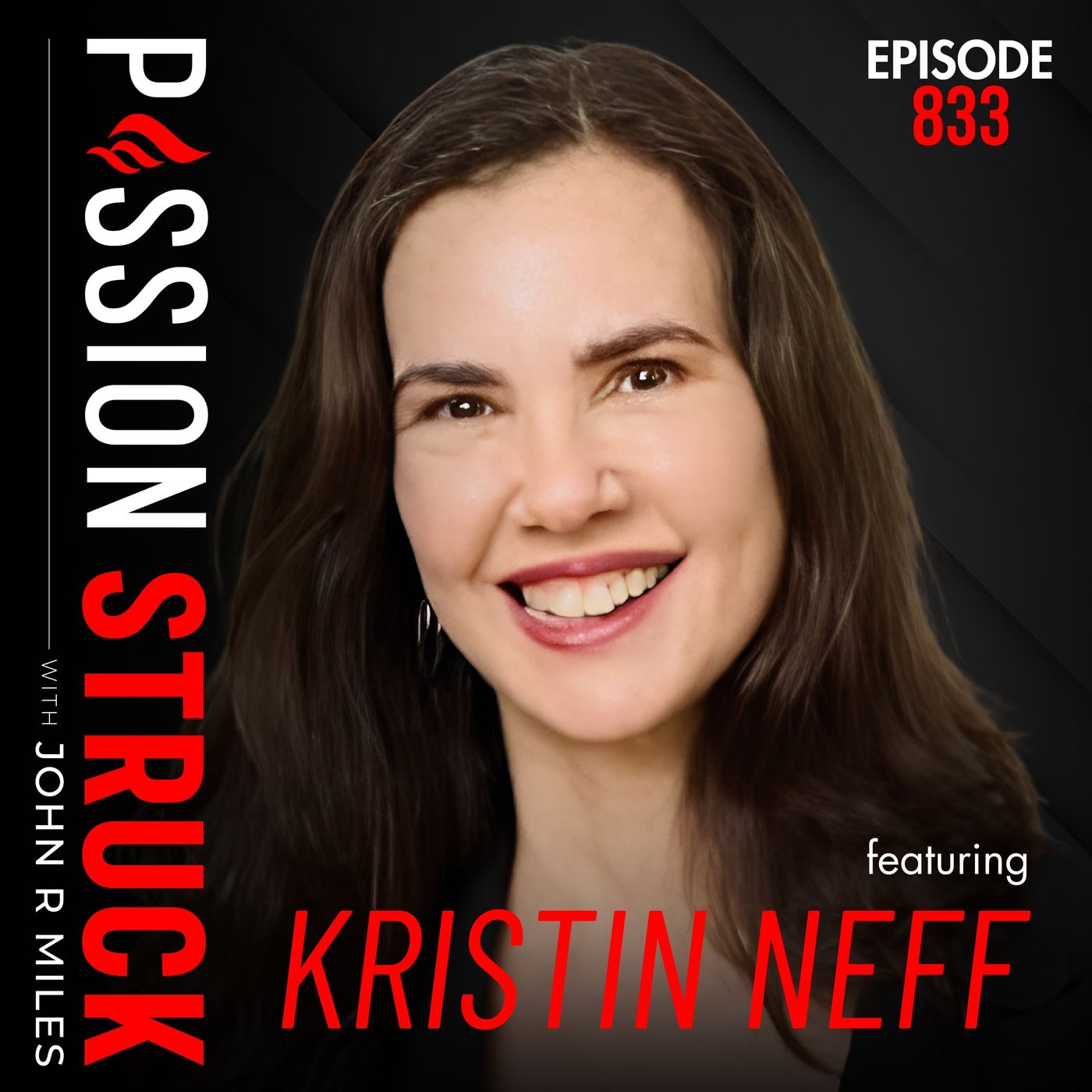
Self-compassion vs self-esteem; how conditioning, culture, and social media intensify an inner critic, shame, burnout, and reduced agency; how mindfulness plus warmth and common humanity (“I will not abandon you”) can break negative spirals and support meaning, belonging, and emotional safety.
Dr. Kristin Neff, pioneering researcher on self-compassion and emotional well-being; author of Self-Compassion (healthier alternative to self-esteem) and The Mattering Effect (about systemic “unmattering,” worth measured by what you produce).
Self-esteem is conditional evaluation; self-compassion is kindness when hurting. Shame and numbness are biologically driven threat responses; self-compassion interrupts loops (over-identification, judgment, isolation) and creates positive spirals (life satisfaction, purpose). Emotional safety and warmth are prerequisites for agency. People seek love and belonging; self-compassion helps meet that need without bypassing the hurting “separate self.”
Social media “likes” quantifying worth; an autistic son counting likes; teaching self-compassion at Dell Children’s Hospital where self-sacrifice culture fueled burnout; “I’m here for you” and “I will not abandon you” as core phrases; using touch/parasympathetic activation to feel safe.
Written by AI. May contain mistakes.
John and Dr. Neff discuss how self-compassion influences our well-being.
“We're continuing our series, The Architecture of Agency, exploring the forces that shape how we see ourselves, make choices, and build our lives.”
They explore societal pressures that affect self-worth and the impact of social media.
“And don't forget to subscribe to PassionStruck on Apple Podcasts, Spotify, or YouTube.”
Learn about the societal constructs influencing our self-worth.
“a human being who's doing the best they can.”
Understand how the sense of separate self affects our connection to others.
“interact with, our family system, our school system, our work system, even our consumerism system, government system, is teaching us to value our worth by what we produce rather than who we are.”
Discover how loneliness and burnout are connected to our sense of self.
“What I kept looking at is we treat these things as separate conditions.”
Explore the relationship between emotional numbness and self-compassion.
“Thank you for supporting those who support the show.”
Learn how self-compassion can help you feel safe and less lonely.
“nurture those intrinsic motivations and desires which are driving the system, which is the desire to be well and safe.”
Discover the impact of presenting a false self and its effects on well-being.
“Awareness, compassion awareness says to that sense of suffering self, that sense of inadequacy, I am here for you.”
Understand how self-compassion can prevent burnout and enhance care for others.
“a mask and I was projecting one version of myself out in the world while reserving the true me in the background.”
Learn how self-compassion can disrupt negative thought loops and enhance emotional well-being.
“And coming back to this idea of how we're all connected, what we cultivate internally is communicated to every single person we come into contact with.”
Explore how self-compassion not only alleviates suffering but also fosters positive emotions.
“So there's actually three components to self-compassion and I'm going to unroll them here just because a lot of people may know about it, but it's relevant.”
Explore how self-compassion fosters agency and emotional safety.
“We become more curious and it creates this broadened and build cycle that, I don't know if you've had Barbara Fredrickson on here, but you've heard about it.”
Understand the role of self-compassion in discovering life's meaning.
“Again, I've been doing this for 20 years.”
Learn about the impact of conditioning on our thoughts and choices.
“You can think of that from a biological standpoint.”
Discover how parents can foster self-compassion in their children.
“I want to leave the listeners with some takeaways.”
Learn how parents can model self-compassion to help children develop this skill early.
“Just because I made a mistake doesn't mean I am a mistake.”
Explore how practicing self-compassion can lead to more effective self-care and emotional resilience.
“I did this year were with Stephen Post and then Mark Nepo.”
Get a glimpse of upcoming discussions on agency and competition in personal and professional environments.
“And now there's so many thousands out there.”

Get the gist, explore an idea or ask about something said.
 Claude
On Passion Struck with John R. Miles, what are the key points of this episode?
Searching your listeningAutomatic transcript. May contain errors.
0:00Fall tastes better with better ingredients from Whole Foods Market. No added growth hormones or antibiotics in their meat department means slow-braised short ribs are even more satisfying. All seafood is wild-caught, like their vibrant sockeye salmon or verified responsibly farmed. And all sweets, including fall-themed cookies, are made without high-fructose corn syrup. Spice up fall at Whole Foods Market. Shaq here. What's it like to buy a car from Carvana 100 % online and get it delivered to your door? Let me tell you. Your car is here, Mr. Shaq. Thank you, Mr. Carvana guy. Can't wait to take it for a spin.
0:39Only the best for you, Mr. Shaq. Hey, have you always been so big, tall, and handsome? Not always. I was 6 '10 once. Seven days to love it or return it, Mr. Shaq. Not that I would. You never do. No, I never do. So buy your car today on Carvana. Delivery fees may apply. See our seven-day return policy at caravano.com. Therapy's biggest impact doesn't show up in some dramatic breakthrough. It shows up in the smallest moments. You bite your tongue instead of escalating. You put your phone down instead of firing off that text. You say what you actually mean instead of what would hurt someone else the most.
1:15Nobody applauds those moments, but they quietly change your life. That's what growing feels like. And that's exactly what Grow Therapy is here for. Grow Grow is therapy that works covered by insurance. Sessions average$21 with insurance, and some pay as little as$0 depending on their plan. There are no subscriptions, no long-term commitments. You just pay per session. Grow connects you with thousands of high-quality licensed therapists across the U.S., offering both virtual and in-person sessions nights and weekends. You can search by what matters, like insurance, specialty, identity, or availability, and you can book a therapy session in minutes and begin in as little as two days, not the national 48-day average.
2:03See if you could pay as little as$0 for therapy in seconds at growtherapy.com slash book now. That's growtherapy.com slash book now. growtherapy.com slash book now. Availability and coverage vary by state and insurance plan. Coming up next on Passion Struck, what if the voice you hear most often is the one that makes you feel the least worthy? Dr. Kristen Neff, the pioneering researcher behind the science of self-compassion, has a powerful message for the moments when life gets hard. I will not abandon you. What changes when you learn to offer yourself that kind of compassion? Listen to this. One of the most direct ways to feel safe is to put your hands on your body, activate your parasympathetic nervous system, and say some words of kindness and support to yourself.
2:56Even something like, I'm here for you. My favorite self-compassion phrase that I use most often, this most powerful that lands, I will not abandon you. I am here for you. I care. I will not abandon in you. Hey, it's your friend, John, and welcome to PassionStruck. I'm so glad you're here. Whether you're a longtime listener or someone who just discovered the show, thank you for pressing play today. Maybe you've built the life you were supposed to want, but you've quietly wondered why it still doesn't feel like enough. If that's you, you're in the right place. Every week, I sit down with the world's top scientists, researchers, and thinkers to uncover what it actually takes to build an intentional life that matters.
3:42Thanks for joining me. Let's get into it.
3:49Hey friends, and welcome back to PassionStruck episode 833. We're continuing our series, The Architecture of Agency, exploring the forces that shape how we see ourselves, make choices, and build our lives. In recent conversations, we've examined how our beliefs influence what's possible, how childhood experiences shape the patterns we carry into adulthood, and how those patterns can influence our sense of worth, relationships, and belonging. Today, we're turning inward to explore a relationship that influences every other relationship we have, the one we have with ourselves. My guest today is Dr.
4:28Kristen Neff, a pioneering researcher in the field of self-compassion and a leading voice in the science of emotional well-being. Her groundbreaking work has helped millions understand why the way we respond to our own suffering matters so deeply. Kristen makes a powerful distinction between self-esteem and self-compassion. Self-esteem often depends on how we evaluate ourselves, whether we feel successful, capable, or good enough. Self-compassion begins with something more fundamental, learning to treat ourselves with kindness when we're hurting, struggling, or falling short. That distinction has enormous implications in a culture that continually encourages us to prove our value through achievement, productivity, appearance, and approval.
5:15In my new book, The Mattering Effect, I explore how the systems around us can condition us to measure our worth by what we produce rather than who we are. Kristen's research offers another essential piece of the puzzle. How we internalize those expectations, how our inner critic keeps them alive, and how self-compassion can help us build a healthier relationship with ourselves. We talk about perfectionism, shame, burnout, the importance of belonging, and why emotional safety is essential to personal agency. We also explore how we can learn to recognize our conditioning, respond to ourselves differently, and make choices that reflect what truly matters to us.
5:54It's a conversation about self-compassion, human connection, and what becomes possible when we learn to stand beside ourselves through life's hardest moments. I hope you'll share today's episode with a friend or family member who needs to hear its message. And don't forget to subscribe to PassionStruck on Apple Podcasts, Spotify, or YouTube. Now let's dive in with Dr. Kristen Neff. Thank you for choosing PassionStruck and choosing me to be your host and guide on your journey to creating an intentional life that matters. Now, let that journey begin.
6:31I am so honored today to have Dr. Kristen Neff on PassionStruck. Kristen, it is so great to see you. It's great to see you, John. Happy to be here. I have been wanting to have this discussion for so long, I can't even tell you. So it's such an honored to have you here with me today. To give you a little bit of background, over the past few years, I've been talking with some of the world's leading psychologists, and one question keeps coming back to me. We seem remarkably capable of extending grace to other people, yet astonishingly cruel to ourselves. And my question is, how did we become a species that talks to itself this way?
7:16I think it's our conditioning, right? So it's really both our biological, our cultural, and for some people, our family conditioning. In other words, there's a lot of unconscious patterns that lead us to do this. So when we suffer, compassion is how we are with suffering, compassion. Usually when we're suffering, we feel threatened in some way. There's some negative experience, which frightens us. There's some fear. We feel unsettled or insecure, either because we made a mistake or something difficult that's happening in our life. And so when we feel threatened, we go into fight, flight, or freeze mode, right?
7:52Sympathetic nervous system gets activated. We feel there's a danger. And so we strike out against the danger. But of course, especially when that danger comes from the inside, we turn the fight, flight, or freeze response inward and we fight ourselves. At some level, we're just trying to keep ourselves safe, get ourselves in line, or maybe beat ourselves up before other people do. So we'll bump the pain or we flee into a sense of shame and isolation, which again is a very biologically conditioned pattern. Shame is an involved emotion because back in the day, if you pissed off the group, if you felt shame, they would kick you out.
8:29And that wasn't good for group cohesion. So again, it's just in our biological reactions or we freeze, which is when we ruminate, we get stuck in things. So that's one reason. And now the other people our close friends or loved ones, we have what's called the care response, right? It's actually more natural to be caring toward them because in evolution, if we cared for our kin and close group members, then maybe even if our genes didn't get passed on, it would be passed on to people related to us. So that's just one way the biological conditioning works. Then you add on to it cultural conditioning, beliefs that it's selfish or that it's a form of self-pity or it's going to make you lazy or make you unmotivated, self-indulgent.
9:14And for some people, their family models for them that they aren't worthy of getting their needs met. It's not surprising if you think about it, but it's easier to be compassionate to others than ourselves. It's interesting that you bring that up. I'm not sure if you're familiar with the work of Peter Gray, who teaches at Boston College. I may be, but please remind me. If I am, it's not coming straight to mind. Well, Peter is now in his 80s, but there was just a really interesting piece that came out in where he is challenging Jonathan Haidt's thought processing. And this came out in The Atlantic.
9:50But what he has been tracing is what has been going on with youth mental health. And is the causality of this truly the advent of social media and smart devices starting in 2010, or has something been going on long before that? And his point of view is that it has been going on much longer than that. And a lot of it has to do with the way that children are being raised. And so when we were talking yesterday, he's got a new book coming out called Restoring Childhood. we were talking about how more and more children today are growing up feeling that they're never enough and that the more they try to feel like they're enough, the more the gold lines seem to extend beyond them.
10:41And what does that do to a child when they're growing up and how does it impact their self-compassion? So what does it do to children, adolescents or adults? Let me just back up a little bit because I think one of the things that's going on here is our sense of self, our sense of self-worth, our self-concept. We confuse our thoughts about ourselves with who we actually are. And one of the big differences I make is between self-compassion and self-esteem. Self-compassion is being there for yourself when you're hurting. Self-esteem is judging or evaluating ourself. We take ourselves very personally, right?
11:23Even though we didn't choose the family we grew up in, we didn't choose our genes, we didn't choose much of what impacts what's happening to us right now, we take it all very personally. So I think, as you say, the criteria for judging ourself positively has gotten more intense, more strict. It used to be as long as you didn't hurt anyone and you kind of made a decent living and you're a somewhat decent member of society, you felt you had some place in society that you had worth. But now, again, there's so many things that we can achieve. We think we must achieve them in order to be worthy. Right.
12:03So starting very young, you got to get good grades. You got to get good grades in high school. You got to pass all these tests. You got to go to the right school. And then it just keeps piling on. And then, of course, you've got to get the right job and you've got to be paid the right amount. And again, it continues. You've got to have the right car, the right relationship. And so all this, I think, comes from the fact we drive our sense of worth from conditions, basically a success. And it's very different than self-compassion. With self-compassion, your only criteria for needing self-compassion is being a flawed human being.
12:39It's like that's a box most people can check. so I do think that the criteria for what counts as the success in many ways is getting more stringent and that's adding to the pressure and it's happening earlier and earlier in many ways and then you add to that social media so maybe you thought I don't know I thought it was pretty good looking maybe I'm not saying personally but maybe you think you're pretty good looking but then you look on your Instagram feed and you see all these images of people we're getting all these likes on their Instagram feeds and then it really makes you question it And then also what social media does, I think John Haidt is right about this, is that it starts kind of quantifying how popular you are.
13:20Before, you might have had a vague sense of it, which in some ways, maybe that has its own problems because maybe you're more popular than you thought you were. But now it's like, how many likes do I have? How many Instagram followers do I have? My son, who's autistic, he participates in zoo chat forums. And he says, Mom, I got seven likes on my post. And I try to explain to him, that's great, darling, but it's also, it doesn't matter if you get no likes on your post. That's not really what it's all about. It's like, yeah, I know. But he's really excited that he gets seven likes on a zoo chat post.
13:55And so this is happening at a younger and younger age. And that makes our sense of worth more extrinsic as opposed to intrinsic, just because we are a human being who's doing the best they can. I have a book that's coming out in October called The Mattering Effect. And I had a blown up argument with my publisher that the book should be called Worth and not the mattering effect. Because the core idea that I'm really exploring is something that I end up calling systemic unmattering. But really what I'm going into is that we now live in a society where everywhere you turn all the systems, if you think about this from a signal standpoint, all the systems we interact with, our family system, our school system, our work system, even our consumerism system, government system, is teaching us to value our worth by what we produce rather than who we are.
14:59Yes. And I thought that would resonate with you and your work. Yeah, absolutely. So this has always been interesting to me. I don't know if the first paper I ever published on self-compassion was called Self-Compassion, A Healthier Alternative to Self-Esteem. Precisely because of this, this idea of esteeming ourselves, we can base our worth on a lot of contingent things. It may be how productive we are. It also may be our appearance. It may be how nice we are. You might think, well, maybe that's a little better. I'm a nice person. That's better than how much I produce, but then you start getting people pleasing behavior.
15:39So when your worth is intrinsic, when it comes simply from being with a capital B, as opposed to the separate self, then things change. And I think also that's tied up with this, you know, probably that my interest in self-compassion came from my Buddhist studies. And I think this whole idea of to what extent is your sense of separate self activated in the moment. The more it's front and center, the more we're interpreting our own experience and the world in terms of how we as a separate individual relate to the world, the more we're going to really take seriously whether the evaluation of that separate self is positive or negative.
16:21But the more we can let go of that sense of separate self and see ourselves as part of the larger system, as part of the larger world, connected to everything, then it doesn't even really make sense to judge ourselves so personally or take things so personally. And I think that's a larger thing that's going on here is how much is the sense of separate self salient to you? And I would argue that things like social media, all this constant evaluation, part of what it does is it makes that sense of separate self really salient, really strong, and it filters how you're interpreting your interactions with the world.
16:58I really appreciate that. And behind all of this, what started this whole exploration for me was a bigger question. So I saw the loneliness epidemic. I saw how many people were burned out and you are an expert on that topic. I saw how many employees are disengaged. I saw how many people feel helpless, et cetera. What I kept looking at is we treat these things as separate conditions. And I kept coming back to, are they really just symptoms of something larger? And that's been what I've been trying to probe. What is your thought about that? I think that they are symptoms of something larger. Again, I do.
17:44So the Buddha talked about the suffering caused by the sense of separate self. So certainly this is nothing new. I think in a way this is the human condition, the way the human brain works, including features the brain like the default mode network whose job it is to create a sense of separate self and look for problems. So it's not a brand new problem. It's been around for a long time. But I think what's happening is back in the day, let's say in the time of the Buddha or even 500 years ago, you had a sense of separate self and maybe you worried about it and you had some suffering, but it was really embedded in the larger web of relationships more naturally, just because of the way society was.
18:25Society was simpler in many ways back then. But now with social media and the internet and a lot of our interactions aren't in person, we're living in our heads more and more, not all of us, but many of us are just living in our heads more and more. We're actually outside less. This is just a simple fact of not being in nature as much as we used to. Before you go out and tend your fields or walk from point A to point B, and you have a little connection with nature, and that would give you some sense of larger connectedness. But now we sit and I'm sitting here talking to you on Zoom. I drive, I literally do because it's hot in Texas, I have an excuse, but I drive the three minutes to the grocery store, consuming social media, everything is really making life more abstract and less connected, living more and more in our heads.
19:15I think it's fair to say that as a general rule, that's true. And as we live more and more in our heads and then thought forms and thought, remember the word apple is not the same thing as an actual apple. It's one step removed from living and being present with what's actually happening. I think all that helps makes us feel more lonely, more separate and more isolated. So, yeah, I do think it's all connected. It's part of a larger pattern. Let me pause for a moment. If this conversation is helping you see your relationship with yourself in a new light, I'd love for you to explore my new book, The Mattering Effect.
19:51It examines how we learn to measure our worth, why so many people feel invisible or undervalued, and how we can create lives and environments where people know their presence matters. You can find The Mattering Effect wherever books are sold. And if you're getting something meaningful at a passion stroke, please take a moment to subscribe or follow the show on Apple Podcasts, Spotify, YouTube, or wherever you listen or watch. Leave a rating or review if you can, and share this episode with someone who might need this conversation. Now, a quick break for our sponsors. Thank you for supporting those who support the show.
20:33you're listening to passion struck on the passion struck podcast. Thank you for being part of this community. Now let's get back to my conversation with Dr. Kristen Neff. So as I was asking the same question, I started to think about what makes us lose those things. And I thought of the work of Amy Edmondson and psychological safety. I thought of the need for love. Yes. But then I started to also tune into the mattering instinct. Second that we are born, we have this instinct to want to find our place in the world. And why do I matter? It's the first thing you do when you come out of your mother's womb.
21:15And so it started to cause me to explore this more. What do you think is the link to mattering or not mattering to the question I asked before? I don't know if you've heard. I love my colleague, Chris Grimmery talks a lot about shame. Shame, you might say it's the inverse of love. And he really has a beautiful take on shame, which is if you turn shame upside down, it's really just the wish to be loved. And everyone deeply embedded into our biological being is the wish to be loved. When we're born, we need someone to love us, to take care of us so that we will survive, right? So this is built in, especially as mammals.
21:58If we were reptiles or lizards, maybe it wouldn't matter so much. But built in as mammals and humans is this need to be loved. And so I do think it's hugely important. And it's nothing to be ashamed of. It's almost like the desire to be loved isn't the same as being a people pleaser or having to be perfect or anything. that just the wish to be loved, the wish to be connected to love, this is just essential to our nature. And I do think we could find that, fulfill that need and desire to be loved by seeing our part as, by seeing ourselves as part of the larger whole, as opposed to like getting those days on the exam.
22:35But the need to be loved is essential, nothing to be ashamed of. And if we can see it, so for instance, let's say you're feeling shame. One of the reasons shame is so sticky and so problematic is because it's so uncomfortable. We shove it down into our unconscious. We don't even realize it's there. It's driving a lot of very unproductive behaviors. But if you just recognize, okay, I want to be loved. That's every single person on this earth wants to be loved. It's so natural that it's not this boogeyman. We can actually work with it. So the need to matter, to need to feel like we're part of the larger whole is key.
23:15But I do think we're looking for love in the wrong places, I got to say, in the sense that, so we are separate selves from one point of view, right? We are separate selves, we have unique identities, unique histories, unique conditions, unique situations. And that is true. It's not to be belittled. I don't agree that the sense of separate self is an illusion. I think it's one way of looking at things. From one point of view, we are a separate self and we're distinct and unique. And from another point of view, you might say we are all part of this larger being unfolding, interconnected causes and conditions who are aware.
23:53Both are true simultaneously. And the more you learn to hold both points of view so that you get some of your needs for love, fulfillment, for belonging. And I think most people intuitively sense this when they're out in nature. When you're out in nature and it's just you and you're just out in the mountains or the trees. You just feel it, the sense of being part of a larger whole. And often people will have a sense of kind of love or battering in those contexts. And so I think, again, it's not that we shouldn't care about relationships and being valued. It's not that it doesn't matter, but we don't want to only look there.
24:33We also want to look inside into our own awareness, into our own heart, our own capacity, to connect with something larger than ourself, which in many ways is what self-compassion is. It's funny, people get confused. When I first came on the scene, my Buddhist friends didn't like the term self-compassion because they said, aren't you just reifying the self? Isn't the self the problem? But what you're actually doing with self-compassion is you're moving away from the sense of separate self and suffering toward compassion. And compassion is warm, it's spacious, and it's intrinsically connected to the larger whole.
25:09And so we actually can get a lot of our sense of worth and belonging from resting in compassionate presence. Thank you for sharing that. As I was researching you and what you've been up to over the past year, I saw your interview with Ethan Cross and is a friend of mine. I've had him on the podcast several times and I loved his book, Chatter. I felt more pulled to his more recent book. And as I was listening to you talk, his second book gets more into, I think the emotional side of being a critic to ourselves. But I'm wondering, I had reached this point years ago where I had started to become numb.
25:58I was also burned out, et cetera. But I'm beginning to sense that more and more people are emotionally numb in many ways. And do you think when we experience more numbing of that emotions, it impacts what we were just talking about, that critical voice that we need to hear, the self-compassion that we need to feel and how we respond to it? Absolutely. Well, some people numb themselves out in response to the inner critic. A lot of people numb themselves out in response to trauma or in response to a lot of stress. If you think of what we're doing when we numb ourselves, by the way, we aren't consciously choosing, I'm going to numb myself today.
26:40It's just the body's natural reaction when it's overwhelmed. It just shuts down. It starts letting in less sensory information, both emotional and physical, because it's just too painful. So it's nothing to be judged or shame ourselves for. It's just a natural response. It's too much. I'm going to shut down. And so when we numb ourselves, what it also means is we can't feel those emotions of joy, right? Or happiness or love or just blank. What's interesting though, I think if you unpack, if you dig, why do you think you're numb? Again, not consciously, but why do we think that either parts of ourselves, if you're an internal family systemist person or you're subconscious or however you want to frame it, why do you think it happened?
27:25It's because it comes out of care. right? The body naturally wants to survive, wants to be well. That's built into our biology. So that desire to be safe, to be well, not to be so stressed is actually driving the numbness. It's like with shame, if you just open the lid, it's like, oh, what's underneath there? Ah, actually what's underneath it are some pretty good things like the desire to be well, the desire to be peaceful, the desire not to be so overwhelmed with stress or pain or whatever's happening. And so what happens is once you look under the hood, so to speak, you can try to nurture those intrinsic motivations and desires which are driving the system, which is the desire to be well and safe.
28:08And what we know is what we found in my work is one of the most direct ways to feel safe is to put your hands on your body, activate your parasympathetic nervous system, which actually creates heart rate coherence, heart rate variability, and say some words of kindness and support to yourself. Even something like, I'm here for you. And some people think, well, who is here for whom? You might think of it as compassionate presence saying to that sense of separate self who's scared and lonely and feels inadequate, I am here for you. Right? So it's interesting. More and more I've been getting interested in, I say spirituality or spending more time in that space.
28:52What I notice is oftentimes people, when they talk about transcending the sense of separate self, there's a little bit of bypass that can occur where they say, oh, the separate self is an illusion. I'm just going to connect with oneness. I'm going to go out in nature and oh, or whatever. And I'm going to ignore the suffering of the separate self. And in fact, what happens is that separate self, we totally feel abandoned by ourself. And that's why self-compassion is so important. Yes, we want to connect with the larger whole, but that includes the sense of being a separate self who's hurting, who feels inadequate or stressed, whatever's going on.
29:30So there's almost nothing more powerful, I find, than a moment of turning inward from the perspective of compassionate presence and saying, I'm here for you. Actually, if you want to, I'll tell you, John, my favorite self-compassion phrase that I use most often, this most powerful that lands, probably my family history plays a role here as well, but I will not abandon you.
29:57Awareness, compassion awareness says to that sense of suffering self, that sense of inadequacy, I am here for you. I care. I will not abandon you. And what happens is we actually learn to take refuge in our own compassionate presence. This helps us feel safe, right? It helps us feel less lonely. There's also work, you're probably thinking attachment style. Yes, it actually helps us get earned secure attachment as an adult. It's just really important that we don't leave the separate suffering self out of the equation. We transcend it, but we include it. Transcend and include? I'm going to answer this my way from experiencing it personally.
30:44So I agree with what you said. What I felt myself goes all the way back to attachment science and attachment issues that I experienced from childhood. But I had this gradual kind of silent process. It's what happens when you experience burnout as well, of withdrawing my selfhood to avoid friction and rejection. I kind of describe this as the slow fade. And what I started to realize is that I was sitting in boardrooms. I was sitting in rooms with friends. I was sitting in the living room with my family, fully effective in my body and the way I was executing, but I was completely hollowing out internally.
31:37And the more this was happening, the more invisible I felt to myself. And what I experienced was, or I guess the realization that I came to was that I, over time, had been wearing a mask and I was projecting one version of myself out in the world while reserving the true me in the background. And what ended up happening is the more that other version of you keeps getting presented and presented, the real you keeps getting more and more in the background until you have this huge gap that occurs. Yeah. Does that resonate with you? Yeah. So again, being present with yourself. Now, what does yourself mean and how bounded is it and the conditions that cause it?
32:25I think that's a different story. But being present with what is arising in the moment, your thoughts, your emotions, your sensations. and being present, not just like in a mindful way, not just with awareness, but with warmth, with love and a sense of connectedness, realizing that this is linked to so much more than just what I would consider my small self. That's absolutely key. And that's why I wrote a whole book with Chris Germer on self-compassion for burnout. There's hundreds of studies showing that self-compassion reduces burnout because when you're there for yourself, you don't have to numb yourself.
33:03You've got a support system. You don't have to just shut off. You don't blame yourself for not being able to do what you used to do because you're compassionate, you're understanding. And you don't like, there's a term I don't know if you've heard with burnout called depersonalization, which is what you're pointing to. It's like, you just stop caring. Because the people who care the most are the ones who are actually most susceptible to burnout. It's because they care and they get so exasperated by the fact that they can't do what they want to, things aren't going the way they want them to, they shut down a response.
33:36So self-compassion actually allows you to keep caring, but you have to include yourself in the circle of care. If you just care about your work and you don't care about yourself, that's not going to go very well. If you just care about your family and don't care about yourself, that's not going to go very well. And our culture is part of our conditioning. We praise people for being self-sacrificing. We taught self-compassion at a children's hospital, actually to Dell Children's Hospital in Austin. And the prevailing culture was like self-sacrifice. We're doing it for the kids. I worked three shifts in a row.
34:12It's like the more you can ignore your needs for the service of the children, the better you were. The problem is that you've got a staff who's totally burnt out who actually can't care for children. And coming back to this idea of how we're all connected, what we cultivate internally is communicated to every single person we come into contact with. We have mirror neurons. The brain evolved to resonate with other brains. So if inside you're like burnt out, you're frustrated, you're shut down, then that's when you're with someone else, it's resonating with that or maybe just resonating, as you said, with a surface version of yourself, a created version of yourself.
34:51But when you are self-compassionate, when you honor your own pain, when you're there for yourself, when you're present, then that compassionate presence, every single person you come into contact with benefits from it. In fact, my son, I'll tell us a little story, who is autistic. They say autistic people don't have empathy. BS, they have a lot of empathy. They may have trouble perspective taking. We had a very empathic relationship. and when he couldn't regulate his emotions, and it was really hard on me if he was having a meltdown, I would give myself compassion for how hard it was. I'd fill myself with compassionate presence and he would benefit from that.
35:32It was almost like a secondary form of emotion regulation. So this idea that somebody should put other people first and deny yourself, it totally misunderstands, first of all, how the human brain works, but the fact that we aren't so separate. What we bring into the world, how many resources we have is directly related to making sure we include ourselves in the circle of compassion. What you were just saying made me think about some discussions I've had with Rick Hansen. And in one of them, I always love his metaphors. And he told me that our brains are Velcro for negative experiences. Yes. And Teflon for positive ones.
36:12It's one of my favorite ones that he says. And it also reminded me of a conversation I had with Judd Brewer because he described how our minds become trapped in these infinite loops of craving and aversion. Yes. So does self-compassion interrupt those loops or does it transform it into something even deeper? It does both. Okay. If we think about maybe a craving loop. So there's actually three components to self-compassion and I'm going to unroll them here just because a lot of people may know about it, but it's relevant. So one is a mindfulness versus over identification, right? And then we have kindness versus judgment and a sense of common humanity or connectedness versus isolation.
36:54But what's really important is that first step is mindfulness versus over identification. When we are caught in any sort of loop or we're caught in our thoughts or absorbed by them, there's no space around them. We are just completely fused with what's happening. And so when you're caught in a craving loop, there's no awareness around it. You're just stuck in it. It's sucking you in. And so mindfulness is when you take a little step back and, oh, wow, I'm having a craving right now, or I'm hurting right now, or I'm feeling shame right now, or whatever it is, or I'm feeling happy right now for that matter.
37:26Whatever it is you're feeling, the mindfulness is what allows us not to be so identified with what's going on. And Judd, not totally, but he mainly talks about mindfulness. But I do think the other two elements is what helps transform it. So first we disidentify from it, but then with the warmth and the care, we ask ourselves, what do I need in the moment? And especially if that loop or that emotion is being driven by the sense of being worthless or fear, the sense of safety and care provided by the warmth sometimes is enough to allow that thought or emotion to release. And then again, you add in the connectedness.
38:08Because when you feel alone, even if you're kind of kind to yourself, if you feel like it's alone, it's just me, no one else can understand, that also feeds the loop. So I really see all three elements as essential. So yes, it helps us break identification with what's happening, and it helps transform what's happening by providing the warmth. And you might say the common humanity provides the ground or the connectedness to the larger whole. All three are really important. So I want to take those three and ask you this. When a person continuously receives a signal that their real self isn't enough, they don't feel like they're worthy.
38:53Yeah. What is happening in those three elements? Right. Right. So you get the signal, which is the thought, right? Maybe I'm not enough. It's also maybe the emotions, feelings of shame or disgust or whatever is happening, or maybe just numbness. And also physical sensations often has unpleasant physical sensation. So typically we become identified with the thoughts and emotions, right? So again, we're sucked into them or watching the TV show. We forget it's happening on the TV screen. We're just totally lost in the story, right? So that's happening. We tend to feel isolated by the experience. Again, we don't logically think, I'm the only person who's ever felt this way.
39:36But subconsciously, we have the sense that something is wrong. This is abnormal. It's almost as if normal means everything's going perfectly, and I'm succeeding, and everything's going great. Unconsciously, we think there's something abnormal with us. We're cut off from others. And then what happens is because, remember, this fight, flight, or freeze response, which again is just built into our biology. We feel threatened because we're all alone, something's wrong. So we fight the problem. There's a part of us, like the self-critic thinks, maybe if I am hard enough on you, you'll stop doing this behavior and then you'll be safe.
40:13Right? Because so it kind of snowballs and we get into this negative spiral. And so self-compassion breaks that negative spiral. This is cool. This surprised me about the research findings. It not only breaks the negative spiral of going down into depression or PTSD or whatever, it also creates a positive spiral. Self-compassion, even though it's researched in the context of suffering, is actually considered part of the positive psychology movement because when we feel, first of all, spacious and present, when we feel warm and connected, when we feel part of this larger whole, those are actually positive emotions that spiral up into other positive emotions, things like happiness, life satisfaction, purpose in life, curiosity.
41:00I do think that's something very special about self-compassion because you're doing both simultaneously. It's fine to say cultivate meaning and it's good. Cultivate meaning, cultivate gratitude, be connected, go bold with your friends. But what happens when you're suffering or you just got that rejection or you're just in that negative, the grip of the negative thoughts and emotions. It's very hard just to say, be grateful for what's good in your life. The only way out is through, I like to say, is by turning toward the suffering, which is what grips us in the sense of separate self. If you think of over-identification, isolation, and judgment, they all freeze us in this sense of separate self.
41:40And that separate self is not a good separate self. So we're locked in. The warmth of self-compassion actually frees us from being stuck in that sense of separate self. And that warm feels good. And it allows us to look up and say, wow, actually, well, first of all, maybe there are some other options, other ways to think about the situation or other things I can do. We become more curious and it creates this broadened and build cycle that, I don't know if you've had Barbara Fredrickson on here, but you've heard about it. The broadened and build cycle, positive emotions allow us to broaden our attention and look for opportunities and build on them.
42:18So it does both simultaneously. And I think that's why I'm still I still think self compassion is the best thing since sliced bread. That reason, it's like it's because it does both simultaneously. It's almost like magic, because it transforms pain into something that's really meaningful, without denying the pain, papering it over or compartmentalizing it by looking toward it and saying, I'm so sorry you're hurting. And that starts a positive spiral. I wasn't going to bring this question up, but since you mentioned positive psychology, I have to now. I had always wanted to interview Marty Slugman, and I finally got the opportunity two weeks ago.
43:03I was interviewing him about his new book that's on agency. and I guess that's the question I'm going to ask you when I think of agency it's the feeling that we can influence our own lives yeah so what is the relationship between agency and self-compassion do compassionate people become more agentic because they're less afraid of failure or does agency come first how do you think of that from a research perspective I think there's been a little bit of research. Self-compassion is basically positively correlated with everything. And what we do know is when you are locked in over-identification, when you feel isolated, when you're judging yourself, it reduces your sense of agency.
43:47So one finding we do know, they're a little different, but self-compassion is strongly linked to more perceived competence. So you've got more confidence in yourself. And so when you feel more competent and have more confidence in yourself, you're able to act more agentically. So I think what happens is, again, when we are stuck in those negative thoughts and emotions about ourselves, think of ourselves like being stuck into this iceberg. It's cold. We're judging ourselves. We're limited. We're stuck in it. And we feel like we're just all alone floating in this huge ocean. It's just me. We're on this iceberg.
44:25Think how that limits our sense of agency. We feel helpless. We feel incompetent and feel disconnected so we can't use maybe resources or connections that actually may be there. And then self-compassion kind of as the sun. First of all, the mindfulness, remember, it's really important, the mindfulness, it allows us to unstick, to disidentify with what's happening and start to become aware of what's happening. That step is huge. We can't, we almost can't do anything. And in some ways, if you want to think of it more from a cognitive psychology point of view, a lot of what's happening in terms of our thoughts and behaviors are happening below conscious awareness.
45:05Yeah, right. A lot of this is happening. We don't really know what's happening, our emotions, how we're reacting, our processing information. We only have a little bit of space for conscious awareness. A lot of it's going on below the hood, so to speak. And so when we're just lost, so what's going on below the hood maybe kicks up some thoughts or emotions and we get lost in them and there's no space from which to make a decision or to do anything different. So awareness, mindful awareness allows us to first of all have, instead of just you've probably heard this is a cliche, but instead of just reacting to what's happening, we can actually choose to respond to what's happening a little bit differently.
45:43Ah, my instinct or I feel driven to lash out. But maybe that's not going to be most effective in this situation, for instance. So you've got more room to respond. So that's part of agency. But again, I think it's really important, the sense of safety that the kindness and the common humanity provide actually gives us that stable ground from which to respond more wisely. The warmth is key. The warmth is key. Again, I've been doing this for 20 years. And at first people were just talking about mindful awareness. And Mindful awareness is great. It's wonderful. Absolutely necessary. But we need warmth.
46:22As mammals, as human beings, we need warmth, love, care. It's what allows us to feel safe. We need to feel we're connected to a larger whole. That's what allows us to feel safe. And when we feel safe, then we can have a lot more room to play in terms of what types of steps we're going to take. So I think it all really works together. I'm sorry if I'm feeling like a broken record and repeating the same points again and again, but I do think they're relevant. And I do think a lot of people leave out this aspect of emotional safety, that we need that sense of care, belonging, of emotional safety in order to have agency.
47:05We aren't computers. Maybe your AI doesn't need to feel warm. We do. Because we're humans. We aren't computers. I think that was a great explanation for agency. Where do you see the connection point between meaning and self-compassion? Ah, this meaning, it's funny. I've actually had some conversations with ChatGPT about what meaning is, or trying to read books on it, because there's a lot of levels at which we can understand what does meaning mean, right? But if you look at meaning maybe be at the more broader level, which is something that brings a value to our lives. It starts to get weird if you think, what does a word mean?
47:49Like, where is that meaning located? Even like the word apple, it starts to get a little trippy if you think about it in very fine detail. But on the bigger scale, meaning to life, I'm living a valuable life, maybe in terms of values. There's also research that shows that self-compassion allows us to live more in accord with our values, which you might say brings more meaning to our life. In fact, life satisfaction is one of the most consistent outcomes of increased self-compassion, either correlational or if we train people in self-compassion. So why does self-compassion allow us to find meaning?
48:27Because we value our own needs. If you're just jumping through hoops, the next hoop, the next goal, the next target, one after the other, you never pause to ask, what's really important to me? What do I value? What do I need? Then you're never going to find that meaning. And that's like that where dogs are, or maybe rabbits, we're just chasing after that carrot, right? We're never going to reach it. But if we pause, which is what self-compassion does, and again, like the mindfulness frees us from that, from being locked into the rat race, so to speak. Okay. Oh, I see. Okay, I'm not fused with what's happening.
49:07Then the warmth allows us to ask ourselves, what do you care about? What would make you happy? What do you need? By the way, sometimes the warmth says it's not just about acceptance. Maybe that warmth says, hey, you need to draw a boundary, sweetheart. You have the right to say no. You actually need to speak up and advocate for yourself, right? So a lot of those actions come out of that warmth fact that my needs count too. And then I think that sense of belonging, I really just do think that's intrinsic to meaning. The sense of being part of something larger than ourselves. Again, maybe for chat GPT, it doesn't matter.
49:45Maybe for a lizard in a terrarium, it doesn't matter. But for human beings, it seems really crucial to what gives meaning to our lives. You can think of that from a biological standpoint. You can also think of it from a spiritual standpoint. point. Spirituality means that sends a connection to something larger than ourselves. And for many people, that provides a lot of meaning. I'm sorry I'm being so hard on lizards. Lizards count too. Their needs count too. But our biology does play a role in this. I think we need to honor that. When I think of this, Kristen, I go back to that quote I gave you from Rick Hansen about the Teflon and the Velcro, because to me, what meaning does is it interrupts the pattern.
50:30It shifts the metric of worth away from threat detection. Yes. And I think back to connection. Yes, exactly. So therefore, meaning is not something we end up inventing. It's something we attune to if you think about it that way. And then also this idea of conditioning, I've raised it a few times, but I think it's something we don't talk about enough. So our biological conditioning, our cultural conditioning, that meanings we've internalized a lot of those in terms of implicit biases or what culture, we didn't think about it logically. We weren't taught this in school, but by the TV shows we watched or the cultural messages we got, a lot of this meaning is actually at the unconscious level.
51:13It's part of our conditioning. Again, family conditioning, biological conditioning, and cultural conditioning. Most of this happens below the hood outside of conscious awareness. And so part of being a conscious intentional agent is we start to look at it instead of just being driven by it. So when these thoughts or emotions or which are created by all this unconscious conditioning, it rises in the conscious awareness. We have an instinct or an impulse or a thought. Instead of just going with it and being determined by it, we actually, as human beings, we also have this ability for mindful awareness.
51:51We can actually think about, wow, I just had that thought. Is it true? Is this really what I need? Is this good for me? What does matter to me? The nice thing is I don't believe some people think there's no free will. A lot of what we think and feel and experience is driven by this unconscious conditioning, but it goes both ways, right? So one of the things we know about meditation, for instance, is it actually changes the brain. We can change our unconscious conditioning by relating to it in a new way. Neuronal patterns get formed. Rick Hansen, of course, talks a lot about this. Neurons that fire together, wire together.
52:31So we're fortunate that we do have the space of conscious awareness in which we can choose how we're going to respond. What are we going to cultivate? And then we start to actually change our conditioning so that it doesn't come up quite so strongly. I don't know if I'm getting too technical for you here, John, but I'm kind of a geek. And so I'm interested in how it all works and how the brain works and how consciousness works and how it all fits together. It's perfect. This will come out after this series, but we're doing a whole series in the month that I'm currently in on neuroscience. Good.
53:04Yeah. I've had Richie Davidson and Daniel Amen, and I have Dan Earley coming on. So I'm kind of talking about all these things in depth. So this will be a good extension of that. And it's important that we don't take it personally because we didn't choose our conditioning. But it's also important to know that we aren't victims of it, that we can make different choices once we're aware of our conditioning, our conditioned responses or reactions as they're arising. So that's the good news. Kristen, we've spent a lot of time now talking through various different elements of self compassion. I want to leave the listeners with some takeaways.
53:42If someone, like the beginning of the conversation where we were talking about someone's a parent And there was this really interesting statistic that psychologist Gordon Flett told me. He told me that he's been doing a lot of studies on families, especially with kids who are about four to eight years old. And he told me that somewhere around 35 % of those kids say either they do not matter or there are times when they feel like they don't matter. Yet when you ask the same parents of those children if they believe that could be true, only 8 % of them say that could possibly be true about their kids.
54:24So I think at times we have this gap as parents between how we perceive the environments that we're creating for our kids and how our kids are experiencing them, both what we see and what we don't and what's actually being experienced. So if we could reinforce self-compassion more in the household, what would be a way to start? That's sobering because there's also something called the positivity bias, which shows that children tend to have a naturally more positive self-concept. That's pretty old research that goes down in the 80s. That may actually have changed since then. So that's a very sobering statistic.
55:03But as parents, I think there are a lot of ways to help our kids. We don't want to say you should be more self-compassionate, right? Because that's going to just give your kid one more thing to think they're bad at or not succeeding at. We've talked about, a lot of people have talked about, you don't want to make your warmth toward your child only come out when they've succeeded at something. Because again, unconsciously, they get the message that the worth only comes from success. You can't validate it. But so what I actually advise parents is the best way to help their kids be compassionate is to model it and embody it.
55:45They work two slightly different ways. Embodiment works through your child's mirror neurons. And usually most parents and kids have an empathic relationship. When you embody compassionate presence, when you yourself are coming, not from the iceberg, but from the warmth of the sun and the spacious of the sky your child will feel that and that's actually they're going to feel that in their body through their own mirror neurons and that's huge it's something we don't talk about very much but the way you show up for your child is feeling and convibing you might say and then modeling it so every single time it's great as a parent Every single time you make a mistake or you fall a little bit short, that's a perfect, beautiful opportunity to model self-compassion out loud.
56:37Oh, man, I made a mistake. I can't believe I did that. Well, it happens. It's okay. Just because I made a mistake doesn't mean I am a mistake. And then this is really great. What can I learn from this? How might I do it this next time? But the more you do it out loud for your child, especially young children who may not really understand what you're doing, but again, that becomes part of their conditioning then. And then their conditioning when they're older will pop up thoughts like, I wonder what I can learn from this. So modeling and embodiment, in addition to all the other things like being there with your child, being present for your child, following their interests, all that is good as well.
57:16but specifically in terms of self-compassion I think modeling it embodying it and then when they're a little older you can actually help them learn it explicitly for instance we teach kids or actually I don't but people teach kids self-compassion and give them like a special stuffed animal just like their self-compassion animal when they're upset they can hug that little stuffed animal that stuffed teddy bear and use it as a symbol of compassion and your needs matter and it's okay to be upset and have big feelings or whatever it is. I think the more we can, as parents, help children learn this skill early instead of actually middle-aged, which is most of the people get to me when they're middle-aged.
57:58It can really help your child. It's an incredible strength. It's really a superpower you're giving your child to deal with suffering, with mistakes, with failure, with stress, with difficulty that will help them get through life with more meaning and more effectiveness as well. My first two episodes I did this year were with Stephen Post and then Mark Nepo. Okay. And ironically, they both turned into episodes about self-love. I was talking to Mark about his book, which is really going into midlife. And I asked him, when you think about this stage and what you contemplate the most, what do you think about?
58:44And he said, it really all comes down to love. And when I think of love, I think of self-compassion. So many people listening today feel like they don't have permission to slow down. And I know I felt that way. Or how do you begin practicing that love or self-compassion when every part of you says, I just don't have time? It's actually self-compassion isn't more effort and it actually doesn't take more time. What takes time is judging yourself and shaming yourself and beating yourself up. It's when you kneecap yourself and you show up as an enemy, as an ally, it's probably just going to make it a little bit harder.
59:25You don't have to practice self-compassion. You don't have to do self-compassion meditation every morning. You might, it might help train your neurons, but it's not necessary. Basically, it's when what hits the fan or when things go to hell in a handbasket in that difficult moment. If you can just give a little attention to how am I showing up for my suffering right now? How am I showing up for myself right now? Am I being helpful? Am I being warm? Am I being kind? Am I being understanding? Am I remembering that I'm only human? This is part of being human. It doesn't take any extra time to show up in that way.
1:00:03It takes, you might say, because our conditioning is toward the opposite, it does take a little bit of, you might say, effort to recognize that our conditioning is playing out. But it doesn't actually take any time to be more self-compassionate. So when you remember to do that, and then what happens is it starts being a self-reinforcing feedback loop, because you'll see, well, when I show up for this difficulty in a supportive way, it's actually more effective. It actually helps me recover more quickly. I'm actually down for fewer seconds or fewer minutes or fewer hours. And then actually what happens is we start to recognize that showing up in a helpful, compassionate way is more effective.
1:00:47And we start to go there more naturally over time. Kristen, where is the best place that people can learn about everything that you're doing, your monthly sessions that you do, upcoming guests that you have coming into your community, et cetera? If you go to selfcompassion.org, if you just Google self-compassion, because it's been there for 20 years, I kind of got the market, not corner, but all come up. And I have something now called the Self-Compassion Institute, which does a few things. First of all, a ton of free resources on my website. You can take the self-compassion scale. You can listen to guided meditation.
1:01:25You've got blog posts, a lot of information for free on the website. You can also, if you want to go further, take a workshop with me. We offer a short course of mindful self-compassion. If you want to get a little training based on the mindful self-compassion program I created. And they also have something called the Self-Compassion Community. Actually, and membership comes with, if you take the short course, you get free membership. But it's a way of supporting your practice. You can go to mentor sessions. I have a lot more recorded materials available. Again, I have these guests interviews every month.
1:01:56I just interviewed Paul Gilbert yesterday, for instance. I have monthly sessions with me one-on-one. Well, not one-on-one, but a group with me. So I've really, by the way, I'm not doing research anymore. I formally retired from academia, and I'm just doing the work of getting self-compassion out in the world. There's enough research. We know it's over 10 ,000 studies. We know it works. I'm really interested in helping the world become more self-compassionate. That's really my life's calling. So selfcompassion.org, you'll find me and a lot of options available for you there. I loved hearing you say years ago that you used to look at Google Scholar and almost all the research was yours.
1:02:40And now there's so many thousands out there. Over 10 ,000. I can't keep up with it. Literally, I cannot keep up with the literature. There's too much. Well, look at what you've done. Well, me and other people. Kristen, it was such an honor having you here today. Thank you so much for joining us on Passion Struck. Thank you, John. It's been a pleasure. Kristen's work reminds us that the way we treat ourselves shapes how we move through the world. When we learn to meet our struggles with compassion instead of criticism, we create space to respond with greater clarity, reconnect with what matters, and make choices that reflect who we want to become.
1:03:16And that brings us to the next conversation in our current series, The Architecture of Agency. Next Tuesday, I'll be joined by Nir Halavy, a Stanford professor of organizational behavior and author of Level Up, Why hierarchies are broken and how to fix them. Nir and I explore how the systems we build around competition, status, and success can shape our relationships, influence how we see our own value, and determine whether people feel supported or pushed apart. He shares a particularly revealing insight. Sabotage in competitive environments can begin with something as ordinary as withholding your experience, keeping information to yourself, or choosing not to help a colleague who needs it.
1:04:00It raises a question worth carrying with you. Do the structures we create bring people closer together or pull them apart? But I'm really worried about what happens when it gets to sabotage and other harmful behaviors. And it doesn't have to be a very active sabotage. It can just be that you're not helping your teammates or other coworkers and colleagues, right? They need a little bit of your time and a little bit of your experience and advice here and there. And you're keeping that yourself. You're hoarding information. You're not sharing. Before we get to that conversation, join me Friday for a special interview with Emmy award-winning Fox 13 news anchor, Linda Hurtado, for my book launch event.
1:04:39as we continue exploring the ideas at the heart of the mattering effect and why they matter in our lives today. I hope you'll join me for both conversations. Until next time, I'm John Miles. Stay curious, stay intentional, and stay passion-struck.
What if the voice you use to motivate yourself is the very voice keeping you stuck?
You push harder after a mistake. You judge yourself for falling short. You tell yourself that if you were more disciplined, more successful, or simply better, you would finally feel worthy. But what if being hard on yourself isn't making you stronger? What if it’s making it harder to recover, grow, and move forward?
According to today’s guest, self-compassion isn’t self-pity or letting yourself off the hook. It’s learning how to respond to difficulty without turning against yourself.
Dr. Kristin Neff is a pioneering researcher in self-compassion and the creator of the Self-Compassion Institute. In this conversation, she explains why so many of us tie our worth to achievement, how our inner critic can intensify shame and disconnection, and how self-compassion can help us respond to life's challenges with greater clarity and care.
In this conversation, you’ll learn:
Kristin shares a powerful phrase to return to when you’re struggling: “I will not abandon you. I am here for you. I care.”
You don’t have to earn the right to treat yourself with compassion. You can begin in the very moment you feel you’ve fallen short.
Pre-Order The Mattering Effect: https://matteringeffect.com/. Take the 90-second diagnostic to see if you're disappearing.
Explore the Show: https://passionstruck.com/starter-packs/. New to Passion Struck? Start with the best episodes curated for you.
Connect with John
Support the Movement: https://startmattering.com/. Every human deserves to feel seen, valued, and like they matter. Wear it. Live it. Show it.
Passion Struck — #1 Alternative Health Podcast. 85M+ downloads.
Disclaimer
The Passion Struck podcast is for educational and entertainment purposes only. The views and opinions expressed do not necessarily reflect those of Passion Struck or its affiliates. This podcast is not a substitute for professional medical or psychological advice.
Hosted by Simplecast, an AdsWizz company. See pcm.adswizz.com for information about our collection and use of personal data for advertising.