
In short
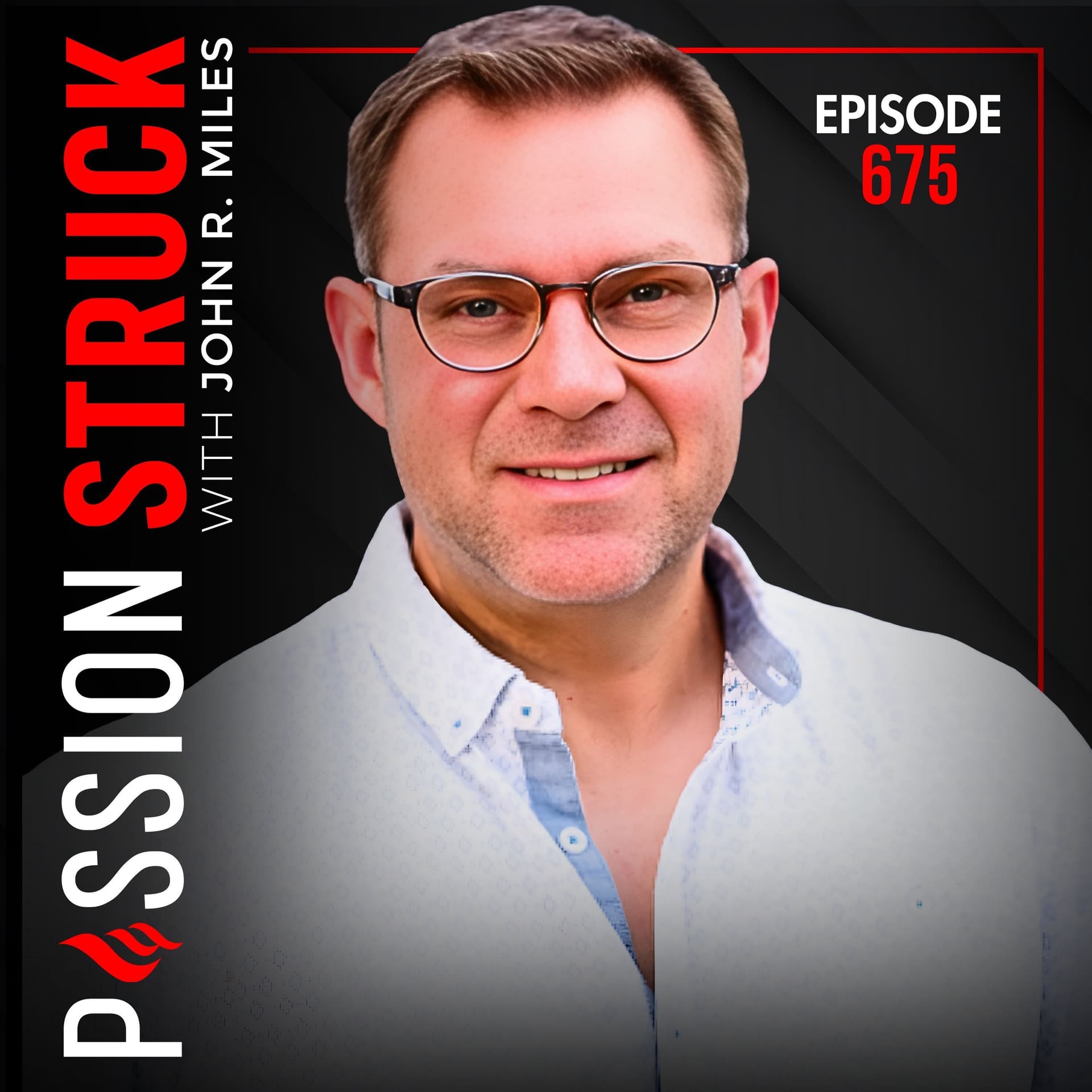
Podcast Summary: The Gravity of Doubt - Episode 675 of Passion Struck with John R. Miles
Overview In this solo episode of *Passion Struck*, John R. Miles explores the concept of doubt as a gravitational force that can be harnessed to cultivate meaning in our lives. The episode is the first in the new series, *Forces That Pull Us*, and draws on insights from experts in psychology, technology, and ethics to redefine our relationship with doubt.
Key Themes
- Doubt as a Force: Rather than viewing doubt as a weakness, Miles presents it as an integral force that can guide us toward meaningful decisions.
- Three Angles of Doubt:
- Psychological Gravity: Understanding internal doubt, including the concept of FOPO (Fear of People’s Opinions).
- External Pull: The influence of technological and cultural forces on our perceptions, as explored by Dr. Brennan Spiegel.
- Radical Doubt as a Skill: Transforming doubt into a structured tool for better decision-making, as explained by Dr. Bobby Parmar.
Detailed Breakdown
Introduction to Doubt
- Doubt is likened to a gravitational force, influencing our decisions and actions.
- Miles shares a personal story about his experience with doubt on the rugby field, highlighting how it can serve as a pivotal moment for growth.
Understanding Psychological Gravity
- FOPO (Fear of People’s Opinions):
- Defined as the fear of judgment that constricts potential and performance.
- It diverts attention from personal goals to external validation.
- Constructive vs. Paralyzing Doubt:
- Paralyzing doubt questions self-worth, while constructive doubt prompts inquiry and learning.
The External Pull of Doubt
- Influence of Technology and Culture:
- Dr. Brennan Spiegel’s research indicates that external forces shape our thoughts and beliefs, often subconsciously.
- Immersive technologies can trigger real psychological responses, highlighting the impact of our environment on doubt.
Radical Doubt as a Skill
- Framework by Dr. Bobby Parmar:
- Doubt can be transformed into a tool for making clearer decisions through structured inquiry.
- Five-Step Process:
- Define the decision.
- Zoom out for broader perspective.
- Generate multiple ideas.
- Prepare justifications for the decision.
- Assemble a recommendation.
Practical Tools for Harnessing Doubt
- Name the Doubt: Be specific to make it manageable.
- Separate Doubt from Identity: Understand that doubt about decisions doesn't equate to self-doubt.
- Interrogate External Pull: Reflect on whether doubts stem from internal beliefs or external influences.
- Practice Radical Doubt: Utilize the five-step framework to engage with doubt constructively.
- Build Trust Circles: Surround yourself with people who challenge and support your thinking.
Conclusion Miles encourages listeners to recognize and engage with their doubts rather than suppress them, suggesting that doubt can lead to clarity and authenticity. The episode serves as a call to action to harness the gravity of doubt to foster personal growth and confidence in decision-making.
Upcoming Episode Next week, the focus will shift to the topic of luck, exploring how it influences our lives and how we can design for it, featuring Wharton professor Judd Kessler.
---
Additional Resources For a deeper dive into the concepts discussed, listeners can access the companion workbook at [The Ignited Life](https://www.theignitedlife.net/) and watch episodes on [YouTube](https://www.youtube.com/@JohnRMiles).
Written by AI. May contain mistakes. Listen to the episode to check what was said.
Transcript
Automatic transcript. May contain errors.0:00Coming up next on PassionStruck. What if doubt isn't a weakness to overcome, but a gravitational force that pulls us towards meaning? We all feel it, that subtle hesitation before a leap, that quiet voice that asks, are you sure? For most of us, doubt feels like standing on the edge of something vast, fog swirling below, uncertain whether to step forward or retreat. But what if that moment isn't a threat? It's an invitation. Today, we're going to explore the gravity of doubt, why it shows up, what it reveals, and how to work with it instead of against it. Welcome to PassionStruck. I'm your host, John Miles.
0:44This is the show where we explore the art of human flourishing and what it truly means to live like it matters. Each week, I sit down with changemakers, creators, scientists, and everyday heroes to decode the human experience and uncover the tools that help us lead with meaning, heal what hurts and pursue the fullest expression of who we're capable of becoming. Whether you're designing your future, developing as a leader, or seeking deeper alignment in your life, this show is your invitation to grow with purpose and act with intention. Because the secret to a life of deep purpose, connection, and impact is choosing to live like you matter.
1:30Hey friends, episode 675 of Passion Structus here, and I am so glad you've joined us. To everyone who joins me week after week, thank you. You're not just supporting the show, you're fueling a mattering revolution. And if this podcast has helped you live or lead more intentionally, here are two quick ways to help it grow. First, share this episode with someone you care about, a colleague, a student, a mentor. Word of mouth is how this movement grows. Second, if you haven't already, leave a five-star rating or review on Apple Podcasts or Spotify. It takes less than 60 seconds, and it's one of the most powerful ways to help new listeners find the show.
2:10This week, we launched a brand new series, The Forces That Pull Us. Every day, invisible forces shape what we notice, the choices we make, and the lives we build. Over the next four weeks, we'll explore those forces from doubt to luck, from ethics to culture, and uncover how to harness them to live and lead more intentionally. Earlier this week, I was joined by Dr. Brennan Spiegel, whose groundbreaking work explores the gravitational pull and its impact on all facets of our lives. And also, Bobby Parmar, who joined me yesterday, demonstrated how radical doubt can become a superpower for ethical leadership.
2:48Before we talk about them a little bit more, we need to start with something more personal. Because for me, doubt first showed up, not in a boardroom or on a battlefield, but on a rugby field. When I arrived at the Naval Academy, I wasn't supposed to play contact sports. I'd grown up being told it was off-limits, too dangerous, too risky, but something about rugby called me. It wasn't just the game itself. It was the brotherhood, the grit, the elegance within the violence. I still remember standing on the edge of the practice field that first day. My cleats dug into the grass like anchors, as if a part of me was already trying to hold back.
3:31In front of me, the upperclassmen collided with a mix of grace and ferocity, a kind of controlled chaos that made rugby feel both beautiful and dangerous. My heart was pounding so hard I could hear it in my ears. My palms were slick. My throat was dry. Every part of me wanted to stay safe on the sidelines. Doubt pulled at me like gravity. Could I handle this? Was I out of my death? Was I about ready to make a huge mistake? It felt like a gravitational force tugging me back to safety. But there was another pull, quieter, steadier, that whispered, what if you belong here? Choosing to step forward that day changed the trajectory of my life.
4:15Rugby became a crucible for leadership, resilience, and belonging. And just this past weekend, that very team, the 1993 Navy rugby team, was inducted into the Navy Rugby Hall of Fame Class of 2025. Looking back, I realize that moment on the field wasn't just about sports. It was one of my first real encounters with the gravity of doubt. And that's where we begin today. Because doubt, like gravity, is invisible, inescapable, and often misunderstood. It can hold us back or pull us closer to meaning. Thank you for choosing PassionStruck and choosing me to be your host and guide on your journey to creating an intentional life.
4:56Now, let that journey begin.
5:02Hey friends, it's the beginning of 2026 and if you're like me, you didn't come into the sheer to coast. You came to live with purpose, to show up with energy, clarity, and intention. That's why how you start your day matters. And for me, that starts with Huel. Every morning, I reach for two things. First, Huel Daily Greens ready to drink. The peach and hibiscus flavor is crisp and refreshing. With 42 superfoods, vitamins, and minerals, all in just 25 calories and 1 gram of sugar. Then, I turn to Huel Black Edition ready to drink. With 35 grams of protein, 27 essential nutrients, and no junk, it's a full meal that fuels focus, not fatigue.
5:40I start with Huel because I want to be present, intentional, and ready. Not just today, but every day. Start 2026 like a minute. Grab Huel today with my exclusive offer of 15 % off online with my code PASSION15 at Huel.com slash PASSION15. New customers only. Thank you to Huel for partnering and supporting our show.
6:06When we think about doubt, we often imagine it as an inner phenomenon. on something happening quietly inside our minds. And that's true. But what's fascinating is that doubt behaves less like a fleeting thought and more like a force. It exerts pressure. It changes our trajectory. And it can either keep us stuck in orbit or pull us towards something meaningful. You've felt it before. It's the pause before you hit send on a risky email. The silence after you say yes, when a part of you isn't sure you're ready. The 3 a.m. ceiling stare where your mind replays that decision on a loop. It's the quiet tug between fear and faith.
6:49Whether you're a founder questioning your next move, a parent wondering if you're doing enough or someone rebuilding after a setback, doubt shows up the same way as a subtle but undeniable pull. Psychologists refer to this part of the process as prediction error. The brain's way of signaling when reality doesn't align with our expectations, when something doesn't fit, doubt appears, pulling us closer to it, to ask deeper questions, to reorient. And yet, in the moment, it rarely feels that clean. But doubt doesn't always feel noble. Most of the time, it shows up as hesitation, insecurity, or that quieter inner voice saying, maybe you're not ready.
7:34In episode 511, I sat down with Dr. Michael Gervais, one of the world's leading high-performance psychologists. He's worked with Super Bowl champions, Olympic gold medalists, and some of the most elite performers on the planet. And what struck me in that conversation is this. No matter how accomplished someone is, doubt is always there. Gervais told me that one of the biggest obstacles to human potential is something that he calls FOPO. the fear of people's opinions. He said, FOPO is one of the great constrictors of our potential because the moment we start worrying about how we'll be judged, we shift our attention outward away from our craft, away from what matters most and toward managing impressions.
8:24It's like standing on a stage mid performance and suddenly shifting from music to scanning the crowd for approval. Your focus tilts outward. That's FOPO. And it's one of doubts sneakiest tricks. Think about that for a second. FOPO turns doubt into a kind of social gravity. Instead of pulling us inward toward clarity, it pulls us sideways toward the imagined gaze of others. And this is where doubt can become paralyzing. We hesitate to speak up. We question our decisions, not because we lack evidence, but because we're afraid of what others might think. We loop endlessly in what-ifs, waiting for external validation to neutralize our uncertainty.
9:12But Gervais also made another critical point. For the highest performers, doubt isn't something to eliminate, it's something to work with. He described how truly elite environments, whether that's big wave surfing where special operations demand radical honesty. You can't fake your way through them. Doubt becomes a signal, not a stop sign. Those environments, he told me, require self-trust and team trust at the highest levels. You don't pretend doubt isn't there. You acknowledge it. You work with it. That's the shift. Paralyzing doubt says, what will they think of me? Constructive doubt, on the other hand, says, what do I need to learn here?
9:57When we learn to differentiate the two, doubt stops being a threat and starts becoming a guide. And if we zoom out that gravitational pull of doubt, that inner tug is often the first invisible force we feel when we're about to grow. So I want you to take a moment. Where is doubt tugging at you right now? Is it holding you back or pulling you towards something new. So far, we've been talking about doubt as something that lives inside of us, a psychological gravity we experience when our internal expectations meet uncertainty. But doubt doesn't just arise from within. It's also shaped by what's happening outside of us, by forces that are constantly tugging at our attention, our perceptions, and even our sense of reality.
10:45Earlier this week on Tuesday, I spoke with Dr. Brennan Spiegel, author of the powerful new book, Pull. Brennan's work explores how unseen forces in our environment, particularly technological and embodied experiences, are literally pulling us in ways we often don't recognize. One of the first things he said really stuck with me. We live in a gravitational field of information, and that field can shape our thoughts, our behaviors, even our biology, whether we notice it or not. He wasn't speaking metaphorically. In his research at Cedars-Sinai, Brennan has studied how immersive technologies like virtual reality can trigger real psychological responses in patients.
11:28People who know they're standing in a hospital room put on a VR headset and their heart rates change, their pain decreases, their body responds as if they're really there. Why does this matter for doubt? Because it shows how our minds are constantly negotiating between inner truth and external pull. When doubt shows up, it's often because those two forces collide. What we believe internally versus what the world around us is signaling. Brennan told me, we like to think we're in control of our attention, but the truth is we're being pulled all the time by technology, by narratives, by culture. And those forces can be subtle.
12:10That's what makes them powerful. Think about that. The gravitational field isn't just in our heads. It's in our feeds. It's in the stories we consume. It's in the environments we inhabit. And when that external pull is strong, doubt can get louder. We start to question, am I seeing this clearly? Do I believe this because it's true or because it's what I've been pulled to notice. Brennan's work reveals something profound. Doubt isn't always a sign of weakness. Sometimes it's a sign of awakening. That moment when our internal compass starts pushing back against an external current. And in a world where we're constantly being pulled by algorithms, narratives, and technologies designed to hijack attention, that kind of doubt is more important than ever.
13:00It's the gravitational tug that reminds us to pause, to interrogate what we're perceiving, to ask, is this really my belief or is it borrowed? That's the second layer of the gravity of doubt, the external pull. It's where the world around us starts to shape what we see and believe, often beneath our awareness. Recognizing doubt's pull inside and out is only the beginning, The real transformation happens when we decide what to do with it, ignore it, let it paralyze us, or engage it as a guide. Before we dive into the next section, I want to remind you, there's a companion workbook for today's episode available in our Substack article at theignitedlife.net.
13:47It's designed to help you apply these ideas into your own life and reflect more deeply on where doubt might be tugging at you right now. And if you prefer watching instead of just listening, you can catch this and all our episodes on our YouTube channels at John R. Miles and PassionStruck Clips. Now, a quick word from our sponsors. Thank you for supporting those who support the show.
14:17You're listening to PassionStruck on the PassionStruck Network. Today, we're exploring the gravity of doubt and how this invisible force shapes our lives. We've looked at doubt as something that lives inside us and how external forces can amplify it. Now, let's turn to the question that matters most. What do we do with doubt once it shows up? This is where my conversation with Dr. Bobby Parmar, professor at the University of Virginia's Darden School of Business and author of the new book, Radical Doubt, offers something truly transformational. Bobby's core insight is simple but profound. Doubt doesn't have to paralyze us.
14:57If we engage with it deliberately, it can help us make better decisions and live more authentically. His approach is like building a decision-making exoskeleton, sturdy enough to hold the weight of doubt and channel it into action. He shared a personal story that captures this perfectly. As a young man, Bobby was deeply committed to his identity as a martial artist. It was more than a hobby. It was who he was. But one day, a trusted mentor challenged him to question whether his attachment to that identity was holding him back. That moment of doubt hit hard. It wasn't just uncertainty about a skill.
15:36It was a challenge to who he thought he was. Instead of running from it, Bobby leaned in. He paused. He examined the stories he was telling himself. and ultimately that moment of radical doubt set him on a new path, one that led him to academia and the work he's doing now. He explained that when doubt surfaces, it often means two mental systems are in conflict. Our pursue system, which drives us towards our goals, and our protect system, which warns us of risk. When both fire at once, the brain activates a third circuit, a kind of meaning-making mode. That third circuit, he told me, is where the magic happens.
16:20It's where we slow down, interrogate assumptions, and open up new possibilities, but only if we're willing to engage with the doubt, not shut it down. Bobby calls this radical doubt, a disciplined willingness to pause and examine your beliefs, your options, and your narratives before jumping to a conclusion. And he doesn't just talk about this in the abstract. He's built a practical framework that leaders can use to turn radical doubt into better decisions. Here's how it works. First, define the decision. Get crystal clear on what you're deciding. Doubt thrives in ambiguity. Naming the decision gives it structure.
17:02Second, zoom out. Step back and widen your perspective. Who's affected by this? What broader context matters? Third, generate ideas. Don't lock into the first option. Radical doubt means deliberately seeking multiple pathways, especially the ones that you normally dismiss. Fourth, prepare justifications. This is where doubt becomes a tool for truth. Ask, what would I say if I had to defend the decision to someone I deeply respected. And fifth, assemble a recommendation. Bring it all together. Radical doubt isn't endlessly questioning. It's structured inquiry that leads to confident action. And this framework isn't just for executives.
17:48It applies to anyone who's facing uncertainty, whether you're making a career pivot, navigating a relationship, or questioning your worldview. And what I love about Bobby's approach is that it doesn't treat doubt as something to get rid of. It treats doubt as a partner in thinking. The people who are most effective, he told me, are not the ones who always have the right answers. They're the ones who know how to ask better questions. That line really hit me because in my own journey, whether it was leaving the corporate world, launching PassionStruck, or even stepping onto that rugby field years ago, doubt has always been there.
18:27The difference between getting stuck and moving forward has always come down to whether I was willing to engage with the doubt rather than to avoid it. So throughout today's episode, we've explored doubt from multiple angles. We looked inward with Dr. Michael Gervais at how doubt surfaces in the gap between expectation and reality, and how FOPO can distort its pull. We looked outward with Dr. Brendan Spiegel at the forces in our environment and technology that shape what we see and believe, often beneath our awareness. And we examine radical doubt through Dr. Bobby Palmer's framework as a deliberate tool for clearer thinking and more grounded decision making.
19:10But now I want to bring this home because doubt isn't just a concept. It's something that we navigate every day. So here are five practical ways to harness the gravity of doubt. so it becomes a force for you, not against you. First, you have to name the doubt. Vague doubt is overwhelming. Name doubt is navigable. Write it down, say it out loud, be specific. I'm uncertain whether this decision aligns with my long-term vision, or I'm doubting my ability to lead this project with the team I have. Once you name it, you give the gravitational pull a shape. That's when you can start to work with it.
19:54Second, separate doubt from identity. This comes straight from Gervais. Doubt about a decision is not doubt about your worth. High performers often fuse the two. They say, if I doubt my plan, maybe it means I'm not good enough. However, the best leaders understand that you can question your strategy without questioning yourself. When FOPO creeps in, when you feel yourself bending towards others' opinions, pause and return to your core values. Third, interrogate the external pull. Ren and Spiegel's work reminds us that much of what we see and feel is shaped by forces outside of us. So when doubt arises, ask, is this my belief or is it being pulled by an external current?
20:41It might be the media you consume, cultural narratives, or even well-meaning peers. Doubt can be the early warning sign that you're drifting under someone else's gravity. Fourth, practice radical doubt. Dr. Bobby Parmar's five-step process. First, define. Second, zoom out. Third, generate ideas. Fourth, prepare justifications. And fifth, assemble a recommendation are a powerful way to slow down without getting stuck. Think of it like building a decision-making exoskeleton. Doubt provides the raw energy and the framework channels it towards clarity and confident action. Fifth, build trust circles.
21:24You don't have to navigate doubt alone. Surround yourself with people who sharpen rather than silence you. These aren't just cheerleaders. They're thought challengers who help you test assumptions, push your thinking, and remind you who you are when FOPO gets loud. This is especially powerful when you're in the third circuit Bobby described, that liminal space where pursue and protect systems collide. When you start treating doubt this way, naming it, separating it from identity, interrogating external poles, engaging it through radical doubt, and processing it in trusted circles, something profound happens.
22:06Doubt stops being a sinkhole and becomes a gravitational well, one that pulls you toward deeper meaning, better decisions, and greater authenticity. As we wrap up today's episode, I want you to notice where doubt is tugging at you this week. Maybe it's a decision that you've been avoiding. Maybe it's a belief you've held onto for too long. Maybe it's the quiet pull to question a story you've inherited. Instead of rushing to silence it, follow the pull. Because on the other side of doubt, there's often clarity waiting. What if the doubt tugging at you right now isn't a barrier, but a sign you're standing on the edge of something meaningful?
22:50And speaking of unseen forces, next week, we're shifting our focus to luck and how it shapes our lives more than we realize. I'll be joined by Wharton professor Judd Kessler, co-author of Lucky by Design, to explore how the most successful people don't just wait for luck, they design for it. You don't want to miss it. The way that I think about the hidden markets that I talk about in the book is indeed about scarcity and about when there's more people who want something than we have slots to give. And that's true for French laundry reservations. It's true for Taylor Swift tickets. It's true for the seats in the best elementary schools in New York City.
23:29But it's also true in getting into the elite colleges. And the admissions rates at the Ivy Leagues and at many of the universities that are the best in the country are very small. The chance of getting in is vanishingly small. And one last special announcement. I have been working on a book for a few years now, and next week I'm going to reveal the specifics with you. You can start by following our journey on my Instagram at John R. Miles. Until next time, notice the forces pulling at you. Lead with intention. And as always, live life actionstruck.
From the publisher
What if doubt isn’t a weakness to overcome, but a gravitational force that pulls us toward meaning?
In this powerful solo episode, John R. Miles kicks off the new Forces That Pull Us series by exploring doubt—an invisible psychological and cultural force that shapes our choices, our growth, and our sense of self. Drawing on insights from performance psychologist Michael Gervais, physician-researcher Brennan Spiegel, and business ethicist Bobby Parmar, John examines doubt from three angles:
- The Psychological Gravity — How doubt shows up internally, why FOPO (Fear of People’s Opinions) can paralyze us, and how elite performers learn to work with uncertainty rather than against it.
- The External Pull — How unseen technological and cultural forces shape what we notice and believe, based on Brennan Spiegel’s groundbreaking book Pull.
- Radical Doubt as a Skill — How Bobby Parmar’s framework transforms doubt from a source of anxiety into a disciplined tool for better decision-making.
This episode offers practical tools for identifying, interrogating, and harnessing doubt in your own life—whether you’re making a major decision, leading a team, or confronting internal narratives that hold you back.
Go Deeper: The Ignited Life Substack
If this episode stirred something in you, The Ignited Life is where the transformation continues. Each week, John shares behind-the-scenes insights, deeper dives into the episodes, workbooks, science-backed tools, and personal reflections to help you turn intention into action.
Get the full companion workbook at TheIgnitedLife.net
Full episode on YouTube: https://www.youtube.com/@JohnRMiles
Listen on Apple Podcasts, Spotify, or wherever you get your podcasts
Everyone deserves to feel valued and important. Show it by wearing it: https://startmattering.com/
See Privacy Policy at https://art19.com/privacy and California Privacy Notice at https://art19.com/privacy#do-not-sell-my-info.


