Ask ChatGPT


 Passion Struck with John R. Miles
20 Oct 2026 · 1h · 24 chapters
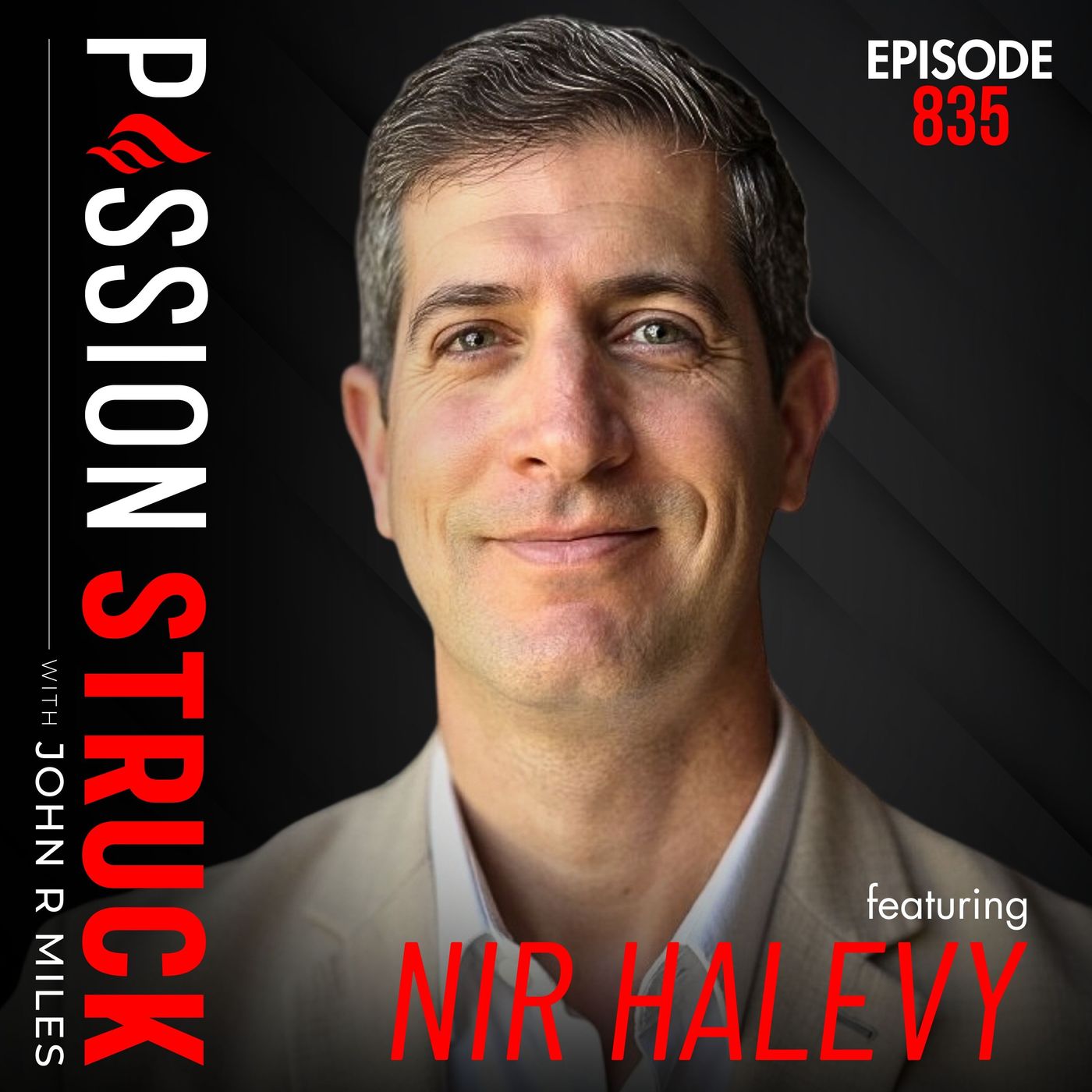
How workplace hierarchies and forced ranking can turn colleagues into competitors, damaging collaboration and trust.
Competition can motivate performance, but when rankings create zero-sum status threats, sabotage can become subtle (withholding information, not sharing expertise, withholding help) or overt (misrepresenting others’ work, spreading malicious gossip). The episode argues hierarchy isn’t inherently bad; “broken” hierarchies emerge when power is abused and people feel unsafe, unheard, or resigned. It proposes healthier hierarchies via common value, pluralism, and relatedness.
collegiate rowing seat races where teammates “leave competition on the water”; forced ranking in the military and consulting/GE-style ranking at Dell; UCLA Health’s peer-ranking of physicians that worsened burnout and satisfaction; tournament theory (tiny performance margins + winner-take-most rewards) explaining why rivalry escalates.
Dr. Nir Halevy, Stanford organizational behavior professor and author of Level Up: Why Hierarchies Are Broken and How to Fix Them.
Written by AI. May contain mistakes.
Exploring how competition can lead to sabotage and hinder collaboration.
“They need a little bit of your time and a little bit of your experience and advice here and there.”
Discussion with Dr. Halevy about his research on hierarchies and human behavior.
“Nir, it's so great to have you on the show today.”
Exploring how safety and predictability affect success in hierarchical structures.
“And then there's also the competition for attention, not only with your siblings, but also with your parents and your siblings on getting your parents' attention, right?”
Examining the emotional factors that indicate support for or resignation to hierarchies.
“And here, I'm glad you brought that up because that's one of the things I appreciated about how you wrote the book is you don't caricature hierarchy as inherently bad.”
Explore how workplace hierarchies affect emotions and colleague relationships.
“I think our own emotions and other people's emotions are a really important cue into this, right?”
Understand the role of cynicism in competitive scenarios and workplace dynamics.
“You're listening to PassionStruck right here on the PassionStruck Network.”
Delve into the effects of social comparison on self-evaluation and behavior.
“And in the book, you introduce social comparison, which I think is something that is now prevalent everywhere.”
Examine how forced ranking influences workplace competition and morale.
“I think as a parent and as an educator, I would like to encourage multidimensional thinking, pluralistic thinking about success, right?”
Learn how forced ranking systems can motivate or harm workplace dynamics.
“At Dell, it could have an immediate impact because we followed the GE model of ranking.”
Discover how tournament theory applies to workplace competition and its effects.
“I think it works well when people take it upon themselves to improve how they get work done and improve the quality of the work they produce or the pace they do.”
Explore the effects of grading systems on student learning and anxiety.
“He passed away, unfortunately, a few years ago.”
Examine the surprising results of a ranking experiment in healthcare.
“scrutiny and anxiety-led existence in many cases?”
Understand how reference points influence athletes' perceptions of success.
“And so why did you choose to include that in the book?”
Hear personal anecdotes about pride in teammates' accomplishments and resilience.
“And I think it's something that we can all use, right?”
Explore how role players like Steve Kerr find value in their contributions to teams.
“And the same thing with my Naval Academy classmate.”
Discuss the distinction between dominant and prestige-based leadership styles in teams.
“Let's lean into this a little bit since you brought it up.”
Understand the three types of injustice and their effects on employee engagement.
“whether you need someone to represent you in a negotiation or in other contexts where toughness or projecting toughness might be of value to the team.”
Learn why stories of rise and fall captivate us and their implications for organizations.
“And so I would expect more turnover in environments where people experience all three kinds of injustice.”
Discover how improvisational principles can enhance teamwork and relationships in organizations.
“Nir has basically three ways that you identify broken hierarchies, ultra-competitive ones, unjust ones, and unstable ones.”
Reflect on the importance of hierarchy structure in fostering closeness and collaboration.
“Expressing pro-social emotions, such as empathy, is a really powerful kind of way to change the culture in your team organization.”
Explore how workplace hierarchies affect team dynamics and relationships.
“manager, employee, whatever they might be listening to us with one question that they could ask themselves about the hierarchy they're part of, what would that question be?”
Concluding remarks and appreciation for the discussion.
“It's been wonderful to learn from you and talk to you today.”
Introduction to the next guest and a discussion about confidence and self-worth.
“NEAR's research reveals something important about the environments we create.”
Sharing experiences about self-worth and the impact of others’ opinions.
“The problem is bad behavior doesn't go away when you ignore it, you amplify it.”

Get the gist, explore an idea or ask about something said.
 Claude
On Passion Struck with John R. Miles, what are the key points of this episode?
Searching your listeningAutomatic transcript. May contain errors.
0:00Coming up next on PassionStruck. Competition can push people to do extraordinary things. But what happens when getting ahead starts making us less willing to help the people around us? Nir Halevy, a Stanford professor who studies power, status, and human behavior, has spent years examining that question. And one of his findings is especially revealing. Listen to what he says about how sabotage can begin in the workplace. But I'm really worried about what happens when it gets to sabotage and other harmful behaviors. And it doesn't have to be a very active sabotage. It can just be that you're not helping your teammates or other coworkers and colleagues, right?
0:48They need a little bit of your time and a little bit of your experience and advice here and there. And you're keeping that yourself. You're hoarding information. You're not sharing. Hey, it's your friend John, and welcome to PassionStruck. I'm so glad you're here. Whether you're a longtime listener or someone who just discovered the show, thank you for pressing play today. Maybe you've built the life you were supposed to want, but you've quietly wondered why it still doesn't feel like enough. If that's you, you're in the right place. Every week, I sit down with the world's top scientists, researchers, and thinkers to uncover what it actually takes to build an intentional life that matters.
1:31Thanks for joining me. Let's get into it.
1:37Hey friends, welcome to episode 835 of Passion Struck. We're continuing our October series, The Architecture of Agency, exploring the forces that shape how we see ourselves, make choices, and build our lives. Last week, I spoke with psychotherapist and relationship expert Terry Cole about how the patterns we develop early in life can shape our adult relationships, our sense of worth, and the roles we take on. Then Dr. Kristin Neff joined me to explore the science of self-compassion and how learning to meet ourselves with kindness can create the emotional space to respond to life's challenges with greater intention.
2:18Those conversations brought us closer to understanding the internal forces that shape our choices, today we're turning outward to examine another powerful influence, the systems and structures that shape how we relate to one another. My guest today is Dr. Nir Hellevy, a professor of organizational behavior at Stanford University and author of the new book, Level Up, Why Hierarchies Are Broken and How to Fix Them. hierarchy is everywhere in our workplaces schools families and communities it can provide structure direction and opportunities to grow but when competition becomes excessive power goes unchecked or people begin to see one another as threats those same structures can undermine collaboration and trust near has spent more than 15 years studying how power status and social comparison and influence human behavior.
3:13In our conversation, we explore why other people's success can sometimes inspire us and at other times make us feel threatened, when performance rankings motivate people, and when they encourage harmful behavior. We also examine the subtle ways competition can damage relationships, including withholding information or refusing to help a colleague because their success feels like a threat to our own, and NEAR shares a framework for building healthier hierarchies around three principles common value pluralism and relatedness his work challenges leaders to think differently about success contribution and the kinds of environments that bring people together because agency is shaped by more than our individual beliefs and choices it's also influenced by the systems we inhabit the incentives we respond to in the way people around us treat one another.
4:08Here's my conversation with Dr. Nir Halavi. Thank you for choosing PassionStruck and choosing me to be your host and guide on your journey to creating an intentional life that matters. Now, let that journey begin.
4:24I am absolutely thrilled today to welcome Dr. Nir Halavi to PassionStruck. Nir, it's so great to have you on the show today. Thank you, John, for having me. I'm excited to be here. Well, Nir, I want to go back to the beginning. You're a professor at Stanford, but what first drew you to studying human behavior, social influence, and the way people interact with one another? I think I've always been fascinated with social influence, just the way people interact in group settings. I remember being a teenager, playing on a basketball team, just looking around, seeing how people shape each other's feelings and thoughts and behavior.
5:00And as I grew up getting to work in organizations, just seeing how people interact in negotiations, in faculty meetings, in other contexts, I'm constantly fascinated by how consumed we are by social comparisons, for example, how much attention we're paying to other kind of nonverbal behavior and how that shapes how we think, feel, and act. I think I've always been so curious about social influence. And was there a particular experience, a question you had growing up, a research finding when you were pursuing your PhD that made you especially interested in things like what happens with power status and competition?
5:41I remember myself as a young person. It was intro to psychology and the instructor in that course, more than a quarter century ago, Maya Barilel was standing on stage and talking about the classic studies in psychology, social psychology, right? We're at Stanford. So I'm thinking about kind of the Zimbardo prison experiment. And you can think about Milgram and the kind of obedience studies. And I was hooked. I was convinced that this is what I want to do. I want to be able to create environments where I'm going to be able to do this. I can observe people and systematically vary or manipulate certain aspects of the situation and see how that changes behavior.
6:18And I think I was 18 and I was so excited about this science that I was just starting to get to know. And I'm 30 years later, almost 30 years later, I'm still excited about the same stuff. Hopefully I made the right choice. Nir, I think it's interesting because as I even look back on my own life, the first time we encounter hierarchies is when we're kids. For me, it was on the playground in school when there was a hierarchy on who got to play what position. In my school, football on the playground was a huge thing and everyone wanted to be the quarterback. And there was definitely a hierarchy on who got to play that.
7:00Isn't it interesting how soon in culture it's introduced to us? I think it's super fascinating. I would say even before we get to the school system, right? I think about kind of siblings in the family, right? And how kind of we shape each other's experiences. There is some interesting research about first born versus second born, but I'm curious to ask you, John, what position did you play on your football team and what was the experience like? I would say I was like the backup quarterback. Okay. But I would play wide receiver or I would play defensive back. Okay. So as a backup quarterback, you had to wait for the first quarterback to be unavailable or injured or maybe mess up to get an opportunity, right?
7:40And I think that's sometimes the experience of people in teams of this kind. And when I think about the school system, I have three teenagers. And when I think about their experiences in school, there are so many different kinds of hierarchies. One hierarchy has to do with just physical force, right? We have bullies in some schools, and these bullies dominate and mistreat and create very negative experiences for some kids at school. But we also have kind of the nerd squad, if we want to call them that, of the people who are just excelling academically and people look up to them. And maybe some students join this competition and try to be the kind of the first in class.
8:18And then you have other dimensions on which children in schools measure themselves, right? from their height to their talent in music to how many friends they have on social media. And then there's also the competition for attention, not only with your siblings, but also with your parents and your siblings on getting your parents' attention, right? Definitely. For sure. And I think you bring up a really interesting point, right? That we have this constant tension between collaboration and competition, right? Within our families, within our schools, within organizations, right? And I think the context of hierarchy makes this a really interesting one.
8:57And I think it really stresses the competitive elements, right? Because if people are trying to rise at the expense of others, if they have this kind of zero-sum thinking about success, about promotion, then they tend to skew on the side of competition instead of collaboration. Absolutely. And I think what we're just discussing really sets the stage for your brand new book titled Level Up, Why Hierarchies Are Broken and How to Fix Them, because you take on something that has been part of human society for thousands of years. So you open up the book by showing us hierarchy everywhere, from corporations and families to churches, volunteer organizations, the military, Wikipedia, even the animal kingdom.
9:40And you point out that hierarchy has survived for thousands and thousands of years, even though there have been countless attempts to eliminate it. Nir, why have we been asking the wrong question? I think we have been looking at discontent, widespread discontent with hierarchy. And our intuitive solution is, well, can we get rid of it? Can we manage organizations? Can we run our schools? Can we run our militaries without hierarchy? And the answer seems to be that it's very difficult. Let's go to Silicon Valley companies, right? So when you start your startup, you and a co-founder or maybe a small team, everyone is sharing responsibilities.
10:21Everyone is roughly equal. There might be some informal hierarchy, right? Some people speak more, dominate more, influence more than others, but there isn't a lot of kind of formal differentiation between people. But as you scale, right, it's very difficult to keep coordination, to keep division of labor, to keep kind of smooth operations when everyone else is boss, right? If you need to get 6 ,000 people's approval to get something done, it might be challenging. I think when I review the literature and many of my friends and colleagues in academia are also studying hierarchy, just like me, it seems like there's, some of us are trying to figure out whether we can work with flat structures, flat organizations, but others are trying to say, well, we really have a tale of two different kinds of hierarchies here.
11:04We have the dysfunctional hierarchies that are really oppressive and are causing all of this discontent and strife in the lives of individuals and groups and teams. But we also have well-functioning hierarchies, which means we can learn from the organizations, the teams that are doing it well, and transform these dysfunctional hierarchies into better performing teams for the sake of individuals and organizations. And here, I'm glad you brought that up because that's one of the things I appreciated about how you wrote the book is you don't caricature hierarchy as inherently bad. And just yesterday, I was on a podcast being interviewed myself and it happened to be a veteran podcast.
11:42And we were talking about the transition from being in the military to the corporate world. And the interviewer was giving statistics that about 75 % of military veterans leave their first job within 18 months, which I had never heard that statistic before. But it reminded me of the story you tell of Colonel Everett Spain, who describes the military hierarchy as comforting. And that's what I found in the military, because you know your place, you know what's expected, and you have a sense of what's coming next. So when you go out in the civilian world, there's none of that structure like we had.
12:23it is a very different experience. So it leads me to ask, how important do you think are safety and predictability to understanding why people succeed in some hierarchies and don't participate in others? I think it's a great question. I think we all have certain fundamental needs, right? We're trying to achieve a level of certainty that, or uncertainty that is manageable for us. We're trying to achieve predictability. We appreciate structure to a certain degree. And there are individual differences, for sure. Some people want and need it more than others. I think, Everett Spain, and going back to your kind of personal experience in the Navy, right, there is a certain level of comfort that comes from predictability, from structure.
13:10And I think that when people search for that and cannot find it in organizations that are very fluid or unstructured or when the hierarchy is mismanaged, right, it's difficult to perform. It's difficult to know what to expect. It's difficult to meet other people's expectations. I think one of the functions of hierarchy is coordinating expectations for people high versus low in the kind of status hierarchy. You identify different forces that sustain hierarchy, and there's some positive ones like predictability and incentives, but there are other negative ones like the abuse of power, et cetera.
13:45And I have seen these play out in different environments I've been in. How can a person, and maybe I'll have you go through some of these, and then maybe you can go into, how can we tell whether people support a hierarchy because it genuinely serves them, or in other cases, because they've just silently become resigned to it? It's a great question. I think our own emotions and other people's emotions are a really important cue into this, right? Are we supporting hierarchy? Are we endorsing hierarchy because it fulfills our fundamental needs? And we can go beyond the need for safety and predictability and security.
14:21We can think about the need for achievement, right? If you want to get ahead, if you want to feel proud in your success, if you want to get promoted, right? A hierarchy gives you that flat structure and might not give you the ability to fulfill achievement needs or motives to the same extent. When we think about how we're incentivized to motivate it, to work harder, to do more, to produce higher quality work, right? So hierarchies, we do that. And we can tell that we're feeling authentic pride. We can tell that others are really feeling reassured by the structure, that they are feeling that they're achieving meaningful things, that they matter, that they have impact, right?
14:56Those things are things that we can see in our own feelings and other people's feelings. But when we feel that hierarchy is just an inertia, right? That people higher up are getting more opportunities, they're getting more slack, people in the bottom are not being heard, they don't have voice, they are frustrated. They're living in higher numbers, right? Turnover and retention are such important issues for organizations, right? So we can observe visible things such as people are coming and going and the turnover situation is not great in our workplace. But we can also just look at people's daily expression of emotions.
15:31Are they showing gratitude? Are they showing empathy? Or are they showing discontent and fear? Are they worried that they might lose their job because someone else is trying to outperform them and make them look bad? I appreciate you sharing that. And I wanted to give the audience an example of this that people can relate to. So when I was in college, rowing was a big thing. And one of my roommates ended up becoming an all-American in heavyweight rowing. And so the story of Julie and Laura really stayed with me from the book. I hear you have best friends competing for the final seat on an elite rowing team one wins and then what ends up happening to the other and what happens psychologically in a case like this when a relationship becomes a zero-sum contest right and i think sometimes people might be thinking about situations where the winner and the loser don't actually have to continue their relationship going forward right think about a tennis match right so maybe you're representing one country someone else representing the other country and you go your separate ways after kind of the game is played.
16:39But in teams, in organizations, in a rowing crew, right? Relationships need to survive these winning and losing moments where there is a seat race and one person gets the last seat in the boat and the other person is not going to go to the regatta and they're going to stay. If this is collegiate rowing, they are going to stay on campus. They're not going to even necessarily travel with the team. That's a very difficult reality to cope with. And I think some of the best teams, and I had a chance to talk to a lot of elite athletes as part of kind of working on this book, is they leave competition on the water.
17:13They have such a brilliant understanding of the importance of mentalization, right? So let's stay in the context of collegiate sports, right? So if you're a rowing team, you compete fiercely on the water, definitely during seat races, but then in the classrooms and dining halls and dorms, 100 % support, right? On social media, in all other contexts, 100 % support. And I think there is an art to it. It's definitely difficult emotionally, right? When you lose, it's painful. And when you win, you want to celebrate, but it's your best friend out there who just lost, right? So emotionally, it's difficult.
17:51But I think even I've encountered amazing student athletes who, despite their youth, have such impressive maturity and know to leave competition underwater. If you've ever worked in an environment where you felt you had to constantly prove your value, compete for recognition, or protect your position, I explore many of those underlying dynamics in my new book, The Mattering Effect, Creating a Life of Meaning and Worth. The book examines how the systems around this shape our sense of significance and how we can begin to rebuild the conditions that help people feel seen, valued, and able to contribute.
18:25You can find The Mattering Effect wherever books are sold, or at matteringeffect.com. Now, a quick break for our sponsors. Thank you for supporting those who support the show.
18:42You're listening to PassionStruck right here on the PassionStruck Network. Now, let's get back to my conversation with Nir Hellevy. Before we came on today, I mentioned Jamil Zaki to you. If I would ask you a follow-up question to that, the scenario you were just talking about, how does cynicism impact that? I think people are trying to use all sorts of protections or defense mechanisms, right? And I think sometimes I would say that being cynical is a way to avoid coping potentially with what you're actually feeling and with the emotions of others. I think it's difficult sometimes to acknowledge that your big moment is someone else's very painful defeat and so on.
19:23So I think I would put cynicism potentially in that category. I'm not an expert on cynicism for sure, but I think that sometimes it can be quite difficult to grapple with the feelings we have and with other people's feelings. One of the world's leading experts on emotion regulation, James Gross, is also on campus here in our psychology department. And I've been learning from Jamil and James and others a lot on emotion regulation. And I think these are some of the tools that can be helpful as we're navigating difficult situations in organizations for sure. It certainly is extremely important and becoming even more important in this cynical world that we live in, for sure.
20:02Well, you started this interview out by talking about social media. And in the book, you introduce social comparison, which I think is something that is now prevalent everywhere. Why is this social comparison such a powerful force in human behavior? We have this innate desire to know where we stand relative to others, right? We could choose other reference points to evaluate ourselves. We could say, I will compare my current performance to my past performance, right? So I'm choosing my past self as a reference point for myself to know if I improved, right? If I'm running faster, if I'm doing my job better.
20:45We can also choose our goals, right? Kind of we set goals and we say, are we meeting our goals, right? If I'm thinking about kind of the mattering effect, you wanted to write a particular book, were you able to achieve that goal, those standards that you set for yourself, right? But there are so many people around us who are engaging in similar activities, right? So you mentioned kind of a football team. There are other running backs on the team, right? People are inclined to use those salient others as reference points. And when we're performing better than them, we feel better about ourselves.
21:16And when we fall short of kind of the standards that others create for us, we don't feel great about ourselves. And I think Festinger created this framework kind of social comparison theory more than 70 years ago. And I think it's still very kind of influential within psychology and other fields. It definitely shapes our interactions. Think about all the ranking lists we consume all the time, right? from kind of Fortune 500 to the best cities to live in and the best companies to work for. We are surrounded, and I think in the U.S., maybe more than in other contexts, by a culture that really values these comparisons, these ranking lists, these ranking systems.
21:57And it really shapes how we think, how we interact. I'm going to give a personal example of social comparison. Before we had the social media apps, I was a competitive runner, got a scholarship to college that way. And I had one of my best friends who ran on the team with me. And for the first kind of 18 months to two years, I was much faster than him. And then we were trying to hit the four minute mile mark and he ended up hitting it. I did not. And for whatever reason, I was happy for him. But at the same point, it rewrote my own viewpoint of how I experienced success. And so it's like, their achievement didn't change it.
22:48But the meaning of it changed my experience to it. Is that kind of what you were trying to do with the running example you brought up in the book? For sure. And I'm curious to ask you about your coach. Was your coach the kind of coach that said, try for your personal best, or did they also try to create competition within the team and really try to cause runners to outperform each other? Oh, come on. This was the Naval Academy. So Al Cantelo was definitely competitive focused. And my teammate ended up becoming probably the best runner at that point in time in Navy's history. He missed going to the Olympics in two different sports, the steeplechase and then the mile by under a hundredth of a second in each one.
23:33Guy was a phenomenal runner. It's great to be in contact with people who are amazing performers, right? We often learn from them. I think that there can be positive functions to envy, right? If it really makes us focus on what we can do better, what we can learn. So I think being surrounded by high performance is great. Some of the athletes I interviewed and others for the book actually mentioned the benefits of being surrounded by other players, other athletes who are better than them. They want to be in these environments. I know certain coaches who, especially with young athletes in think middle school, high school levels, right?
24:08They really encourage the children to do their personal best, right? And obviously, once you get to the point where you're on the verge of going to the Olympics, it becomes more competitive. We can think about campaigns by Nike or other companies that really galvanize this competitive spirit and really try to make sure athletes lean into this. I think as a parent and as an educator, I would like to encourage multidimensional thinking, pluralistic thinking about success, right? I would want students on our campus to think that they can be successful in a number of different ways. And I think that's also true within athletic teams, by the way.
24:45I think, Yeah. I enjoyed reading the captain class. I don't know if you had a chance to read this book a few years ago. And I think I continue to learn about the benefits of creating cultivating environments where people have multiple pathways to showing that they matter, that they have value. Yeah. Well, in high school, we ended up winning the state championship. And there was a runner on our team, Keith, who ended up becoming a multi-time All-American in college. And he also almost went to the Olympics. But had it not been for Keith, I don't think we would have been the same team because he set the standard and we were all trying to get better so we could perform at his level.
25:27And it also raised his level because he was trying to stay ahead of us. So it does work. All you got to do is look at the Green Bay Packers and that competition between Brett Favre and then eventually Aaron Rodgers. Would Aaron Rodgers be the quarterback he is today had he not have to compete against Brett Favre or observe Brett Favre before he took over the starting job? I would probably guess he wouldn't be as successful today had he not had to go through a couple of those years of turbulence playing, waiting his turn, but learning from someone who was a legend at the time. Well, as a basketball fan in the Bay Area, I feel I should mention the Warriors, right?
26:08I'm thinking back to when Kevin Durant joined the Warriors, right? And you can think about those situations and what's happening to the hierarchy when something like this happens. Or we can think about summer of 2026, right? LeBron James is now joining Philly. And it's interesting to see what happens, right? When you have the all-time scorer in the NBA joining a team that already has other stars. And I think I'd be very curious this year to see what's happening in the NBA across multiple teams in terms of how transitions of players, right? Influence hierarchy, team dynamics, team success. It definitely plays a role.
26:44We shall see this next year. Well, I want to talk to you about something that I've experienced throughout my entire career, and that is forced ranking. I have experienced forced ranking from the time I was at the Naval Academy. where force ranking was extremely important because it determined your class rank. And people who are not aware of this, once your class rank is determined coming out of the academy, it has a profound impact on your promotions. So if you're in the top quarter of your class, you go up for a promotion a year ahead of the second quarter and two years ahead of the third quarter and three years ahead of the fourth quarter.
27:30So if you think about how many ranks you might go up in a military career, it means a lot. And then I got into the civilian world. And of course, Anderson Consulting had forced ranking. And when I was at Lowe's, we had forced ranking. But when I went to Dell, it was a different kind of force ranking because it had in those other companies, the ranking had a long-term horizon impact, meaning like years in the future could influence how you might get elevated from one level to the other. At Dell, it could have an immediate impact because we followed the GE model of ranking. So if you were in the bottom 10 to 20%, there was a very high likelihood that after the rankings came out, you were no longer going to be a Dell employee.
28:27So I think that this is a really important part that you bring up in the book. So I wanted to use those maybe as an example. And when does ranking near like motivate performance? And when does it turn coworkers into competitors who feel like when they're looking at their peers, that their success comes at my, their success comes at my expense? Thank you for sharing these experiences. I think there is a very long history of using forced ranking systems in a lot of organizations in the industries you mentioned, right? Whether it's in consulting or other spaces. I think to get to the kind of last portion of your question, I think it works well when people take it upon themselves to improve how they get work done and improve the quality of the work they produce or the pace they do.
29:21And by the way, we're seeing it right now. I think I'm talking to a lot of young people. Some of them were former students of mine in the context of the AI revolution. And I think they're experiencing a lot of pressure to not just perform more, but faster. and missing high expectations and so on. And so when you try to improve as a result of this kind of force tracking system, it can work well. But I'm really worried about what happens when it gets to sabotage and other harmful behaviors. And it doesn't have to be a very active sabotage. It can just be that you're not helping your teammates or other coworkers and colleagues, right?
29:53They need a little bit of your time and a little bit of your experience and advice here and there. And you're keeping that yourself. You're hoarding information. You're not sharing. you're not dedicating time and effort to helping other people. And you can think about also the active forms of sabotage, right? And where you're telling someone, oh, this was a terrible presentation when it actually was a good presentation, they go and change it. Or when you're really spreading malicious gossip in the organization about them and so on. I want to use this opportunity to connect our previous conversation about sports to the ranking systems we see in the workplace.
30:27Eddie Lazier used to be our esteemed colleague here at Stanford GSB. He passed away, unfortunately, a few years ago. One of the things he is most known for in the space of labor economics and personnel economics is the theory he created, tournament theory. And tournament theory really borrows from sports and helps us think about organizations, right? And there are two really important principles in tournament theory. One is that a tiny margin of kind of difference can be enough for victory, right? And you made us think about, do you make it to the Olympics or not based on split seconds, right?
31:00And even in the last Olympics, right, I think five milliseconds separated the winner in the 100 meters run from the runner up. And the second aspect of tournament theory is that the prizes to the winners are so much larger than the rewards to the runner ups. Right. So if you think about CEO compensation, right, it might be meaningfully larger than the compensation to other kind of C-suite members, executives. And you see it also in sports, right? Wimbledon pays almost twice as much to the winner than to the runner-up. I think when you have these environments, right, it's very difficult. And I think people react to it differently, right?
31:39People who think they might make it to the C-suite, they might become the CEO, might engage in kind of competitive behavior, put in a lot of effort, be motivated, and stay in this tournament environment. But people who get discouraged and don't want to become the CEO or don't think they have a chance to become the CEO, just leave, right? It's not a very supportive environment to be in when people are constantly comparing each other. When there is a forced ranking system, it creates a lot of animosity, competition, rivalry between coworkers. I have an interesting question for you being someone who's in academia.
32:14You're at a very elite school and most of the elite schools, the students are graded. Brown is an example where they don't have, it's pass or fail. And I know in some of the Ivy League schools when my daughter was applying, the freshman year or a portion of it is non-graded either. My question is, do you see a difference in how students learn between not having the grades matter versus feeling that they have to achieve a higher grade? Because I worry, in some ways, is that what's bringing out the effortless perfection on many of the campuses, the duck syndrome, et cetera? And does it actually inhibit kids from learning as much had they not been facing that type of scrutiny and anxiety-led existence in many cases?
33:10You're raising really important questions, and I'm kind of planning how much to share about my own kids here. I will refrain from getting them too involved in our conversation, but I will say that our students here, our undergraduates, for example, find multiple kind of pathways to have a meaningful experience, right? So it could be that they're trying to excel in some of their classes. Some of them might try to excel in all of their classes, but other students are also working on theater productions or really investing in their success and development as athletes, right? We have a lot of student athletes.
33:43And I think that really gives rise to a rich experience where your entire worth is not based on a single dimension, right? So we talked about rowing, right? So let's say you are that row who lost the last seat in the boat. If you also have other things going for you, if you just excelled your biology exam, then you might be able to feel great despite that really painful loss in the kind of context of the rowing team, right? And that's what I hope for our students. Now, I would say that our students are smart and know that there are multiple pathways to navigate academia. For example, maybe they didn't get the best grade in a particular class, but they joined the research team with that instructor and got to publish a research paper as an undergraduate student.
34:24Or they got a really good letter of recommendation that helped them get either an internship they wanted or an awesome job or just join another team across the street at the medical school or something like that. So I think my hope, again, as a parent and an educator with these two hats, is that we're creating these environments that are not just pitting students directly against each other and making them measure themselves, their own worth, based on a single dimension. Some courses in top schools are graded on a curve. I don't think that that's the main experience or takeaway of students on campus, that it's all about the curve.
35:00I think we hopefully do a good job of convincing them that there are multiple ways to get a lot out of their education. I just found myself that there were so many times that you're trying to get that high grade that you're just cramming and cramming for these tests to get through them, but you're not really retaining the knowledge. And sometimes I just wonder if there wasn't that much pressure and it was more project-based like the D school is, if you are actually learning more applicable knowledge that you're actually going to take with you after you graduate versus a lot of this stuff that we learn and dump, unfortunately, in many of our courses.
35:37Anyway. I'm with you completely. So my wife happens to be in the healthcare profession. She's a primary care provider. And so it piqued my interest to hear the experiment the UCLA health system did. And I thought this was really interesting because they were going into this thinking that if physicians were shown how their preventative care performance ranked against their peers, that comparison would motivate them and it would make everything better. However, the opposite happened. Performance didn't improve, job satisfaction fell, and burnout skyrocketed. And so why did you choose to include that in the book?
36:17And what can we learn from it? Thank you for that question. My father is a physician. A lot of people in my family are in healthcare professions. My grandmother was a nurse. I see a lot of challenges with hierarchy in healthcare systems, and I see a lot of opportunities with healthcare systems. One takeaway I would say is that sometimes leaders should remove policies, maybe when they were introduced as an experiment like UCLA Health, kind of that study that you mentioned, when they're not adding value, but attracting value or harming the well-being of individuals and harming teams. Gabe Adams, a friend and a colleague at UVA, published research on kind of subtractive change, right?
36:57Sometimes we want to add policies, we want to create more stuff, but actually removing harmful things is the way to go. I think one of the silver linings of that particular study is that actually training supervisors in providing support to physicians actually helped, right? So I think we sometimes assume that things, characters like kindness are given. We cannot intervene on them. We cannot help people become more kind. But actually, there is other research in the context of healthcare showing that we can train supervisors in kindness. And this comes from a study where they looked at the insomnia of nurses who had a kind of negative impact on their salaries.
37:38There was a structural change in the organization where their salaries were reduced. And when supervisors were trained in kindness, the insomnia levels of the nurses diminished. Now we could raise questions and concerns about this. Do we want people to feel pacified when their organization is implementing changes that hurt their compensation or other aspects of their work experiences? But my takeaway is that kindness can actually be trained. So there are multiple takeaways for me from this UCLA healthcare context experiment. I think there is a very strict hierarchy in a lot of healthcare systems, but there are also ways in which I see parallel hierarchies and dynamic kind of pluralism where people share sometimes the workload and people have co -leaders and co-division heads who lead together with them.
38:27And these introduced opportunities to learn from other leaders, to share the burdens, to balance different styles of leadership. Thank you for sharing that, Nir. And I want to go back to the Olympics for a second here, because I've talked to other people on the show about this scenario where silver medalists become like the ugly duckling because they've just missed out on getting the top spot. And it feels like a complete letdown. And the bronze medalists are just happy to be on the podium because they've earned their place to be there. I actually interviewed a silver medalist from the Summer Games in France.
39:10His name is Tom Scar, and he won it in skateboarding. And he actually was the opposite of this. He wasn't expected to win any medal. He hadn't been performing that great. He made the team almost as an alternate at the last minute. And so he was just happy to be there. And then he has this, he is a very good skateboarder or else he wouldn't be there, but he has this amazing run and he ends up landing it right in front of Snoop Dogg, if you can imagine it. So Snoop Dogg looks at him and you nailed it. And so when I had him on the show, he was actually over the moon that he became a silver medalist because it far exceeded anything that he thought, I guess the expectations weren't there.
39:58So because maybe they, because they weren't there, him winning it was such a surprise even to himself that it took all the psychological danger out of it. Does that make sense to you? It does. I love this example. And I think it takes me back to the point about reference points, right? When your reference point is just being here is an amazing achievement, right? And being on the podium in any position is an amazing achievement, right? You get to appreciate those things, right? One of our student athletes was in the Winter Olympics and won medals. And one of the medals was silver. And she was asked about this.
40:35And she said, it's an amazing achievement to win the silver medal in the Winter Olympics, right? So I think she helped the journalist to ask that question about whether it's disappointing to win a silver medal. And she helped all of us remember that these are the best athletes in the world, that this is an amazing achievement. And I think it's something that we can all use, right? Making sure to choose the reference points that benefit us, that benefit our teams, to take joy and pride in the success of others. And just listening to you sharing experiences with others who were your teammates and achieved remarkable things, right?
41:10I can see the genuine kind of sense of pride and kind of joy that you derived. And I hope I'm reading it correctly from kind of these shared experiences, right? Yes, they succeeded, but you were part of the team and you were able to enjoy their success as well. You're absolutely right about that. It was so satisfying. I remember I was a sophomore and the cross-country national championships happened to be on the Naval Academy course. and my classmate, Keith. At that point, I had gone to a year of prep school. So he was two years ahead of me instead of one. So it was a senior year and he ends up finishing fifth in the race.
41:50He was the first American finisher. The others were from Africa. And I remember just having such incredible pride. The fact that I had probably run three, 400 days with him in the past to see how far he had come. And the same thing with my Naval Academy classmate. What really impressed me about Greg is that he was winning the Olympic trial for steeplechase and he fell on one of the last barriers. He was going to win it, get in the Olympics. And here's a guy, he hasn't run the mile in 18 months. It just wasn't his event, but he says, I'm going to try to qualify in the mile. So if you're not used to running this race, it's very difficult to run at that elite competition.
42:43And then, like I said, he ends up missing it by one 100th of a second being on the Olympic team. And I give him so much credit for just trying, but I also know how disappointing it was for him not to make it. But yeah, complete pride in them. And I'm thinking about the career of Steve Kerr, who was a role player in the Chicago Bulls, right? So he was a sharpshooter and was a bench player and definitely helping that team win championships. But the absolute star of that team, as we all know, is Michael Jordan, right? And Scott Pippin was there too in a leading role. And just hearing Steve Kerr talk about being the bench player or role player on that championship team helped me understand how people who are not at the top of the hierarchy within their team also derive meaning, also know that they matter, that they have value.
43:38And I think, again, based on listening to interviews with Steve Kerr, he took that with him to other teams where he was a player and definitely to teams that he coached subsequently, right? And I really appreciate what I've heard from me about his kind of philosophy as a coach in that regard. Let's lean into this a little bit since you brought it up. So I think this might be a good place to talk about a distinction you bring in the book between dominance and prestige. I have seen this play out with flag officers in the military. Some lead through dominance. They do it through intimidation and control.
44:12And others, like Stan McChrystal, does it through competence, generosity, and contribution. So I want to look at that Bulls team because Phil Jackson, you could think, is one of the ultimate leaders who use prestige more than dominance to get through to a team of elite players. What are your thoughts on that? A lot of people in this space are thinking about Phil Jackson versus Pat Riley. And they might think about Don Nelson as another kind of model in this space. I do think that it's interesting to think about how franchises choose their entire coaching staff, right? And if we have someone who's a very kind of dominant head coach, I would want to think that they are surrounding themselves by prestige-oriented kind of assistant coaches and associate coaches who are able to provide other things that their team may need.
45:05We don't necessarily need two head coaches. We definitely have co-CEOs and co-leaders in a lot of contexts, but I find that in athletic teams, when you think about the entire coaching staff, or when you think about multiple captains who are co-leading the team, there is such an important balance there between the skills you're getting, the benefits you're getting from dominant leaders who are setting really high standards, who are managing kind of discipline, who are going to be really tough when toughness is necessary and helpful. But also, right, if you're the kind of athlete who's experiencing challenges and you need someone to be an active listener to you, maybe when you walk on campus at 11 p.m.
45:46on a Wednesday, right, you don't want that kind of in your face, scary, dominant leader there. You want that good listener, kind, supportive advice providing leader who's also a captain. And I think for young athletes, it just shows them that there are multiple pathways to get to this captain position or for different coaches. There are different styles, right? Not all the coaches in the NFL or in the NBA have the same style and they can achieve success through different pathways. I think it's really interesting to think about models of co-leadership and what we can learn from them and whether we choose to surround ourselves by others who are just like us.
46:23And if you think about a dominant leader surrounding themselves by other dominant leaders, that's not going to go over work very well. But even when you think about a prestige leader, right, like there may be moments where you want someone who's a little bit more forceful in their approach, whether you need someone to represent you in a negotiation or in other contexts where toughness or projecting toughness might be of value to the team. So I like this kind of well-rounded thinking about the kinds of skills, the kinds of behaviors we want in our leaders and how we set our team for success. I want to talk about another one of my experiences, and this is going to lean into your three kinds of injustice.
47:01When I was at Lowe's, I took over the team that had the highest disengagement in the entire company. And what I found was that they were experiencing interactional, distributive, and procedural injustice. They had severe consequences for how they felt they were being treated, the respect that they were receiving, and whether they thought that the overall processes in the organization itself were fair to how people were viewing them. And I use that as an example of what happens when these things break down. But maybe, Nir, you can show the opposite. What happens when they begin reinforcing one another?
47:45I think that, indeed, there are multiple kinds of unfairness, right? We can be subjected to unfair outcomes. We don't get the promotion we deserve or we are overlooked for something. We are exposed to unfair procedures, right? So we don't get information about why something happened, why policy was instituted. And we get unfair treatment, right? So we are treated with rudeness or demeaning treatment. I think when we have all kind of three, it contributes to one of the other symptoms of the broken hierarchy that I described in the book, which is instability, right? So the three symptoms are ultra competitiveness and then injustice and instability.
48:21When people experience, and you described kind of a very concrete situation in Lowe's where kind of that happened, all three kinds of injustice, they might be more likely to try to leave the company, right? Instead of staying, trying to fix it, trying to improve things. Because when you're getting punches from all directions, right? So you're getting punches from ultra-competitive colleagues, and you're getting punches top down from unfair bosses who are mistreating you in multiple ways, it feels like a very difficult challenge. It's a very discouraging environment to try to make a difference, to make a change.
48:52And so I would expect more turnover in environments where people experience all three kinds of injustice. Thank you for sharing that. And one other thing I wanted to make sure that we hit on was this topic of instability, fear, and paranoia. And I want to use the example of Carlos Ghosn in this because you talk about his extraordinary rise and then his fall, and then you relate it to one of my favorite shows, House of Cards, but also Succession and Game of Thrones. Why did you choose to do that? And what does it teach us about why we're so fascinated by instability? I think one of the things I've taken from research in judgment and decision making is that we are tuned to differences, to changes, right?
49:37So we talked earlier, for example, about ranking lists, right? If those ranking lists were perfectly stable over time, no one would care about them. The reason we're curious about them is to see if things change, right? Do we have a new company at the top? Do we have a new person at the top and so on? Who's new in a particular list? And when we think about kind of these TV dramas or real world dramas, right? It's those changes. It's those element of someone is rising, someone is falling. I think it creates a lot of emotional engagement, right? And that's what people are tuning in for. And you brought up social media earlier, right?
50:10I think, again, those changes, those things that are happening are the things that are exerting gravitational pull on our attention as consumers. I think it's really interesting to try to understand just how destabilizing those instability experiences are for people both at the top and at the bottom of organizational hierarchies. For people at the top, right, maybe there is a succession where a new CEO is coming from the outside. Does that mean we don't have a lot of confidence in the current leadership of the organization that you couldn't promote from within? You had to bring an outside CEO.
50:42if people in the kind of bottom are seeing their leaders, their supervisors, undermining each other, fighting for their own promotion. What are they learning about the culture of the organization? Do they want to stay there? If we're seeing a lot of turnover in the organization, do I want to be in an environment where I can't have meaningful, long lasting relationship with colleagues? So I think there is something very fundamental about paying attention to differences, to changes. And when these changes mean someone's going up or more people are going up and someone is going down, I think it really steers our emotions.
51:17For the listener who hasn't looked at the book, what I've been going through is Nir has basically three ways that you identify broken hierarchies, ultra-competitive ones, unjust ones, and unstable ones. And I've been trying, without naming them, to give different examples because I think sometimes it's easier that way for people to learn. And then we've been going through some of the treatment mechanisms, finding common value. Another one is pluralism and relatedness, which is obviously core to my work. So I kind of wanted to end on relatedness. Your relatedness chapter begins with a simple idea that broken hierarchies poison relationships while healthy hierarchies bring people closer together.
52:07Then you tell us about Upstaged, the improvisation. I love improv. So it's this ensemble who does improv, whose rules are essentially be kind to yourself and others and make your partner look good. What can a large organization learn from that improv ensemble about creating genuine connection and a feeling like they matter? Thank you for sharing this example. And I share your curiosity and attraction to improv and performance teams in general. I think one thing I want people to take from this is that relationships are important and they take work and we should invest in them continuously, right?
52:47That story illustrates how people are investing in their kind of rehearsal, in their practices, a lot of attention and time and effort and care in making sure their relationships are exactly what they want them to be. Let's give some concrete examples. For example, they play coordination games such as a shared control story where you start, you say the first sentence, I continue with the second sentence, a third teammate would continue with the following sentence and so on. And we create a shared reality by continuing each other's sentences and weaving them into kind of a complete story. That forces us to be really focused on other people and paying close attention to what they say and being good in active listening.
53:28These are really important skills for building teamwork and working on our relationship. But they also do things such as check-ins, right? So let's say either during one of our performances or when we're just practicing or rehearsing, I did something that is not okay with you, right? So let's say I decided that the scene calls for me physically lifting you and placing you elsewhere on stage. And you don't feel okay with me actually like lifting you up in there and placing you elsewhere on stage, right? We want to be in an environment characterized by psychological safety, right? the important concept that Amy Edmondson introduced to our field and say, John, I completely understand.
54:08I was at fault here. I'm at fault here for doing something that was not okay. Thank you for calling me out on this and letting me know. And please continue to give me feedback on how I should improve and do things better. I think that's just some of the skills that I would hope teams and organizations will learn from improv and samples. And what I try to do with kind of the different concrete solutions in the book, we cover 22 different solutions throughout the book, is just organize them in this kind of framework, right? CPR, Common Value Pluralism Relatedness. And relatedness, the reason I love focusing on relatedness is because it's not limited to people at the top of the organization.
54:48When you think about your ability to impact, to matter in your organization, if you're the CEO, obviously you have disproportional influence. You can change policies, you can change incentive structures, you can change the entire kind of rank system. But relatedness is available even to people in the middle and the bottom of the hierarchies in really meaningful ways. Writing a gratitude letter does not require a lot of time and effort, and it has a huge impact. Expressing pro-social emotions, such as empathy, is a really powerful kind of way to change the culture in your team organization. Again, there are no barriers based on the hierarchy to expressing empathy.
55:24So I think there's a lot of promise in working on relatedness in teams. Neera, I've had such a fun time talking to you today. I want to end on this question. In the epilogue, you tell the story of being a young faculty member and hearing a senior colleague say three words to you that I think many of us have heard. Remember your rank or some version of it. After all these years of studying hierarchy, you ultimately conclude that we're probably not going to eliminate hierarchies, but we have to learn to fix the broken ones, the subtitle of your book. So let me end with this. If you could leave every CEO, manager, employee, whatever they might be listening to us with one question that they could ask themselves about the hierarchy they're part of, what would that question be?
56:13does your hierarchy bring people closer together or pull them apart? I think it's the question that is inherent to one of the three kind of principles, the relatedness principle. And I think that's the one question I would want every team leader and every CEO to think. Are you bringing people closer together in the way you're structuring your hierarchy, designing incentive, designing policies? And I think there's a lot we can do to improve on that dimension. Awesome. And last thing, obviously, you're here to promote your book. Where can people buy it and learn more about you? Thank you so much for this opportunity.
56:48I would love for people to get the book on Amazon or Walmart or anywhere else they would purchase books. And I'm happy to connect with people, with listeners on LinkedIn. And there is a website where they can see other tools that we created. There is a game that goes together with a book called Promotion. And if they go to promotiongame.org, they can read more about the book and the game and the research that we do on hierarchies. So I really appreciate this, John. It's been wonderful to learn from you and talk to you today. I really appreciate this opportunity. You're welcome, Nir. And I was going to ask you about promotion, but we just ran out of time.
57:24Fun game for anyone to play and see what ends up happening when it comes to hierarchy. Thank you so much for joining us. Thank you, John.
57:34NEAR's research reveals something important about the environments we create. The rules, incentives, and hierarchies around us can influence whether we see other people as partners in our success or threats to it. And that influence can reach deeper than our behavior. It can shape our confidence, our sense of possibility in the way we see ourselves, which raises another question. What happens when the environment you're in begins to change the way that you see your own worth. That's where we're going in our next conversation. My next guest is Heather Monahan, bestselling author, amazing keynote speaker, and confidence expert.
58:13Heather has built an extraordinary career, but her path has also included self-doubt, professional setbacks, and the challenge of finding her confidence again when the people around her stopped recognizing her value. Heather and I talk about the environments that help us grow, the ones that slowly diminish our confidence and what it takes to stand up for yourself when someone else's opinion starts influencing how you see yourself. It's a conversation about self-belief, resilience, and recognizing when it's time to change the circumstances around you. I hope you'll join me. The problem is bad behavior doesn't go away when you ignore it, you amplify it.
58:52And that's what I was doing. So over time, I was becoming a B-rate version of myself, she was growing in power because people were seeing how she treated me. And then they started treating me not as nicely, without as much respect. They weren't giving me the accolades anymore because they were seeing what she got away with me and it changed the way others around me treated me. And again, I take full responsibility for that. Until next time, I'm John Miles. Stay curious, stay intentional, and stay passion struck.
Why do some teams bring out the best in people while others turn colleagues into competitors? The answer may lie in the way we structure power, status, and success.
On this episode of Passion Struck, I sit down with Dr. Nir Halevy, a Stanford professor who studies social influence, power, and human behavior, to explore his book, Level Up: Why Hierarchies Are Broken and How to Fix Them.
Drawing on decades of research and real-world examples from elite sports, healthcare, academia, and corporate America, Nir explains why hierarchy itself isn't necessarily the problem. The real issue is whether the systems we create encourage people to work together or push them to succeed at one another's expense.
We discuss:
Nir leaves us with one question every leader should consider: Does your hierarchy bring people closer together or pull them apart? Because the goal isn't to eliminate structure. It's to build systems in which people can succeed without making others feel like they have to lose.
Pre-Order The Mattering Effect: https://matteringeffect.com/. Take the 90-second diagnostic to see if you're disappearing.
Explore the Show: https://passionstruck.com/starter-packs/. New to Passion Struck? Start with the best episodes curated for you.
Connect with John
Support the Movement: https://startmattering.com/. Every human deserves to feel seen, valued, and like they matter. Wear it. Live it. Show it.
Passion Struck — #1 Alternative Health Podcast. 85M+ downloads.
Disclaimer
The Passion Struck podcast is for educational and entertainment purposes only. The views and opinions expressed do not necessarily reflect those of Passion Struck or its affiliates. This podcast is not a substitute for professional medical or psychological advice.
Hosted by Simplecast, an AdsWizz company. See pcm.adswizz.com for information about our collection and use of personal data for advertising.