
In short
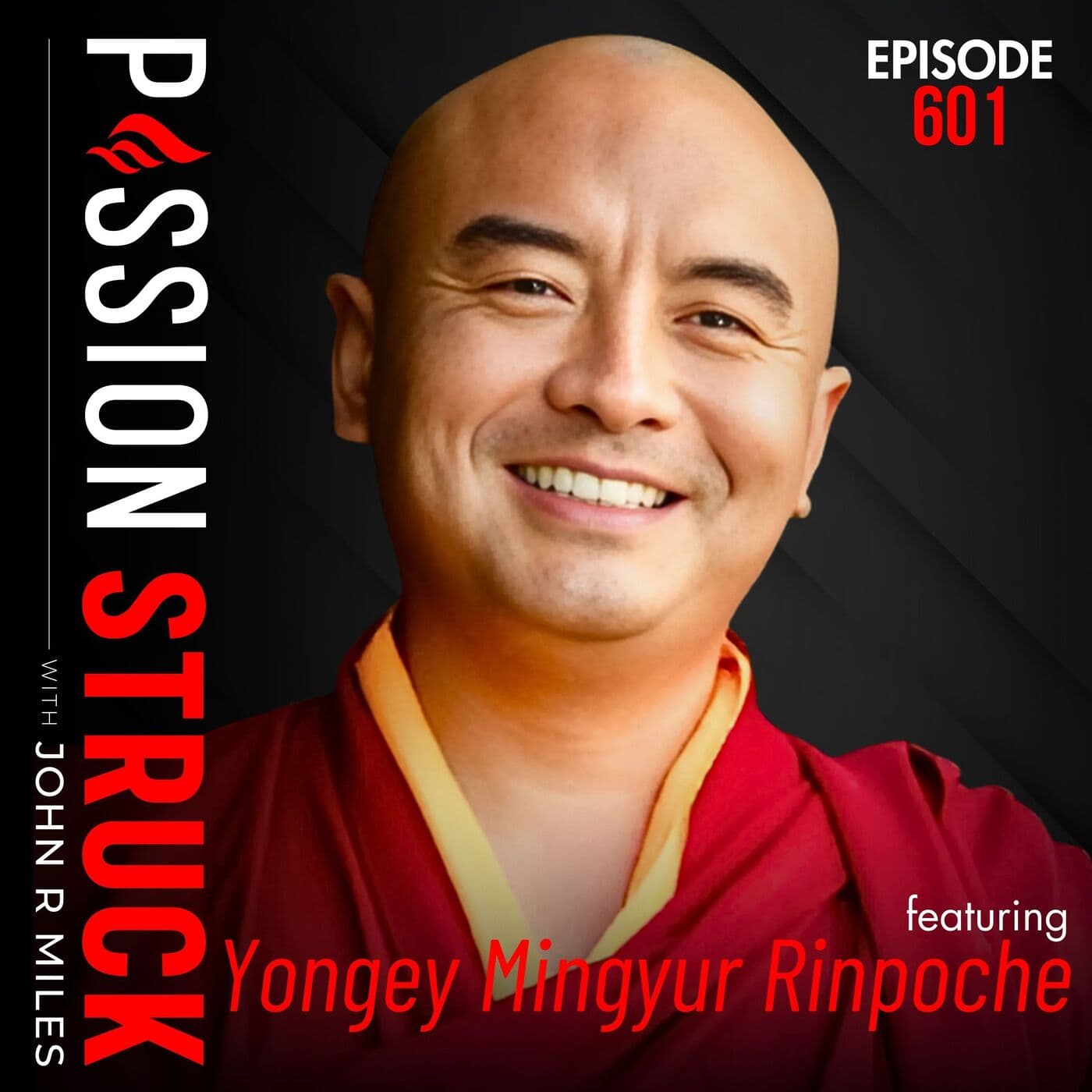
Podcast Episode Notes: Yongey Mingyur Rinpoche on Find Your Innate Basic Goodness | EP 601
Podcast Title: Passion Struck with John R. Miles Episode Title: Yongey Mingyur Rinpoche on Find Your Innate Basic Goodness Episode Number: 601
Episode Overview In this thought-provoking episode of *Passion Struck*, host John R. Miles interviews Yongey Mingyur Rinpoche, a prominent Tibetan Buddhist meditation master. Rinpoche shares deep insights on emotional healing and inner peace, challenging conventional notions of self-improvement by asserting that we already possess the goodness within us.
Key Themes Discussed
- Understanding Pain:
- Pain is reframed not as an enemy, but as a guide.
- Fear can transform into a teacher, leading to personal growth and awakening.
- Basic Goodness:
- Every individual has an innate nature characterized by awareness, love, and compassion.
- Rinpoche emphasizes that mattering is not something to be earned; it is inherent and needs to be uncovered.
- Awareness and Compassion:
- True awareness encompasses recognizing and holding thoughts and pain with kindness.
- Compassion is the foundation for healing and connection, as it helps individuals recognize their interdependence with others.
- Transformation through Micro-Moments:
- Small gestures can lead to profound change in our lives and communities.
- Moving from “I matter” to “we matter” fosters a sense of belonging and purpose.
Important Insights
- Panic as a Teacher:
- Rinpoche shares his personal experience with panic attacks, describing how he learned to welcome these feelings rather than fight against them, ultimately finding peace.
- Loneliness Epidemic:
- The modern world’s fast pace and social comparisons contribute to feelings of loneliness and disconnection.
- Encouraging appreciation for small aspects of life can combat feelings of isolation.
- The Nature of Mattering:
- Mattering involves recognizing our connection with others and the world.
- Rinpoche stresses the necessity of acknowledging the basic goodness inherent in ourselves and others.
Practical Advice
- Journaling:
- Keeping a gratitude journal may help shift perspectives and cultivate appreciation for both oneself and others.
- Daily Practices:
- Engaging in daily practices of appreciation within communities can foster harmony and mutual respect.
- Fostering Connections:
- Recognizing the shared desire for happiness can build bridges across divisions.
Concluding Thoughts The conversation emphasizes that true transformation comes from understanding and embracing our innate goodness and that healing is about returning to our authentic selves, not becoming someone we are not.
Call to Action Listeners are encouraged to reflect on their own experiences with fear and isolation, consider how they might cultivate awareness and compassion in their lives, and actively participate in fostering community connections.
Additional Resources
- Guest: Yongey Mingyur Rinpoche
- Links for Further Exploration:
- [Yongey Mingyur Rinpoche's work](https://tergar.org/yongey-mingyur-rinpoche)
- [Passion Struck Community - The Ignition Room](https://station.page/passionstruck)
- [Podcast Show Notes and Resources](https://passionstruck.com/yongey-mingyur-rinpoche-why-the-path-is-with-you/)
Upcoming Guests
- Dr. Rosalind Chow, author of *The Doors You Can Open*, will explore power relationships and inclusion in the next episode.
Final Reflection As a final reflection, listeners are invited to consider how they can embody the principles of love, compassion, and awareness in their daily lives, transforming not just themselves but their communities in the process.
Written by AI. May contain mistakes. Listen to the episode to check what was said.
Transcript
Automatic transcript. May contain errors.0:00Coming up next on PassionStruck. At a certain level, I discovered that I have the panic or panic, what I call that aversion to panic, resist, feeling of resistance to the panic attacks. I'm fighting with my panic, actually. And my father said, don't fight, welcome the panic. Then I begin to welcome a little bit. It helps a little bit. And I thought, oh, now I know the new strategy. So if I say welcome, then panic will not come back. It's become a little bit like dog chasing tail, but even that fake welcome helps for me. Welcome to PassionStruck. Hi, I'm your host, John R. Miles, and on the show, we decipher the secrets, tips, and guidance of the world's most inspiring people and turn their wisdom into practical advice for you and those around you.
0:53Our mission is to help you unlock the power of intentionality so that you can become the best version of yourself. If you're new to the show, I offer advice and answer listener questions on Fridays. We have long-form interviews the rest of the week with guests ranging from astronauts to authors, CEOs, creators, innovators, scientists, military leaders, visionaries, and athletes. Now, let's go out there and become PassionStruck. Welcome to Episode 601 of PassionStruck. I'm your host, John Miles, and whether you're joining us for the first time where you've been with us on this journey, I am so glad you're here.
1:32This is not just a podcast. It's a movement. One that's redefining how we live, love, lead, and grow. Here we explore what it means to live intentionally, to flourish fully, and to make what truly matters matter most. And now we're creating a space to go even deeper. It's called the Ignition Room, a new community designed to help you put these ideas into action. It's where insights become daily practices and where people come together to build lives of meaning, courage, and contribution, which brings me to today's conversation. Let me start with a few questions. What if the feeling of emptiness you carry isn't a flaw, but a signpost?
2:09What if pain and panic aren't obstacles to peace, but invitations? And what if everything you've been searching for is already within you? Today's guest is one of the most revered meditation masters, Yangai Mingyur Rinpoche, a bestselling author, global spiritual teacher, and the embodiment of joyful presence. In this profound conversation, we explore how suffering can become wisdom, how awareness is always with us even when we forget, and why mattering isn't something we earn, but something we uncover. In our conversation, we explore how panic became Rinpoche's greatest teacher, why awe, appreciation, and compassion are portals to our true nature.
2:47We go into the difference between feeling like you matter and truly knowing you do. We discuss how to heal the wounds of anti-mattering and restore connection in divided communities. And why spiritual awakening doesn't require becoming someone new. It requires remembering who you are. If you're struggling with identity, loss, or simply trying to feel whole, this episode is for you. And last week I released a solo episode on serendipity and how chance encounters and unexpected turns often hold the deepest clues to our own sense of mattering. It's part of a larger conversation I'm bringing in the Ignition Room, how we can reawaken our sense of purpose through small moments that shift everything.
3:22I also sat down with Laura and Isabel Hoff, daughters of the Iceman, Wim Hof, to explore the intersection of trauma, cold therapy, and transformation. And then we also unpacked the gut-brain paradox with Dr. Stephen Gundry, who eliminated how what we consume can shape our clarity, mood, and resilience. And if you're just discovering us, check out our episode starter packs at Spotify or passionstruck.com slash starter packs. Curated playlists that make it easy to dive into topics like personal growth, emotional mastery, and leadership. And if this work speaks to you, come join us inside the Ignition Room.
3:56Links are in the show notes because transformation happens faster and more meaningfully when we do it together. Now let's dive into this extraordinary conversation with Yangi Mingor and Rinpoche. Thank you for choosing PassionStruck and choosing me to be your host and guide on your journey to creating an intentional life. Now, let that journey begin.
4:19I am absolutely thrilled and honored to have Yangai Mingur Rinpoche on PassionStruck. Welcome, Rinpoche. Thank you. I'm very happy to be here. I am very happy you're here from Nepal as well. And I actually interact with people in Nepal all the time because my whole web development team is based in Nepal. Yes. And some of the most passionate people I have worked with and dedicated. So I'm very happy to call them to be part of what we do here at PassionStruck. Thank you. So I thought I would open with this question. You often say the world is your meditation teacher. In this time of so much division and disconnection, what is the world trying to teach us?
5:07So in my tradition, we believe that everybody has wonderful nature. So what we call basic innate goodness. So this basic innate goodness is the fundamental quality of our own mind. normally what we call the unity of awareness, love and compassion and wisdom. For example, when I was young, I had panic attacks. So when we experience panic attacks, not happy at all. So we think world is a danger, not safe. And I have special anxiety for strangers and the weather. And I began to learn meditation with my father when I was nine years old. And my father said, yes, I understand you have this panic attacks, but at the same time, you have wonderful nature.
6:05And I never believed that at the beginning. And he tried to give me a lot of examples. So one example is in my hometown, I was born in the middle of Himalaya mountain in Nepal. So we have very nice environment, but not always like that there's storms thunderstorm snowstorm in the winter sometime crazy, and he said, though there's a lot of storm here. You can watch will this storms can change in nature of cloud or not, and I look at some comes they pass sky never change. So, of course, we have this lot of clashes, what we call suffering clashes and in our mind, in our life, in the world. But at the same time, we have this wonderful quality within ourselves.
7:02And eventually, I learned a lot from my panic attacks. So now I'm considered my panic attacks is my teacher and best friend. I'm I wrote many books. I'm here now talking about this topic because of panic attacks. So what we call obstacle may become opportunity problem may become solution if we take it as learning process to grow to transform. So although we said accept it let it go but letting go is not the giving up. Don't give up. Transform. Learn. Thank you for sharing that. And I myself have experienced my own set of anxiety and trauma. So I understand how difficult it can be to overcome those things.
7:56When you look at the growing sense of the loneliness epidemics and the hopelessness that's happening globally, what do you believe is at the root of it? I think the route is now the world is really become very fast and one thing is comparative. So we are comparing all the time, compared with our neighbors, our brothers and sisters, colleagues and company at our work. then we feel like maybe I'm not enough and then we feel like maybe even though we are in the middle of full of people but we feel like there's not really connecting and one way maybe the social the gadgets might interfere and also that when we have a lot of competition we look at the negative aspect.
8:55And when we look at a negative aspect, then we feel like, oh, I have this problem. I'm alone. We never appreciate. How can someone who might be listening or watching this sit with the pain of feeling that they don't belong without collapsing into despair? So for me, one of the very effective practice for me is the appreciation. So, sometimes we feel like I'm alone. There's no friends, no family, nobody understand me, nobody support me. But what normally what we call when we look at the glass half empty, half full. So which aspect we look at so one of the important i write like almost literally doing journal gratitude journal appreciation journal maybe write down just three things oh even though i lost everything but i still have my life i still senses i have eyes here whatever we have.
10:04There's a roof above me. There's now I have this chair below me and even we drink the water there's so many cause condition. This water on my table is kind, care, so many people involved. So when we begin to appreciate that at a certain level, then we feel like some kind of warm and connection. That really helps me. Yes, I know. Unfortunately, this year, exactly what you mean by having to go through these periods in life. We were hit hard here by a natural disaster in the form of a hurricane and had three feet of water in our house. So we lost everything we owned. And it's amazing that in the face of that adversity, what showed up more than anything were the family and friends who came to our aid to help us through.
11:04And so even in periods of grief, like you're saying, it does open up so many other areas that you sometimes don't think about that are truly special elements of your life, like you were just talking about, that we take for granted. normally i talk about sometime i keep teaching for a long time and then i drink a lot of water then after two hours almost this end i really want to go to the restroom so sometime i said oh now almost finished if we have any questions no question okay then we stop and suddenly people ask questions what is the meaning of life so then i try to answer very simple and quickly sometimes simple answer may lead more questions but i really want to go to the restroom so i feel like life is miserable oh i really i cannot stand even one minute then i finish my talk and i sat right away go to the use restroom after using restroom i feel like life is wonderful and like rebirth and everything is whatever even the restroom become very nice the air when i come out from the restroom so normally we all have we don't have emergency like that once in a while but we have that wonderful life always there with us but we don't see we are taking for granted and then we look at the only things that we which we don't have i think to frame this discussion today it's important to get your definition of mattering what does it mean for you ronpoche to matter in a community not as a role but as a human being?
13:07For me, one is this wonderful teaching that I learned from when I was nine years old, the teaching of discovering the basic goodness within myself, not only me, I always see this with everybody. And that is really helped my life. Like I'm now leader i have more than 30 different projects and i will not have so much problem with the people normally 99 of the time even the difficult people comes up a certain level i like them and they like me and i see the good things within them so for me this wonderful teaching of of discovering awareness, love and compassion within myself is like my journey. I never feel bored.
14:00It's like every day something new, aha, or learning more. Sometimes what we call discovering unlimited treasure within myself. So this is really matter for me. And second important thing is I love teaching. I share this practice. Now my schedule is very crazy, but I really feel happy when I teach, I feel relaxed. And, and many people get benefit by this. So I'm very happy to see that many people get benefit. So sometime I have problem that how much should I teach and how much should I do my own personal retreat? Yes. But that sometimes struggle still I have to find the balance. I know you love to use metaphors, so I wanted to ask you about this in a metaphorical way.
14:58Is mattering a river we enter or something that we carry with us? It's with us all the time. We need to recognize it. We need to discover it. What we call, we all have this awareness, love and compassion, and the wisdom 24 hours with us. So actually it's there. Sometime I give examples, like, what is that? Can you see this one? Yes, watch. If you have the best watch in the world, if you are not recognize your own watch, can watch it tell us time? Normally not, right? watch cannot tell us time even though it's the best watch in the world so we still may lost time then may not be on time then we may lose our job if we lost our job we may lose our home all this because we don't know our own watch but if you recognize our own watch your own time maybe we got promotion good job good home good life so watch is same but what makes it different the recognition that when we recognize our own watch the quality of watch manifest for us when we not recognize our own watch the quality not manifest for us although this quality is there.
16:33I think that's a great example and it leads me down this track that I was trying to think of before I got on the interview with you and that is, do we need to feel like we matter in order to awaken spiritually or is it the awakening itself that helps us realize we always have the awakened nature is with us all the time and the calling us what we call we all have homesick what is homesick wanting to be happy don't want to suffer that with us all the time and that is calling from our true nature the awakened nature within us us, calling us come home or the feeling of hollowness, empty. Sometimes we feel that empty.
17:23Even the loneliness, even the feeling of dissatisfaction, incompleteness is also a kind of message, kind of wisdom that calling us come home. Why our true nature is what we call free from suffering. It is not incomplete. It is complete. So the awakened nature, what we call is with us all the time, we need to connect with that. We need to discover that. We need to recognize. So one of the things that's plaguing so many people, especially in the Western world, is that there's so many of us who feel like we only matter when we perform, when we produce, when we people please. What is your advice to break that conditioning?
18:21There are two matters. so what i call the innate purpose in it matters and the temporary with the cause and condition so the innate matter is that we have this our true nature always there calling us that is our true nature but then of course look for job good job we think is good good relationship is good fame power money also within good or whatever we want to do if we achieve that we think that's the matters for me the that is the outer circumstances temporary things but at a certain level if we go away from our true nature even Even though there's fame, power, money, whatever we achieve, we still feel the hollowness, incompleteness, something missing.
19:26But then what we call if you connect more with our innate quality, for example, if you do social work or if you have good time with your family or if you help somebody, you feel really happy. that hollowness go away feeling like you're coming home why because we are really connecting with the real matter within ourselves and also with the awareness like scientists saying that everybody has some kind of baseline that happy or not happy some kind of baseline and they said that this baseline is very difficult to change like even you win the lottery 80 million cus dollar you got it it's good for a few months only then it's come back to the baseline and the relationship very good marriage also few years and fame power money all this helps a little bit but then you come back to the baseline so the only two things help a little bit longer one is if you get the salary in your community you are the number one the amount doesn't matter but if you get the best salary you feel a little bit happy for a longer time another thing is plastic surgery it helps better but then there's this study about if somebody watch the breathing to be aware of the breath maybe every day five minutes for 30 days after 30 days then there's a enduring benefit so by this awareness looks like for me when i first time learned this awareness meditation watching my breath I feel like stupid and the boring so when we do that actually our baseline can change so even though when we are not meditating we feel happier why because awareness is our true nature when we connect with the more to the our heart feel more happy and of course learning If we really learn, we feel very happy.
21:57The wisdom comes. Education is very important. So therefore, the real matter is when we connect with our true nature. Thank you for sharing that, Rinpoche. And I'm going to share a personal story to give a little bit of my perspective on this. I told you before we came on that I was a senior executive for a while in my career. And I had reached what many people would have thought the apex. I was a chief information officer at Dell and had a large organization, the dream job I had always wanted. But underneath the surface, I could feel myself unraveling and slowly disappearing from my own life.
22:42And it's a really interesting and terrifying experience to go through. And I often say it's what I think Henry David Thoreau was trying to warn us about when he said the mass of men lead lives of quiet desperation, because we keep searching in the wrong places. And the more I was concerned about the money, the accolades, the titles, the more I lived my life, even though outwardly it was successful, I was living it almost like I was a pinball, where I was bouncing off of things, the wrong things, instead of being intentionally committed to the right things. And so what ended up happening to me, you talked about being hollow, is I felt more hollow physically, emotionally, spiritually, relationship-wise than I ever had in my entire life.
23:44I felt like I was a shell of myself. And when you reach that point, it's very worrisome. I can't even tell you how painful it felt because you've gotten to this bottom of the abyss and you have no idea how to climb out of it. And so what I'm doing now with the podcast is maybe people haven't fallen that far and we can help them before they do. But I think what I am trying to bring is I have lived this. So for me, this is a really painful aspect of my life. and what I am trying to do is to help people, I think like you are, so that they don't have to suffer like I did. But it really means that you have to shift your whole life and your value system and what you hold sacred to a whole different element because all the things that I thought were going to bring me success, fulfillment, brought me emptiness.
24:46But now that I have really focused on impacting people, trying to end as much suffering as I can, trying to give myself to others, my sense of fulfillment has risen and the other areas of my life has as well. So I think that that is an example of what you were saying with your words. Exactly. I think you are such embody this journey that you go through all this. And now the problem, sometimes many people, they stuck there and some people not even realize that like in our tradition, what we call Dukkha, Dukkha meaning like we cannot find exact translation. So some people, they translate the suffering, sometimes dissatisfaction, but the real meaning, Dukkha meaning, the sense of hollow, incomplete, something missing, a little bit sad or insecurity.
25:47So that sometime what we call background noise, that Dukkha. And because of that feeling, then we look, we are very busy, entire life to fulfill that hollow or dissatisfaction or empty like when we go with many people we feel also noise they talk a lot i want to be alone when you come home up to two three minutes later oh i'm lonely i need somebody i need my smartphone but then when look at some of the other sudden level or something never satisfying so what we call if we recognize that feeling and then if we see what we call sometimes what we call the wisdom that's three things right awareness love and compassion wisdom so what we call wisdom is the biggest paradox.
26:50That very thing, that feeling of hollow, incomplete dissatisfaction is also wisdom. If you know how to work with that, if you know how to learn from that, if you know how to follow and then actually we will discover actually there's a awareness, love and compassion, wisdom, sometimes what I call inner sky. That we can discover within ourselves. So for me, when I have panic attacks, life feels terrible. And of course, I feel empty, meaningless. So then I learned meditation. But of course, I was young. I'm lazy boy. I love the idea of meditation, but I don't like the practice of meditation. I just mentioned you when I practice breathing meditation, I feel stupid and I feel boring.
27:49And I hear my friends are playing. I really want to go there. So it's on and off. So then at a certain level, I discover that I have the panic or panic, what I call that aversion to panic, resist, feeling of resistance to the panic attacks. I'm fighting with my panic, actually. And my father said, don't fight. Welcome the panic. Then I begin to welcome a little bit. It helps a little bit. And I thought, oh, now I know the new strategy. So if I say welcome, then panic will not come back. It's become a little bit like dog chasing tail. But even that fake welcome helps for me. So then in the end, it took me five years.
28:44So in the end, then panic become my friend in the end. So for me, it's like at a certain level, that panic of panic, aversion of panic is gone. Symptoms still there. Tight here, my heart speed up, sweating, all are there. But I feel exciting because we have this practice that I can use my panic as support for awareness and also love and compassion and the wisdom. So deeper level, excite this excitement. Okay, now panic comes. Okay, heartbeat. At the beginning, I thought the panic attacks like it's heart attack. So I checked with many doctors. I asked my mom to bring the best doctor and doctor said your heart is very good.
29:33I thought oh fake doctor don't understand me. But then later I know it's not really a heart problem. So that also helps. Then at a certain level all this feeling the symptoms not become painful for me. In fact it's exciting. So this is why what I'm saying, the panic becomes my friend and my teacher. Then after a few months, the panic is gone, totally gone. So I don't have the real panic attacks since then. But of course, I feel panic if the tiger comes. I want to switch directions a little bit. I'm not sure if you're familiar with Dacher Keltner. He's a professor at University of California, Berkeley.
30:21but he studies compassion, kindness, and awe. And I interviewed him a couple of years ago when his book on awe came out. And it was the first time I had heard the term moral beauty. And he was trying to figure out, normally we think of awe as something that we experience with the birth of a child, or we see the Mona Lisa, or maybe the Himalayas in your country. And that's what brings us awe. But he found that the number one source of awe across all cultures is the moral beauty of ordinary people. It's when we perform or witness acts of compassion, of love, of kindness onto another human being.
31:13What do you think that reveals about the human heart? Yes, that's exactly what we discussed in my tradition, that when we feel our aha inside, all these things that when we are more close to our true nature. So love and compassion is our innate quality. So when we connect with that, then it doesn't matter what kind of the manifestation through culture, through behave, through cultivating meditation practice, it doesn't matter. So, what we call deeper level, if something not really connect with our true nature, it will reject from inside. So, therefore, these moral ethics have become really important.
32:16Because when they connect with our true nature, then we feel like more happy. We feel like coming home. we are with ourself so therefore yes what you said and what the doctor mentioned yes of course that's the very important point so one of your teachings is that even a single breath can help awaken awareness using that analogy do you see the experience of awe as a doorway into presence or into something even deeper yes so now we discuss about the first quality of our mind awareness sometime what we call clarity sometime what we call luminosity lucidity knowingness conscious so we have so many names for that yes so basically it's very simple one way can you see my hand i can that's all awareness meaning that ability to see to hear to experience to think to feel so that ability is what we call like lamb the candle limb the phlegm is the light, sometimes what we call self luminosity.
33:50So if we want to see the flame, the candle flame, we don't need to use flashlight because it illuminates itself. But this pen, if you want to see this pen, then we need to use external light. So this luminous quality, the knowingness actually, the mind is self-illuminating. The problem is, is beyond concept. So we cannot really find when we look, we cannot really find through cognitive level, intellectual level, conceptual level. But the good news is what we call we can experience it. We are experiencing this all the time. So then the lamb has true clarity or true luminosity. Self luminosity illuminating others because self luminosity is very difficult to experience at the beginning, but we can connect with other luminosity, meaning breath could be anything.
35:01Being with the breath is connecting with the luminous aspect of the mind. could be sound could be smell could be taste could be thought and emotion so what we call in the end everything becomes support for meditation everything becomes support for lumin awareness luminosity so then what we call after certain level obstacle become opportunity suffering may become based for happiness when we look at that luminous aspect. So when I hear you talk about this concept, I have a concept to myself, and it seems the two dovetail pretty nicely. I believe that there are four different levels of mattering that we go through.
35:57There's a feeling that you have to have that you matter. So there's personal mattering. There's a feeling that others feel that you matter and make you feel like you matter. There's the light helping other people through your influence and your involvement feel like they matter. And then I believe that there's a ripple effect that happens when all those things come into place that all of a sudden you can start making community, society, the world matter more. Is that kind of a good way to think about it? Yes, of course. Why not? So what we call all this is what we call independent. Yes. So all of us connect each other.
36:48So sometimes what we call the other is half part of you. you is part of other so the connection is who we are so actually what we call when we really identified me or others or reality actually we cannot really find the one so it's always it's changing a little bit and then they are depending each other so what we call is the connection you is full of connection and you and other is also full of connection into the world to the society and these connection how this connection becomes the positive is based on the matter purpose, love, compassion. So when we follow that direction, then what we call human situation, you win, others win, everybody wins.
37:54So I wanted to get your perspective from your traditions and spiritual background of what happens within us when we witness someone's kindness, compassion, or courage? What opens? What heals? When we witness compassion from others or ourselves, then that, the holiness, incompleteness, dissatisfaction, or sometimes sad, lonely, it heals normally. So if we feel, so we feel more complete, we feel more secure, we feel more not hollow. That's what we call confidence. Competence is not based on pride but contentment. So when we experience this contentment, completeness, then there's a purpose, then there's a matter, Of course, as you mentioned, that comes and then we get energy actually.
39:01Then we feel happy. That happiness is what we call, what I call the real happiness. So if you drink coffee, we can feel happy, but that happy can be co-existed with the holo. If you win the lottery, it looks like happy, but that happiness also exists with the holo. the empty. But then now this happiness is the real happiness, the contentment, the joy, like coming back to home, being with who we are. The leading scientist in the world on the science of mattering is a gentleman named Dr. Gordon Flett from Canada, and he has coined this term anti-mattering. Do you think that the experience of anti-mattering is a delusion of the ego or a real wound that needs healing?
Read the full transcript
39:59So normally in my tradition, we talk about three sense of self. So the surface level, what we call unhealthy sense of self. Then more deeper level, we have the healthy sense of self. Then the core, the essence, what we call luminous self. or self beyond self so if we give the example the lamb maybe lamb candle them and we can cover that lamb with the glass ball with a very beautiful image like flowers or rainbows whatever Then what we see is our room will be full of beautiful image. So that is what we call healthy sense of self. Then we can put another layer with a scary image. Maybe spider, poison snake in the Himalayas, tigers, lepers.
41:07if we cover that then what we will see is our room will be full of scary image but all this both the layer comes from the center the luminous self a self beyond self so what we call the unhealthy sense of self is actually 10 percent only but we perceive 90 percent because we exaggerated and i discuss this with sometimes some scientists and they talk about if we have 10 qualities within us one negative nine positive normally what we see is one negative one and then we exaggerate that one 90 percent ignore the nine good qualities within us so as you said anti-matter could be the unhealthy sense of self.
42:06It's only 10%. And then when we look at the more deeper level, there's healthy sense of self. So healthy self has a lot of related with love, compassion, awareness, wisdom. So the self related to that, that is 90%. Then when we look at the really deeper level, the luminous self is 100 % what we call, because even that unhealthy sense of self is from the light. So the purpose of our practice is to really connect with that luminous self in the end. Thank you for sharing that. I wanted to talk more about communities. And one of the things that I've really been trying to study up on is dehumanization and the need to belong.
43:00How in so many societies now, we're treating people as the other side. And I have come to believe, and I've studied this spiritually, and I've really studied the work of Kurt Gray and Emile Bruneau, who found that if we can start seeing ourselves in the other side, because we're more common than we are different, we can start ending a lot of the world conflicts that we're experiencing. So to me, this gets back to this concept of mattering. It's how do we move from I matter to we matter without losing the sense of personal dignity and worth that often holds us back from making those concessions to see the other person as a mirror of ourselves.
43:53How do you suggest we do that? In our tradition, same thing, go back to the basic innate goodness. So as I mentioned, the lamb has three unity qualities, the light, the warm or heat, and yellow color. They are different aspects, but they are one so our true nature has awareness love and compassion and the wisdom so now the second practice what we call how to connect with that in it love and compassion so first time when i hear this from my father that he said actually you have love and compassion 24 hours and I said what? I never believed that at the beginning I thought oh my father is doing my father's job what we call sweet talk I thought sweet talk but then he kissed me so normally we have first what we call view which is introduction of this innate love and compassion then we have practice the meditation and number three is what we call application then we apply in everyday life so the he introduced me this feeling that he said do you want to be happy i said yes of course i have this text i want to be happy he said that is the love and at the same time we don't want to suffer actually that is compassion so he said every movement of your body is looking for happiness don't want to suffer so sometimes i listen his talk like this sometimes i bought and become like this and he said when you do that if you keep too long you feel uncomfortable i need to change or a little bit happy relax but then again the suffering comes maybe like this so each movement each eyes blink is looking for happiness if we don't blink our eyes then feel pain right happiness and even unconscious level each breath is looking for happiness to avoid the suffering And he said, not only the movement in your body, in your mind, it's a thought process, it's emotion.
46:42And in the end, they're all looking for happiness, don't want to suffer. So he said, first, we need to recognize this within us. And then we practice self-love and compassion that may i have happiness the causes of happiness then we understand others actually everybody looking for happiness 24 hours 24 7 each movement each breath each thought process so we might skin look different culture look different tall or short but the deeper level of everybody looking for happiness and everybody has this wonderful nature. So when we see this with others, just like you, then you feel can. Then not just your friends or family, everybody in the world wanting to be happy, don't want to suffer.
47:44So then in the end, we have this practice of immeasurable love and compassion that we We wish that may all beings have happiness and the causes of happiness. May all beings free from suffering and the causes of suffering. So this way, then we connect with you, others, society, the world. So from your perspective, from a contemplative or Buddhist perspective, what does true inclusion look like? Is it sameness or is it something else entirely? What we call unique and the union. Everybody is unique. So we really need to understand everybody cannot become same. It's impossible. And if you try to make it the same, then we are making another problem.
48:42The uniqueness. everybody has different skills capacity knowledge experience wisdom different ways so respecting the uniqueness but because of uniqueness we are together we want to learn each other grow each other and new idea new experience new life for the purpose of awareness, love and compassion, wisdom, the matter, we get together work together for the compassion, for the wisdom, for the awareness. So that is the real meaning of how to connect with everybody. Dr. Randall Thompson, R.P. O'Shea, if you could give communities one daily practice to help them remember that every person matters, what would that be?
49:41I think it's, for me, it's the appreciation and gratitude. So maybe you can even write down the journaling. Three things to appreciate, maybe. One day about you, one day about others, that other community members. One day about the world, or maybe with the environment. And by doing that, it really helps for the community to become harmony. Not only that, they will see each other's qualities. I will share you one story. So one time I was on the teaching tour and somebody, a couple, came to me. and they asked me special blessing because they are not happy and they were arguing from morning to evening.
50:38So the husband said he loved controlling and the wife is always worried. So then they cannot get along and their marriage has become very unhappy and suffering and they asked me bless pray for them so they're expecting maybe i have some magical power and pray and all the problem go away i told them i don't have that power or capacity so i cannot help you and they both are a little bit sad and i told them though i don't have this capacity of special blessing but i I can teach you something. And the both of them said, whatever from you, appreciate it. So then I told them that every day you have to make half hour time to do positive talk.
51:36Try to discuss some positive good qualities within each other and appreciate that. They said, okay, thank you. And they gone. So after a few weeks later, they both came and they both said, oh, this 30 minutes appreciation is too long. And for them, when they begin to discuss like, when I met you first time, you are very kind, but not now. They cannot say now, but they look at the time. Time is too long. And then they said, what should we do? And I told them, okay, I can give you a discount. So now, not 30 minutes, five minutes only. And they both say, oh, that's easy. They can do it. And they gone.
52:20And I haven't met them for one year. After one year later, they both came. They said, thank you so much for your advice. Our life changed. I was not expecting like that. At the beginning, they both are quite negative. And I asked them how that help you. and they said when they begin to do this appreciation practice and actually they begin to realize that actually they have kind to each other there's a lot of love there and they have a lot of good qualities within each other which is they never see before and they discuss and actually they really like each other eventually, though they both have personality.
53:04The husband still have this tendency of control. Wife still worries a lot, but then they make humor. So they give each other nickname. The husband's name is control free and the wife's name is worry free. So sometimes the husband go out and come home, he knocked the door and he said, the most powerful person in the world is coming. And the wife said, most worried as a person in the world, welcome you. So sometimes we all have problem, mistakes, all these things. Sometimes we cannot change the right way, but bring awareness and be kind with ourselves, be kind with our friends or family for others.
53:52I think these are really important. Thank you so much for sharing that. And I think the last thing I wanted to explore with you before we get into a quick wrap-up questions is, how do we practice compassion, love, and kindness in communities where we feel betrayed or misunderstood? We have this practice how to practice loving kindness compassion with a difficult person. So maybe I will tell one story. So one time me and my father in Nepal, Kathmandu on the mountain, there's a nunnery. So he was in a nunnery and a group of people came to learn meditation from my father. My father was a great meditation teacher.
54:37And there's two men within that group fighting all the time, especially in the evenings. Sometimes they fight a lot and hitting each other also sometimes. So one day in the evening, me and my father, we're having soup, like a Tibetan dish, what we call Thukpa, Thukpa is a soup. And suddenly one man appear in the room and I asked my father, please teach me how to control my anger and hatred. And my father while having the soup asked him, why you hate the other person? He said, oh, he beat me, say bad things. So I hate him. My father said, oh, then you should hate the words from him, the sting. that he used and that person said i'm not stupid this stupid logic doesn't help me and my father said oh why he said the stick is controlled by him the word is controlled by him i hate him not the stupid not the stick and my father said oh then maybe you should hate the emotion the clashes within that person because that person when the hatred comes he cannot control just like you you come here want to control your hatred and anger but when it comes you cannot control he said yeah that's right So we have this practice that we separate the person and the clashes and whatever they behave.
56:27We are not saying that behave is good. We are not saying the hatred is good. We never follow that. Even sometimes challenge, we should do that. But at the same time, we see the person is different than their clashes. And we wish that person free from that hatred, that clashes, that ignorance, aversion, craving, all this, and they connect with awareness, love and compassion, wisdom and change, transform. So I wanted to ask, Rupeshay, if you could write one sentence on a wall that every community in the world had to see each morning, when they first woke up, what would it say? I think for me, the most important is the awareness.
57:20That we all have innate quality, that experience of that though there's a thought, though there's emotion, but that awareness never disturb. Like inner sky is free. And that awareness has also love and compassion. It has a wisdom. So maybe awareness or maybe your basic innate goodness. Trust your basic innate goodness. Thank you. And I'm going to end with this question. You've said before in other interviews that the best teacher is not words, but your own example. What legacy do you hope your presence is leaving on others? For me, it's entire my life. I try my best to practice these teachings.
58:21things. Since childhood, I do a lot of retreats. I, all these practice I use in my life, in my leadership, in my way to communicate with others. And also, I really want to teach. And my own practice and the teaching is two things that help many other people. Absolutely, just like you did today. Rinpoche, it was such an honor to have you here today. Thank you so much for giving us the honor of your presence. Thank you very much, and I really appreciate what you're doing also. And that's a wrap. What an incredible gift to share the space with Yangi Mingyur Rinpoche. His wisdom, humor, and vulnerability remind us that transformation isn't about striving, it's about seeing.
59:13That pain can be a teacher, not a problem. and that awareness, love, and compassion are not distant goals, but present realities we can reconnect with at any time. Here are a few takeaways I invite you to reflect on. What if your panic or fear isn't a flaw, but an invitation? How can you stop trying to fix yourself and instead start witnessing yourself? What micro-moments of meaning can you create today for yourself or for someone else? And how do we move from I matter to you matter to we matter? If today's conversation sparks something in you, please consider leaving a five-star review. It helps the show reach more people and fuels our mission to bring more intentional insights to the world.
59:53And if someone came to mind while listening, share this episode with them. You never know what doors it might open. For links, highlights, and resources, including Rinpoche's books and guided practices, visit the show notes at passionstruck.com. You can also watch the full video interview on my YouTube channel. Just search for John R. Miles and be sure to subscribe while you're there. And don't forget to check out my recent solo episode on serendipity and mattering, where I explore how the smallest unexpected moments can be signs that you already belong and that your life matters more than you may realize.
1:00:24Coming up next on PassionStruck, I'm joined by Dr. Rosalind Chow, author of The Doors You Can Open, A New Way to Network, Build Trust, and Use Your Influence to Create a More Inclusive Workspace. We unpack how to navigate power relationships and inclusion with integrity and why creating access for others is one of the most transformative forms of leadership. To me, mattering is knowing that other people would notice if you were gone. That's something I was thinking a lot more about. And so when we sponsor other people, we're essentially saying the world is better for having this person in it. And if you weren't aware of them, that would be very sad for all of us.
1:01:01And so when you think about people who don't get sponsored, basically, they're not having someone going out and telling other people about how much they matter and how much they should miss them if they were not there. And remember, the fee for the show is simple. If you found value, share it, but more importantly, live it. Because knowledge alone doesn't change the world. Action does. Until next time, live life, passion struck.
From the publisher
In Episode 601 of the Passion Struck podcast, host John R. Miles sits down with renowned Tibetan Buddhist meditation master, Yongey Mingyur Rinpoche, for a conversation that will stay with you long after it ends. Known for his radiant smile, open heart, and profound clarity, Rinpoche shares a perspective on emotional healing and inner peace that turns conventional thinking upside down.
Rather than offering a roadmap to “fix yourself,” Rinpoche invites us to explore the idea that we already possess what we need. Drawing from his early life struggles with severe panic attacks, he shares how fear became his greatest teacher—an unlikely but powerful path to awakening.
Click here for the full show notes: https://passionstruck.com/yongey-mingyur-rinpoche-why-the-path-is-with-you/
Join the Ignition Room!
Join the new Passion Struck Community! - The Ignition Room: https://station.page/passionstruck
The conversation explores core themes like:
- Why pain isn’t the enemy, but a guide
- The illusion of needing to "earn" mattering or self-worth
- How awareness and compassion are not destinations—but your natural state
- The power of micro-moments to create deep transformation
- How to move from “I matter” to “we matter” in a fractured world
As Rinpoche explains, “Awareness doesn’t mean we get rid of thoughts or pain. It means we learn to hold them with kindness.” It’s a radical reframe—one that reminds us healing is not about becoming someone else, but about coming home to who we’ve always been.
For more information on Yongey Mingyur Rinpoche - https://tergar.org/yongey-mingyur-rinpoche
Sponsors:
- Factor Meals: http://factormeals.com/factormeals50off and use code “FACTOR MEALS 50 OFF”
- Rosetta Stone: Unlock 25 languages for life at “ROSETTASTONE.com/passionstruck.”
- Prolon: Reset your health with 15% off at “ProlonLife.com/passionstruck.”
- Mint Mobile: Cut your wireless bill to 15 bucks a month at “MINT MOBILE dot com slash PASSION.”
- Hims: Start your journey to regrowing hair with Hims. Visit hims.com/PASSIONSTRUCK for your free online visit.
- Quince: Discover luxury at affordable prices with Quince. Enjoy free shipping and 365-day returns at quince.com/PASSION
For more information on advertisers and promo codes, visit Passion Struck Deals.
Speaking Engagements & Workshops
Are you looking to inspire your team, organization, or audience to take intentional action in their lives and careers? I’m available for keynote speaking, workshops, and leadership training on topics such as intentional living, resilience, leadership, and personal growth. Let’s work together to create transformational change. Learn more at johnrmiles.com/speaking.
Episode Starter Packs
With over 500 episodes, it can be overwhelming to know where to start. We’ve curated Episode Starter Packs based on key themes like leadership, mental health, and personal growth, making it easier for you to dive into the topics you care about. Check them out at passionstruck.com/starterpacks.
Catch More of Passion Struck:
- My solo episode on The Mattering Mindset in Love – Choose the Love You Deserve
- Can't miss my episode with Jennifer B. Wallace on the Consequences of Prioritizing Achievements Over Mattering
- My episode with The Art of Listening: How to Make People Feel Like They Matter
- Catch my interview with Laurie Santos on How to Matter in a Busy World
- Listen to my solo episode on Fading into Insignificance: The Impact of Un-Mattering in Our Interconnected Era
If you liked the show, please leave us a review—it only takes a moment and helps us reach more people! Don’t forget to include your Twitter or Instagram handle so we can thank you personally.
How to Connect with John:
- Connect with John on Twitter at @John_RMiles
- Follow him on Instagram at @John_R_Miles
- Subscribe to our main YouTube Channel and to our YouTube Clips Channel
- For more insights and resources, visit John’s website
Want to explore where you stand on the path to becoming Passion Struck? Take our 20-question quiz on Passionstruck.com and find out today!
See Privacy Policy at https://art19.com/privacy and California Privacy Notice at https://art19.com/privacy#do-not-sell-my-info.


