In short
Podcast Episode Notes: The Death of the Penny
Podcast Details
- Title: Post Reports
- Hosts: Martine Powers and Elahe Izadi
- Description: A daily podcast from The Washington Post featuring unparalleled reporting, expert insight, and clear analysis.
- Episode Date: November 20, 2023
- Guest: Jacob Bogage, White House economic policy correspondent
Episode Overview The episode discusses the recent cessation of penny production in the U.S. and explores its historical significance, economic implications, and cultural relevance.
Key Points
- Cessation of Penny Production
- Historical Context:
- The penny has been in circulation for 232 years, dating back to 1793.
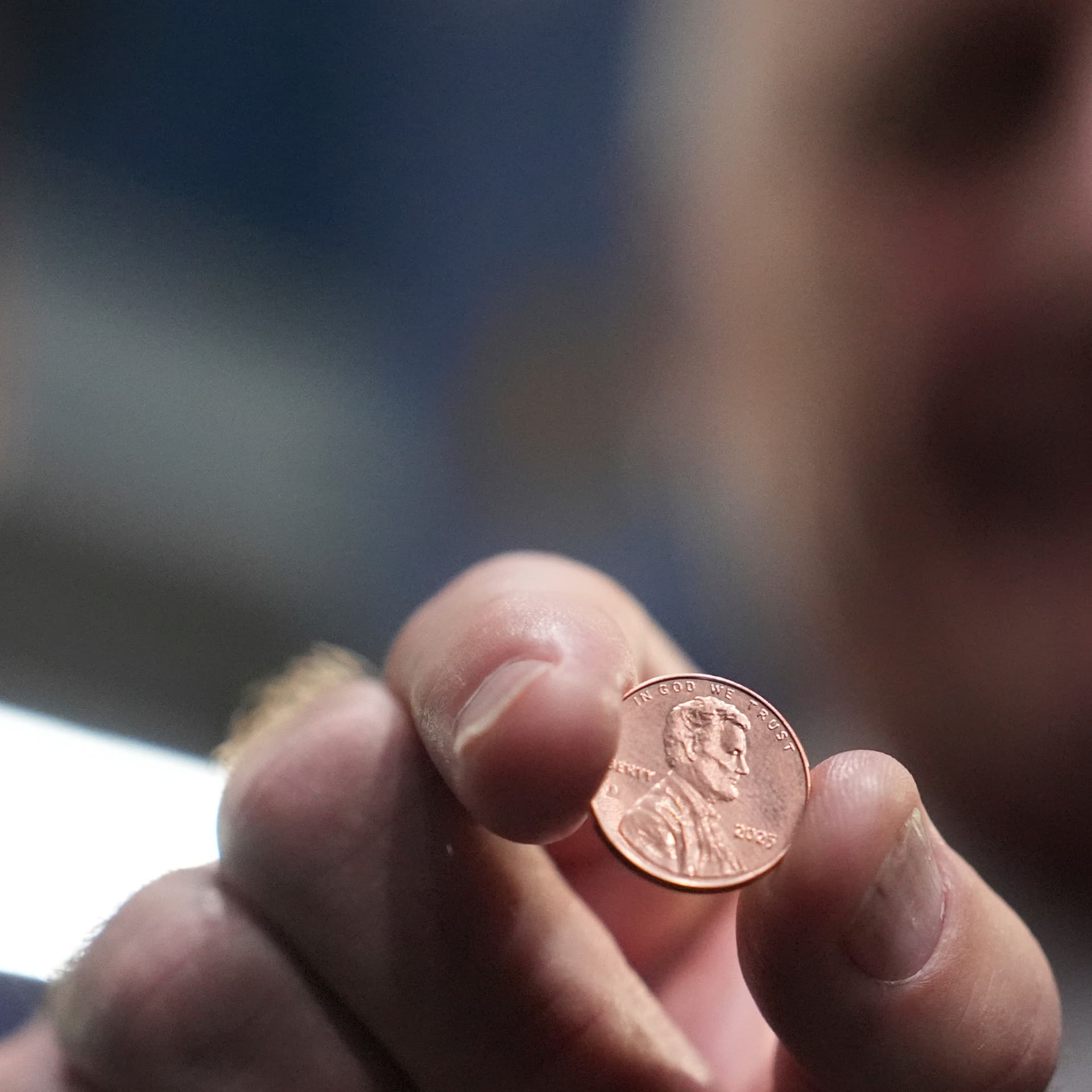
- The last five pennies were minted in Philadelphia recently.
- Reasons for Discontinuation:
- Economic cost of production: It costs the U.S. Treasury $56 million annually to produce pennies.
- Low usage in transactions: Despite 300 billion pennies in circulation, most are not used in daily transactions.
- Economic Implications
- Impact on Prices:
- The discontinuation of the penny is not expected to significantly affect the overall economy or prices.
- Exact change will still be available through existing pennies, as they will remain legal tender until removed by Congress.
- Rounding Practices:
- Cash transactions may result in rounding to the nearest five or ten cents, potentially changing pricing structures.
- Future of Other Coins:
- Other denominations, such as the nickel, may be at risk due to high production costs compared to their value.
- Cultural Significance
- Nostalgia for Pennies:
- The penny has cultural significance, appearing in various sayings, songs, and traditions that evoke feelings of luck and sentimentality.
- Historical Anecdotes:
- Discussion of different materials used throughout history (copper, zinc, steel).
- Mention of the unique event marking the final minting of the penny, despite some hiccups during the ceremony.
- Market Futures and Investments
- Collector's Value:
- The final minted pennies are expected to be auctioned, with potential values well over a million dollars due to their rarity.
- Future Currency Trends:
- Exploration of the possibility of moving towards a cashless economy, where smaller denominations and electronic transactions could become the norm.
Key Takeaways
- The end of penny production signifies a larger shift in monetary practices reflecting current economic realities and consumer behavior.
- While the penny holds nostalgic and cultural value for many, its practical utility in modern transactions is diminishing.
- The discussion raises broader questions about the future of physical currency and the role of technology in financial transactions.
Conclusion This episode of Post Reports provides a deep dive into the implications of discontinuing the penny, blending economic analysis with cultural reflections, and prompting listeners to reconsider the role of such currency in today's fast-evolving economy.
Written by AI. May contain mistakes. Listen to the episode to check what was said.
Transcript
Automatic transcript. May contain errors.0:00Right now during the President's Day Sale, you can get a Washington Post premium subscription for just$3 every 4 weeks. And that includes three extra accounts to share with friends or family. After your first year, renews at$19 every four weeks. The Washington Post. Power. Perspective. Premium. Learn more at WashingtonPost.com slash subscribe.
0:30After 232 years, America officially stopped making pennies last week.
0:41The penny carries an almost mystical quality. Find a penny, pick it up. All day long, you'll have good luck. Toss a penny in a fountain, and your wish will come true. For me, the penny has always held a special meaning. In my family, our lucky number is 11. And sometimes one of us will find a single dime and a single penny together. and we'll pick up the 11 cents and it feels like it's a message from a beloved family member we've lost. It's like my dad saying, hey kid, I'm here. So the news of the penny being taken out of production left me with a lot of feelings and questions. One of the people who's looked into this recently is White House economic correspondent Jacob Bogage.
1:27Financially, don't expect this to make a whole lot of difference. But it is a moment. It is a moment that is worthy of us taking a pause and going, wait a minute. The economy and the world has changed around us. And maybe we haven't noticed until right now. From the newsroom of The Washington Post, this is Post Reports. I'm Kolbie Echowicz. It's Thursday, November 20th. Today, why the penny is being discontinued now, and what it could mean for how much things cost.
2:12Jacob, thanks so much for being here to talk about pennies. Always fun to be here. So, what does it mean that the penny is now out of production? Like, can I still use my pennies? You can still use your pennies. It just means we're not going to make more pennies. There's not a penny shortage. There are 300 billion pennies in circulation. The problem is most of them don't actually circulate. They kind of sit in drawers or in couch cushions or lying on the ground or whatever. And so even though there's that many of them in circulation, they're not being exchanged. No one's paying with them. Right.
2:52And so there's plenty of them out there, just no new ones. So is that why the government decided to stop making them? Because they were like, well, people aren't really using them anyway. That was a major reason why. Yeah. People aren't using them anyway. And this is part of the argument the Trump administration wants to make about how it is cutting costs. It will save$56 million a year, according to the Treasury, just in materials alone, by ceasing production of the penny. The problem is our economy is a$7 trillion economy. me. 56 million is like finding coins on the couch. Why do you think Trump focused on this now?
3:32Like, why is now the moment to stop making the penny? I have no idea. He made this a priority pretty soon after returning to the White House. In February, he posts on Truth Social, his social media platform, saying, I'm ordering the Treasury Department to stop minting pennies. And then by November, they mint the final ones. So this was something that he clearly had a personal fixation about as opposed to a policy fixation about what our economy should be like. And the president can just do that. The president doesn't need a congressional approval. Or he can just tell the Treasury, and the Treasury can just be like, OK, we're not going to make this anymore.
4:12Yes. The Treasury Department controls the mint and controls the production of currency, but they can't take currency out of circulation. So pennies, if we wanted to get rid of the penny as a legal tender, that would have to be a law passed by Congress. So last week, they actually minted the last pennies ever, and you were there to see it. What was that like? It was a weird event. It didn't quite go off the way it was supposed to go off. Treasury Secretary Scott Bessent controls the currency. He should be the one to mint the final penny. Instead, he couldn't make it. So the treasurer of the United States, which is a very different job, minted the final pennies.
4:58Secretary Besson, I met with him last week. He was looking forward to being here with you guys, to be in this historic event. Unfortunately, he's in New York doing the people's business. He was supposed to do two of them that would enter circulation. Instead, they made collector's items. They have like a little, they call it a privy mark. It's a little omega symbol on them, on the front of the penny. What we're going to do is we're going to have these pennies and we're going to auction them off. They said they were going to make only two of them, then they made five of them. I mean, there was a lot of, like, this thing happened not quite the way it was supposed to happen.
5:34But how many people can say they were there to see the final penny? So you said they made five commemorative pennies. Yes. What are they going to do with these? They're going to auction them off. Who's going to auction them off? The Mint, the Treasury, the Idle. The U.S. government. Yes, the U.S. government. Do we have any sense of what the starting bid will be for? We don't know what the starting bid will be. But I talked to a rare coin expert. And he said, this is a wild card. In the rare coin market for something this rare, it's not unusual for them to go for well over a million dollars each.
6:19These could probably go for far greater than that. Is it absolutely insane to buy a penny for more than a million dollars? I'm just saying if I had a million dollars, I would buy a fleet of jet skis. Yeah, but it's worth a million dollars today. It could be worth$10 million. in 50 years. It's an investment. I get why it makes financial sense for the U.S. government to stop producing pennies. And I know that most of us are using our phones or credit cards to pay for things, but there are people out there that still pay in cash. It's probably not a lot of people, but there are people. So, like, don't we need pennies so that people can pay an exact change or get their exact change back when they buy something?
7:06Yeah, we do need pennies for exact change. And we have them. We have 300 billion of them. A lot of people don't want them. People don't use them. The theory is that these items will find their way to the people who want them and need them. I would not encourage you to go out collecting them, assuming they're going to increase in value or become collector's items. They're not. And if you pay in cash at the store, you can expect your change to get rounded up or rounded down to get you to a five or a zero. Oh, that's interesting. Because, I mean, I feel like a lot of things are charged$19.99, right?
7:46So it makes you feel like you're not spending$20. Could you see that changing to now being$19.95 or? Yeah, that's one of the things we could see changing. But also, we're not like a single purchase economy. We are by several things. That's true. And there's actually been academic studies on this, which is the last digit at the end of your receipt is actually random. And so you're not going to see businesses shortchange you to get you to a five or a zero. I mean, they may sometimes round down, but they're just as likely to have to round up to get you to a five or a zero. So any of the exact change inflation should come out in the wash over time.
8:39What you're saying is just because the penny is no more, it doesn't mean that things are going to get more expensive. Because I could see people being worried about that. I heard from a lot of folks on social media. Okay. And the main concern was cost of living. Am I going to get, no pun intended, am I going to get nickel and dimed now because things are going to cost more or I'm not going to get my exact change or whatever it is? And the answer to that, again, is generally no. But that's a real concern that people have. And I think that speaks to cost of living concerns that we've talked about on the pod before and the way voters think about what their priorities are.
9:30After the break, some penny history and whether other physical money might become a thing of the past. We'll be right back.
9:47Right now, during the President's Day sale, you can get a Washington Post premium subscription for just$3 every four weeks. And that includes three extra accounts to share with friends or family. After your first year, renews at$19 every four weeks. The Washington Post. Power. Perspective. Premium. Learn more at WashingtonPost.com slash subscribe.
10:18Maybe I'm, like, waxing too nostalgic for the penny, but the penny has been around almost as long as our nation has been around. Just about. Walk me through that history a little bit.
10:351792, Congress passes a law saying we need our own coins, and they denominated them in a cent, in five cents and ten cents, et cetera. And that gives rise to the penny, which starts production in 1793 in Philadelphia. It is a 100 % copper coin. Over time, that gets more expensive. And so we start seeing copper and zinc alloys. During some periods of war, we start seeing steel pennies because we need copper for other things to militarize. Steel pennies are really bad because they are super malleable and they're dentable. So we move away from steel pennies. I did so much research for this story to confirm that the United States made pennies for 232 consecutive years.
11:24Because if you just look at the dates on the coins, there are no pennies with the date 1815 on them. Why? We just chose not to update the stamp on the coin from 1814 to 1815. So none of them have the year 1815. We just skipped that. So we have 1814 pennies and 1816 pennies. We keep playing around with different kinds of materials. Eventually we get to the 1980s and we say these alloys are stupid. Copper costs too much money. We're going to do a zinc item with a copper plate on it. And that's been our substance ever since. The designs have changed a little bit. There was a penny with wheat on it.
12:07There was a penny with the Lincoln Memorial on it, which you and I grew up with, I imagine. And now it has the one cent kind of shield on the back of it. You said there are still 300 billion pennies in circulation. Will there be a time when pennies just don't exist at all? So the average lifespan of a coin is about 30 years. Okay. But that is like a coin out in the world, like getting passed between people. Is it surviving until it's no longer serviceable? It's not when I put a coin in a jar and then I never take it out. Right. That's what we don't know about yet. How long until they end up in all the piggy banks and then we don't know what to do with them?
12:49Yeah. Can we redeem them at the bank? you know, what financial institutions will want these things to exchange them for other currency. Only Congress can take a coin out of circulation. I mean, do you see a future where other coins are going to be canceled and maybe even like paper bills will be obsolete? Paper bills are super cheap to produce. So I can't imagine the mint ever getting rid of paper bills. Coins, on the other hand, yes, absolutely. Could see more coins on the chopping block. The nickel is probably the most vulnerable. Nickel's five cents. It costs about 14 cents to produce. Wow.
13:38Yeah. Do you use nickels, Colby? I mean, only to give my daughter things for her piggy bank. Yeah, we don't use nickels. So that's really expensive. The other thing, when you get rid of coins because you're encouraging a move toward a cashless and electronic economy, you actually have more flexibility in denominations. You can go smaller than one cent. Why not go with half a cent? Why not go with a third of a cent? You can drag that decimal point out on the end of your receipt for as long as you want if you're paying on your phone or if you're paying electronically. because the computer takes care of all that math.
14:17It's similar to what people do with Bitcoin and with cryptocurrencies. You can trade in incredibly small denominations of electronic currencies. Well, what's the benefit of that? It's more exact. Okay. It is more efficient in the market because, you know, you and I, should this thing cost one cent or should it cost half a cent? Oh, I'll meet you in the middle at three quarters of a cent, right? I mean, like, there's more optionality there. Okay, so there's like market benefits to getting rid of the penny. But I want to ask you about the culture of the penny because it feels very ingrained in our culture.
14:56I mean, there's phrases like penny for your thoughts. There's the penny loafer shoe. There's been songs written about pennies. It's almost like it's a piece of our national character. What would you say to people like me who feel kind of nostalgic about it, who are feeling maybe a little sad about pennies being taken out of production? I was talking with this professor named Robert Waples at Wake Forest University. He, in 2007, did this study that I alluded to earlier about the digit at the end of your receipt and found that it's randomized. And if we get rid of the penny, it's just as likely to be rounded up as rounded down.
15:35and he kind of turned that into his life. He became like the leading advocate for getting rid of the penny. And when I talked to him, he said, this is the perfect time to get rid of the penny because when President Trump announced he wanted to do this, the average hourly wage in the private sector in this country was$36 an hour. So do the math to break that down. it comes out to one cent per second. So the average American worker, their time was worth one penny per second. The average wage right now is$3 ,650. Our time, one second, the one second it takes to reach into your pocket to take a penny or scoop down and pry one off the street, you are losing money on that transaction based on what your time is worth.
16:31and that is mind-blowing to me. And so when we think about the penny in regard to, you know, our national character, we should think about it in terms of what utility is this going to have for us? And, you know, the most precious currency we all have is time. It is not dollars. It is not cents. it is time. Our time in this case is literally worth more than this piece of currency. Well, Jacob, thank you so much for coming on. Thanks, Colby.
17:16Jacob Bogage covers the Trump administration's economic policy for The Post. That's it for Post Reports. Thanks for listening. Black Friday is just around the corner, and for a limited time, you can access the Washington Post for just 99 cents. That's unlimited access to all of the Post for only 99 cents every four weeks. That's a great deal for the first year. After that, it'll cost$12 every four weeks, and you can cancel any time. But don't wait. This Black Friday seasonal offer won't be here for long. Go to washingtonpost.com slash subscribe and grab this deal before it's gone. That's WashingtonPost.com slash subscribe.
18:01Today's show was produced by Sabi Robinson. It was edited by Ariel Plotnik and Peter Bresnan and mixed by Sam Baer. Thanks to editor Mike Madden. I'm Kolbie Echowitz. We'll be back tomorrow with more stories from The Washington Post.
18:20we love you penny we love you penny bye penny
18:33right now during the president's day sale you can get a washington post premium subscription for just three dollars every four weeks and that includes three extra accounts to share with friends or family. After your first year, renews at$19 every four weeks. The Washington Post. Power. Perspective. Premium. Learn more at washingtonpost.com slash subscribe.
From the publisher
The last five pennies were minted in Philadelphia last week. Over the 232 years of its existence, the penny became culturally significant through music, fashion and movies. But recently, many have argued for it to be discontinued because of how much the coin costs to produce.
Host Colby Itkowitz speaks with White House economic policy correspondent Jacob Bogage about how prices could be affected by this change and what this could mean for other forms of U.S. currency.
Today’s show was produced by Sabby Robinson. It was edited by Ariel Plotnick and Peter Bresnan, and mixed by Sam Bair.
Subscribe to The Washington Post here.