In short
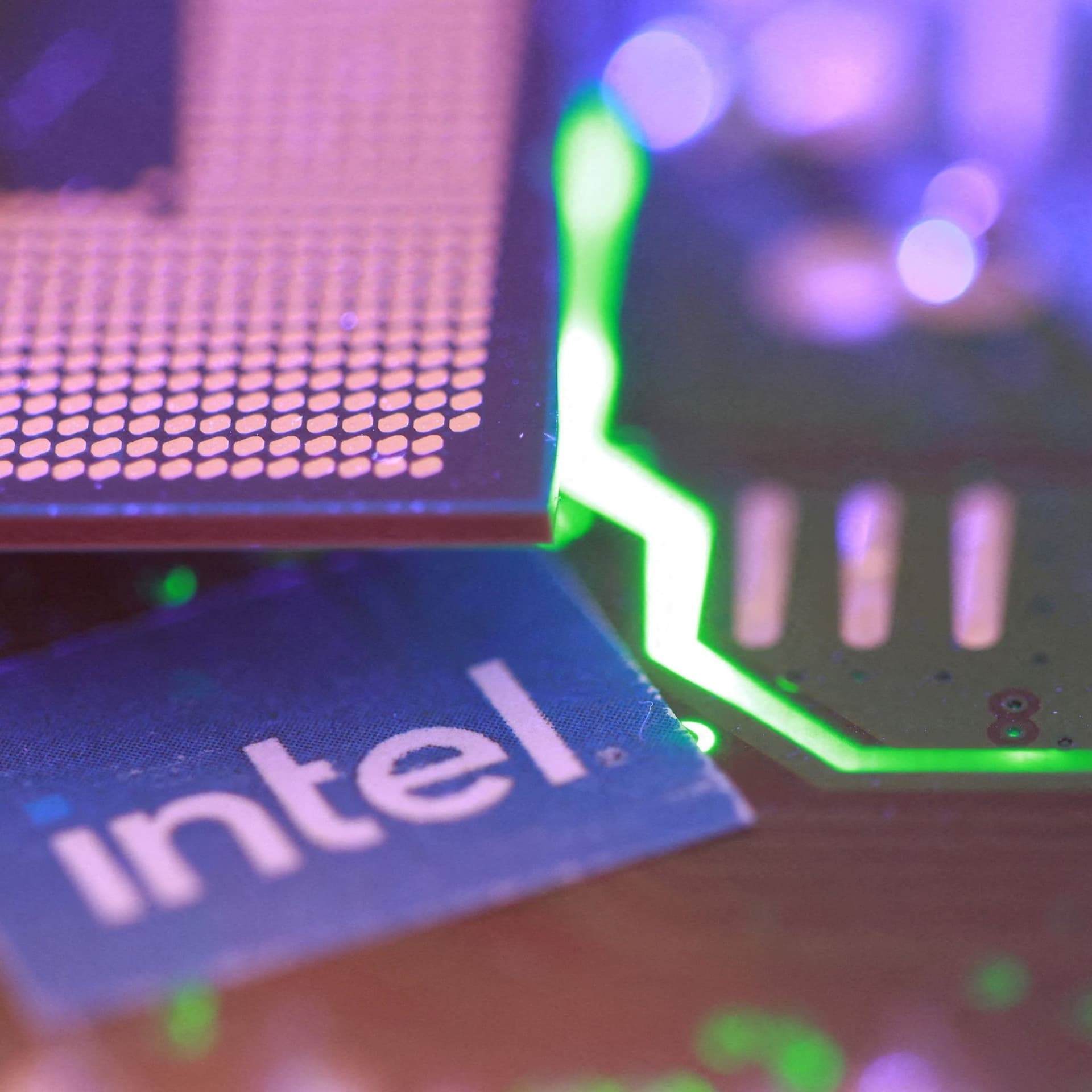
Trump administration buying a 10% stake in Intel, making the U.S. Intel’s largest shareholder, and using similar “revenue share” deals with major tech firms; debate over constitutional and free-market implications.
Guest backgrounds
Garrett DeVink, tech reporter at The Washington Post.
Key claims
The U.S. spent nearly $9B to buy 430M+ Intel shares; prior CHIPS Act funding was grants/tax incentives, but Trump “took it back” and converted it into equity ownership so taxpayers could profit if Intel rises. Intel’s stake could rise to 15% under rules. Critics on the right (e.g., Sen. Tom Tillis) warn this “opens Pandora’s box” and warps competition; left-leaning Sen. Bernie Sanders said the government should have taken a stake.
Notable examples
NVIDIA/AMD China sales deal—U.S. restrictions rescinded in exchange for government getting 15% of sales in China; comparison to the 2009 GM bailout.
Written by AI. May contain mistakes. Listen to the episode to check what was said.
Chapters
Tap a time to open that second in VOUnderstanding the Intel Deal
1:14 to 2:10
Explains the significance and implications of the U.S. government taking a stake in Intel.
“Today, Garrett explains the government's deal with Intel, how it will work, and why this approach is worrying some self-proclaimed free market conservatives.”
The Backstory of U.S. Chip Manufacturing
2:10 to 3:16
Discusses the government's efforts to incentivize chip manufacturing in the U.S. and the previous arrangements.
“government has actually given a lot of money to Intel, and previous administration actually gave money to help Intel and sort of incentivize it to build more factories in the U.S.”
Comparing Approaches to Government Investment
3:16 to 4:30
Contrasts Trump's direct ownership model with previous grant-based models for supporting companies.
“It was one of the signature pieces of legislation for the Biden administration called the Chips and Science Act.”
Consequences for Intel and Shareholders
4:30 to 5:33
Explores the implications of the government owning a stake in Intel and the reaction from shareholders.
“Of course, taxpayers could very much lose money in this deal because taxpayers now own part of Intel.”
Intel's Historical Importance
5:33 to 8:04
Discusses Intel's significance in U.S. technology and its relationship with the government.
“And, you know, the government says it's not going to take an active role in telling Intel what to do.”
National Security vs. Economic Concerns
8:04 to 10:34
Analyzes the conflict between national security and economic interests regarding U.S. technology.
“Up until the last decade or so, they invented a lot of the technology that goes into semiconductors today.”
Comparison with Previous Bailouts
12:32 to 14:00
Examines how the Intel deal differs from past government bailouts and the implications for corporate governance.
“But we've also seen the government provide aid and tax breaks for struggling companies before this administration.”
Trump's Shift in Government Policy
14:00 to 14:59
Explore Trump's departure from traditional capitalist norms in government dealings.
“It's a very capitalist mindset, but it's been the one that has been consistent through both Democratic and Republican administrations over the years.”
Concerns from Conservative Politicians
15:00 to 16:39
Examine the pushback from Republican figures against Trump's government interventions.
“But not everyone on the right agrees with this approach from Trump.”
The Philosophical Debate on Capitalism
16:40 to 18:19
Discuss the philosophical implications of government involvement in private companies.
“There's not a ton of people who are going out to give President Trump kudos for this.”
Show all 12 chapters
Corporate Response to Government Deals
18:20 to 19:59
Analyze how corporations are reacting to Trump's demand for stakes in companies.
“business and technology for more than 10 years now, that's what's really gotten me.”
Future of Trump and Business Relationships
20:00 to 21:29
Speculate on the future dynamics between Trump's administration and the tech industry.
“and people said that the NVIDIA deal in particular was potentially unconstitutional.”
Transcript
Automatic transcript. May contain errors.0:01The United States is about to become part owner of a tech company. President Donald Trump announced late last week that his administration was set to take a 10 % stake in the company Intel. This is a huge deal. This is the U.S. government taking, you know, the largest equity stake in a massive company worth billions and billions of dollars. It's something that very rarely happens in the United States. That's Garrett DeVink. He's a tech reporter at The Post. And he says that the Intel deal is actually part of a series of unprecedented deals Trump is striking with massive tech firms. The relationship between government and corporate America under Donald Trump has completely changed.
0:46Here we have Trump getting directly involved financially with some of the biggest businesses in America, taking ownership stakes for the government, doing deals where the government gets a share of revenue from some of these companies. There's questions about whether these deals are even constitutional. It's just a totally different picture from anything that we've seen for decades here in the United States. From the newsroom of The Washington Post, this is Post Reports. I'm Elahey Izadi. It's Tuesday, August 26th. Today, Garrett explains the government's deal with Intel, how it will work, and why this approach is worrying some self-proclaimed free market conservatives.
1:35Garrett, thanks so much for taking time to join me today. I appreciate it. Of course. So, as we've mentioned, Trump announced this major deal last week that the U.S. government would take a 10 % stake in the chipmaker company Intel. In the most basic terms, Garrett, what does that mean? It means exactly what you said. The Trump administration spent almost$9 billion to buy more than 430 million shares of Intel. So the U.S. government is now Intel's largest shareholder. Garrett, can you tell me more about where this money is coming from? The U.S. government has actually given a lot of money to Intel, and previous administration actually gave money to help Intel and sort of incentivize it to build more factories in the U.S.
2:23And what Trump did is he said, you're not getting that money anymore. We're taking it back. And then we're going to use the same amount of money to buy 10 % of Intel. So Intel pretty much got free money before that was taken away. And now it had to give up a big chunk of its company to the U.S. government in order to access that money again. Can you explain the backstory here? The backstory here is that, you know, the government wants to incentivize companies to build computer chips here in the United States because there's concern that in the future, China may cut the U.S. off from all the chip making factories in Asia, especially in Taiwan.
3:01and all of the United States' technology companies and a lot of other regular companies rely on these computer chips. And so there's been an effort from both Republican and Democratic administrations to move more chip-making capacity into the U.S. The previous government was trying to do that by giving grants to these companies and big tax breaks to sort of incentivize them, say, we give you$10 billion if you promise to spend$100 billion building factories in America. It was one of the signature pieces of legislation for the Biden administration called the Chips and Science Act. It set aside$52 billion of taxpayer money to incentivize companies to try to build more factories here in the U.S., and it was exactly that.
3:44Now, there were some stipulations. The companies had to actually hire people. They had to actually spend more of their own money. And if the deals turned out to be very successful and the companies made tons of money, they would pay some of that back to the U.S. government. So it seems like the Trump administration is taking a different approach here. Yeah, Trump really didn't like the previous arrangement. He felt like the U.S. was just giving away money to a company without getting anything in return. So now that the U.S. taxpayer is a direct owner of part of Intel, if the company does well and the stock price goes up, the U.S.
4:24government can then sell those shares and actually make a profit on the investment for the U.S. taxpayer. Of course, taxpayers could very much lose money in this deal because taxpayers now own part of Intel. And Intel is worth around$200 billion. And they've had a lot of problems over the last few years. They've had to fire thousands of their workers, you know, in order to keep up their profit. They are really searching for what their next step is. They miss the mobile smartphone revolution. They miss the artificial intelligence revolution. And there's a lot of people who've sort of consigned Intel to the dustbin of history.
5:01But if Intel goes out of business or goes bankrupt, that's$10 billion of American taxpayer money that is just going to go up in air. And what's in it for Intel to take this approach? I mean, wouldn't it be better for them to receive funding and grants under the CHIPS Act rather than have the government own a stake? It would absolutely be better for them. I mean, before they essentially got money for making promises about, you know, spending more money, something that they wanted to do anyways. Now they had to give up a huge chunk of their company. They had to annoy all of their existing shareholders because all the shares that are out there already are now diluted by the stock that the government owns.
5:42And, you know, the government says it's not going to take an active role in telling Intel what to do. But, of course, no one really believes that. This is just a really big example of Trump essentially strong-arming corporate America into kind of going along with what he wants. And has Intel said anything about this deal since Trump announced it? Yes, they did put out a statement confirming all of it a few hours after Trump announced it. They put out a statement saying, quote, the company is grateful for the confidence the president and the administration have placed in Intel. But then later they put out a Security Exchange Commission filing, which is public, but not quite as public as putting out an actual press release to reporters where they said the arrangement could subject the company to backlash if customers don't like that they did a deal with the U.S.
6:35government. They also said the stake could go as high as 15%. There's a bunch of rules that they actually have to follow. And if they don't, the government gets to take more of the company. And they, of course, are now selling these shares at a price that is below what the current market price of Intel shares are. So if you're just a regular person who wants to buy a piece of Intel, you're paying more than what the government is currently going to be paying. Well, I would imagine that might not sit well with all of Intel's current shareholders then, huh? You would think so. And I think in other cases where something like this would happen, imagine, say, Intel sold a piece of itself to the government of Germany or the government of China.
7:17Intel shareholders would, I would say, as a business reporter, be up in arms. They would be launching lawsuits. They would be saying, this is unfair. You're diluting our shares in your company by selling it at a lower price to a government that is now going to be influencing you. But we haven't seen that. I actually asked Intel's three largest shareholders that own billions in Intel stock. They never responded to me. What is it about Intel specifically? Is there anything unique or notable about Trump's relationship with Intel or the United States' reliance on Intel and what it does? Intel is the United States' sort of historically most important chip company.
8:04Up until the last decade or so, they invented a lot of the technology that goes into semiconductors today. They've employed tens of thousands of Americans over the years. And they actually make their own chips, which is something that very, very few American chip companies actually do. People have probably heard of NVIDIA. They're the American company that makes a lot of the AI chips. That's been super successful for them. But NVIDIA doesn't actually have its own factories. They contract all that manufacturing out to companies in Taiwan. So Intel is a really important piece of the American strategy for building chips here in the United States again.
8:40And so supporting Intel has always been a centerpiece of both the Biden administration and now it seems the Trump administration's strategy for building more chips in the United States. So yeah, as we mentioned, this Intel deal came together after other deals that the Trump administration has struck with other companies. NVIDIA is one of them. Can you tell me about those deals? Yeah, so Trump himself actually I think is a more accurate way of saying it because a lot of these deals, including the Intel one, the way they work is, you know, big company CEO gets essentially called to the White House through social media.
9:17They go for a meeting with Trump, usually one-on-one, maybe a few advisors in the room. And then a week or two later, we have a deal announced. And it's unclear whether the board approved it, shareholders approved it. And so that's kind of how this works. What happened with NVIDIA is they really want to sell chips in China. And the Biden administration actually made it really hard for them to do that because they're worried that if China has access to really high-end chips, it will allow the Chinese companies and Chinese military to sort of catch up to the U.S.'s technological edge. And so Trump followed Biden's lead and added more restrictions to the kinds of chips NVIDIA and another company called AMD could sell in China.
9:54But then Trump rescinded those restrictions in return for NVIDIA and AMD, giving the U.S. government 15 percent of all of their sales in China. That could be in the hundreds of millions and maybe even billions of dollars. So what I'm hearing you describe is almost this tension between national security concerns and also domestic economic concerns. Is that the tension between those two approaches? Yeah, there's sort of been this growing consensus over the last several years that the United States should step in more when it comes to technology if we want to maintain our edge. And so that's been a national security argument saying we don't want China to have access to the best chips for military purposes.
10:41It's also an economic argument. During the pandemic, when supply chains were suddenly shut down, everyone experienced the increase in costs of consumer electronics. Even cars, their costs went up hugely because they used so many semiconductors. So a lot of people in the States and both parties realized we got to figure out how to build more chips here in the US. And so that's been a pretty significant change for the country that almost never sort of intervened in markets in this way. But it was coming from both sides of the aisle. It was a consensus bipartisan policy in the U.S. And what Donald Trump is doing, you know, he does officially support those policies, but he's sort of getting involved, doing these one-off deals with companies.
11:23And a lot of people who've been supportive of this general shift are worried that Trump is going to throw a bunch of wrenches in the works and, you know, actually sort of counteract some of the progress that's been made on moving more chip production into the United States.
11:42After the break, Garrett explains how the Intel deal compares to past government bailouts of big corporations. We'll be right back.
12:02When it comes to the big questions, who you ask matters. From breaking news to politics that impact your life to advice you can trust. Get answers you don't have to question with Ask the Post AI. Trained exclusively on post journalism with clear sourcing. And if we don't know the answer, we'll tell you. Ask the Post AI. Find it on WashingtonPost.com or in the app. Garrett, you've mentioned a couple of times how notable this Intel deal is and also just these other deals that the Trump administration has struck with these other companies and Donald Trump kind of inserting himself more directly into this sector.
12:46But we've also seen the government provide aid and tax breaks for struggling companies before this administration. We've seen bailouts of banks. How is this any different from what has taken place before? I think the bailout comparison is a pretty good one. I mean, back in 2009, right, sort of as the financial crisis was kind of coming to the end, the automaker General Motors was going bankrupt, went through bankruptcy proceedings. And the U.S. government, along with the Canadian government, actually stepped in to bail that company out to help all of its shareholders not lose all of their money, but also to keep GM going.
13:22And in the end, they ended up selling those shares a few years later. And, you know, a lot of people feel like, okay, well, it allowed GM to continue. And so that was quite a different situation. There was a lot more conversation about it. I do think this is a quite unprecedented situation because although the U.S. government does support a lot of industries through subsidies, it does give tax breaks to industries that it wants to boost. Those are quite normal things that happen in the U.S. But it's very rare for the U.S. government to sort of directly get involved and buy up shares of a company and kind of, you know, start to influence that company's behavior.
14:00A lot of countries do do things like this, but the United States has always had the position that allowing private companies to do their own things, to compete with one another, is the right way to sort of boost the economy. me. It's a very capitalist mindset, but it's been the one that has been consistent through both Democratic and Republican administrations over the years. And a lot of people feel like Trump has just sort of, you know, wiped that away and said, no, like, we're going to do things the way I want to do it. There's no rules anymore. There's no norms anymore. And if I want to strike a deal like this, I'm going to do it.
14:35Yesterday morning, Kevin Hassett, he's one of the White House economic advisors, went on CNBC and essentially said this will likely not be the last time Trump makes a deal like this with a private company. And so I'm sure that at some point there'll be more transactions, if not in this industry and other industries. So it's really a moment when the Trump administration is making clear that they want to keep going. They're not operating on past norms. But not everyone on the right agrees with this approach from Trump. So, Garrett, tell me a little bit more about some of the concern around this approach, especially from the right.
15:10That piece of it really fascinates me. Who is coming out and saying this approach is not wise precisely because it kind of undermines the capitalist approach that is typical in this country? There are some pretty prominent Republican politicians who generally have supported Donald Trump who are speaking out about this. Senator Tom Tillis, a Republican from North Carolina, said in an interview on CBS last week that, you know, this starts to sort of open Pandora's box for the government getting involved in companies. And for so many of my self-described true conservatives, you're going to have to explain to me how this reconciles with true conservatism and true free market capitalism.
15:56Analysts, people that I've spoken to, are pointing out that from their perspective, once the government starts to favor one company, that sort of warps competition. Now companies are going to say, well, if the government is invested in Intel, Trump is personally invested in Intel. You know, if Intel succeeds, he looks good. If it does poorly, he might look bad. Maybe I should work with Intel instead of buying a different computer chip that might actually be better for my product and my business. A lot of people sort of on the right of the economic theory spectrum, you know, they really, really don't like this.
16:31And now the president that they supported is the one who's pushing it forward. I'm wondering, conversely, if there are any folks on the left who are kind of supportive of this approach. There's not a ton of people who are going out to give President Trump kudos for this. But, you know, it's a good point because Bernie Sanders, the independent senator from Vermont, has said that the U.S. government should have taken a stake in Intel when it gave the Chips Act funding last year. And so there is definitely some strange bedfellows here. OK, but Garrett, going back to the origin of this deal with Intel, the government previously gave Intel money.
17:09It wasn't owning shares. What's so wrong with Trump, you know, here saying we should own a piece of this company? is this really just coming down to a philosophical difference about how capitalism should function in this country? Yeah, I mean, and there's a lot of arguments for why this works or a version of this that is maybe a little bit more measured and organized and transparent works, right? And I think that's kind of where a lot of the problems come from, right? Because this just injects uncertainty, right? the business community, they want to know what's going to happen. Are they going to be doing deals with the government?
17:48Are they all going to have to go to Trump hat in hand and do a one-on-one deal? Or is the government going to sort of let them do what they want to do as long as they don't break the law? And I think a lot of people, whether they agree in general that governments should own companies or whether they don't like that idea, they feel that this is very piecemeal. It's very haphazard. Policy is changing, you know, week to week. It's unclear which companies are in Donald Trump's favor, which ones aren't. And I think as a business reporter, having covered business and technology for more than 10 years now, that's what's really gotten me.
18:27Before, this would have triggered hundreds of news stories and it would have been the biggest event of the year in the business world. And now it's just the way things are. And another point that I think is really important to remember here is that these companies are not passive players, right? I mean, they lobby against legislation, especially the technology sector has really been able to block a lot of tech regulation over the last five or six years. And now that Donald Trump is coming in, breaking these norms, saying, hey, give me a piece of your company, give me some of your revenue. They're not saying anything.
19:02They're just going along with it and putting out statements about how bold Donald Trump vision is. So I think a lot of people who've watched the technology sector for a long time, seen them throw their power around, are sort of saying, hey, where's all that bluster? Where's all that lobbying? Where's all that power now that Donald Trump is actually taking things away from them, costing them money? And it's largely just silence from corporate America. Are there any guardrails on this or can Trump just do this? For Intel, I would say the guardrails are, you know, if shareholders are upset about this, they could sue Intel and say, hey, like, you need to not do this.
19:43But I haven't seen any shareholder lawsuits yet. There hasn't really been any opposition in the corporate world. And so it looks like the Intel one is maybe just going to go ahead. For some of these other deals, there's questions about whether legally the US government can take revenue from companies, do these kinds of deals. and people said that the NVIDIA deal in particular was potentially unconstitutional. But again, that requires someone to actually say, hey, I want to fight this fight. I want to fight NVIDIA, one of the most important companies in the world, and I want to fight Donald Trump, the president of the United States.
20:17And a lot of people who maybe in previous generations would have been fighting those fights are just not doing it this time. Looking into the future, what do you think this all says about how Trump and his administration administration's relationship will progress, not just with private businesses, but with the tech industry in particular. I do think it's really hard to imagine that we won't see more of these deals. Intel got a lot of money from the Biden administration, but other companies did as well. Samsung, they got a lot of money to build a factory in Texas. Taiwan Semiconductor Manufacturing Company, the most important maker of chips in the world, also got billions of dollars to build factories in Arizona.
21:00If Trump is going to take the money away from Intel, why wouldn't he take it away from those companies as well? And I think that could start to be very disruptive. Intel is an American company. They're much smaller. They have been struggling as a business. Maybe it makes sense for them to take this deal, but it might not make sense for Samsung and these other Taiwanese semiconductor companies to take the same deal. Maybe they just stop building their factories and head home, that could really have a huge impact on this big effort to build more computer chips and, you know, create American jobs.
21:35Well, Garrett, thank you so much for joining and explaining all this. I appreciate it. Of course. Thank you so much for having me.
21:44Garrett DeVink is a tech reporter for The Post. That's it for Post Reports. Thanks for listening. If you're looking for the latest updates on the big news of the day, you should
22:16We'll be back tomorrow with more stories from The Washington Post.
22:24Thank you.
22:54We'll tell you. Ask the Post AI. Find it on WashingtonPost.com or in the app.
From the publisher
Late last week, President Donald Trump announced the federal government will now own 10 percent of the chipmaker Intel. The move is just one in a pattern of unprecedented deals the Trump administration has struck with tech companies, reshaping the relationship between the federal government and big business.
Host Elahe Izadi talks with technology reporter Gerrit De Vynck about how the Intel deal happened, how it compares with past government bailouts and why some free-market conservatives are concerned that the deal signifies government overreach.
Today’s show was produced by Arjun Singh with help from Lucas Trevor. It was mixed by Sam Bair. And edited by Ariel Plotnick. Thanks to Tom Simonite.
Subscribe to The Washington Post here and take advantage of our Labor Day sale for a limited time.