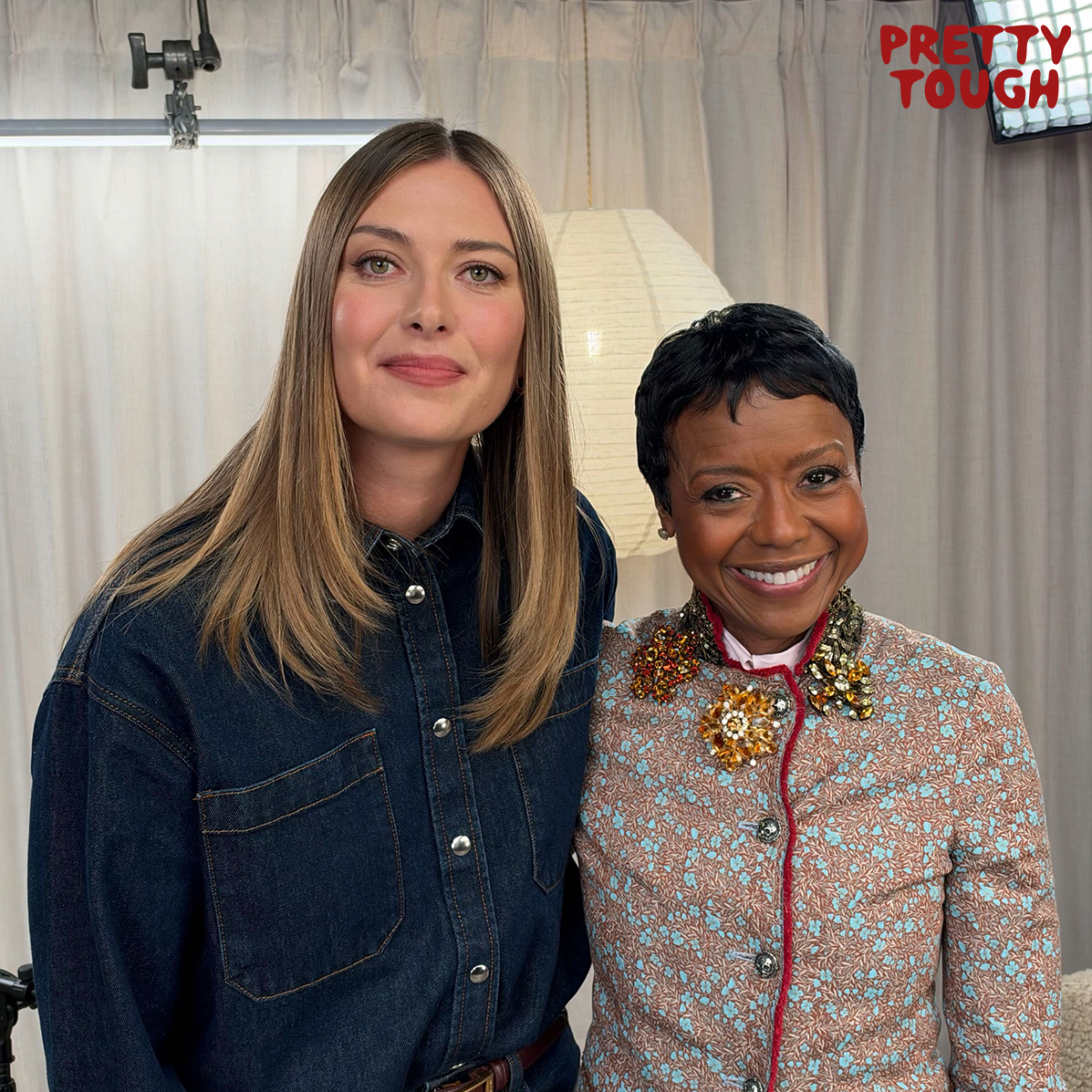
 Pretty Tough with Maria Sharapova
21 Oct 2026 · 55m


 Add vo to ChatGPT or Claude to ask about everything you hear
vo listened to this episode to put together the overview and transcript, so there may be the odd mistake.
Marie Forleo discusses burnout and “starting over” by using action over overthinking, treating uncertainty as uncomfortable but workable, and flipping negative self-scripts (e.g., “I can’t,” “it’s too late,” “I know this already”). She emphasizes experimentation, feedback as data, stillness practices to hear one’s “signal,” and choosing risk levels based on personal wiring. She also covers coaching/business decisions: side gigs, not going “all-in” blindly, and when to hire support.
Marie Forleo is a NYT bestselling personal development author and multi-passionate entrepreneur. She built her philosophy around “clarity comes from engagement, not thought.” She trained in life coaching in her early 20s, later became a Nike elite dance athlete, and has reached millions through her coaching content and books.
Action creates clarity; “I can’t” often means “I won’t”; failure is “fantastic feedback”; stillness (e.g., meditation twice daily) protects focus; social media/negative feedback can reinforce negativity bias.
Her first formal dance class at Broadway Dance Center at ~25; the “10-year test” for pursuing dance; quitting a stable Vogue promotion to pursue coaching; her “I can’t” Italian-learning example vs making time for Game of Thrones; her five-month sabbatical during parents’ healthcare crisis.
0:00Marie Forleo: Things that are unknown or uncertain are very uncomfortable. There's these dreams that we have that don't make sense on paper or they're really scary. Until you find some way to take a step, to take action, to go experiment and just try it before you deny it to yourself. It's a really useful framework for anything in your life. Everyone needs to understand for themselves how risk averse they are. 99.9 % of the time, I can't really means I won't. If you still got breath in you, you still got time to make a huge change.
0:33Are you feeling stuck? My guest today is here to help. Marie Forleo is one of the most influential people in personal development. She has reached millions of people who feel stuck and built her whole philosophy around one idea, that clarity doesn't come from thinking harder. It comes from taking action. Today, we're talking about how to flip the scripts running in your head, combating negative thoughts like, I'm bad at this, it's too late, or I can't, and anything else that might be holding you back from success. I'm Maria Sharapova, and this is Pretty Tough.
1:12Give you and your team more time to focus on the work that matters. This is Amex Corporate, one intelligent platform for company spending, with smart expense management to help capture details, categorize spend, and streamline expense submission and approval, there's less manual work for your team and greater visibility and control for you. Built to simplify, designed to scale. Get started at go.amex slash Amex Corporate. Terms apply.
1:43Your heart can tell you a lot about your health. Apple Watch Series 12 measures your heart rate every five seconds with the most accurate heart rate sensing in a wearable. So your vitals app, now with heart rate variability, can tell you when something is off. And your readiness score can let you know when to rest and when to push. Hear the story in every heartbeat with Apple Watch Series 12. The features described are for wellness purposes only and not for medical use.
2:06Marie Forleo: iPhone 11 or later required. Based on Apple-conducted study of heart rate accuracy, August 2026. Visit apple.com slash applewatchseries12. This episode is brought to you by Indeed. You're ready to level up your business, but the pressure to find the right person to make that happen is intense. Indeed Sponsored Jobs can help carry the load. It boosts your job post to help it reach quality talent fast. Cut through the chaos with Indeed Sponsored Jobs. Get a$75 sponsored job credit at indeed.com slash podcast. Terms and conditions apply. Hiring now? Then this is a job for Indeed Sponsored Jobs.
2:44Marie, welcome to the show. Thank you so much for having me. I am so excited to dive in there. so many topics that I want to pick your brain on. Career, business, coaching, one of my all-time favorites. But we're going to start the segment with a quote by the guests I like to do across all the episodes. And you gave me a lot to choose from. Clarity comes from engagement, not thought. And it seems like that is the pillar of your approach across everything you do, from your show on YouTube, to your book, to the guidance that you give everyone, to the podcast episodes that I've listened to. Tell me more.
3:22Marie Forleo: So I am a person, I think many of us can relate to this, where you can swim around in your head for quite some time thinking about, should I move ahead with this potential in my career, this idea for a product, this big move that I wanna make in my life? And it actually comes from a story early on in my career when I was in my 20s. And I think I was probably about 23 or 24, and I had always had this dream of being a dancer. But Maria, you have to get that. I had no training as a dancer. Like I didn't take dance classes as a kid. There was no ballet training. I think the extent to my formal training was like doing the moonwalk across my mom's kitchen linoleum floor with my socks on.
4:04Marie Forleo: And so I harbored this dream of being a dancer for forever. But I felt like in my 20s, which I know sounds odd, but in the world of dance, like if you're in your 20s and you hadn't started yet, we were kind of over the hill, but I couldn't get this idea out of my mind. And I had already started my kind of life coach training and started the baby part of my business. So I was like, wait, how can I want to be a dancer? You know, this doesn't make sense. I went to school business. I'm doing this now. And I eventually came to the realization where I was like, Marie, you are just about 25 years old.
4:35Marie Forleo: And I gave myself something that was called the 10-year test. It's just something I made up. I said, in 10 years from now, will you regret not having at least tried to make dance some part of your career? And when I sat and I got really still and quiet, the answer was like, 35-year-old Marie will slap the Jesus out of 25-year-old Marie if she doesn't go for this. And what comes from that is this notion that clarity comes from engagement, not thought, and here's how. Once I made that decision, I got up the courage to go to Broadway Dance Center here in New York City and take my first ever formal dance class.
5:11In your 20s. In my 20s. Never had any dance experience. No.
5:15Marie Forleo: You show up at a Broadway class saying, I'm here to learn. Correct. Now, granted, I had gone to a lot of clubs. I was a club kid. So, you know. I mean, so have all of us. Yes. But to take that to a formal lesson. To a whole other level. And thinking that's going to potentially be our career. Correct. Was like a little bit of a bold move. And so when I entered that class, which, by the way, I was standing outside the door and I was like peering at the class that was going on before the one I was intended to take. And, you
5:42Marie Forleo: Their outfits were so cool. Do you know what I mean? Here I was feeling, again, old in my mid-20s, but in that context, that made sense. And I was totally nervous. And everyone else was like piling in. They seemed to know what they were doing. The teacher walked in. She did not say a word. She just plopped on the audio, the music, and like the bass dropped. Everyone went to the floor and started stretching. And I was like, okay, we need to go to the floor. And the moment that music and the rhythm took over, I started crying because my body was so happy. It was like, finally, yes, you're listening.
6:18I wound up taking more dance classes, led to me teaching dance and
6:23Marie Forleo: fitness at Crunch. I don't know if you remember that brand. They're amazing, which eventually led to me becoming one of the world's first ever Nike elite dance athletes at like 26 or 27. So it took a couple years. Yes, ma 'am. For you to get to a level where you were like, I'm actually turning this into a profession. Yeah. And it was part of my profession because I have always called myself a multi-passionate entrepreneur. I don't quite fit into one box. I don't think I ever have, and I probably never will. And that's why you're on this podcast. Thank you. But that notion of clarity comes from engagement, not thought, has really, it's been an anchor in my life.
7:00Marie Forleo: And I try and share it with people because sometimes there's these notions in our heart. There's these dreams that we have that don't make sense on paper or they're really scary or they feel outlandish. And we can sit in our homes. We can journal about them. We can dream about them. We can talk about them with our friends. But until you find some way to take a step, to take action, to go experiment and just try it before you deny it to yourself, I just think it's a really useful framework for anything in your life. Because most things, If you go take a class, you try something, it's not like it's set in stone.
7:36Marie Forleo: You can reverse it. Yeah. And why do you think that motivation aspect of going after that potential goal or a dream is so difficult for many people? Well, I think there's many reasons. And I think we're all wired so differently. For some of us, it is a fear of failure. And we are so terrified. And there might be very real consequences that are aligned with that, i.e. we don't have a huge amount in our bank account. So taking any risk around livelihood could feel really destabilizing, especially if you're at a stage in life where you're responsible for a mortgage, kids, elderly parents, other people that you're seeing.
8:10Marie Forleo: So there's all of that, that fear of failure, whether it's about the actual ego feel of fear of failure or there's everything else that comes along with it. And for some people, it's about fear of success. It's like, well, how is my life going to change? What does this mean if I actually make it? How is everything else going to potentially fall apart or who do I have to become in order to rise to this level of excellence? So I think there's those two extremes and everything in between that can be frightening. And I think the human, all of us as humans, things that are unknown or uncertain are very uncomfortable.
8:43Yes. And part of being uncomfortable and I guess putting yourself in positions and having a conversation with your own self of like taking risk is getting feedback, whether it's good or bad. And I think when that feedback turns into negativity, it puts us in a position where we immediately shy away from taking risks instead of acknowledging that I tried something. It was on my mind. I wanted to pursue it. I had the courage. And here's what worked and here's what didn't work. And that feedback of what didn't work is sometimes more important than just being successful and going forward. A hundred percent.
9:26It's like taking half a step forward. Maybe you'll take a step back. Or three. Or three. Or, yeah, or many.
9:33Marie Forleo: Absolutely. And it's a lesson that stayed with me that, and I want to make sure that we're talking about this deeply enough because that notion that clarity comes from engagement, not thought, like you taking steps towards your dreams and having some real world feedback that isn't what you hoped it would be doesn't necessarily mean that you should give up. But I think what it does mean is that you have to get quiet and still enough within yourself to parse through that information. What does that data really mean? How do you feel about this dream? Is it a potential redirection? Or in some cases, it might be, hey, I tried this, and you know what?
10:07Marie Forleo: It's not for me. It's not for me. And that's glorious. That's freedom. And that's okay. And I think a lot of people consider that failure as opposed to saying, that is fantastic feedback. It's the process of elimination. I realized that's not my future. Yes. And you don't have to live with regret. And that's been one of the things that I think this notion clarity comes from engagement, not thought. The quicker you can get yourself in that experimentation process, the quicker you can have the boldness and the courage to step towards something. And even if it's like, ooh, this sounded great in my head, but I don't like it in real life.
10:38Marie Forleo: At least you know. You know, and you move on.org. You move on to the next thing that feels right to your heart. And I guarantee you, most of the time, there is a really priceless lesson that you will take with you from that experiment. I want to take you back to when you were 23 and you start on this journey of life coaching. Yes. You graduated from college. You worked briefly on Wall Street in magazines. That's young. Yes. You're 23 years old. Yes. Talk about the landscape of what life coaching looked like at that moment. It's so embarrassing, but it's wonderful. And I love all of it because it's messy.
11:15Marie Forleo: So as you mentioned, I was on the floor of the New York Stock Exchange, and I had this voice that kept rising up inside of me. And I'm sure many people have this. Mine was like, Marie, this isn't who you are. This isn't what you're meant to do. This isn't who you're supposed to be. And I was just like, wait, what? You're like suit and tie? Not my thing. But that voice, even though it was telling me what I shouldn't do, it was not clear on what I should do. So that took me around to like, okay, I'm very creative and I also love business. Got me in the magazine world. But every time I got these new gigs, I was like, okay, this is going to be it.
11:46Marie Forleo: I'm going to start my career. And I'm a really hard worker and I pride myself on my work ethics. So it was like, I wanted to make my way in the world, but that voice kept popping up like, Marie, this isn't who you are. This isn't what you're supposed to do. This is what you're meant to be. And I'm just like panicking inside. Eventually I was at Mademoiselle magazine and I was on the internet probably when I shouldn't have been. And I stumbled across this article about a new profession at the time called coaching. And Maria, when I read this article, I kid you not, something in my heart and soul lit up like a Christmas tree.
12:20Marie Forleo: It was like the clouds parted and little cherubs like, oh, like this is what you're supposed to do. I had this feeling inside that I'd never had before with any of the other things that I had tried and failed at. However, I was 23. And so while in my soul, it was really tingly, my mind, I'm from Jersey and my mind can be very sarcastic and like a little bit bitchy. It was like, who do you think you are? We're going to get along. Yes. You're 23 years old. You're like tens of thousands of dollars in debt. You keep quitting every job that you get. You're a total failure. This thing is so cheesy. Who the hell is going to hire a 23 year old life coach?
12:57Marie Forleo: You haven't even lived life yet. This is nuts. It's one more thing that's going to go in your failure column. So that voice was like super loud and very trying to keep me down. But I did something bold and I signed up for a life coach training program and I just started learning. And I started training at night while I had my mademoiselle job during the day. And then about six months into that, I get a call from HR and they had a promotion for me at Vogue magazine. So that was my fork in the road. It was like, hey, are you going to stay on this prestigious path where people know what you do for a living?
13:31Marie Forleo: and folks pretty cool. And there's a steady paycheck and there's healthcare benefits. That's true. That's true. But back in that day, it was badass. Do you know what I mean? And, um, and then my soul was like, or you could like quit and do this really weird life coaching thing that no one's heard of and that you don't know if it's even going to work and you don't know how to run a business. And I was like, Oh, let me choose that one. So, so I did that one. And I went back to doing what I did in college, which was just bartending waiting tables. So I did that, you know, all nights and weekends while I figured out how to build a coaching practice during the day.
14:04Now, I think of coaching, like it's the only way I knew of doing my job is by being coached at it, right? Because as an athlete, it was almost like the person next to me. And I had several coaches throughout my career, but they were my teachers. They guided me to that arena or that center court, right? They hold your hand up to that last minute of where the action comes in, Right. But it's years in time. And so part of my identity and my profession was always being side by side with someone that I got to call a coach. And it's it's actually really it's a strange feeling being on the other side of it where I'm now in different professions where there's not a lot of coaching.
14:47Marie Forleo: But it was more about, less for me, the coaching profession. It was more about this idea of, oh my gosh, there are principles, practices, habits that can help us lead better lives. And to me, that felt really exciting. And I love the distinction between coaching and therapy as I learned it, which was it wasn't about analyzing someone's past. It was really about partnering with them to get co-creative on what do they want for their future? Who do they want to become? What are skills they want to build? What are habits that they want to develop? Like there was this process of forward movement that felt really, really aligned with who I am.
15:26Marie Forleo: Exactly. As a person. And I found it really exciting. And I also found it really wonderfully humbling that as a coach, it wasn't about you having all the answers. And that's where I think something was really cool and might be a little distinct than like a sport coaching. And you can tell me, and this is what I'd be fascinated about. But the life coaching arena was really about having that seed of humility, seeing the best for your client, holding up a vision of what they say they want, and then getting co-creative on helping them get there. And for me, I just... Well, coaching, it's a movement.
15:58Yes. Right? And it has to be, it's not what just the coach wants or just the physio wants or what I want, right? There's a reason why we're all part of a team. Yes. There's a reason why when we go in an office, we have several people that have the same goal. But the way we get there, what makes it beautiful is we have our own versions of how we get there. But as long as the North Star is the same, that's when I feel like the team's aligned. And the magic happens. And the magic happens. Getting ready for this conversation, I was like, I love the idea of a profession that just allows someone to grow into their own skin.
16:38no matter what they're doing in their lives or how they're going about their business or victory, success, their own version of success. It's like to someone to be there to hold their hand and guide them through that process.
16:51Marie Forleo: I love that. I love what you said there because, you know, I've been doing this now for over 25 years. And I think some of my favorite parts of what I've gotten to do is really sit there and be with people and also reflect back to them how powerful they are. The title of your book is Everything is Figureoutable. And a lot of your guidance starts with a version of flipping the script. Yeah. So I wanted to play a little quiz. I wanted to do a little quiz with you. I have a few quotes and I wanted to see what you think I should say instead. Okay, cool. So first one is I already know this. Oh, okay.
17:31Marie Forleo: So whenever any of our minds go into, I know this already, we can understand how it just shuts down. There's no opportunity to see things potentially from a new point of view or from a new perspective or to maybe consider something that perhaps we don't know. So when you say, I know this already, a couple ways that you can approach this. One is you can say, what can I learn from this? What can I learn from this? And here's something cool that at least I've discovered for myself. Even if I think I know something already, if I am not practicing that thing in my everyday life and getting the benefit of it, I don't really know it because there's a huge difference between knowing and doing.
18:10Marie Forleo: And when I'm like, oh, what can I learn from this? there might even be a deeper level of understanding or another level of mastery that I haven't gotten yet. I don't know. Maria, have you ever experienced this where you read a great book and you get something from it and then you read it again and you get something totally different that you're like, I'm a different human now. Wait, did I miss that part of the movie? It depends on what chapter of your life you read it. And so whenever any of us hold the posture like, I know this already, there is really just this cutting off of anything new entering the system.
18:37Marie Forleo: And so for me, I try and stay in the position of like, huh, what can I learn from this? Even if on the surface, the material seems familiar. I'm terrible at this. Oh, this is a good one. And I've certainly said this. I remember there was a moment in time where I was just like taking the worst selfies ever. I don't know if you've ever done this. It was like kind of when social media started. I am just 99.9 % of selfies. And I was like, can I tell you, like there was years my team's like, just take more selfies. I'm like, I'm not the person. And again, God bless people who are so good at it, or they do so many of them and they actually enjoy it.
19:10Marie Forleo: Like I am not that person. And I remember someone close to me, they said, Hey, no, stop saying that to yourself. Like I'm terrible at this. And they just say, you're not great at it yet. And I was like, yeah, that's actually true. And so I've done that with a lot of things in my life. Like, Oh, I'm just not good at this dot, dot, dot yet. It's so powerful. It's like with tennis, if someone had never picked up a rat, of course they're going to be terrible. They've never done it. Like with dance, with me, it's like people get so intimidated. I'm like, no, everybody can boogie. It don't matter. You know, you might not be able to do X, Y, or Z move yet, but give us an hour or two.
19:42Marie Forleo: You may not be Misty Copeland. Yes, but hey. But you can wiggle your hips. Yes, you can feel great doing it. Next one is, it's too late for me to make this big of a change. My core belief is that if you still got breath in you, it's not too late. In our world where we are right now in 2026, we're living longer than ever. And if you play your cards right within the next five to 10 years, that's a whole other conversation of where we might be going. But just looking at longevity, it's really possible you got a lot more time on your hands. So it's like, let's go for it. The next one is, I don't belong in this room or on this stage.
20:21Marie Forleo: I think that's a great way to flip that script could be like, I don't belong in this room on the stage, be like, one way to handle that, but I am. Because if you're actually there, here's the great thing. You can either give a lot of attention to that voice, which takes you out of the moment, or you can just look at the human in front of you and be like, hi. You know, it's like it's showing up. Yes. It's a binary thing. If you're lost in your mind, you're out of the moment. There's no fun. There's no opportunity for connection and there's no real opportunity to to shine. But if you actually just let that voice be on the side and engage with the human in front of you and just get curious about them, that voice recedes into the background.
21:01And our shortest one, I can't.
21:03Marie Forleo: I think I can't is a really interesting phrase that we all say from time to time. But I think most of the time it's a little bit of a lie. And here's what I mean by that. 99.9 % of the time, I can't really means I won't. Let me give you an example from my own life. I remember years ago when I was like talking to myself about how I should be creating time to learn to speak Italian. It's like one of those life bucket list things. I haven't gotten there yet, but I was like, I can't. I don't have the time. I've got my show. I've got my podcast. I've got the business. We've got all these new hires.
21:36Marie Forleo: And so it was this running commentary in my own head. I can, I can, I can't. But when I really sat down and got honest between me and me, you want to know the truth? It was like season two that gave him thrones. And I love that show. And somehow I found the time to watch Game of Thrones and I found the time to do a lot of other things. And I was not slotting in time to learn Italian. So it's not that I couldn't do it. It's that I didn't want to do it bad enough. Does that make sense? Absolutely. And you showed up to do it. Yes. Well, I showed up for Game of Thrones. You didn't find distractions that deviated you from something that you wanted to accomplish.
22:16Marie Forleo: Yeah. So I think whenever you find yourself saying the words, I can't, again, there might be 1 % of the time that's a legitimate truth for you, and that's lovely. But when you poke down and dig down a little bit deeper, and again, you don't have to tell anyone about this, but just get honest between you and you. See if it's an I can't or I won't. meaning I'm not willing to make the sacrifice, it's not that important to me right now, it's not really high on my priority list, like that starts to open up the door to a lot more honesty. And when we're honest with ourselves, there's a lot more freedom and a lot more relaxation.
22:55Marie Forleo: At T-Mobile, the new iPhone 18 Pro is here with a big leap in battery life. And you can get it for nothing up front. With so many reasons to choose T-Mobile, you'll want to talk about it. I heard at T-Mobile, you can get iPhone 18 Pro for nothing up front and get$1 ,000 off. Pass it on. Pay nothing today. No taxes, no fees, nothing down. Pass it on. Hey, Mickey, pass it on. iPhone 18 Pro has the most advanced iPhone camera ever. Pass it on. At T-Mobile, you can get iPhone 18 Pro for nothing up front. Pass it on. At T-Mobile, get$1 ,000 off the amazing iPhone 18 Pro with no trade in needed. With 36 monthly bill credits when you switch to T-Mobile on a qualifying plan.
23:39Marie Forleo: If you cancel entire account before receiving all bill credits, credit stop and balance and required finance agreement is due. Example, 1199.99, iPhone 18 Pro, 256 gigabytes. Bill credits in if you pay off device early. Qualifying credit, new line, cordon and service. $85 more per month with auto pay plus taxes and fees required. $35 device connection charged due at sale. Visit T-Mobile.com. This episode is brought to you by Indeed. You're ready to level up your business, but the pressure to find the right person to make that happen is intense. Indeed Sponsored Jobs can help carry the load. It boosts your job post to help it reach quality talent fast.
24:10Marie Forleo: Cut through the chaos with Indeed Sponsored Jobs. Get a$75 sponsored job credit at indeed.com slash podcast. Terms and conditions apply. Hiring now? Then this is a job for Indeed Sponsored Jobs.
24:27Brussels clean up nicely at Sweetgreen. Maple glazed, roasted, and edges perfectly caramelized? Sweetgreen's fall harvest is back on the menu, and the season's most overlooked little green vegetable is dressed to be devoured. You know what to do. Order on the Sweetgreen app. So going back to the beginning of your career as a life coach, you also took bartending roles. Yes.
24:54Marie Forleo: You found other ways to make money. Oh, my God. I taught striptease classes. I cleaned people's toilets. I did anything and anything to keep money coming in. Did it feel like a small step backwards in terms of moving forward in one profession that, you know, you wanted to navigate? So there were two pieces to that. One was my very clear understanding that, God, one of the most awful things in the world, in my own mind, was a desperate life coach. Like that just feels terrible. And so I thought to myself, well, I don't have to earn the majority of my money through this thing that is so important to my heart.
25:35What if I could just hustle because I got a lot of energy and have the money coming in through ways where I could build this craft and this practice very genuinely without needing it to keep food on the table?
25:50Marie Forleo: Does that make sense? Yes. So there was that component to it that for me felt integrous and right. And it allowed me to dig deep into learning how to be a coach and building the business in a way that felt good without this extra financial pressure. So that was one component of it. The second component was this. As I mentioned before, I knew myself to be, and this is a phrase I made up, a multi-passionate entrepreneur. So I loved teaching some of my fitness classes. I loved doing this stuff with Nike. I loved my bartending. Like it was fun. I'm in New York City. I met such interesting people. And so I realized that by having my hand in several different buckets at once, that my core business was going to grow at a slower pace.
26:34Marie Forleo: But I was okay with that because what was really exciting to me was all of the variety. and point number one, which was not needing the coaching practice to provide the roof over my head or the food on the table so that it could stay this beautiful place of creation, of exploration, and of growth. And I ask that question because a lot of young entrepreneurs get into the mindset that they are all into this one, their baby, you know, their company, you know, the trajectory of it, the growth of it. And they put, I mean, their bucket is filled and it's, I mean, it's a one-way train. The train has left the station and they're all in, which is fantastic.
27:18But the success rate of going all in on a business isn't always very high. And there are a lot of risks. So at what point do you suggest that these young entrepreneurs, you know, let go of these other revenue streams that they've held on to.
27:35Marie Forleo: Yeah, I think there's a couple of pieces to that. One, I think we need to step back and everyone needs to understand for themselves how risk averse they are. Let me put a little context around that. I remember a friend of mine in my early days, she was someone who thrived and she knew this about herself if she kind of burned the bridges and left all the other ships. So under pressure, she was like, I can close sales, I can bring money in, but I cannot have other options. That was kind of her own risk DNA, if that makes sense. That's how she thrived. For me, that's where I would fail. And I had enough self-awareness to know I loved having those other income streams coming in because the way that I'm wired is I work best creatively and not under that kind of stress or pressure.
28:23Marie Forleo: So I think having a lot of self-awareness of how you thrive best, that's the baseline. That's part number one. So if you more identify with like, oh my gosh, I've known myself to be like, if I had to close those sales because there's no other option, then you're an all-in kind of person. God bless. But that takes self-awareness. It does take self-awareness. And you know what else it takes? It takes courage not to listen to every podcast or not to listen to every TikTok or not to listen to every Instagram who is a coach or a leader or a business owner telling you how it should be done. You have to be willing to be courageous enough to listen to your own inner guidance system to know what's going to be best for you.
29:01Marie Forleo: That's right. And then so the other aspect of this, too, is there was a study that came out, I think it was in 2014, that people who have day jobs, and we'll call day jobs a big umbrella. You can be doing many different things. Entrepreneurs who start a business with a day job are 33 % less likely to fail because they've got other things going on. There is a level of stability and they have the ability to have longevity, which there's some people who knock it out of the park, right? They start a business and God bless them. We love them. We celebrate them. Amazing. But I think that is more the exception than the rule.
29:36Marie Forleo: So in my particular case, I didn't feel confident enough emotionally or intellectually to go all in on my business until about probably seven years in. So I had side gigs. That's a long time. It is. But it was like, again, I knew I was a little bit of a unique bird. I had this fitness thing going on. I was like trying to keep my financial feet stable underneath myself. And I just wanted to be that multi-passionate entrepreneur. I was like, look, I'm not going to be 27, 28 forever. I want to do this dance thing. If I don't do it now, when? Little did I know that in my 50s, I would now be dancing even better than my 20s.
30:15Marie Forleo: Couldn't have predicted that though, right? So my point is this, really know yourself and know what your own financial goals are, know what your sense of safety is about, know what your obligations were. For me, I didn't have a partner yet, didn't have mortgages yet. So there was like different life circumstances. So I think it's really important not to just blindly follow other people's advice about going all in. One more thing I want to say there on entrepreneurship, a lot of people push others to get funding and to go for capital and to get investment. and it is not the only route. Like for my business, we've been profitable for 25 years in a row and I've never taken investment.
30:54Marie Forleo: I'm not saying it's the right path. I'm saying that there's so many different ways and I've met so many founders, especially female founders who have told me they're on their second business. They're like, I will not take money again. I did that the first round. I got into business not to have bosses. I wound up having tons of bosses. I don't wanna do that again. So I'm just - Did you ever consider taking an external capital? I did not. I think I am too much of a strange bird. I am too much like freedom is my number one value in life. I can so relate to that. And the thought of having someone tell me what to do.
31:25Marie Forleo: I know I must sound like. Or owing something to someone. Oh gosh. Because I didn't grow up with a lot of money and part of my motivation was to create a level of financial security for myself where I didn't need to depend on other people. That's a whole other story for another day. But I was like, once I started to get a taste of that independence, I was not about to give it up. And for me, I'm a simple woman. I don't need to have a gajillion dollars. Like my dreams aren't necessarily to be a bajillionaire. My dreams are around peace and creativity and prosperity and connection. But it's not necessarily like bigger isn't always better.
32:03Marie Forleo: Fact. Yeah. We like small gifts. Yes. And everyone's built different. So it does take courage, though. Like back to your original question, it's like taking the time to really define what success feels like and looks like to you at this stage and season of your life, because that definition won't last forever. Chances are it's going to morph and change as you get older, and that's beautiful and natural. But be honest with yourself and don't be peer pressured into a version of scaling or success or growth at all costs just because everyone's telling you that that's the only route. It is not. As someone that's taking this long and successful journey in coaching, for entrepreneurs that are paving the way, that have been in the business for the long haul, for the long journey, at what point of this trajectory do you suggest that they work with a life coach or with someone that helps them navigate the everyday business or their own goals?
33:09in their profession?
33:10Marie Forleo: It's such a great question. I think that that kind of support can come from so many different sources. And let me put that into context in my own story. Like, I remember there was a point in the beginning where I was doing pretty well, and then I started drowning. I was like, oh, I'm kind of an artist. I need an operator. I need someone who's excellent at operations because I can be all over the place. And so it wasn't about hiring external help. For me was about hiring internal help. It was about hiring that person to help me run things that had a completely different skill set that I didn't have.
33:42Marie Forleo: And at different points in my career, I've kind of bumped up into different areas where I'm like, wow, I really need to up my skill level here, or this is an area I want to learn about. And I think that that coach can come in the form of a book. You could go to an immersive weekend. You could work with someone one-on-one. And there are so many different ways that you can go build a skill or get a new expanded understand. Do you know what I mean? And it might be about someone that you want to add to your team. So I think being able to articulate what you believe your need is. Is it a skill that you need to build, that you want to build, that's exciting for you?
34:22Marie Forleo: Is it a skill that you're lacking on your team that's really going to help you do more of your genius zone so everyone else can thrive? So I think that's where I would aim people to start and to trust if they keep bumping into something that there's a nugget there, there's an opportunity for growth, but it doesn't have to look like a one-on-one coach per se. When someone is looking to hire a life coach, what are some of the red flags? Like if you start to see or feel these things. Yes. Rundo walking. Yes, exactly. I would say first and foremost, when you engage with that person, whether it's their content, whether you've had a call, whether you've had a Zoom, whether you've met with them in person, how do you walk away feeling?
35:00Meaning, if you walk away feeling excited, curious, energized, like, oh my God, like
35:07Marie Forleo: I would like to spend time with them. That person got you thinking. That person got you feeling more in your own skin, in your own bones, more like you. I would say those are like go signs. Any red flags, I would say for me in my life, anytime someone pressures me to make a fast decision and it's a huge amount of money, I've made lots of mistakes in that realm. And I would say for me, and I would invite people to consider this for themselves, that's a no-go. Like if you leave feeling good at an interaction, great. But if you don't, I don't want anyone paying any kind of money to feel like shit.
35:42Marie Forleo: You deserve better. And there are so many wonderful people out there who will help you articulate your vision and see it even bigger than you can and hold you true to yourself. And if you see anything on their feeds or you see anything where there's just not a values alignment, it doesn't mean that there's a bad person, but their definitions of success or their expressions in the world may not be aligned with your heart, with your integrity, with your sense of how you want your life to be. So don't overlook those things. Yeah. And I mean, the common thread within this conversation is this feeling inside of you.
36:19Yes. Whether it is a career choice, whether it is a hire or someone in your team. Yes. Or whether it's something about yourself, like really honing in on what your little voice in there is telling you and not ignoring it.
36:34Marie Forleo: Not ignoring it. And the reason that this is so important now more than ever before, all of us can feel this. We are so overwhelmed with incoming, right? I want to talk to you about that. Yes. Distractions. Distractions and so much noise. The noise is somehow deafening. And we're in New York City. I love New York City. I've been here for 30 years. And the older I get, the more sensitive I've become to incoming. That's both auditory noise, that's visual, that's everything. And in a broader sense, I think in order to navigate where we are now and into the future, especially with AI, especially with technology, you have got to get great at creating stillness, at creating simplicity so that you can hear your truth and hear that signal above all the other noise.
37:26So how do you do that when you are faced with obligations, pressures, responsibilities, Yes, ma 'am. Throw in a little social media in there. And you're just in a distracted fishbowl. We're in the swirl, right? We've all been there. We've all absolutely been there. How does one navigate and focus on what really matters?
37:51Marie Forleo: Okay. I know people talk about this all the time, but they talk about it because it works. Having some type of stillness practice. So for me, meditation is it twice a day, morning and at night. Non-negotiable? I'm not perfect at it. Like the other day when what was happening, I got one of mine in but didn't get the second one. I would say I'm at probably like a 96 % of the time I do it twice a day. That's pretty darn good. The 4 % that I don't, I do not beat myself up. Do you know what I mean? I was like today, I did my best today and it's all good. But I think that stillness practice, whatever that looks like, where literally nothing can interrupt you.
38:29Marie Forleo: It can be a nap. It can be a nap. Just close the door. I'm not available. The phone is off. The phone, I think, is one of the most destructive things that we've ever had in our lives, quite personally. I think social media is so destructive to humanity. That's just my opinion. I love that everyone can share different things, but I've watched it over time. I've watched it from the early 2010s to now we're in 2026, go from this amazing place of creativity to I've looked at the reaction of my own body. I am very rarely on social media. Like when I create content now, I create it. I share it with my team.
39:07Marie Forleo: They do it. Whenever I go into Instagram, it's literally because Josh or a friend of mine or someone's like, hey, I sent you this recipe. Hey, will you go check this in your DMs? And it's like I'm going into a little world. It's intentional. It is so intentional. And then I get the out because everything I've watched, it feels terrible. Again, people sometimes have a good relationship with social media. Even if you want to be on it, put limits on it. Yes. But how do you feel about feedback? Because I actually find one of the most valuable assets of social media is being able to engage with an audience that is capturing your content and is learning and growing from it.
39:51Yes. And having that accessibility to them. Is important. Is really important. and it makes you feel like what you're doing has a worth.
40:01Marie Forleo: Yeah. It's not just because of that. Sure. But it's a big piece of it. Yeah. And back to feedback, it's also like feedback. Absolutely. So there's a couple of different ways to handle that. Like if some people, I think everyone's constitution is different, right? And I think it depends on what you're creating. Like I happen to be a pretty sensitive person in every different way. So my team at times has been like, great, here's what people are loving. Here's what they're not responding to. So there's like a level of filter where they'll still show me stuff. And it's not like I'm so fragile, but it's just like as a creative, I know how the brain works.
40:39Marie Forleo: Negativity bias is real. You could have a million people saying, this is amazing. And one person's like, nah, that sucks. Guess what? Your brain is going to circle around the, that sucks. You do that enough over time, your brain will actually start shifting to answer to those people rather than the other. But if they added something to the that sucks. Yep. That's what makes a difference. Sure. But when you see something so quick and this is probably because it's it was very black and white in my career like you either lost or you won. So if anyone said oh she played terribly and I lost I was like okay I mean they have their right they have the right to say that.
41:16Totally. But the the idea of constructive criticism of saying like I didn't like that episode and here's why. Like that's where I'm like, oh, give me more.
41:27Marie Forleo: Sure. I think that you might be, and especially based on your career, you might be like, yes, give me that. Give me more. If that makes you a better podcast host and that's working for you, great. But what I don't want is for anyone else listening who's not built like you to think they have to do that same thing. They could have a team. They could, in some respects, use AI. That's a whole other topic, whether or not you want to use it, but you could still get the creative feedback without necessarily scrolling before and after for several hours or being wise enough to not do that shit before bed.
42:02Marie Forleo: Don't go look at that comments before bed and then have a shitty night's sleep. And then you're going to perform like hell the next day and feel you sort of created this negative loop. Whereas like you could be like, hey, you know what? We're going to look and we're going to scan comments twice a week on Tuesdays and Thursdays. And I'm going to do it with a member of my team or I'm going to do it with someone where we can process and go, okay, great. What was awesome about that? What was not awesome? What can we take? How can we get better? Does that make sense? There's a container for it and you have a way to process it.
42:27Marie Forleo: But I think that our human brains are not wired to be able to absorb that much in coming to parse through it and to stay at the top of our game. That's just my opinion. And shifting to focus because, you know, when I think of the distractions and all our responsibilities and we just discussed social media, you know, you've often used a term multi-passionate entrepreneur. Yes. Right. So being part of different industries, being interested, being curious, trying new things. And I can absolutely relate to that because even though I was an athlete for many years, I also recognized that as a female athlete, my time would come a lot sooner and the end of this profession would come a lot sooner than different industries.
43:12so I hustled in other things I got internships I took a few courses and like worked with with brands I got myself into meetings just to learn like there was no specific agenda except I want to be better at certain things I want to show up at a table and feel like I have something else to say except how to hit a serve but I've always felt like I've teeter-tottered between focus and distraction because all those other elements could easily be distractions. So how do you recognize when you have other passions and other interests that you love to do, how do you focus
43:53Marie Forleo: on the one thing that's most important? It's such a great question. For me, I like to see things in seasons. So you just illustrated this so perfectly. You were very aware that when tennis, there would come a point where that was wrapping down. And then you would have this beautiful expanse ahead of you and you wanted to do other things. So then there became, if I'm hearing you correctly, a season of exploration where you gave yourself permission. I'm going to take this course. I want to learn. I want to absorb. I want to generate new skills. I want to actually see what else is out there before I commit to something.
44:27Marie Forleo: And then you chose some things to focus on. So it was like focus, explore. I like to think about it in regenerative farming terms. Your soil, you went really deep for a while. You had so many harvests in the tennis world, and then you needed to kind of let the field lay fallow and get some new nutrients in right before you blossomed again. And I think about it in that way for most of us. Not everybody's built this way, but it's like give yourself a season to explore new things and don't put pressure on yourself to pick too soon if you don't have to. By the way, this goes back to like a bridge job, which is a part of what I had or day jobs.
45:07Marie Forleo: If you need to keep the lights on, you can get a role or have a role that keeps the lights on while still carving out some time. There's nothing wrong with it. Yes. It's the most beautiful, respectful, awesome thing in the world. It's the most beautiful gift to give to yourself, which is creativity and exploration and what's next. I think to further go into your question about focus, how do you know when we're kind of on that fine line? I think that dance is very individual. Some people thrive with like one to three things that they're kind of circling around. Other people thrive where it's like, I have this, I call it a primary project where it's like, this is the big thing I'm up to right now.
45:42Marie Forleo: It doesn't mean that you ignore everything else, but it's like, this big thing is getting the lion's share of my creativity, of my time, of my focus, of my energy, all the other stuff I'm going to be okay at. Might not be perfect. Might not be world-class, but I'm doing pretty good. But this is the one big thing. I think that knowing yourself, if you've got five things on your plate and you're like, I'm feeling too scattered, reduce. Smart. Speaking of reduce, as we sat down for this chat, I asked you what you're up to. And you surprised me by saying you've been on a five-month sabbatical. Yes, ma 'am.
46:15Marie Forleo: Tell me all about it. So as I alluded to just a few minutes ago, the past two and a half years, I would say it was like 23 till like the end of 25. You know, life happens to all of us and there's things that occur that you cannot predict, that you cannot get away from, that you have to just be in. And my parents, who are still alive, but for two and a half years, I was basically in the middle of a major, major healthcare crisis where my mom almost died three times and my dad slipped into a level of just not knowing what was happening. My parents were in New Jersey. There's, you know, there was no care.
46:55Marie Forleo: It was just absolute hell, if I can just be honest. And anyone who's got aging parents or you're at a stage in life where your beautiful family who you've known to be stable in one way, and then all of a sudden the rug gets pulled out from underneath you, it's hard. And I think here in the States, especially, it really doesn't matter how persistent you are. It doesn't matter how intelligent you are. It honestly doesn't matter how many resources you have. We've got a lot of challenges in that area. So I found myself running a business and just in the throes of going like, am I gonna lose both of them?
47:26Marie Forleo: How do I keep them both alive? And my soul started speaking to me and says, you need to take a break. You need to take a break. You need to take a break. And so as I'm running everything, as I'm trying to keep these two humans alive, I really got clear between me and me. It was like, you know, I've been working since I was nine years old. When I started babysitting at nine, I have literally never stopped working. And the longest vacation I ever took was three weeks. And so when this message came in to take a break, I was like, I need to listen. And it was also at a point, you know, we were talking about before, I felt so exhausted.
47:59Marie Forleo: I felt so depleted. I felt like my nervous system, I was locked in fight or flight for so long that I was like, I can't get this back by a weekend or a little trip to Italy. This is gonna require a level of spaciousness that I've never given myself before. And so I told my team, this is what I need. And they said, you absolutely deserve it. We got this. Just go for it. And so for the past five and a half months, I have like worked a little bit here and there. I've done a handful of little things that felt like fun, that sounded like fun, that were fun. But Maria, I have to tell you, my friends who know me really well, they're like, are you okay?
48:40Marie Forleo: I'm like, I am better than I have ever been in my life. It's great to get used to. Oh, I feel. It's very easy to get used to. Oh, I feel so good. And I feel I'm really grateful that that still small voice is still alive in me, that it's very clear. It's never scary. And it has been one of the best gifts I could have ever given to me. Truly. I don't think this could have come about any other way than I was so incredibly depleted that there really was no other choice. Like my body was telling me, it was very clear that you have to do this for like your emotional health, your mental health and your physical health because I had put out so much and my parents have had this miraculous recovery, which again, that's another story for another day.
49:31Marie Forleo: But I'm so grateful for that miracle. And once I got them both on stable ground and they're actually healthier now than they've ever been, I was like, now it's me time. I was like, now I need to not be needed by anyone for a minute.
50:10Marie Forleo: Get a$75 sponsored job credit at indeed.com slash podcast. Terms and conditions apply. Hiring now? Then this is a job for Indeed Sponsored Jobs.
50:23Marie Forleo: Brussels clean up nicely at Sweetgreen. Maple glazed, roasted, and edges perfectly caramelized. Sweetgreen's fall harvest is back on the menu, and the season's most overlooked little green vegetable is dressed to be devoured. You know what to do. Order on the Sweetgreen app.
51:09We are down to our lightning round. Yay! We have a few pretty tough questions. Love it. What is something that you've had to unlearn?
51:17Marie Forleo: I think that in the realm of entrepreneurship and success, that growth at all costs is important, that we must scale and we must get bigger and bigger. And for me, simplify to amplify. I think spaciousness is the ultimate wealth. And I think sometimes that smaller and leaner and more flexible is actually, for me, better. And so unlearning this kind of gross idea that everything always has to get bigger and bigger and bigger. And when you think about the realm, like, do you want your cancer to get bigger? No. Like, there's certain areas where growth at all costs is actually quite detrimental. What is a routine that's helped shape your success?
51:56Marie Forleo: Dance. Still? Still. I dance like this summer. I think I was dancing five days a week, sometimes two classes back to back in a row. My happiest spot. I think that there's so much wisdom and creativity that lives in our bodies and in our current culture. Most of us are sitting a lot. So I think anything that we all can do, any form of movement that lights you up for me, dance is it, the music, everything. It's transformative. What is a common misconception about you? That I have lots of extensions. I just have a lot of hair. You should have seen, oh my God, Maria earlier on. And it's like, you know, so by the way, like massive shedding, my friends and I were talking about, I'm like, if anyone would see how much of my hair comes out when like I wash it, I'm like, I could start a wig business.
52:42Marie Forleo: There's so much of Marie. I could never be a spy. My DNA is everywhere. That is a great problem to have. What is your relationship to perfection? You know, I have very high standards and I love them. and so I think I've learned how to pick my battles. Places where I can see like the perfectionism kind of rise up and then I squash it. I'm like, not right now, especially if it's about Josh and how he's doing a particular thing. I'm like, nope, he does not need you to tell him how to do something. Zip it. Zip it, Marie, zip it. And then when there are other areas, like I love home design and renovation and stuff and if someone that I'm paying a lot of money to is not crafting something to my standard.
53:23Marie Forleo: I'm like, no, we're gonna talk about this. I know all about it. What makes you feel tough? Really great leather pants. They can be vegan leather, of course. Of course. I'm now into the two and a half inch heel. Like I was telling you when I got here, there was a bit of traffic. So I'm like running in Wall Street. Yeah, a little kitten heel. Do you feel like a little kitten heel and leather? And a leather, okay. I think that and like dancing, like there's a song, move, get out the way. So like hitting it, I'm like, oh my God, like that makes me feel tough. That and then lifting heavy things. Like people would be like, don't lift that.
54:00Marie Forleo: And I'm like, do you know who you're dealing with right now? I was like, I'm from Jersey. I've got guns. Wait till you see them. And I'm tough. And I'm tough. Here we go. And what makes you feel pretty? A good blowout. Like, I don't know if this is still lasted. It is very humid in New York. Thank you. anytime because if this thing isn't done it's a good blowout is just so sexy it doesn't does do i mean that that it's the one thing i can i can't i can't do it i can't do it like i don't well it's like a time thing it's a i don't know what i'm doing i don't know what i'm doing my best friend is one of the most talented hairstylist and i just can't that bar is set so high that's how i feel he's like you can do it at home i was like there's nothing that i can do at home that will look like this.
54:43Marie Forleo: That's what I say. That and like being tan, like going like again, Italian, New Jersey. Yes, I wear all the sunscreen. That summer tan. It is. It helps. It's like makes me feel pretty. I'm like, I'm not going to give it up. Just give me bronzer. Be happy. Marie, thank you so much for joining us.
55:05Fall has never looked or tasted this good. Sweet Green's fall harvest menu is back with seasonal favorites dressed to impress and made to be devoured. Warm roasted sweet potatoes, crisp apples, maple glazed Brussels, and crave-worthy flavors in the autumn harvest bowl, maple glazed salmon plate, and roasted bacon Brussels side. The season's most desirable menu has returned to Sweetgreen, featuring fall's best dressed. Make your move. Order on the Sweetgreen app.
Are you feeling stuck? Maria Sharapova sits down with New York Times bestselling author, entrepreneur, and life coach Marie Forleo to discuss building a successful life and career on your own terms. Together they unpack what it takes to overcome self-doubt and how to navigate life's biggest transitions.
Maria and Marie explore the importance of trusting your intuition, managing distractions, and finding the courage to reinvent yourself at any stage of life. Marie also opens up about her nontraditional path to success and how personal challenges led to her taking a five-month sabbatical after 25 years in business.
SUBSCRIBE►Subscribe to Pretty Tough: https://www.youtube.com/@mariasharapova?sub_confirmation=1
LISTEN:►Listen to every episode on your favorite podcast platform: https://pod.link/1893437254
CHAPTERS:
00:00 — Introduction: Meet Marie Forleo
01:25 — "Clarity Comes from Engagement, Not Thought": The 10-Year Test
04:15 — Taking the First Step: Joining Broadway Dance Center in Her 20s
06:05 — Fear of Failure vs. Fear of Success: Overcoming Mindset Blocks
08:15 — Feedback as Freedom
09:30 — Starting Out at 23: From Wall Street to Life Coaching
11:45 — The Fork in the Road: Choosing Life Coaching Over Vogue
15:45 — Flipping the Script: Replacing Negative Self-Talk
19:25 — "I Can't" vs. "I Won't": Getting Honest with Yourself
22:00 — Hustling with Integrity: Side Gigs and Financial Independence
24:30 — Understanding Your Risk DNA: All-In vs. Day-Job Entrepreneurs
27:30 — Bootstrapping, Freedom, and Defining Success on Your Own Terms
29:45 — Finding the Right Support: When and How to Hire Help
31:40 — Red Flags to Watch Out for When Choosing a Coach
33:30 — Cutting Through the Noise: Stillness Practices and Social Media Limits
39:15 — Multi-Passionate Focus: Managing Seasons of Exploration vs. Execution
42:45 — Marie's 5-Month Sabbatical: Depletion, Healing, and Listening to Your Soul
46:30 — Pretty Tough Questions: Unlearning Growth at All Costs
FOLLOW THE SHOW
►Maria on Instagram: https://www.instagram.com/mariasharapova/
►Maria on X: https://x.com/MariaSharapova
►Pretty Tough on Instagram: https://www.instagram.com/prettytough/?hl=en
About Pretty Tough
Pretty Tough is the weekly interview podcast hosted by five-time Grand Slam champion, entrepreneur, and bestselling author Maria Sharapova. Each week, Maria sits down with founders, CEOs, athletes, creatives, investors, and other high achievers for candid conversations about leadership, ambition, decision-making, performance, entrepreneurship, wellness, and building exceptional careers.Drawing from her own experience at the highest levels of sport and business, Maria explores what it really takes to succeed—from navigating failure and reinvention to scaling companies, leading teams, and pursuing excellence over the long term.
About Maria Sharapova
Maria Sharapova is a five-time Grand Slam champion, former World No. 1 tennis player, entrepreneur, investor, bestselling author, and one of the most recognizable athletes of her generation. Since retiring from professional tennis, she has built businesses, invested in consumer, technology, and lifestyle companies, and become a respected voice on leadership, performance, and entrepreneurship.
Learn more about your ad choices. Visit podcastchoices.com/adchoices
Scan the code with your iPhone camera
Listen in the app.