
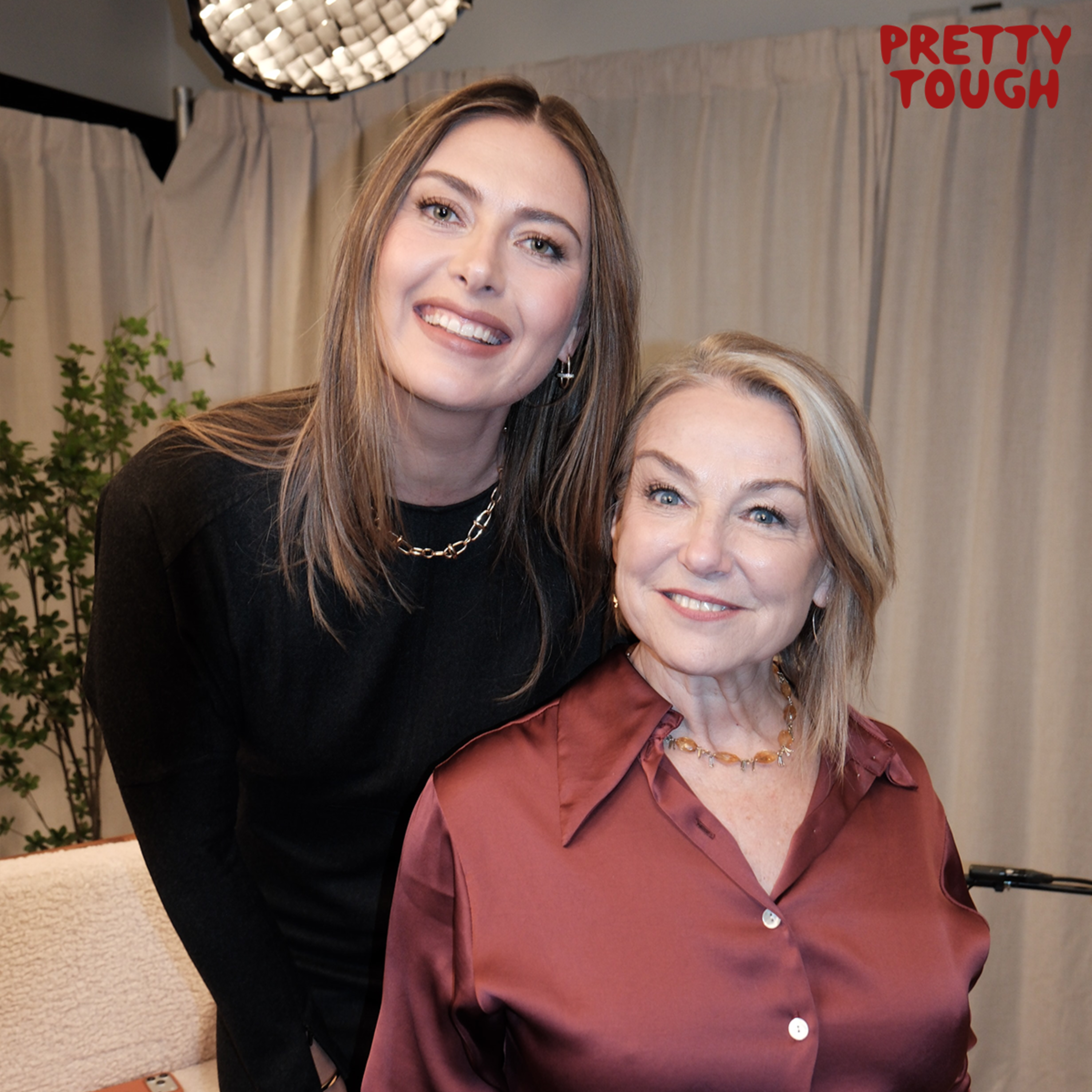
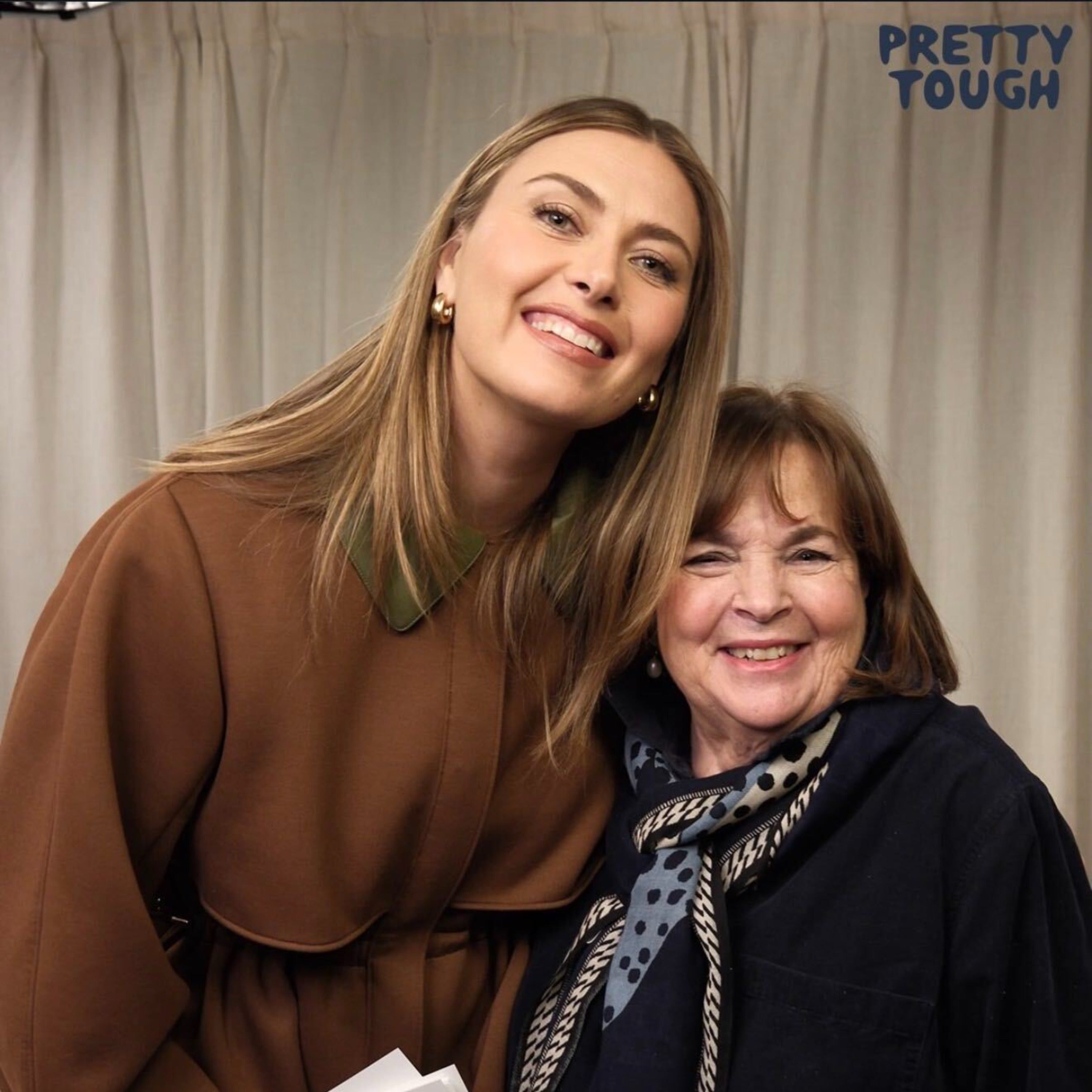
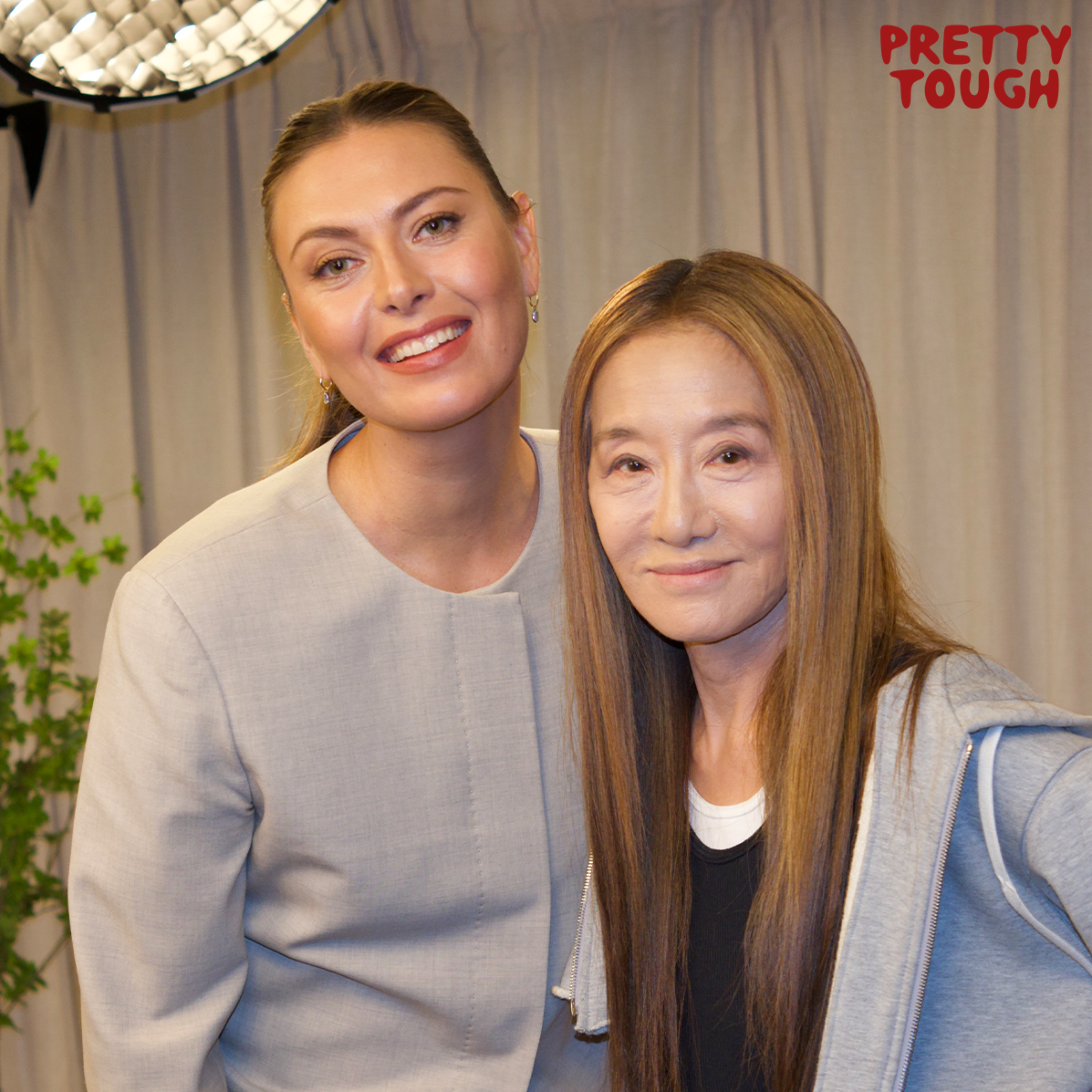
 Pretty Tough with Maria Sharapova
18 Nov 2026 · 59m

 Add vo to ChatGPT or Claude to ask about everything you hear
vo listened to this episode to put together the overview and transcript, so there may be the odd mistake.
Ina Garten (Barefoot Contessa) discusses why she rejects rigid “life plans,” choosing instead to stay open to new opportunities, work “scared,” and keep projects fun. She also shares practical lessons from pivoting careers: leaving nuclear energy work, buying a specialty food store from scratch, building her media career, and launching her podcast Happy Hour from her NYC home. She explains management principles (staff want clarity and a happy leader), relationship negotiation (freedom and shared decision-making), and dinner-party hosting strategy (guest curation, seating, simple menu “game plans,” and host gifts).
Ina Garten is a former nuclear energy budget worker for U.S. presidents; later owned a specialty food store for 18 years; became a Food Network star with 14 cookbooks and decades on TV; now hosts the podcast Happy Hour.
Plans limit creativity; best work comes under pressure/adrenaline; clarity beats micromanaging; relationships succeed when both partners decide “how to do both.”
OMB gender barriers; buying a store in East Hampton after walking in and smelling cookies; first weekend running out of inventory; paying for her own cookbook production decisions; using grocery-store shortcuts in Simply Ina during pandemic stress; seating the most talkative guests across from each other; menu scheduling by oven/stove timing.
0:00Either you're on my train or get out of my way. And at least you're still on it. So running the train. You worked on nuclear energy. And one reason you left was because you knew they'd never hire a woman to run the place. It was never going to happen. And I thought, so what am I building here? It's time to look for something that is a parallel track that I can build my own business. And the only limitation is my own imagination. I go back to my childhood when my parents thought I couldn't do anything. They thought I would never amount to anything. I love those moments to look back and go, look at me now.
0:38Want to host an unforgettable dinner party? My guest today has all the ingredients. Before Ina Garten was influencing kitchens around the country, she was working on nuclear energy budgets for U.S. presidents. Then she walked away, bought a specialty food store in a town she'd never even been to, and started from scratch. 14 cookbooks, several decades on TV, and a brand new podcast later, she still refuses to stand still. Ina and I get into why planning is overrated, working scared is a good thing, and of course, how to throw that perfect dinner party. I'm Maria Sharapova, and this is Pretty Tough.
1:23Support for the show comes from Pomolato. The Pomolato woman doesn't wait for permission. She knows who she is, and she wears it, in color, in bold shapes, in pieces that feel like no one else's. Since 1967, Pomolato has been making jewelry in Milan for exactly that woman. Rich colored gemstones, unexpected cuts, and gold that's meant to be enjoyed every day, not saved for just a special occasion. Jewelry with a point of view. Discover Pomolato at pomolato.com What if managing company spend took less managing? Introducing Amex Corporate, one intelligent platform connecting cards, expenses, and payments so you can keep work moving.
2:07Built to simplify, designed to scale. This is Amex Corporate. Get started at go.amex slash Amex Corporate. Terms apply. Mike.
2:22Hey guys, Skylar Diggins and Cassidy Hubbeth here. And this week on And Mom, we spoke with four-time WNBA champion, three-time Olympic gold medalist, And Mom, the legend herself, Cheryl Swoops. Cheryl told us what it was like to be the first player ever to sign a WNBA contract and then the first to become a mom less than a year later. Truly a trailblazer for all of us. You don't want to miss this one. Check out the latest episode of Anne Mom wherever you get your podcasts. Thank you so much for being here today. I'm so honored to be here. So nice to meet you. Very nice to meet you. Even though we've just met, I feel like I've met you before because your cookbooks have laid out on our kitchen table, on our kitchen island, on our dining table.
3:08My mom loves to cook and she very often cooks from your books. Oh, how wonderful. Thank you. And I mentioned when I started this podcast space, she's like, oh, really? And then when I said I was interviewing you, she's like, I am so glad you're doing this podcast. So I'm going to take you back to 1981 because it is a quote I chose for you. I do it with all of my guests at the start of an interview. I choose a quote for them. And you're just 33 years old. You've been running your shop, the Barefoot Contessa, for just a few years. You're working long days, catering at night, and you tell the Times, I can't stand still.
3:46I feel if I stand still, I'll slide. Forty plus years later. Has anything changed in how you feel about standing still? No. I think I've come to terms with I have a low threshold of boredom. And if I know how to do something, I don't want to do it anymore. I want to do something different. So I didn't think of it as I think of it differently, but it's basically the same action. Same action. When did you realize this about yourself? Well, I think over the years that I, when I, I had a specialty food store for 18 years, and I thought, I just can't do this one more minute. And I loved doing it. It was fun.
4:21I loved the, it was like having a party every day. And I just didn't want to do it anymore. And I thought, I'm bored. I really just, I know how to do this, and it's time to just do something else and challenge myself. Because I think figuring something new out is really what's interesting. It's not necessarily running the business. It's just figuring something new out. And somebody, actually a New York Times person, interviewed me and said, most people take a business and they build it and they build it and they build it. But what you do is you start a business, you build it, and then you shut it down and you start another business.
4:56And I thought, yeah, I'd really do that because I like the problem solving of doing something, but I don't want to be the manager. I want to be the person doing things. I want to write the books. I want to do the podcast. I want to be on TV. I just, the TV, I just, I want to do it myself. And it wants to be in control. Yeah, I think that's right. I like it. I think you've got the secret. To this day, you've said that you love to work scared and that it's a good thing when a project keeps you up at night. But I want to start with a practical question. When you're up at night, obsessing about work, about those details, about your strategy, do you toss and turn?
5:36Or are you someone that gets up and goes and does something about it? Toss and turn. I bounce around. Think about it. I have a hard time going to sleep because I have a lot going on and just settling down from a day that's usually pretty exciting. It's really hard for me to do that. Do you feel that way? Do you have trouble settling down? So I had to learn how to settle down very quickly because I would play a night match, for example, at the U.S. Open, I'd finish at midnight and I'd have another match at 36 hours. So if I didn't shut off, if I didn't take my adrenaline and forget about everything that just happened during this match, which is probably a lot or a lot of ups and downs and momentum shifts, and I just have to zip it, close the door.
6:23So how do you do that? Experience. You just learn that the second it's over. The second it's over, you forget about it? The second it's over, if you know you want to do well in the next one. Yeah. It's part of the recovery. Oh, wow. It's like flipping the switch. Oh, I'm going to think about that. That's wonderful. But what I loved about this idea of working scared is something that I can really relate to because I always felt like I did some of my best work when I was under pressure, when I had to deliver, when not many people believed in me. Like I was on a cliff and I was close to falling off.
7:02When I was complacent, not good. When I had a good practice before a big match, not good. So I read that and I was like, oh. So you really related to that? I really, really related to that. But what is it about working scared that brings out the very best in you? I think it's probably adrenaline. I think it makes you think clearly and you think, well, I'm in a situation where I could pass or fail. I could do well or fail. And failure is not an option. So you just keep going. And you really, I think your mental state is very sharp and you'll work harder. Do you feel like a few more people could use that type of mindset?
7:47it? I think there's a young generation that's very often feels like things are too hard, and they're not worth doing. And it's the hard stuff that's really the making of your life. It's the stuff where you really pushed, and you cared about it, you wanted it to be great, or you wanted to be, you know, you wanted to win the match, or you wanted to put out a book that's better than any other book that you've ever put out. I think those things are the making of your life. And if you stop short, maybe people won't notice in the beginning, but eventually they will. And isn't it always, when you look back on a successful book or a successful show, I've always thought of the tough moments that I went through to get to that success.
8:31It wasn't always the easy ones. In reflection, you always think, oh, that moment was so difficult. And someone told me I couldn't do it. But look at me now. Do you go back to those moments? Well, I go back to my childhood when my parents thought I couldn't do anything. They thought it was just a – I had no motivation and they thought I would never amount to anything. And I just – I love those moments to look back and go, look at me now. You have something to say to that. I'm doing just fine. Thank you. I love that. It's nice to remember there's a sense of gratitude that you showed people that didn't believe in you that they were wrong and that you really are the person that you know you are and not the person that they think you are.
9:18In a career made of pivots, your latest is, of course, your fabulous new podcast, Happy Hour. You just told me you film at 5 o 'clock. I do. At your apartment. I do. Which is so fitting. I love the name. I love the concept. I love inviting guests to my house. And I just thought to do that with a podcast, the way I do with a television show. I mean, they come to my house. And I think people feel really welcomed. And we sit down at my dining room table and have a conversation. And it's great. And you've often said about your career that you wouldn't want to do something unless it felt different.
9:58Why did this space and this particular project feel different to what you've done in the past? Well, I actually have thought about doing this for a long time. And I proposed to Food Network that we would do an interview show like that, but it would be a television show. And they said, great, they accepted it. They said immediately, yes, we want to do it. But then they were like, well, maybe we could do a little cooking in the beginning and maybe we can do a little cooking in the end. And I ended up with like six minutes for an actual face-to-face interview, which you can't really do. You have to ask questions.
10:32You can't have a conversation with somebody. And you can't cook and also think about the questions. It's hard to do both. It's a lot to do. So while that was fun and, you know, it's still going on, I love just being able to relax with somebody and have an hour to have a conversation like we are. that things bubble up and you ask a question and you say, see where it goes. I want to put the podcast into context a little bit. Your career started in a very different place. The U.S. Office of Management and Budget. You worked on nuclear energy. Of course. All 20-year-olds do that. And this is the 70s.
11:09And one reason you left was because you knew they'd never hire a woman to run the place. So you had the sense of wanting to be in charge. Is that what I'm getting at? Yeah. Well, I just thought when I was at OMB, I thought, well, I'm building something, and what is it? And in the 70s, the opportunity for a woman to be the head of OMB was never going to happen because it was going to require a man to choose me. And I mean, whether or not I was good enough to do that, I don't know. But at the time, I just knew it was never going to happen. And I thought, so what am I building here? So it's time to look for something that is a parallel track that I can build my own business.
11:53And the only limitation is my own imagination. How much do you think has changed for women in leadership? I think that it was going in the right direction. I don't think it's changed, totally changed, certainly. But I think it's slipping back. And I think that it's not a good time, which is I think women now may – I mean, in your field, the only limitation on your success is your ability as a tennis player. And time. And time. And time. What does time have to do with it? Well, because your limit is you have a certain amount of years. Time that you can do it. Perform. So you know that your limit and your end is a lot sooner than a lot of other professions.
12:41Yeah, that's exactly right. So you're aware that when this is over, you have to know where you're going. Yeah. What's the second act? So what did you do? Because I took a year off. What did you do when you were done with tennis? So I retired three weeks before the pandemic hit. Oh, my God. And it was a blessing and a curse. Yeah. The blessing was that I was on the same boat as everyone. So even though I left a profession that I did every single day, I was not focused on the intensity of that moment of leaving something behind. And I was focused on what everyone else was focused on, which was what are we doing?
13:20Are we going to be here in a week, in a month, in a year? And so I felt like I was part of something together with someone. But in terms of I'm someone that loves to move. I don't sit still there. I don't know what that looks like. So to sit still and to not act on what the next chapter was, even though there was no particular strategy to it, was very uncomfortable. I didn't like that feeling. Oh, I mean, that was the worst week of my worst year of my life is when I sold the store and didn't know what was next. And that's where you were. You didn't know what was next, but you didn't even have an opportunity to to try things out because everybody was so isolated.
14:03Did you try things out in that year? Yeah. I mean, I forced myself to go to my office every single day at 9 o 'clock, and I wouldn't leave until about 2. And I mean, literally, I would read magazines, and at the time it was the late 90s, I'd copy over my address book and just try and keep myself busy in some way. And I'd investigate buying a building and turning it into something else. Or I looked at a lot of different things that none of really interested me particularly. I looked at investing, and I did that for six months, and I was like, this is not for me. I really had a very hard time. Because like you, I went from having something so intense to having nothing to do.
14:48And you had the added disadvantage of nothing to do, and you're confined to your house. Right. And the skill that you taught yourself from a young age no longer really applies to. It's not like you're going to go and play soccer. You know, it's kind of like you're starting over. So you leave the government role and go from managing nuclear budgets to buying a specialty food shop in a town where you've never lived. Never visited. In a job that you've just never done. And what made you choose to just take that leap of faith, to go for it? I loved the idea of being in the food business. I had no idea where West Hampton Beach, New York was.
15:36I think it could have been any place. It turned out to me not just any place, fortunately. And I bought a very small store that was not much bigger than this room. But I remember walking in, and the feeling I had when I walked in was so powerful. They were baking chocolate chip cookies, and there was a counter, and there was a refrigerator with fabulous international cheeses and they were cooking in the back and making cakes and pies. And I thought, this is a place that could feel like a party to me, that could be really a happy place to be that I look forward to coming to. And I just thought, this is where I want to be.
16:17I don't know why. And I thought, I'll just have to figure it out. But it's one thing walking into a shop with a great chocolate chip cookie smell and being hungry to thinking that this is going to be my business. Yeah. I think it happened kind of serendipitously. I walked in. It felt really good to be there. I thought it would be when I was in the government wearing like silk blouses and high heels. I thought all I want is a job where I can wear sneakers and blue jeans. I don't even care what I have to do. And I thought, this is a place for sneakers and blue jeans and aprons. And so I made a very low offer to the owner thinking that she would, you know, we would negotiate.
17:03And Jeffrey and I just drove back to Washington. And she called me the next day and said, thank you very much. I accept your offer. And I went, oh, shit. I think I just bought a specialty food store. And was it the owner that had to teach you how to operate the cash register? Everything. Yeah. The deal I made with her, this was somewhat smart, is that I told her I made her an offer on the store, but it was contingent on that she stayed with me for a month to teach me what I need to know. Because otherwise I would have been lost. I mean, really lost. And she was a great, great teacher. For this month, are you terrified, excited, thrilled?
17:40The first weekend was Memorial Day weekend, and I had no idea how busy it was going to be. I mean, absolutely no idea. It was just crazy. And we ran out of everything the first day. So on Friday night when we closed the store, there was nothing left in the store. And we had to get through Saturday, Sunday, and Monday. Diana, who sold me the store, said, okay, he said to Jeffrey, okay, there's a bakery in a nearby town called Santa Marich's. And if you go there in the morning, they open at eight o 'clock. We opened at nine. See if you can buy some like croissant and some muffins and things like that.
18:15So we'll have baked goods in the morning. And then she said to me, I know you and I are going to cook and bake and make chicken salad and pies and cakes all night. Literally all night. All night. Did you mark up what you bought in the other store? Of course. A sign of a good businesswoman. Jeffrey walked into this bakery and looked at it. It was eight o 'clock. He was the first person in the store. And he looked at it and thought it looks really nice. And so he said to the woman behind the counter, I'll take everything in the store. They were like, you can't do that. And then they were like, well, I guess you can.
18:52They packed up everything and it came back to this and we sold everything. And the next night we had to do the same thing again. And that night I said to Jeffrey, this was the stupidest thing I've ever done in my life. But then it slowed down and you're like, okay. Well, then we figured out how to do it. Then we kind of geared up and I still wonder about that bakery because Jeffrey went back the second day, and then the third day we figured out how to make muffins. And so I thought, my only fear is that they had decided, well, we've got the formula. Let's make twice as many muffins. And then he didn't show up.
19:27What a fantastic story. You said something really interesting about managing a team, that your staff wants two things from you. They want you to be clear and they want you to be happy. How did you learn that lesson? A friend of mine who used to be a business advisor told me that. And I was always very overly considerate to the staff. Like I would say to them, if you have time and when you don't have a customer, would you mind putting these jelly beans in a bag with a ribbon like this? And I just thought it was kind of nice to be kind to them. And everybody was, I didn't think it was working. And this friend of mine said to me, your staff needs two things.
20:14You need to be clear and you need to be happy. And it changed everything. I would walk up to them and say, I need you to take these hundred bags and fill them with jelly beans and wrap them like this. They want to do a good job. They just need to know what I need in order to do a good job. I don't have to dance around and say when you have time and if you feel like it. And the other thing is when I found when I wasn't happy about something, and it has nothing to do with the store. I just, you know, we all have bad days. And if everybody in the store was a little anxious because they were like, did I do something wrong?
20:49Did I say something? And it has nothing to do with them. So I would literally walk out of the store, walk around the block and come back happier. And I just think it was really good management advice. Just two simple things you have total control over. And how did you communicate during those moments when you weren't happy? Because we all know. I just walk out. I mean, I don't have a temper really. So I don't, it's not like I would yell at somebody, but I would, I just say, okay, this isn't, I'm not doing the store any good. And I would just walk out. I mean, I wouldn't leave for two days. I would leave for, you know, 15 minutes and just talk myself into going back to the store happy.
21:34So something else that changed in a big way during that time when you took over the Barefoot Contessa was your relationship with your husband, Jeffrey. You got together when you were just a teenager. It's a beautiful story. And after a tough childhood, you said your life really started when you met him. But you've also said that that time around when you got ownership of the store, you felt like you needed a different kind of marriage. The traditional gender roles weren't working and you needed some freedom to figure out who you were. So you had a lot going on. A lot going on. What gave you that courage to change the terms of that partnership?
22:15That to me was the scariest thing I've ever done because I didn't want to lose him, but I also didn't want to have the relationship that we had. And as you say, I never lived on my own. I had no idea who I was separate from him. And remember, this was the 70s. We got married in the late 60s. And people did have gender roles. It was assumed I would make dinner. It was assumed that he would do the bills. There were things that were assumed, which we both assumed. And I think once I had my own business and I felt that I needed more agency in the relationship, I can totally understand why he wouldn't understand it because it was working just fine for him.
22:57And I tried to change it. I tried to change it. And I just really couldn't. So I just said, I just need time on my own. And I had no idea where that was going to go. And I hoped I didn't lose him. And he's being the person he is said, if you need to be on your own, you need to be on your own. and I moved to New York after that first summer, and it was tough. It was a really tough summer, I mean a tough fall. And I sorted out what bothered me about it, and he was at the State Department at the time, and he went on a trip around the world, and we met in California in Palm Springs on his way back, and we just talked.
23:38We talked about what he wanted and what I wanted and how we could get both of them. And I just remember thinking, here I am in California falling in love with this incredible guy, just happens to be my husband, which was wonderful. And we never looked back. And we both got an enormous amount of freedom from that conversation. I mean, he felt being married, you can't travel that much. You have to be home. And I said, no, you can travel all you want. And we'll still have that anchor in our lives that we're connected all the time, that we're best friends, we take care of each other. But if you want to work in Tokyo for a year, we'll go back and forth and we'll make it work.
24:23And we did. And I know that every relationship is different, but what can other women and men take from this story? Well, I think we had enormous freedom because we don't have children. I think if you have children, you have to be there for the children. So that is both an anchor and also a limitation. And I just never had any interest in having children. So, and fortunately, I'm married to somebody who was willing to do what I, you know, to follow through on that. because I don't think when we get married, I don't think we talked about it, frankly. You didn't talk about children? I don't think we talked about children.
24:59We were so young. I mean, I was 20 when I got married. And I think I assumed we would, but we never really talked about it. And once I got there, I thought, I just don't want to do this because I came from such an unhappy childhood. I couldn't imagine why I'd want to recreate that. What's really important, and I think Jeffrey really taught me this, is that we each decide what we would like on our own, and a partner decides what they would like. And instead of deciding who gets to choose, we get to do both. How can we do both? How can I have a store in East Hampton while you have an investment bank in Tokyo?
25:40How can we do this? And we decided when it came to that much later, we would both do what we wanted to do, and we would, each of us would, we'd go back and forth for a week, a month. So we spent half of our time together. And if at any point somebody was unhappy, we would stop. And it worked fine. So I think that's what people can do. I think very often relationships fall apart on who gets to decide, not what the decision is. Does that sound right to you? Yes. Absolutely. And it's everything from what movie we go to to where we live. Well, it's a conversation, right? It all goes down to being a communicator and finding the right words that feel heard.
26:25That feel heard. And that everybody, it's never my choice over your choice. It's always, how can we do both? And everybody gets what they want. Unless they're mutually exclusive things. There's always a way to do it. There's a way. There's a way. And I wanted to lean into that transition period for you that the year that you had, because after 20 years, you sell the shop that was really the center of your universe. And I know throughout that period, there was a lot of ups and downs, but you go into this transition mode of 12 months of figuring out what is the next act? What is the next phase? And, you know, a lot of times we like to have a plan, right?
27:09We strategize about what worked, what didn't, where is our future going? Do you believe in having a plan or do you think that plan limits us from being open to new ideas and new opportunities? 100%. I believe the plan limits us. Because if I had made a plan to have a show on Food Network, to write cookbooks and have a podcast, I would have laughed out loud. I mean, it was ridiculous. That's not going to happen. And it wouldn't have even occurred to me to dream about it. So I just I find that my what works for me is I do the best job I can on what I have today. And before the end of the day, before I go home at the end of the day, I figure out what I want to do tomorrow.
27:52So I have everything I need to do what I need to do tomorrow. And then I wake up in the morning with purpose and I do what I'm going to do tomorrow. And at the end of the day, I decide what I'm going to do the next day. And things come along. You know, ideas come up and people come with proposals and I go, no, not interested in that, not interested in that. Wait a minute. That's kind of interesting. Come back here. And then you see, does it work into, you know, my plan is that everything that I do, the first thing that's really important to me is that it's fun. It's fun for me and it's fun for the person listening or reading or watching.
28:30That it's got to be fun. What's the point otherwise? So, ideas come and people come with ideas and I just think leaving it open is much more effective. Do you feel that way too? Yeah. I like structure because that's how I learned in my field is having... But you determined the structure. Yes. It's not somebody else, right? I relied on a team that would help me with the structure. So, you chose the team. I chose the team and at the end of the day, I was the boss. Yeah. That is one of the best parts of being an athlete. And so they're advising you about how to create a structure that will work for you.
29:11Yes. Yeah. It's a very individual approach. Yeah. Which sounds very selfish, but... No, no, no. It's really important because I have a team of people and I always ask their advice about things. And then once we've talked it out and I decide what I'm going to do, that's what we're going to do. It's very clear and that's what you do. Well, and without that year off, you perhaps would have never written your first book, The Barefoot Contessa Cookbook. Never would have. And actually, that's what I decided to do after a year of having nothing to do while I figured out what to do next. It never would have occurred to me that I'd be writing cookbooks.
29:49And how successful it is. It's been great. It's been wildly successful. Thank you. And unlike other cookbooks, at the time you had gorgeous photographs, simple ingredients, a curated selection of just delicious recipes that you wanted to cook with your family. Thank you. There's a simplicity to that first book. Yeah. Did someone need convincing for you to write that book? Or did you have to knock at someone's door? I actually sent a proposal to the top cookbook editor at Clarkson Potter thinking nobody's ever going to respond to this. And he wrote back and accepted the proposal. But then I just didn't want it to be like every other cookbook.
30:35If I'm going to do something, I want to do it differently. And I felt if I accepted their offer to do the photographs or to do the styling or, you know, to be involved in the decisions, that it would look like every other cookbook that was successful. And I didn't want to do that. So I decided that I was going to pay for all that myself, that I was going to pay for the publicity, the photography, the food styling, the prop styling, the food, everything. And at that time, I think now people do that, but at that time nobody did it because I wanted to make all the decisions myself. And when the book actually was printed and went to the head of the publisher, she told people this book is never going to sell because it wasn't like anything else she'd done.
31:26What was nice is that I had agreed to buy 5 ,000 books to sell in the store. And I think they printed 20 ,000 books. And I agreed to buy 5 ,000 of them. And three days after the publication date, she called and said, you know those 5 ,000 books? We need them back now. It's such a great point about publishing and kind of taking control of your destiny and where you want to see the book and how you want to see it presented. Because, you know, the process is you come into agreement with a publisher and a lot of the time they have very strong opinions about things. Opinions. They have occasionally creative control because they are signing the checks.
32:06Right. They are. And also they're the ones with the experience. I don't know what gave me the feeling that I can make these decisions. I really don't know. But I just wasn't willing to do it any other way. And so I just I took the check. I actually put it in a separate account thinking I'll be sending this back. And I just went off to do it. I figured it out along the way. I remember the first photo shoot, the food stylist was there, and I was very nervous because I thought I had to make all the food. And I'm not a trained professional chef, so I was like I had to, you know, one week I had to make like 30 dishes that were so gorgeous they would want to photograph them.
32:46and I went behind the counter. I said, okay, tell me what you need first. And the food stylist said, that's what I do. And I was like, oh, thank God. So that shows you how little I knew about the subject. But I think there's something about coming to something new with a fresh view. This isn't the way we always do it. This is how I'm doing it. And you figure it out in a way that It seems much more logical. And so, you know, they said to me, do you want it this way or do you want a little soft light or do you want bright, sharp edges? And I'm like, bright, sharp edges. I just I wanted to just pop off the page.
33:25And that's we're still doing the same photography 14 books later. Well, this is where I'm getting to. You've just published your 14th cookbook. Isn't that crazy? Simply Ina. Is there something different about this one that pushed you outside of your comfort zone? Because what I'm getting at is that you like to feel that there is something there that pushes you to do it differently. Well, I think this motivation for this book was that we're all just totally stressed out. We're stressed out by the world. We're stressed out by politics. We've got way too much to do. And because of the pandemic and all the screens that we're dealing with, we're not in the company of people.
34:13I mean, it's really just dropped like a rock. And I think anything that we can do to make cooking easy, so you invite people to join you for dinner, is really worth doing. So I really wanted to challenge myself to see what could I use for ingredients from the grocery store, like bottled pasta sauce, like Rayo's pasta sauce. And what kind of ingredients can I use? Like is there a mashed potato that's prepared that I can – I love mashed potato. I know. But how can I make it taste like – Growing up in Russian, that is like – Oh, yes, of course. That's my – when you say mashed potato, I think of my grandmother.
34:52I mean, every culture has mashed potatoes, but how can I make it taste like you started from scratch and peeled the potatoes? Or can I do that with a cake mix? And sometimes you can, and sometimes you can't. And so I challenged myself to use ingredients that I wasn't used to using in other books. And it was just fascinating. It was really fantastic.
35:23Support for the show comes from Pomolato. On this show, we talk a lot about women who write their own rules. That's the Pomolato woman. She's confident, curious, a little unconventional, and never afraid to stand out. Pomolato was born in Milan in 1967 on a simple idea. Fine jewelry should be lived in. Stack it, mix it, wear it to the office and to dinner. Every piece carries that classic blend of craftsmanship and irreverence. Go to pomalotto.com to find a boutique in your area and discover your next statement piece. Everyone, it's time to wake up. Five more minutes. We've been sleeping long enough and hitting snooze on the fact that we're still stuck with the old way to phone plan.
36:09Is that a... Yes, it's old and cuckoo, just like that phone plan you have. Okay. I know, it makes no sense. So rise and shine. It's time for a whole new way to phone plan. T-Mix from T-Mobile, where you pick what's in your plan, like streaming, travel, or gaming, and then change those picks too, because there's been a change in plans. Okay, we're awake. And T-Mix sounds great. Good, because I'm all out of alarm sounds. There's been a change in plans. Introducing T-Mix from T-Mobile. Pick what you want. Change what you want. Include it in your plan on America's Best Network. Number of picks varies by plan and lines on account.
36:50Account or pick changes may impact existing device and other promotions. Best mobile network in the U.S. based on analysis by Ukla of Speedtest Intelligence Data 1H2026. Visit tmobile.com slash picks.
37:01Hi, this is Bella Freud. Each week on Fashion Neurosis, I invite guests from the world of fashion, art, film, music, sport, and literature to lie on my couch and explore the connection between identity and fashion. This week on the show, I welcome photographer and director Petra Collins. I think you need that realness and the struggle. Also, one of the things that I feel like I learned quite recently was about not needing to suffer for the art. Subscribe and watch episodes on YouTube and listen wherever you get your podcasts.
37:45I want to ask you about your drive. You've experienced so much in the world of cooking, of making books, of being on TV, of now starting a podcast. And your energy is unmatched. What keeps you going? I just love to have a puzzle to figure out. And I love to try something new and see if I can figure it out. And so I think just having new ideas and new ways to express whatever I'm doing, it's just – it keeps me going. I mean, a day with nothing to do is the worst thing in the world. So I just – I mean, people ask me, when are you going to retire? I'm like, I'm not retiring. It's never happening.
38:30Back to not feeling bored. Drag me out by the feet. Anything not for Ina to be bored. I want to talk about the podcast that you recently launched, so Happy Hour. What made you decide to want to do it in your house in New York City? Well, exactly the same way that I started TV. You know, I was asked to do it, and I said no for years until I could figure out how to do it differently. So the podcast, a very major podcast executive producer, Jenna Weiss-Furman, came to me and asked if I wanted to do a podcast. And I was like, I'm doing TV. I'm doing books. I really don't want to do it. But it kind of percolated for a couple of years, and we'd meet once in a while and talk about it.
39:14And then at some point, I realized podcasts were changing from podcasts to TV shows, which I know because I've done it for 25 years. And I thought if I could do it like a TV show where somebody comes in and we're filming it in the same way, maybe we'll try it and see how it goes. But, you know, it was hard. It was really a lot of people didn't understand what I wanted to do. And I just kept kind of like pushing to get my vision of what it could be. And we spent the summer really setting it up. And now I feel like it's exactly what I want it to be, which is very satisfying. What has surprised you about the process of starting a podcast?
39:54It was harder than I thought. I think you can relate to that, right? Does it feel like a startup in a way? Totally feels like a startup because it's a completely different medium for me. And it's a different transmission. So the podcast audience is very different from a Food Network audience. And I have to figure out, I'm still in that process, figuring out what people are interested in and who they want to hear from. Who would be an interesting guest? How's that been for you? Yes. I'm surprised how deeply invested I am because the audience is not stupid. They're very wise. And so everything is a representation of yourself.
40:39and you know the podcast medium in general has become so much more than just audio of what people hear it's a visual representation right there's an element of a business there's a brand platform and everyone's voice matters and you know having sitting across I mean selfishly I get to sit across incredible people I mean it's just that's the best part of it is the best as you can ask somebody and they'll say, sure, I'll come over for a drink or a conversation. I'm sorry. I don't have the drinks that you serve on your podcast. It's probably better. No, I disagree. But it's just, I mean, it's an incredible opportunity to get to know people that you would never have met before.
41:19And I love it. I mean, I love being here with you. We would never have met before. Never, exactly. And it's just wonderful. At a time when connection is so personal connection and in-person connection. is so important. We come out of the pandemic, we're used to seeing people on screens, actually seeing them in person. I don't know, there's something that's totally different. I don't know what it is that's transmitted, but it's different. There's an intentional emotion by having a conversation. It's intellectual. It's curious. You're growing alongside someone that's had a completely different path in their life.
41:58And you always try to find that relatable thread that you connect on. And like at the end of it, you're like, wow, I got to learn so much. I can't wait for this audience across in the screen to feel that as well. A big reason I got into this space is because I wanted to talk to other women, as we said in the beginning, women that accept that they have to be this or that, compassionate or cutthroat, you know, tough or pretty. And you said something about tough. You said you have a different concept of tough. I want to hear what it is. I do. I have a different concept of tough because I think tough is really not tough.
42:37It's clear. It's that you've gotten all the opinions. You've made the analysis and you've decided what to do. And it looks like tough, particularly when it's a woman. It looks like tough. But what it is, is I know where I'm going and I'd love you to come along with me. But that's what I'm doing. Unless somebody has a much better idea that we haven't talked about, which is we've talked about everything, let's just go there together. And if I'm clear, the whole team is clear. And I think that's really valuable. So I think that's what tough is. It's really clear more than it is. I mean, tough has a connotation about being mean and bullying, and it's none of that.
43:21I think of it as gritty. You know, not apologizing for sweating and having a fist pump, but, you know, equally being vulnerable and being soft and eloquent and not having to choose one or the other because both of those can live. And not apologizing for being tough. Not apologizing for being tough. You said it.
43:45You've also said something about having fun. We briefly touched on it. you've said you want everything that you do to be fun. But I really love something that you said in an interview. Fun isn't like going down a water slide. Fun is building something with people who you care about and doing what you love. To me, that sounds like a lot of purpose in the fun, in the element of joy, because not everything that we do is full of happy moments and smiles. But it's in the furtherance of something that's fun. So I used to say about writing cookbooks is that I love writing cookbooks. I love doing the photographs.
44:25I love designing the book. I love all that. And I also have to take care of business. If you don't take care of business, you don't get to do the fun stuff. And that's true in every business. I mean, maybe the business isn't fun per se, but it's in the pursuit of fun. The pursuit of fun. It's the journey. It's the journey, yeah.
44:52I'm Bridget Reed. And I'm James Walsh. The Alexander brothers moved in a world of multimillion-dollar homes, exclusive parties, and powerful people. Behind that glamorous lifestyle were years of rumors and allegations that they were committing sexual assault. In our reporting for New York Magazine, we investigated what people knew and heard from women who came forward to tell their stories. Now, that reporting is the basis for a new three-part docuseries, The Wolves of Real Estate, The Alexander Brothers. You'll see exactly how privilege protected them and how they were finally stopped. Stream all three episodes now, only on Peacock.
45:36Since you're an expert in throwing a dinner party, I wanted to get your takes on hosting a warm, elevated, and enormously fun gathering, which I always hesitate to do because I want it to be perfect. So I want to get your thoughts here. What is the most important thing to consider when thinking of the guests? If they're fun. I mean, I tend more than I should to curate the guests. Like, would these people really enjoy those people's company? and if I have friends who are quiet, I might invite them on their own. If I have friends that tell great stories and it would be fun in a group, I might have a, you know, I don't have big parties, but I might have maybe six people rather than just four.
46:21The most important thing is that the host and hosters are relaxed and having fun themselves because we all know what it's like to go to somebody's house and they're worried about the chicken that's in the oven or the wine isn't the right temperature and the candles aren't, you know, if you're worried about what's going on there, people won't have fun. They'll feel anxious. Well, you're looking right at her. Oh, yeah. So let's design a party that would be really easy for you. Well, do I start with a seating plan? Do I need a seating plan? I tend to seat the two most talkative people opposite each other on the table.
46:56I definitely like a round table because if they're seated next to each other, they'll talk among themselves and everybody else will be left out. If they're seated across from each other, everybody will be included. So that's kind of like a simple thing that I've kind of observed by doing dinner parties. So a semi-seated plan. A semi-seated plan. Exactly. So my husband is British and he's very formal with a seating plan. He thinks that the guests are everything. Yeah. He's right. Not the food, not the drink, not the people. And so if they're not sitting with the right people to converse in the conversation that they deserve to have because everyone that we've invited has something to say he's like it's not going to be a successful i'm going to revise what i said i i actually do a seating plane in my head okay you're right i i figure out where everybody would be feel most comfortable um i just don't do you don't do the place cards yeah but it depends on how many people you have i mean i like doing a dinner party in the kitchen where I have a table that we can seat six.
47:55Is that the best number you feel? I feel six is just great because everybody's involved. Everybody's part of the conversation and you feel like you've really connected. Once it's eight people, then you have to depend on other people at the party to keep things going. So maybe it's the control thing. All right. So something else that my husband and I don't align on is shoes on or shoes off in the house. Oh, interesting. We have shoes off but when we're having a party you can wear your shoes oh because people so you make exceptions i make exceptions yeah because if um what do you what do you i'm shoes off yeah like shoes off at the i just think people put their outfits together and they don't want to you know like mess up their outfit but and and if you're not prepared they're walking around in their bare feet which i wouldn't want to do i do have you're gonna laugh at me no i know that's a wonderful like the japanese have slippers yes so i have a basket of socks available for them yeah and And I have slippers.
48:52Oh, that's great. It's their choice. They're all different patterns and colors. So they can match to their outfit, but shoes off. And does your husband think it's crazy? He thinks I'm overdoing it. And you know what? And you know what? I win. It's fine. Because guess who will have to clean up if it's messy or dirty on the floor? Exactly. I'm like, you're not going to be scrubbing the floor. I heard this recently. It was somebody who's a psychiatrist who specializes in marriages. And he said, the most important thing in a marriage is that the man has enormous respect for the woman. That if she feels safe and seen and respected, he'll have a good marriage.
49:40And I thought that was really interesting because the minute that goes, the minute you don't trust your husband, then you start. changing your behavior. I like how this conversation took a turn. And it sounds like your husband says, if that's the way you want it, then he respects that. Yeah, the shoes are. I give him the seating plan. I'd rather have people sit at the table wherever they want, but he's like, it makes for better. So he gets the seating plan and I get no shoes. That's good. It's a relationship after all. Exactly. Everybody gets what they want. Very true. Yeah. The menu. What do we need to think about in choosing dishes so we're not laboring and stressed in the kitchen like I occasionally am?
50:24I think the menu is the game plan for the whole evening. The first thing I do is figure out what people can't eat so that I make a menu that everybody can eat the same thing. And it may be if there are vegetarians and you'll have like rack of lamb, but you'll have a few vegetables so that the vegetarians can have what they want. And then I figure out what's in season, what's around me. Like in my new book, I have a cheesecake. The first ingredient is buy a cheesecake from a bakery and make a fresh raspberry sauce with it, with fresh raspberries. Nobody knows you didn't make the cheesecake. Yeah, but I will know.
50:59And it's still delicious. No, you won't. Somebody made it in a bakery. Oh, you'll know if it's yours. Yes, I will know like inside of me that, oh, are they thinking that it's mine or did I buy it at the store? No, your husband's right. The most important thing is the people. And if you're relaxed and happy, and I'm not saying I always do this. I always overthink everything. But the simpler it is, the better the party is going to be. And so the second thing is when you're doing a menu, just make sure that you're doing. I think through I'll write out a menu and I'll think through is there something that's in the oven something that's cooked on top of the stove and something that's room temperature that I can make in advance so that you're not going when you start to cook at different temperatures and you only have two ovens so you don't have to organize so much and then I make literally a game plan you know at 5 o 'clock turn the oven to 500 degrees at 5.30, put the filet beef in.
52:03At 6 o 'clock, take the filet beef out. I mean, it's literally that detailed. And then at 2 o 'clock in the afternoon, I'm not going, oh, my God, I have to start dinner. And you look at the schedule and you go, I actually don't. If I start at 5 o 'clock, I'll be fine. But my husband does know he can't talk to me while I'm cooking. Because it's hard. It's really hard. You don't allow him to come in and be a sous chef? No, he wouldn't even think of it. He makes coffee for me. He's great at it. Okay. And pours a drink. Host gifts. I know you're an incredibly thoughtful gift giver. What is your stance on the most charming way to think about giving a gift to the host?
52:45First of all, I think it's really nice to bring a gift because it acknowledges that they've gone to an enormous amount of trouble to make dinner for you. And I never bring something that they can serve that night because it disrupts their dinner. You know, if I bring a pie, maybe that I've made, and they've made a dessert and it's not quite as good, then everybody wants the pie. It's just terrible. It's a terrible thing to do. I love the idea of you bringing a pie. and the poor host is like oh i made jello
53:26and here here i i brought a pie that everybody thinks oh my goodness it's so good anyway so what i always do is i bring something they can have the next morning for breakfast homemade granola my favorite coffee um you know just something delicious that they can serve the next day. I love sending a host a bouquet of flowers that arrived the morning of the dinner party. That's wonderful. In a vase. So you don't have to cut the flowers. Exactly. A flower delivery in a vase as she's preparing her evening. It arrives. It's a wonderful thing to do. It's a nice surprise. I think I'm going to start doing that.
54:04That's a good idea. That's a wonderful thing to do. Thank you. I feel like such a hostess with the mostest right now. Now, if you put it in your next book, you have to credit me. I will absolutely credit you. Just kidding, by the way. What is your favorite dinner party game? If you have one. I don't play dinner party games. No? No. What's yours? Like, what about putting a name on a card? No, I don't play dinner party games. I don't know. We just never have. My favorite thing to do is have dinner and then watch a movie together, like some esoteric movie that other people haven't seen. Do you ever go around and ask the same guests the same question, like for everyone to reflect on something or their favorite or...
54:48I remember years ago, we were at a dinner party where people didn't know each other that well. And Jeffrey said, let's all say what the worst thing somebody could say about us. It was so revealing. It was shocking. I think I never did it again. I think that breaks the ice. I like that. What people said about themselves, the worst thing that somebody could say about them, turned out to be absolutely true.
55:15I'm going to come to your dinner party more often. I like that. And when the party's over, do you like to send something after it's over, like a thoughtful note? Always. When I've been to somebody else's dinner party I always send an email Usually I think on the way home I just think it's really nice That you know the host is cleaning up And it was exhausting no matter what And to get a nice note About what you like particularly And how much fun it was to meet that other person And I love the drinks Can I have the recipe And it's just a way of saying That was really thoughtful I love being there And thank you for inviting me And I like that you're acknowledging a specific item that they've tried or a drink or a dish.
56:05It's not just a throwaway. It's not just, thank you so much for a nice dinner. Yeah, exactly. Can't wait to see you again. Yeah, exactly. I love my margarita. We are down to our last pretty tough questions. Oh, my goodness. It's our lightning round. You ready? I'm ready. Okay. What is something that you have had to unlearn? That I'll never amount to anything. which is pretty hard. I mean, we all have things from childhood that our parents thought about us. And, you know, as a friend of mine who writes books about this, she said to me, what goes in early goes in deep. You never get rid of it, but you just have to separate yourself from it and just say, that's my parents and that's not me and move on and don't let it stop you.
56:54What is a routine that's helped shape your success? I think what I was talking about, that I do the best job I can on what I'm working on right now, and that before I'm done with the day, I figure out what I'm going to do tomorrow. So I'm not arriving the next day trying to figure out what I want to do today. I get out of bed with purpose, and I know where I'm going. You're prepared. What is a common misconception about you? That I'm always really nice. That I would never say a bad word. There's a little devil in there. Oh, yeah.
57:31I like it. I'm not mean, but I'm, you know. I like it. Yeah. There's the pretty and the tough. And pretty and tough. Yeah. Exactly. What is your relationship to perfection? That's a tough one. Because I think like you, we just want things really, really well done. And it's very hard to stop until it's done. And I think it's hard on us, but I think at the end of the day, we end up with better products. So whatever you're working on, whether it's tennis or a cookbook or a podcast, I think striving for the best you can possibly do is really worth doing because it makes a difference. It really does.
58:13What makes you feel tough? What makes me feel tough? Mm-hmm. getting clarity about something that makes me feel like, I mean, very often I feel like I'm hunting around in the woods, and then once I get an idea of what I'd like this to be, because I'm not doing things over and over and over again, I like to do things differently. So once I get an idea of what it is, I'm really clear. Like, either you're on my train or get out of my way. We've lost a few people along the way, but at least I get done what I want to do. And at least you're still on it. And I'm still running the train. Yeah, the conductor.
58:52And what is something that makes you feel pretty? Getting my hair done. Would you say the same thing? Yeah, one of those. Makes such a difference. Someone that knows what they're doing. Yeah. Oh, definitely. That knows, that frames your face well. Yeah. Ina, thank you so much for taking the time to speak with us. Thank you.
59:17Support for the show comes from Pomolato. I've always appreciated the boldness it takes to stand out. And Pomolato has it. Striking color, unexpected design, every piece shaped by the hands of more than 150 artisans at Casa Pomolato in Milan. Jewelry for women who say it out loud. Pomolato.com
Food Network star and bestselling cookbook author Ina Garten joins Maria Sharapova to discuss reinventing herself, trusting her instincts, and building a career on her own terms. Ina shares how she went from working on nuclear energy budgets in Washington to buying a specialty food store with no experience, and why she believes taking risks and working scared can bring out the best in us.
She also opens up about finding independence in her marriage, and learning to lead with clarity rather than toughness. From taking creative control of her bestselling cookbooks to launching her own podcast, Ina explains why she doesn't believe in rigid plans, and why retirement isn't on the cards.
SUBSCRIBE
►Subscribe to Pretty Tough: https://www.youtube.com/@mariasharapova?sub_confirmation=1
LISTEN:
►Listen to every episode on your favorite podcast platform: https://pod.link/1893437254
CHAPTERS
00:00 — Introduction: Meet Ina Garten, the Culinary Icon and Relentless Innovator
02:00 — Low Threshold for Boredom: Why Ina Constantly Shuts Down Successful Businesses to Start Anew
03:45 — Working Scared: Why Good Pressure and Adrenaline Bring Out Your Best Work
07:00 — Overcoming Childhood Doubts: Turning Early Criticism into Fuel for Success
09:30 — From Nuclear Energy Budgets at OMB to Buying the Barefoot Contessa Store
17:45 — Management Wisdom: Why Your Team Only Needs You to Be Clear and Happy
20:15 — Redefining Marriage in the '70s: The Bold Decision for Independence and Equal Partnership
25:15 — The Danger of Rigid Plans: Why Leaving Your Future Open Leads to Better Opportunities
28:30 — Betting on Yourself: Self-Publishing and Styling the First Barefoot Contessa Cookbook
32:00 — The 14th Cookbook and Modern Cooking: Using Store-Bought Shortcuts Without Sacrificing Taste
35:00 — Launching Happy Hour: The Startup Reality and Joy of Doing a New Medium
38:30 — What Does "Tough" Really Mean? Clarity, Direction, and Refusing to Apologize for Being Gritty
41:00 — The Ultimate Dinner Party Masterclass: Guest Curation, Seating Plans, and Stress-Free Hosting
51:30 — The "Pretty Tough" Rapid-Fire Questionnaire: Unlearning Childhood Echoes, Perfectionism, and Hair Salons
FOLLOW THE SHOW
►Maria on Instagram: https://www.instagram.com/mariasharapova/
►Maria on X: https://x.com/MariaSharapova
►Pretty Tough on Instagram: https://www.instagram.com/prettytough/?hl=en
About Pretty Tough
Pretty Tough is the weekly interview podcast hosted by five-time Grand Slam champion, entrepreneur, and bestselling author Maria Sharapova. Each week, Maria sits down with founders, CEOs, athletes, creatives, investors, and other high achievers for candid conversations about leadership, ambition, decision-making, performance, entrepreneurship, wellness, and building exceptional careers.
Drawing from her own experience at the highest levels of sport and business, Maria explores what it really takes to succeed—from navigating failure and reinvention to scaling companies, leading teams, and pursuing excellence over the long term.
About Maria Sharapova
Maria Sharapova is a five-time Grand Slam champion, former World No. 1 tennis player, entrepreneur, investor, bestselling author, and one of the most recognizable athletes of her generation. Since retiring from professional tennis, she has built businesses, invested in consumer, technology, and lifestyle companies, and become a respected voice on leadership, performance, and entrepreneurship.
Learn more about your ad choices. Visit podcastchoices.com/adchoices
Scan the code with your iPhone camera
Listen in the app.