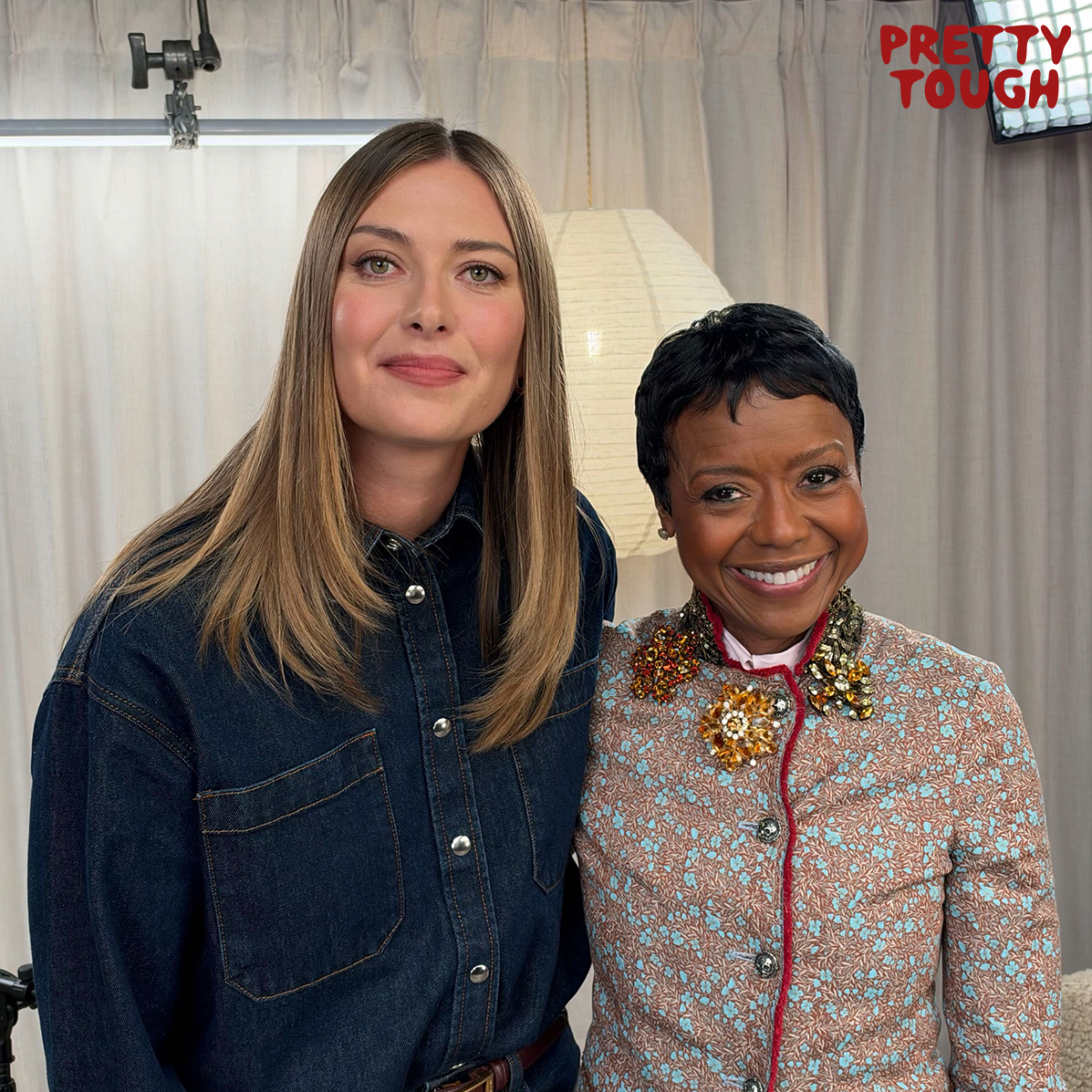
 Pretty Tough with Maria Sharapova
28 Oct 2026 · 57m

 Add vo to ChatGPT or Claude to ask about everything you hear
vo listened to this episode to put together the overview and transcript, so there may be the odd mistake.
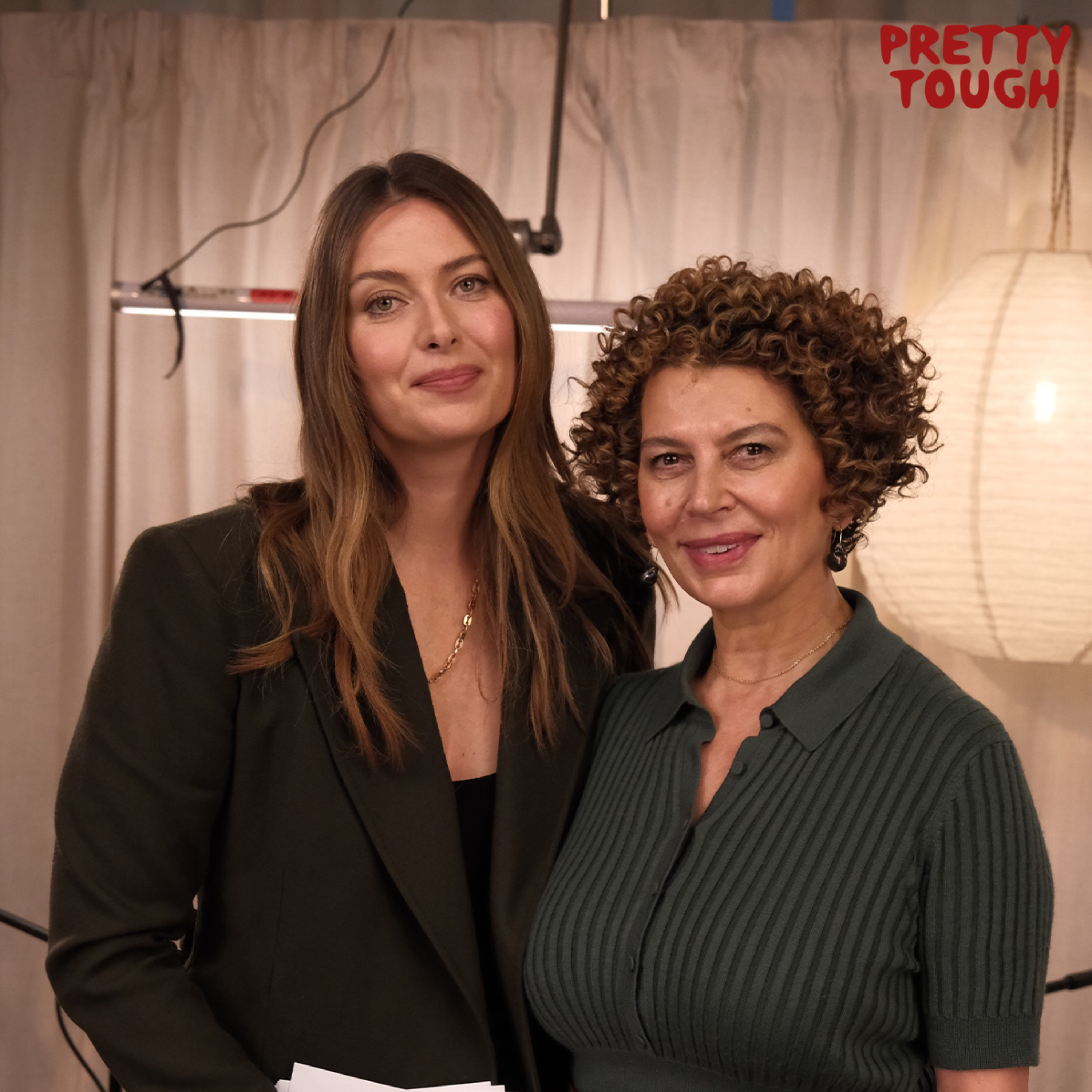
Universal studio executive Donna Langley discusses leadership as a woman in Hollywood, making high-stakes decisions, and balancing compassion with decisiveness. She explains how she supports filmmakers, builds trust, and navigates risk, failures, and industry consolidation, including AI concerns.
Donna Langley is the first British woman to run a major Hollywood studio (Universal). She arrived in L.A. in her early 20s, worked in a nightclub VIP room, then moved into film. She helped deliver Universal’s biggest film, The Odyssey, and backed Obsession (Focus Features).
Leadership means being decisive but collaborative; “decency is a superpower.” Trust is essential because filmmaking has many variables. Bad news should be delivered swiftly and with respect. “Gut” matters for “white space,” but accountability and learning prevent paralysis after misses.
Bringing Christopher Nolan to Universal (Oppenheimer/Oscar Best Director); reading Nolan scripts at his house; Obsession’s $15M purchase after a Toronto bidding war; failures like Cats (technology issues) and how that informed Wicked; supporting Get Out after it was overlooked.
0:00Christopher Nolan is one of the best filmmakers in the world, bar none, and that's undeniable. I was invited over to their house. I went by myself and I didn't know what I was going to read because he doesn't say ahead of time. So you don't know until you're sitting in his library on the couch and he hands you the script. Tell me about it. It's terrifying. It's one of those times where as a leader, I have to be very incredibly decisive. We wanted it. So we were going to go get it. I think everybody can imagine that moment where something they've been involved in is winning an Oscar. I think in order for artists to do their best work, they have to feel supported.
0:42When Christopher Nolan finally won his Oscar for Best Director, the first name he said wasn't an actor's. It was Donna Langley. Donna landed in L.A. in her early 20s with no real plan. She wound up working the VIP room of an LA nightclub and eventually found her way into film. Today, she's the first British woman to run a major Hollywood studio. This year, she delivered The Odyssey, Universal's biggest film ever, and took a$15 million gamble that earned 30 times that with Obsession. But with all that success, there are also failures. Donna and I talk about what it takes to navigate a competitive, male-dominated industry, how to handle the pressure, and when to trust your gut.
1:26I'm Maria Sharapova, and this is Pretty Tough.
1:52Amazon Prime has what you need, from screen to doorstep. Because it's not just about genres or endless content. It's about finding the thing that matches how you're feeling, whatever the mood. From streaming to fast shipping, it's On Prime.
2:10I'm Ina Garten, and each week on Happy Hour, I invite new and old friends for a drink and a fun conversation at my kitchen table in New York City. on this week's episode I'm joined by Chef Paul Carmichael we talk all about the incredible restaurants he's worked in the best music to play in the restaurant bathrooms and how he reacted when he found out his restaurant Kabawa had been ranked number one by the New York Times new episodes of Happy Hour are available every Wednesday you can watch on YouTube or listen wherever you get your podcasts cheers
2:50Hey, everybody. Sue Bird here, back with another brand new episode of Bird's Eye View this week. Joining me on the pod is Kara Lawson, head coach of Duke University Women's Basketball and Team USA. Kara and I break down how the 2026 WNBA Finals are unfolding. We revisit Team USA's path to World Cup gold and discuss how far the women's game has come. Plus, Kara reveals her favorite player that she ever coached. Check out Bird's Eye View on YouTube and wherever you get your podcasts. Donna, welcome to Pretty Tough. Thank you so much for joining. You have been on the mood board of the show from the very inception.
3:30You are a real boss in an industry that is, I'd say, cutthroat, but you have handled it with such grace and elegance, and I can't believe you're sitting across from me, so thank you. Oh, my goodness. Well, it's a pleasure to be here. Thank you so much for having me. I like to start the show with a quote. And the one I chose for us today came in response to an interviewer asking you if you ever considered becoming a storyteller yourself. And your answer was, no, I'm way better at telling other people what to do. But from what I gather, people who work with you never feel that way, because the process of your leadership is very much collaborative.
4:12Talk to me about those key principles in leadership that you hold so true to. Well, I think that one of the foundational principles of learning is by doing. And so I think I remember being a student at school and I was an okay student, but I do remember very clearly never, I don't like to be told what to do. But if it's being demonstrated for me and I get to do it and get my hands on it, then it doesn't feel like learning. It doesn't feel like I'm being forced to eat my vegetables. And I apply that principle to leadership and management. I think you absorb so much more by doing. So, you know, I think being directional, obviously, and letting people know what your expectations are and giving a sort of a roadmap and a guide, of course, you have to do that.
5:04Again, just sort of showing somebody the way to do something and what a potential outcome might look like is it's just I think it's just much more effective and a lot more fun. And by being an example yourself and leading the way. Yes, for sure. Yeah. And you've said that decency is a superpower and it's not a weakness. Can you share an example of a time in your professional life when you've chose compassion and it's worked? A couple of years ago, I was involved in the negotiations for the labor unions And that required, you know, equal parts of boundaries and sort of strength. But it was so compassion.
5:42You know, oftentimes in a situation, people just need to be heard. And who doesn't want to be treated with respect? And it doesn't matter what the behaviors are or how far apart you might be in a negotiation. Or, you know, it doesn't even have to be a numbers negotiation, just any kind of negotiation. you're trying to get somebody to do something or to you know get people to see eye to eye I just find you know being again being being respectful being open-minded and open-hearted is is a way to get people to you know sort of take one or two steps closer you know to to problem solving because that's really what it's about at the end of the day and so I do say that you know that could often be misconstrued as a weakness or somehow you're letting your leverage go.
6:32But I actually think the opposite. I think you gain, it's not about the upper hand or leverage in a bad way, but I just think you kind of even the playing field when you open up the aperture so people can really see each other and hear each other. That's been your superpower across a lot of your work. I'll take you back to earlier this year where you win the highest honor from the British Academy of Film and Television Arts. And at the ceremony, Steven Spielberg, this Steven Spielberg, describe you as both the peacemaker and a dealmaker. I love that so much because a lot of that is within the identity of this show is this combination of being gritty and fighting for what you believe, but equally being very graceful about the way you go about your business.
7:20Did you identify with that description? Well, I was so incredibly honored and flattered to hear Stephen talk about me in that way. But, you know, it really is. And, you know, as you mentioned, you know, being a woman in a very male dominated industry, you know, you it would be very easy to, I think, to default to sort of male, almost male behaviors. And I've never found that's not my style and it wouldn't be my strength. I can be as scrappy and competitive as anybody when I want something or when I know something is right. But at the same time, again, it's that diplomacy and it's that compassion, openness to listening and hearing.
8:05To me, it just, I find it much more effective than the, you know, the velvet hammer is better than the. The velvet hammer. It's better than the club, you know. And then on the deal making aspect, what do people get wrong about what it takes to close a deal? The only way you can make the right kind of deal is to stick to your guns and be inflexible. And I find inflexibility to be a very difficult thing to encounter. I understand where it comes from, you know, where you get very dug in. But I find being in opposition to an inflexible situation to be sometimes in many ways one of the hardest things to counteract.
8:49You have to work very hard to find a pathway and a way into kind of softening that inflexibility. so again being flexible isn't about giving up something that you don't want to give up you know part of it too in negotiating is you have to really know when you go in when you sit down at the table what you're willing to give on and and where your limits are what are your boundaries right I think so much of this is about boundaries and and if you're if you're if you're clear about what those things are and they're fair to begin with and you kind of know where the line is you know so you understand where your area of flexibility is you know and speaking of closing deals i want to talk to you about christopher nolan in 2021 you brought him over to universal this is a massive victory to say the least what was your instinct telling you about why that was so pivotal and important to the studio it was um quite simple i mean look christopher nolan is is one of the best filmmakers in the world, bar none, and that's undeniable.
9:53And when I started talking to him about the idea of, you know, his next project, if there were to be one, you know, really considering Universal as a home, because he'd had a home elsewhere for many years, it was in a time after the pandemic. And so it was very much rooted in a need. So Universal is a studio that is very successful, but we're successful by making a bunch of different movies and none of them or not many of them are based in traditional IP, intellectual property. You know, we don't have the treasure trove of superhero libraries or other things. We've built things pretty much from whole cloth.
10:32And so when I was thinking about getting people back into the movie theater, which was job number one post-pandemic, I was thinking about filmmakers who were undeniably theatrical, who really put their effort and their energy into creating cinema that is designed only for cinema. And Chris is really at the top of that list. I mean, there's nobody who evangelizes IMAX or large format more than him, or who has created films that really, again, you can watch them at home, but the first time you see them, you've really You got to see them in that theatrical environment, right? And so it was strategy.
11:15That was really what it was about. When it came time to be talking about a very specific project, which was Oppenheimer, that everybody had the opportunity to take a look at and bid on. And, you know, that's when the scrappy competitive person came out, you know, and it was, okay, we're going to win this at all costs. I would have been incredibly disappointed if that had not gone our way. Absolutely. There's no doubt about it. Because you knew the foot's already slightly in the door. Exactly. Exactly. Well, the opportunity is tangible as opposed to it being theoretical about, oh, what would it feel like to or look like to have Chris and his wife, Emma, who produces all of his films along with him, to come and make their films with us?
11:55Well, that would feel pretty great. But again, at that point, it's not tangible. It's just an idea. And it's a good idea. But yeah, when I'd read that script, which was absolutely brilliant, and I'd already fallen in love with the film. And I was already imagining, you know, it in movie theaters. And so at that point, it would have been very hard to lose. So you get Nolan, you release Oppenheimer, and not only does it win the Academy Award for Best Picture, but Nolan also wins his first Oscar for Best Director. And he begins his speech by saying, Donna Langley, thank you for seeing potential in this.
12:32And I get goosebumps just talking about it. What is going through your head at that moment? Is it the belief? Are you going back to those meetings that you had with him? Is it the concept? Is it just the beauty of the film? Like what crosses your mind? I it was a very it was a it was a wonderful moment it was an out-of-body experience you know I think everybody involved in film or even people who are not involved in film can imagine that moment where something they've been involved in is winning an Oscar it's it's just it's a heady moment you know there are a few things in our industry that it they defy cynicism and and the Oscars is one of those things.
13:13And so, I mean, I was just so happy for Chris and Emma and everyone involved in the film. But to hear my name, you know, because I don't expect that and I don't need that, certainly that kind of public recognition. There's so many people at the company and the studio who had their hands on that film that were absolutely, you know, integral to success. But it was a great moment. I actually know what went through my mind in that moment. It was what would my parents be thinking? That's very sweet. You always go back to your roots. Of course. And moments of victory. Think of where you came from and all those little steps that you had to take to get to that journey, not even the result.
13:58Exactly. And there's one theme that I found that really stands out in your partnership with Nolan, and that's this element of trust. And I think that's so important in any partnership, but especially the one that you were building with him. Why is that such an important value to you in your particular industry? Trust is very hard to come by, and it's integral, I think, to the entire process. and it goes obviously beyond Chris. It's really with everybody that we work with. We try and establish a relationship of trust actually because there's so many variables when you're making a film. There are so many things that have to go wrong.
14:45Yeah, could go wrong. There are so many things that have to go right. And sometimes I always say nobody sets out to make a bad film or an unsuccessful film, right? So, you know, when it works, it's great. But even when it works, you still need this level of trust and respect inside the relationship. But when things don't work, that's when you really need it, right? So, you know, where you still have that level of understanding and trust and support, you know, even if something doesn't work out the way that you've expected to or that you've hoped that it would. And, you know, I think in order for artists to do their best work, they have to feel supported.
15:25And that is not about, you know, being a yes person and giving them everything that they want. In many ways, it's the opposite of that. It's about creating the sandbox, if you will, that they can play in freely. And so, you know, we create that together. There are boundaries there for sure, whether it's budget or whatever the things are. But, you know, I do think that that underlying understanding of what a filmmaker is setting out to accomplish and achieve and us, in a very honest way, agreeing with it. If you don't agree with it, then you're kind of at cross purposes. But if you agree with it and then there is that sort of tacit understanding that, OK, we're going to jump off this cliff together.
16:12We're all going to do everything we can in our power to make this thing a success. I read about the experience of working with you. A filmmaker once said that you have a way of delivering bad news with so much grace that the person hardly feels the sting.
16:30is that a muscle that you had to train because we all have to fire someone in our career and in our jobs we all have to deliver bad news but the way you're able to do it is with a sensibility that allows people to feel seen and to be heard is that something that you've had to train or it's just come naturally to you? It's definitely something that I've learned how to do over time. The first time you sit down to, you know, to fire somebody or tell them that we're going in a different direction is the hardest. It's very difficult, but that is leadership. That is leadership in action. I would say it never gets easier, but I think you get better at it over time.
17:18You know, maybe your sort of delivery or your tactics. The thing, I mean, I know having been on the other side of, you know, tough news, I've never been fired actually, but, you know. We love that. You're like fun facts. Yeah, fun facts. But being on the other side, being on the receiving end of tough news, I just like it to be swift and to the point, you know, I think if you. With feedback? Is feedback part of it? I think feedback is a big part of it, you know, just just confidently delivered, you know, so, you know, you're on you're sitting on the other side of somebody who is more knowledgeable than you, more experienced than you, knows more about the situation than you do, and therefore is qualified to be giving you this this tough news or tough, you know, tough feedback.
18:06But it's, I mean, it's a different topic, but I actually think feedback, tough feedback is a very important part of learning to be a good leader, actually receiving it. I once had a boss who prided himself in giving one piece of tough news every time he gave your annual review. And it was something he'd learned from his boss prior to that. So, and it was, he was right. He was, it was, for me, it was actually really good. I quite like it because I'm competitive with myself. You know, I want to always bet at my performance. So, yeah, I mean, you're coachable. There you go. It's like an athlete's mindset.
18:42Yeah. Right. Of being coachable and being willing and open to receive information at certain chapters of your career that at the time is really difficult to receive. Yeah. But when you always look back on it, you're like, I needed it. That's right. I needed this. Yeah. You've spoken about spotting, quote, white space that others are missing. and you can see an opening for a story that the public is ready for, even before they might know that they're ready for it themselves. What are you paying attention to that tells you that that specific opportunity is ripe to take action on? It's a few different things.
19:22I like to look and see who might be underserved with the audience, whether it's women, whether it's certain specific cultural stories, whether it's parts of you know if I'm thinking about television in in the U.S. parts of the country that are maybe not seeing themselves in some of the more coastal shows that are being made so it that that's usually the beginning of it for me but then there's also an overlay of culture I'll look and see what seems to be sort of bubbling up you know really in counterculture it's not always possible but I do like kind of looking again at these sort of white spaces in in culture before they become really mainstream.
20:06And, you know, horror, certain kinds of genres and sub-genres of horror are like that, you know, where you can tap into something that, you know, the audience is feeling down here, but then you can kind of put it in a movie theater, in a movie and scale it. What convinces you to go for it and make it happen? It's my gut, really, usually. Yeah, because there's not generally a ton of data around that white space because no one's been there. That's what it is. That's why it's called. So it's all in the gut. Is there a time when, an instance where you relied on the gut and it steered you in the wrong direction?
20:46Oh, there's a bunch of times, absolutely, where I thought something was answering a need that I thought was there in the culture, and it wasn't at all. Something you can share? No, I mean, maybe not specific titles, But there was a movie very early in my career where I got to a point where I had the flexibility and freedom to make choices about things that we were going to do and be involved in. I actually pushed, I championed the acquisition of a film that it was a musical, which is a very high bar for theatrical to begin with under any circumstance. And it was a very ambitious film and it just fell flat on its face.
21:28And so that was a tough learning lesson for me because it was early in my career. And I took a shot on something, you know, when I first had the ability to do that and it didn't work out. And so I had to kind of pick myself up and dust myself off. And how do you do that, Donna? How do you dust yourself off when something that you are so committed to and passionate about, it just falls through? I think it's about doing the work to find out why it didn't work. You know, I like tangibles and, you know, real information. And so, you know, the good news about putting a movie out, you get tons of feedback afterwards.
22:11You get reviews, you get exit polls. You know, people will talk about it on the way out of the film and they're not shy about telling you what they didn't like about it. That reminds me a lot about sport. Right, exactly. It's on the table. Yeah, everyone has an opinion. And so, and so I've, but that's also something that I've had to learn, you know, and also I've had to learn to have a thick skin about it. You know, the one thing I do know, and I know this instinctively, is you do want to take a look at why something didn't work, but don't dwell there too long. You can, you know, if you stay there too long, you'll start to second guess decisions going forward and that paralysis sets in because fear takes over.
22:57You can't allow fear in. So you really just have to own your mistakes and be okay with them. I messed up. It didn't work out. I was wrong. And be really okay with that. And close the door. I love that. You've probably heard and read, I don't know, thousands of pitches. endless amounts. What are some common mistakes you see people make again and again when they're pitching? Well, pitching is a real art, I think. It's a very difficult thing because you're asking somebody to invest hundreds of thousands of dollars in an idea that is just a verbal pitch, right? So it's actually not my favorite way of starting a project.
23:40It is about the delivery. it's about telling a succinct story, getting enough of a sense of the look and feel of something, what the characters are going to sound like and feel like and who they are. I would say probably the most common mistake is is that they go on for too long. They shouldn't be. It's like a 30-page presentation. It should not be more than 25 minutes. That's a good call. Yeah, and it's very similar to a business being pitched that hasn't even been launched yet, I imagine. Yeah, you have to think about what is the elevator pitch. In the case of pitching a movie to an executive, they're going to have to leave that room and go and sell it to somebody in their organization.
24:23So what's that quick elevator pitch? What's the thing? Because that oftentimes then will turn into the hook of the film. How are we going to sell it? How are we going to think about that in the marketplace? So it is all connected. 2026 is a very successful year at Universal. You have The Odyssey, career-defining triumph for both you and Christopher Nolan as Universal's highest-grossing film of all time. And then on the other end of the spectrum, you have this sleeper pick and obsession, which... Be careful what you wish for. Exactly. That is a complete unexpected box office mash. And to me personally, as I sit across from you, that is such an amazing example of the range that you bring within the role.
25:15How differently do you approach each project when the stakes seem so far apart? So we have the great benefit at Universal of having two different labels for our live action films. We've got the big Universal. That's where Odyssey is. And then we have a specialty label called Focus Features. And so they can experiment a little bit more. So, you know, with Obsession, it was very specific. We wanted to pivot them into auteur horror. They have a great relationship with a fantastic auteur filmmaker called Robert Eggers. And they'd had a big hit with a film called Nosferatu. And we said, well, you should maybe do a bit more of that.
25:57And it just so happened that they were going to the Toronto Film Festival and they saw Obsession at the midnight screening and the rest is history. And so we have great flexibility inside of the company. And I get to rely on very smart executives to make decisions for their individual slates. But, you know, but it really is, it all kind of comes down to what we're trying to do is find stories and films and movie ideas for the broadest possible audience across the board. And because we're not limited to any one kind of film, it's the greatest joy of my job, honestly, is that we can do Obsession here and then we can do The Odyssey and, you know, and they can both work in different ways, but be very successful.
26:43Quite well. And at the very beginning of the process of the Odyssey, I understand that you went over to Nolan's house and you read through the entire script with him and his partner, Emma. Is this an industry standard? No, that's quite unusual. Tell me about it. It's terrifying. You're terrifying? Of course. I'm terrified. It's, you know, because, well, the way that Chris does it, or the way he did it on The Odyssey and on Oppenheimer, actually, is I was invited over to their house. And I went by myself on both occasions. And I didn't know what I was going to read because he doesn't say ahead of time.
27:23So you don't know until you're sitting in his library on the couch and he hands you the script. And so it is, it's a bit intimidating, you know. And then they leave and I get a couple of hours to read the script. And, you know. In the same sofa. On the same sofa. On the same sofa. They leave you to it. With a cup of tea. With a cup of tea. Exactly. Exactly. And then they leave and then they come back when I'm finished and we talk about it. And so it is a process that I love it because it feels very old school.
28:02and it's very intentional and it makes you pay attention, you know, but it is slightly intimidating, but I think in the best way possible, you know, it makes me feel very alive. When you say intimidating, which part is intimidating? Not knowing what you're going to read? Is there an aspect of, I've just read something by Christopher Nolan that I actually don't love? Like which part is intimidating you? I think it's more the unknown. I think it's walking in and in both instances, I've been very relieved that it was, you know, one is a biopic and one is a classic tale. And so I had some understanding of both.
28:42And not surprisingly, in both instances, the scripts are so good. I'm not afraid of being able to converse afterwards because there's so much to talk about and they're each brilliant. So that wasn't a concern at all. But no, when walking in blind to a situation like that, it's, yeah, it's exhilarating and intimidating all at the same time in the best way. And on the opposite end of that, for Obsession, my understanding is that everyone thought you overpaid for the film. They said you spent$15 million to secure the project coming out of Toronto. And you went on to gross 30 times that amount. What is it about that specific film that intrigued you?
29:30Well, I bought it without seeing it, which is common. I mean, especially for a small film like that. I heard about it. I knew what it was. I knew some of Curry Barker's work from YouTube, but I did not get to see the film. You know, again, it screened at a film festival. And the way that that works is the movie screens and then there's a bidding war. And so you have to move very quickly. So it's one of those experiences or it's one of those times where as a leader, I have to be very incredibly decisive. I have to trust the executives who are pitching it to me and advocating for it. And then we have to look at the numbers and we have to rationalize it into a business case.
30:13I knew I wanted it. I knew where you wanted to play. Where I wanted to play. And I knew we wanted it. So we were going to go get it. When you say bidding work, so the film finishes and do you immediately go into a meeting room? The executives do. Yeah. The focus teams. Yeah. They'll go into a meeting room themselves. They'll start running the numbers. It's a great process. And yeah. And then whoever's selling the film, the agents, managers and producers, they'll start working the phones and I think they were up all night is what they live for That should be a movie on its own Yeah, it is a bit, you know Cool Exactly, I mean it's a great part of what that team does It's really fun I mean it doesn't happen every year It doesn't happen at every film festival but when it does, I think it's quite exhilarating for them I've never stayed up all night with them bidding on a film They call me in the morning and tell me what happened It's an MBA on the job of learning how to negotiate.
31:15Very much so. Very much so. And not every project hits. It strikes me that you are equally graceful with the successes as you are with the disappointments. Talk about a film that lost money but was still utterly worthwhile. Well, there's been a couple of films that have been very worthy, and I'm very glad that they were made. I've talked before about a film that we make called She Said that wasn't a big commercial success, but it was a worthy accomplishment. And I love the film. And it's something I periodically will get a note about. Someone will just, you know, drop in an email about having seen the film and how it spoke to them.
31:58So there are films in that category. But then there are films that you make that you thought were going to be wonderful. And they did not turn out that way. for a number of different reasons. And there was one in particular that I'll call out. And to this day, so it was a film called Cats based on the musical. It was a very high bar. We knew going in it was risky. A, it was a musical and B, it required technological advancements that were not necessarily available that we hadn't seen up until that point. And so, but we did it anyway. I saw the film without any visual effects involved in it. We all loved it.
32:38It's absolutely great. All star cast. The songs are fantastic. It was really well directed. It was really well done. But the technology kind of let us down in the post-production process. And so, yeah, that was one that, you know, we all went in believing, but again, understanding what the risks were. but you know you but but you take a a situation like that or an experience like that and bring it forward into into your you know into your future decision making and I remember actually at the time that we greenlit Wicked so it was the next big musical that we were doing and we greenlit those two films together because it just made sense from a production plan standpoint we were using the same sets and so we just we made two films together so it was very expensive so our investment in those two films was a lot so we didn't get to make one and see how it went and then make the second one we just went for it and there were some people who said wow boy how can you do that after you had that big you know that that big loss with cats and you know and I said well because I'm not comparing them the only thing that makes them similar is the fact that they're musicals but they're very different films did you Did you feel extra pressure with the release of Wicked?
34:23You have occasionally small disappointments, but there are some ones that just sting. What is your advice for getting over them? Face the music and own it. You have to be very honest with yourself about why something didn't work and what your involvement in that outcome was. Right. The thing I see, I've definitely done it myself and I see it, I see it, you know, in situations like this where it's sometimes it's really difficult to own up to it. It's difficult to have accountability. But I think a culture of accountability in an organization or in this process or a situation is so important. I think by owning a decision and actually allowing yourself to feel and recognize accountability, it is a thing that frees you up.
35:20It liberates you to be able to move forward. Yeah. And doesn't mean it's not going to hurt. Absolutely not. That's the beauty of it is that part of the struggle and that part of that pain that makes you think differently about your next step. And it only makes you better in whatever you choose to do. I completely agree with that. I think it's really okay to sit in being uncomfortable for a while. And it's not something that we're necessarily taught to do or encouraged to do, right? But I think it's, I think it can be incredibly cathartic. And then you have to figure out how to pick yourself up.
36:03Then whether it's call a friend, you know, or do whatever self-care that can just make you, you know, kind of get outside of yourself a little bit. But, you know. I find that we, there's so many distractions around us that it's very easy to take something that feels like a struggle or a pain point and in a bad way distract yourself onto something that makes you feel better instead of actually feeling what is it about that opportunity that hurts what is it about that decision you know or even the effort that you put in and you worked hours and days and months and years to get to this point and it doesn't work out and that's okay.
36:46But we're easily trained to distract ourselves to find the easy path and an exit. Yeah. But I think you just said something really, really important, which is to remind yourself of the path that you took to get to here, even if the outcome wasn't what you expected or what you wanted it to do. But the work that you put in is commendable. And you, you know, give yourself a break for that, you know, allow yourself some grace.
37:25We'll be right back.
37:45iPhone 18 Pro has the most advanced iPhone camera ever. Pass it on. At T-Mobile, you can get iPhone 18 Pro for nothing up front. Pass it on. At T-Mobile, get$1 ,000 off the amazing iPhone 18 Pro with no trade-in needed. With 36 monthly bill credits when you switch to T-Mobile on a qualifying plan. If you cancel entire account before receiving all bill credits, credit stop and balance and required finance agreement is due. Example,$1 ,199.99, iPhone 18 Pro, 256 gigabytes. Bill credits in if you pay off device early. Qualifying credit, new line, port-in, and service. $85 more per month with AutoPay Plus taxes and fees required.
38:15$35 device connection charged to its sale. Visit T-Mobile.com. Are you tired of hearing about business, tech, and finance from the bros? We are the Tiger Sisters, a top business podcast with the Vox Media Podcast Network. Tiger Sisters releases every Monday and we decode money, power, and love. And who doesn't love all those things? We are the Internet's Wall Street and Silicon Valley Big Sisters. Tune in every Monday for late night sister talk meets boardroom strategy. Check out Tiger Sisters on YouTube, Spotify, or wherever you get your podcasts. Welcome to the Tiger Fam. Hi, Chicago. It's Phoebe Judge, host of the podcast Criminal.
38:53In just a few weeks, I'm headed your way with our brand new live show. And this time, it's about my life and the people I love. And secrets. A letter was left carelessly around, so I was sort of caught red-handed. I hope you'll come see it. Get tickets at thisiscriminal.com slash live. I want to talk to you about bringing people back to theaters, and I know that's been a big focus for you in a lot of the decisions that you've made about certain films. Why is that ritual of going to a movie so important to you? And how do you communicate that love to others? I think the cinema-going pastime is one that is embedded in all of us.
39:46Just the fundamentals of storytelling is as old as humanity. We are connected by our shed storytelling. And so that practice, whether it's sitting around a campfire or going to a movie theater, it is the thing that connects us as human beings. And when you can do it on a global scale, when you have a film like The Odyssey that has been seen in every country around the world, there is something about that shared experience that allows us to see each other, to understand each other better, and to connect with one another. And so that to me is one of the great superpowers of cinema. And then, you know, the other piece of it is, you know, just that cultural relevance that happens when you have a film in the movie theaters, as opposed to one that you're seeing on your couch sitting at home.
40:48It's a completely different deal. It just means something very different to us. It moves you so differently. So different, right? Is there an old movie that you'd recommend? And I'm intrigued to hear what movie should I look back on? Oh, my goodness. Well, there's two. I have to tell you two. One is Dr. Tobago. Yes. It's just brilliant. It's brilliant. And then the other one, which is one of my favorite films, it used to play on the BBC when I was growing up. I also didn't have access to many films either. My education really started when I was in high school and beyond. But the other one is The Red Shoes.
41:27and it is about a ballerina who is picked to be the prima ballerina for a company and it is a psychological story about how it really gets the better of her and the thing I love about this film there's like a 10 minute long fever dream where she puts on these red shoes and she goes dancing all throughout the town it is spectacular but it's so odd and it's very avant-garde and it was So ahead of its time. I've never actually asked Aaron Aronofsky, but I wonder if Black Swan was inspired a little bit by this film. But I just I love that film. It just appealed to me when I was young and I would watch it on TV.
42:07So it reminds you a little bit of your childhood? Yeah. And that's something that would watch with a mom. It's an old film, but it really holds up because the filmmaking techniques were so modern and the costumes are amazing. You've been very candid about your concerns regarding the Paramount Warner Brothers merger, saying just earlier this month that you think it's bad for everything. What is the risk for moviegoers specifically? I think consolidation in any industry is tough. It's just tough on the industry. And even with the best of intentions, which I have no reason to believe are not the case with the new leadership there.
42:45It's just a very difficult reality that we're facing. And I'm looking at the industry as a whole and I see how it's been impacted by the pandemic and then the strikes and now this, you know, further consolidation. And so, you know, what I'm very focused on, I can only control what I can control, is making sure that we do have enough volume of high quality films going through our movie theaters so we keep that alive. And then I'm also focused on production. We produce all over the world as an industry, but we've lost a lot of production from the U.S. And so one of the things I'm very focused on is a federal tax incentive and making sure that, you know, we can be competitive as a country.
43:35You know, because that I think the more people who are engaged in, you know, storytelling and content creation, whether it's film or television, the more our industry is going to continue to thrive, even in the face of consolidation. Sitting here as a studio exec, what is something that keeps you up at night, if anything, Donna? Yeah, no, I do. I worry about all kinds of things. I think, look, I think just the industry in general is going through so much transition and it has been transitioning almost for a decade. but now we're on the precipice of a new technological change with AI and that is going to have an impact on all of us as society but how it's going to impact my industry it's quite unknown so that's something that I spend a lot of time thinking about and you know ways in which that we can we can protect our workforce and we can protect the artists and their creative work but at the same time embracing technology in the way that I know we're going to need to.
44:39Is there a specific part of AI that scares you most? I think, well, aside from the world ending part, the thing I worry about the most in any industry is job loss. And I think it is incumbent upon us to, again, harness the technology, use it appropriately, but do it in a way that minimizes that kind of impact. I do think AI is going to change things exponentially in ways that we don't yet see, and it could put more pressure on cinema. But my job is to, of course, be open-minded about those risks and challenges, but at the same time, find a way through them to be able to be optimistic in a way.
45:26And one of the things that gives me a ton of optimism is that young people are going to the cinema. I was talking to Curry Barker, who directed Obsession, and I asked him about why having Obsession in movie theaters was important to him or was it important to him after he'd had so much success on YouTube. And he, you know, he was incredibly articulate about how it's a completely different medium and it's a different way of spending time. And young people, they love their phones. They love the flexibility that they have there. But they also want two hours to be able to put that phone down and to be able to look at a screen and disappear inside a story and with characters that they can relate to.
46:13And that gave me a ton of hope, honestly. And so, you know, you don't want to be polyanerous about it or romanticize it too much. We have to keep evolving with the times. But it's a great challenge to think about what stories to tell, what films to make and with whom, you know, so that we keep people coming back to cinema.
46:42so you went from working at a club on sunset boulevard to running this major studio and you've said that when you came to la you were looking for an adventure you weren't following a career, a particular career plan. Walk us through how that shifted. How did you step by step get into the role that you have today? I think, yeah, it is funny. I did not set out to have a job like this at all. I would look at the people who had jobs like this and think, gosh, I mean, you know, apples and oranges wouldn't even describe it, right? So I always thought of myself as a kind of scrappy, independent, you know, if I was going to do anything, I would be making independent films and maybe documentaries at the very beginning.
47:33But look, I was fortunate enough to have my first job was at a mini studio called New Line Cinema. And we were making great films at that time. And that's where I cut my teeth. And that is where I kind of got bitten by the bug of, oh, I actually realized that I have the ability to toggle between a left brain and a right brain. I can be in a room talking about the business model and the financials. At the same time, I can go across the street and I can sit, you know, with a writer and go through a screenplay. Have tea with Christopher Nolan. Exactly. And not make a complete fool of myself. So I can, I can kind of do both.
48:09I might be better at one than the other, but I can do both. And so, you know, from New Line, I went to Universal and, and I just, I just, it was a, combination of just sort of falling forward, you know, constantly just in a, in a great way, loving what I was doing, really enjoying it. But I think what's sort of underneath all of it is I love a challenge. And so I would, I would push myself to, you know, learn a part of the business that I didn't know before and, and I therefore learning about it. And, you know, I was very fortunate that I had people who were tolerant of me doing that. And, um, I was, you know, I was surrounded by a group of people that I think we were all equally as ambitious.
48:53We all kind of came up at the same time. And so I don't know. I think it's just been, if I'm having a good time doing something, I want to stick at it and keep doing it. Do you think that ambition is something that separated you in those meeting rooms? No, I actually think it was the opposite. I'm surrounded by people who are way more ambitious than me. I would say my competitiveness is really with myself. unless I'm bidding on a project and then we have to annihilate everybody and win. But other than that, it's just about what is my personal best? How can I bring my best self to this situation?
49:33And so I think, I don't know. It's a very healthy way to do it. Maybe. It's the only way I know how to do it. So I think maybe because I haven't, you know, I haven't orchestrated things in such a way, you know, to move ahead. I just I've done it in a very organic way. I don't know. Well, that's the lesson. I'll take you back to 2017 where you championed the film Get Out, which was Jordan Peele's debut as a feature film director. Bring me back to that moment when it was pitched to you. Well, that film we got to see almost finished, actually. Jason Blum, the producer who produces most of our horror films that we do very well with, had brought that film into us.
50:17The industry had sort of overlooked it. You know, I don't think they really understood what it was. And I saw it. Actually, my colleagues had seen it first and told me how great it was. And they were, you know, well on their way to creating the campaign around it and helping Jordan finish up the film. I think we gave him some resources to do that. And then I saw it. And, oh, my goodness. I just, I mean, I just flipped out for it. I mean, again, it was talk about seeing a film that we didn't know we were missing. And then by the time we put that movie out into movie theaters, the film became even more relevant.
50:52And the rest is history. You know, we were just in the right place with the right film at the right time. And it was that, was it that sixth sense that you felt while watching the movie? I mean, there are several studios that watched it and said it's not for us. But you're just sitting here saying, I absolutely loved it and I believed in it. That one was very much about the filmmaking. And I thought it was something well worth taking a flyer on. Jordan was incredibly impressive. He obviously had a great career before that as a comedic talent. And I just wanted to support him. We all did. But we didn't see the success that we had with that film in an Oscar win.
51:36We didn't see that at the beginning. And oftentimes we don't. But that's okay. It's really much more about the act of the support to begin with. You know, you can have your hypotheses and theories about where something might end up. But that film way outperformed what we initially thought it would do when we saw it. So to wrap this up before our lightning round, I wanted to ask you in a broad sense, you've attributed a lot of your early success to being the girl that's ballsy in a room, taking chances because there's literally nothing to lose. Now you're in a position where there's a lot more to lose.
52:17How do you calculate taking these chances now? That is a very good question. Um, yeah, because with success comes great responsibility, right? And so you can't be quite as cavalier as you, as you once were. I think it's just about, um, you know, making sure that you find ways to connect with that younger self. Don't lose that completely. I mean, even though, you know, when I look back, there was just so much naivete and hubris, honestly, You know, I mean, I'm oftentimes back then and even today the quietest person in a room. I like to listen and, you know, really sort of feel what's happening just by hearing what's going on or what's not being said.
53:03But I think it is important to hold on to some of that, you know, that youthful energy, you know, that we that we I think that that fueled our ability. Right. To keep going and to get where we are today. But at the same time, it has to be balanced with understanding and recognizing, you know, what your position represents. And the thing I do believe about, you know, leaders is that, you know, people listen to what you say, you know, whether we mean it or not. The words matter. Actions matter. And so I take that part of it very seriously. We just have a couple tough, well, not a couple. We have a few pretty tough questions.
53:49Oh, no. You'll be fine. What is something that you've had to unlearn? Something I had to unlearn. Oh, goodness. I think something I had to unlearn. Well, I had to learn. I had to learn how to be confident in myself. A pretty easy one. But yeah, I wasn't always the most confident person. I thought for a long time I was the person who belonged in the situation the least. What is a routine that's helped shape your success? I would say maybe not a routine, but something that I do even to this day, prepare for meetings, prepare for a room that you're about to walk into. The more prepared you are, the better you are going to be, the more confident you're going to feel.
54:33It's like an armor, that preparation. What is a common misconception about you? Well, my husband always tells me that I'm really intimidating. And I'm not. I'm a goofball. Oh, Ramin. Oh, Ramin. Really, because he is constantly throwing me under the bus to get him out of things he doesn't want to do, but I'm the problem. So I think he is the one that has perpetuated this myth, but I am not scary or intimidating. What is your relationship to perfection? Oh, I have none. No, I don't have. I don't believe there is perfection is not a state. It's a state of mind, maybe. But no, it's not sustainable.
55:15And I don't aspire to. I never have. What makes you feel tough? Being able to get my children to do anything that they don't want to do, which is most of the time. And when I accomplish it, I feel I feel I feel like it. It feels so good. It feels so good. Yeah, it's a real sense of accomplishment. And I do. I feel really strong in that moment. Oh, I feel your pain as you're saying that. And what makes you feel pretty? Oh, well, also my kids, my oldest son, both of my kids actually love taking photos. My oldest son is my best photographer. He takes the most incredible pictures of me. He captures me at times that I hate pictures of myself and the ones that he takes are the only ones I like.
56:02That's the best way to end this interview. Thank you, Donna. Thank you so much. It's been so much fun.
Film Exec Donna Langley joins Maria Sharapova on Pretty Tough to discuss what it's like making consequential decisions at a critical time for the industry.
Donna shares stories about bringing Christopher Nolan to Universal, acquiring the hit horror film Obsession sight unseen, and having the courage to back Wicked after a failed musical. She also talks about finding her own leadership style in a male-dominated industry, without giving up compassion or competitiveness.
SUBSCRIBE
►Subscribe to Pretty Tough: https://www.youtube.com/@mariasharapova?sub_confirmation=1
LISTEN:
►Listen to every episode on your favorite podcast platform: https://pod.link/1893437254
CHAPTERS
00:00 — Introduction: Meet Donna Langley, the First British Woman to Run a Major Hollywood Studio
02:00 — Leadership by Doing: Why Decency Is a Superpower, Not a Weakness
05:15 — The "Velvet Hammer": Navigating a Male-Dominated Industry Without Losing Your Grace
07:30 — The $150M Gamble: Landing Christopher Nolan and Winning Big with Oppenheimer
14:30 — The Art of Tough Feedback: How to Deliver Hard News with Empathy
17:15 — Spotting "White Space": Trusting Your Gut and Finding Cultural Blind Spots
19:45 — Dusting Yourself Off: Owning Your Mistakes and Overcoming Creative Failure
25:00 — Inside Christopher Nolan's Library: The Intimidating Tradition of Reading a Script Blind
27:15 — Decisive Leadership: Bidding Wars, Overpaying for Obsession, and Managing Risk
32:00 — Accountability as Freedom: How Sitting in Discomfort Makes You a Better Leader
35:45 — The Shared Human Experience: Why the Magic of Movie Theaters Can't Be Replaced
40:00 — The Future of Cinema: AI, Industry Consolidation, and Protecting the Creative Workforce
43:00 — Falling Forward: From an LA Nightclub VIP Room to the Top of Hollywood
46:15 — Championing Get Out: Why Supporting Unconventional Visionaries Pays Off
48:00 — The "Pretty Tough" Rapid-Fire Questionnaire: Unlearning Imposter Syndrome and the Myth of Perfection
FOLLOW THE SHOW
►Maria on Instagram: https://www.instagram.com/mariasharapova/
►Maria on X: https://x.com/MariaSharapova
►Pretty Tough on Instagram: https://www.instagram.com/prettytough/?hl=en
About Pretty Tough
Pretty Tough is the weekly interview podcast hosted by five-time Grand Slam champion, entrepreneur, and bestselling author Maria Sharapova. Each week, Maria sits down with founders, CEOs, athletes, creatives, investors, and other high achievers for candid conversations about leadership, ambition, decision-making, performance, entrepreneurship, wellness, and building exceptional careers.
Drawing from her own experience at the highest levels of sport and business, Maria explores what it really takes to succeed—from navigating failure and reinvention to scaling companies, leading teams, and pursuing excellence over the long term.
About Maria Sharapova
Maria Sharapova is a five-time Grand Slam champion, former World No. 1 tennis player, entrepreneur, investor, bestselling author, and one of the most recognizable athletes of her generation. Since retiring from professional tennis, she has built businesses, invested in consumer, technology, and lifestyle companies, and become a respected voice on leadership, performance, and entrepreneurship.
Learn more about your ad choices. Visit podcastchoices.com/adchoices
Scan the code with your iPhone camera
Listen in the app.